Martin Heidegger, Glenn Gould, Jacques-Louis David, Cy Twombly, Paul Engelmann and Ludwig Wittgenstein: characters that Francesco Arena has chosen or rediscovered in multiple contexts over the time recur in this book. Ranging from philosophy, to music, to visual arts, they embrace the whole world of knowledge.
This first institutional monograph on the multimedia practice of artist and director Ali Cherri aims to highlight the themes and formal concerns running through his most recent, highly significant projects at GAMeC, Bergamo; Frac Bretagne, Rennes; Swiss Institute, New York; Biennale Arte 2022, Venice; and the National Gallery, London.
The book highlights the main characteristics of the collective trauma that gave rise to Rachel Whiteread’s project for GAMeC. The psychoanalysts Angelo Antonio Moroni and Pietro Roberto Goisis map out a composite picture, starting from the sense of vulnerability and collective loss associated with the Covid-19 pandemic.
This book, with follows the eponymous exhibition at Mudam Luxembourg, is constructed as a story, with a prologue, four acts, and an epilogue: an intuitive journey through the voices of thirty-four artists from different generations who are experimenting with the idea of the performative.
Dreaming Alcestis is an artist’s book by artist and filmmaker Beatrice Gibson, conceived as an accompaniment to her holographic film installation of the same name. It features a commissioned essay by poet and translator Allison Grimaldi Donahue, as well as a reprint of the American poet Alice Notley’s 1991 essay What Can Be Learned From Dreams?
What if clay is the future and the future is clay? Curators Chus Martínez and Filipa Ramos brought together a group of artists to think and create through this old, maleable and fascinating matter. The result was materialized in an exhibition and book format entitled Feet of Clay.
Edited by Samuele Piazza
Texts by Lorenzo Giusti, Felicia F. Leu, Samuele Piazza, Laura Preston
Design by Lorenzo Mason Studio
2022, English / Italian, softcover, 224 pages, 16.5 x 24 cm
ISBN: 979-12-80579-14-0
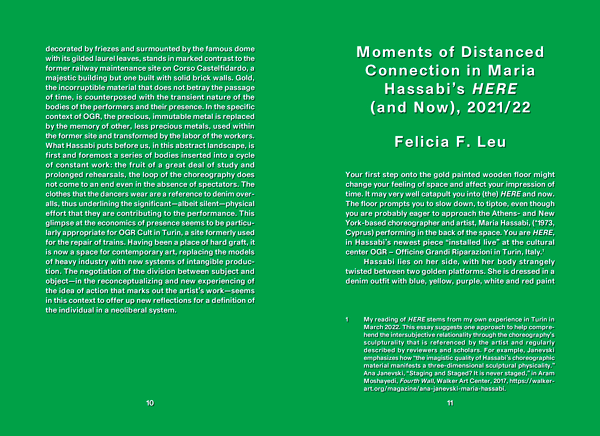
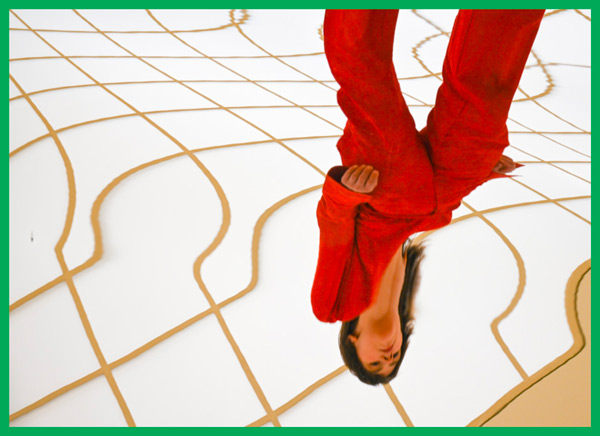
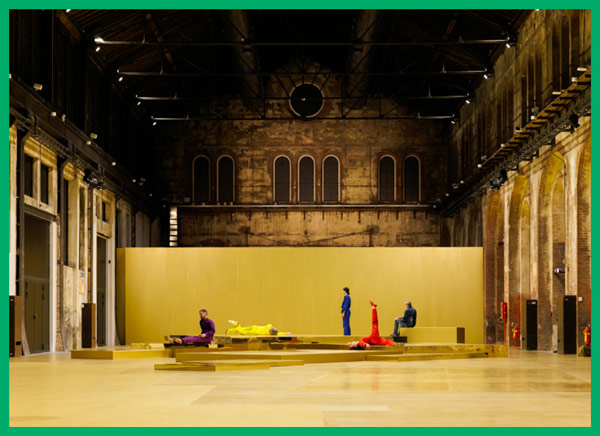
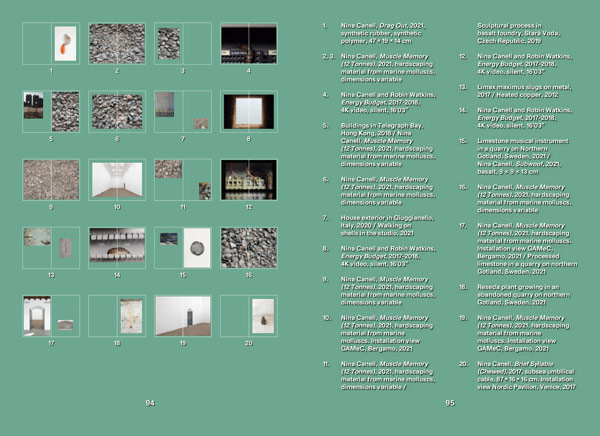
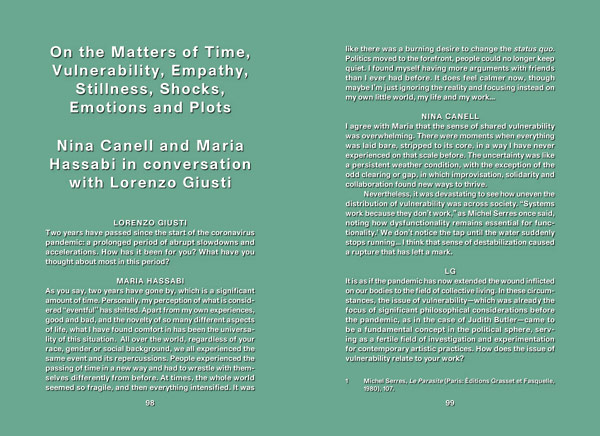
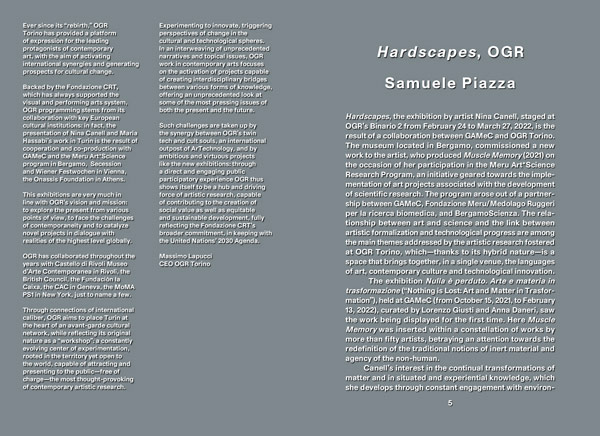
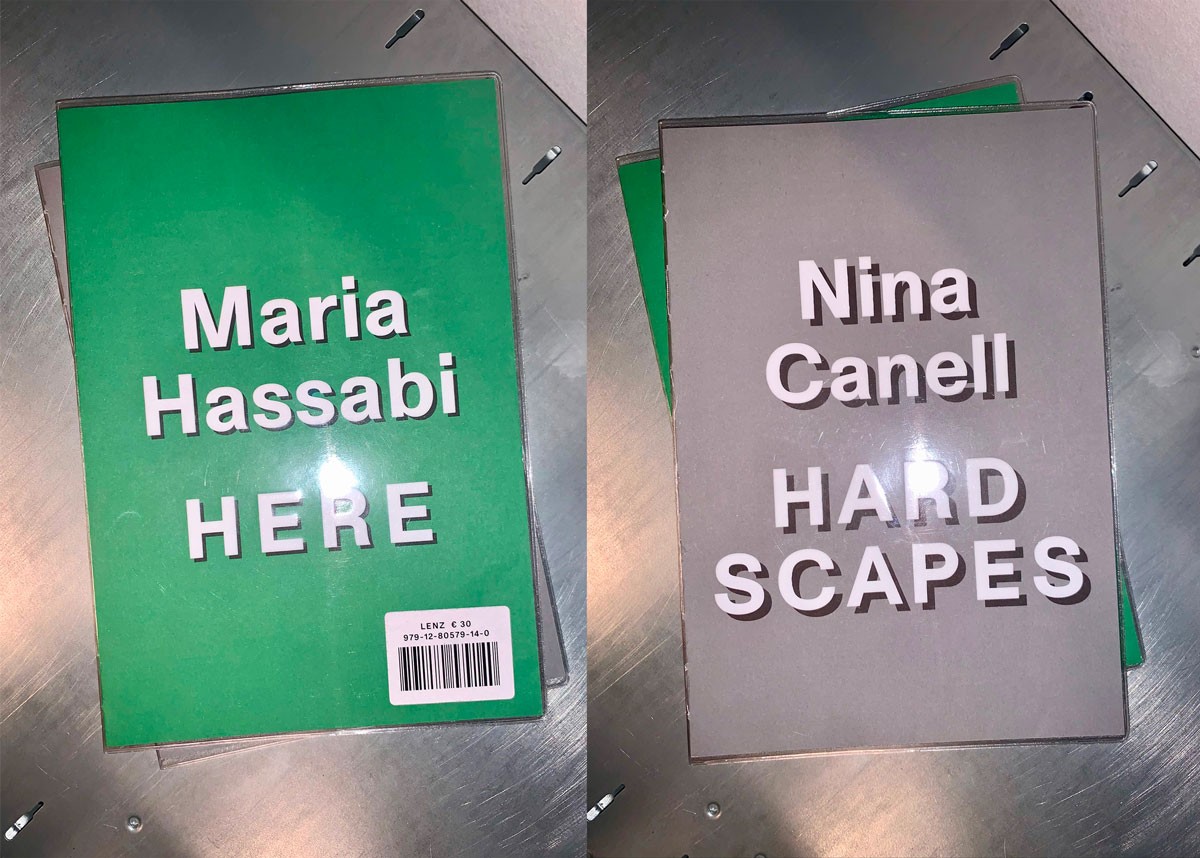
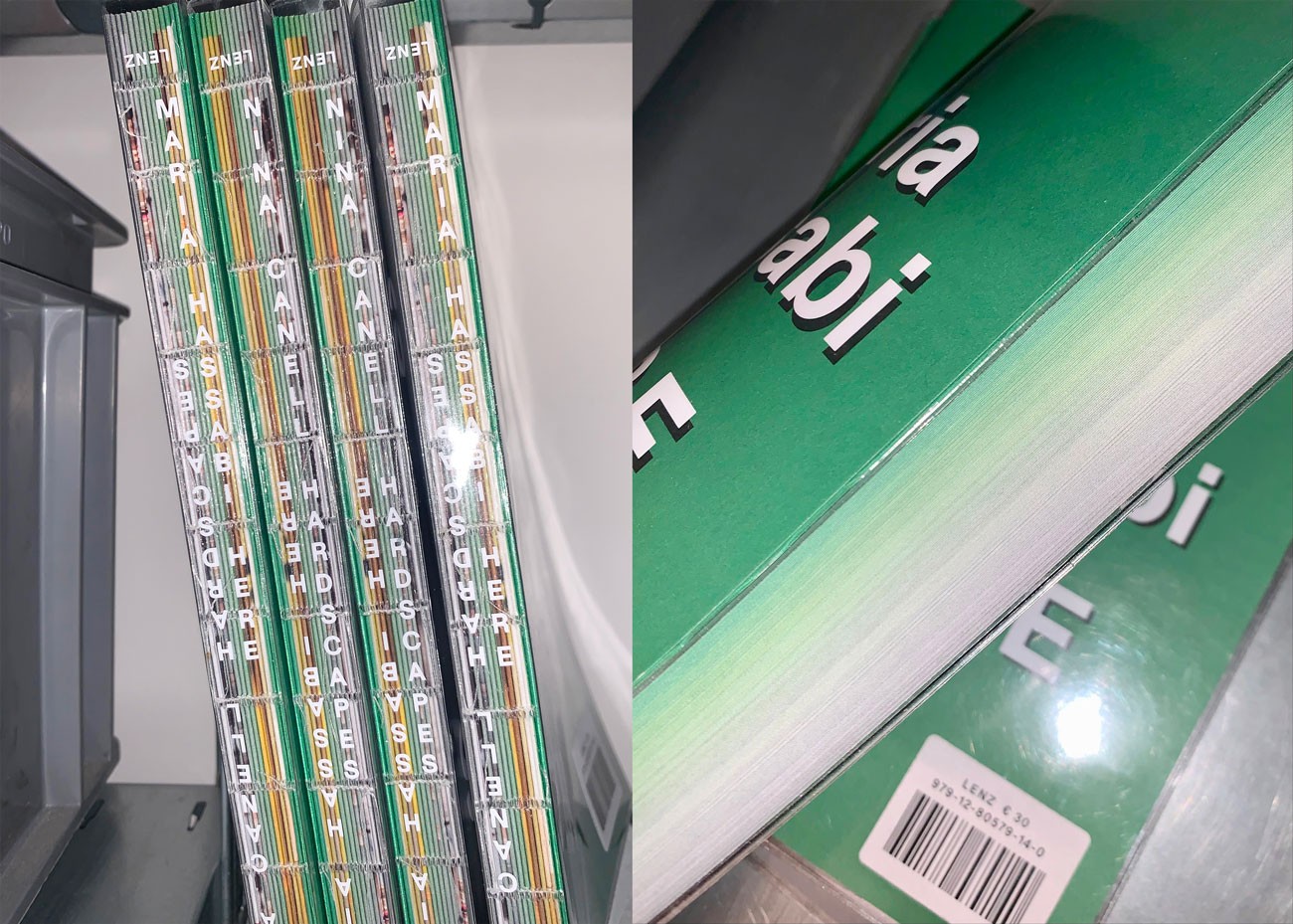
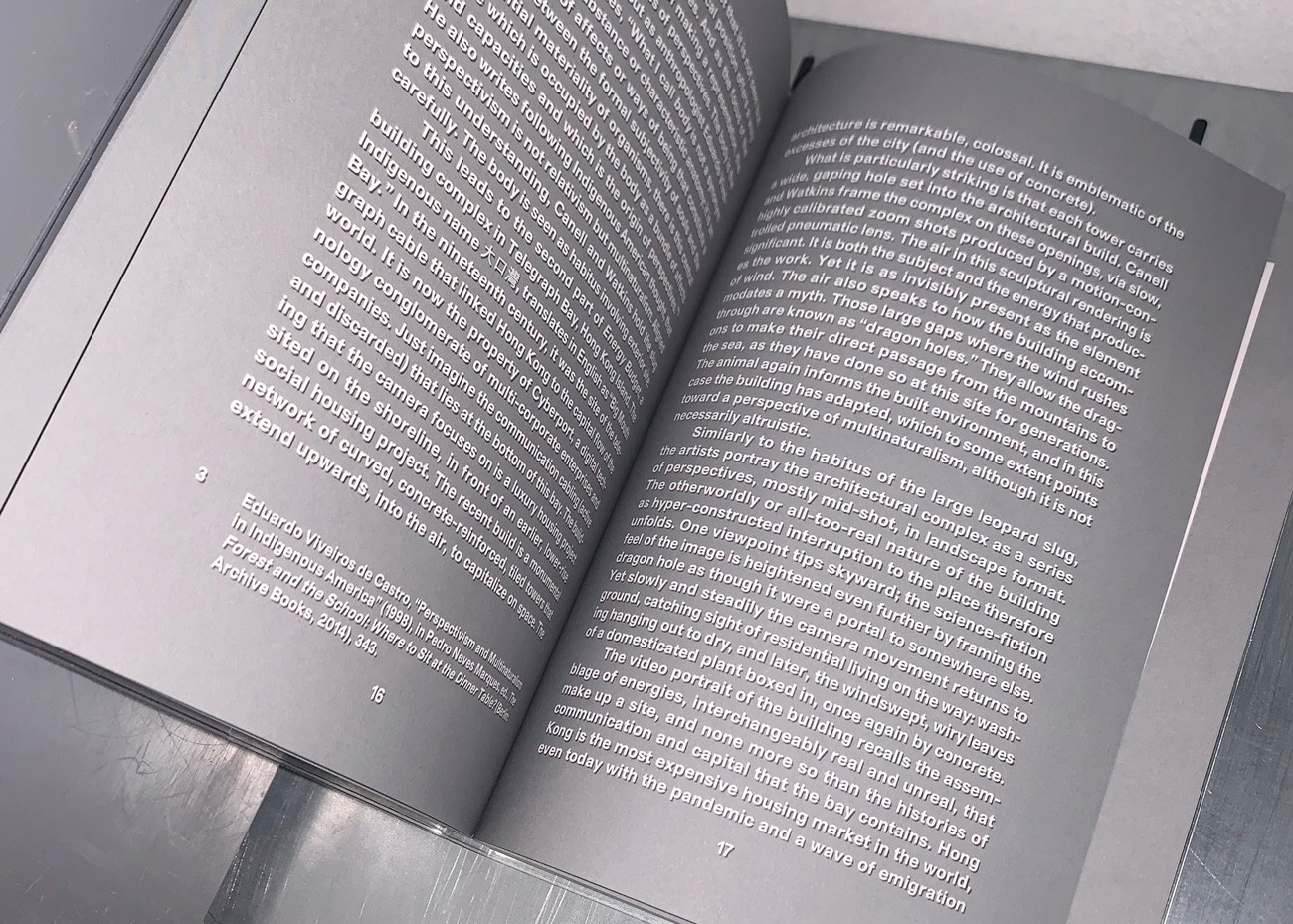
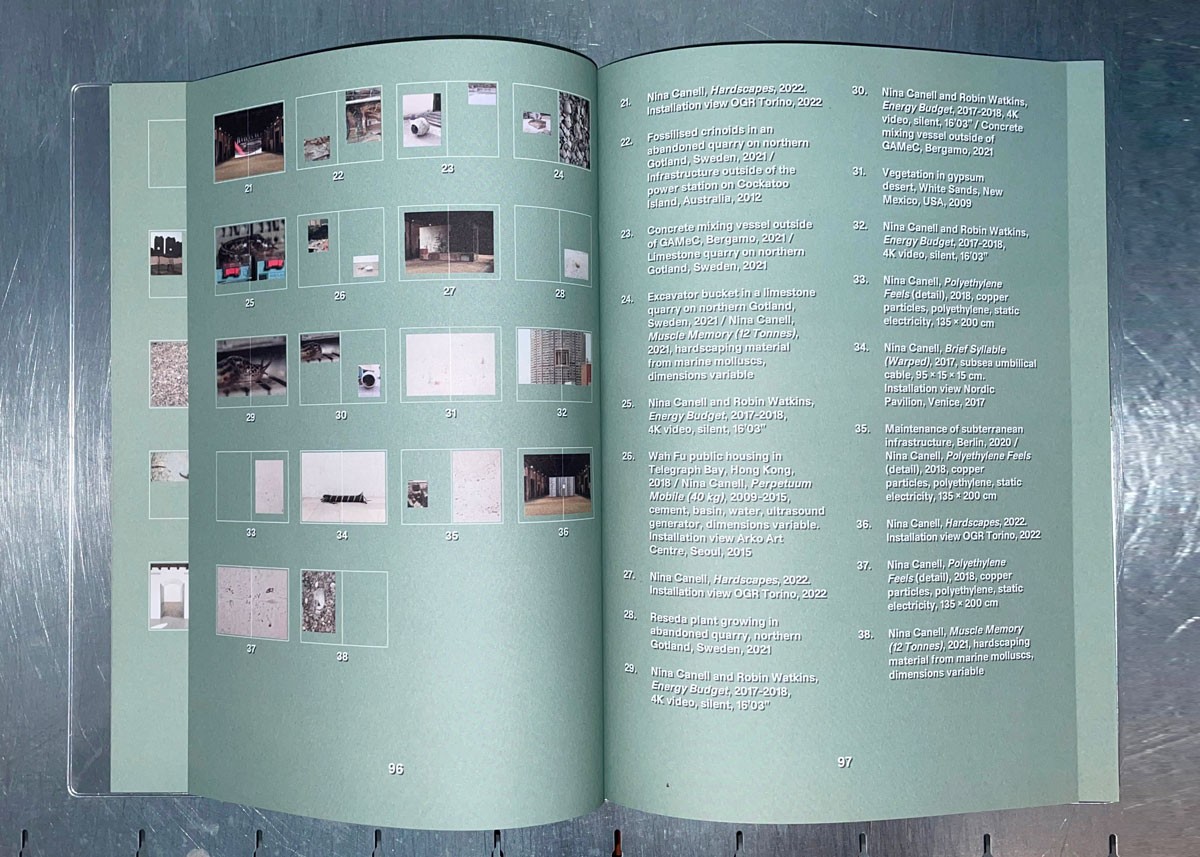
Hardscapes / HERE documents and brings together two exhibition projects by artists Nina Canell (Växjö, 1979) and Maria Hassabi (Cyprus, 1973). Produced on the occasion of the exhibitions of the same name curated by Samuele Piazza at the OGR Torino, the publication consists of two graphically specular books that merge into a single volume. Essays, unpublished materials and a rich set of photographic materials form the driving force behind two visual narratives that offer new keys to understanding the research of the two artists.
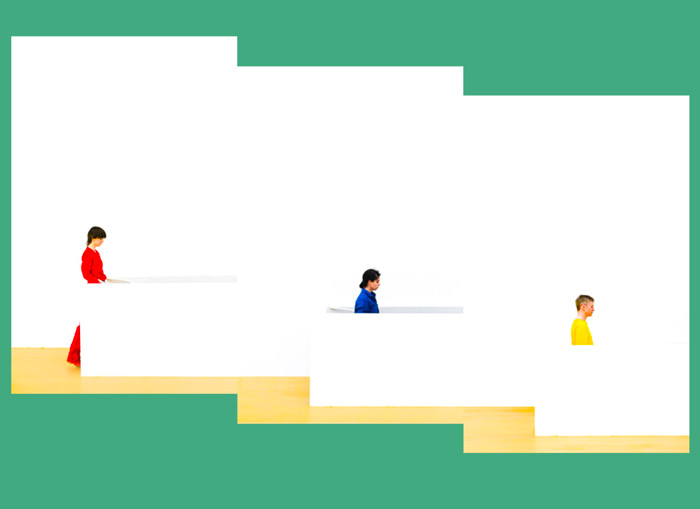
Hassabi’s live installation HERE calls on visitors to share space and spend time with six performers portrayed in a decelerated rhythmic choreography within a sculptural environment. In constant motion, the dancers contribute to a situation of shifting presence, demonstrating the contestable nature of the “here and now.” Immobility and slowing down are thus used both as techniques and as subjects of representation: the performing bodies oscillate between dance and sculpture, subject and object, living body and static image.
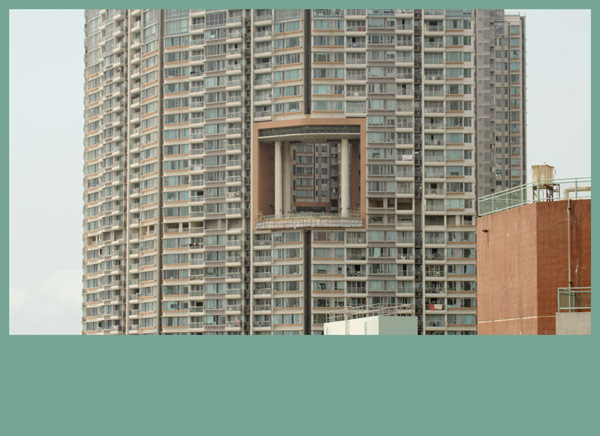
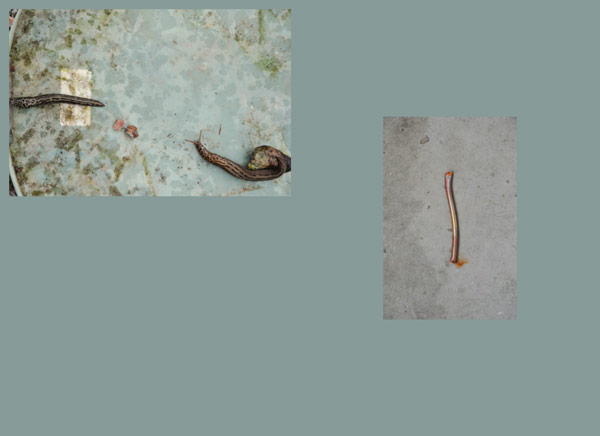
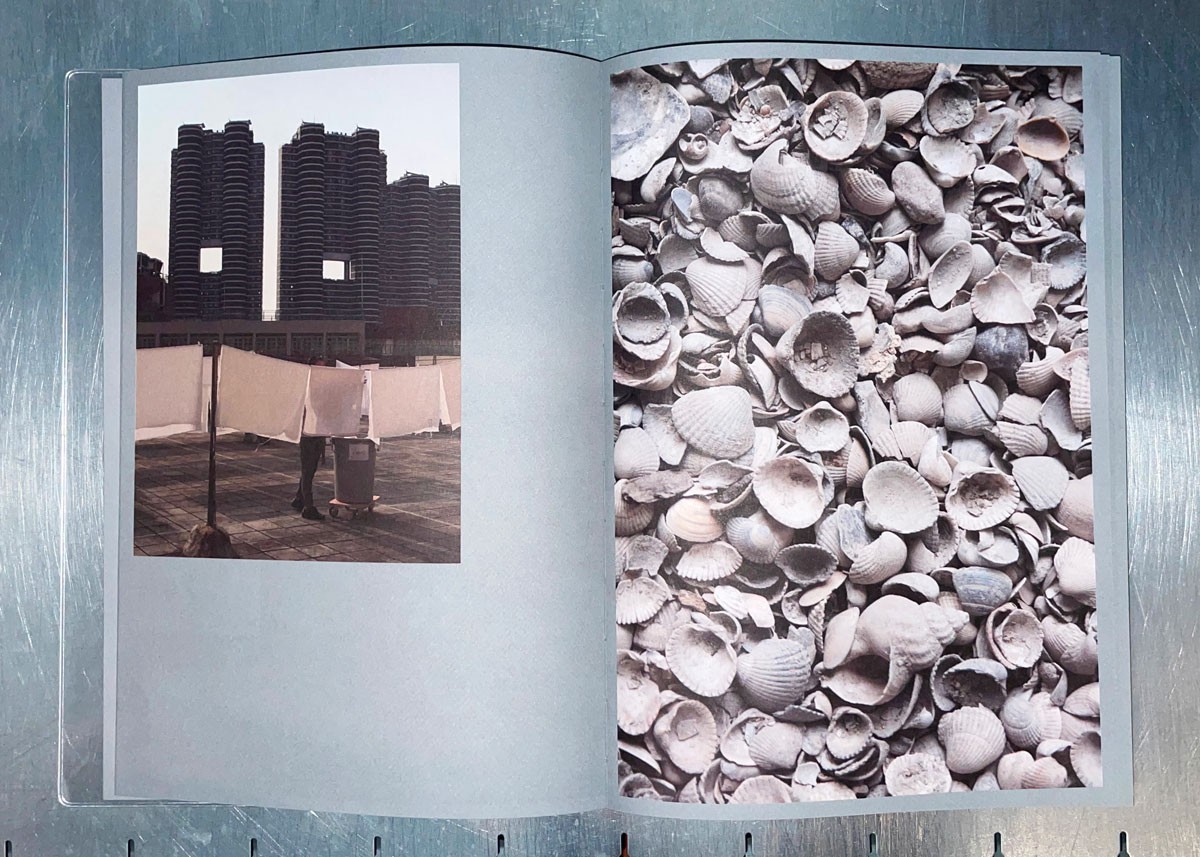
Canell’s Hardscapes combines two works that focus on the concepts of circulation and transformation as well as on unexpected forms of coexistence. Energy Budget (2017–18), a video that alternates between two subjects: a basement in which a leopard snail crawls over an electrical panel, and the gradual shifting of the frame away from “dragon gates”—portal-like openings in huge buildings on the Hong Kong waterfront. Muscle Memory (16 Tonnes) (2020–21) is a floor sculpture, decomposed and transformed by the density of moving bodies, which literally crumbles under the soles of passing visitors.
In addition to texts by the curator, the publication includes essays by Felicia Leu and Laura Preston, along with a conversation by Maria Hassabi and Nina Canell with Lorenzo Giusti.