This new major monographic publication on the Ghanian artist documents the work that transformed sites and repurposed buildings in his native town of Tamale to transformative outcomes rooted into the idea of art as a tool of understanding, rebalancing, and advancement.
For life and limbs, Austrian artist and curator Anna-Sophie Berger has assembled a group of works, from Arakawa and Gins to Lyle Ashton Harris, that register the body as a habitat that can be imaginatively stretched, altered, modified, adorned, replicated or destroyed.
This two-volume catalog, curated by Andrea Bellini and the New York-based collective DIS, is the outcome of the 2021 edition of the Biennale de l’Image en Mouvement (BIM’21), presented at the Centre d’Art Contemporain Genève.
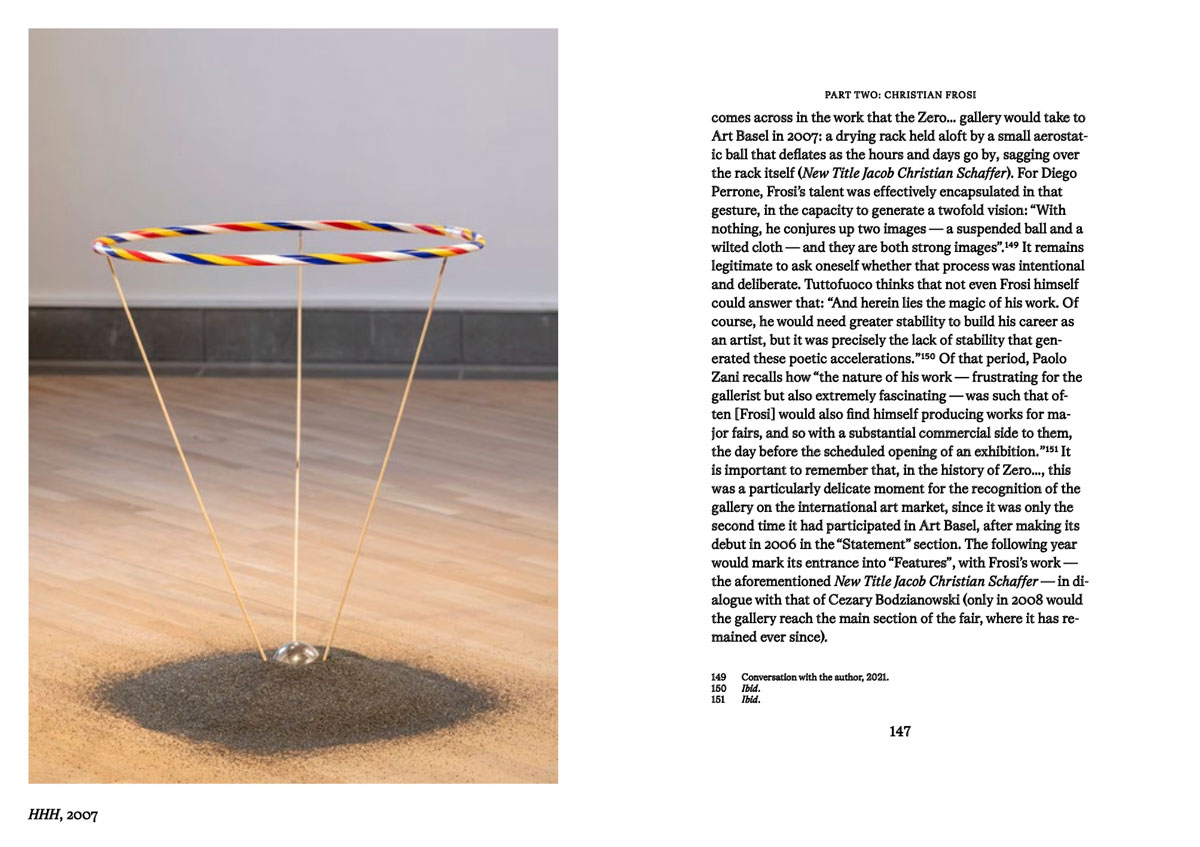
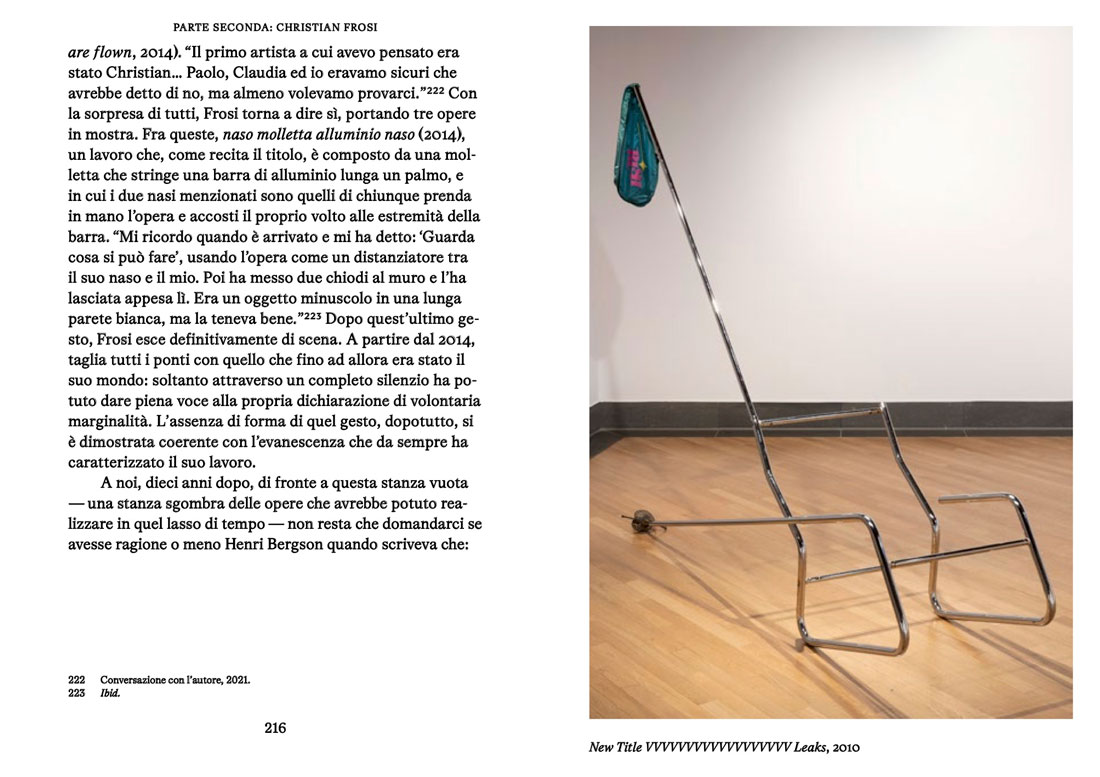
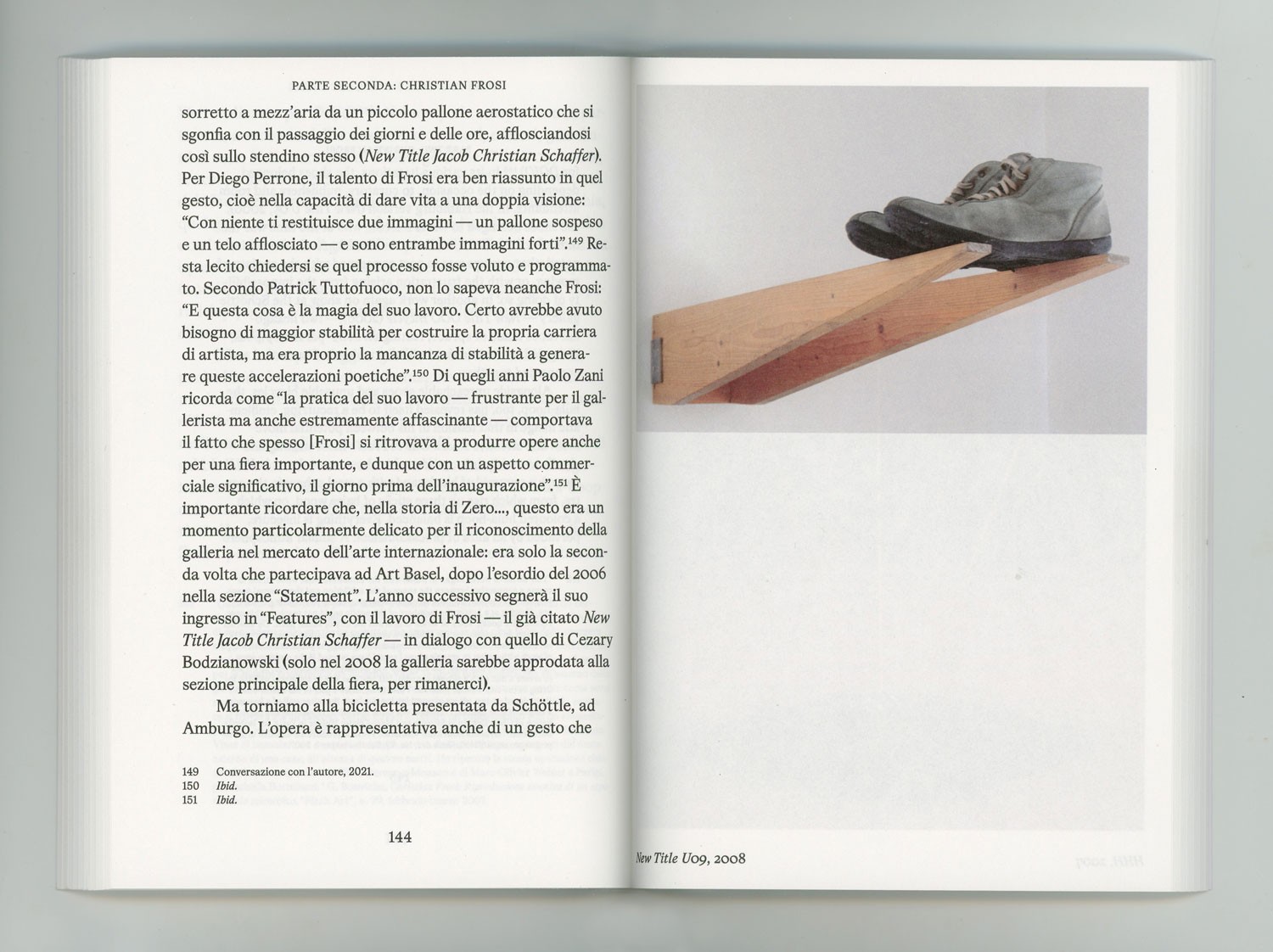
Christian Frosi was long considered one of the most inspiring and promising Italian artists debuting in the early 2000s. That is until just over ten years into his career, when he decided to make himself unreachable and remove himself from art history, its customs and figures.
Featuring new contributions by Sitara Abuzar Ghaznawi and a wealth of commissioned texts and writings, this book is conceived as a continuation of the exhibition held at Cabaret Voltaire, Zurich and, in a modified form, at Swiss Institute, New York.
In a context in which institutions are facing a surge of public scrutiny, the publication revisits the artistic practice of institutional critique to ask what it means today, and to consider its ability to respond to the urgent social, political, and economic issues of our time.
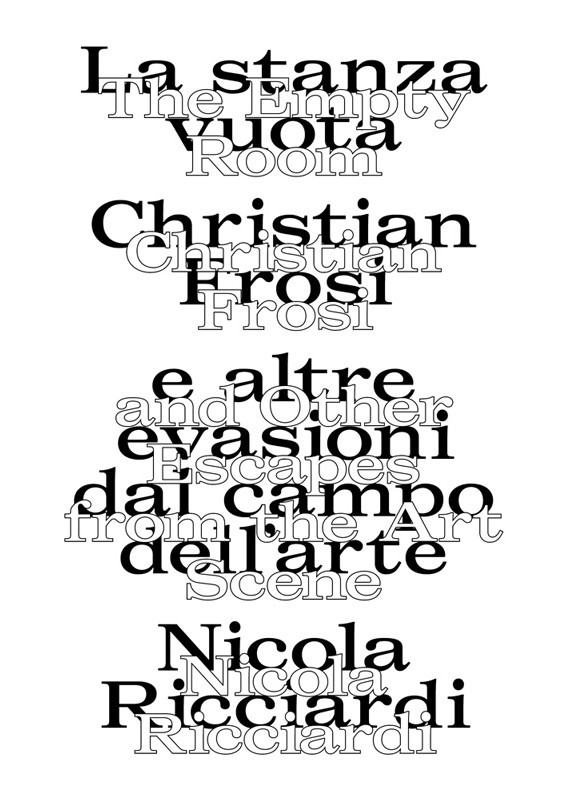
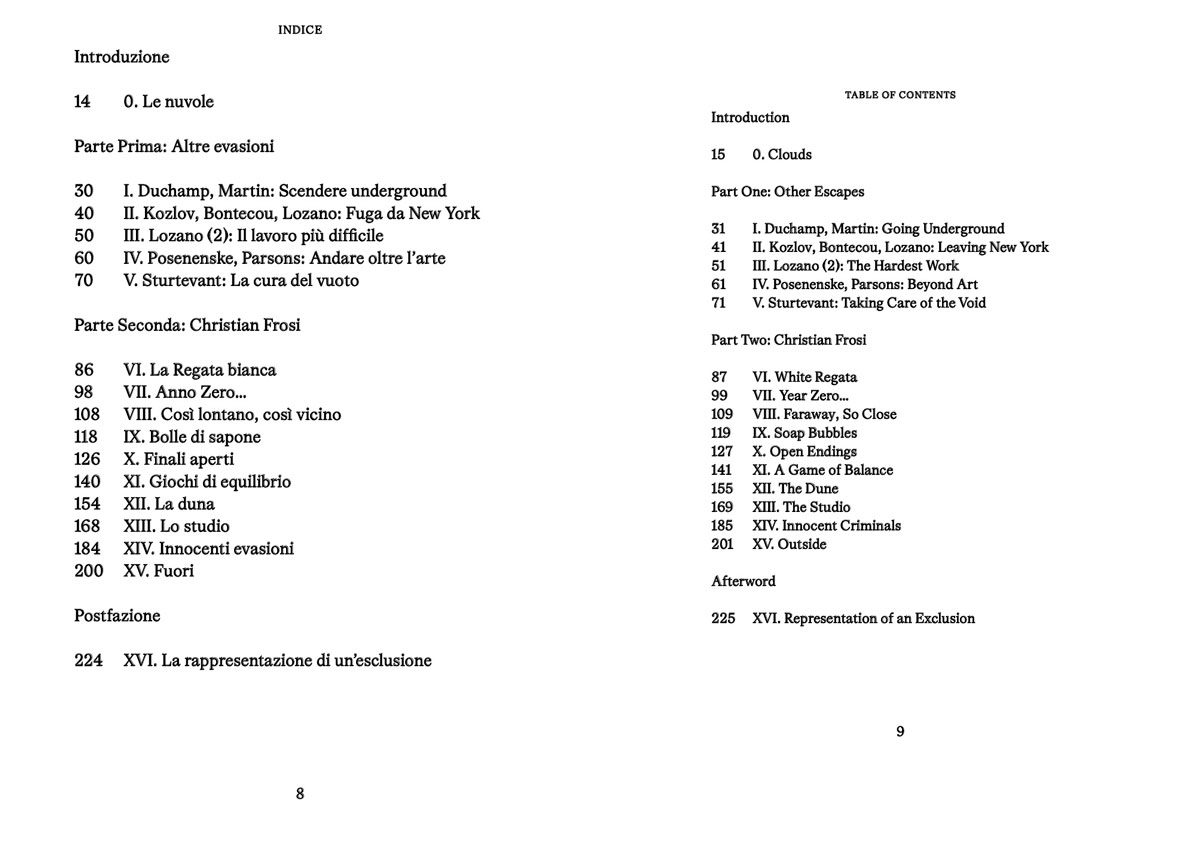
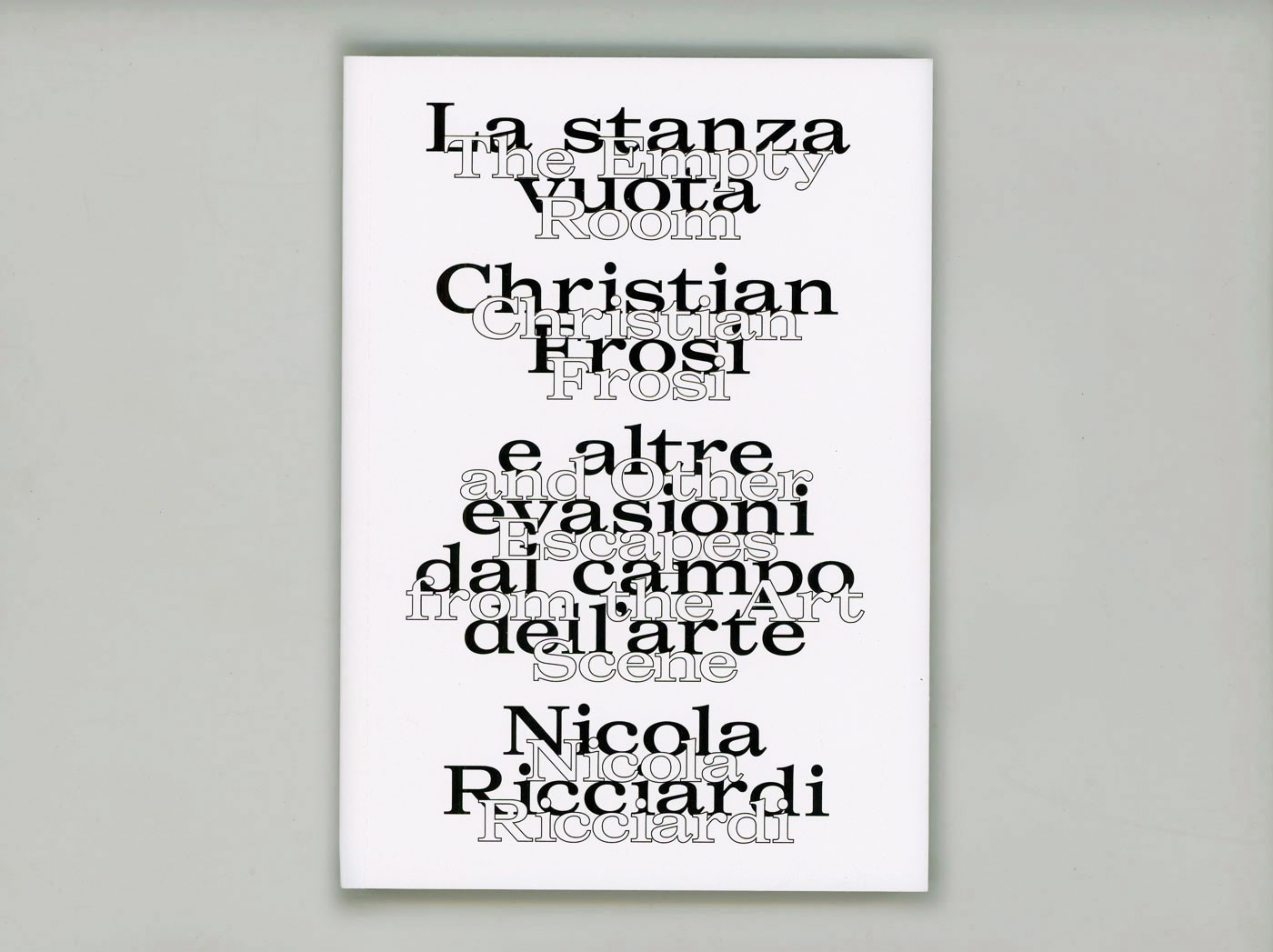
The Empty Room Christian Frosi and Other Escapes from the Art Scene
Edited by Nicola Ricciardi
Design by Lorenzo Mason Studio
2022, English / Italian, softcover, 240 pages, 17 x 24 cm
ISBN 979-12-80579-28-7
Christian Frosi (Milan, 1973) was long considered one of the most inspiring and promising Italian artists debuting in the early 2000s. That is until just over ten years into his career, when he decided to make himself unreachable and remove himself from art history, its customs and figures.
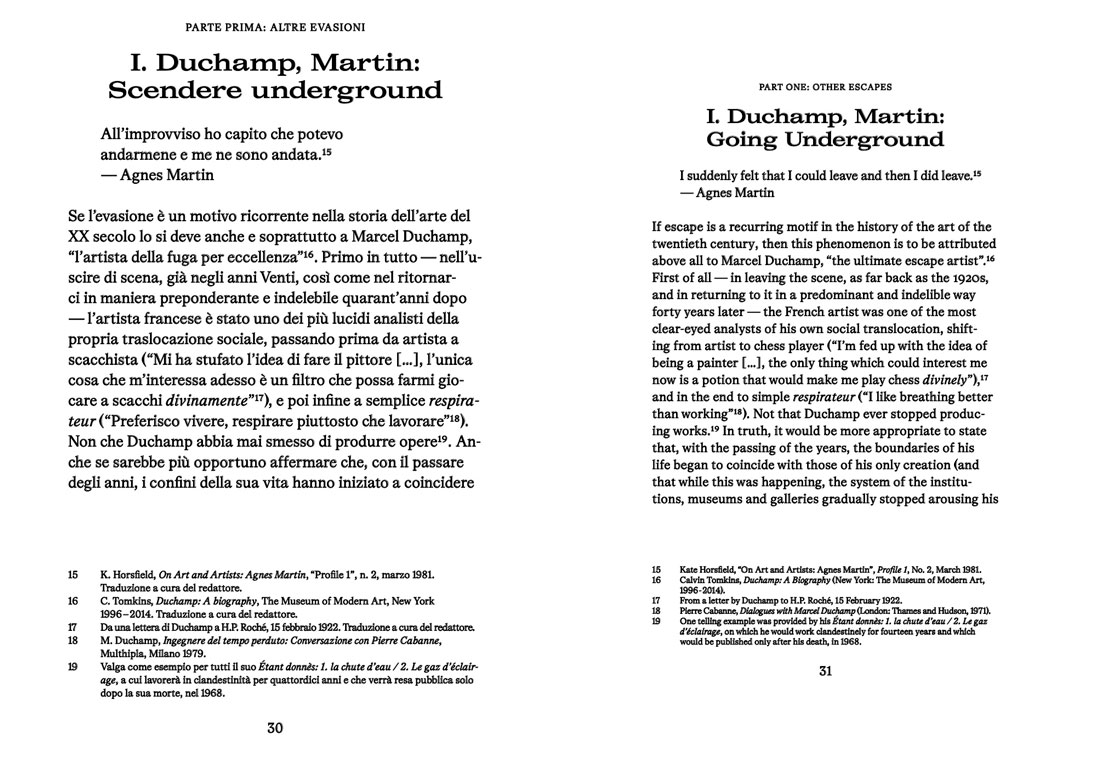
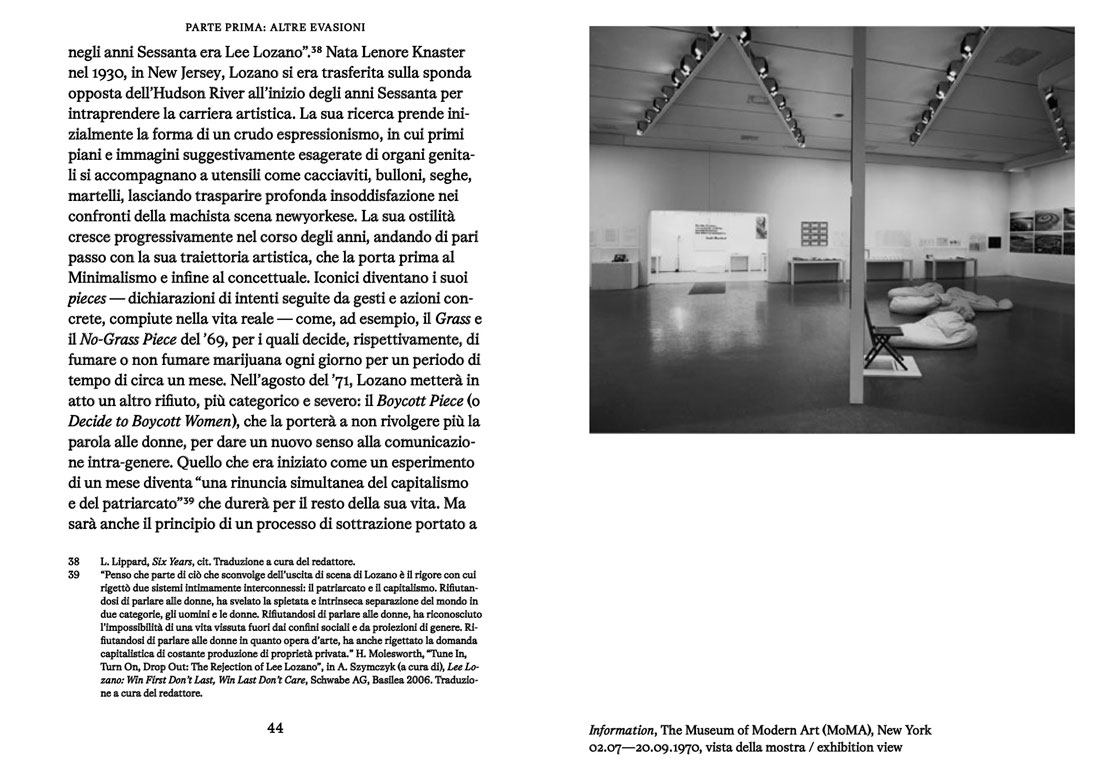
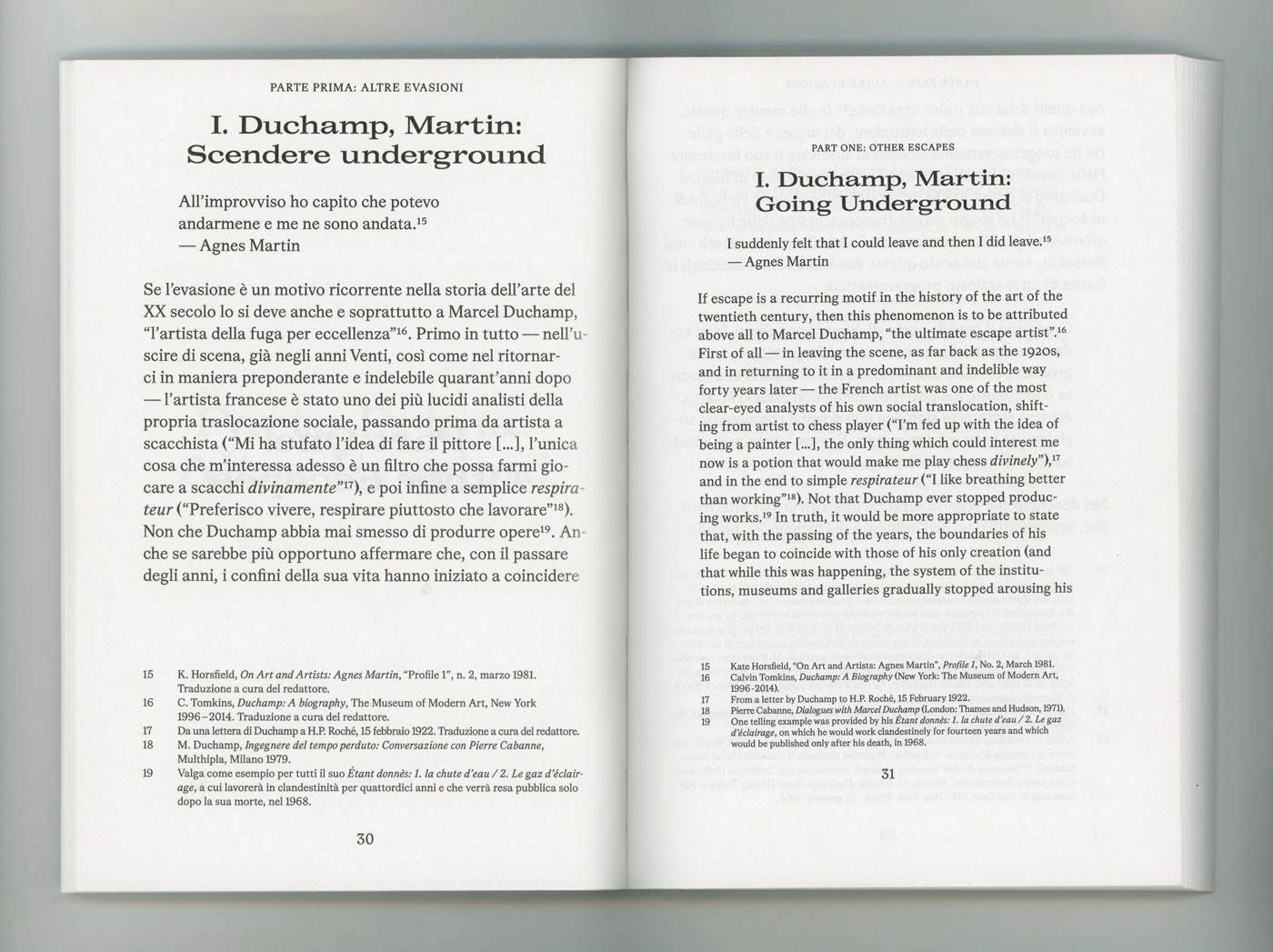
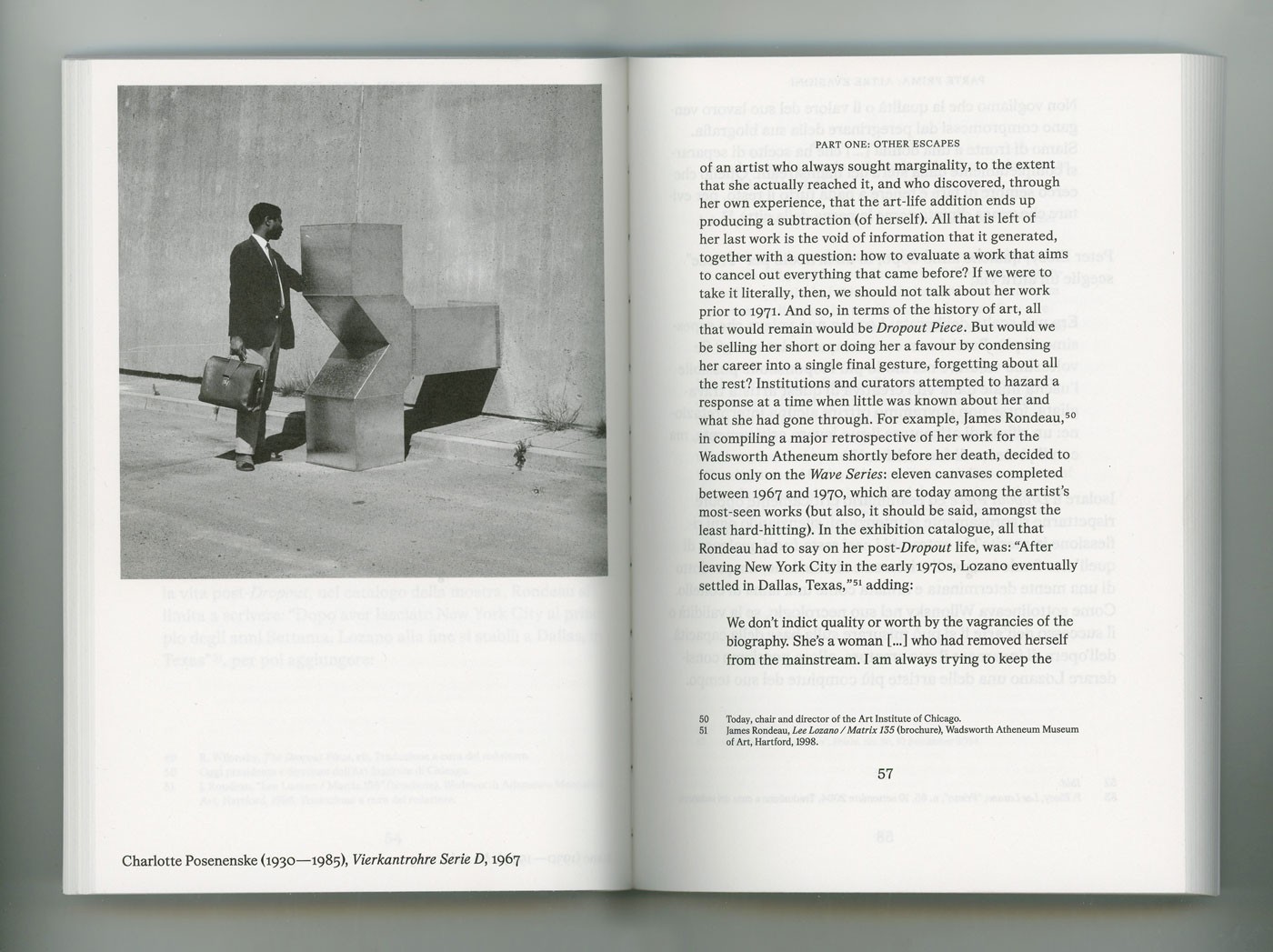
This choice brings him abstractly close to Marcel Duchamp, Agnes Martin, Lee Lozano, Charlotte Posenenske and the many other artists before him who decided of their own volition to stop producing art and participating in the art world (sometimes for a few years, sometimes forever). This publication speaks of all of them, with a twofold purpose: on one hand to write the history of Christian Frosi’s works and exhibitions — for the first time in an organized and timely manner — and on the other, to relativize the pages left blank through the stories of other “dropout artists,” each with their own particular destiny yet united by a common desire to escape.
The book is published in conjunction with the exhibition La Stanza Vuota [The Empty Room], curated by Nicola Riccardi and staged at GAMeC in Bergamo. This first-ever retrospective of Christian Frosi’s oeuvre featured more than thirty works embodying precariousness, transience and evanescence — constant elements in his enigmatic, transitory output.