Maxiprocesso brings together 360 photographs by Maria D. Rapicavoli, one for each of the archival folders documenting the largest mafia trial in history, held in Palermo from 1986 to 1987. The volume explores the relationship between memory, justice, and social responsibility, examining the material element of a landmark event in contemporary Italian history.
This is the first monograph on the influential American choreographer and dancer Trajal Harrell. In an entertaining, far-reaching conversation with curator Daniel Baumann, Harrell covers all of his choreographies and performances, as well as his influences, successes, and failures, addressing how he transforms and transgresses the history of dance.
This book offers the first comprehensive overview of Anna Franceschini’s practice. Organized around recurring themes, it explores animation, the body, machines, ghosts, desire, and windows through commissioned contributions and selected writings. Its associative structure reflects her interest in repetition, transformation, and unstable images.
This book accompanies 5 Works, Lydia Ourahmane’s first institutional solo show in Italy, staged at the Nicoletta Fiorucci Foundation in Venice and curated by Polly Staple, during the 61st Venice Biennale, and includes newly commissioned texts and images that further contextualize the artist’s practice and work.
Museums of Tears extends Francesco Vezzoli’s 2024 exhibition at Museo Correr, Venice, combining historical works and new commissions to explore antiquity, emotion and illusion. Conceived as an artist’s book rather than a catalogue, it transforms the museum guide into a hybrid archive and portable museum of memory, beauty and mourning.
A project by Fondazione In Between Art Film, edited by Carla Subrizi, Paola Ugolini, and Maria Alicata, this illustrated volume investigates the cinematic, documentary, and video output of women artists and filmmakers operating in Italy in the 1960s and 1970s, situating their research at the intersection of artistic experimentation, politics, society, and technology.
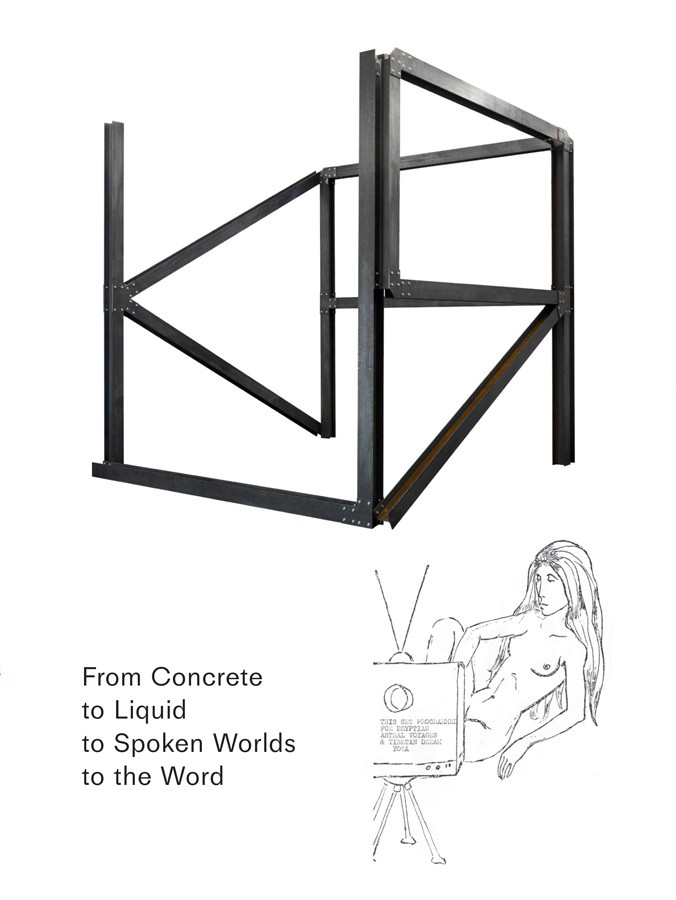
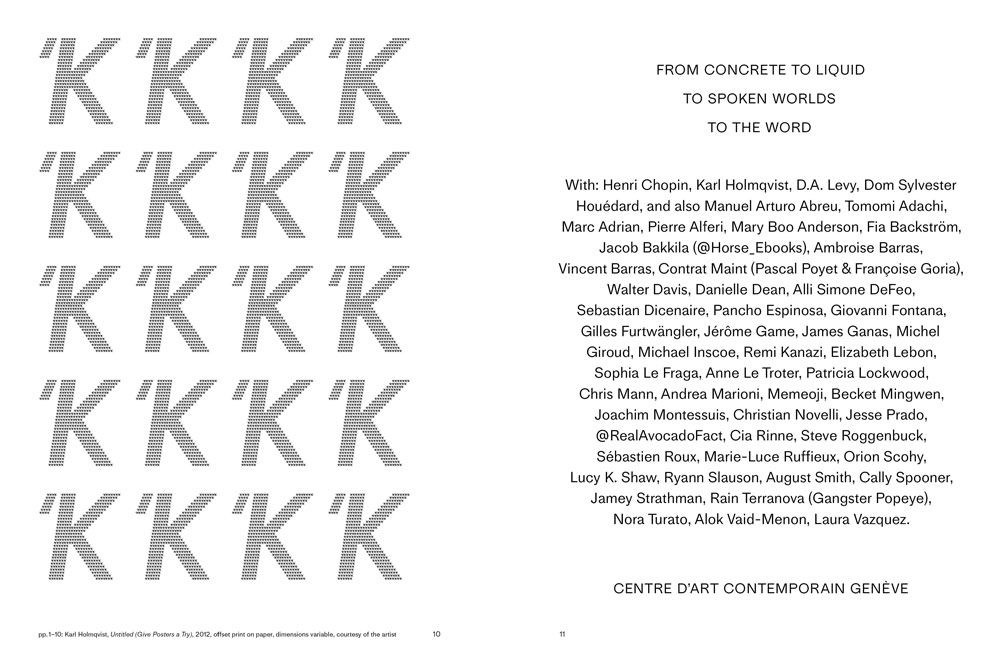
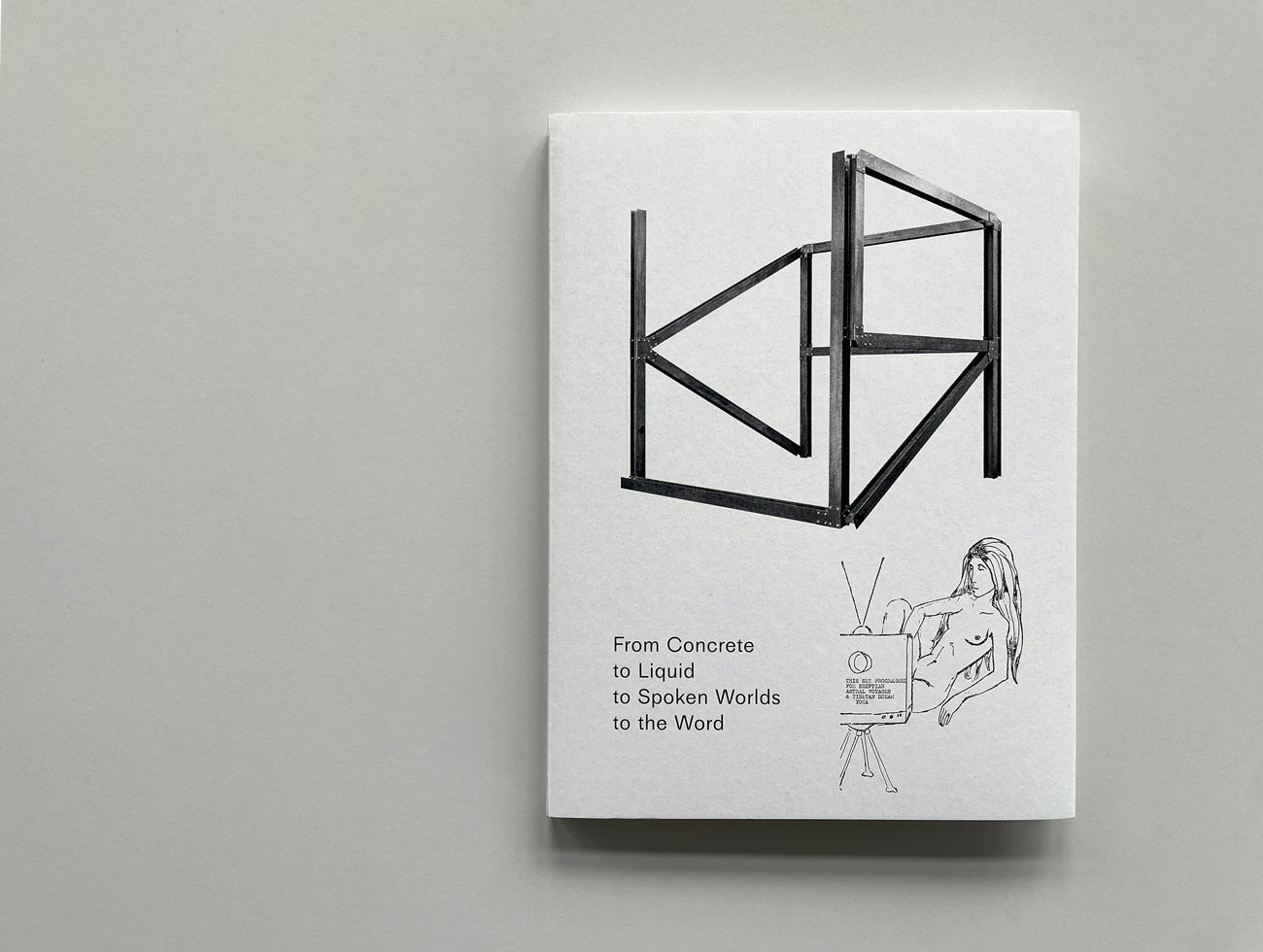
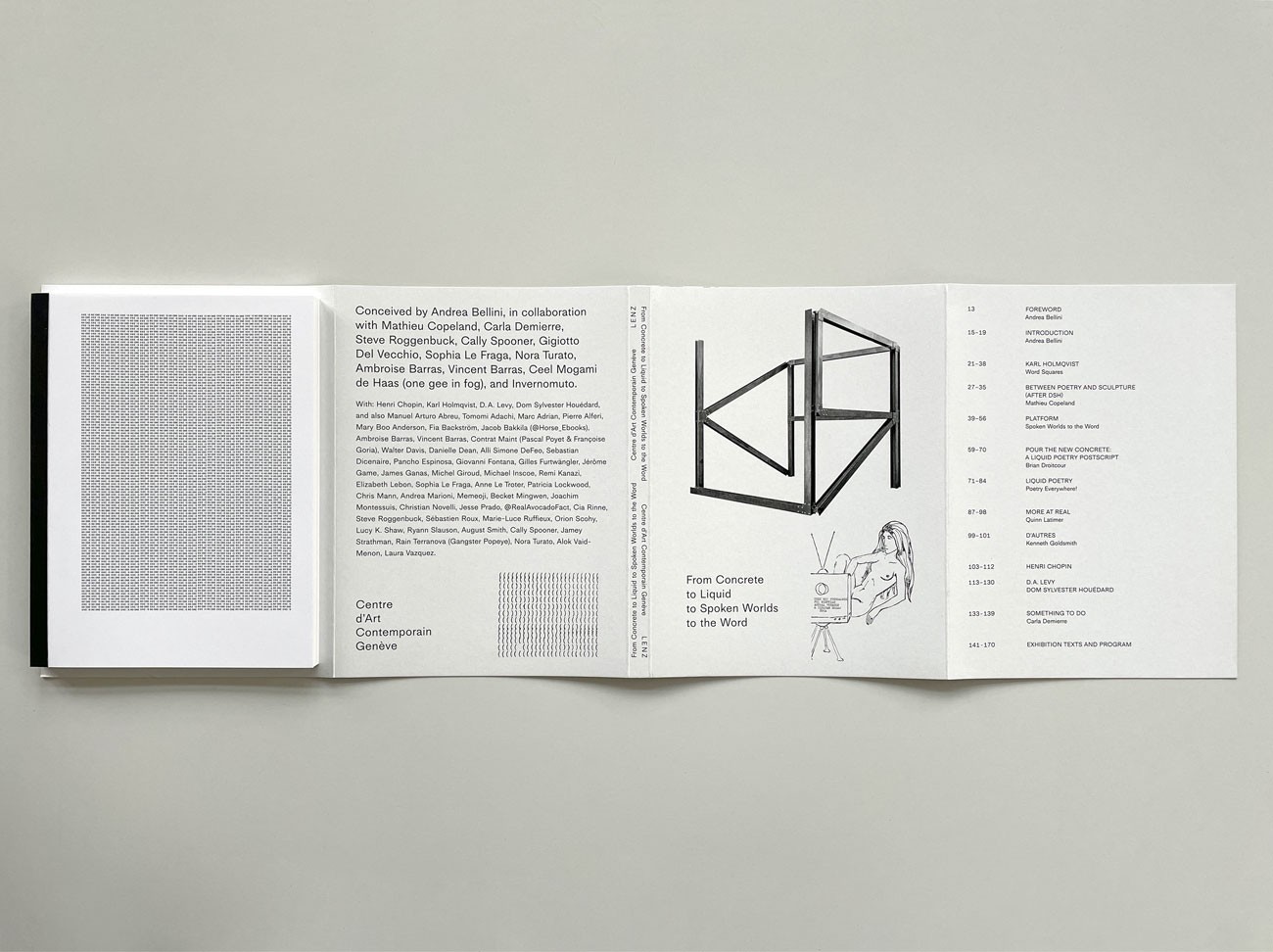
From Concrete to Liquid to Spoken Worlds to the Word
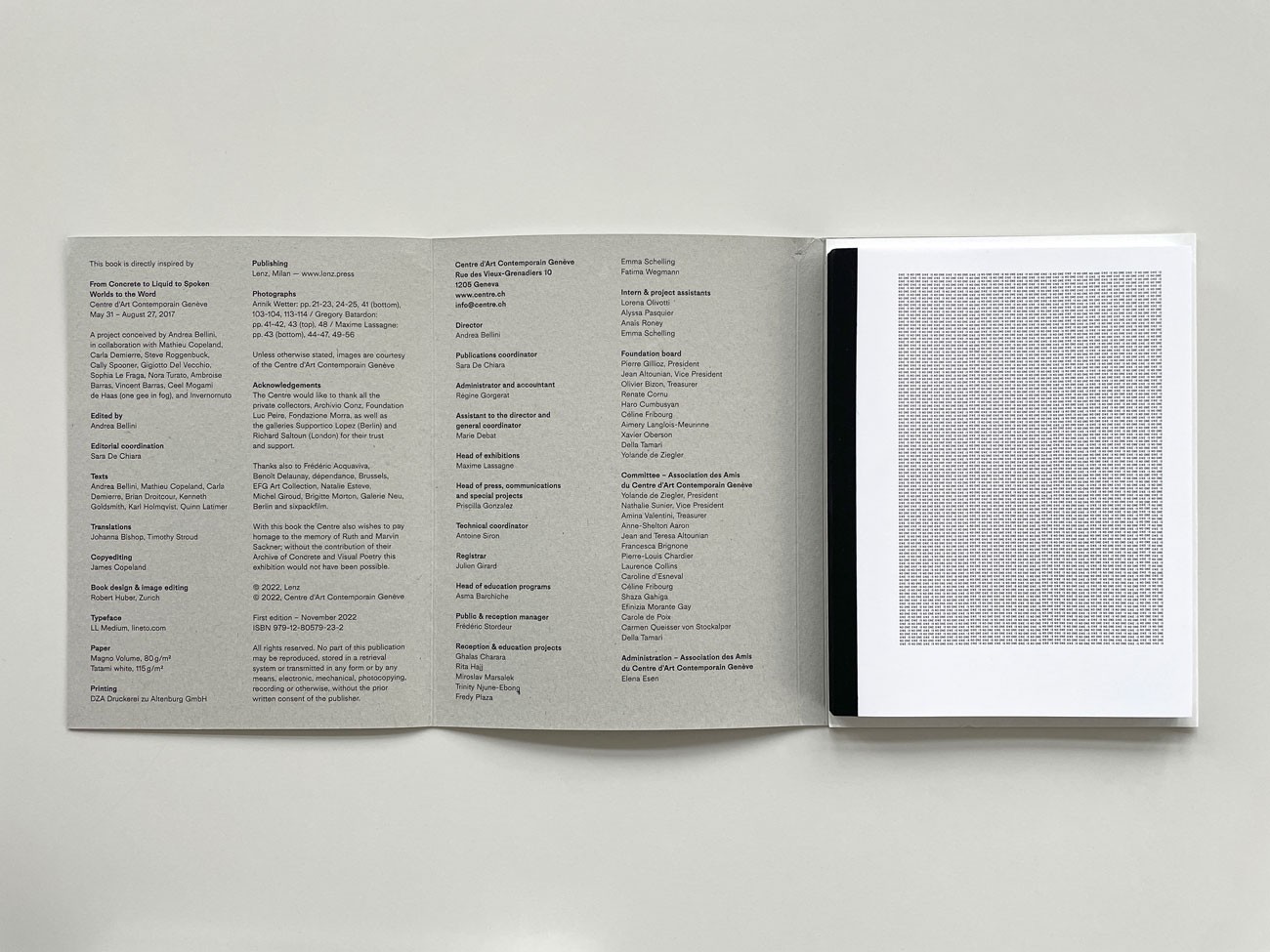
Edited by Andrea Bellini
Texts by Andrea Bellini, Mathieu Copeland, Carla Demierre, Brian Droitcour, Karl Holmqvist, Kenneth Goldsmith and Quinn Latimer
Design by Robert Huber
2022, English, softcover, 178 pages, 16.9 x 22.4 cm
ISBN 979-12-80579-23-2
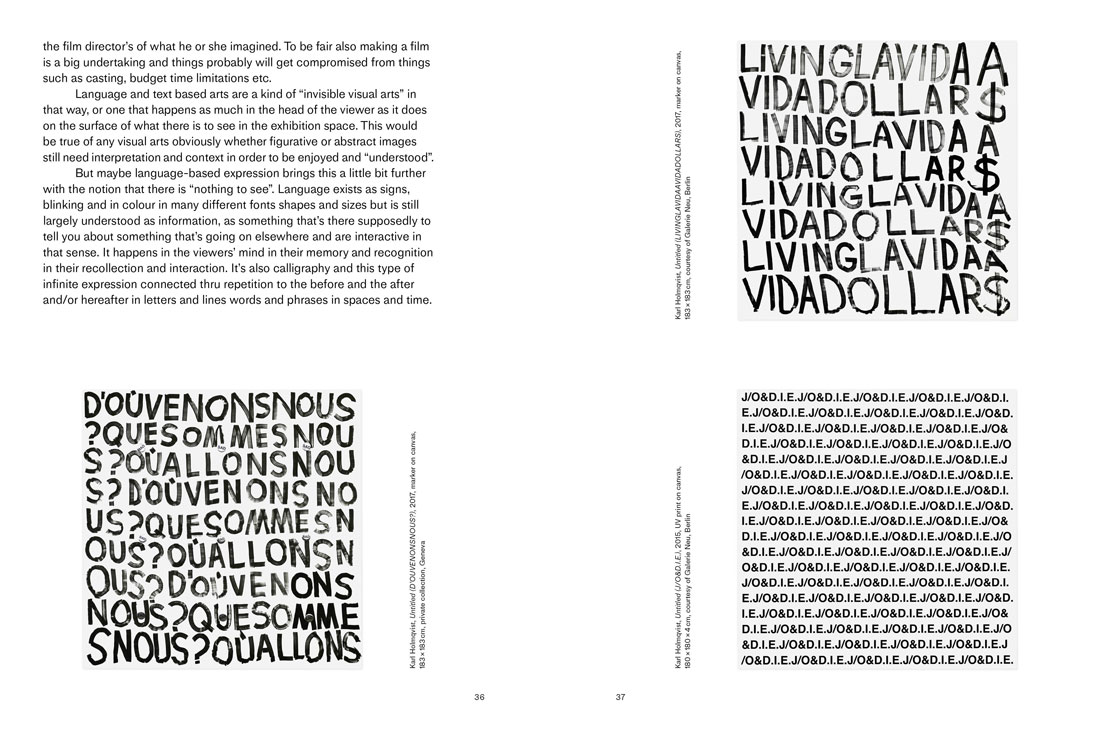
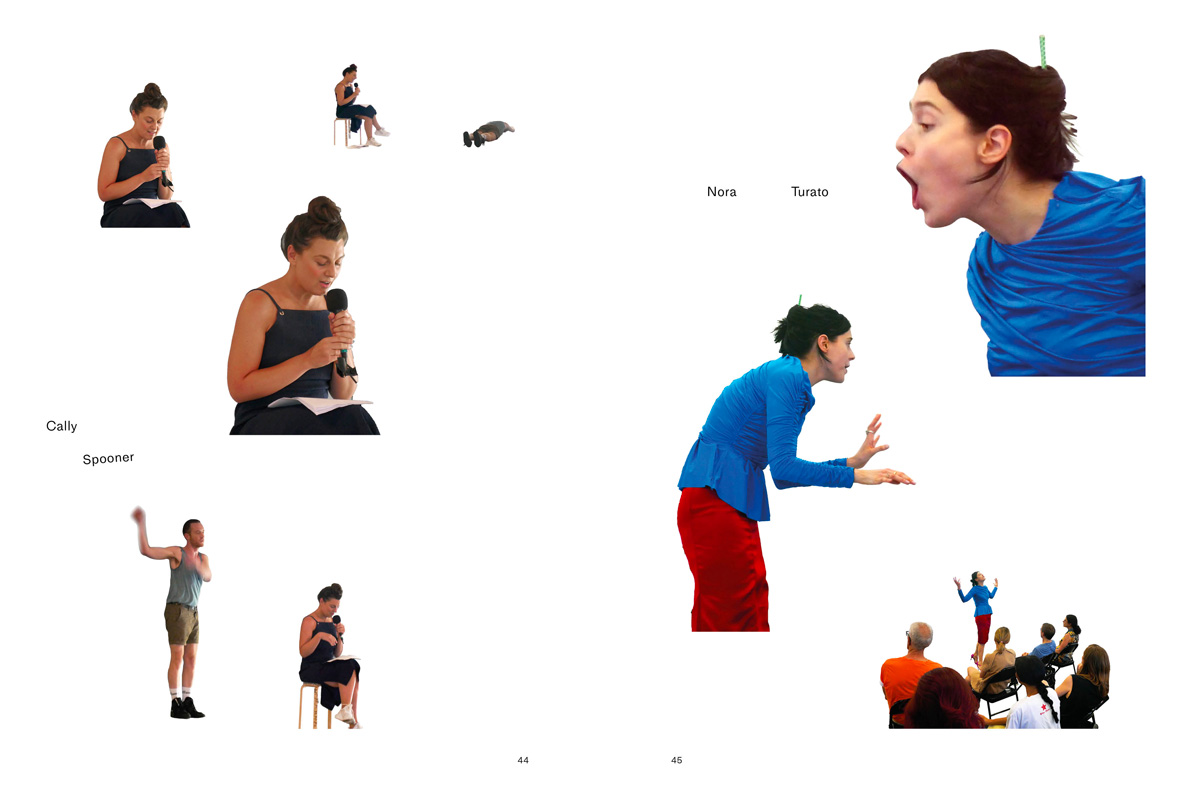
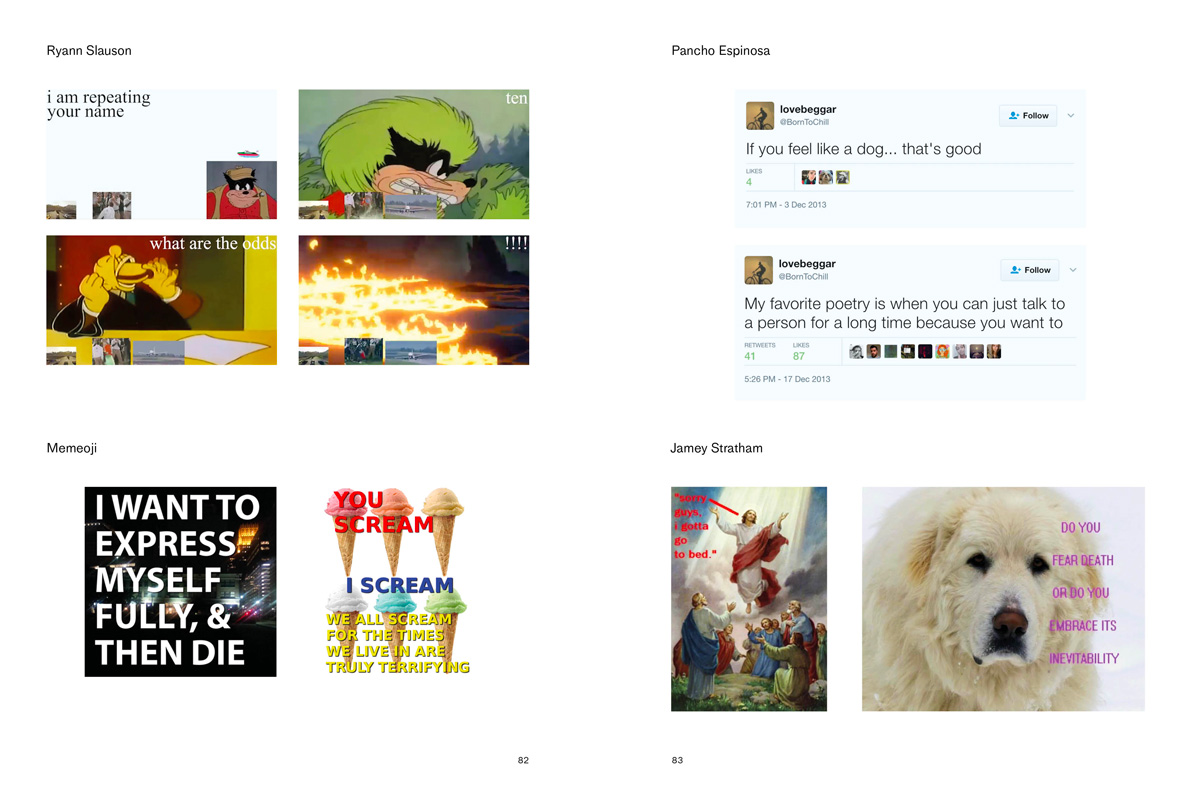
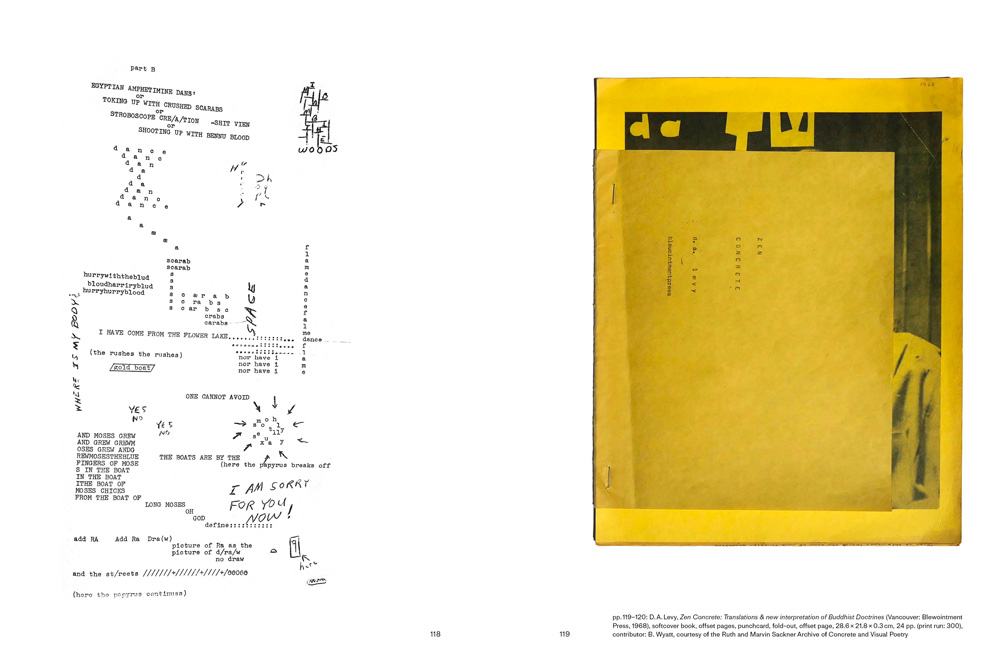
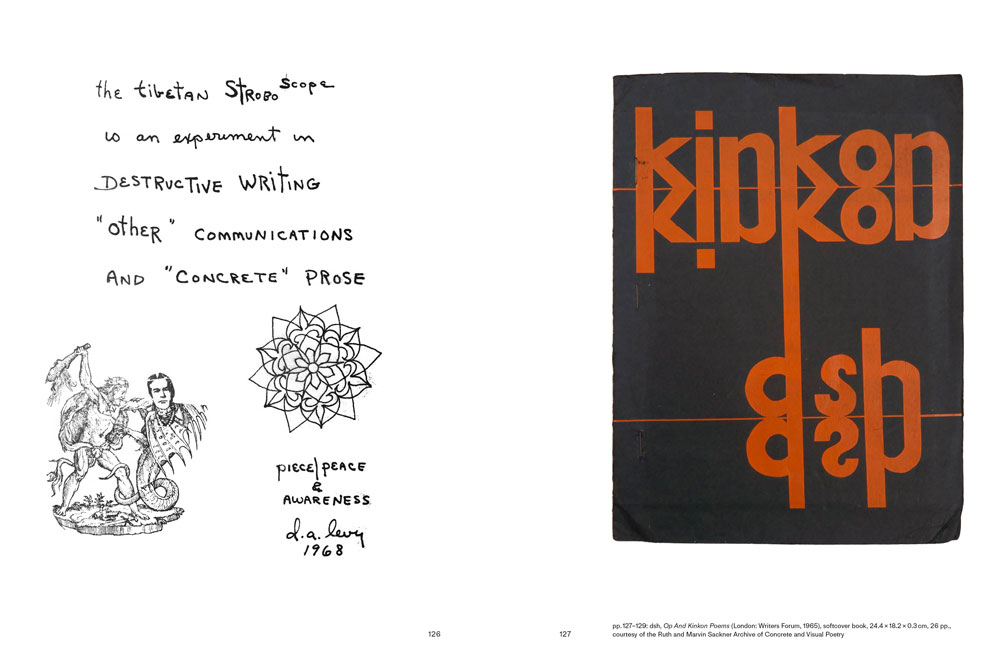
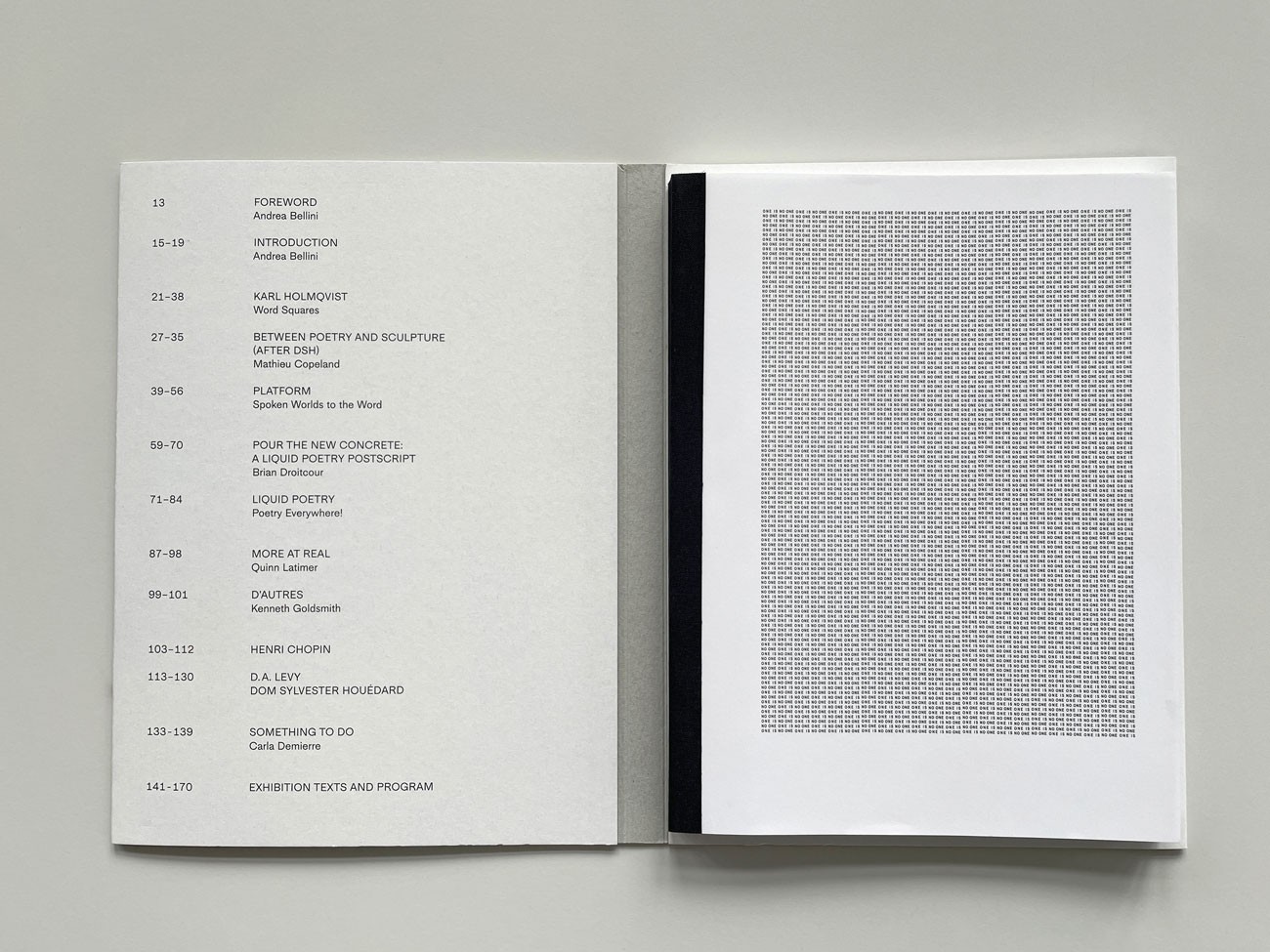
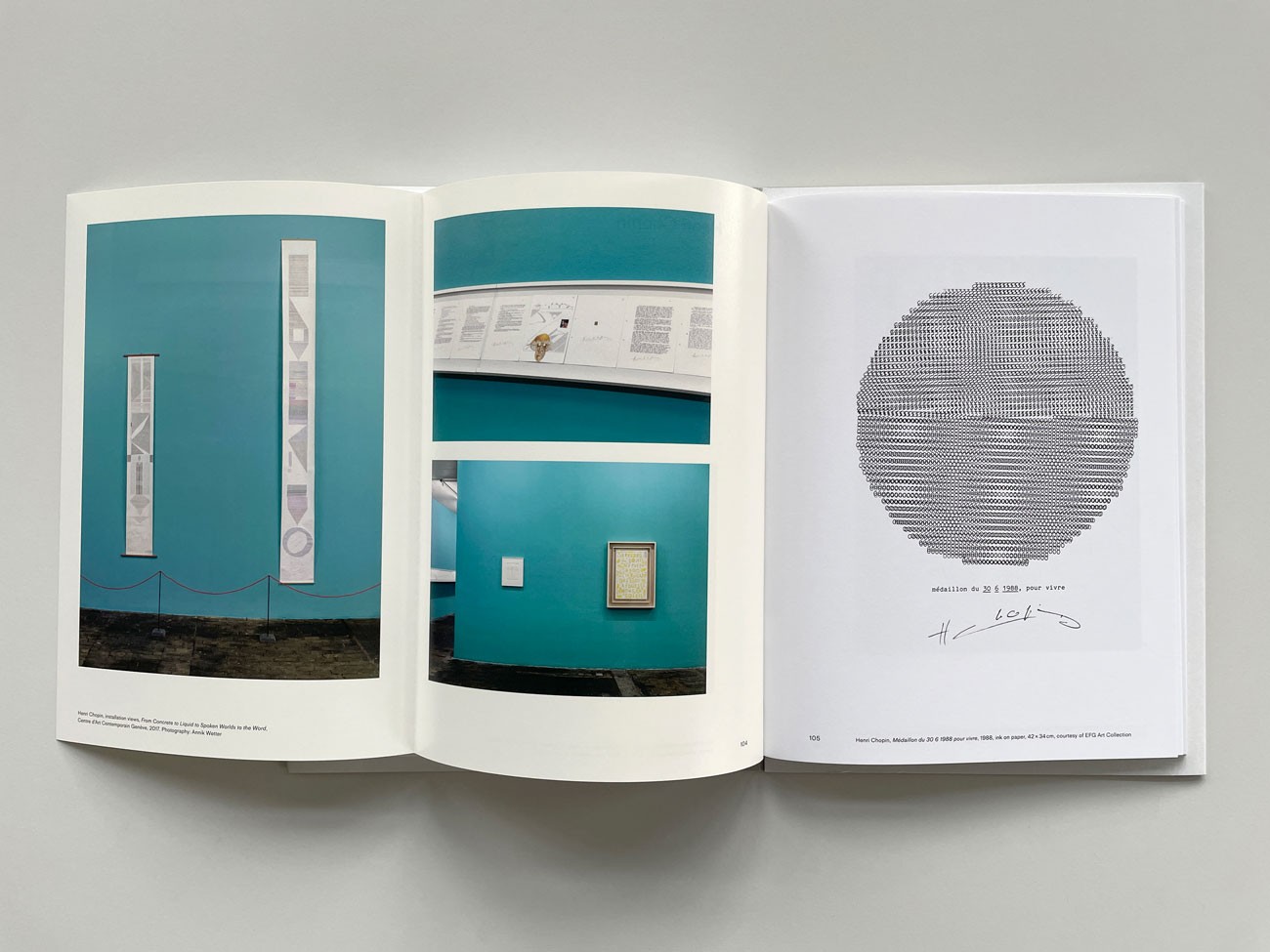
Five years after the exhibition From Concrete to Liquid to Spoken Worlds to the Word, and after a disastrous pandemic, the Centre d’Art Contemporain Genève presents the catalogue for this complex, ambitious project. Even at such a remove, we thought it was important to retrace the fundamental stages of this event through critical essays, images of the works and installations, and the calendar of performances and poetry readings. The reason is simple: despite the undeniable weight of images in today’s world, a keen interest in writing — rather surprisingly — has recently become a hallmark of many young artists’ work. They use writing as a tool to understand the world and as the cornerstone of a critical method, analyzing the present and creating a performative, politically engaged language.
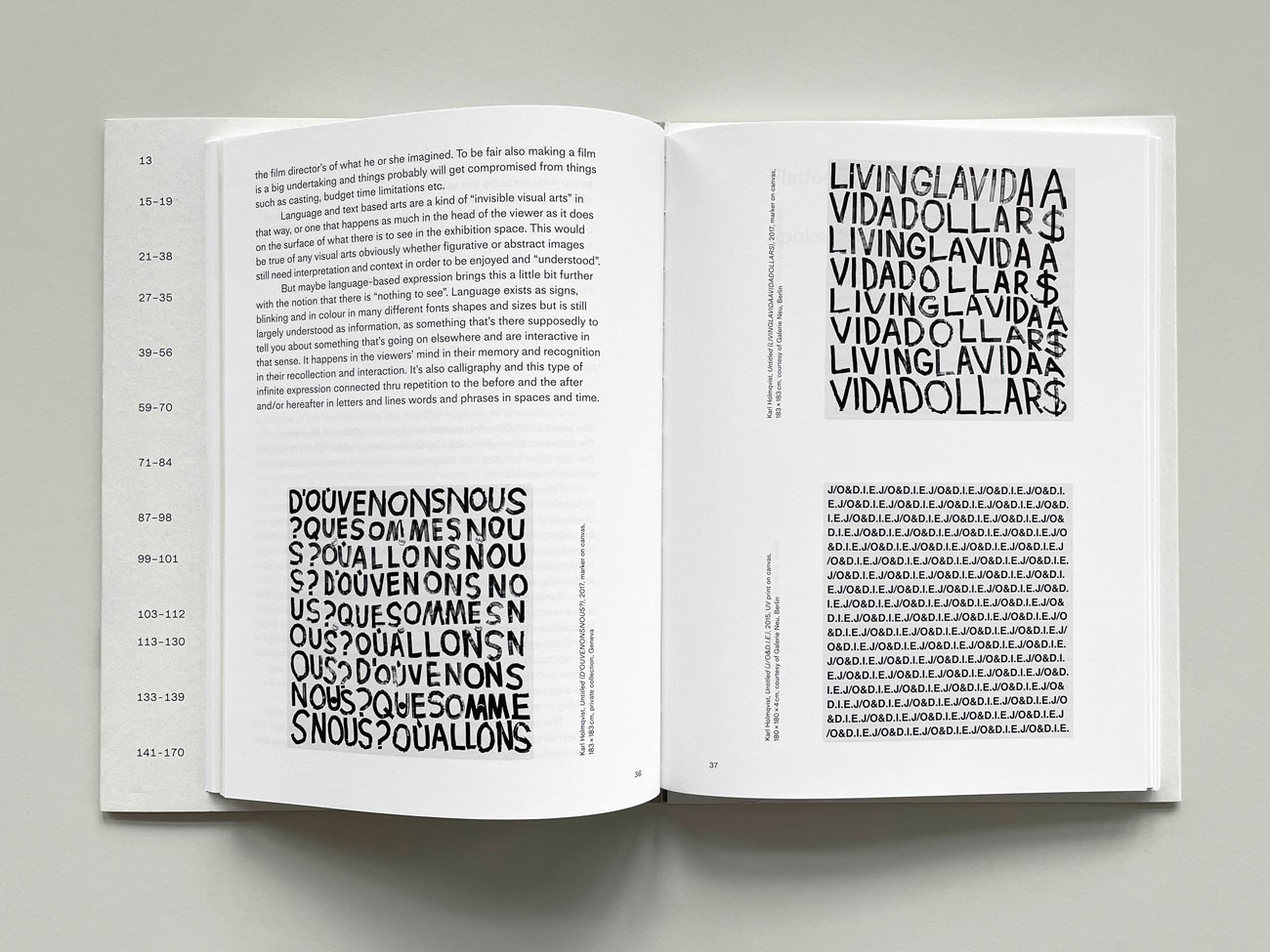
From Concrete to Liquid to Spoken Worlds to the Word explored the emancipation of language through historical and contemporary positions, from the earliest typographic and sound works of concrete poets to poetic experiments in the digital era. This diverse exhibition was accompanied by a series of readings, performances, and screenings revealing the porosity between art and poetry. Poetry readings and recitals in museums, performances centered on the importance of the text and its recitation, videos where poetic language takes on a role that rivals the visual component: the art of our time appears to be deeply and intimately rooted in words.
The program of the Centre d’Art Contemporain Genève, while tracing this link between word and image to the concrete poetry of the 1960s and ’70s, tried on the one hand to examine this renewed artistic interest in the word, and on the other to show how the web and social media are introducing new ways of making poetry. The underlying aim was to explore how art and poetry shape each other in an increasingly interconnected world through ongoing, rhapsodic communication.