Maxiprocesso brings together 360 photographs by Maria D. Rapicavoli, one for each of the archival folders documenting the largest mafia trial in history, held in Palermo from 1986 to 1987. The volume explores the relationship between memory, justice, and social responsibility, examining the material element of a landmark event in contemporary Italian history.
This is the first monograph on the influential American choreographer and dancer Trajal Harrell. In an entertaining, far-reaching conversation with curator Daniel Baumann, Harrell covers all of his choreographies and performances, as well as his influences, successes, and failures, addressing how he transforms and transgresses the history of dance.
This book offers the first comprehensive overview of Anna Franceschini’s practice. Organized around recurring themes, it explores animation, the body, machines, ghosts, desire, and windows through commissioned contributions and selected writings. Its associative structure reflects her interest in repetition, transformation, and unstable images.
This book accompanies 5 Works, Lydia Ourahmane’s first institutional solo show in Italy, staged at the Nicoletta Fiorucci Foundation in Venice and curated by Polly Staple, during the 61st Venice Biennale, and includes newly commissioned texts and images that further contextualize the artist’s practice and work.
Museums of Tears extends Francesco Vezzoli’s 2024 exhibition at Museo Correr, Venice, combining historical works and new commissions to explore antiquity, emotion and illusion. Conceived as an artist’s book rather than a catalogue, it transforms the museum guide into a hybrid archive and portable museum of memory, beauty and mourning.
A project by Fondazione In Between Art Film, edited by Carla Subrizi, Paola Ugolini, and Maria Alicata, this illustrated volume investigates the cinematic, documentary, and video output of women artists and filmmakers operating in Italy in the 1960s and 1970s, situating their research at the intersection of artistic experimentation, politics, society, and technology.
Edited by Samuele Piazza
Texts by Lorenzo Giusti, Felicia F. Leu, Samuele Piazza, Laura Preston
Design by Lorenzo Mason Studio
2022, English / Italian, softcover, 224 pages, 16.5 x 24 cm
ISBN: 979-12-80579-14-0
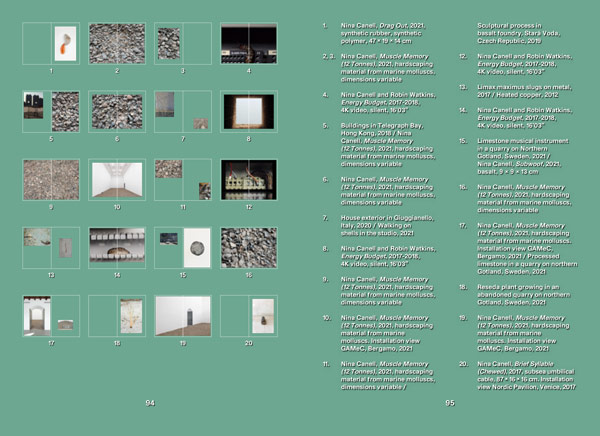
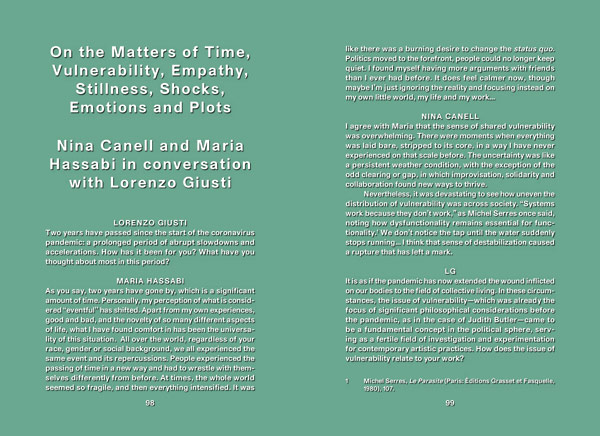
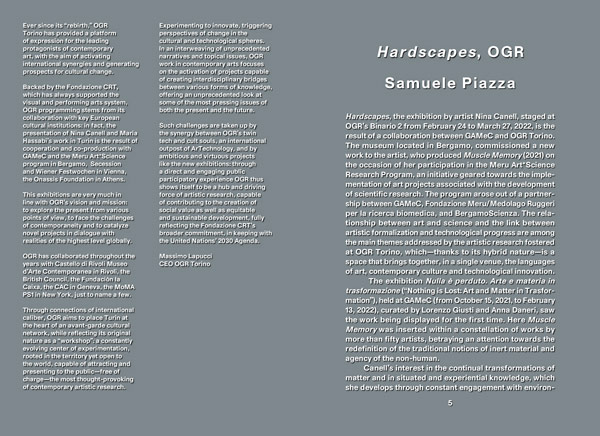
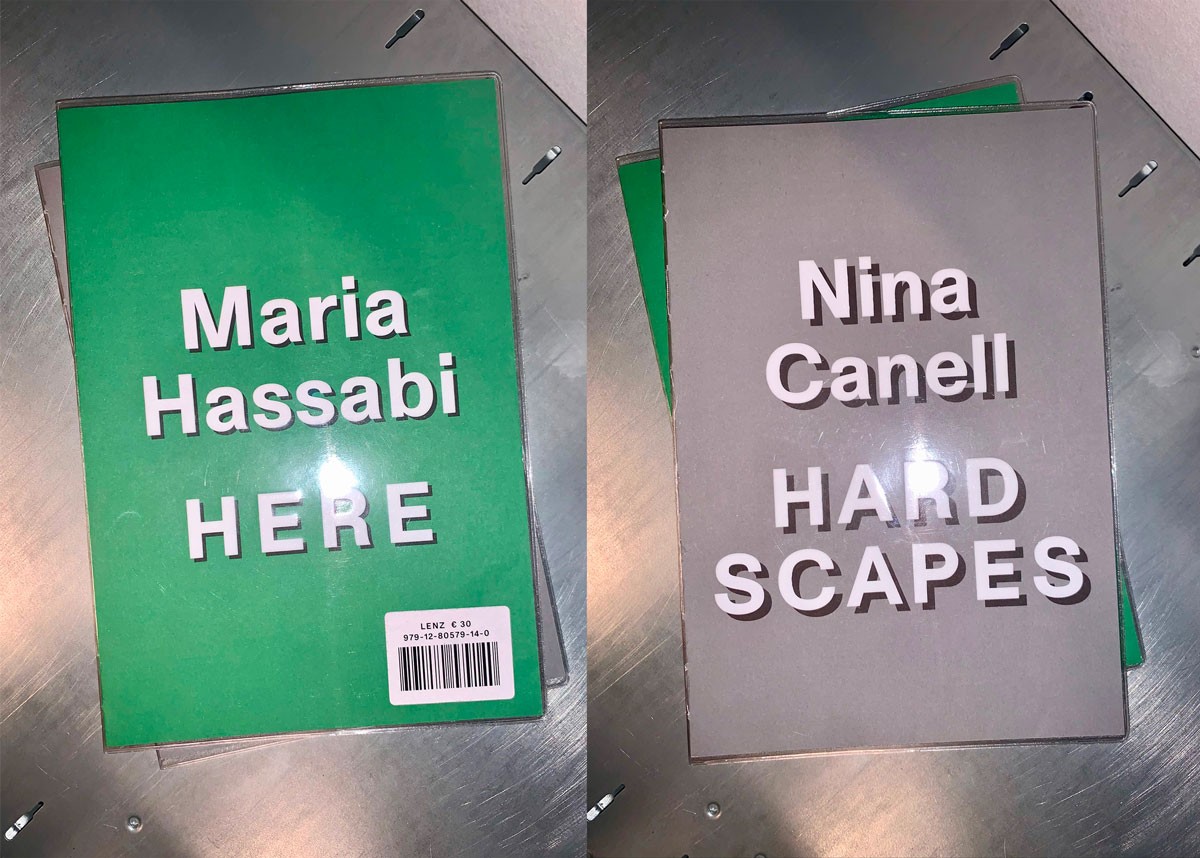
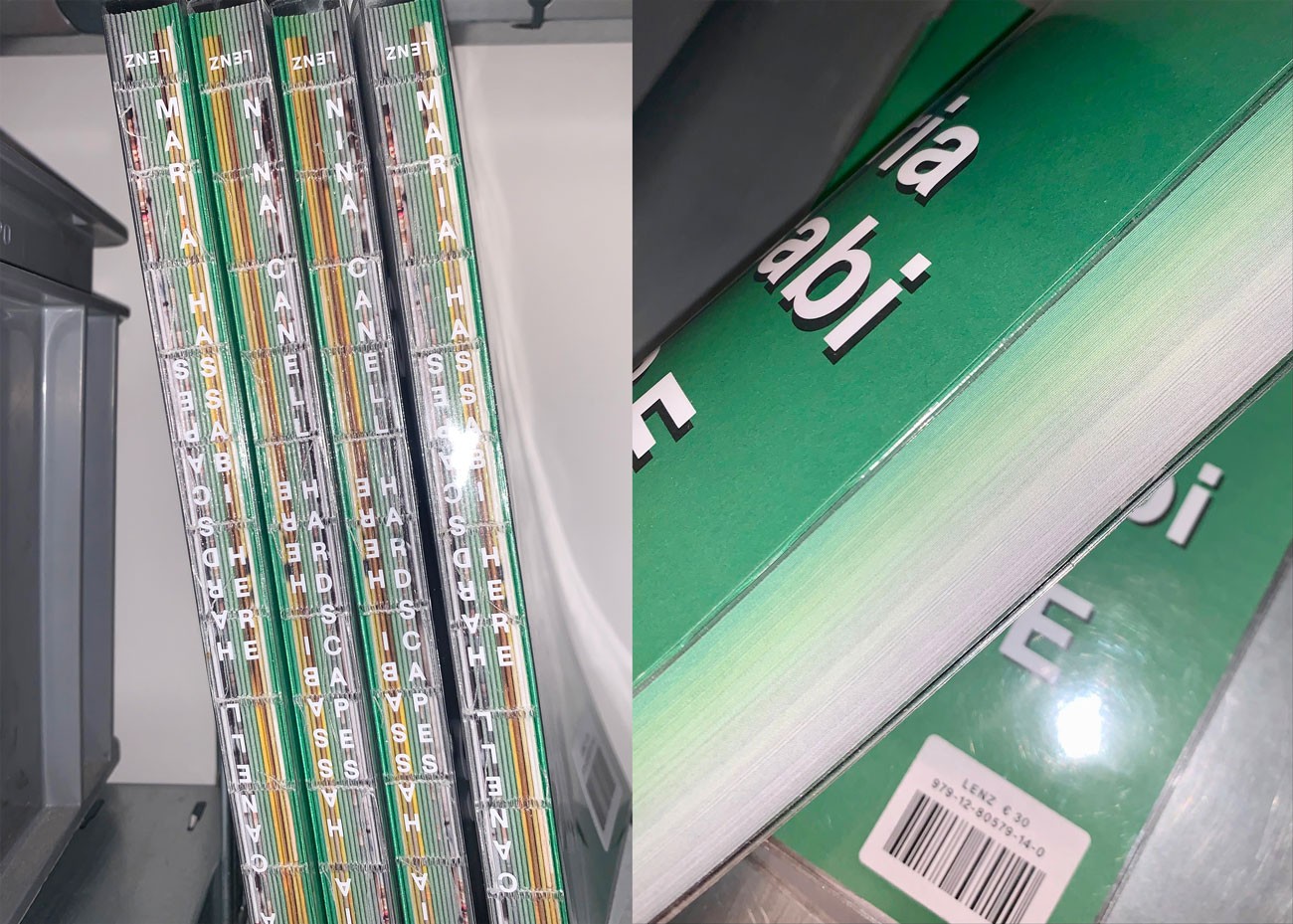
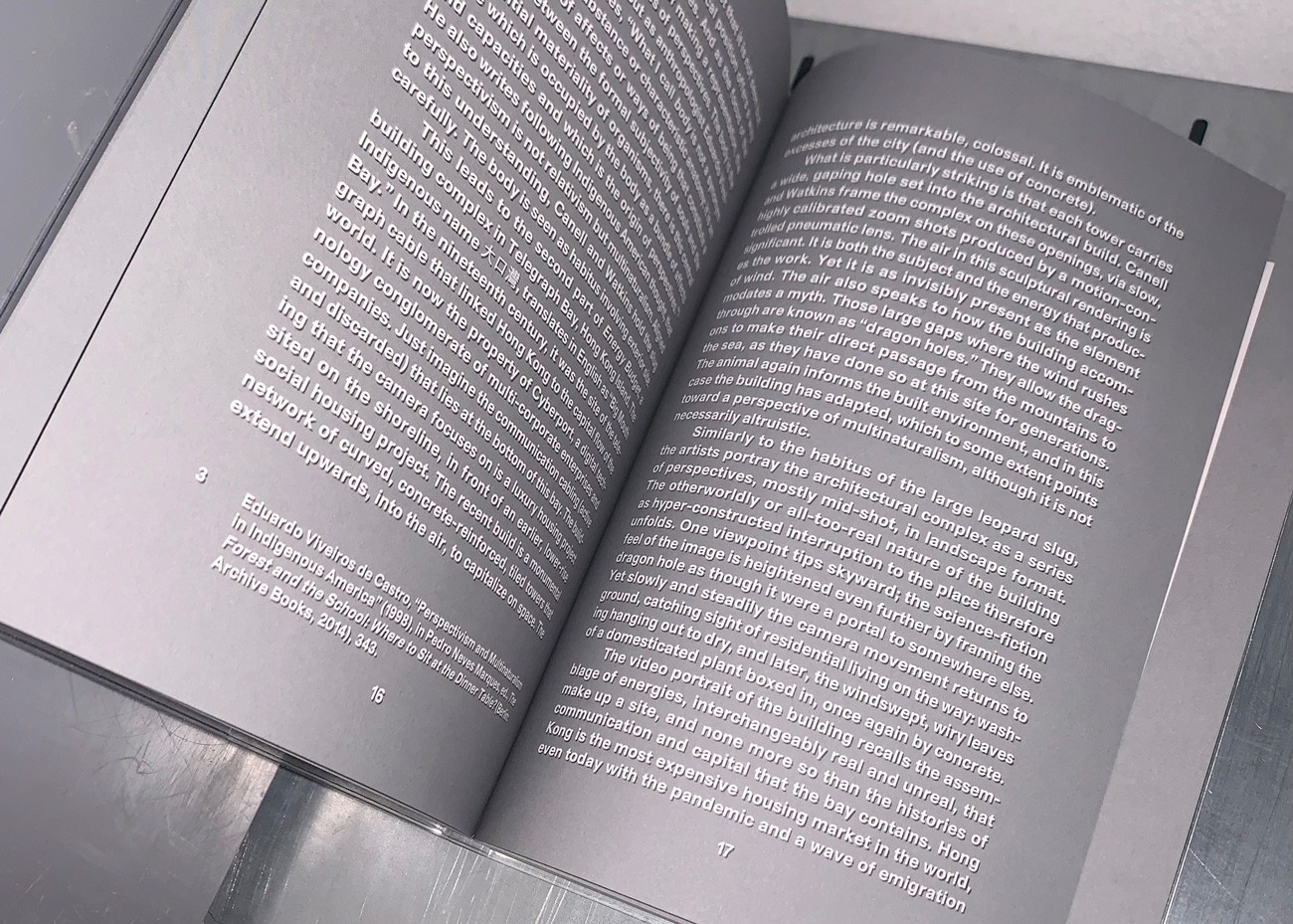
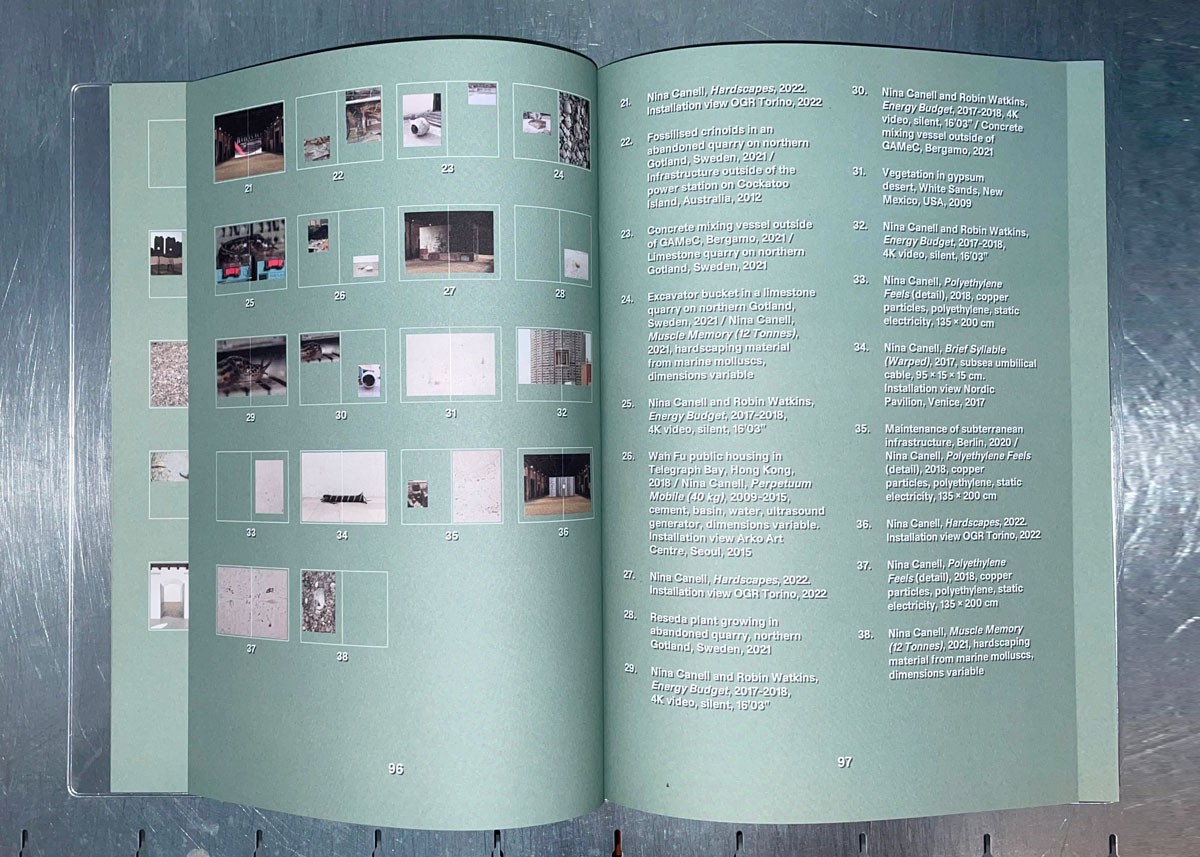
Hardscapes / HERE documents and brings together two exhibition projects by artists Nina Canell (Växjö, 1979) and Maria Hassabi (Cyprus, 1973). Produced on the occasion of the exhibitions of the same name curated by Samuele Piazza at the OGR Torino, the publication consists of two graphically specular books that merge into a single volume. Essays, unpublished materials and a rich set of photographic materials form the driving force behind two visual narratives that offer new keys to understanding the research of the two artists.
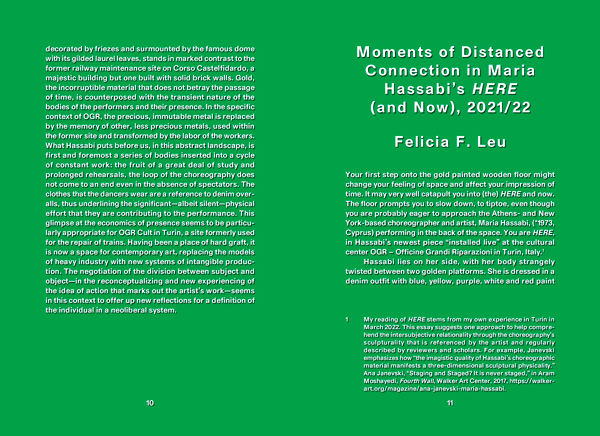
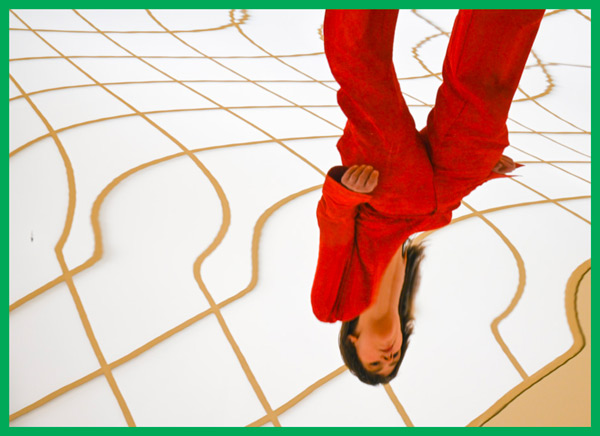
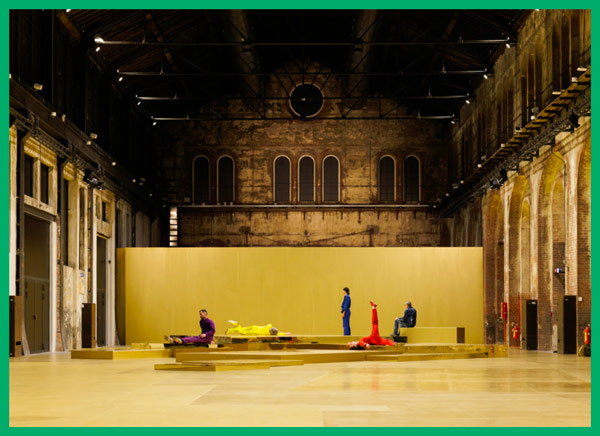
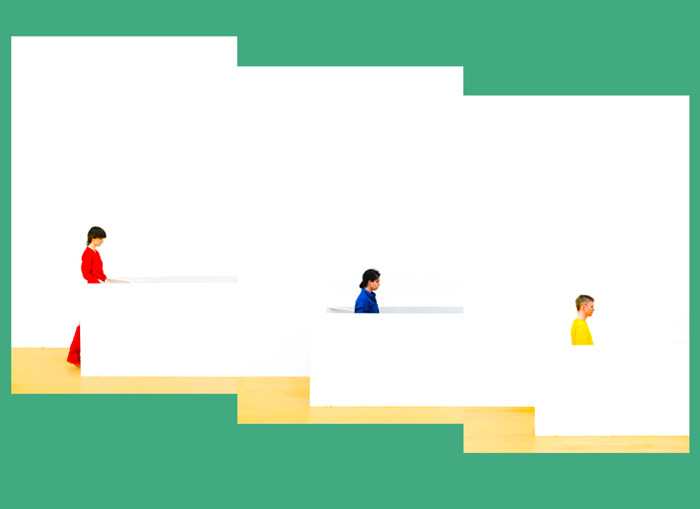
Hassabi’s live installation HERE calls on visitors to share space and spend time with six performers portrayed in a decelerated rhythmic choreography within a sculptural environment. In constant motion, the dancers contribute to a situation of shifting presence, demonstrating the contestable nature of the “here and now.” Immobility and slowing down are thus used both as techniques and as subjects of representation: the performing bodies oscillate between dance and sculpture, subject and object, living body and static image.
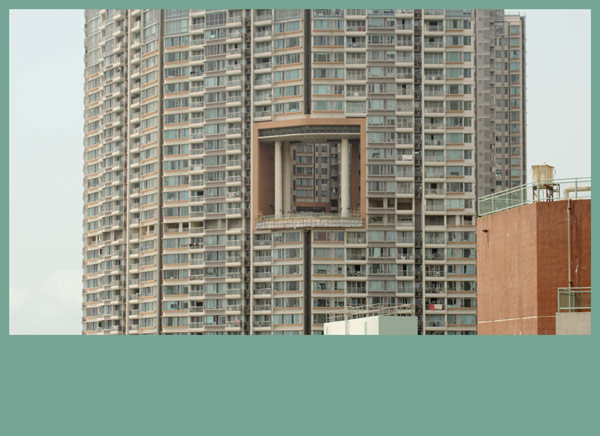
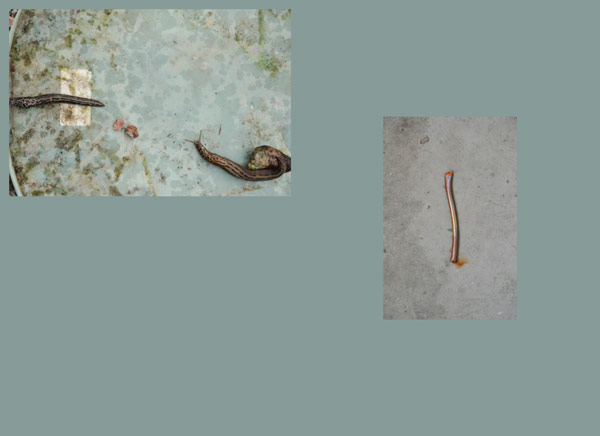
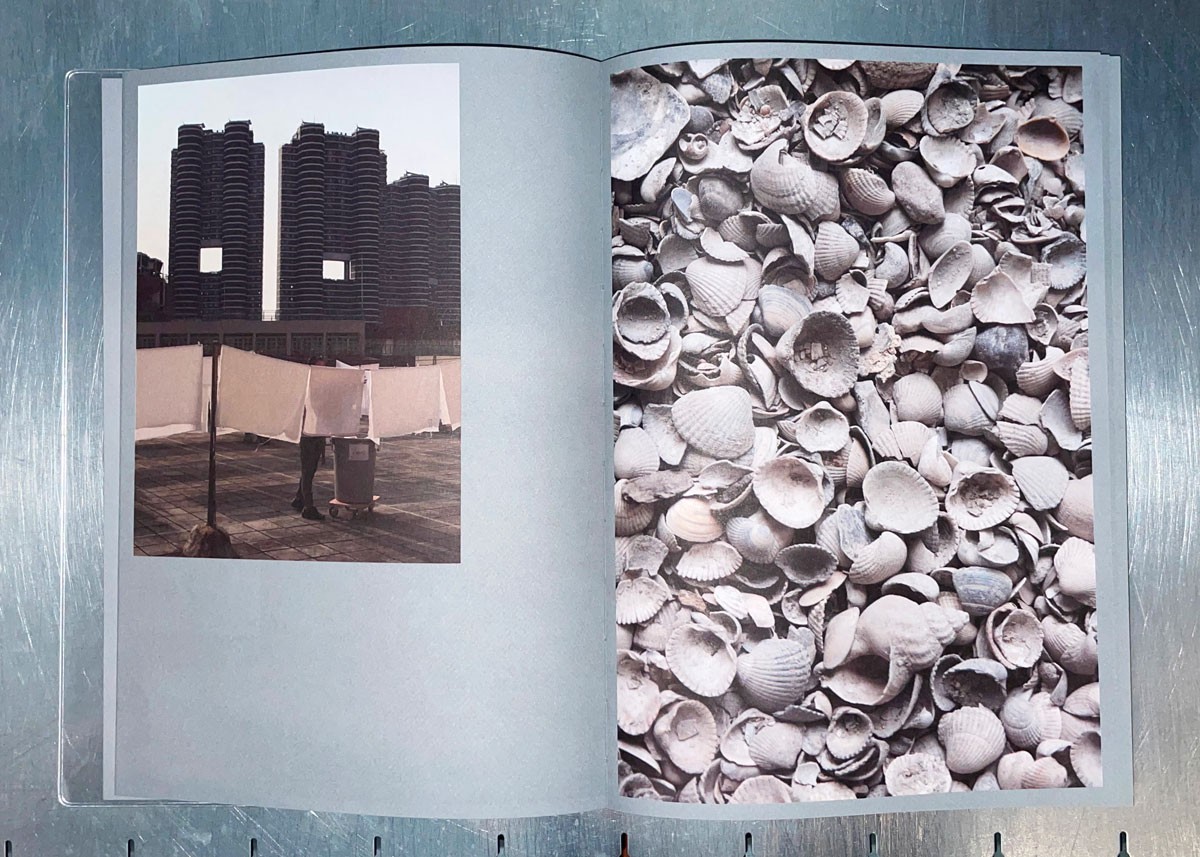
Canell’s Hardscapes combines two works that focus on the concepts of circulation and transformation as well as on unexpected forms of coexistence. Energy Budget (2017–18), a video that alternates between two subjects: a basement in which a leopard snail crawls over an electrical panel, and the gradual shifting of the frame away from “dragon gates”—portal-like openings in huge buildings on the Hong Kong waterfront. Muscle Memory (16 Tonnes) (2020–21) is a floor sculpture, decomposed and transformed by the density of moving bodies, which literally crumbles under the soles of passing visitors.
In addition to texts by the curator, the publication includes essays by Felicia Leu and Laura Preston, along with a conversation by Maria Hassabi and Nina Canell with Lorenzo Giusti.