A book emerged from the need to try to tell the story of architecture in a way quite unlike how it’s usually told, in a continuous dialogue between the anthropological gaze of Armin Linke’s photos compared with the ideation process of two public works by the Carlana Mezzalira Pentimalli architecture office.
The book documents and brings together two exhibition projects by Nina Canell and Maria Hassabi. Essays, unpublished materials and a rich set of photographic materials form the driving force behind two visual narratives that offer new keys to understanding the research of the two artists.
Can art, literature, filmmaking, and music draw out, make visible, legible, audible, or even contestable the patterns in which our lives are held? Considering the work by Stan Douglas, Harun Farocki, Ingri Fiksdal, Åke Hodell, Stefan Panhans & Andrea Winkler, Susan Philipsz, and Elizabeth Price, this publication entertains this question.
This new major monographic publication on the Ghanian artist documents the work that transformed sites and repurposed buildings in his native town of Tamale to transformative outcomes rooted into the idea of art as a tool of understanding, rebalancing, and advancement.
For life and limbs, Austrian artist and curator Anna-Sophie Berger has assembled a group of works, from Arakawa and Gins to Lyle Ashton Harris, that register the body as a habitat that can be imaginatively stretched, altered, modified, adorned, replicated or destroyed.
This two-volume catalog, curated by Andrea Bellini and the New York-based collective DIS, is the outcome of the 2021 edition of the Biennale de l’Image en Mouvement (BIM’21), presented at the Centre d’Art Contemporain Genève.
Edited by Alessandro Rabottini
Texts by Martin Germann, Matilde Guidelli-Guidi, Luca Monterastelli, and Alessandro Rabottini
Design Lorenzo Mason Studio
2023, English / Italian, softcover, 20 x 28 cm, 128 pages
ISBN 979-12-80579-33-1
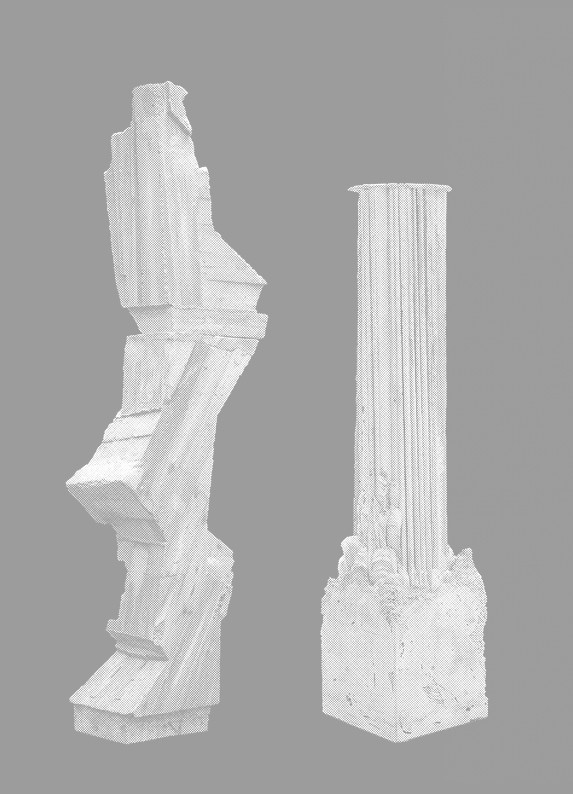
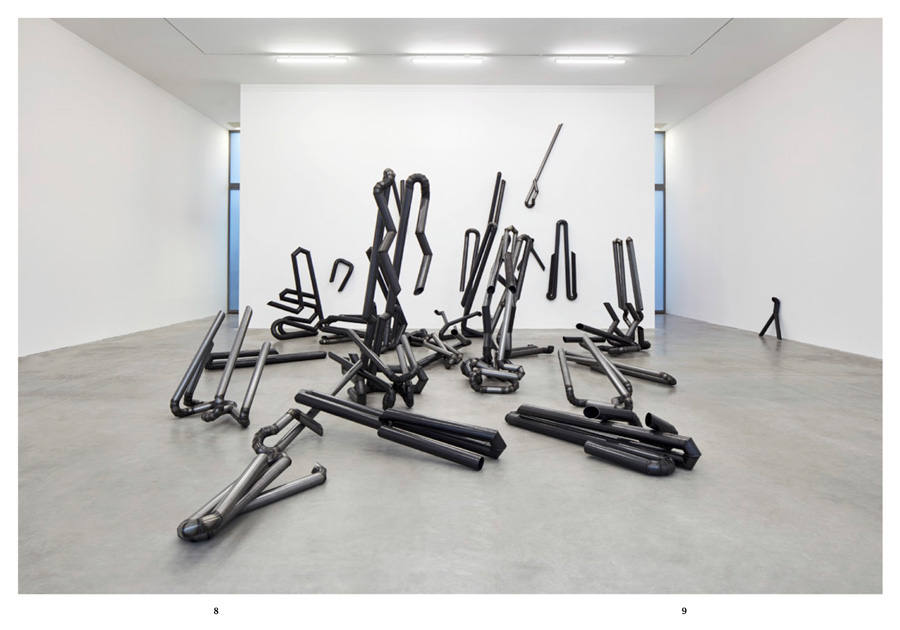
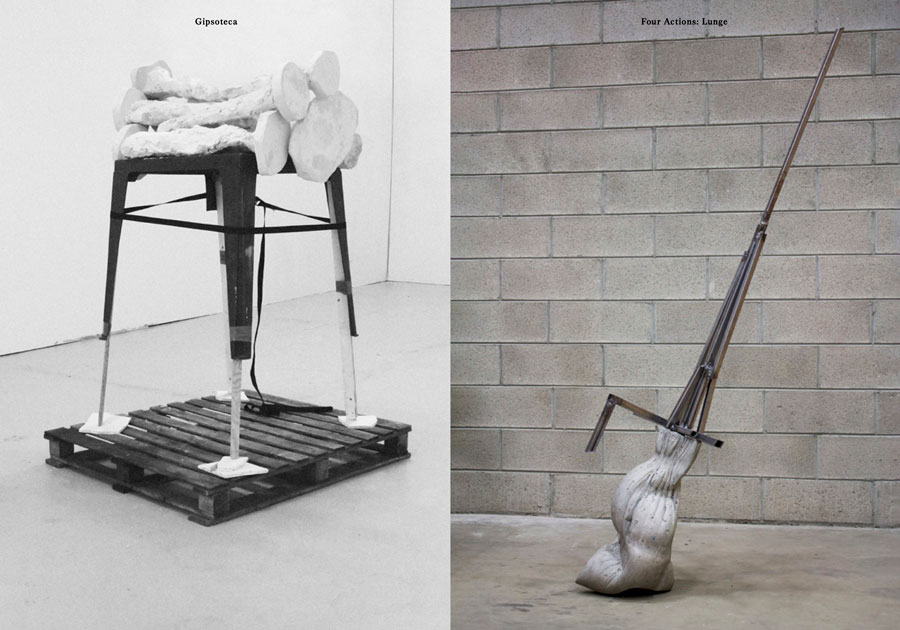
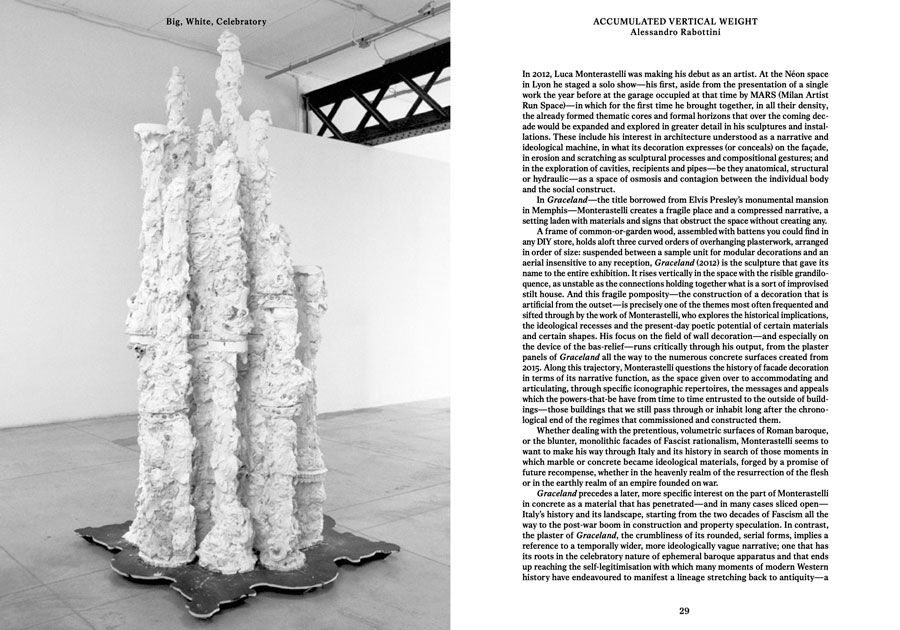
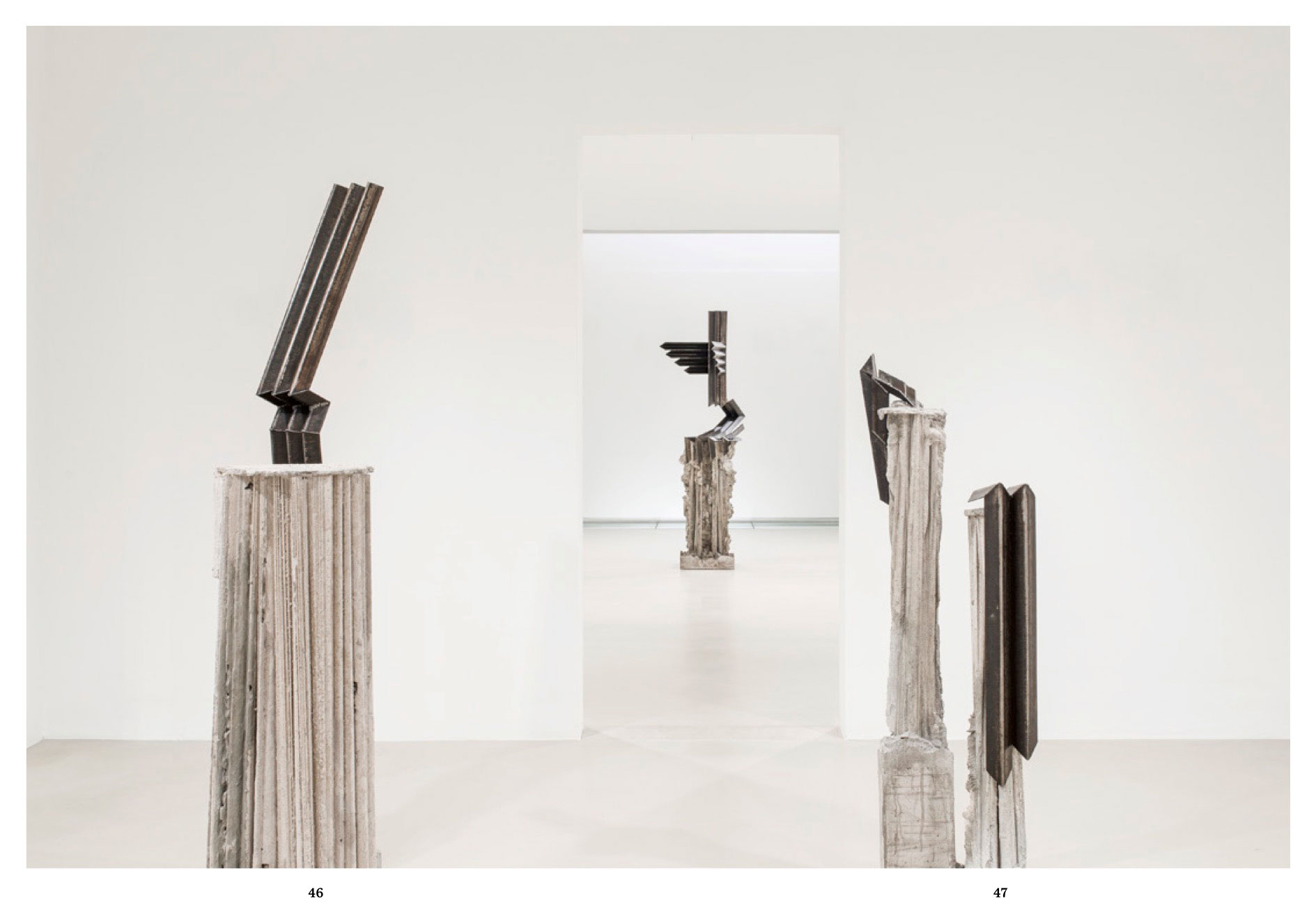
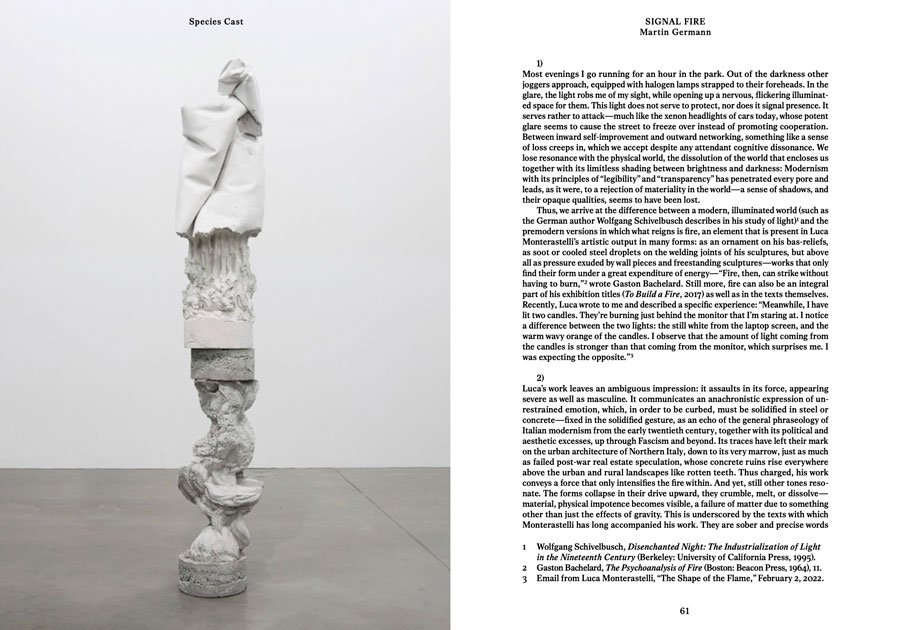
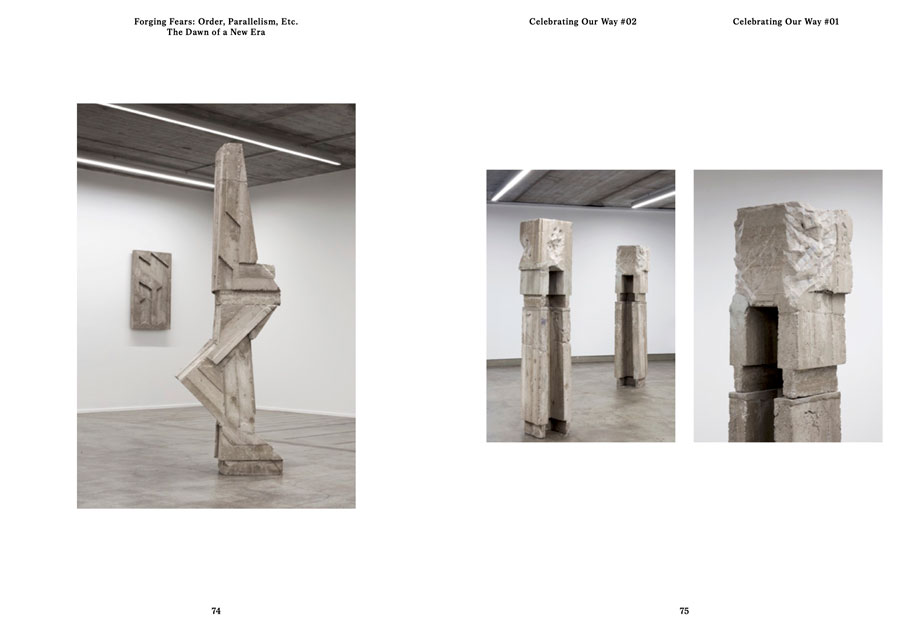
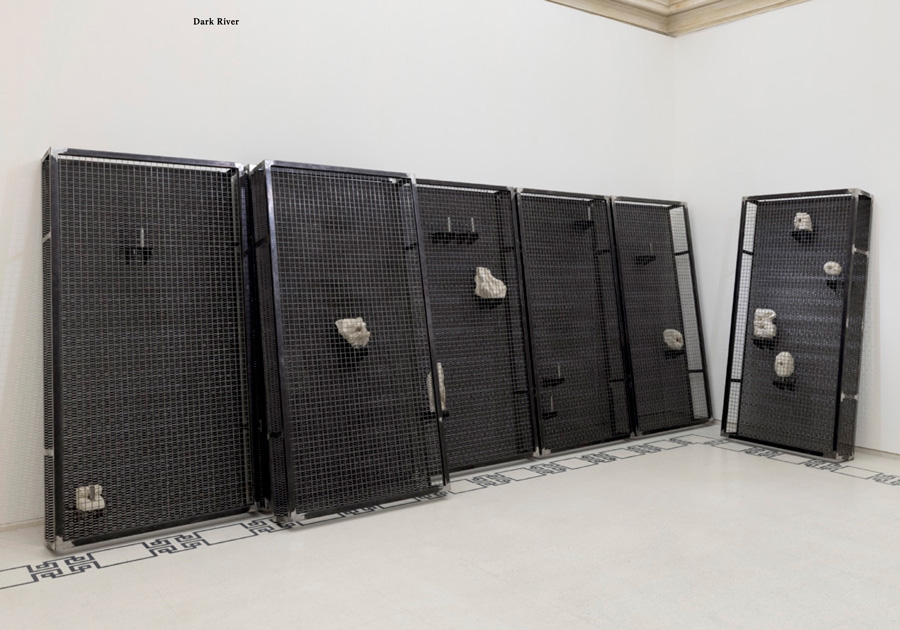
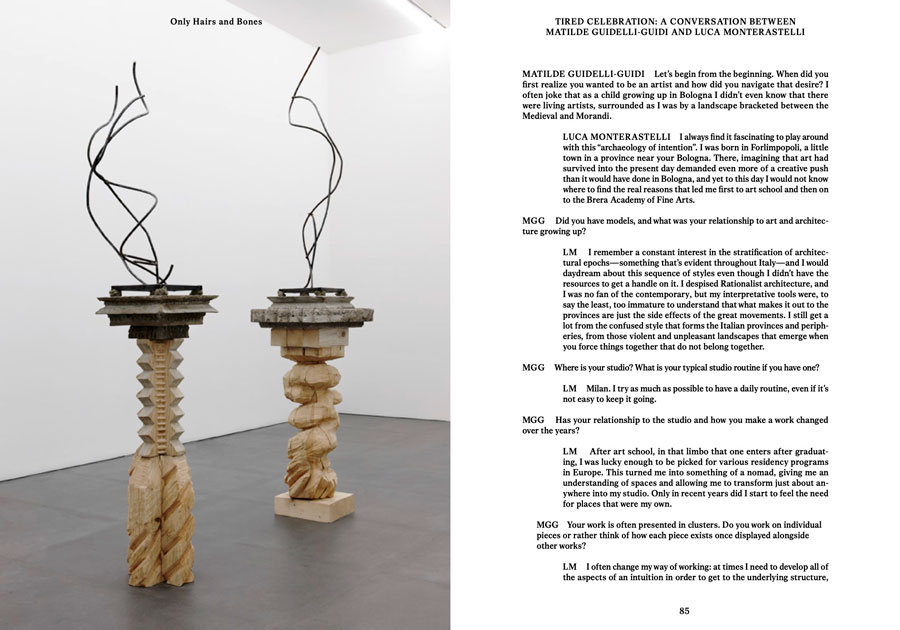
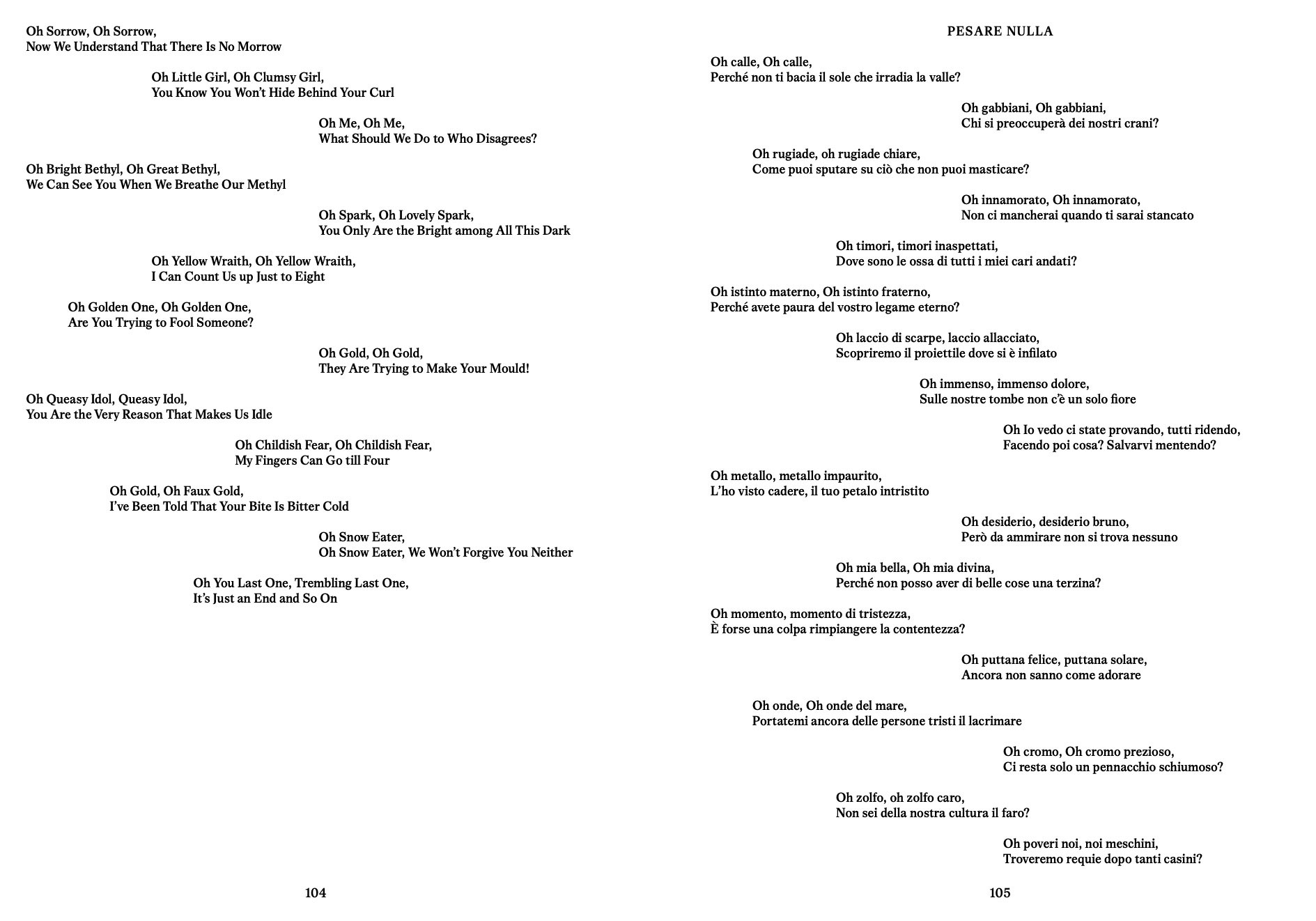
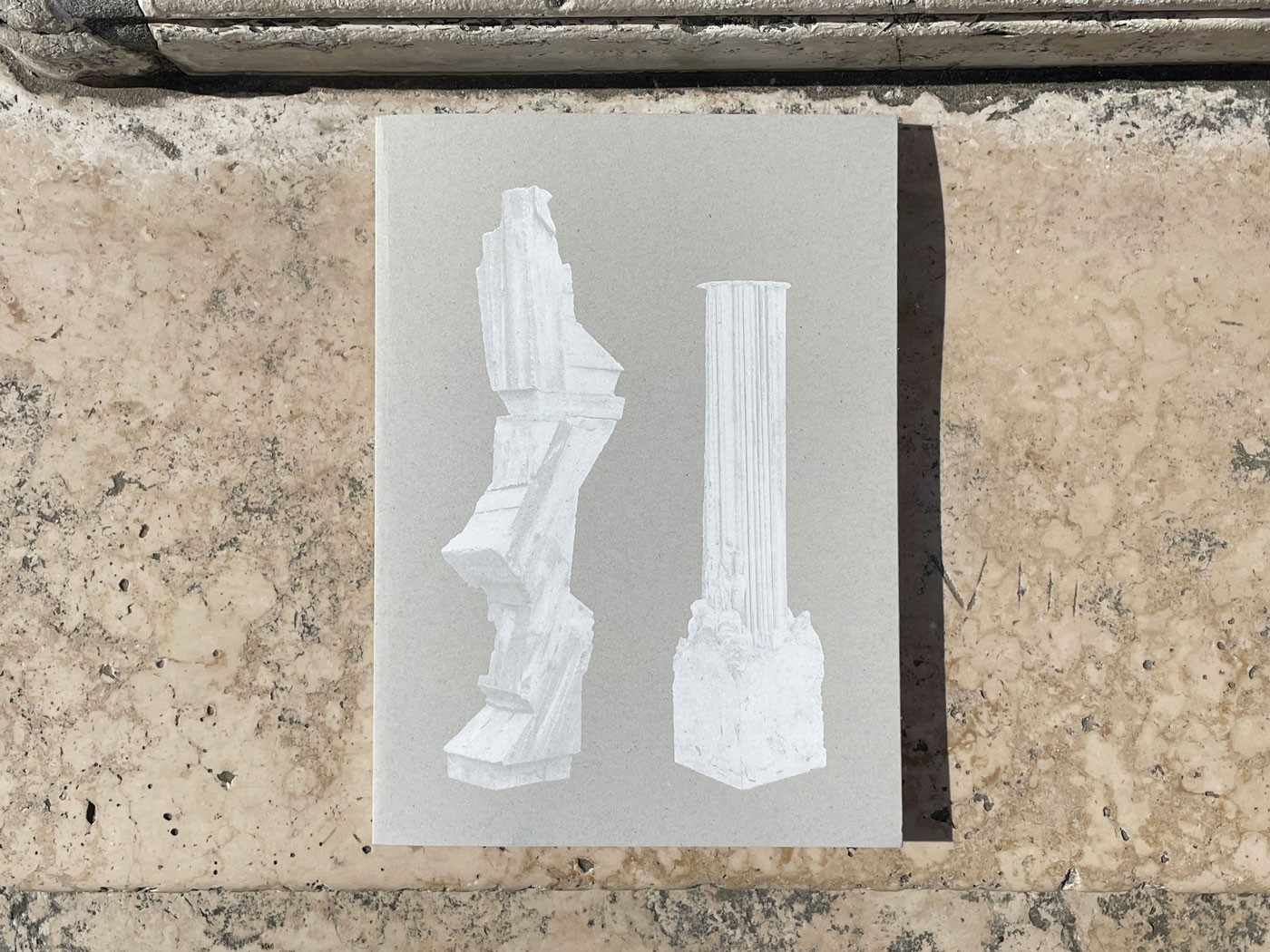
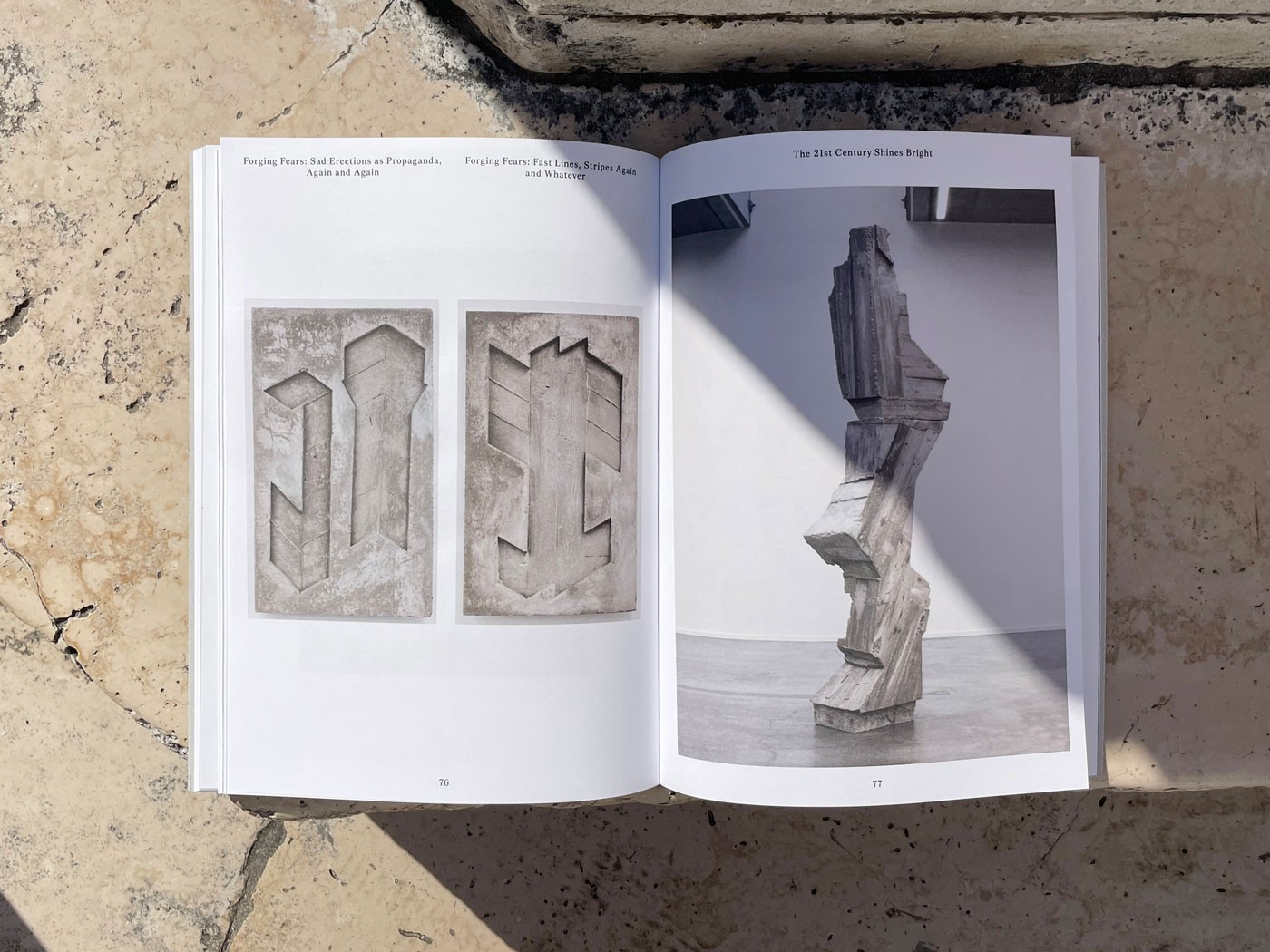
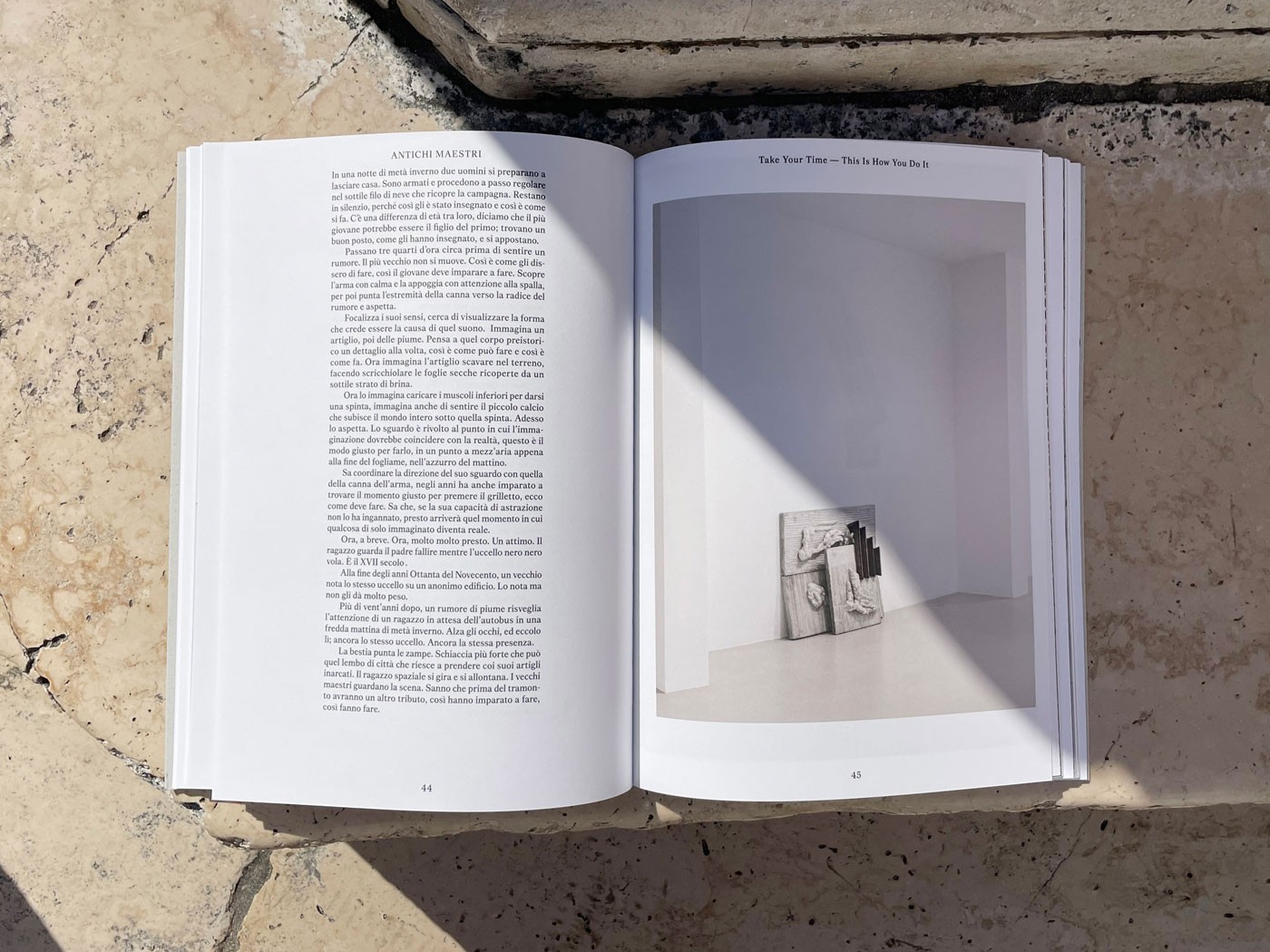
Pardon Façade documents the artistic output of Luca Monterastelli, showcasing almost all of the sculptures and installations that he produced between 2011 and 2022. With four chapters corresponding to four solo shows that he staged in Milan, Otegem, Antwerp and Naples, the architecture of the book is structured around the photographic documentation of these exhibitions, each introduced with a text written by the artist for the occasion. The centrality of Monterastelli’s writing to the book reflects his way of conceiving the medium of the personal exhibition as a specific narrative context, as a story that takes place between and with the works. This impulse of his towards a metaphorical and imaginary narrative is echoed by the eloquence of the titles of the works, which accompany the images in a story told across the pages.
Amid these four main groupings, we find images of individual works, some conceived for group shows, together with an essay by Martin Germann, a conversation between Matilde Guidelli-Guidi and the artist, and an introduction essay to Monterastelli’s oeuvre by Alessandro Rabottini.