A Cosmic Movie Camera is the title of the 18th edition of the BIM’24, which also marks the 50th anniversary of the Biennale organized by the Centre d’Art Contemporain Genève. By blending the real and the virtual, its catalogue captures the spirit of the exhibition, which explores the evolution of moving images, particularly in our algorithmic age.
The book seeks to define the contours of the obsession with the teenage years; a fixation that has shaped a significant strand of contemporary art over the last ten years. Adolescence is here understood as a state of mind, a prolonged condition that dissolves the transition into adulthood and becomes a critique of an unstable world.
In this multi-voiced book, starting from the Orobie Alpine range, the mountainside becomes an epistemological lens through which to interpret contemporaneity and address issues such as multi-species migrations, our relationship with geological time and intergenerational inheritance, and the rethinking of collective memories and rituals.
For years now, the Die Vier von der Tankstelle (Four from the Gas Station) have been roaming across an area stretching out to the south of the Baltic Sea. They prowl their way through sparsely populated areas, wantonly terrorizing the inhabitants. The 2026 calendar by Jos de Gruyter and Harald Thys bears witness to their presence.
The first monograph dedicated to Lorenza Longhi, published with the Kunst Museum Winterthur, adopts a format associated with prototypes, manuals, or working documents. Its irregularities reflect Longhi’s ongoing examination of value, functionality, and the aesthetics of the everyday.
This publication is an extensive monograph devoted to the work of Carlos Bunga, published in conjunction with his eponymous show at CAM – Gulbenkian. In addition to a number of essays, which offer an in-depth look at his multifaceted practice, the book contains previously unpublished photos that reveal his working process.
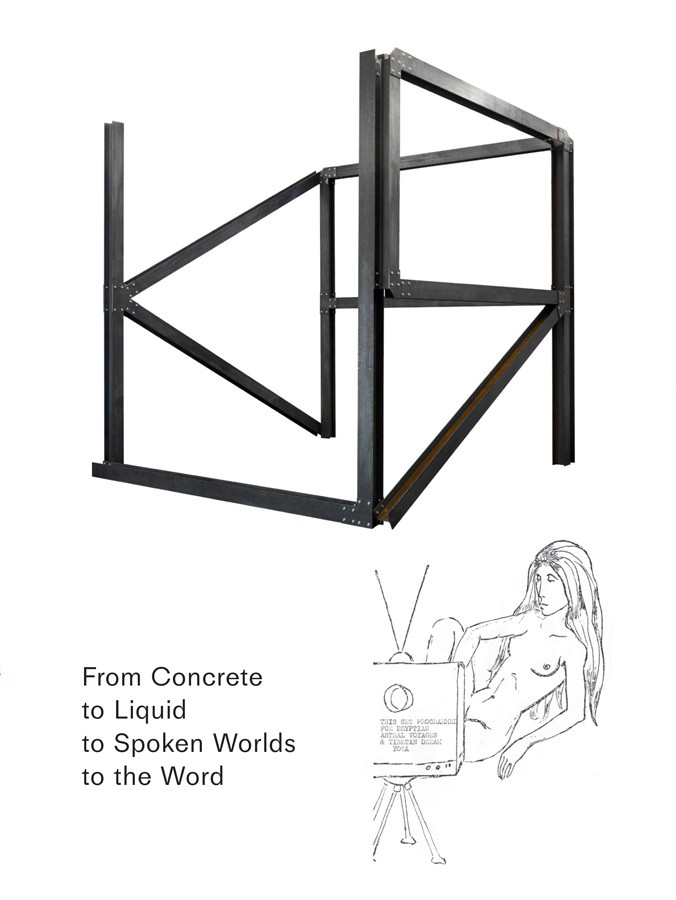
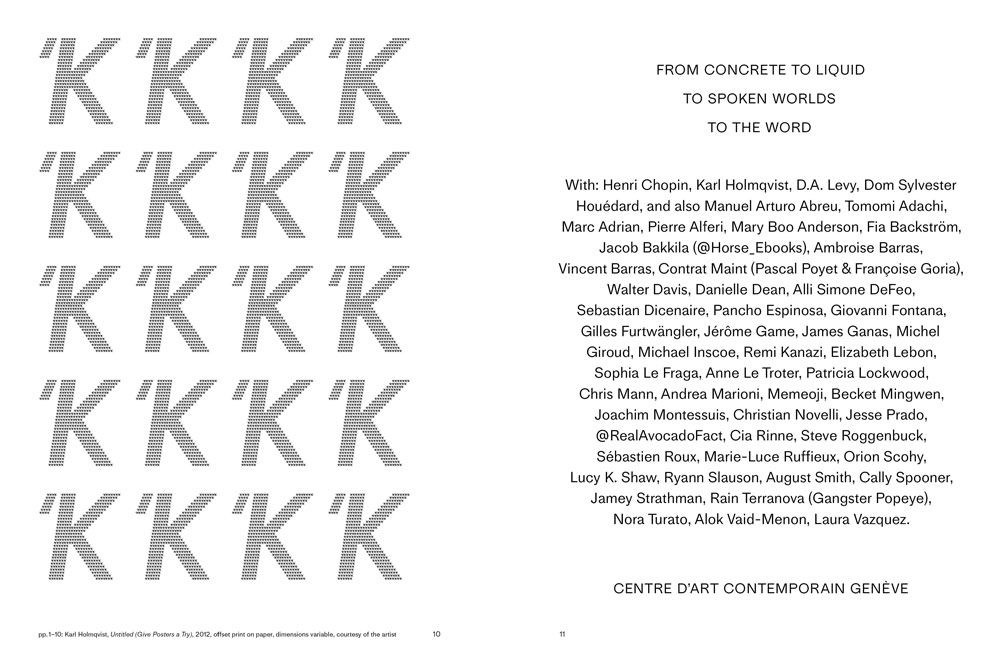
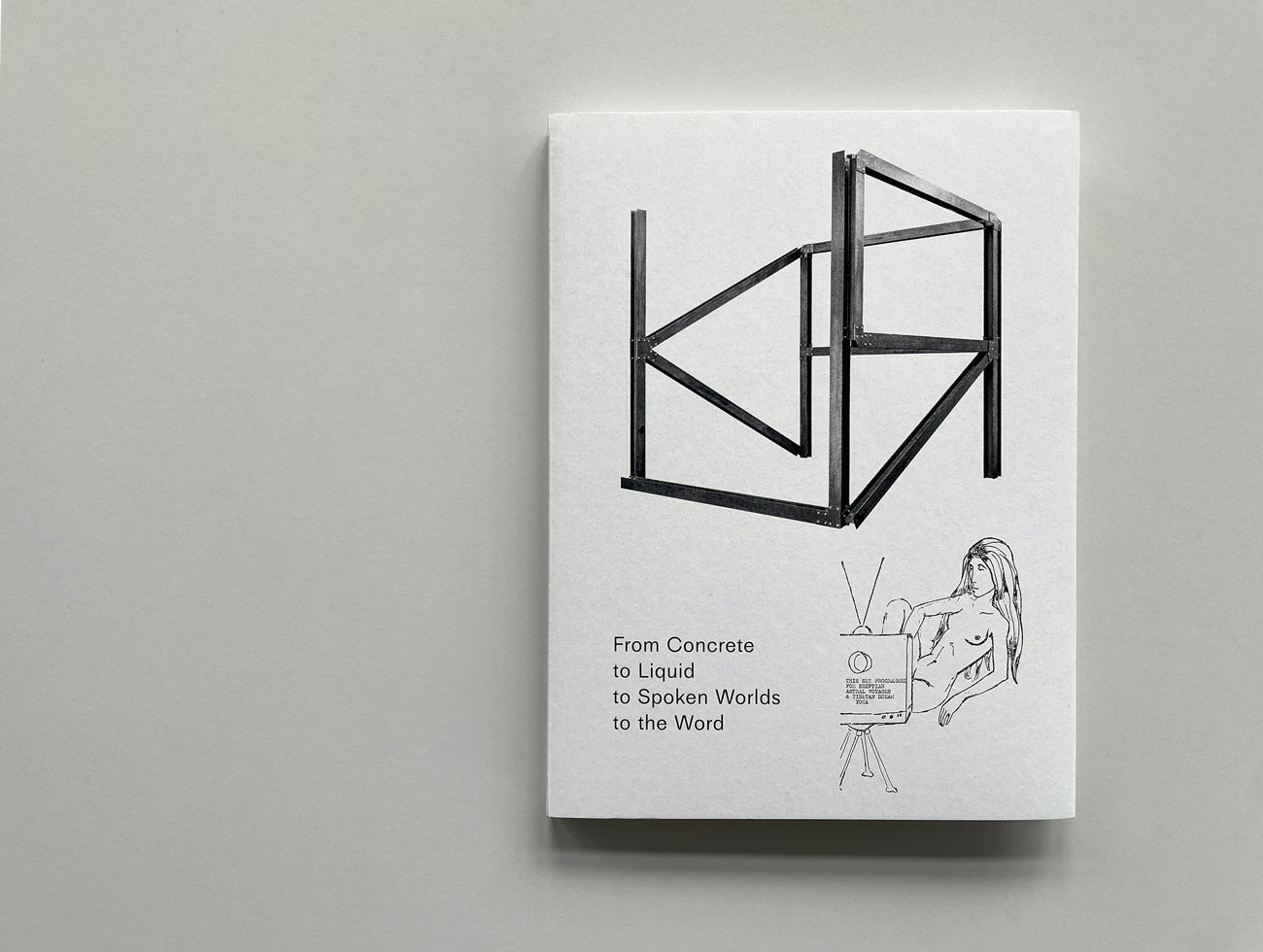
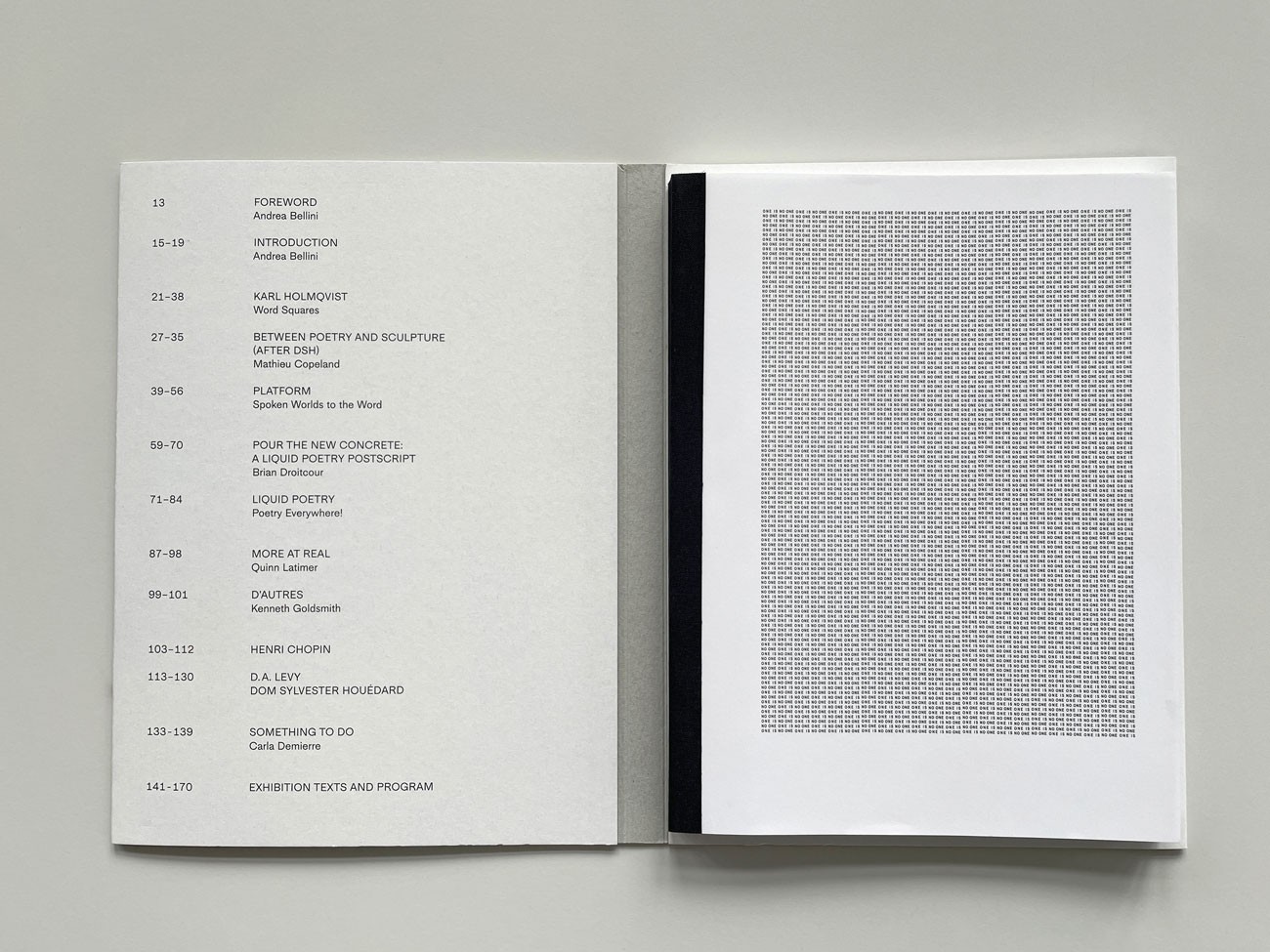
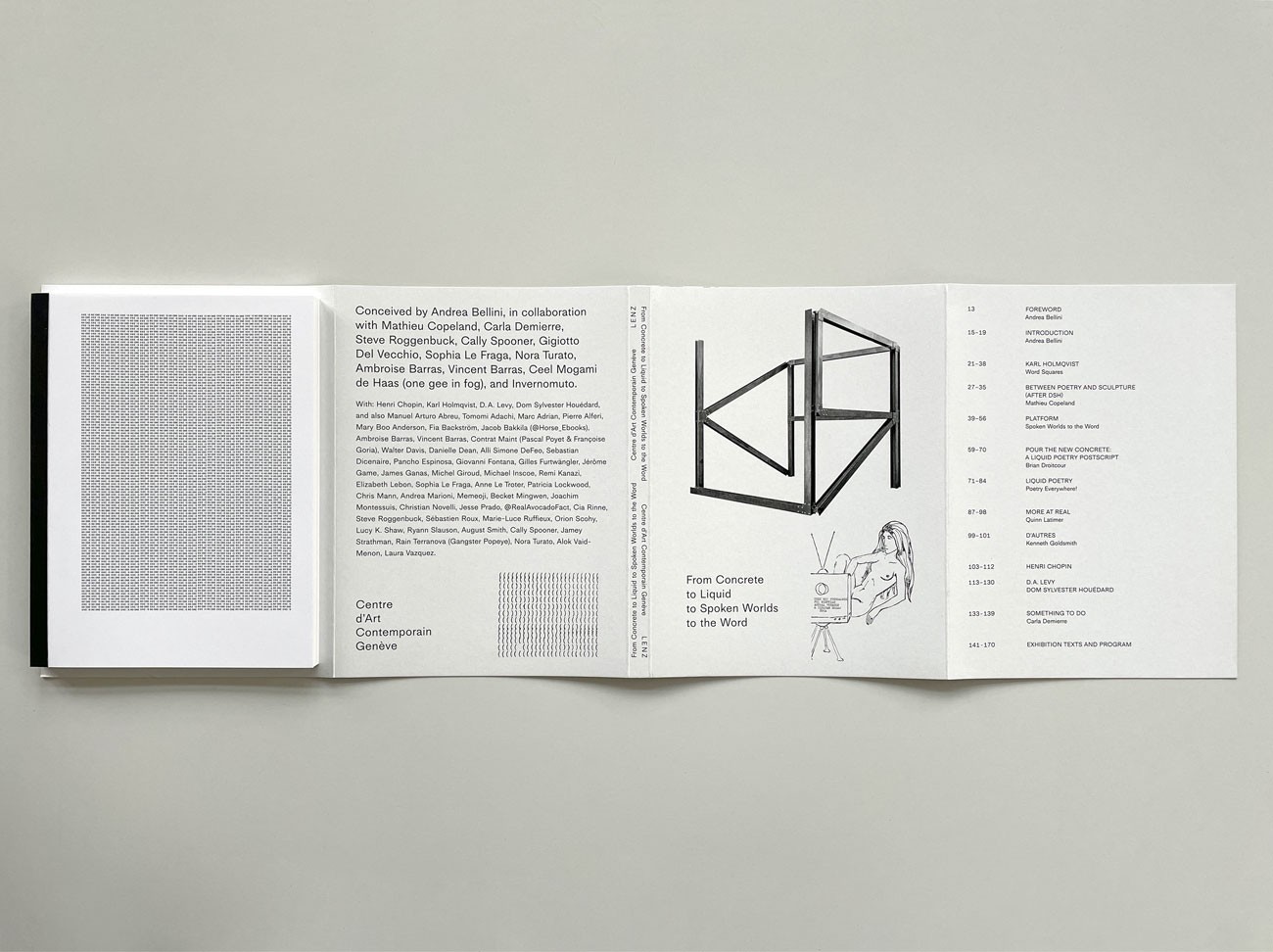
From Concrete to Liquid to Spoken Worlds to the Word
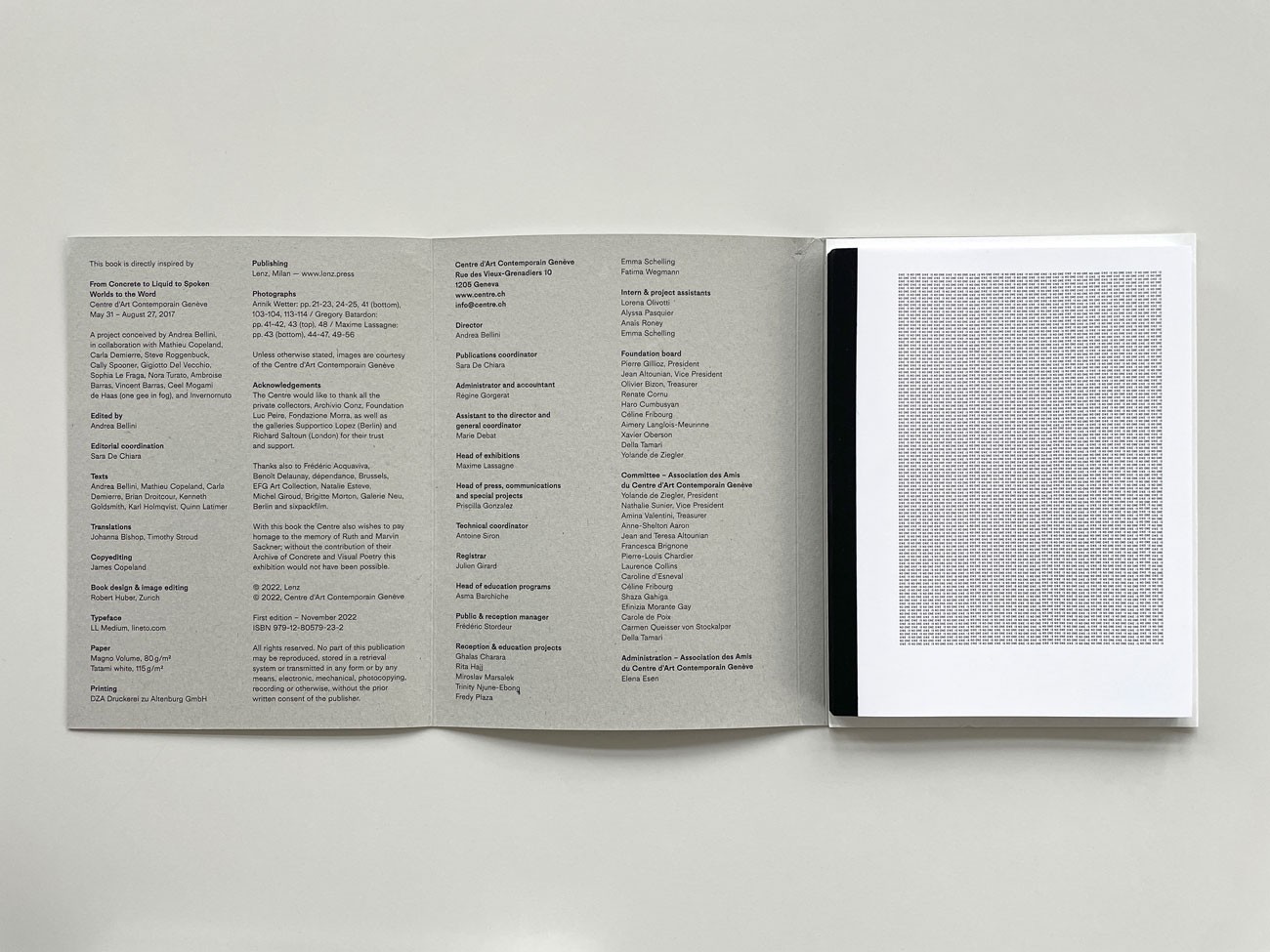
Edited by Andrea Bellini
Texts by Andrea Bellini, Mathieu Copeland, Carla Demierre, Brian Droitcour, Karl Holmqvist, Kenneth Goldsmith and Quinn Latimer
Design by Robert Huber
2022, English, softcover, 178 pages, 16.9 x 22.4 cm
ISBN 979-12-80579-23-2
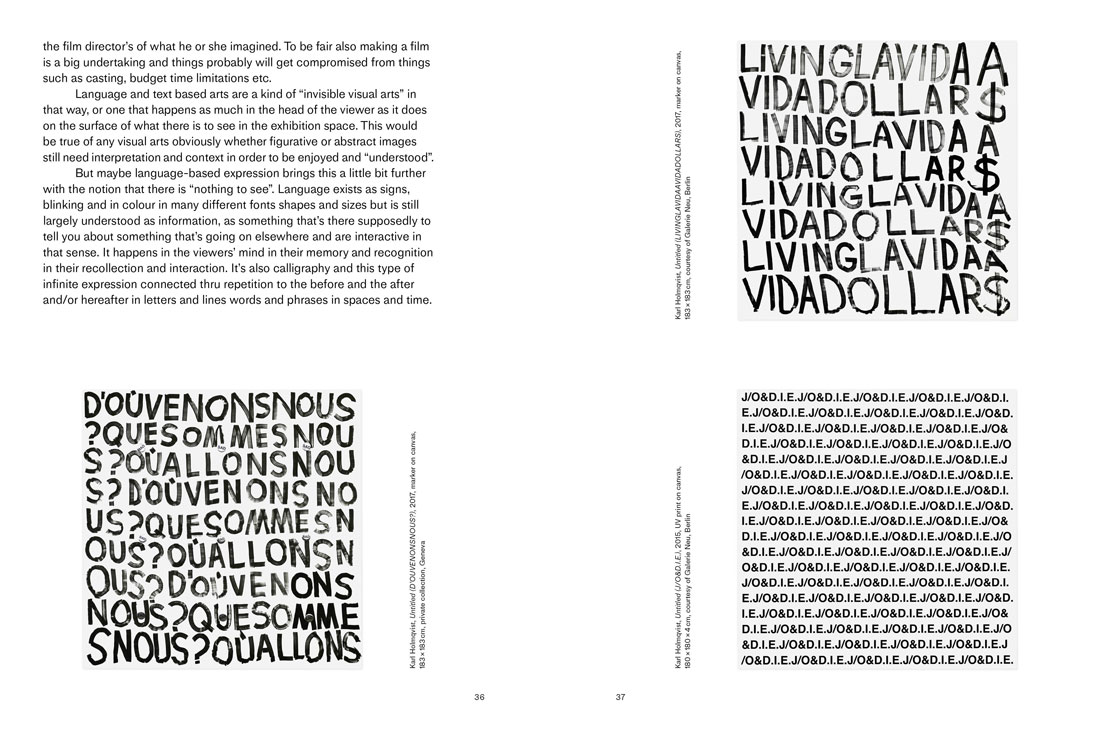
Five years after the exhibition From Concrete to Liquid to Spoken Worlds to the Word, and after a disastrous pandemic, the Centre d’Art Contemporain Genève presents the catalogue for this complex, ambitious project. Even at such a remove, we thought it was important to retrace the fundamental stages of this event through critical essays, images of the works and installations, and the calendar of performances and poetry readings. The reason is simple: despite the undeniable weight of images in today’s world, a keen interest in writing — rather surprisingly — has recently become a hallmark of many young artists’ work. They use writing as a tool to understand the world and as the cornerstone of a critical method, analyzing the present and creating a performative, politically engaged language.
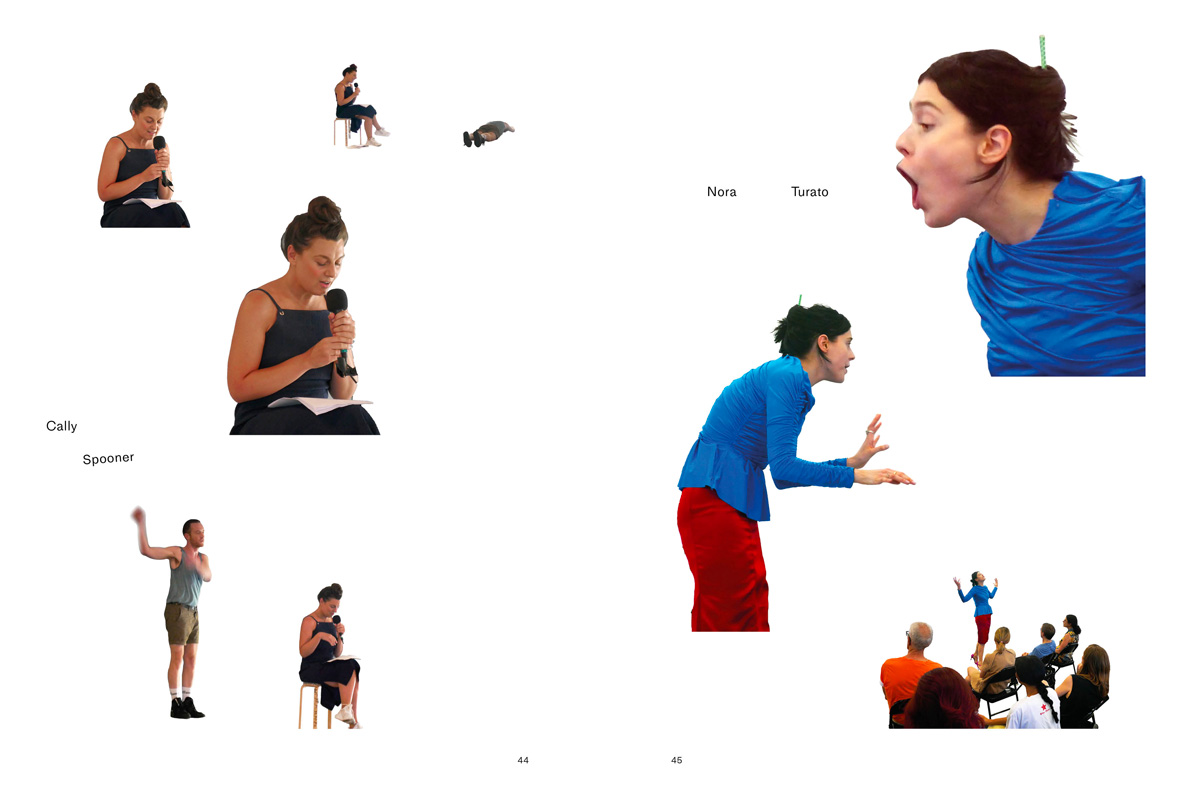
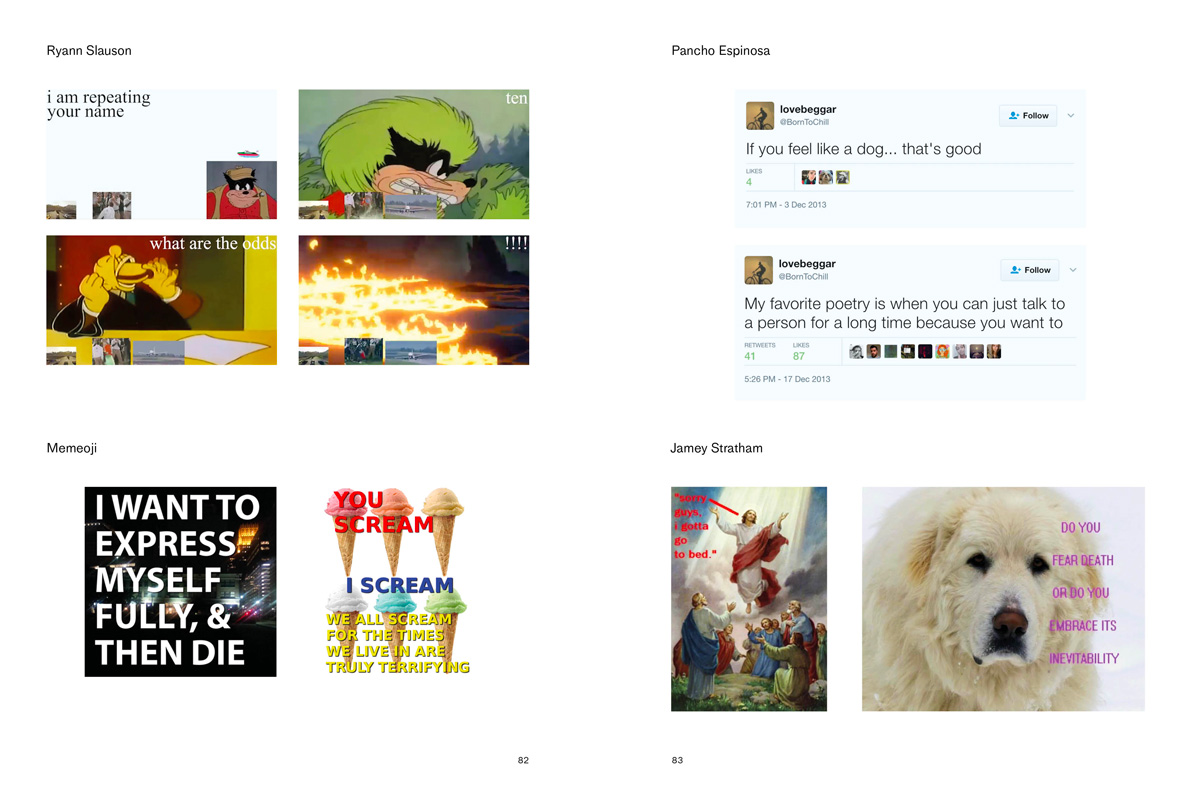
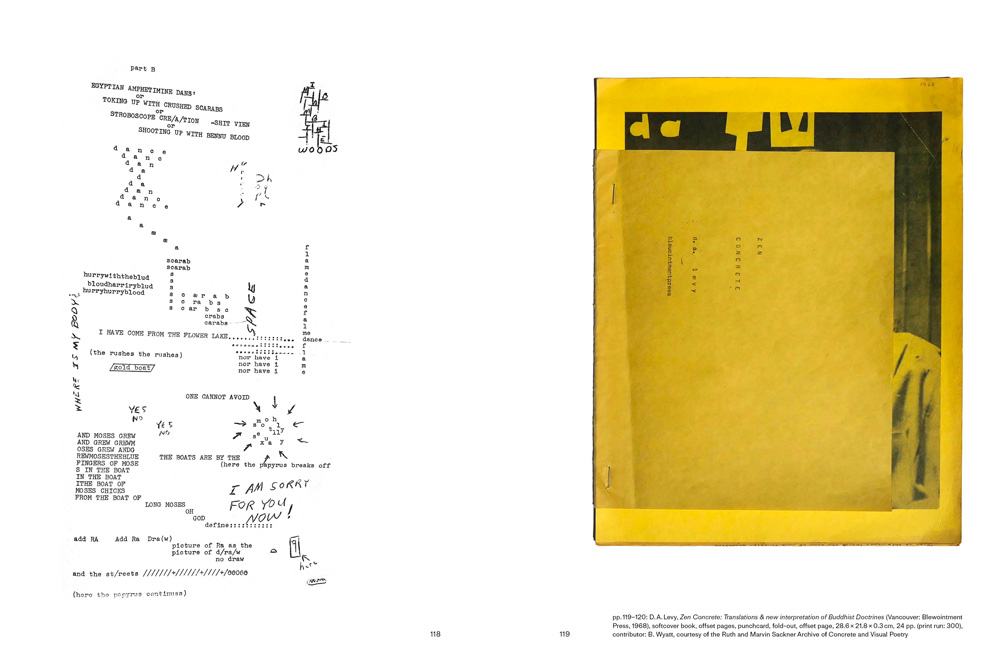
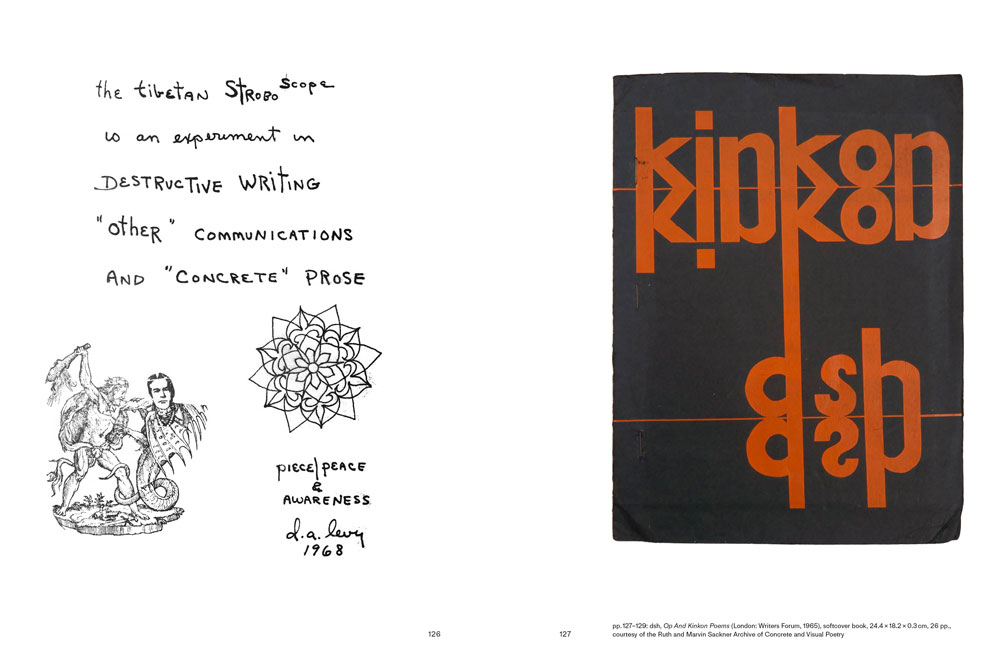
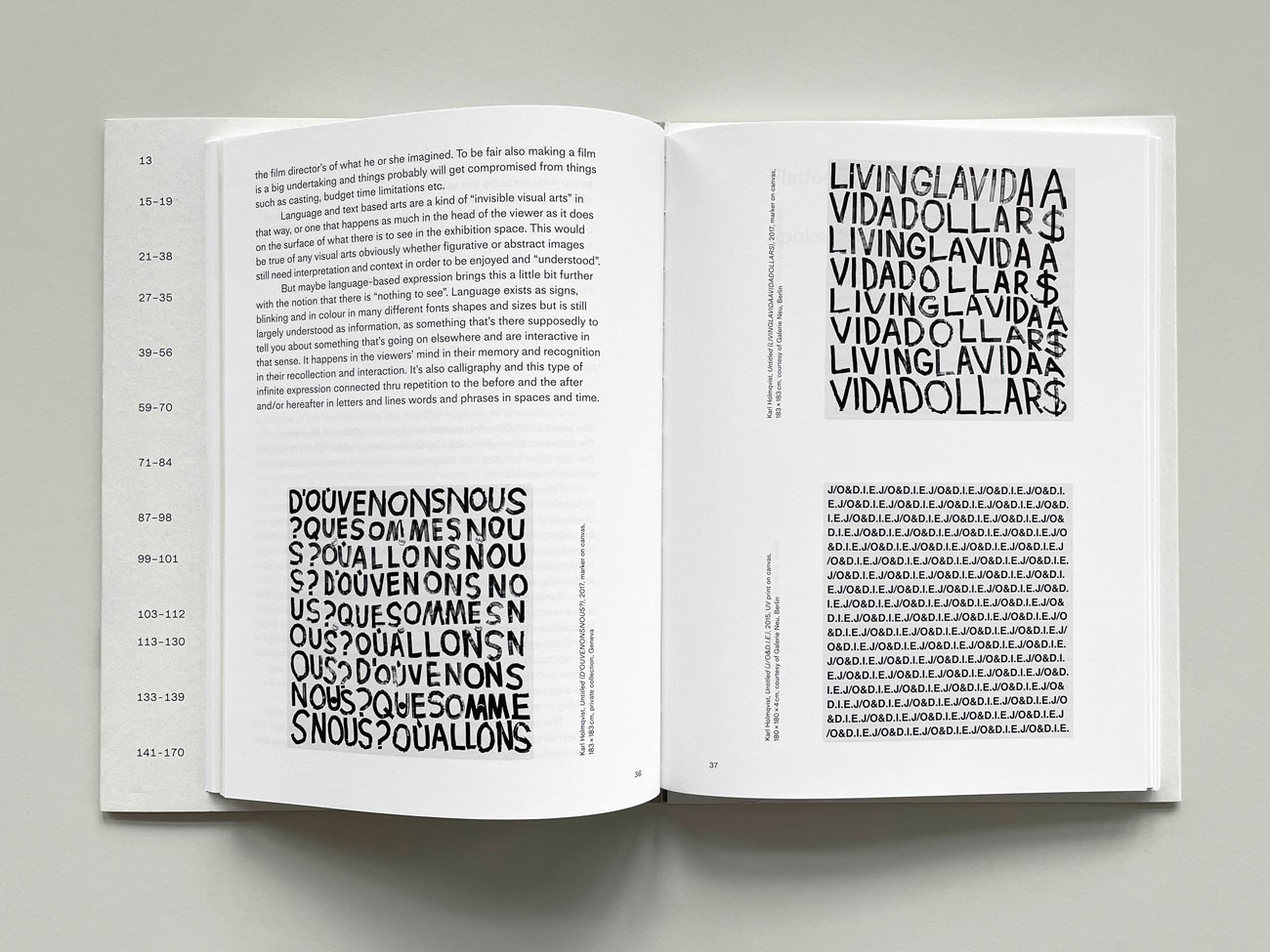
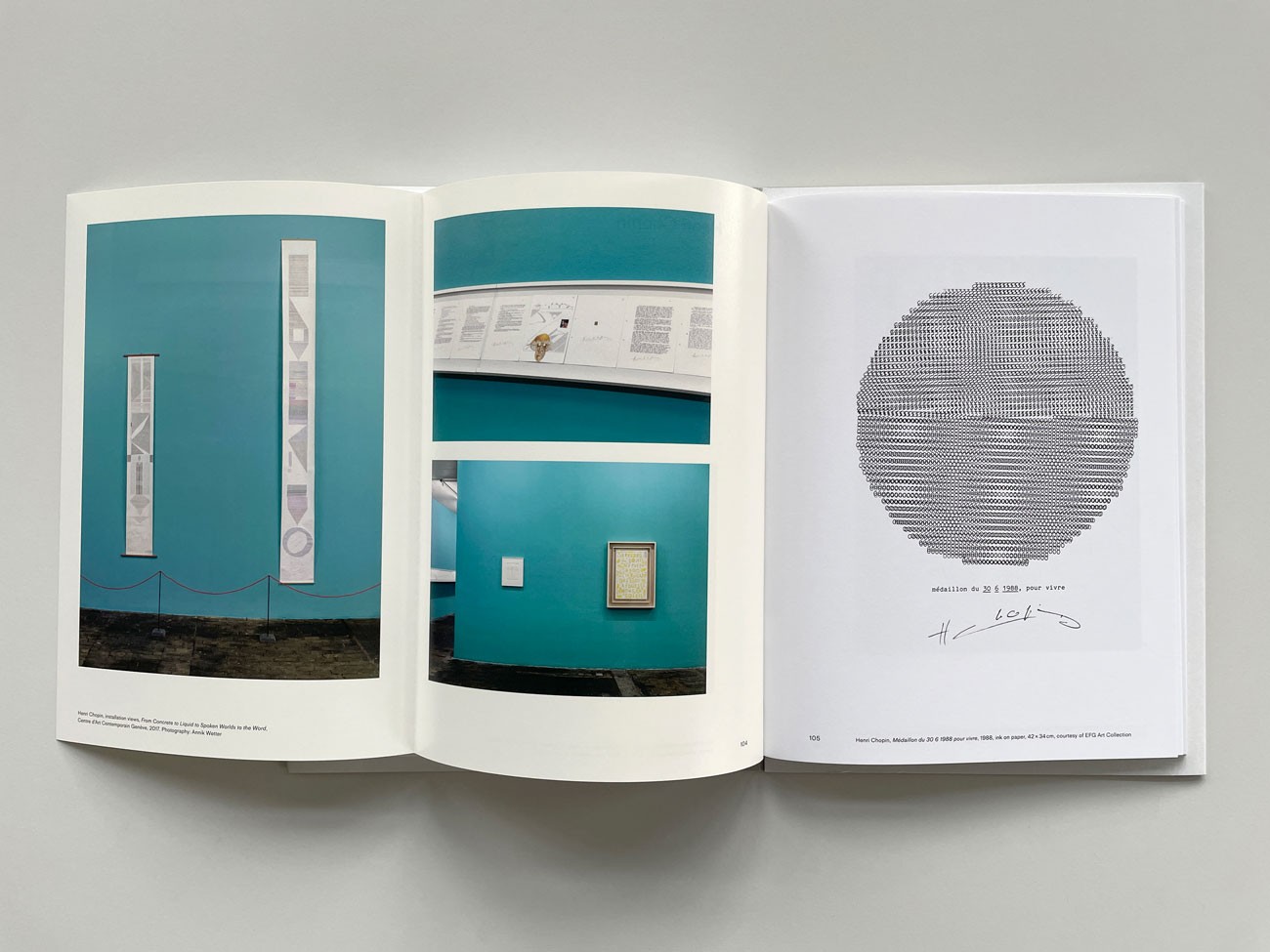
From Concrete to Liquid to Spoken Worlds to the Word explored the emancipation of language through historical and contemporary positions, from the earliest typographic and sound works of concrete poets to poetic experiments in the digital era. This diverse exhibition was accompanied by a series of readings, performances, and screenings revealing the porosity between art and poetry. Poetry readings and recitals in museums, performances centered on the importance of the text and its recitation, videos where poetic language takes on a role that rivals the visual component: the art of our time appears to be deeply and intimately rooted in words.
The program of the Centre d’Art Contemporain Genève, while tracing this link between word and image to the concrete poetry of the 1960s and ’70s, tried on the one hand to examine this renewed artistic interest in the word, and on the other to show how the web and social media are introducing new ways of making poetry. The underlying aim was to explore how art and poetry shape each other in an increasingly interconnected world through ongoing, rhapsodic communication.