The paintings and drawings by Jake Grewal draw the viewer in through stillness and ambiguity: they invite reflection on how we inhabit places—physically and emotionally—and how our inner landscapes mirror the physical world. This is the Grewal’s first book, published to accompany the artist’s exhibition at Studio Voltaire.
The transformation of the notion of monuments and the way cultural institutions choose to deal with it find in Maurizio Cattelan an interpreter capable of manipulating historical memory and shared symbols, to the point of turning them into a terrain of doubt and play. Lisa Parola and Lorenzo Giusti investigate the potential of contemporary art within the public sphere.
This is a visual archive of 12 years of developing, designing and exhibiting the House of One, a multireligious sacred space in the heart of Berlin. The architecture, conceived by Kuehn Malvezzi, has been displayed at various venues while being developed in close collaboration with three local religious communities in Berlin since 2012.
The first major monograph on artist Jill Mulleady, whose paintings thread motifs of decay, memory, history, and private myth, featuring humans and animals enacting their instinctive psychological reactions to ever-present threats of danger.
The essays in this first-ever monograph dedicated to Swiss artist Jan Vorisek, alongside image portfolios of the exhibitions they explore and an appendix that features photos and documentation of Vorisek’s performances, recordings and ephemera, grant us unprecedented access to the private fictions that the work reveals.
Since the 1990s Costa has been challenging hierarchies of art production and the fetishization of the “finished” artwork, inviting viewers to reconsider what is discarded, both materially and socially. Through over 300 artworks, accompanied by new writing, this catalogue explores Adriano Costa’s work, a meditation on transformation—of objects, meanings, and systems of value.
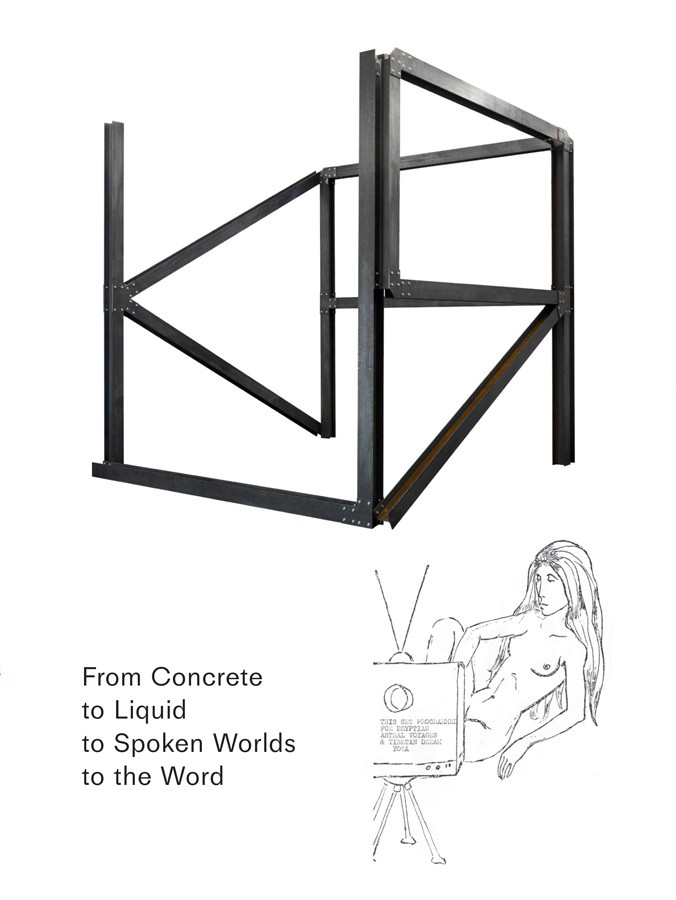
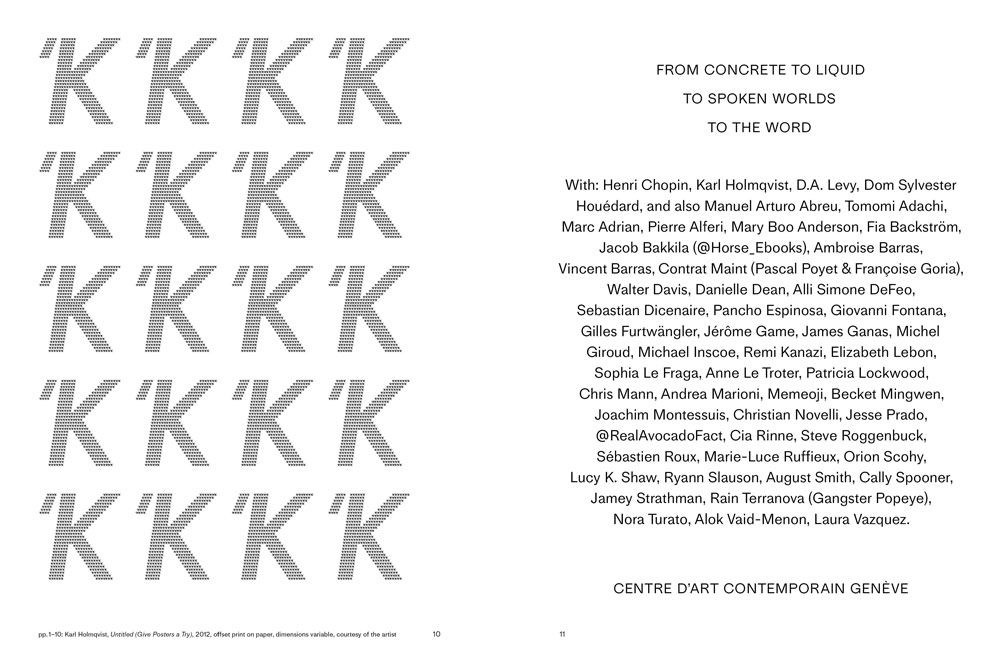
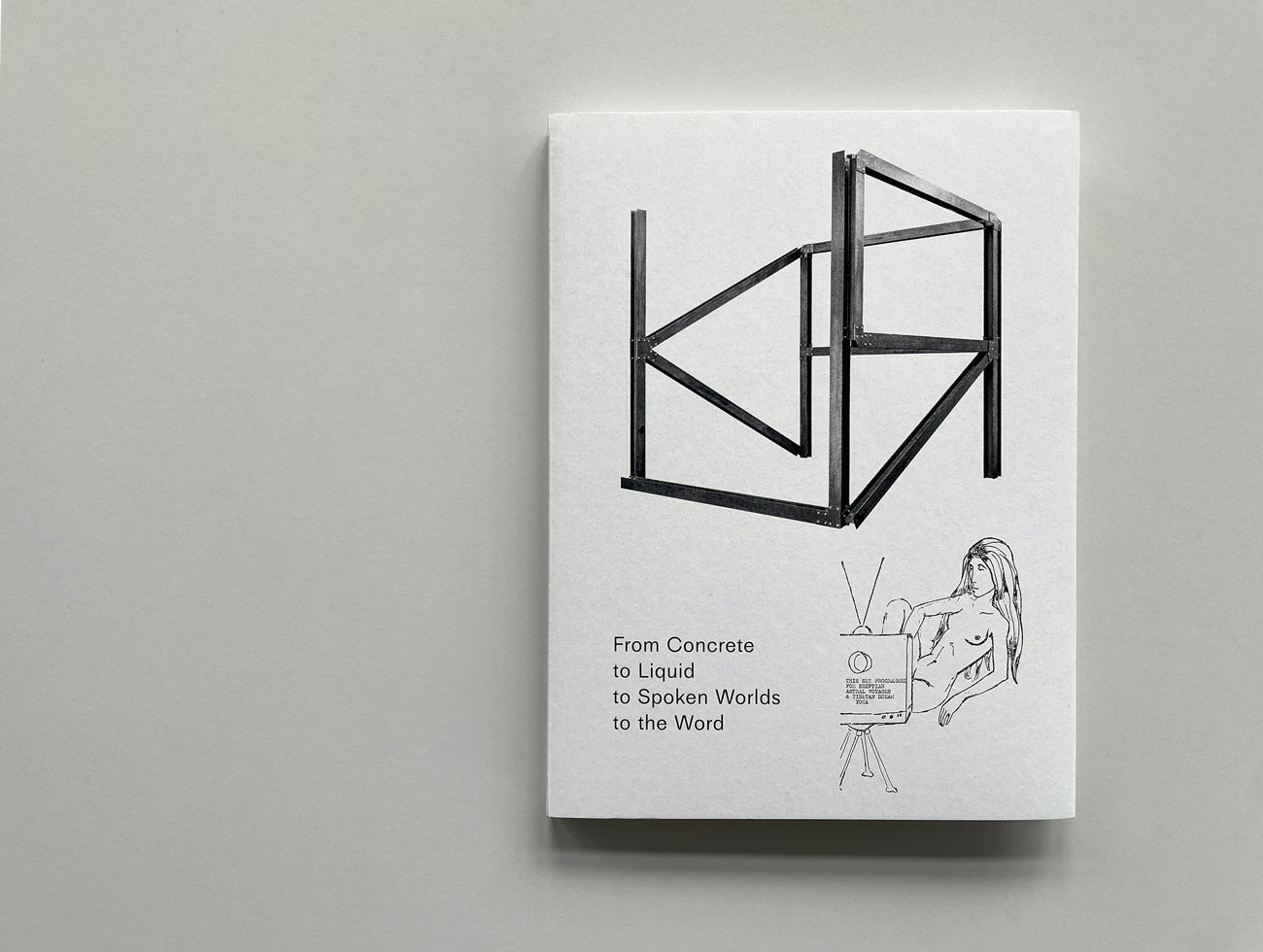
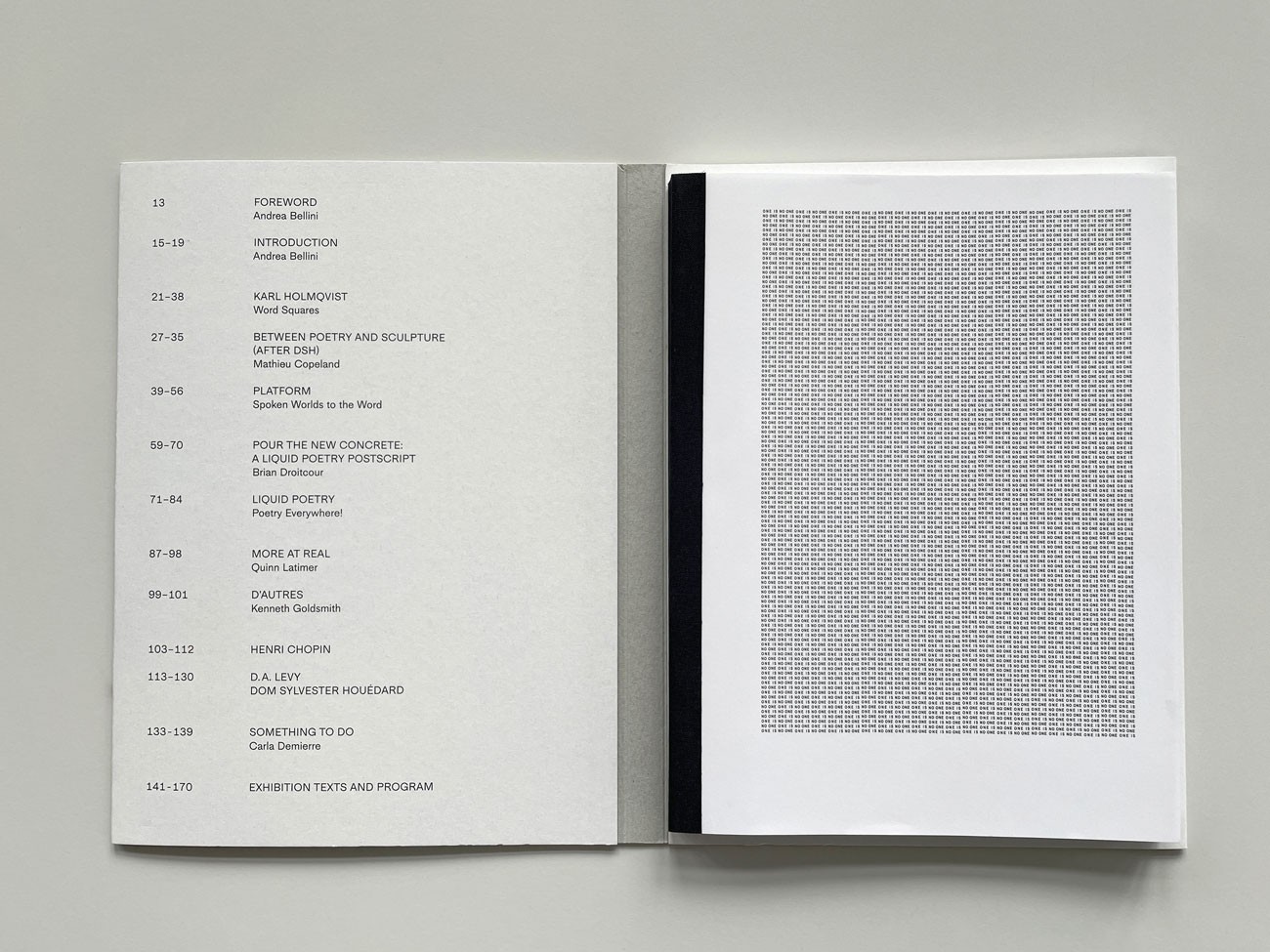
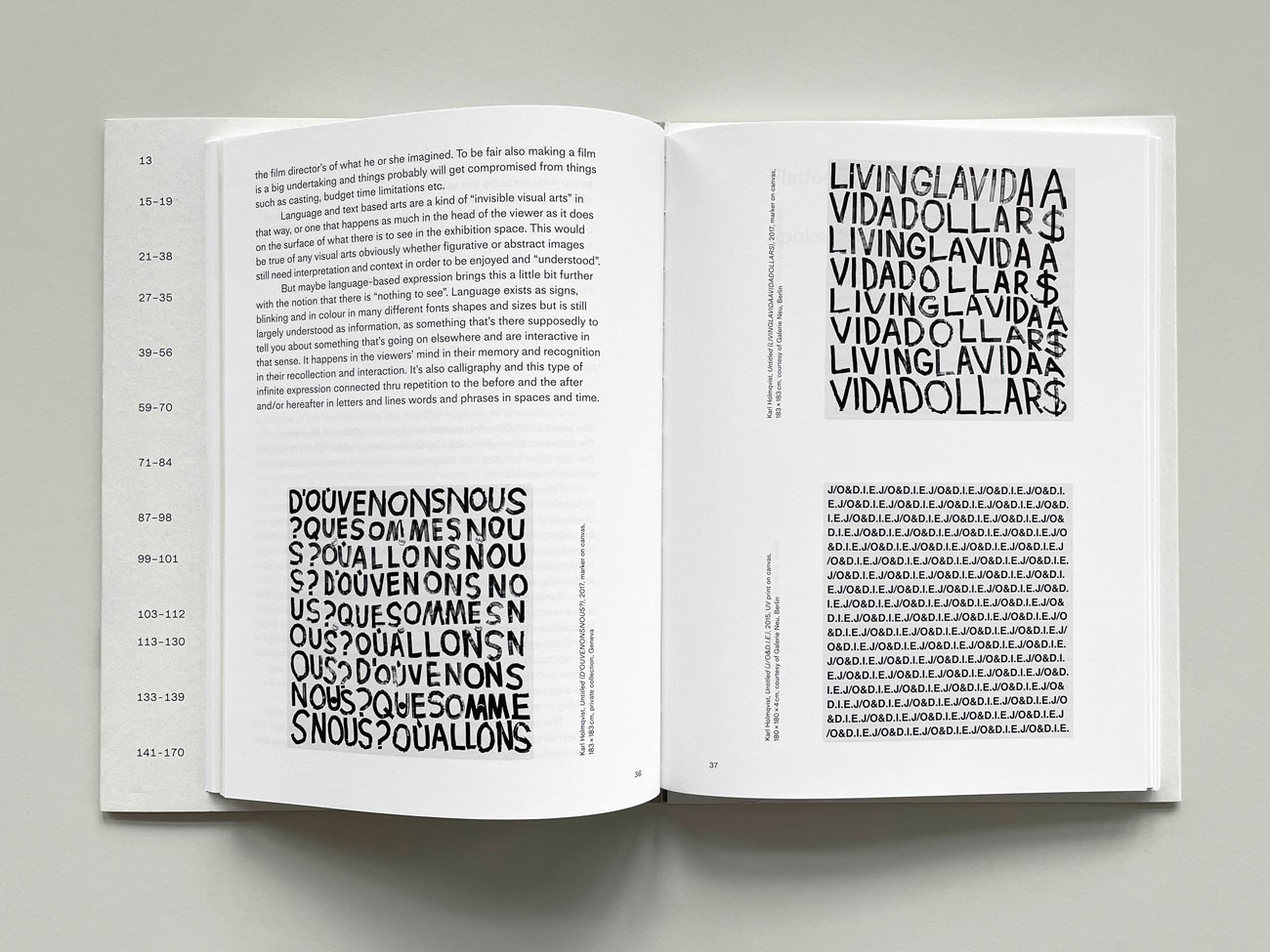
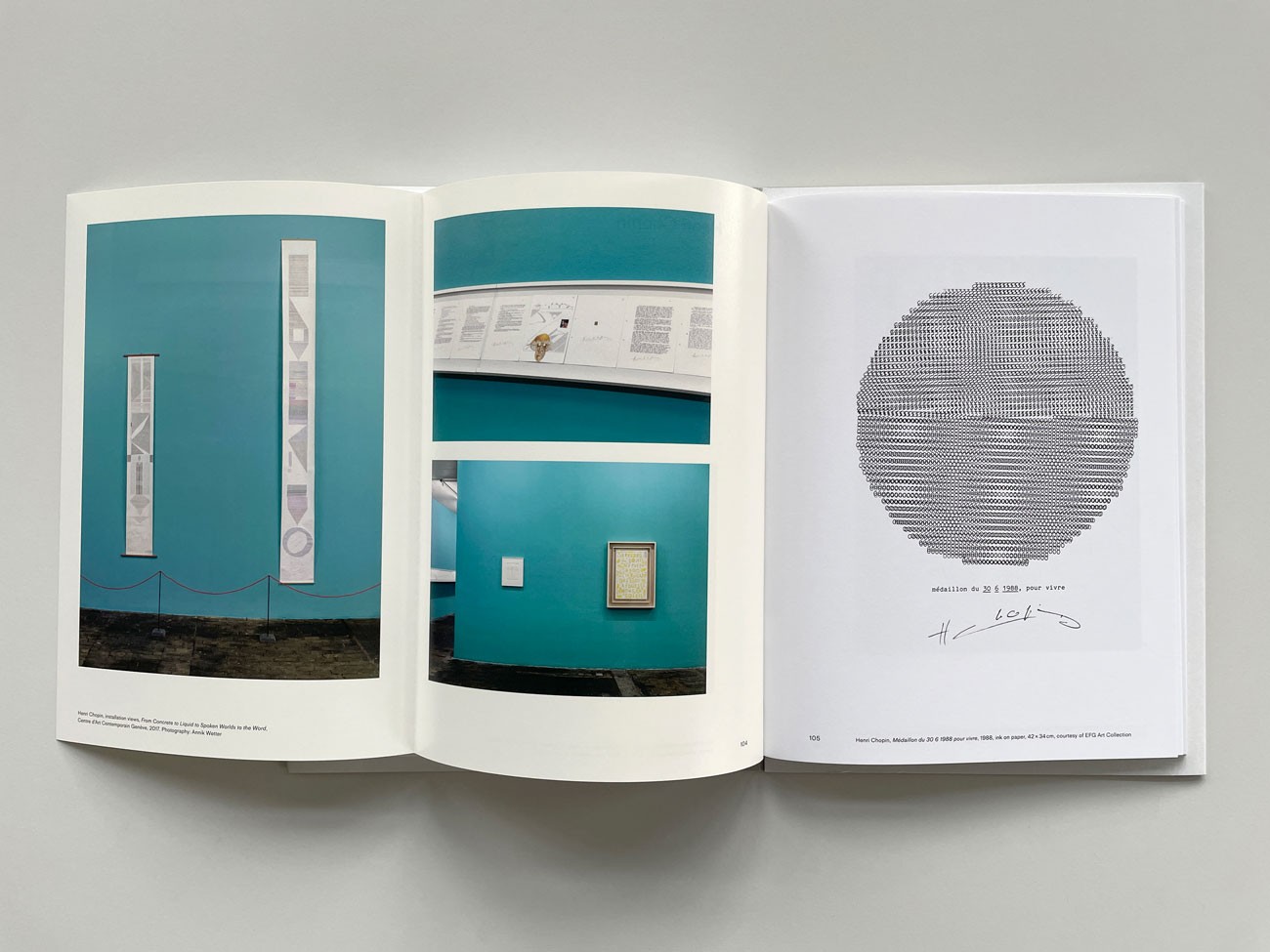
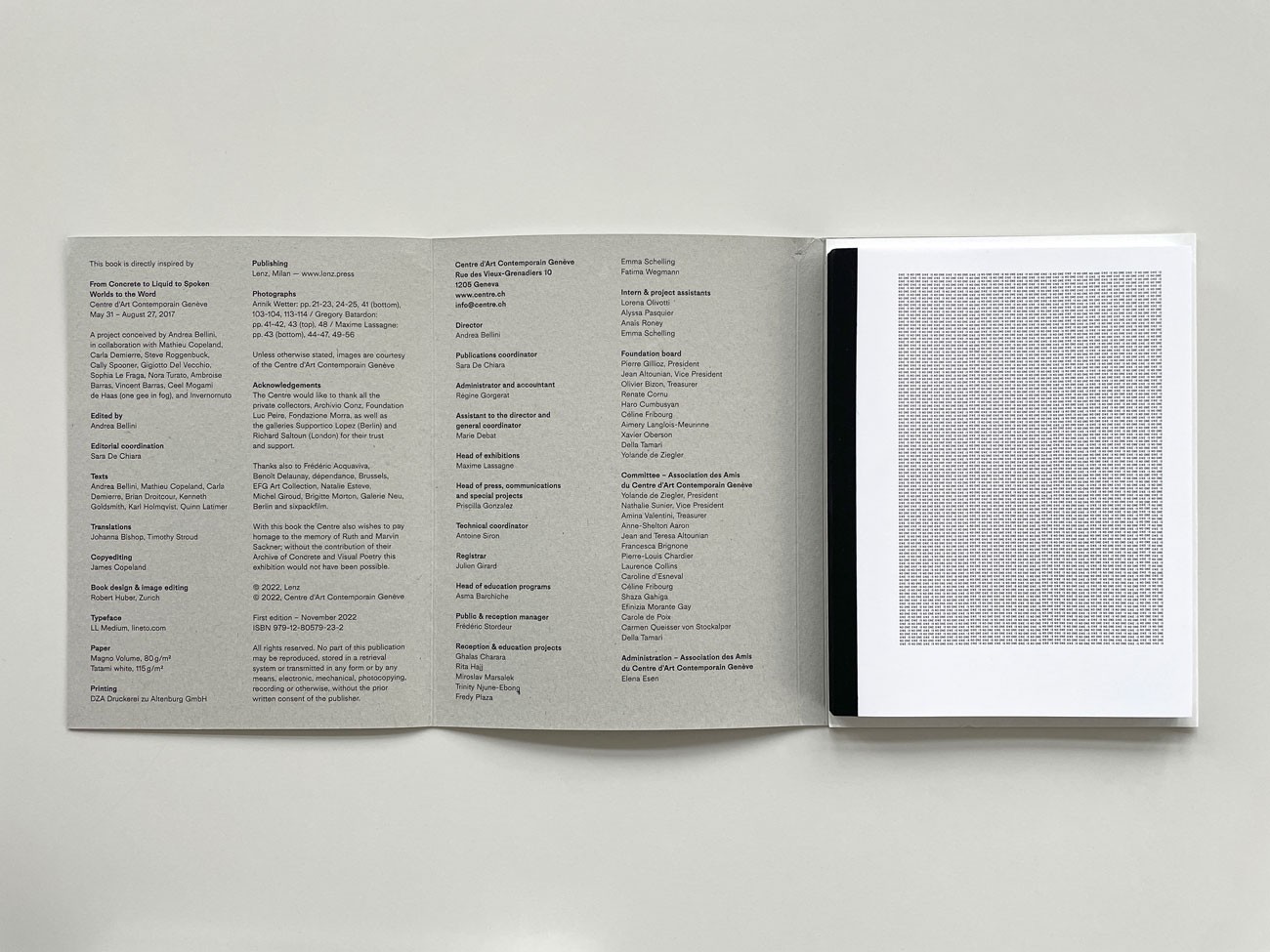
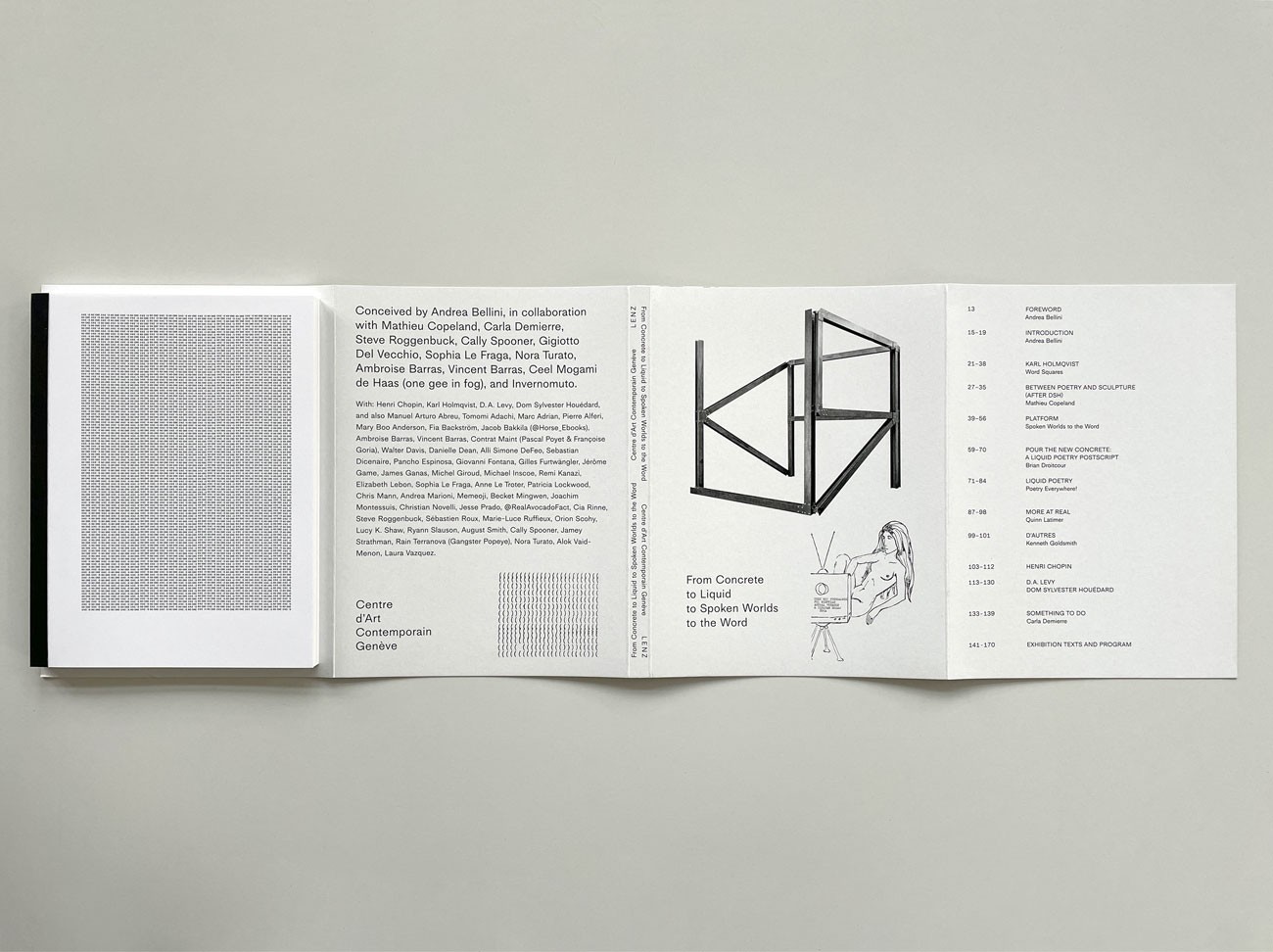
From Concrete to Liquid to Spoken Worlds to the Word
Edited by Andrea Bellini
Texts by Andrea Bellini, Mathieu Copeland, Carla Demierre, Brian Droitcour, Karl Holmqvist, Kenneth Goldsmith and Quinn Latimer
Design by Robert Huber
2022, English, softcover, 178 pages, 16.9 x 22.4 cm
ISBN 979-12-80579-23-2
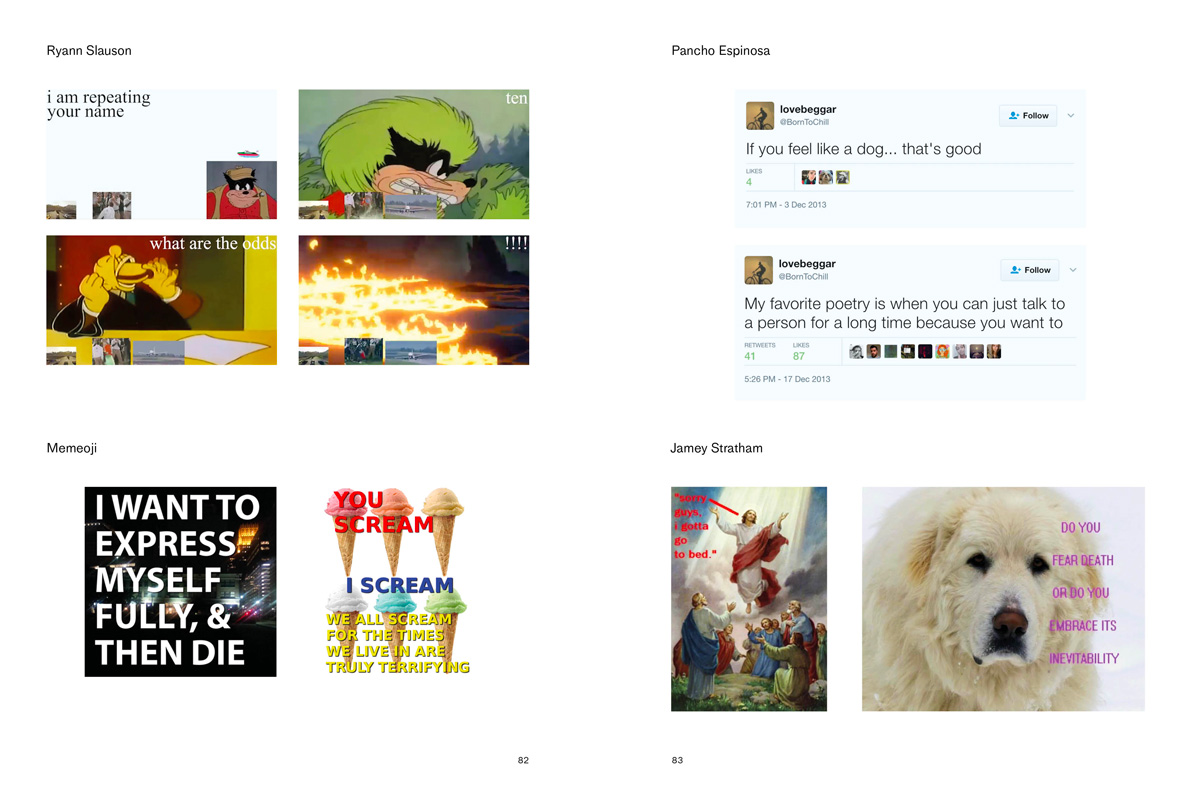
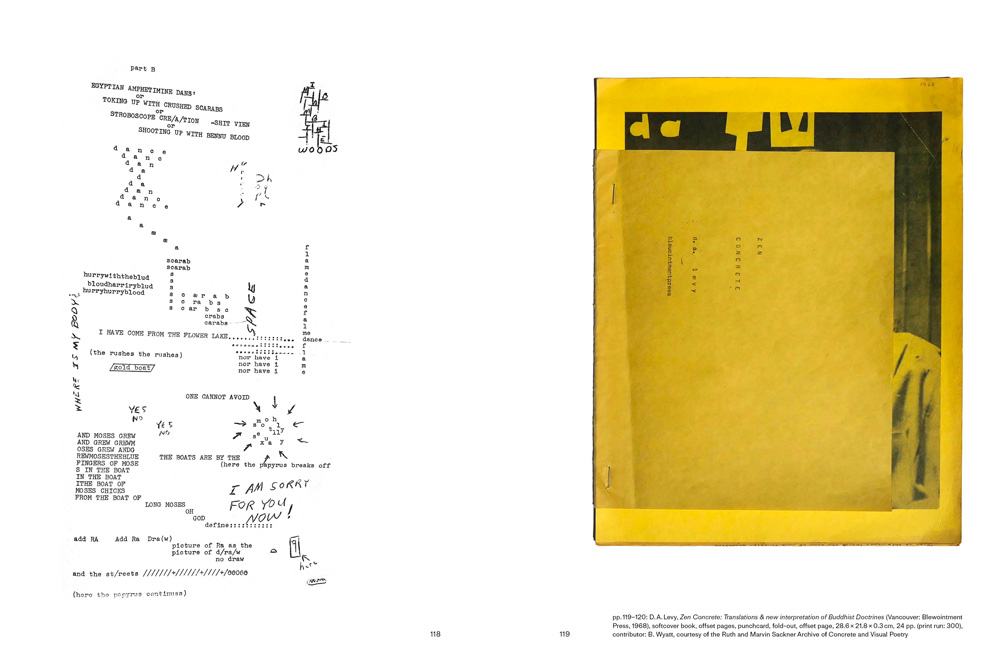
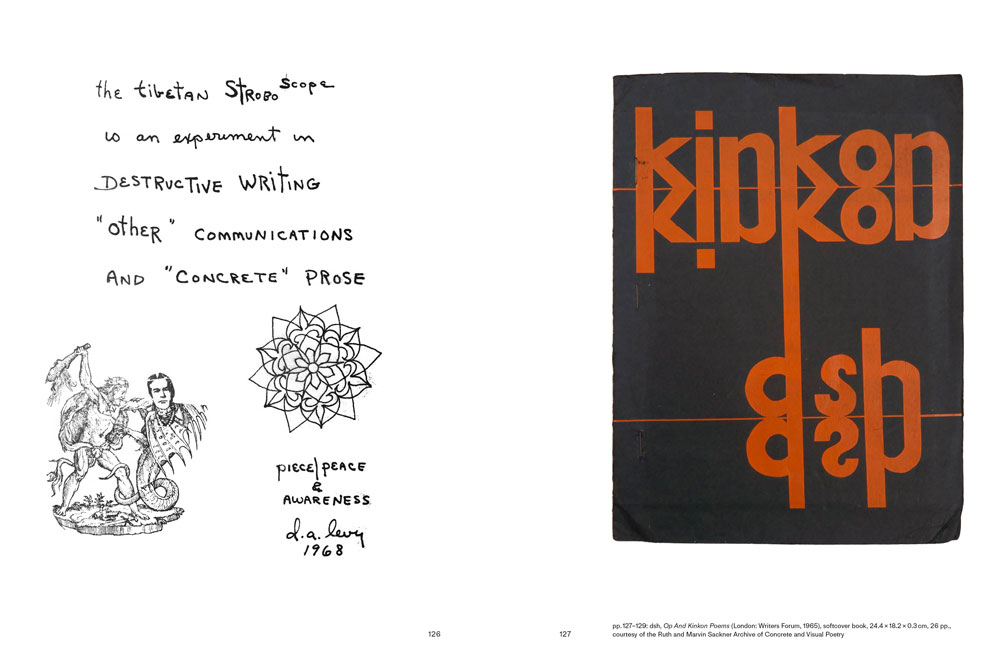
Five years after the exhibition From Concrete to Liquid to Spoken Worlds to the Word, and after a disastrous pandemic, the Centre d’Art Contemporain Genève presents the catalogue for this complex, ambitious project. Even at such a remove, we thought it was important to retrace the fundamental stages of this event through critical essays, images of the works and installations, and the calendar of performances and poetry readings. The reason is simple: despite the undeniable weight of images in today’s world, a keen interest in writing — rather surprisingly — has recently become a hallmark of many young artists’ work. They use writing as a tool to understand the world and as the cornerstone of a critical method, analyzing the present and creating a performative, politically engaged language.
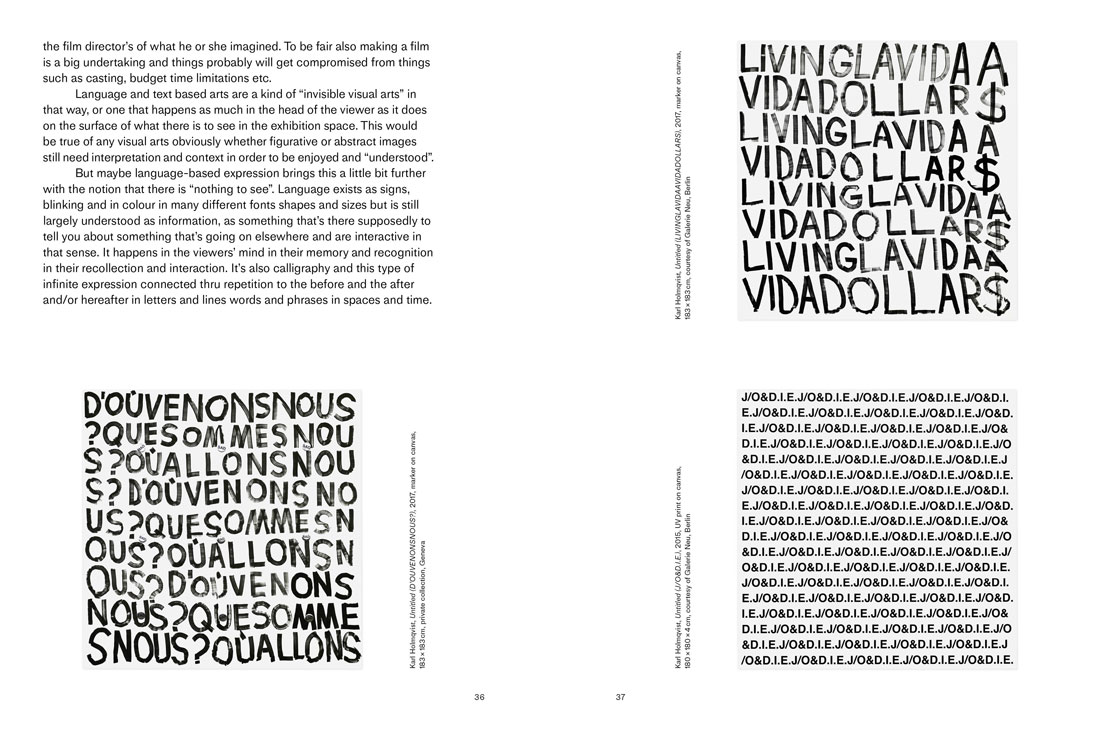
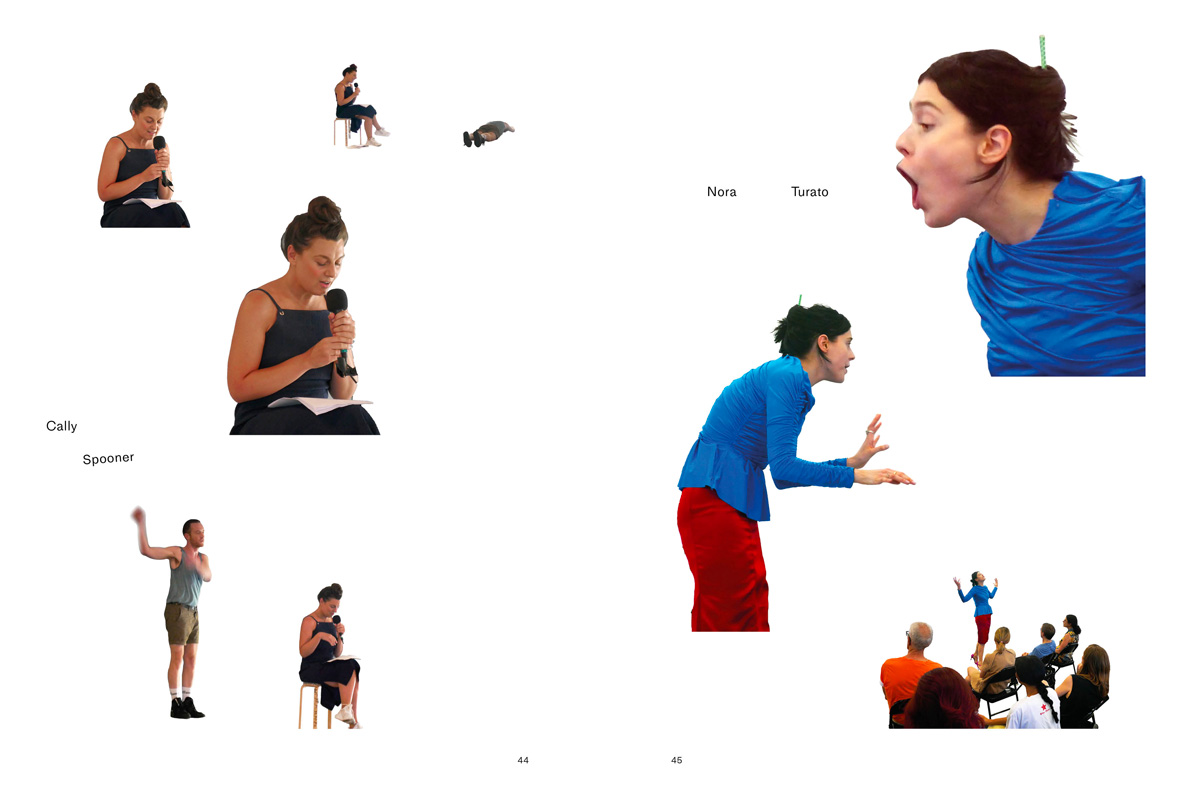
From Concrete to Liquid to Spoken Worlds to the Word explored the emancipation of language through historical and contemporary positions, from the earliest typographic and sound works of concrete poets to poetic experiments in the digital era. This diverse exhibition was accompanied by a series of readings, performances, and screenings revealing the porosity between art and poetry. Poetry readings and recitals in museums, performances centered on the importance of the text and its recitation, videos where poetic language takes on a role that rivals the visual component: the art of our time appears to be deeply and intimately rooted in words.
The program of the Centre d’Art Contemporain Genève, while tracing this link between word and image to the concrete poetry of the 1960s and ’70s, tried on the one hand to examine this renewed artistic interest in the word, and on the other to show how the web and social media are introducing new ways of making poetry. The underlying aim was to explore how art and poetry shape each other in an increasingly interconnected world through ongoing, rhapsodic communication.