Maxiprocesso brings together 360 photographs by Maria D. Rapicavoli, one for each of the archival folders documenting the largest mafia trial in history, held in Palermo from 1986 to 1987. The volume explores the relationship between memory, justice, and social responsibility, examining the material element of a landmark event in contemporary Italian history.
This is the first monograph on the influential American choreographer and dancer Trajal Harrell. In an entertaining, far-reaching conversation with curator Daniel Baumann, Harrell covers all of his choreographies and performances, as well as his influences, successes, and failures, addressing how he transforms and transgresses the history of dance.
This book offers the first comprehensive overview of Anna Franceschini’s practice. Organized around recurring themes, it explores animation, the body, machines, ghosts, desire, and windows through commissioned contributions and selected writings. Its associative structure reflects her interest in repetition, transformation, and unstable images.
This book accompanies 5 Works, Lydia Ourahmane’s first institutional solo show in Italy, staged at the Nicoletta Fiorucci Foundation in Venice and curated by Polly Staple, during the 61st Venice Biennale, and includes newly commissioned texts and images that further contextualize the artist’s practice and work.
Museums of Tears extends Francesco Vezzoli’s 2024 exhibition at Museo Correr, Venice, combining historical works and new commissions to explore antiquity, emotion and illusion. Conceived as an artist’s book rather than a catalogue, it transforms the museum guide into a hybrid archive and portable museum of memory, beauty and mourning.
A project by Fondazione In Between Art Film, edited by Carla Subrizi, Paola Ugolini, and Maria Alicata, this illustrated volume investigates the cinematic, documentary, and video output of women artists and filmmakers operating in Italy in the 1960s and 1970s, situating their research at the intersection of artistic experimentation, politics, society, and technology.
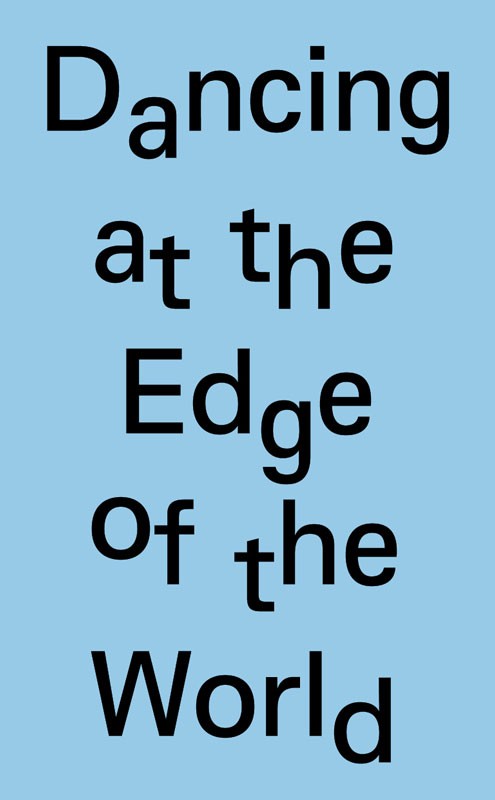
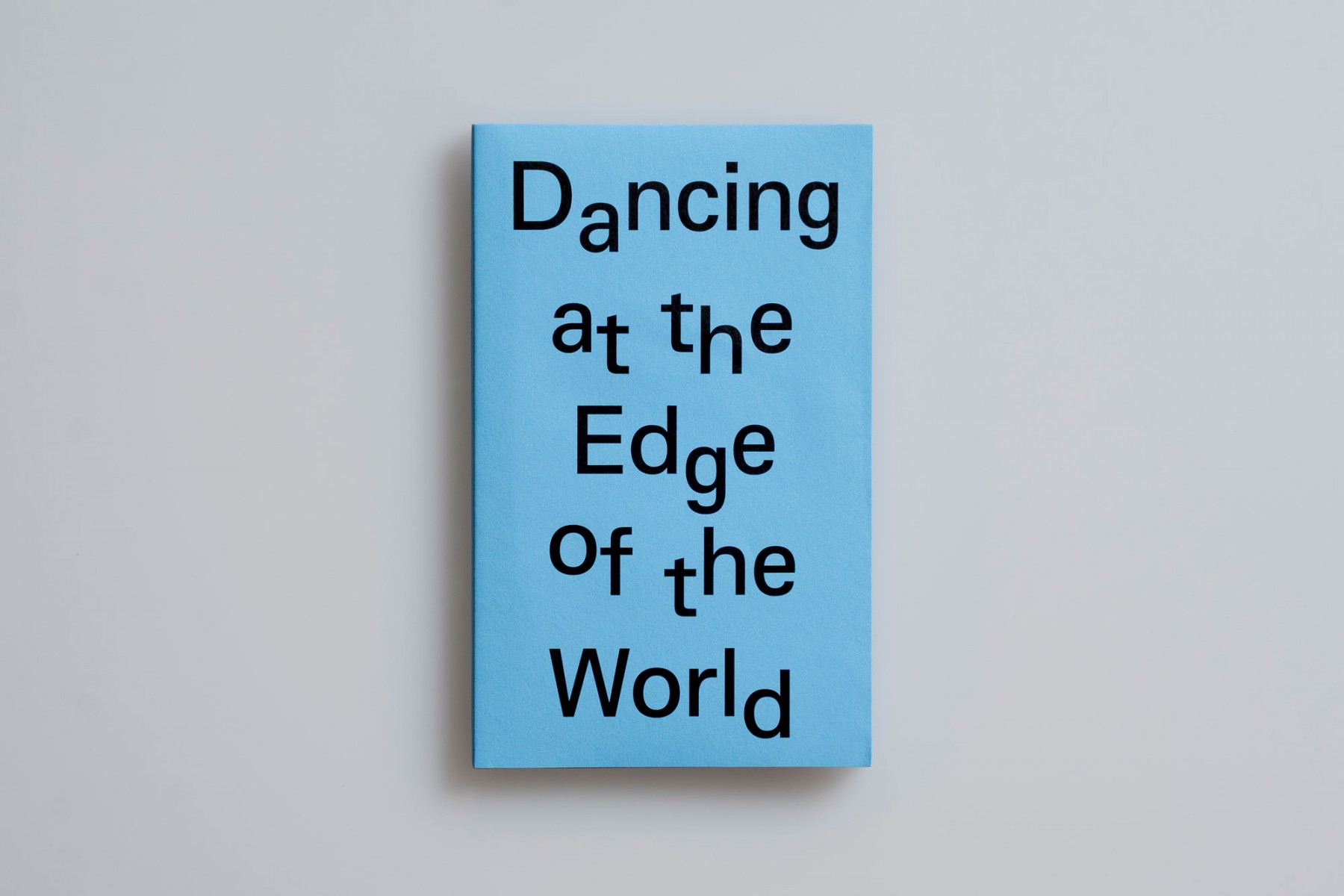
8th Arnaldo Pomodoro Sculpture PrizeDancing at the Edge of the World
Edited by Federico Giani and Chiara Nuzzi
Texts by Federico Giani, Sohrab Mohebbi, Julia Morandeira Arrizabalaga, Chiara Nuzzi, and Anne Reeve
Designed by Lorenzo Mason Studio
2026, English / Italian, 13 x 21cm, 160 pages
ISBN 979-12-80579-85-0
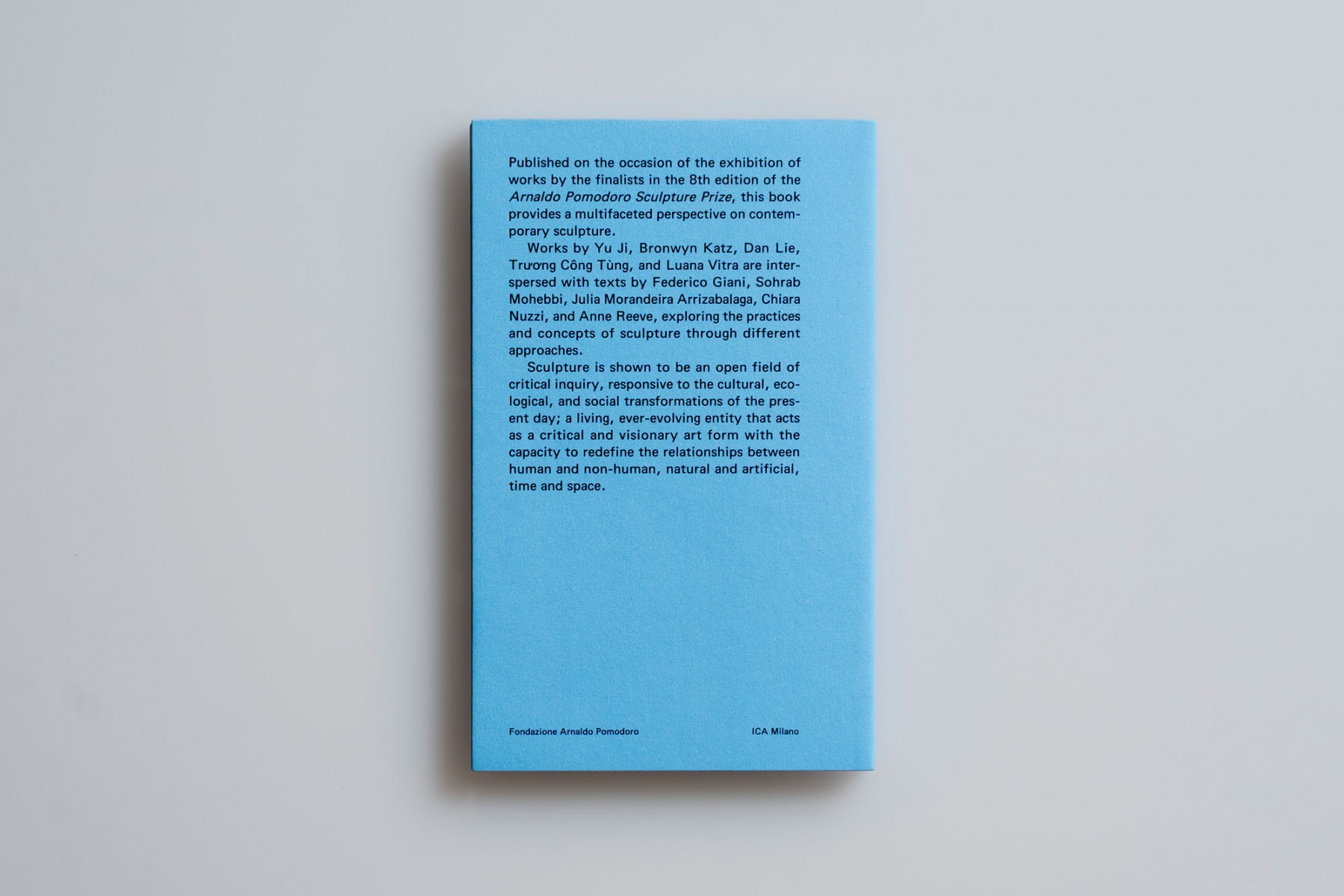
Published on the occasion of the exhibition by the finalists of the 8th Arnaldo Pomodoro Sculpture Prize, this book provides a multifaceted perspective on contemporary sculpture. Works by Yu Ji, Bronwyn Katz, Dan Lie, Trương Công Tùng, and Luana Vitra are interspersed with texts by Federico Giani, Sohrab Mohebbi, Julia Morandeira Arrizabalaga, Chiara Nuzzi, and Anne Reeve, exploring the practices and concepts of sculpture through different approaches. Sculpture is shown to be an open field of critical inquiry, responsive to the cultural, ecological, and social transformations of the present day; a living, ever-evolving entity that acts as a critical and visionary art form with the capacity to redefine the relationships between human and non-human, natural and artificial, time and space.
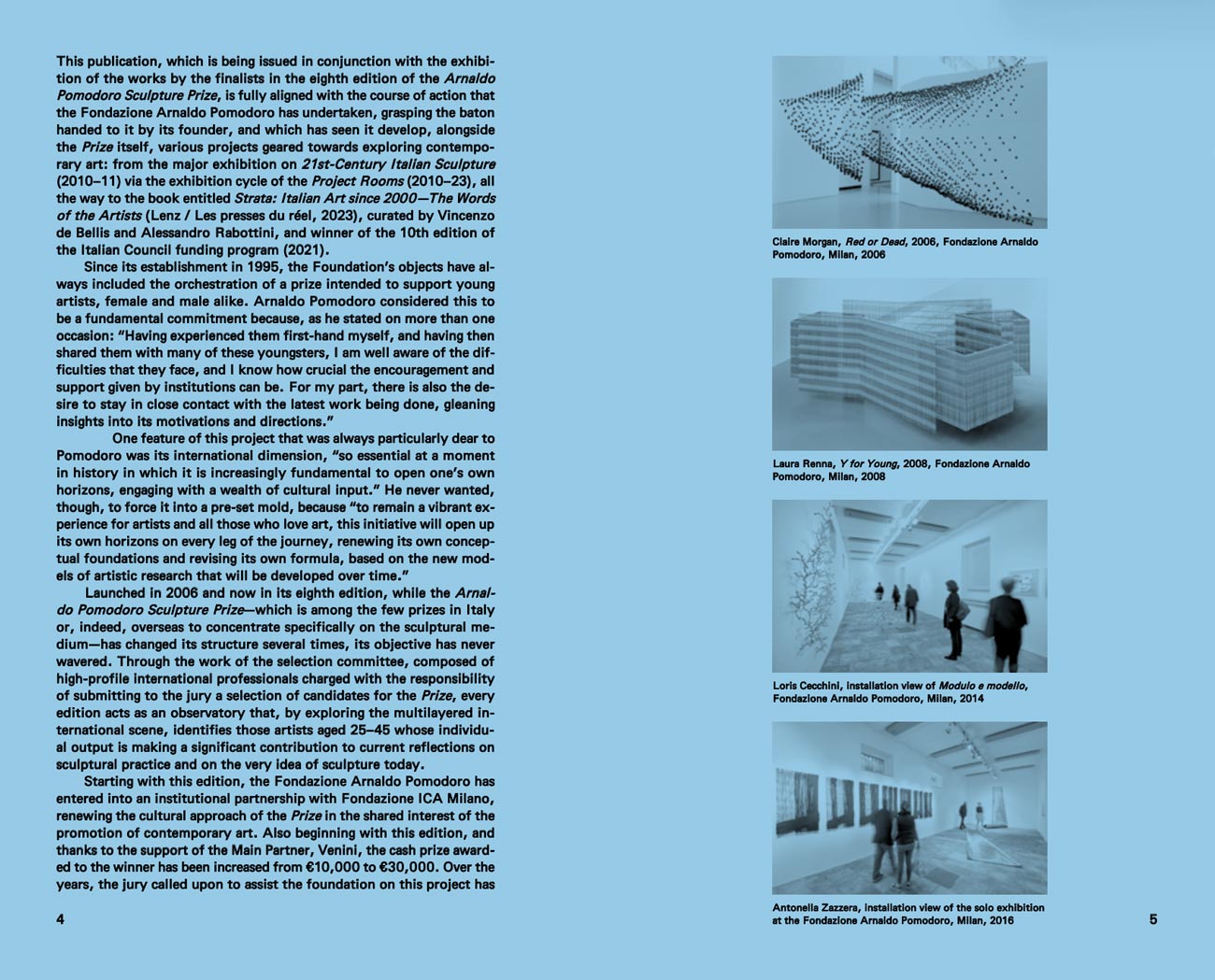
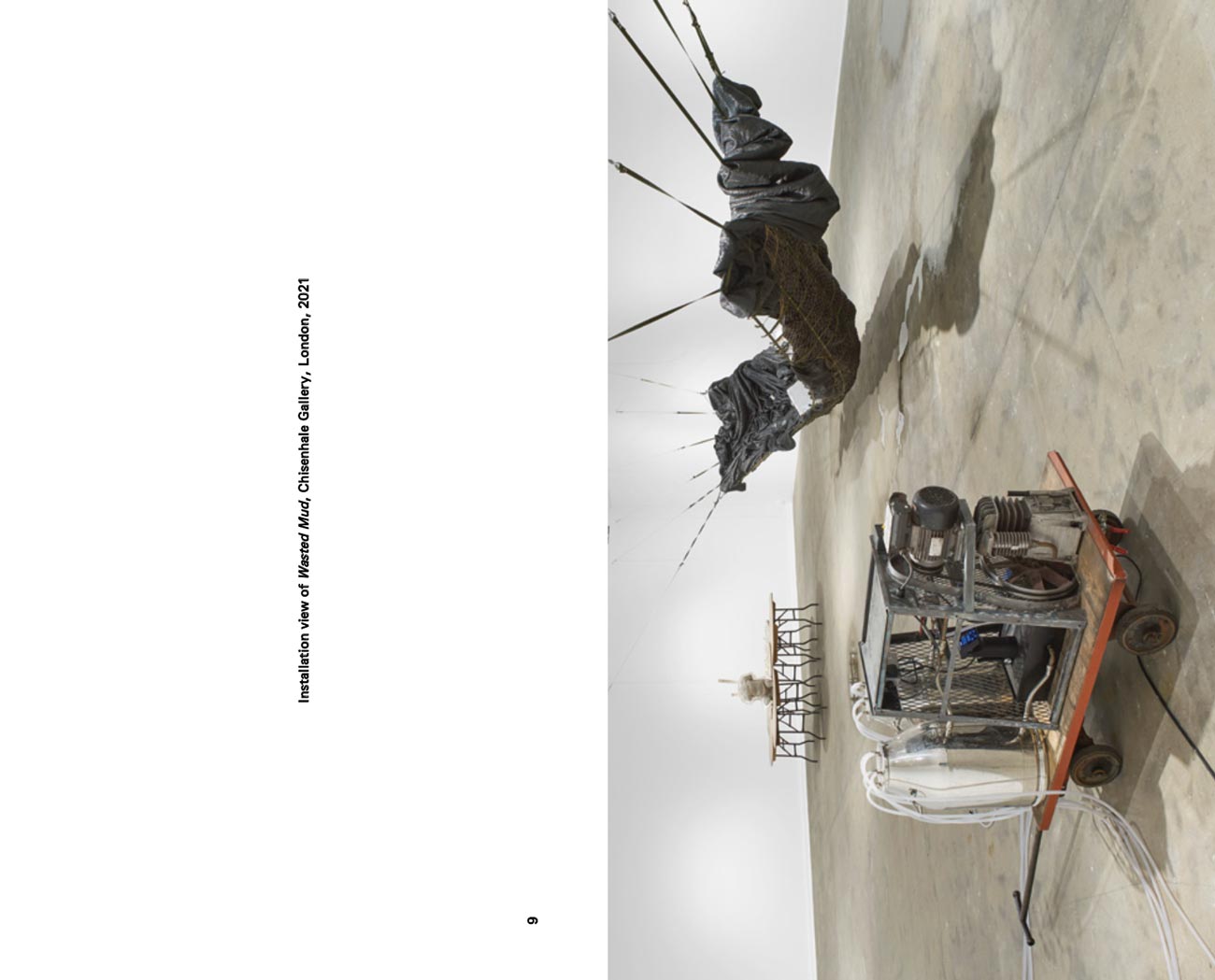
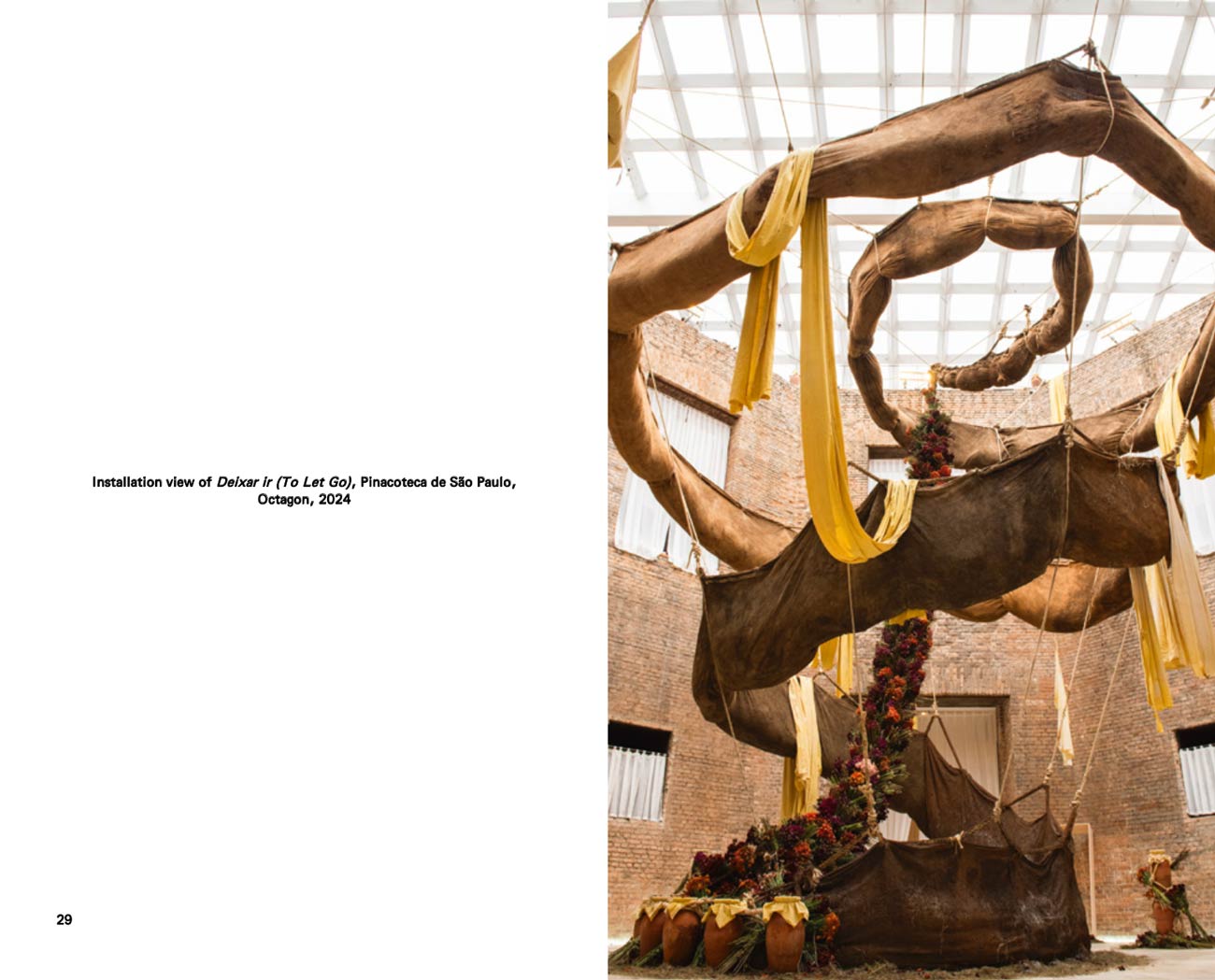
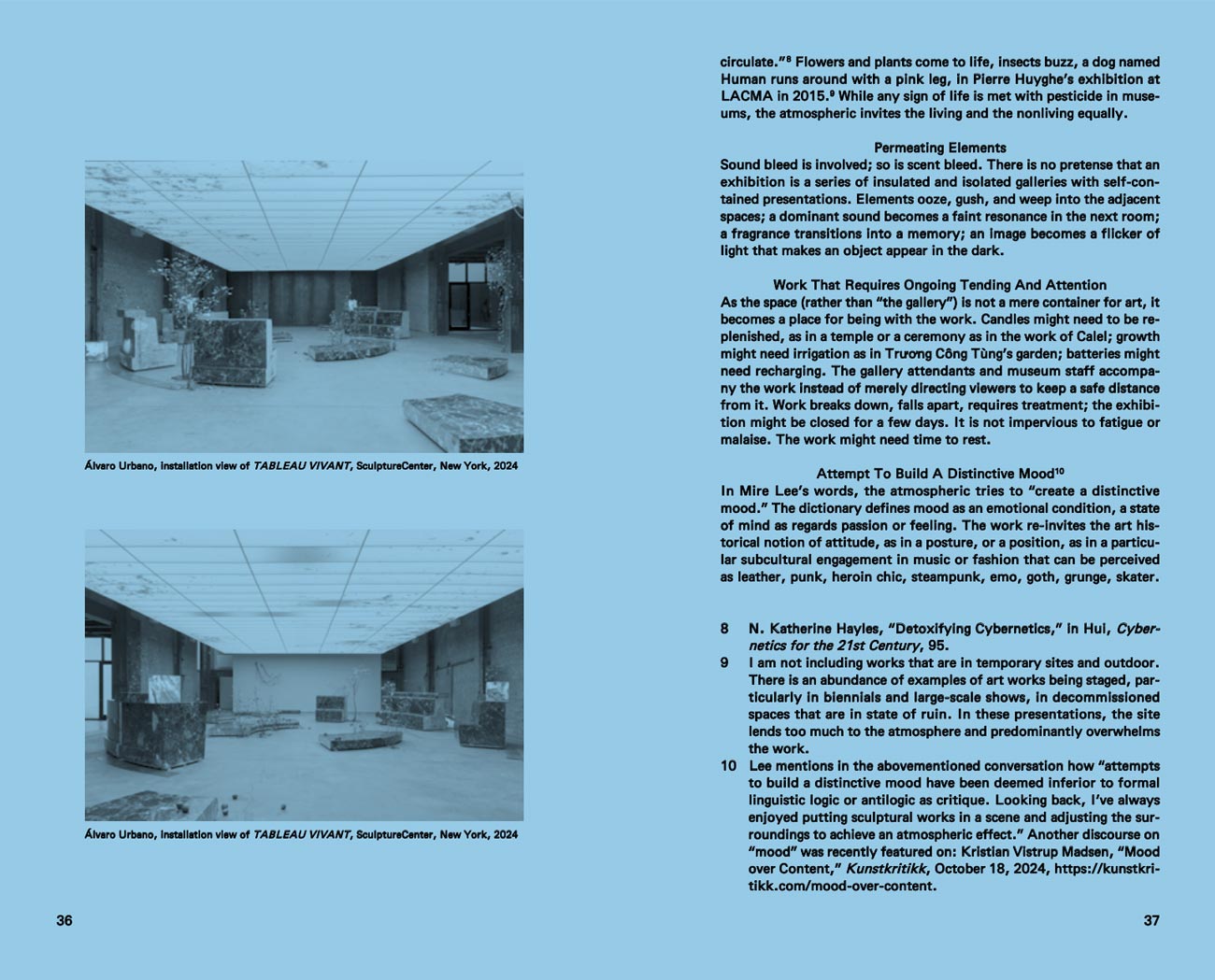
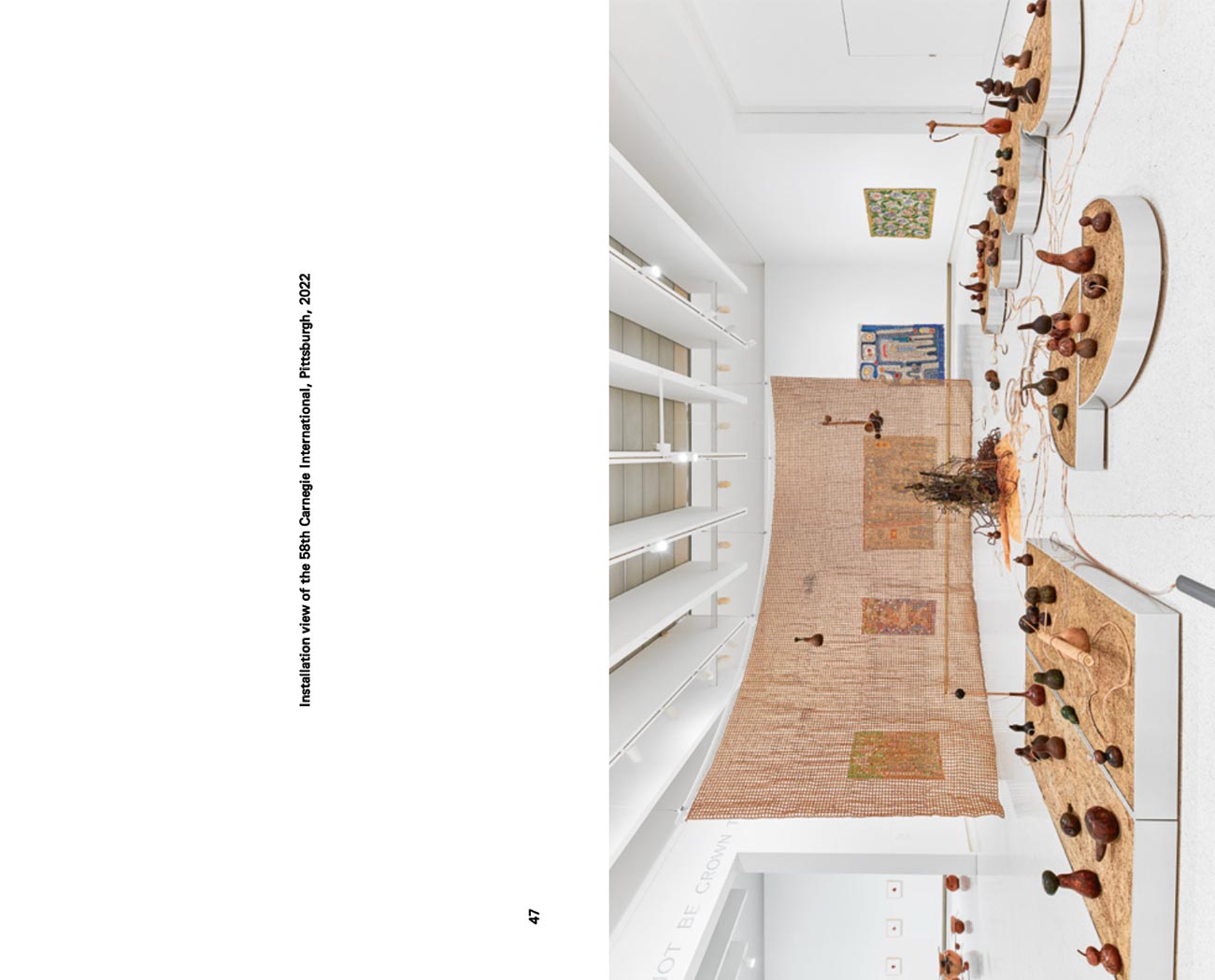
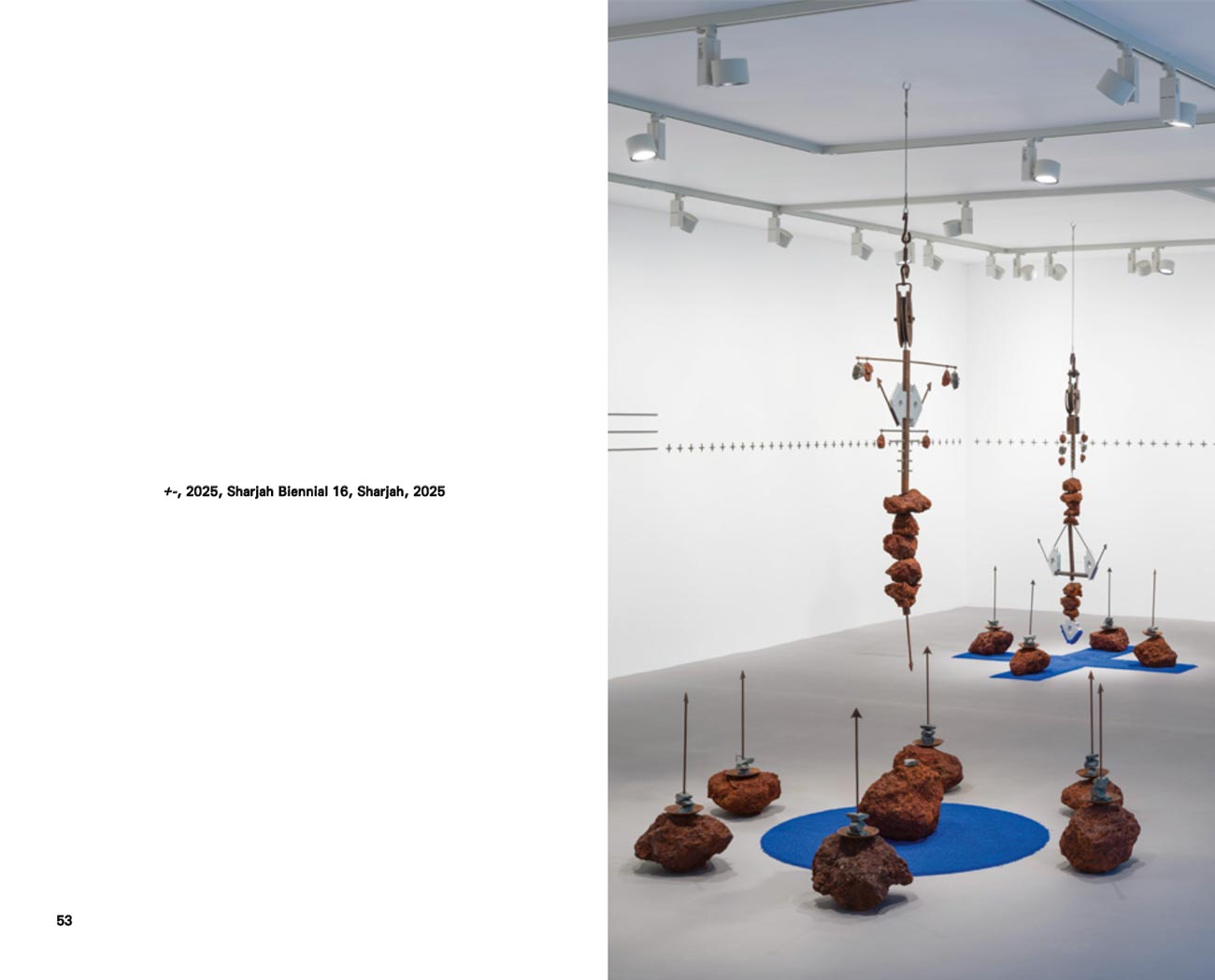
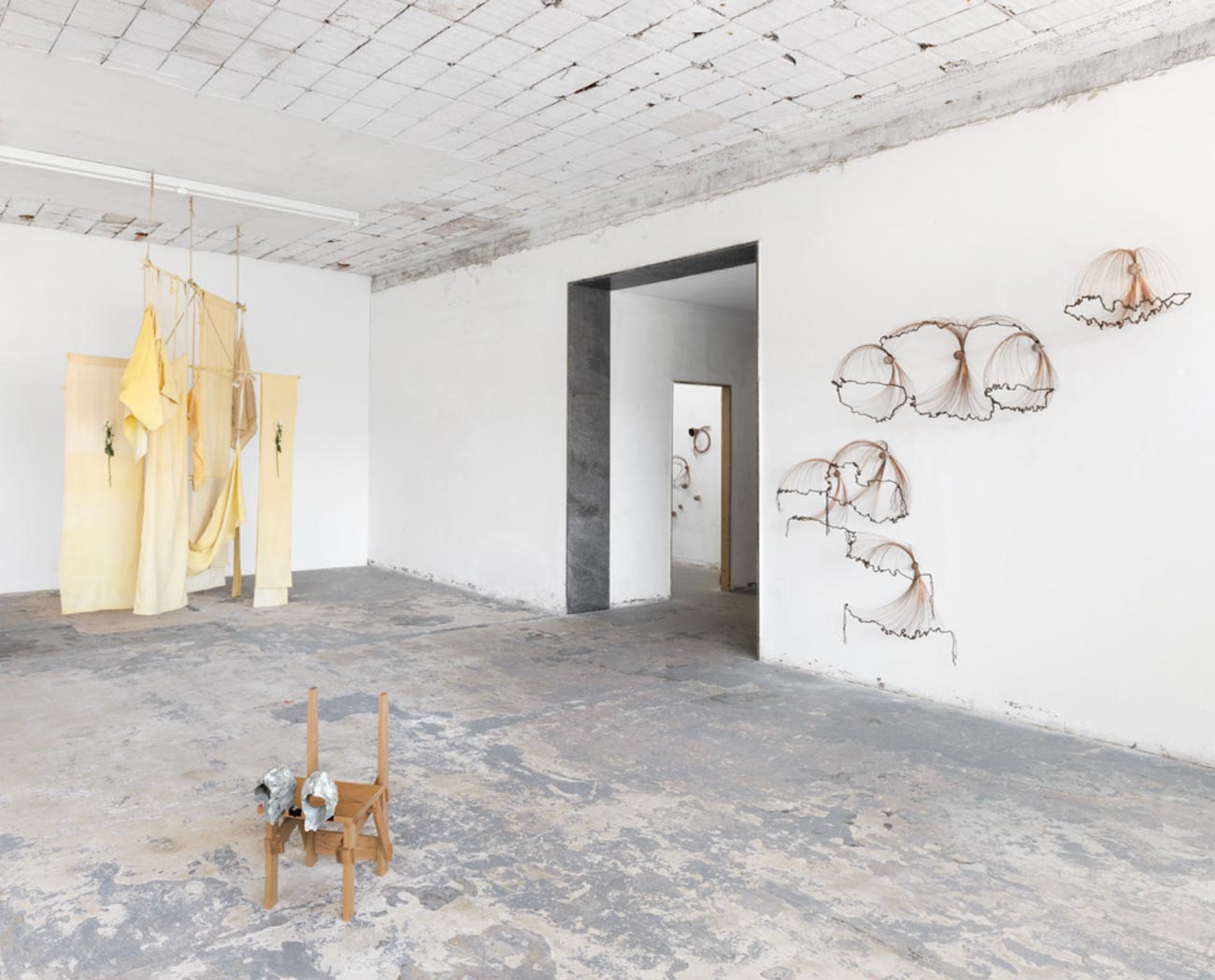
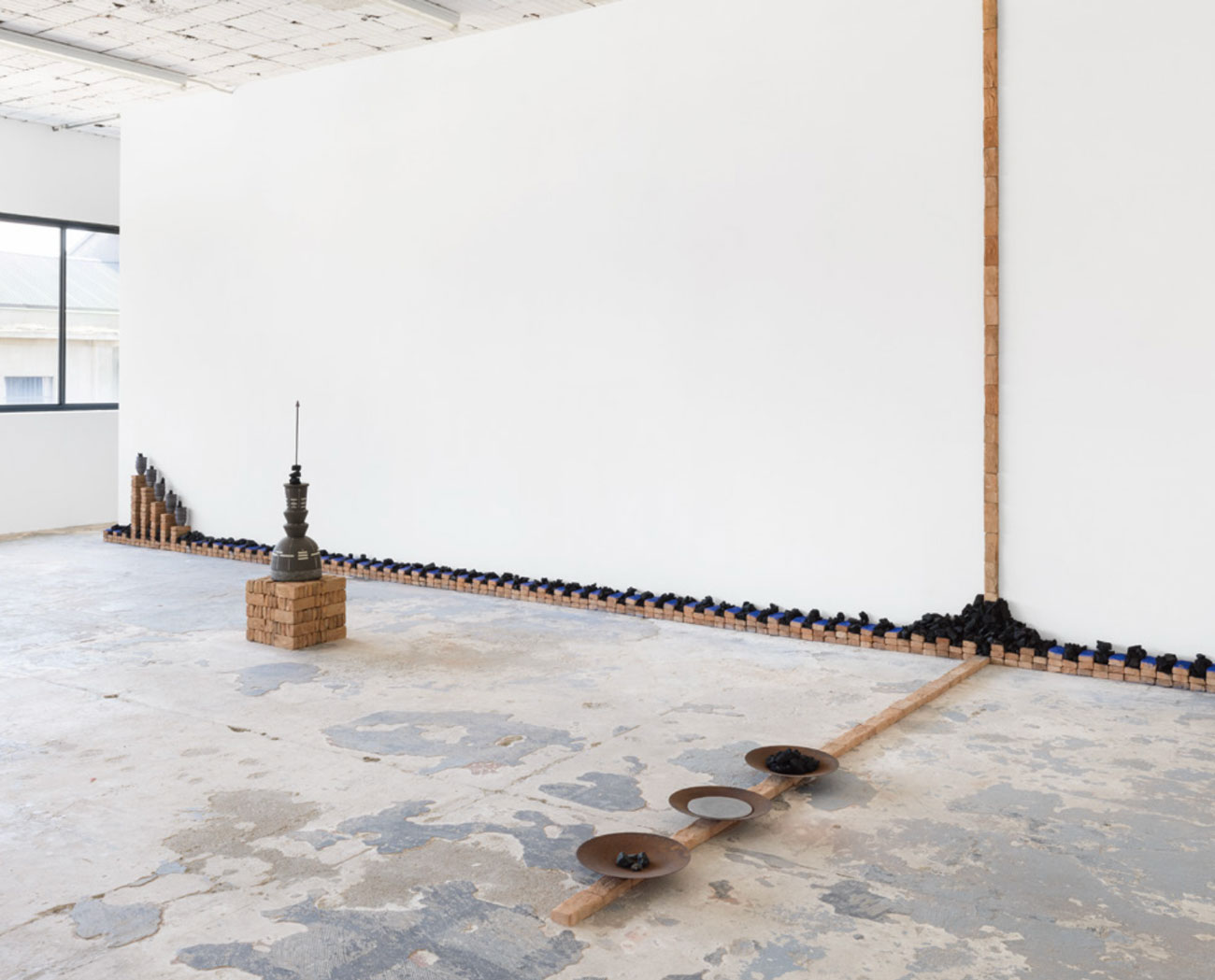
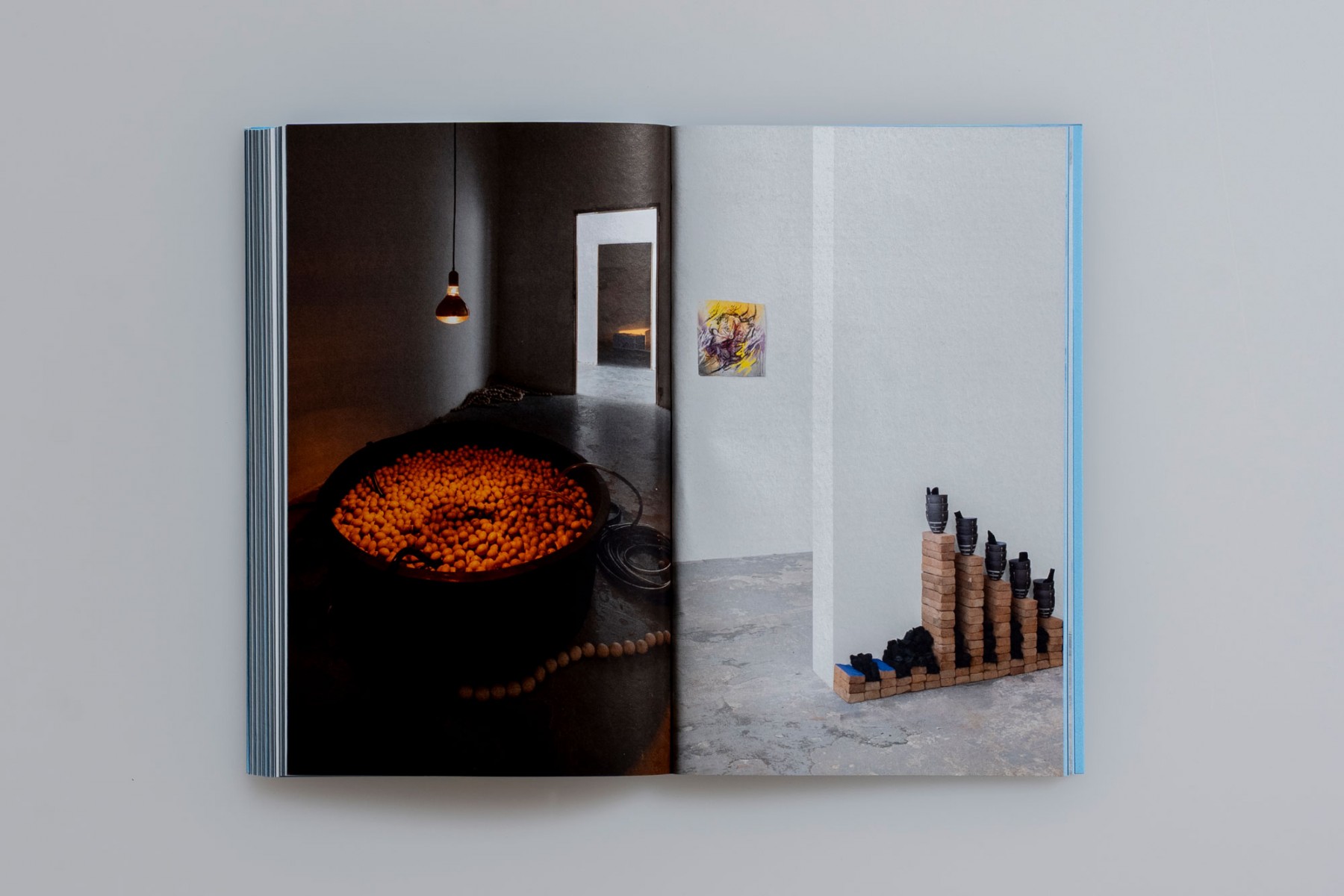
The book, edited by Federico Giani and Chiara Nuzzi, and printed on blue-black paper, is conceived as the interweaving of two independent yet simultaneous narratives, recalling the choreography of two dancers engaged in a dialogue within the same space-time. The first section, titled Gestures, focuses solely on images and consists of small portfolios by Yu Ji, Bronwyn Katz, Dan Lie, Trương Công Tùng, and Luana Vitra—finalists and joint winners of this edition of the Prize. For each of the artists, the book presents individual works and installation views from exhibitions, as well as images of works in progress in their respective workshops, thus offering a glimpse into the artists’ creative process.
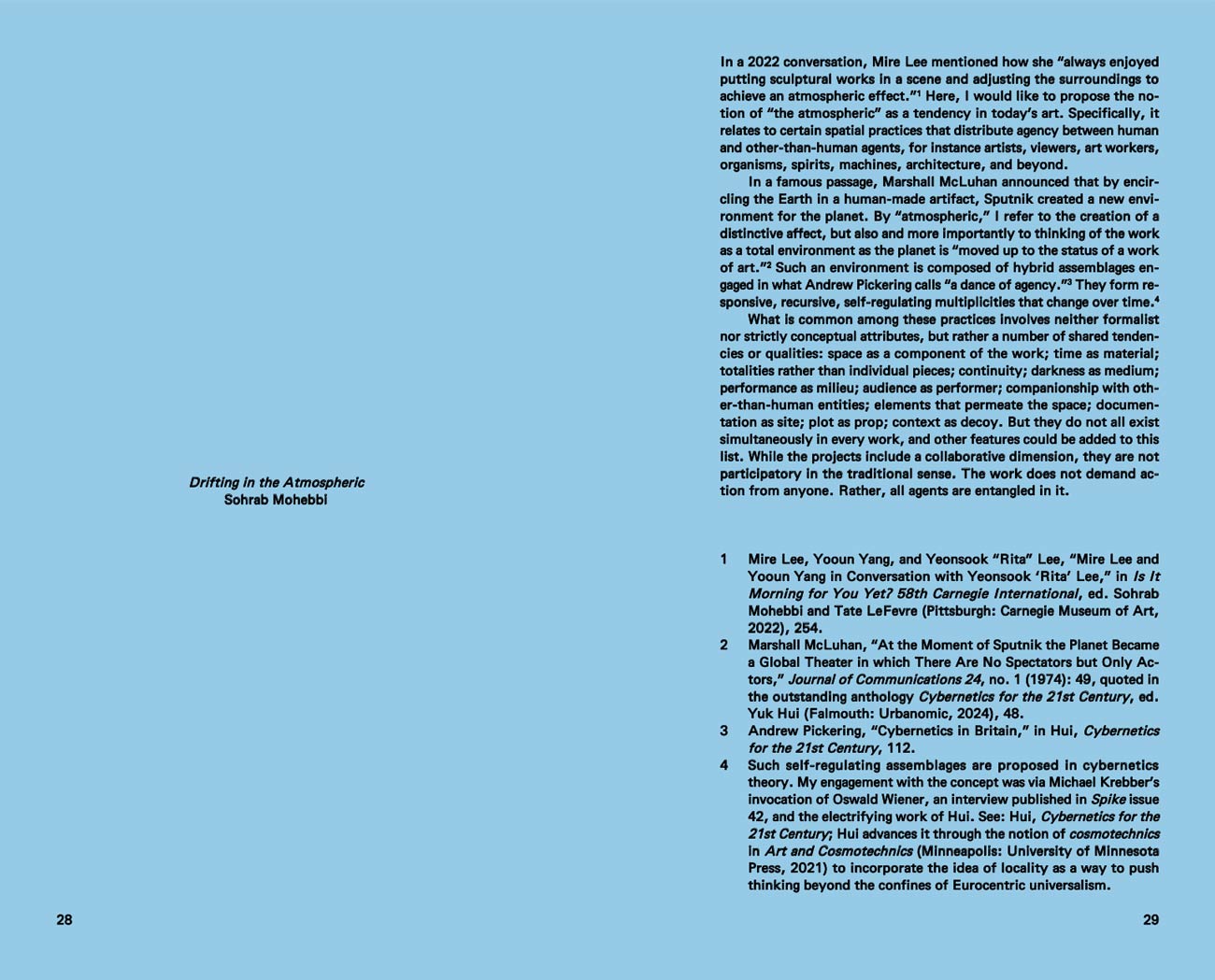
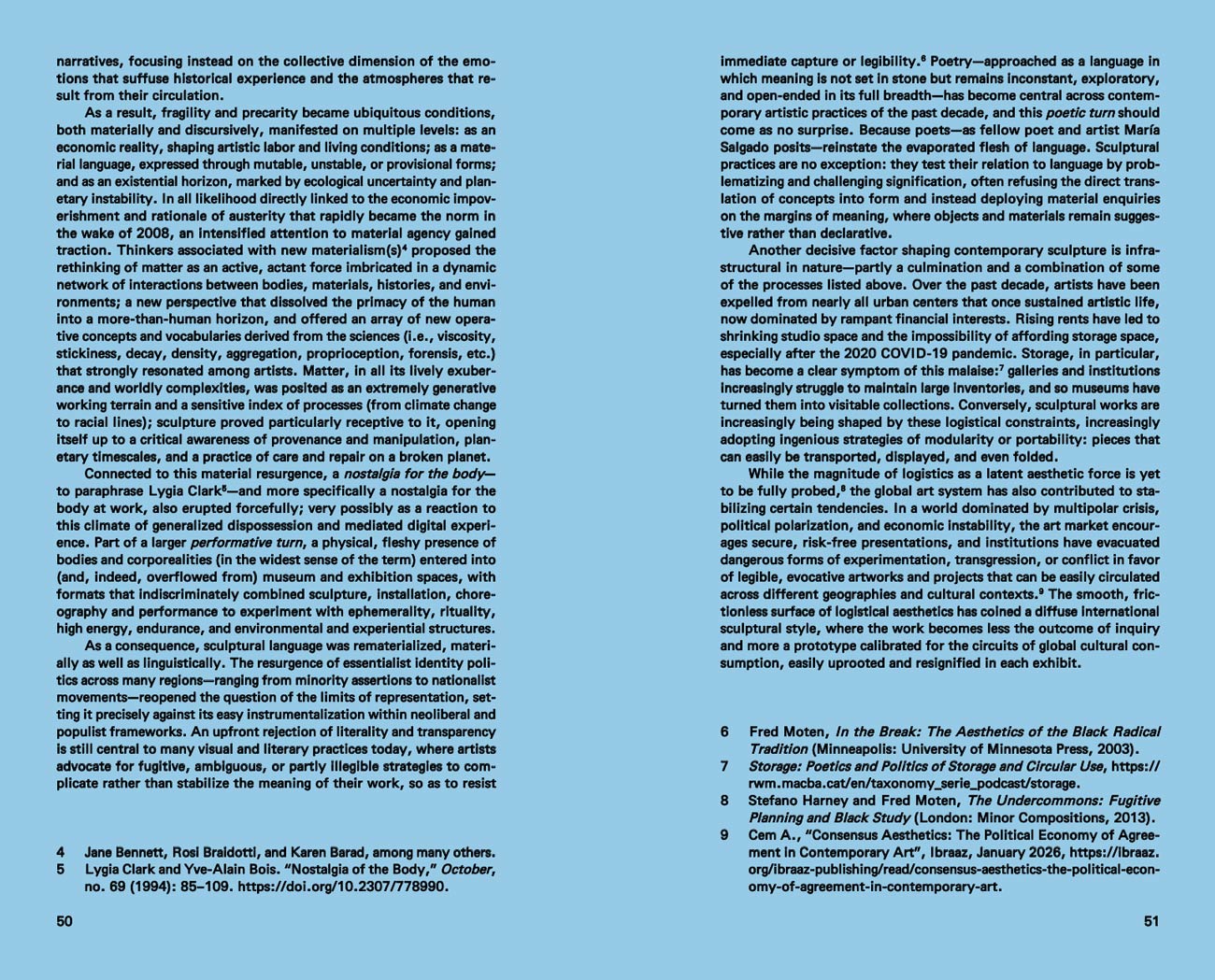
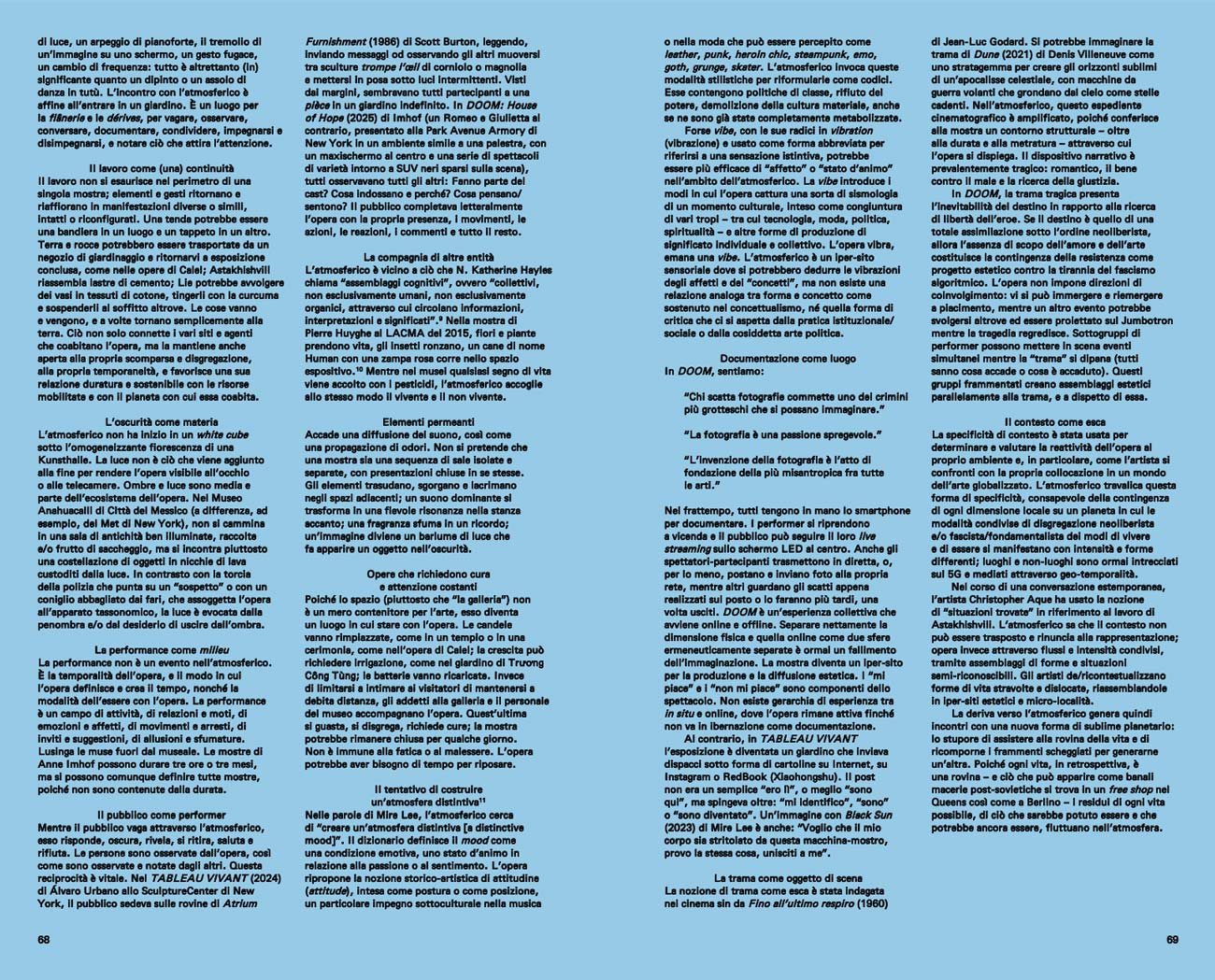
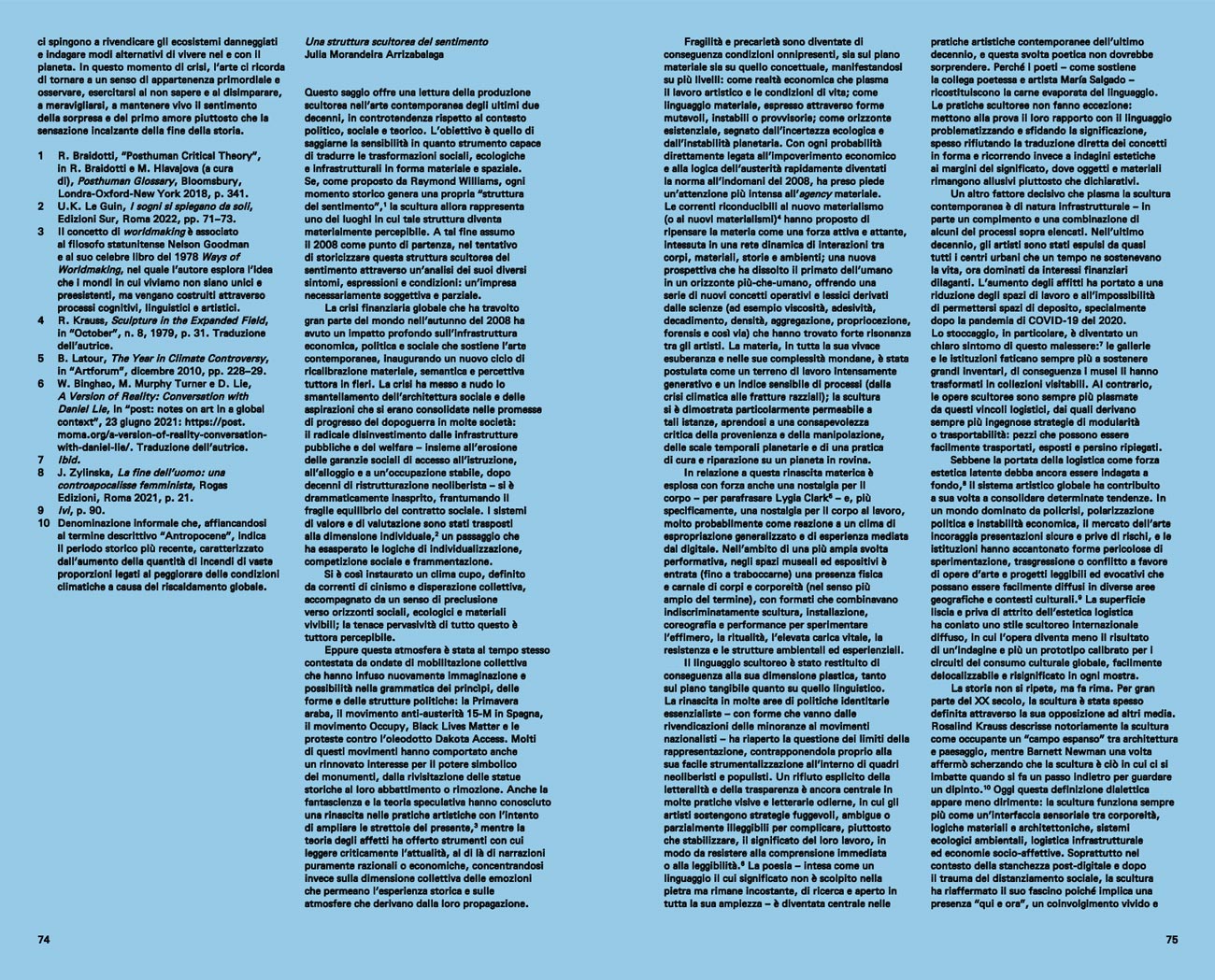
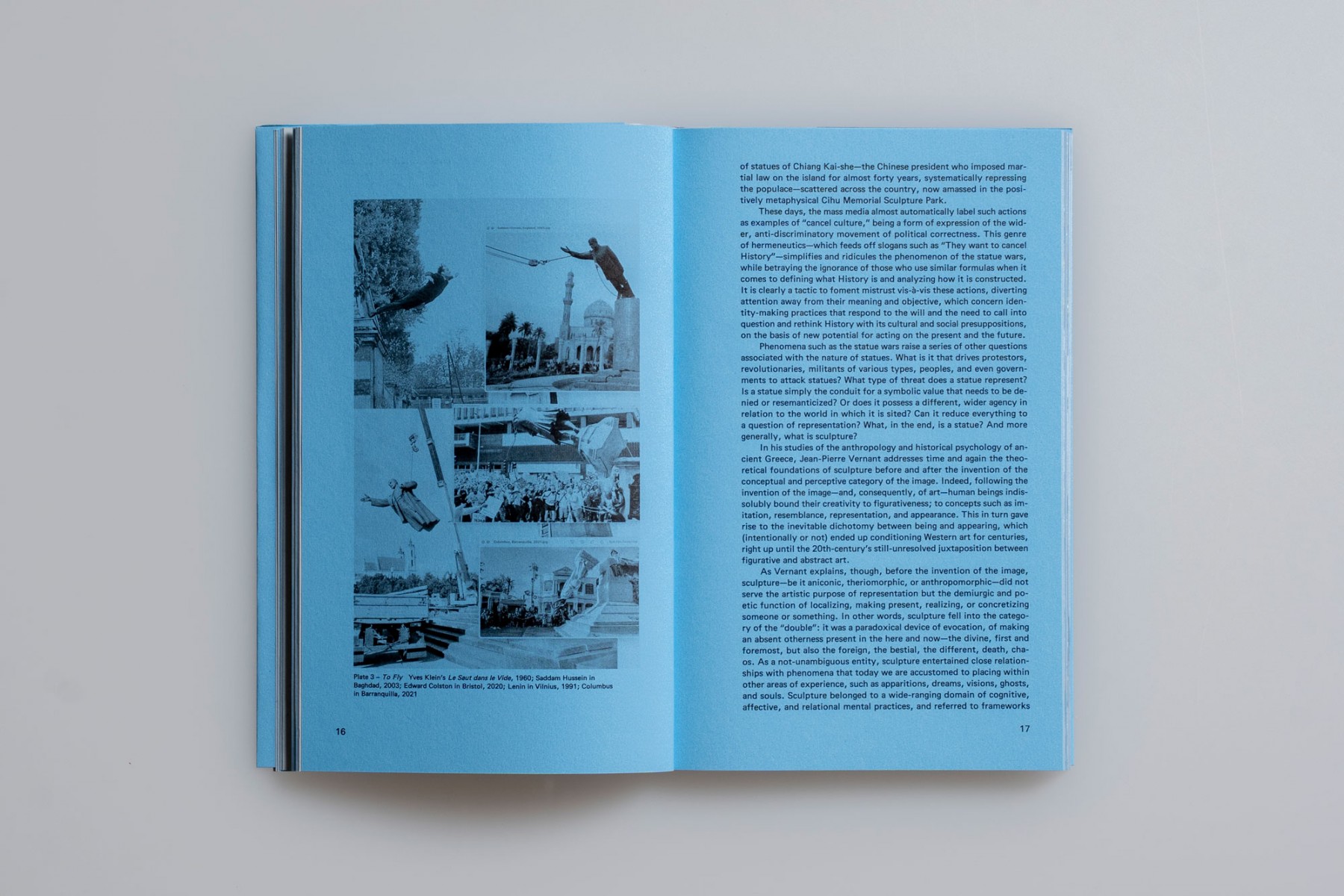
The second section is a condensed anthology of perspectives on contemporary sculpture. The five authors, who are members of the Prize jury, in addition to being directors and curators of the Sculpture Center, the Hirshhorn Museum and Sculpture Garden, the Museo Nacional Centro de Arte Reina Sofía, the Fondazione Arnaldo Pomodoro and the Fondazione ICA Milano, agreed to share their thoughts on the practices and conceptual frameworks that are driving sculpture forward today.
This approach gave rise to a multilayered panorama that encompasses everything from the anthropological constants linking archaic and contemporary perceptions of sculpture, to the elements that contribute to defining the “atmospheric” quality of present-day sculpture and its interpretation as, variously: a relational and transformative art form comparable to dance; a materially experiential expression of the “structure of feeling” within today’s political, social, and theoretical context; an inquiry into how sculpture—now, as before—is ultimately a site for investigation, sensation, and possible revelation; and a gathering place where we attempt to understand how things generate meaning.