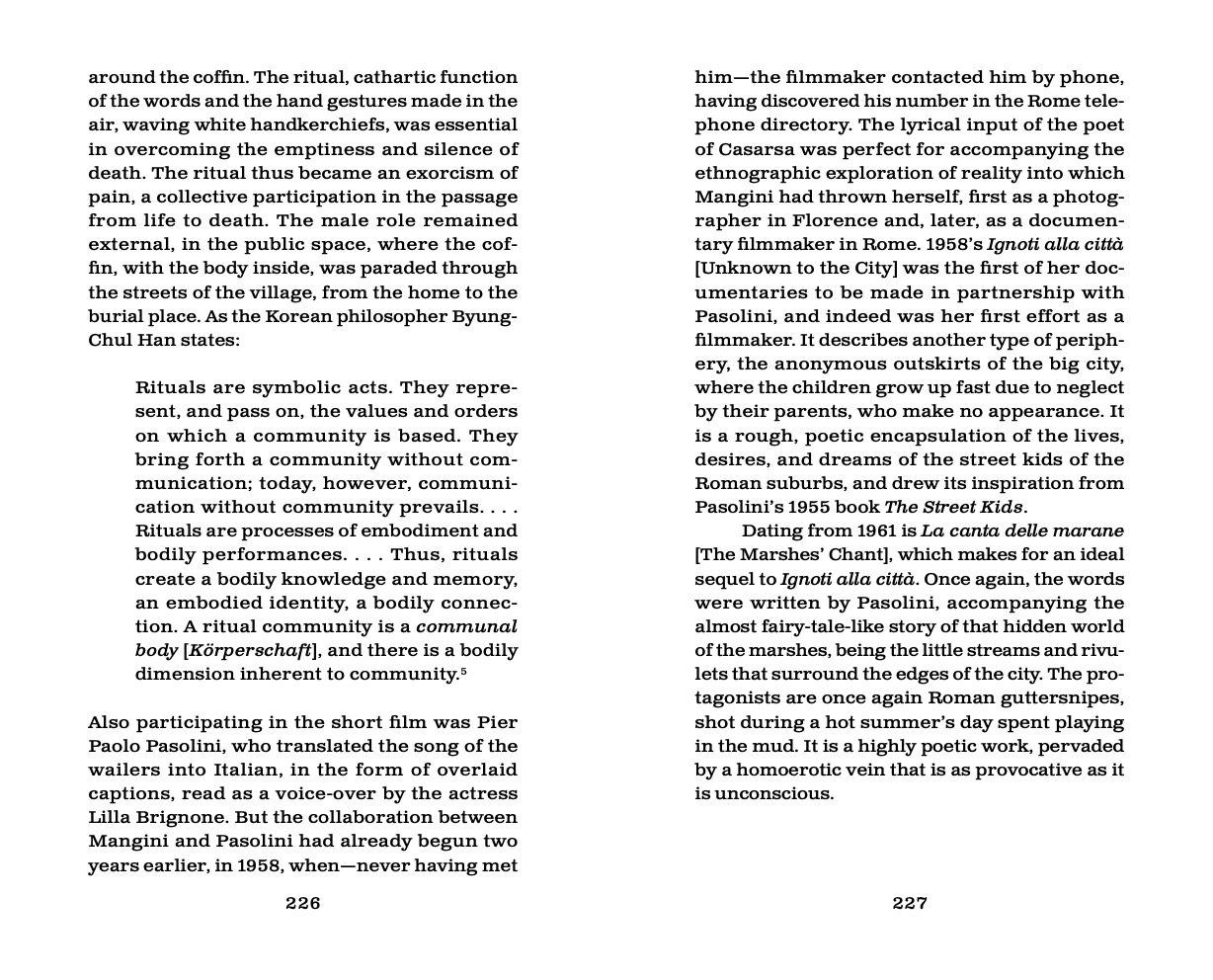
Maxiprocesso brings together 360 photographs by Maria D. Rapicavoli, one for each of the archival folders documenting the largest mafia trial in history, held in Palermo from 1986 to 1987. The volume explores the relationship between memory, justice, and social responsibility, examining the material element of a landmark event in contemporary Italian history.
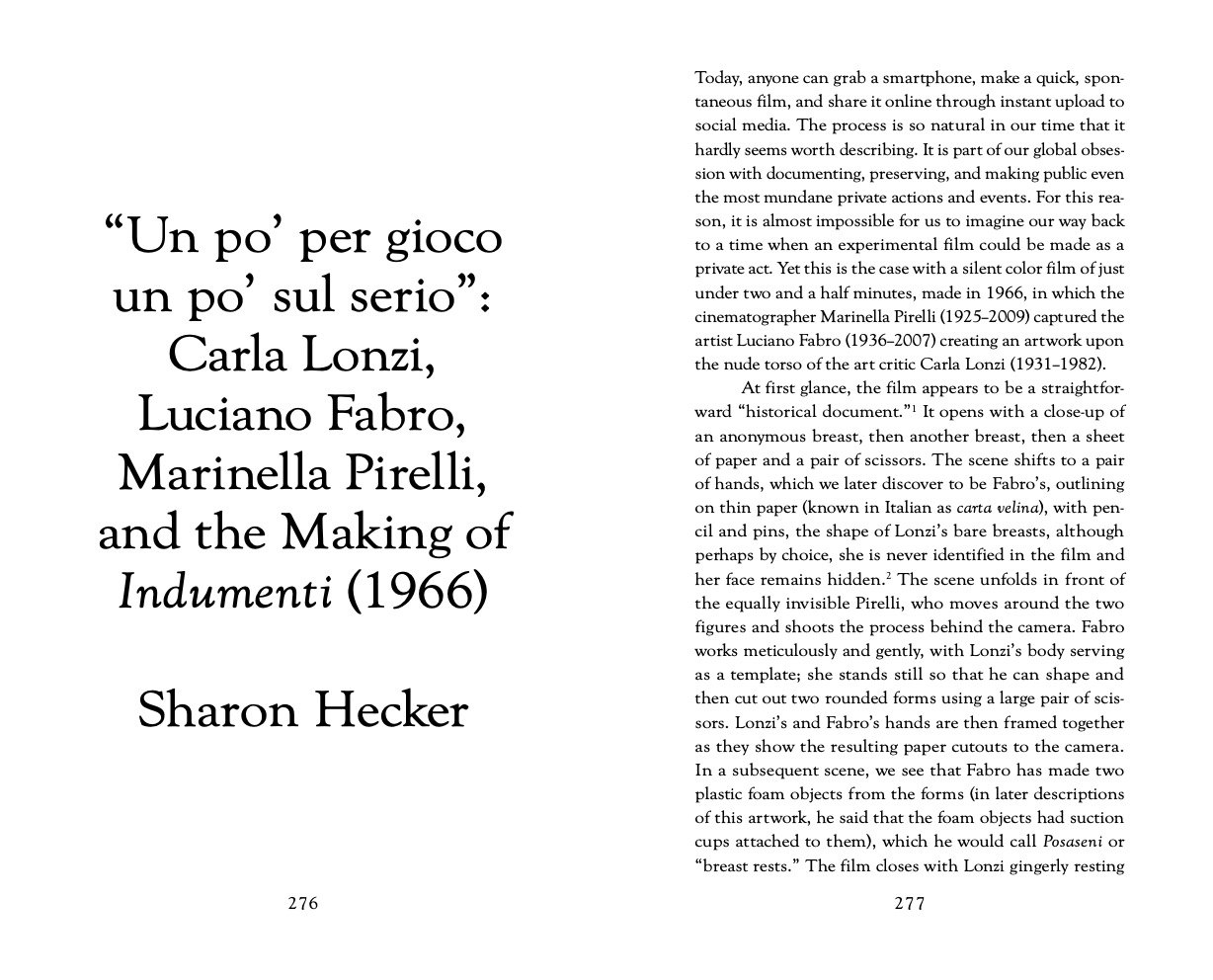
This is the first monograph on the influential American choreographer and dancer Trajal Harrell. In an entertaining, far-reaching conversation with curator Daniel Baumann, Harrell covers all of his choreographies and performances, as well as his influences, successes, and failures, addressing how he transforms and transgresses the history of dance.
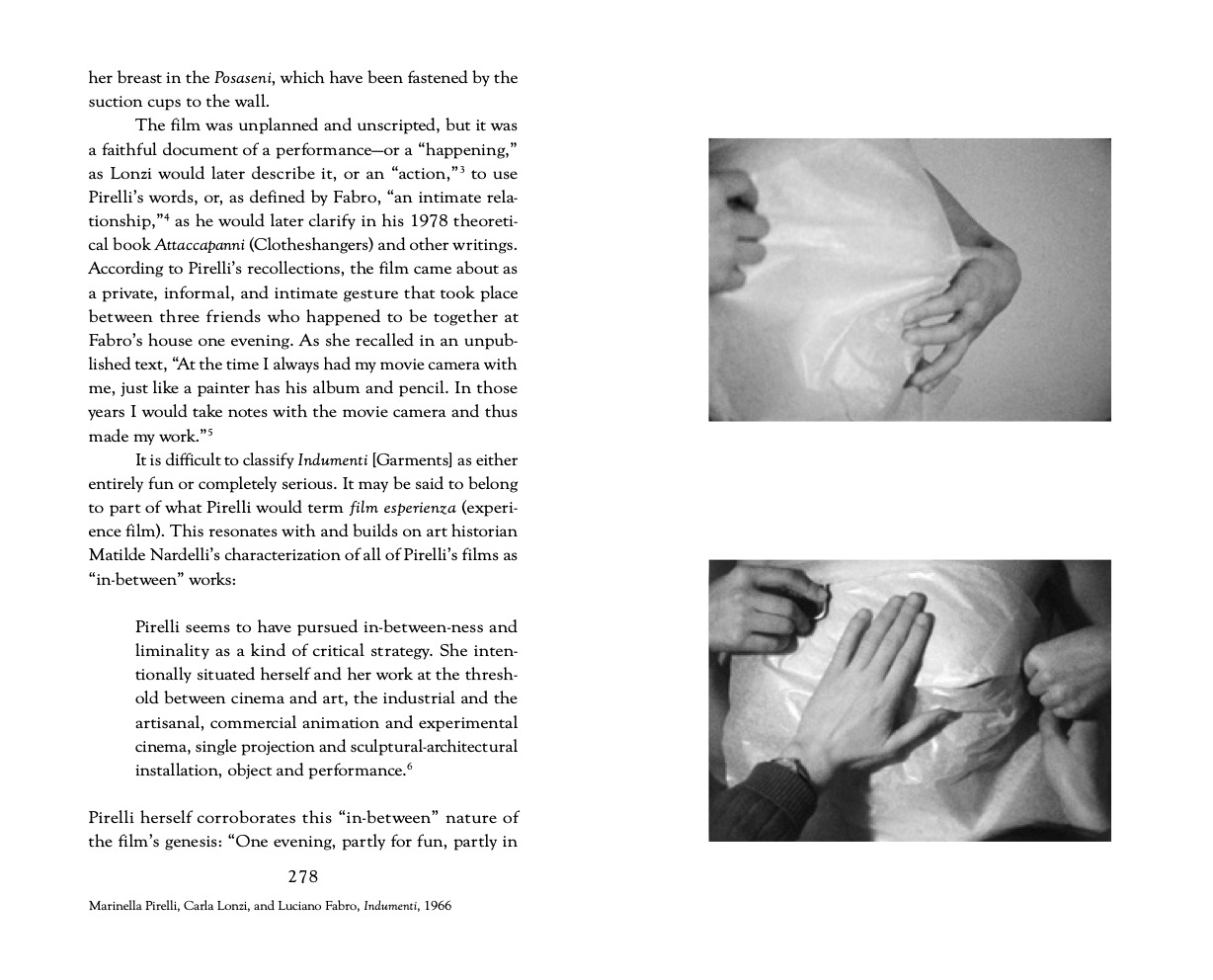
This book offers the first comprehensive overview of Anna Franceschini’s practice. Organized around recurring themes, it explores animation, the body, machines, ghosts, desire, and windows through commissioned contributions and selected writings. Its associative structure reflects her interest in repetition, transformation, and unstable images.
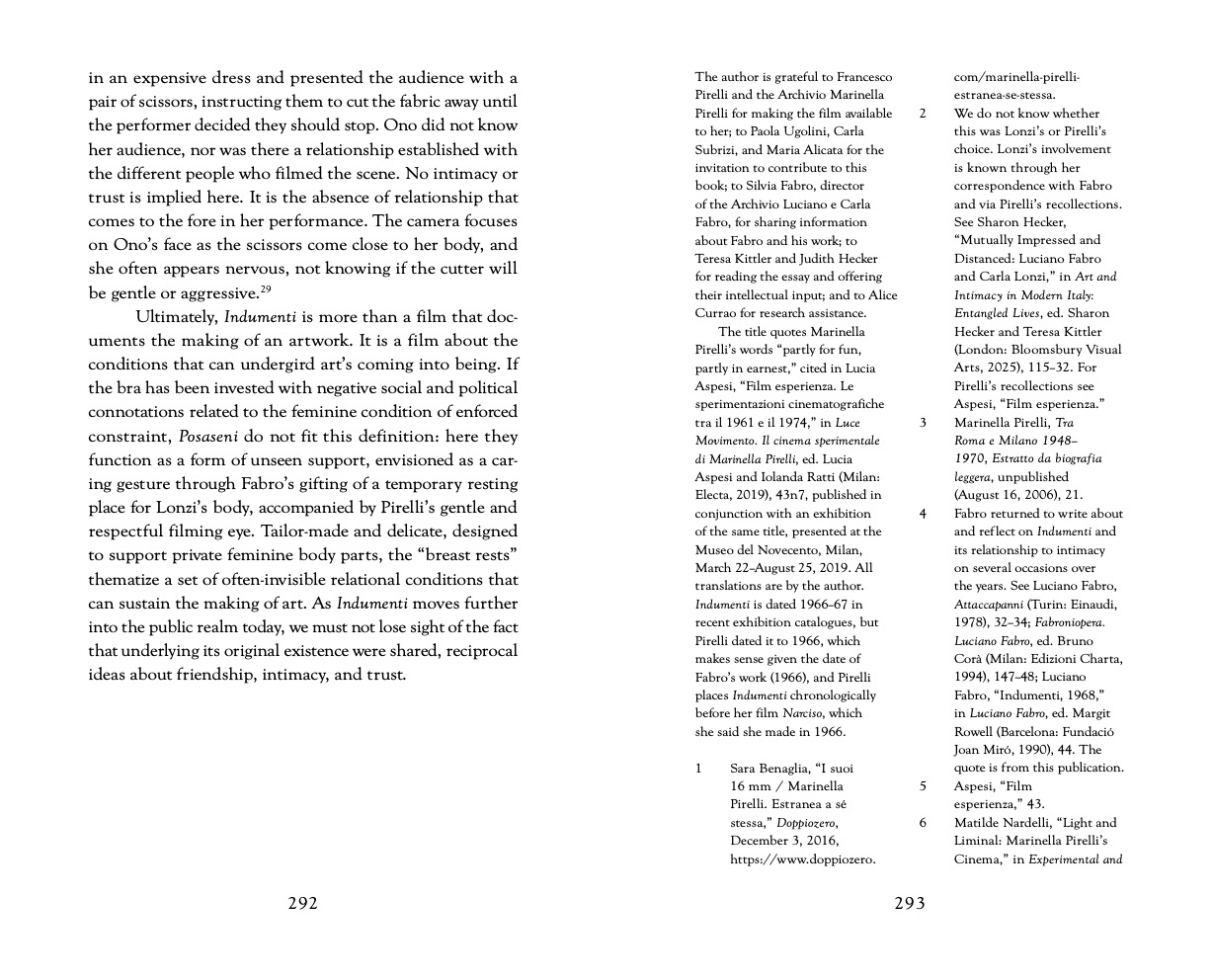
This book accompanies 5 Works, Lydia Ourahmane’s first institutional solo show in Italy, staged at the Nicoletta Fiorucci Foundation in Venice and curated by Polly Staple, during the 61st Venice Biennale, and includes newly commissioned texts and images that further contextualize the artist’s practice and work.
Museums of Tears extends Francesco Vezzoli’s 2024 exhibition at Museo Correr, Venice, combining historical works and new commissions to explore antiquity, emotion and illusion. Conceived as an artist’s book rather than a catalogue, it transforms the museum guide into a hybrid archive and portable museum of memory, beauty and mourning.
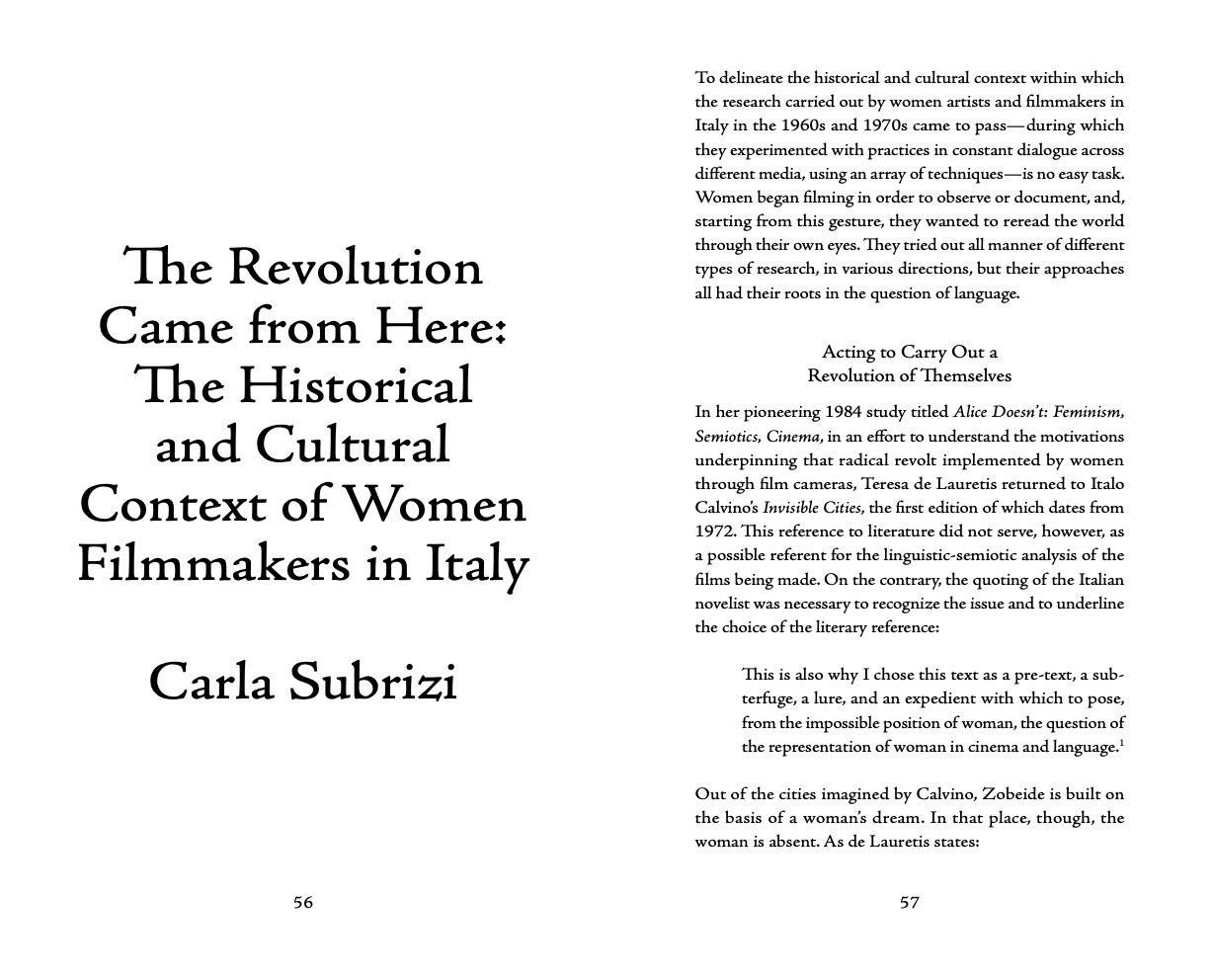
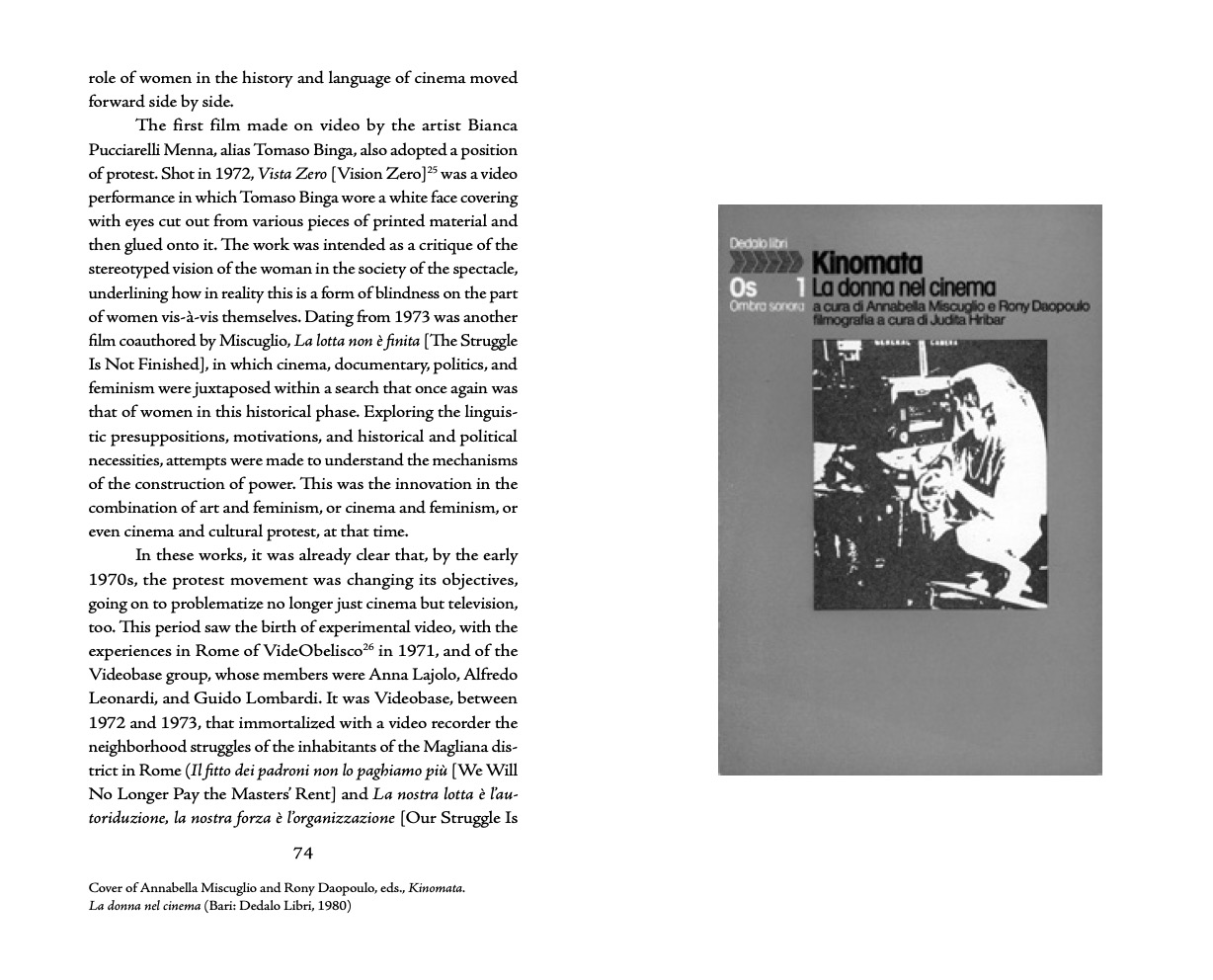
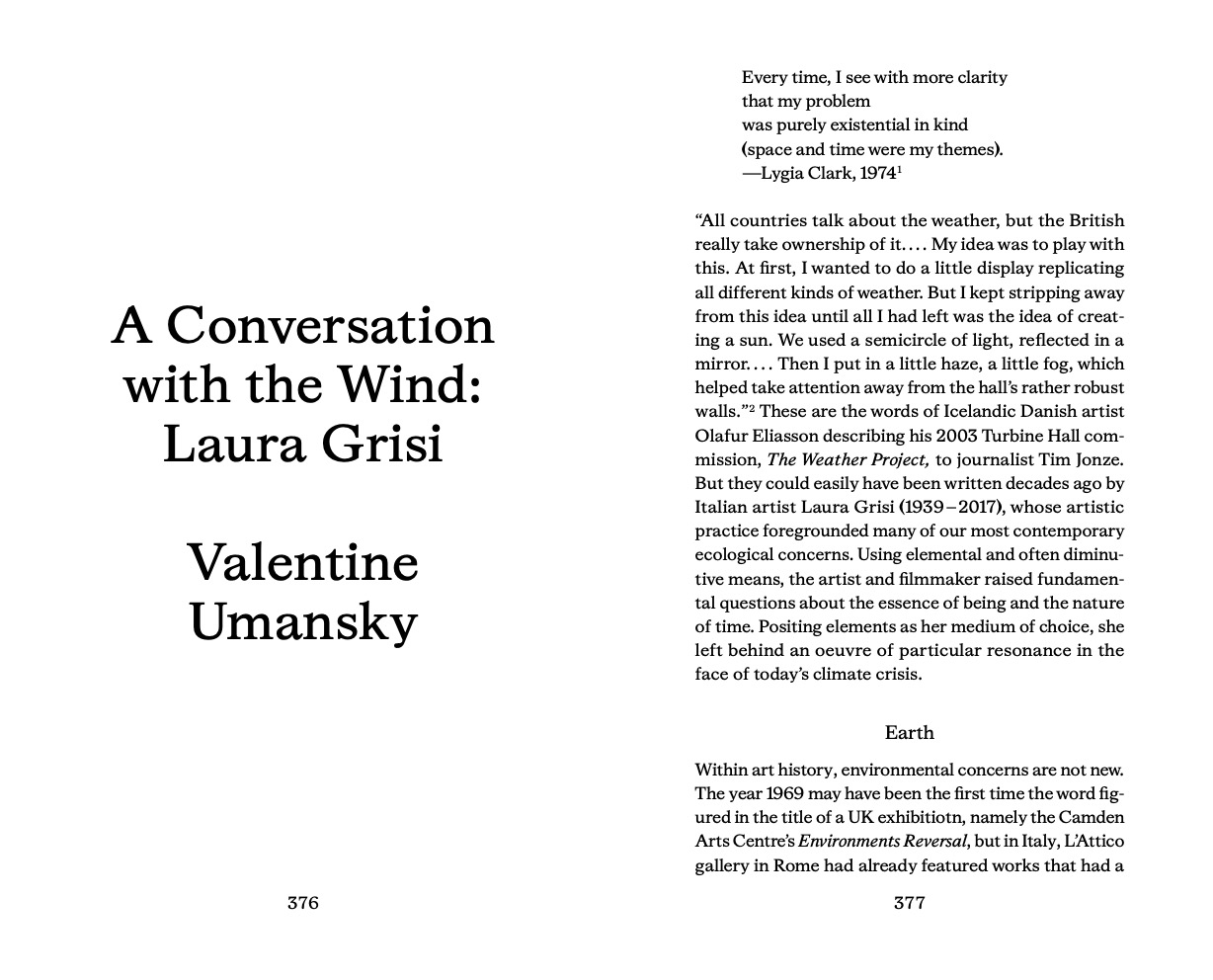
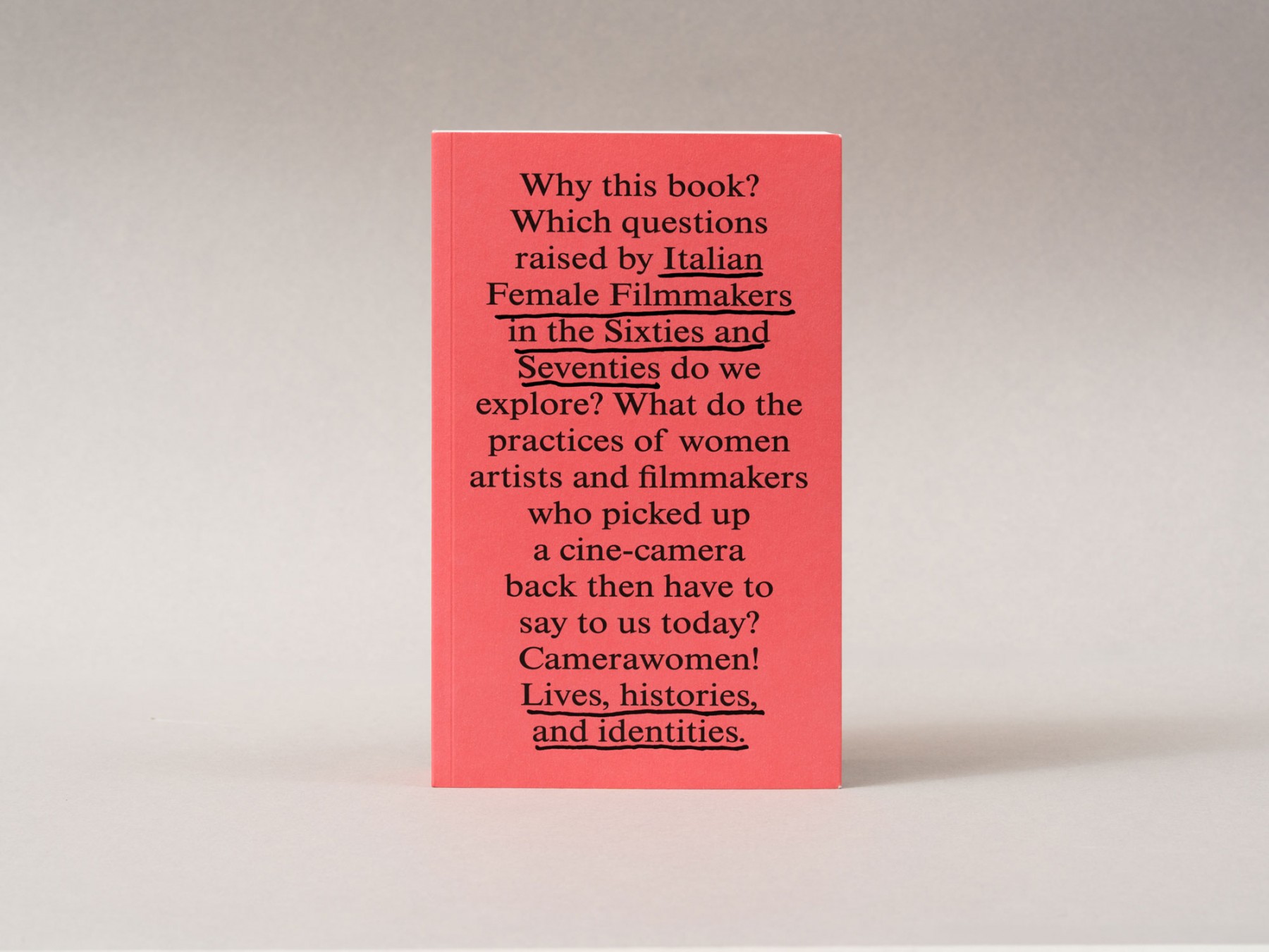
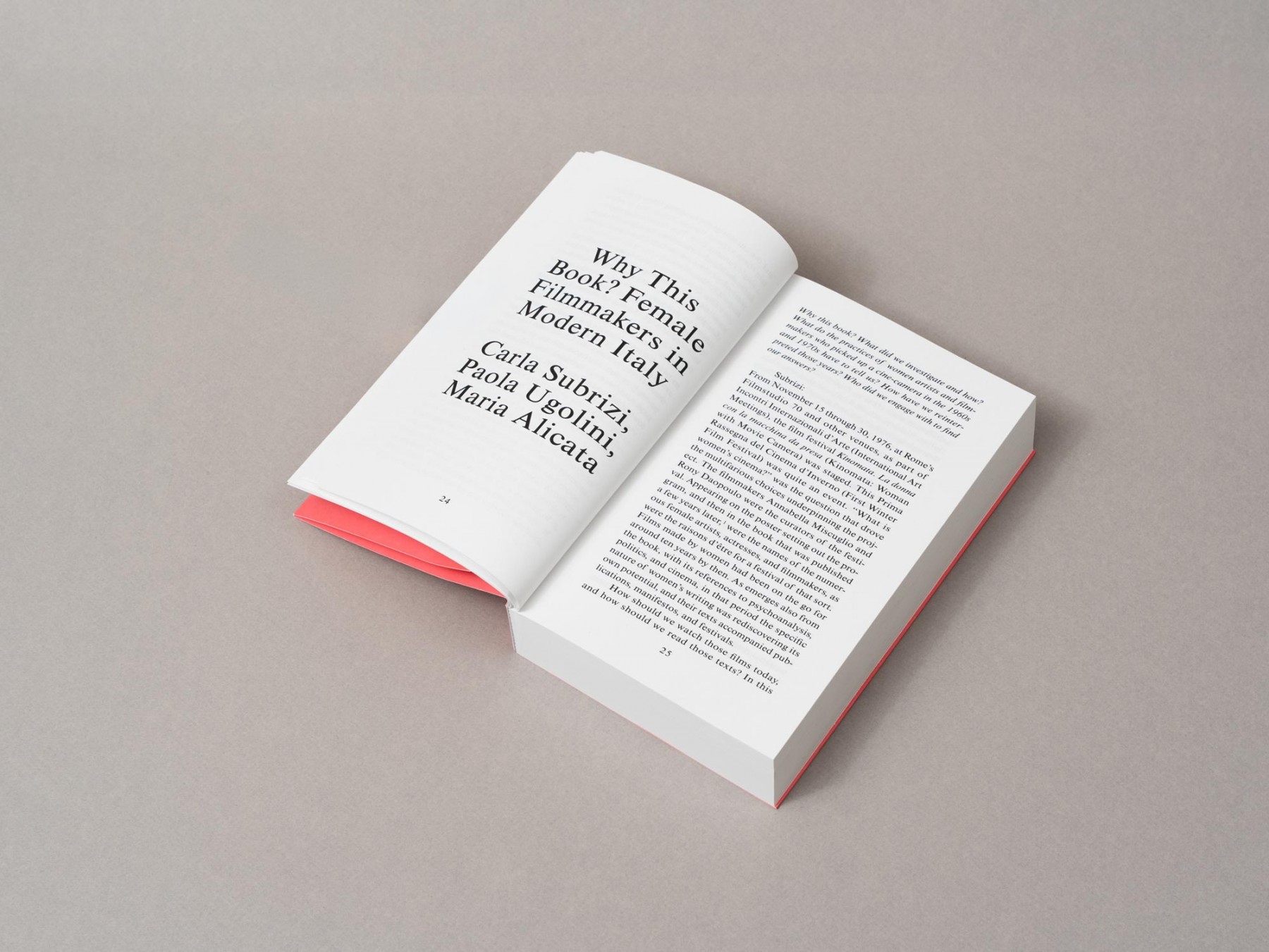
A project by Fondazione In Between Art Film, edited by Carla Subrizi, Paola Ugolini, and Maria Alicata, this illustrated volume investigates the cinematic, documentary, and video output of women artists and filmmakers operating in Italy in the 1960s and 1970s, situating their research at the intersection of artistic experimentation, politics, society, and technology.
Italian Female Filmmakers in the Sixties and Seventies
Edited by Carla Subrizi, Paola Ugolini, and Maria Alicata
Texts by Maria Alicata, Lucia Aspesi, Silvia Bottinelli, Lara Conte, Flavia Frigeri, Francesca Gallo, Sharon Hecker, Laura Iamurri, Caterina Iaquinta, Teresa Kittler, Jennifer Malvezzi, Iolanda Ratti, Giulia Kimberly Colombo, Carla Subrizi, Paola Ugolini, Valentine Umansky, Giovanna Zapperi
Designed by Lorenzo Mason Studio
2026, English, softcover, 13 x 21 cm, 504 pages
ISBN 979-12-80579-93-5
A project by Fondazione In Between Art Film, edited by Carla Subrizi, Paola Ugolini, and Maria Alicata, this illustrated volume investigates the cinematic, documentary, and video output of women artists and filmmakers operating in Italy in the 1960s and 1970s, situating their research at the intersection of artistic experimentation, politics, society, and technology.
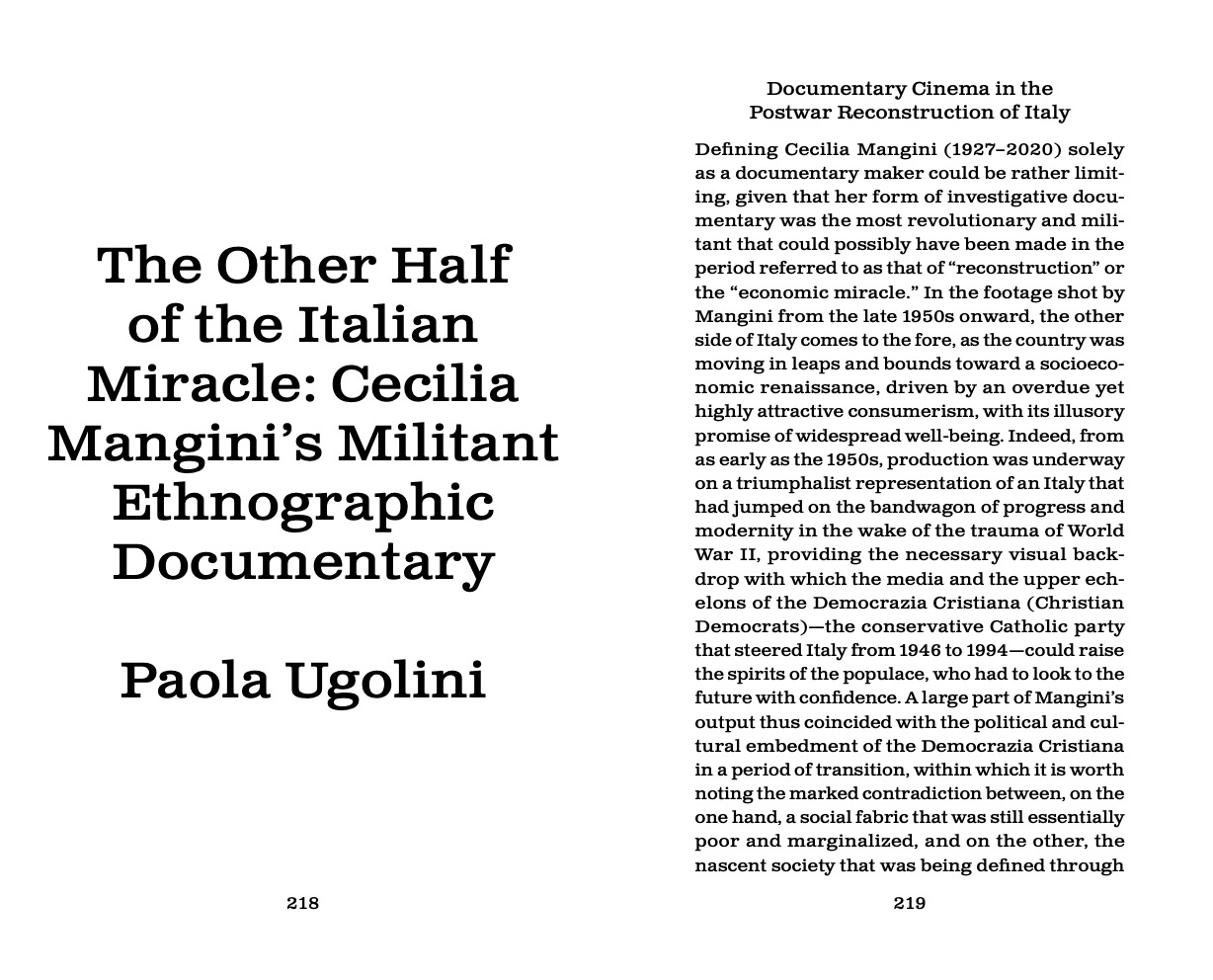
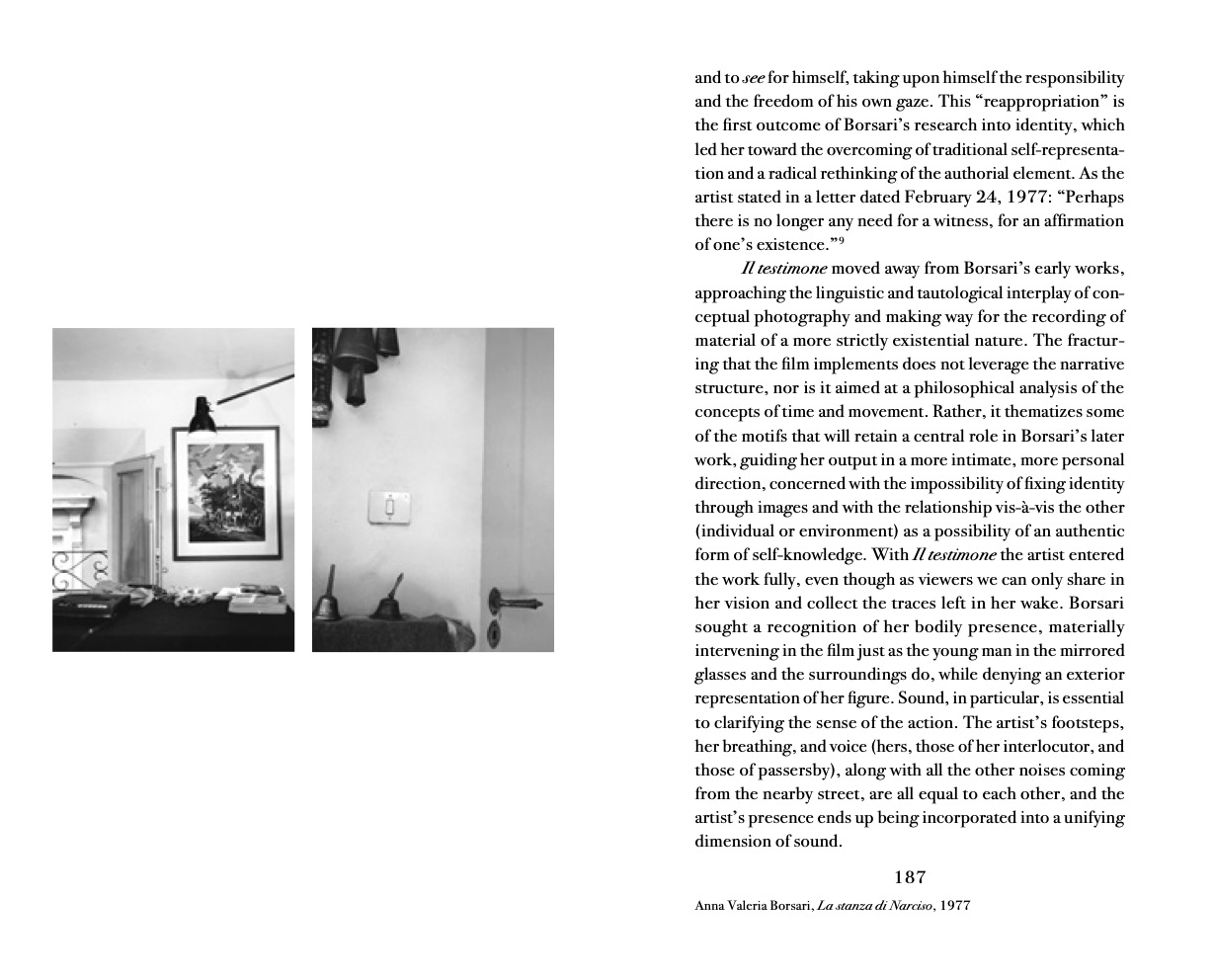
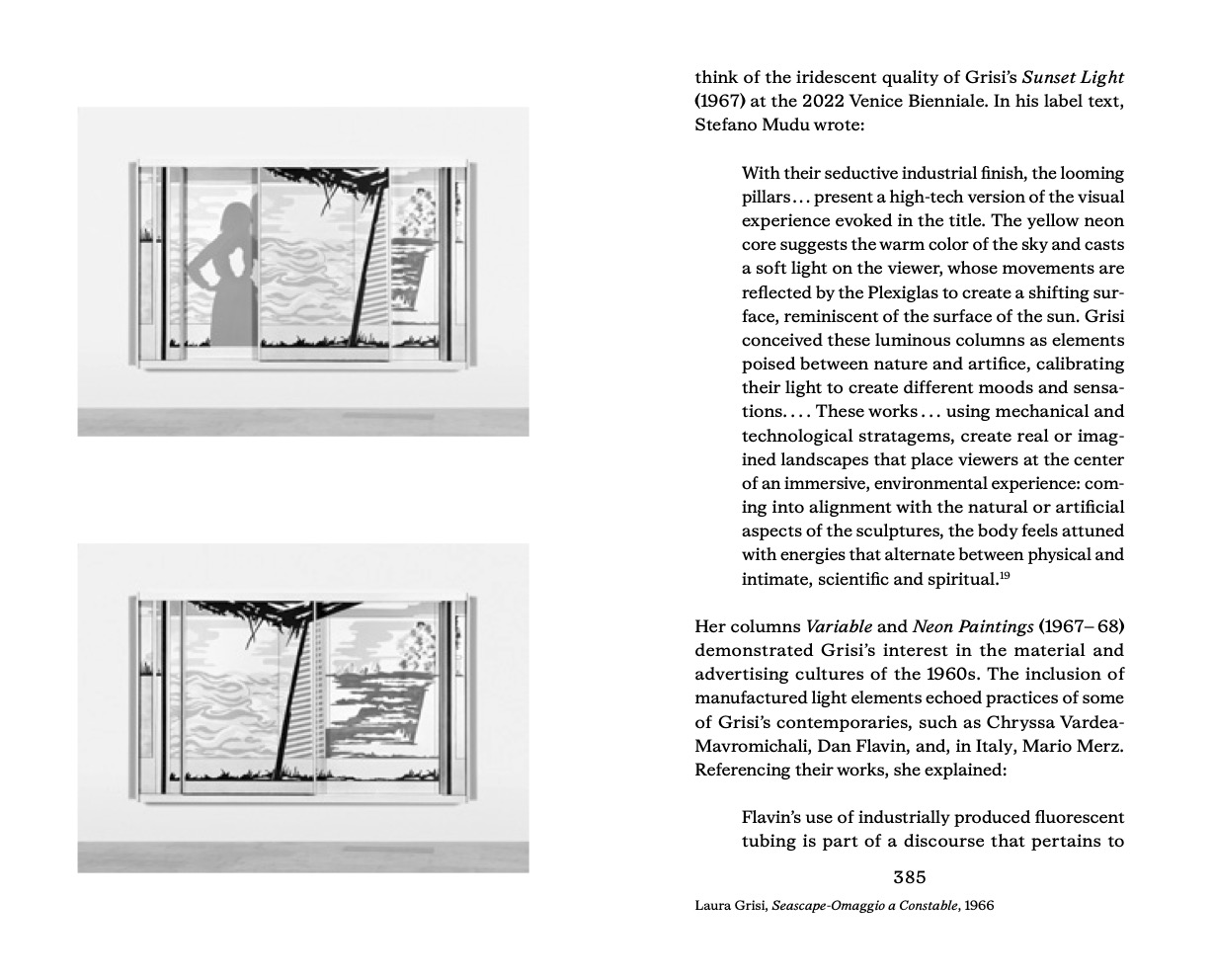
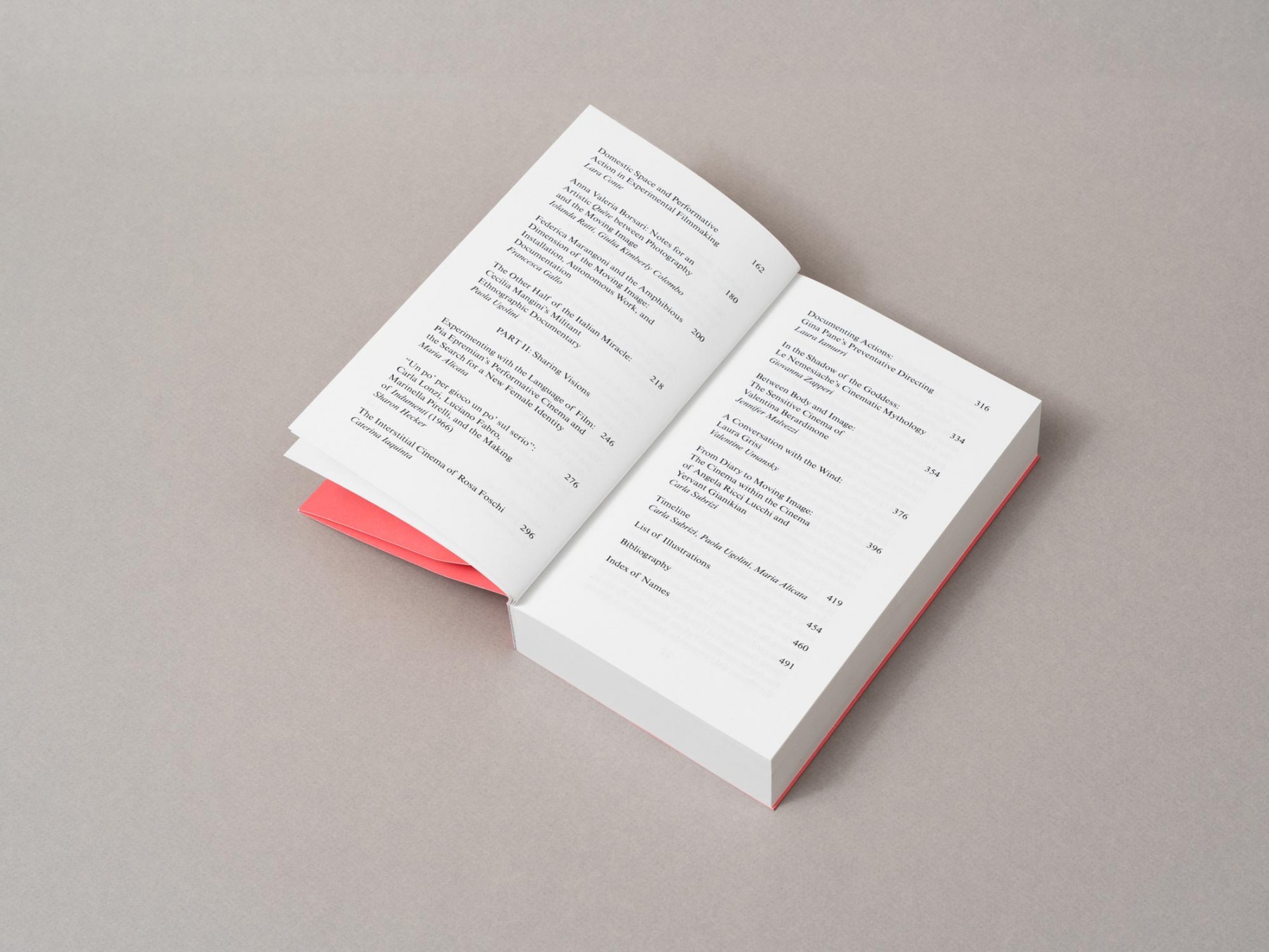
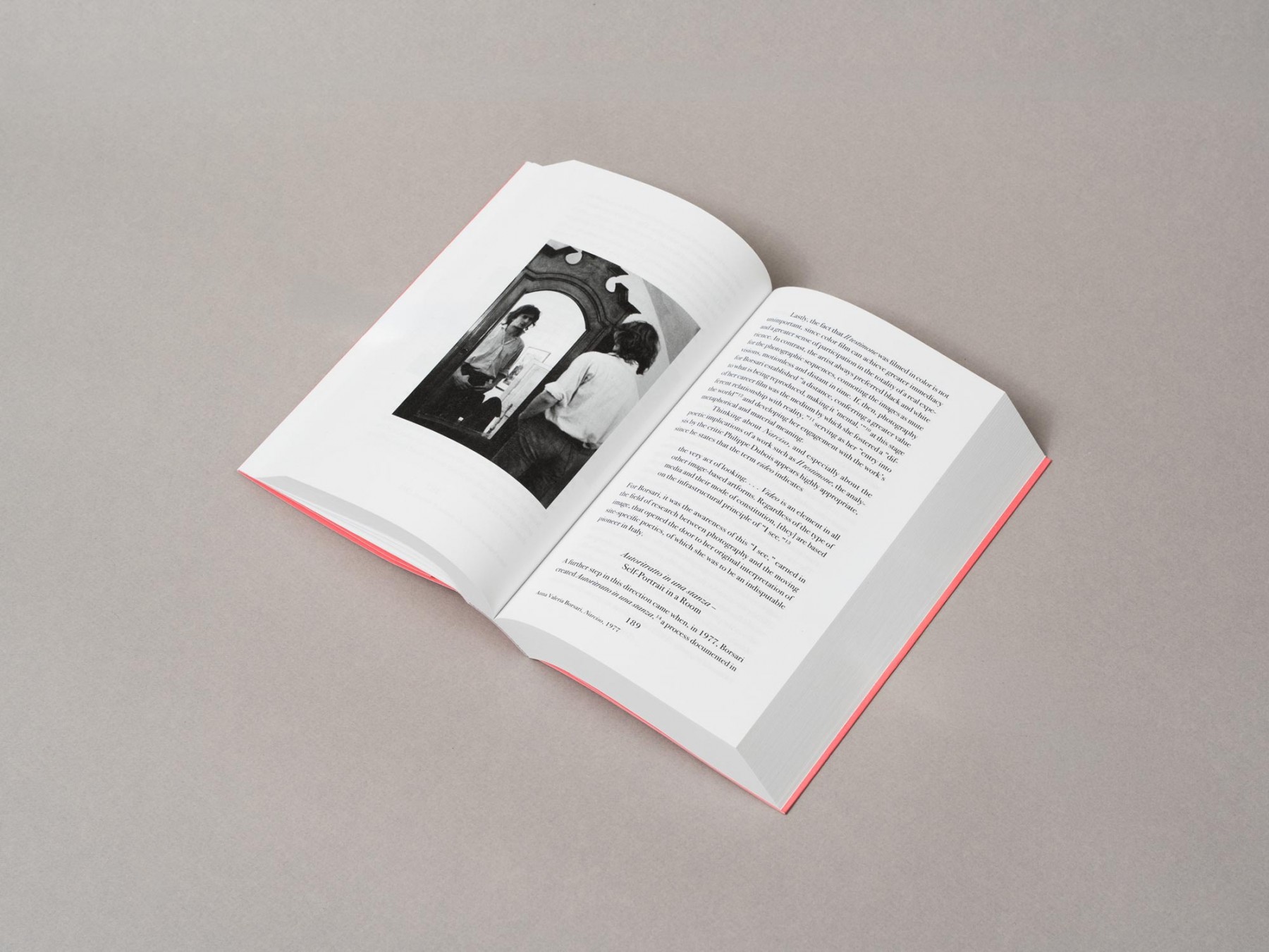
With 18 newly commissioned essays about artists and filmmakers Valentina Berardinone, Anna Valeria Borsari, Pia Epremian, Giosetta Fioroni, Rosa Foschi, Laura Grisi, Ketty La Rocca, Le Nemesiache, Cecilia Mangini, Federica Marangoni, Marisa Merz, Gina Pane, Marinella Pirelli, and Angela Ricci Lucchi, it charts a captivating, multifaceted period, the elements of which have now been compiled for the first time in this publication.
Each chapter, which is accompanied by illustrations and previously unpublished archival documents, analyzes a series of moving-image works as well as the personalities of pioneering (and on occasion non-professional) female directors and artists involved, who embraced the camera as a medium for investigation, documentation, and critique. In their efforts to construct a form of agency for visual imagery, they fostered new narratives, leaving in their wake a plethora of stories and visual strategies that remain vital and worthy of re-examination today.
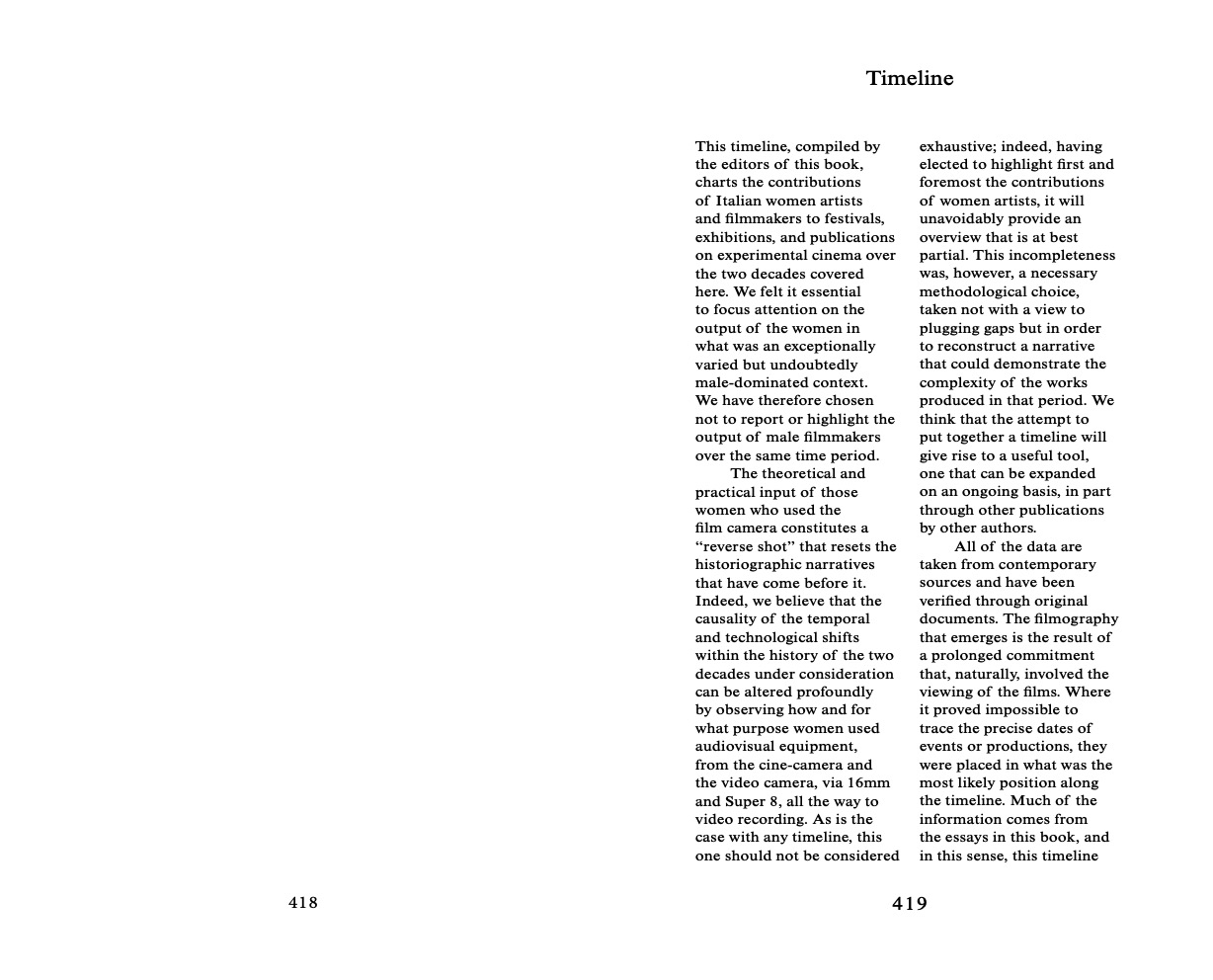
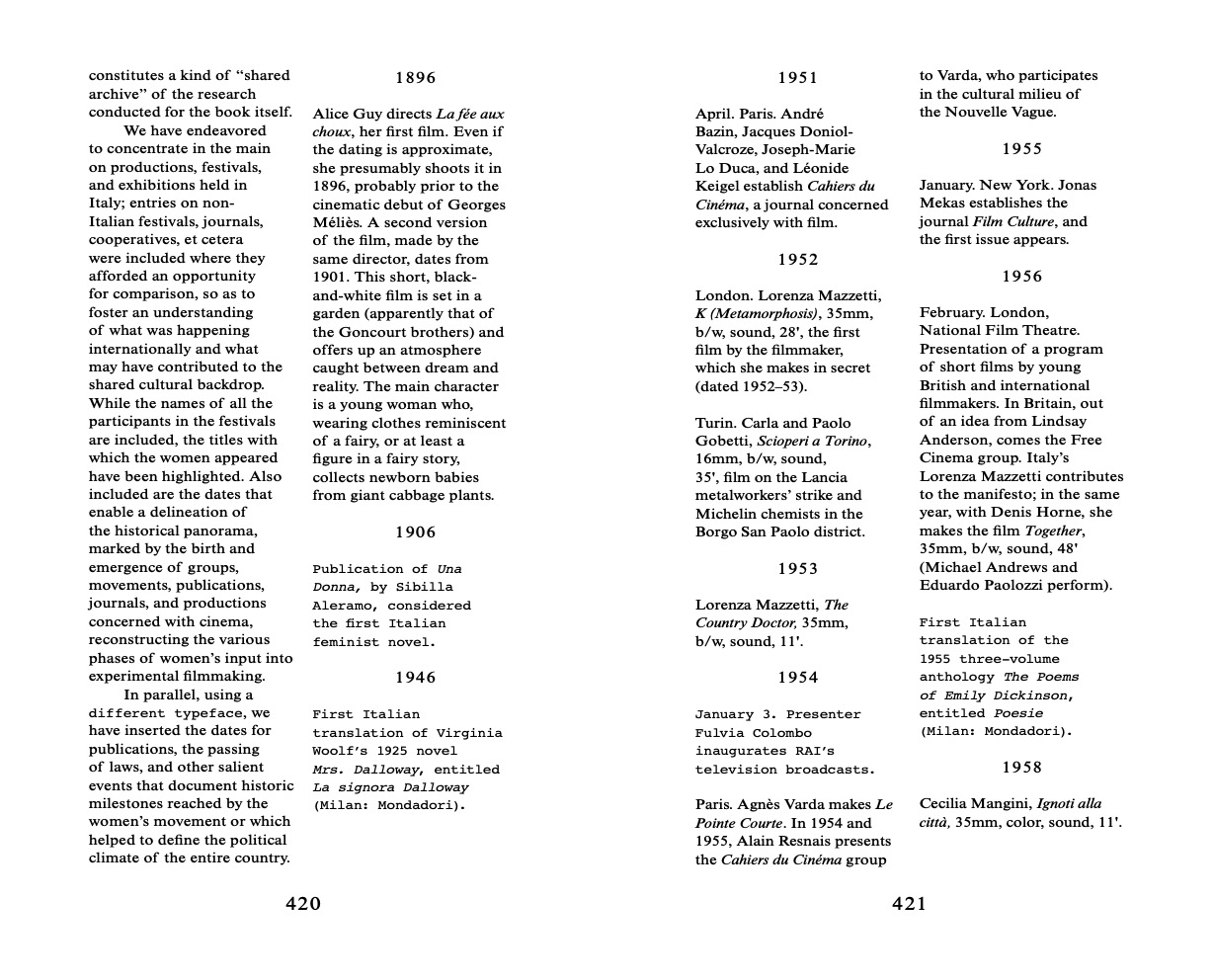
The contributions of academics, researchers, and art historians such as Maria Alicata, Lucia Aspesi, Silvia Bottinelli, Lara Conte, Flavia Frigeri, Francesca Gallo, Sharon Hecker, Teresa Kittler, Caterina Iaquinta, Laura Iamurri, Jennifer Malvezzi, Iolanda Ratti with Giulia Kimberly Colombo, Carla Subrizi, Paola Ugolini, Valentine Umansky, and Giovanna Zapperi problematize the two decades under examination, which panned out in parallel with the protest movements, and navigate a phase of Italian history, art, and culture that was shot through with changes and transformations, in part arising from the women who decided to take back control—of themselves, even before they reached for a film camera. Therefore, they endeavor to glean an understanding of the transformations of language, subjectivity, identity, ways of seeing, and imaginaries through what women filmmakers described, documented, recorded, and wrote. At the same time, the book constructs an Italian history of this cinematic output in order to then understand how specific, identity-forging visions can be expanded or connected within a broader story, composed of cultural differences and urges that enter into a transnational dialogue. To this end, the book also includes a specially conceived timeline of the main socio-political events that occurred and the most important moving-image works that were produced over the two decades under consideration.