A Cosmic Movie Camera is the title of the 18th edition of the BIM’24, which also marks the 50th anniversary of the Biennale organized by the Centre d’Art Contemporain Genève. By blending the real and the virtual, its catalogue captures the spirit of the exhibition, which explores the evolution of moving images, particularly in our algorithmic age.
The book seeks to define the contours of the obsession with the teenage years; a fixation that has shaped a significant strand of contemporary art over the last ten years. Adolescence is here understood as a state of mind, a prolonged condition that dissolves the transition into adulthood and becomes a critique of an unstable world.
In this multi-voiced book, starting from the Orobie Alpine range, the mountainside becomes an epistemological lens through which to interpret contemporaneity and address issues such as multi-species migrations, our relationship with geological time and intergenerational inheritance, and the rethinking of collective memories and rituals.
For years now, the Die Vier von der Tankstelle (Four from the Gas Station) have been roaming across an area stretching out to the south of the Baltic Sea. They prowl their way through sparsely populated areas, wantonly terrorizing the inhabitants. The 2026 calendar by Jos de Gruyter and Harald Thys bears witness to their presence.
The first monograph dedicated to Lorenza Longhi, published with the Kunst Museum Winterthur, adopts a format associated with prototypes, manuals, or working documents. Its irregularities reflect Longhi’s ongoing examination of value, functionality, and the aesthetics of the everyday.
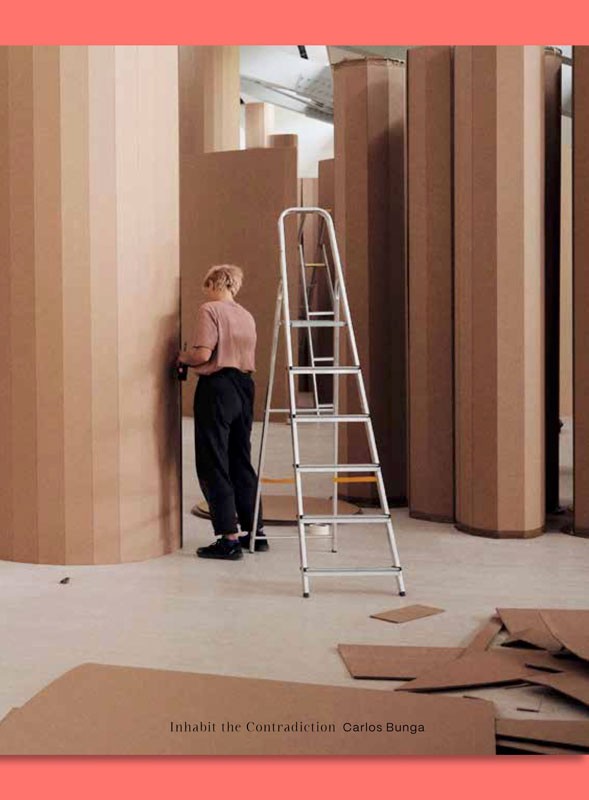
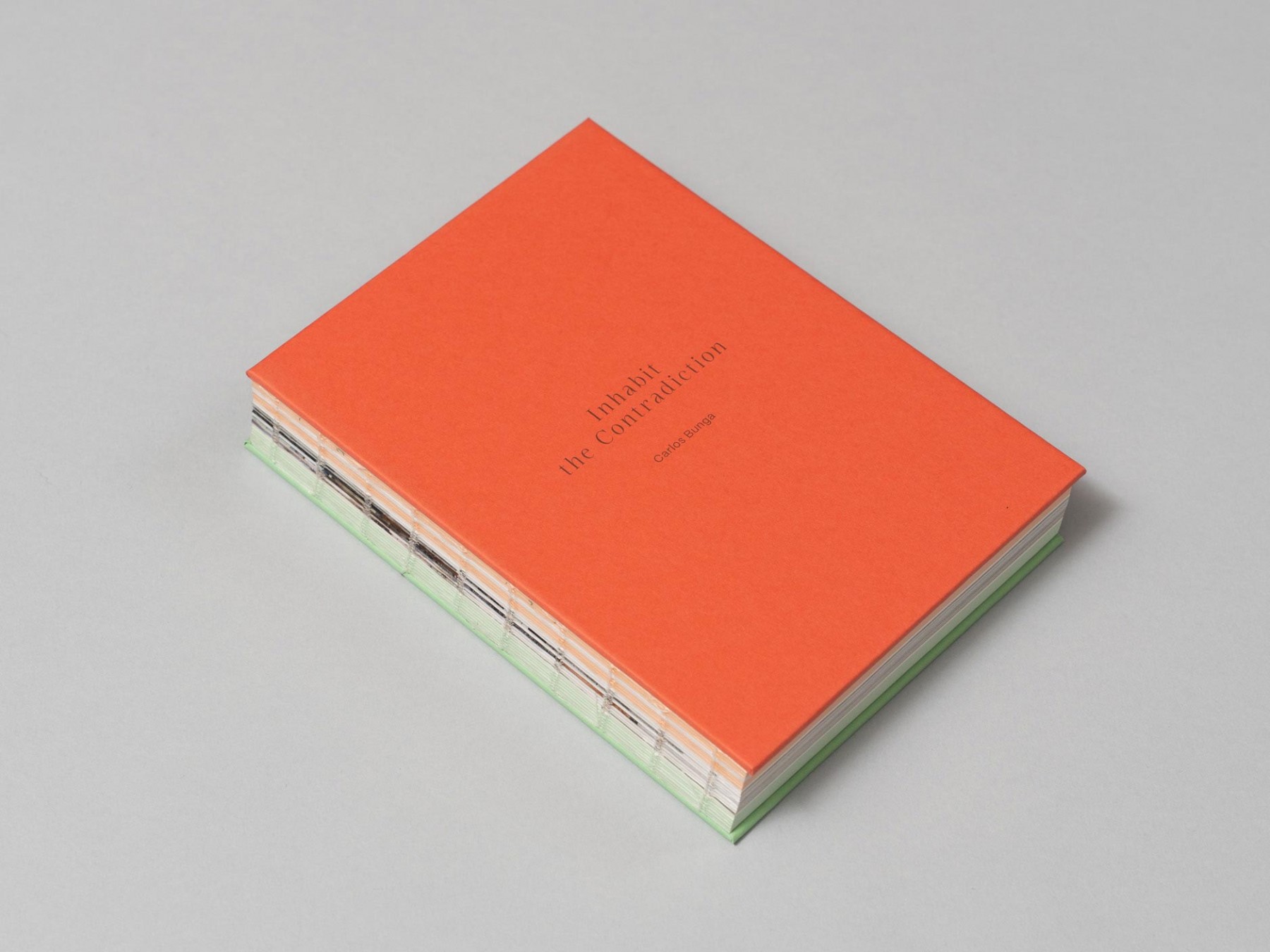
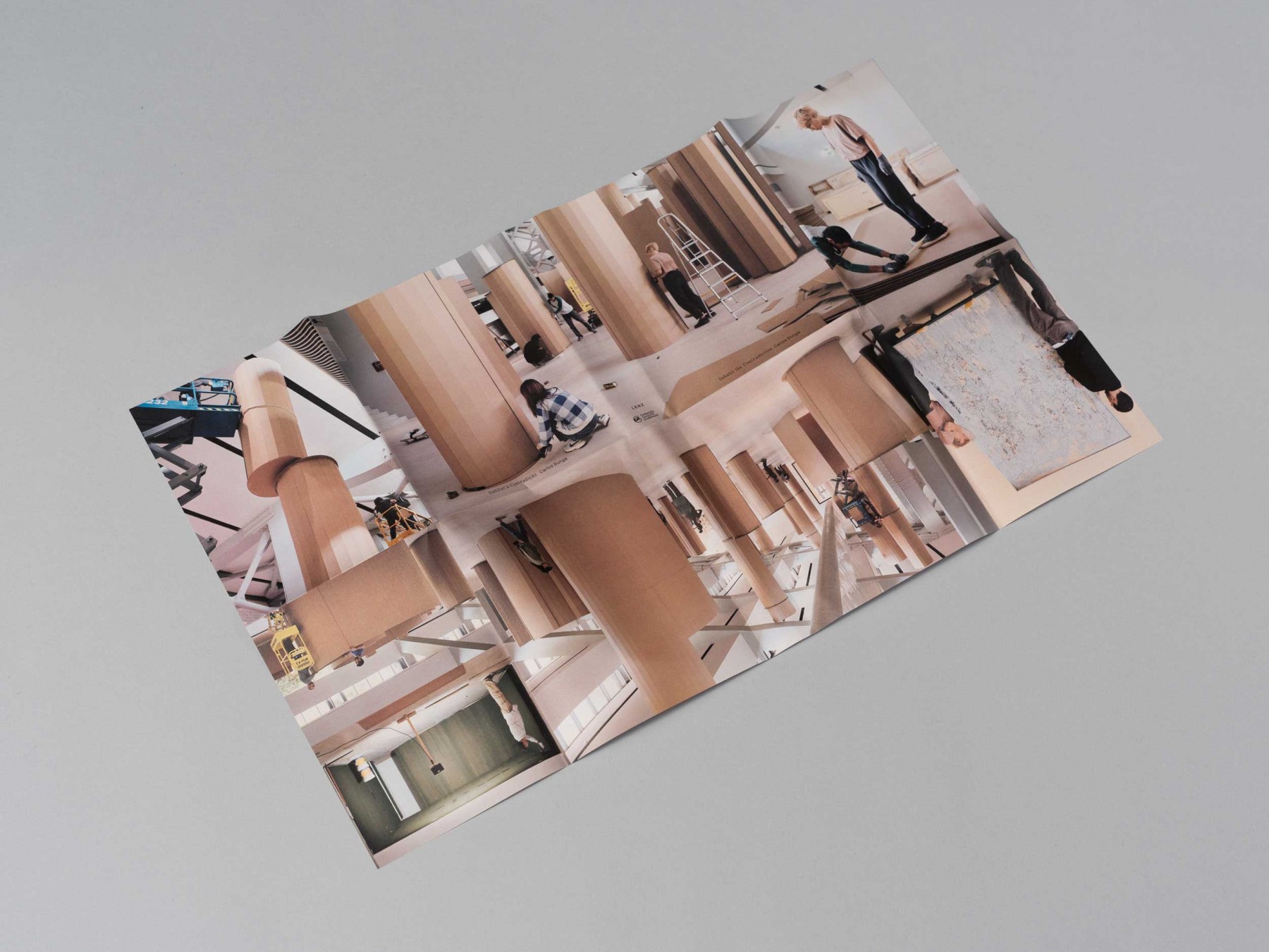
This publication is an extensive monograph devoted to the work of Carlos Bunga, published in conjunction with his eponymous show at CAM – Gulbenkian. In addition to a number of essays, which offer an in-depth look at his multifaceted practice, the book contains previously unpublished photos that reveal his working process.
Edited by Rui Mateus Amaral
Texts by Rui Mateus Amaral, Carlos Bunga, Rina Carvajal, Roland Groenenboom, Omar Kholeif, November Paynter, and Catarina Rosendo
Designed by Ilhas Studio
2025, English / Portuguese, hardcover, 14 x 19 cm, 388 pages
ISBN 979-12-80579-92-8
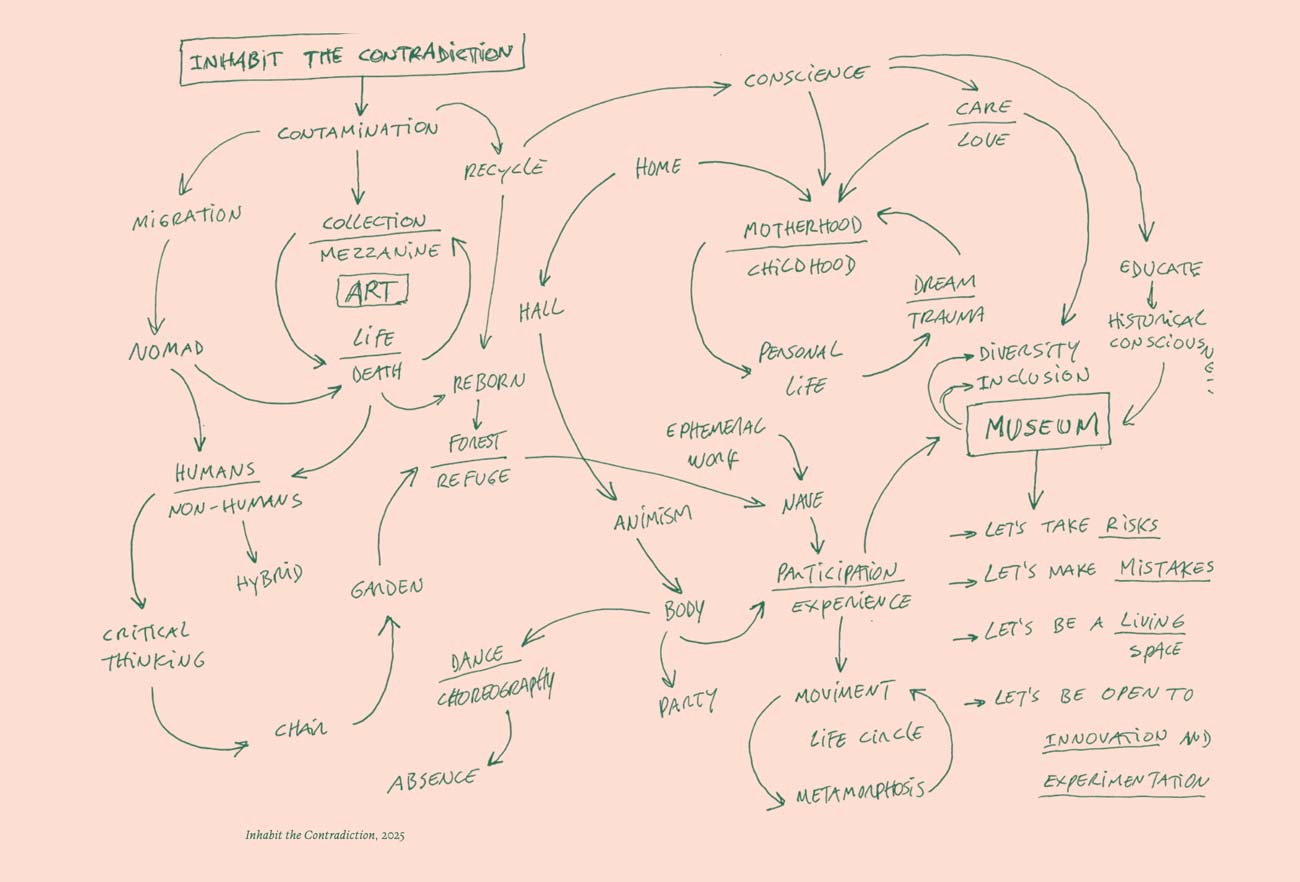
Carlos Bunga: Inhabit the Contradiction is an extensive monograph devoted to the work of Carlos Bunga, published in conjunction with his eponymous exhibition presented at CAM – Gulbenkian.
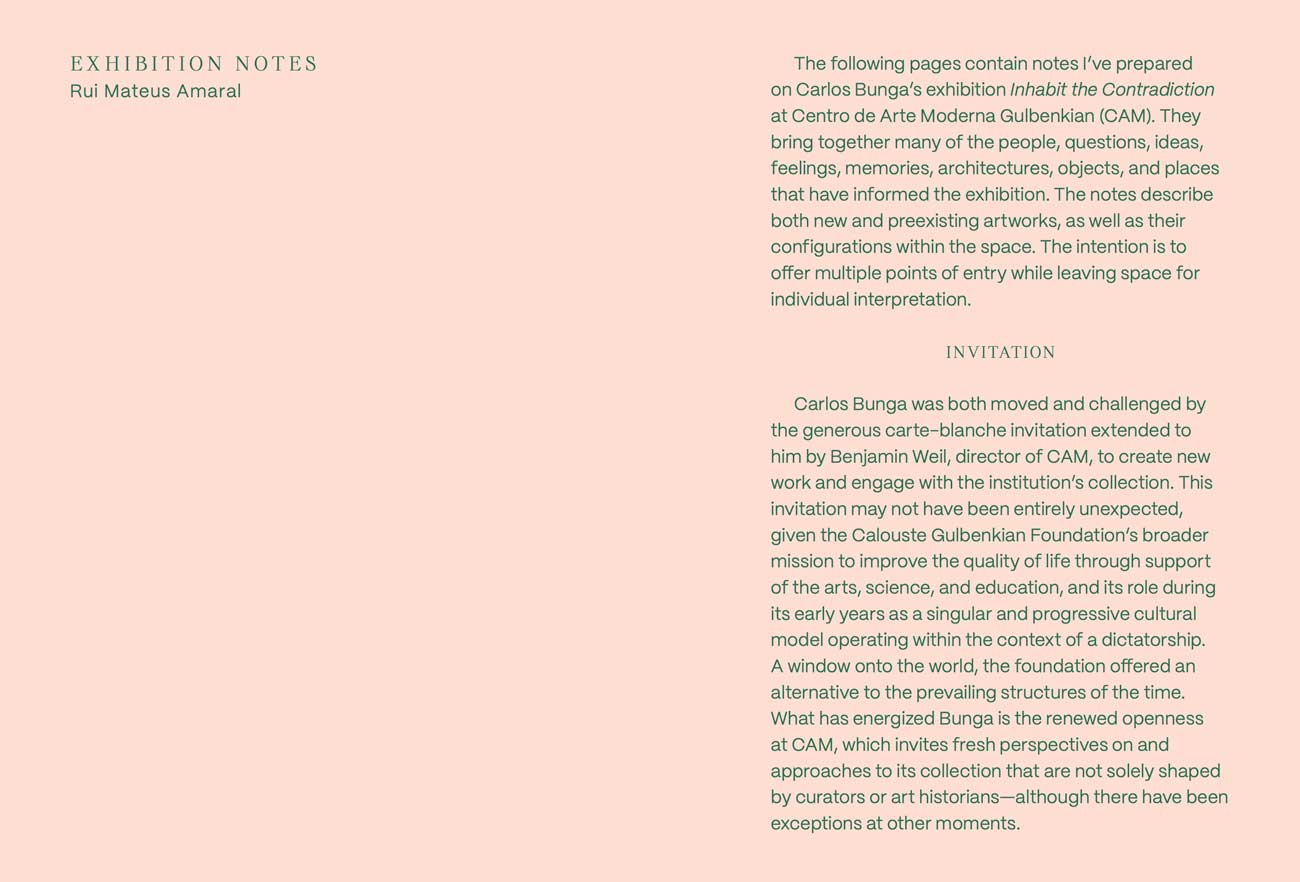
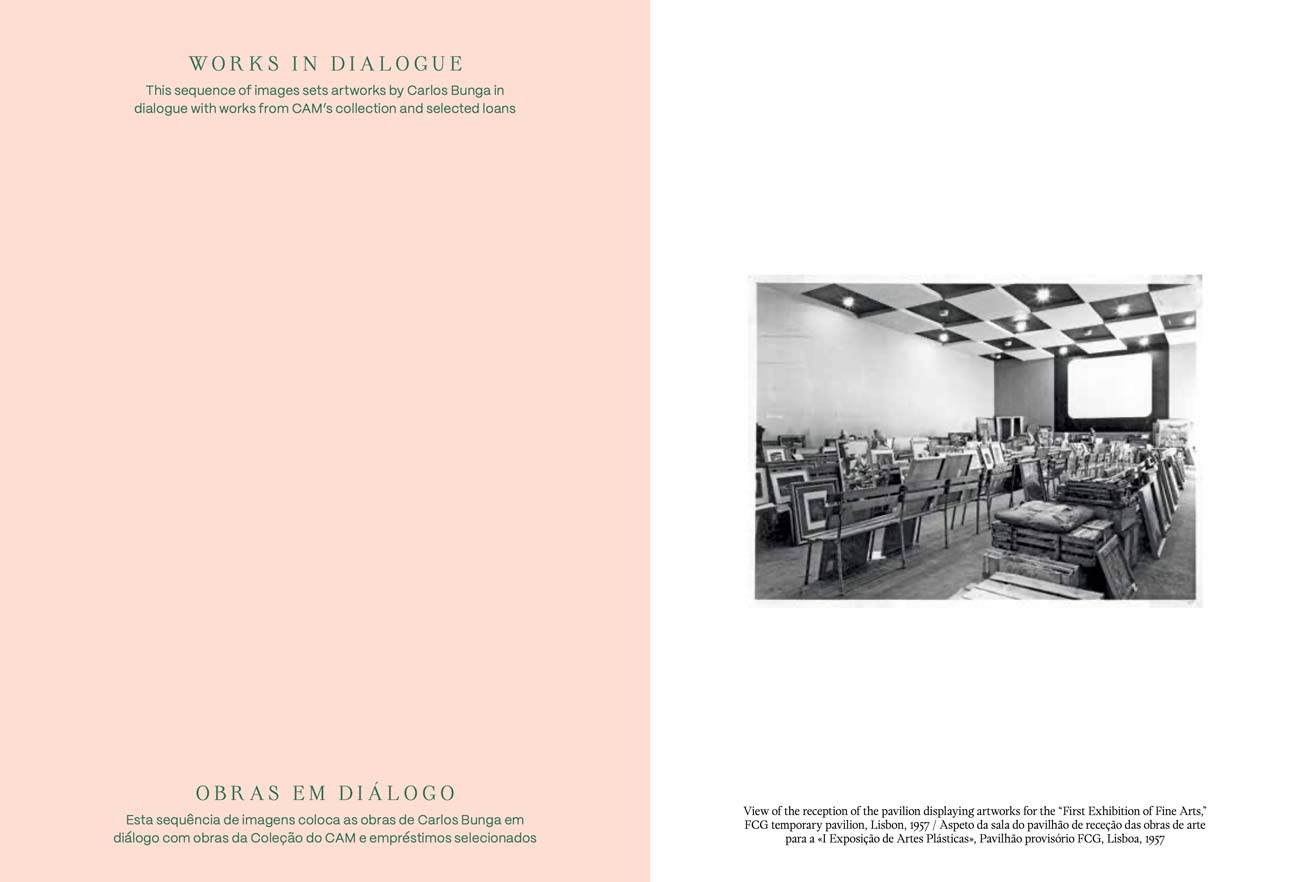
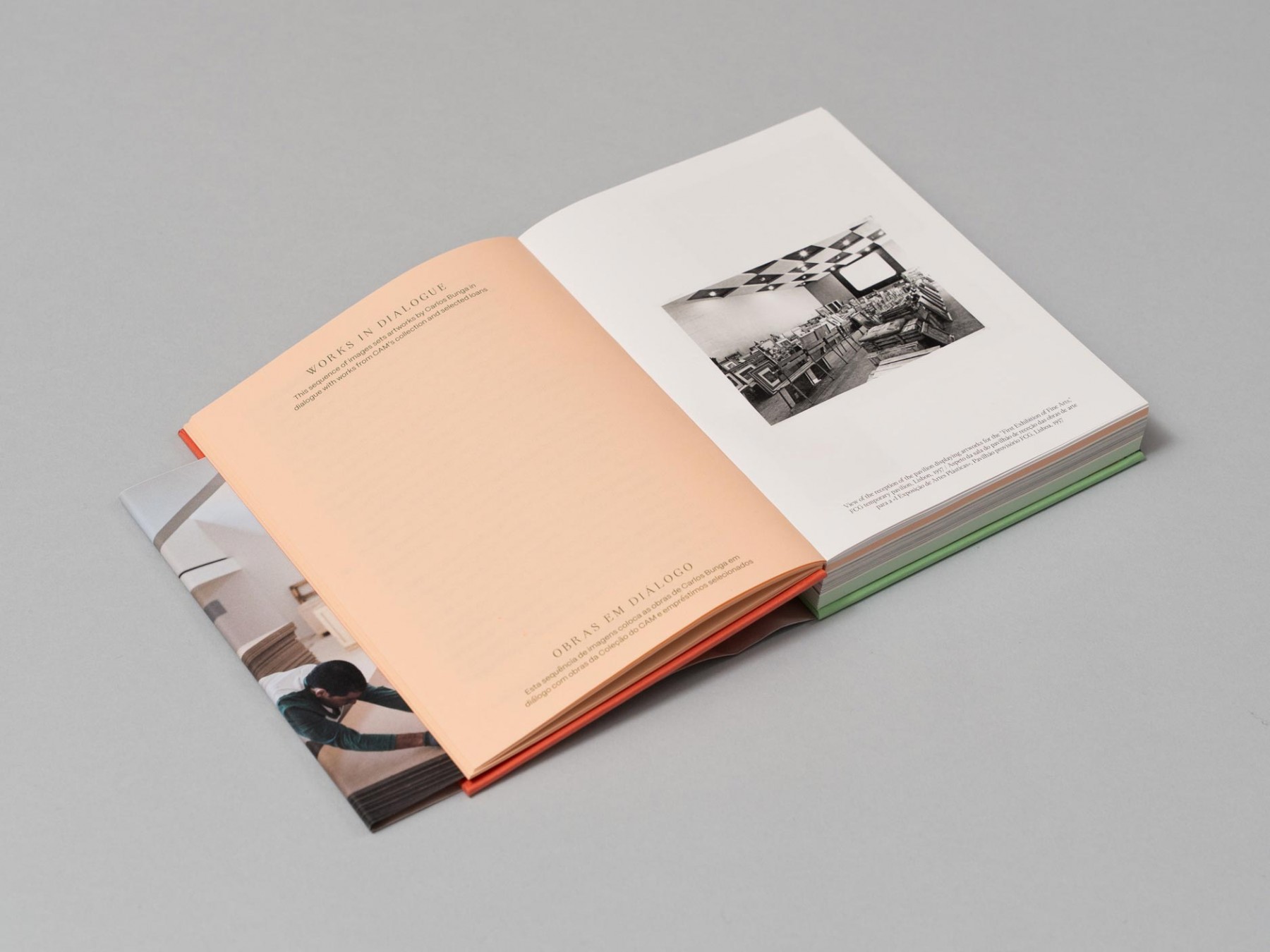
The book contains notes by the exhibition curator and catalogue editor, Rui Mateus Amaral, who introduces readers to the exhibition project, providing an in-depth account of its genesis and development, focusing on the dialogue between Bunga’s work and selected pieces from the CAM collection. The notes describe both Bunga’s new and existing works, as well as their configuration within the space, with the intention of opening up multiple points of access to the exhibition, leaving room for individual interpretation.
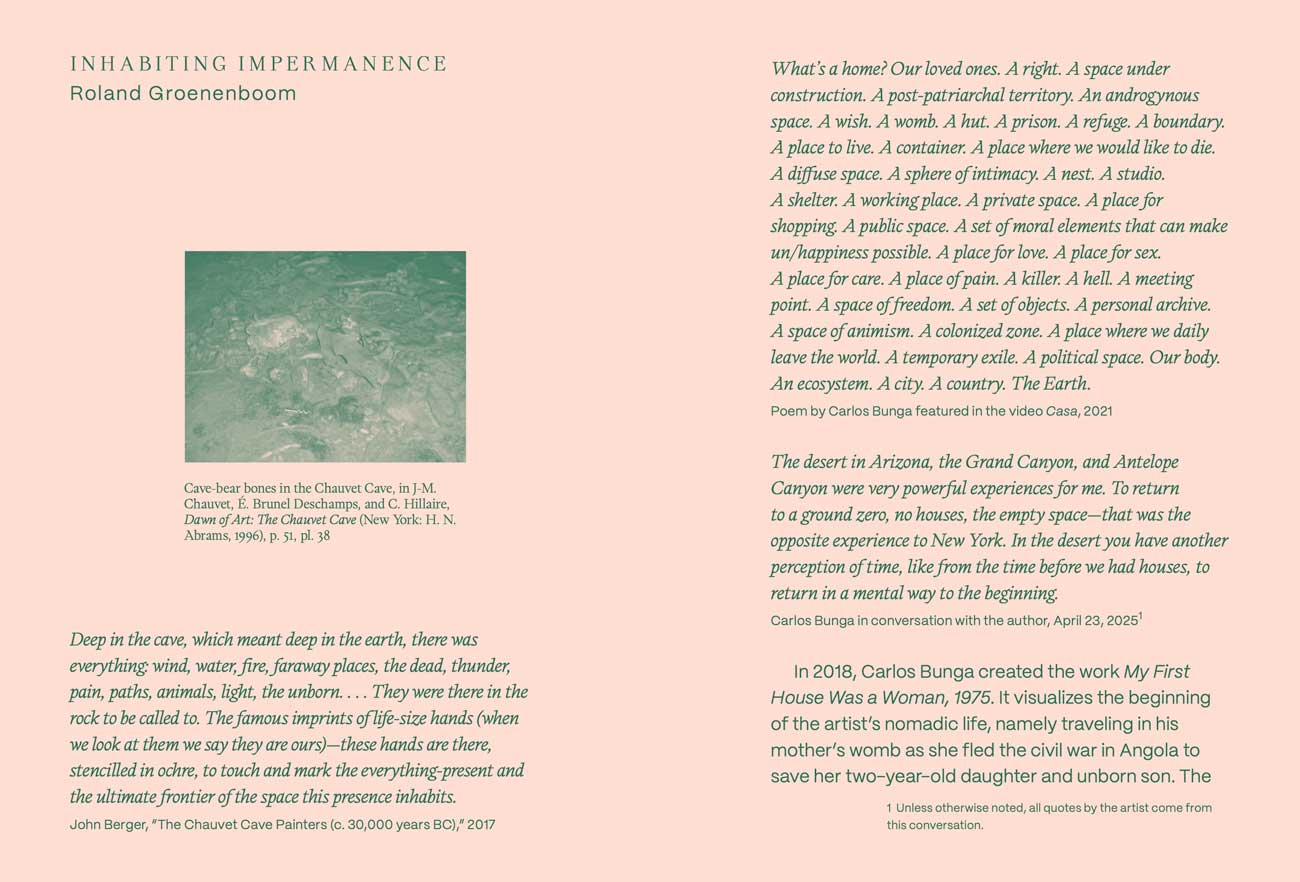
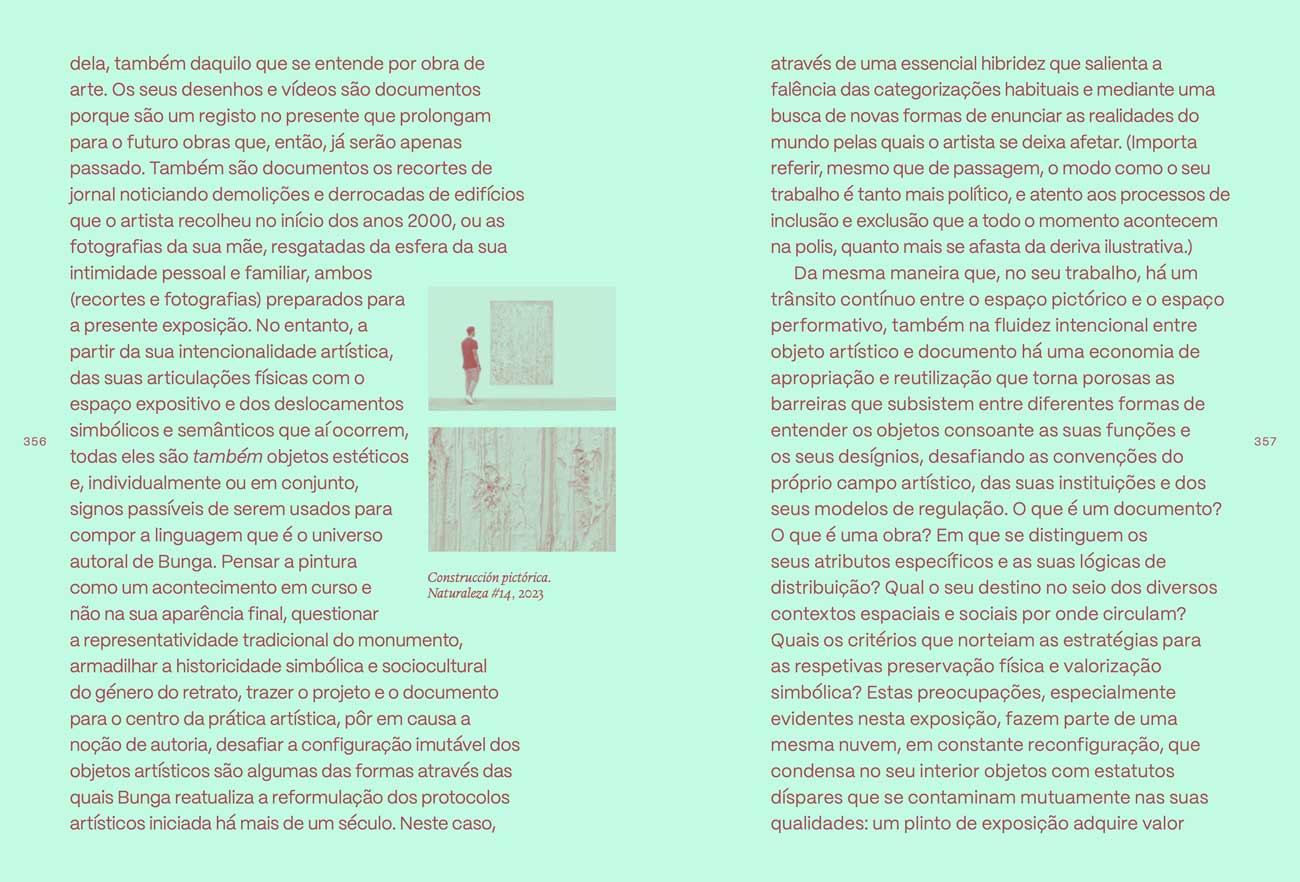
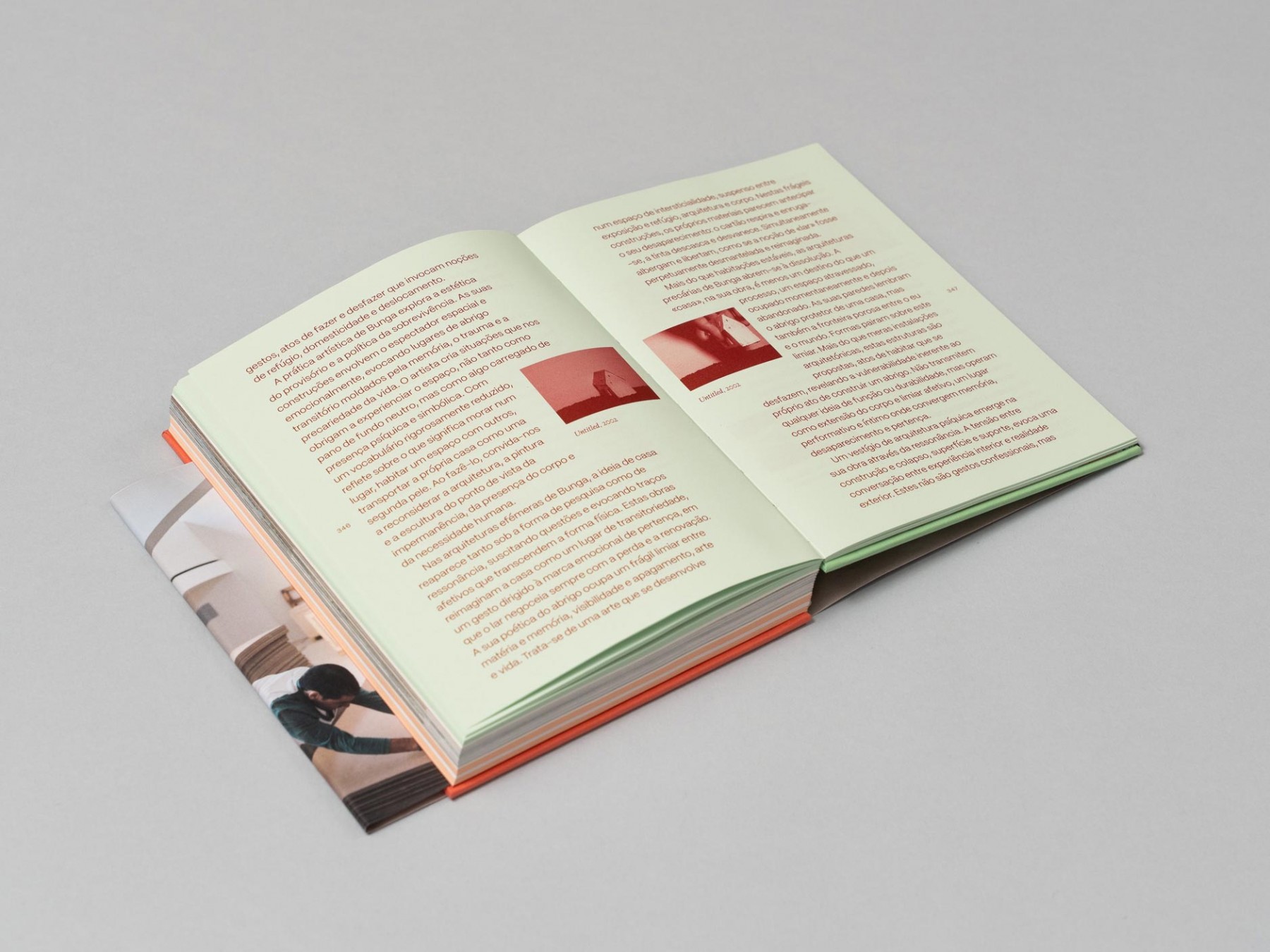
Designed by as ilhas studio, the catalogue also contains new essays by various authors written especially for the occasion—Rina Carvajal, Roland Groenenboom, Omar Kholeif, November Paynter, and Catarina Rosendo—each offering an in-depth look at salient aspects of the artist’s multifaceted practice.
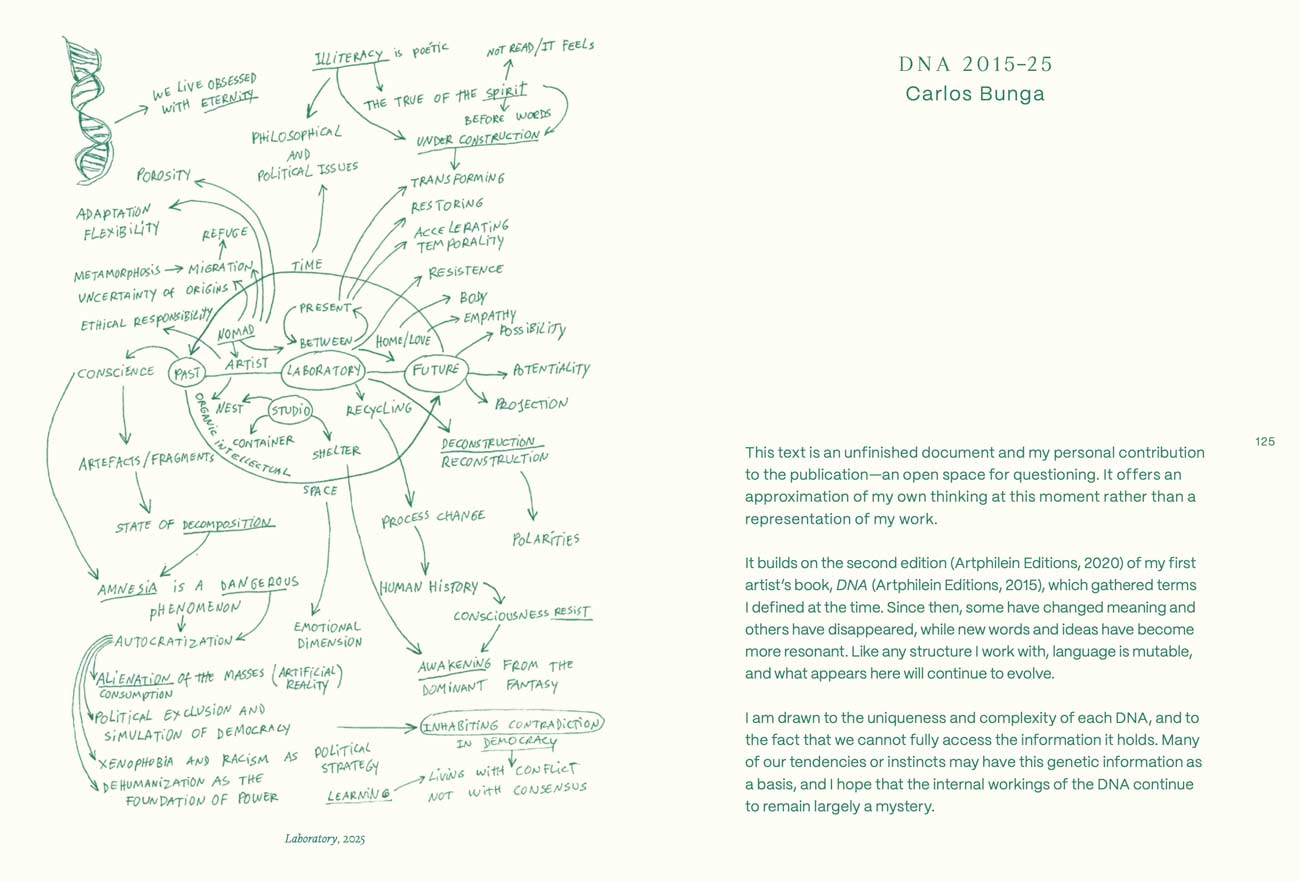
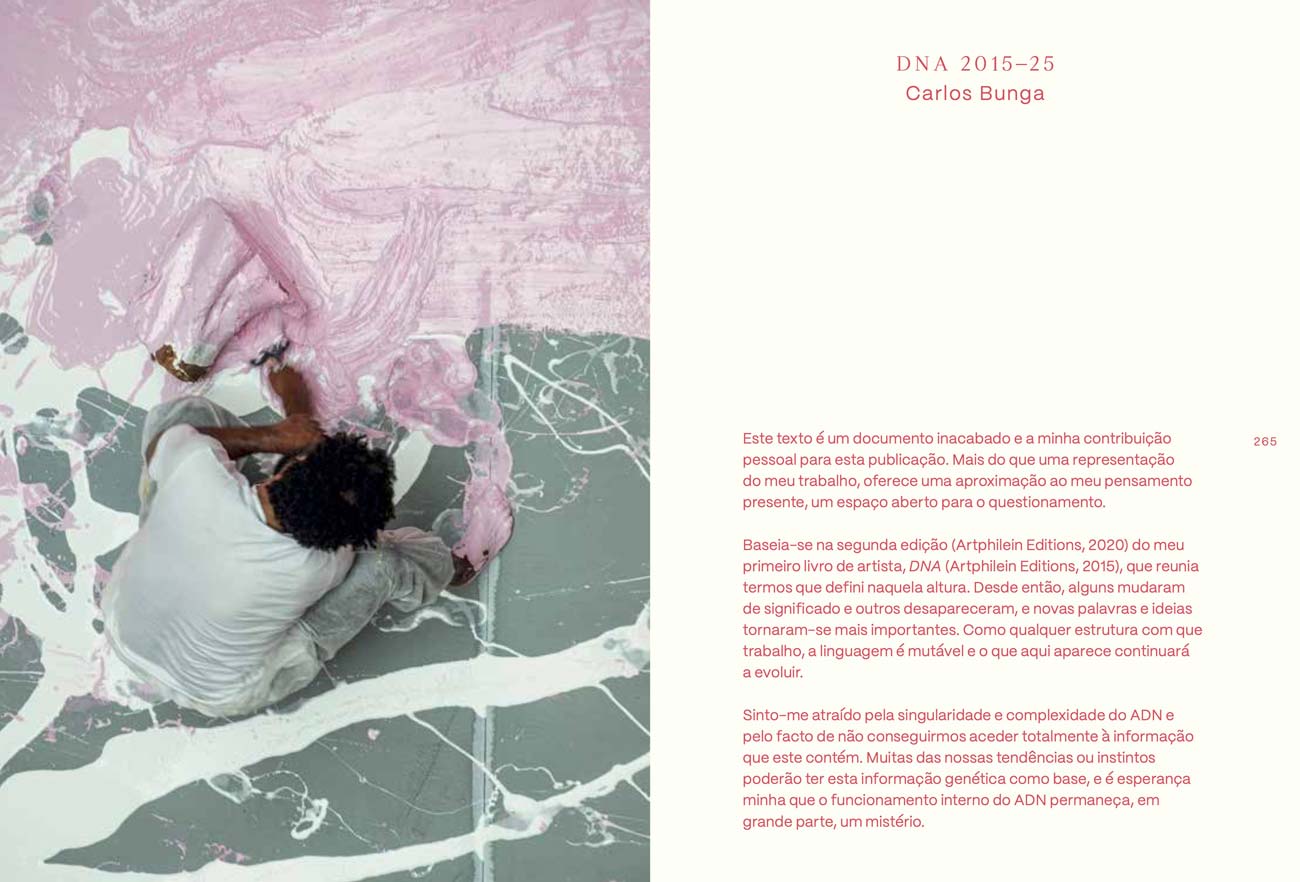
The content is complemented by DNA 2015–25, a dictionary-style text that Bunga began in 2015 and adapted for this publication. The terms, which the artist defines in his own unique way, are keywords that allow the reader to enter into Bunga’s current thought process, and into his particular approach to the world of art.
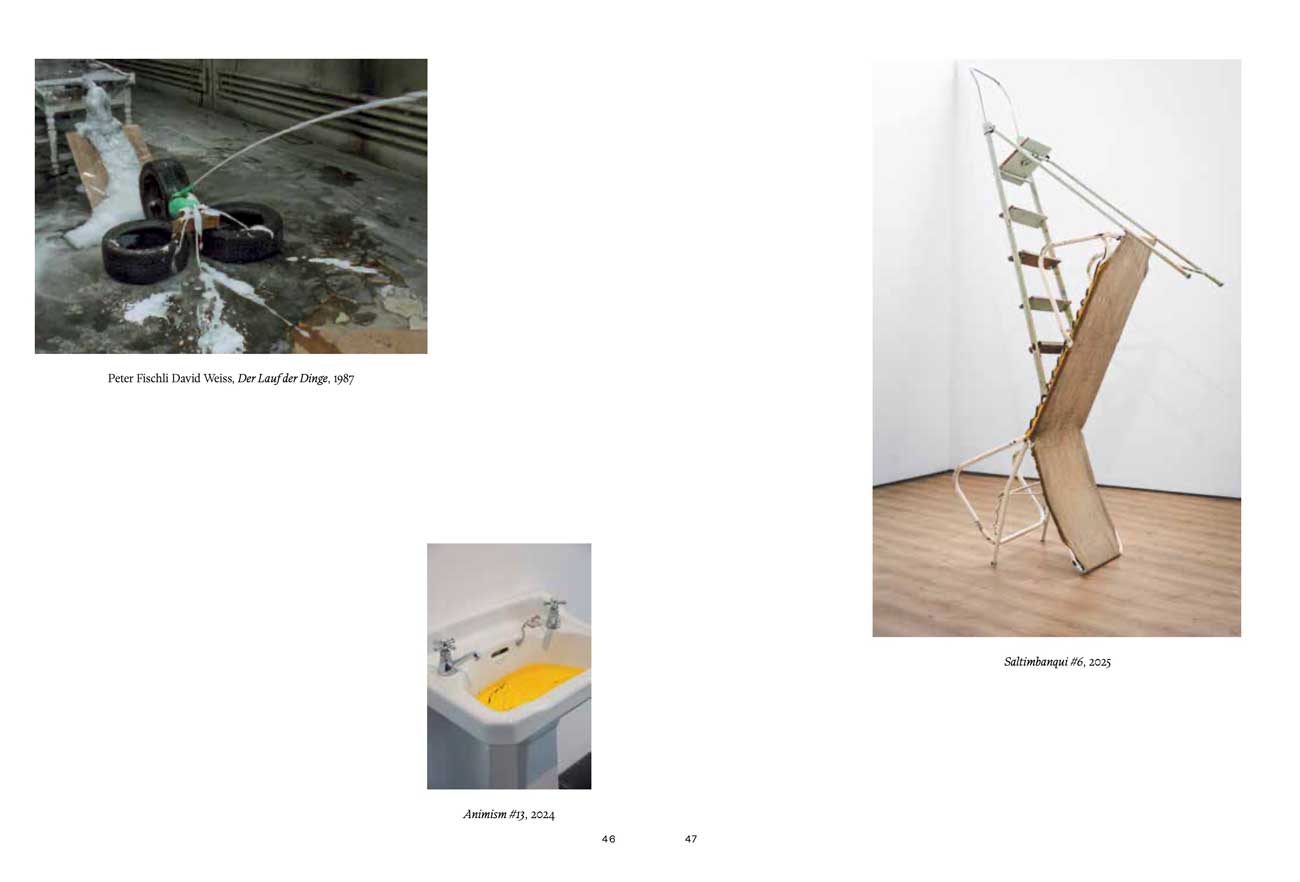
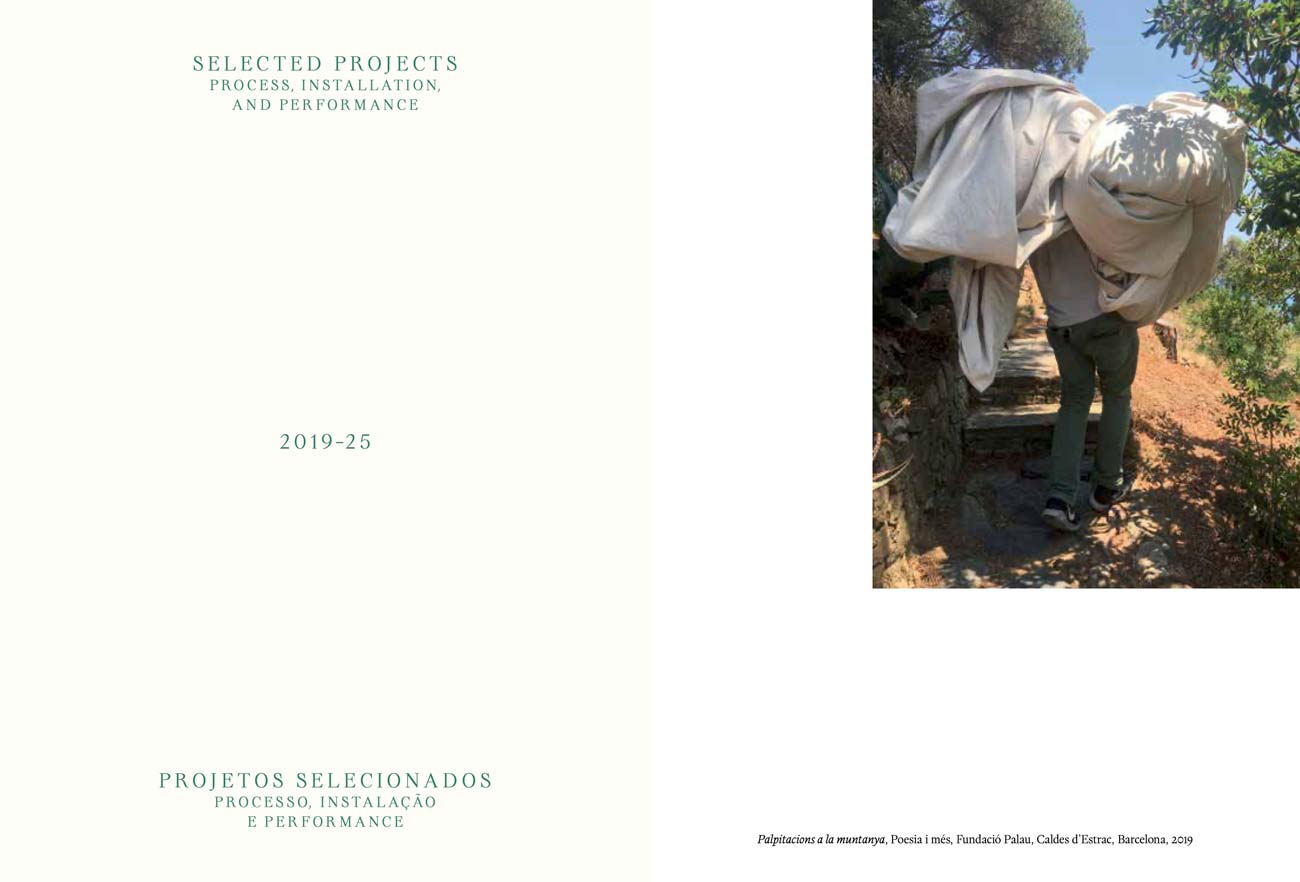
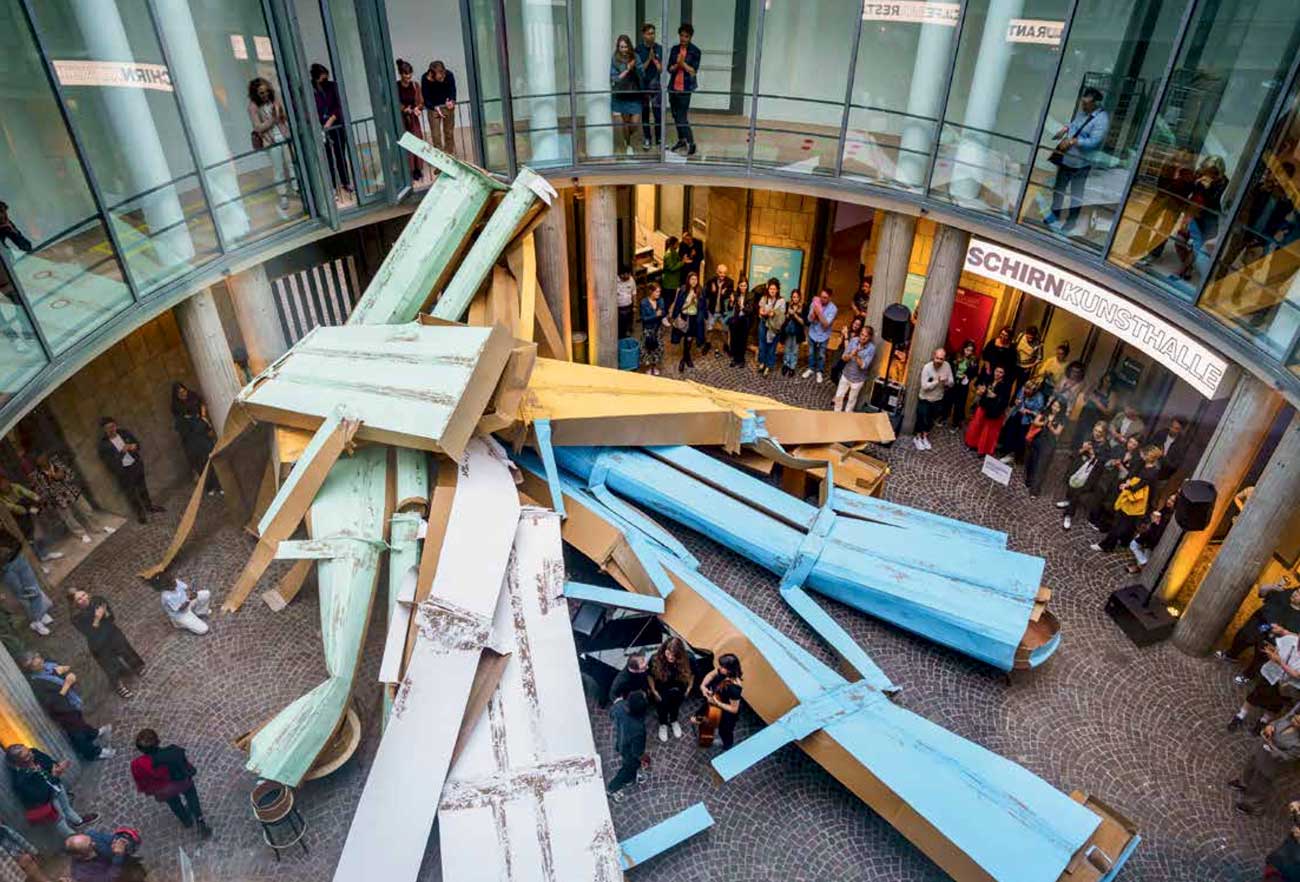
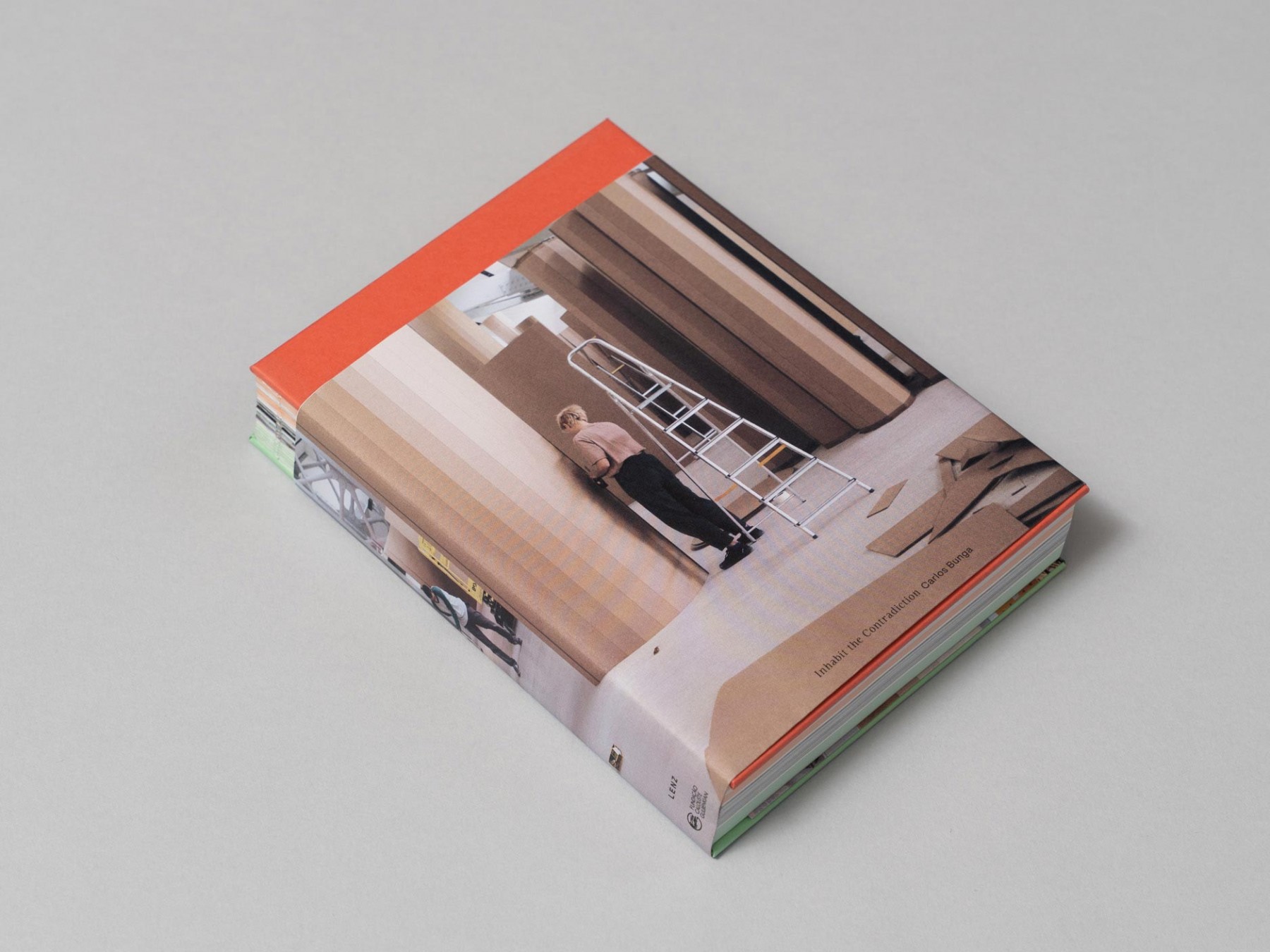
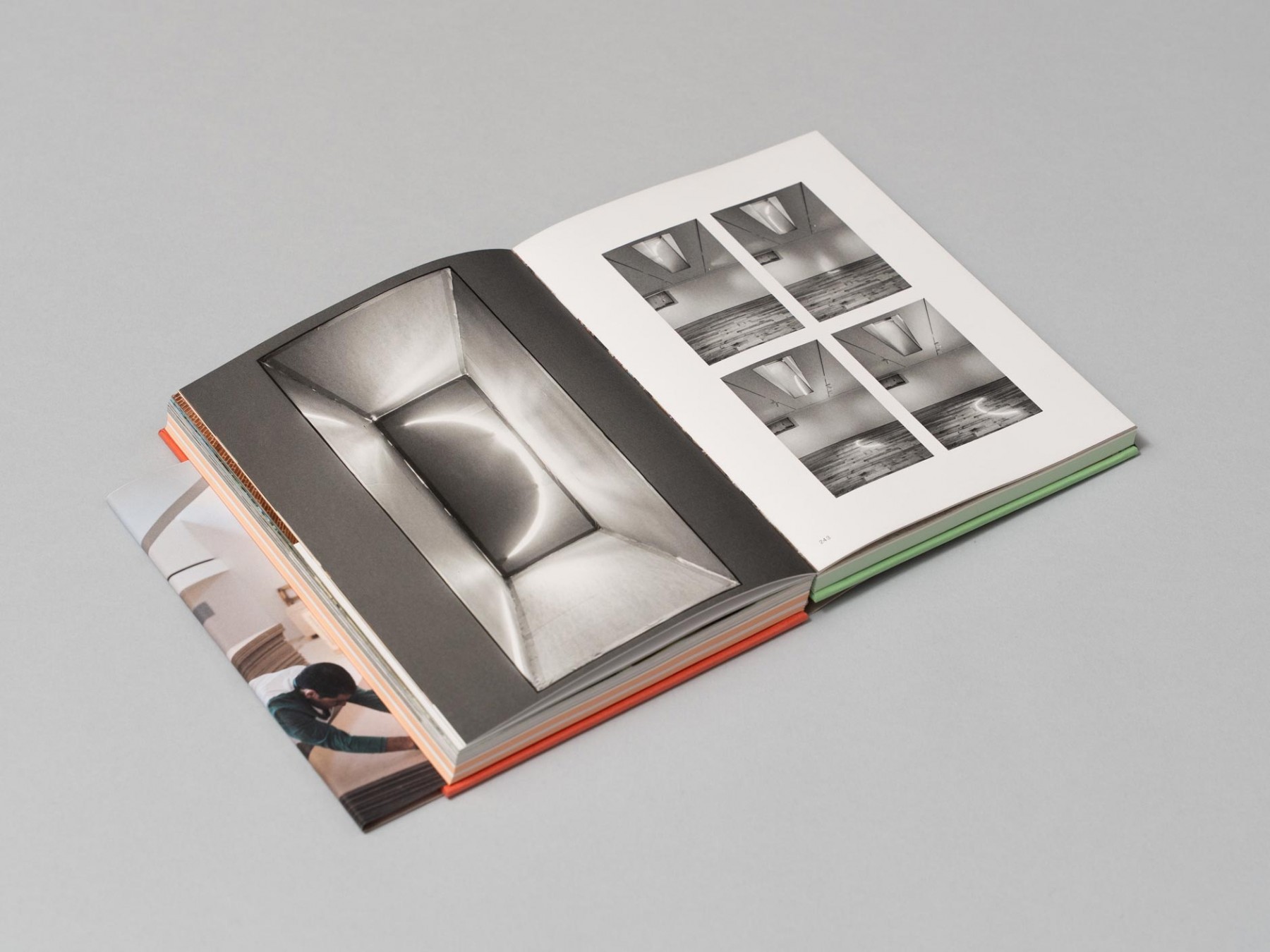
The book also contains a rich picture section, mainly dedicated to site-specific works and performances: a series of installation views, video stills, and performance views alternate with photographs, published for the first time, documenting the installation and assembly process of numerous exhibitions and works. Like a slide show, this image gallery offers a unique and generous insight into Bunga’s working method through the main projects the artist has worked on between 2019 and 2025. The poster enveloping the book completes the documentation, providing a snapshot of the installation of Inhabit the Contradiction at CAM – Gulbenkian, Lisbon.