Martin Heidegger, Glenn Gould, Jacques-Louis David, Cy Twombly, Paul Engelmann and Ludwig Wittgenstein: characters that Francesco Arena has chosen or rediscovered in multiple contexts over the time recur in this book. Ranging from philosophy, to music, to visual arts, they embrace the whole world of knowledge.
This first institutional monograph on the multimedia practice of artist and director Ali Cherri aims to highlight the themes and formal concerns running through his most recent, highly significant projects at GAMeC, Bergamo; Frac Bretagne, Rennes; Swiss Institute, New York; Biennale Arte 2022, Venice; and the National Gallery, London.
The book highlights the main characteristics of the collective trauma that gave rise to Rachel Whiteread’s project for GAMeC. The psychoanalysts Angelo Antonio Moroni and Pietro Roberto Goisis map out a composite picture, starting from the sense of vulnerability and collective loss associated with the Covid-19 pandemic.
This book, with follows the eponymous exhibition at Mudam Luxembourg, is constructed as a story, with a prologue, four acts, and an epilogue: an intuitive journey through the voices of thirty-four artists from different generations who are experimenting with the idea of the performative.
Dreaming Alcestis is an artist’s book by artist and filmmaker Beatrice Gibson, conceived as an accompaniment to her holographic film installation of the same name. It features a commissioned essay by poet and translator Allison Grimaldi Donahue, as well as a reprint of the American poet Alice Notley’s 1991 essay What Can Be Learned From Dreams?
What if clay is the future and the future is clay? Curators Chus Martínez and Filipa Ramos brought together a group of artists to think and create through this old, maleable and fascinating matter. The result was materialized in an exhibition and book format entitled Feet of Clay.
Edited by Rui Mateus Amaral
Texts by Rui Mateus Amaral, Carlos Bunga, Rina Carvajal, Roland Groenenboom, Omar Kholeif, November Paynter, and Catarina Rosendo
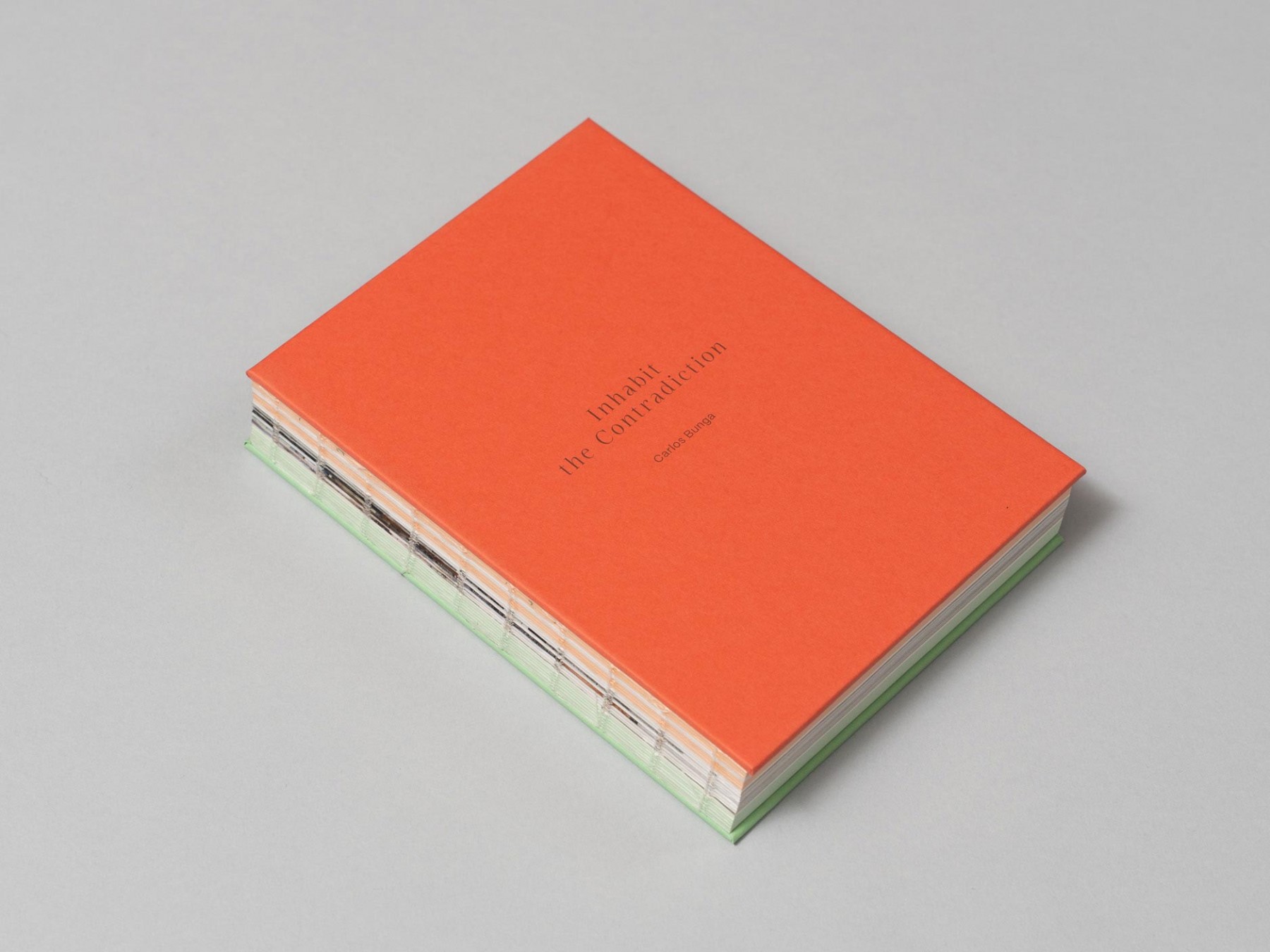
Designed by Ilhas Studio
2025, English / Portuguese, hardcover, 14 x 19 cm, 388 pages
ISBN 979-12-80579-92-8
Carlos Bunga: Inhabit the Contradiction is an extensive monograph devoted to the work of Carlos Bunga, published in conjunction with his eponymous exhibition presented at CAM – Gulbenkian.
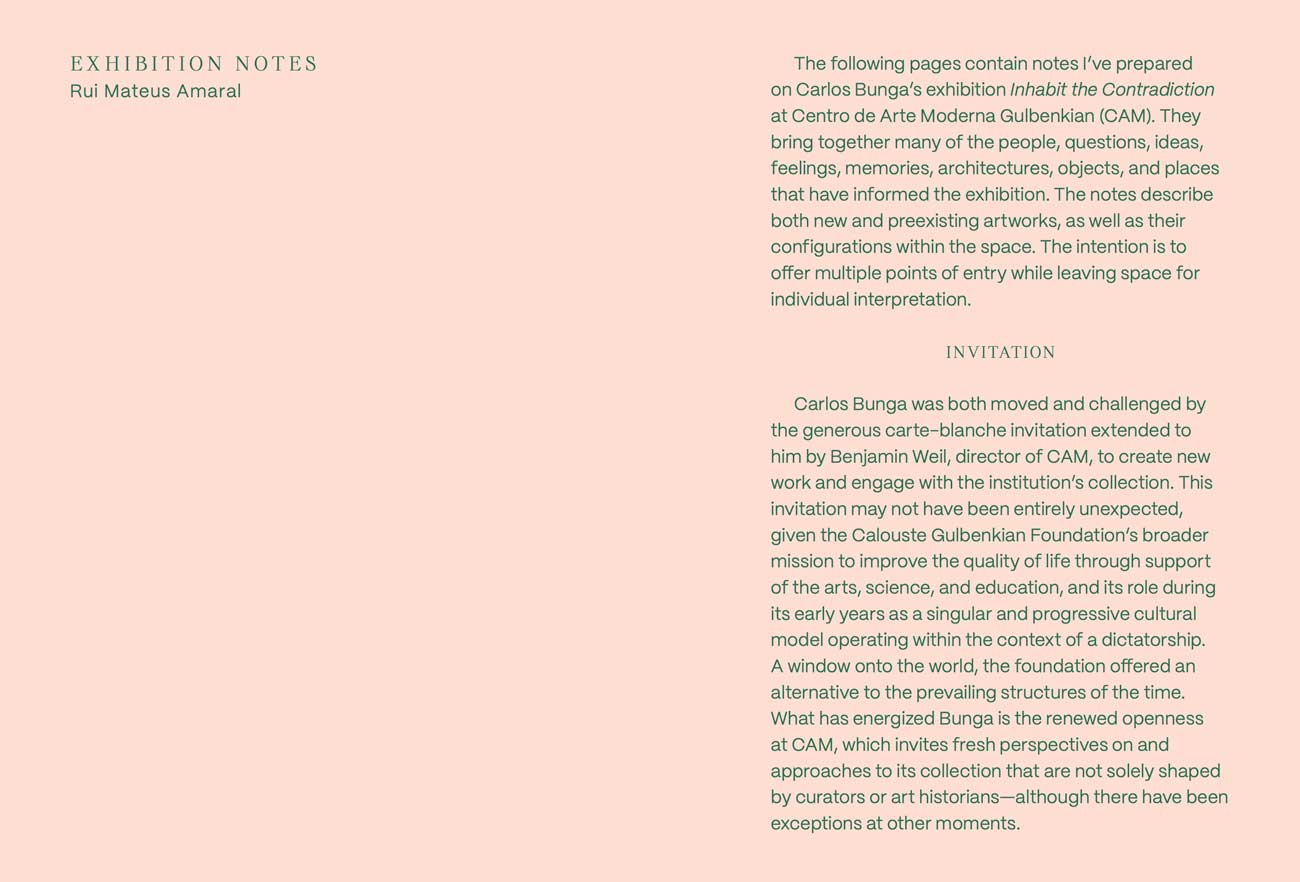
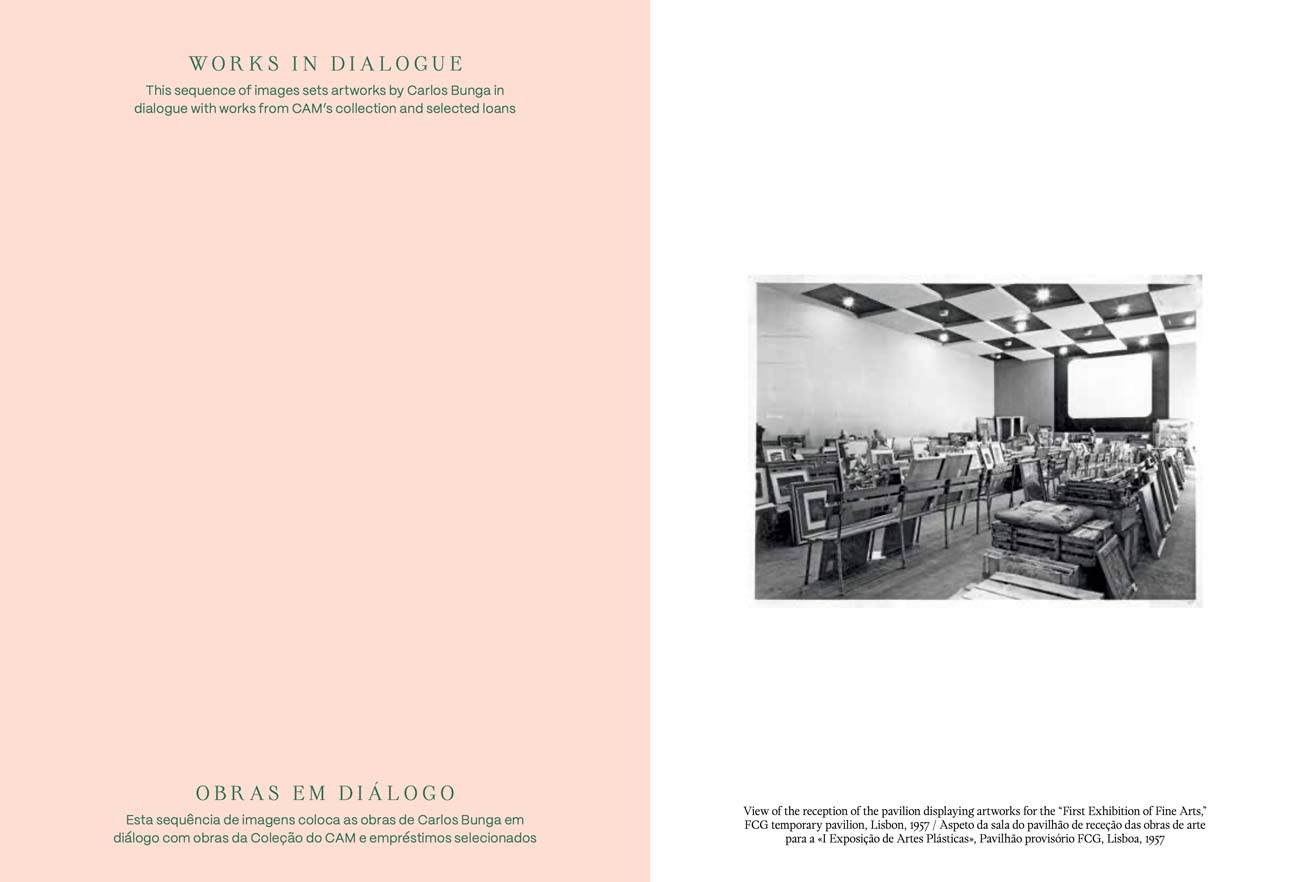
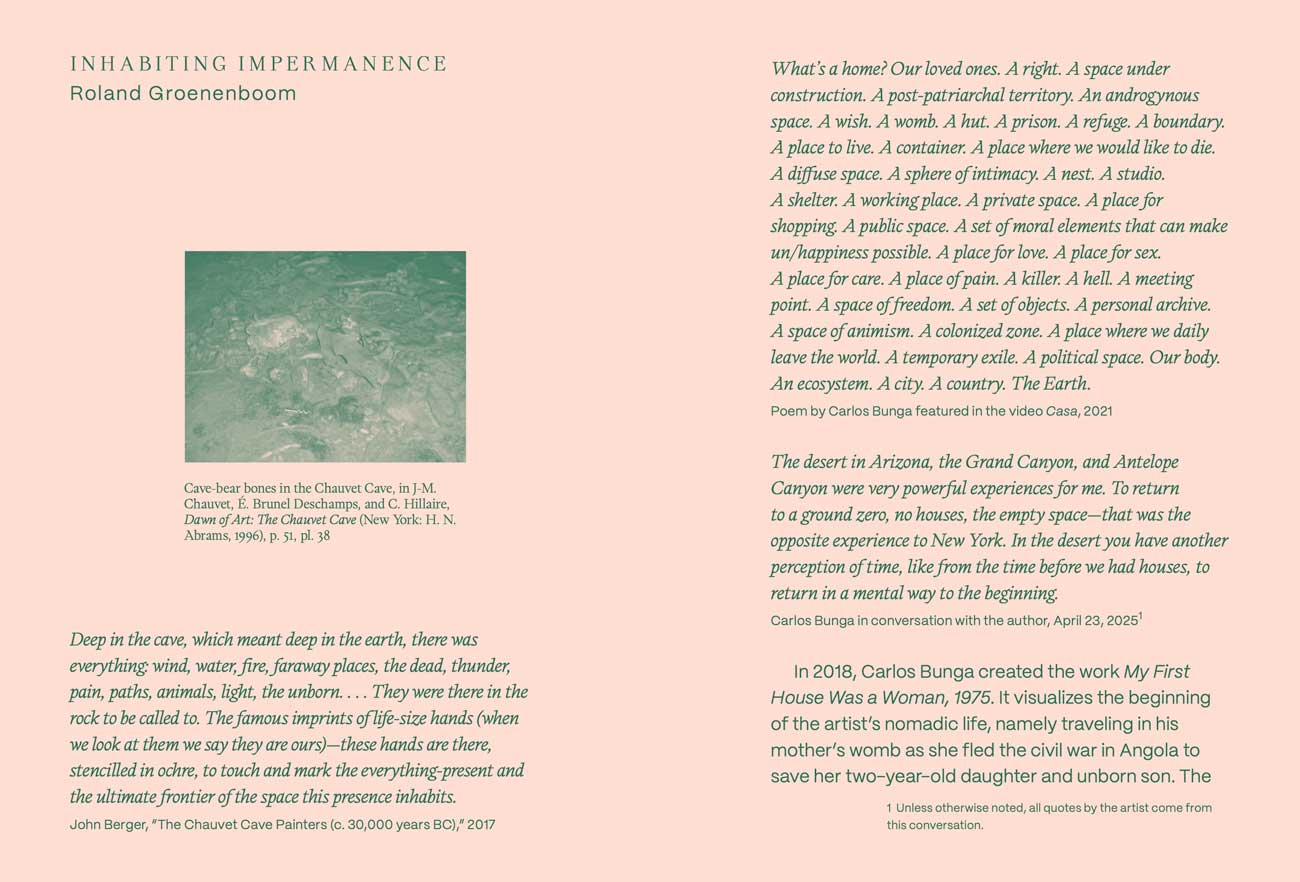
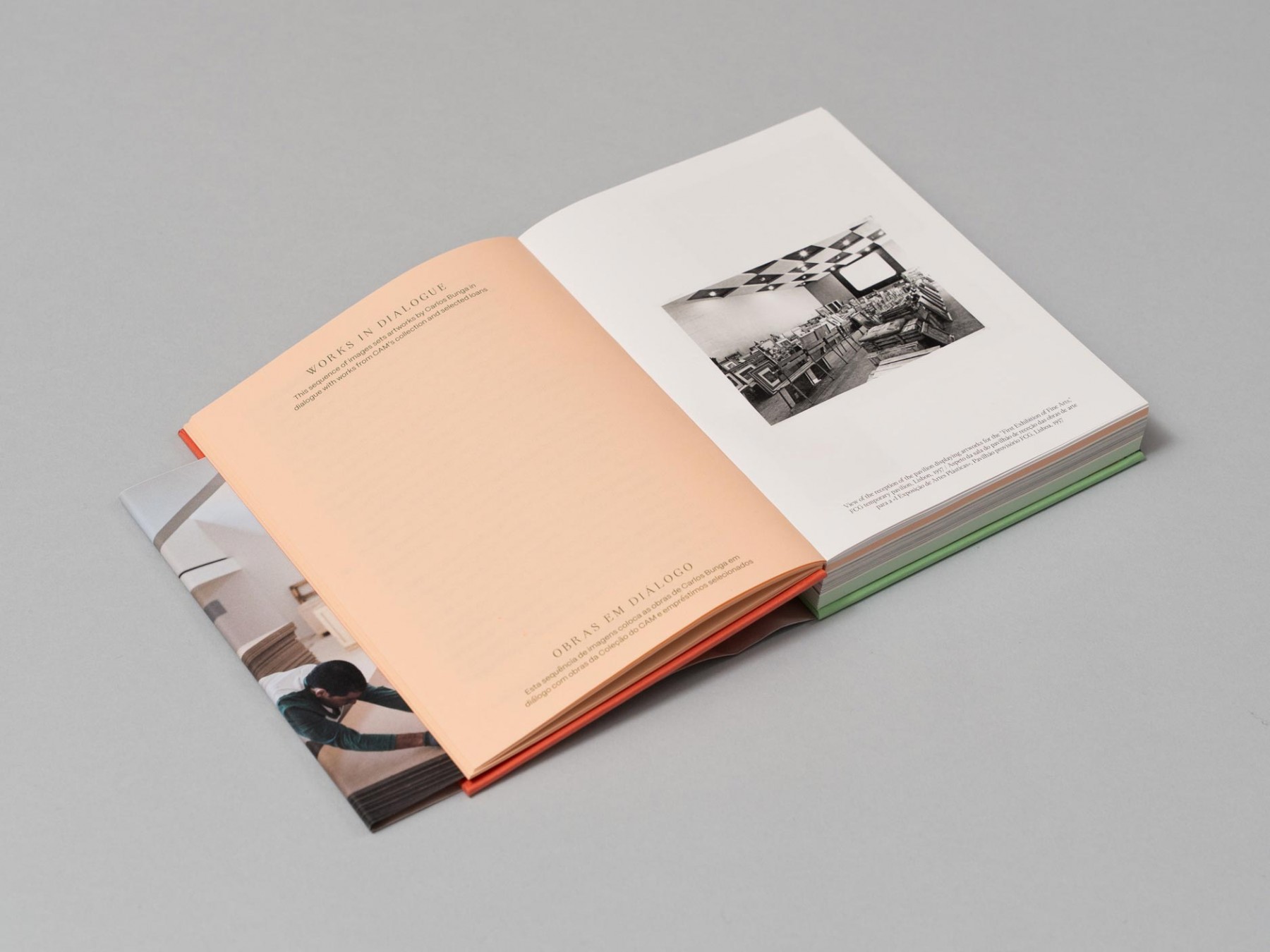
The book contains notes by the exhibition curator and catalogue editor, Rui Mateus Amaral, who introduces readers to the exhibition project, providing an in-depth account of its genesis and development, focusing on the dialogue between Bunga’s work and selected pieces from the CAM collection. The notes describe both Bunga’s new and existing works, as well as their configuration within the space, with the intention of opening up multiple points of access to the exhibition, leaving room for individual interpretation.
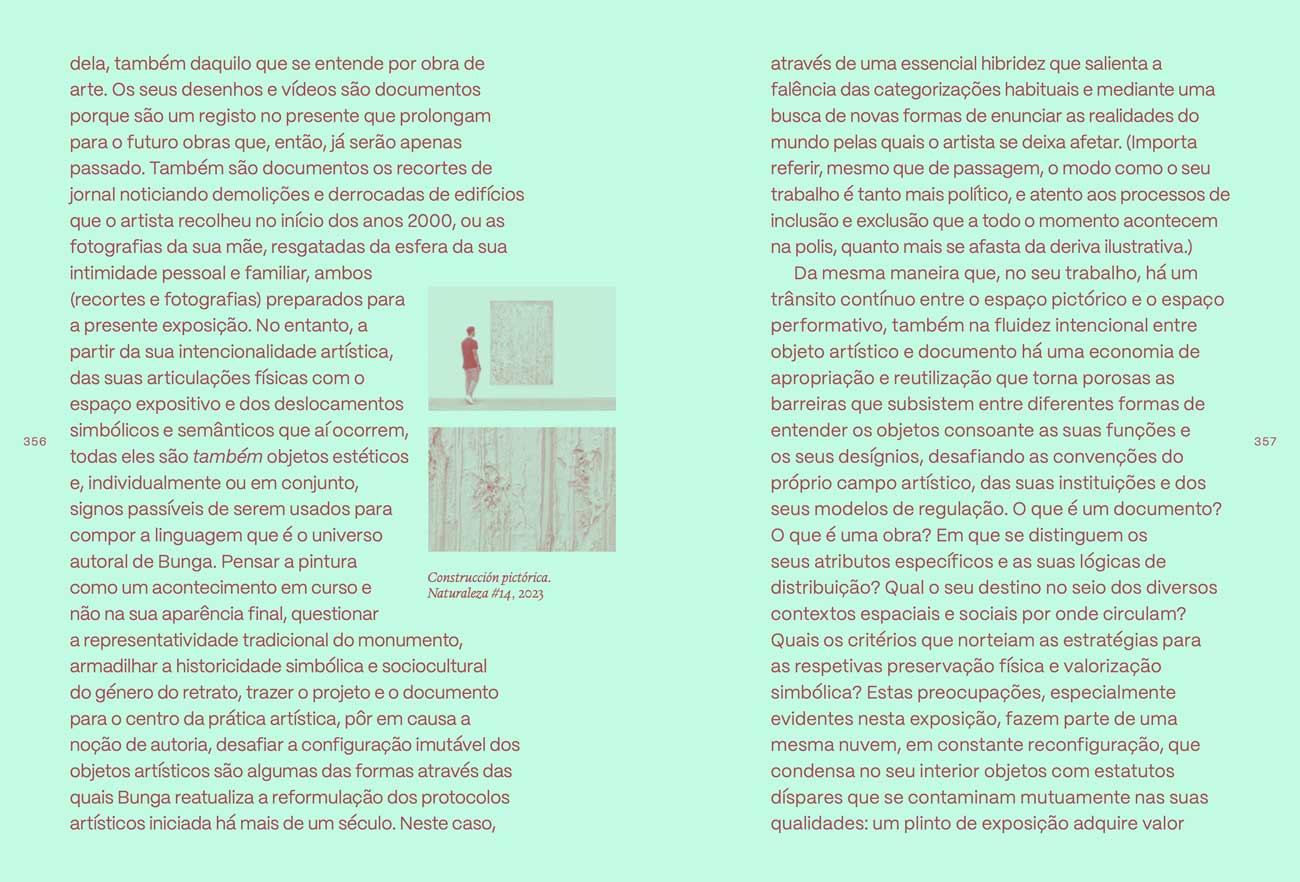
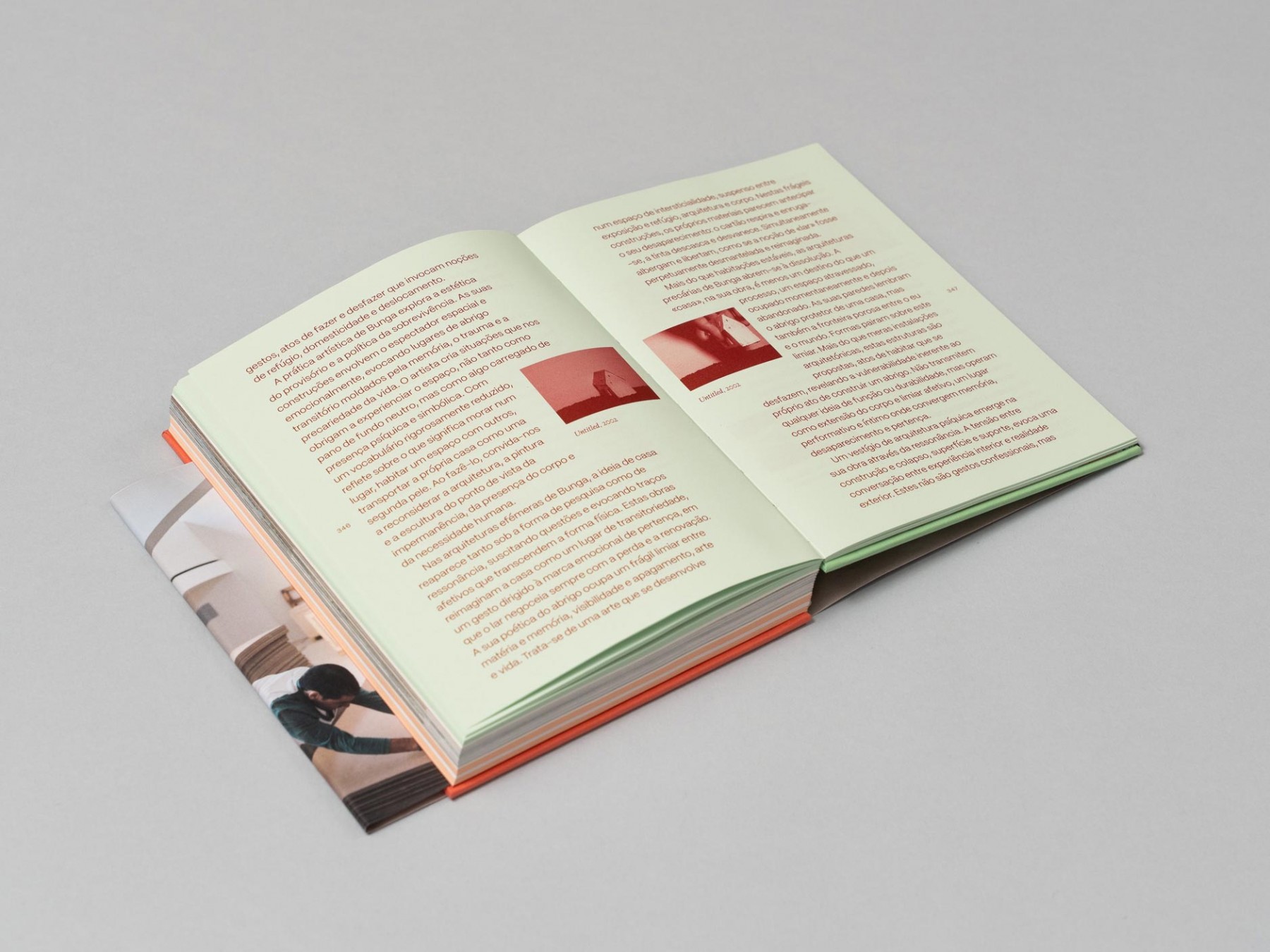
Designed by as ilhas studio, the catalogue also contains new essays by various authors written especially for the occasion—Rina Carvajal, Roland Groenenboom, Omar Kholeif, November Paynter, and Catarina Rosendo—each offering an in-depth look at salient aspects of the artist’s multifaceted practice.
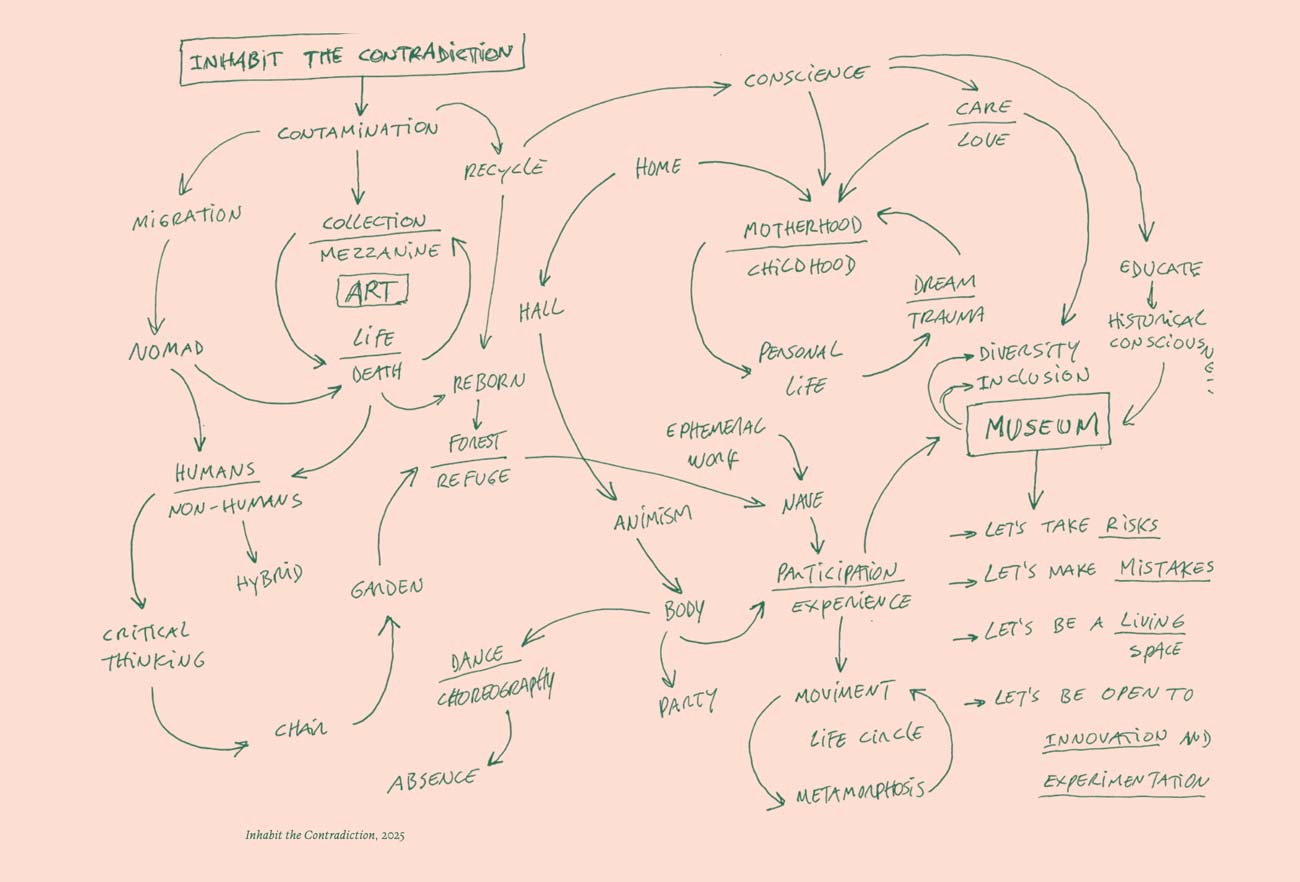
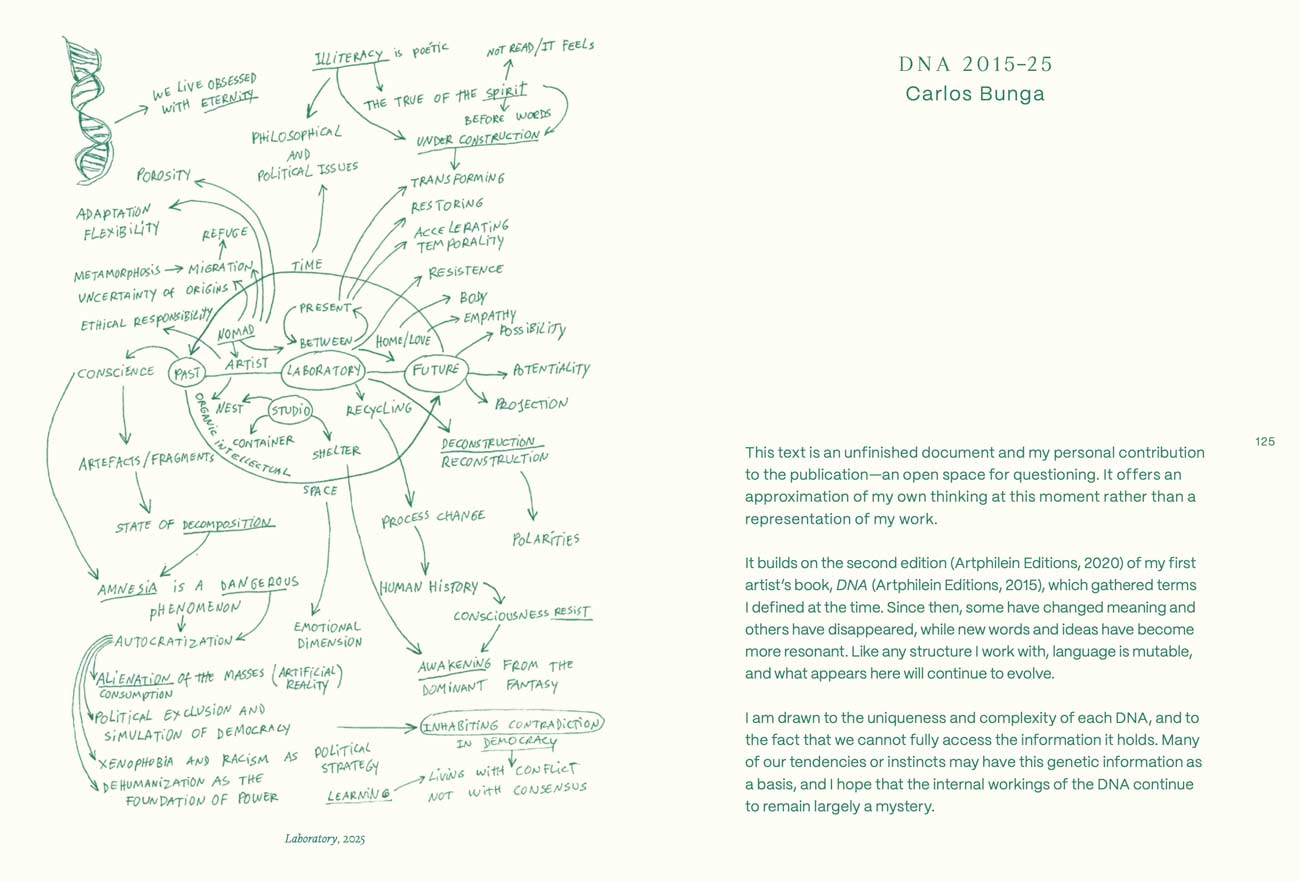
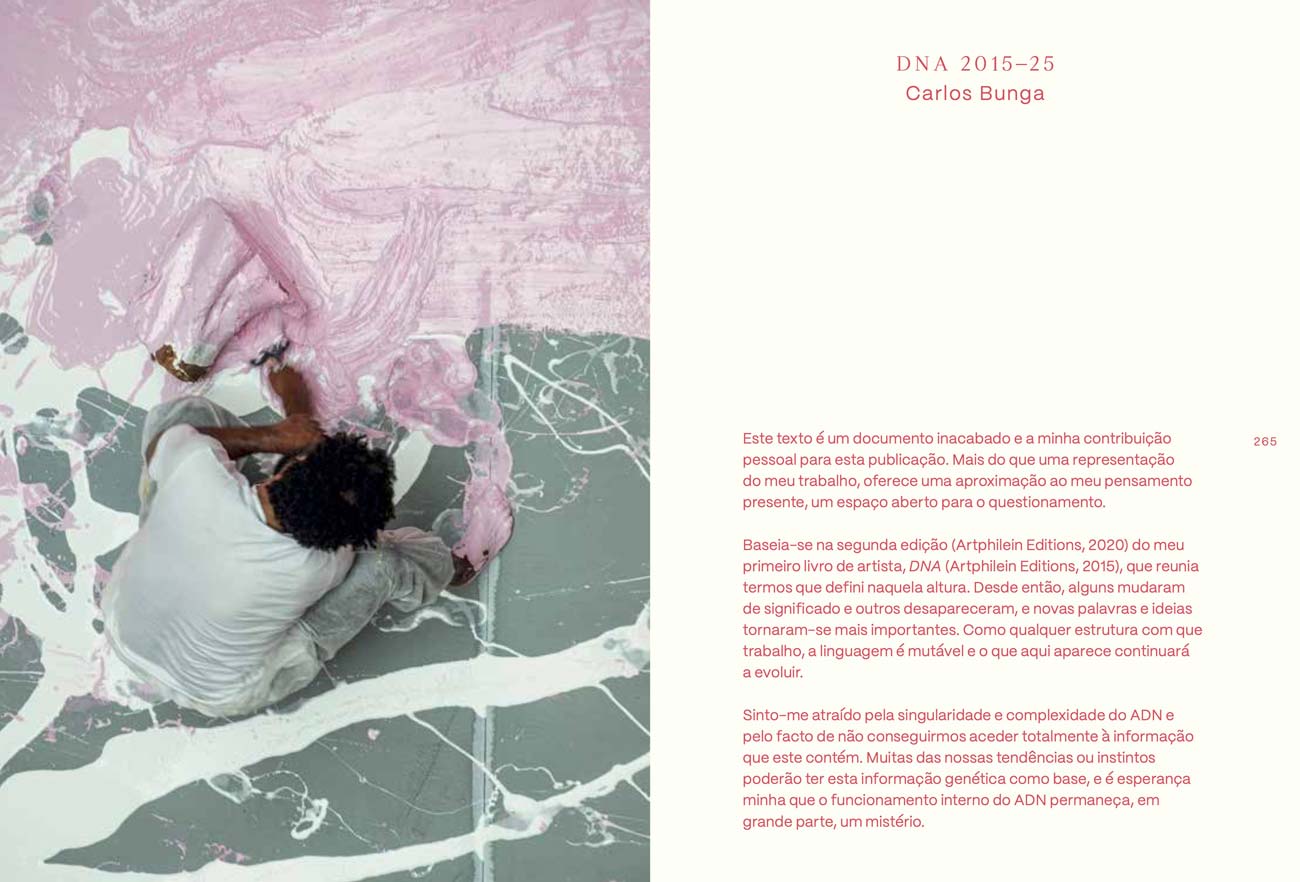
The content is complemented by DNA 2015–25, a dictionary-style text that Bunga began in 2015 and adapted for this publication. The terms, which the artist defines in his own unique way, are keywords that allow the reader to enter into Bunga’s current thought process, and into his particular approach to the world of art.
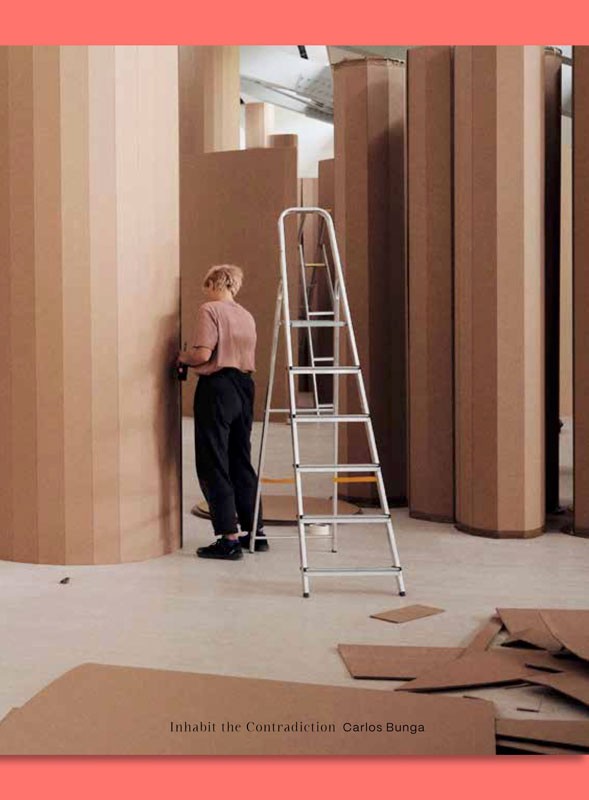
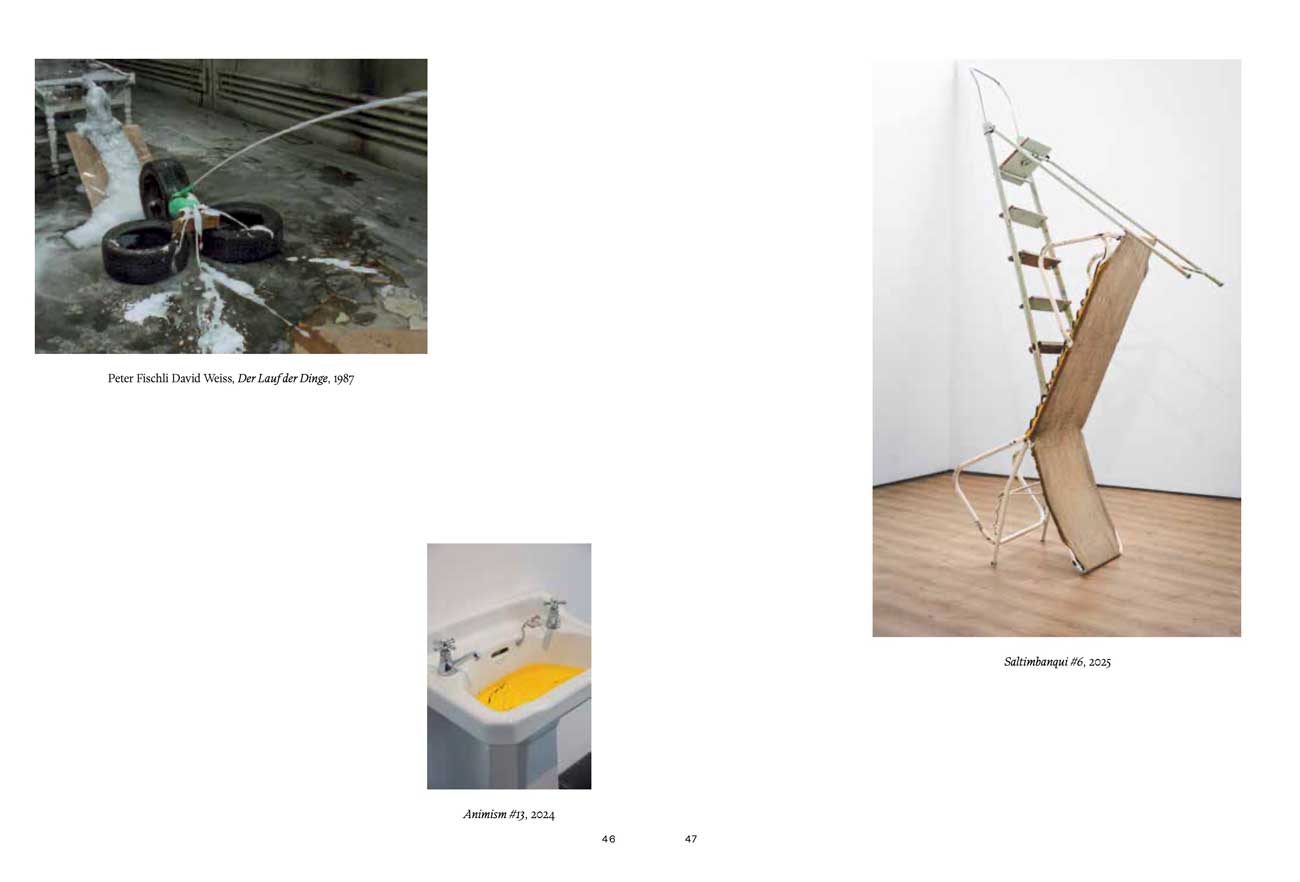
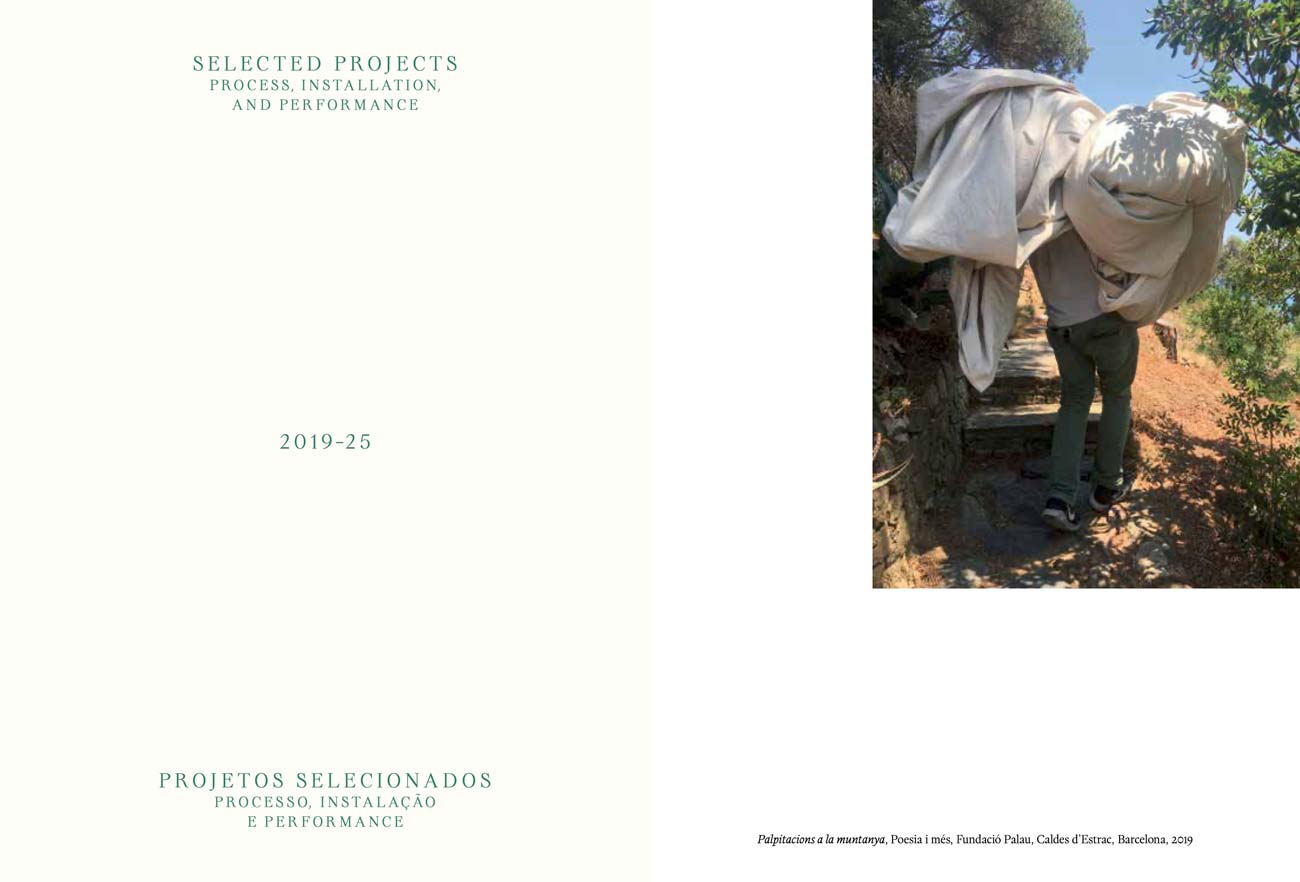
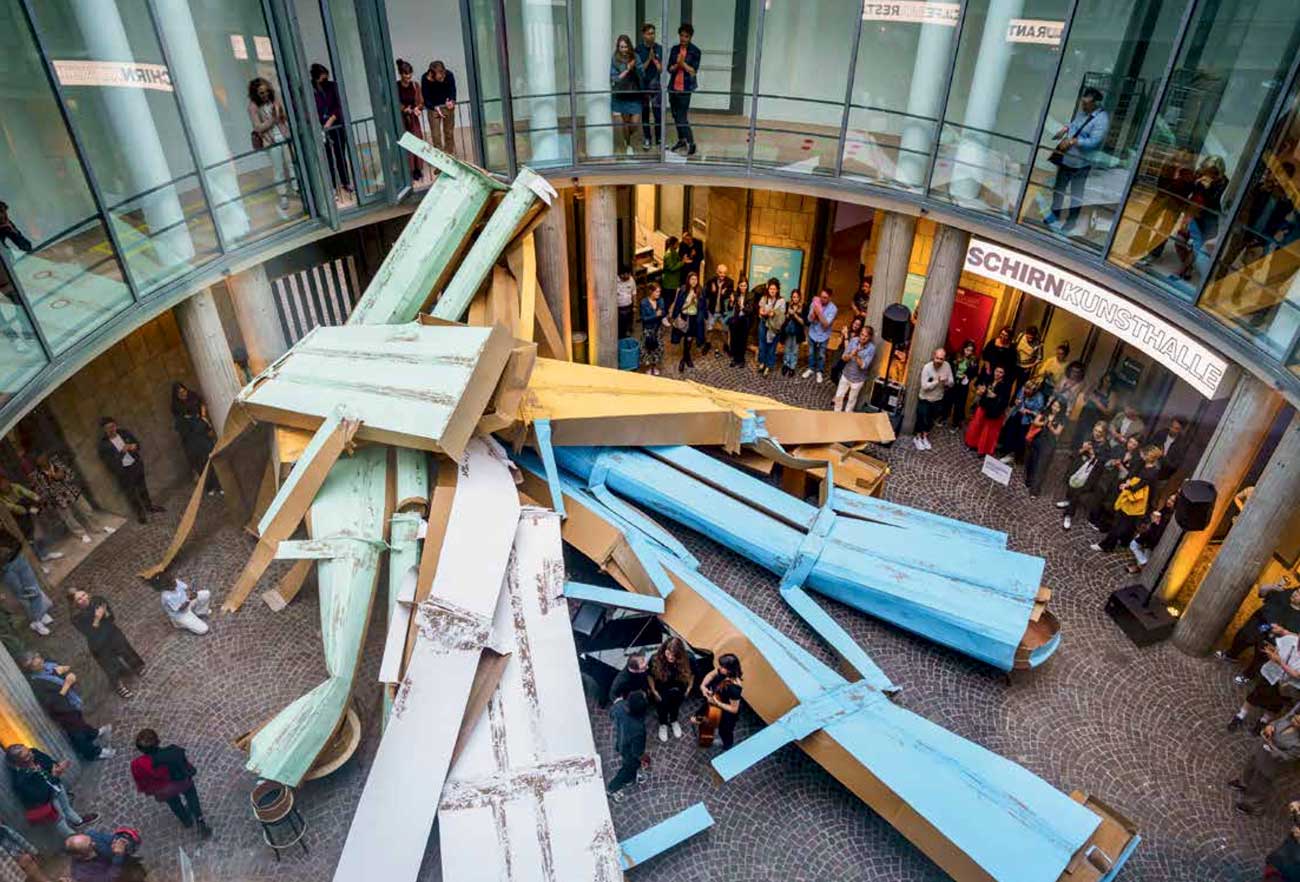
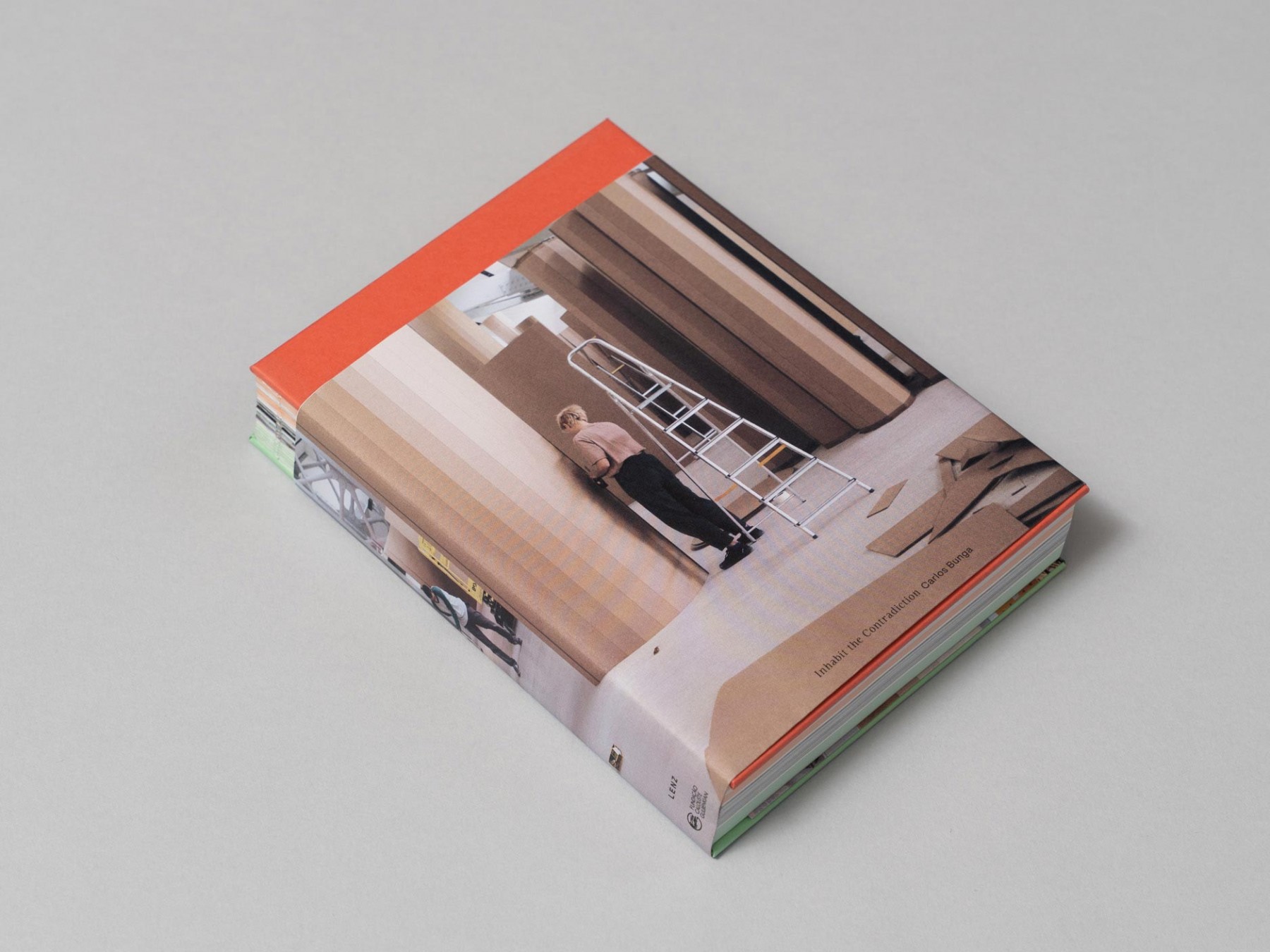
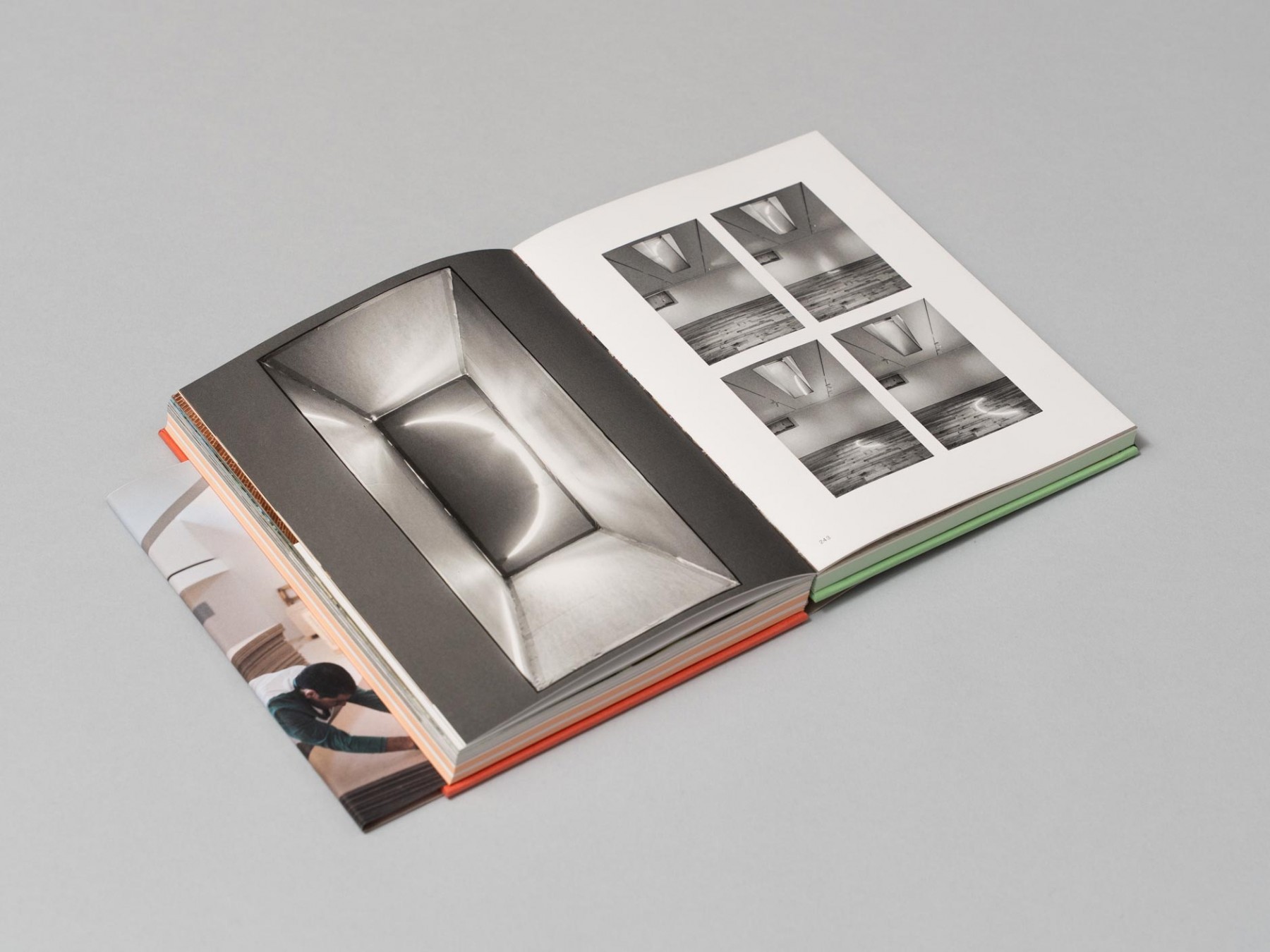
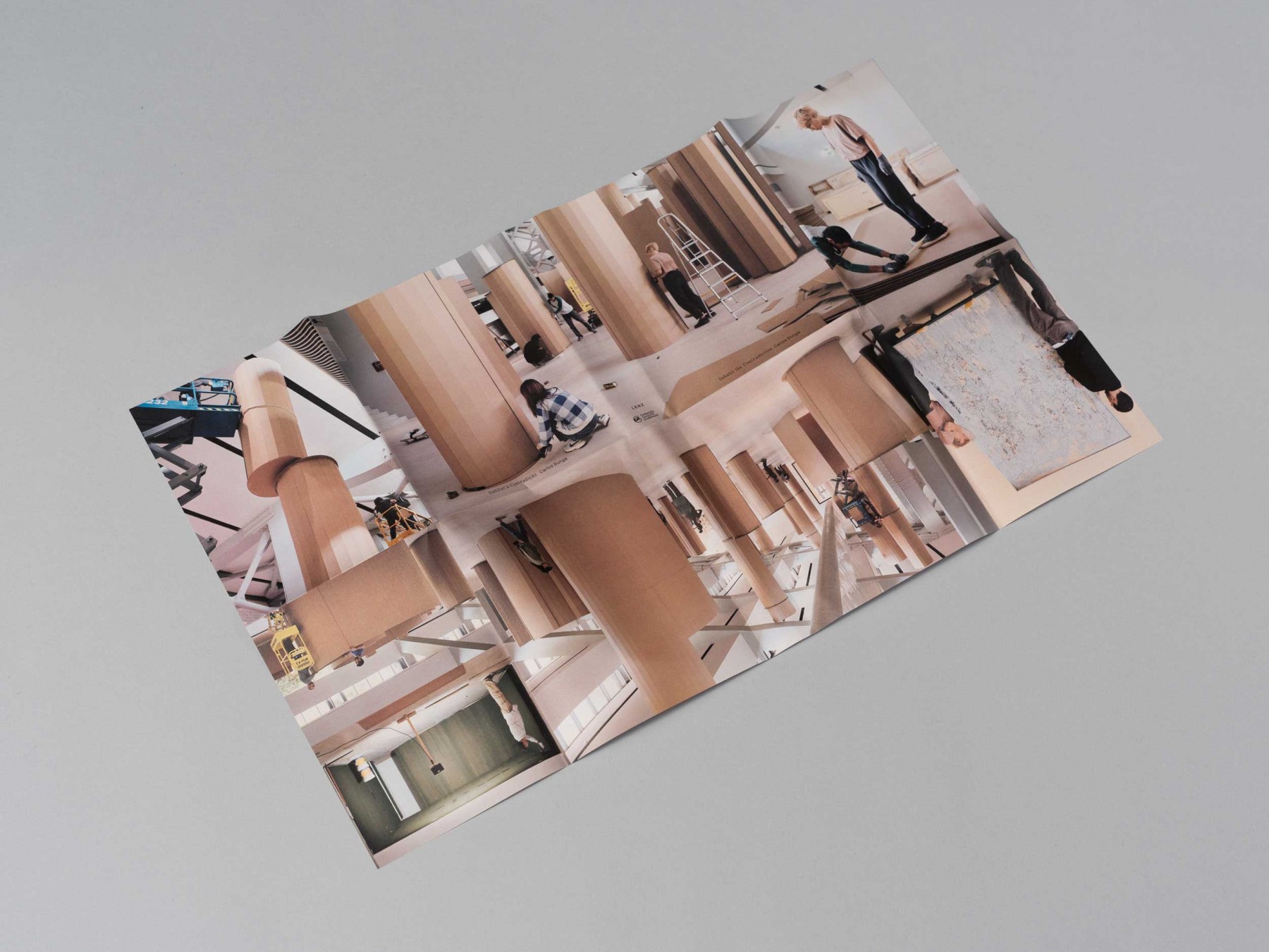
The book also contains a rich picture section, mainly dedicated to site-specific works and performances: a series of installation views, video stills, and performance views alternate with photographs, published for the first time, documenting the installation and assembly process of numerous exhibitions and works. Like a slide show, this image gallery offers a unique and generous insight into Bunga’s working method through the main projects the artist has worked on between 2019 and 2025. The poster enveloping the book completes the documentation, providing a snapshot of the installation of Inhabit the Contradiction at CAM – Gulbenkian, Lisbon.