A multifaceted perspective on contemporary sculpture that explores the practices and concepts of the medium through different approaches. The publication interweaves works by Yu Ji, Bronwyn Katz, Dan Lie, Trương Công Tùng, and Luana Vitra, with essays by Federico Giani, Sohrab Mohebbi, Julia Morandeira Arrizabalaga, Chiara Nuzzi, and Anne Reeve.
Suffused with specially conceived collages of the artist’s research materials, notes, and sketches, this is the first monograph on Castelli’s painting and sculpture, with essays by Sarah Crowe and Lillian Davies, and an artist interview by Francesco Manacorda. Published with Castello di Rivoli Museo d’Arte Contemporanea and Kunsthalle Wien.
What if the shadow moved first? From March through May 2026, the exhibition The Second Shadow. Dozie Kanu Mirroring Marc Camille Chaimowicz, with Shared Echoes and Kindred Spirits at Fondazione ICA Milano unfolds online through a series of voices and crossings that shift its gravity. Not an extension. A displacement.
A Cosmic Movie Camera is the title of the 18th edition of the BIM’24, which also marks the 50th anniversary of the Biennale organized by the Centre d’Art Contemporain Genève. By blending the real and the virtual, its catalogue captures the spirit of the exhibition, which explores the evolution of moving images, particularly in our algorithmic age.
The book seeks to define the contours of the obsession with the teenage years; a fixation that has shaped a significant strand of contemporary art over the last ten years. Adolescence is here understood as a state of mind, a prolonged condition that dissolves the transition into adulthood and becomes a critique of an unstable world.
In this multi-voiced book, starting from the Orobie Alpine range, the mountainside becomes an epistemological lens through which to interpret contemporaneity and address issues such as multi-species migrations, our relationship with geological time and intergenerational inheritance, and the rethinking of collective memories and rituals.
Edited by Eva Fabbris with Giovanna Manzotti
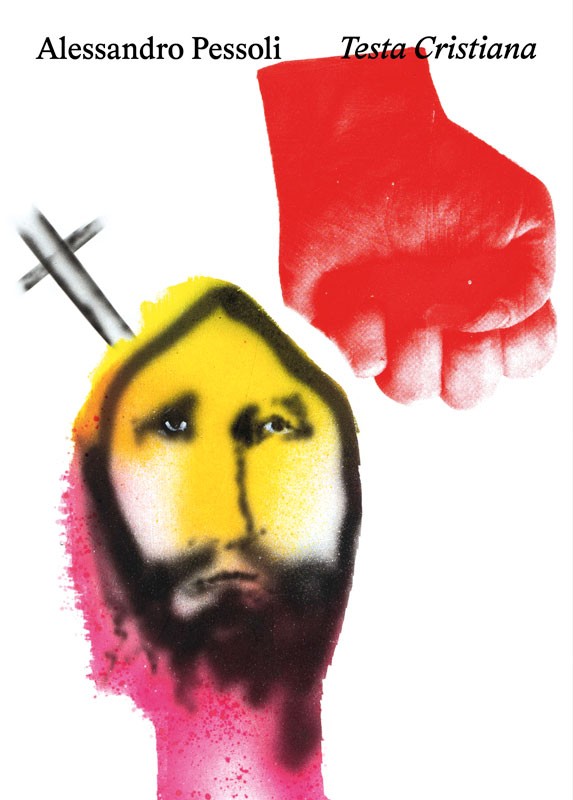
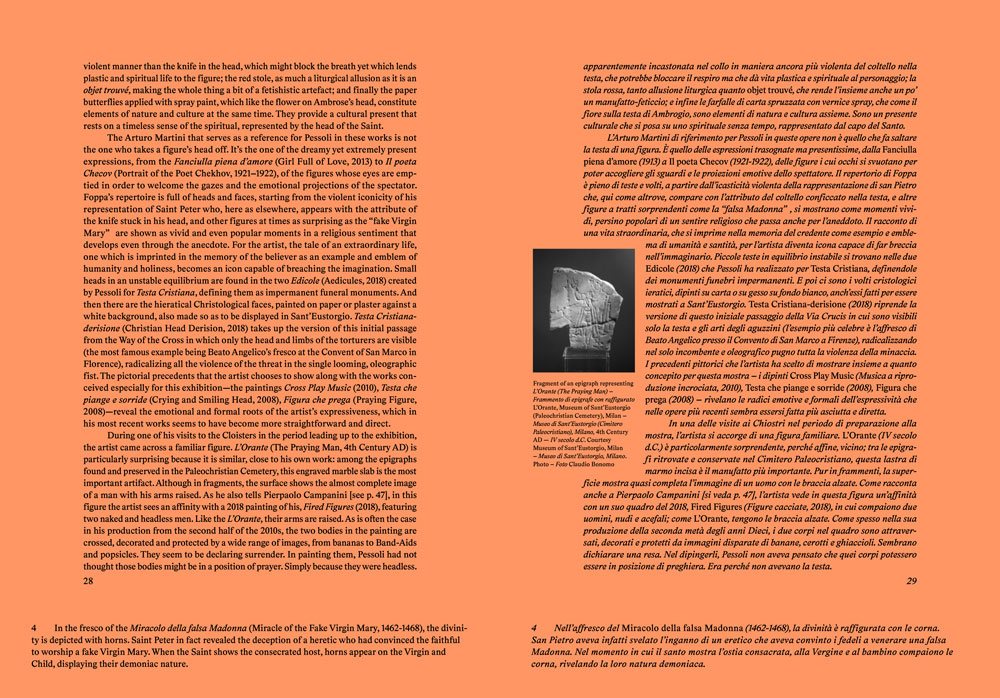
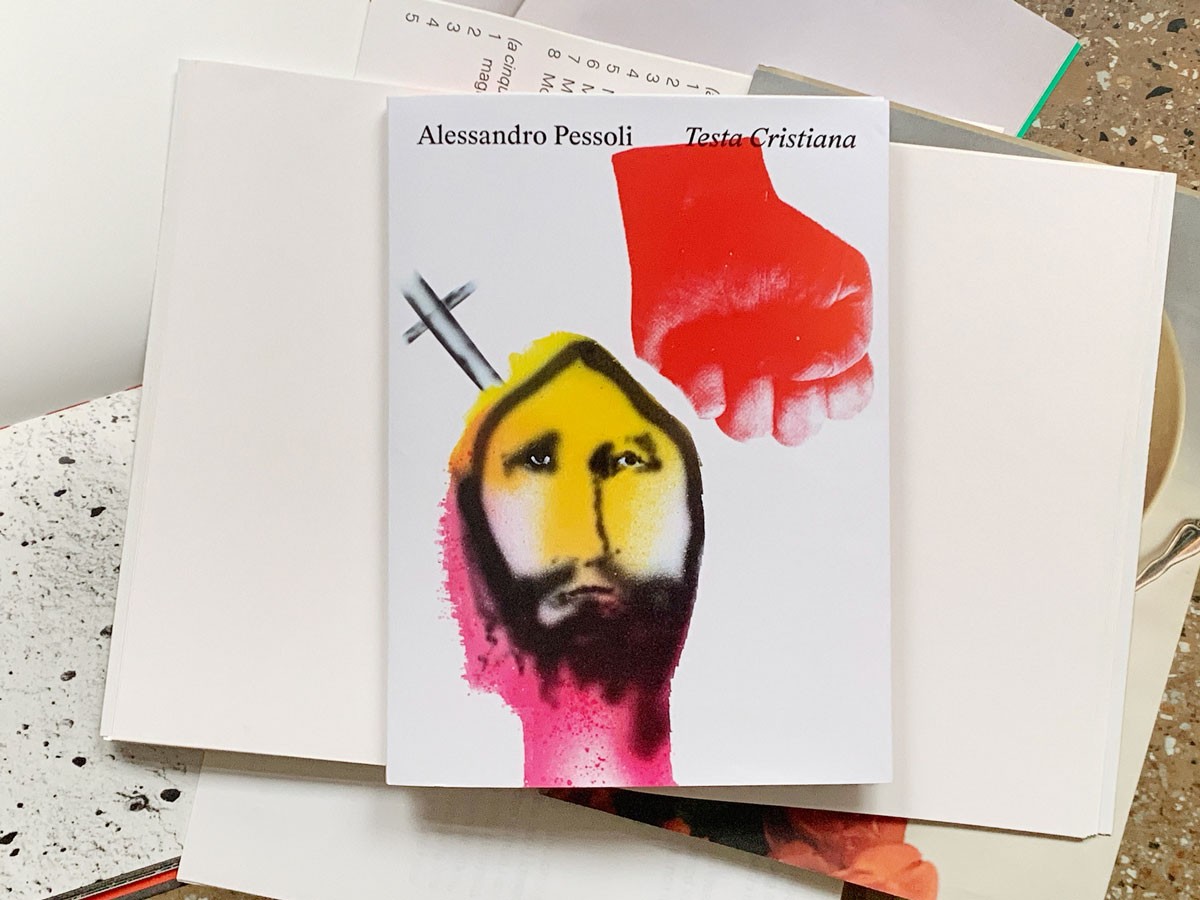
Texts by Eva Fabbris, Alexis Vaillant and a conversation between Alessandro Pessoli and Pierpaolo Campanini. Designed by Lorenzo Mason Studio
2021, English / Italian, softcover. 24 x 33.5 cm, 88 pages
ISBN 979-12-80579-06-5
“In general, my whole work is a movement from the inside to the outside and vice versa; past and present, personal and collective are fluctuating entities; the work becomes an intermediate place where a transformation of the tragic sense of the world, of its conflict and violence, is taking place.” (Alessandro Pessoli, from a conversation with Pierpaolo Campanini)
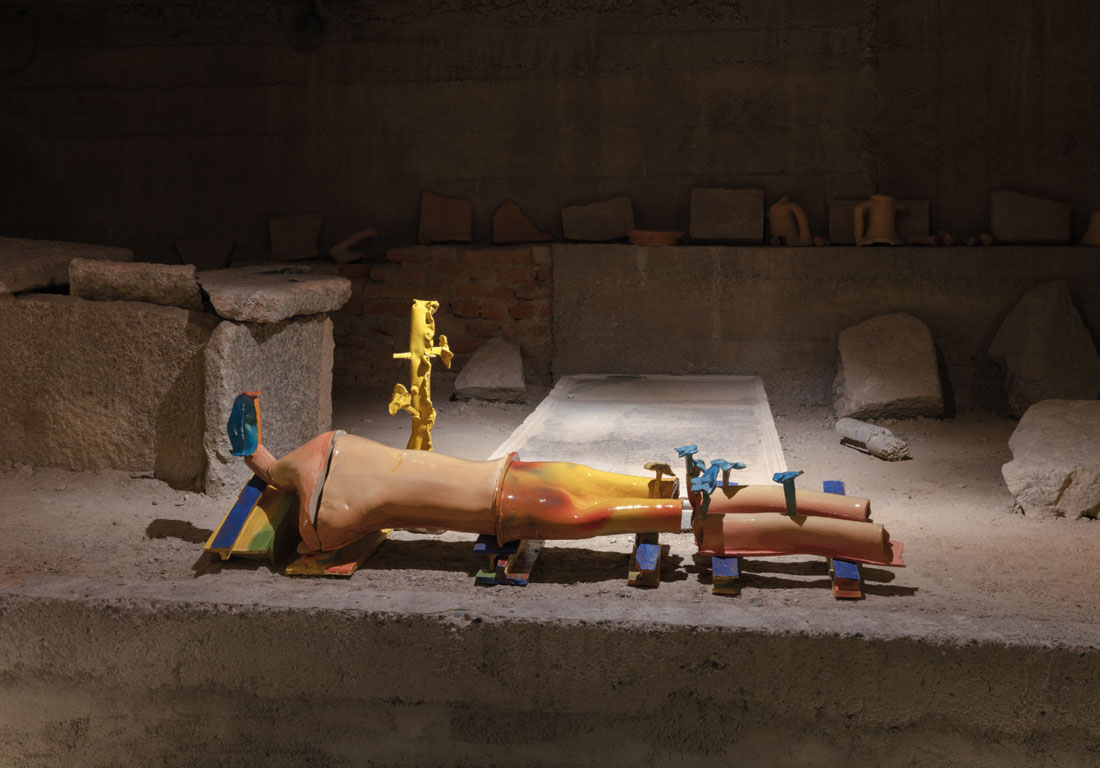
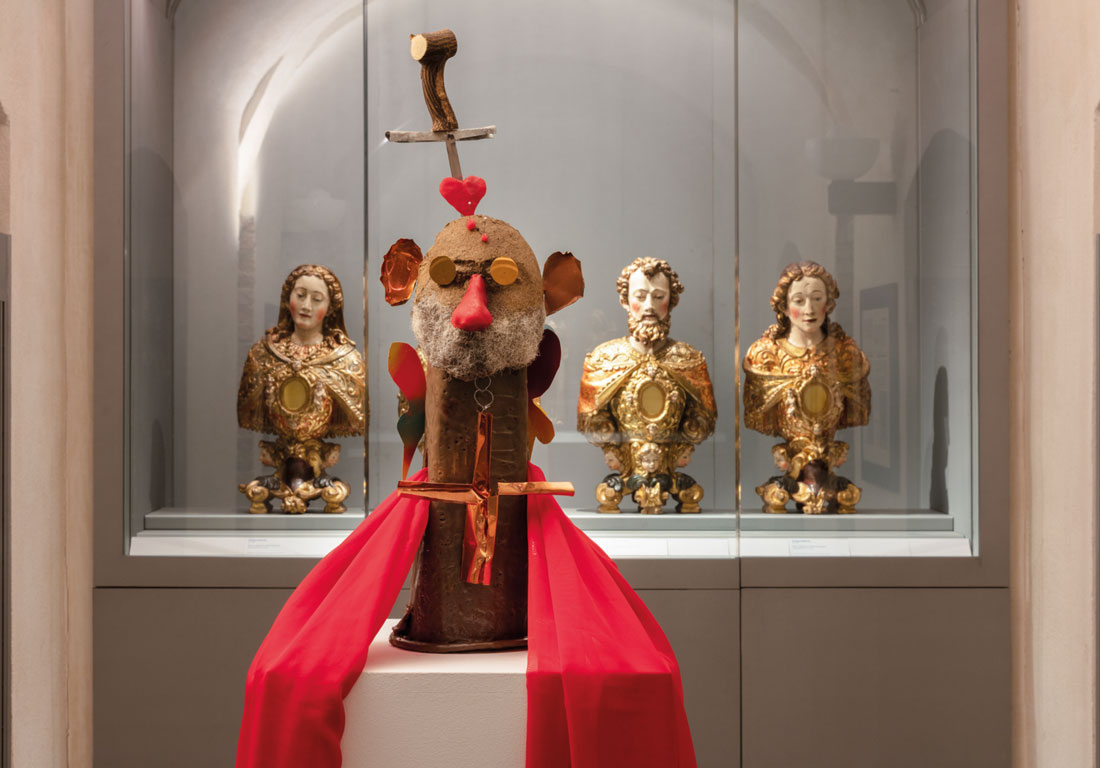
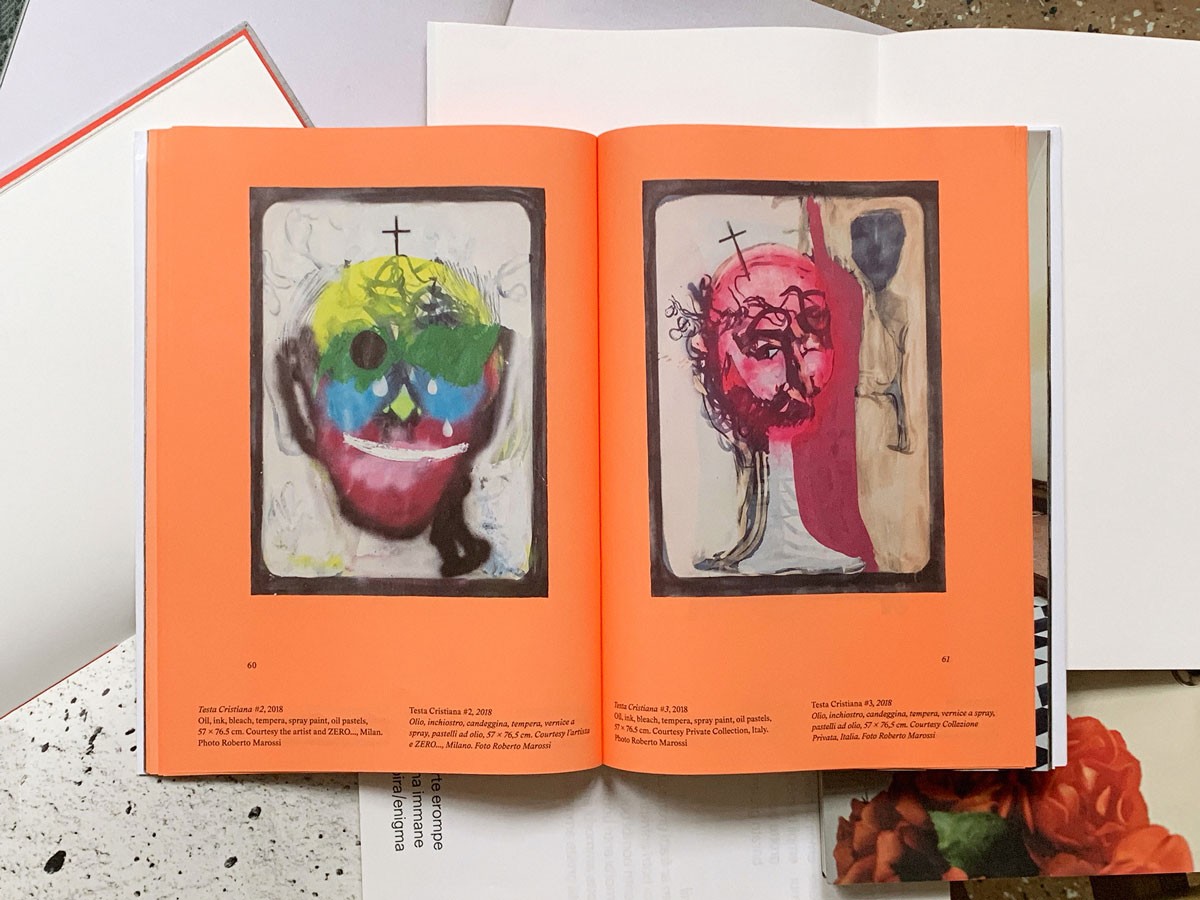
Alessandro Pessoli (Cervia, Italy, 1963) lives and works in Los Angeles. His practice is typically multimedia in nature, focusing on drawing, painting and sculpture, while also favoring ceramic. Often underscored by themes spanning politics, religion, history, culture, and identity, his research recalls the theme of the sacred and the religious, emerging both from the resumption of historical figures, classical art-historical iconography, and everyday images which intermingle in a reconstruction of reality that is dreamlike, painful, and sometimes grotesque, but never lacking instinctive emotion.
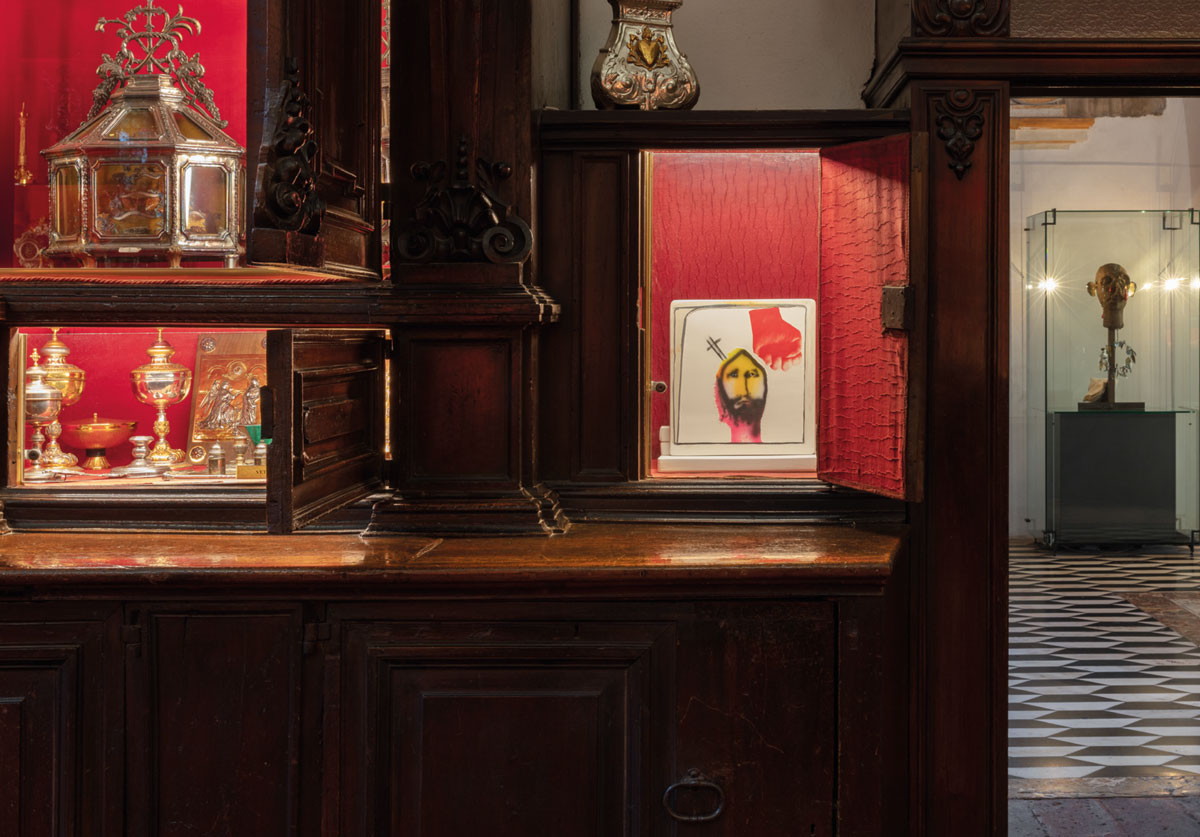
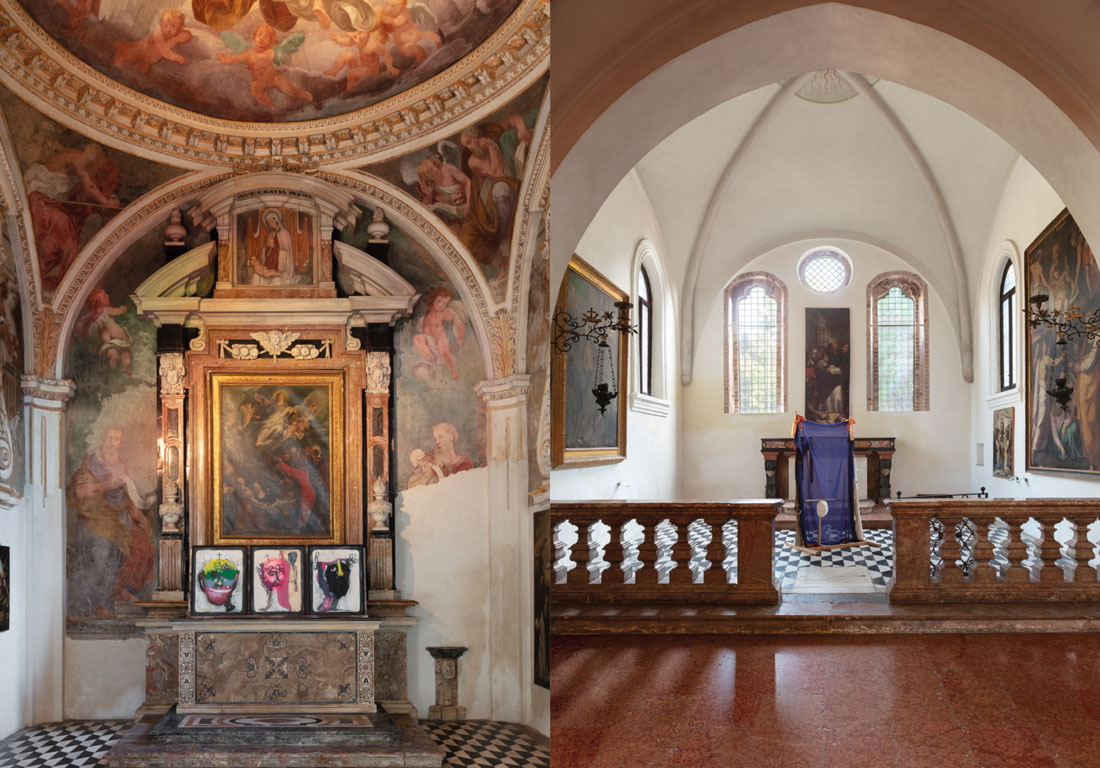
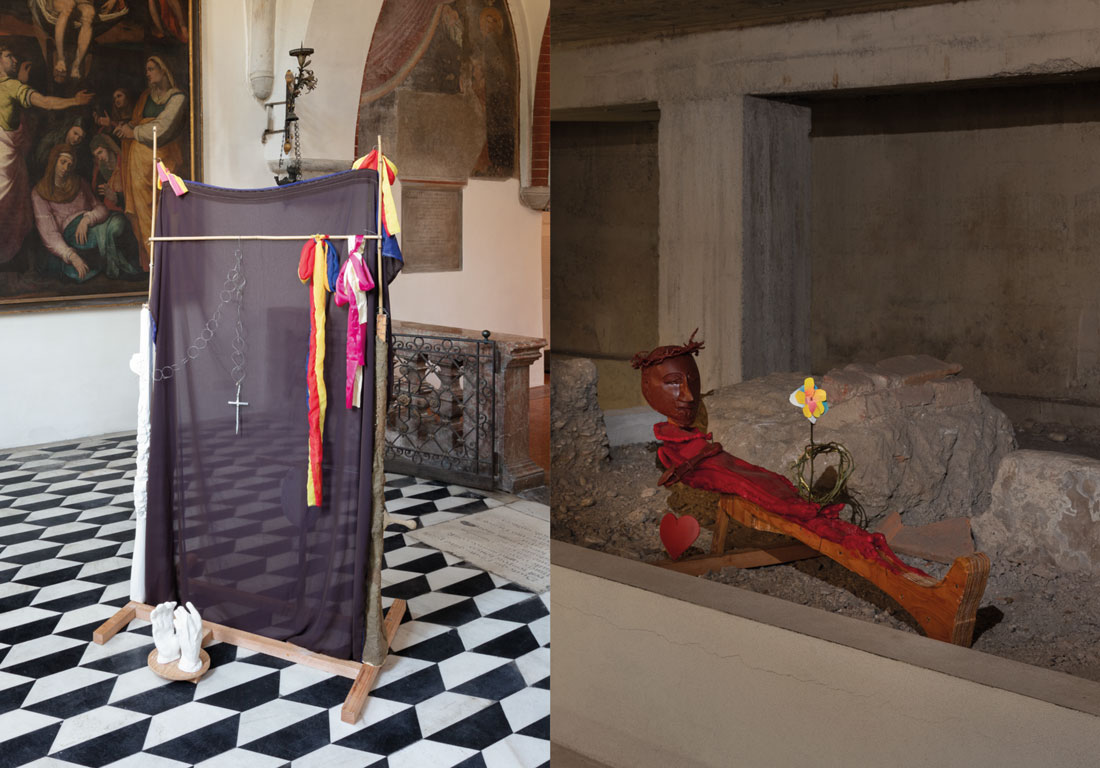
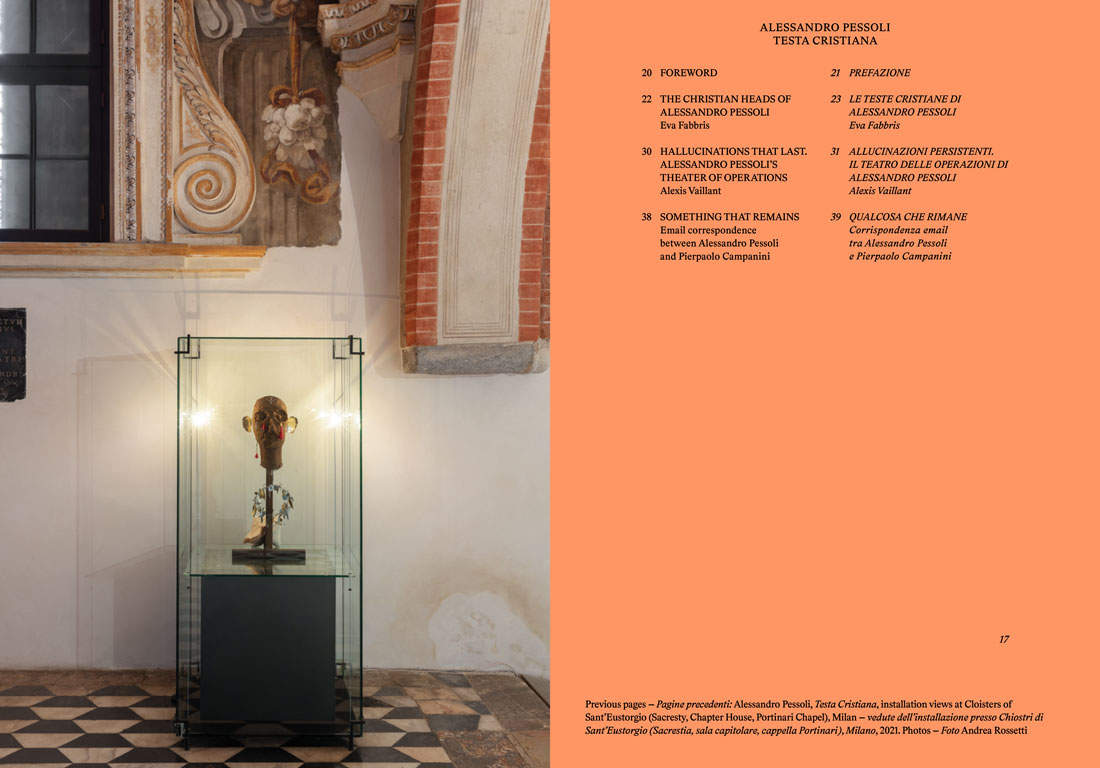
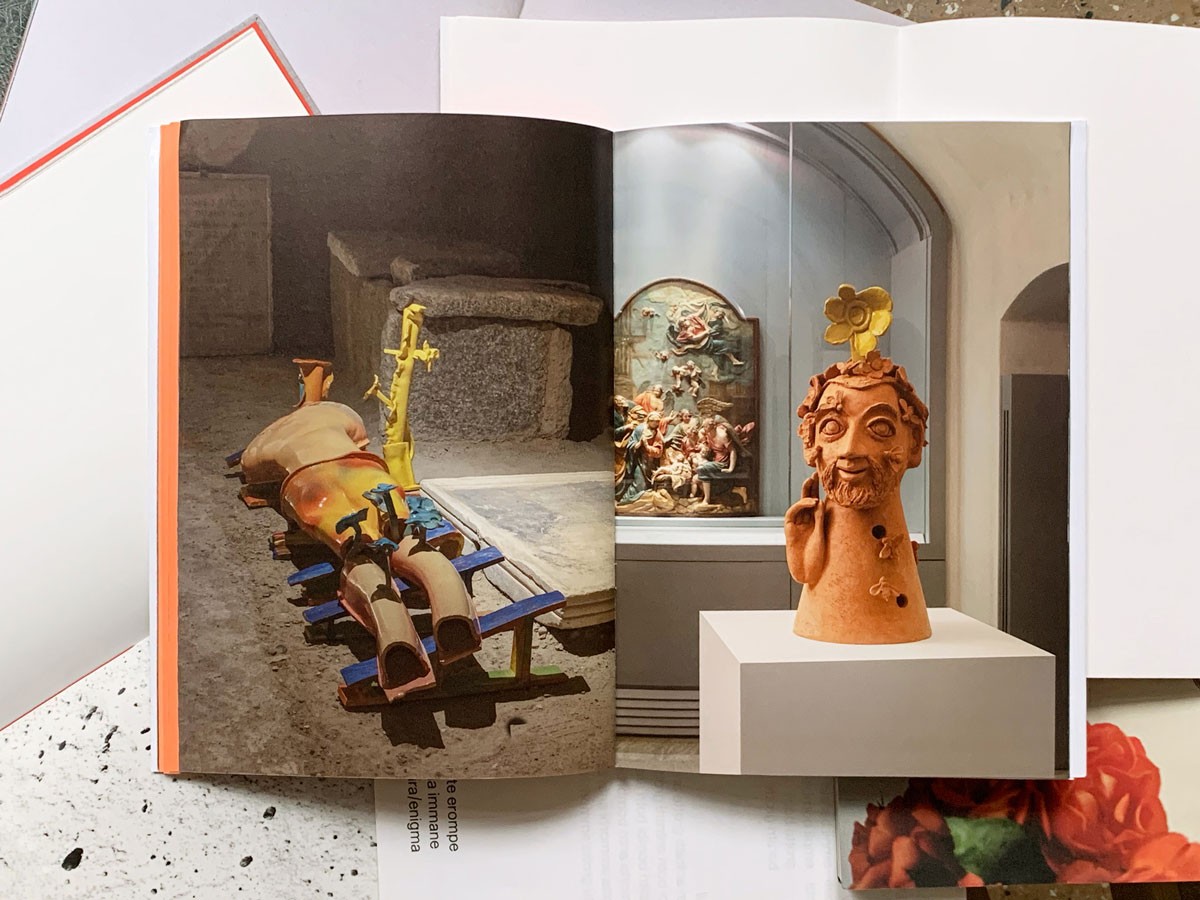
The publication Testa Cristiana is the outcome of the project of the same name specifically conceived by the artist for the spaces of the Cloisters of Sant’Eustorgio and the Carlo Maria Martini Diocesan Museum in Milan, where all these issues are traceable in existing works and new productions created for the exhibition. Offering an intimate path that conveys Pessoli’s idea of sacredness, the show is a site-specific dialogue with the architecture and the relics preserved in the building, reflecting his conception of the sacred as confronted with contemporary life, which demands us to coexist with pain and uncertainty.
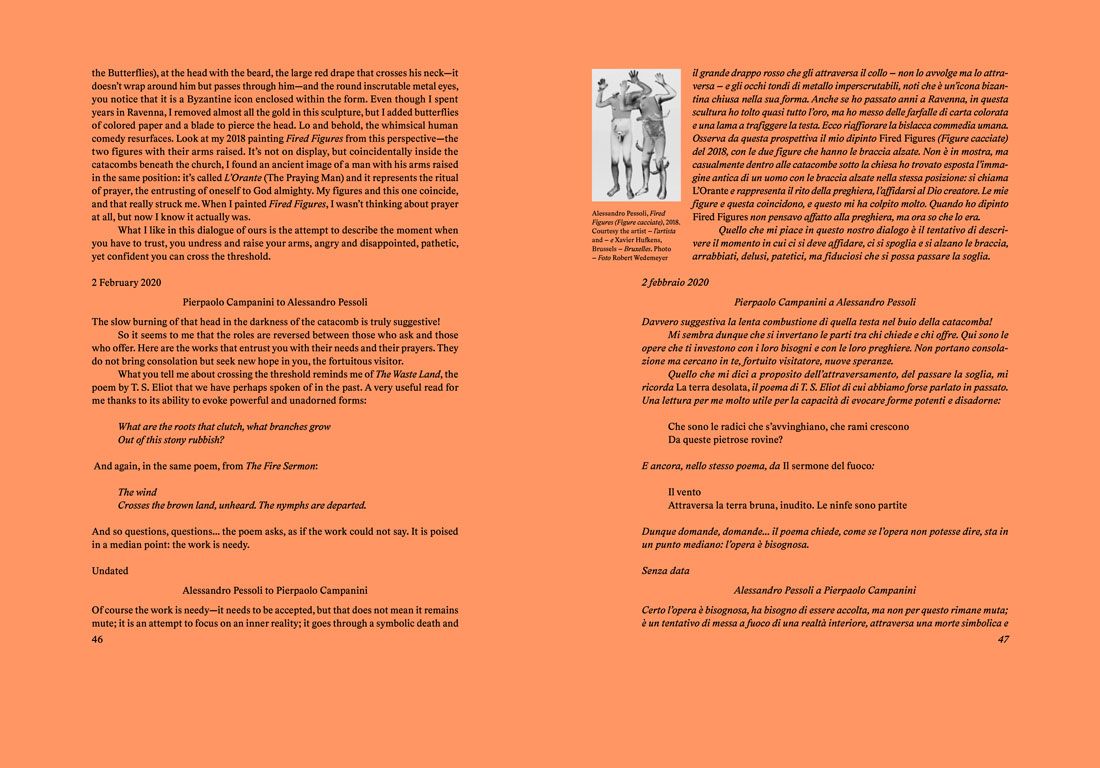
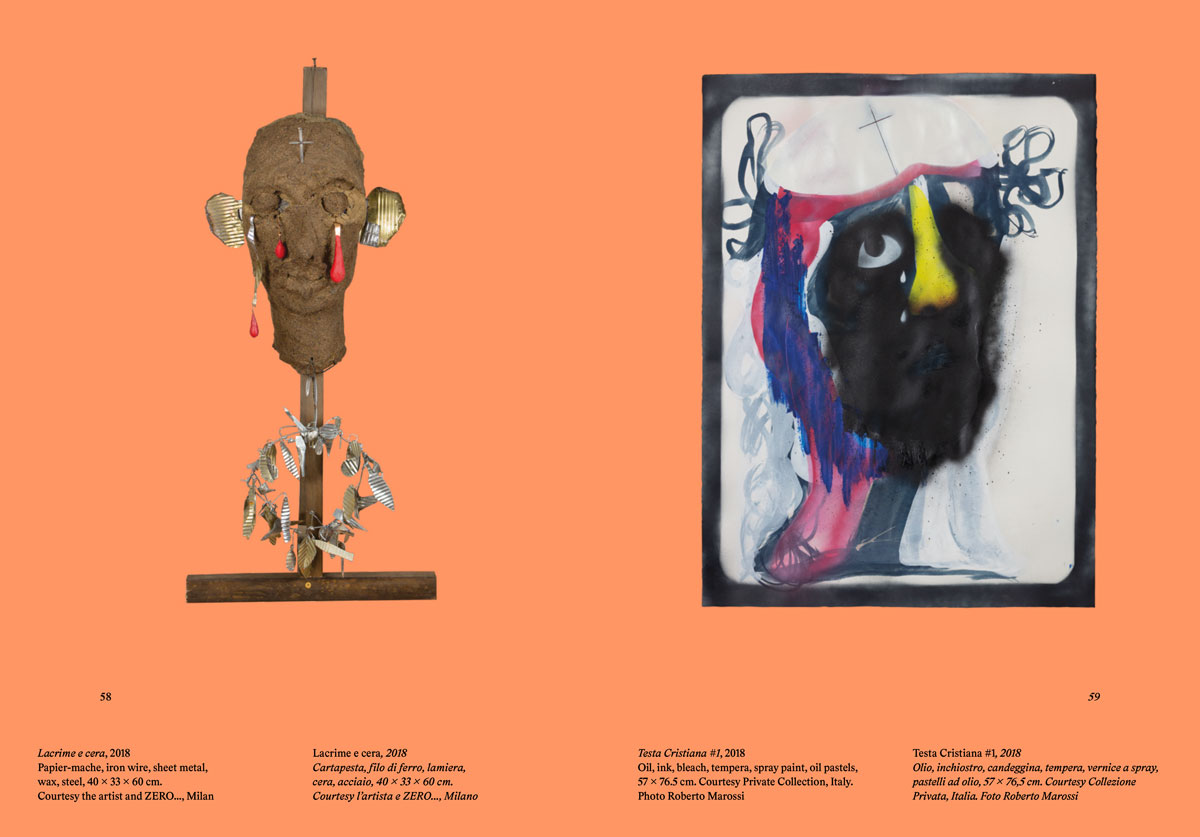
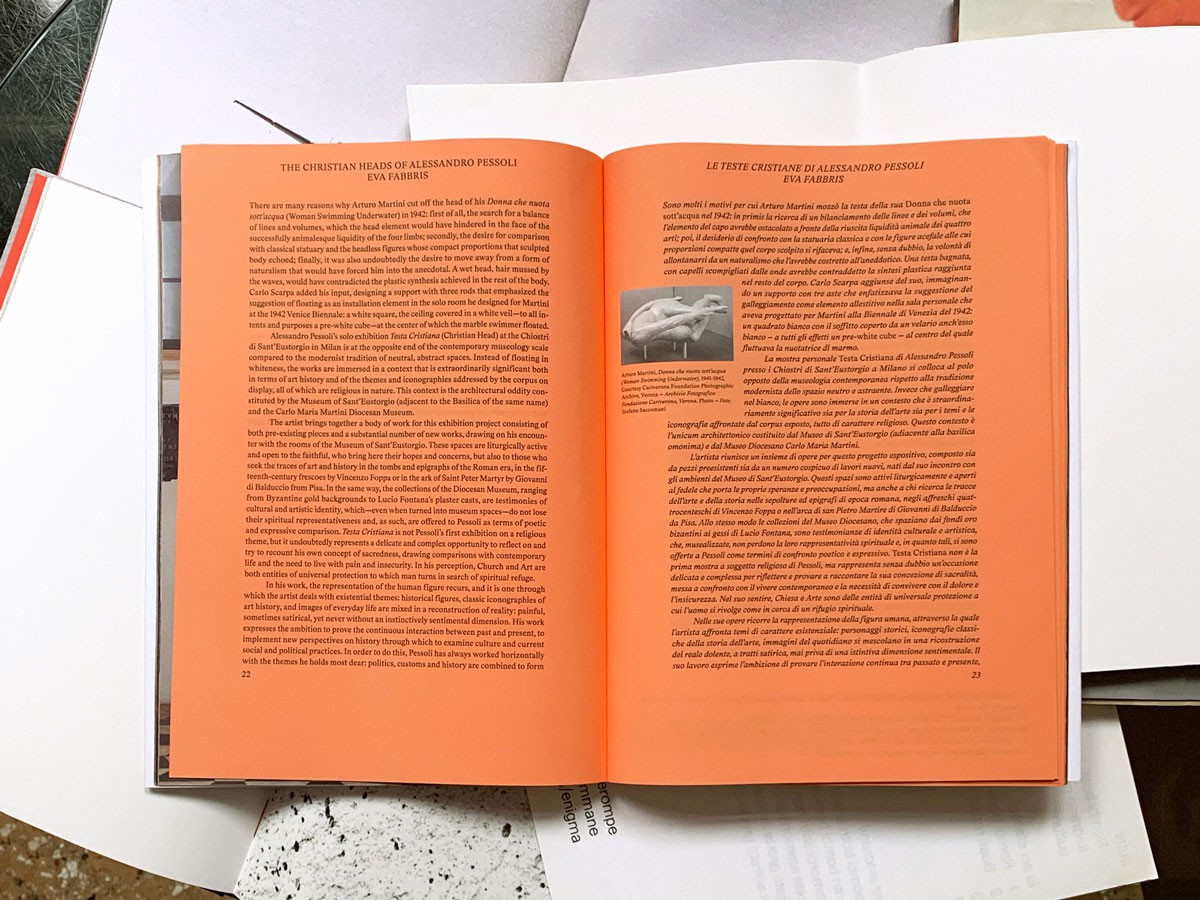
The volume aims to articulate this approach through a rich selection of installation views and a dedicated section where the exhibited works are graphically treated as “icons.” It features a text by writer and curator Alexis Vaillant on Pessoli’s oeuvre, with a particular focus on his chimeric figurative vocabulary, and an essay by curator Eva Fabbris, investigating the sense of the sacred through the artist’s practice. In addition, a conversation between Alessandro Pessoli and the Italian artist Pierpaolo Campanini reflects on the possible degree of spirituality in their artistic research.
Ph: Lorenzo Mason Studio
The editor
Eva Fabbris is Exhibition Curator at Fondazione Prada, and also active as an independent curator and art historian. She has curated exhibitions at Fondazione Pomodoro in Milan, Nouveau Musée National de Monaco, Triennale di Milano, Fondazione Morra in Naples. As a writer, she is a contributor for international exhibition catalogs, publications, and magazines.