For years now, the Die Vier von der Tankstelle (Four from the Gas Station) have been roaming across an area stretching out to the south of the Baltic Sea. They prowl their way through sparsely populated areas, wantonly terrorizing the inhabitants. The 2026 calendar by Jos de Gruyter and Harald Thys bears witness to their presence.
The first monograph dedicated to Lorenza Longhi, published with the Kunst Museum Winterthur, adopts a format associated with prototypes, manuals, or working documents. Its irregularities reflect Longhi’s ongoing examination of value, functionality, and the aesthetics of the everyday.
This publication is an extensive monograph devoted to the work of Carlos Bunga, published in conjunction with his eponymous show at CAM – Gulbenkian. In addition to a number of essays, which offer an in-depth look at his multifaceted practice, the book contains previously unpublished photos that reveal his working process.
The paintings and drawings by Jake Grewal draw the viewer in through stillness and ambiguity: they invite reflection on how we inhabit places—physically and emotionally—and how our inner landscapes mirror the physical world. This is the Grewal’s first book, published to accompany the artist’s exhibition at Studio Voltaire.
The transformation of the notion of monuments and the way cultural institutions choose to deal with it find in Maurizio Cattelan an interpreter capable of manipulating historical memory and shared symbols, to the point of turning them into a terrain of doubt and play. Lisa Parola and Lorenzo Giusti investigate the potential of contemporary art within the public sphere.
This is a visual archive of 12 years of developing, designing and exhibiting the House of One, a multireligious sacred space in the heart of Berlin. The architecture, conceived by Kuehn Malvezzi, has been displayed at various venues while being developed in close collaboration with three local religious communities in Berlin since 2012.
Edited by Eva Fabbris with Giovanna Manzotti
Texts by Eva Fabbris, Alexis Vaillant and a conversation between Alessandro Pessoli and Pierpaolo Campanini. Designed by Lorenzo Mason Studio
2021, English / Italian, softcover. 24 x 33.5 cm, 88 pages
ISBN 979-12-80579-06-5
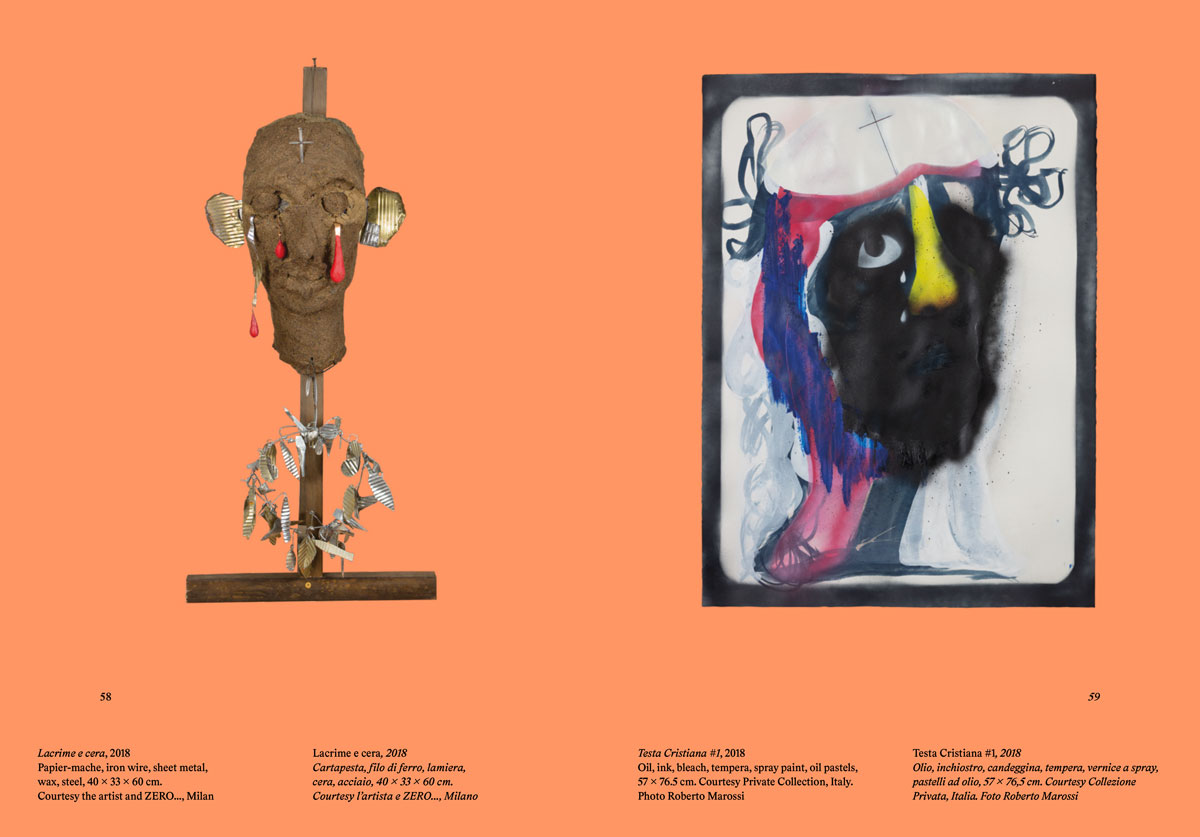
“In general, my whole work is a movement from the inside to the outside and vice versa; past and present, personal and collective are fluctuating entities; the work becomes an intermediate place where a transformation of the tragic sense of the world, of its conflict and violence, is taking place.” (Alessandro Pessoli, from a conversation with Pierpaolo Campanini)
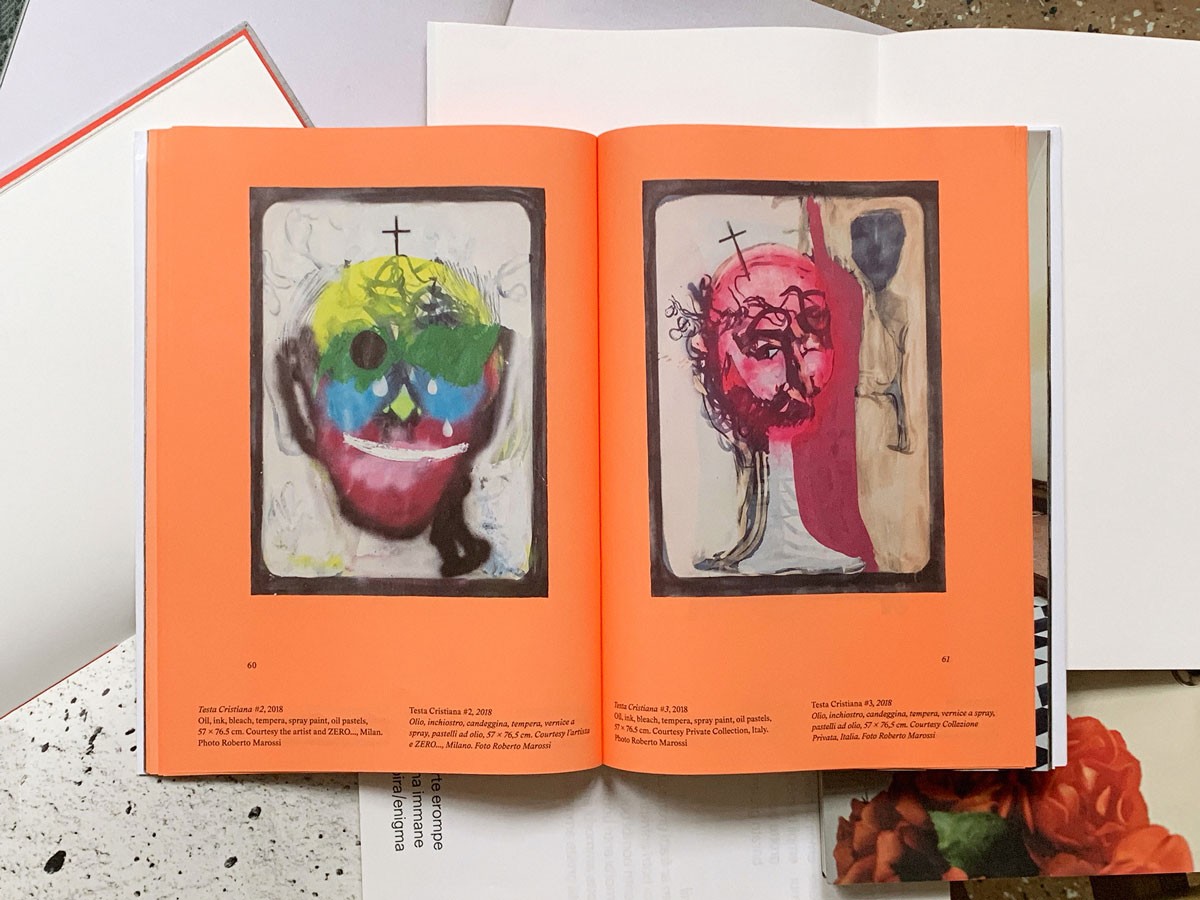
Alessandro Pessoli (Cervia, Italy, 1963) lives and works in Los Angeles. His practice is typically multimedia in nature, focusing on drawing, painting and sculpture, while also favoring ceramic. Often underscored by themes spanning politics, religion, history, culture, and identity, his research recalls the theme of the sacred and the religious, emerging both from the resumption of historical figures, classical art-historical iconography, and everyday images which intermingle in a reconstruction of reality that is dreamlike, painful, and sometimes grotesque, but never lacking instinctive emotion.
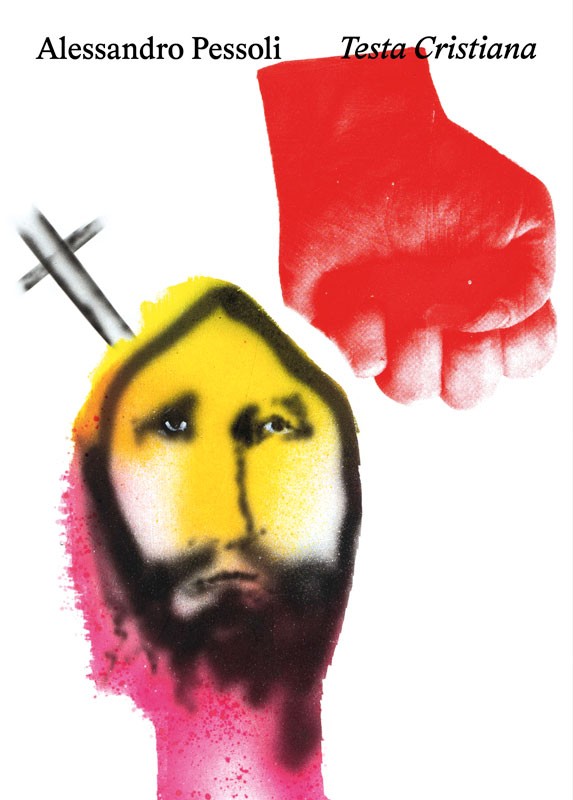
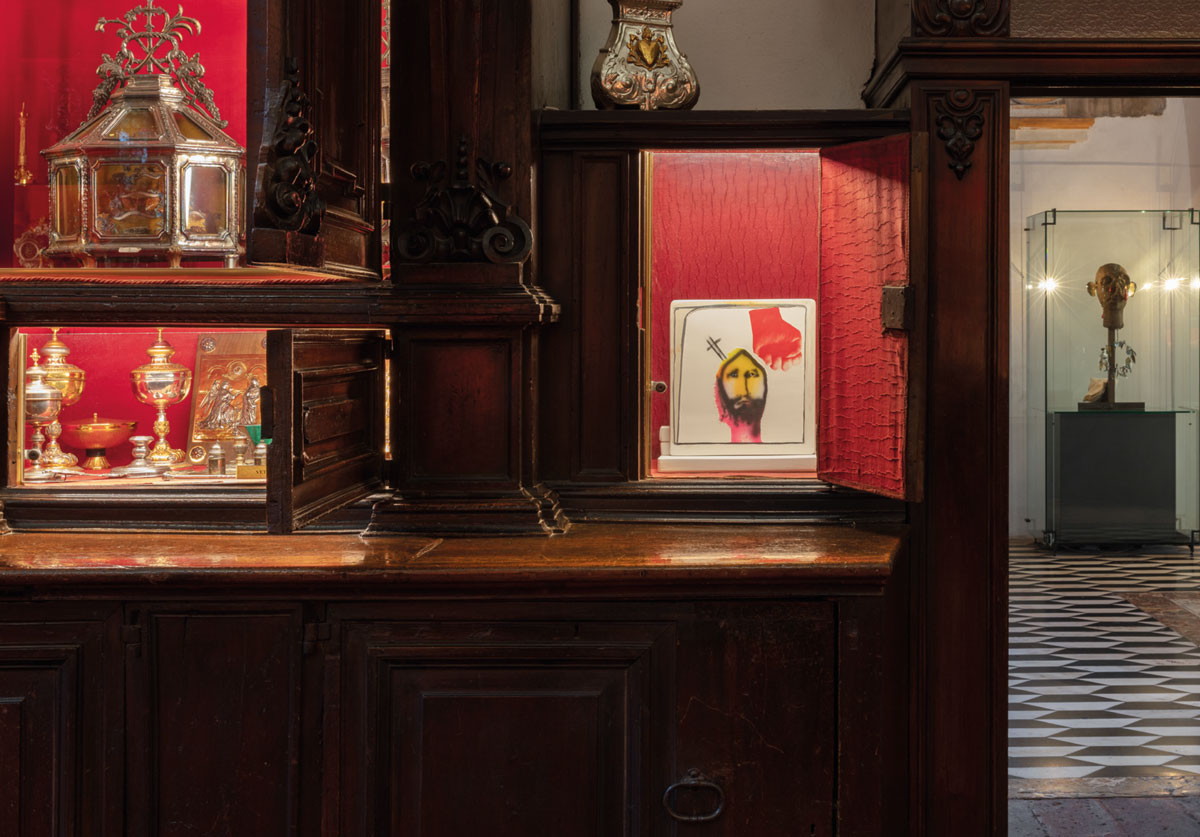
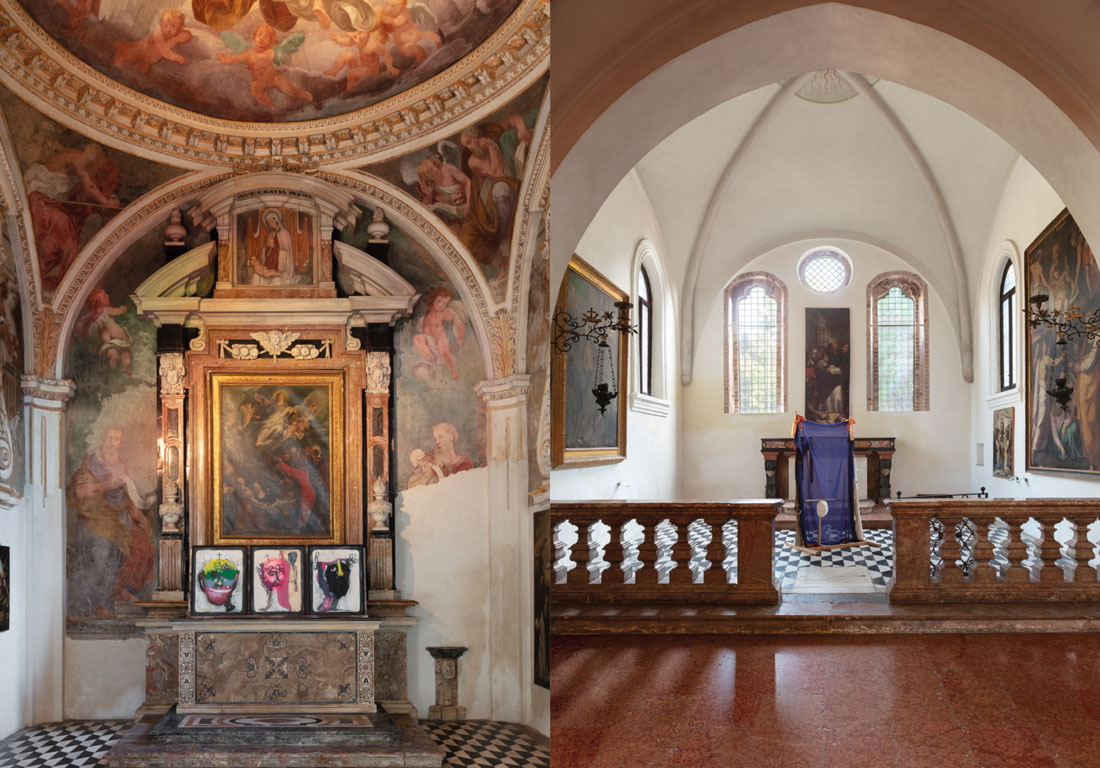
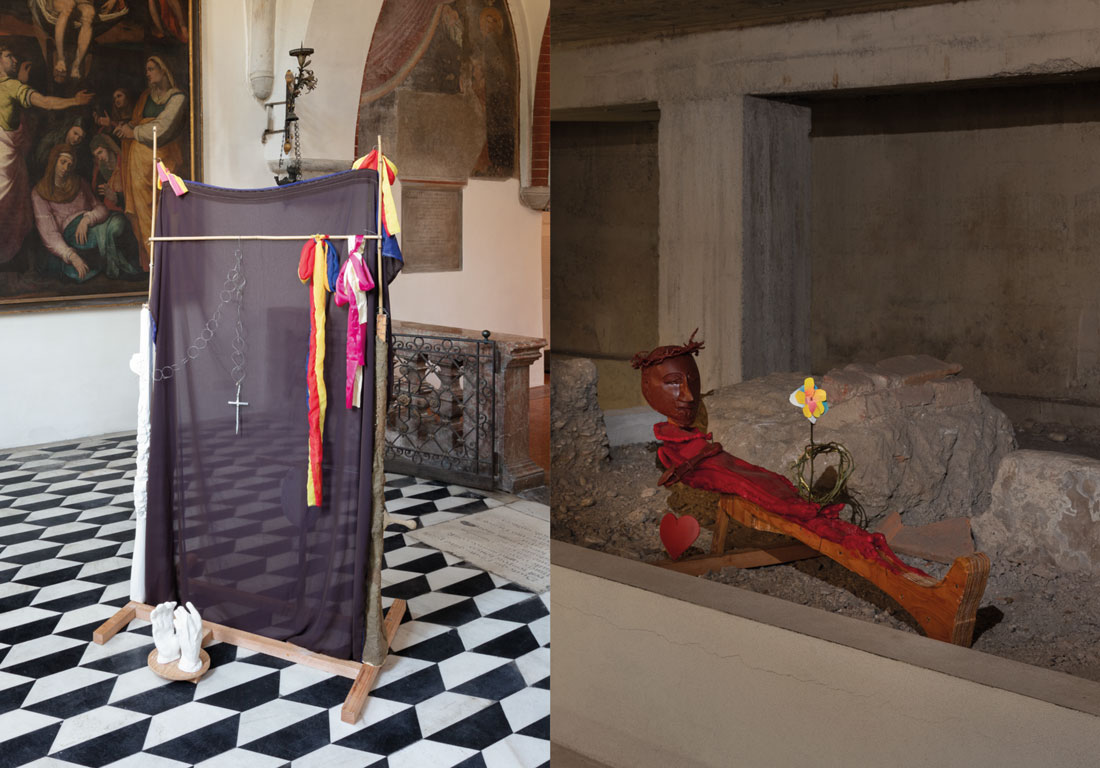
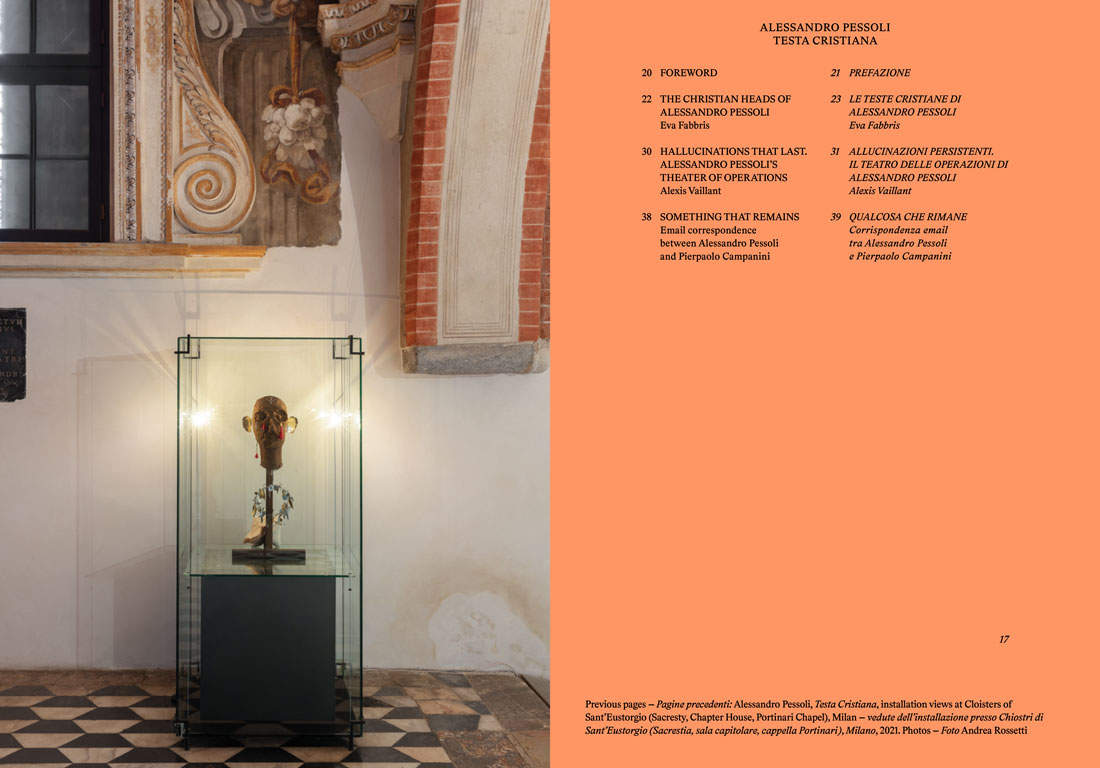
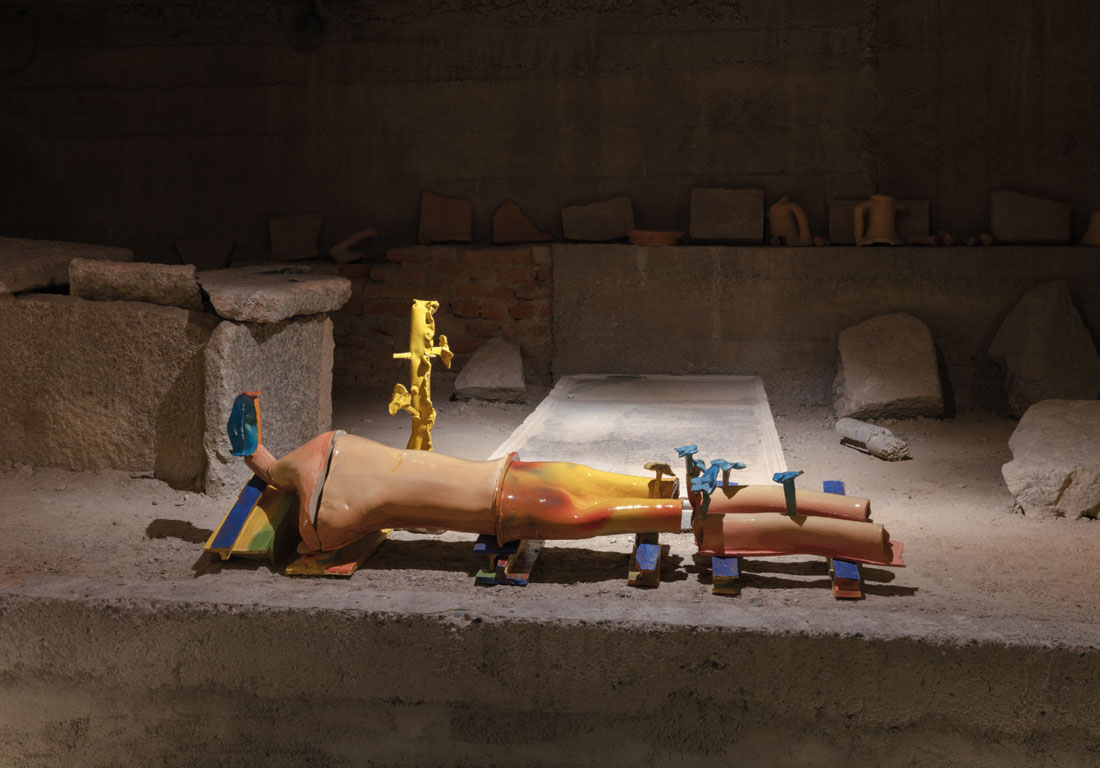
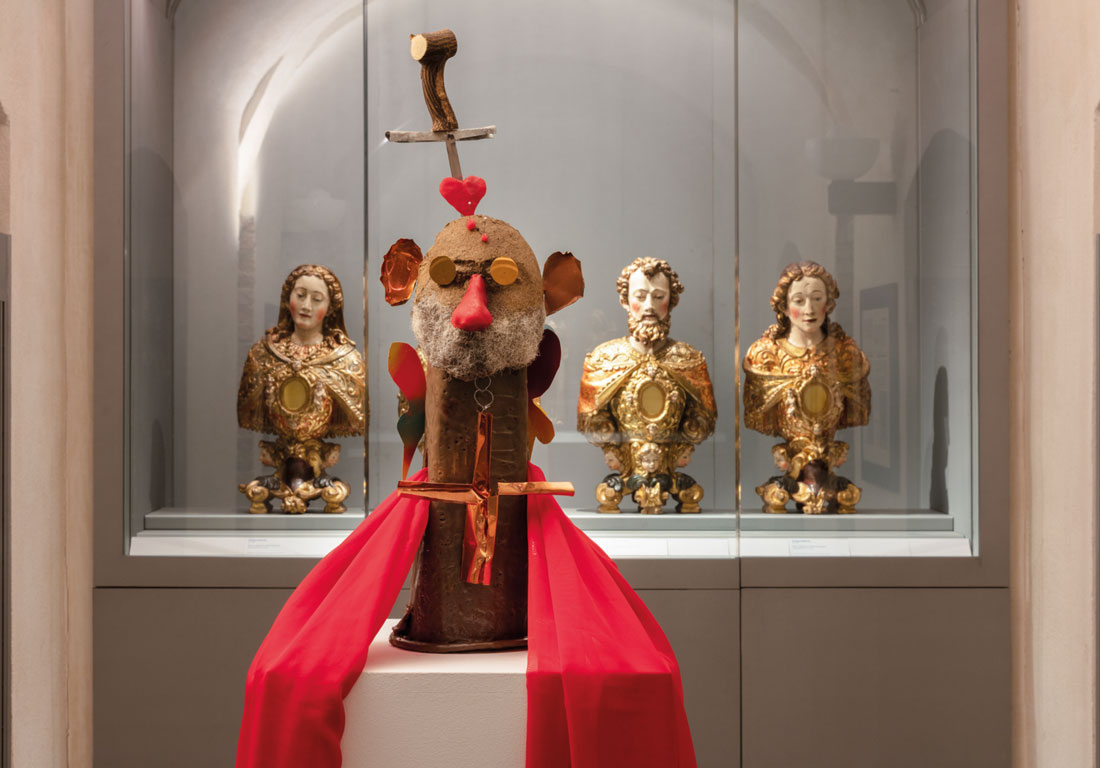
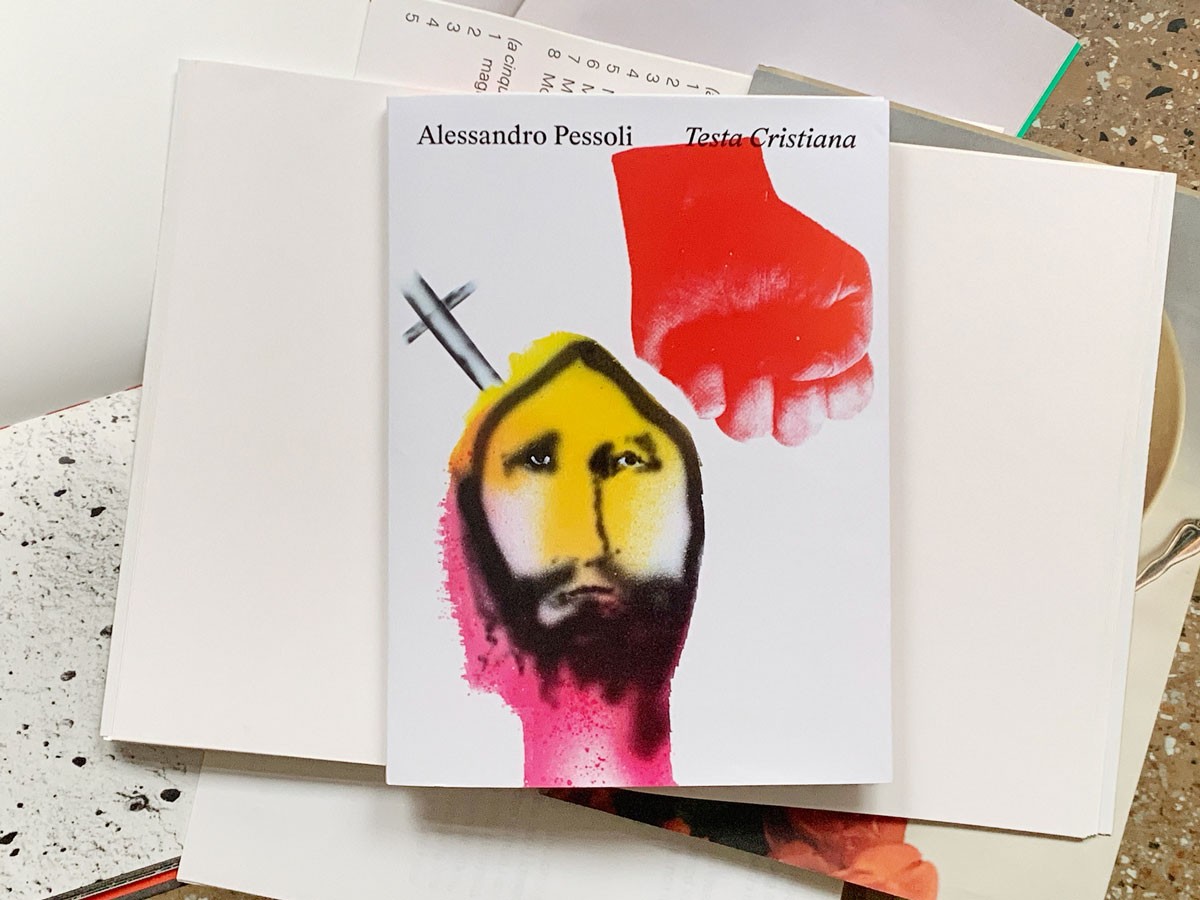
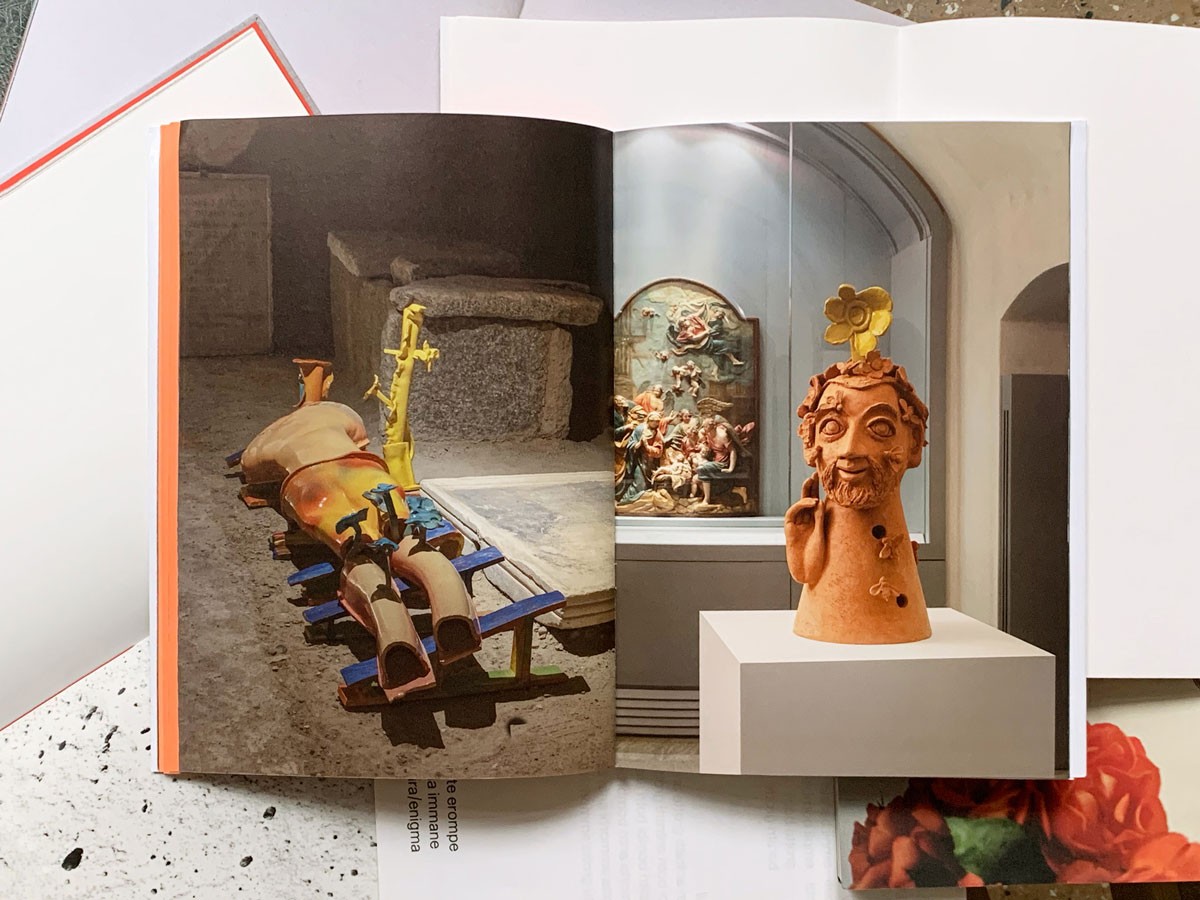
The publication Testa Cristiana is the outcome of the project of the same name specifically conceived by the artist for the spaces of the Cloisters of Sant’Eustorgio and the Carlo Maria Martini Diocesan Museum in Milan, where all these issues are traceable in existing works and new productions created for the exhibition. Offering an intimate path that conveys Pessoli’s idea of sacredness, the show is a site-specific dialogue with the architecture and the relics preserved in the building, reflecting his conception of the sacred as confronted with contemporary life, which demands us to coexist with pain and uncertainty.
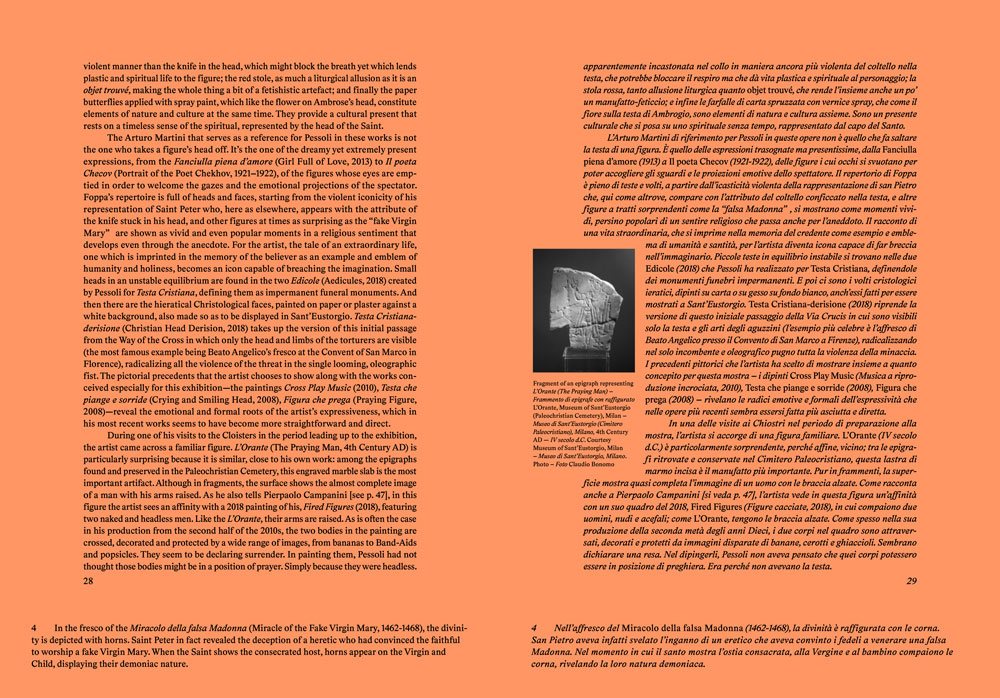
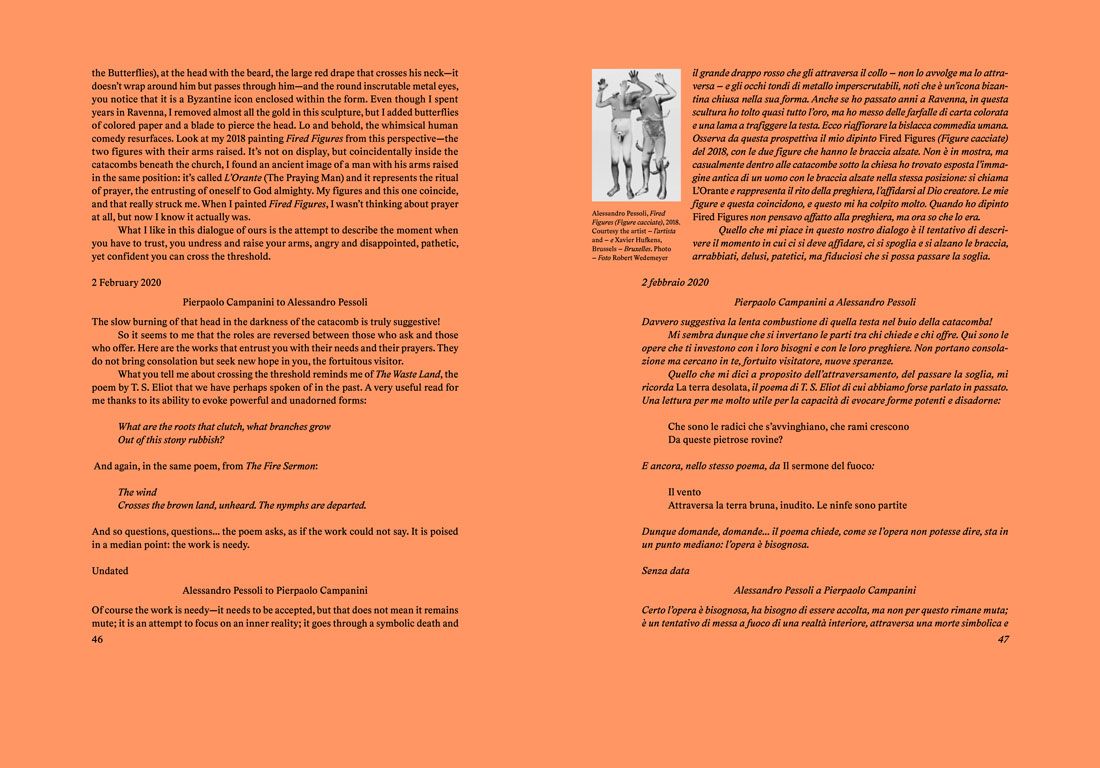
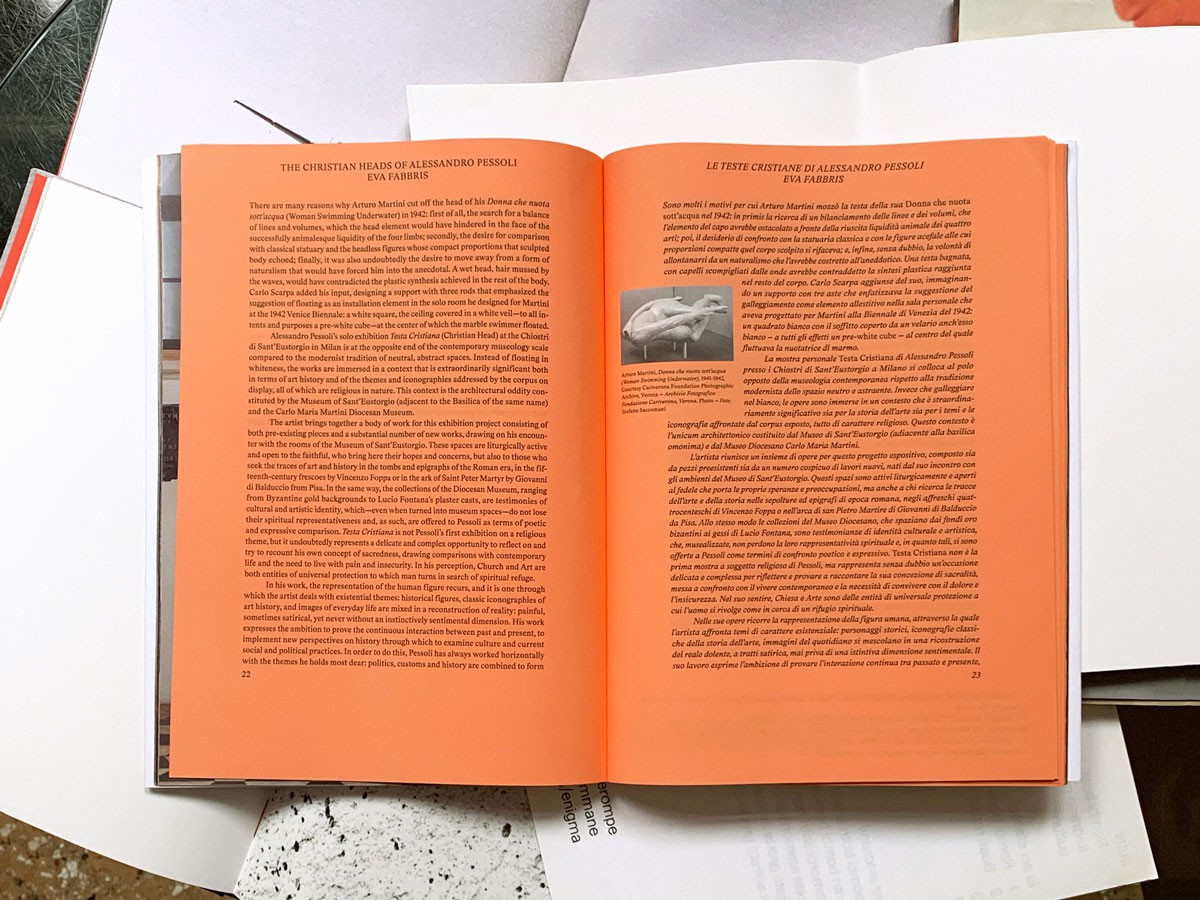
The volume aims to articulate this approach through a rich selection of installation views and a dedicated section where the exhibited works are graphically treated as “icons.” It features a text by writer and curator Alexis Vaillant on Pessoli’s oeuvre, with a particular focus on his chimeric figurative vocabulary, and an essay by curator Eva Fabbris, investigating the sense of the sacred through the artist’s practice. In addition, a conversation between Alessandro Pessoli and the Italian artist Pierpaolo Campanini reflects on the possible degree of spirituality in their artistic research.
Ph: Lorenzo Mason Studio
The editor
Eva Fabbris is Exhibition Curator at Fondazione Prada, and also active as an independent curator and art historian. She has curated exhibitions at Fondazione Pomodoro in Milan, Nouveau Musée National de Monaco, Triennale di Milano, Fondazione Morra in Naples. As a writer, she is a contributor for international exhibition catalogs, publications, and magazines.