Full Rotation brings together texts and images to trace the forces that draw bodies beyond themselves. Moving between ecstasy, animal life, and light, the book explores heightened sensation, altered perception, and dissolution, where the human gives way to other forms of existence and boundaries between the physical, psychic, and cosmic begin to blur.
This is the first monograph on the influential American choreographer and dancer Trajal Harrell. In an entertaining, far-reaching conversation with curator Daniel Baumann, Harrell covers all of his choreographies and performances, as well as his influences, successes, and failures, addressing how he transforms and transgresses the history of dance.
Maxiprocesso brings together 360 photographs by Maria D. Rapicavoli, one for each of the archival folders documenting the largest mafia trial in history, held in Palermo from 1986 to 1987. The volume explores the relationship between memory, justice, and social responsibility, examining the material element of a landmark event in contemporary Italian history.
This book offers the first comprehensive overview of Anna Franceschini’s practice. Organized around recurring themes, it explores animation, the body, machines, ghosts, desire, and windows through commissioned contributions and selected writings. Its associative structure reflects her interest in repetition, transformation, and unstable images.
This book accompanies 5 Works, Lydia Ourahmane’s first institutional solo show in Italy, staged at the Nicoletta Fiorucci Foundation in Venice and curated by Polly Staple, during the 61st Venice Biennale, and includes newly commissioned texts and images that further contextualize the artist’s practice and work.
Museums of Tears extends Francesco Vezzoli’s 2024 exhibition at Museo Correr, Venice, combining historical works and new commissions to explore antiquity, emotion and illusion. Conceived as an artist’s book rather than a catalogue, it transforms the museum guide into a hybrid archive and portable museum of memory, beauty and mourning.
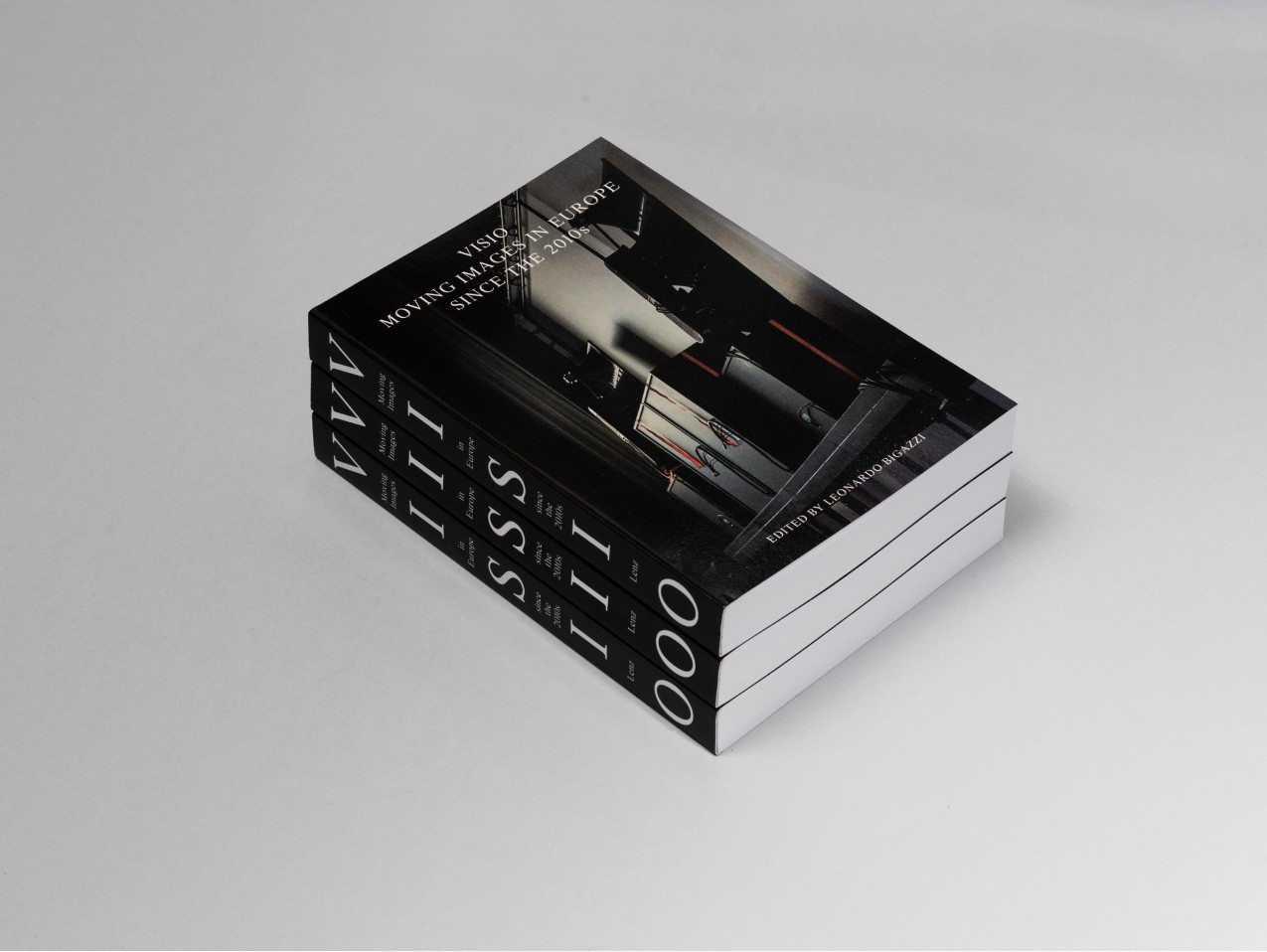
Edited by Leonardo Bigazzi
Texts by Antonia Alampi, Erika Balsom, Andrea Bellini, Leonardo Bigazzi, Federica Bueti, Beatrice Bulgari, Barbara Casavecchia, Sophie Cavoulacos, Manuel Cirauqui, Ilaria Gianni, Hassan Khan, Oliver Laric, Maria Lind, Andrea Lissoni, Philippe-Alain Michaud, Han Nefkens, Emily Pethick, Julian Ross, Aura Satz, Hito Steyerl, Bianca Stoppani, Robert Trafford, Valentine Umansky, Francesco Urbano Ragazzi
Designed by Lorenzo Mason Studio
2024, English, softcover, 17 x 24 cm, 368 pages
ISBN 979-12-80579-57-7
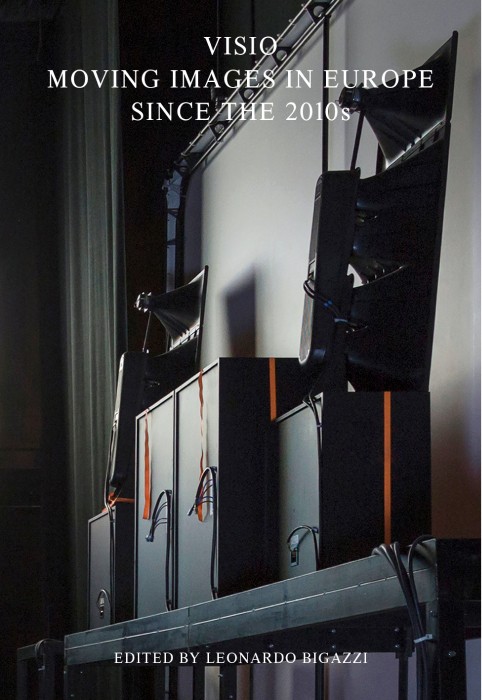
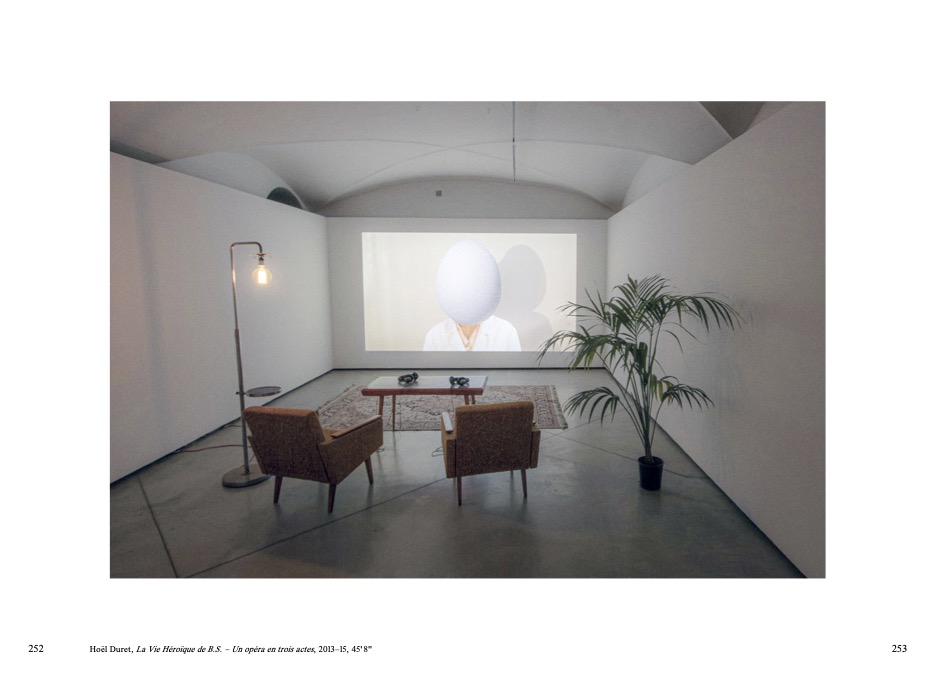
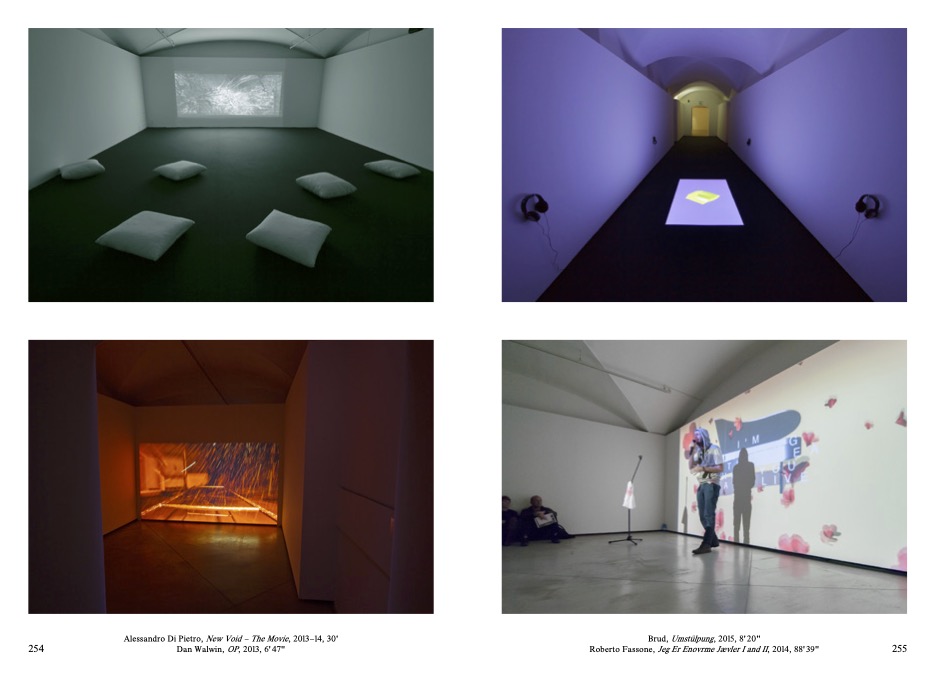
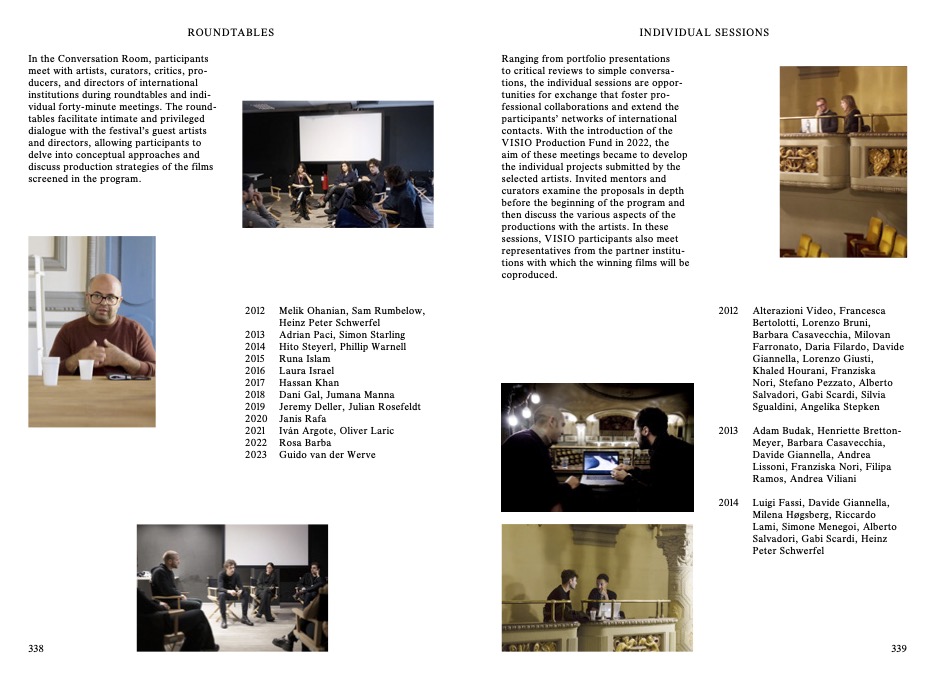
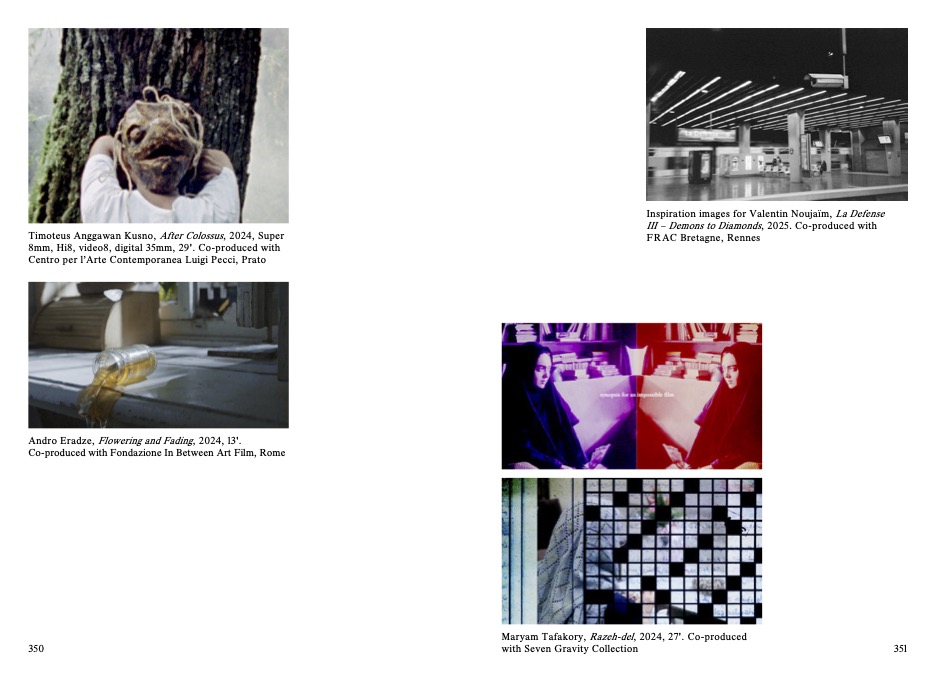
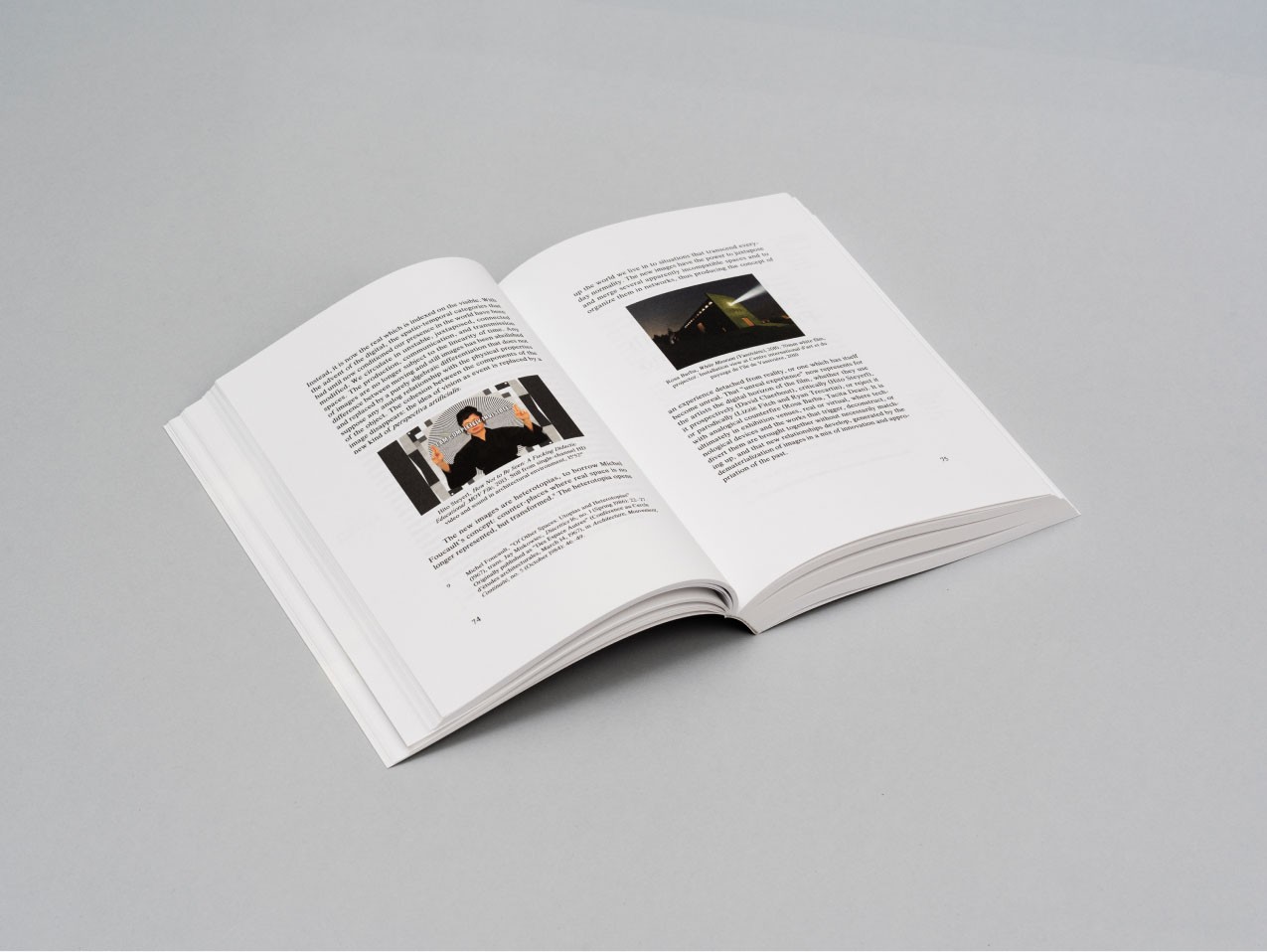
This volume brings together visions, experiences and critical interdisciplinary methodologies that have been instrumental in the development of the language of moving images since 2010. New essays and conversations reflect on radical technological and poetic transformations in the works of the generation of digital native artists, adhering to the shared processes developed during the first twelve editions of VISIO – European Programme on Artists’ Moving Images, a research, production and residency project promoted and organized by Lo schermo dell’arte in Florence.
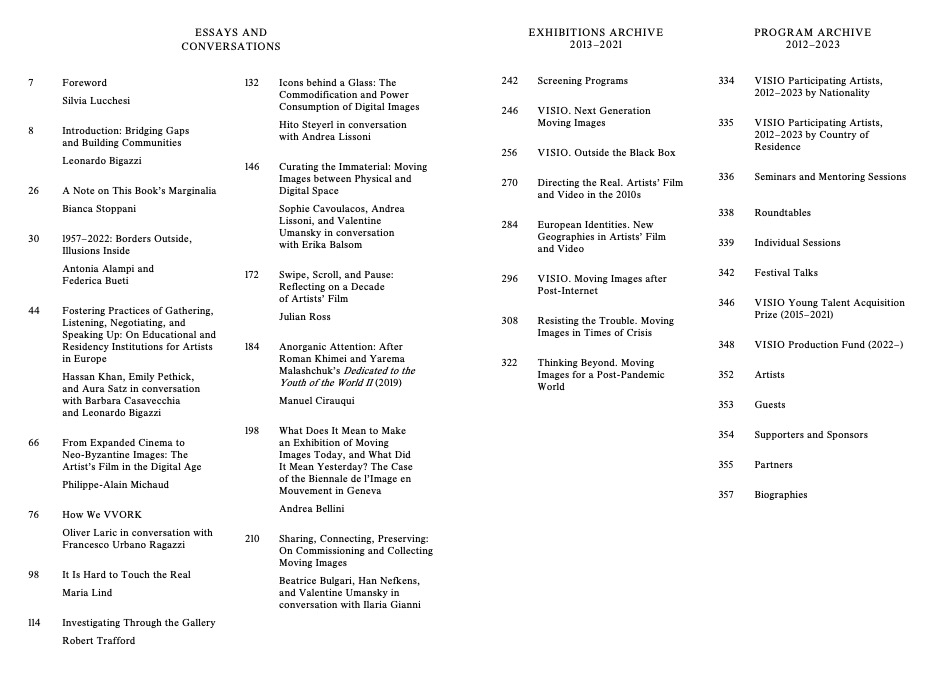
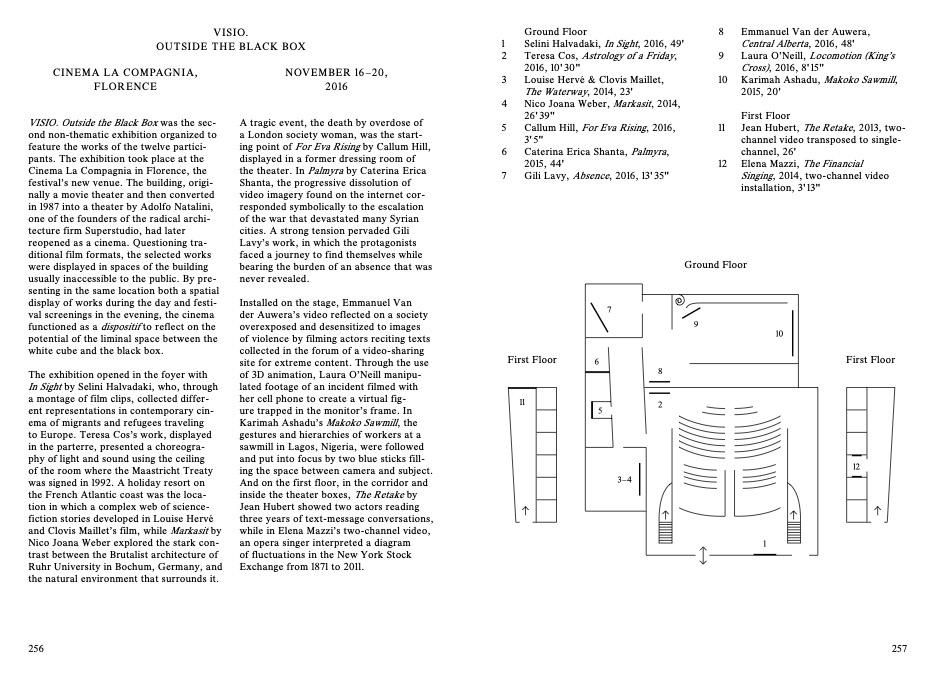
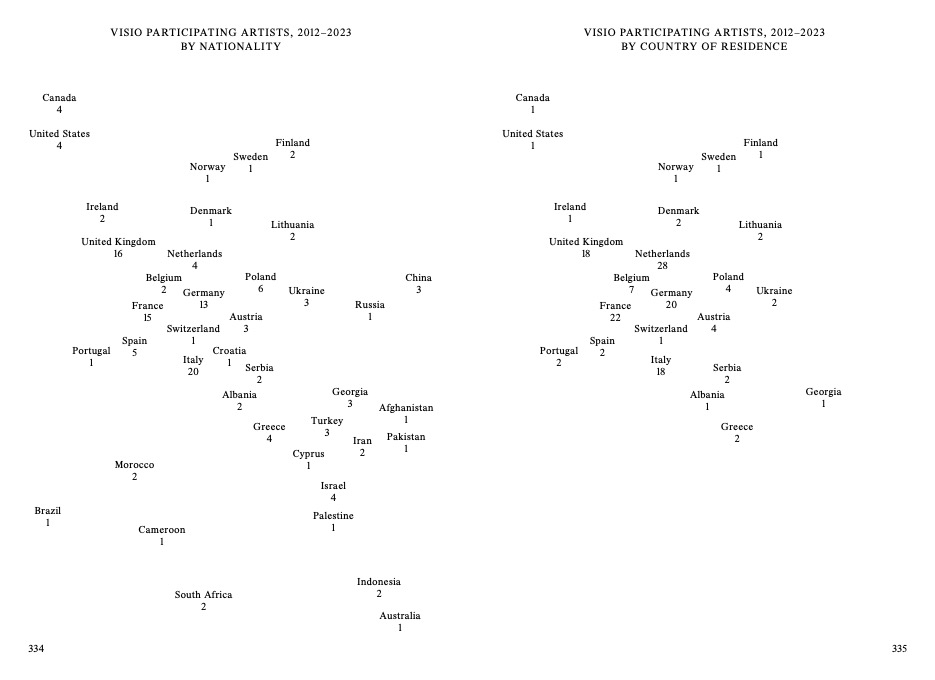
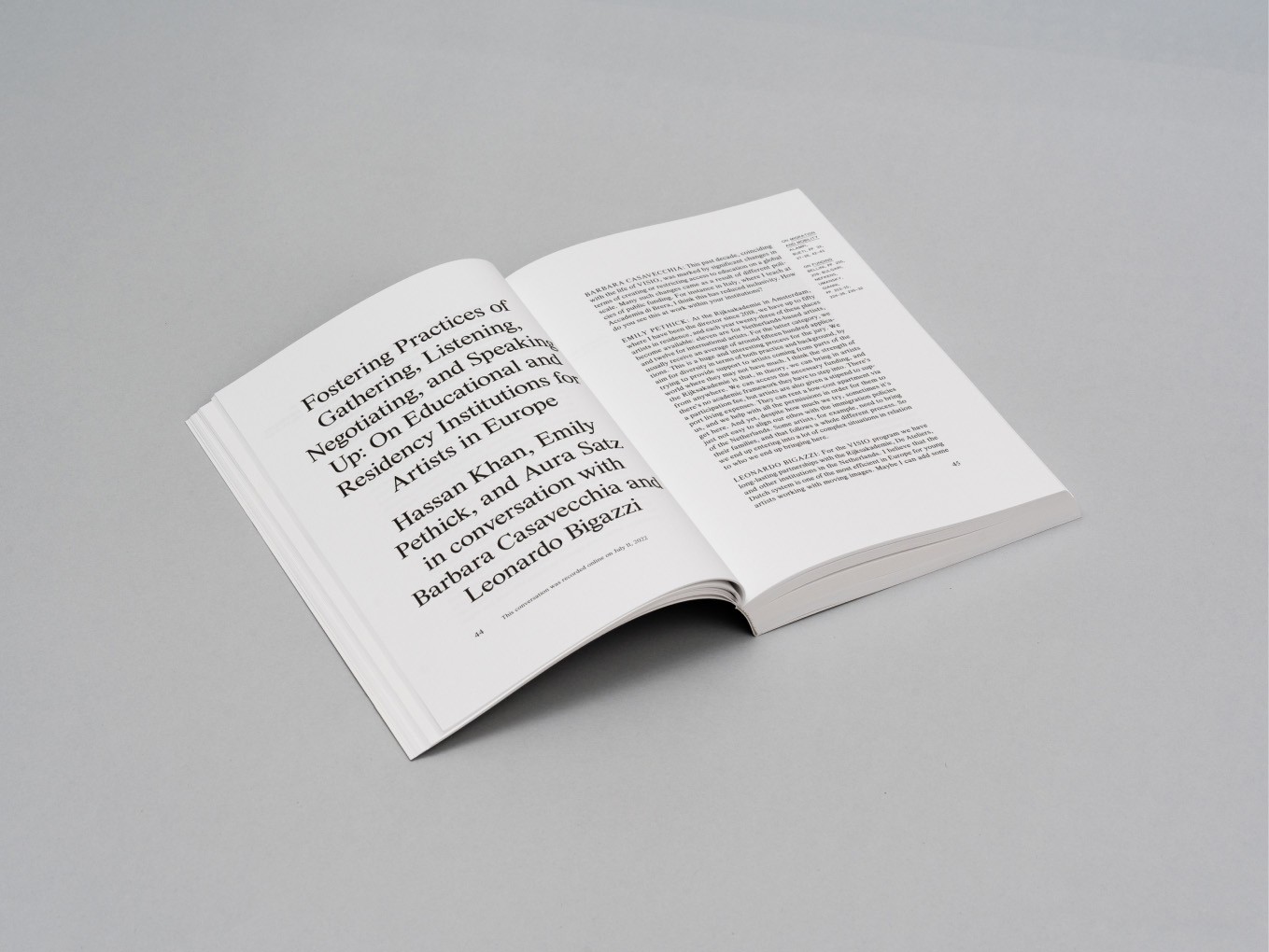
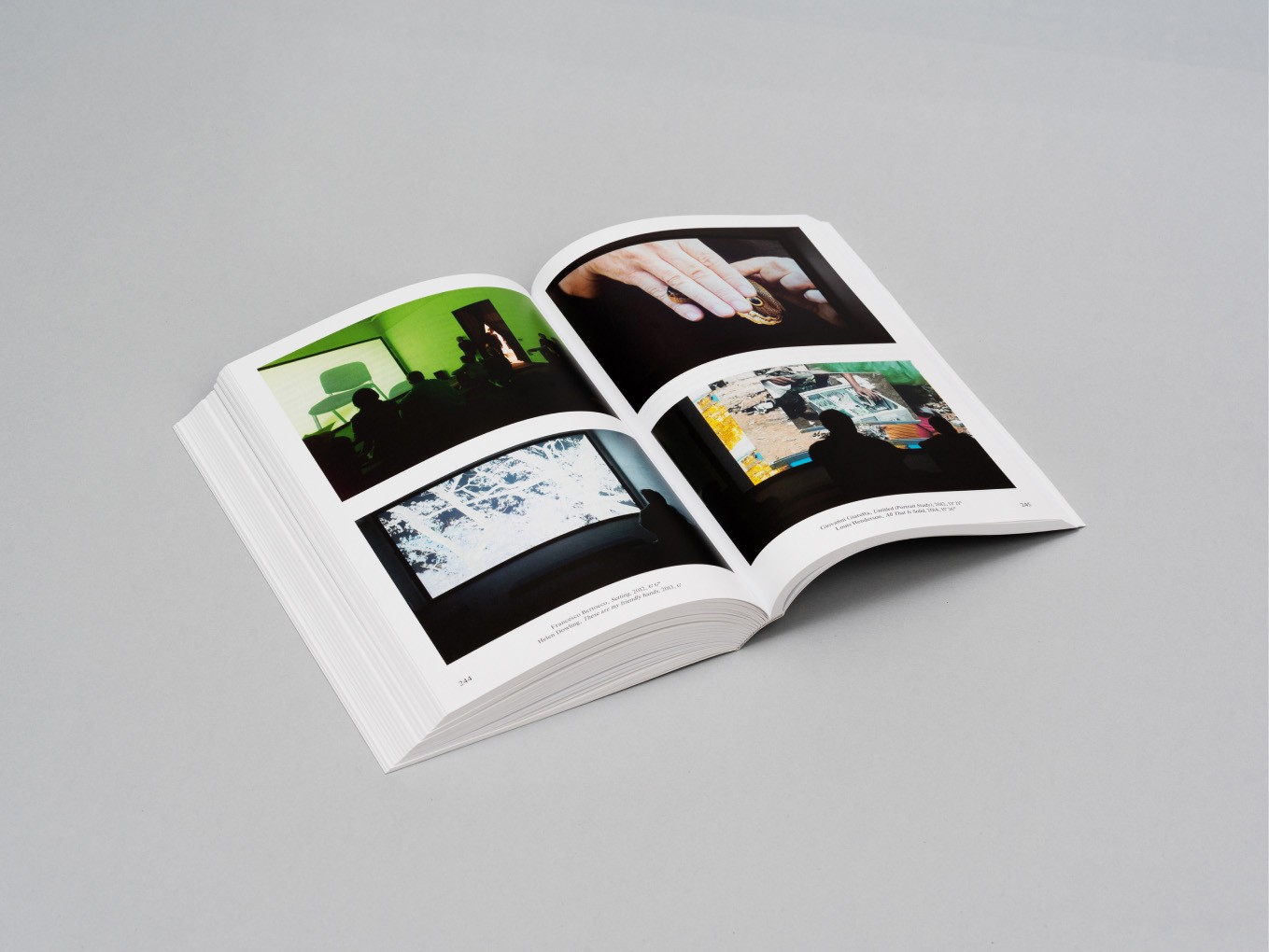
The book features original contributions from twenty-three authors who have participated in the program over the years and is divided into two main sections: the first reflects the theoretical and discursive approach of VISIO by alternating essays and conversations; the second compiles a large archive of the first twelve editions of VISIO.
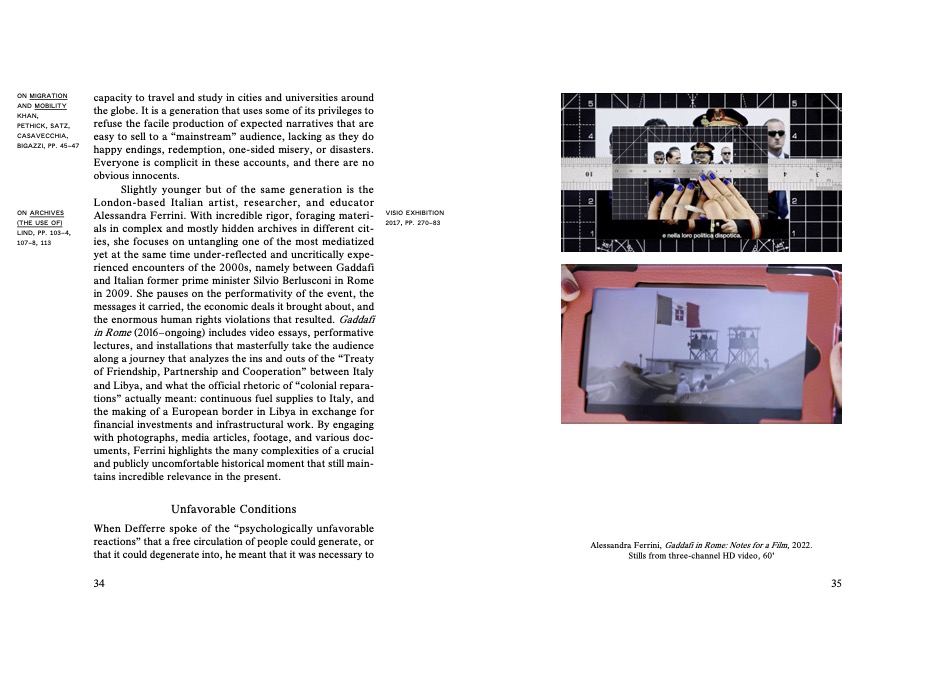
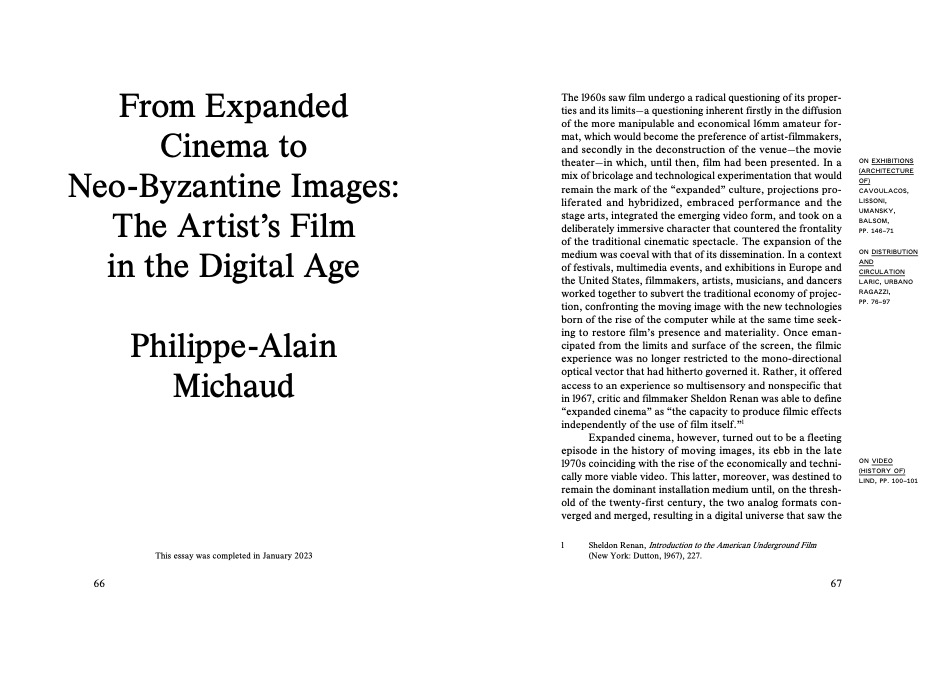
The texts investigate various topics: the questioning of a European identity; the accessibility and role of academic institutions and residences; the evolving significance of images in the digital age; the virtual realm as an exhibition and research space; the impact of documentary practices on contemporary production; the rise of investigative aesthetics and exhibitions as a medium to renegotiate truth; the commodification of digital images and their influence on power consumption; the shifts in curatorial approach to physical and digital spaces; a focus on the practices of VISIO generation artists; and how public and private institutions commission and collect moving image today.