A multifaceted perspective on contemporary sculpture that explores the practices and concepts of the medium through different approaches. The publication interweaves works by Yu Ji, Bronwyn Katz, Dan Lie, Trương Công Tùng, and Luana Vitra, with essays by Federico Giani, Sohrab Mohebbi, Julia Morandeira Arrizabalaga, Chiara Nuzzi, and Anne Reeve.
Suffused with specially conceived collages of the artist’s research materials, notes, and sketches, this is the first monograph on Castelli’s painting and sculpture, with essays by Sarah Crowe and Lillian Davies, and an artist interview by Francesco Manacorda. Published with Castello di Rivoli Museo d’Arte Contemporanea and Kunsthalle Wien.
What if the shadow moved first? From March through May 2026, the exhibition The Second Shadow. Dozie Kanu Mirroring Marc Camille Chaimowicz, with Shared Echoes and Kindred Spirits at Fondazione ICA Milano unfolds online through a series of voices and crossings that shift its gravity. Not an extension. A displacement.
A Cosmic Movie Camera is the title of the 18th edition of the BIM’24, which also marks the 50th anniversary of the Biennale organized by the Centre d’Art Contemporain Genève. By blending the real and the virtual, its catalogue captures the spirit of the exhibition, which explores the evolution of moving images, particularly in our algorithmic age.
The book seeks to define the contours of the obsession with the teenage years; a fixation that has shaped a significant strand of contemporary art over the last ten years. Adolescence is here understood as a state of mind, a prolonged condition that dissolves the transition into adulthood and becomes a critique of an unstable world.
In this multi-voiced book, starting from the Orobie Alpine range, the mountainside becomes an epistemological lens through which to interpret contemporaneity and address issues such as multi-species migrations, our relationship with geological time and intergenerational inheritance, and the rethinking of collective memories and rituals.
Edited by Fatima Hellberg, James Richards, and Leslie Thornton
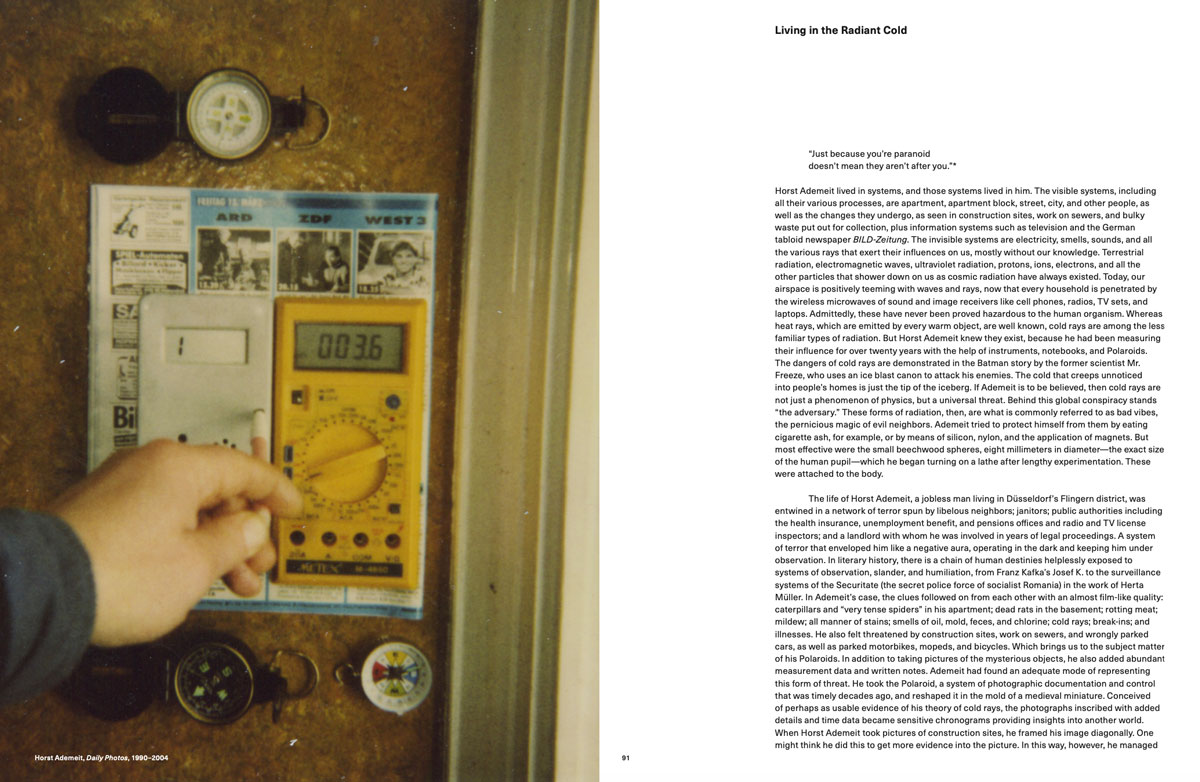
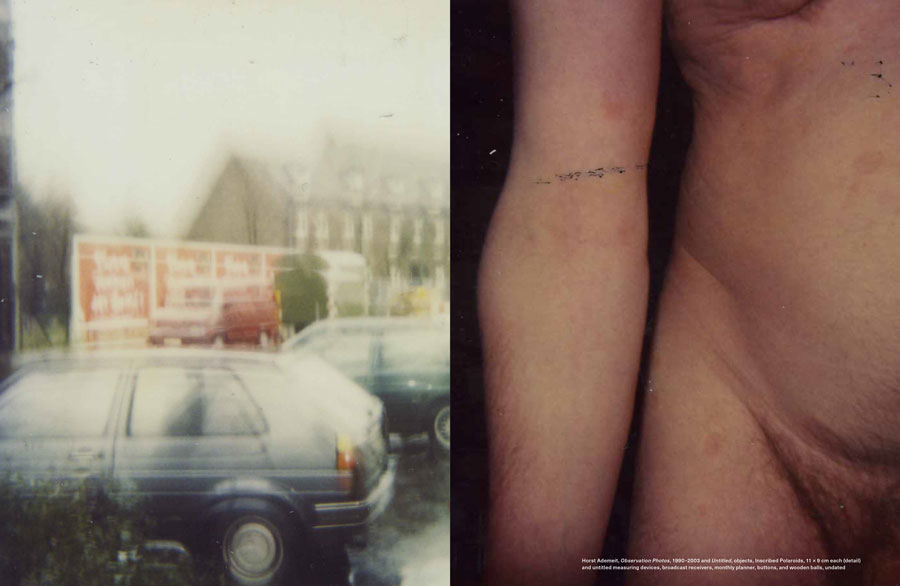
With work and contributions by Horst Ademeit, Rae Armantrout, Tolia Astakhishvili, Ed Atkins, Kirsty Bell, Adelhyd van Bender, Bruce Conner, Fatima Hellberg, Mason Leaver-Yap, Veit Loers, Terence McCormack, James Richards, Jens Thornton, Leslie Thornton, and Thomas Zummer
Copublished with Bonner Kunstverein, Malmö Konsthall and Künstlerhaus Stuttgart
Designed by Karl Kolbitz and Nicoletta Dalfino Spinelli
2021, English, hardcover, 21.9 x 28.5 cm, 160 pages
ISBN 978-88-945353-3-4
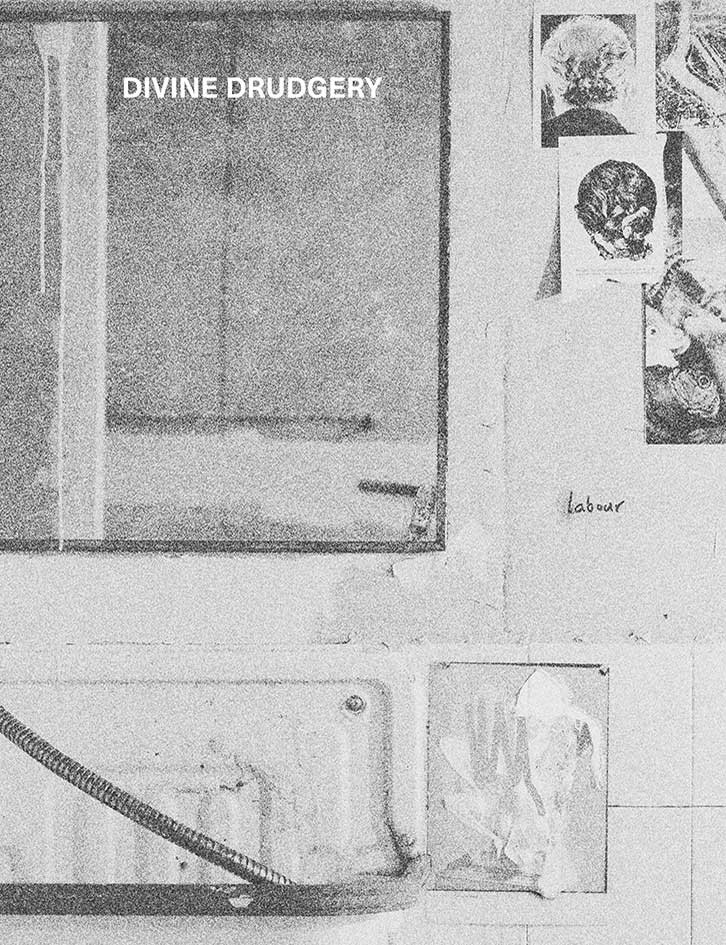
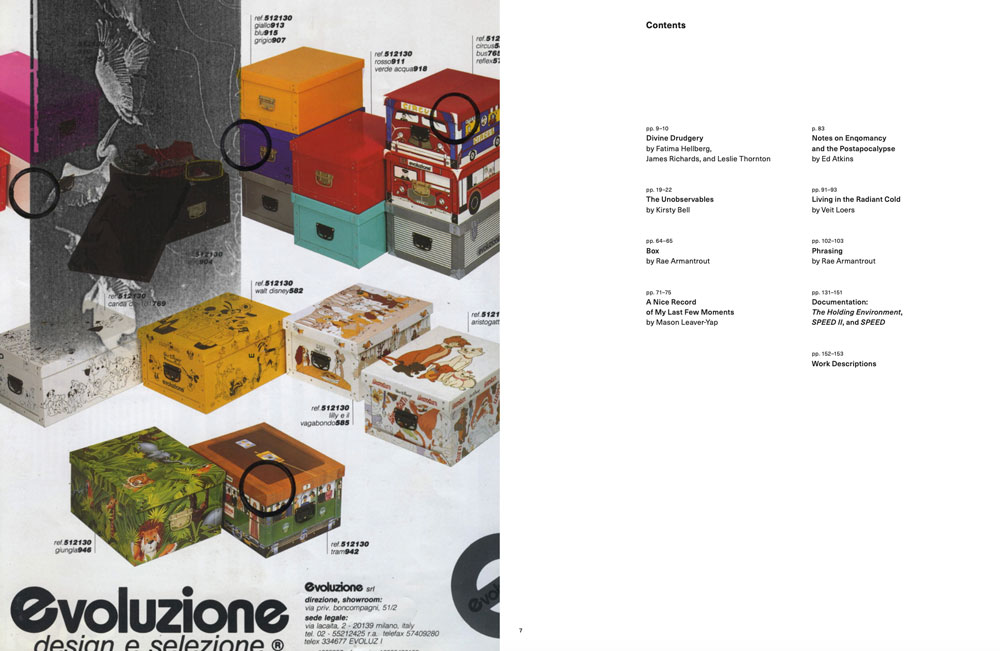
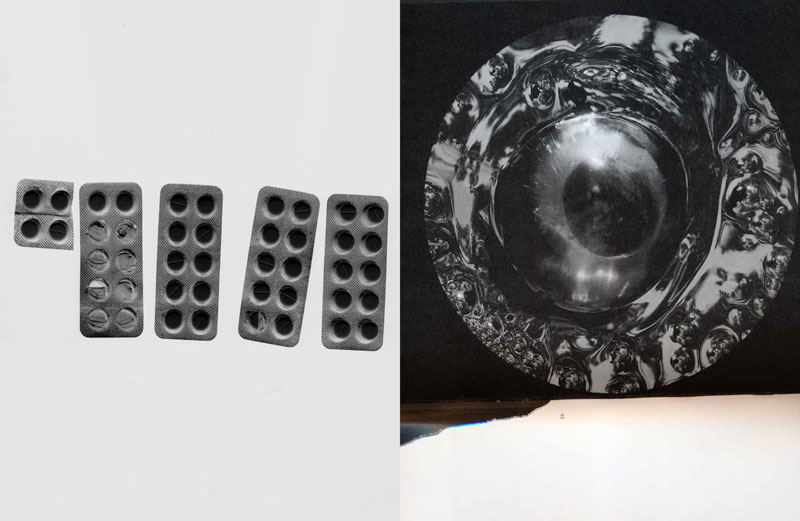
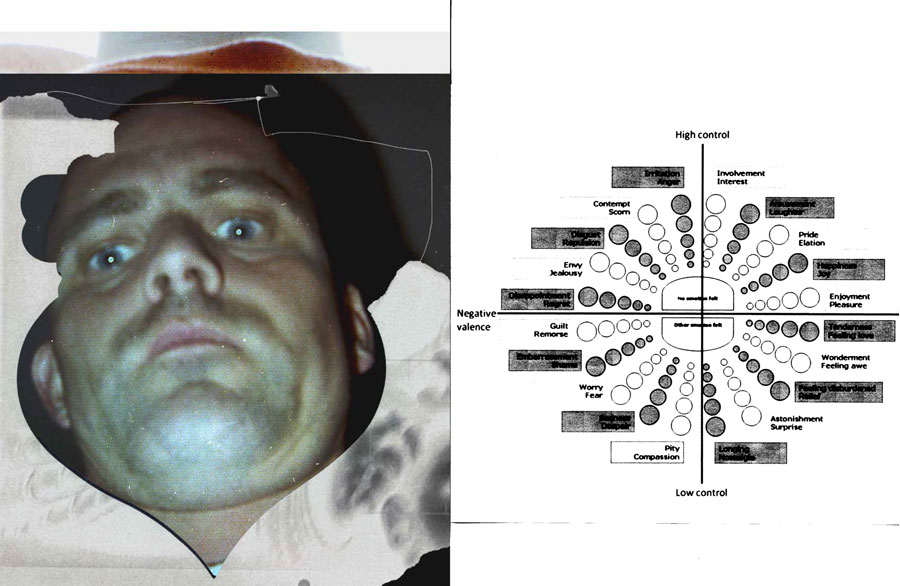
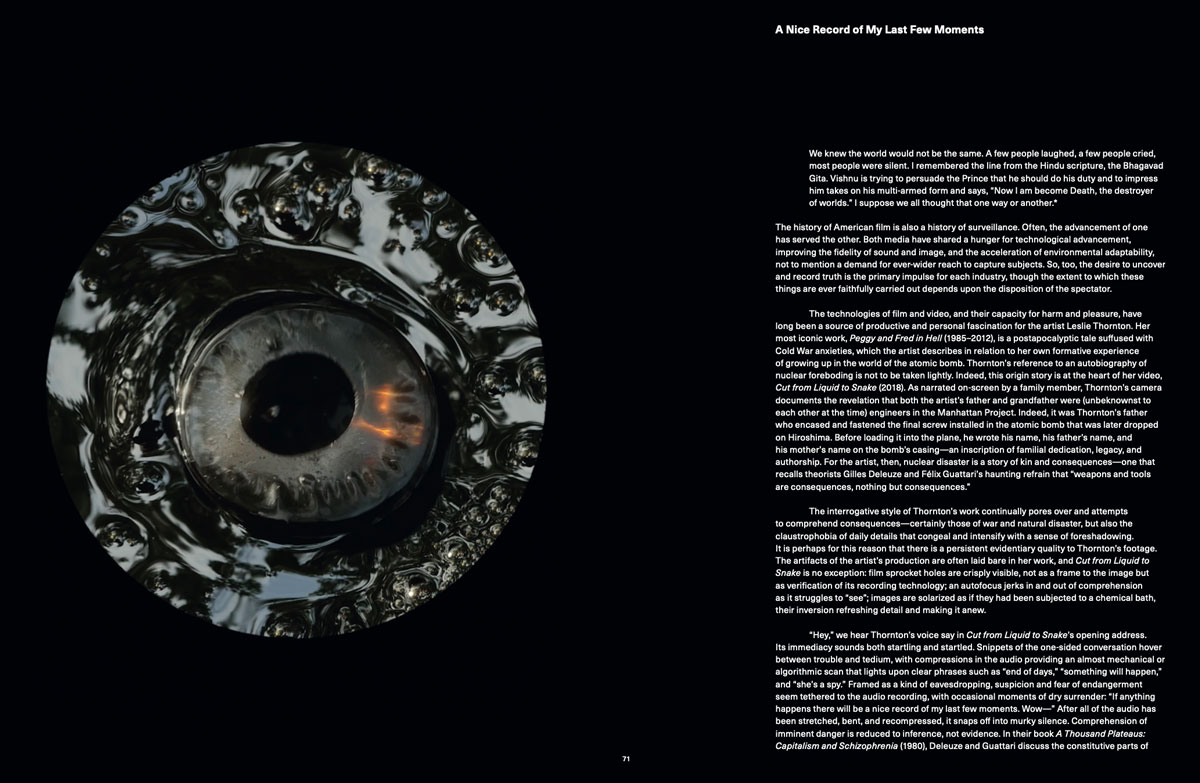
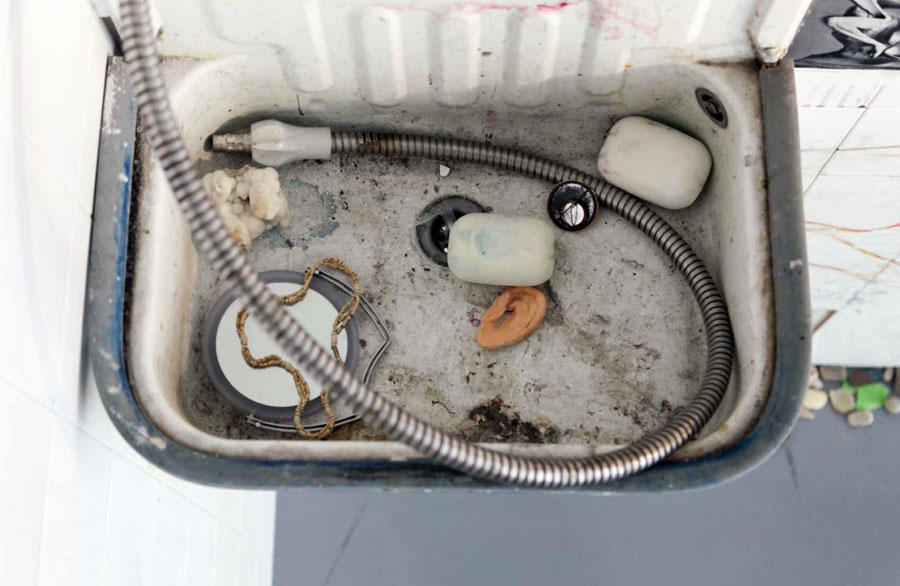
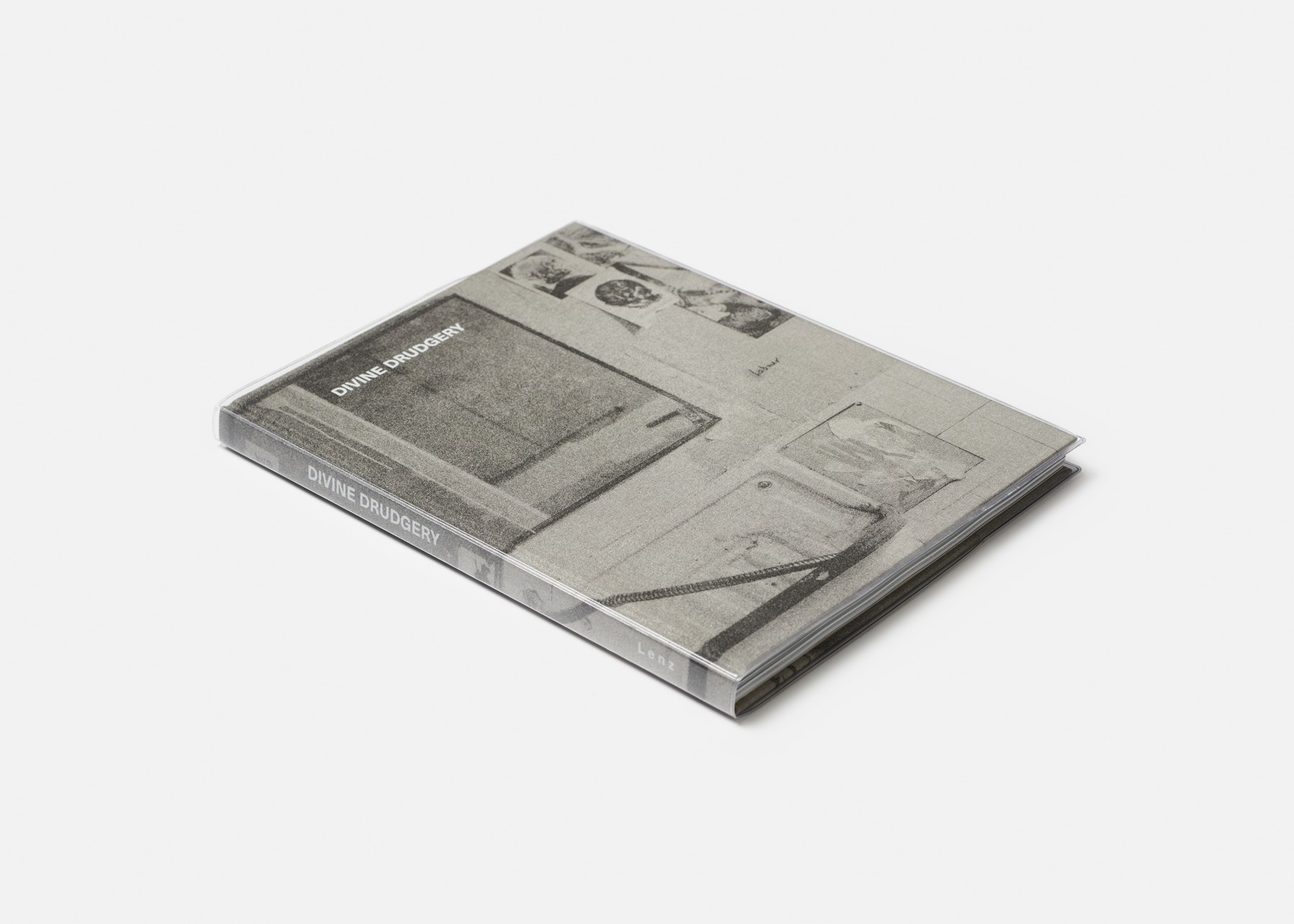
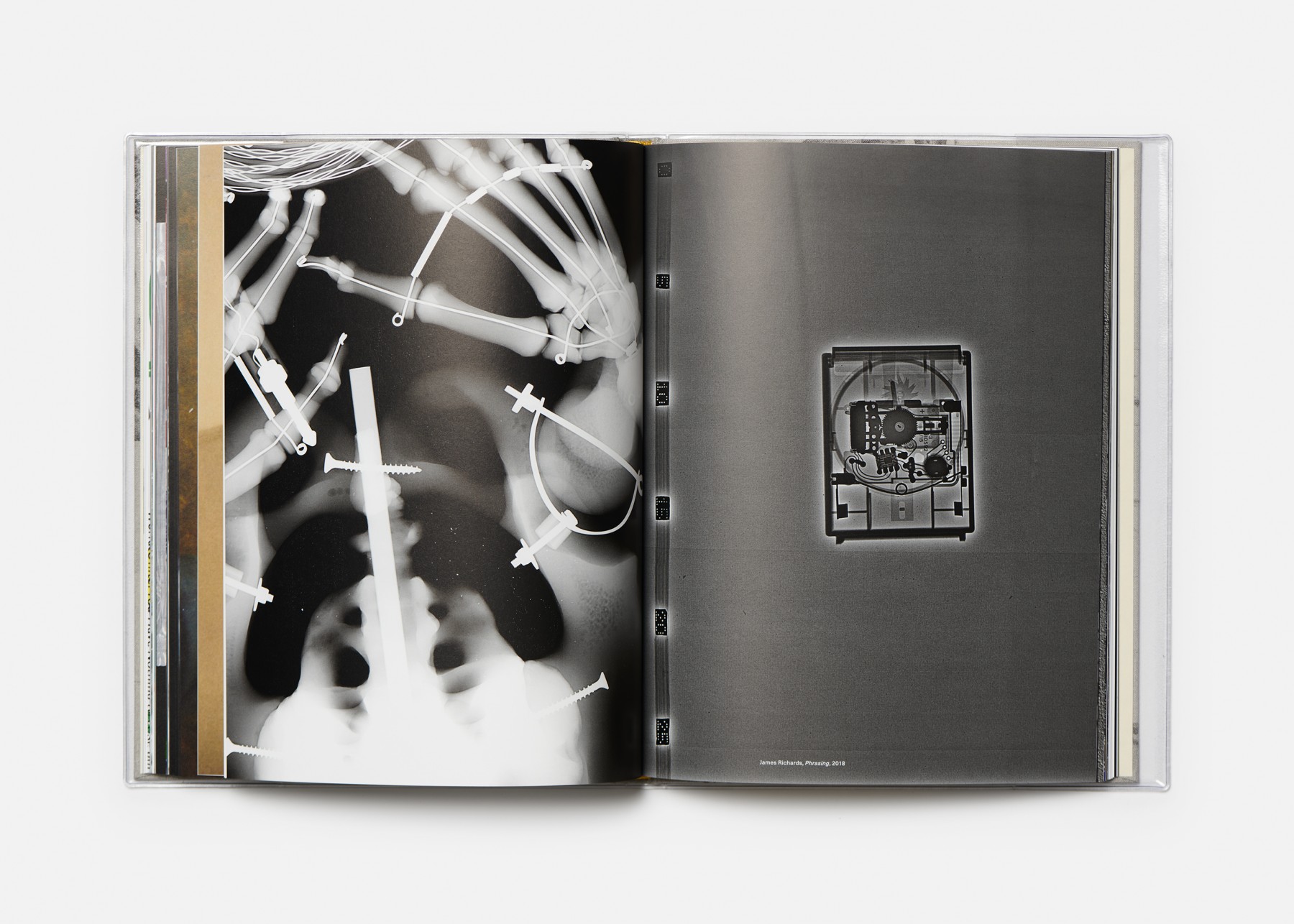
Divine Drudgery is an artist book with collages and artworks by James Richards and Leslie Thornton, and contributions by artists, writers and poets centred around liminality and the aesthetics and politics of the invisible. These dialogues and strands are anchored in and loop back to three exhibitions developed by the editors: Speed (Künstlerhaus Stuttgart), Speed II (Malmö Konsthall), and The Holding Environment (Bonner Kunstverein), and radiate outwards.
In the making of Divine Drudgery, there has been an ongoing concern with specific psychic and temporal states, rushes of systemic and embodied interconnectedness and wonder, as well as a sense of porousness and paranoia. The oscillation between an ordering impulse and the relinquishing of control is a central feature, one that returns in Divine Drudgery’s different modes: in the poetry and writing; collages, visual essays and specifically conceived work. There is an impulse of collaboration that brought about this project, one that renders the monologue of anxious speculation into a dialogic practice. The disparate elements have been generated from the third mind of collaboration, a channelling of and at times conscious unsettling of each other’s sensitivities, a process which in the words of artist and contributor to the publication Adelhyd van Bender could be understood as the “divine drudgery.“
Ph. Mareike Tocha
The editors
Fatima Hellberg is director of Bonner Kunstverein and former artistic director of the Künstlerhaus Stuttgart. Her curatorial practice is developed in close dialogue with artists and is often associated with long-term exchange, with amongst others Gregg Bordowitz, Ellen Cantor, David Medalla, James Richards and Leslie Thornton. She has curated exhibitions in institutions including the ICA, London; Tate Modern; the CCA Wattis Institute for Contemporary Arts, San Francisco; the South London Gallery and Malmö Konsthall.
Known for his provocative and visually seductive moving-image works that collage together a wide range of source material, James Richards’s work carves out a space where personal politics and digital materiality might meet. Recent exhibitions include When We Were Monsters, Haus Mödrath (2021); The Holding Environment, Bonner Kunstverein (2021); Alms for the Birds, Castello Di Rivoli (2020); Speed II, Malmö Konsthall w/ Leslie Thornton (2019); Speed, Künstlerhaus Stuttgart w/ Leslie Thornton (2018).
In a career spanning nearly five decades, Leslie Thornton has produced an influential body of work in film and video. Her early encounters with experimental, structuralist, and cinéma vérité fuelled her iconoclastic take on the moving image and gave shape to her practice of weaving together her own footage and voice with archival film and audio. Thornton’s work has been exhibited at documenta 12, Kassel; The Whitney Museum of American Art, MoMA PS1, and Artists Space in New York; Tate Modern and Raven Row in London; the Walker Art Center, Minneapolis, among many others. Recent solo and two-person exhibitions have taken place at Kunstverein Nürnberg (2020); Malmö Konsthall (2019); Secession, Vienna (2018) and Künstlerhaus Stuttgart (2018).