Museums of Tears extends Francesco Vezzoli’s 2024 exhibition at Museo Correr, Venice, combining historical works and new commissions to explore antiquity, emotion and illusion. Conceived as an artist’s book rather than a catalogue, it transforms the museum guide into a hybrid archive and portable museum of memory, beauty and mourning.
A project by Fondazione In Between Art Film, edited by Carla Subrizi, Paola Ugolini, and Maria Alicata, this illustrated volume investigates the cinematic, documentary, and video output of women artists and filmmakers operating in Italy in the 1960s and 1970s, situating their research at the intersection of artistic experimentation, politics, society, and technology.
A multifaceted perspective on contemporary sculpture that explores the practices and concepts of the medium through different approaches. The publication interweaves works by Yu Ji, Bronwyn Katz, Dan Lie, Trương Công Tùng, and Luana Vitra, with essays by Federico Giani, Sohrab Mohebbi, Julia Morandeira Arrizabalaga, Chiara Nuzzi, and Anne Reeve.
Suffused with specially conceived collages of the artist’s research materials, notes, and sketches, this is the first monograph on Castelli’s painting and sculpture, with essays by Sarah Crowe and Lillian Davies, and an artist interview by Francesco Manacorda. Published with Castello di Rivoli Museo d’Arte Contemporanea and Kunsthalle Wien.
What if the shadow moved first? From March through May 2026, the exhibition The Second Shadow. Dozie Kanu Mirroring Marc Camille Chaimowicz, with Shared Echoes and Kindred Spirits at Fondazione ICA Milano unfolds online through a series of voices and crossings that shift its gravity. Not an extension. A displacement.
A Cosmic Movie Camera is the title of the 18th edition of the BIM’24, which also marks the 50th anniversary of the Biennale organized by the Centre d’Art Contemporain Genève. By blending the real and the virtual, its catalogue captures the spirit of the exhibition, which explores the evolution of moving images, particularly in our algorithmic age.
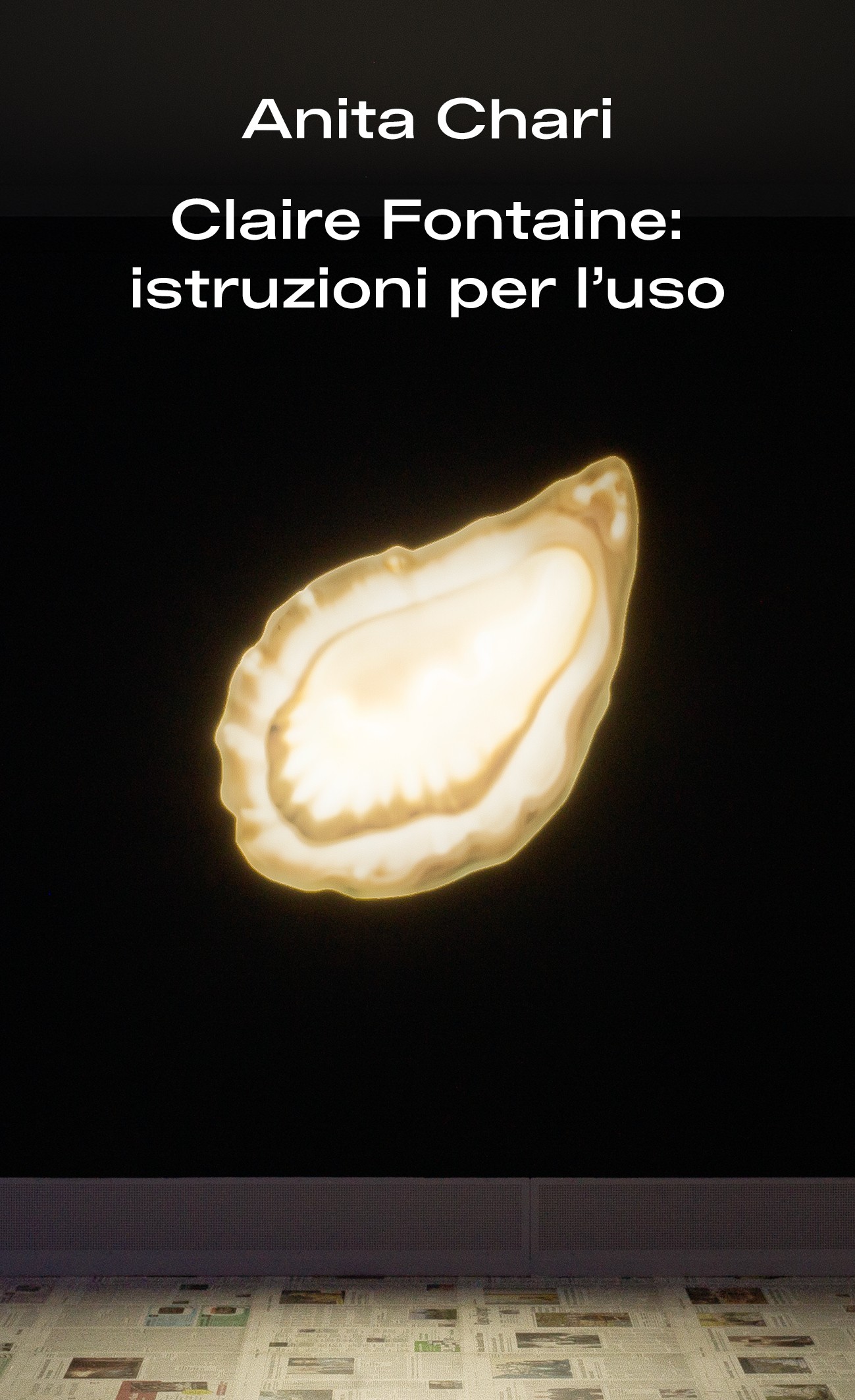
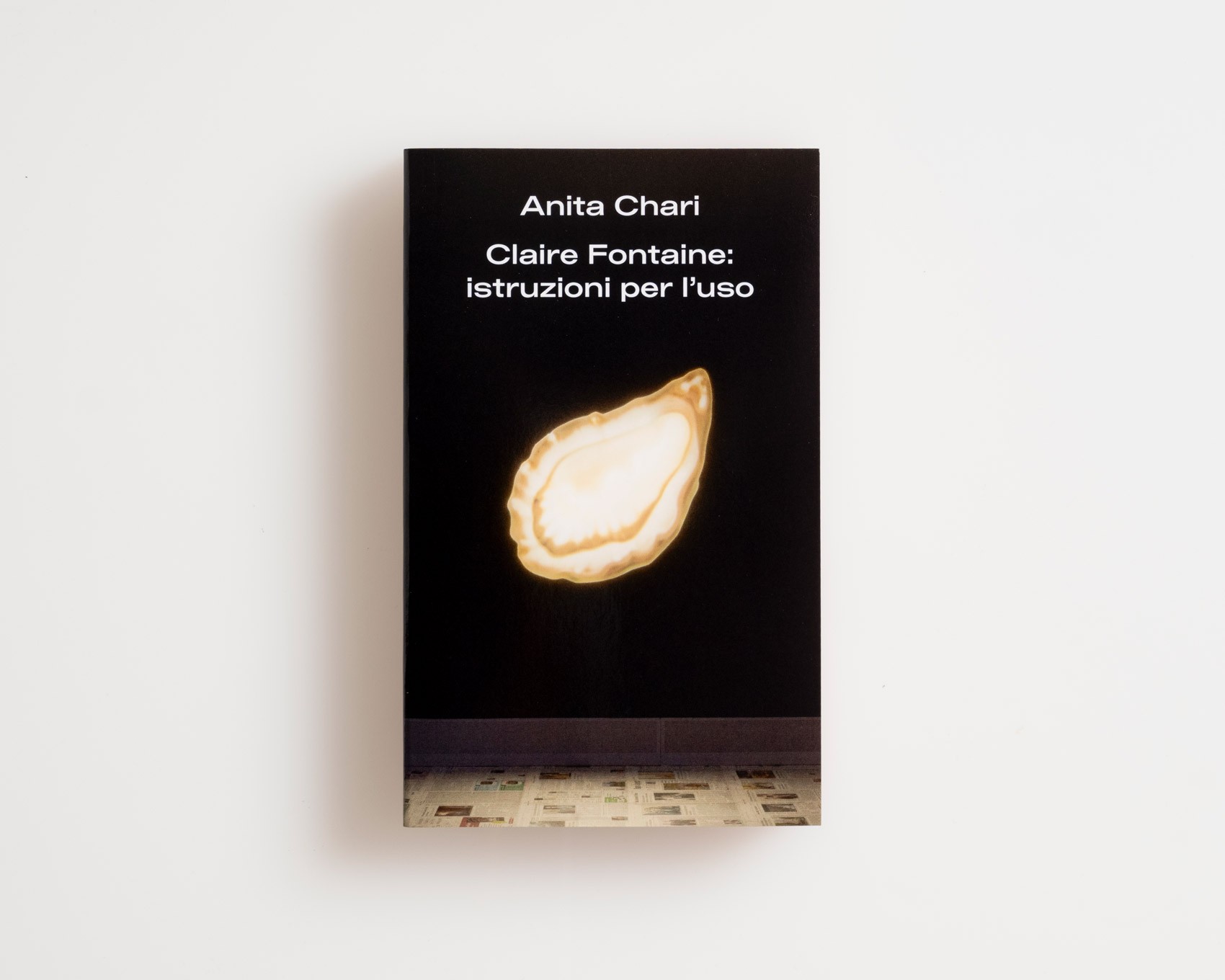
Anita Chari
Progetto grafico di Lorenzo Mason Studio
2026, italiano, brossura, 11 x 18 cm, 300 pagine
ISBN 979-12-80579-99-7
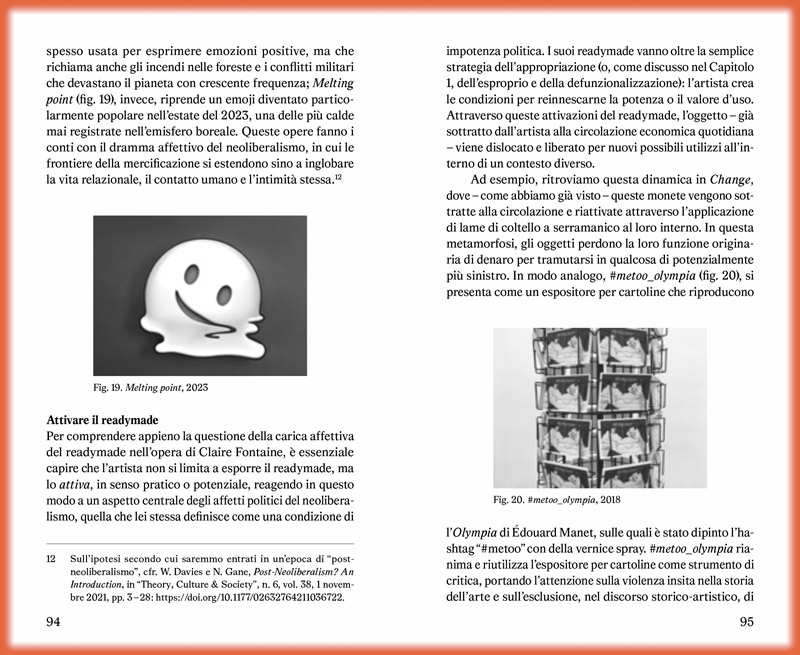
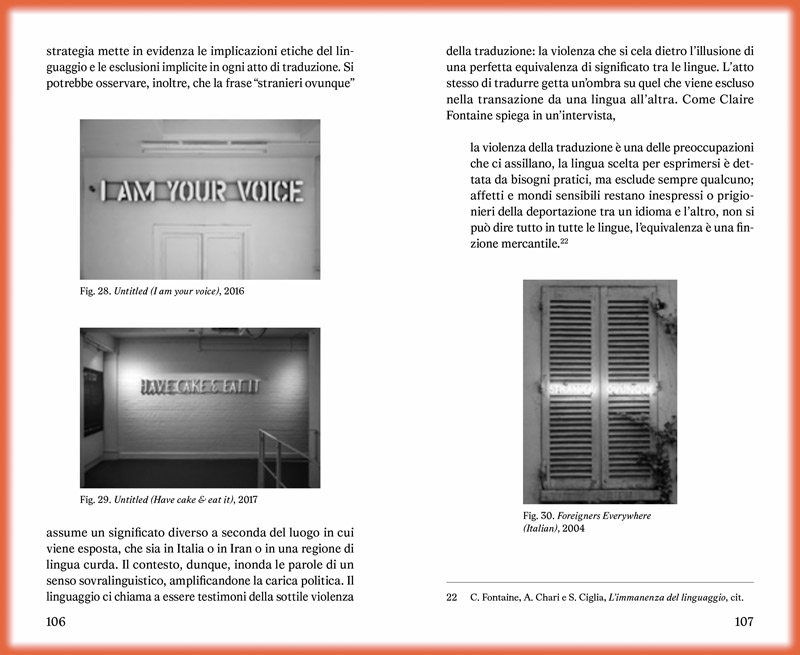
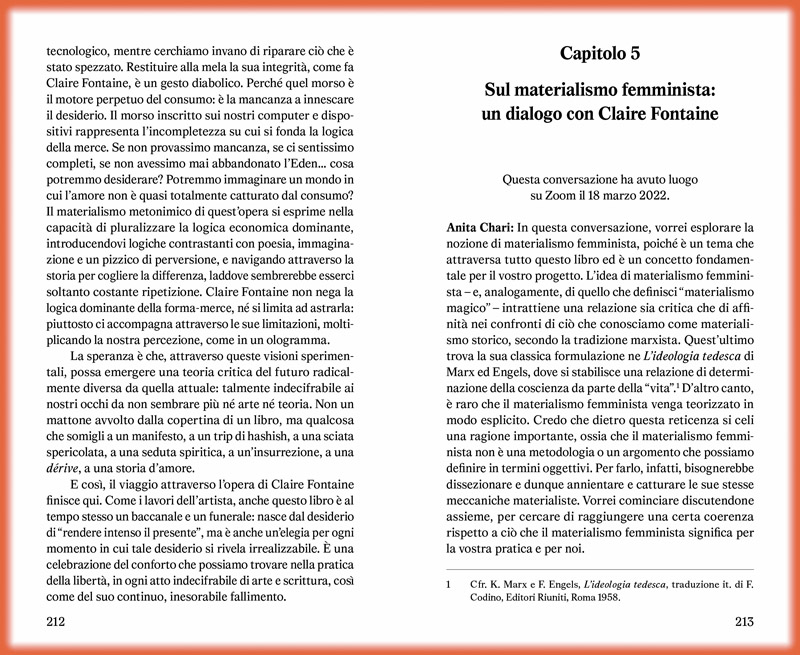
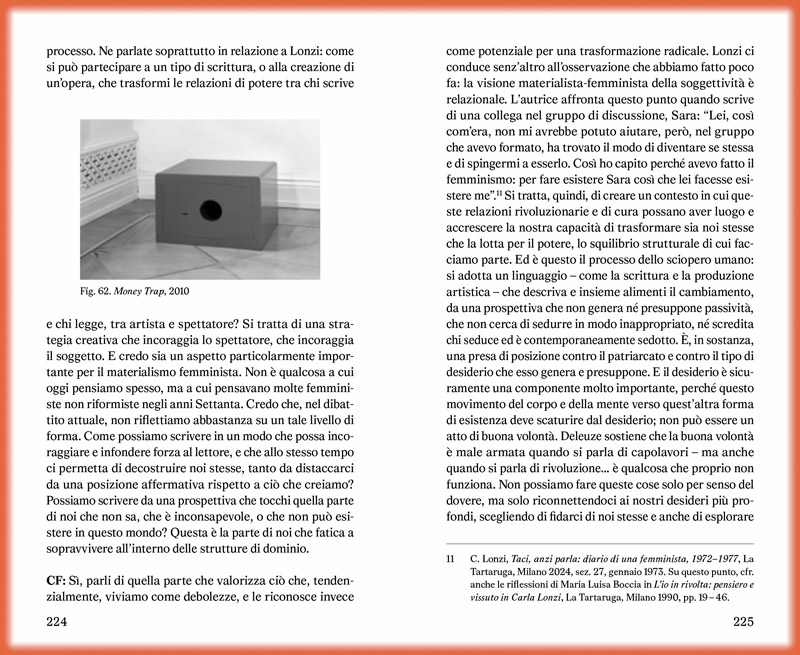
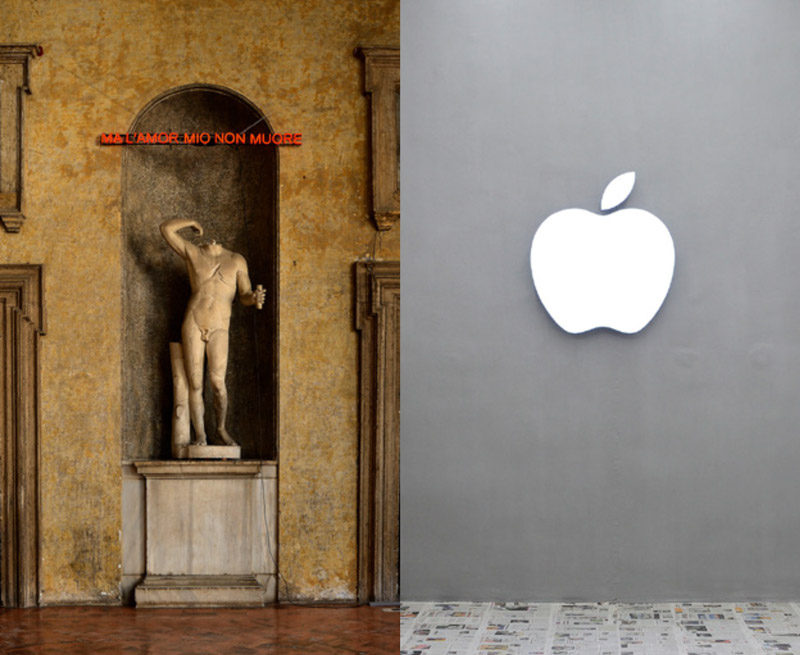
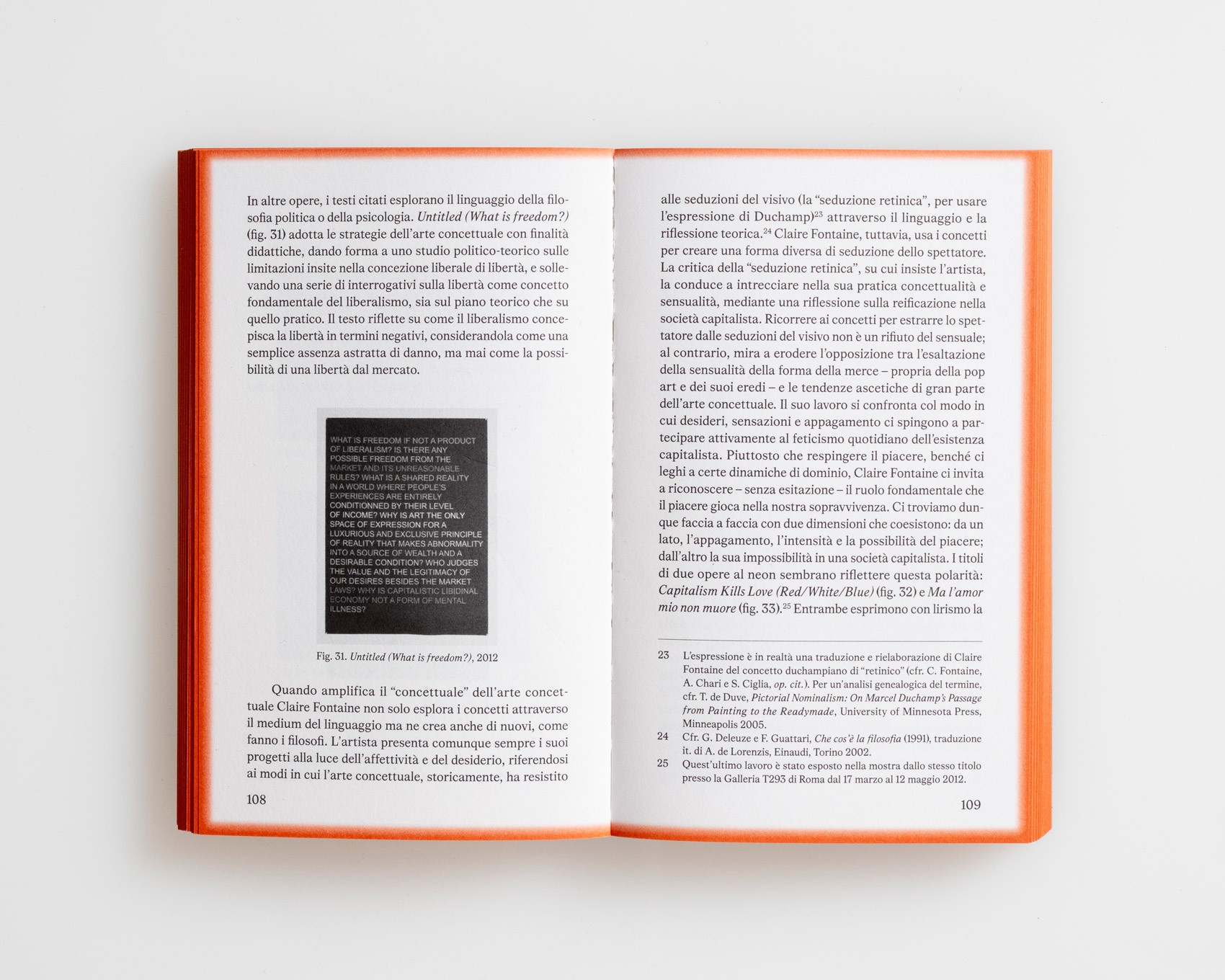
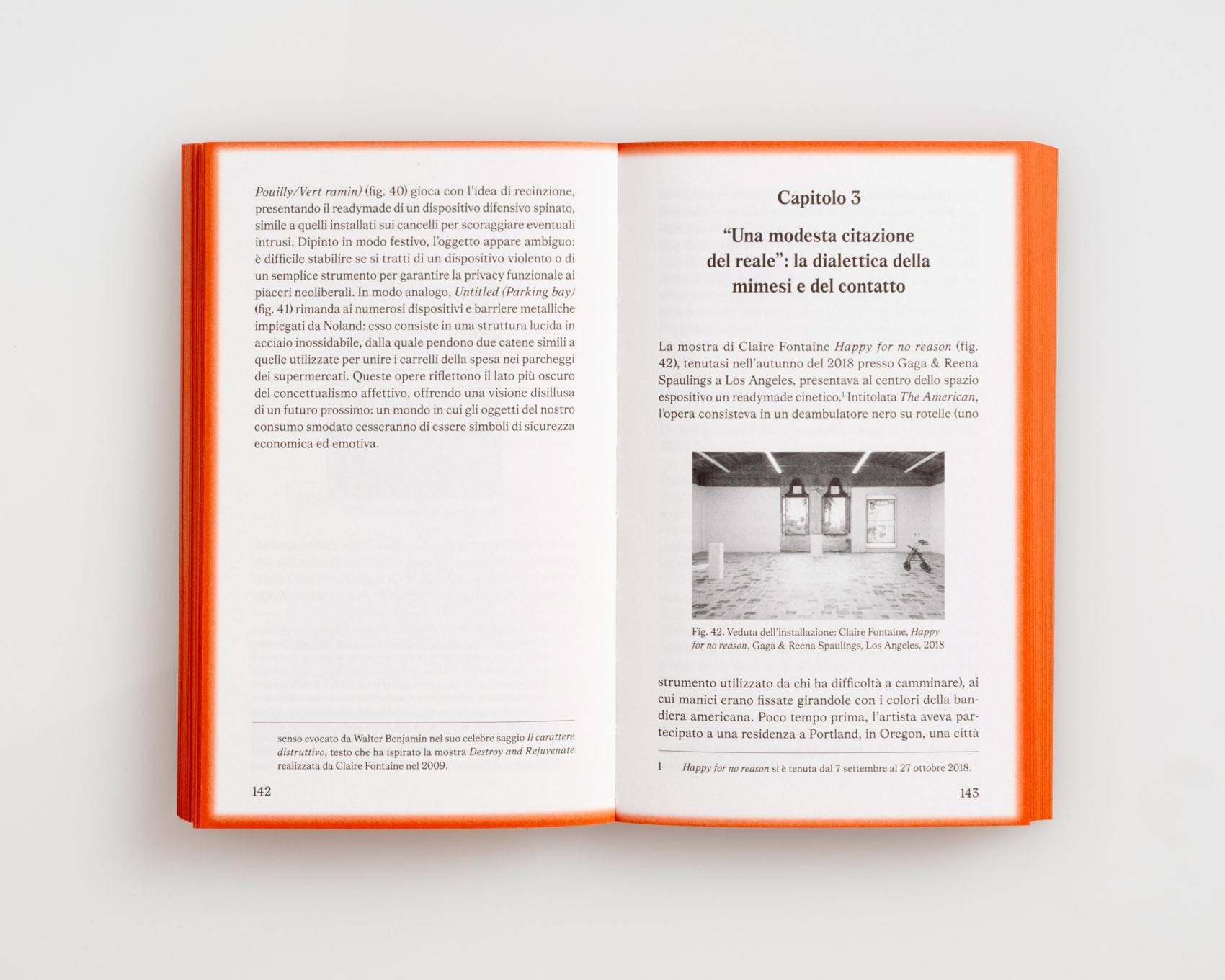
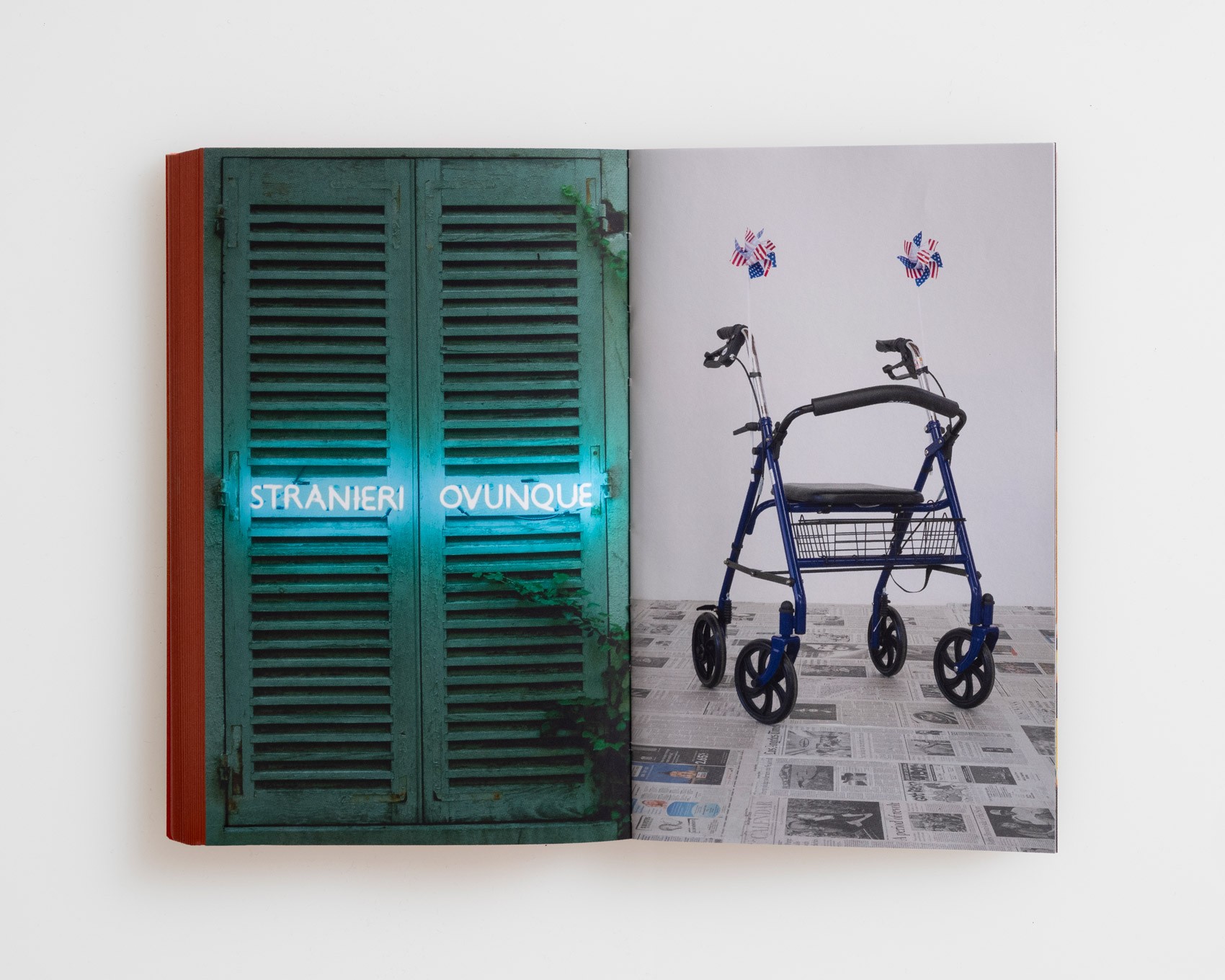
Claire Fontaine: istruzioni per l’uso esplora il lavoro del collettivo femminista di arte concettuale Claire Fontaine alla luce delle sue innovazioni teoriche e politiche, all’interno e all’esterno del contesto dell’arte contemporanea. Teorizzando le modalità tramite cui l’approccio sperimentale di Claire Fontaine è in grado d’illuminare un orientamento aptico e incarnato nei confronti della teoria critica, questo libro delinea una serie di metodologie e procedure teoriche al centro della pratica dell’artista, fra cui defunzionalizzazione, institutional critique, sciopero umano, mimesi tattile, desoggettivazione, détournement, materialismo magico e materialismo femminista.
In questo saggio, la teorica politica e operatrice somatica Anita Chari fa luce su una pratica più ampia per chi lavora nel mondo della teoria critica, fornendo una serie di “istruzioni per l’uso”: un manuale che, attingendo alle risorse dell’arte contemporanea, cerca di reinvestire la teoria critica di un valore d’uso, per rifondarla sulla percezione sensoriale e informare le pratiche politiche contemporanee.
“Un libro geniale e appassionante sull’arte e la scrittura di Claire Fontaine – ‘artista readymade’ e provocatrice concettuale – che attraversa con fluidità teoria critica, filosofia politica e critica d’arte, oltre a offrire una vitale delucidazione delle strade possibili verso modalità trasformative di vita nel presente. Scrivendo con e attraverso il suo soggetto, piuttosto che ‘su’ di esso, come è consuetudine, Chari offre ai lettori delle ‘istruzioni per l’uso’ alla pratica di Claire Fontaine, identificando nel suo lavoro un modello per una resistenza incarnata.” —Tom McDonough, autore di The Beautiful Language of My Century