At 500 pages, this is the most comprehensive book yet on Norwegian artist, Ida Ekblad. Appearing three years after the artist’s show at Kunsthalle Zürich, Melted Snow took certainly a long time—all the time is takes to ponder fifteen years of the artist’s career.
On the occasion of PROVENCE’s 15th anniversary, the reader My Alphabet presents 26 texts published by PROVENCE between 2009 and 2024, either in print or digitally in the weekly newsletter. These texts are sorted alphabetically, ranging from A for Amphetamine to N for Ne travaillez jamais to Z for Gen Z.
This publication is devoted exclusively to the metal works of Sidsel Meineche Hansen. Catalogued here is every cast, forged, and fabricated metal sculpture made since 2017. Poems by the artist Diego Marcon annotate and respond to the individual pieces.
This compelling artist’s book is built around KOOL (“cabbage” in Dutch), an original font designed by Reus, somewhere between a plant alphabet and concrete poetry. The publication draws on the type specimen book tradition to present new typefaces.
Through a rich selection of images, this artist’s book, published in two editions—gold and silver—explores the birth, life and death of Francesco Gennari’s work Vorrei perdermi e non trovarmi più, 2022, exhibited for the first time at the Ciaccia Levi Gallery in Paris.
Through a rich selection of images, this artist’s book, published in two editions—gold and silver—explores the birth, life and death of Francesco Gennari’s work Vorrei perdermi e non trovarmi più, 2022, exhibited for the first time at the Ciaccia Levi Gallery in Paris.
Edited by Andrea Bellini and Nora N. Khan
Texts by Basel Abbas & Ruanne Abou-Rahme, Andrea Bellini, Danielle Brathwaite-Shirley, Giacomo Castagnola, Sheila Chiamaka Chukwulozie, Cairo Clarke, Tamar Clarke-Brown, Hajra Haider Karrar, Aziz Hazara, Nasrin Himada, Interspecifics, Will Jennings, Nora N. Khan, Michael Kurtz, Lauren Lee McCarthy, Luc Meier, Margarida Mendes, Harlan Levey, Shuang Li, Alessandro Rabottini, Sahej Rahal, Francesca Recchia, Elvia Wilk
Designed by Lorenzo Mason Studio
2026, English, softcover, 24 x 29 cm, 272 pages
ISBN 979-12-80579-87-4
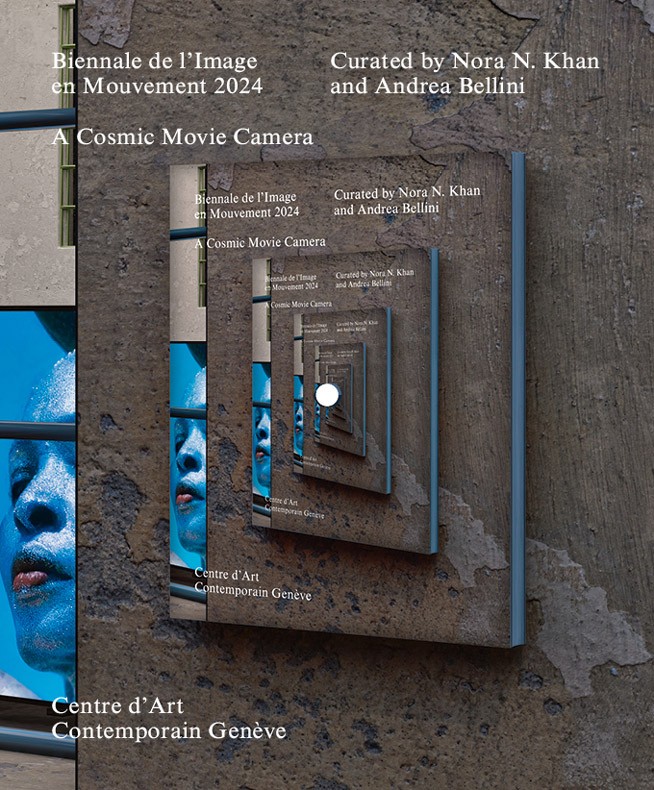
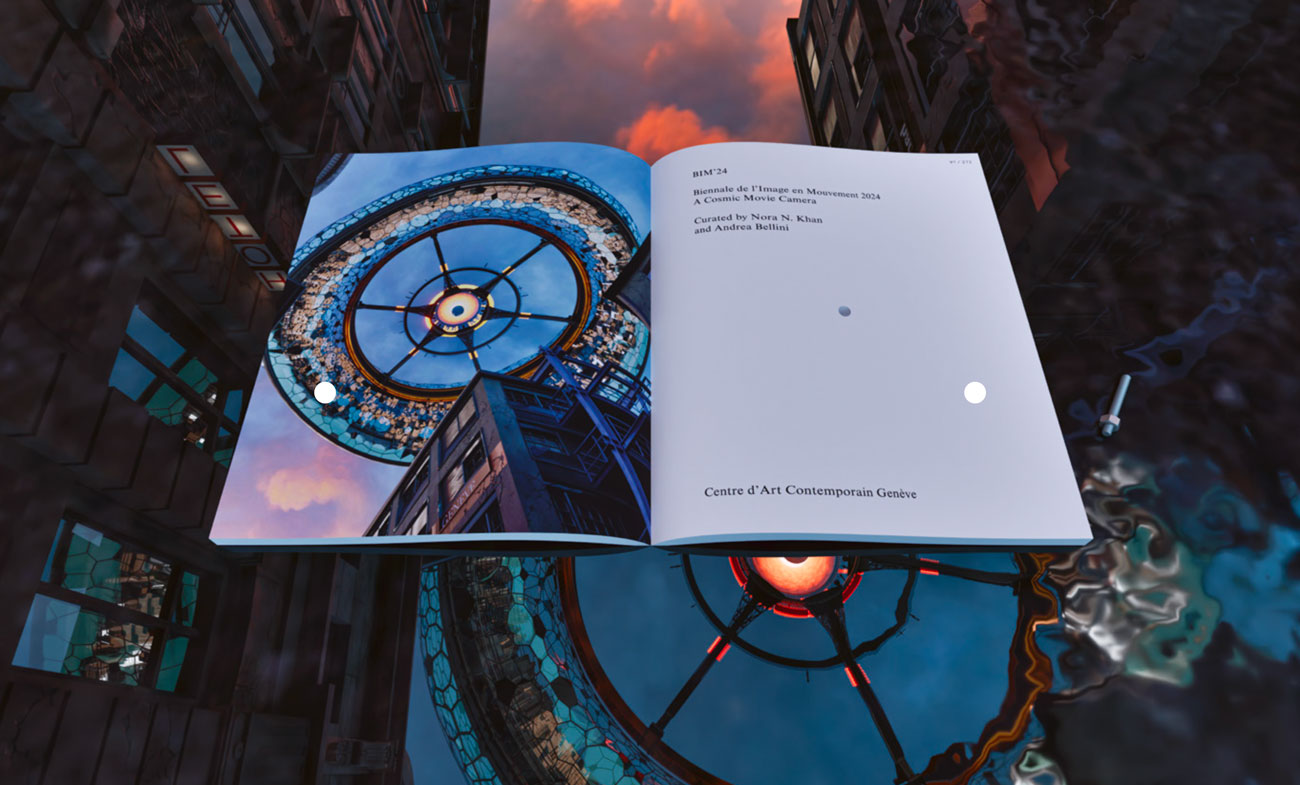
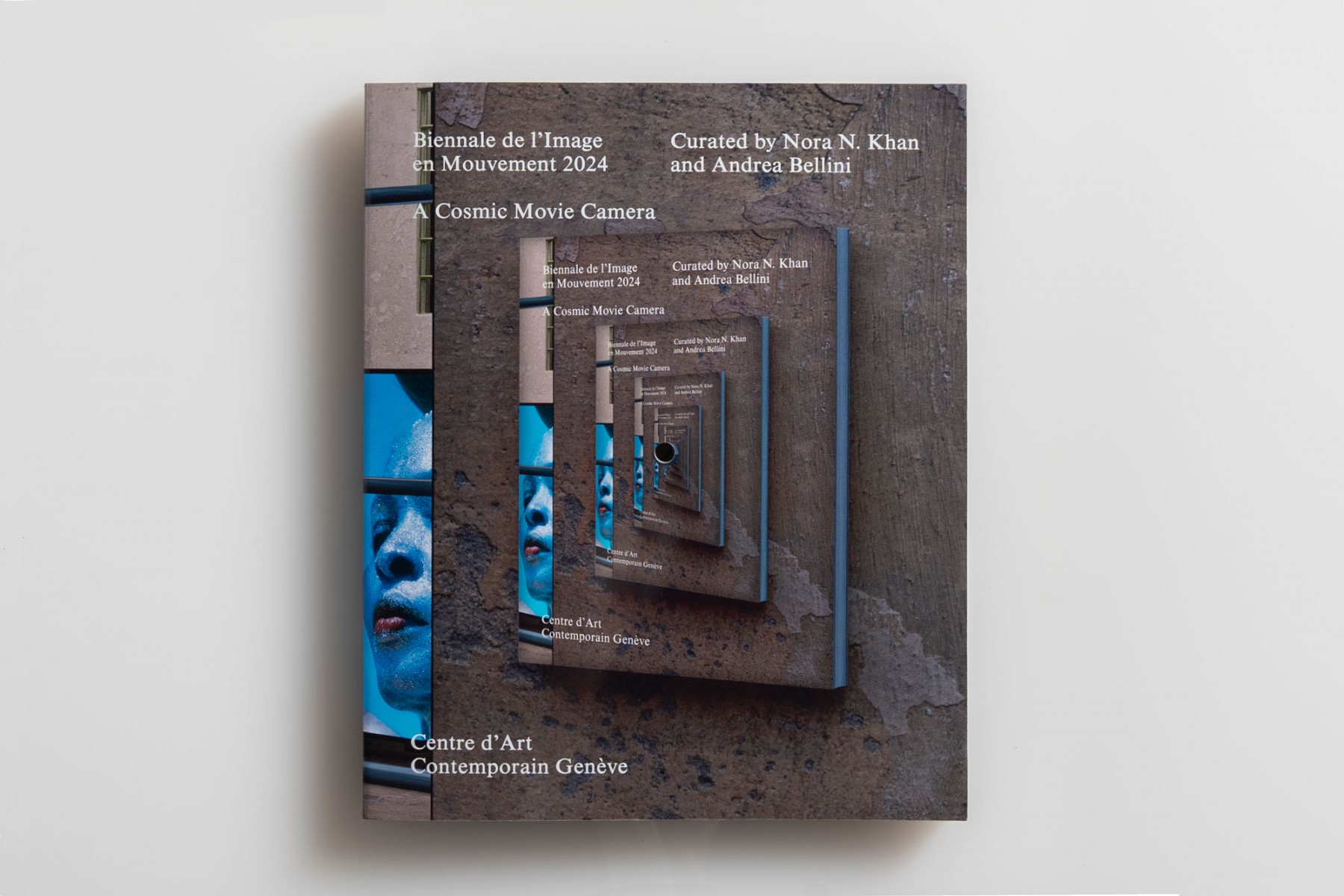
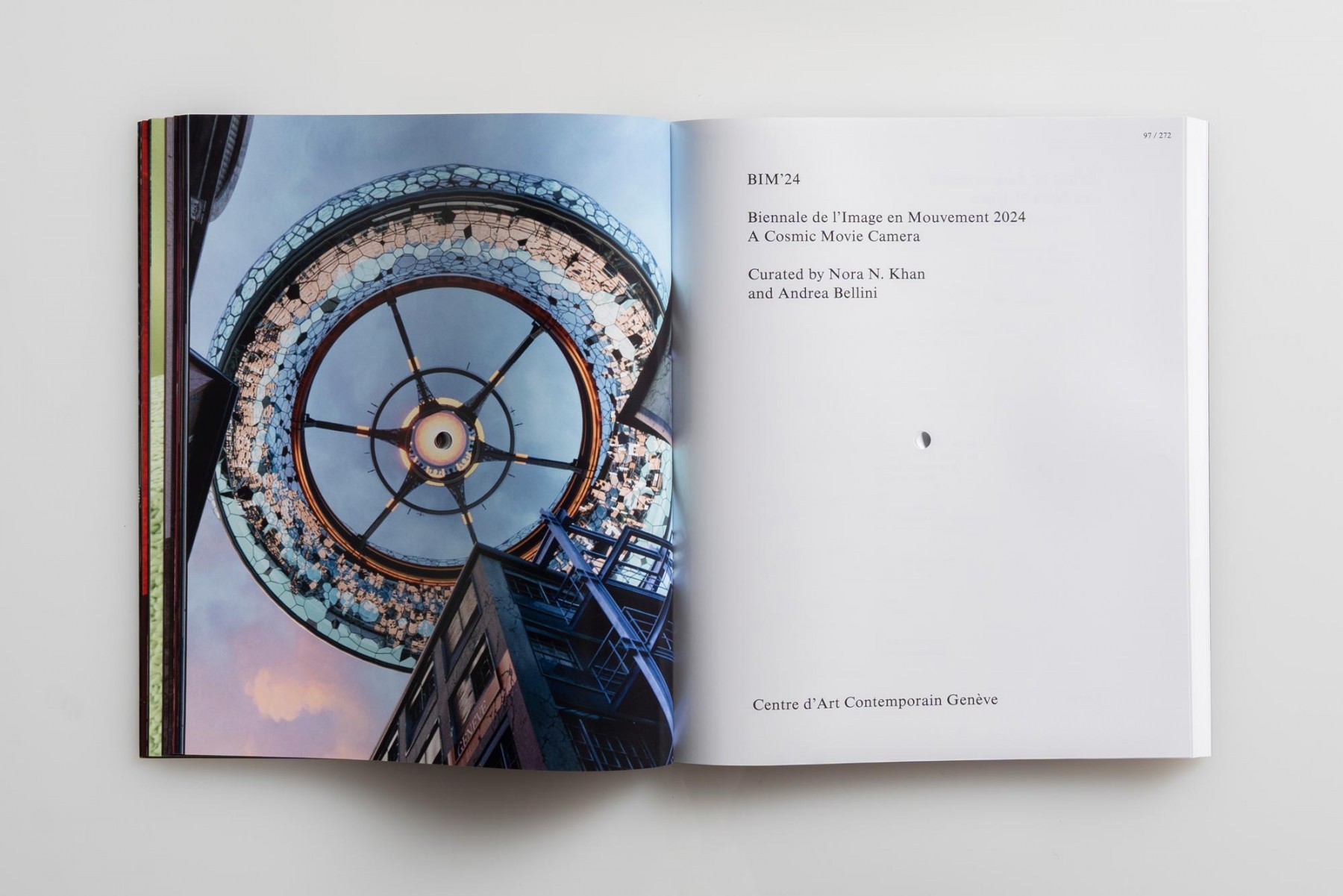
Curated by Nora N. Khan and Andrea Bellini, the 18th edition of the Biennale de l’Image en Mouvement 2024 (BIM’24), produced and hosted by the Centre d’Art Contemporain Genève from January 24 to May 16, 2024, is titled A Cosmic Movie Camera. This title draws inspiration from the discovery by astrophysicists of a ring of photons around a black hole, which potentially represents the visible medium through which humanity could deepen its understanding of the interior of black holes—the epitome of the unknown.
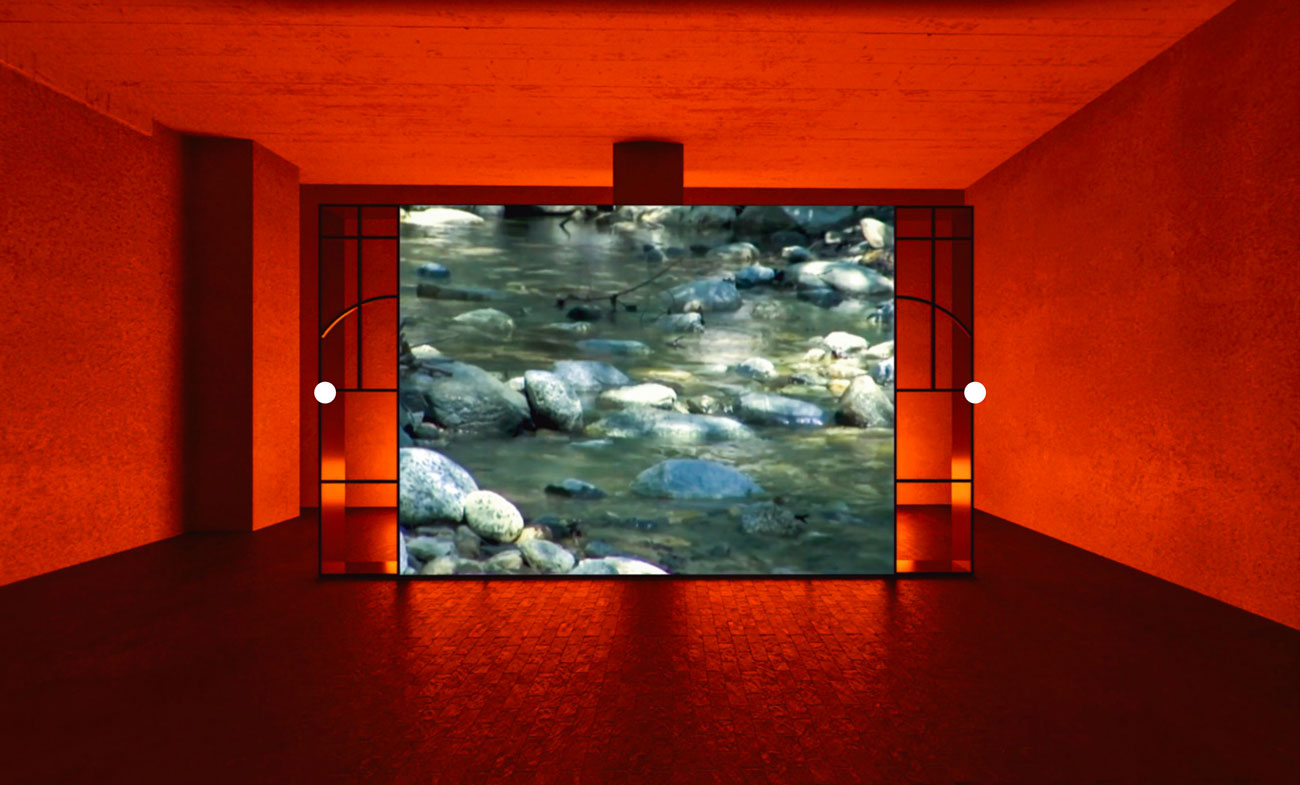
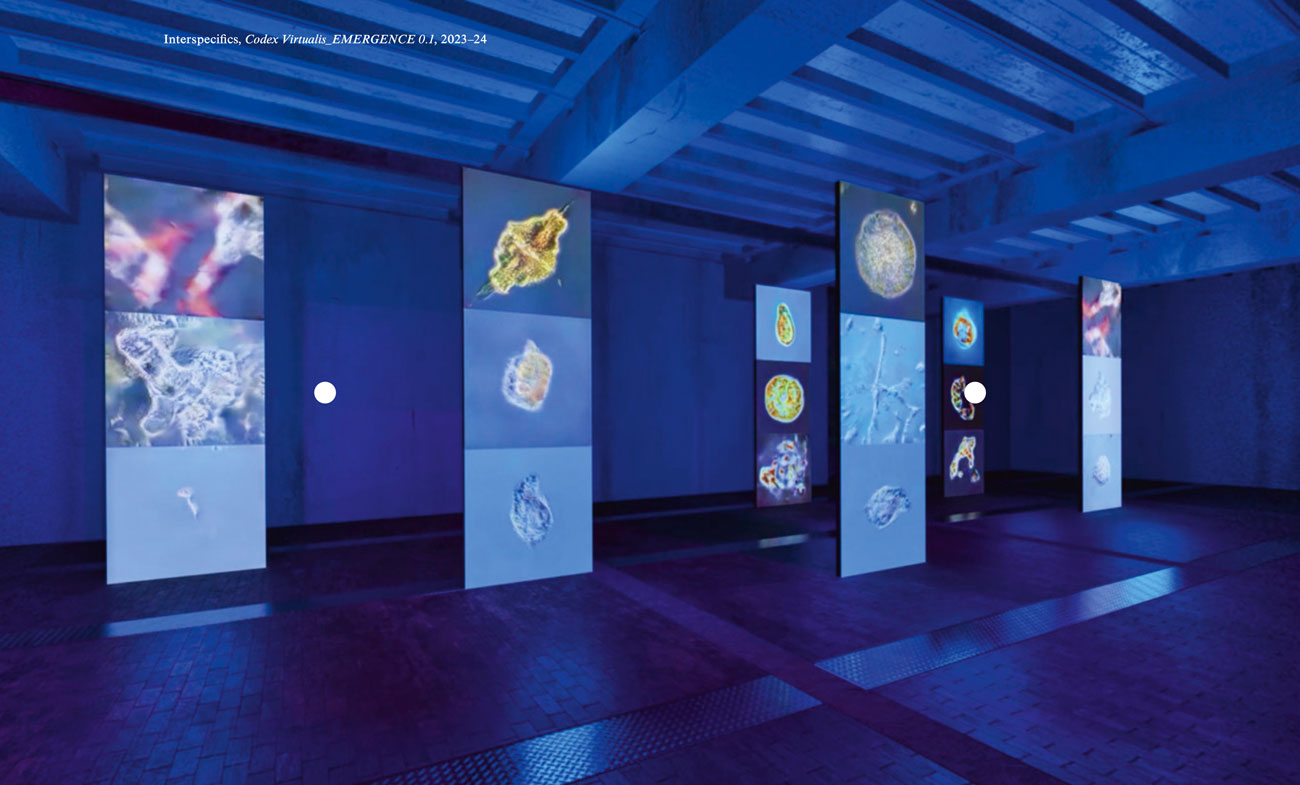
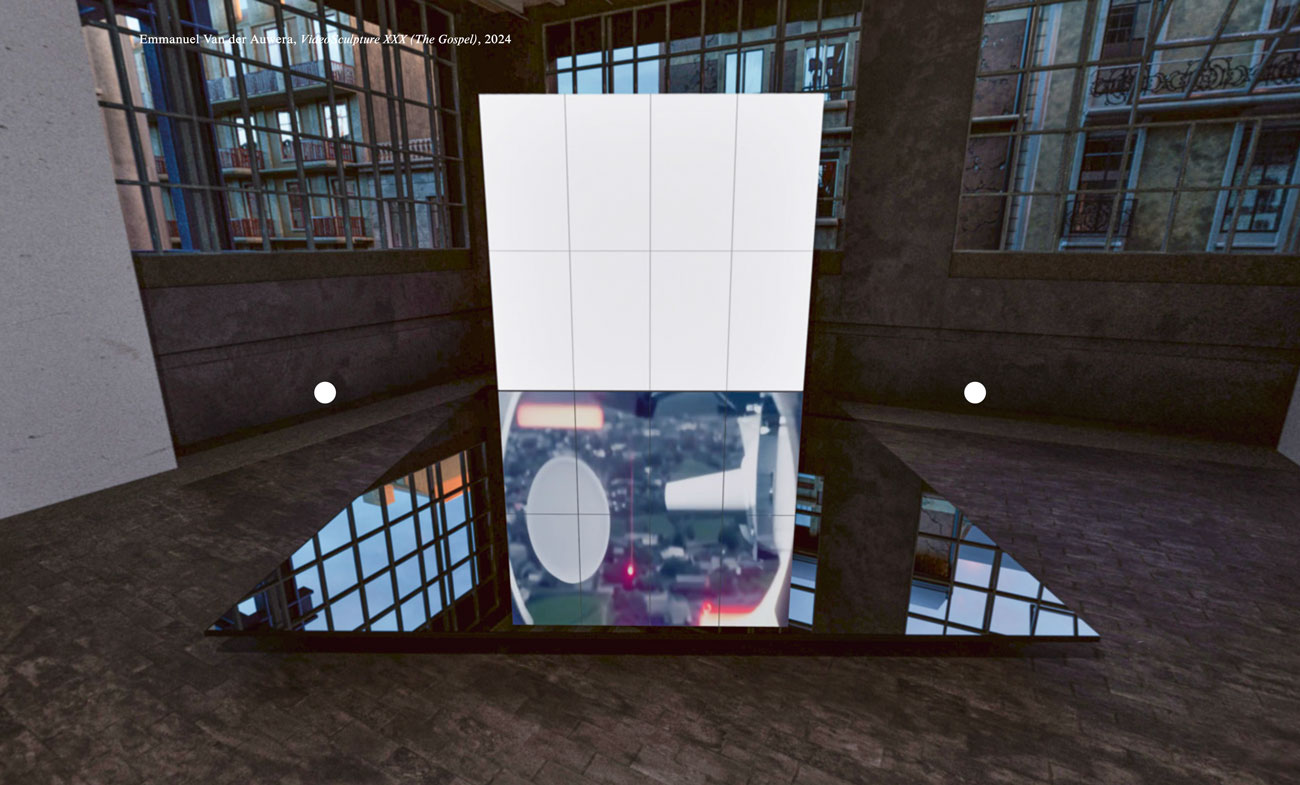
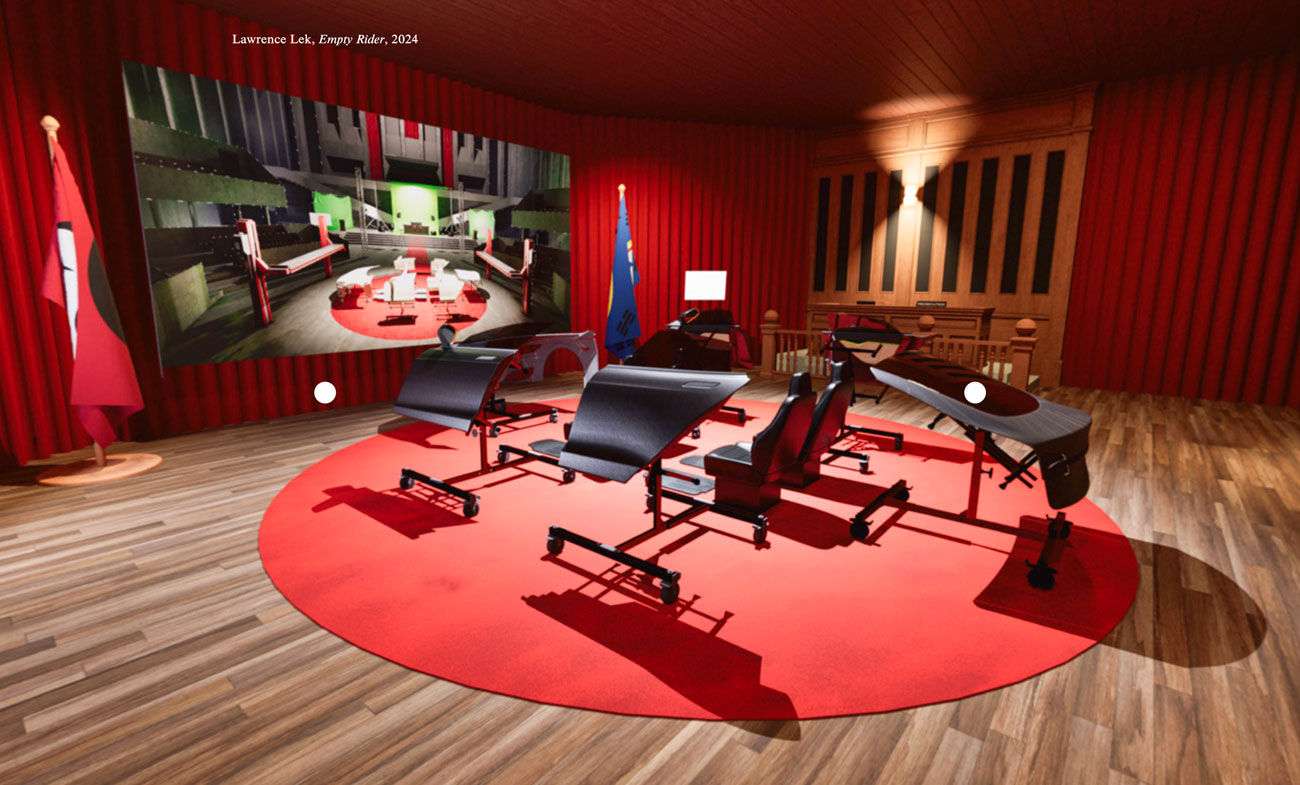
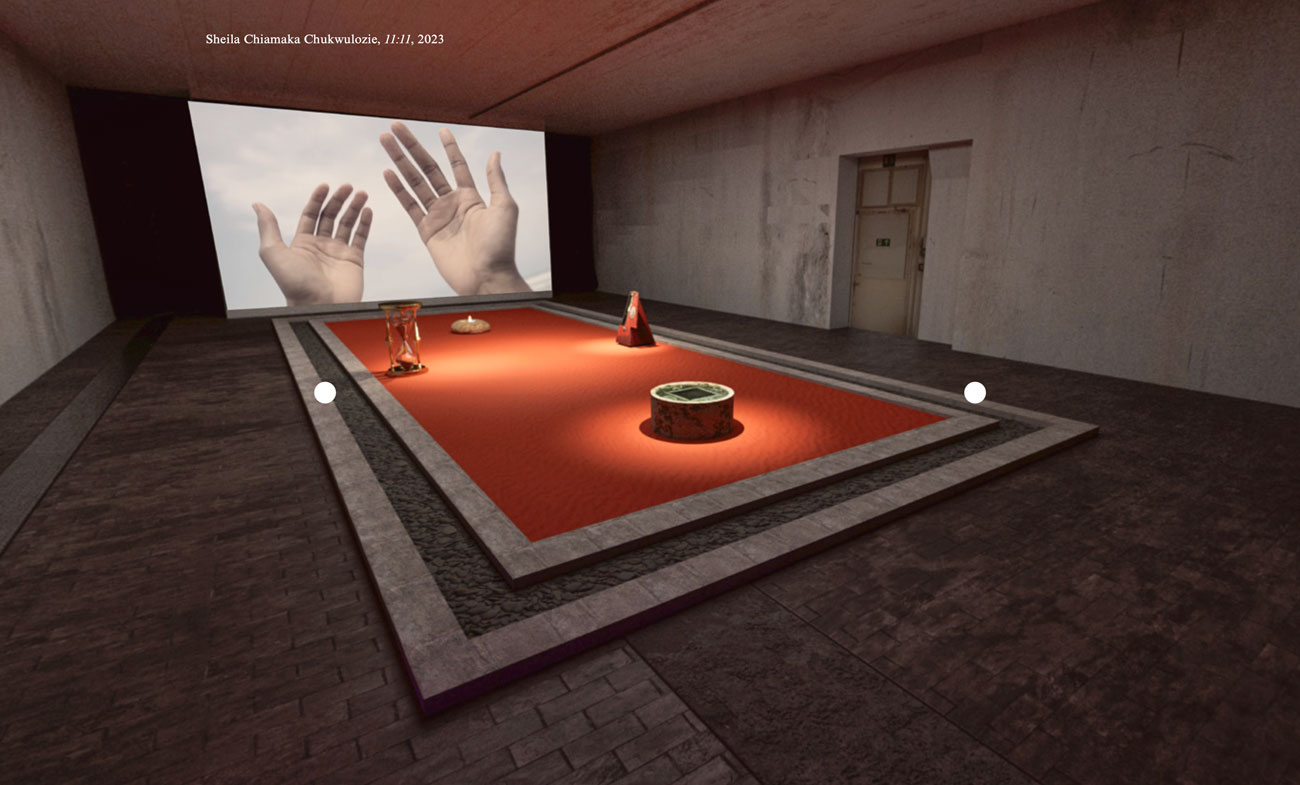
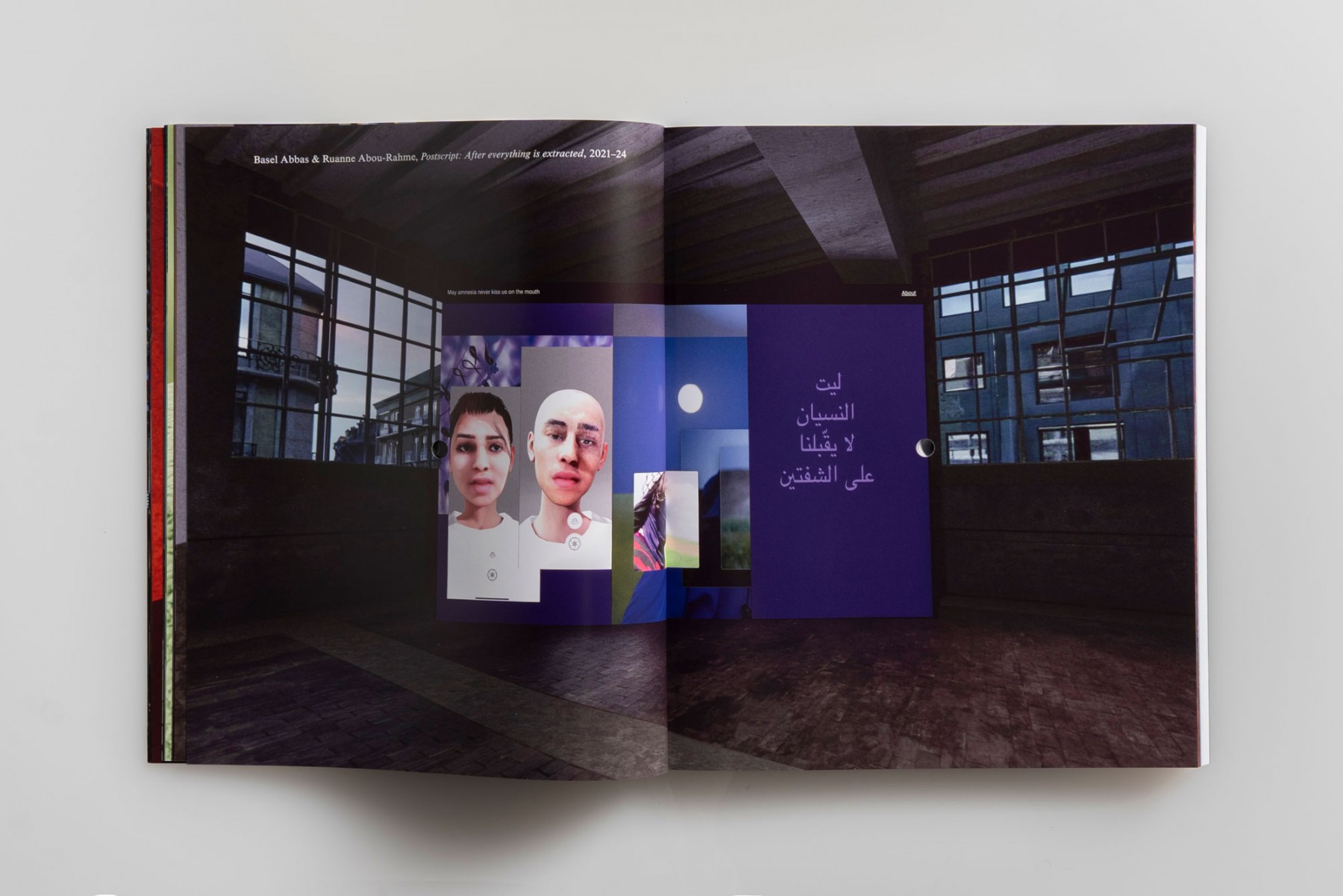
The exhibition presented works, specifically commissioned for the occasion, by Basel Abbas & Ruanne Abou-Rahme, alfatih, American Artist, Danielle Brathwaite-Shirley, Sheila Chiamaka Chukwulozie, Formafantasma, Aziz Hazara, Interspecifics, Lawrence Lek, Shuang Li, Diego Marcon, Lauren Lee McCarthy, Sahej Rahal, Jenna Sutela, Emmanuel Van der Auwera, and an exhibition display conceived by Giacomo Castagnola. The works on show explore the concepts of the invisible and the unknown, as expressed through aesthetics, the use of technology, and a wide variety of sensibilities.
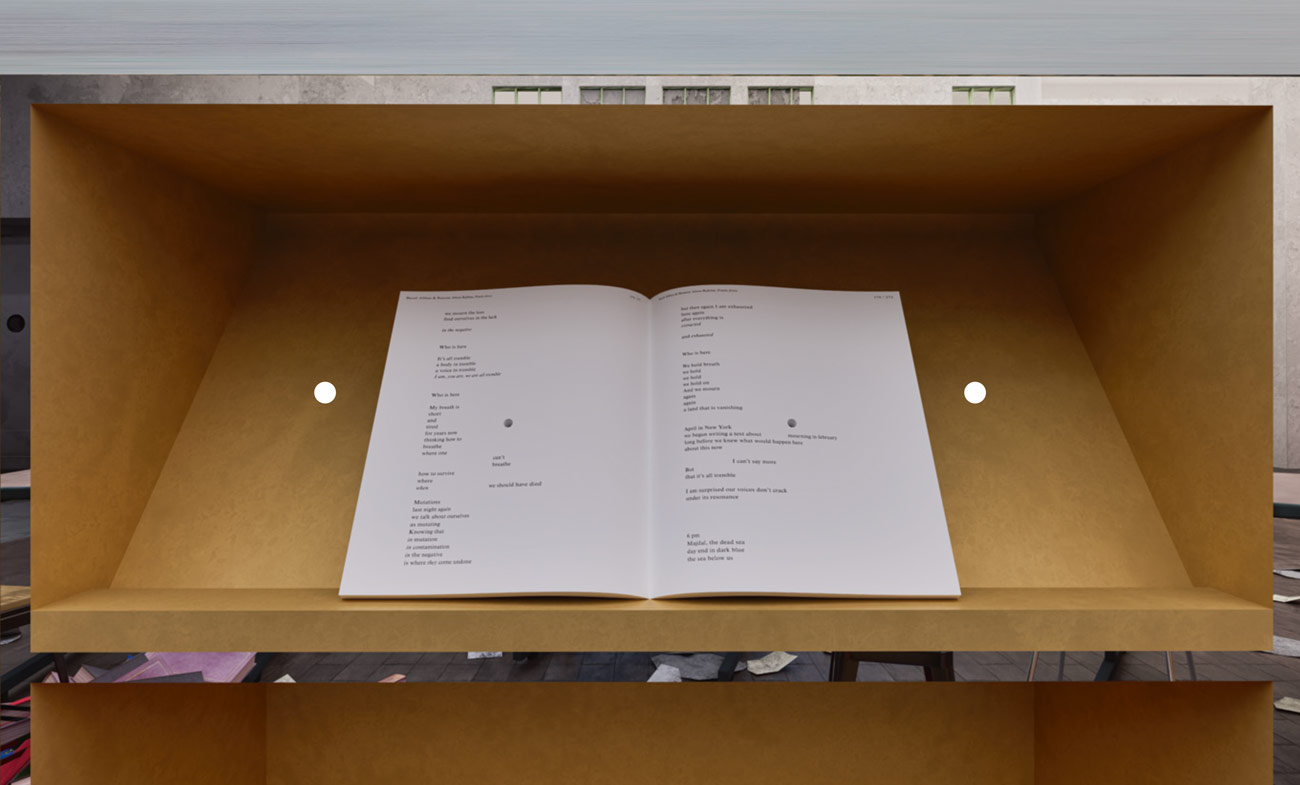
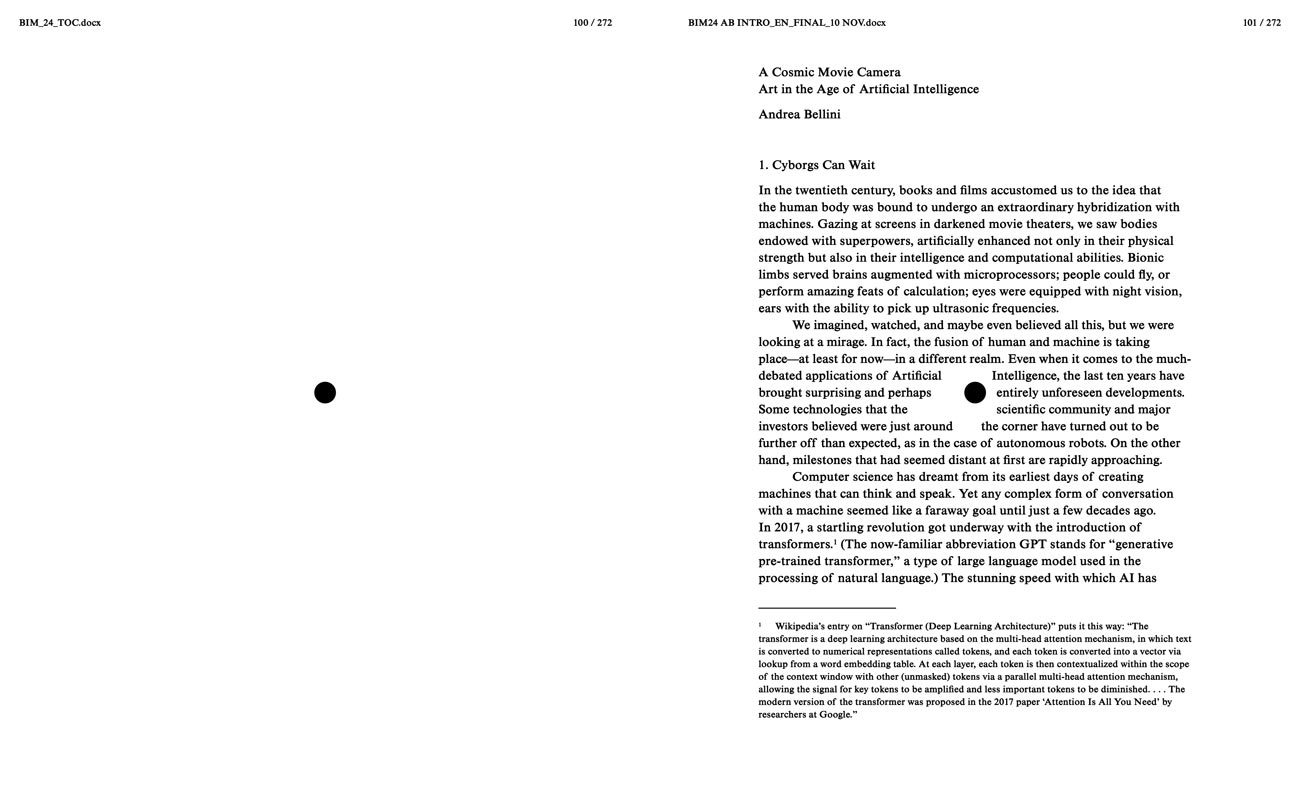
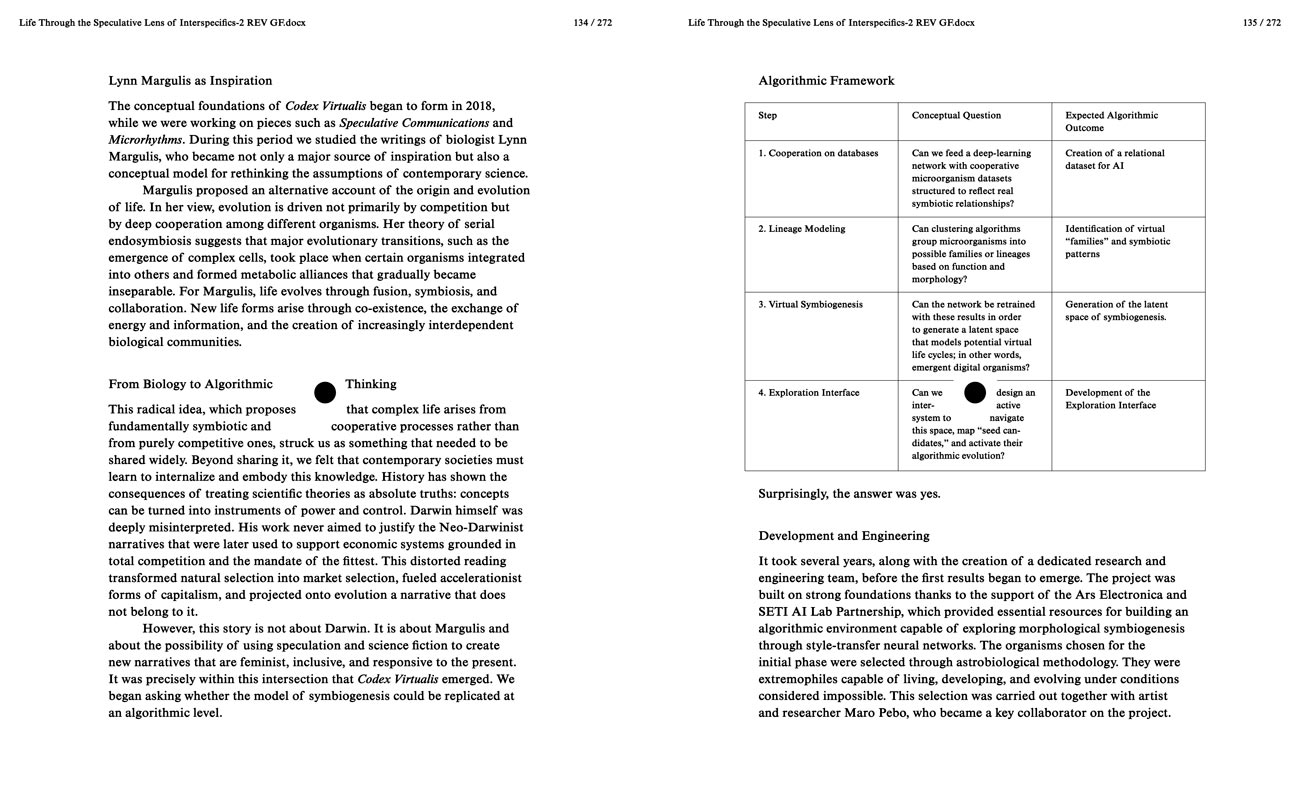
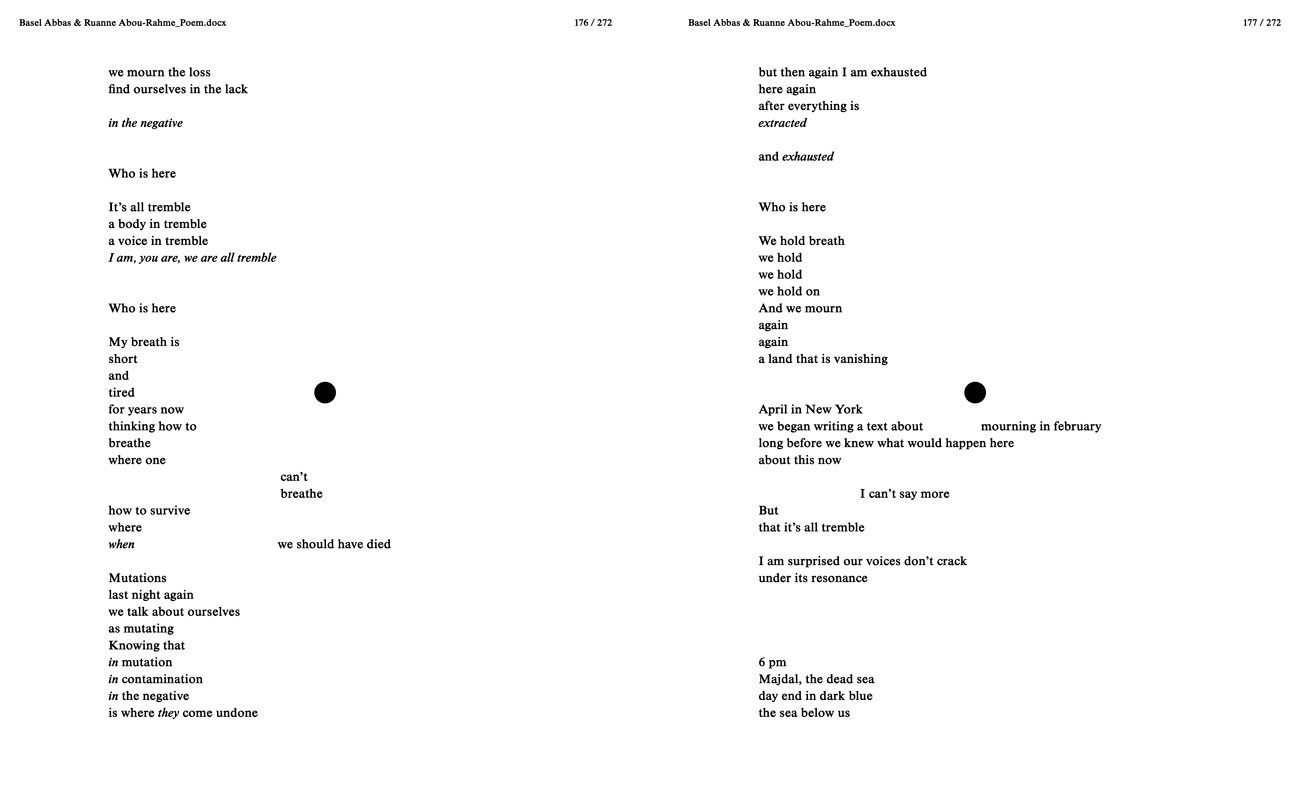
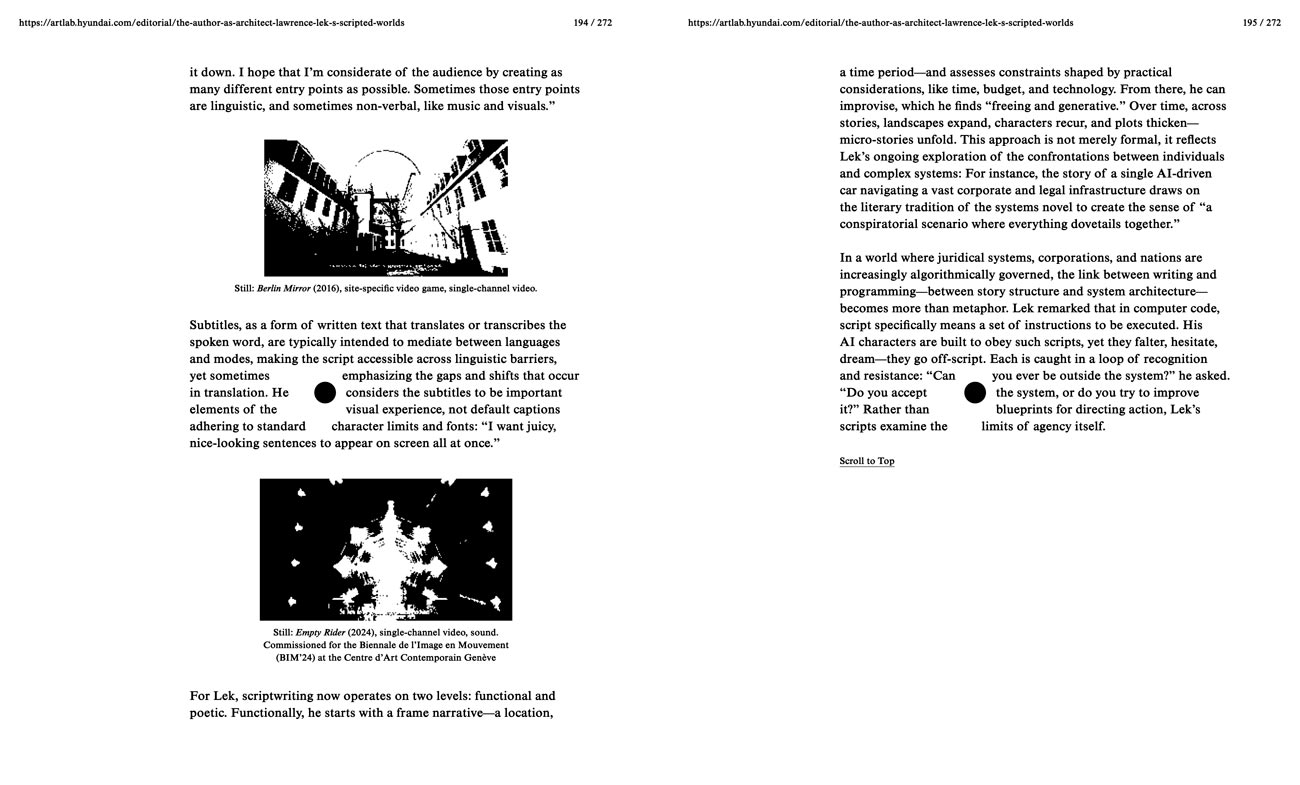
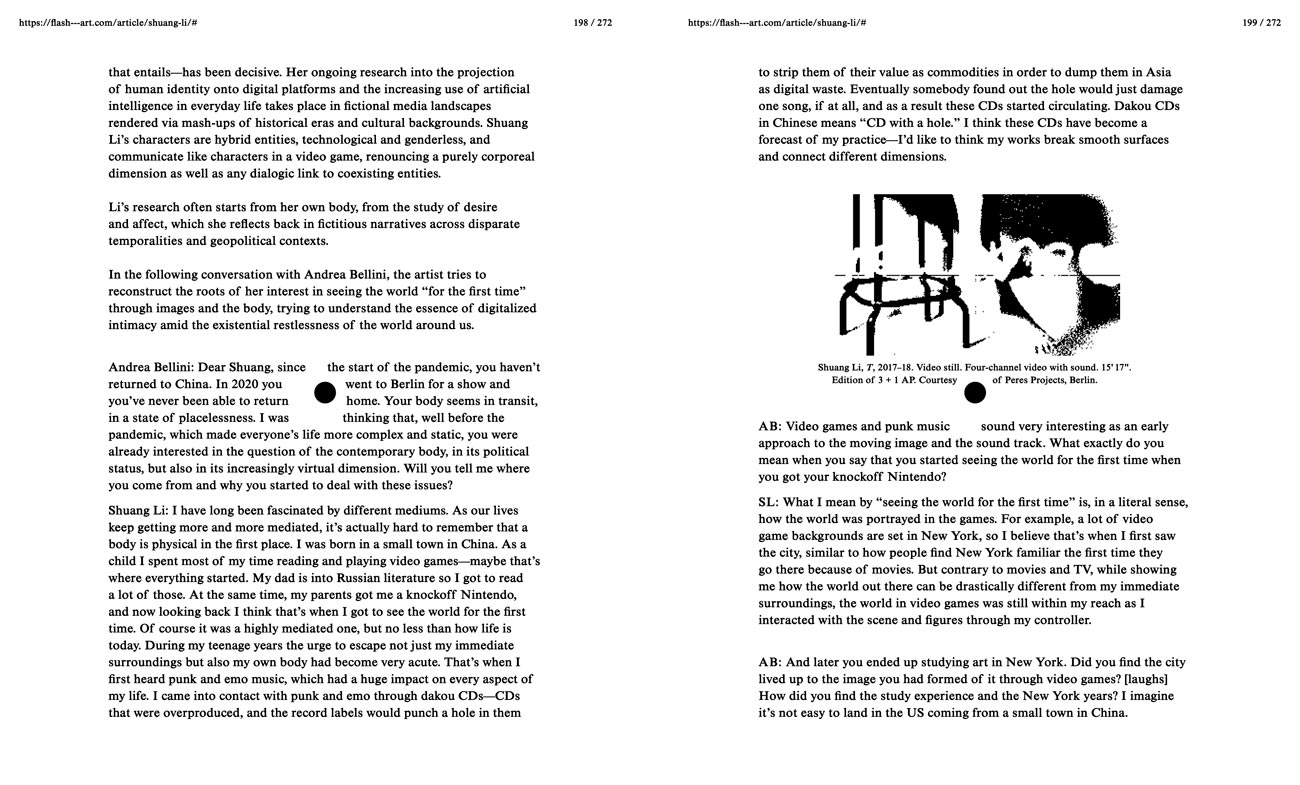
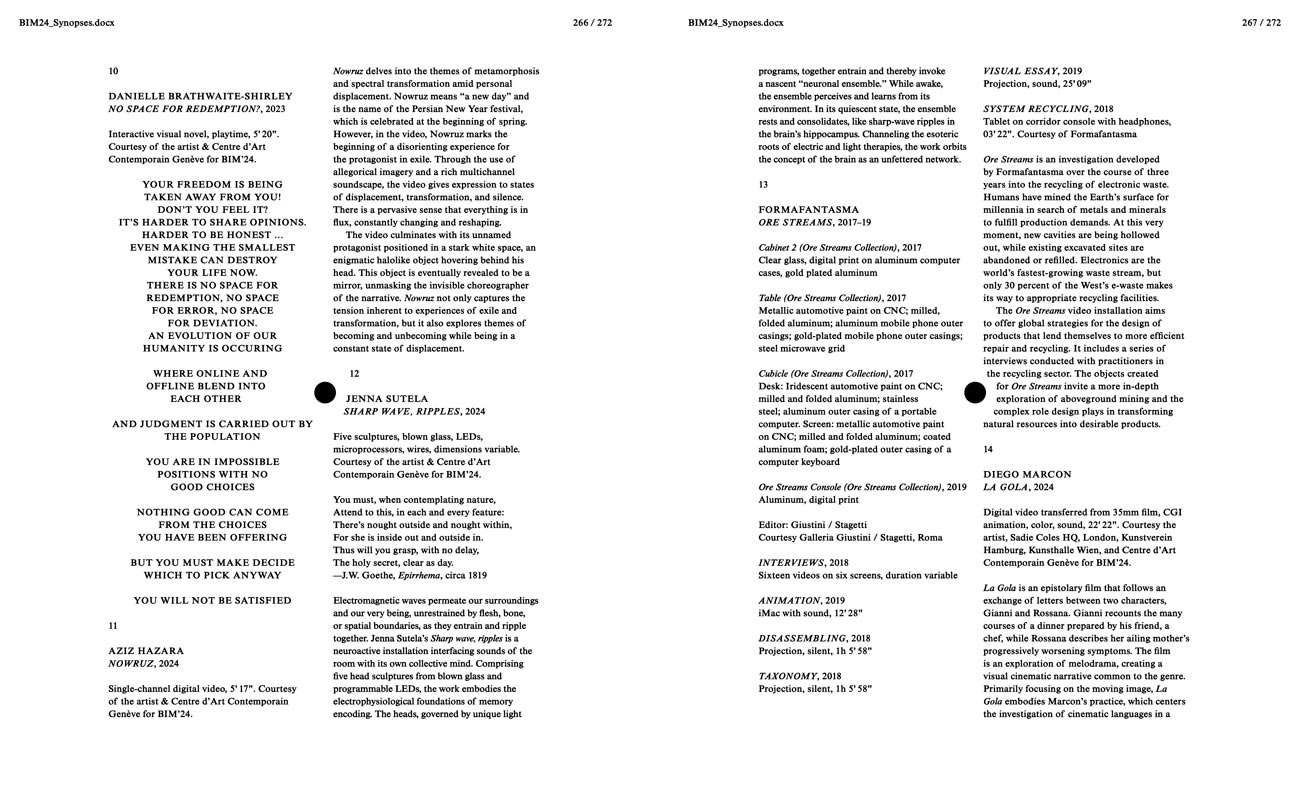
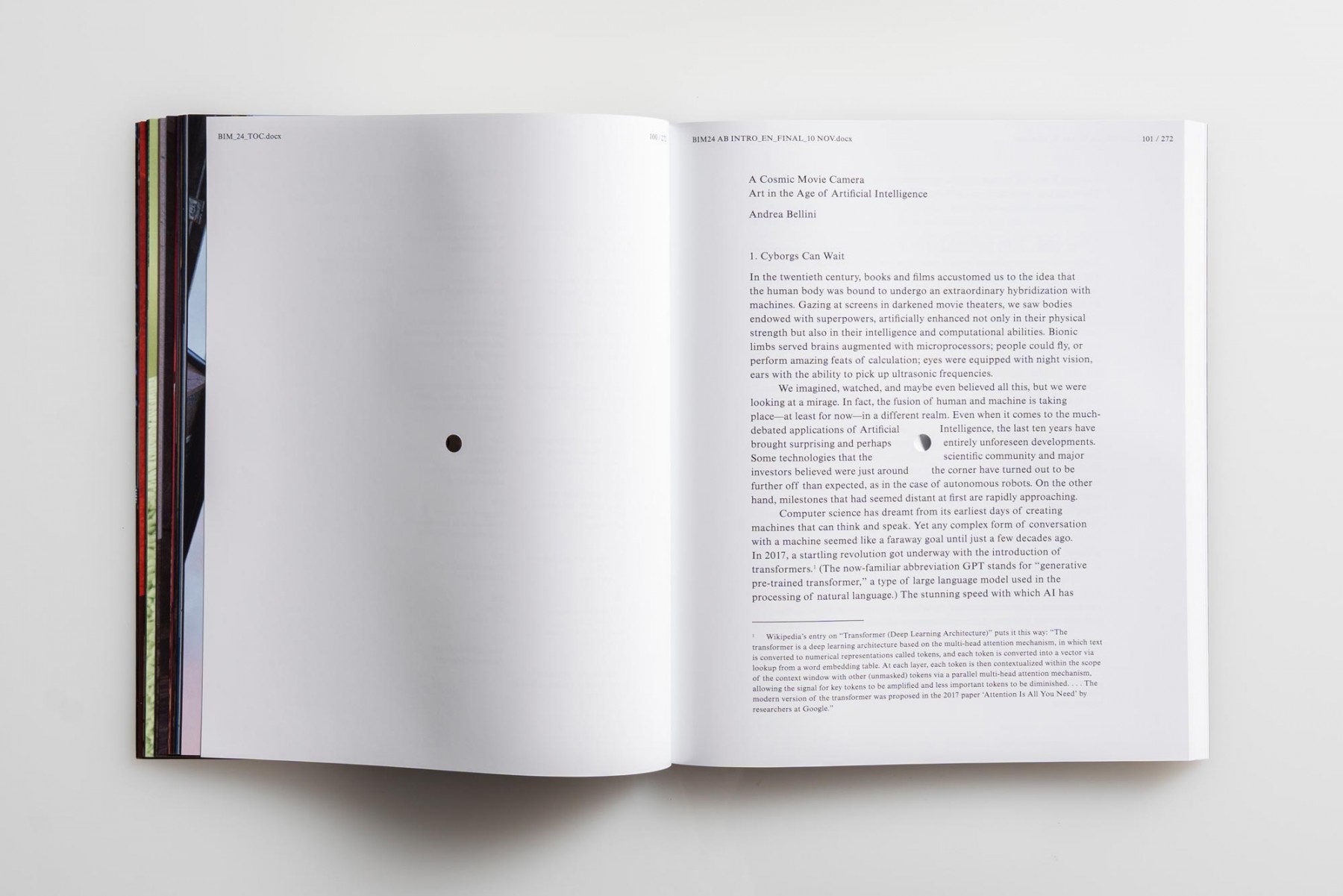
The catalogue documenting the exhibition was conceived as a “binder” of the future, as indicated by the holes that run through the publication, from front to back. The book collects various types of texts relating to the artists participating in the Biennale—reviews, essays, interviews, poems, emails, and texts written for the occasion—with a view to creating a paper archive that may preserve the memory of the project in a dystopian future: inside a spaceship or in the building of the Centre d’Art Contemporain Genève, transformed in the distant future.
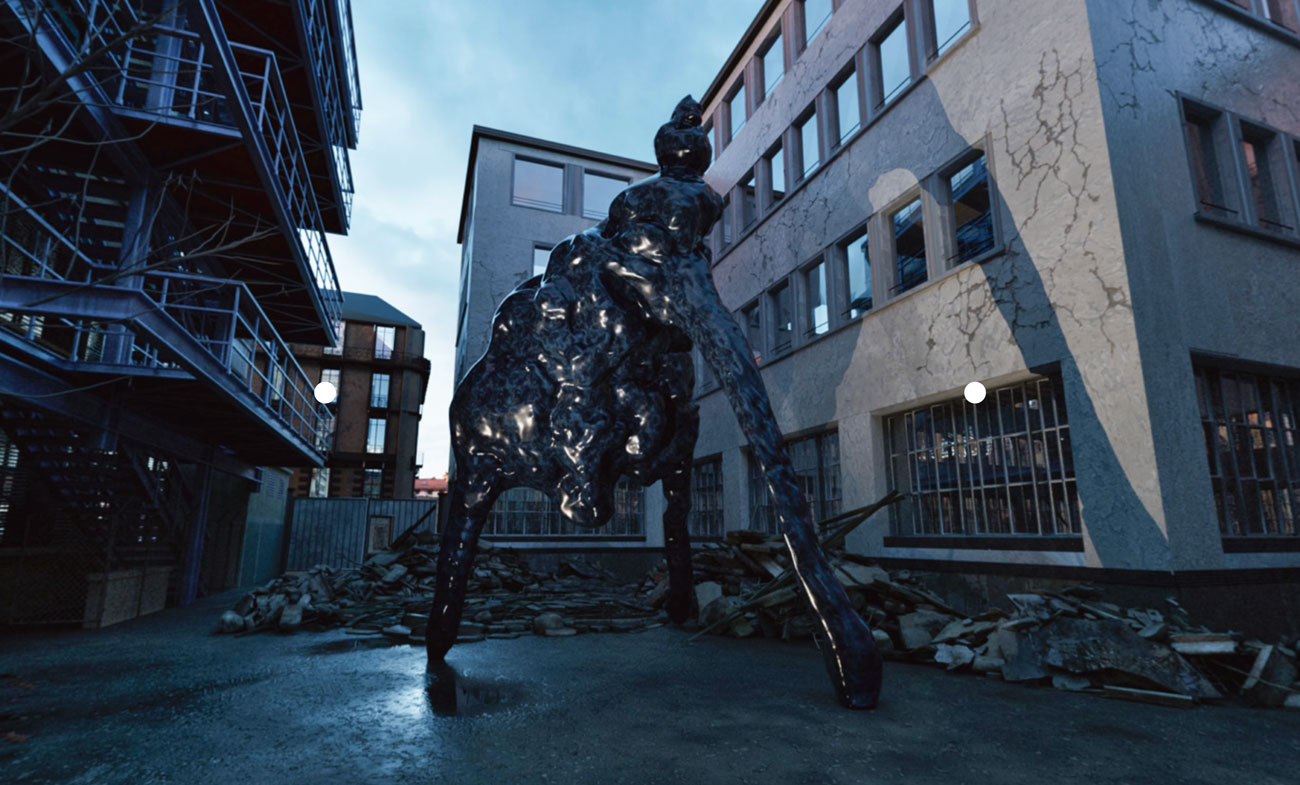
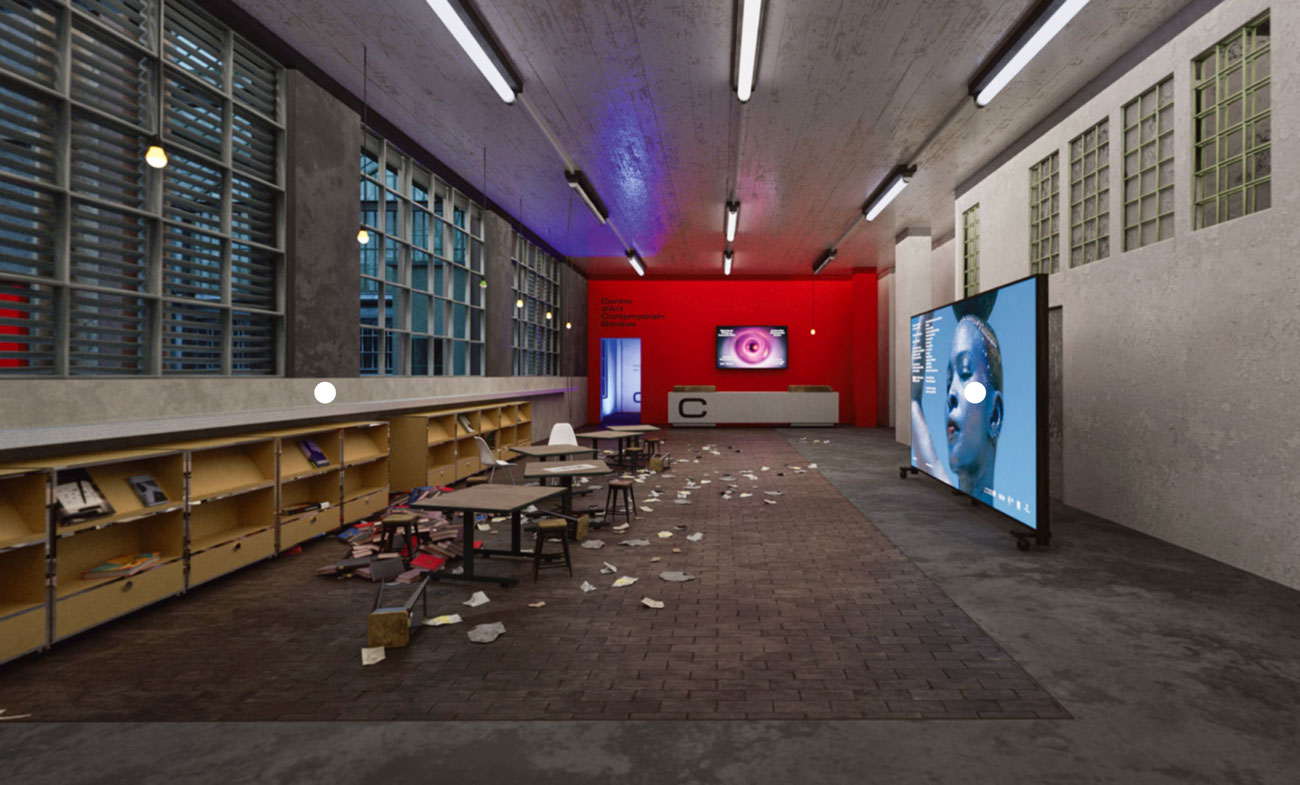
The visual essay that projects the works into a virtual context was designed by EPOCH, who also created the website hosting the ongoing virtual exhibition (bim24.ch). The catalogue’s combination of print and digital formats, the real and the virtual, the past and the future, conveys the conceptual core of the Biennale, which explores the inextricable intertwining of AI, digital culture, and art in the contemporary world.