Maxiprocesso brings together 360 photographs by Maria D. Rapicavoli, one for each of the archival folders documenting the largest mafia trial in history, held in Palermo from 1986 to 1987. The volume explores the relationship between memory, justice, and social responsibility, examining the material element of a landmark event in contemporary Italian history.
This is the first monograph on the influential American choreographer and dancer Trajal Harrell. In an entertaining, far-reaching conversation with curator Daniel Baumann, Harrell covers all of his choreographies and performances, as well as his influences, successes, and failures, addressing how he transforms and transgresses the history of dance.
This book offers the first comprehensive overview of Anna Franceschini’s practice. Organized around recurring themes, it explores animation, the body, machines, ghosts, desire, and windows through commissioned contributions and selected writings. Its associative structure reflects her interest in repetition, transformation, and unstable images.
This book accompanies 5 Works, Lydia Ourahmane’s first institutional solo show in Italy, staged at the Nicoletta Fiorucci Foundation in Venice and curated by Polly Staple, during the 61st Venice Biennale, and includes newly commissioned texts and images that further contextualize the artist’s practice and work.
Museums of Tears extends Francesco Vezzoli’s 2024 exhibition at Museo Correr, Venice, combining historical works and new commissions to explore antiquity, emotion and illusion. Conceived as an artist’s book rather than a catalogue, it transforms the museum guide into a hybrid archive and portable museum of memory, beauty and mourning.
A project by Fondazione In Between Art Film, edited by Carla Subrizi, Paola Ugolini, and Maria Alicata, this illustrated volume investigates the cinematic, documentary, and video output of women artists and filmmakers operating in Italy in the 1960s and 1970s, situating their research at the intersection of artistic experimentation, politics, society, and technology.
Conceived by Philip Pilekjær, Samuel Haitz, Paolo Baggi and Tobias Kaspar.
Design by Pascal Storz and Lucas Manser
2024, English, softcover, 15 x 20.5 cm, 200 pages
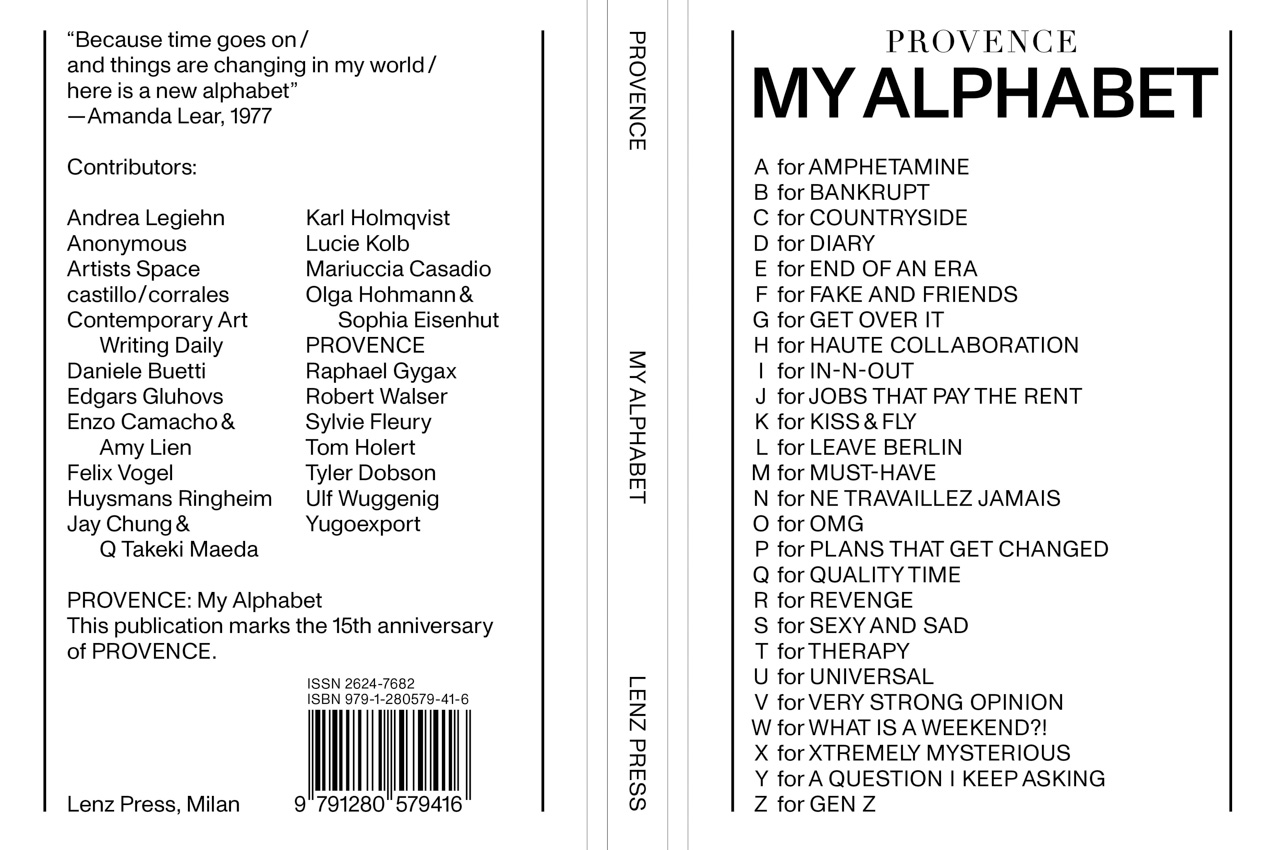
ISBN: 979-12-80579-41-6
PROVENCE was founded in 2009 in Nice, France, and has since shape-shifted through a variety of constellations. Today, PROVENCE operates as a collectively run publishing house and agency for contemporary art.
The ambition of PROVENCE has always been to question and challenge its own format by conceiving exhibitions, artworks, and merchandise in parallel with its publishing and agency activities. This includes exhibitions at Halle für Kunst, Lüneburg; Artists Space, New York; an off-site Hannah Villiger exhibition in Basel; and participation in numerous group exhibitions. Also worth mentioning are a hair salon (never realized), numerous art fair booths, a collection of driftwood, a temporary casino hosted by Etablissement d’en face in Brussels, 215 very real press passes, media partnerships, a travel guide for Nice rated no. 1 in Vogue US, stickers, handbags, and plenty of dinners.
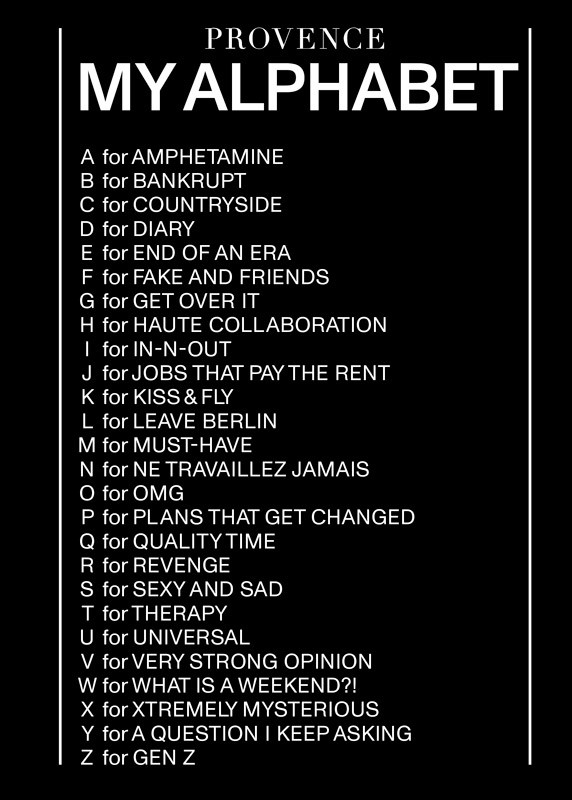
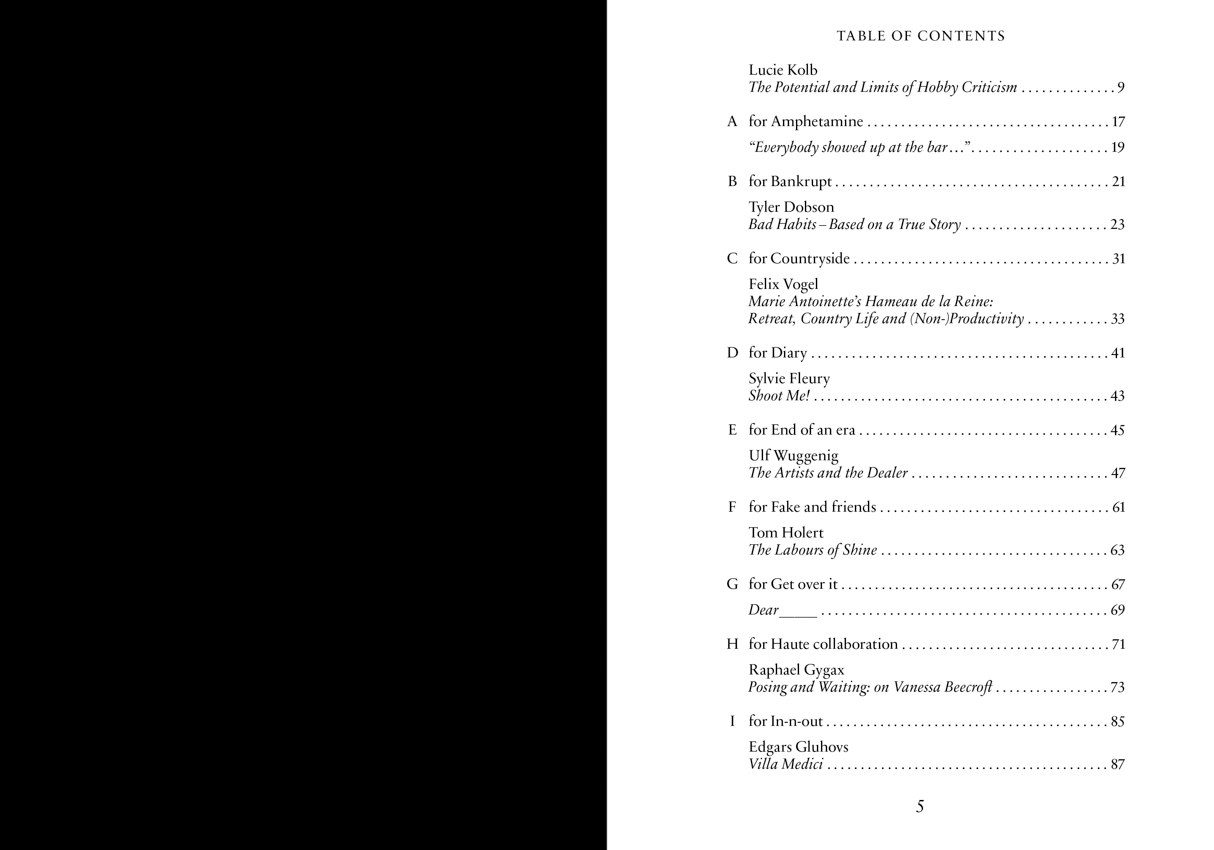
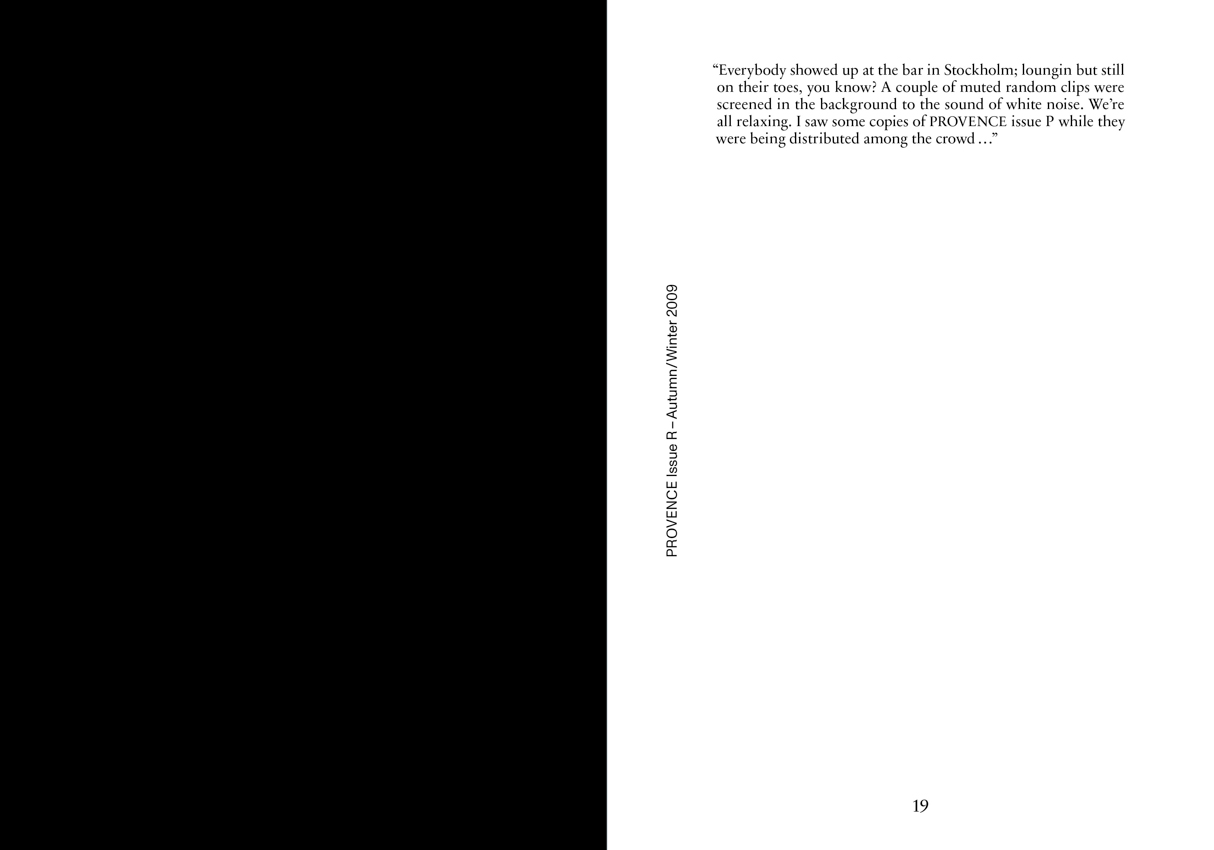
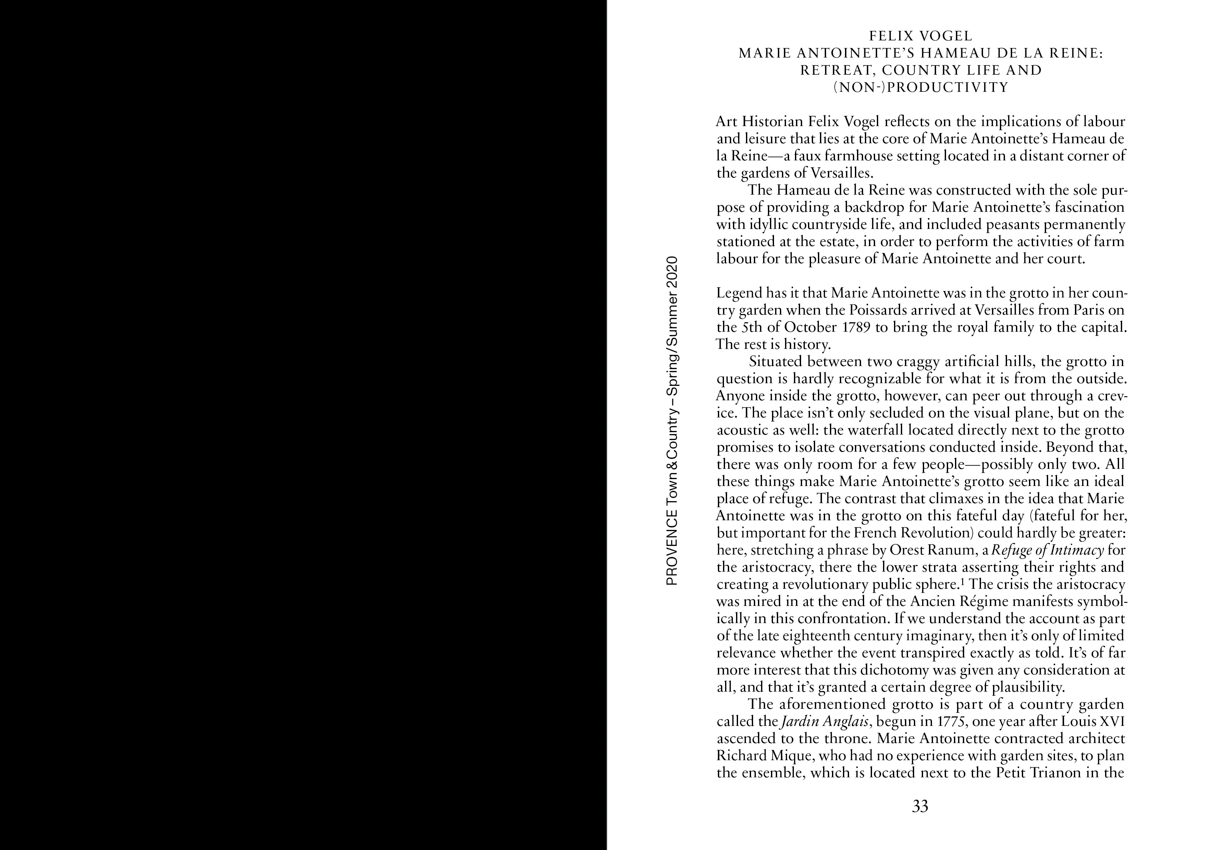
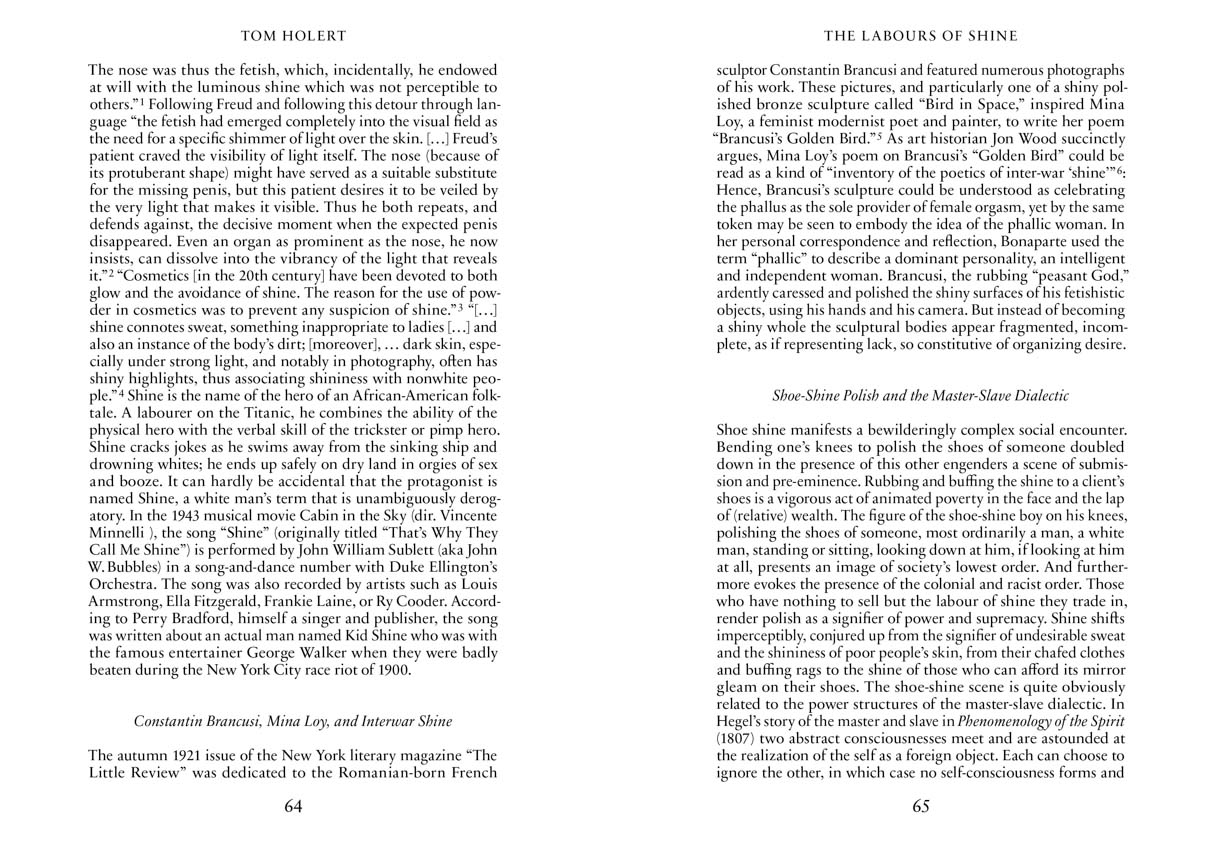
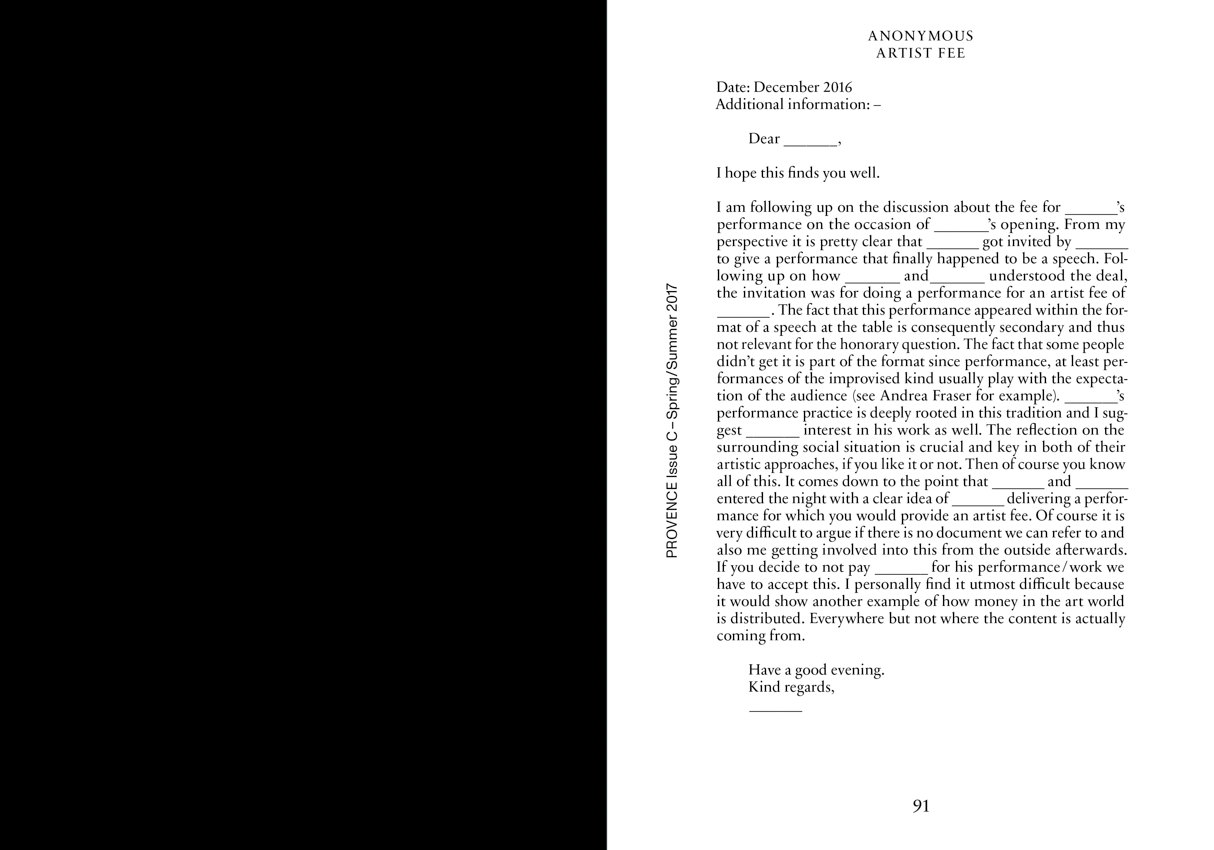
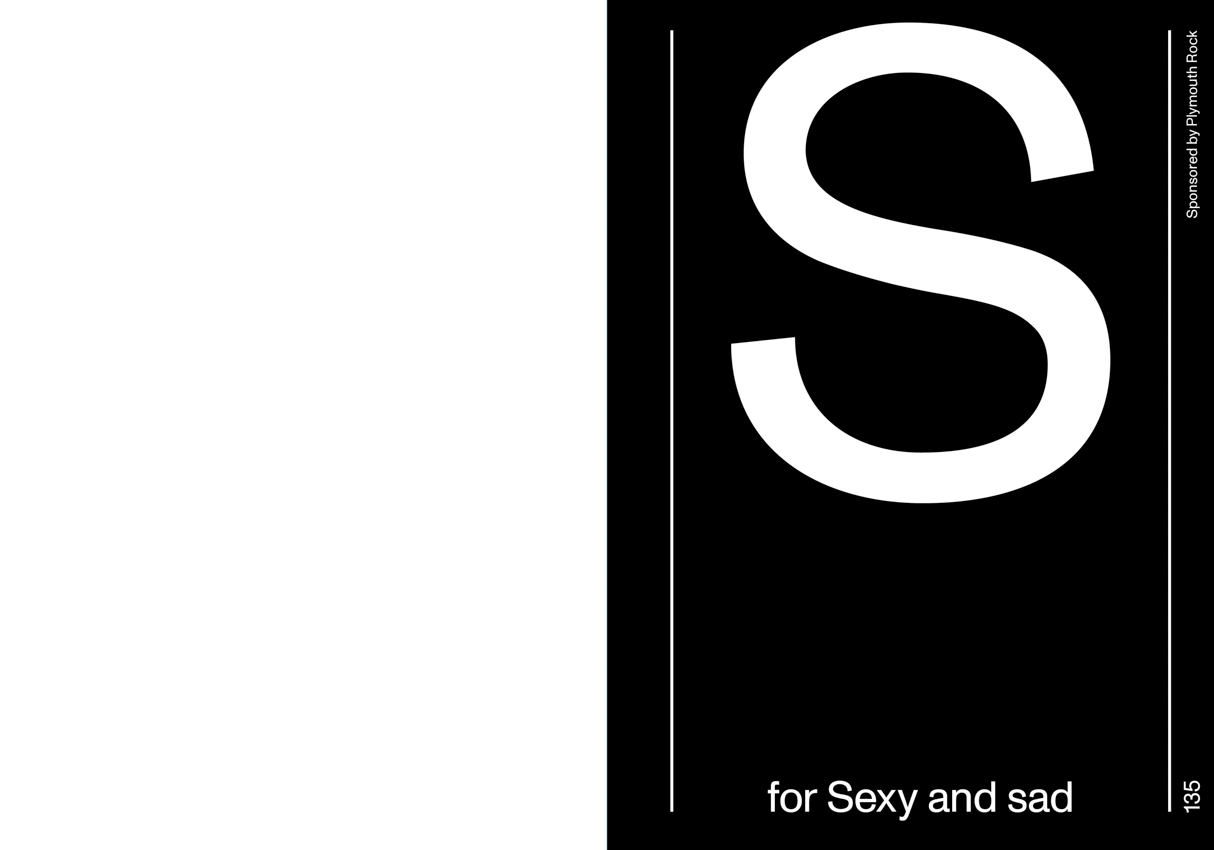
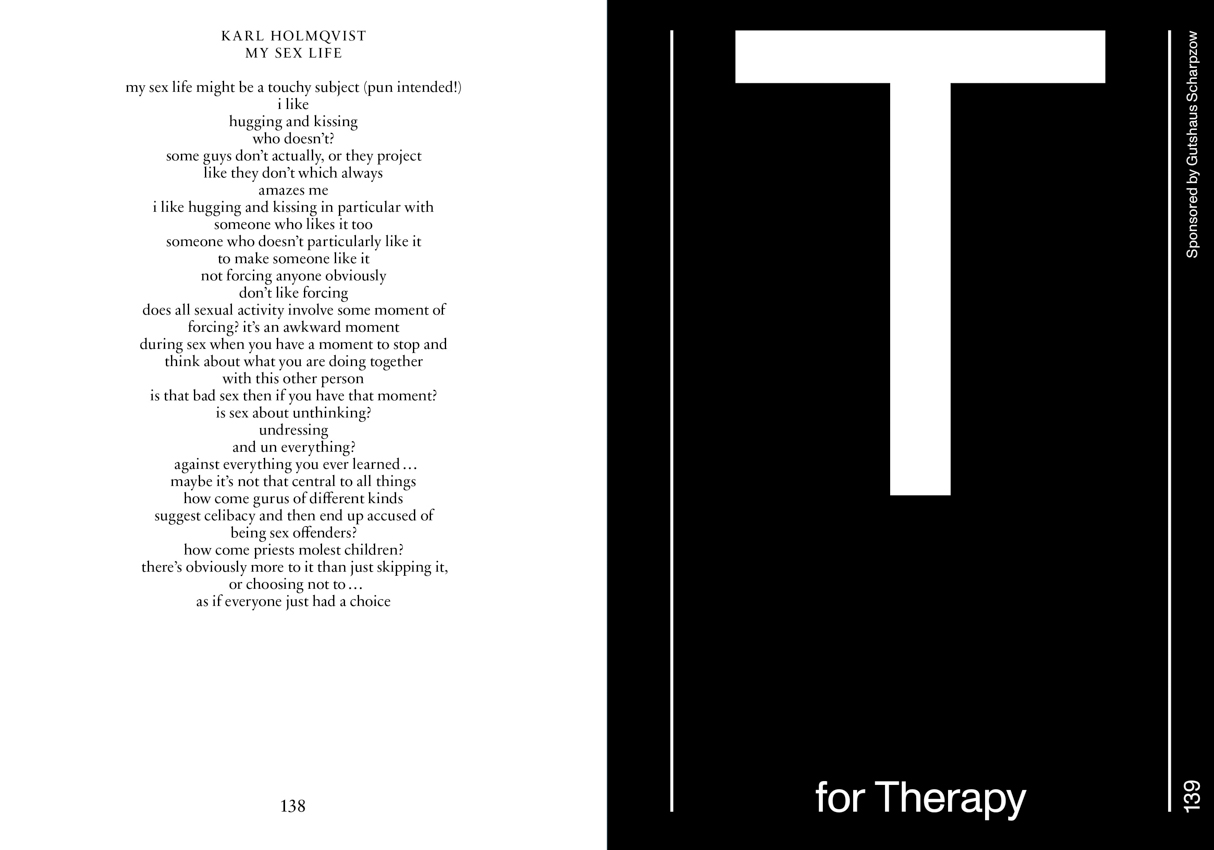
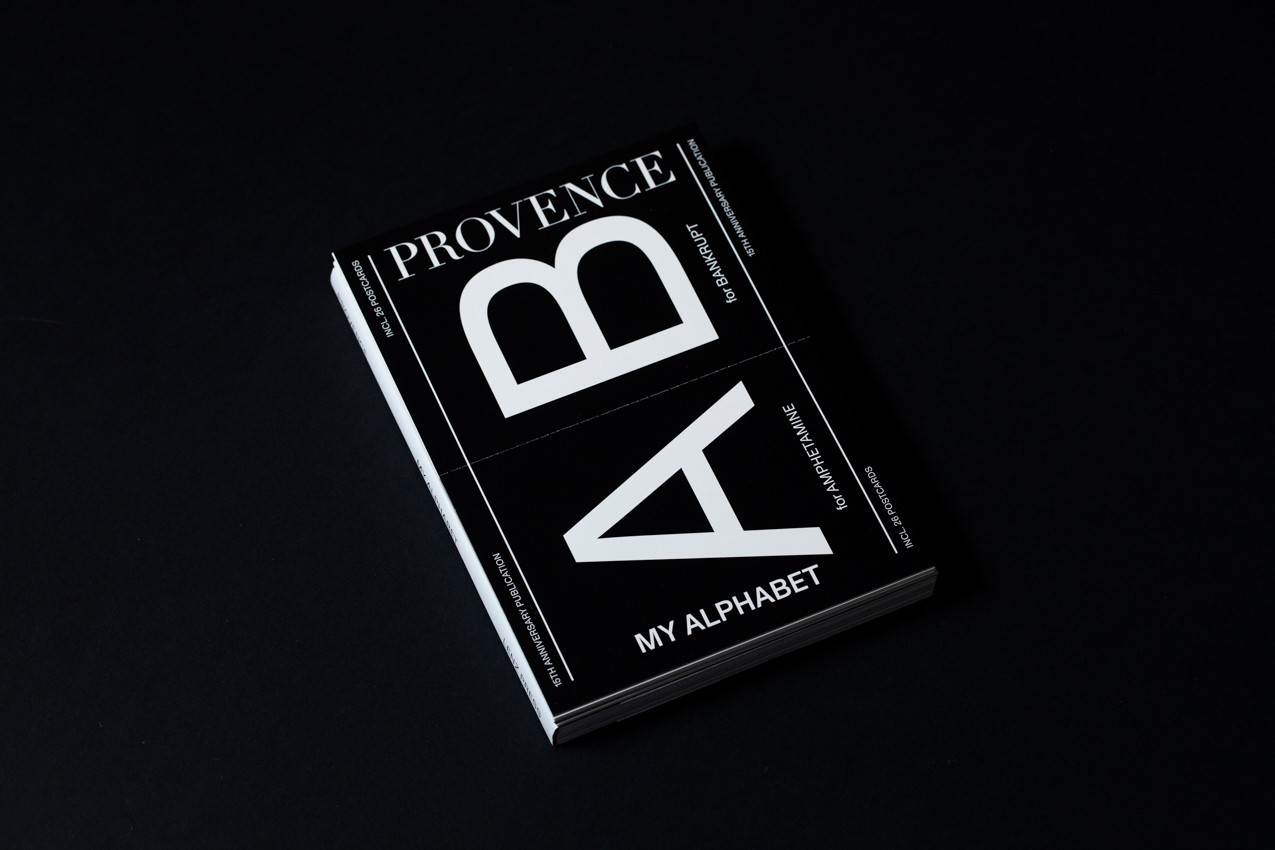
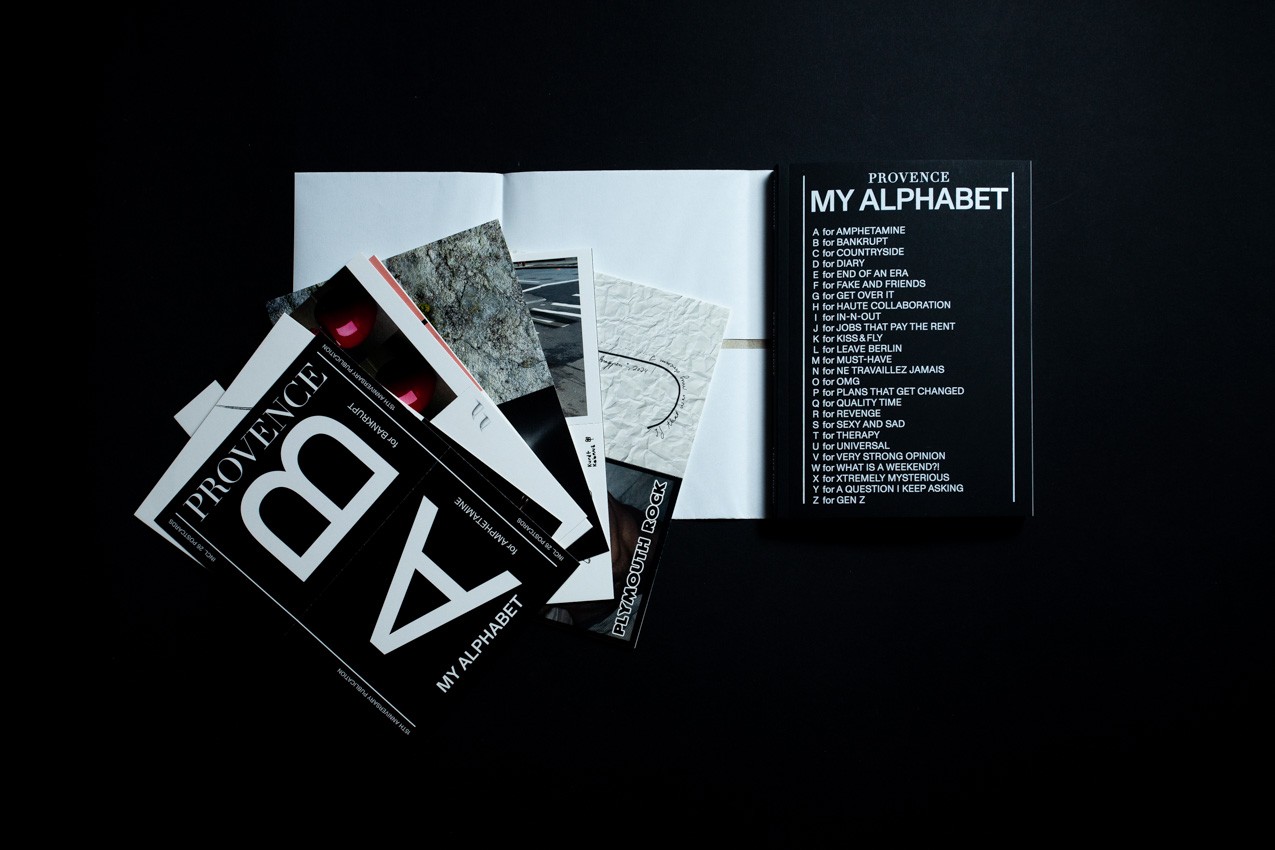
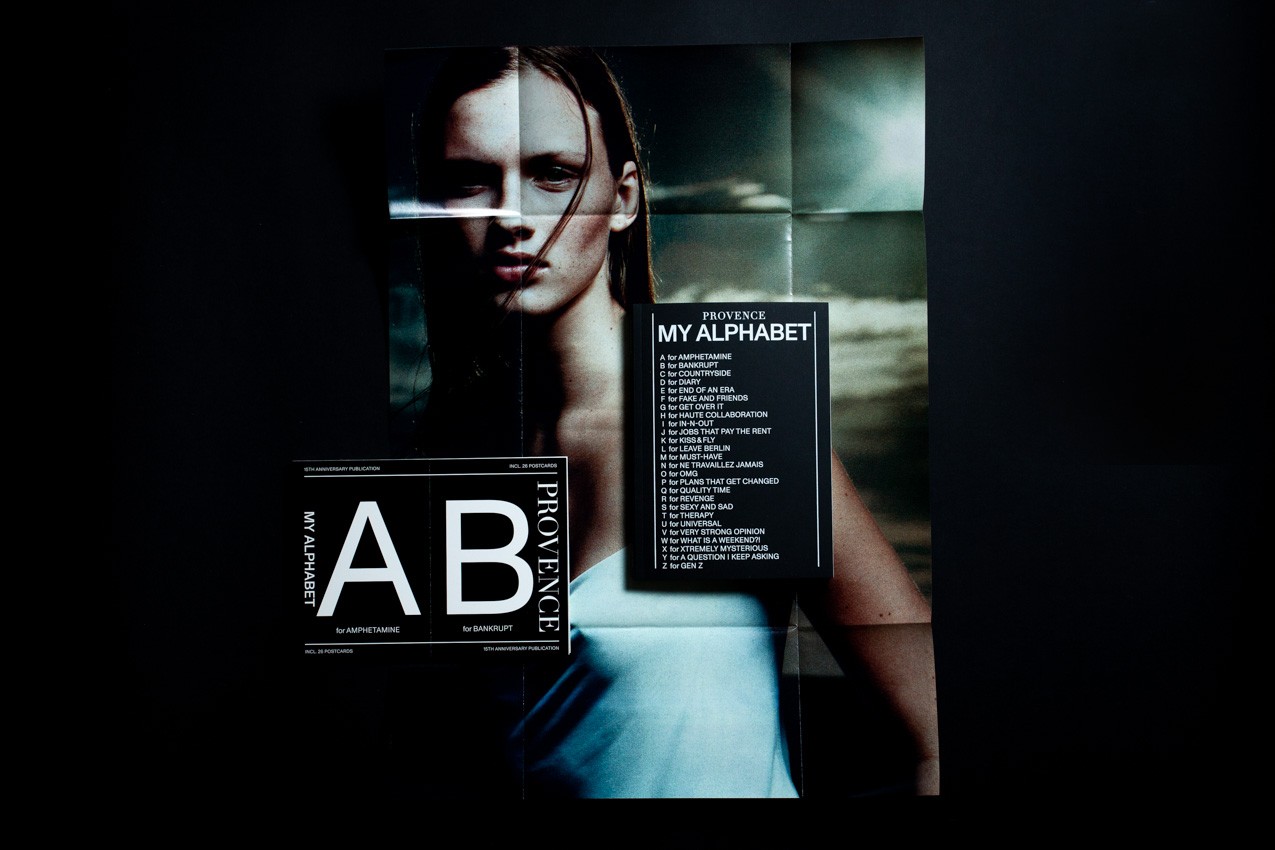
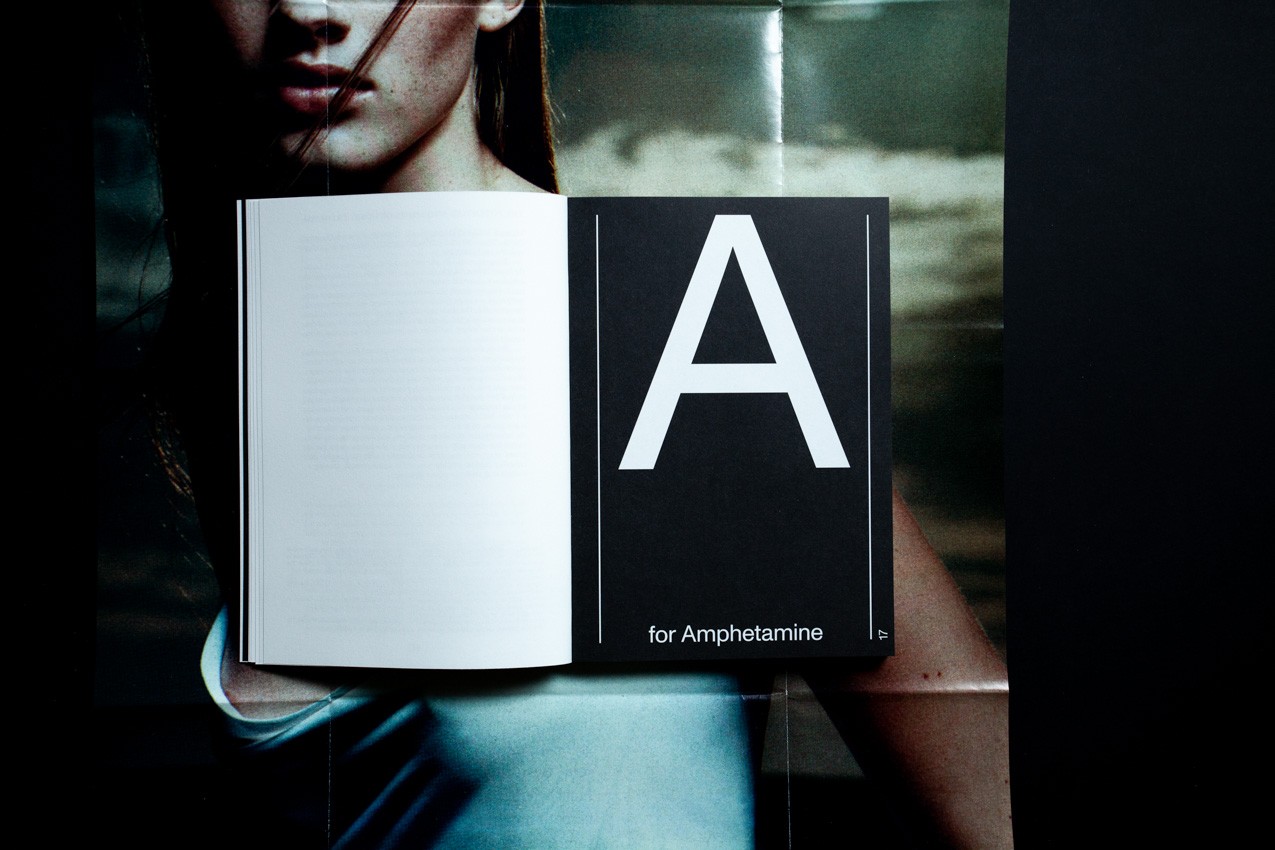
On the occasion of PROVENCE’s 15th anniversary, the reader My Alphabet presents 26 texts published by PROVENCE between 2009 and 2024, either in print or digitally in the weekly newsletter. These texts are sorted alphabetically, ranging from A for Amphetamine to N for Ne travaillez jamais to Z for Gen Z.
My Alphabet compiles selected contributions from the PROVENCE archive by Andrea Legiehn, Anonymous, Artists Space, castillo / corrales, Contemporary Art Writing Daily, Edgars Gluhovs, Enzo Camacho & Amy Lien, Felix Vogel, Huysmans Ringheim, Jay Chung & Q Takeki Maeda, Karl Holmqvist, Mariuccia Casadio, Olga Hohmann & Sophia Eisenhut, PROVENCE, Raphael Gygax, Robert Walser, Sylvie Fleury, Tom Holert, Tyler Dobson, Ulf Wuggenig, and Yugoexport. The book also features Lucie Kolb’s essay “The Potential and Limits of Hobby Criticism,” which illuminates the history and conceptual intentions of PROVENCE and was commissioned specifically for this publication.
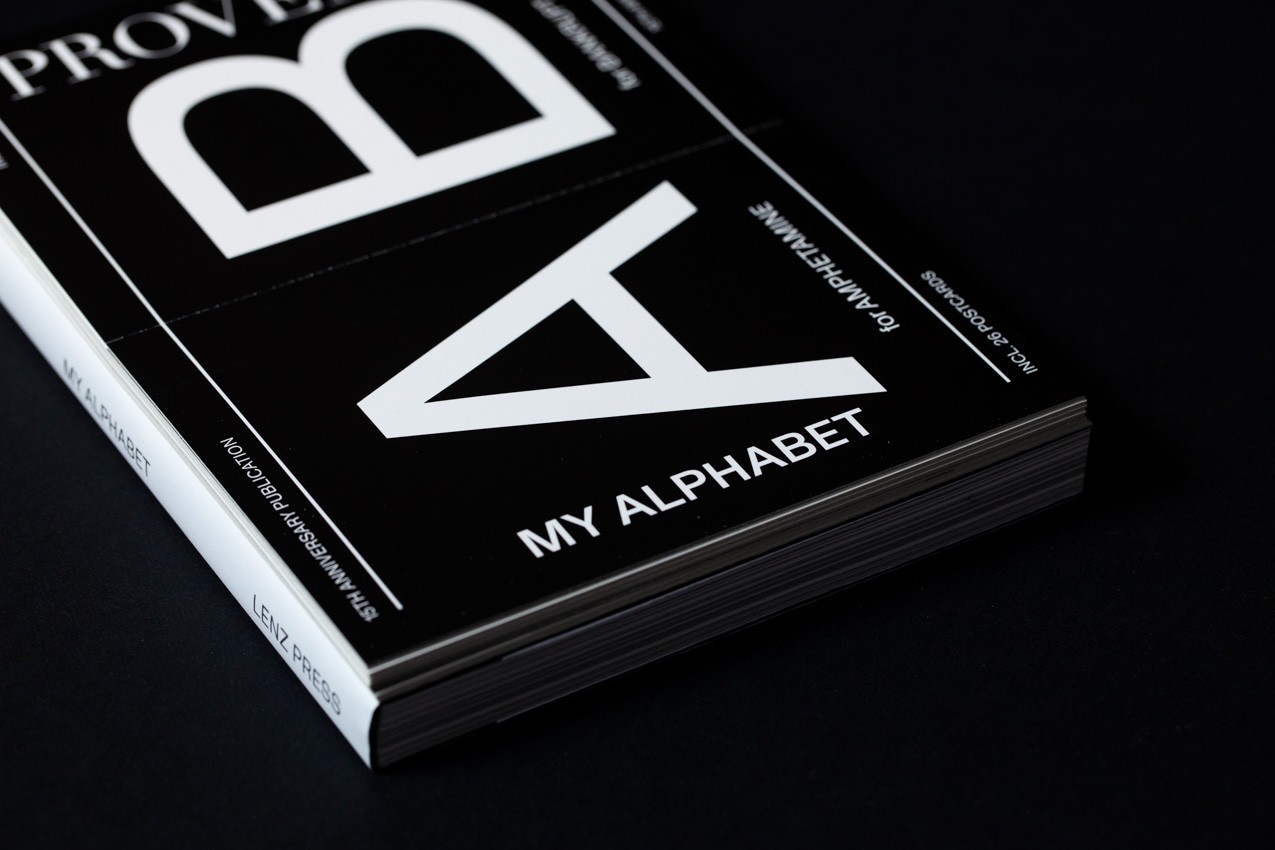
Additionally, My Alphabet is accompanied by a poster by Daniele Buetti hidden in the dust jacket and 26 postcards, each sporting a letter sponsored by institutions, galleries, artists, and friends.