A visual notebook of the screenshots taken by Yngve Holen over the past five years or so, 6G—the anticipated next phase of network technology—is a peculiarly sized artist’s book, a glossy non-linear agglomeration that reflects the intersections of production, life, and digital debris.
Conceived as a visual résumé, the book provides a comprehensive overview of Posenenske’s solo exhibitions and a record of her numerous group shows. Featuring an essay by curator Erlend Hammer on the role of documentary photographs in the circulation of works of art, it was published in conjunction with the eponymous show at the Haugar Art Museum in Tønsberg.
Since the 1980s, Belgian artist Sigefride Bruna Hauman has created a highly original body of work in different media. Her installations, reliefs and videos are the subject of a much-overdue retrospective organized by M Leuven—and of this first monograph.
Rituals of Care is an extensive monograph devoted to the work of Antonio Obá, published in conjunction with his eponymous exhibition presented at the Centre d’Art Contemporain Genève, curated by Andrea Bellini. Extensively illustrated, the book immerses the reader in Obá’s multifaceted oeuvre and in the magical iconographic universe of his paintings.
Claiming that the museum is not enough means asking what a museum should be and do, eventually questioning the role of cultural institutions in society. Through conversations, stills of documentaries, responses, and reprints of archival documents that explore ideas of architecture on the ground, this volume reflects on the tools deployed by the institution to redefine its relationship to others.
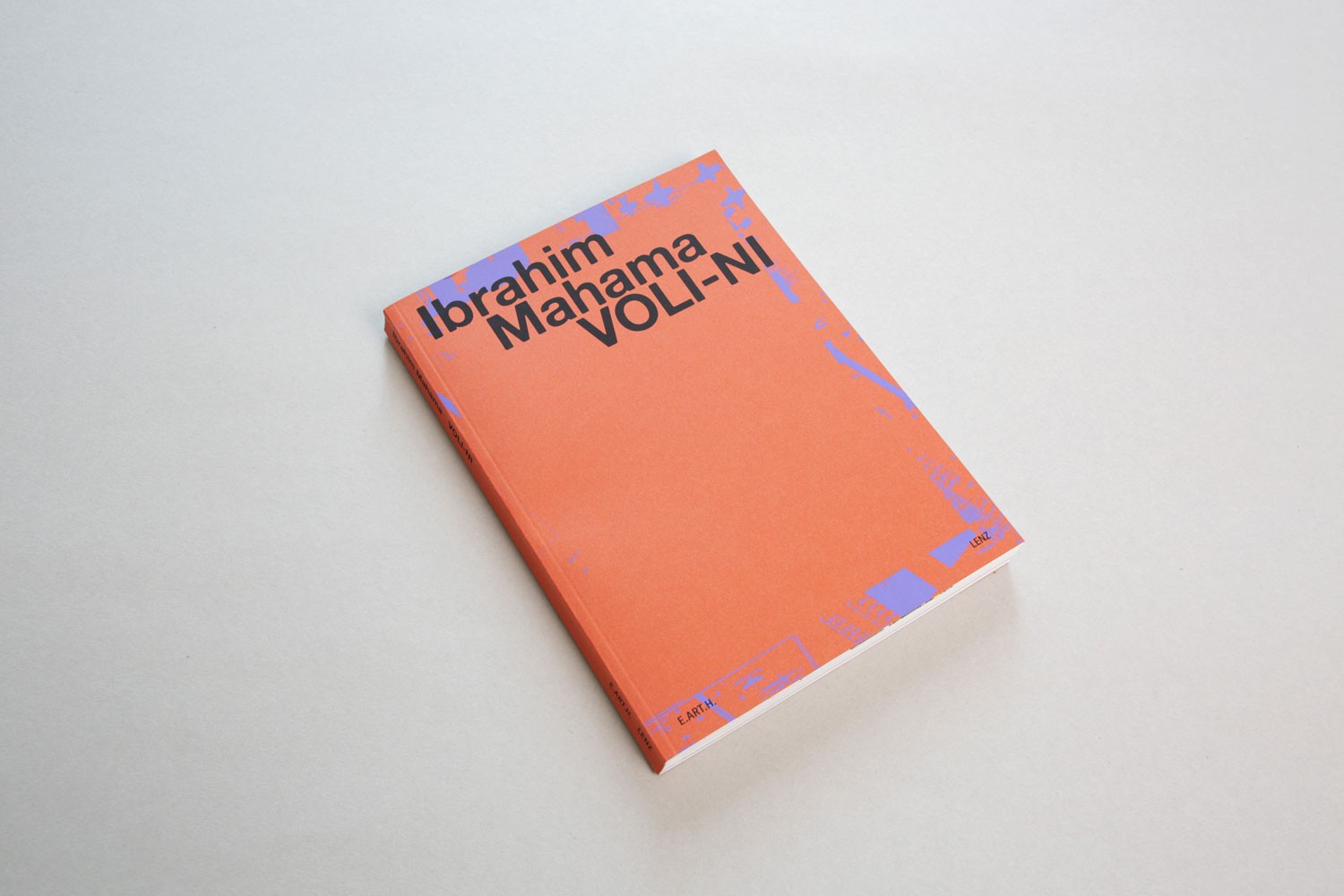
Edited by Ibrahim Mahama and Eva Brioschi
Texts by Bernard Akoi-Jackson and Ibrahim Mahama; Eva Brioschi; karî’kachä seid’ou and Selom Kudjie
Design: Studio Temp
Softcover, 272 pages, 21 x 28.5 cm
English / Italian
ISBN 979-12-80579-20-1
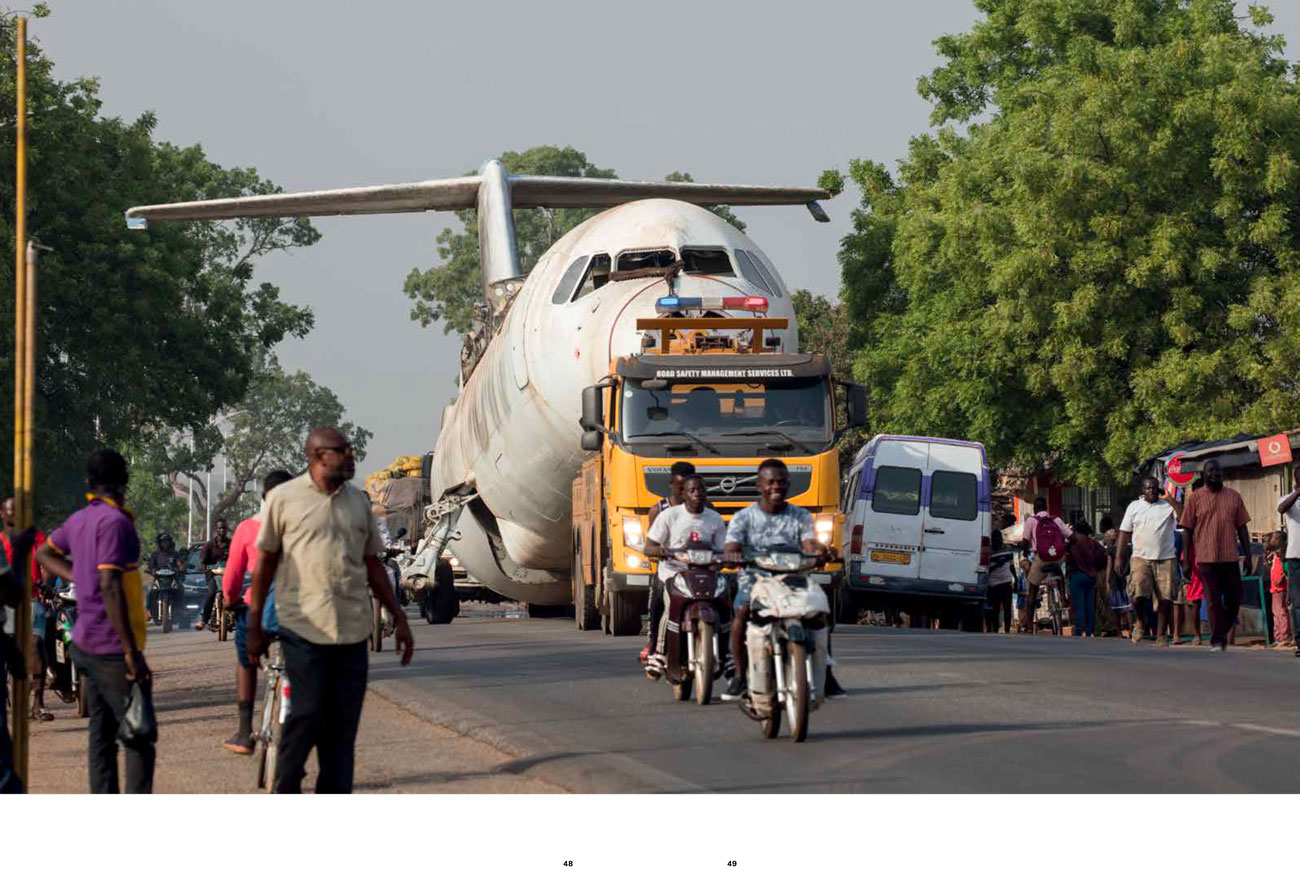
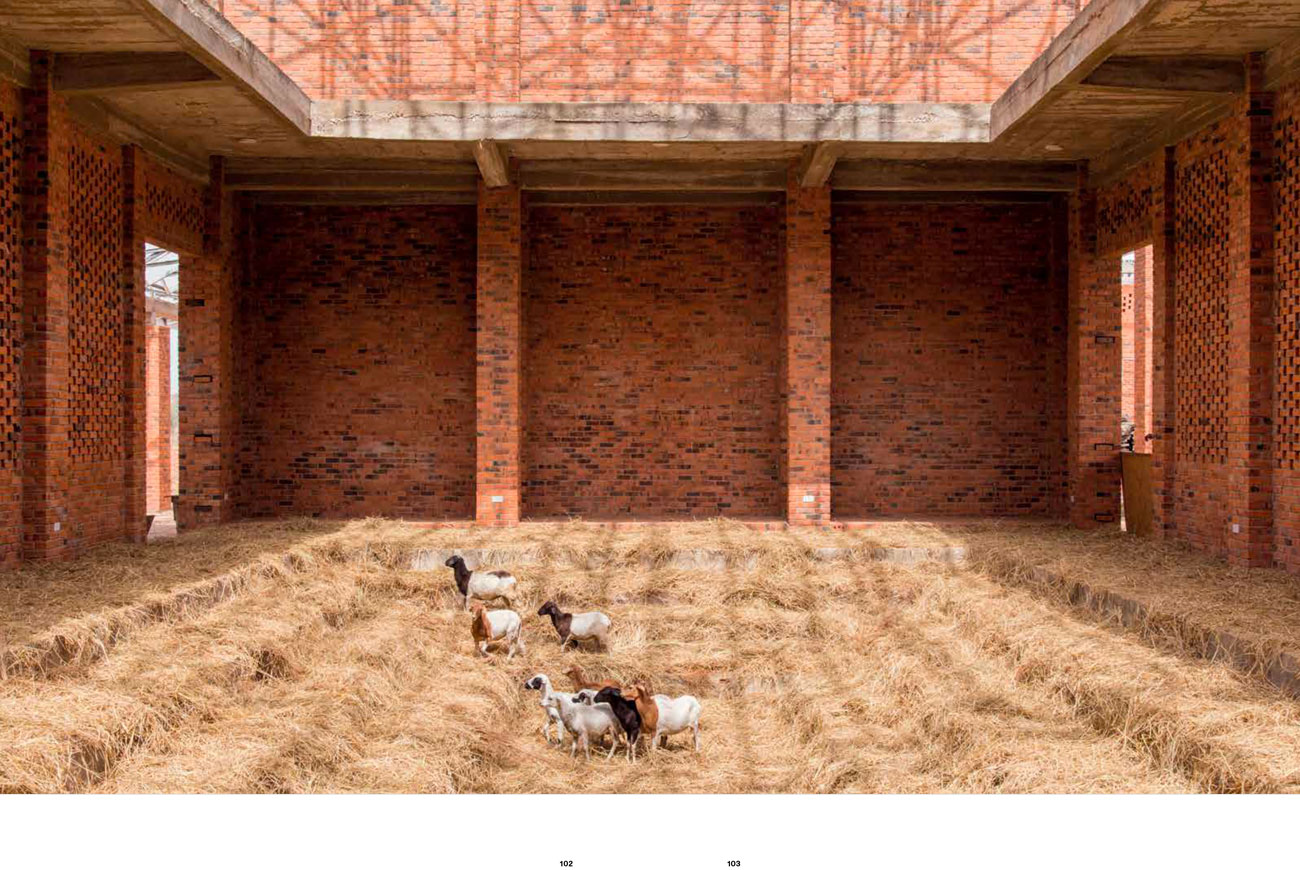
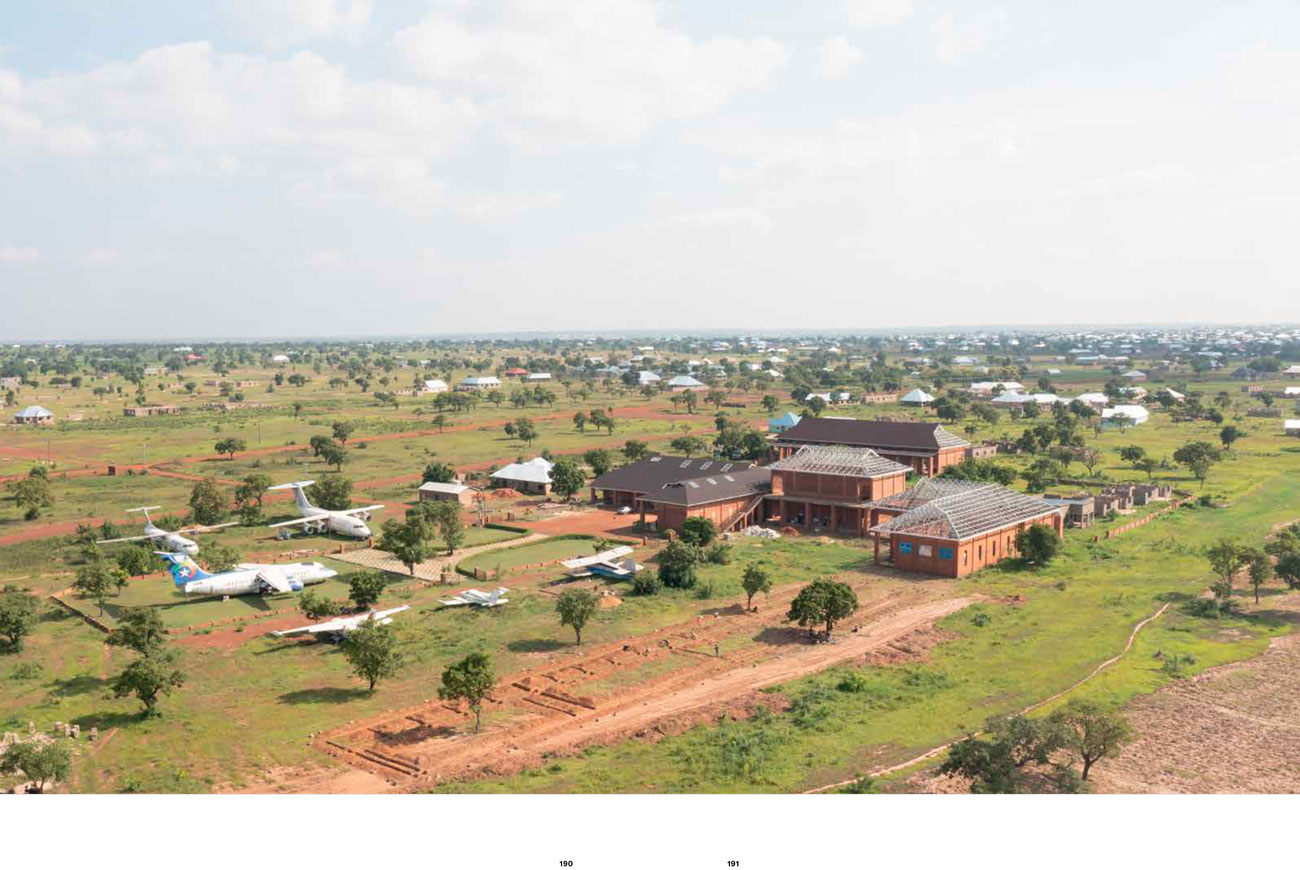
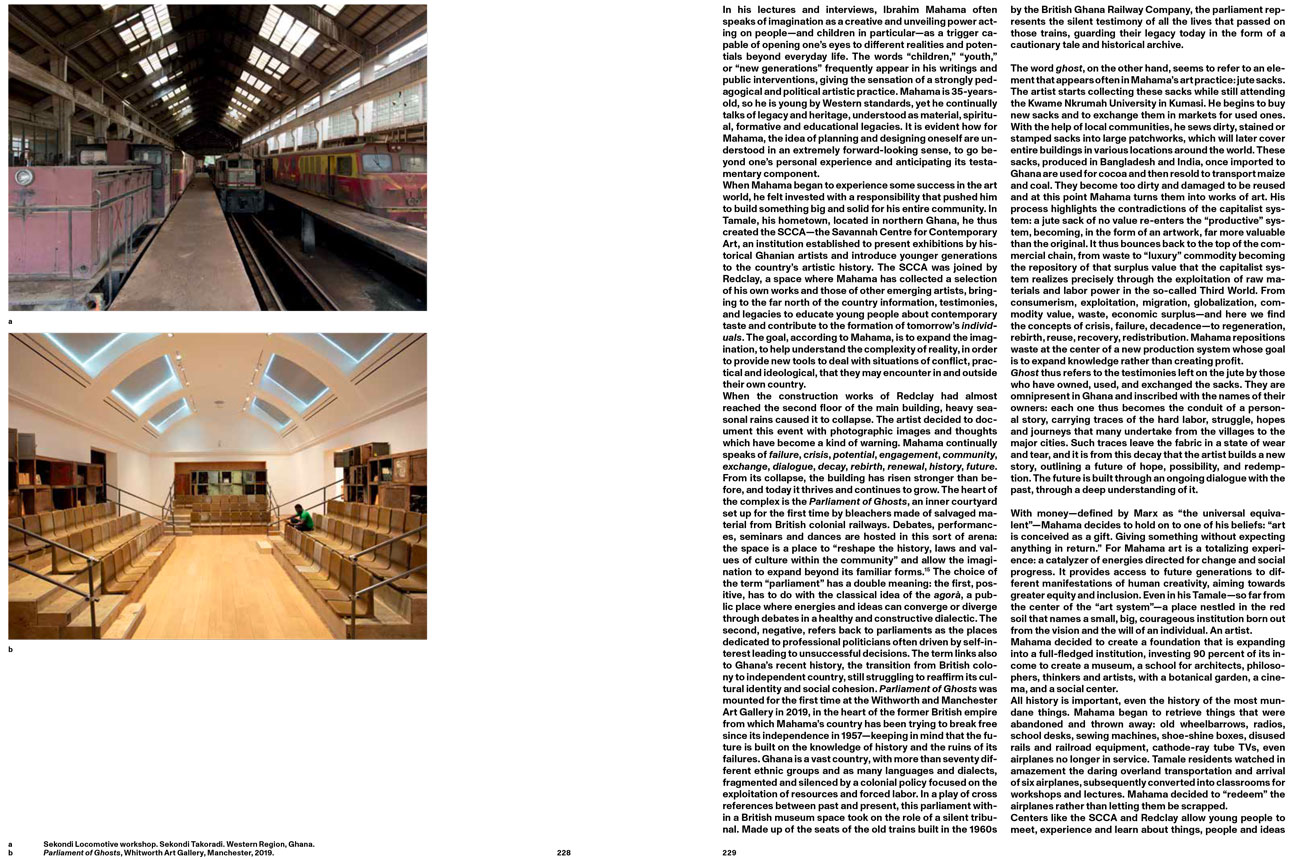
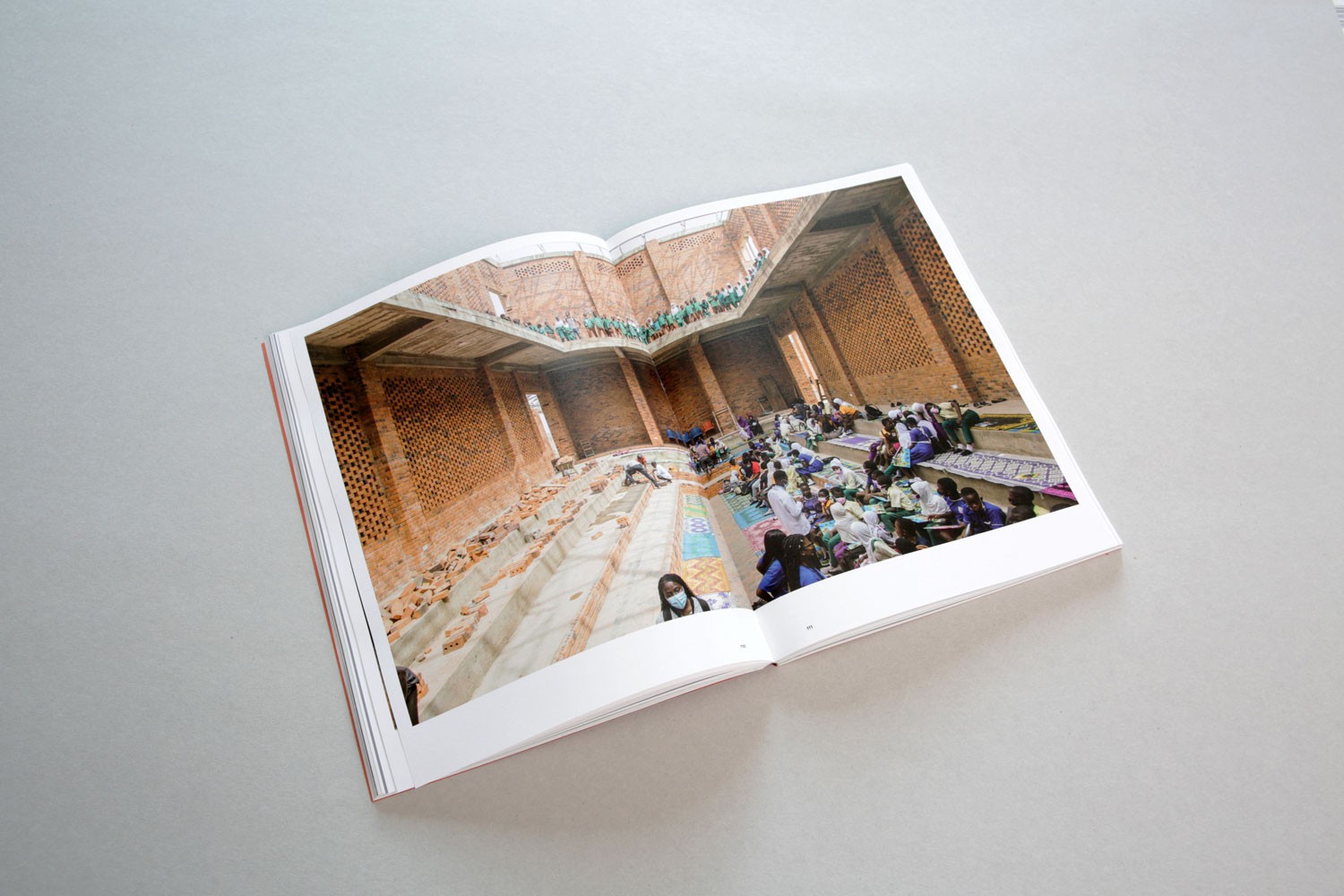
Ibrahim Mahama was born in 1987 in Tamale, a city in northern Ghana where he lives and works. He studied painting and sculpture at Kwame Nkurumah University in Kumasi, Ghana, earning a master’s degree in painting and sculpture in 2013. During his university years, he began working on installations reflecting on the theme of globalization, labor, and the movement of goods, with works made in collaboration with local communities. In 2019, Mahama opened the Savannah Centre for Contemporary Art (SCCA), a foundation run by a group of artists and curators active in Ghana, which was followed by the establishment of Redclay in the suburbs of Tamale. This large facility incorporates artist studios (including his own), research spaces, an artist residency, a permanent collection of artworks, workshop rooms (some set up inside old decommissioned airplanes), and large plots of land dedicated to various types of cultivation. All of this contributes to this visionary artist’s desire to take an active part in the economic, social, and cultural development of his country, providing powerful incentives and teachings to new generations, to make the local population as participatory and economically self-sufficient as possible.
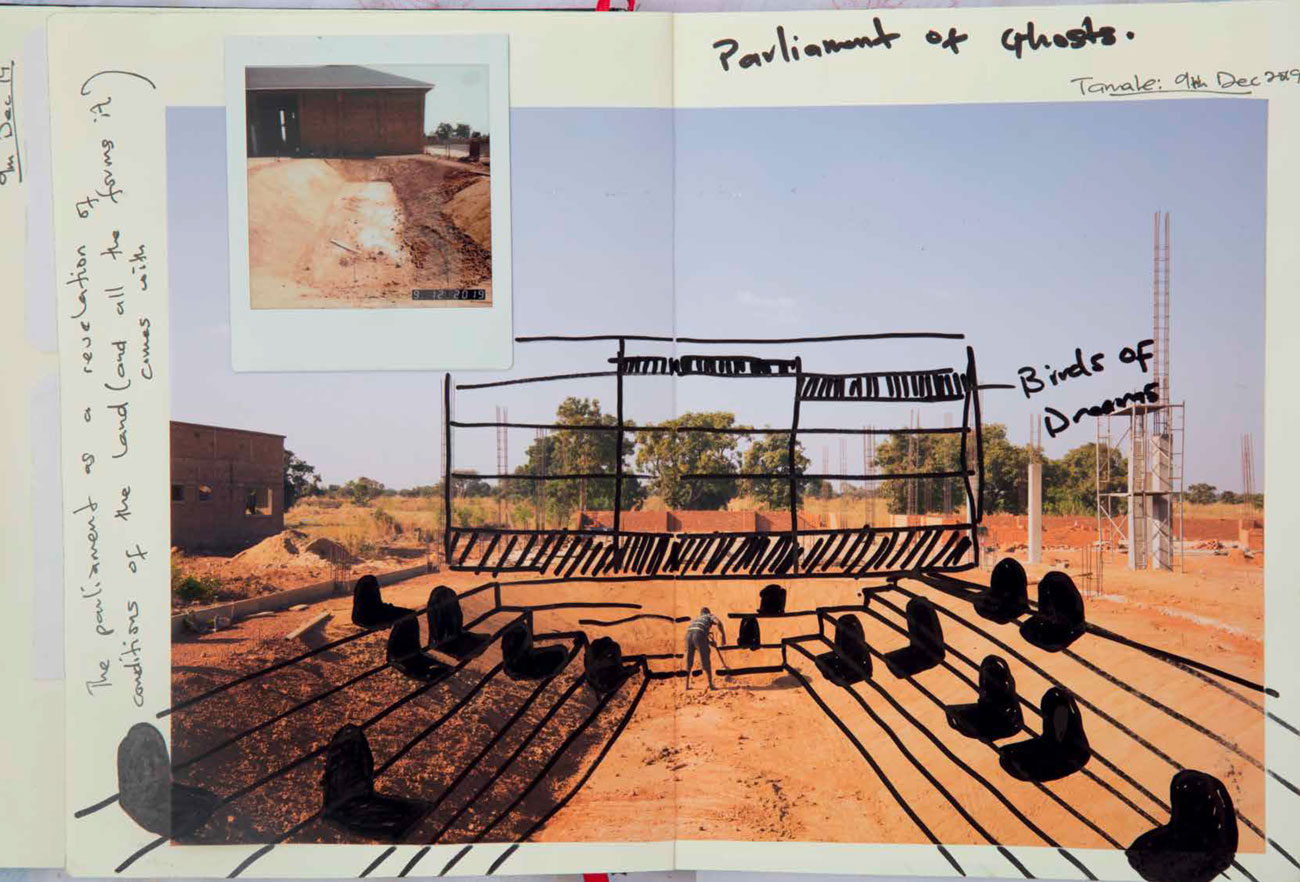
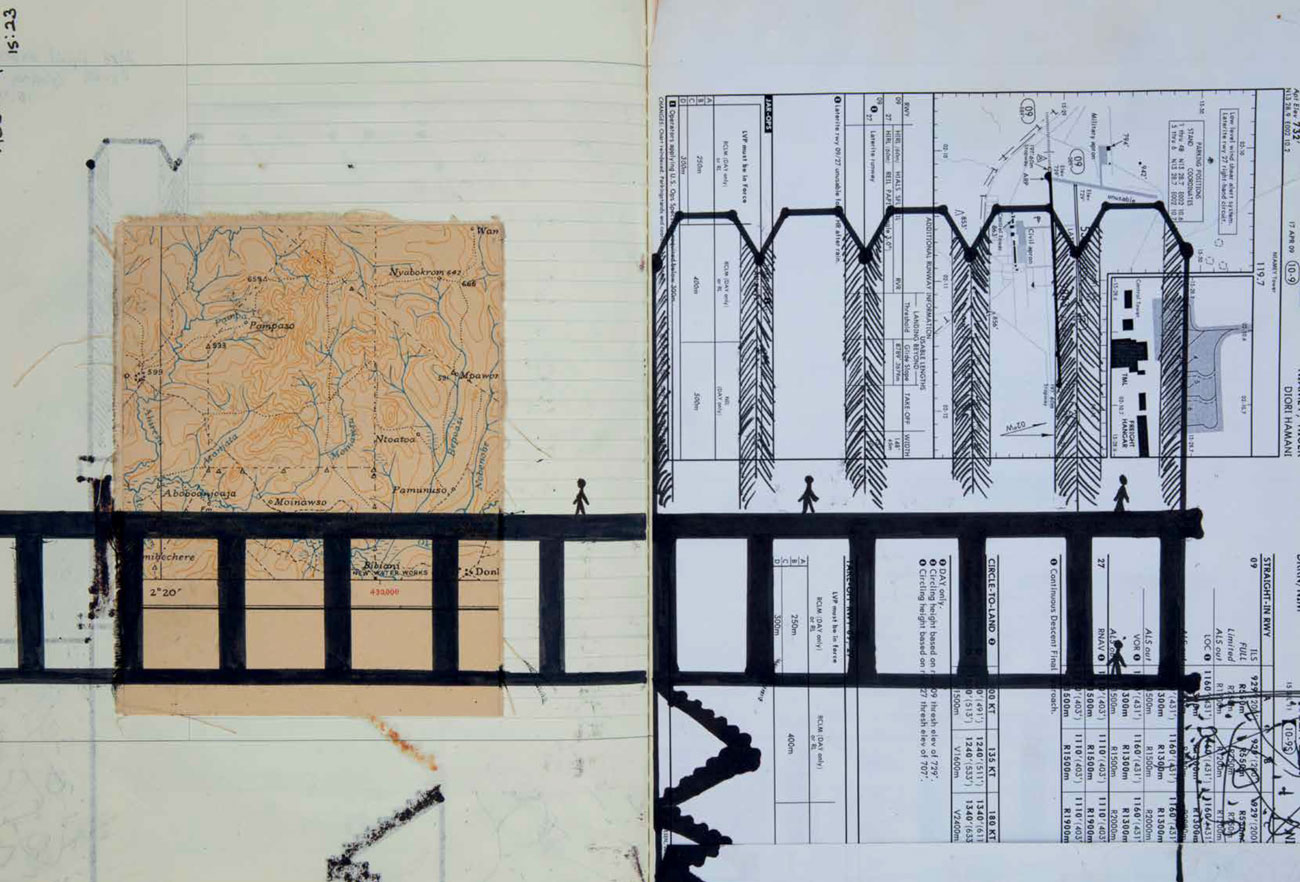
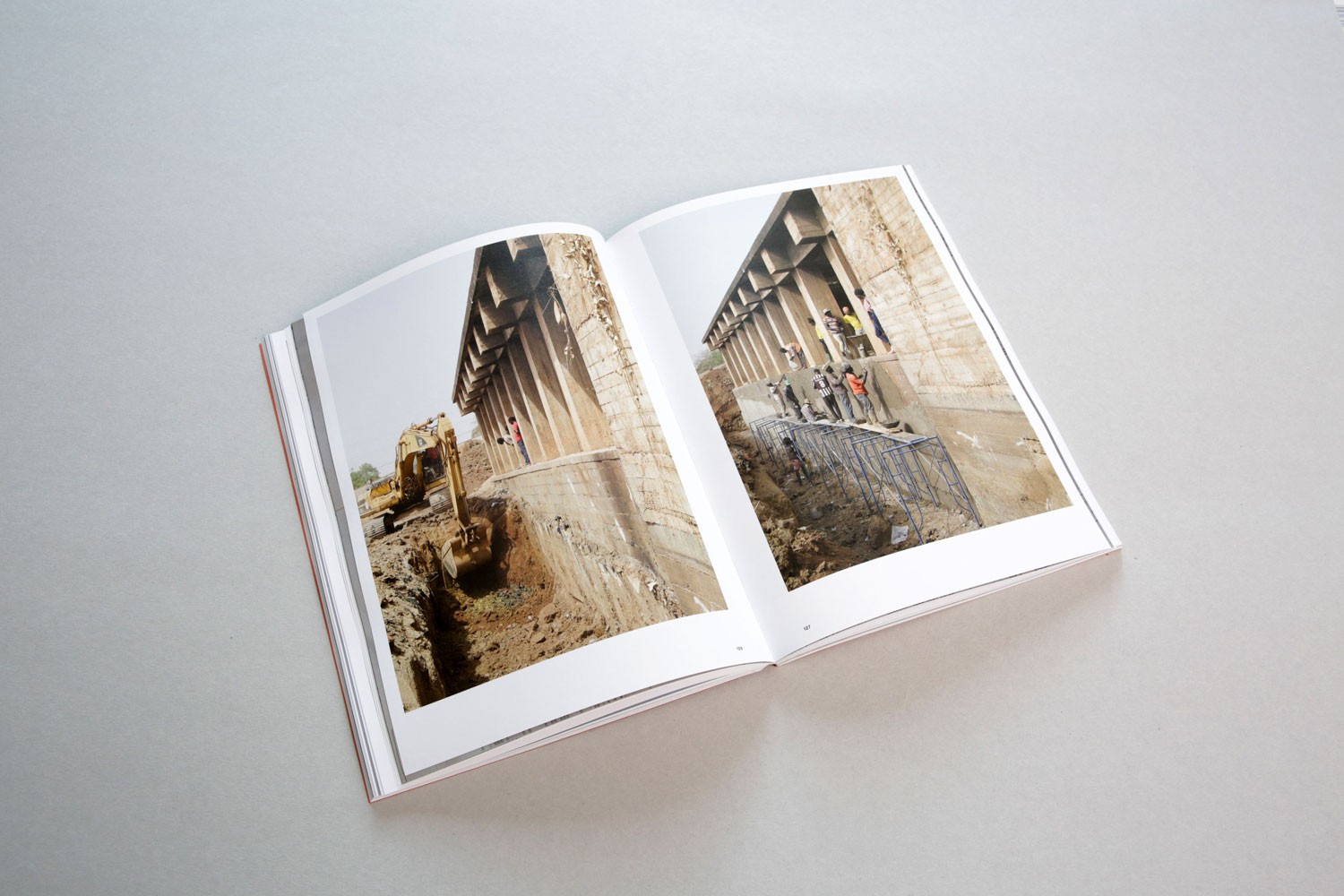
This volume, published to accompany Mahama’s inaugural exhibition at Eataly Art House, in Verona, is constructed as visual diary of artist’s impressive work in his native Tamale, a community-based project founded on the understanding of art as totalizing, reparatory experience: a catalyzer of energies directed for change and social progress. It features texts by the curator Eva Brioschi, Mahama’s professor and mentor karî’kachä seid’ou with Selom Kudjie, and Mahama himself with Bernard Akoi-Jackson.
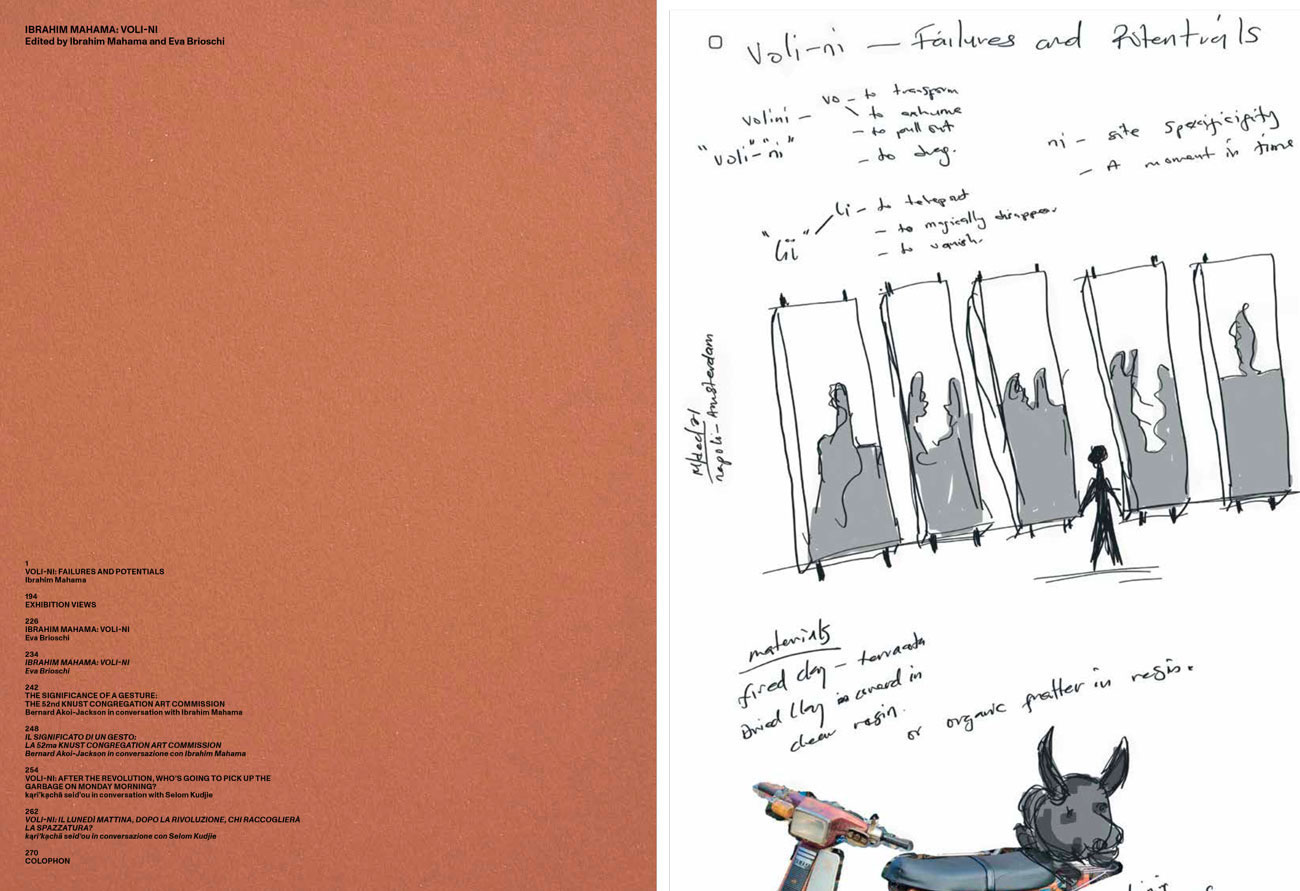
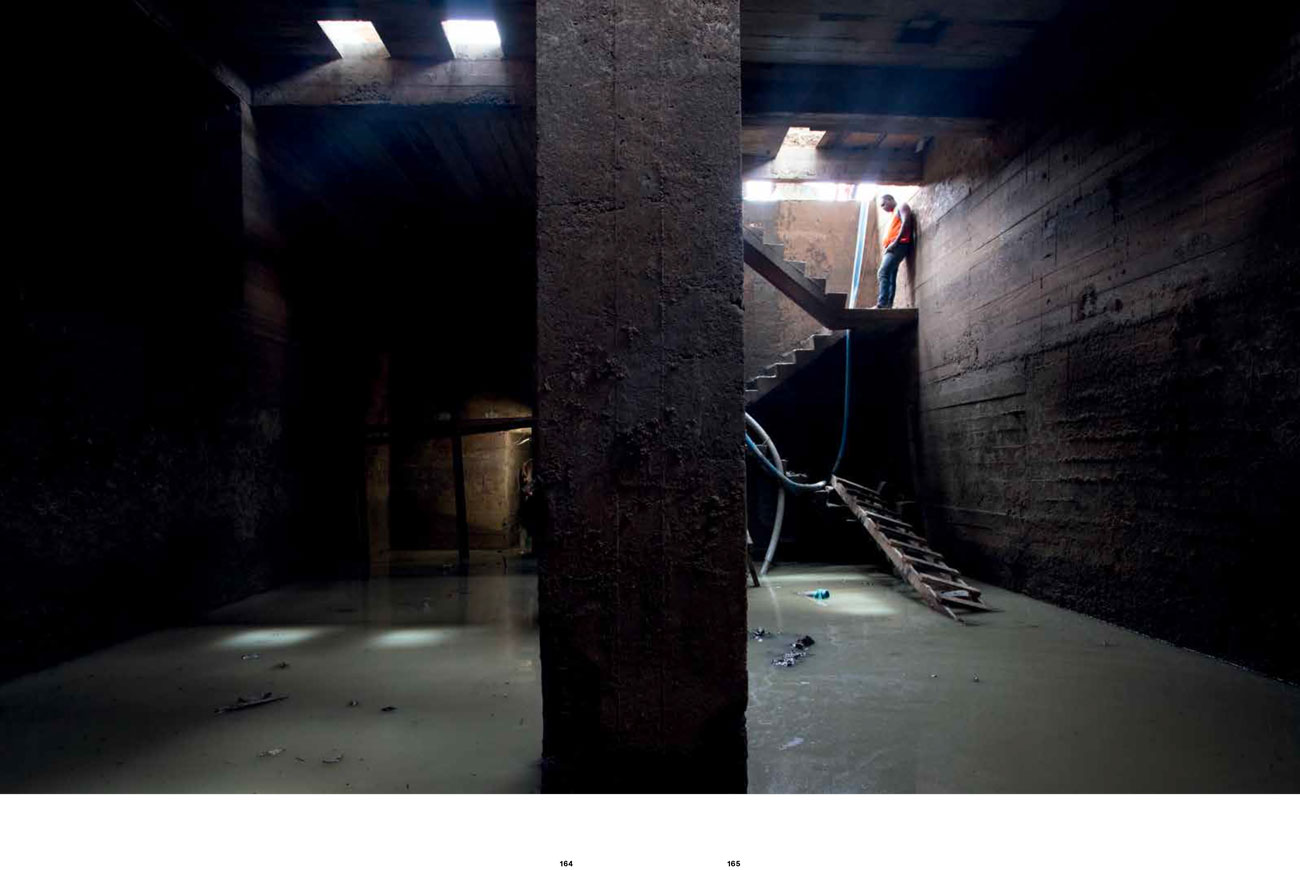
Voli-ni, which literally means “inside the hole,” is composed of individual particles with their own meaning: Vo, “to pull out,” “extract”; li, “to transfer,” “teleport”; and ni, “here and now.”
Voli-ni therefore indicates an emersion from darkness, from a failed past of defeat, towards the possibility of redemption, regeneration, through a portal that is real (recovered architecture) or imaginary (art).