Suffused with specially conceived collages of the artist’s research materials, notes, and sketches, this is the first monograph on Castelli’s painting and sculpture, with essays by Sarah Crowe and Lillian Davies, and an artist interview by Francesco Manacorda. Published with Castello di Rivoli Museo d’Arte Contemporanea and Kunsthalle Wien.
What if the shadow moved first? From March through May 2026, the exhibition The Second Shadow. Dozie Kanu Mirroring Marc Camille Chaimowicz, with Shared Echoes and Kindred Spirits at Fondazione ICA Milano unfolds online through a series of voices and crossings that shift its gravity. Not an extension. A displacement.
A Cosmic Movie Camera is the title of the 18th edition of the BIM’24, which also marks the 50th anniversary of the Biennale organized by the Centre d’Art Contemporain Genève. By blending the real and the virtual, its catalogue captures the spirit of the exhibition, which explores the evolution of moving images, particularly in our algorithmic age.
The book seeks to define the contours of the obsession with the teenage years; a fixation that has shaped a significant strand of contemporary art over the last ten years. Adolescence is here understood as a state of mind, a prolonged condition that dissolves the transition into adulthood and becomes a critique of an unstable world.
In this multi-voiced book, starting from the Orobie Alpine range, the mountainside becomes an epistemological lens through which to interpret contemporaneity and address issues such as multi-species migrations, our relationship with geological time and intergenerational inheritance, and the rethinking of collective memories and rituals.
For years now, the Die Vier von der Tankstelle (Four from the Gas Station) have been roaming across an area stretching out to the south of the Baltic Sea. They prowl their way through sparsely populated areas, wantonly terrorizing the inhabitants. The 2026 calendar by Jos de Gruyter and Harald Thys bears witness to their presence.
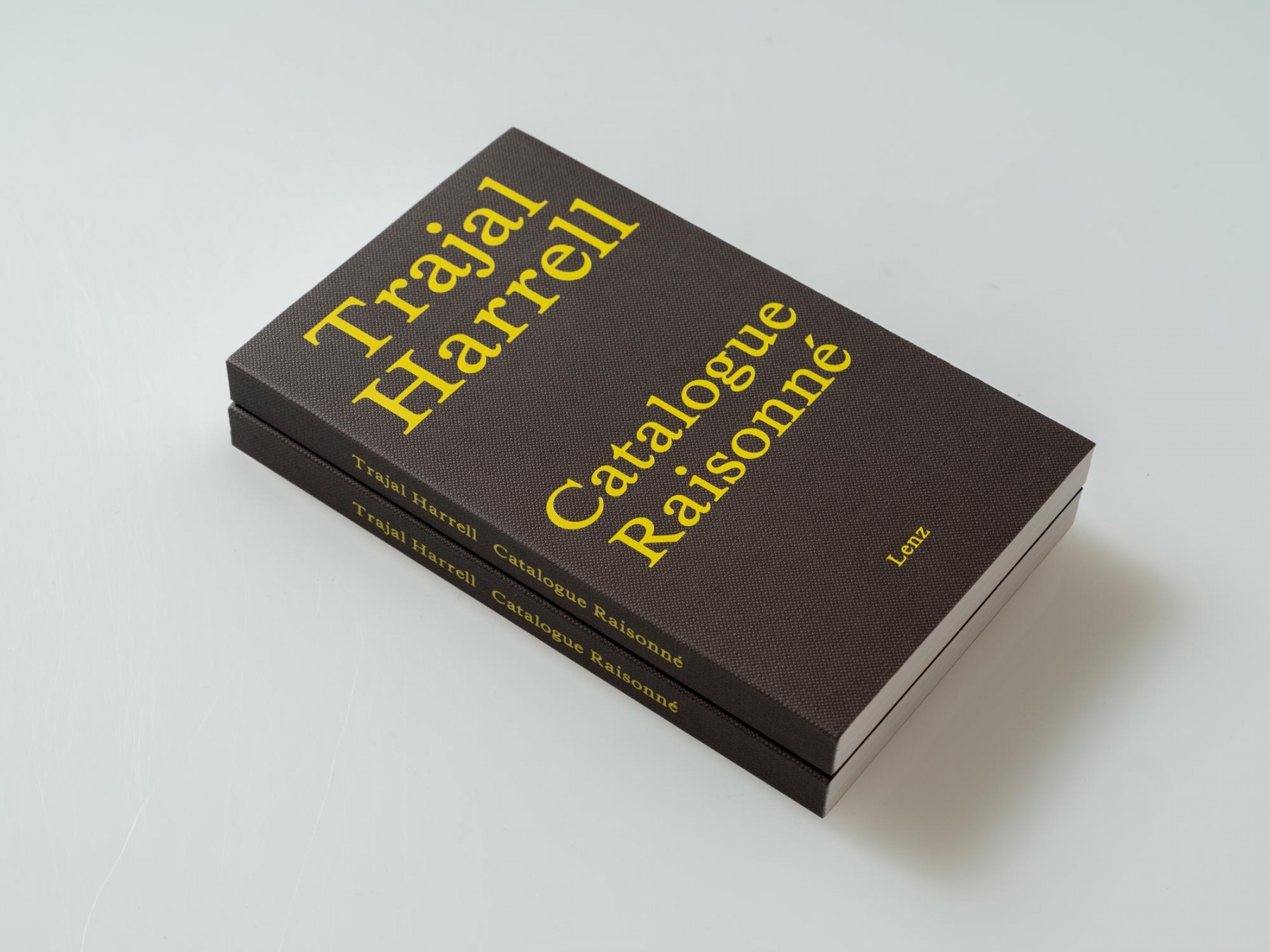
Edited by Daniel Baumann
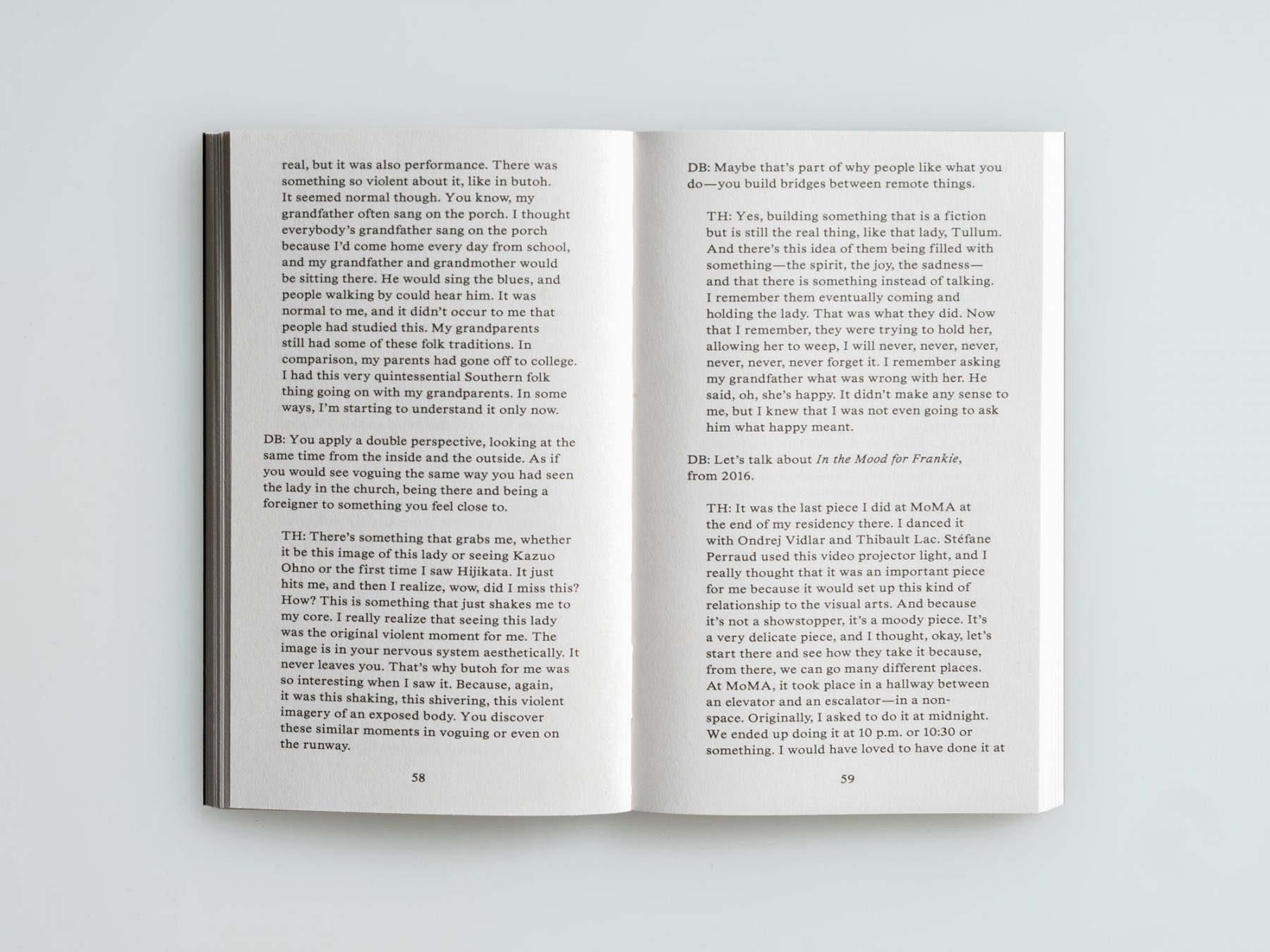
Trajal Harrell in conversation with Daniel Baumann
Designed by Lorenzo Mason Studio
Co-published with Kunsthalle Zürich
2026, English, softcover, 11 × 18 cm, 184 pages
ISBN 979-12-82771-00-9
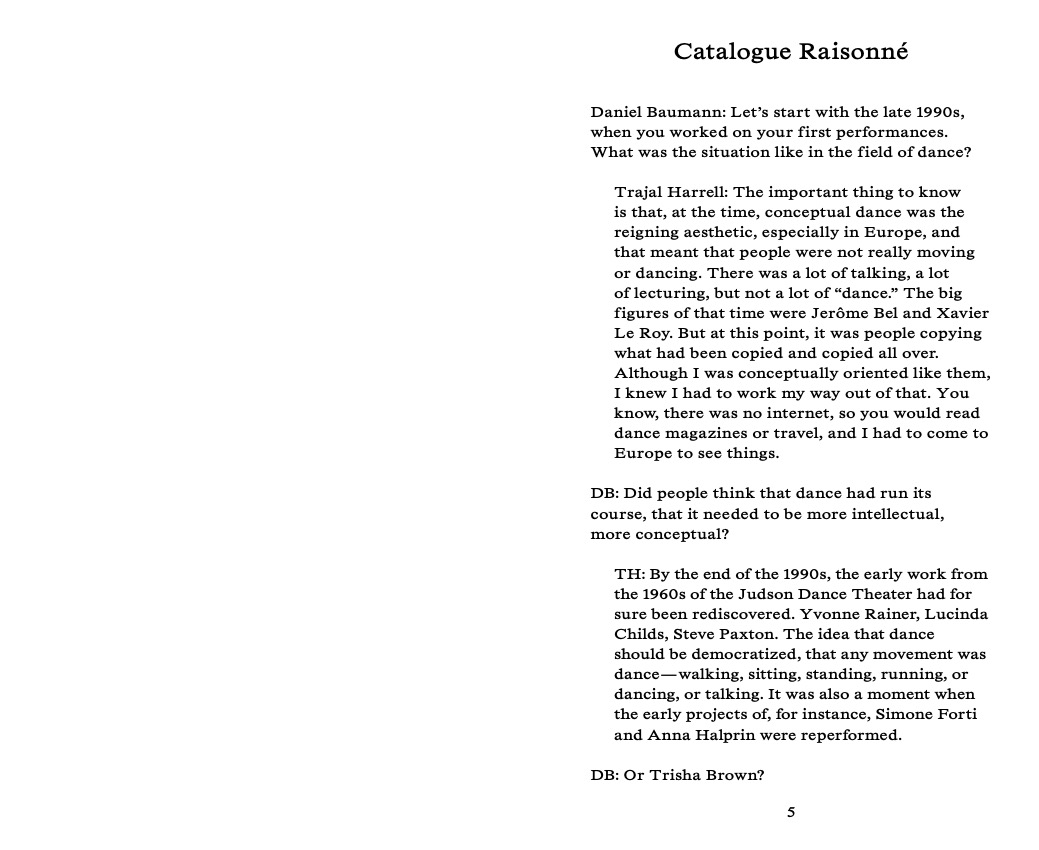
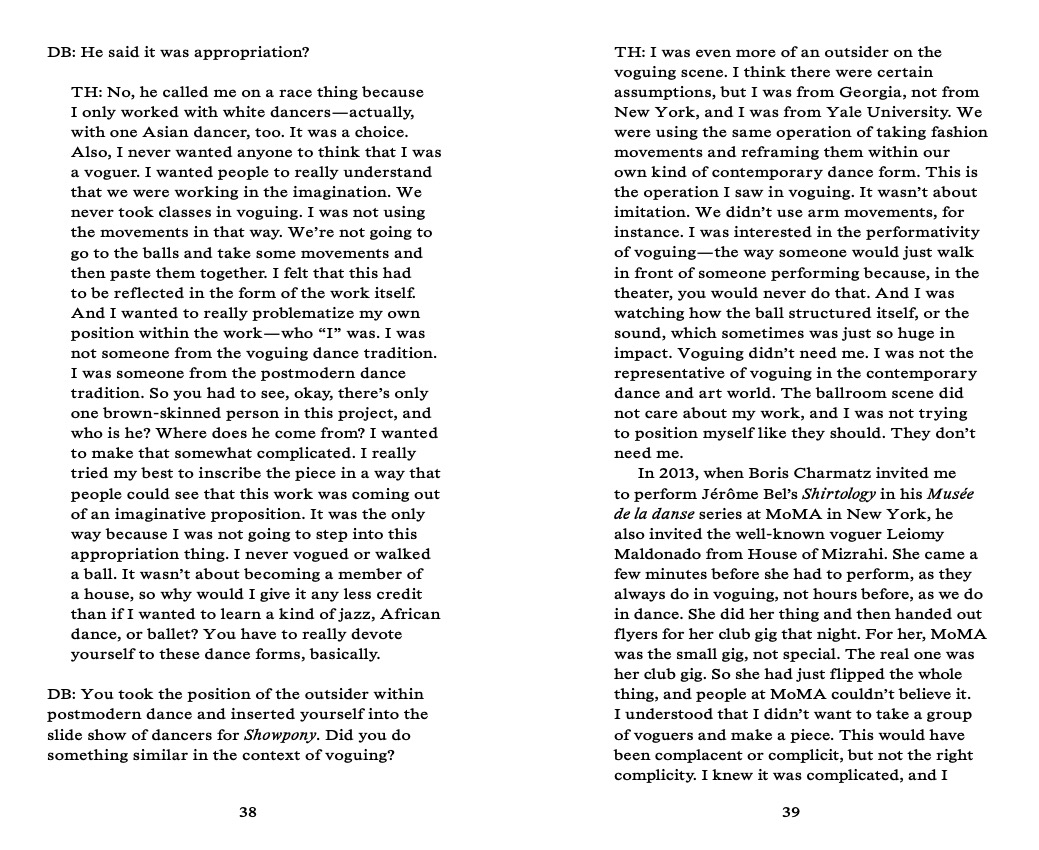
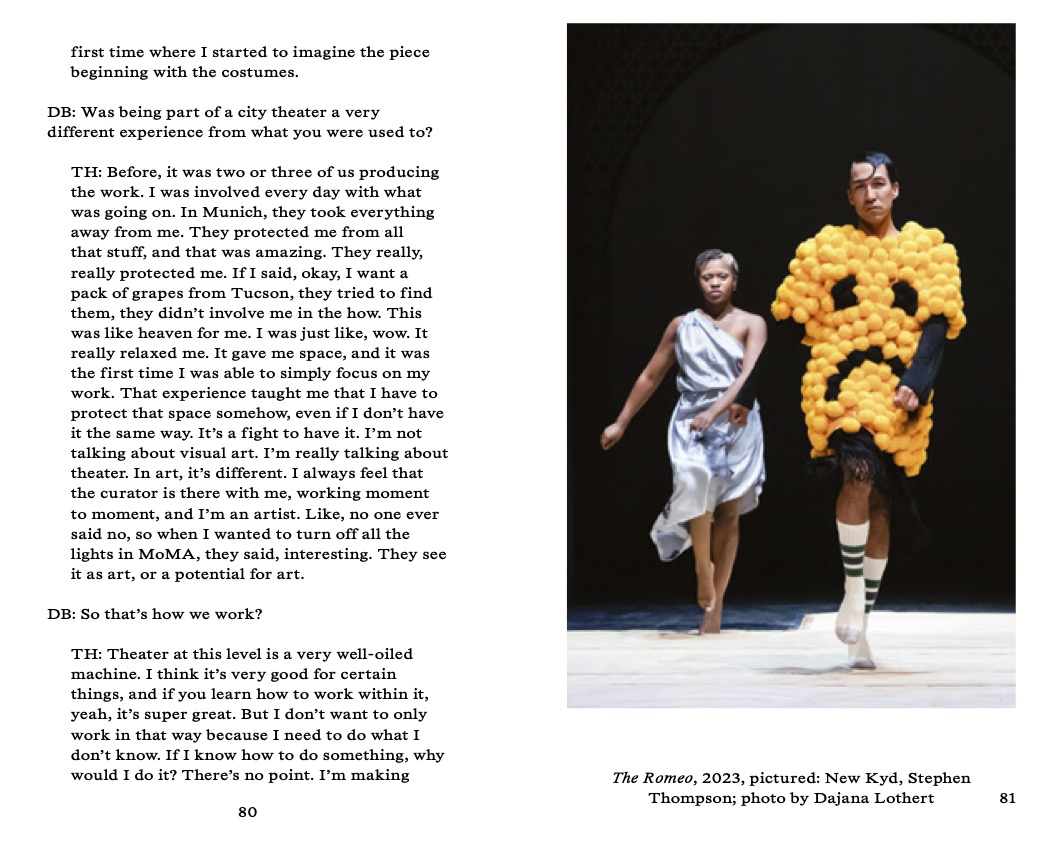
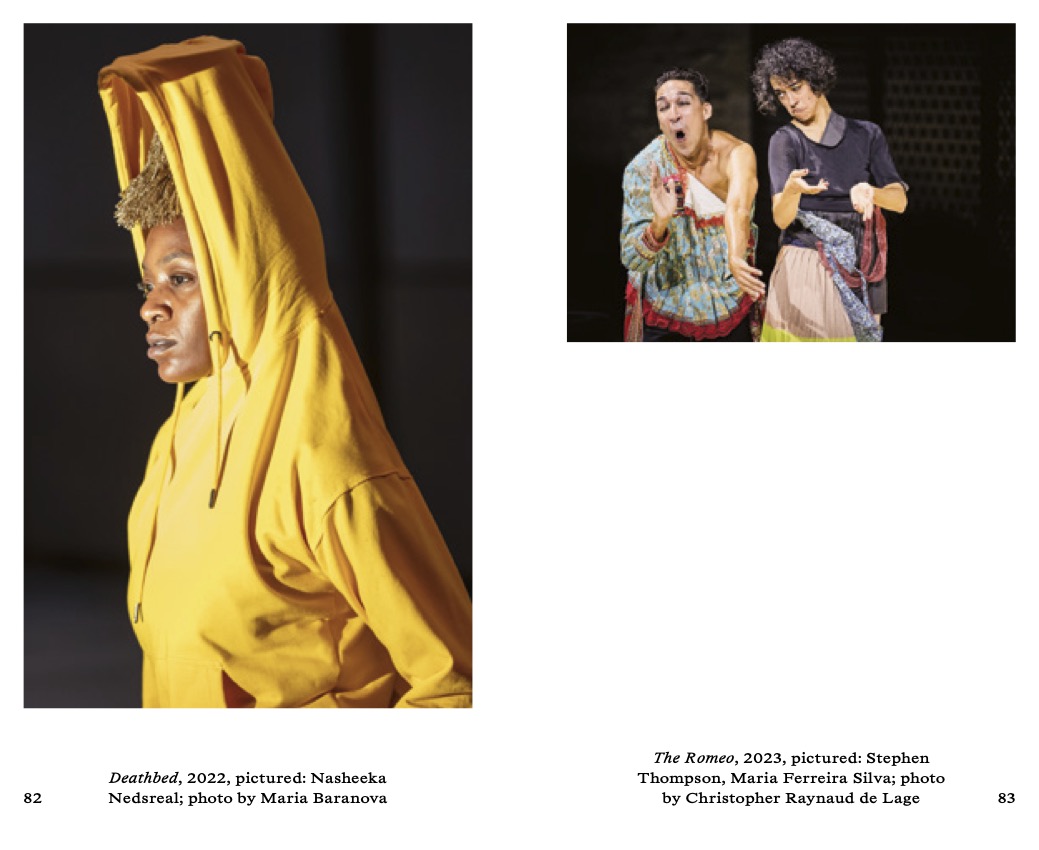
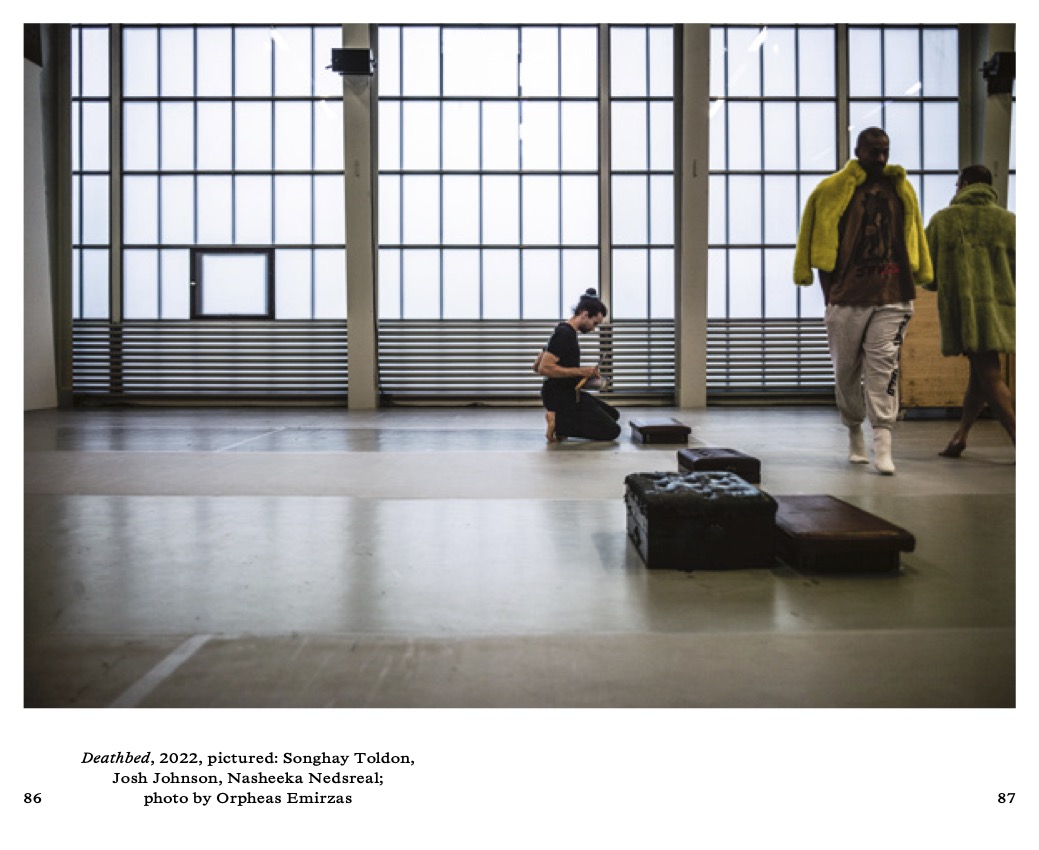
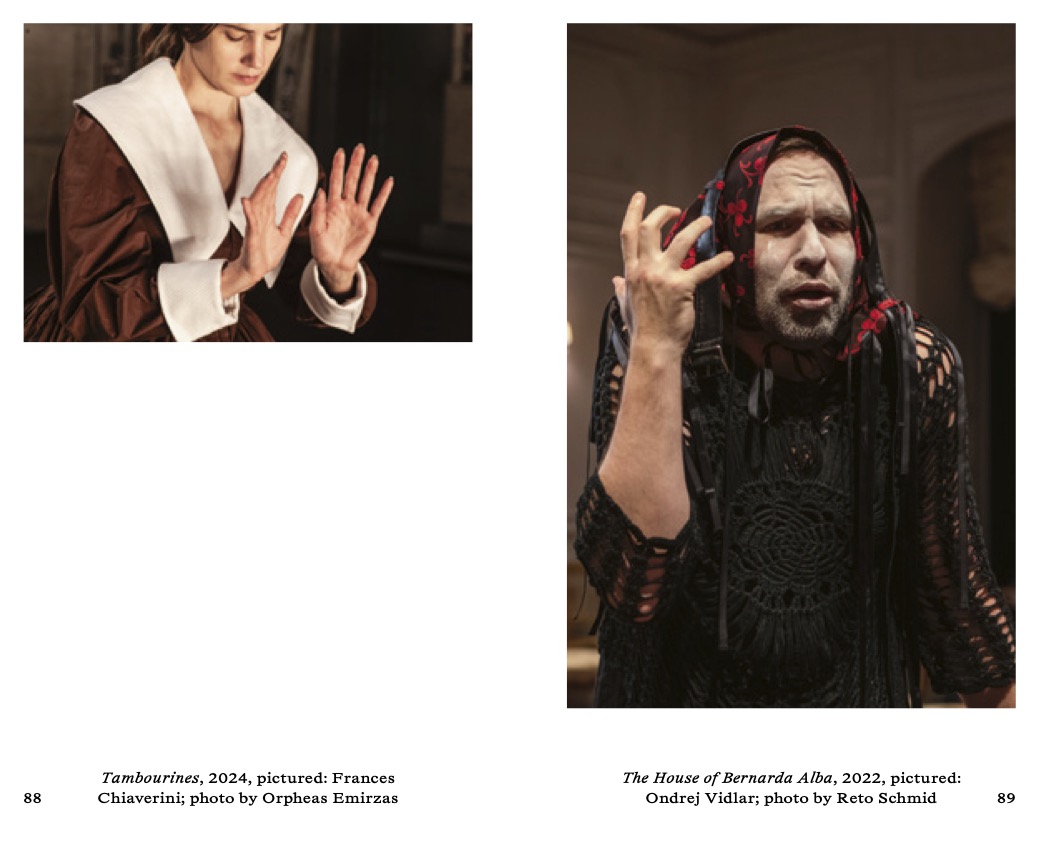
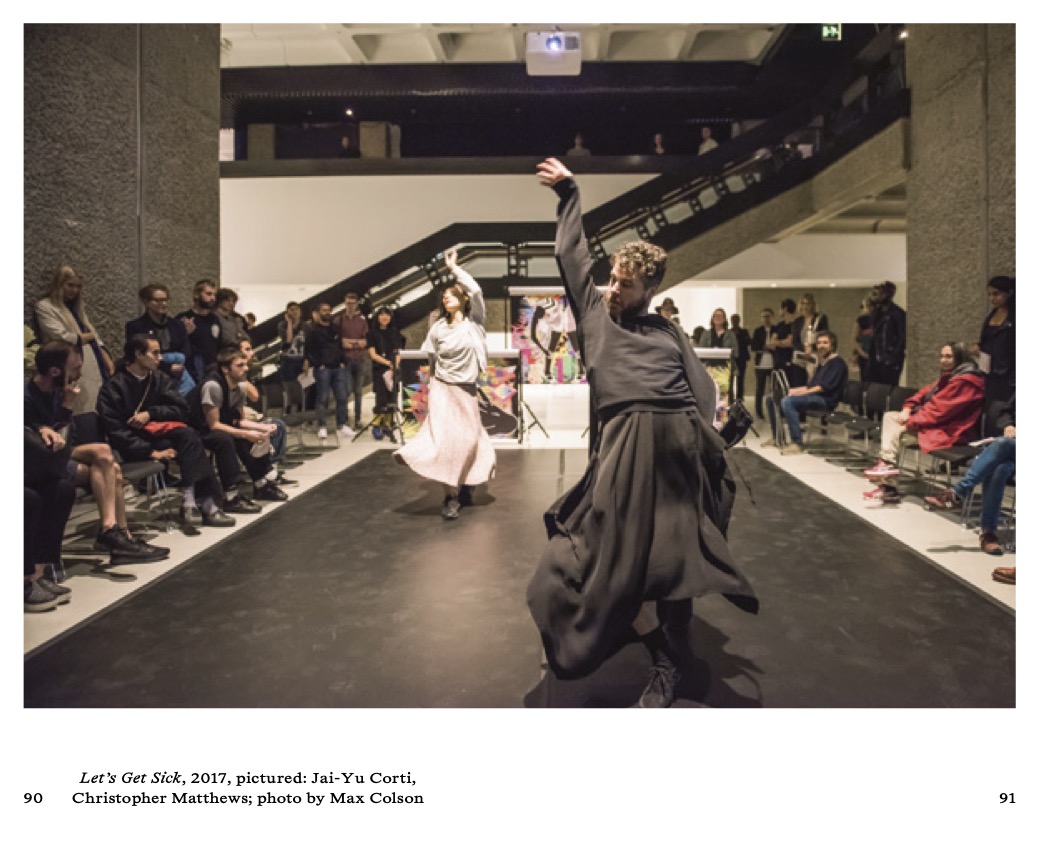
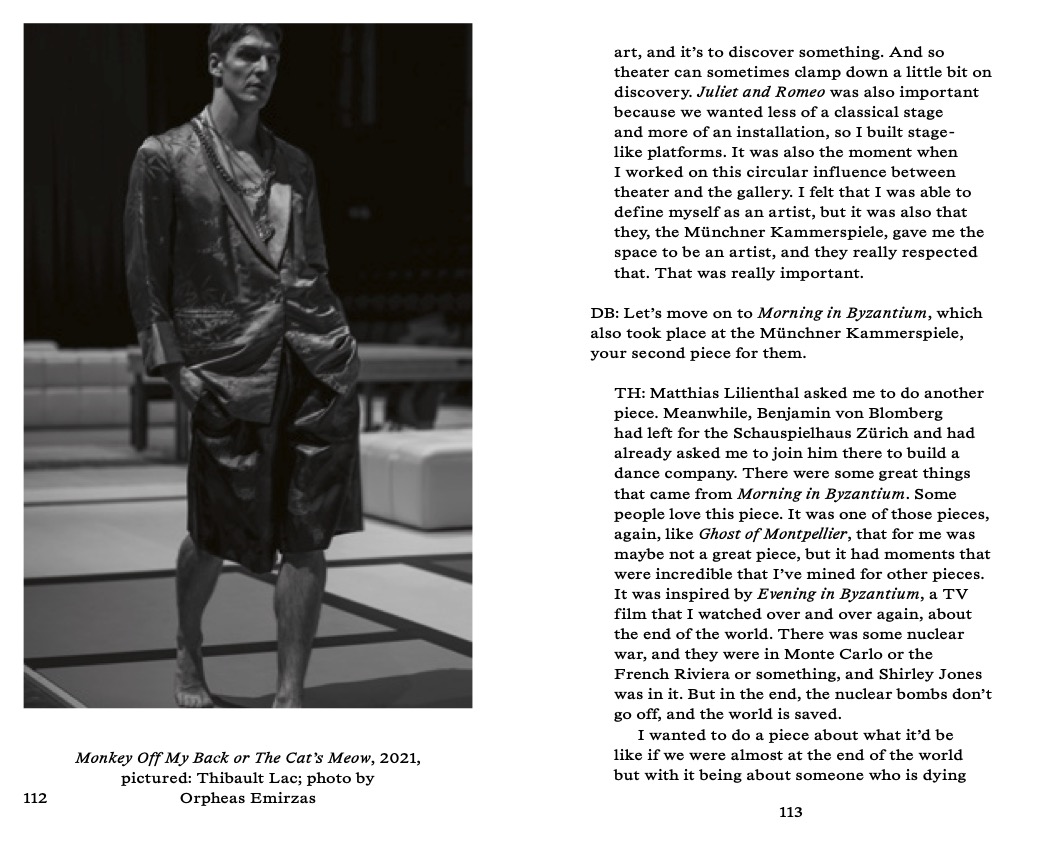
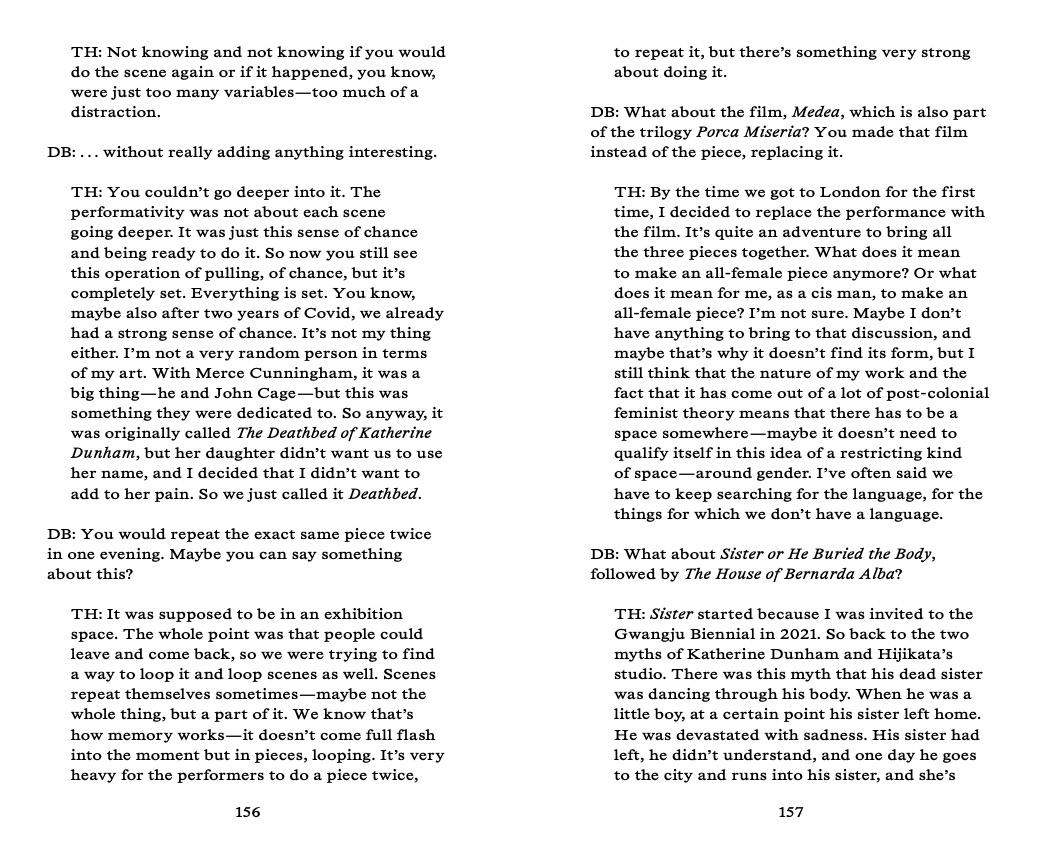
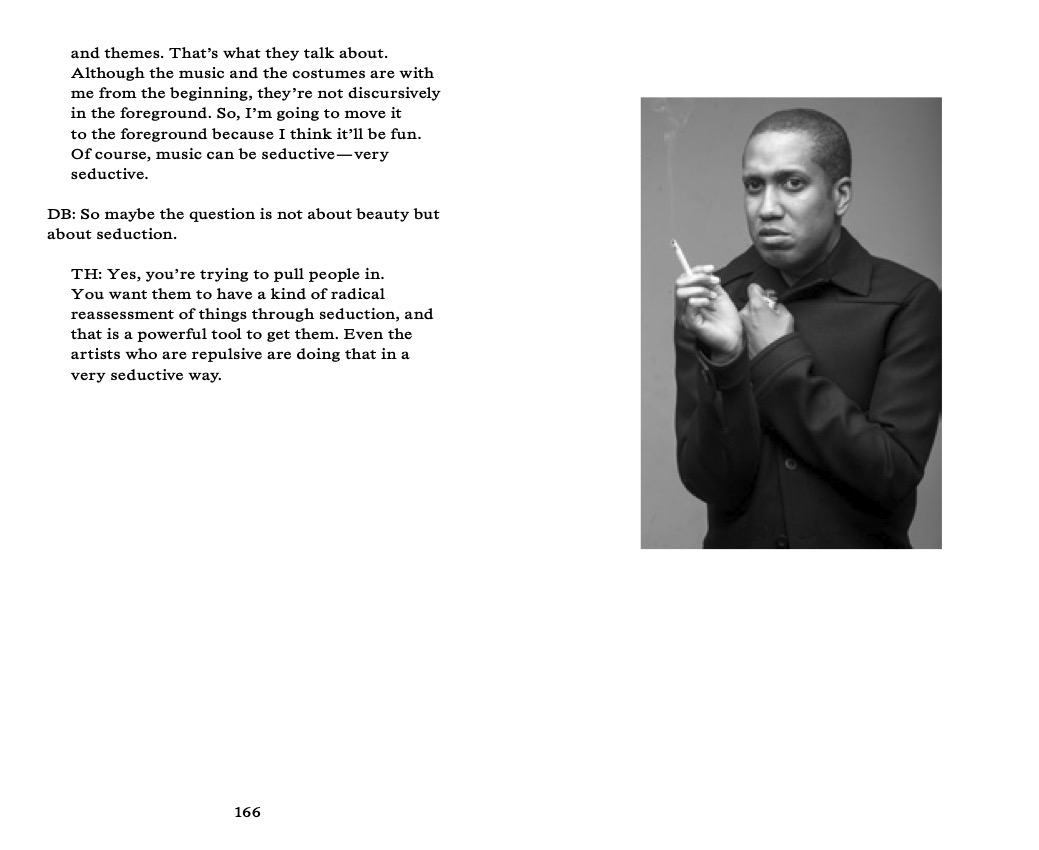
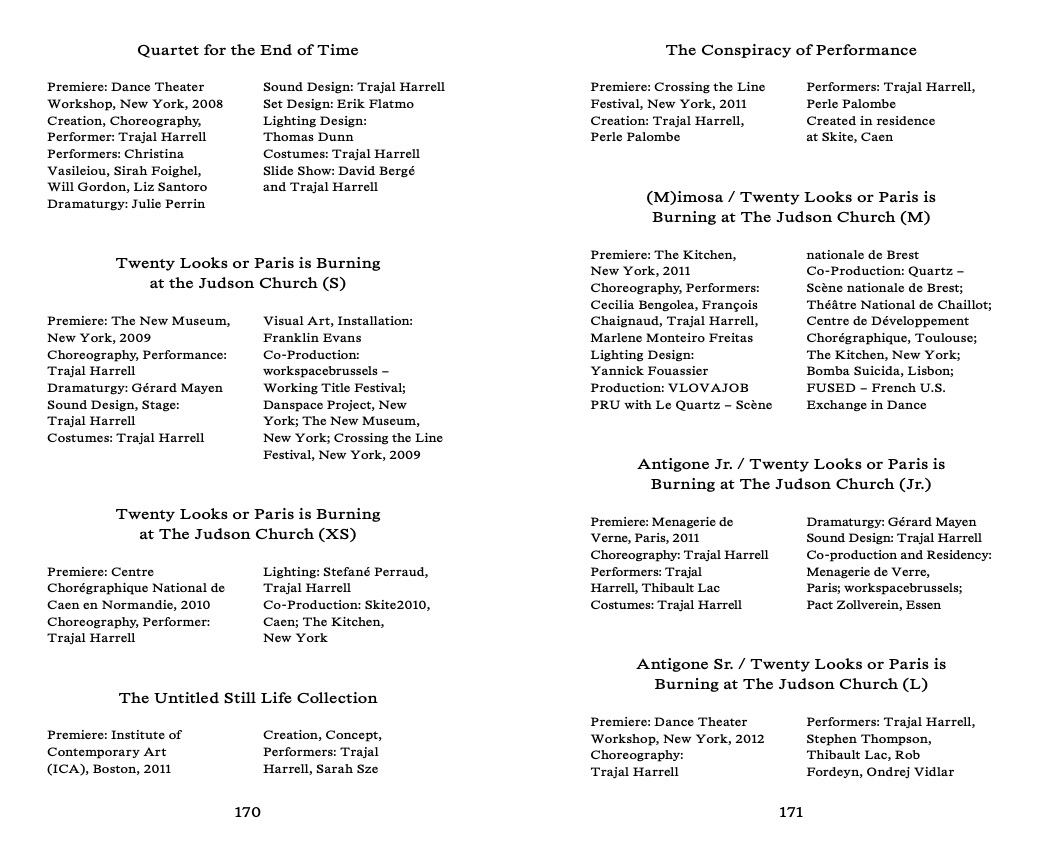
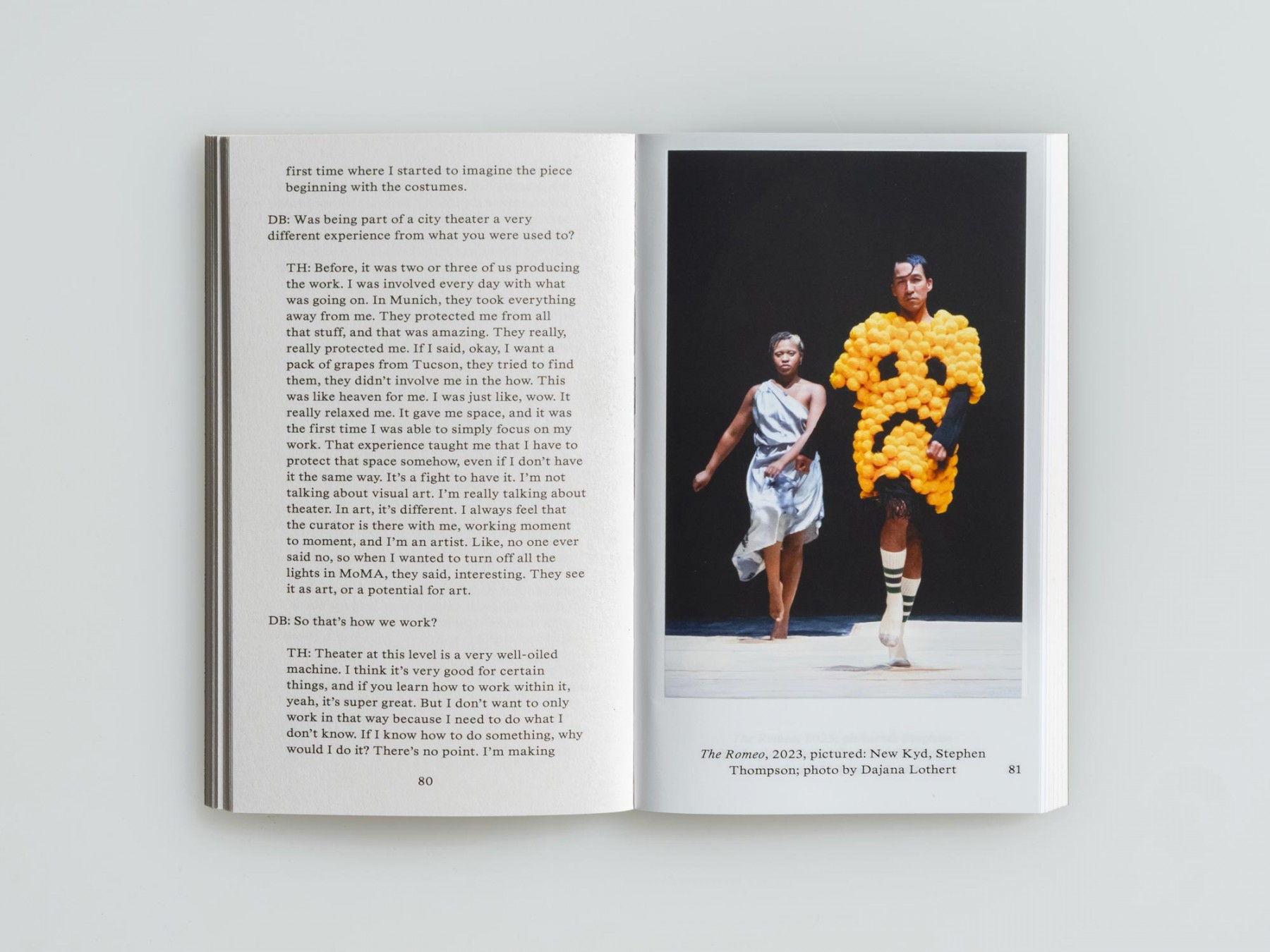
This is the very first book on the influential American choreographer and dancer Trajal Harrell. It takes the form of an entertaining, far-reaching conversation on the entirety of his choreographies and performances—hence its title of “Catalogue Raisonné.”
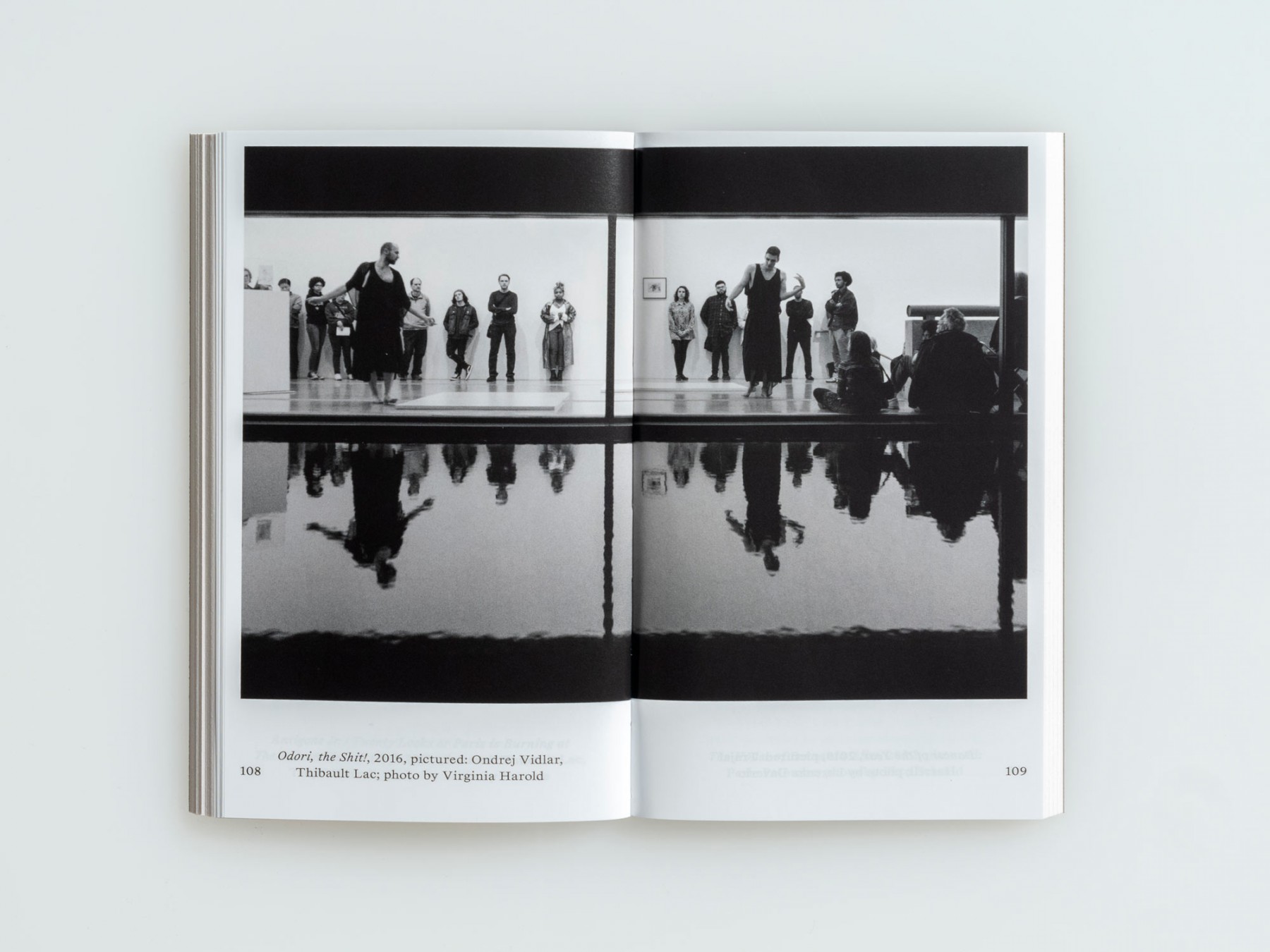
Since starting out on his prolific career in 1999, Harrell has presented his work worldwide and in a variety of contexts, on scales both large and small: from renown theaters to international festivals, libraries to public panels, prestigious little art galleries and museums to Kunsthalles and biennials. The long list includes, among many others, the Museum of Modern Art and the New Museum in New York, the Barbican Centre in London, the Schauspielhaus Zürich, the Kunsthalle Zürich, the Münchner Kammerspiele, the Fondation Cartier Paris, the Festival d’Avignon, and the Manchester International Festival.
The conversation with Swiss curator Daniel Baumann unfolds along the multiple trails blazed by Harrell’s career. It brings into sharp focus not only the artist’s interests and influences but also his own creative practice, encompassing both successes and failures. With disarming frankness and a tangible sense of vulnerability, Harrell walks the reader through the history of dance: He explains how he fought with it, how it has shaped him (and vice versa), and how he has gradually carved out a space of his own within it.
Harrell gained international acclaim for his seven-year project Twenty Looks or Paris is Burning at the Judson Church. Across eight different versions, he imagined an encounter between 1960s Harlem voguing and early downtown postmodern dance. These different choreographies share a sense of historical speculation: What would have happened in 1963 if someone from the voguing ballroom scene had come down to the Judson Church in Greenwich Village to perform alongside the early postmoderns? The voguing dance tradition refers to the competitive balls that were staged in Harlem dance halls, beginning in the 1960s. These were a form of social performance practiced primarily by African American and Latino gays, and trans people. One of the main elements of voguing is the performing of social and gender identities through fashion, movement, and behavior. At the same historical moment, in the 1960s, the pioneers of postmodern dance broke with the traditional representations of classical and modern dance, becoming interested in dance without artifice and concerning themselves instead with “authenticity.”
This is only one of several dance forms that, throughout his career, Harrell has investigated in order to transform and transgress the history of dance. By engaging with Hoochie Coochie, the culture of fashion and runway, butoh, and the dances of Greek Antiquity, Harrell challenges us to re-think dance from a multiplicity of different and sometimes conflicting perspectives.