This compelling artist’s book is built around KOOL (“cabbage” in Dutch), an original font designed by Reus, somewhere between a plant alphabet and concrete poetry. The publication draws on the type specimen book tradition to present new typefaces.
Through a rich selection of images, this artist’s book, published in two editions—gold and silver—explores the birth, life and death of Francesco Gennari’s work Vorrei perdermi e non trovarmi più, 2022, exhibited for the first time at the Ciaccia Levi Gallery in Paris.
Through a rich selection of images, this artist’s book, published in two editions—gold and silver—explores the birth, life and death of Francesco Gennari’s work Vorrei perdermi e non trovarmi più, 2022, exhibited for the first time at the Ciaccia Levi Gallery in Paris.
This richly illustrated publication combines artwork, archival and process imagery, and includes an extended interview with the artist, as well as new essays by key thinkers in the fields of anthropology, philosophy, political economy and art history.
In the first monograph on the feminist conceptual artist collective Claire Fontaine, political theorist and somatic practitioner Anita Chari explores the artist’s theoretical and political innovations to illuminate a more haptic, embodied approach to the practice of critical theory.
Shahryar Nashat inserts his art in the pages of this new artist’s book, which takes the form of a catalogue-turned-manual: but instead of explaining its meaning, he strips it of its aura, flaunts its nature as an object and describes step-by-step how to create it.
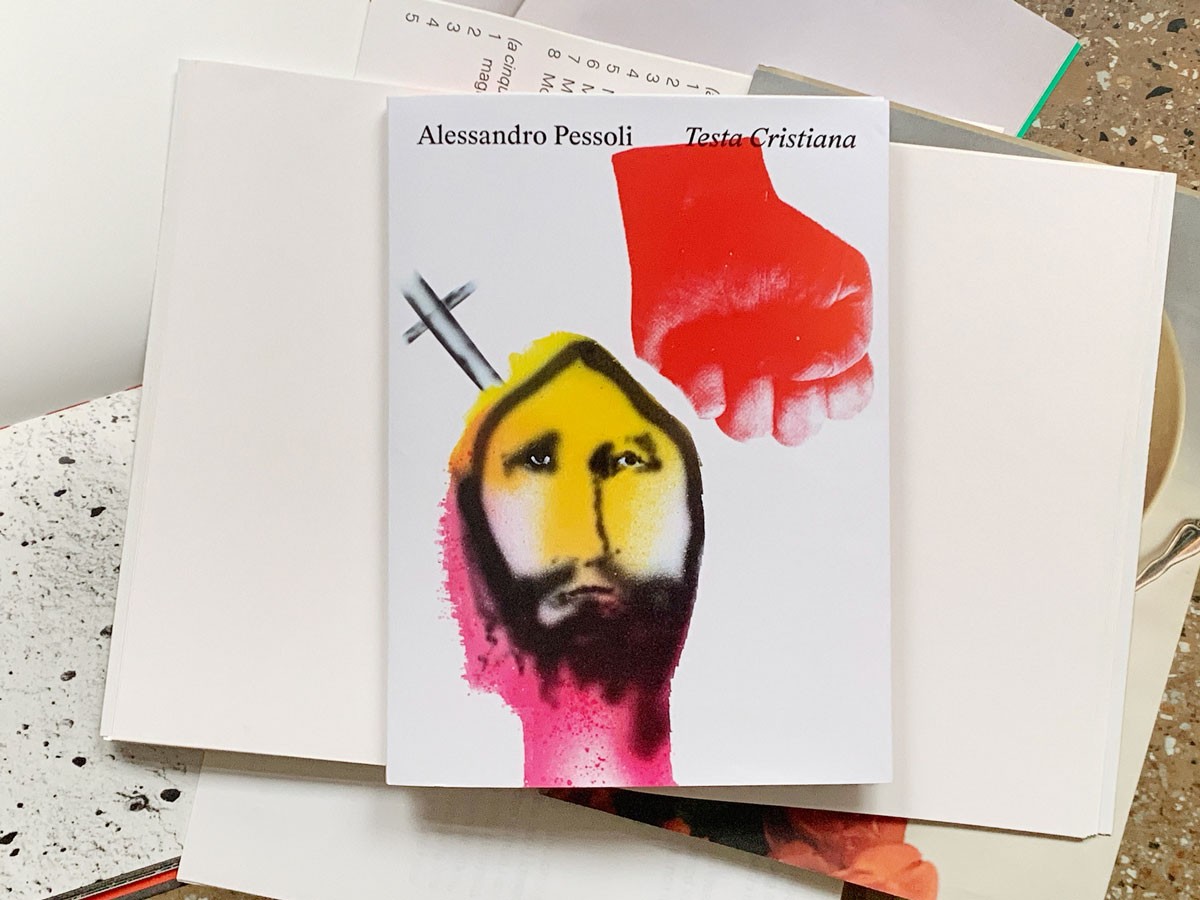
Edited by Eva Fabbris with Giovanna Manzotti
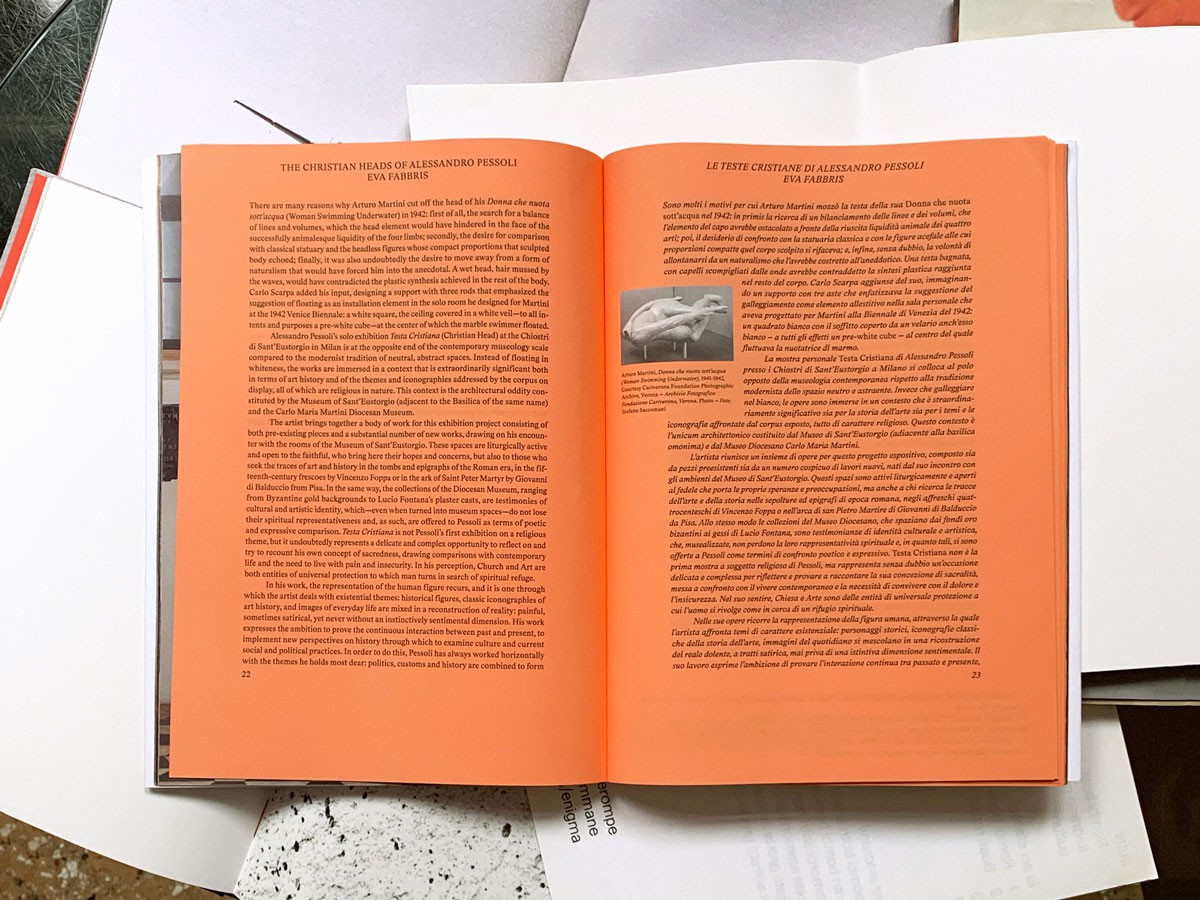
Texts by Eva Fabbris, Alexis Vaillant and a conversation between Alessandro Pessoli and Pierpaolo Campanini. Designed by Lorenzo Mason Studio
2021, English / Italian, softcover. 24 x 33.5 cm, 88 pages
ISBN 979-12-80579-06-5
“In general, my whole work is a movement from the inside to the outside and vice versa; past and present, personal and collective are fluctuating entities; the work becomes an intermediate place where a transformation of the tragic sense of the world, of its conflict and violence, is taking place.” (Alessandro Pessoli, from a conversation with Pierpaolo Campanini)
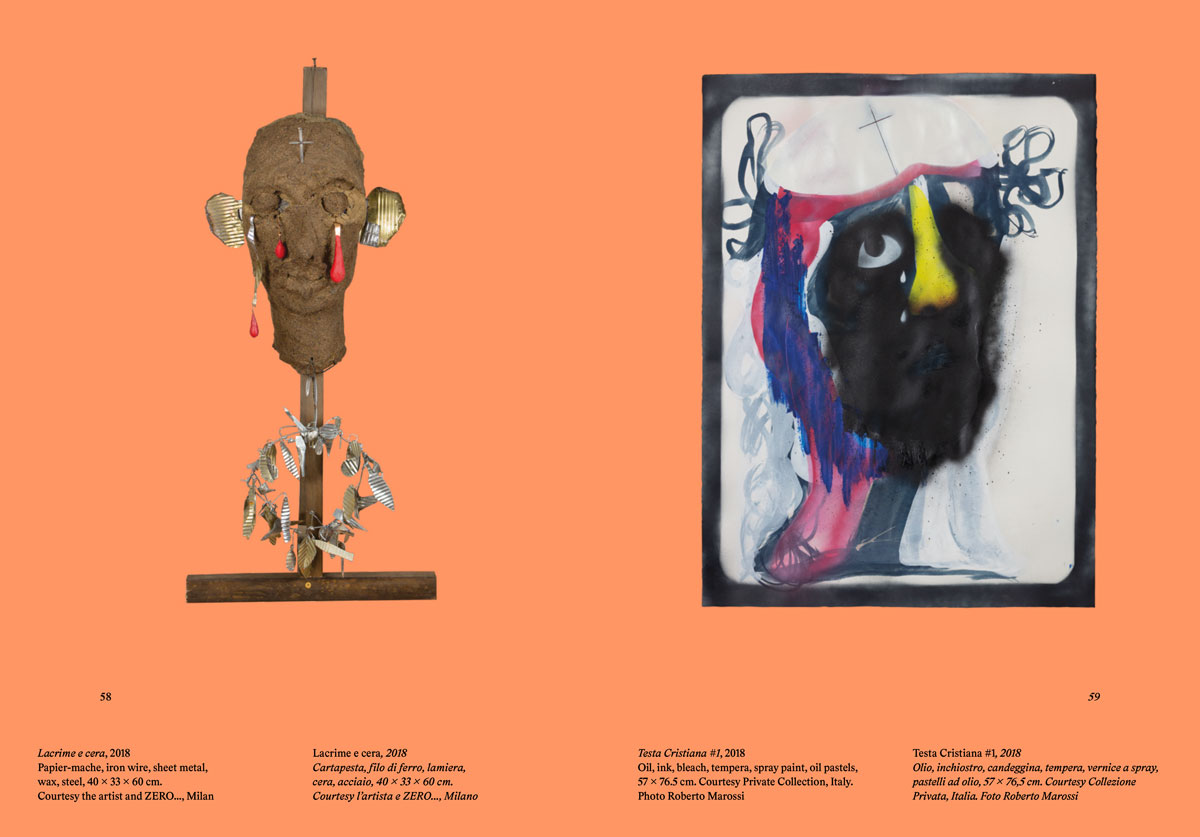
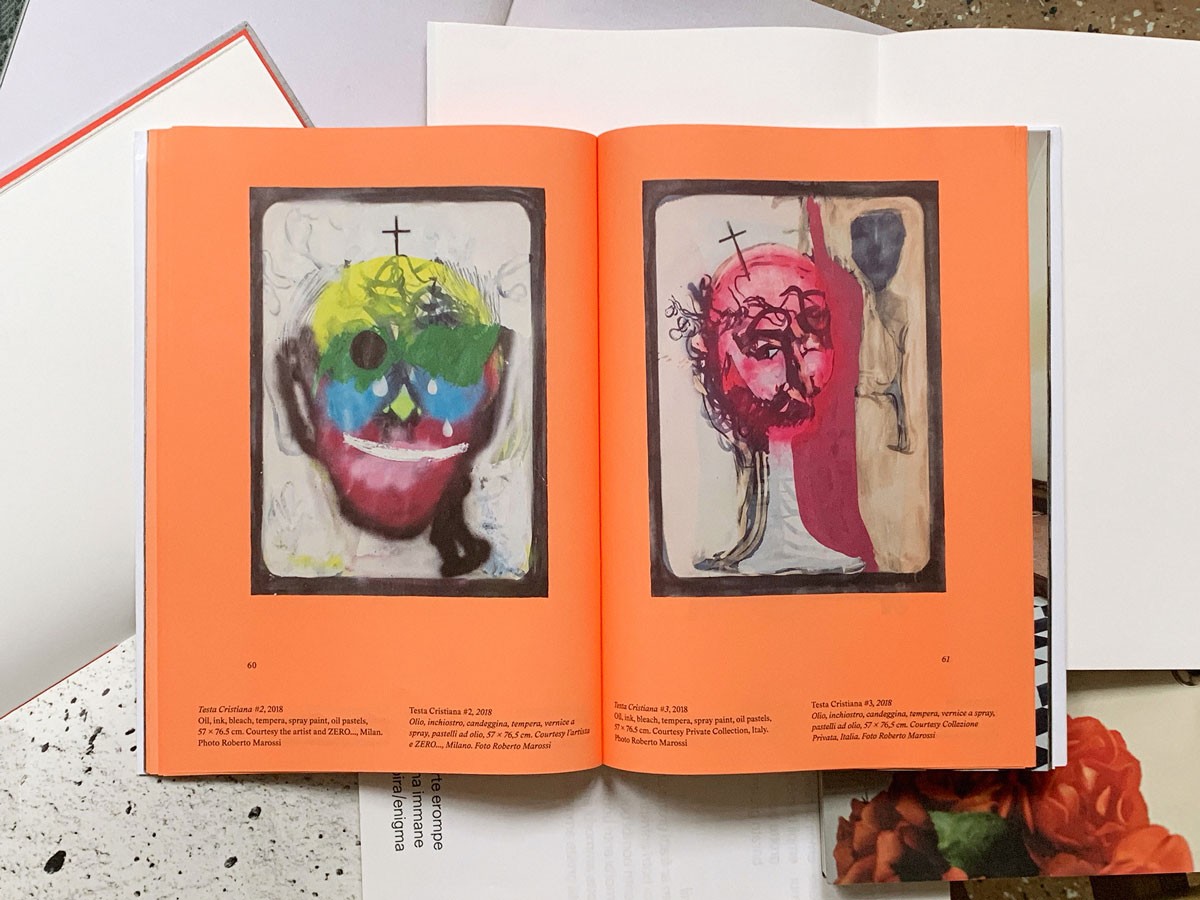
Alessandro Pessoli (Cervia, Italy, 1963) lives and works in Los Angeles. His practice is typically multimedia in nature, focusing on drawing, painting and sculpture, while also favoring ceramic. Often underscored by themes spanning politics, religion, history, culture, and identity, his research recalls the theme of the sacred and the religious, emerging both from the resumption of historical figures, classical art-historical iconography, and everyday images which intermingle in a reconstruction of reality that is dreamlike, painful, and sometimes grotesque, but never lacking instinctive emotion.
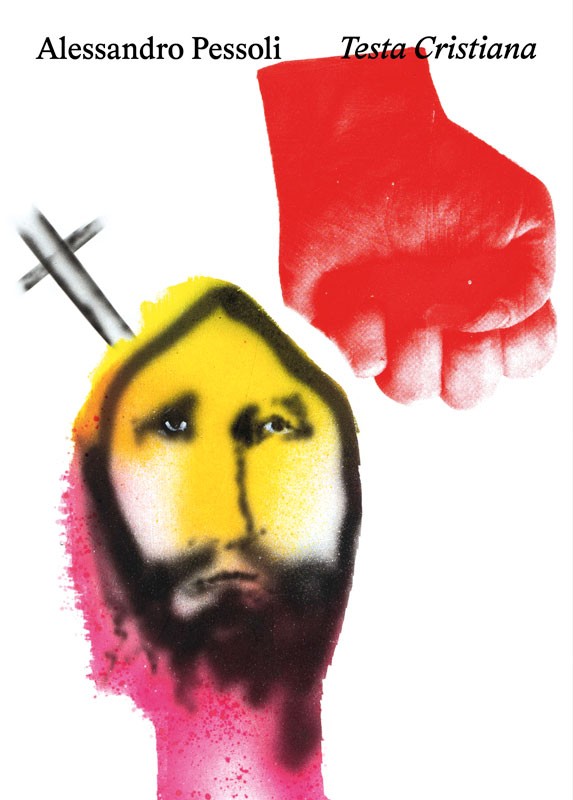
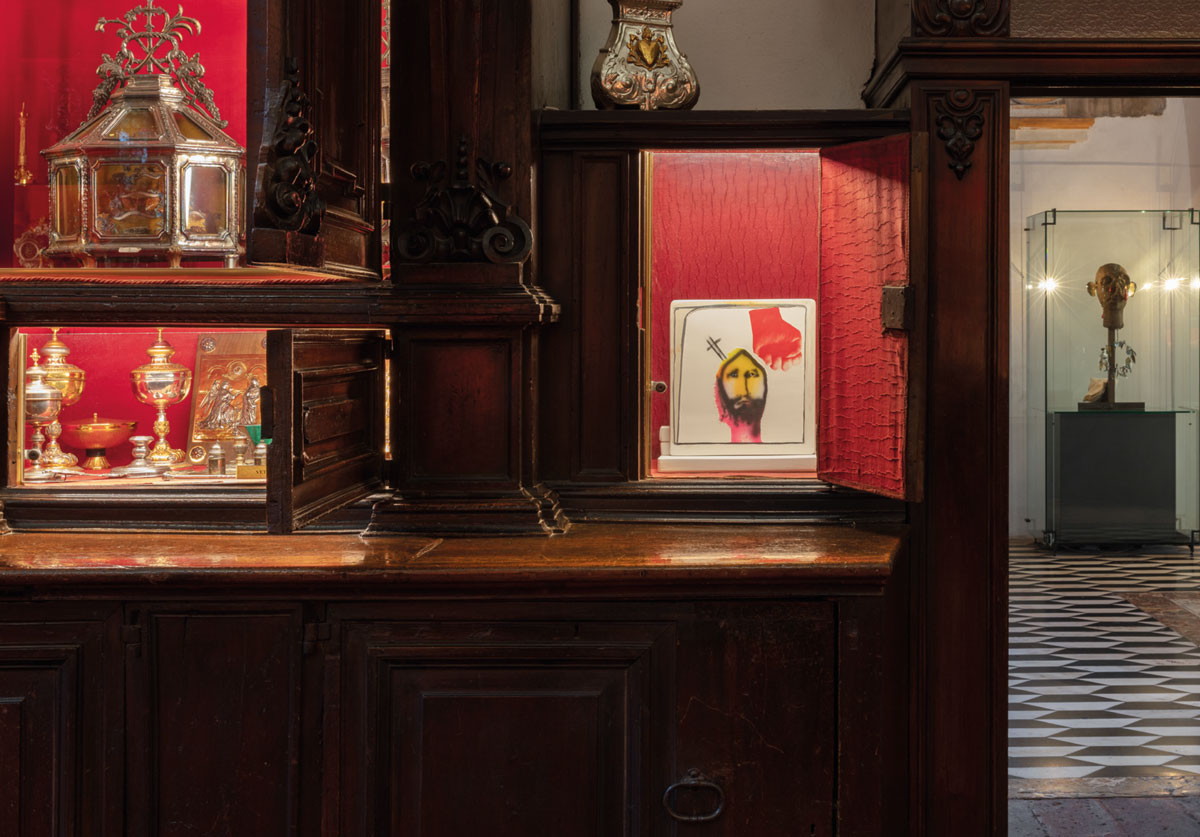
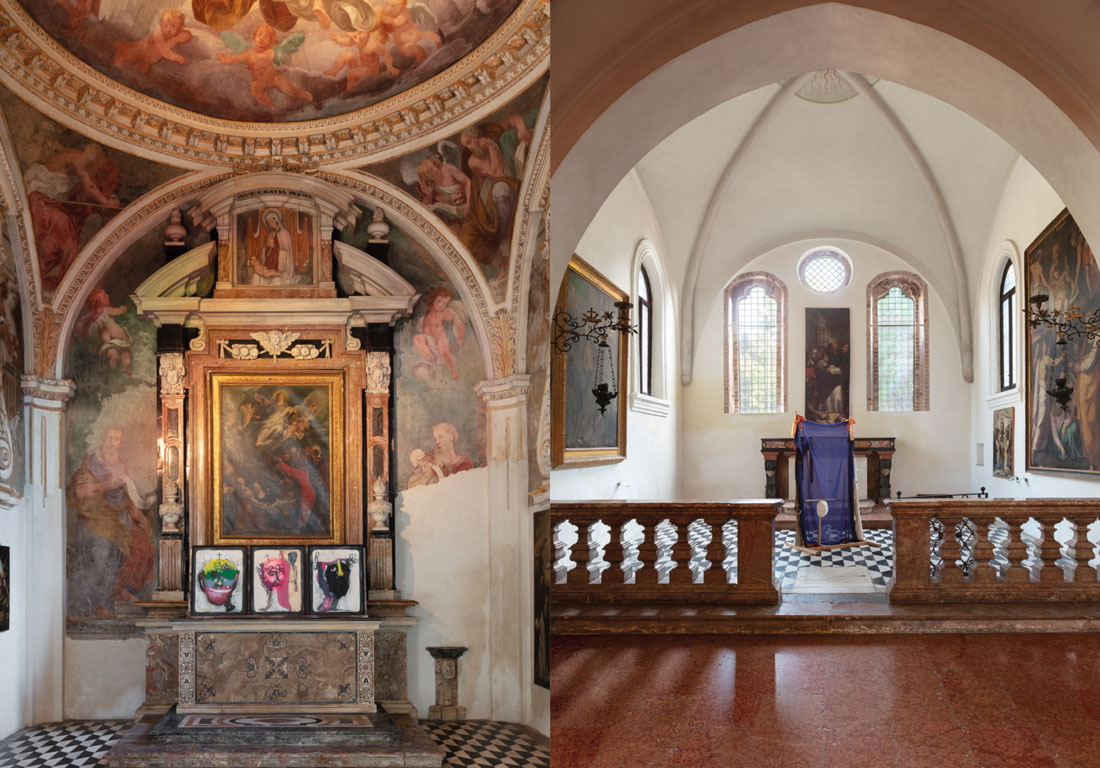
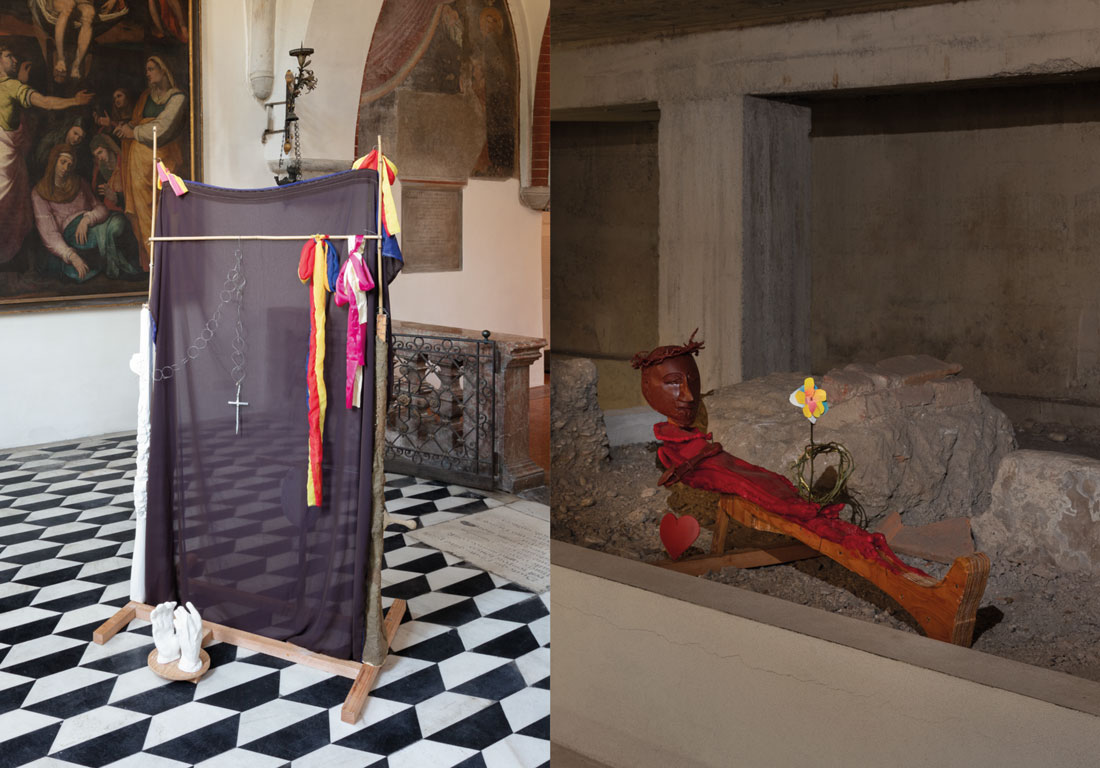
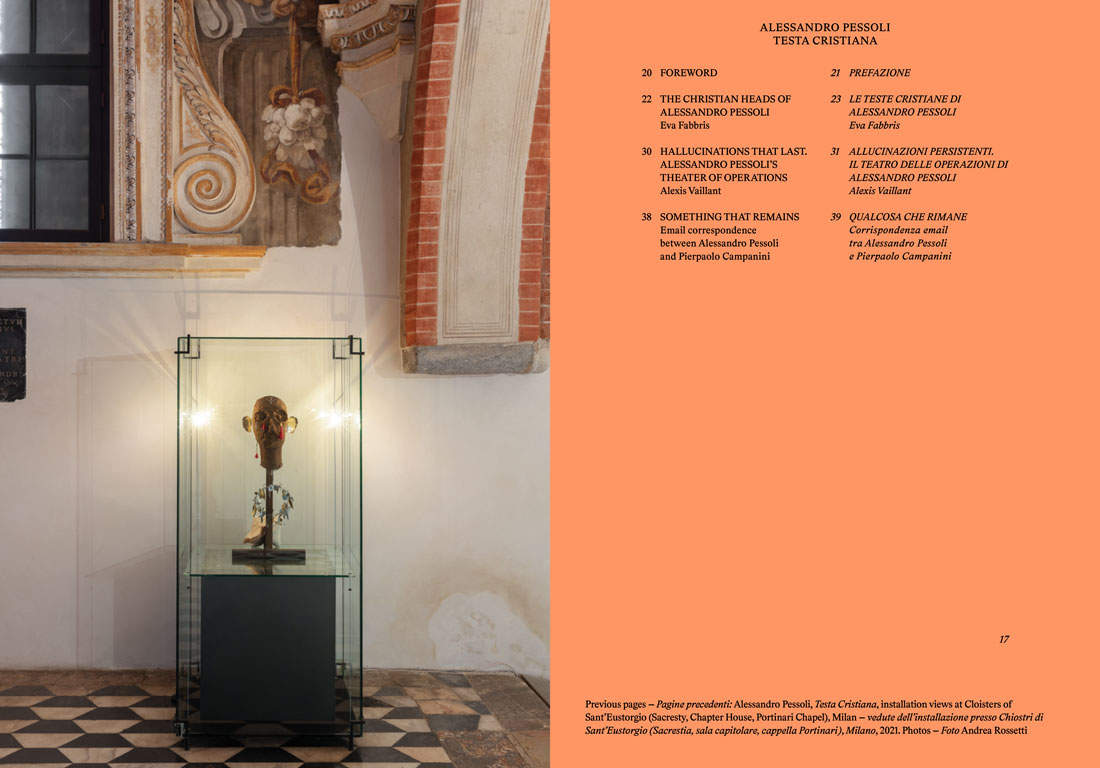
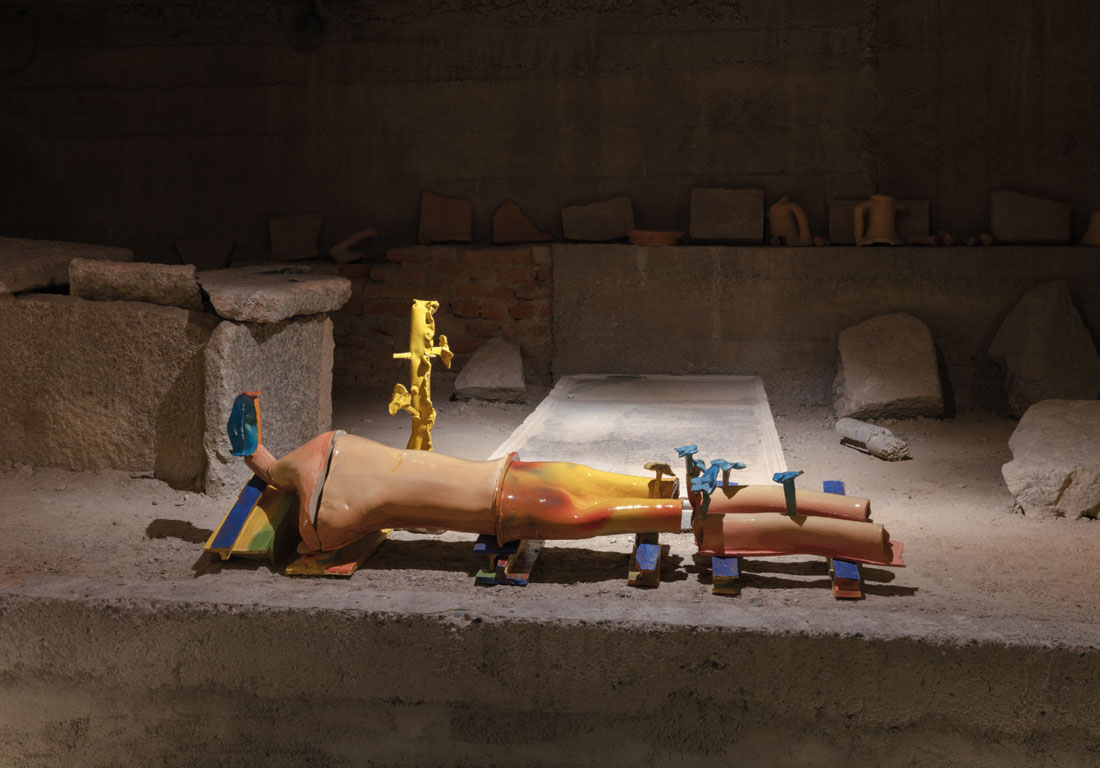
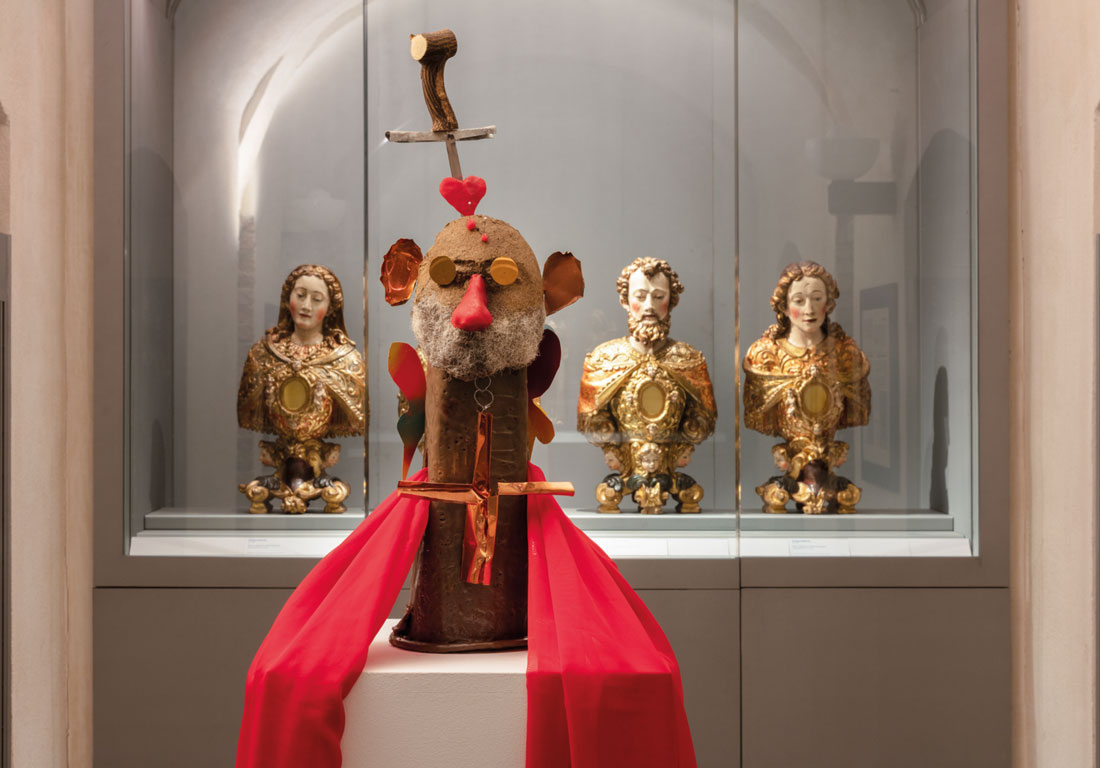
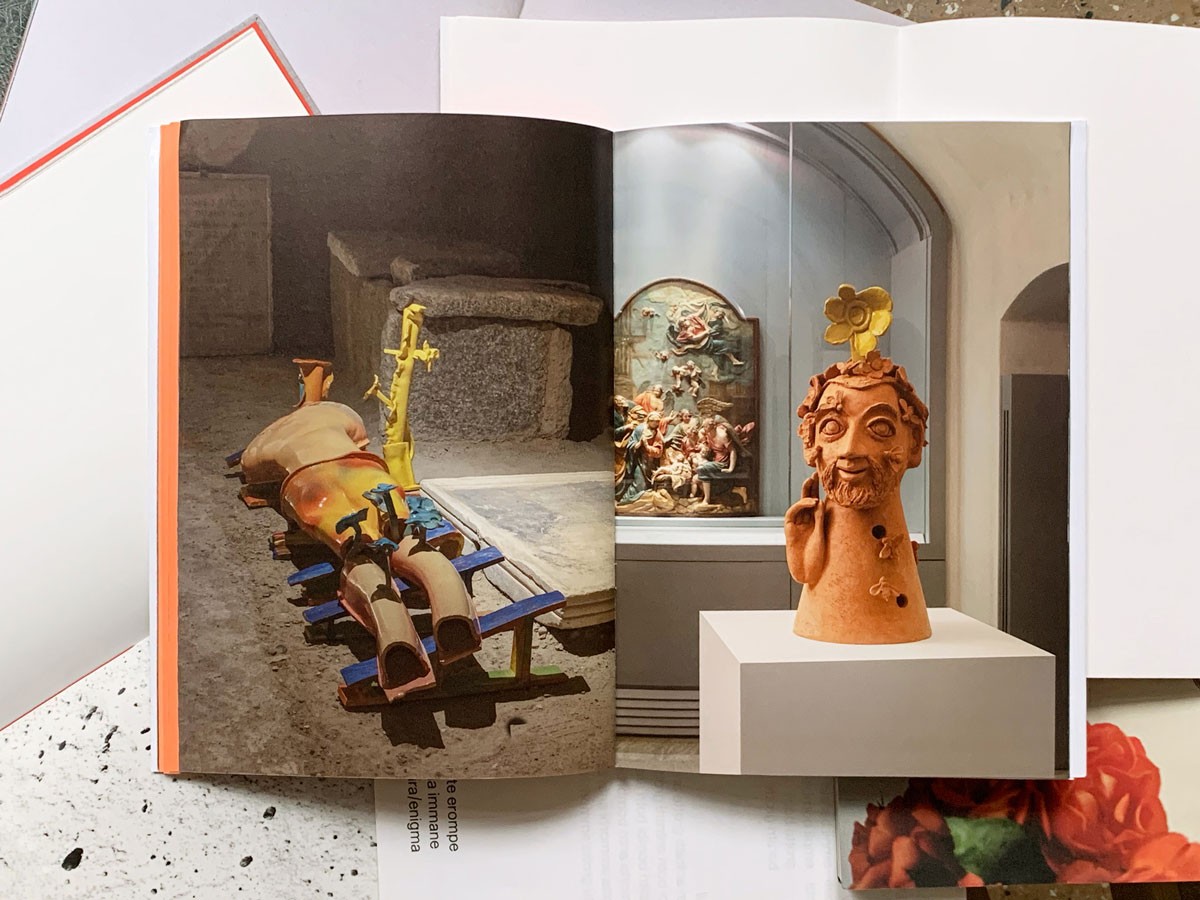
The publication Testa Cristiana is the outcome of the project of the same name specifically conceived by the artist for the spaces of the Cloisters of Sant’Eustorgio and the Carlo Maria Martini Diocesan Museum in Milan, where all these issues are traceable in existing works and new productions created for the exhibition. Offering an intimate path that conveys Pessoli’s idea of sacredness, the show is a site-specific dialogue with the architecture and the relics preserved in the building, reflecting his conception of the sacred as confronted with contemporary life, which demands us to coexist with pain and uncertainty.
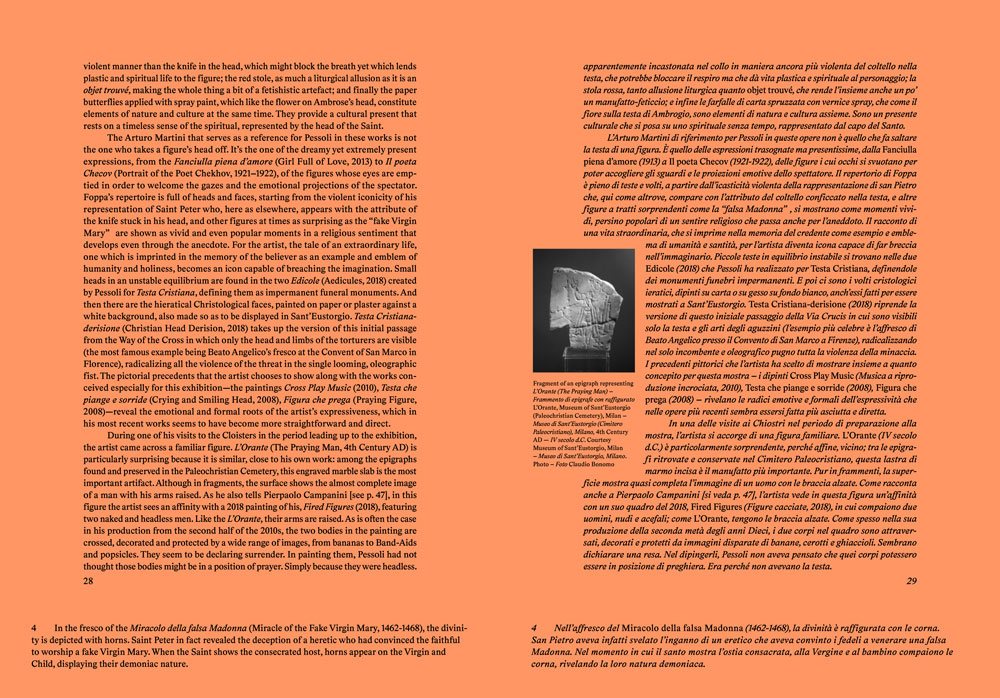
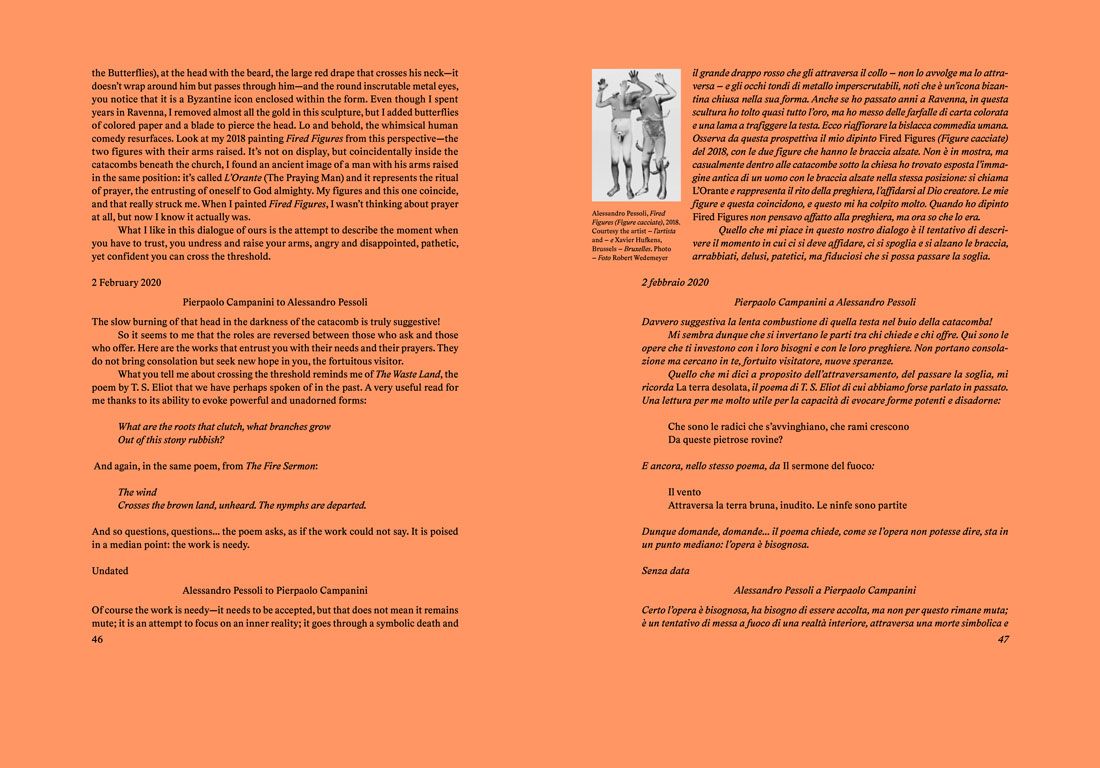
The volume aims to articulate this approach through a rich selection of installation views and a dedicated section where the exhibited works are graphically treated as “icons.” It features a text by writer and curator Alexis Vaillant on Pessoli’s oeuvre, with a particular focus on his chimeric figurative vocabulary, and an essay by curator Eva Fabbris, investigating the sense of the sacred through the artist’s practice. In addition, a conversation between Alessandro Pessoli and the Italian artist Pierpaolo Campanini reflects on the possible degree of spirituality in their artistic research.
Ph: Lorenzo Mason Studio
The editor
Eva Fabbris is Exhibition Curator at Fondazione Prada, and also active as an independent curator and art historian. She has curated exhibitions at Fondazione Pomodoro in Milan, Nouveau Musée National de Monaco, Triennale di Milano, Fondazione Morra in Naples. As a writer, she is a contributor for international exhibition catalogs, publications, and magazines.