O livro, lançado por ocasião da exposição homónima no CAM – Centro de Arte Moderna Gulbenkian, em Lisboa, explora as convergências nas obras de Paula Rego (Lisboa, 1935 – Londres, 2022) e Adriana Varejão (Rio de Janeiro, 1964), apesar de pertencerem a gerações e contextos distintos.
The future of architecture lies in the curatorial approach. This is the thesis put forward by architect Wilfried Kuehn and theorist Dubravka Sekulić in their book, which brings together contributions from more than 30 authors working in the fields of architecture, art, and curatorial knowledge and practice.
Emanuele Coccia describes the radical creative freedom inscribed in Ernesto Neto’s practice, analyzing the workings of the Brazilian artist’s pieces of living architecture. Art on Earth is the third book in a series of short essay collections inspired by the site-specific projects conceived for GAMeC at Palazzo della Ragione.
First Meeting is the first monograph on Argentinian artist Santiago de Paoli. From his early, experimental projects to his most recent explorations, the book delves into his innovative approach of painting on unconventional materials. The book features commissioned essays by Fernanda Brenner and Mariano Mayer, as well as a conversation between Christian Rattemeyer and the artist.
Infinite Memory is Caroline Poggi and Jonathan Vinel’s first monograph, co-published with Fondation Cartier pour l’art contemporain and Lenz. Like a memory card, the book stores information about a selection of films from the initial decade of the artists’ practice. Considered as an object, much like a piece of hardware that stores digital memory, the book offers the possibility to scroll infinitely, with no beginning or end.
Through the words of the sound artist and theorist Brandon LaBelle, the book explores the social and relational component of sound that gave rise to Benevolence, the site-specific project by Sonia Boyce. The Joy of Cacophony is the second book in a series of essay collections inspired by the site-specific projects conceived for GAMeC at Palazzo della Ragione.
Edited by Eva Fabbris with Giovanna Manzotti
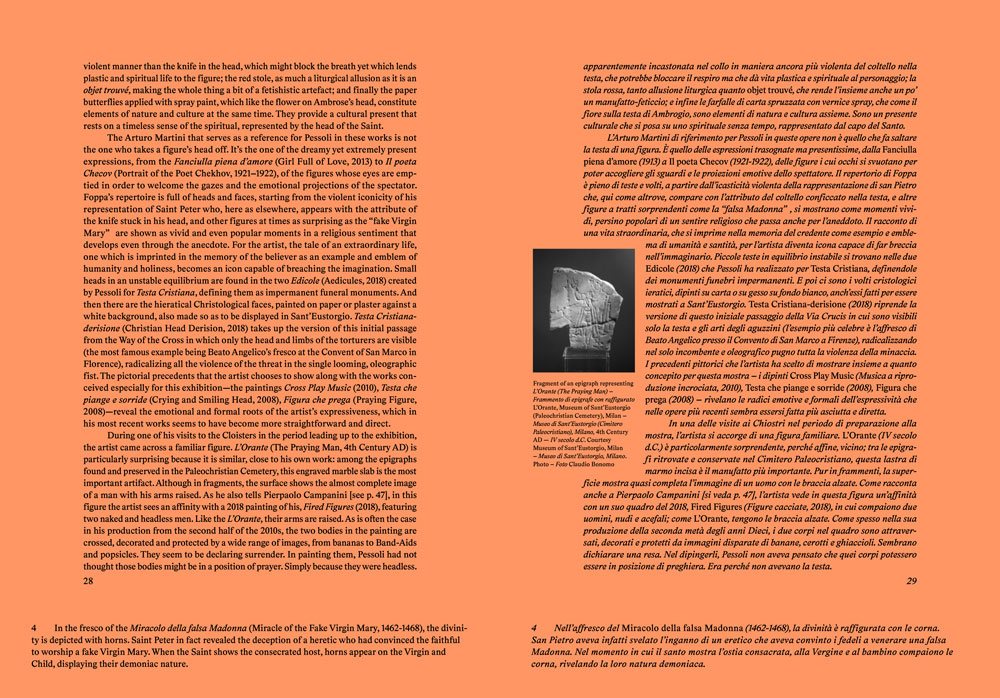
Texts by Eva Fabbris, Alexis Vaillant and a conversation between Alessandro Pessoli and Pierpaolo Campanini. Designed by Lorenzo Mason Studio
2021, English / Italian, softcover. 24 x 33.5 cm, 88 pages
ISBN 979-12-80579-06-5
“In general, my whole work is a movement from the inside to the outside and vice versa; past and present, personal and collective are fluctuating entities; the work becomes an intermediate place where a transformation of the tragic sense of the world, of its conflict and violence, is taking place.” (Alessandro Pessoli, from a conversation with Pierpaolo Campanini)
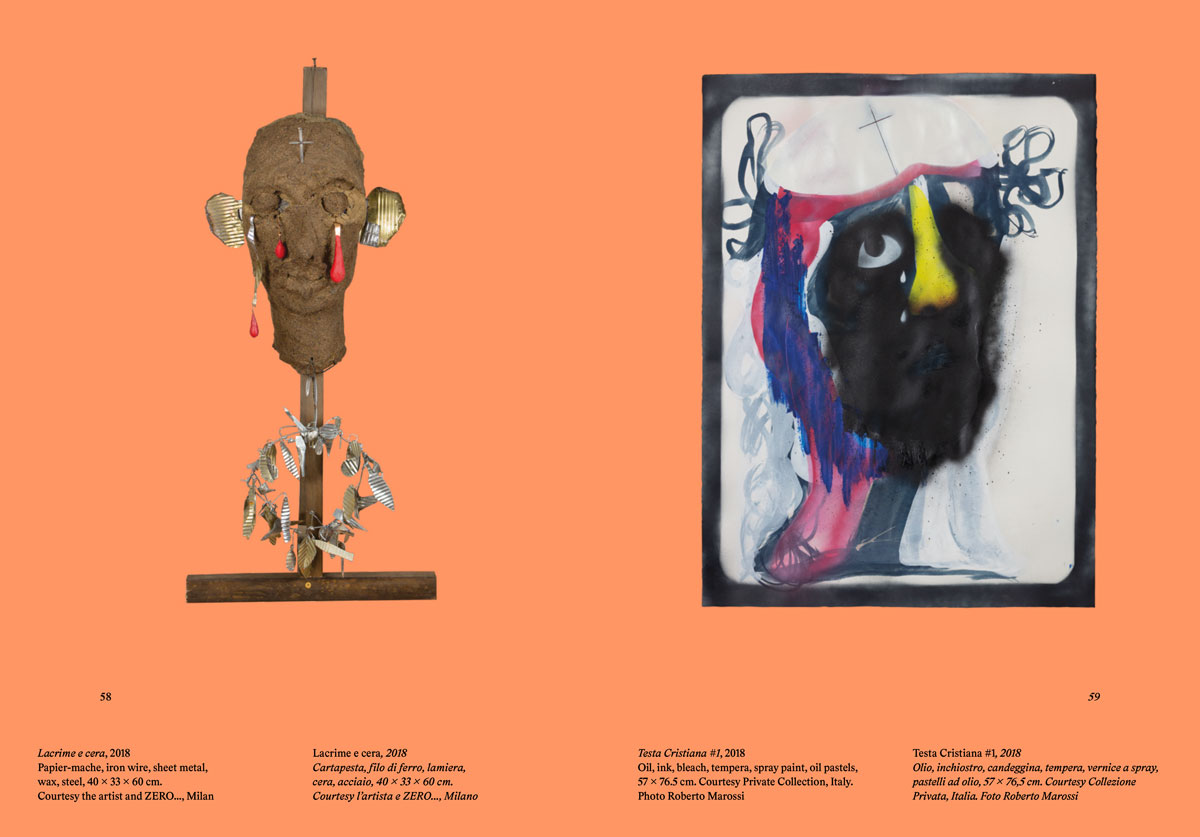
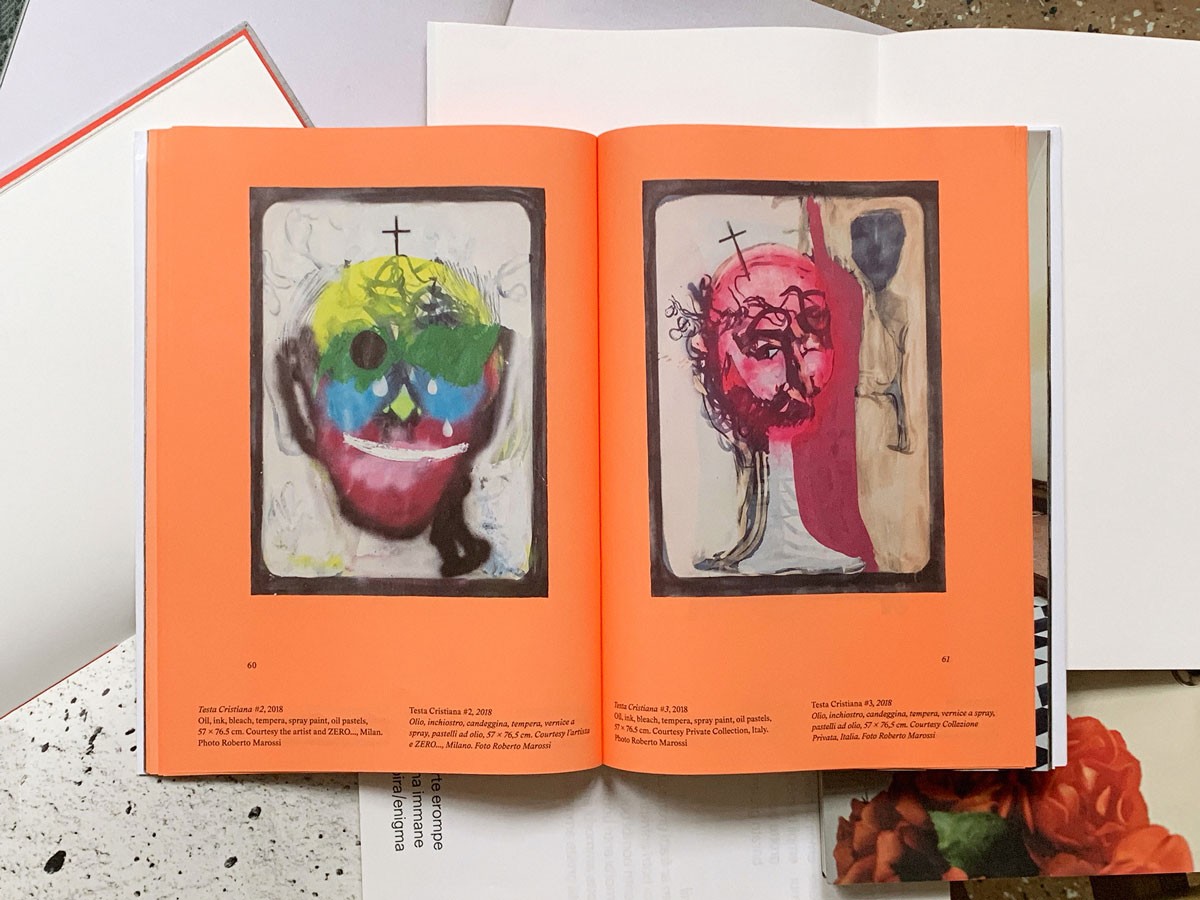
Alessandro Pessoli (Cervia, Italy, 1963) lives and works in Los Angeles. His practice is typically multimedia in nature, focusing on drawing, painting and sculpture, while also favoring ceramic. Often underscored by themes spanning politics, religion, history, culture, and identity, his research recalls the theme of the sacred and the religious, emerging both from the resumption of historical figures, classical art-historical iconography, and everyday images which intermingle in a reconstruction of reality that is dreamlike, painful, and sometimes grotesque, but never lacking instinctive emotion.
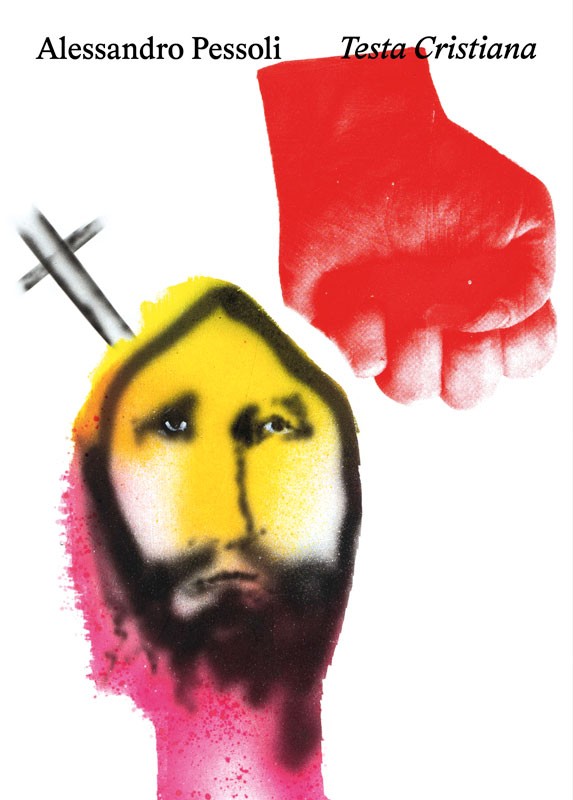
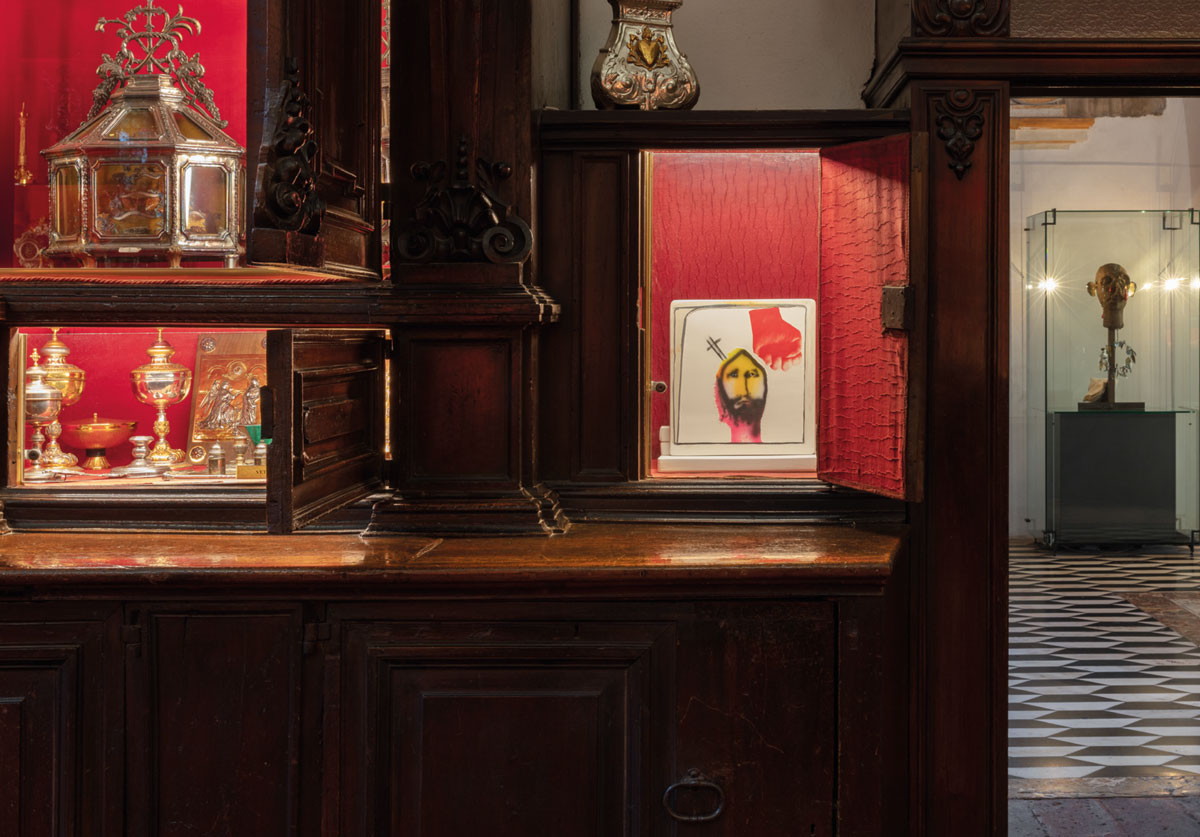
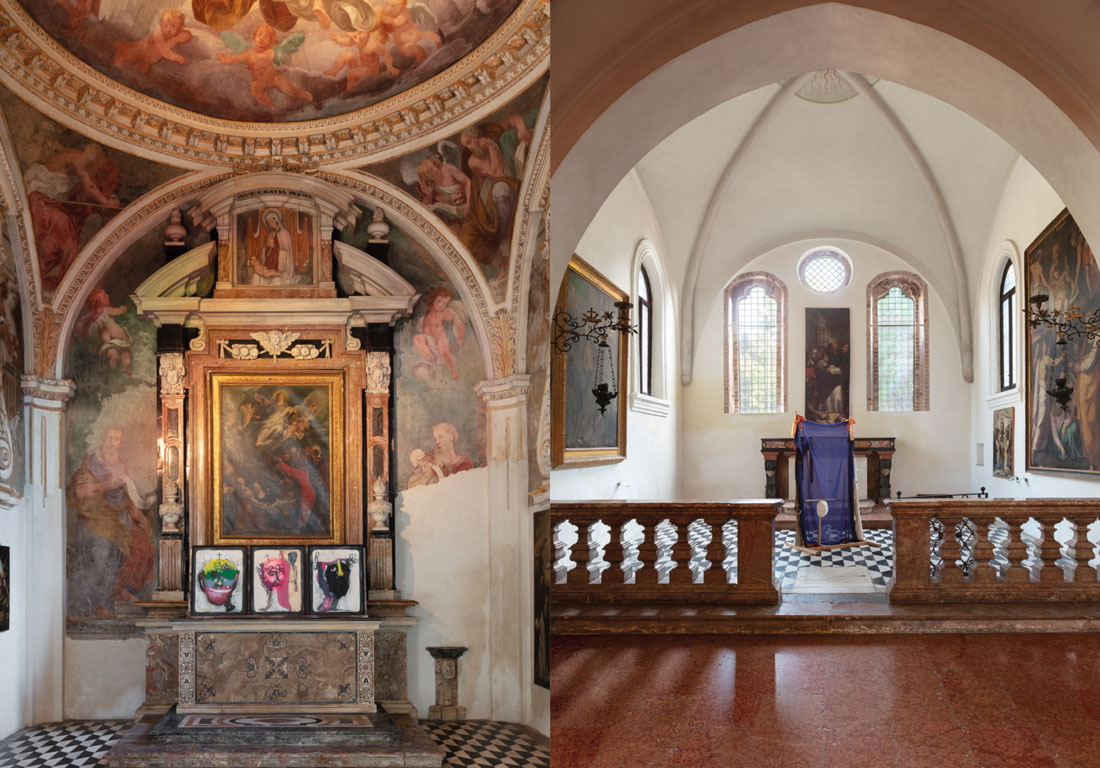
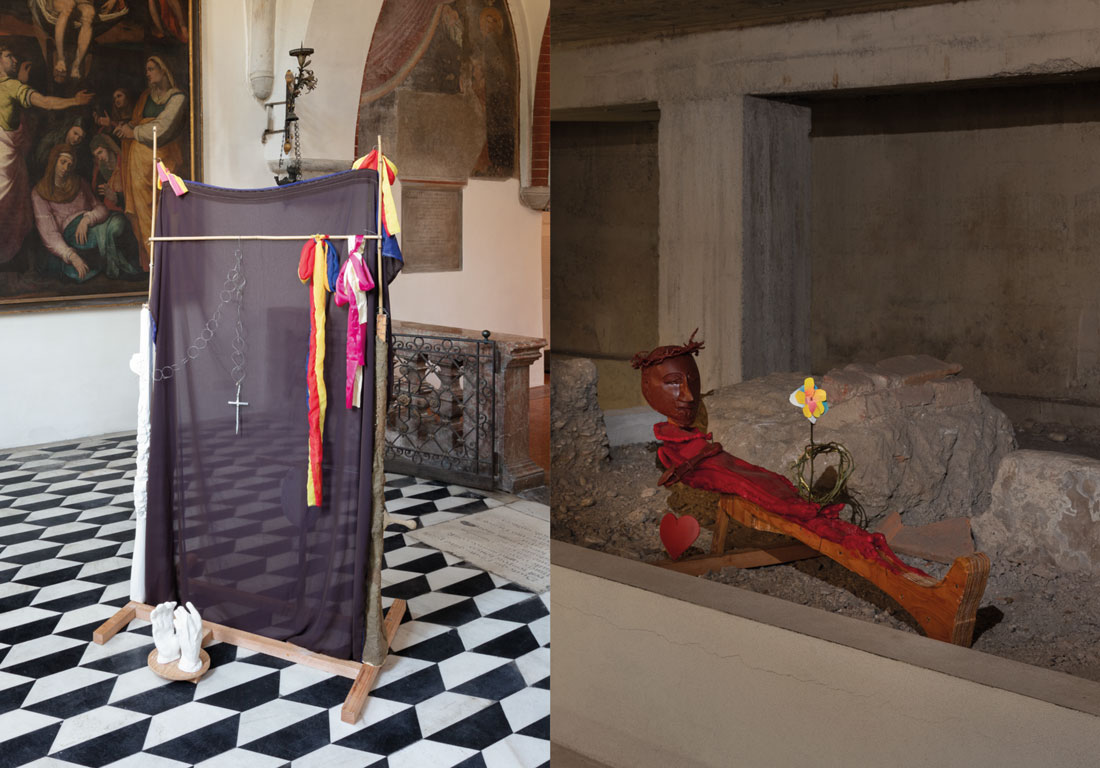
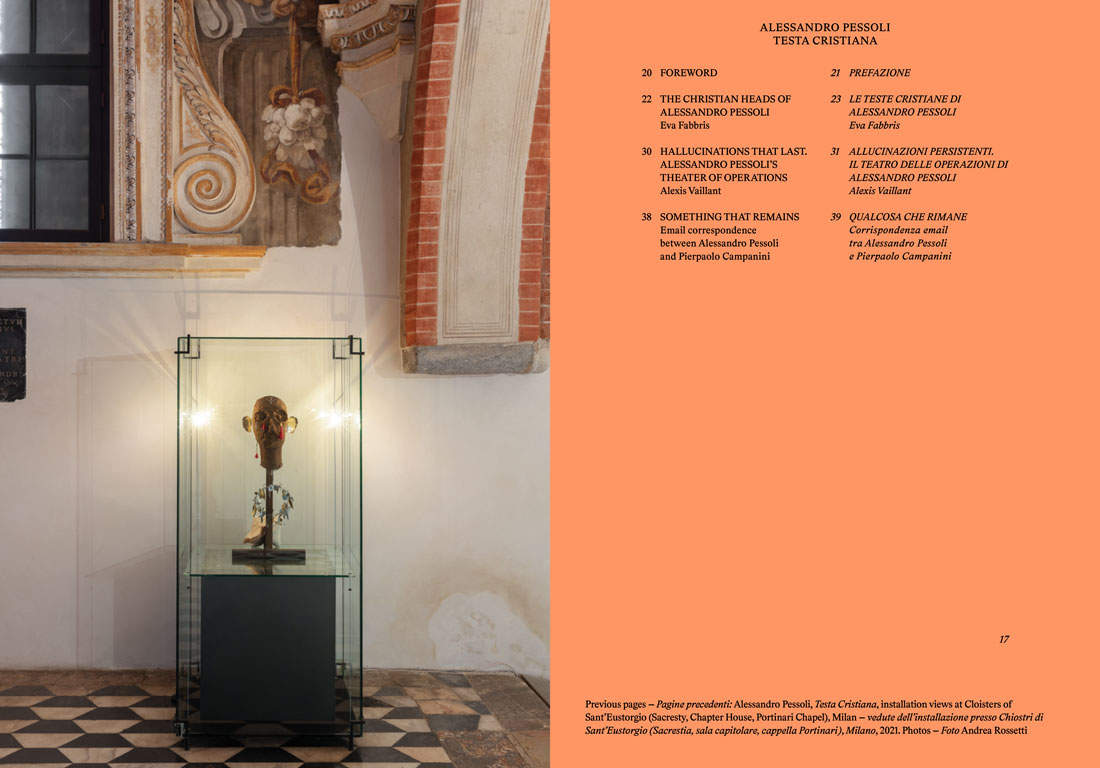
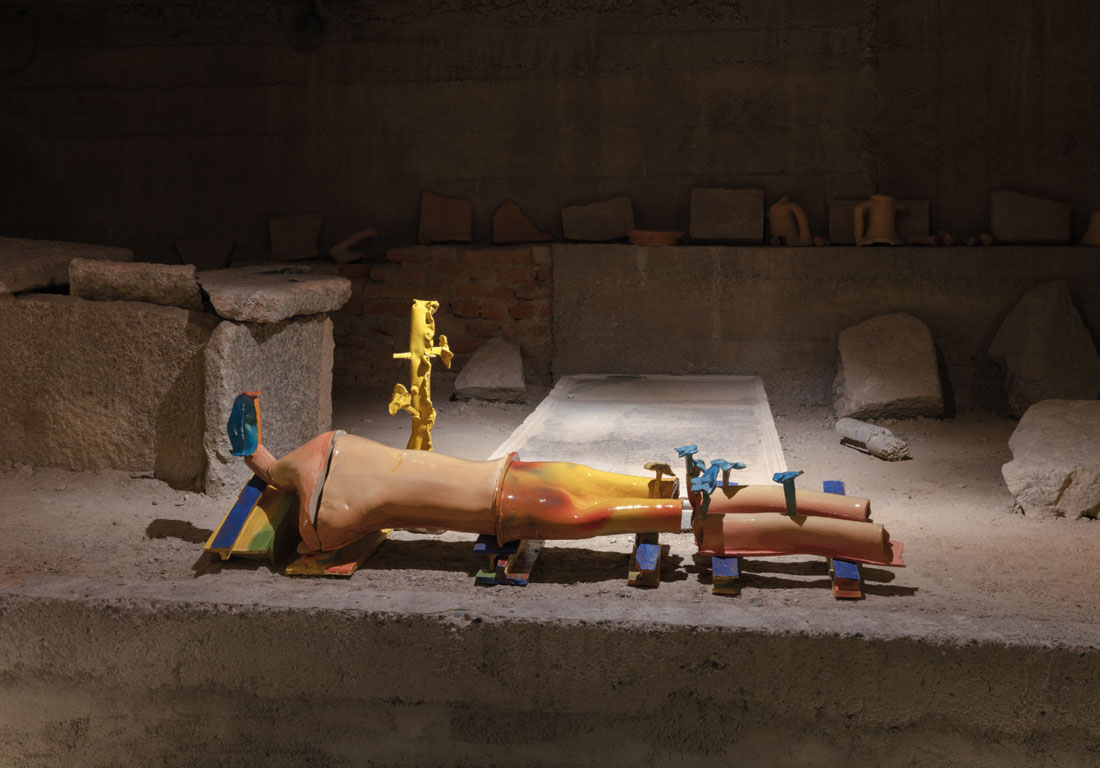
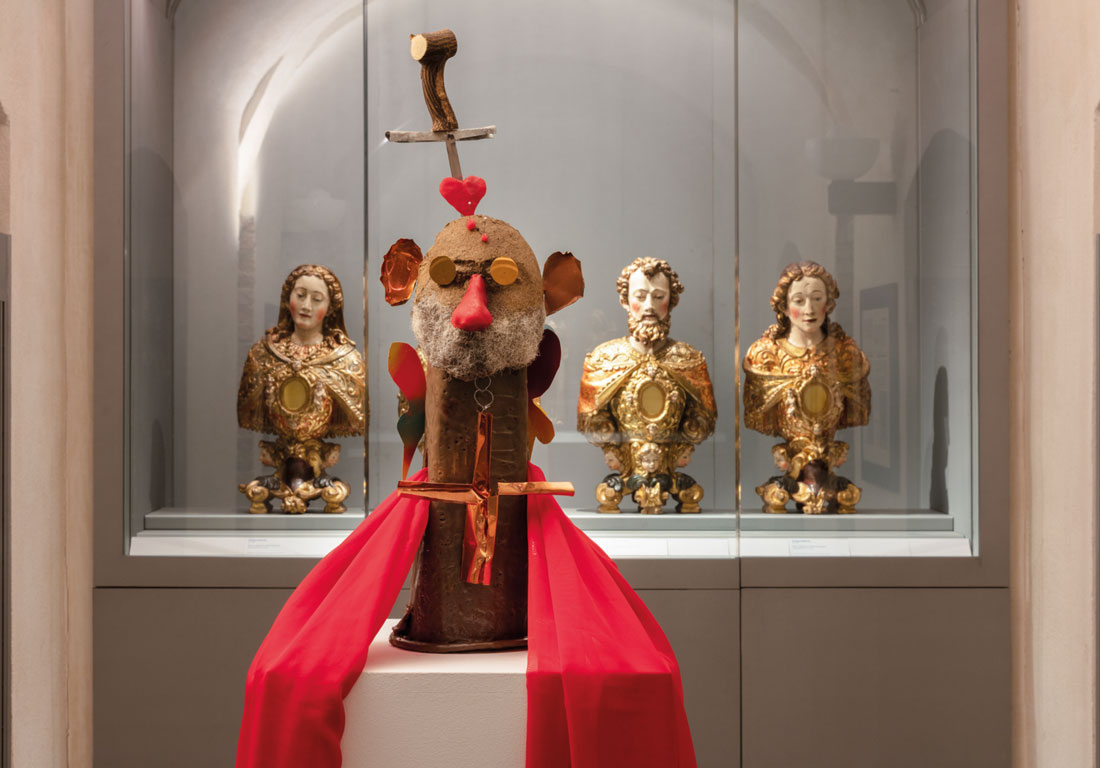
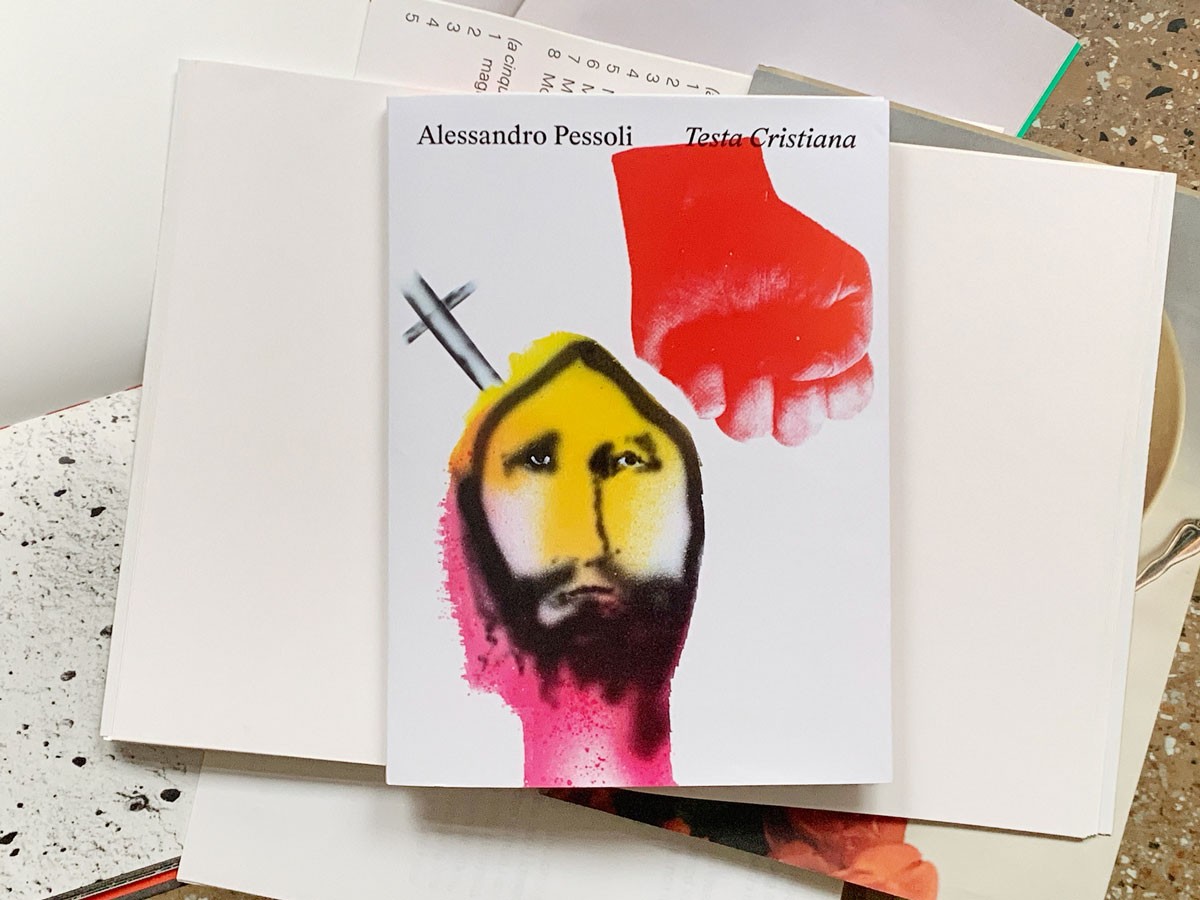
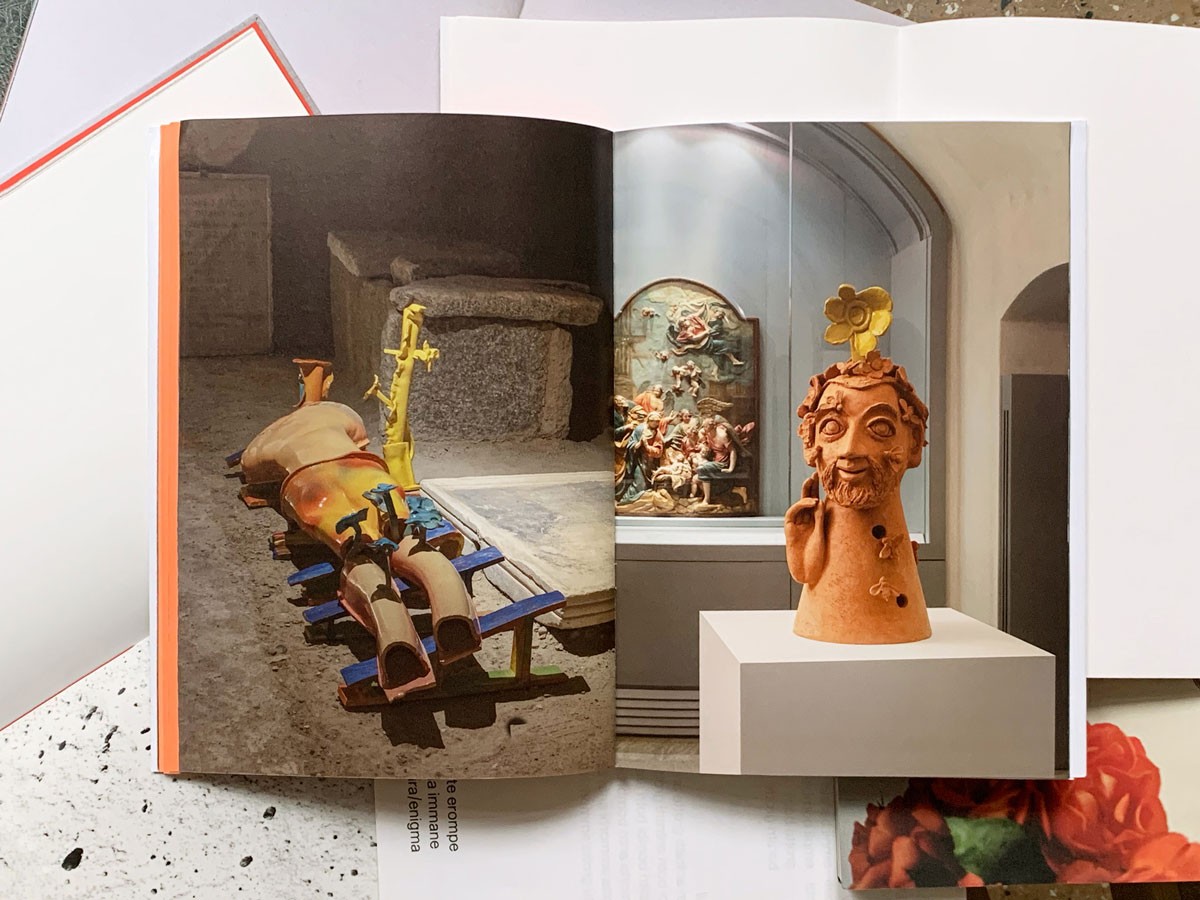
The publication Testa Cristiana is the outcome of the project of the same name specifically conceived by the artist for the spaces of the Cloisters of Sant’Eustorgio and the Carlo Maria Martini Diocesan Museum in Milan, where all these issues are traceable in existing works and new productions created for the exhibition. Offering an intimate path that conveys Pessoli’s idea of sacredness, the show is a site-specific dialogue with the architecture and the relics preserved in the building, reflecting his conception of the sacred as confronted with contemporary life, which demands us to coexist with pain and uncertainty.
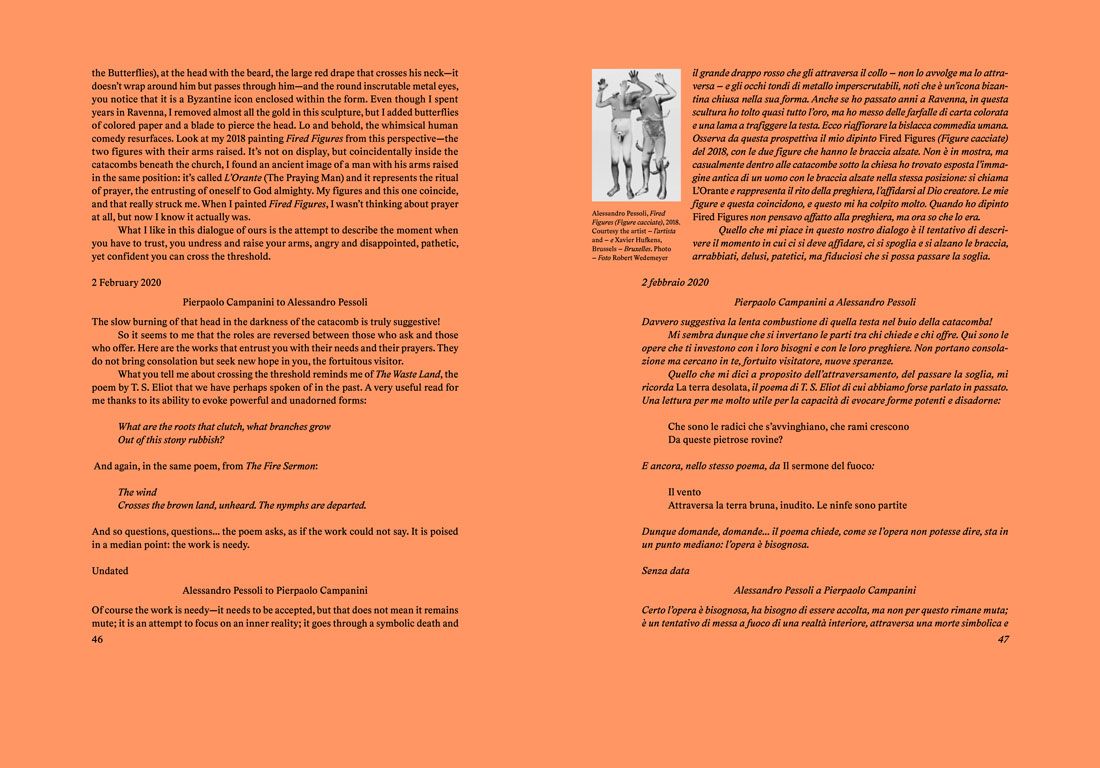
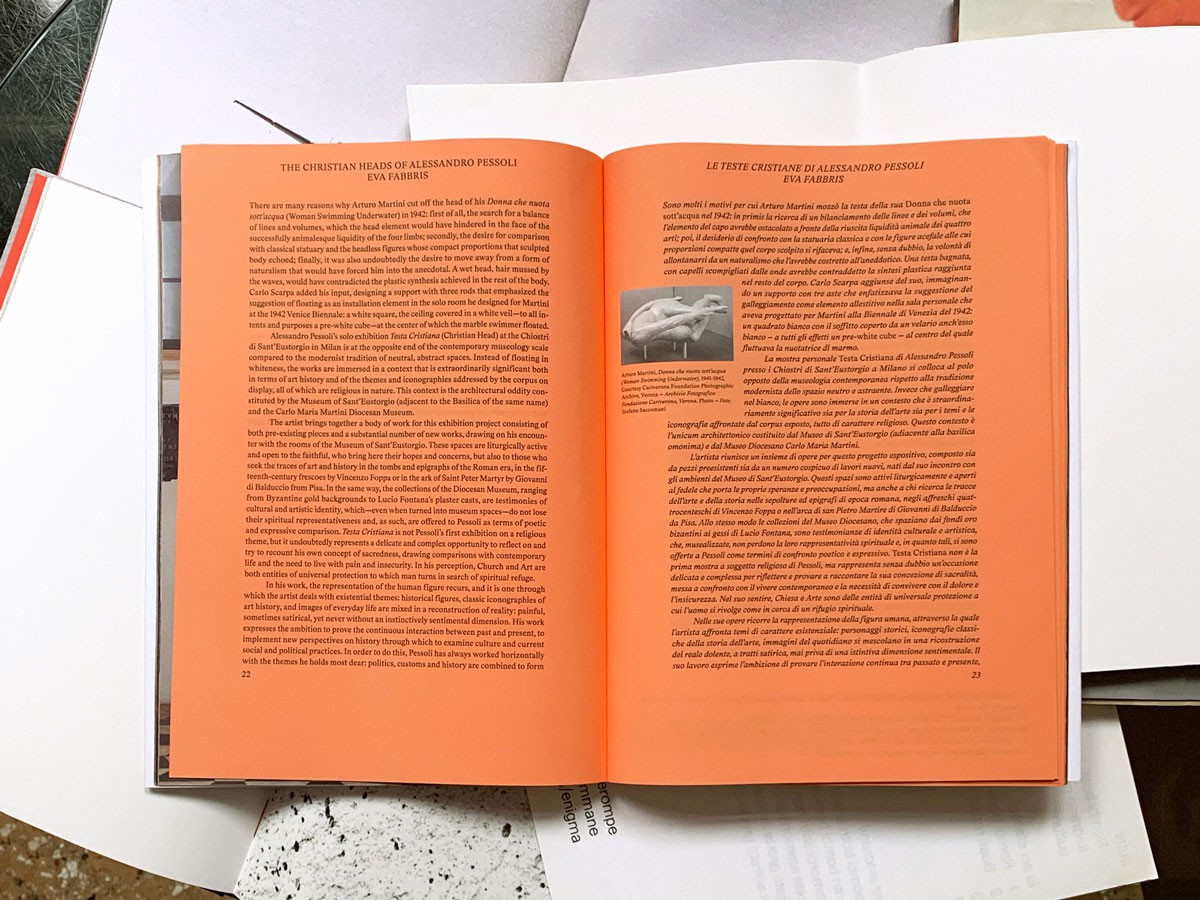
The volume aims to articulate this approach through a rich selection of installation views and a dedicated section where the exhibited works are graphically treated as “icons.” It features a text by writer and curator Alexis Vaillant on Pessoli’s oeuvre, with a particular focus on his chimeric figurative vocabulary, and an essay by curator Eva Fabbris, investigating the sense of the sacred through the artist’s practice. In addition, a conversation between Alessandro Pessoli and the Italian artist Pierpaolo Campanini reflects on the possible degree of spirituality in their artistic research.
Ph: Lorenzo Mason Studio
The editor
Eva Fabbris is Exhibition Curator at Fondazione Prada, and also active as an independent curator and art historian. She has curated exhibitions at Fondazione Pomodoro in Milan, Nouveau Musée National de Monaco, Triennale di Milano, Fondazione Morra in Naples. As a writer, she is a contributor for international exhibition catalogs, publications, and magazines.