A visual notebook of the screenshots taken by Yngve Holen over the past five years or so, 6G—the anticipated next phase of network technology—is a peculiarly sized artist’s book, a glossy non-linear agglomeration that reflects the intersections of production, life, and digital debris.
Conceived as a visual résumé, the book provides a comprehensive overview of Posenenske’s solo exhibitions and a record of her numerous group shows. Featuring an essay by curator Erlend Hammer on the role of documentary photographs in the circulation of works of art, it was published in conjunction with the eponymous show at the Haugar Art Museum in Tønsberg.
Since the 1980s, Belgian artist Sigefride Bruna Hauman has created a highly original body of work in different media. Her installations, reliefs and videos are the subject of a much-overdue retrospective organized by M Leuven—and of this first monograph.
Rituals of Care is an extensive monograph devoted to the work of Antonio Obá, published in conjunction with his eponymous exhibition presented at the Centre d’Art Contemporain Genève, curated by Andrea Bellini. Extensively illustrated, the book immerses the reader in Obá’s multifaceted oeuvre and in the magical iconographic universe of his paintings.
Claiming that the museum is not enough means asking what a museum should be and do, eventually questioning the role of cultural institutions in society. Through conversations, stills of documentaries, responses, and reprints of archival documents that explore ideas of architecture on the ground, this volume reflects on the tools deployed by the institution to redefine its relationship to others.
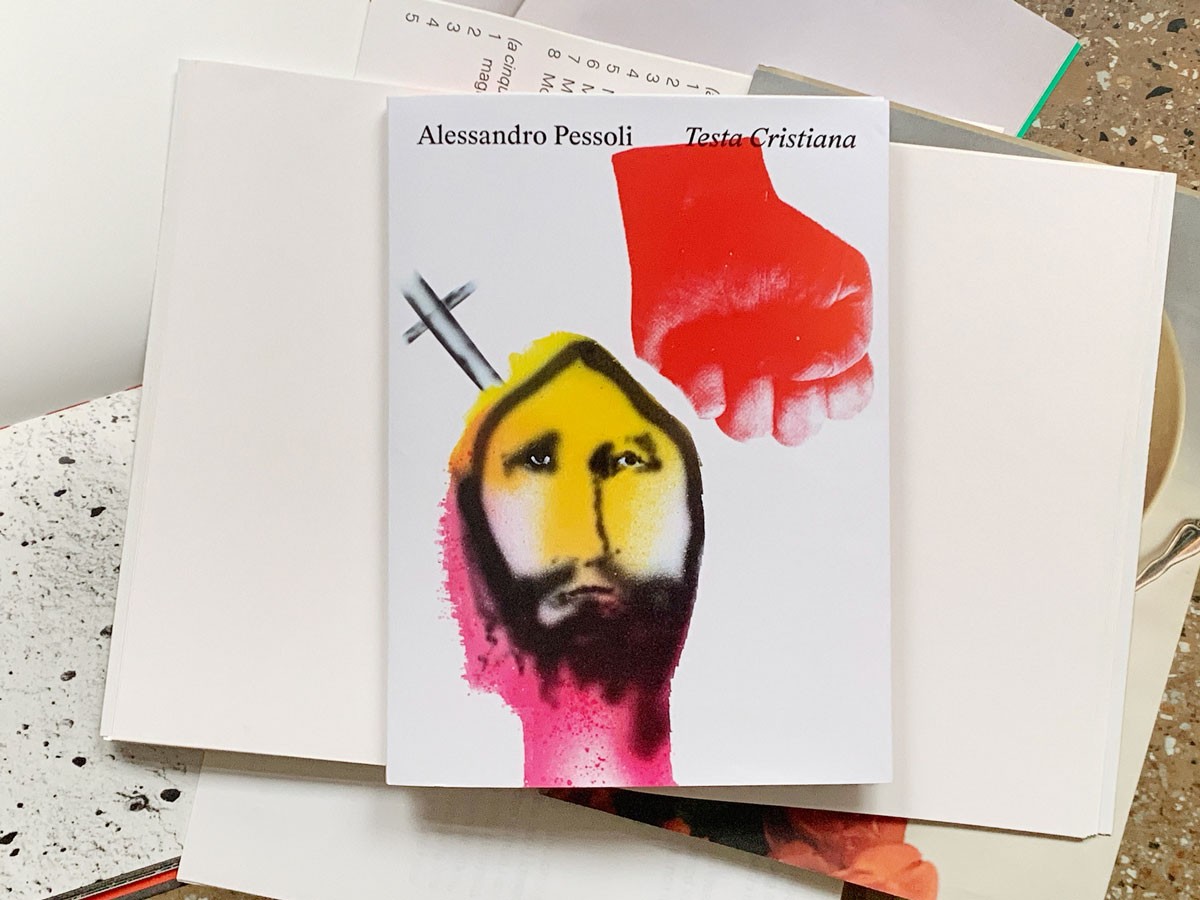
Edited by Eva Fabbris with Giovanna Manzotti
Texts by Eva Fabbris, Alexis Vaillant and a conversation between Alessandro Pessoli and Pierpaolo Campanini. Designed by Lorenzo Mason Studio
2021, English / Italian, softcover. 24 x 33.5 cm, 88 pages
ISBN 979-12-80579-06-5
“In general, my whole work is a movement from the inside to the outside and vice versa; past and present, personal and collective are fluctuating entities; the work becomes an intermediate place where a transformation of the tragic sense of the world, of its conflict and violence, is taking place.” (Alessandro Pessoli, from a conversation with Pierpaolo Campanini)
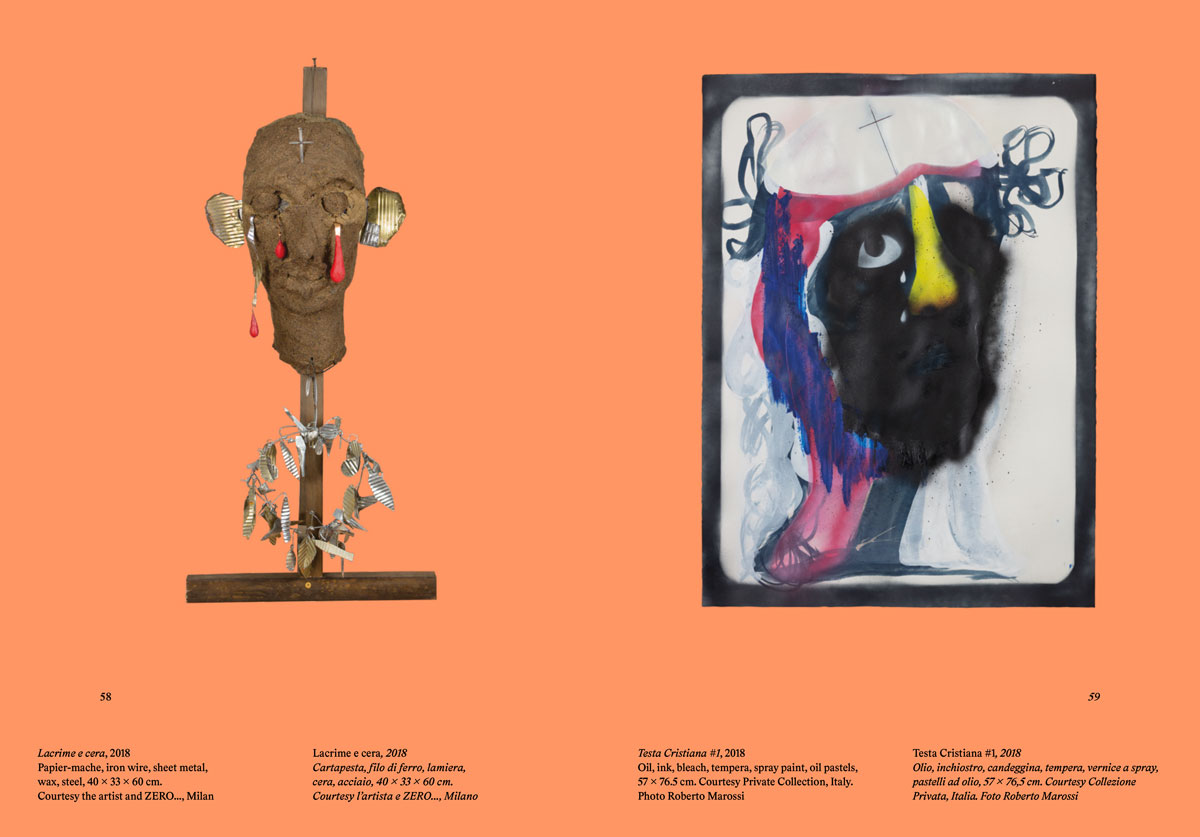
Alessandro Pessoli (Cervia, Italy, 1963) lives and works in Los Angeles. His practice is typically multimedia in nature, focusing on drawing, painting and sculpture, while also favoring ceramic. Often underscored by themes spanning politics, religion, history, culture, and identity, his research recalls the theme of the sacred and the religious, emerging both from the resumption of historical figures, classical art-historical iconography, and everyday images which intermingle in a reconstruction of reality that is dreamlike, painful, and sometimes grotesque, but never lacking instinctive emotion.
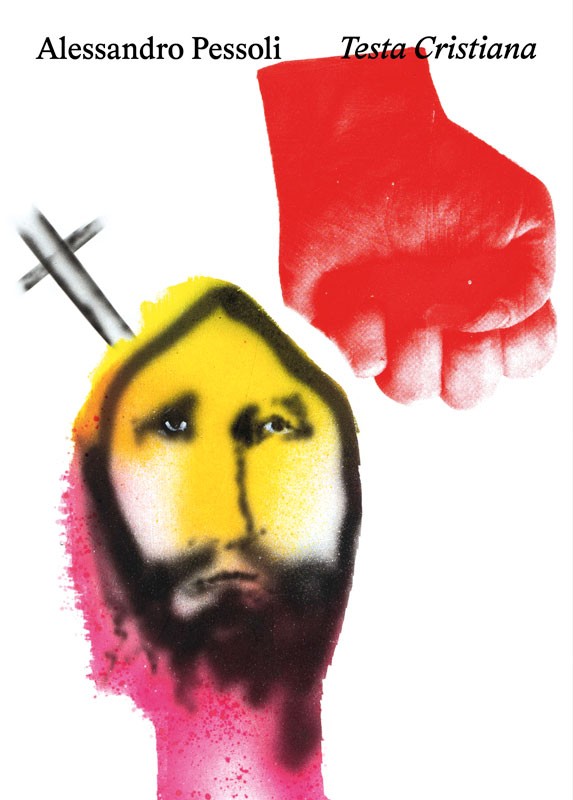
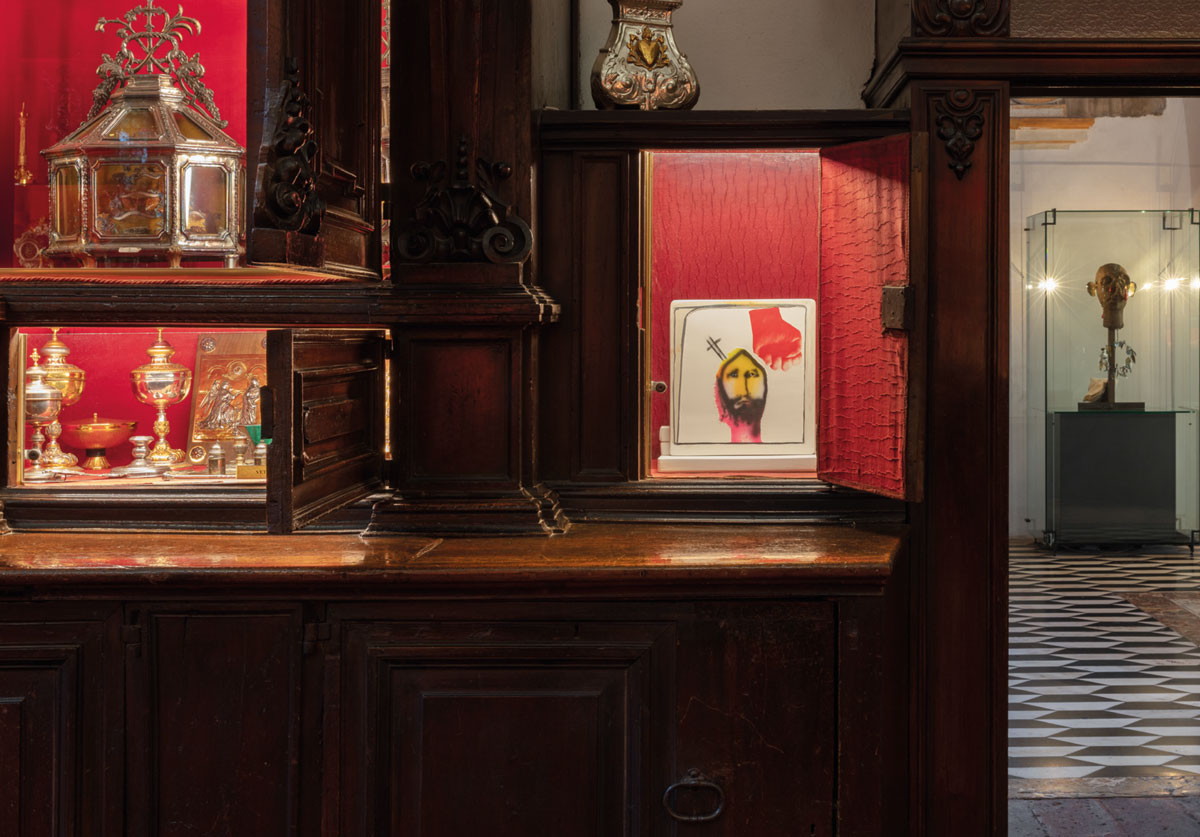
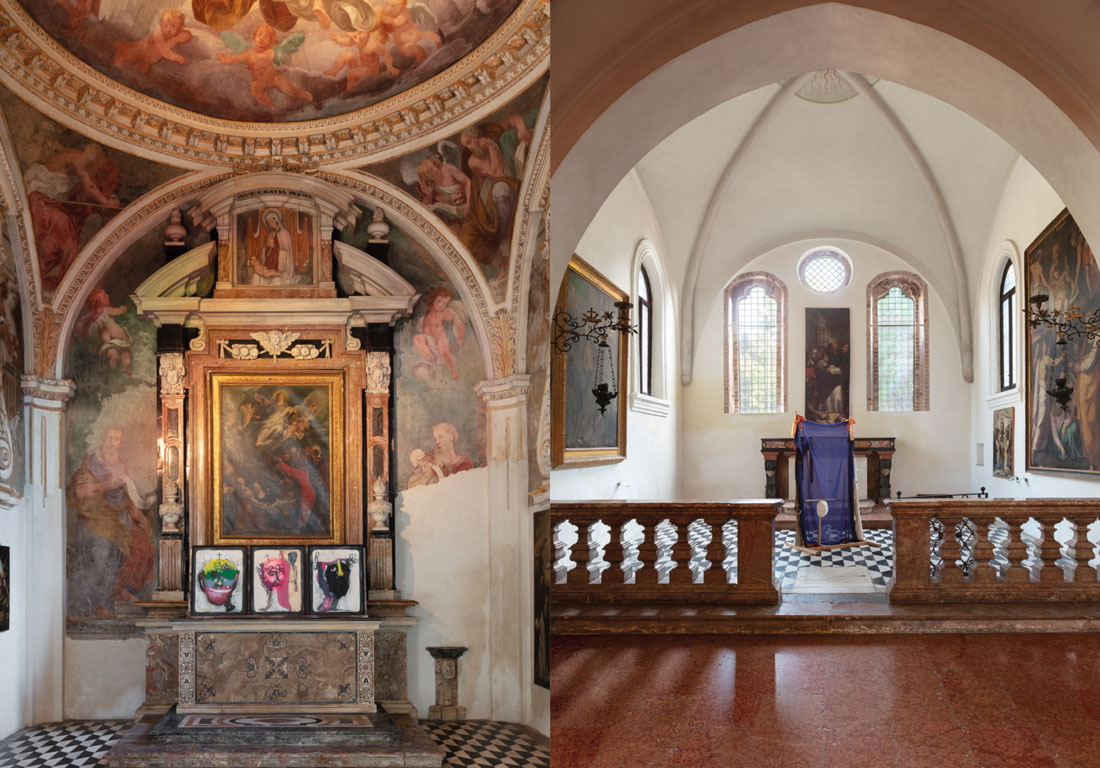
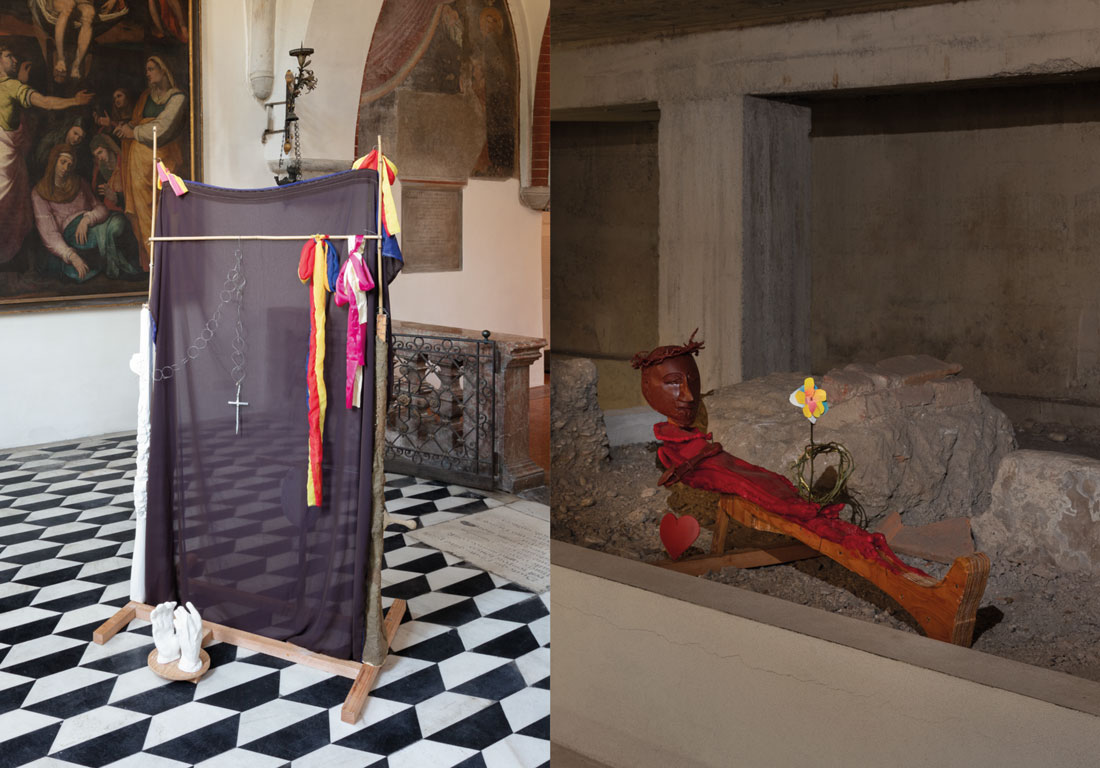
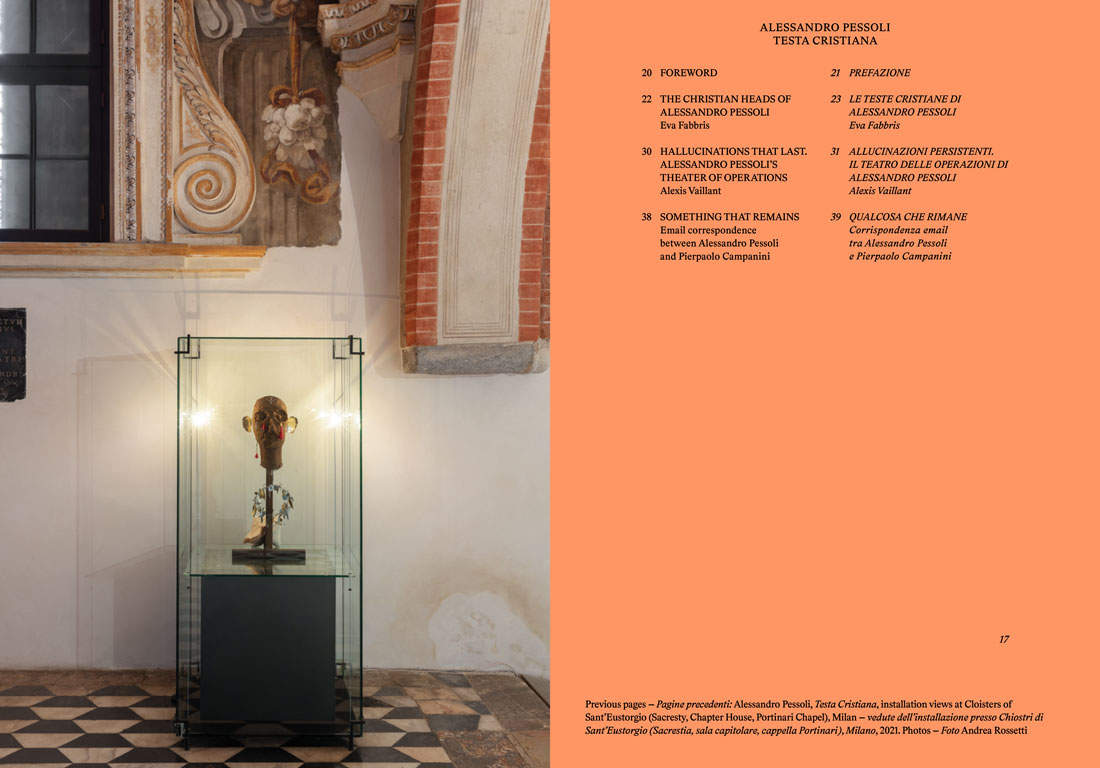
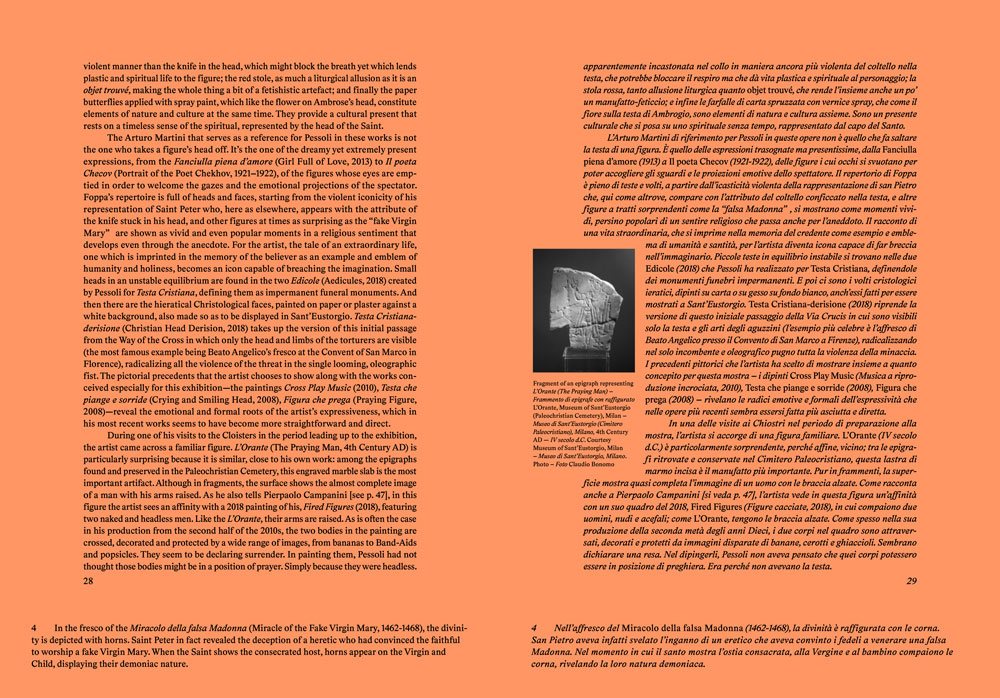
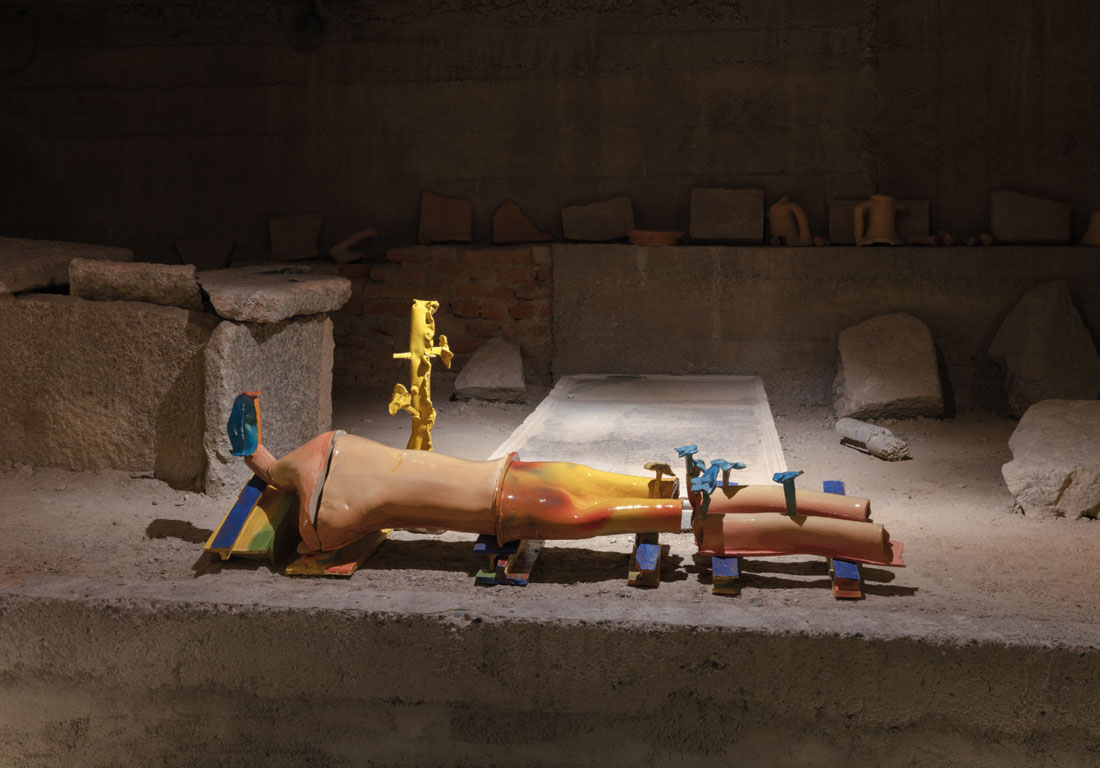
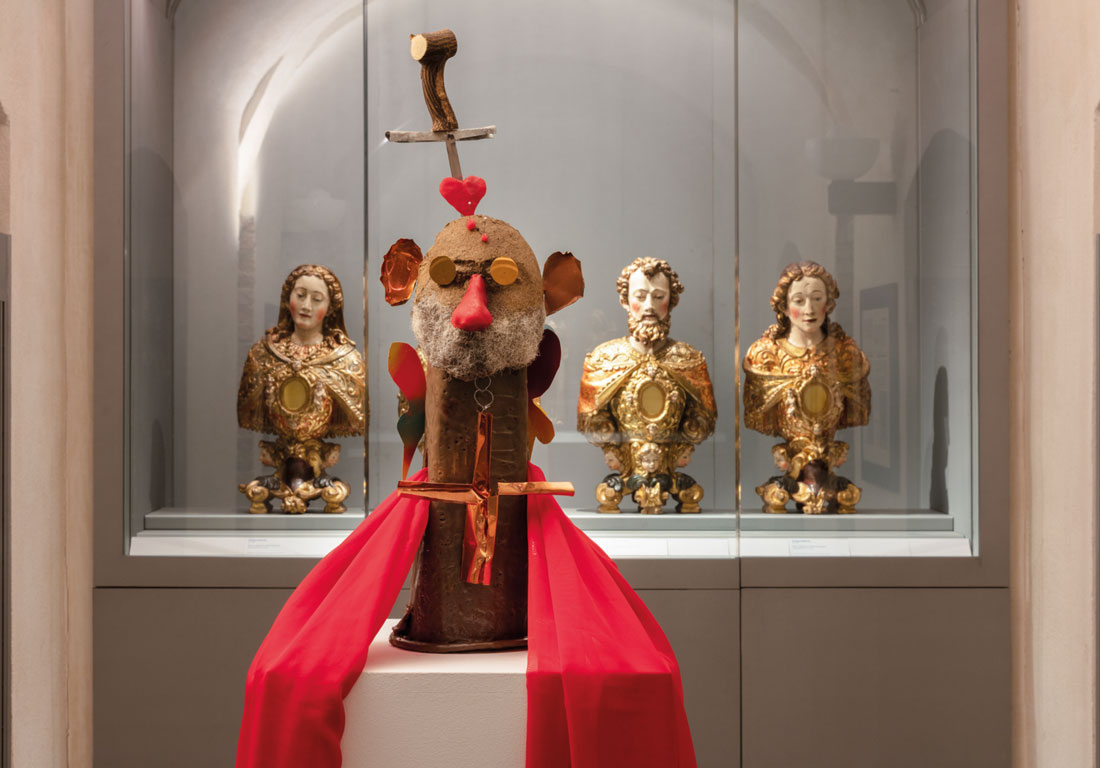
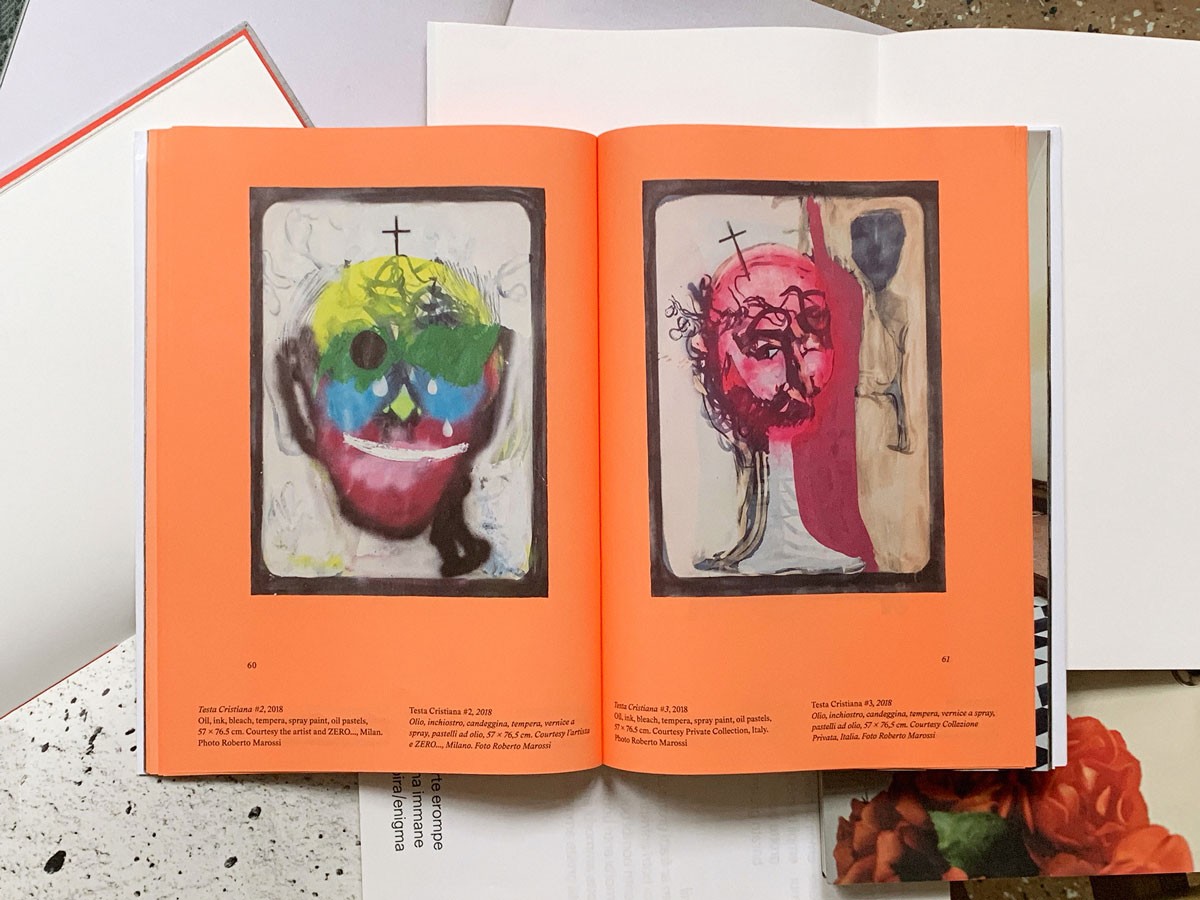
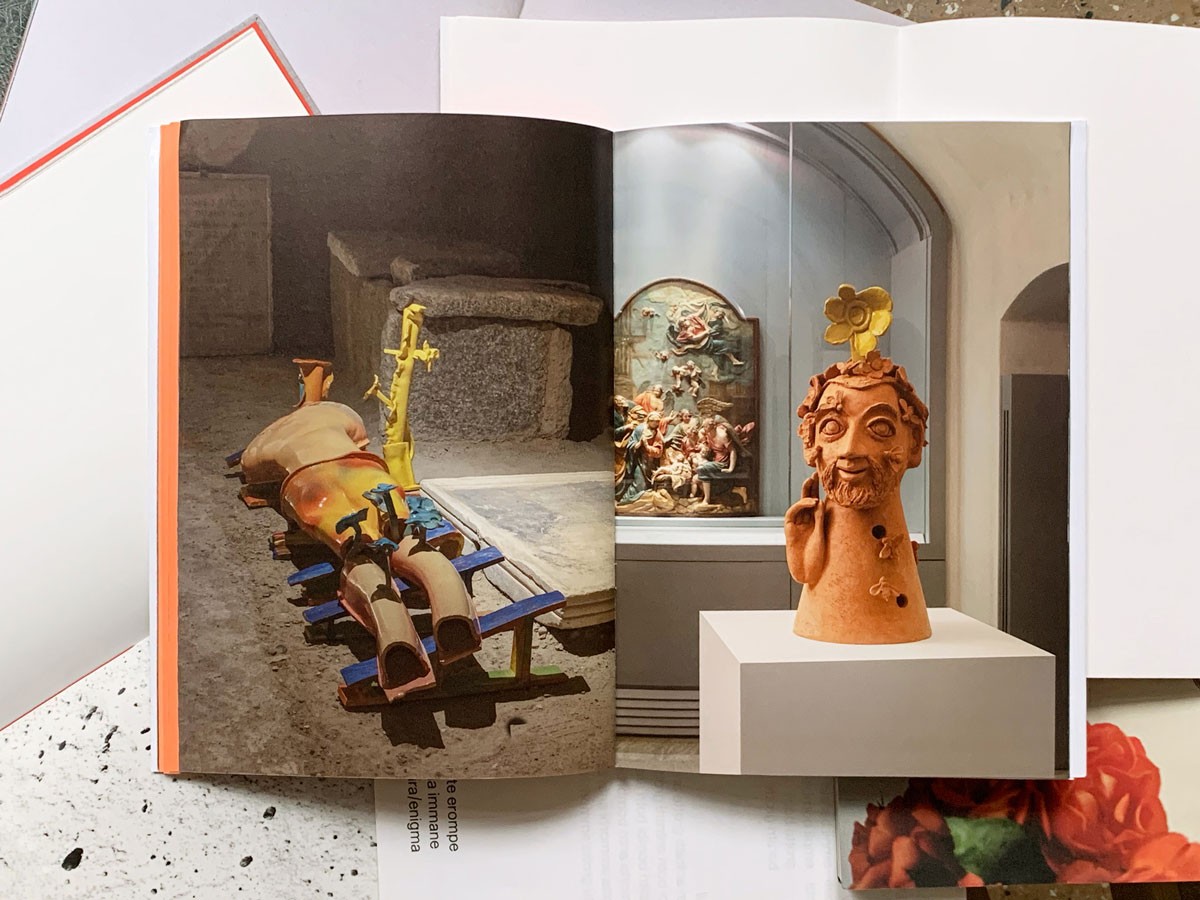
The publication Testa Cristiana is the outcome of the project of the same name specifically conceived by the artist for the spaces of the Cloisters of Sant’Eustorgio and the Carlo Maria Martini Diocesan Museum in Milan, where all these issues are traceable in existing works and new productions created for the exhibition. Offering an intimate path that conveys Pessoli’s idea of sacredness, the show is a site-specific dialogue with the architecture and the relics preserved in the building, reflecting his conception of the sacred as confronted with contemporary life, which demands us to coexist with pain and uncertainty.
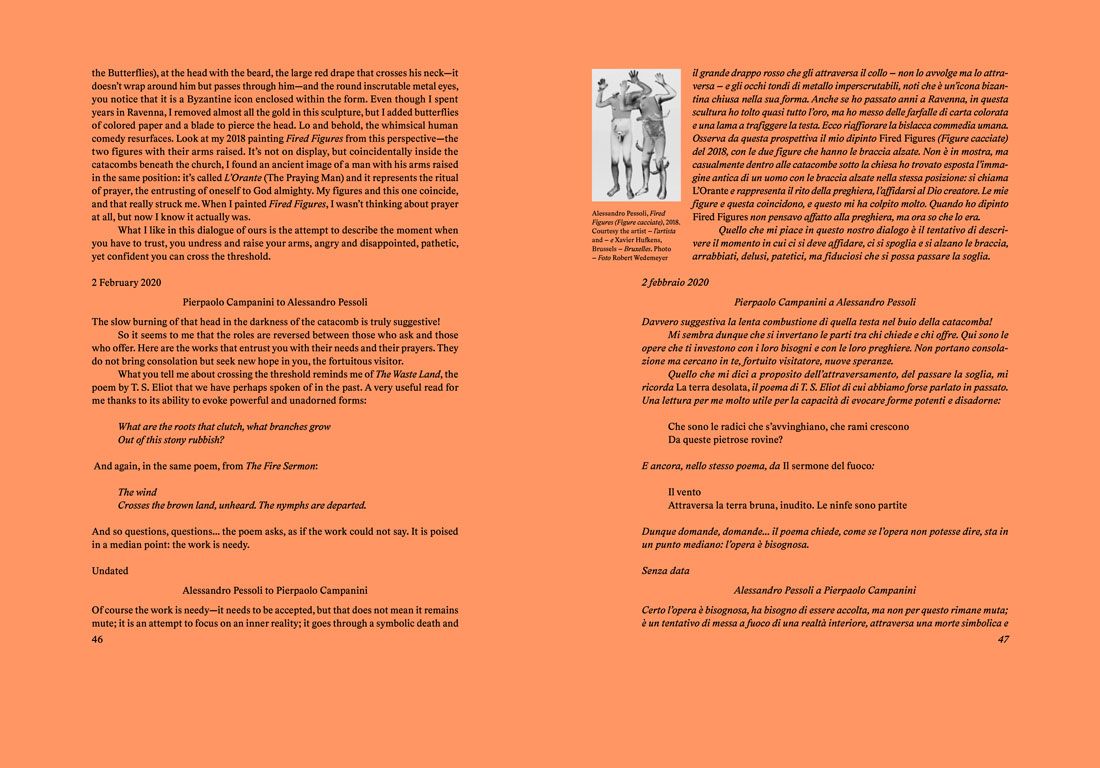
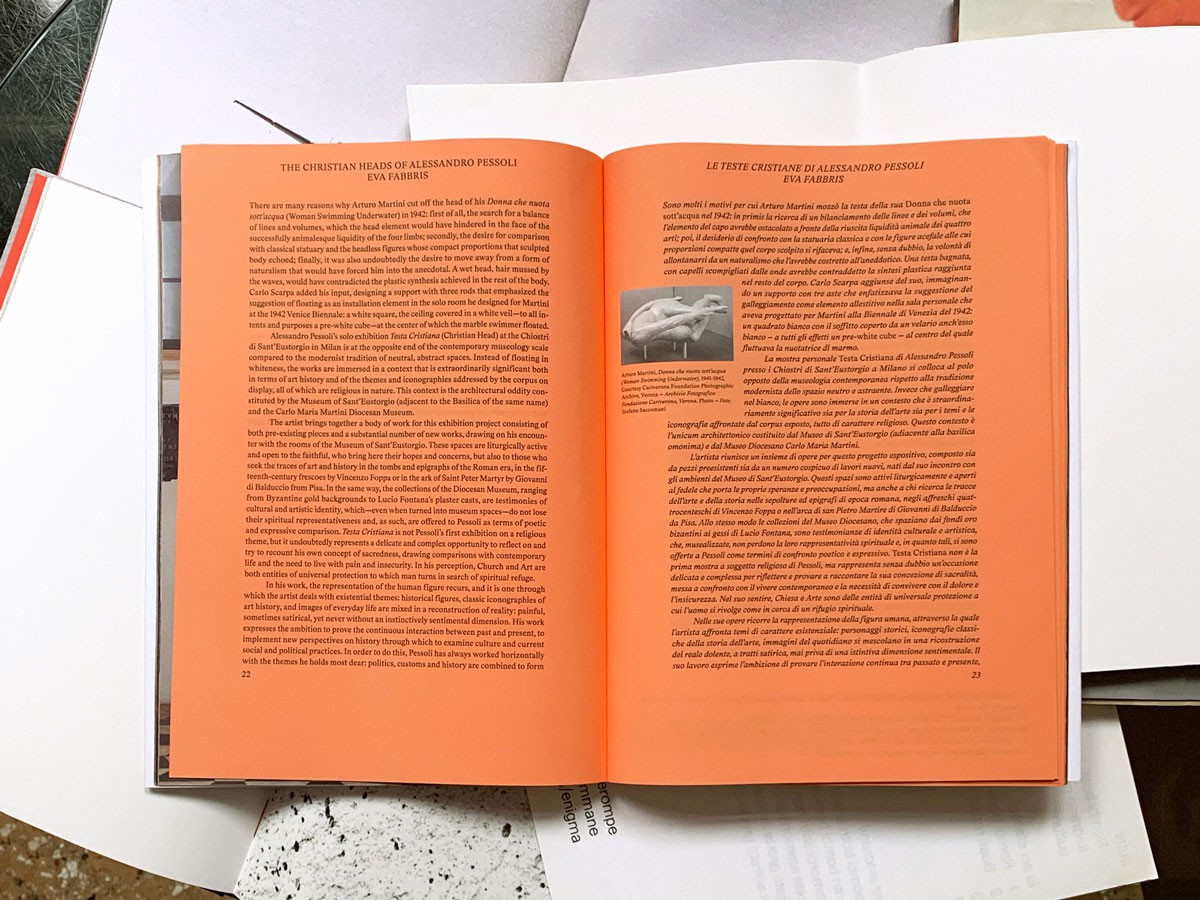
The volume aims to articulate this approach through a rich selection of installation views and a dedicated section where the exhibited works are graphically treated as “icons.” It features a text by writer and curator Alexis Vaillant on Pessoli’s oeuvre, with a particular focus on his chimeric figurative vocabulary, and an essay by curator Eva Fabbris, investigating the sense of the sacred through the artist’s practice. In addition, a conversation between Alessandro Pessoli and the Italian artist Pierpaolo Campanini reflects on the possible degree of spirituality in their artistic research.
Ph: Lorenzo Mason Studio
The editor
Eva Fabbris is Exhibition Curator at Fondazione Prada, and also active as an independent curator and art historian. She has curated exhibitions at Fondazione Pomodoro in Milan, Nouveau Musée National de Monaco, Triennale di Milano, Fondazione Morra in Naples. As a writer, she is a contributor for international exhibition catalogs, publications, and magazines.