O livro, lançado por ocasião da exposição homónima no CAM – Centro de Arte Moderna Gulbenkian, em Lisboa, explora as convergências nas obras de Paula Rego (Lisboa, 1935 – Londres, 2022) e Adriana Varejão (Rio de Janeiro, 1964), apesar de pertencerem a gerações e contextos distintos.
The future of architecture lies in the curatorial approach. This is the thesis put forward by architect Wilfried Kuehn and theorist Dubravka Sekulić in their book, which brings together contributions from more than 30 authors working in the fields of architecture, art, and curatorial knowledge and practice.
Emanuele Coccia describes the radical creative freedom inscribed in Ernesto Neto’s practice, analyzing the workings of the Brazilian artist’s pieces of living architecture. Art on Earth is the third book in a series of short essay collections inspired by the site-specific projects conceived for GAMeC at Palazzo della Ragione.
First Meeting is the first monograph on Argentinian artist Santiago de Paoli. From his early, experimental projects to his most recent explorations, the book delves into his innovative approach of painting on unconventional materials. The book features commissioned essays by Fernanda Brenner and Mariano Mayer, as well as a conversation between Christian Rattemeyer and the artist.
Infinite Memory is Caroline Poggi and Jonathan Vinel’s first monograph, co-published with Fondation Cartier pour l’art contemporain and Lenz. Like a memory card, the book stores information about a selection of films from the initial decade of the artists’ practice. Considered as an object, much like a piece of hardware that stores digital memory, the book offers the possibility to scroll infinitely, with no beginning or end.
Through the words of the sound artist and theorist Brandon LaBelle, the book explores the social and relational component of sound that gave rise to Benevolence, the site-specific project by Sonia Boyce. The Joy of Cacophony is the second book in a series of essay collections inspired by the site-specific projects conceived for GAMeC at Palazzo della Ragione.
Conceived by Philip Pilekjær, Samuel Haitz, Paolo Baggi and Tobias Kaspar.
Design by Pascal Storz and Lucas Manser
2024, English, softcover, 15 x 20.5 cm, 200 pages
ISBN: 979-12-80579-41-6
PROVENCE was founded in 2009 in Nice, France, and has since shape-shifted through a variety of constellations. Today, PROVENCE operates as a collectively run publishing house and agency for contemporary art.
The ambition of PROVENCE has always been to question and challenge its own format by conceiving exhibitions, artworks, and merchandise in parallel with its publishing and agency activities. This includes exhibitions at Halle für Kunst, Lüneburg; Artists Space, New York; an off-site Hannah Villiger exhibition in Basel; and participation in numerous group exhibitions. Also worth mentioning are a hair salon (never realized), numerous art fair booths, a collection of driftwood, a temporary casino hosted by Etablissement d’en face in Brussels, 215 very real press passes, media partnerships, a travel guide for Nice rated no. 1 in Vogue US, stickers, handbags, and plenty of dinners.
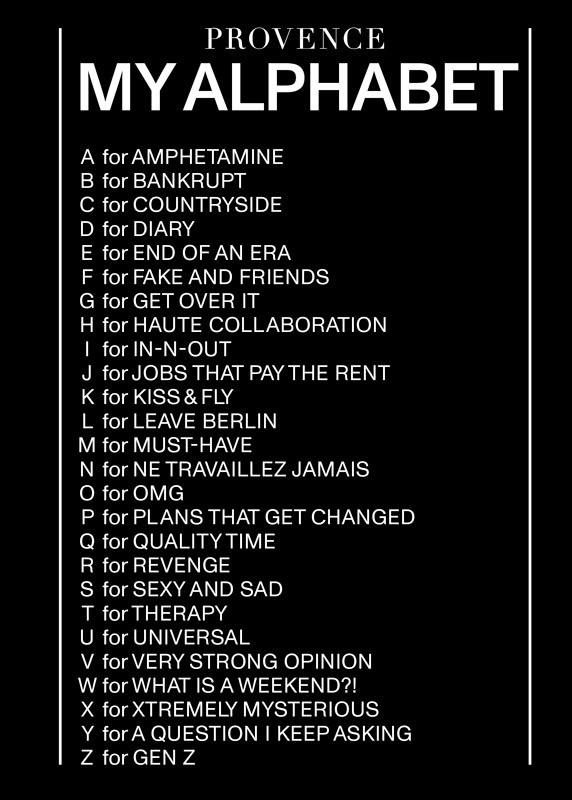
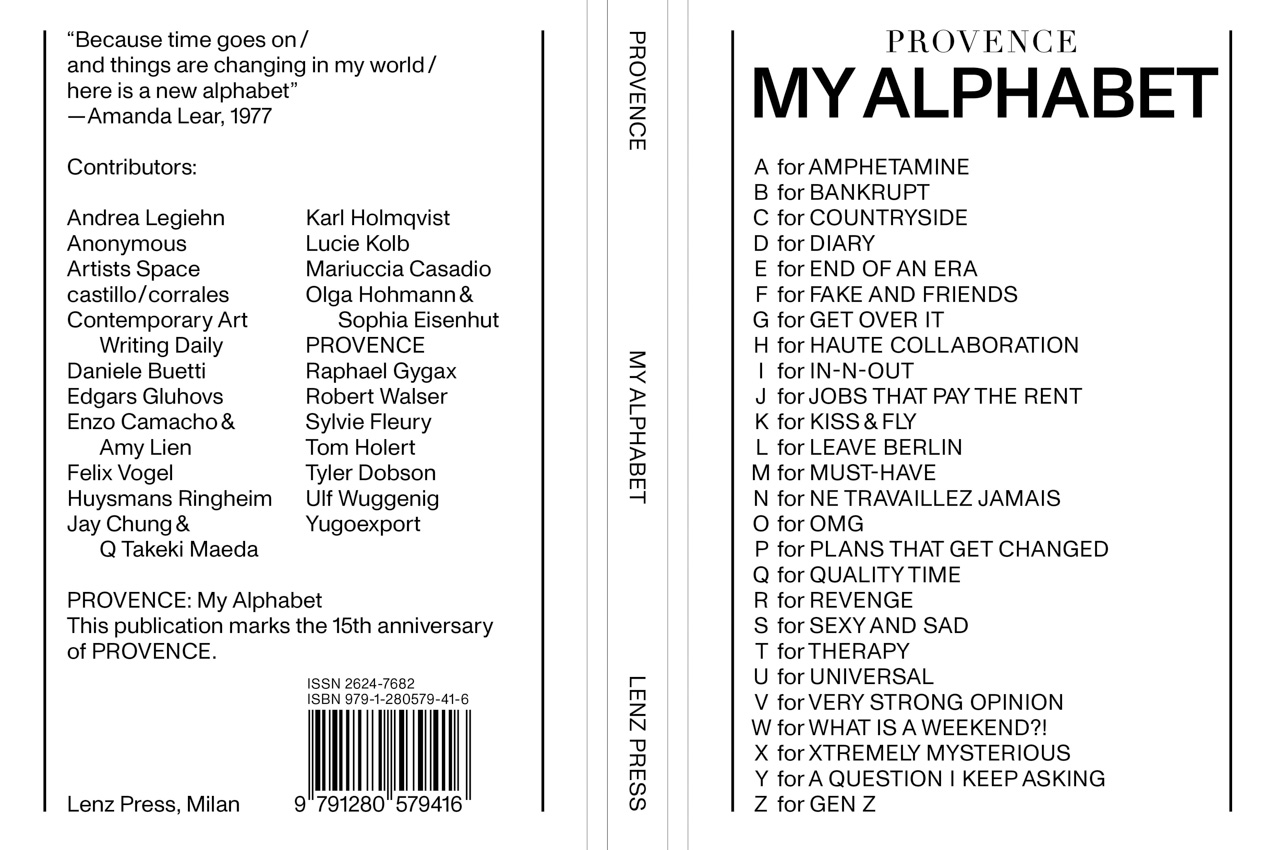
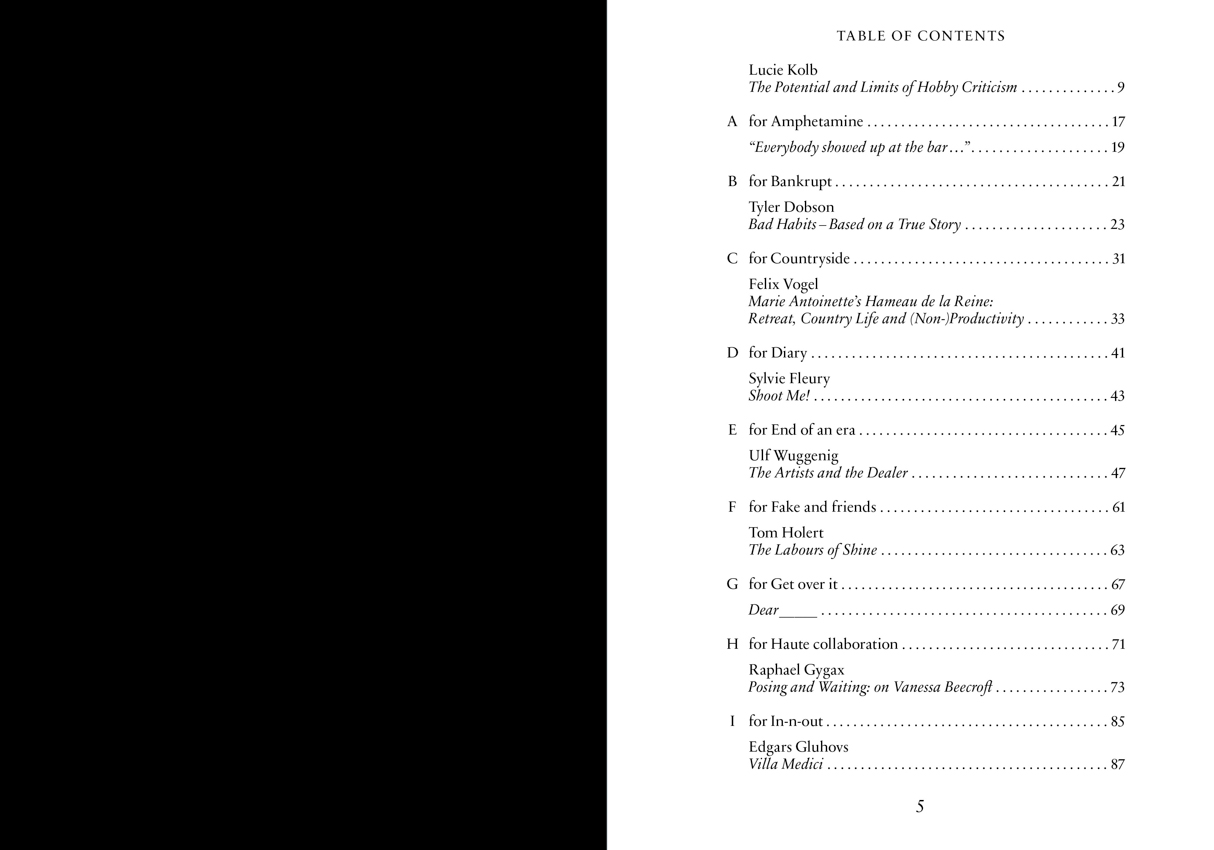
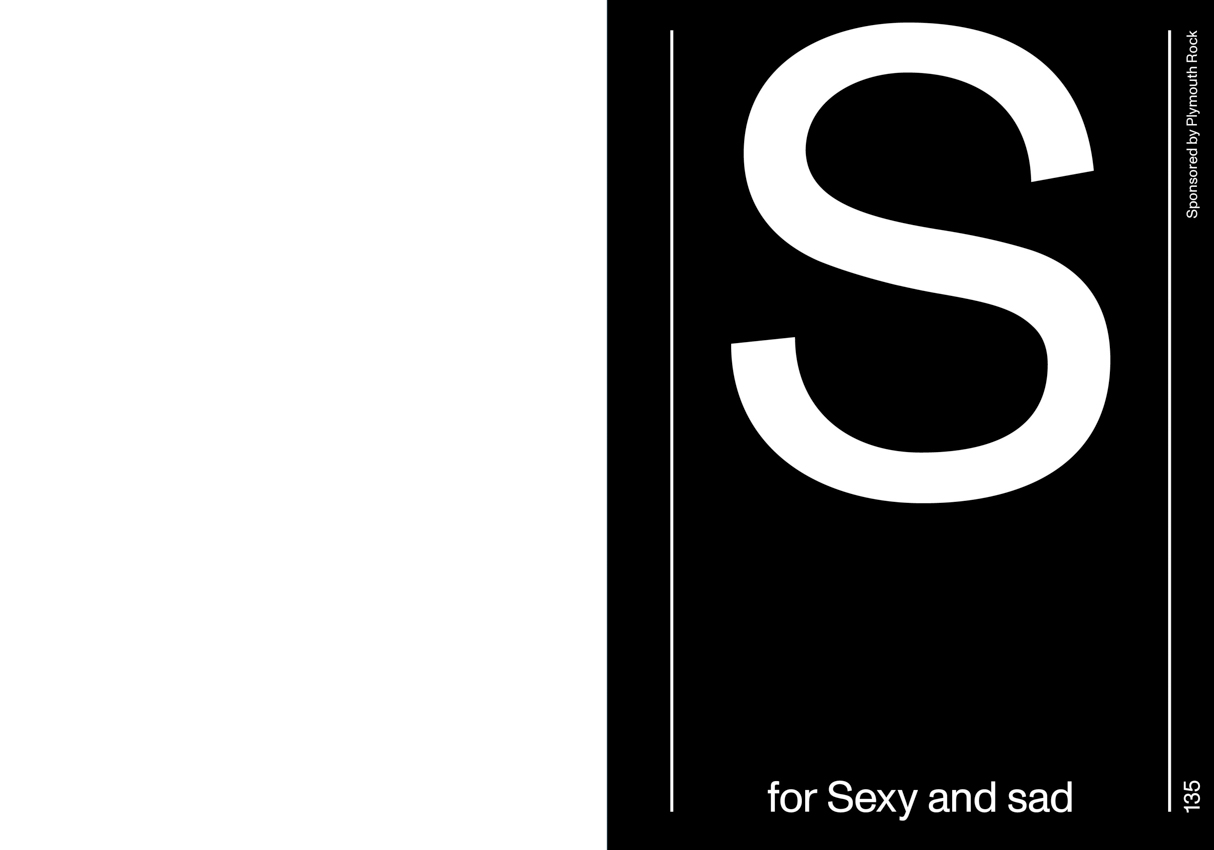
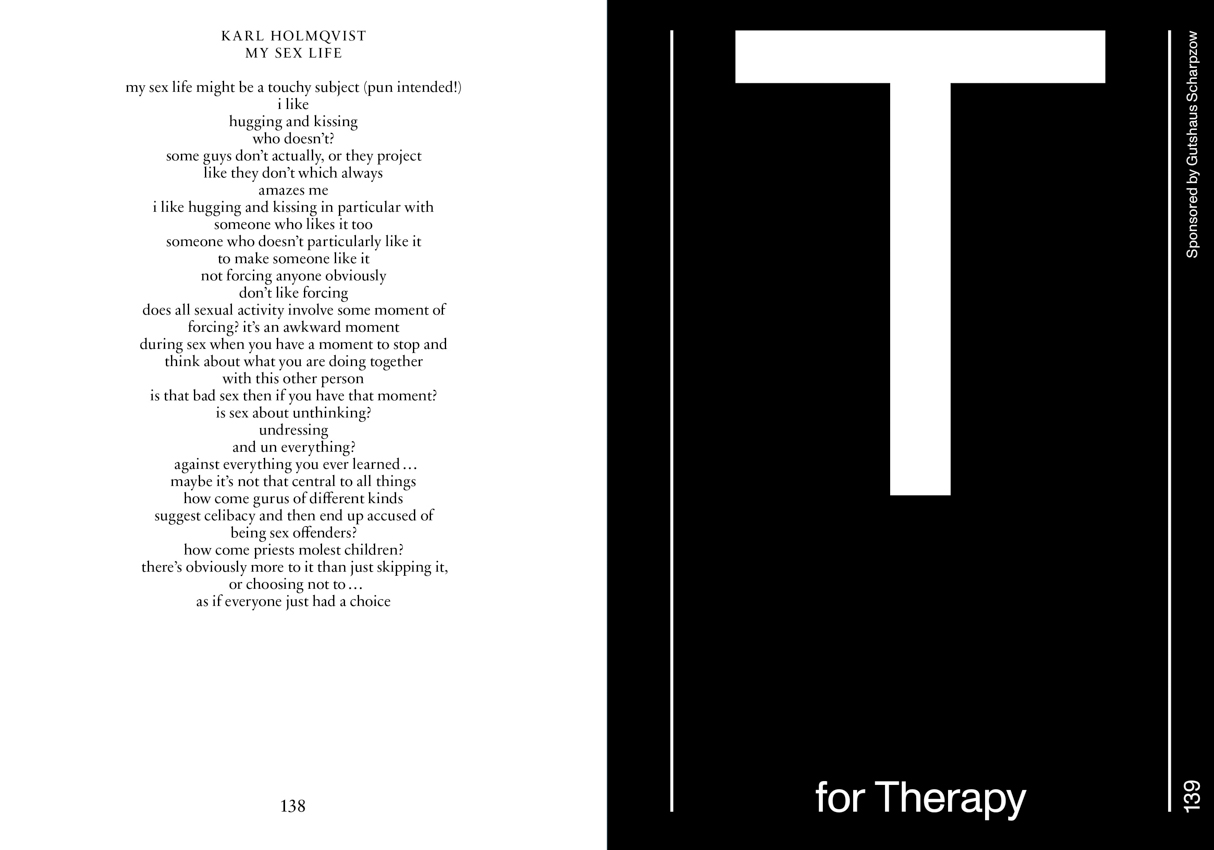
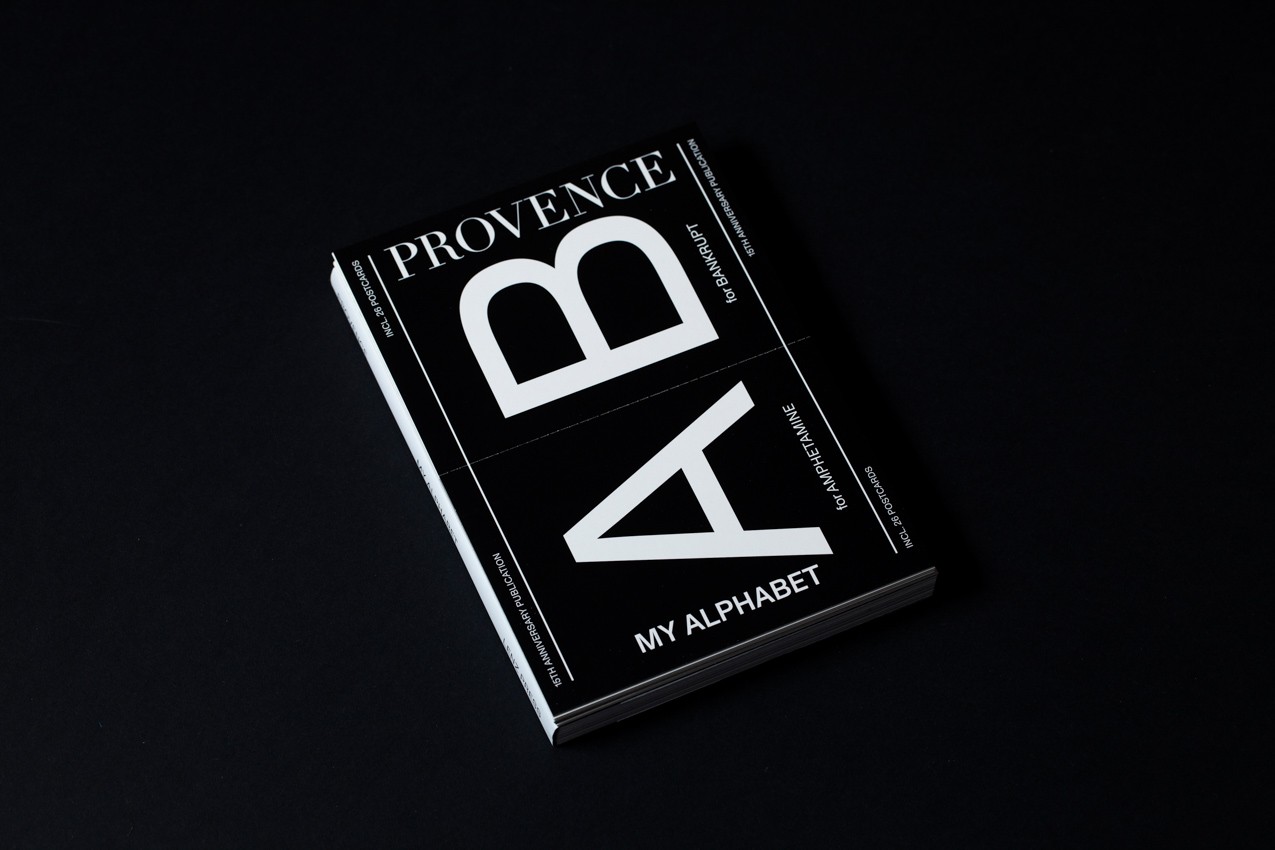
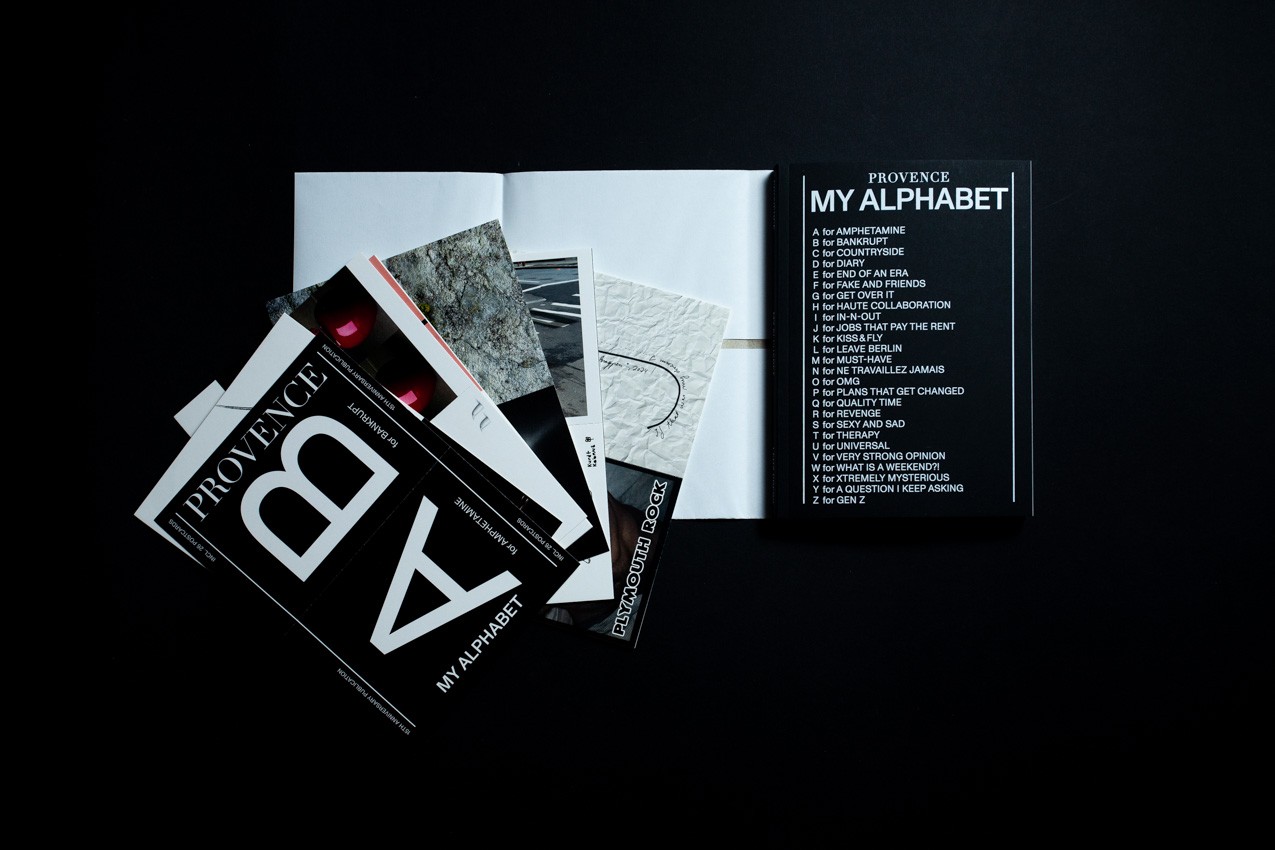
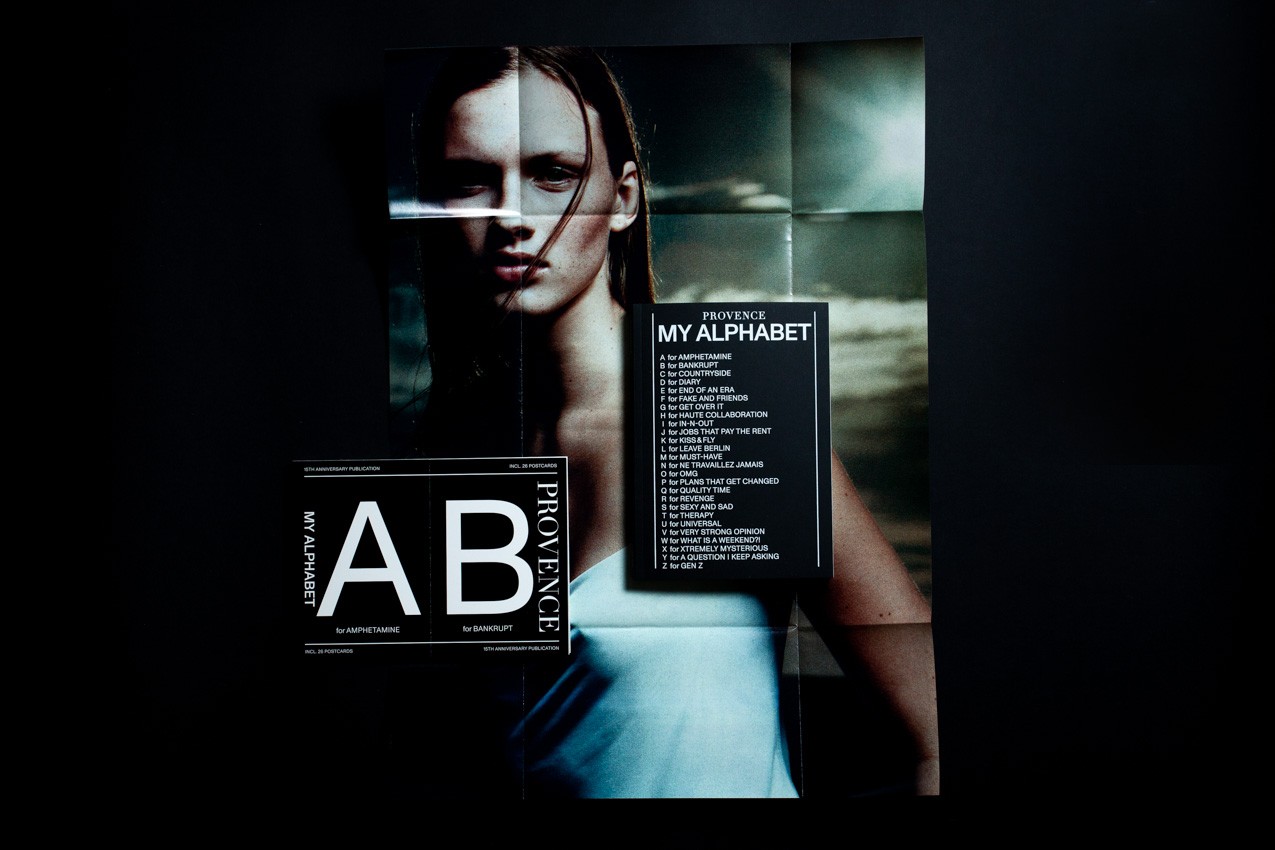
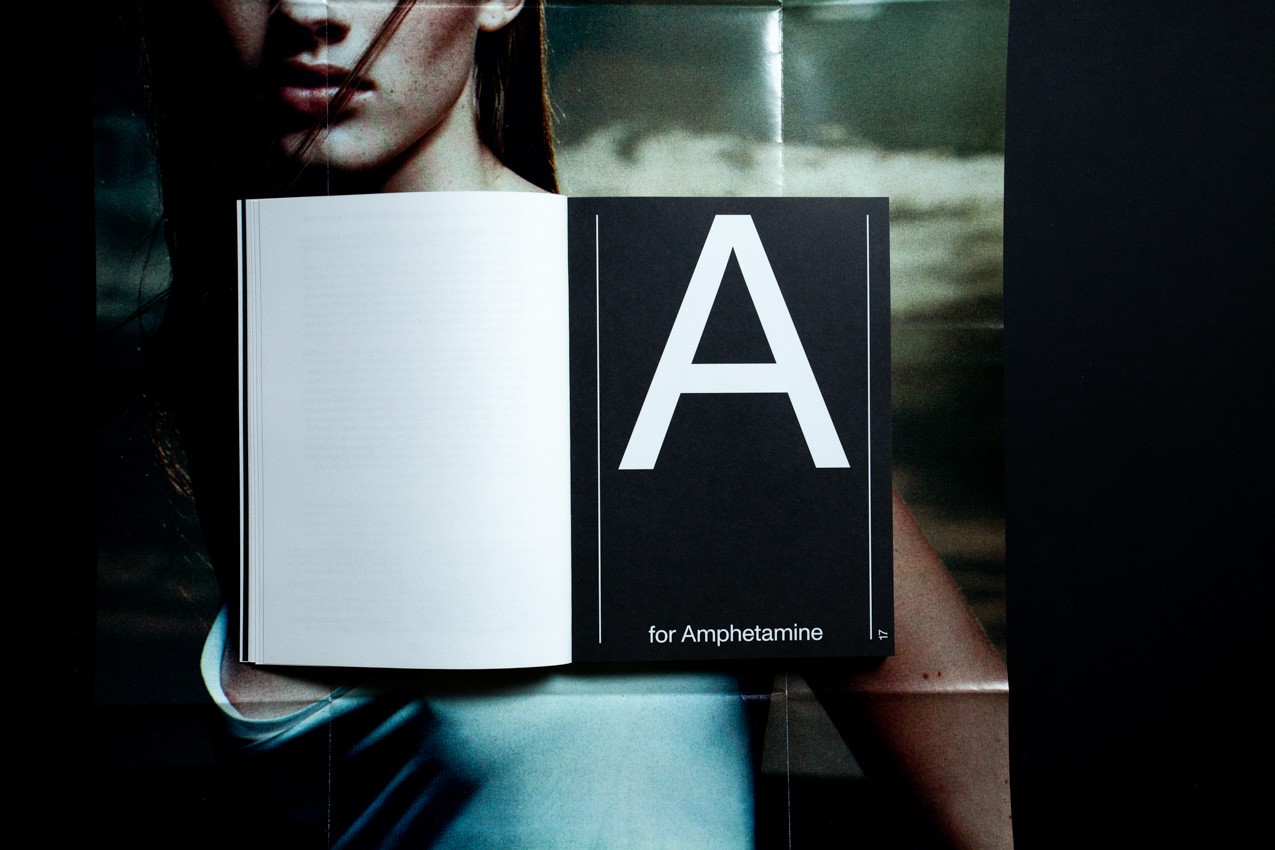
On the occasion of PROVENCE’s 15th anniversary, the reader My Alphabet presents 26 texts published by PROVENCE between 2009 and 2024, either in print or digitally in the weekly newsletter. These texts are sorted alphabetically, ranging from A for Amphetamine to N for Ne travaillez jamais to Z for Gen Z.
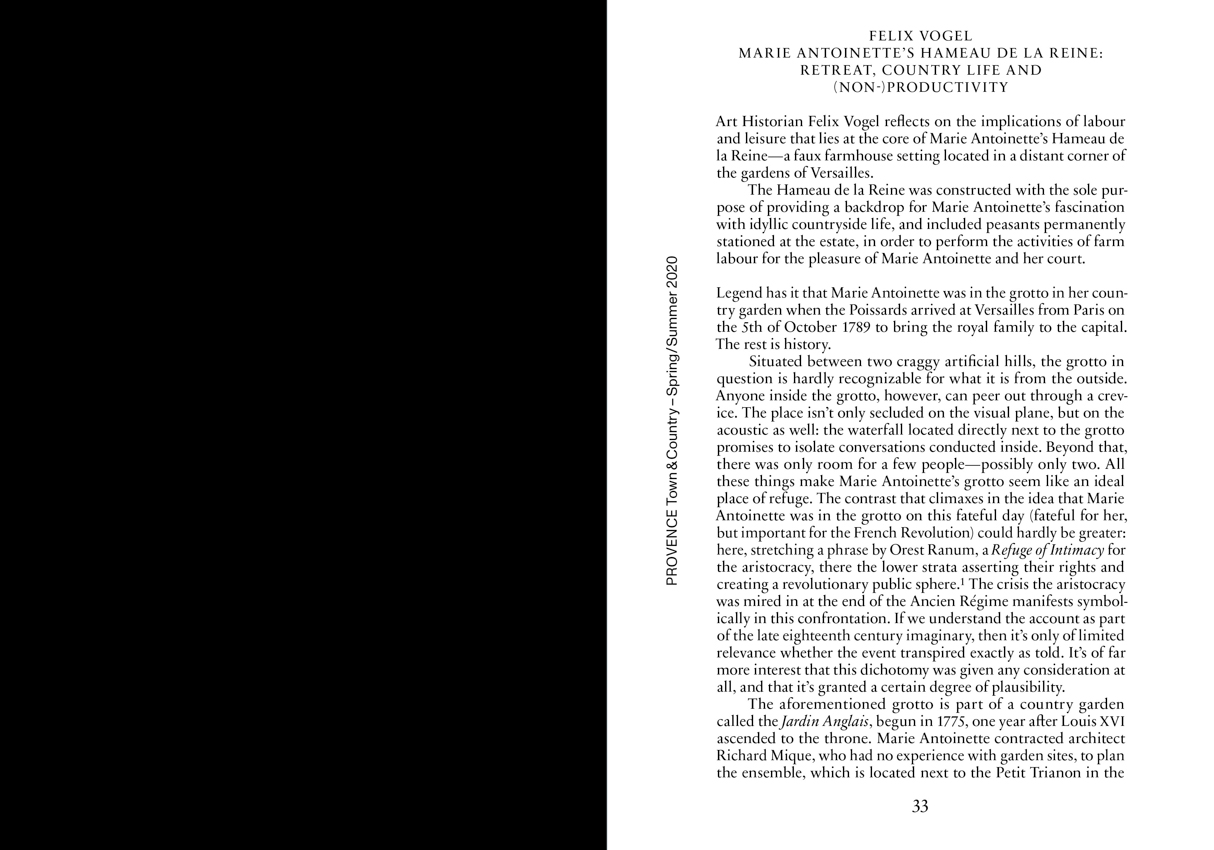
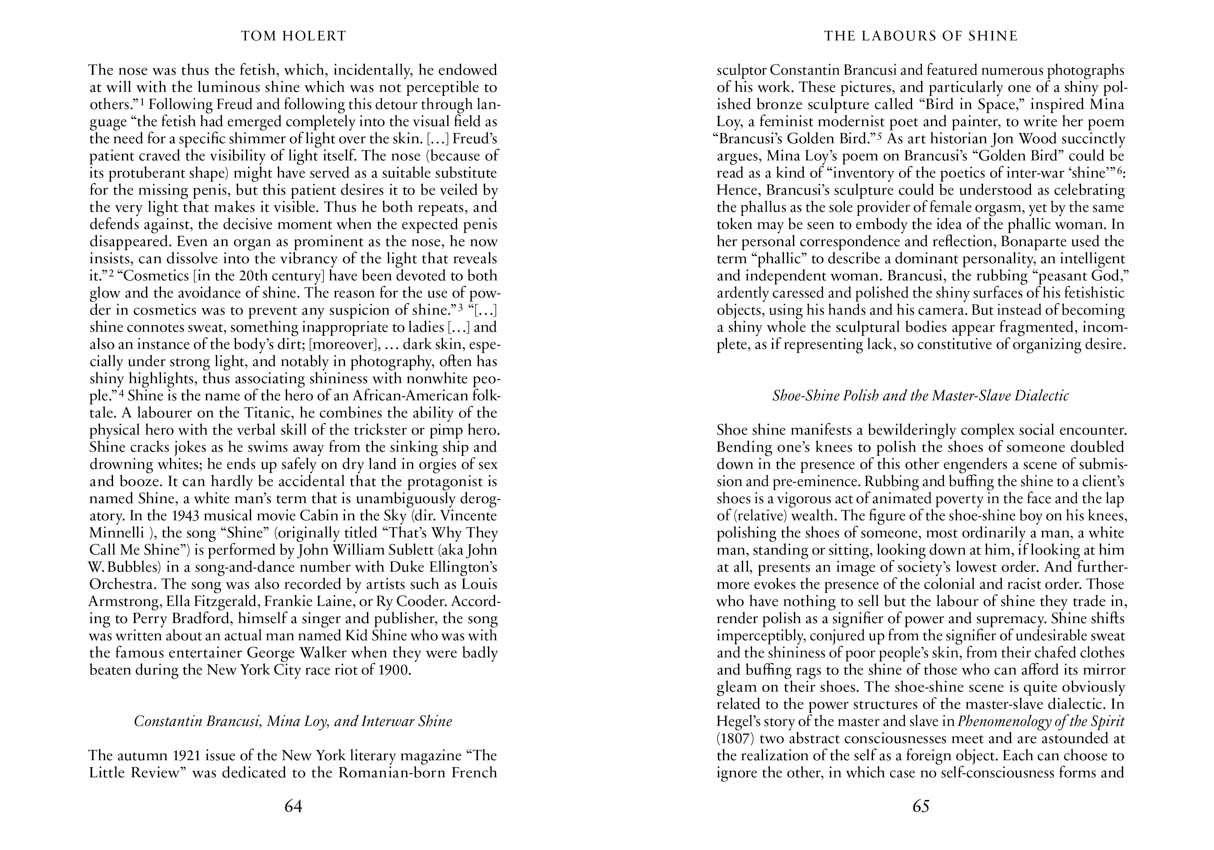
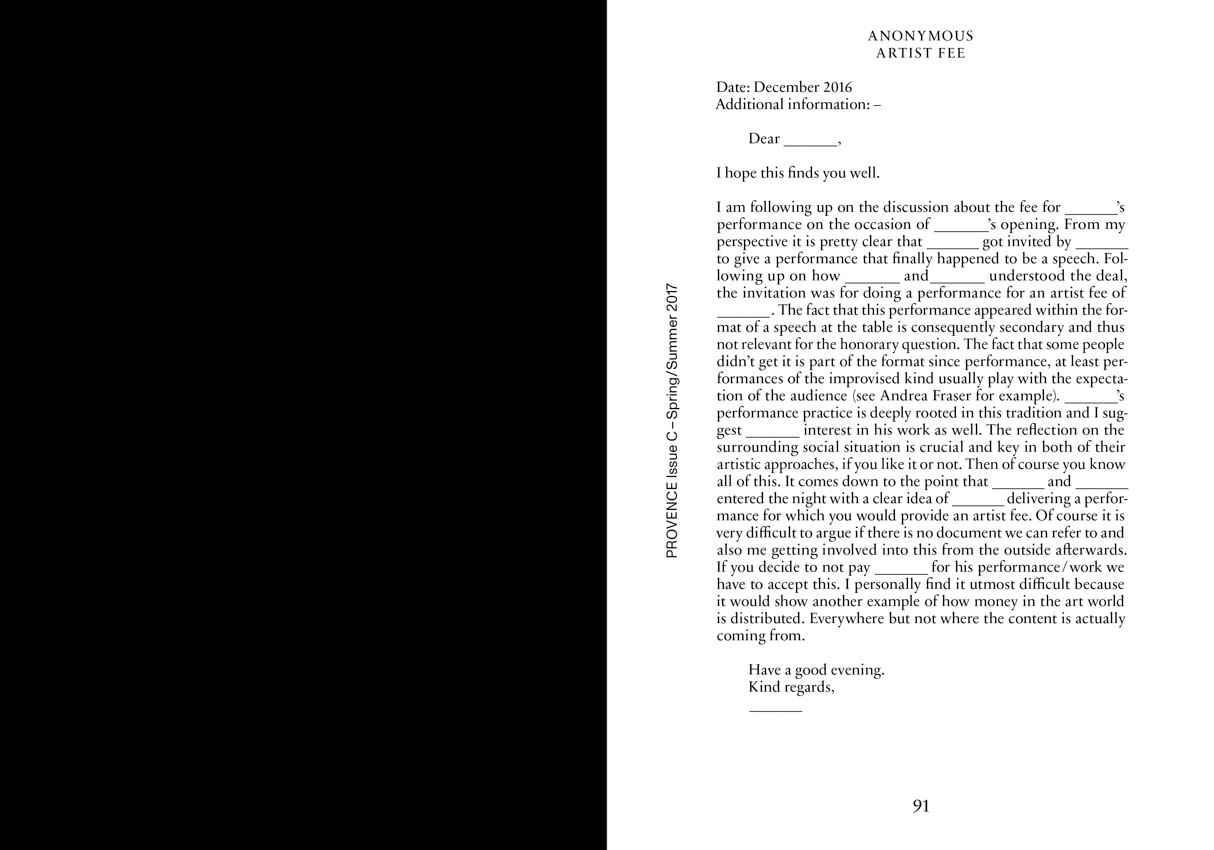
My Alphabet compiles selected contributions from the PROVENCE archive by Andrea Legiehn, Anonymous, Artists Space, castillo / corrales, Contemporary Art Writing Daily, Edgars Gluhovs, Enzo Camacho & Amy Lien, Felix Vogel, Huysmans Ringheim, Jay Chung & Q Takeki Maeda, Karl Holmqvist, Mariuccia Casadio, Olga Hohmann & Sophia Eisenhut, PROVENCE, Raphael Gygax, Robert Walser, Sylvie Fleury, Tom Holert, Tyler Dobson, Ulf Wuggenig, and Yugoexport. The book also features Lucie Kolb’s essay “The Potential and Limits of Hobby Criticism,” which illuminates the history and conceptual intentions of PROVENCE and was commissioned specifically for this publication.
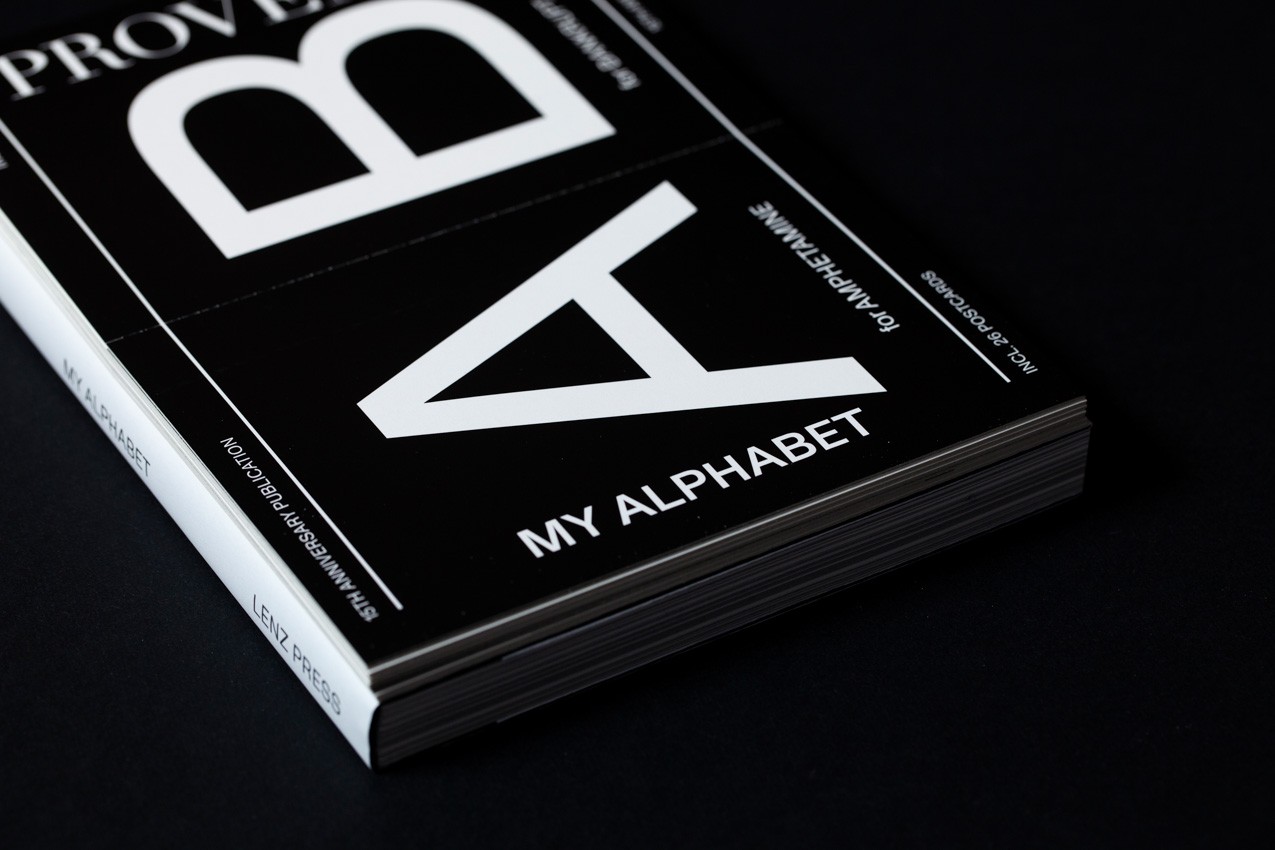
Additionally, My Alphabet is accompanied by a poster by Daniele Buetti hidden in the dust jacket and 26 postcards, each sporting a letter sponsored by institutions, galleries, artists, and friends.