For years now, the Die Vier von der Tankstelle (Four from the Gas Station) have been roaming across an area stretching out to the south of the Baltic Sea. They prowl their way through sparsely populated areas, wantonly terrorizing the inhabitants. The 2026 calendar by Jos de Gruyter and Harald Thys bears witness to their presence.
The first monograph dedicated to Lorenza Longhi, published with the Kunst Museum Winterthur, adopts a format associated with prototypes, manuals, or working documents. Its irregularities reflect Longhi’s ongoing examination of value, functionality, and the aesthetics of the everyday.
This publication is an extensive monograph devoted to the work of Carlos Bunga, published in conjunction with his eponymous show at CAM – Gulbenkian. In addition to a number of essays, which offer an in-depth look at his multifaceted practice, the book contains previously unpublished photos that reveal his working process.
The paintings and drawings by Jake Grewal draw the viewer in through stillness and ambiguity: they invite reflection on how we inhabit places—physically and emotionally—and how our inner landscapes mirror the physical world. This is the Grewal’s first book, published to accompany the artist’s exhibition at Studio Voltaire.
The transformation of the notion of monuments and the way cultural institutions choose to deal with it find in Maurizio Cattelan an interpreter capable of manipulating historical memory and shared symbols, to the point of turning them into a terrain of doubt and play. Lisa Parola and Lorenzo Giusti investigate the potential of contemporary art within the public sphere.
This is a visual archive of 12 years of developing, designing and exhibiting the House of One, a multireligious sacred space in the heart of Berlin. The architecture, conceived by Kuehn Malvezzi, has been displayed at various venues while being developed in close collaboration with three local religious communities in Berlin since 2012.
Conceived by Philip Pilekjær, Samuel Haitz, Paolo Baggi and Tobias Kaspar.
Design by Pascal Storz and Lucas Manser
2024, English, softcover, 15 x 20.5 cm, 200 pages
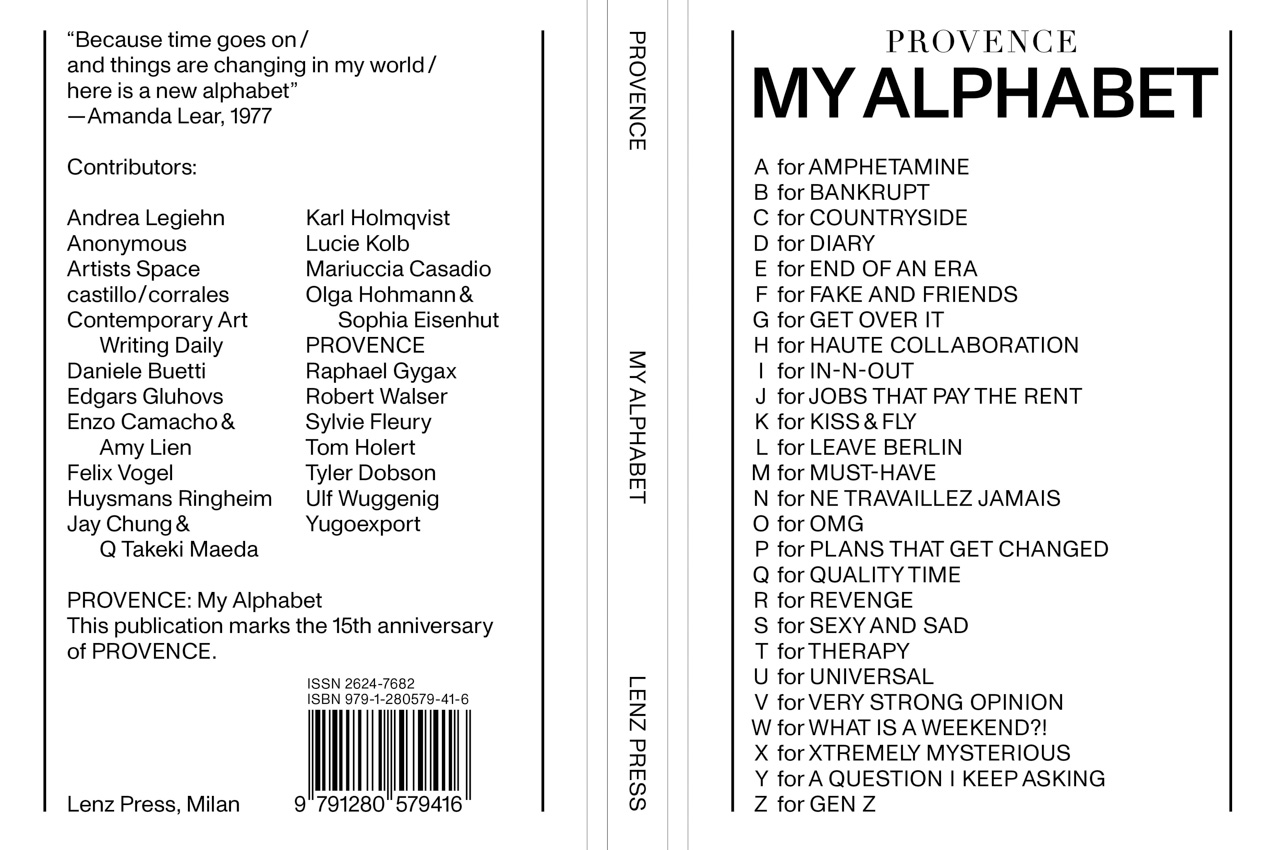
ISBN: 979-12-80579-41-6
PROVENCE was founded in 2009 in Nice, France, and has since shape-shifted through a variety of constellations. Today, PROVENCE operates as a collectively run publishing house and agency for contemporary art.
The ambition of PROVENCE has always been to question and challenge its own format by conceiving exhibitions, artworks, and merchandise in parallel with its publishing and agency activities. This includes exhibitions at Halle für Kunst, Lüneburg; Artists Space, New York; an off-site Hannah Villiger exhibition in Basel; and participation in numerous group exhibitions. Also worth mentioning are a hair salon (never realized), numerous art fair booths, a collection of driftwood, a temporary casino hosted by Etablissement d’en face in Brussels, 215 very real press passes, media partnerships, a travel guide for Nice rated no. 1 in Vogue US, stickers, handbags, and plenty of dinners.
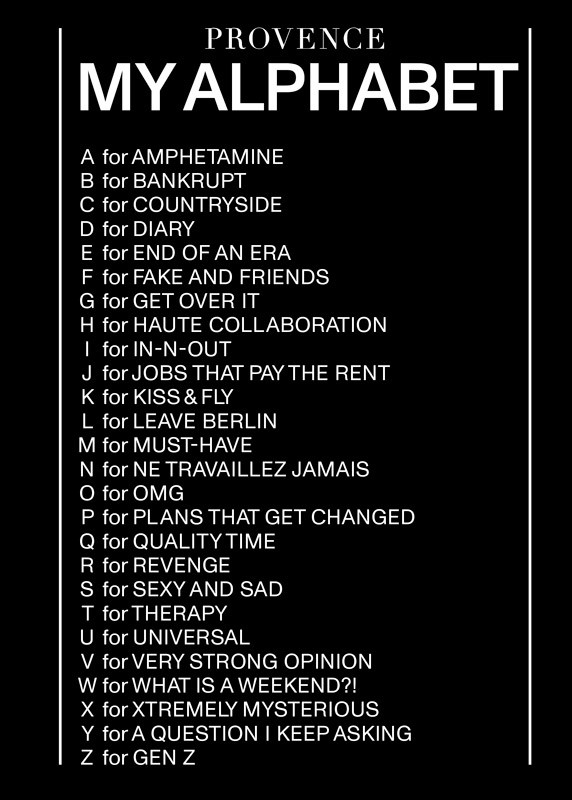
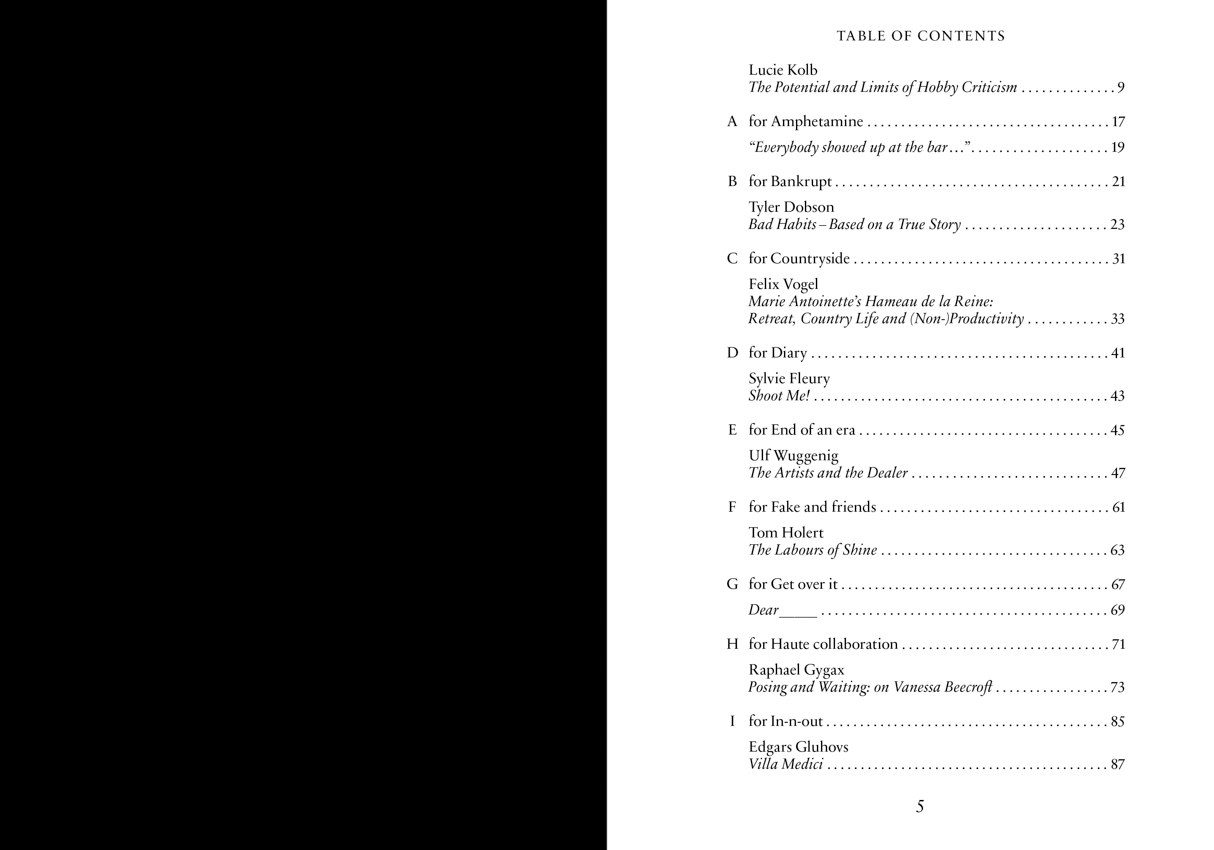
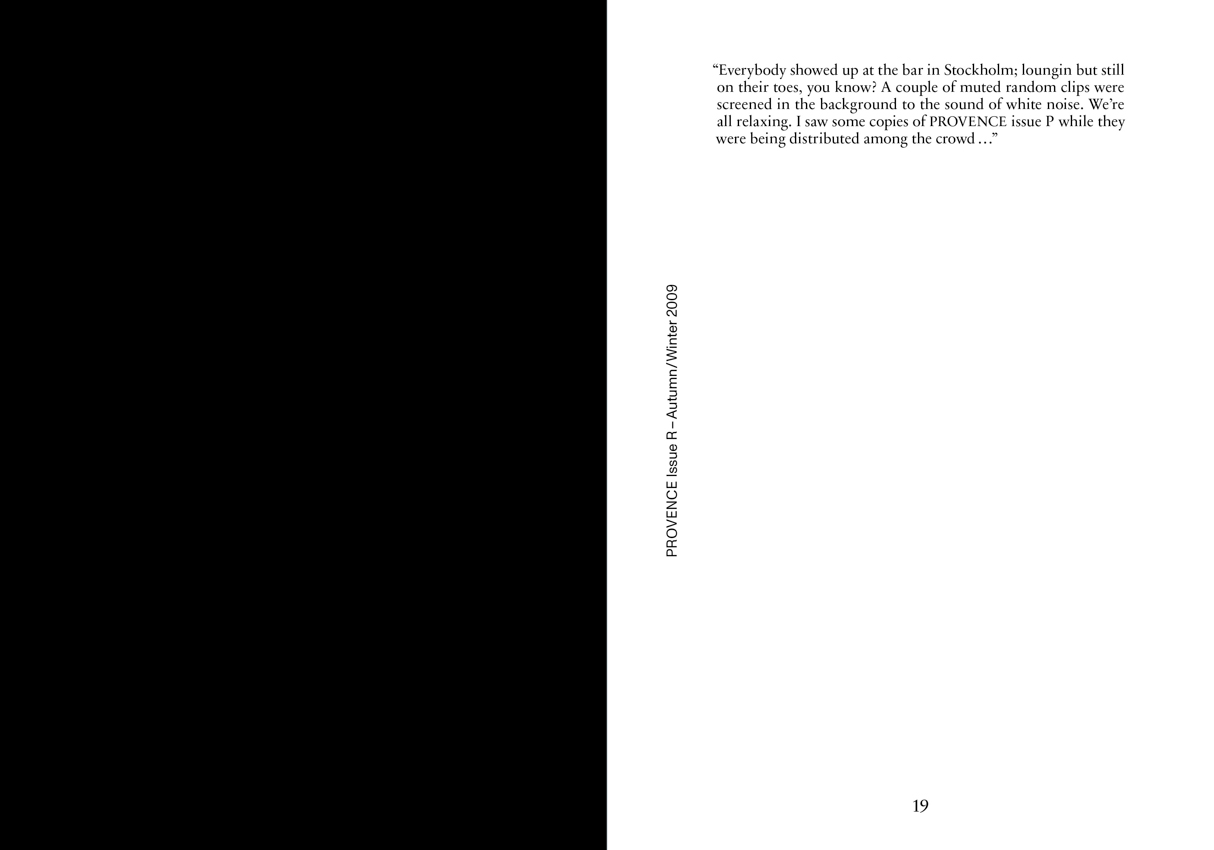
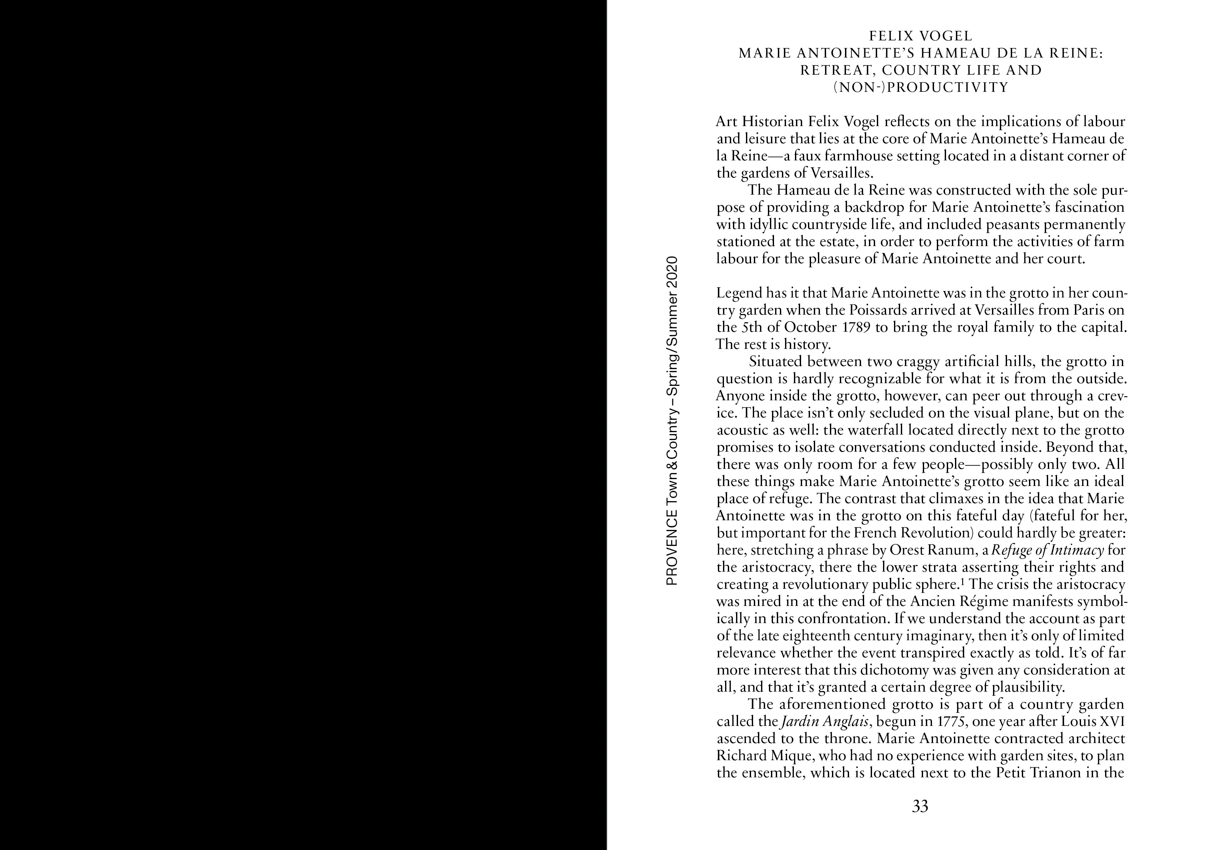
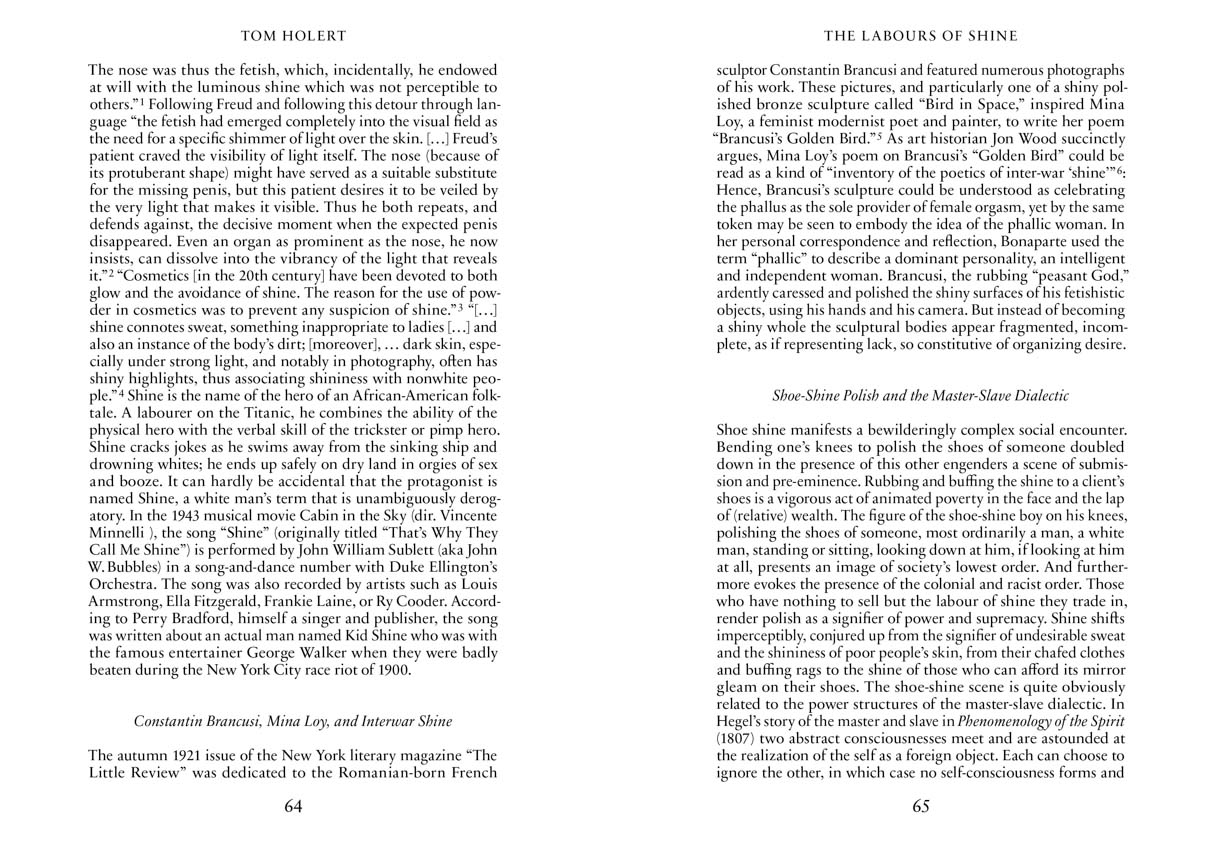
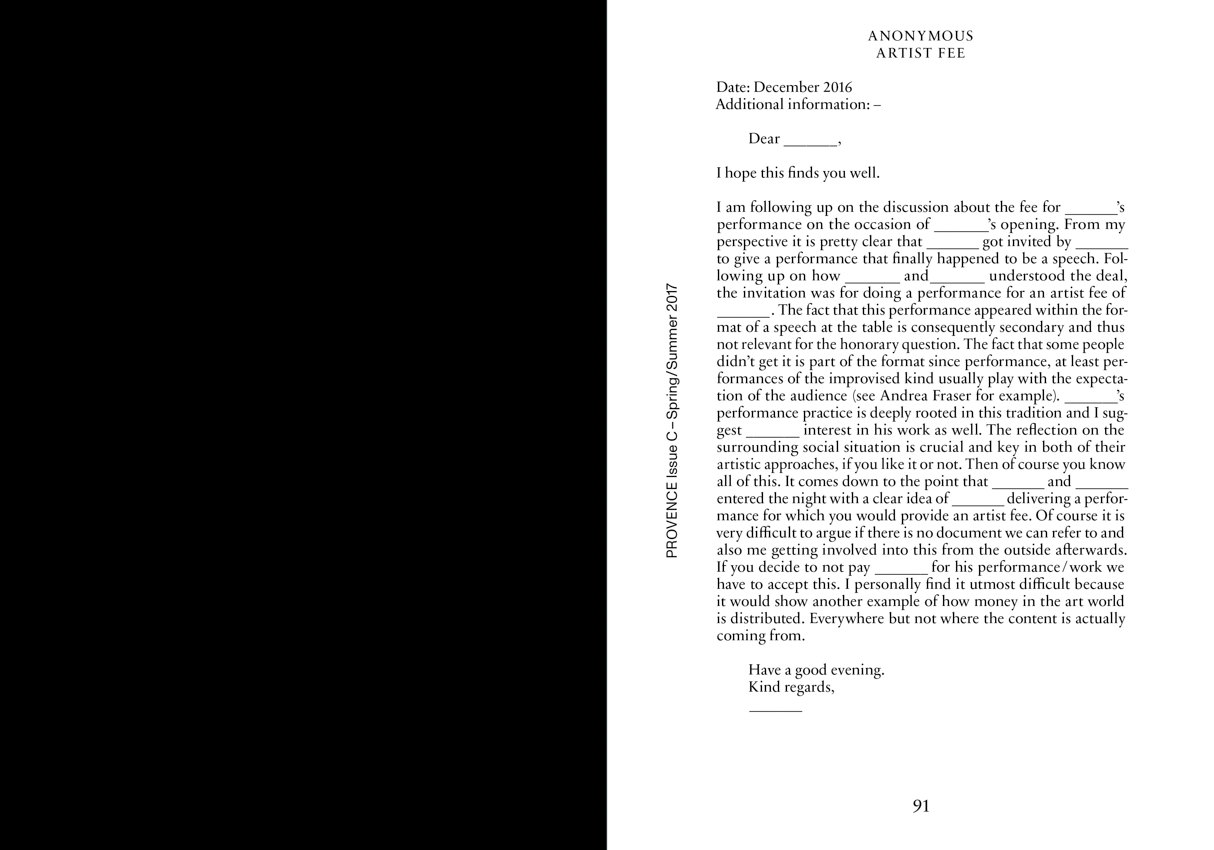
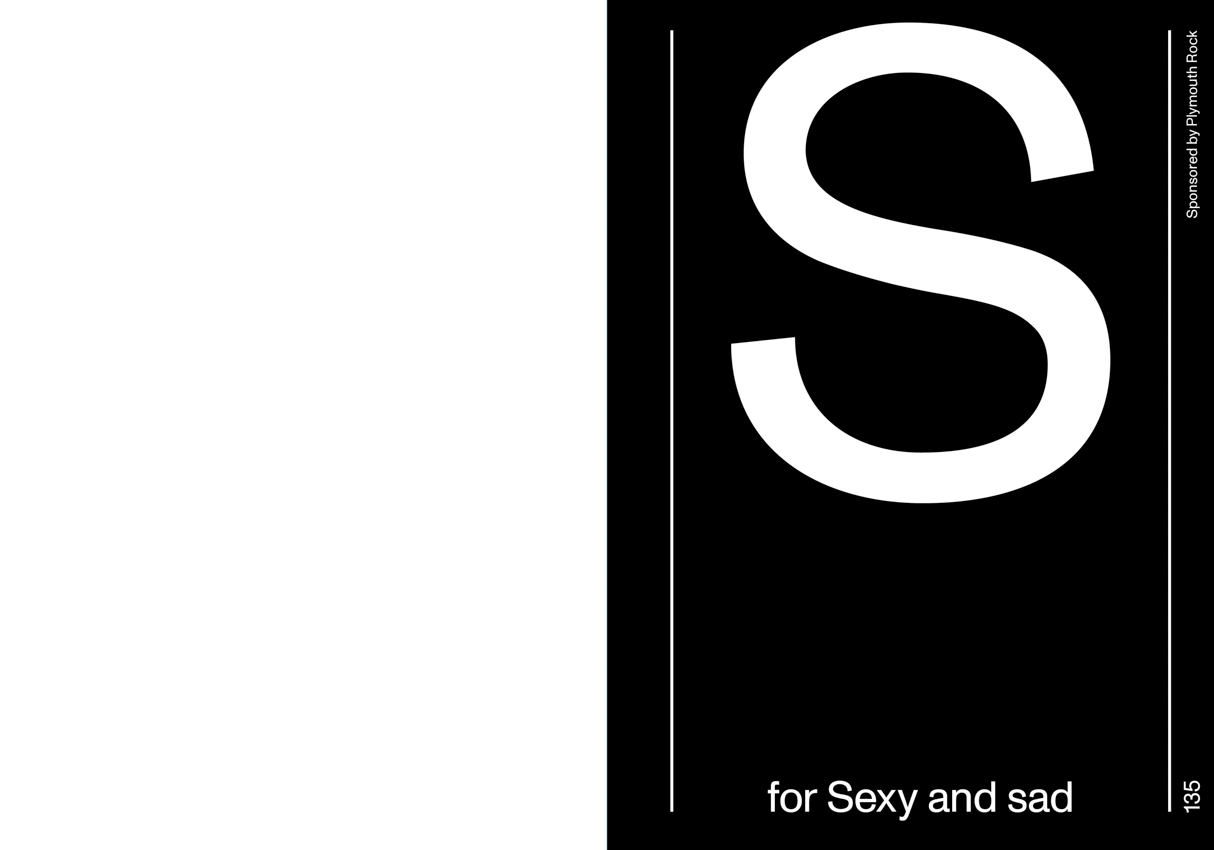
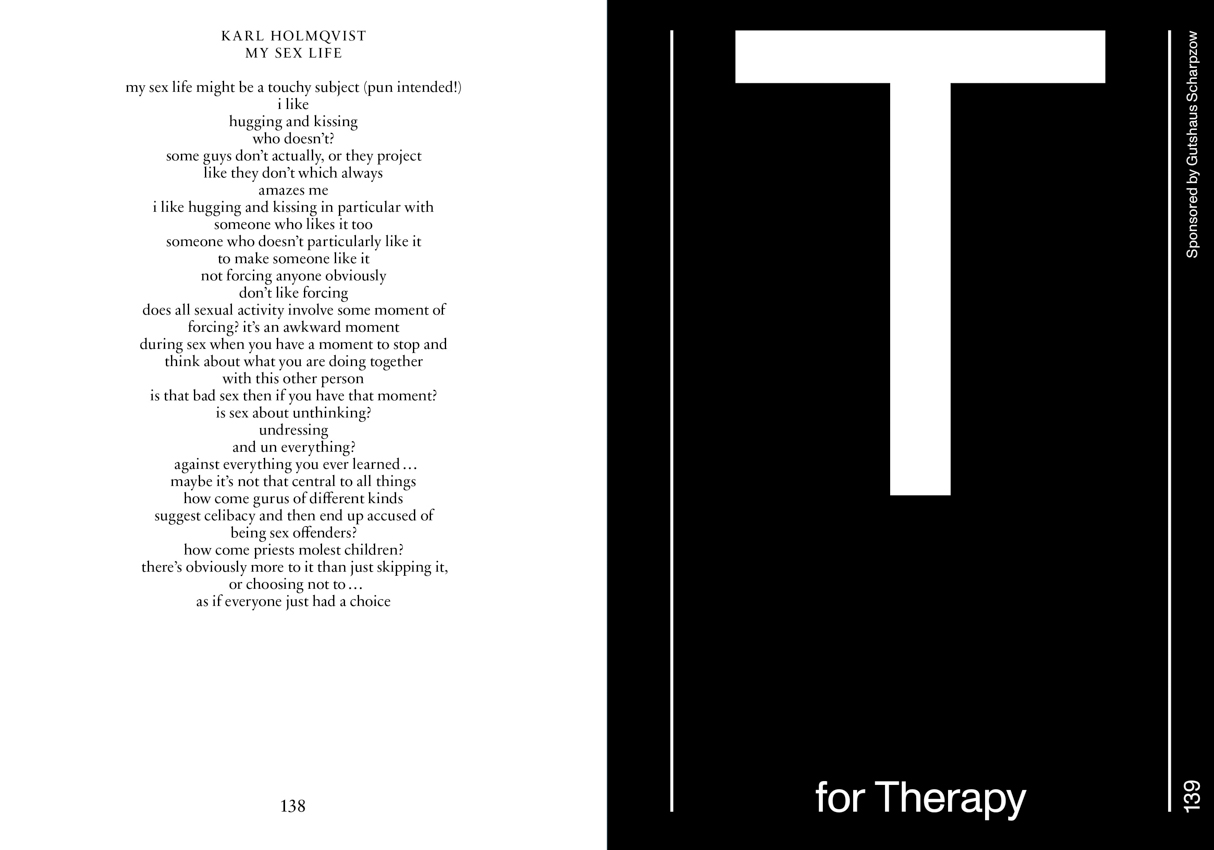
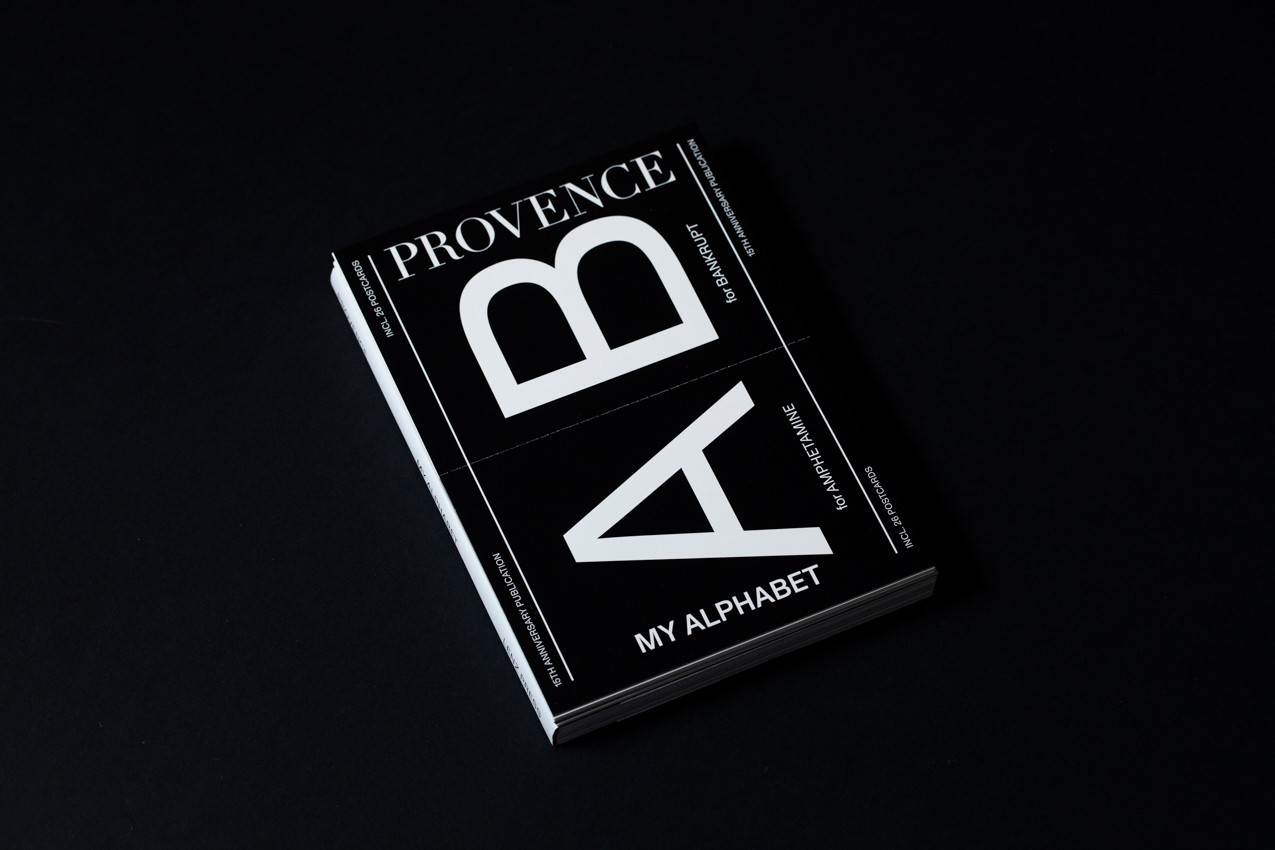
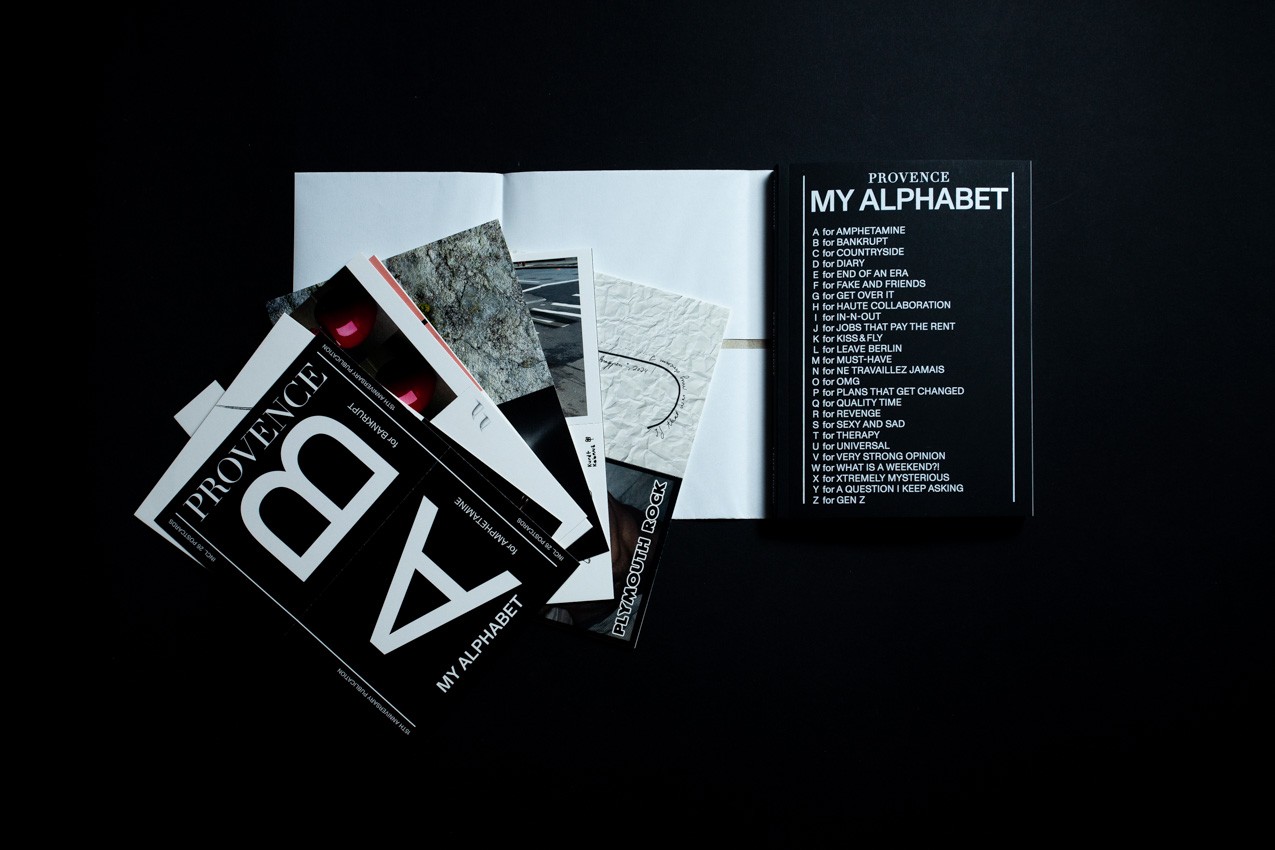
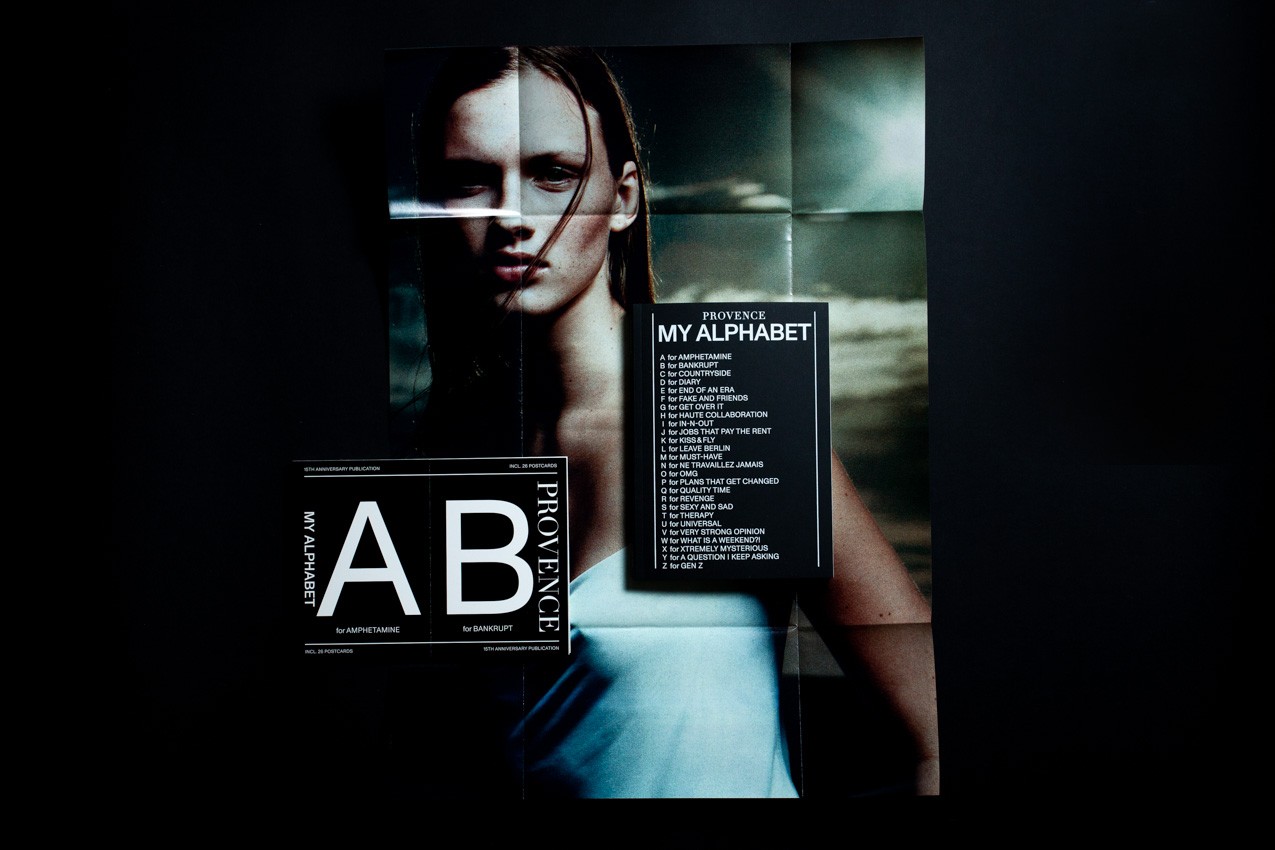
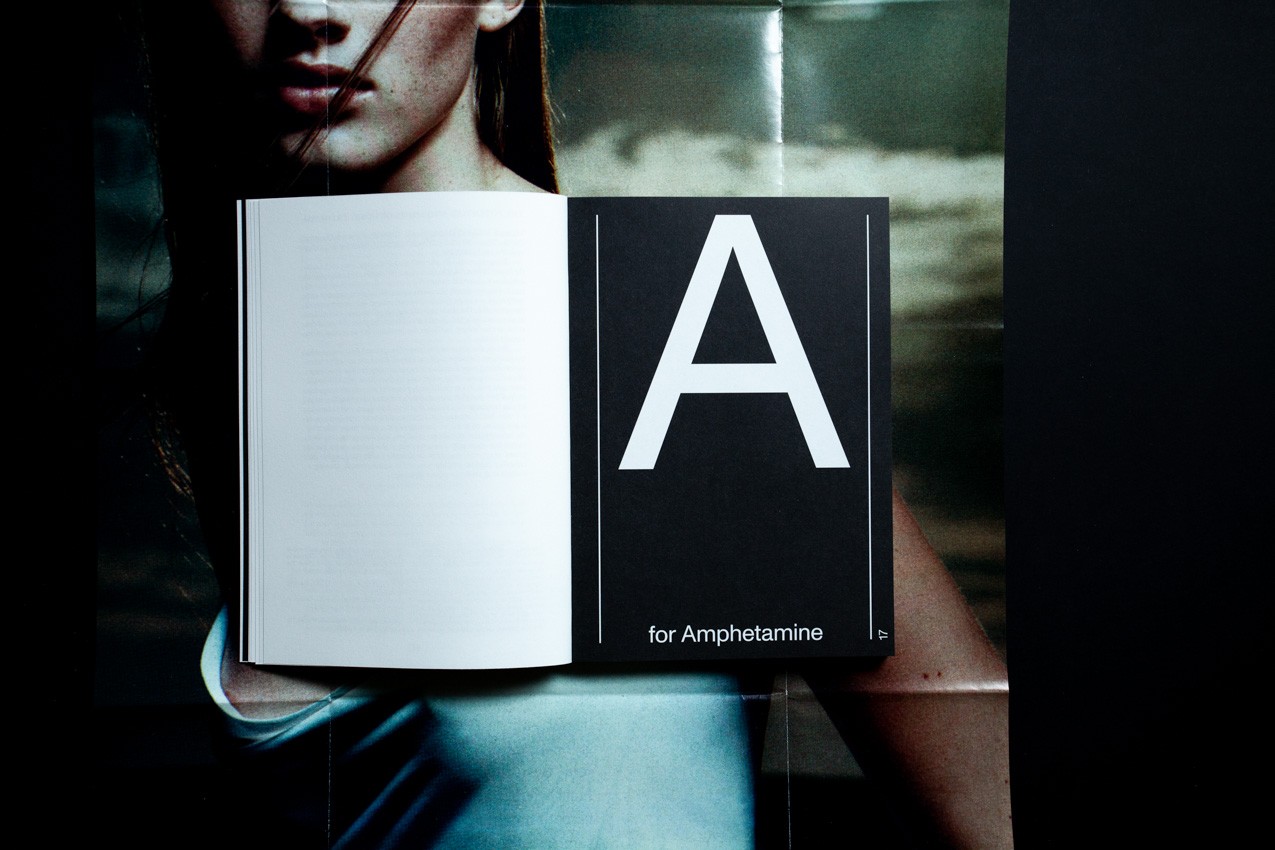
On the occasion of PROVENCE’s 15th anniversary, the reader My Alphabet presents 26 texts published by PROVENCE between 2009 and 2024, either in print or digitally in the weekly newsletter. These texts are sorted alphabetically, ranging from A for Amphetamine to N for Ne travaillez jamais to Z for Gen Z.
My Alphabet compiles selected contributions from the PROVENCE archive by Andrea Legiehn, Anonymous, Artists Space, castillo / corrales, Contemporary Art Writing Daily, Edgars Gluhovs, Enzo Camacho & Amy Lien, Felix Vogel, Huysmans Ringheim, Jay Chung & Q Takeki Maeda, Karl Holmqvist, Mariuccia Casadio, Olga Hohmann & Sophia Eisenhut, PROVENCE, Raphael Gygax, Robert Walser, Sylvie Fleury, Tom Holert, Tyler Dobson, Ulf Wuggenig, and Yugoexport. The book also features Lucie Kolb’s essay “The Potential and Limits of Hobby Criticism,” which illuminates the history and conceptual intentions of PROVENCE and was commissioned specifically for this publication.
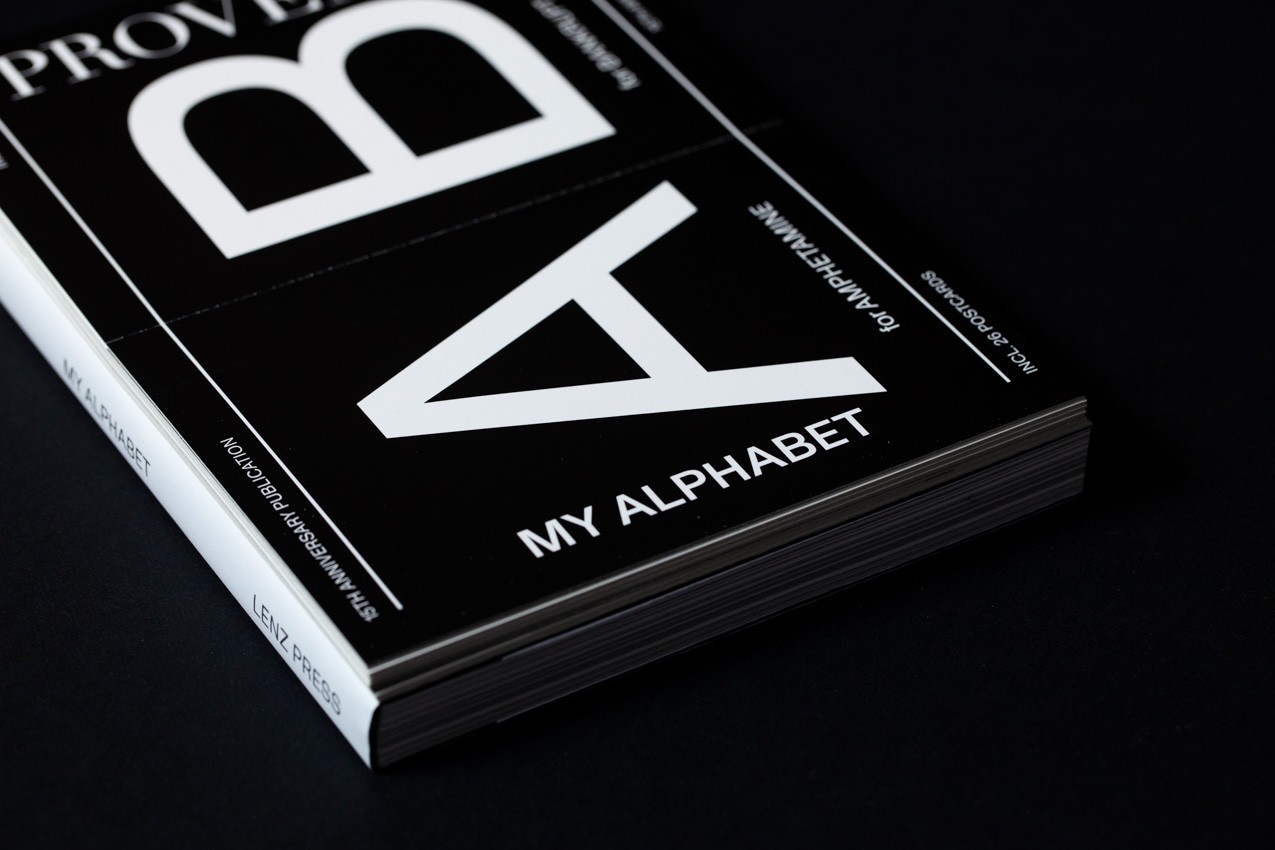
Additionally, My Alphabet is accompanied by a poster by Daniele Buetti hidden in the dust jacket and 26 postcards, each sporting a letter sponsored by institutions, galleries, artists, and friends.