First Meeting is the first monograph on Argentinian artist Santiago de Paoli. From his early, experimental projects to his most recent explorations, the book delves into his innovative approach of painting on unconventional materials. The book features commissioned essays by Fernanda Brenner and Mariano Mayer, as well as a conversation between Christian Rattemeyer and the artist.
Infinite Memory is Caroline Poggi and Jonathan Vinel’s first monograph, co-published with Fondation Cartier pour l’art contemporain and Lenz. Like a memory card, the book stores information about a selection of films from the initial decade of the artists’ practice. Considered as an object, much like a piece of hardware that stores digital memory, the book offers the possibility to scroll infinitely, with no beginning or end.
Through the words of the sound artist and theorist Brandon LaBelle, the book explores the social and relational component of sound that gave rise to Benevolence, the site-specific project by Sonia Boyce. The Joy of Cacophony is the second book in a series of essay collections inspired by the site-specific projects conceived for GAMeC at Palazzo della Ragione.
Consisting of a richly illustrated booklet and a record vinyl, this special release accompanies the performative sound-based project A Comparative Dialogue Act by artists Andrea Mancini and the collective Every Island, hosted in the Luxembourg Pavilion at the 60th Venice Biennale.
Conceived as a catalogue and an artist’s book, the publication offers a deeper insight into the eponymous 2022 exhibition staged at Indipendenza Roma, and explores tensions that can be generated between artworks and their surrounding architectural context, raising questions of taste, value, function and decoration.
The practice of Tomaso Binga (Bianca Pucciarelli Menna, 1931) toys with the notion of gender, reconsidering women’s social roles and rights. This monograph, edited by Eva Fabbris, Lilou Vidal, and Stefania Zuliani, analyses her work through various languages and features a selection of poems, highlighting the author’s critical and artistic approach.
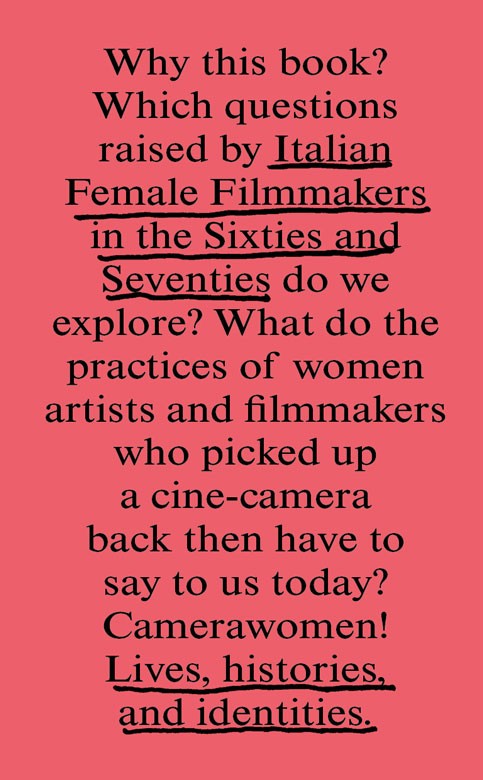
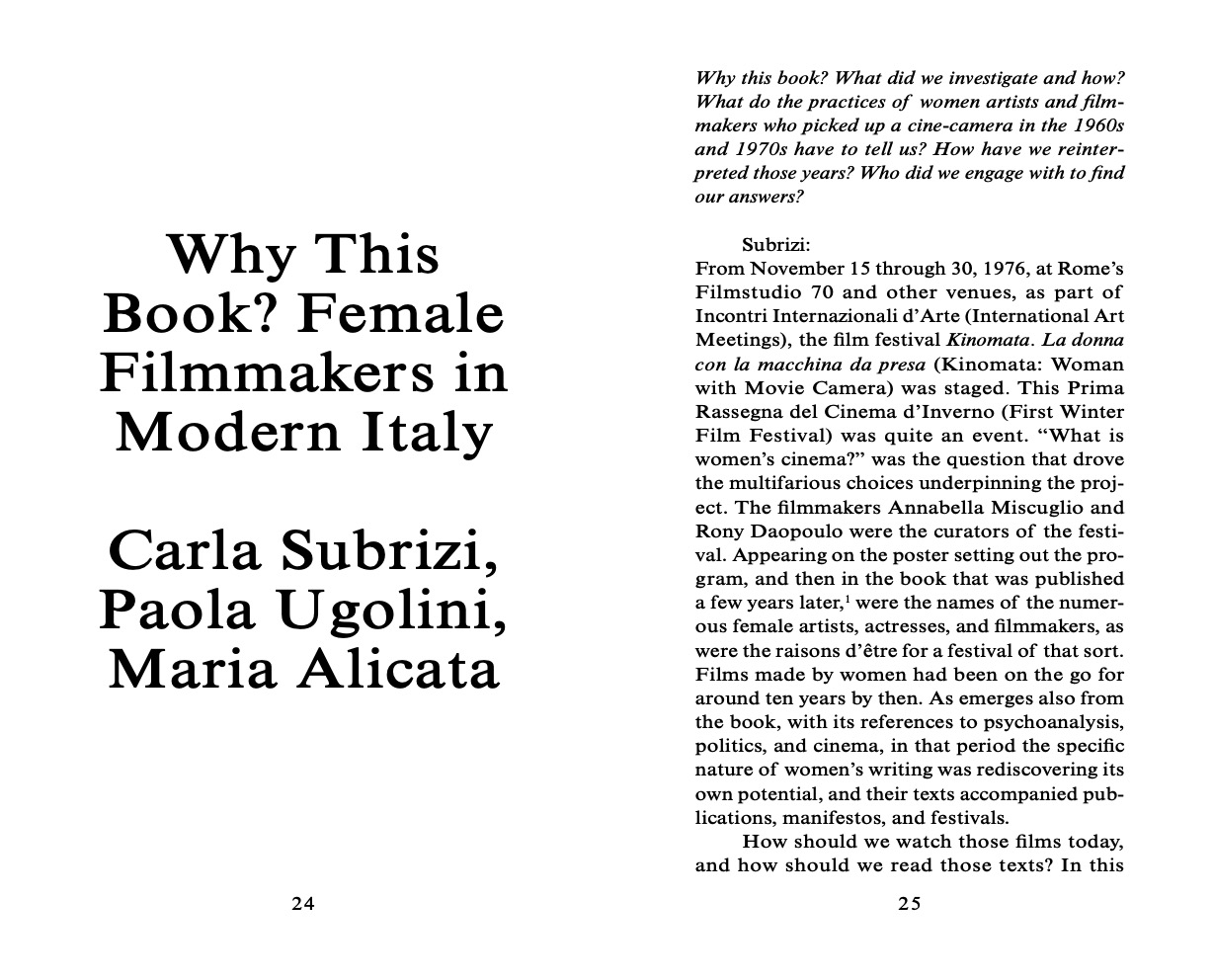
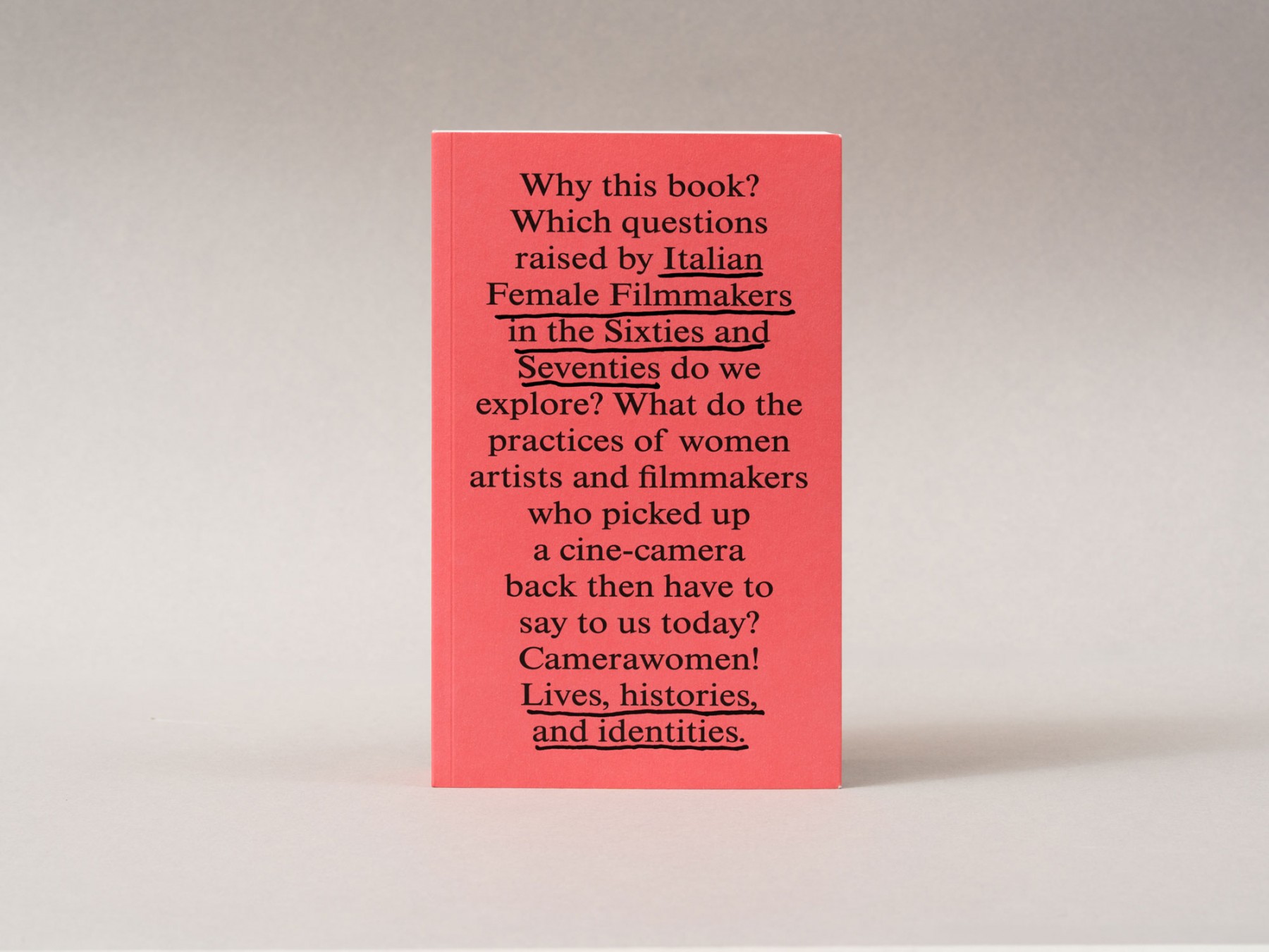
Italian Female Filmmakers in the Sixties and Seventies
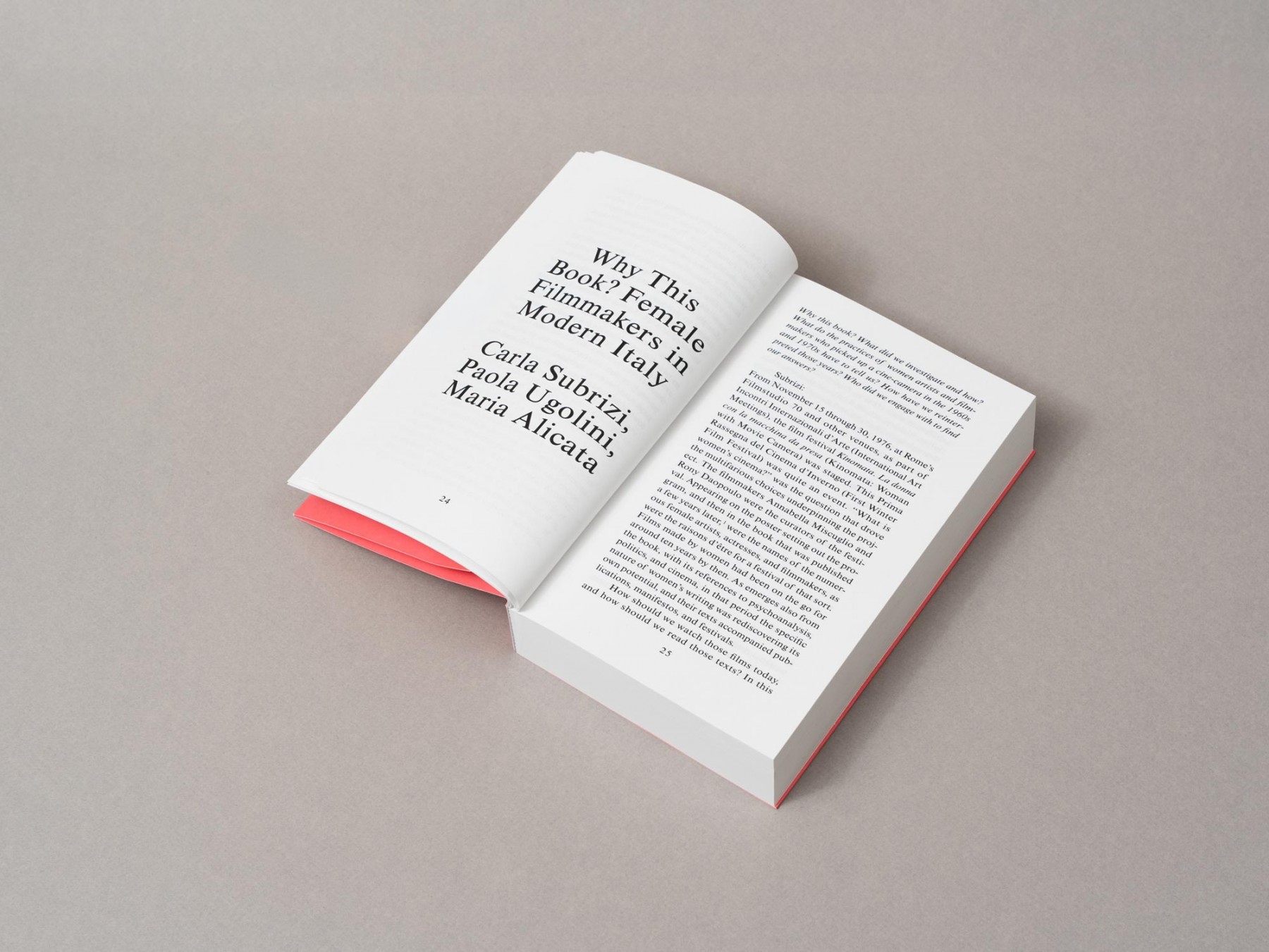
Edited by Carla Subrizi, Paola Ugolini, and Maria Alicata
Texts by Maria Alicata, Lucia Aspesi, Silvia Bottinelli, Lara Conte, Flavia Frigeri, Francesca Gallo, Sharon Hecker, Laura Iamurri, Caterina Iaquinta, Teresa Kittler, Jennifer Malvezzi, Iolanda Ratti, Giulia Kimberly Colombo, Carla Subrizi, Paola Ugolini, Valentine Umansky, Giovanna Zapperi
Designed by Lorenzo Mason Studio
2026, English, softcover, 13 x 21 cm, 504 pages
ISBN 979-12-80579-93-5
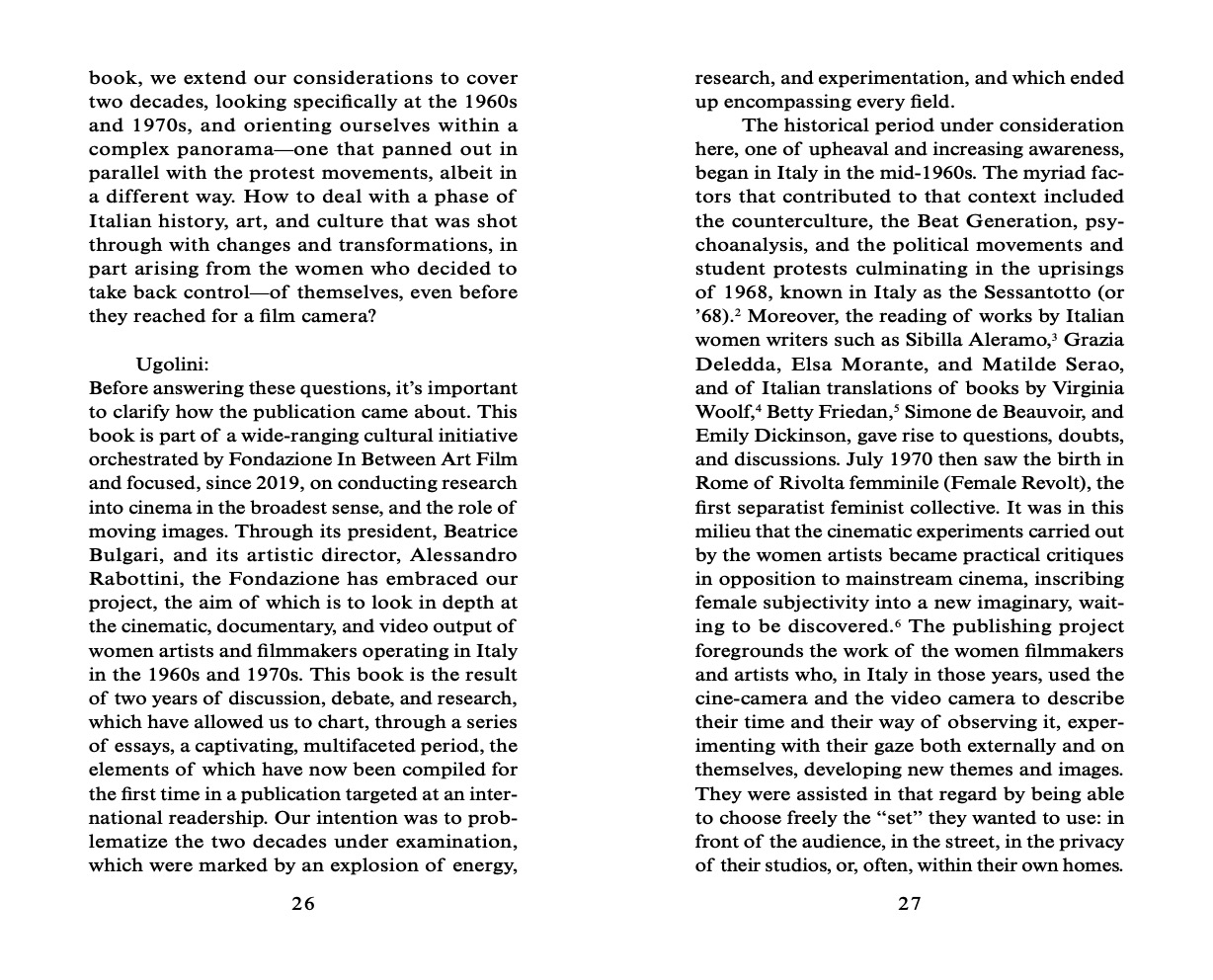
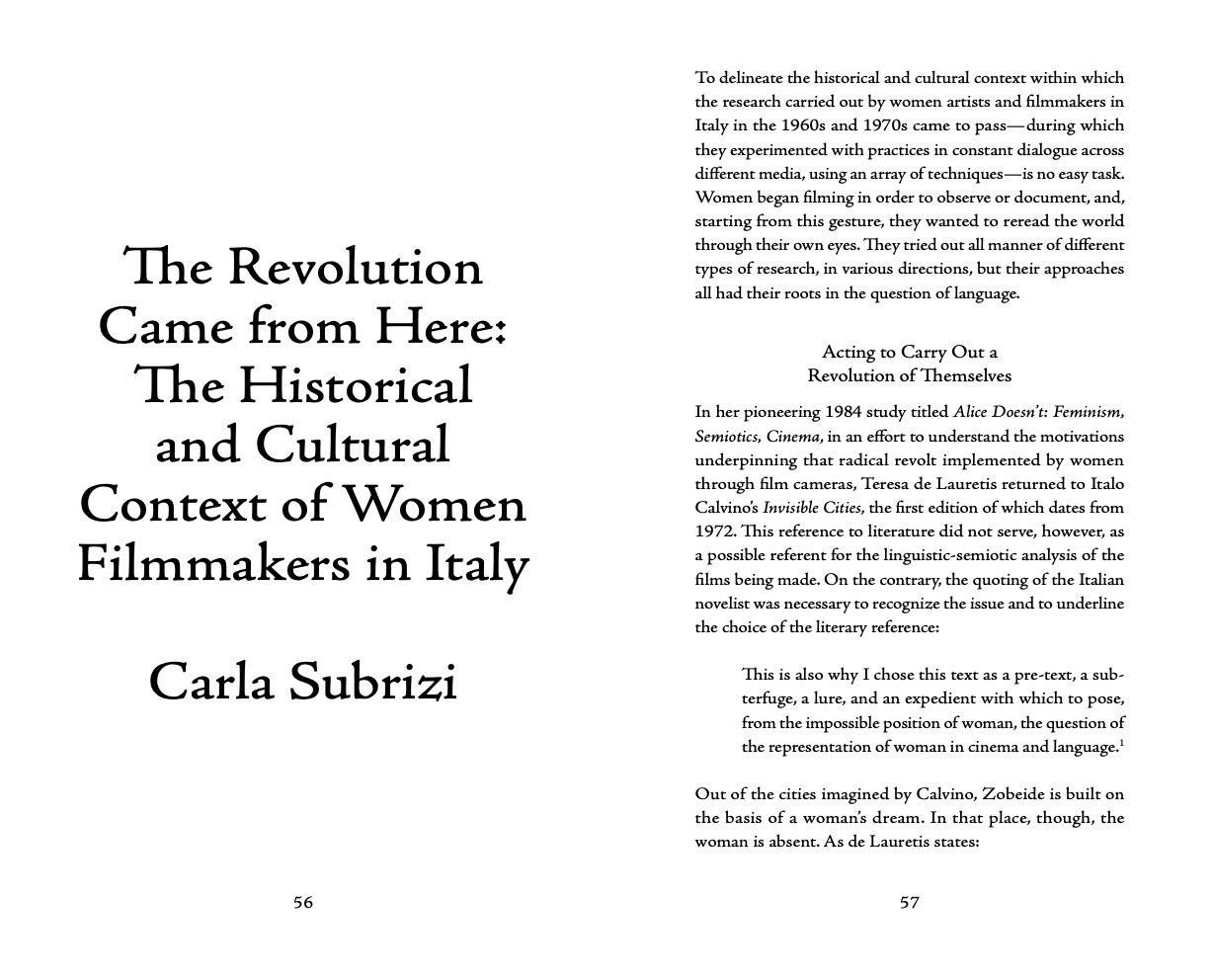
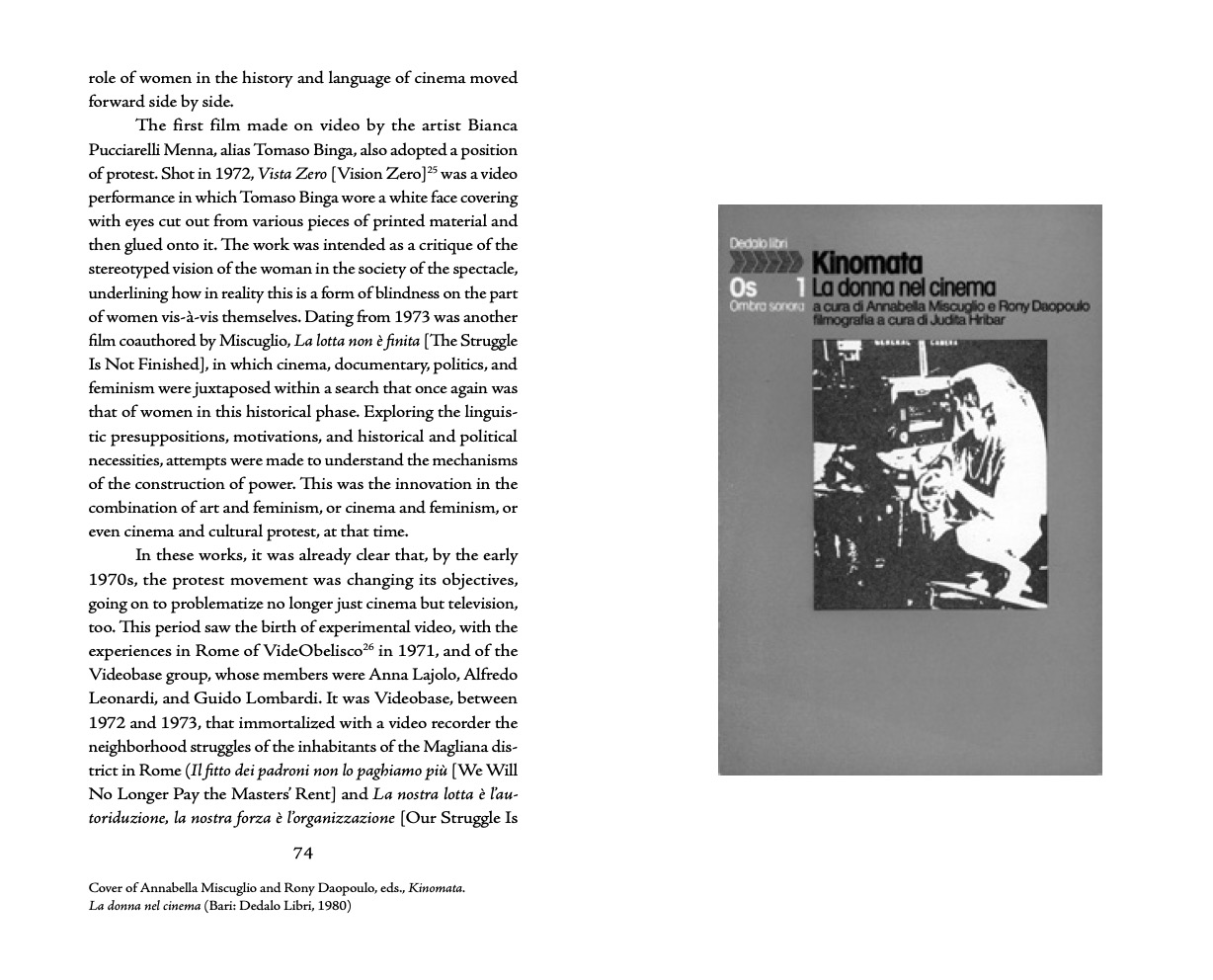
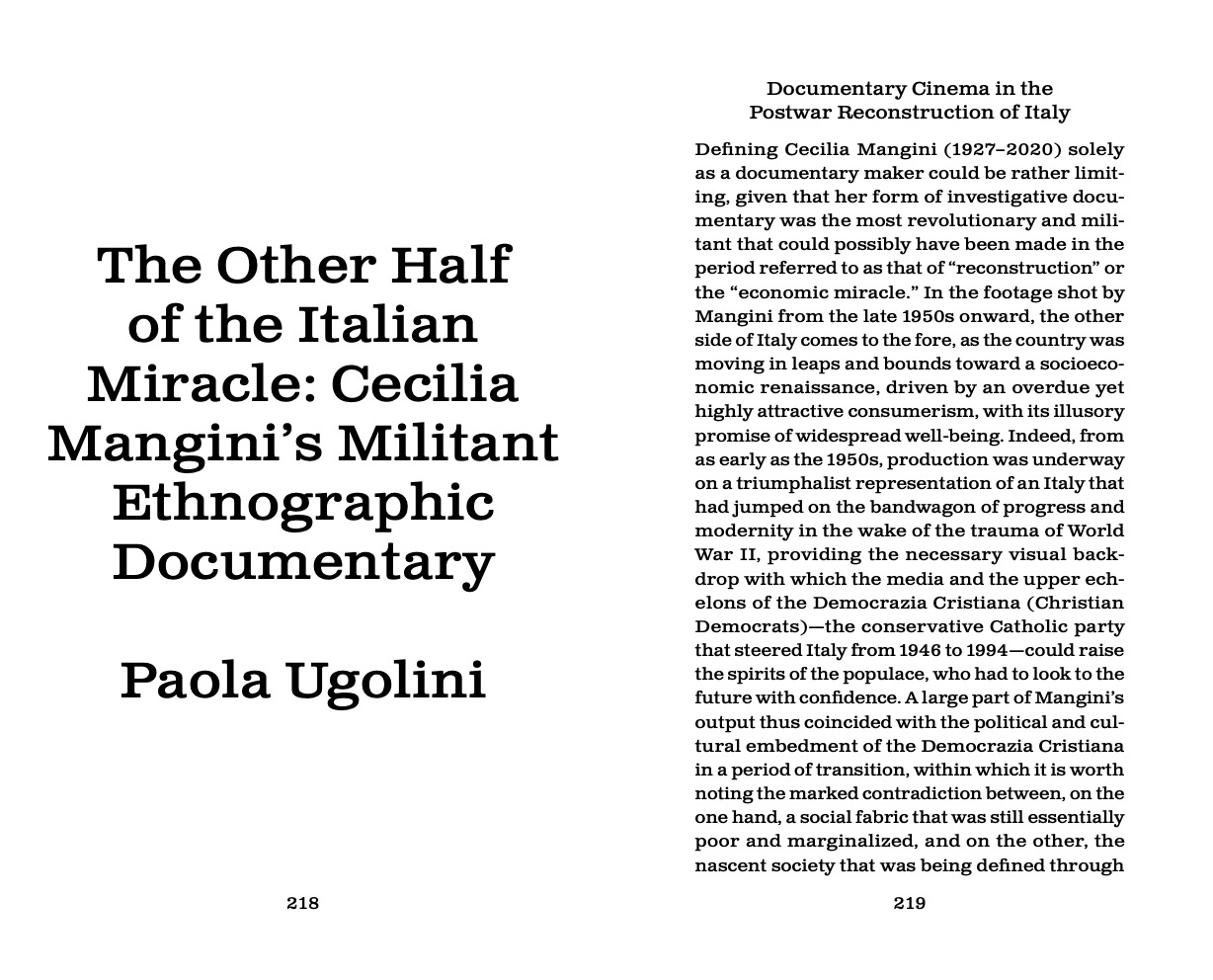
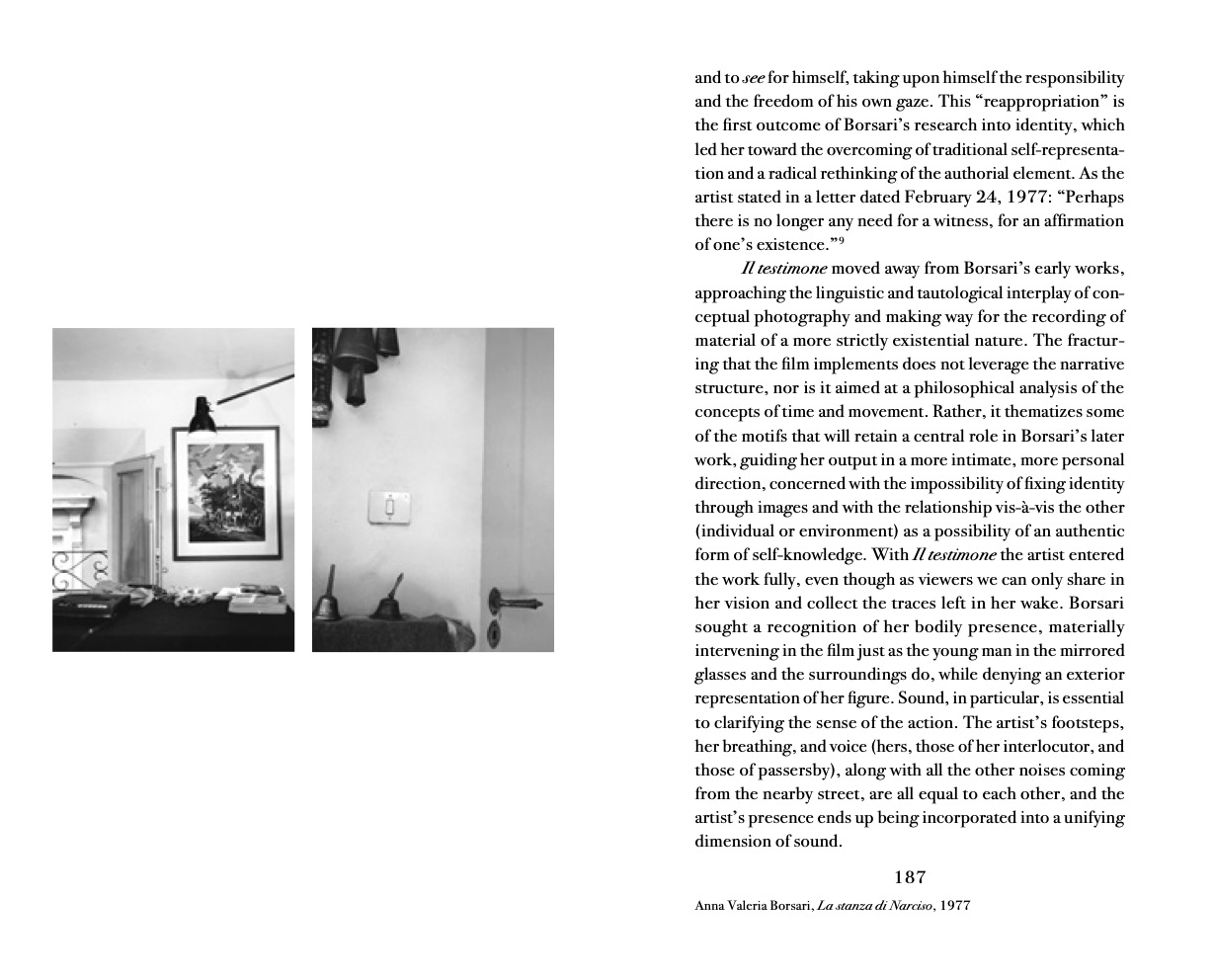
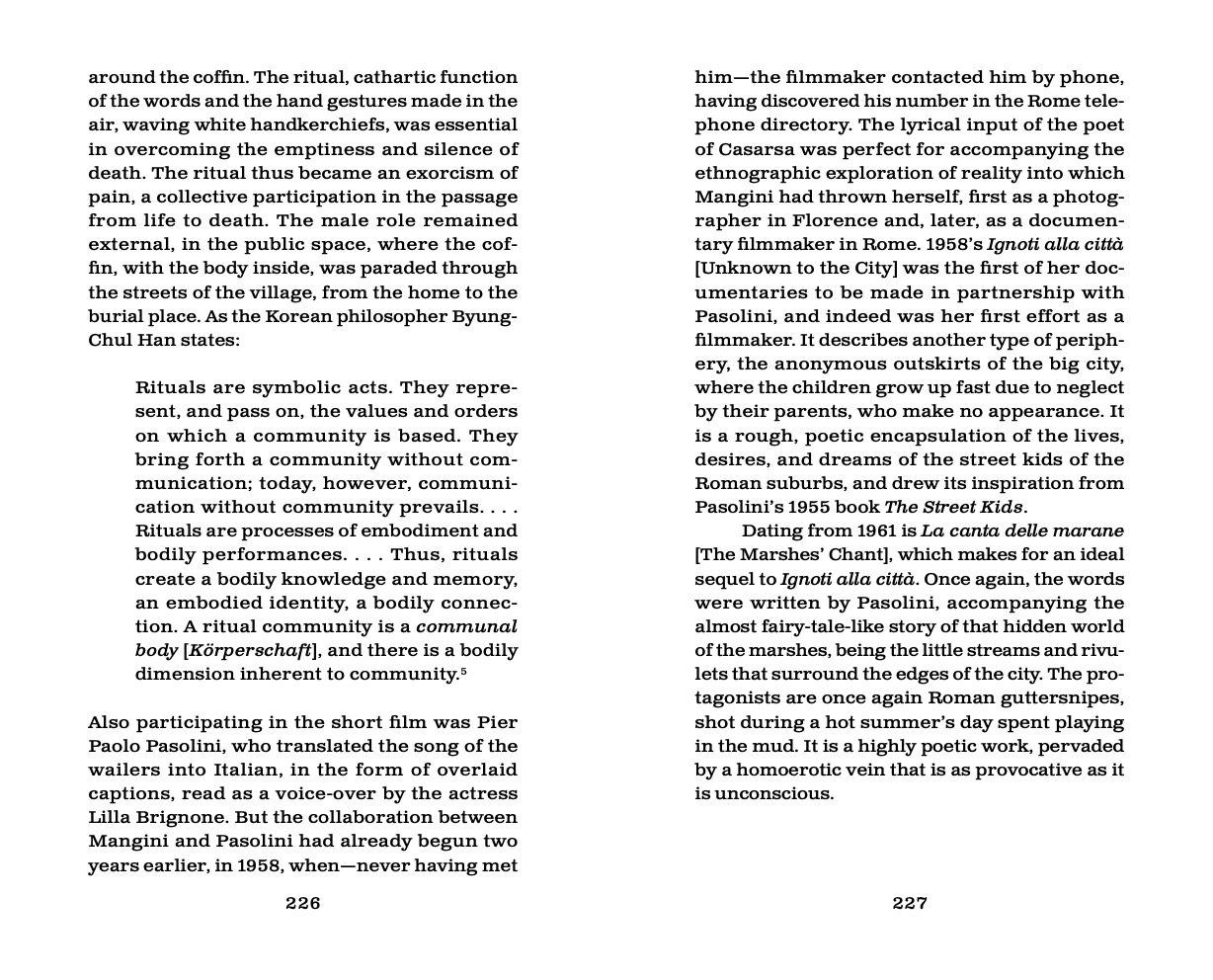
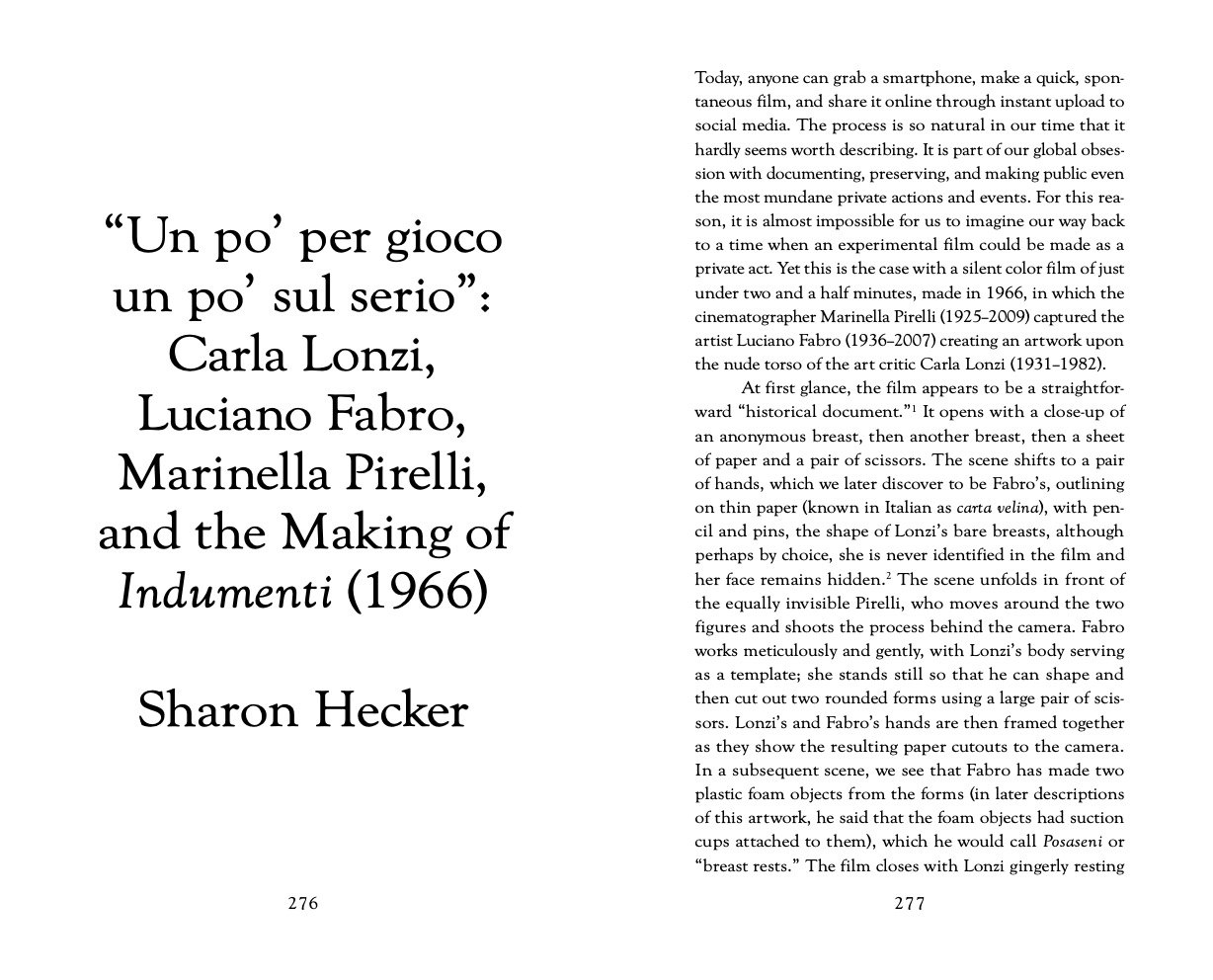
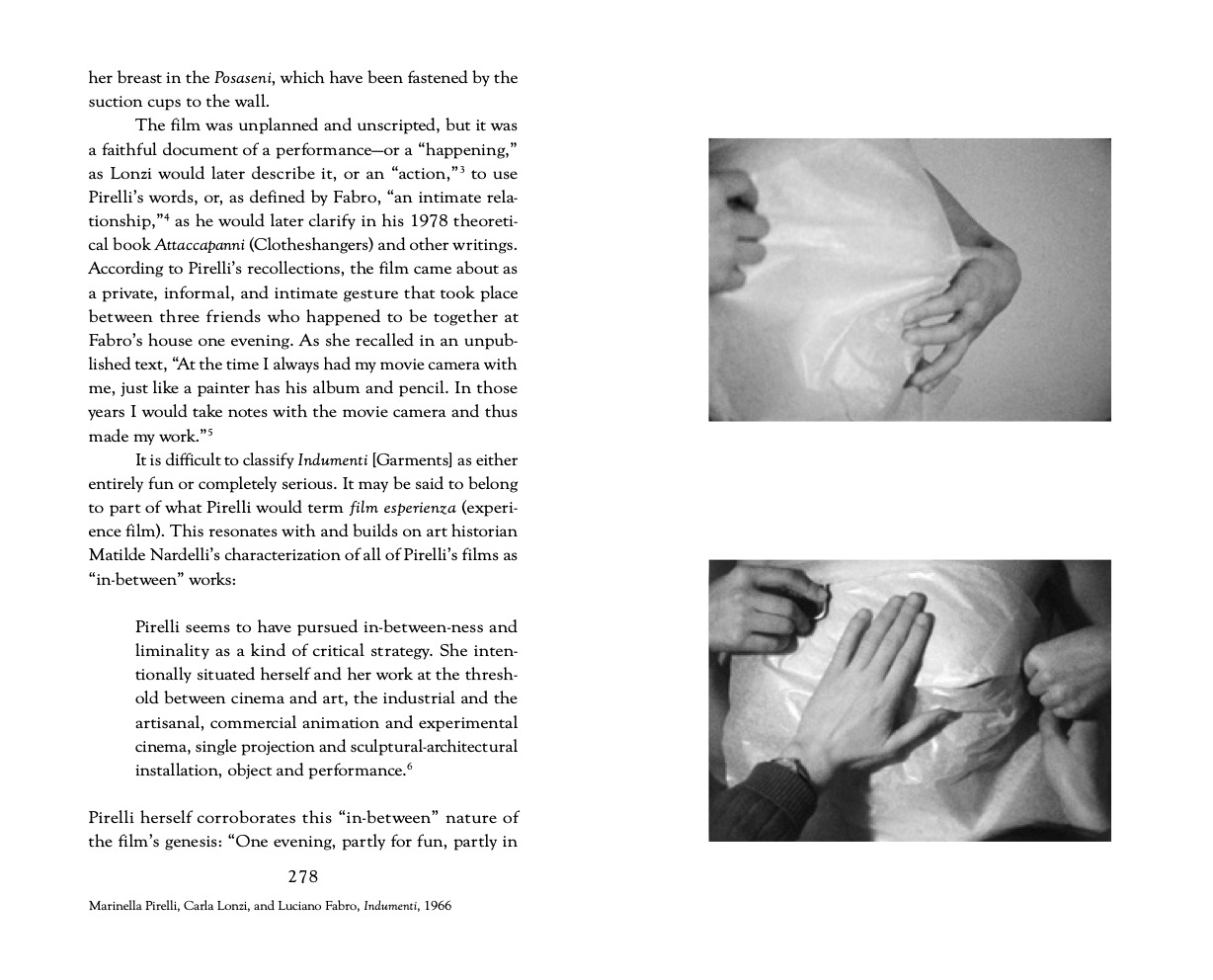
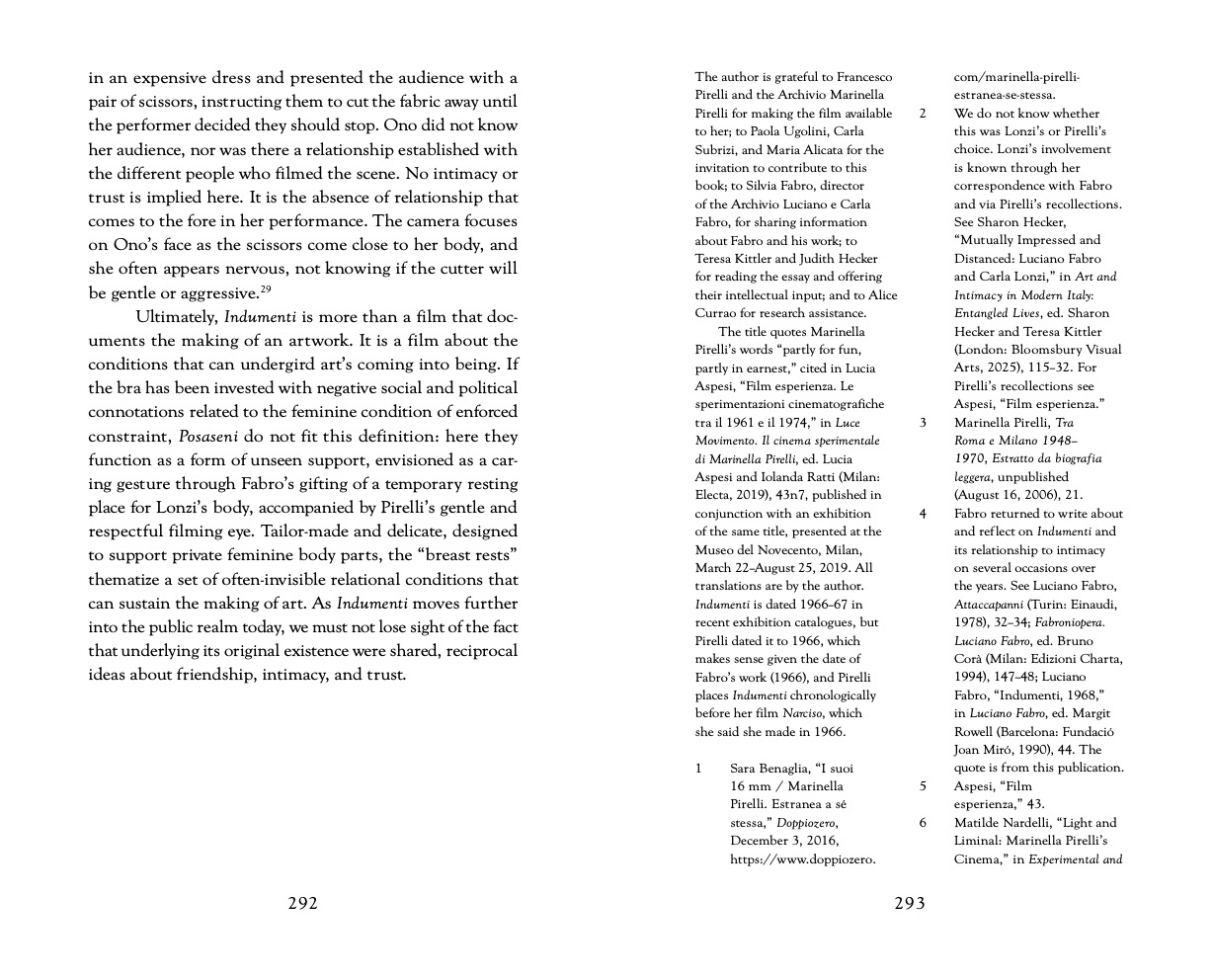
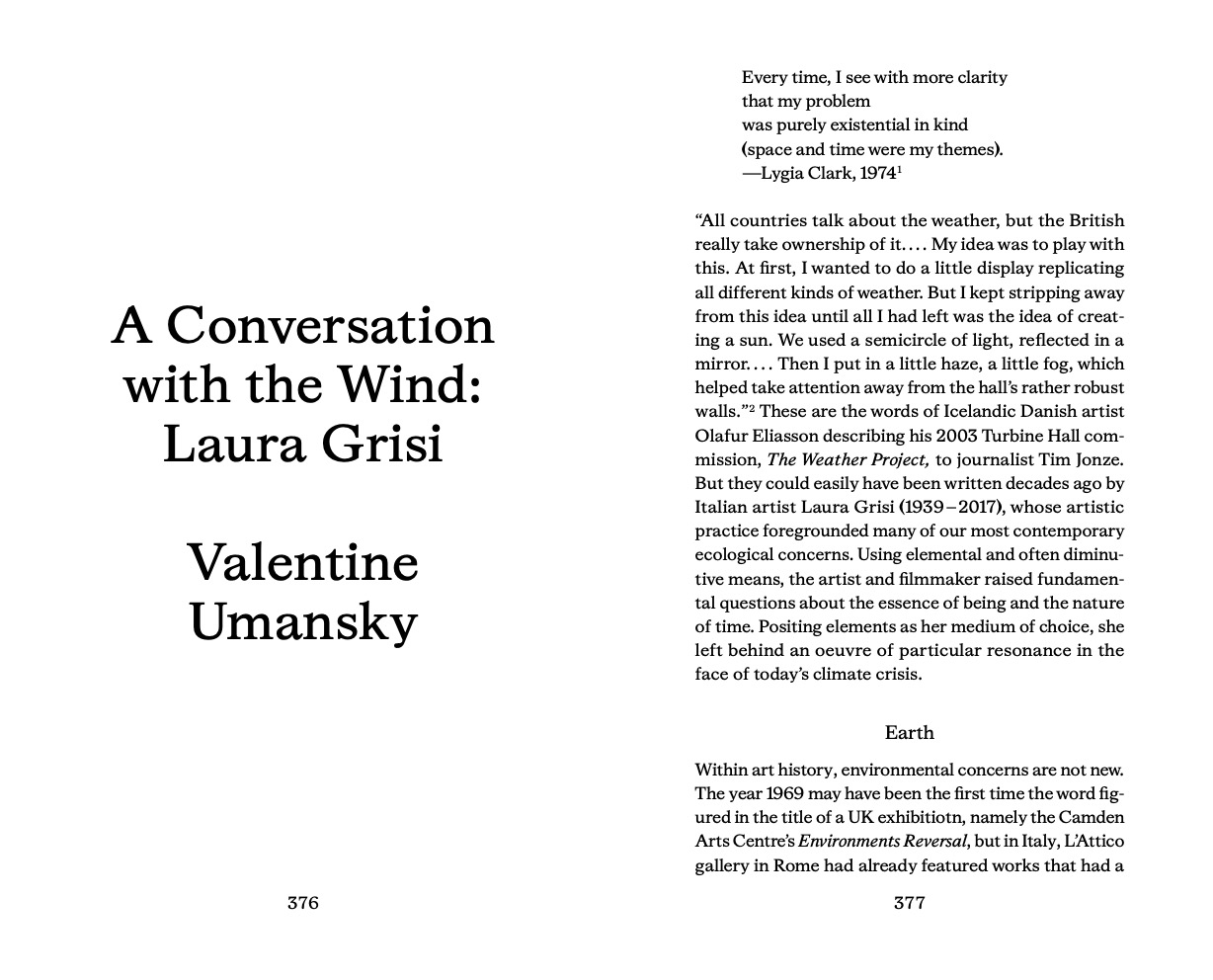
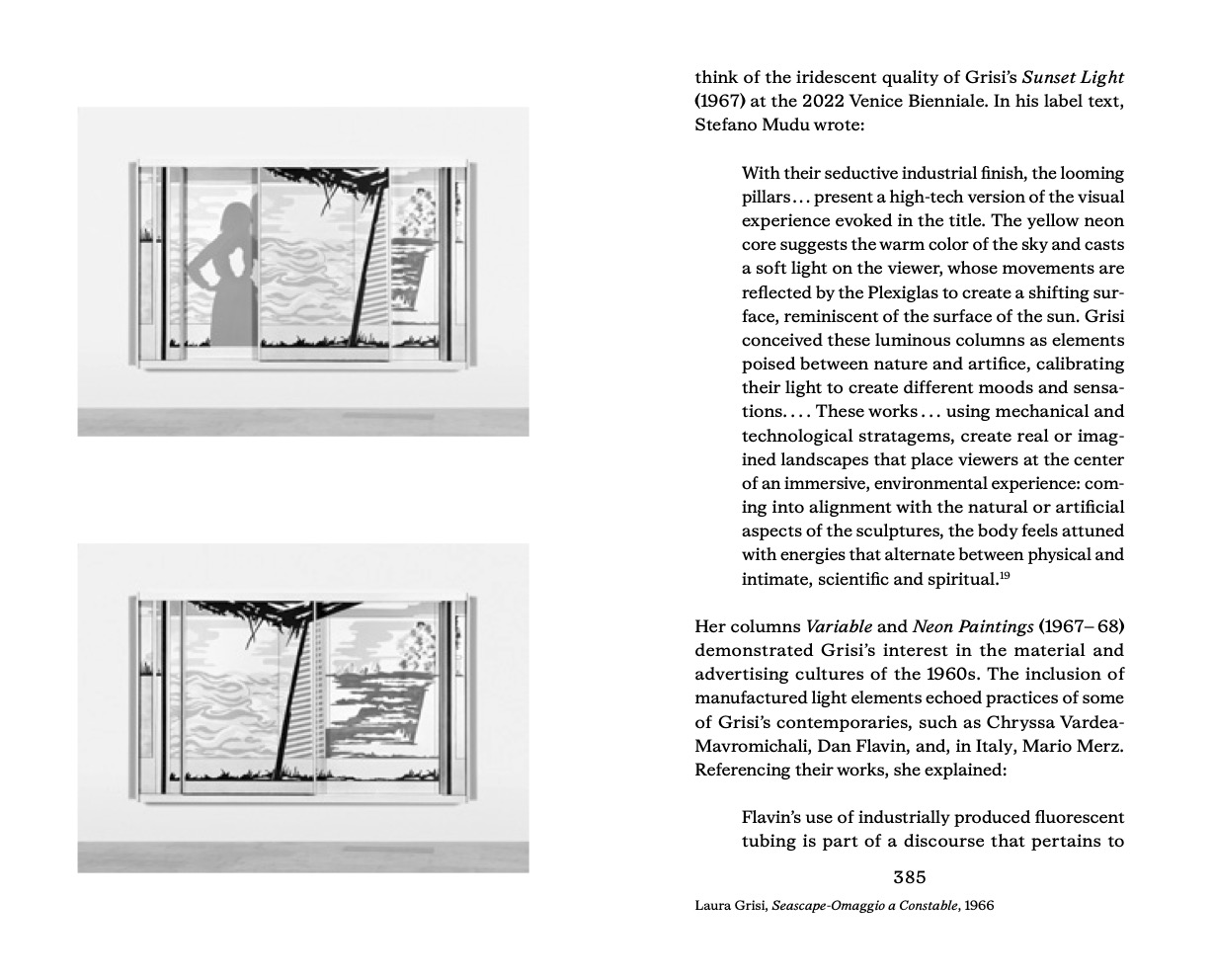
A project by Fondazione In Between Art Film, edited by Carla Subrizi, Paola Ugolini, and Maria Alicata, this illustrated volume investigates the cinematic, documentary, and video output of women artists and filmmakers operating in Italy in the 1960s and 1970s, situating their research at the intersection of artistic experimentation, politics, society, and technology.
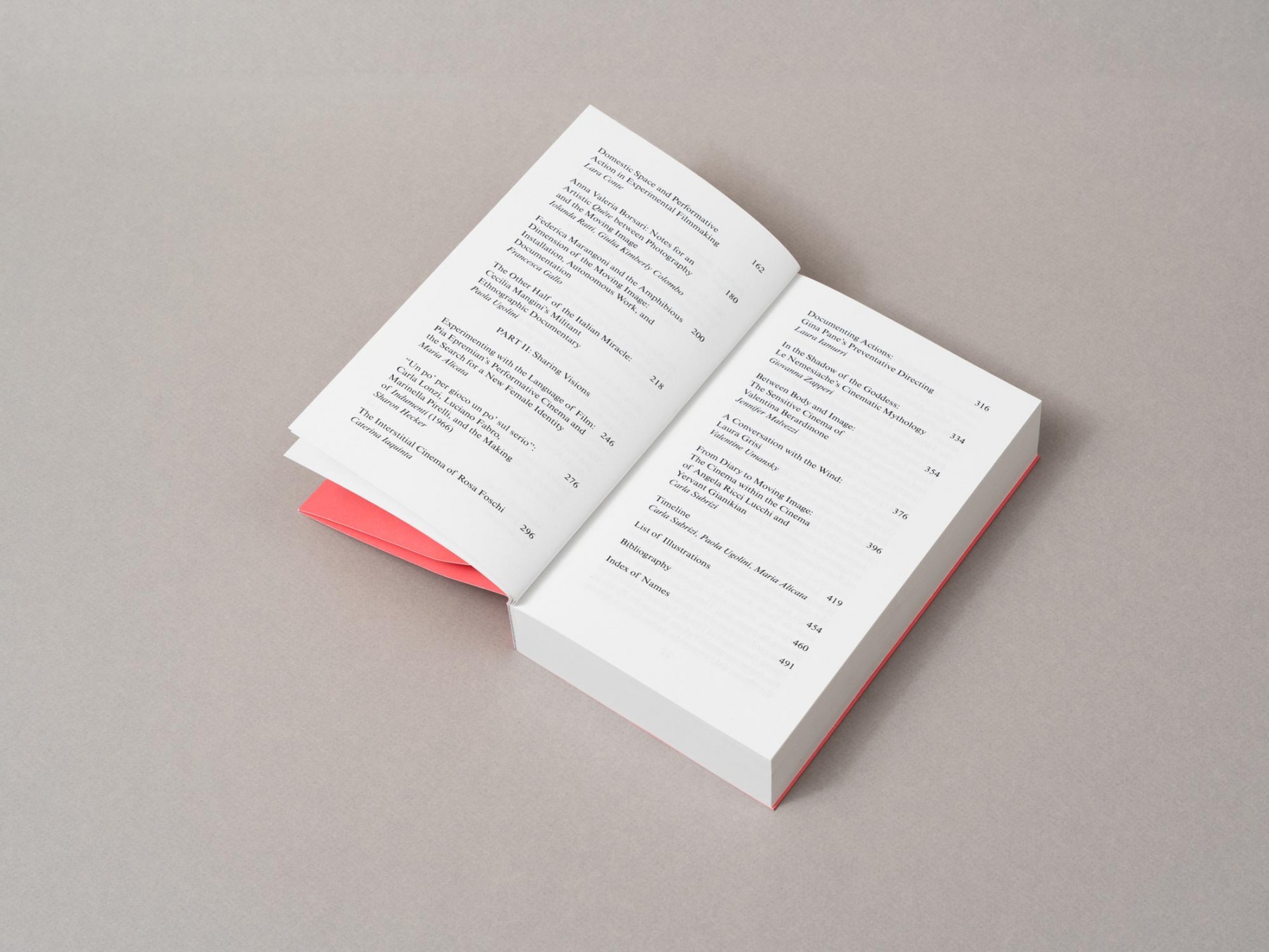
With 18 newly commissioned essays about artists and filmmakers Valentina Berardinone, Anna Valeria Borsari, Pia Epremian, Giosetta Fioroni, Rosa Foschi, Laura Grisi, Ketty La Rocca, Le Nemesiache, Cecilia Mangini, Federica Marangoni, Marisa Merz, Gina Pane, Marinella Pirelli, and Angela Ricci Lucchi, it charts a captivating, multifaceted period, the elements of which have now been compiled for the first time in this publication.
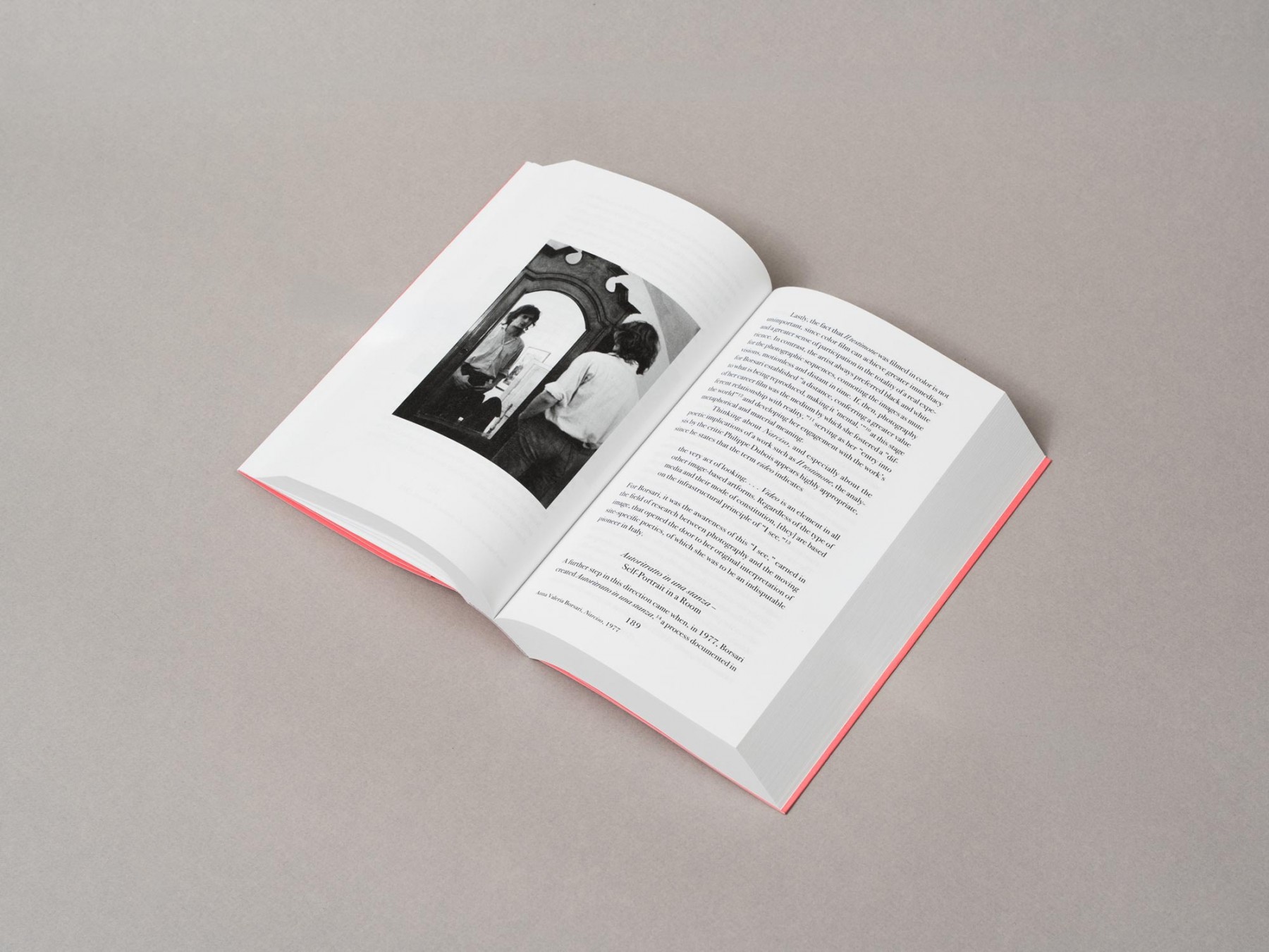
Each chapter, which is accompanied by illustrations and previously unpublished archival documents, analyzes a series of moving-image works as well as the personalities of pioneering (and on occasion non-professional) female directors and artists involved, who embraced the camera as a medium for investigation, documentation, and critique. In their efforts to construct a form of agency for visual imagery, they fostered new narratives, leaving in their wake a plethora of stories and visual strategies that remain vital and worthy of re-examination today.
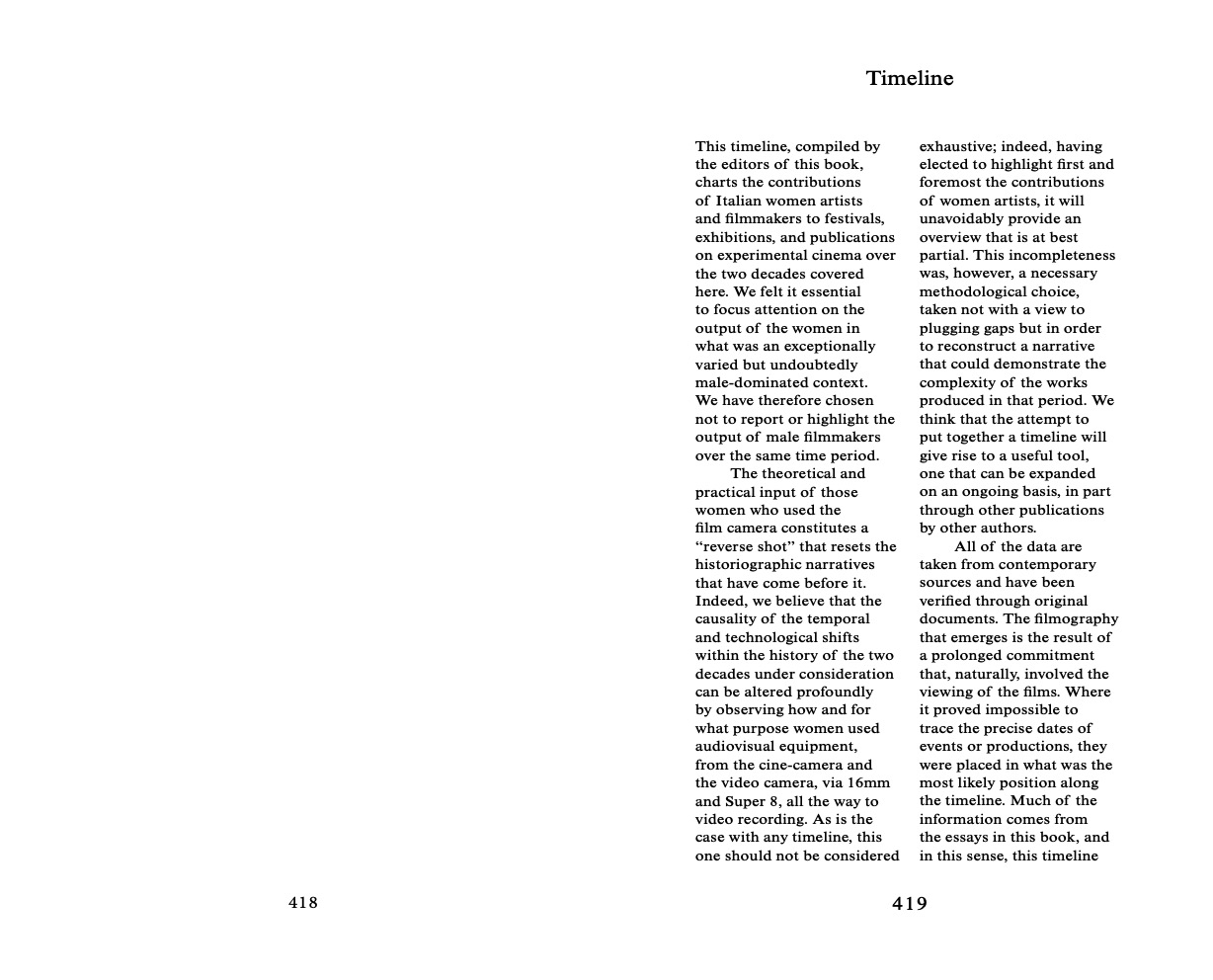
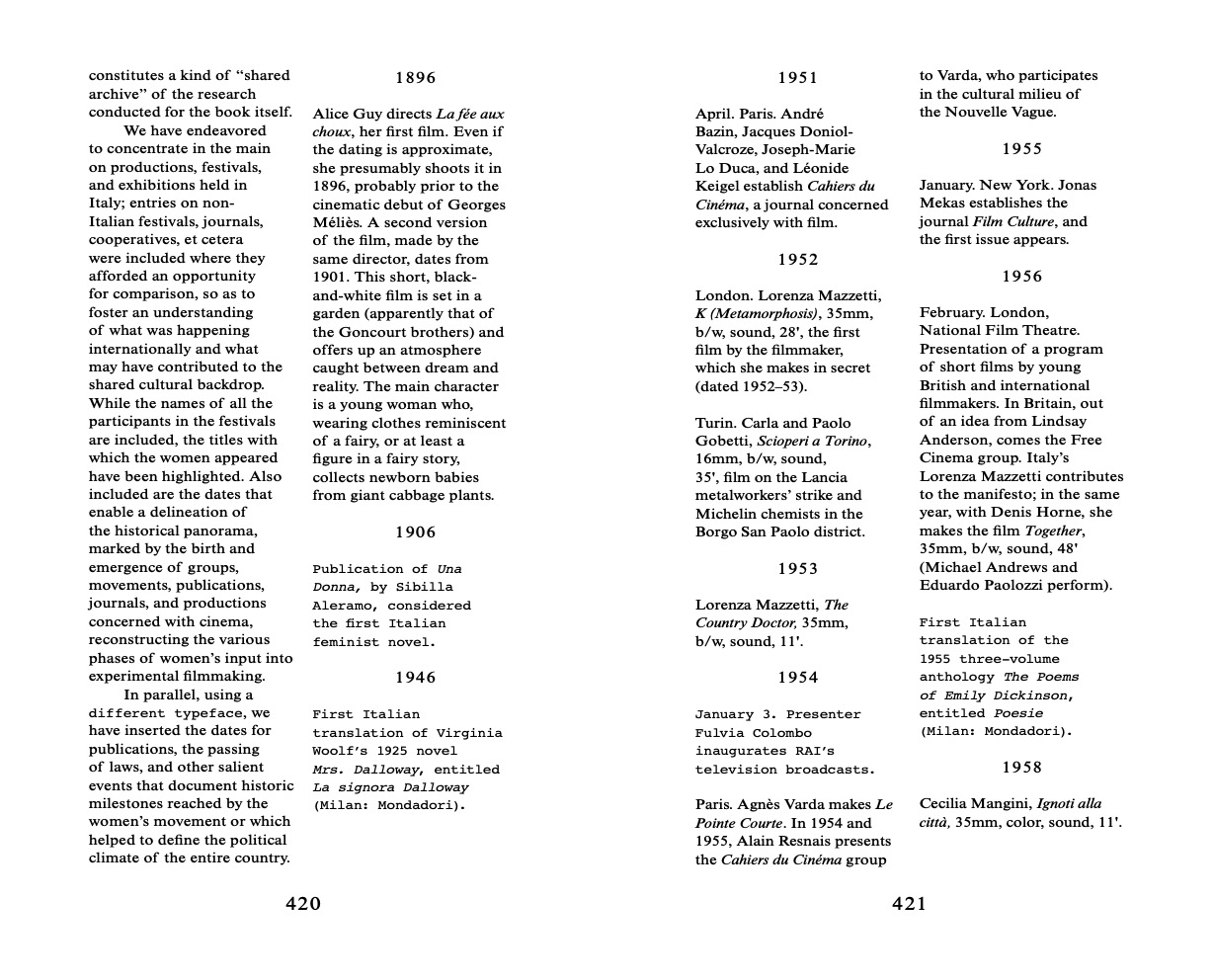
The contributions of academics, researchers, and art historians such as Maria Alicata, Lucia Aspesi, Silvia Bottinelli, Lara Conte, Flavia Frigeri, Francesca Gallo, Sharon Hecker, Teresa Kittler, Caterina Iaquinta, Laura Iamurri, Jennifer Malvezzi, Iolanda Ratti with Giulia Kimberly Colombo, Carla Subrizi, Paola Ugolini, Valentine Umansky, and Giovanna Zapperi problematize the two decades under examination, which panned out in parallel with the protest movements, and navigate a phase of Italian history, art, and culture that was shot through with changes and transformations, in part arising from the women who decided to take back control—of themselves, even before they reached for a film camera. Therefore, they endeavor to glean an understanding of the transformations of language, subjectivity, identity, ways of seeing, and imaginaries through what women filmmakers described, documented, recorded, and wrote. At the same time, the book constructs an Italian history of this cinematic output in order to then understand how specific, identity-forging visions can be expanded or connected within a broader story, composed of cultural differences and urges that enter into a transnational dialogue. To this end, the book also includes a specially conceived timeline of the main socio-political events that occurred and the most important moving-image works that were produced over the two decades under consideration.