Since the 1980s, Belgian artist Sigefride Bruna Hauman has created a highly original body of work in different media. Her installations, reliefs and videos are the subject of a much-overdue retrospective organized by M Leuven—and of this first monograph.
Rituals of Care is an extensive monograph devoted to the work of Antonio Obá, published in conjunction with his eponymous exhibition presented at the Centre d’Art Contemporain Genève, curated by Andrea Bellini. Extensively illustrated, the book immerses the reader in Obá’s multifaceted oeuvre and in the magical iconographic universe of his paintings.
Claiming that the museum is not enough means asking what a museum should be and do, eventually questioning the role of cultural institutions in society. Through conversations, stills of documentaries, responses, and reprints of archival documents that explore ideas of architecture on the ground, this volume reflects on the tools deployed by the institution to redefine its relationship to others.
Affirmer que le musée ne suffit pas, c’est interroger ce qu’un musée devrait être et faire, et réfléchir de manière critique sur le rôle des institutions culturelles dans nos sociétés. À travers des conversations, des photogrammes de documentaires, des interventions et des reproductions d’archives questionnant les conceptions de l’architecture sur le terrain, ce volume réfléchit aux outils mis en œuvre par l’institution pour redéfinir sa relation aux autres.
Semi-Nomadic Debt-Ridden Bedouins is the first monograph on the work of the Palestinian artist and filmmaker Basma al-Sharif. Spanning nearly two decades of moving-image and installation work, it combines visual documentation with texts that reflect on the charged political landscapes through which al-Sharif navigates.
This monograph marks the occasion of the first European survey of Nicola L. (1932–2018). Often discussed in the context of Pop Art, activism, feminism, and design, this is the first in-depth exploration of the multi-layered and expansive nature of her extraordinary practice, which also encompassed cosmology, environmental concerns, spirituality, political protest, and sexuality.
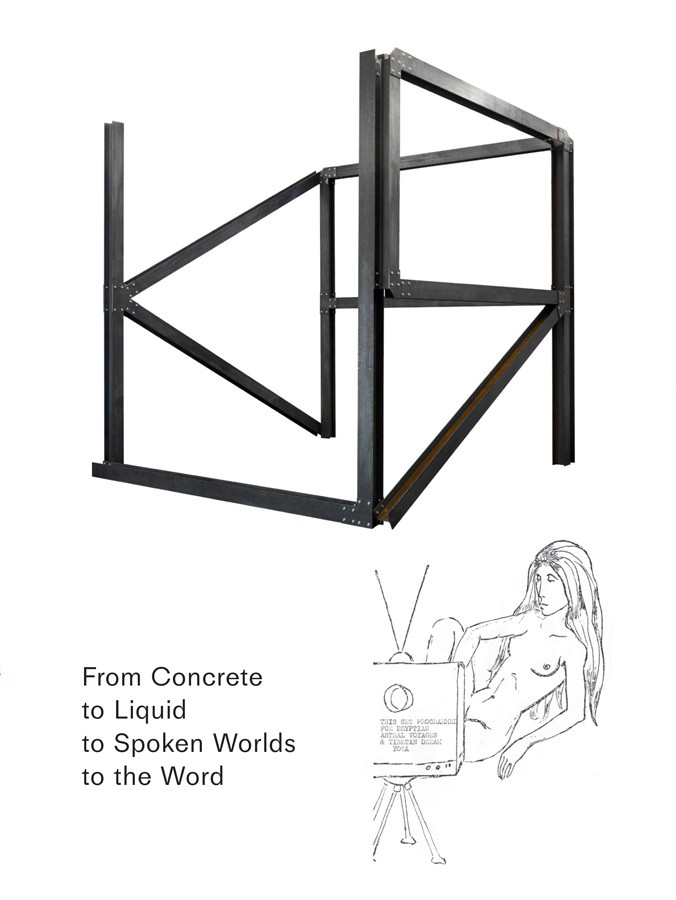
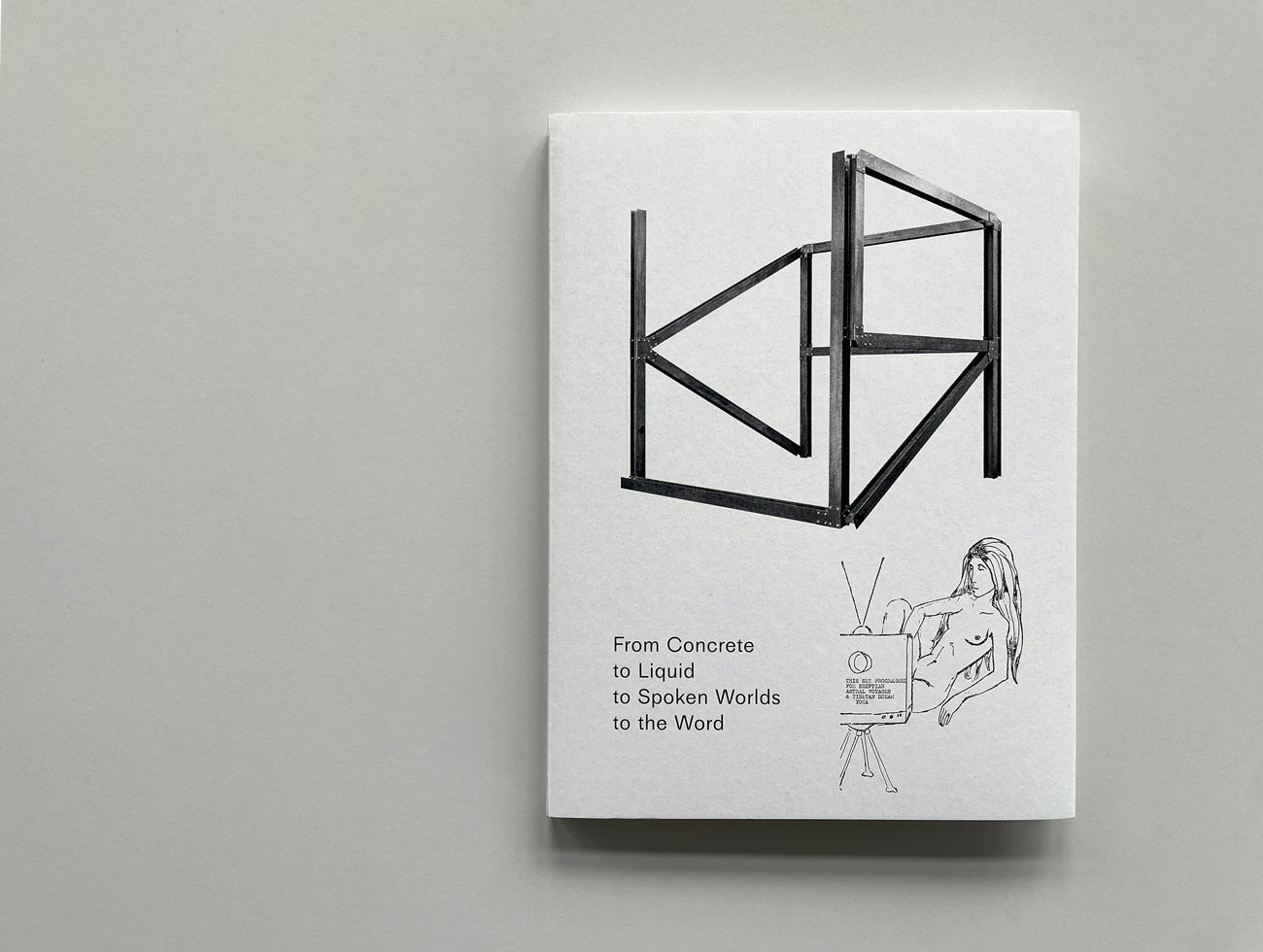
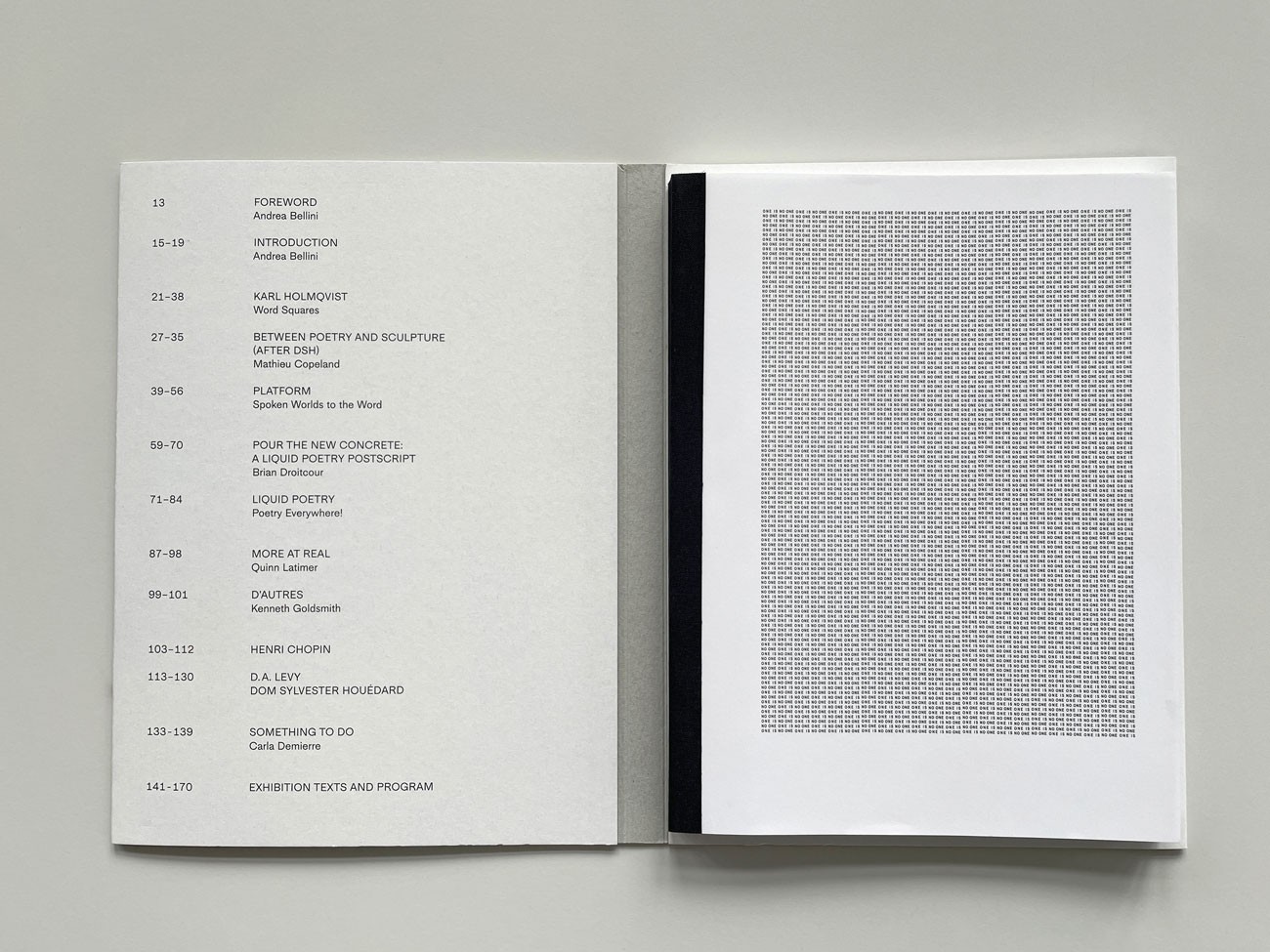
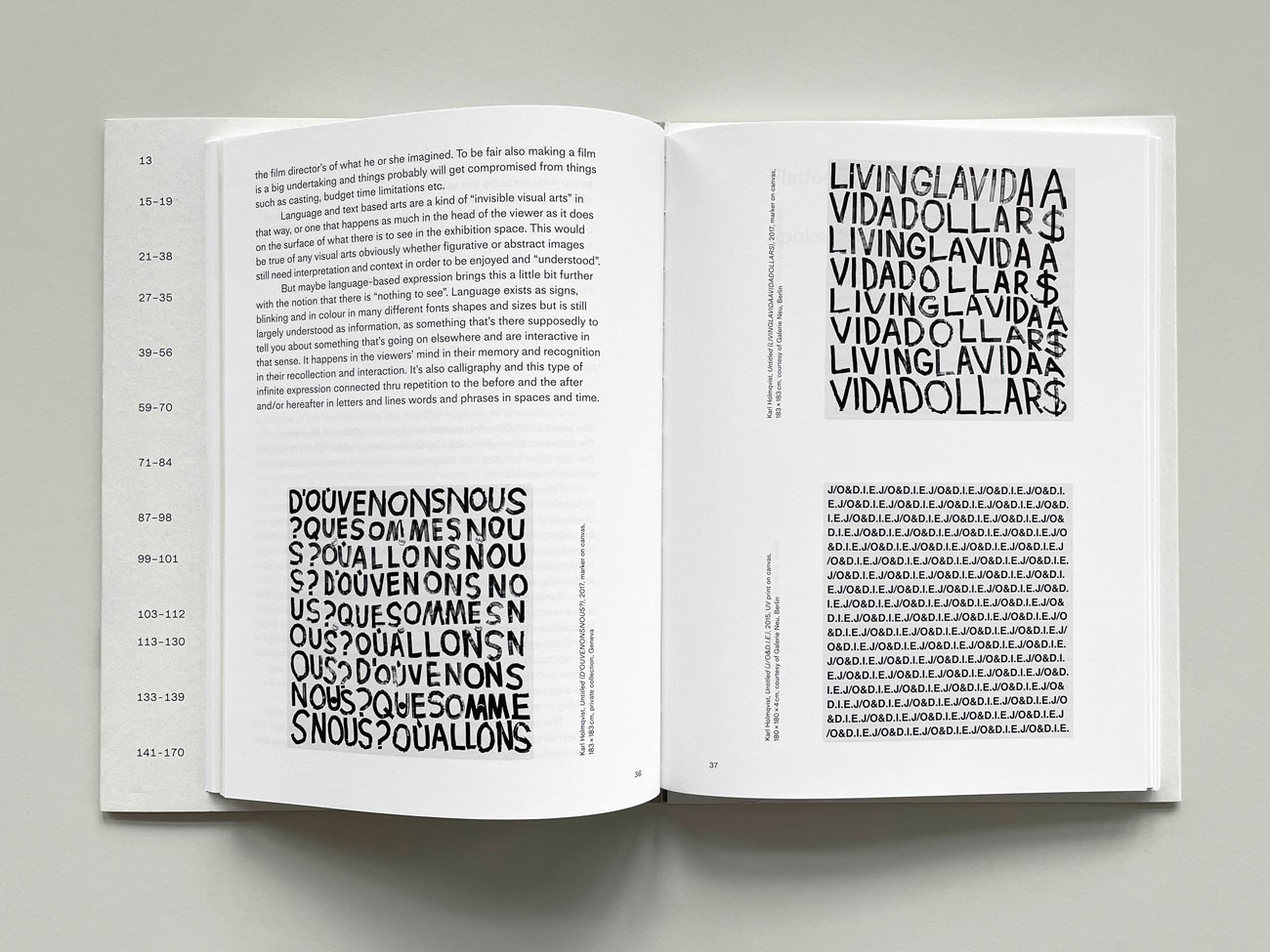
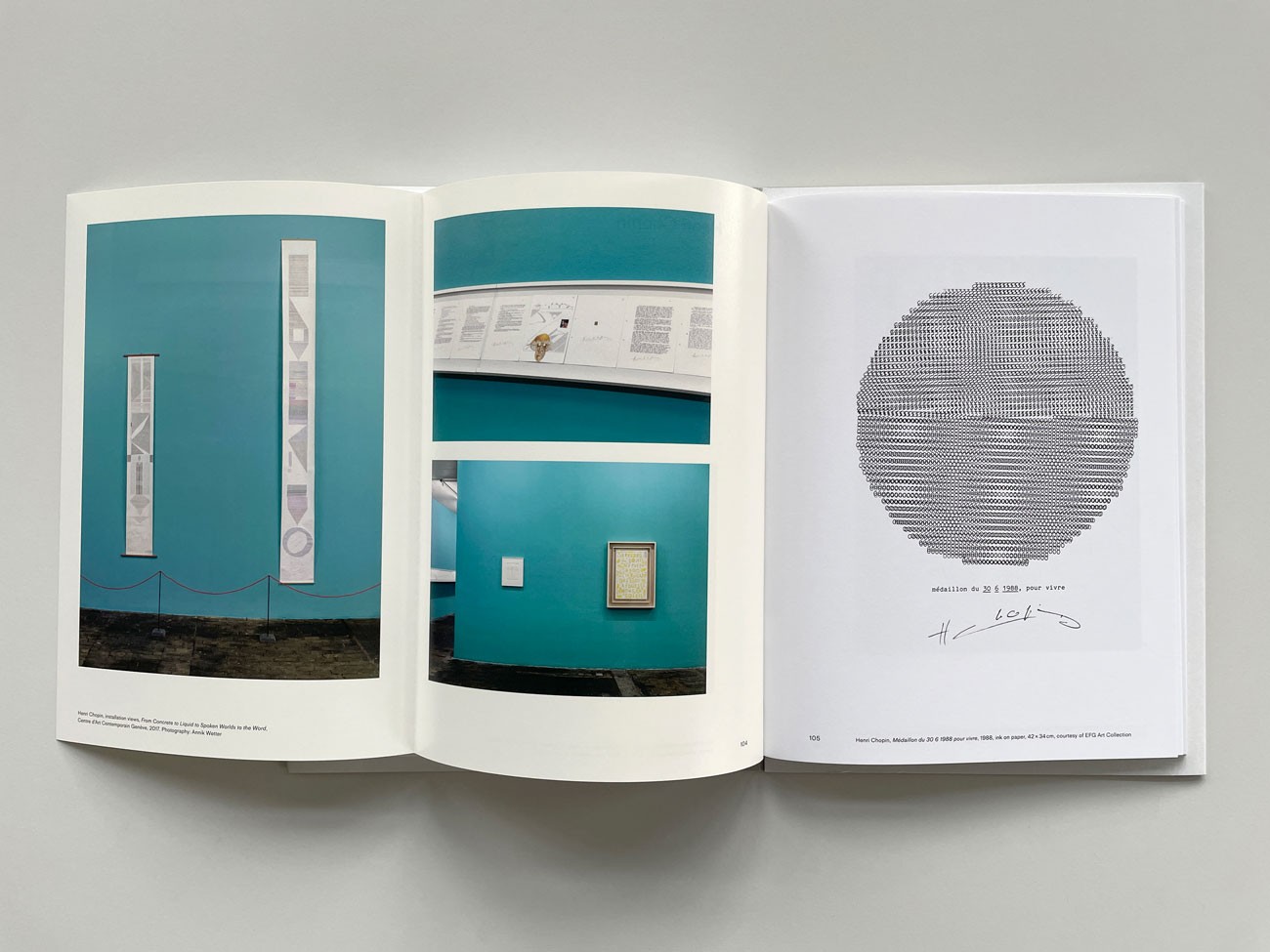
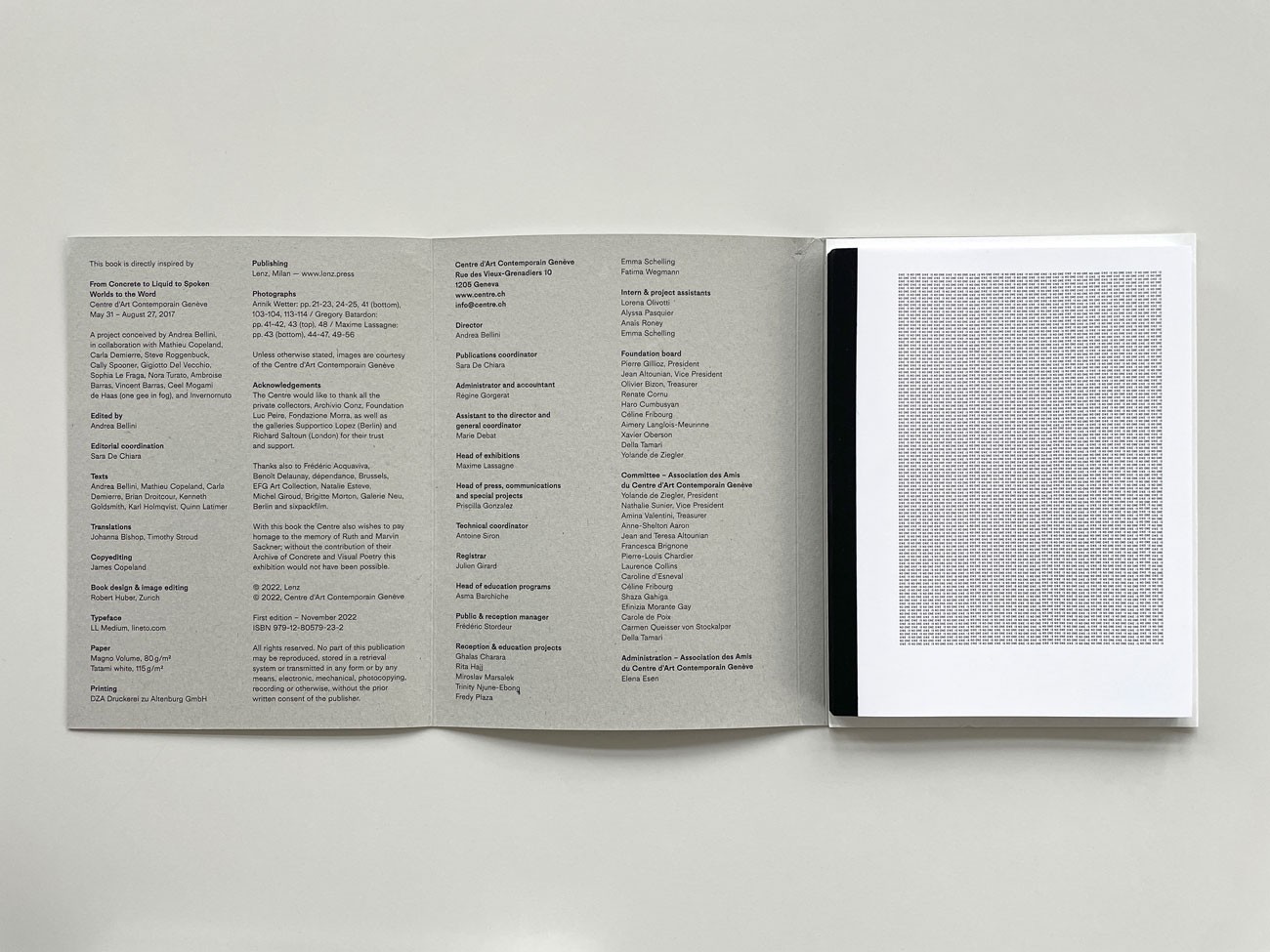
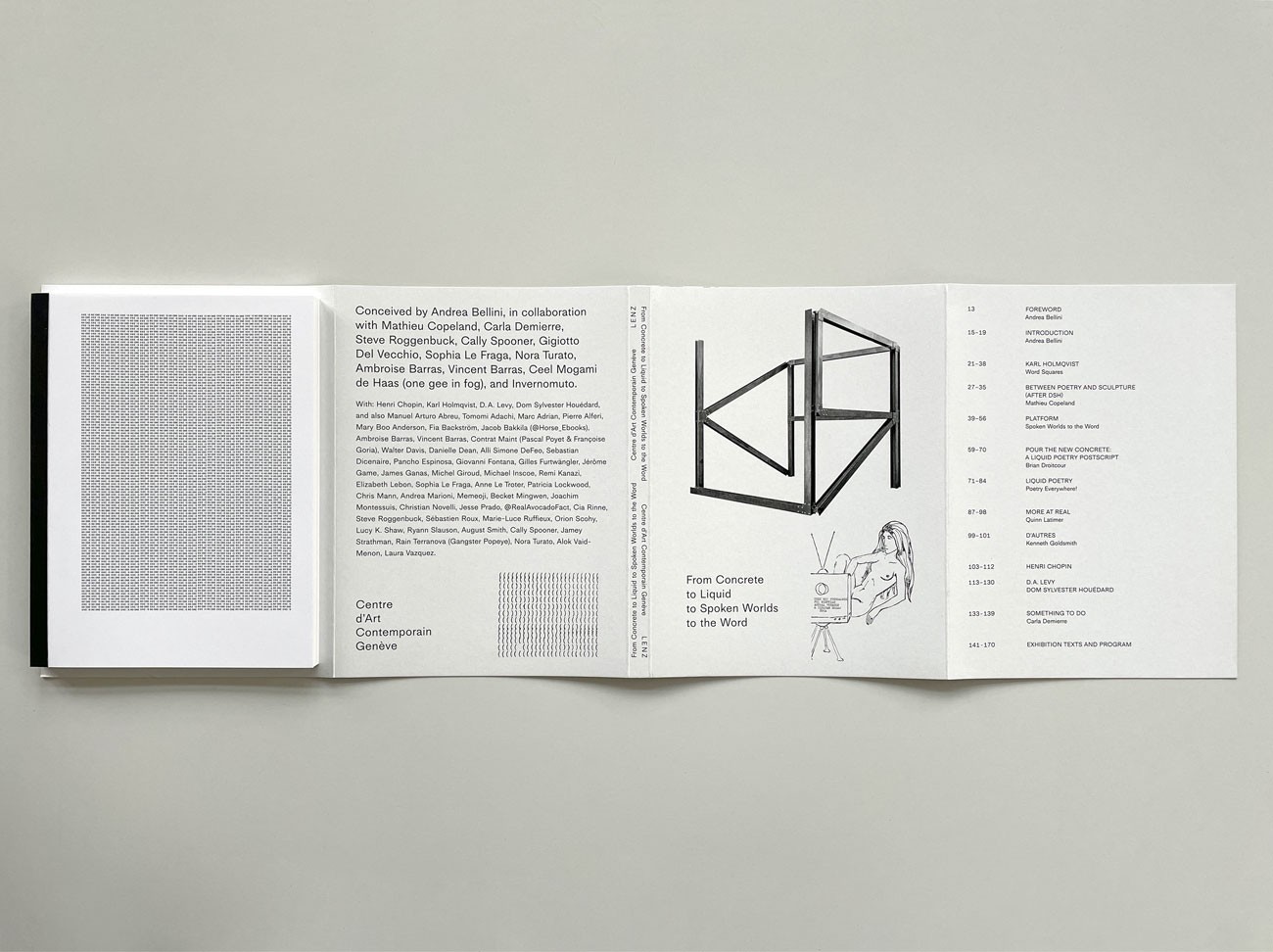
From Concrete to Liquid to Spoken Worlds to the Word
Edited by Andrea Bellini
Texts by Andrea Bellini, Mathieu Copeland, Carla Demierre, Brian Droitcour, Karl Holmqvist, Kenneth Goldsmith and Quinn Latimer
Design by Robert Huber
2022, English, softcover, 178 pages, 16.9 x 22.4 cm
ISBN 979-12-80579-23-2
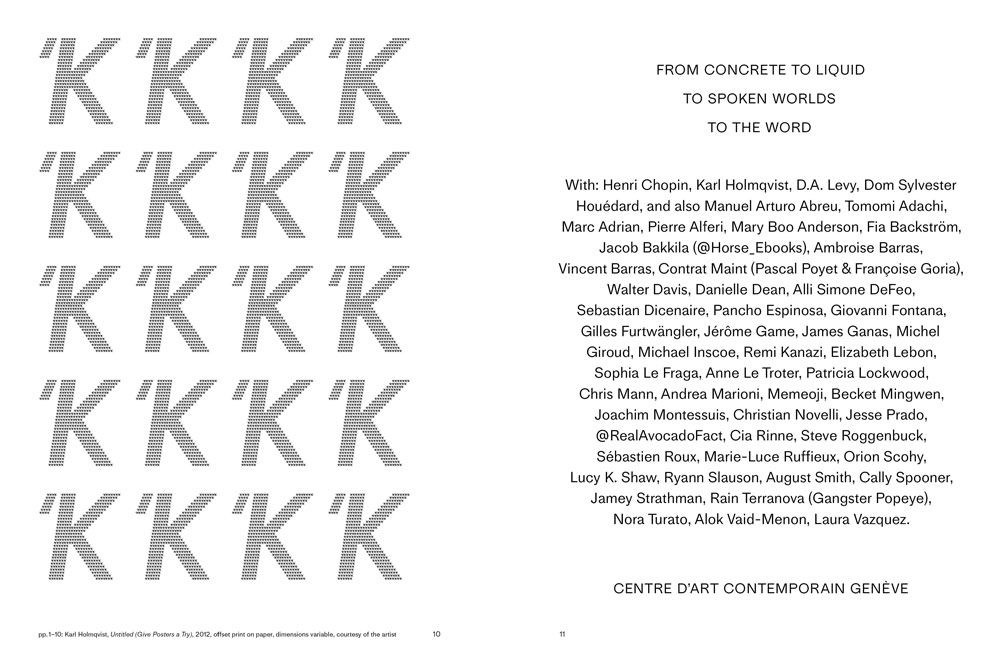
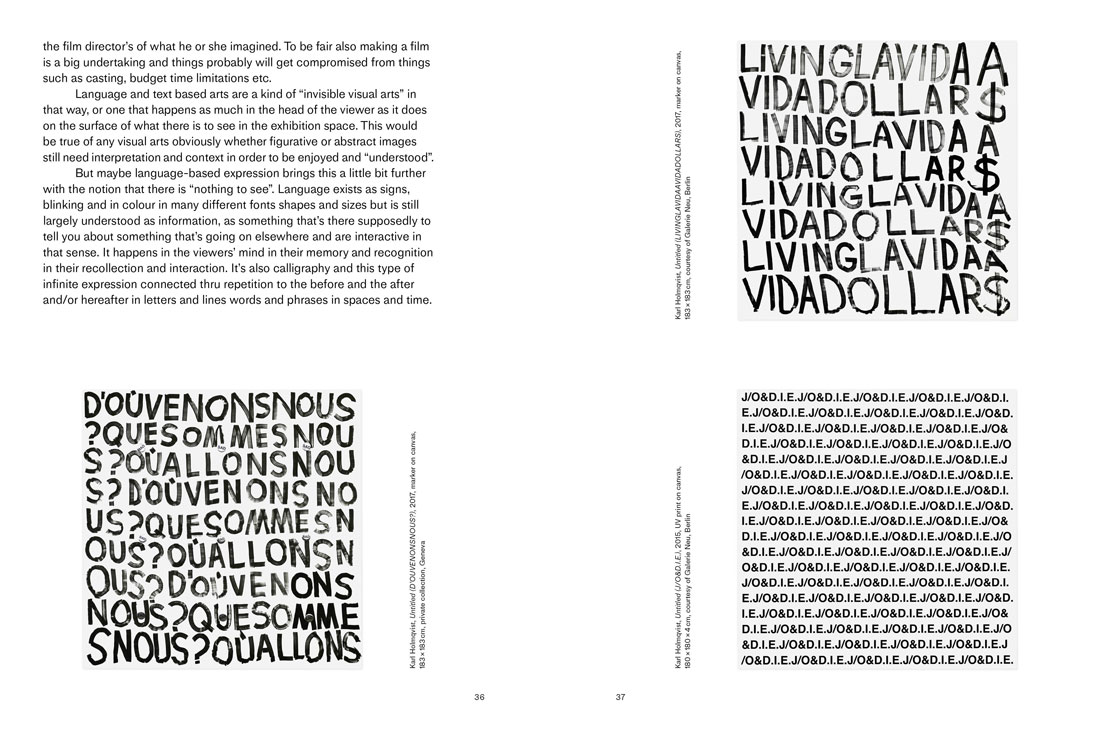
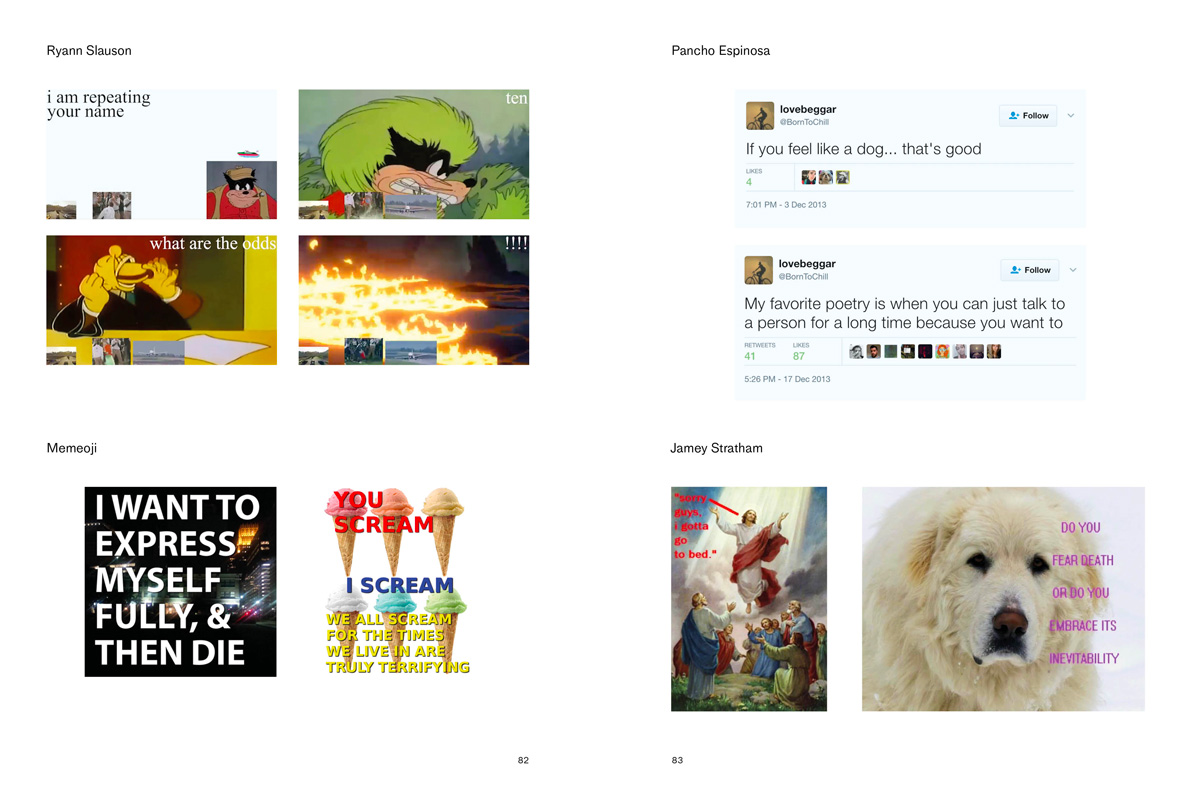
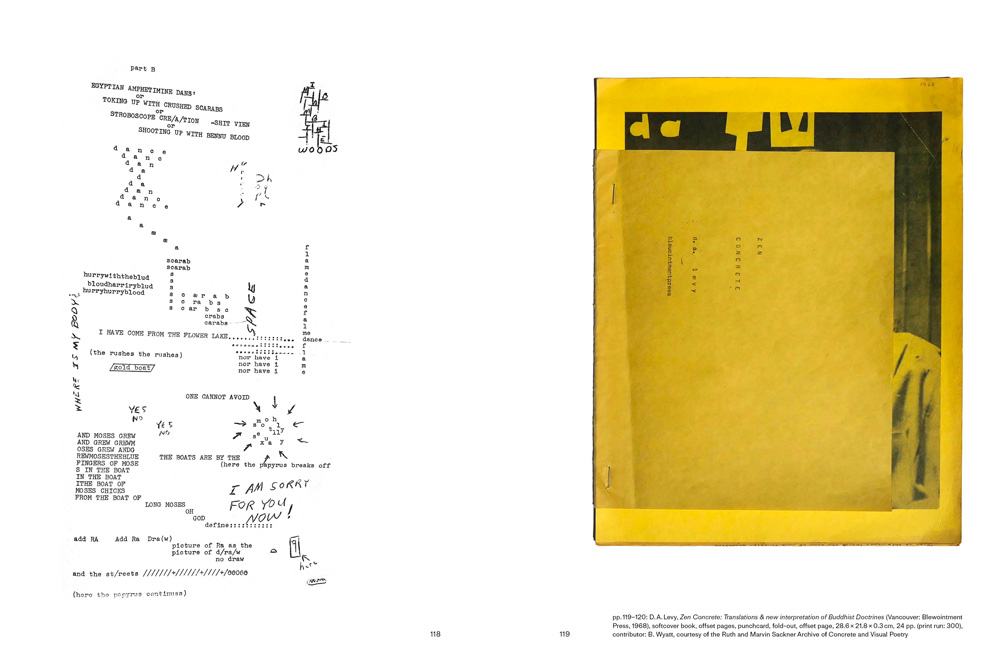
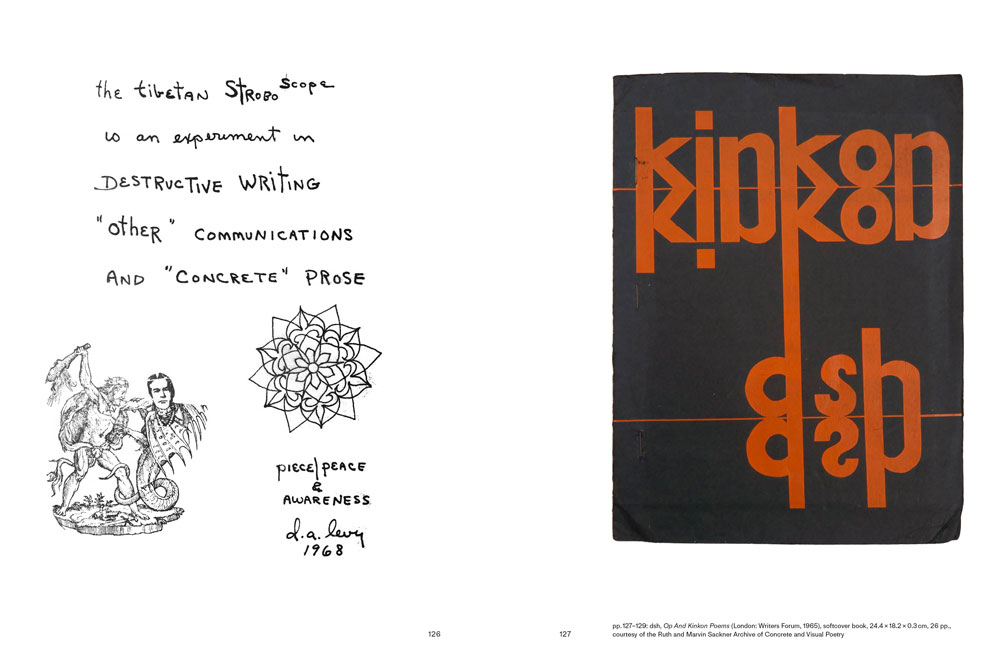
Five years after the exhibition From Concrete to Liquid to Spoken Worlds to the Word, and after a disastrous pandemic, the Centre d’Art Contemporain Genève presents the catalogue for this complex, ambitious project. Even at such a remove, we thought it was important to retrace the fundamental stages of this event through critical essays, images of the works and installations, and the calendar of performances and poetry readings. The reason is simple: despite the undeniable weight of images in today’s world, a keen interest in writing — rather surprisingly — has recently become a hallmark of many young artists’ work. They use writing as a tool to understand the world and as the cornerstone of a critical method, analyzing the present and creating a performative, politically engaged language.
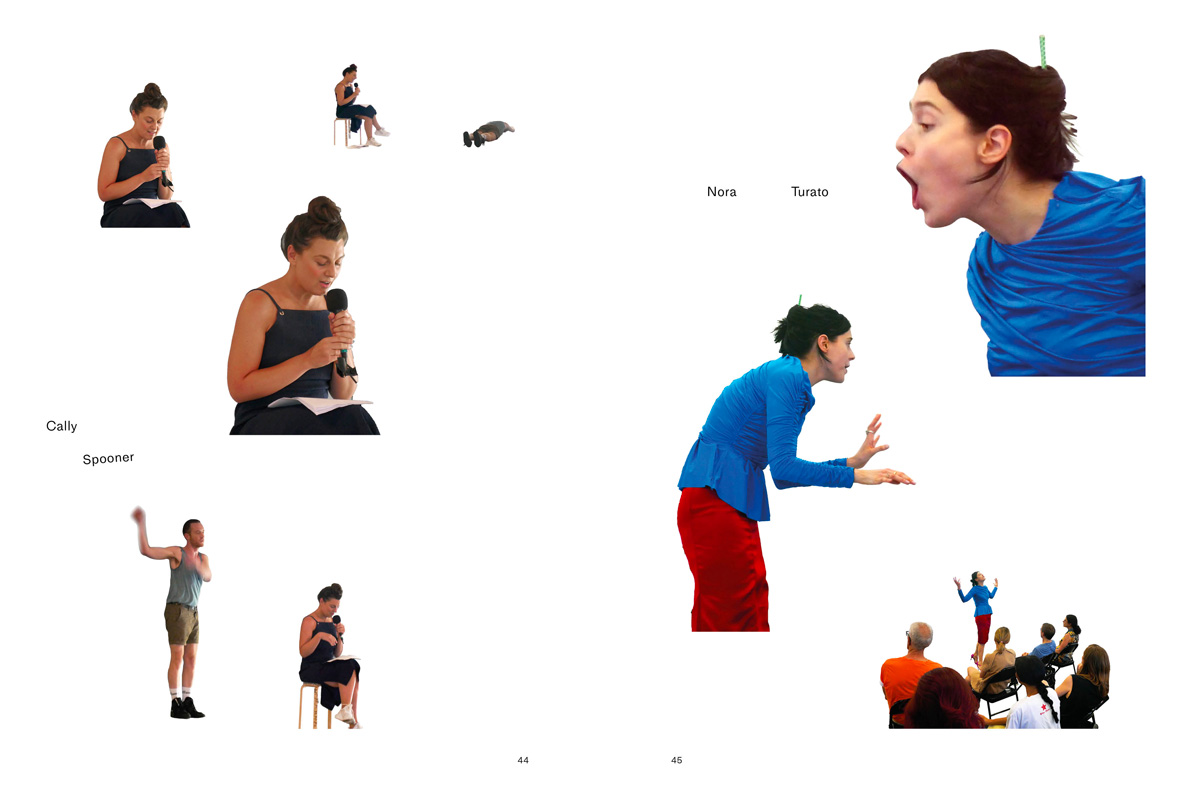
From Concrete to Liquid to Spoken Worlds to the Word explored the emancipation of language through historical and contemporary positions, from the earliest typographic and sound works of concrete poets to poetic experiments in the digital era. This diverse exhibition was accompanied by a series of readings, performances, and screenings revealing the porosity between art and poetry. Poetry readings and recitals in museums, performances centered on the importance of the text and its recitation, videos where poetic language takes on a role that rivals the visual component: the art of our time appears to be deeply and intimately rooted in words.
The program of the Centre d’Art Contemporain Genève, while tracing this link between word and image to the concrete poetry of the 1960s and ’70s, tried on the one hand to examine this renewed artistic interest in the word, and on the other to show how the web and social media are introducing new ways of making poetry. The underlying aim was to explore how art and poetry shape each other in an increasingly interconnected world through ongoing, rhapsodic communication.