This richly illustrated book considers the dazzling oeuvre of choreographer and dancer Marlene Monteiro Freitas. In line with her creative methodology, Alexandra Balona unfolds an “atlas of affects” through five emblematic dance pieces that reveal the intensity, humor, and humanity of one of today’s most radical choreographic voices.
Invited to present an exhibition at the Galleria Borghese in Rome, Kenyan-American artist Wangechi Mutu has developed an innovative approach to museum space, challenging hierarchy, permanence, and fixed meanings. With in-depth essays and a rich selection of illustrations, this catalog retraces that exhibition and explores the themes and concerns that have long characterized the artist’s practice.
Invitata a concepire una mostra alla Galleria Borghese, l’artista keniota-americana Wangechi Mutu ha sviluppato un approccio innovativo allo spazio museale, confrontandosi con le gerarchie, la permanenze e le sedimentazioni del contesto. Attraverso saggi approfonditi e una ricca selezione di illustrazioni, questo catalogo ripercorre la mostra ed esplora i temi e le preoccupazioni che da tempo caratterizzano la pratica dell’artista.
A visual notebook of the screenshots taken by Yngve Holen over the past five years or so, 6G—the anticipated next phase of network technology—is a peculiarly sized artist’s book, a glossy non-linear agglomeration that reflects the intersections of production, life, and digital debris.
Conceived as a visual résumé, the book provides a comprehensive overview of Posenenske’s solo exhibitions and a record of her numerous group shows. Featuring an essay by curator Erlend Hammer on the role of documentary photographs in the circulation of works of art, it was published in conjunction with the eponymous show at the Haugar Art Museum in Tønsberg.
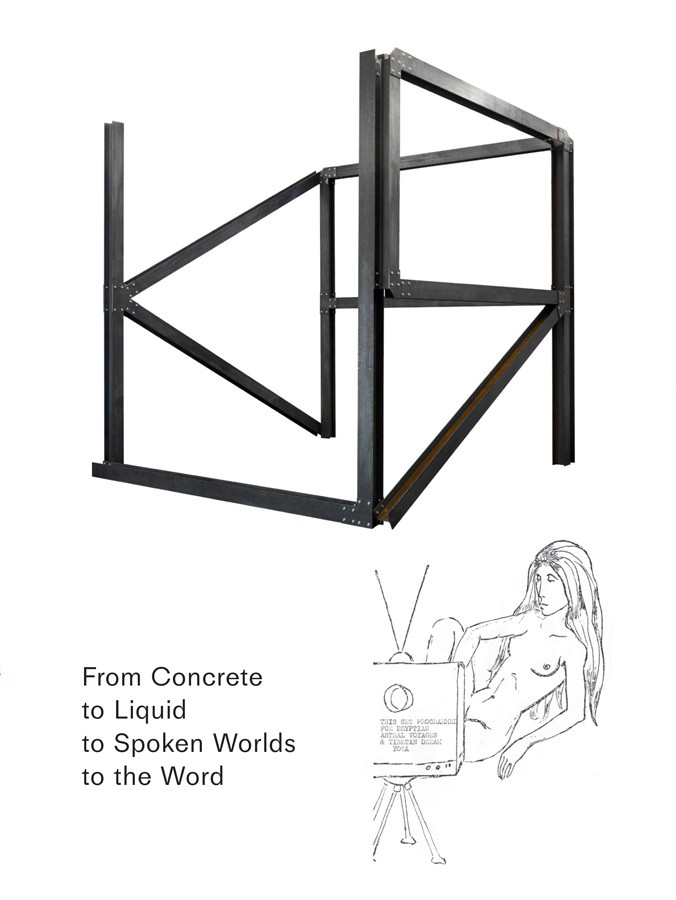
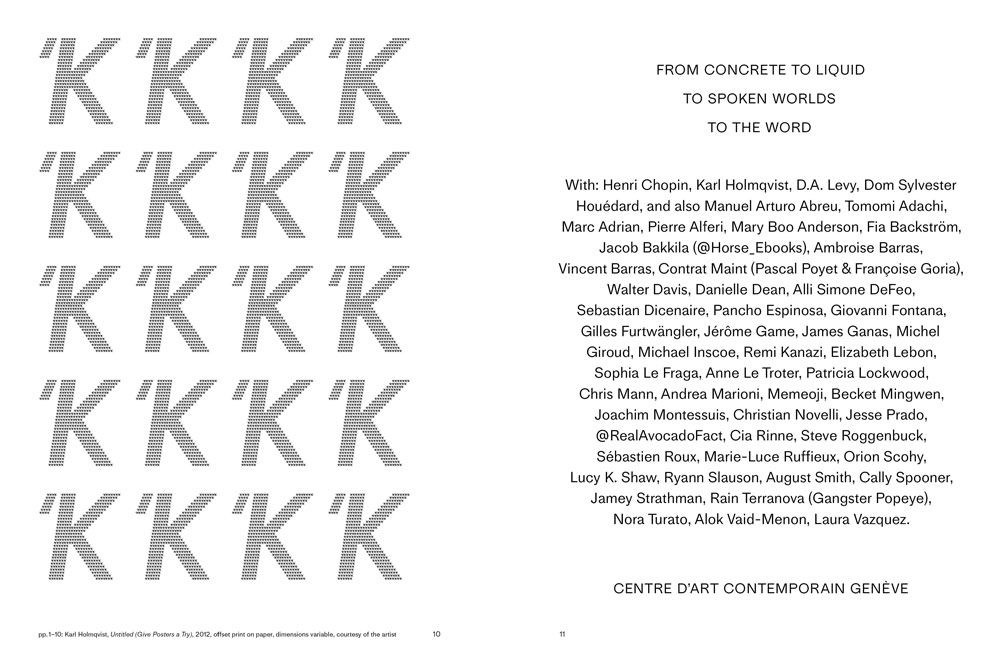
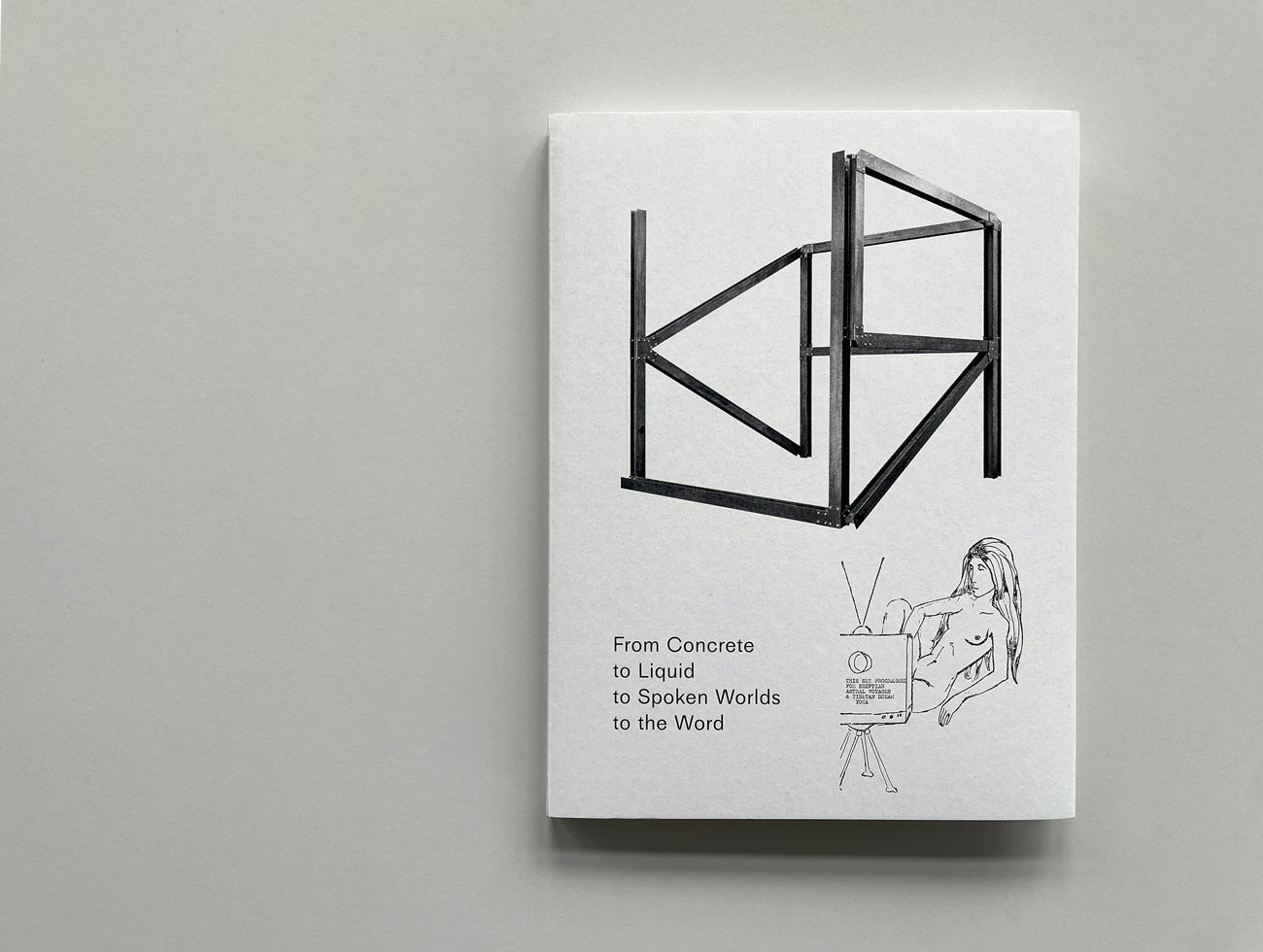
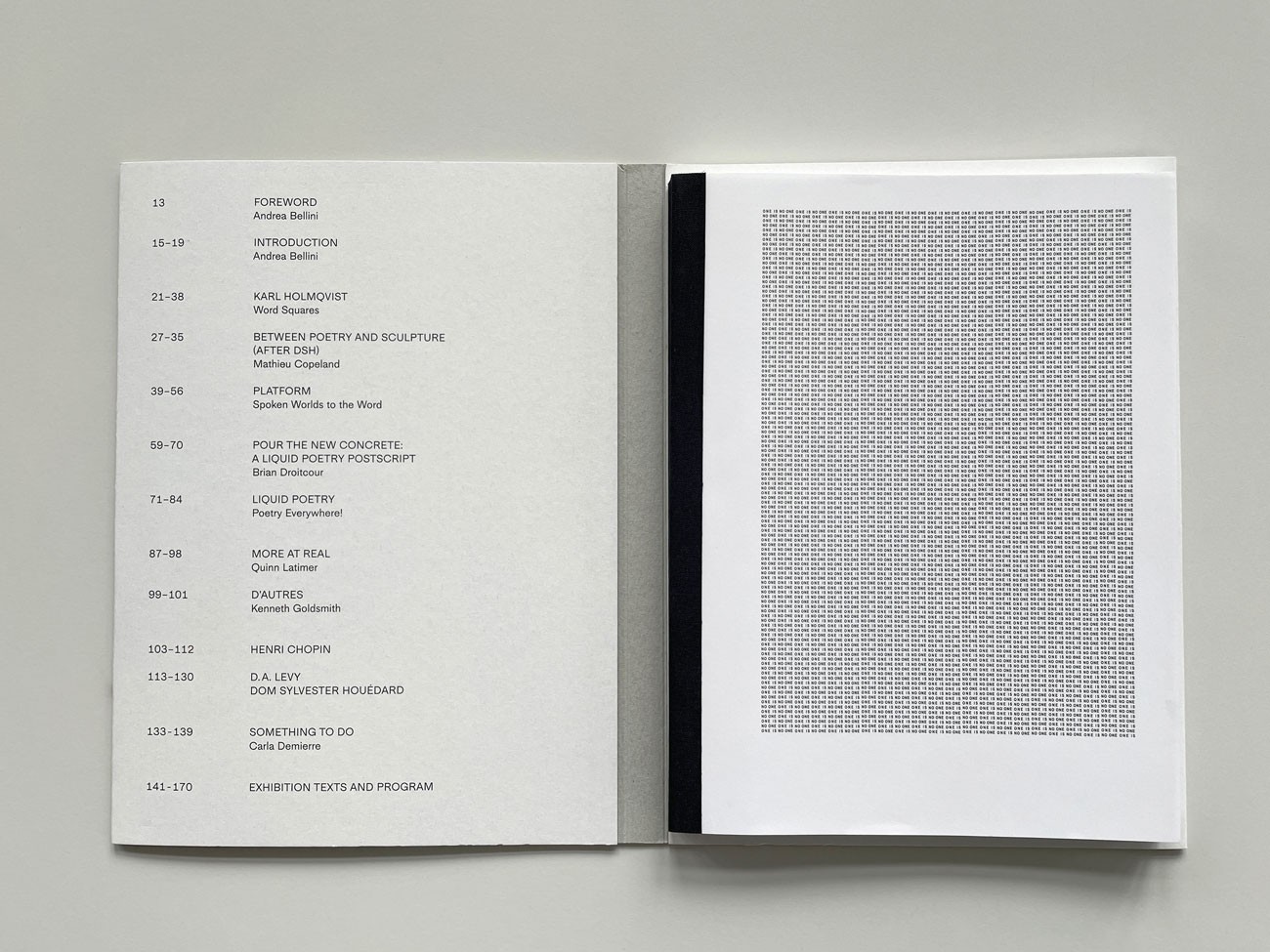
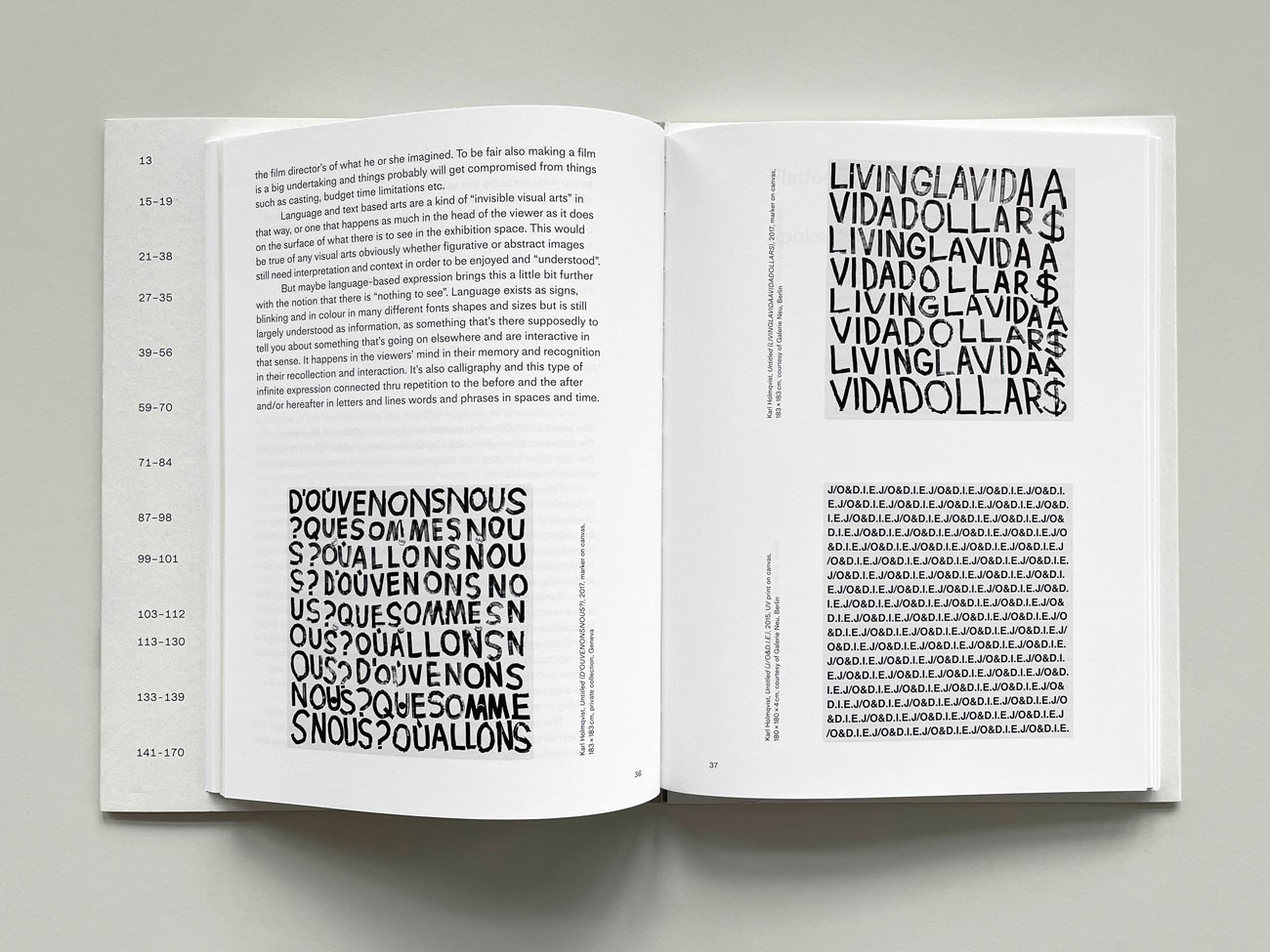
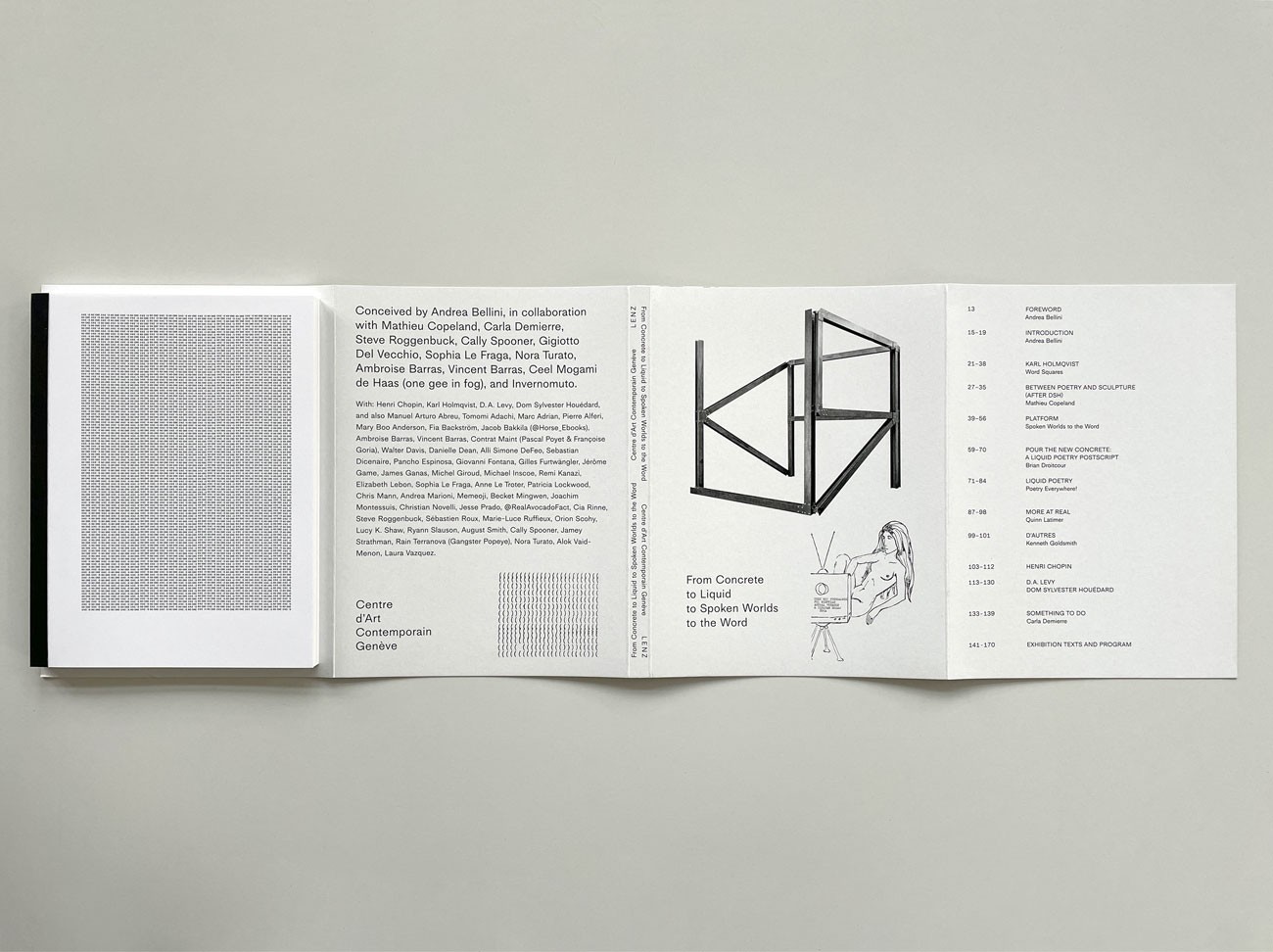
From Concrete to Liquid to Spoken Worlds to the Word
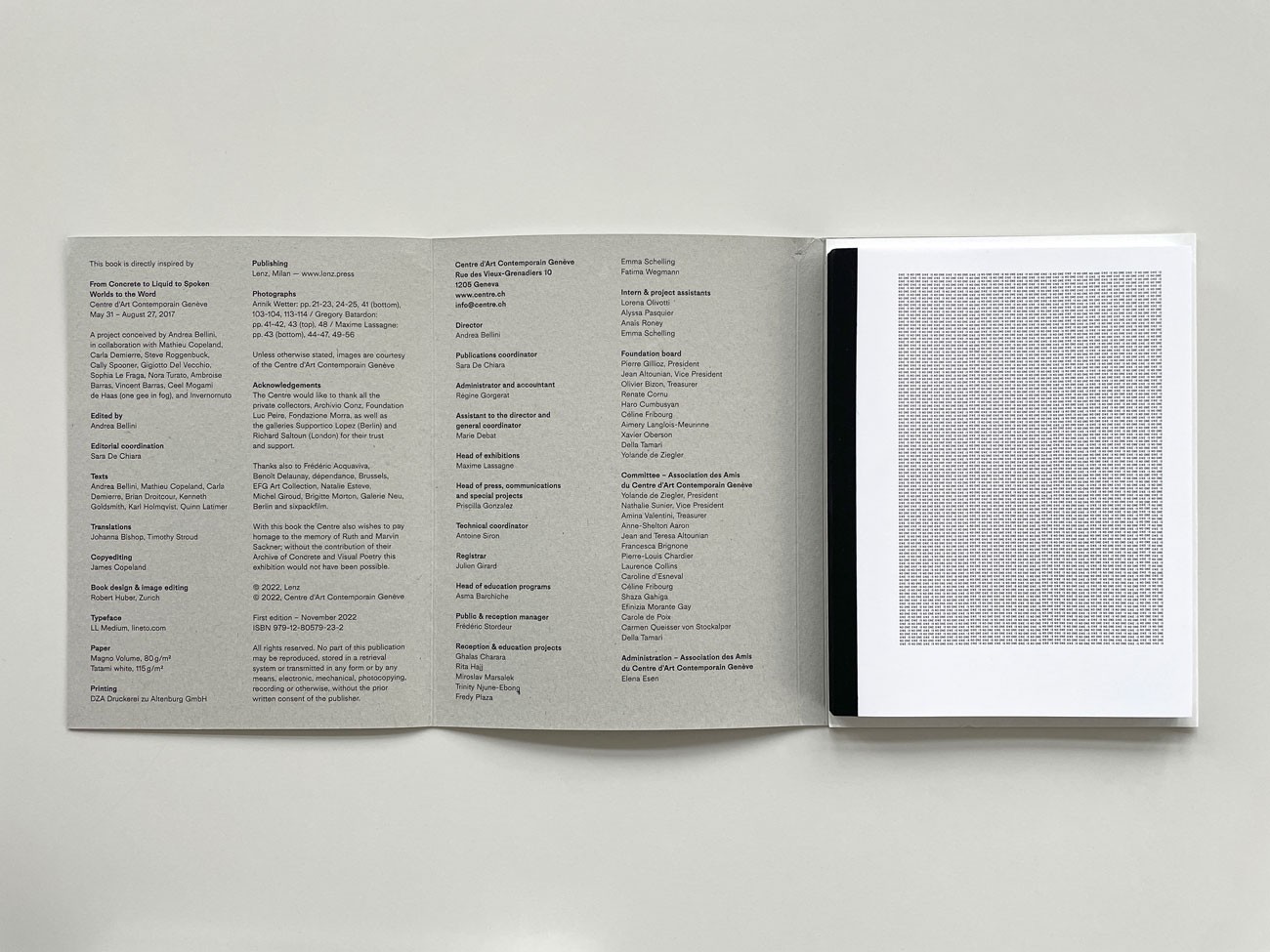
Edited by Andrea Bellini
Texts by Andrea Bellini, Mathieu Copeland, Carla Demierre, Brian Droitcour, Karl Holmqvist, Kenneth Goldsmith and Quinn Latimer
Design by Robert Huber
2022, English, softcover, 178 pages, 16.9 x 22.4 cm
ISBN 979-12-80579-23-2
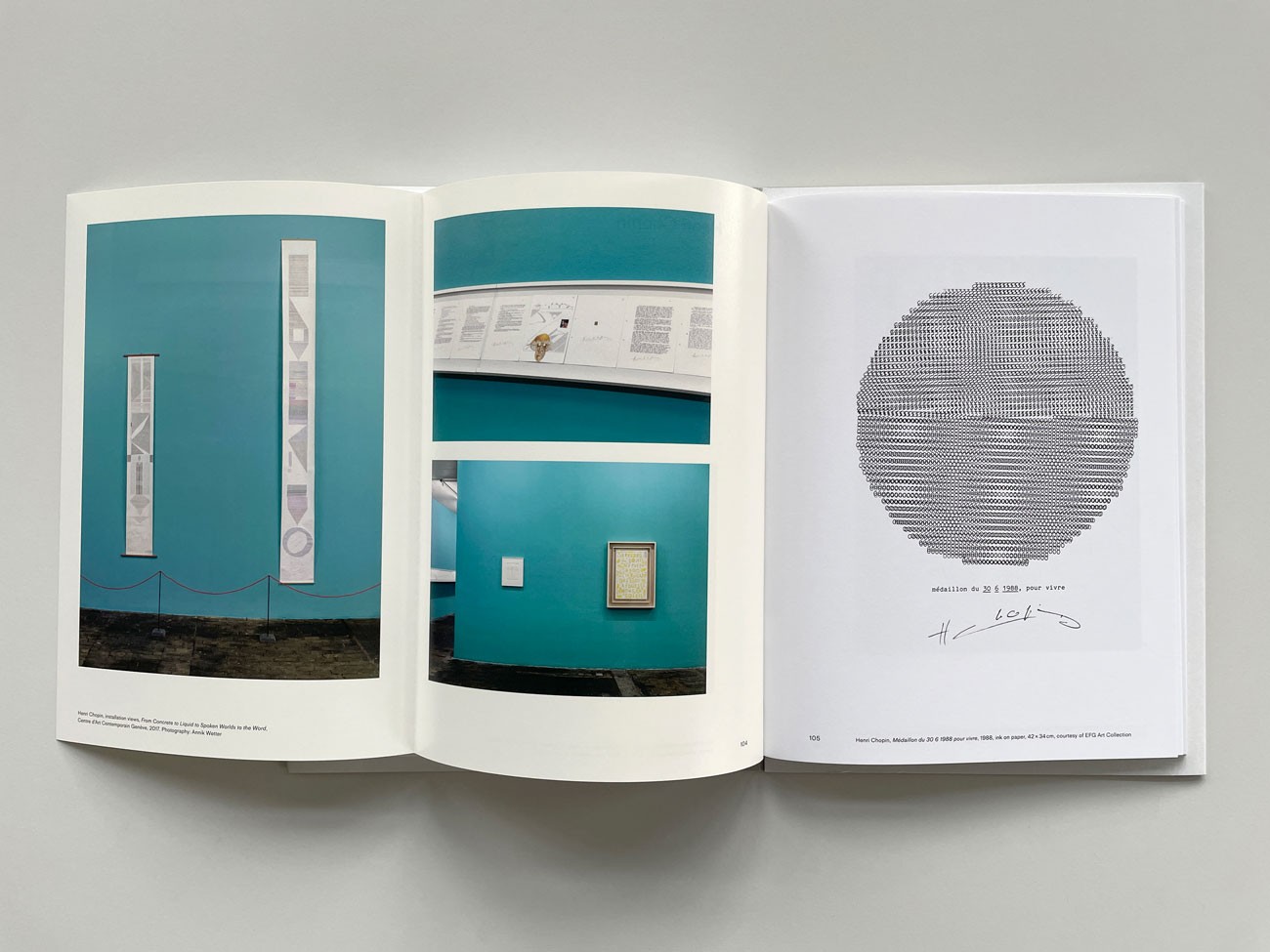
Five years after the exhibition From Concrete to Liquid to Spoken Worlds to the Word, and after a disastrous pandemic, the Centre d’Art Contemporain Genève presents the catalogue for this complex, ambitious project. Even at such a remove, we thought it was important to retrace the fundamental stages of this event through critical essays, images of the works and installations, and the calendar of performances and poetry readings. The reason is simple: despite the undeniable weight of images in today’s world, a keen interest in writing — rather surprisingly — has recently become a hallmark of many young artists’ work. They use writing as a tool to understand the world and as the cornerstone of a critical method, analyzing the present and creating a performative, politically engaged language.
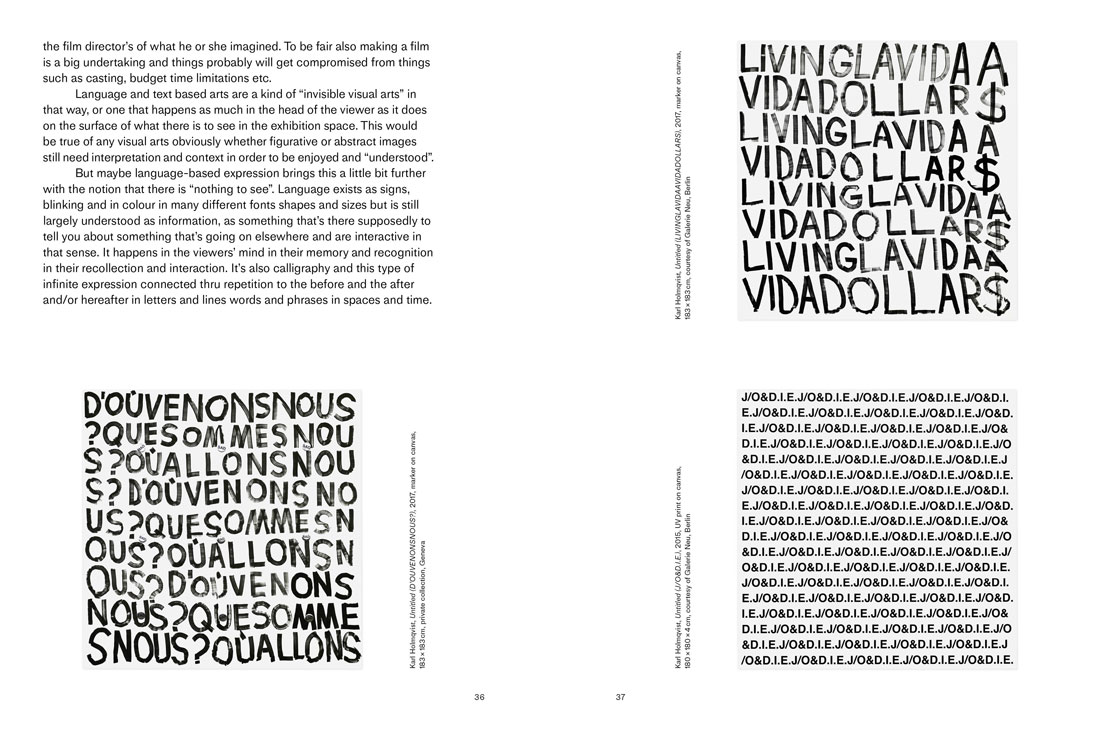
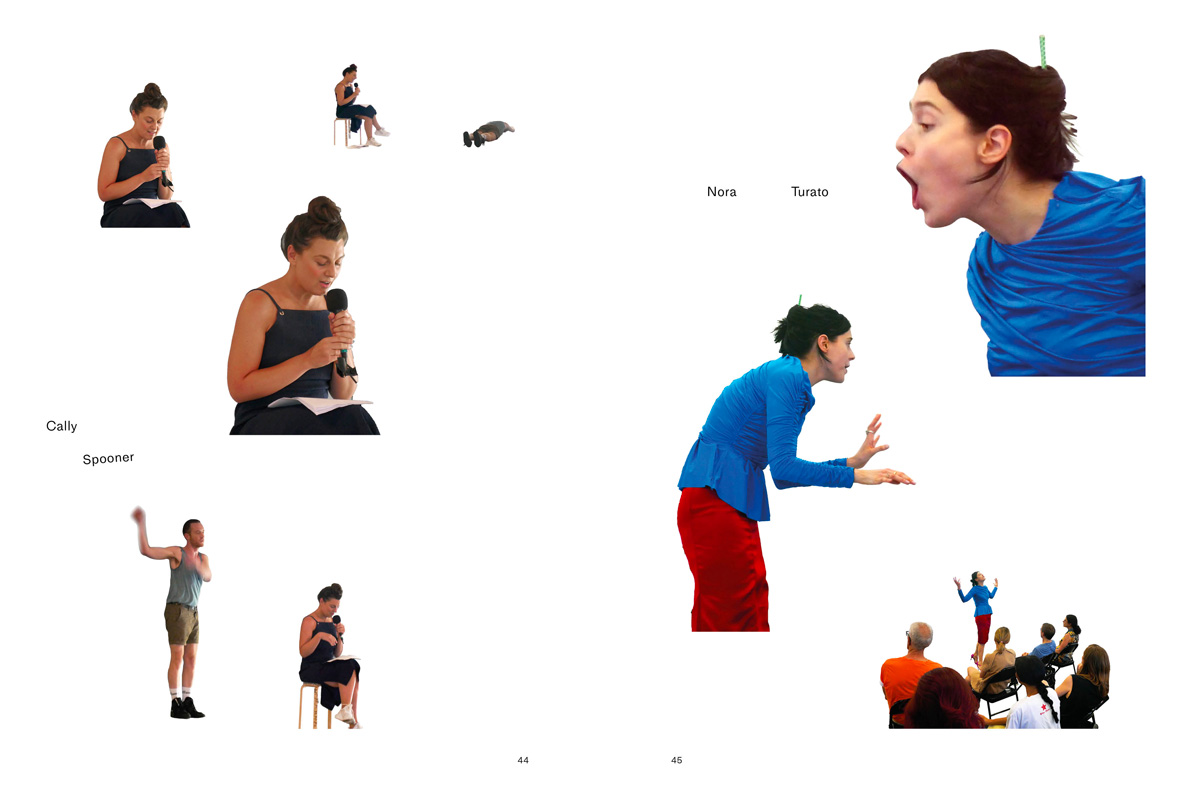
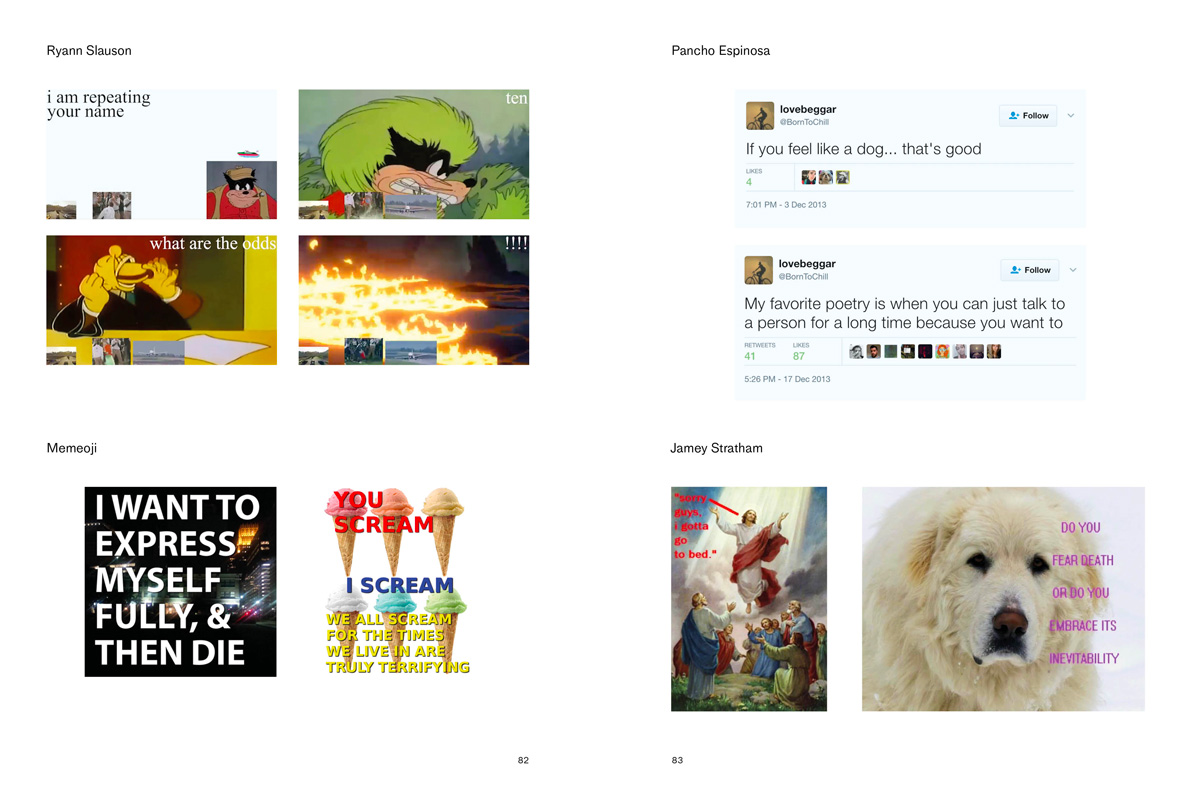
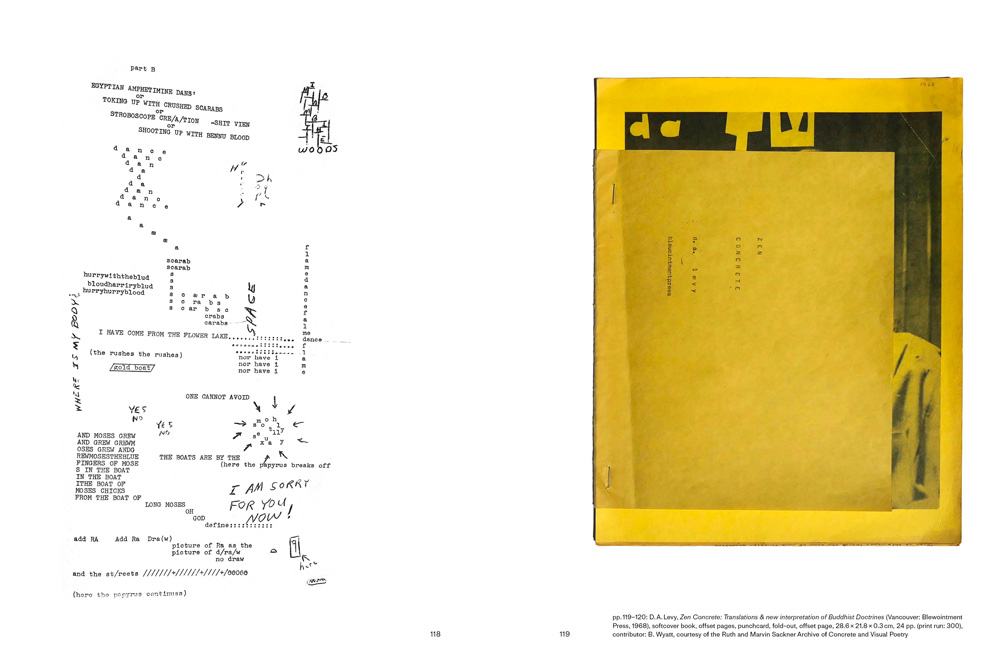
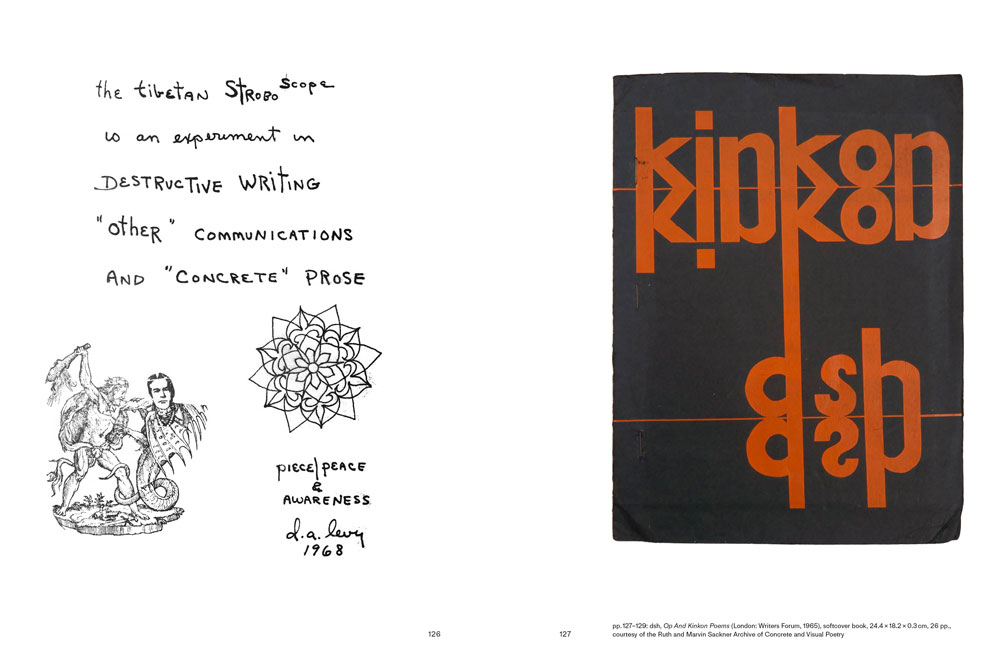
From Concrete to Liquid to Spoken Worlds to the Word explored the emancipation of language through historical and contemporary positions, from the earliest typographic and sound works of concrete poets to poetic experiments in the digital era. This diverse exhibition was accompanied by a series of readings, performances, and screenings revealing the porosity between art and poetry. Poetry readings and recitals in museums, performances centered on the importance of the text and its recitation, videos where poetic language takes on a role that rivals the visual component: the art of our time appears to be deeply and intimately rooted in words.
The program of the Centre d’Art Contemporain Genève, while tracing this link between word and image to the concrete poetry of the 1960s and ’70s, tried on the one hand to examine this renewed artistic interest in the word, and on the other to show how the web and social media are introducing new ways of making poetry. The underlying aim was to explore how art and poetry shape each other in an increasingly interconnected world through ongoing, rhapsodic communication.