O livro, lançado por ocasião da exposição homónima no CAM – Centro de Arte Moderna Gulbenkian, em Lisboa, explora as convergências nas obras de Paula Rego (Lisboa, 1935 – Londres, 2022) e Adriana Varejão (Rio de Janeiro, 1964), apesar de pertencerem a gerações e contextos distintos.
The future of architecture lies in the curatorial approach. This is the thesis put forward by architect Wilfried Kuehn and theorist Dubravka Sekulić in their book, which brings together contributions from more than 30 authors working in the fields of architecture, art, and curatorial knowledge and practice.
Emanuele Coccia describes the radical creative freedom inscribed in Ernesto Neto’s practice, analyzing the workings of the Brazilian artist’s pieces of living architecture. Art on Earth is the third book in a series of short essay collections inspired by the site-specific projects conceived for GAMeC at Palazzo della Ragione.
First Meeting is the first monograph on Argentinian artist Santiago de Paoli. From his early, experimental projects to his most recent explorations, the book delves into his innovative approach of painting on unconventional materials. The book features commissioned essays by Fernanda Brenner and Mariano Mayer, as well as a conversation between Christian Rattemeyer and the artist.
Infinite Memory is Caroline Poggi and Jonathan Vinel’s first monograph, co-published with Fondation Cartier pour l’art contemporain and Lenz. Like a memory card, the book stores information about a selection of films from the initial decade of the artists’ practice. Considered as an object, much like a piece of hardware that stores digital memory, the book offers the possibility to scroll infinitely, with no beginning or end.
Through the words of the sound artist and theorist Brandon LaBelle, the book explores the social and relational component of sound that gave rise to Benevolence, the site-specific project by Sonia Boyce. The Joy of Cacophony is the second book in a series of essay collections inspired by the site-specific projects conceived for GAMeC at Palazzo della Ragione.
Edited by di Cloé Perrone
Texts by Adrienne Edwards, Ekow Eshun, Francesco Freddolini, Wangechi Mutu, Cloé Perrone, Ilaria Puri Purini
Designed by Lorenzo Mason Studio
2025, English, hardcover, 30 x 24 cm, 202 pages
ISBN 979-12-80579-80-5
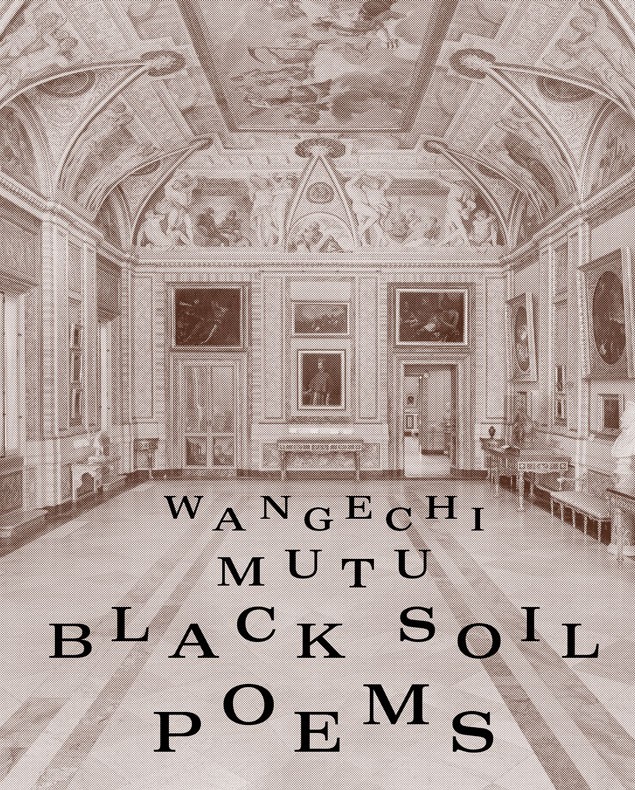
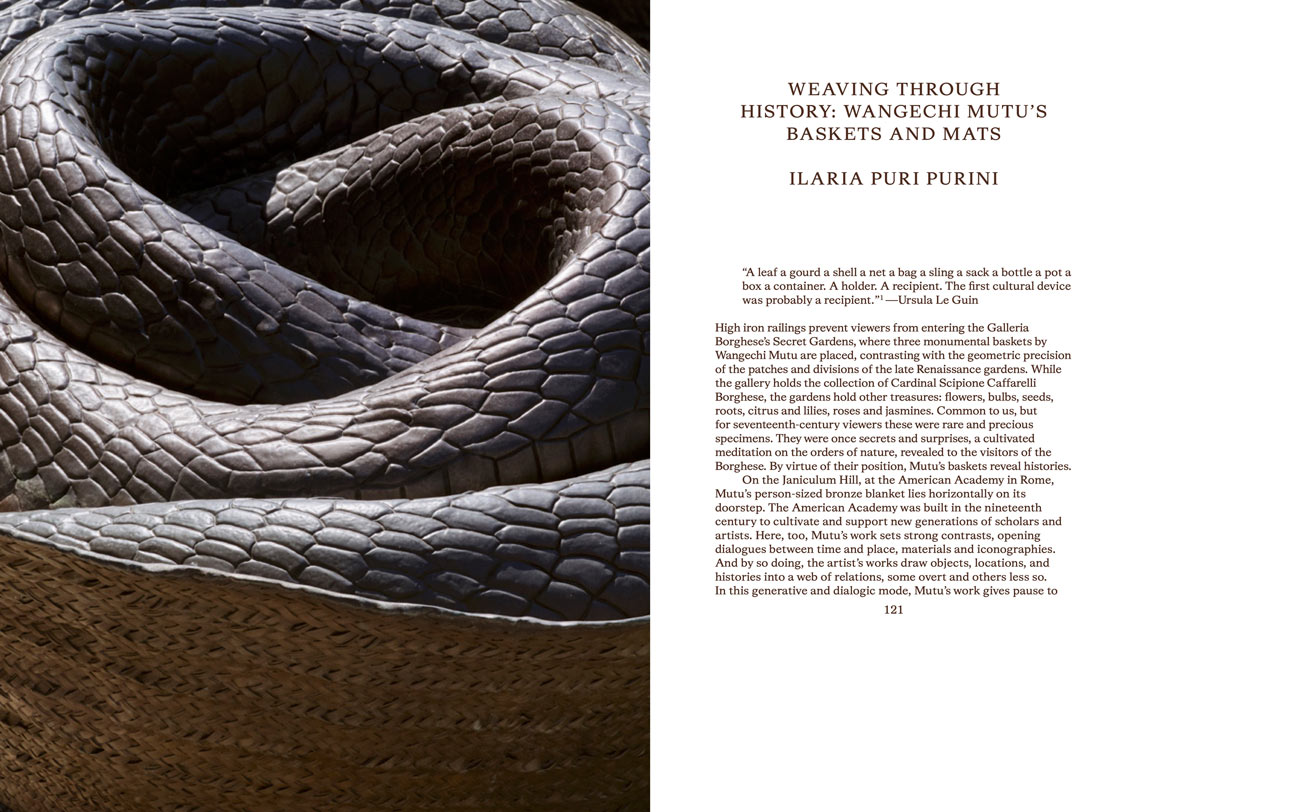
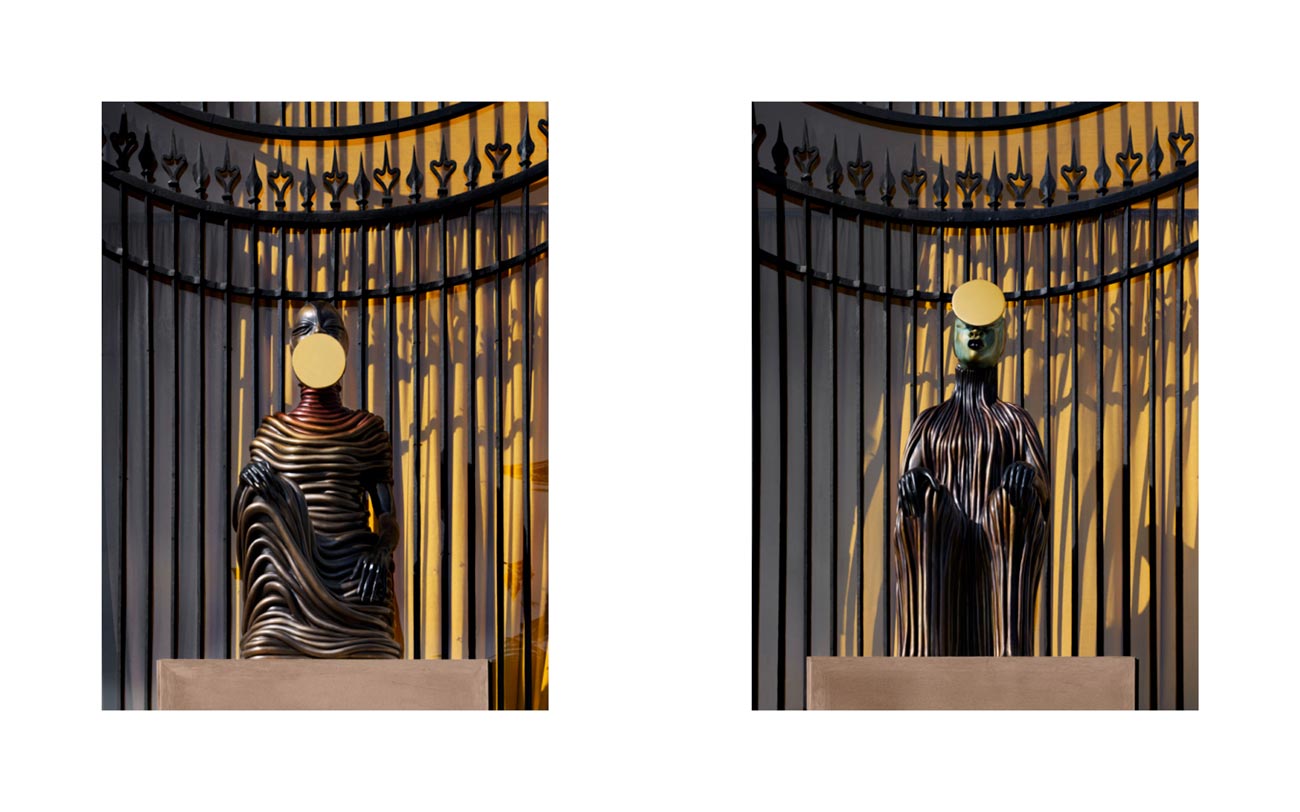
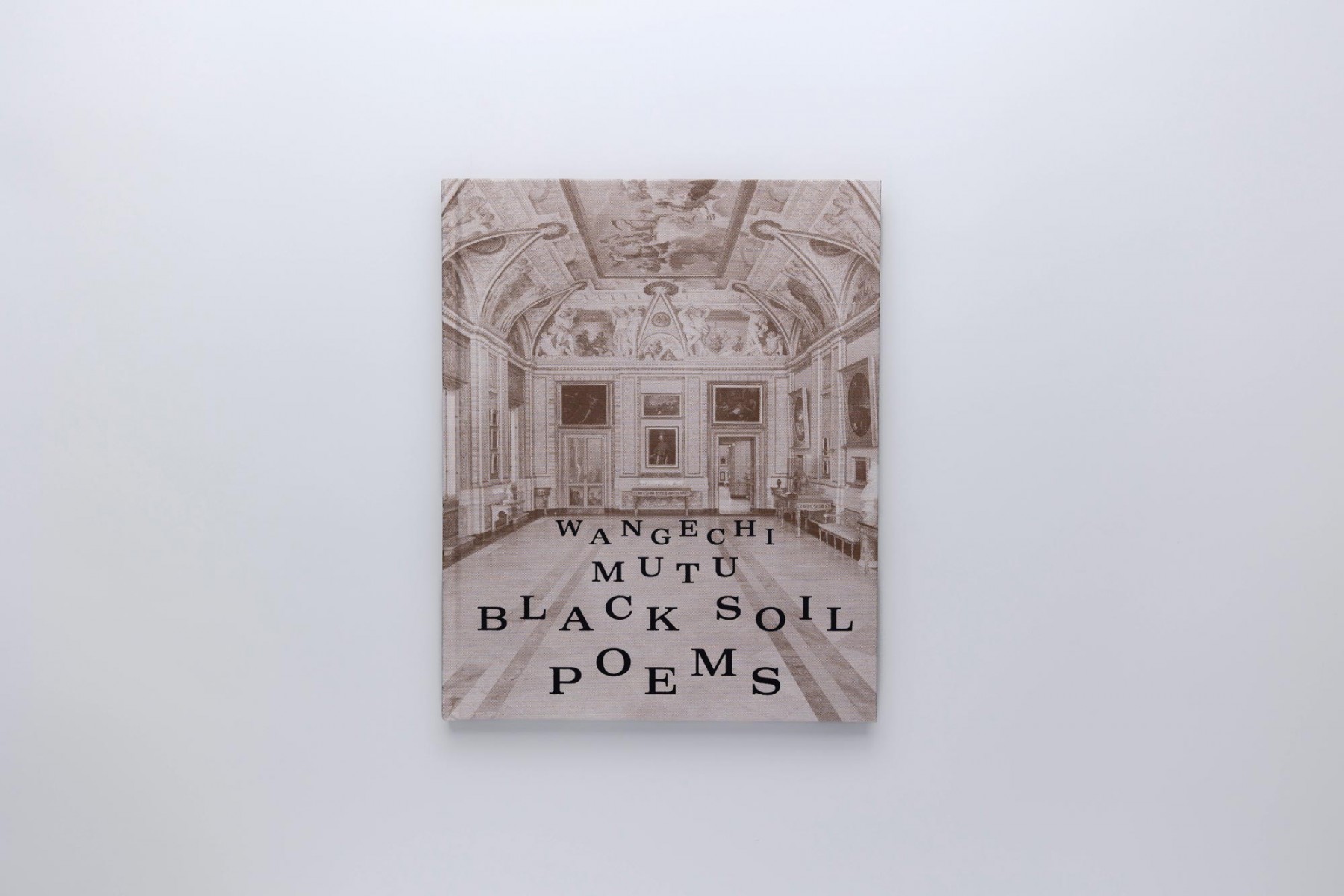
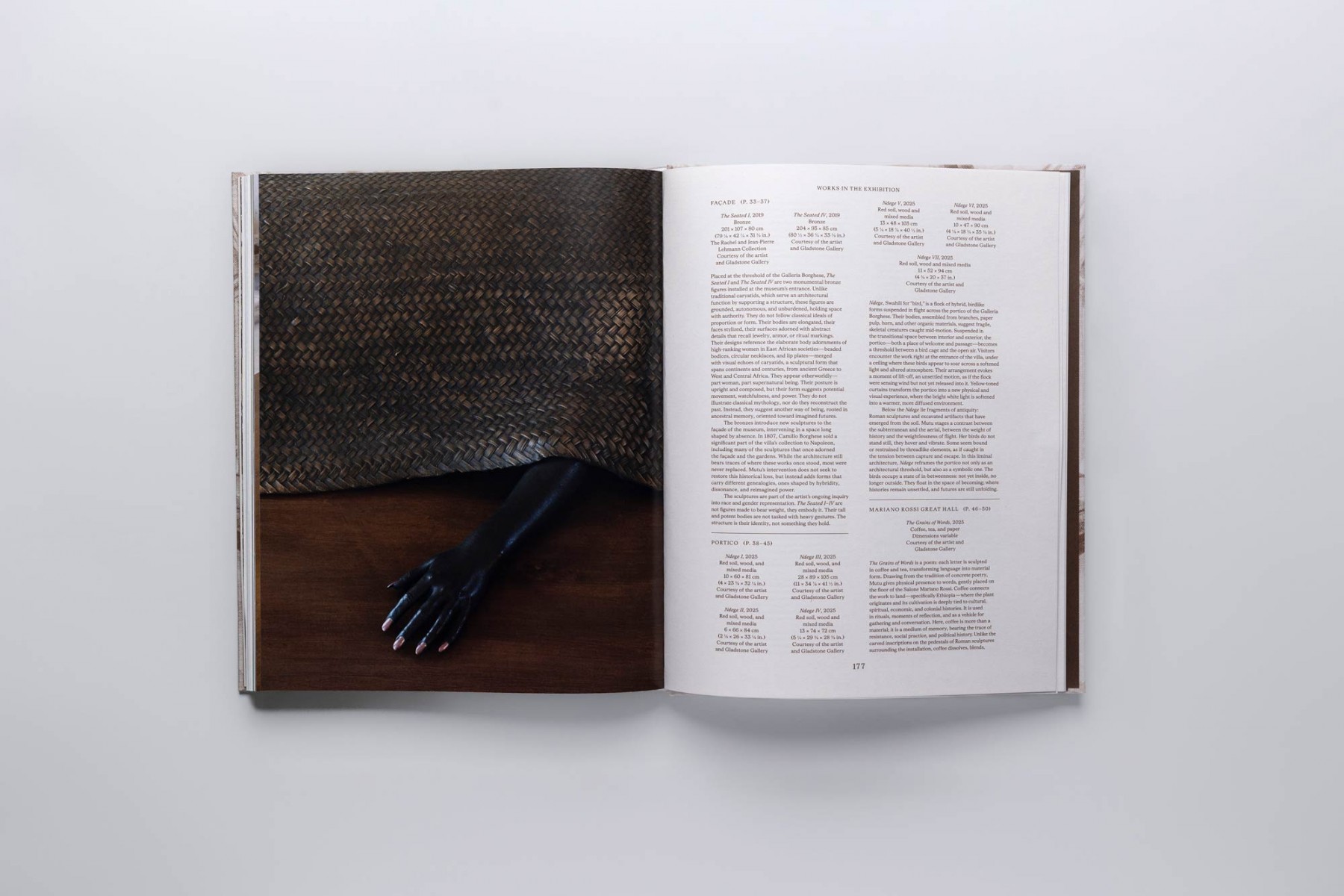
The title of this rich publication, published on the occasion of the solo exhibition of the Kenyan-American artist Wangechi Mutu at the Galleria Borghese—the first time in the century-old history of the Villa for a living female artist—evokes the dual nature of Mutu’s practice: poetic and mythological, yet deeply connected to contemporary social and material contexts. “Black soil”—rich and malleable under the rain, almost like clay—appears across multiple geographies, including the Secret Gardens of the Galleria, which resonate with the artist’s imagination. From this soil, the sculptures seem to emerge, as if molded by a primordial force, giving shape to stories, myths, memories, and poems. The metaphor underscores the generative and transformative power of her work: rooted in materiality, yet open to multiple future interpretations.
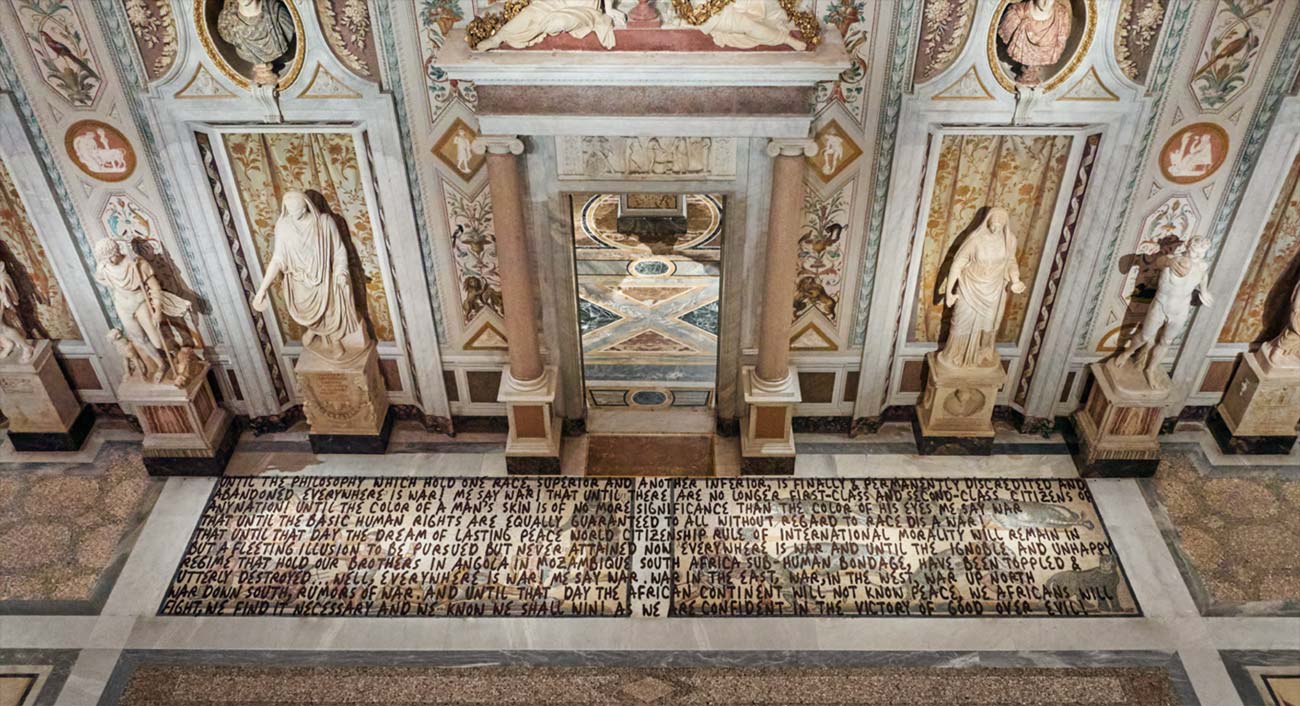
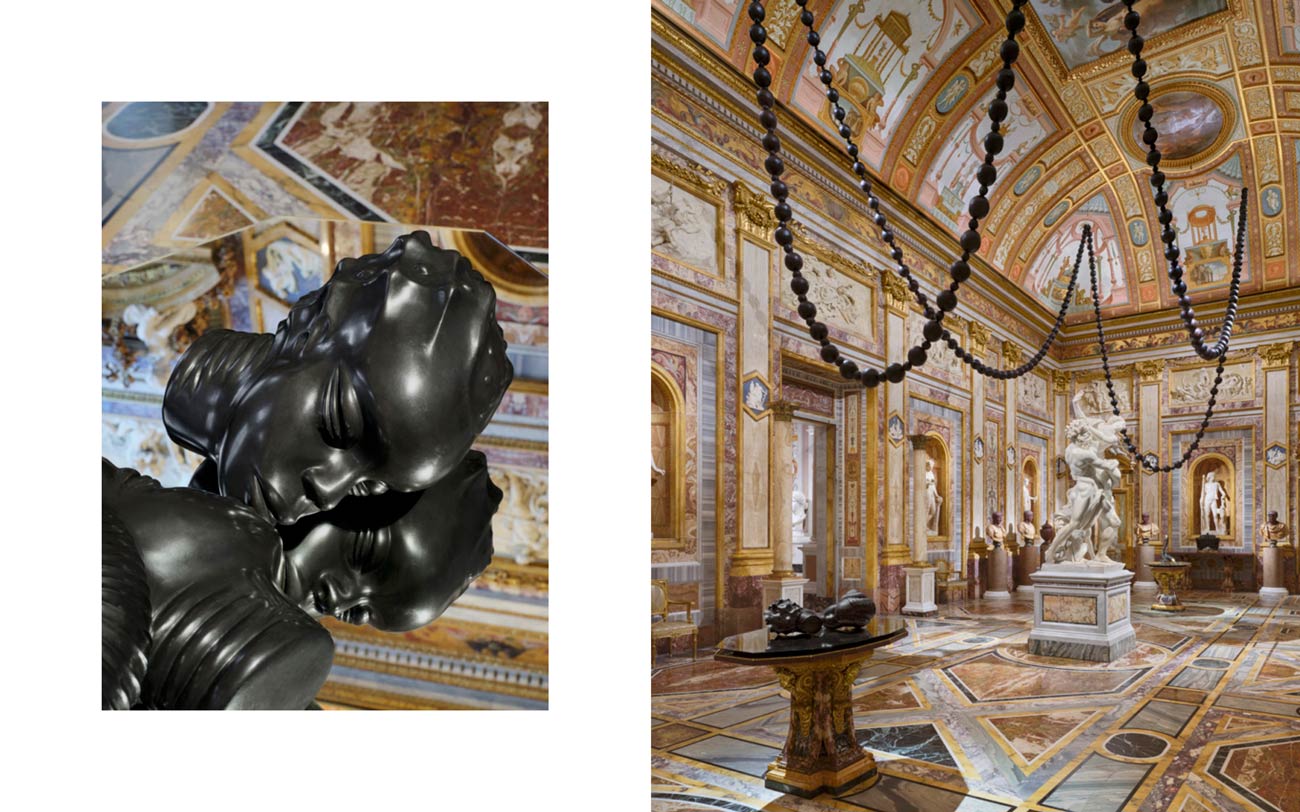
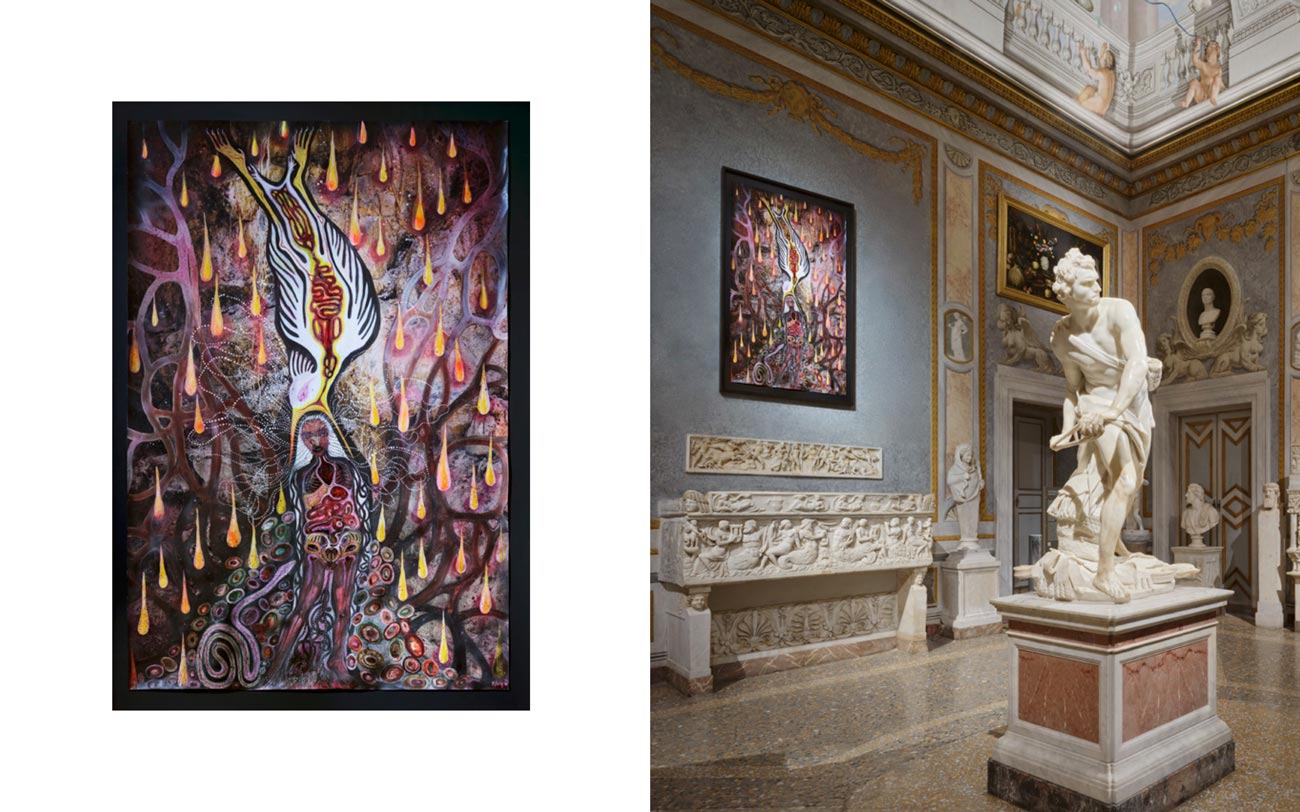
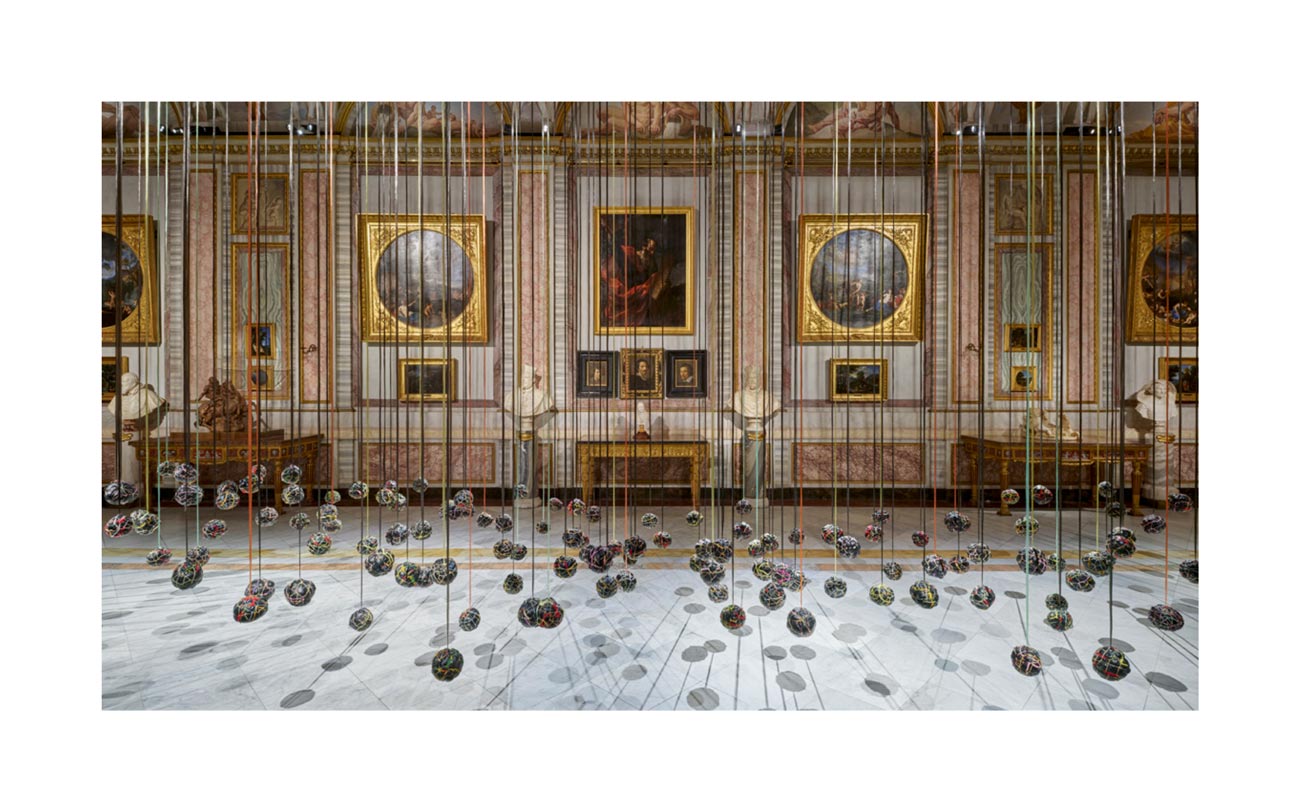
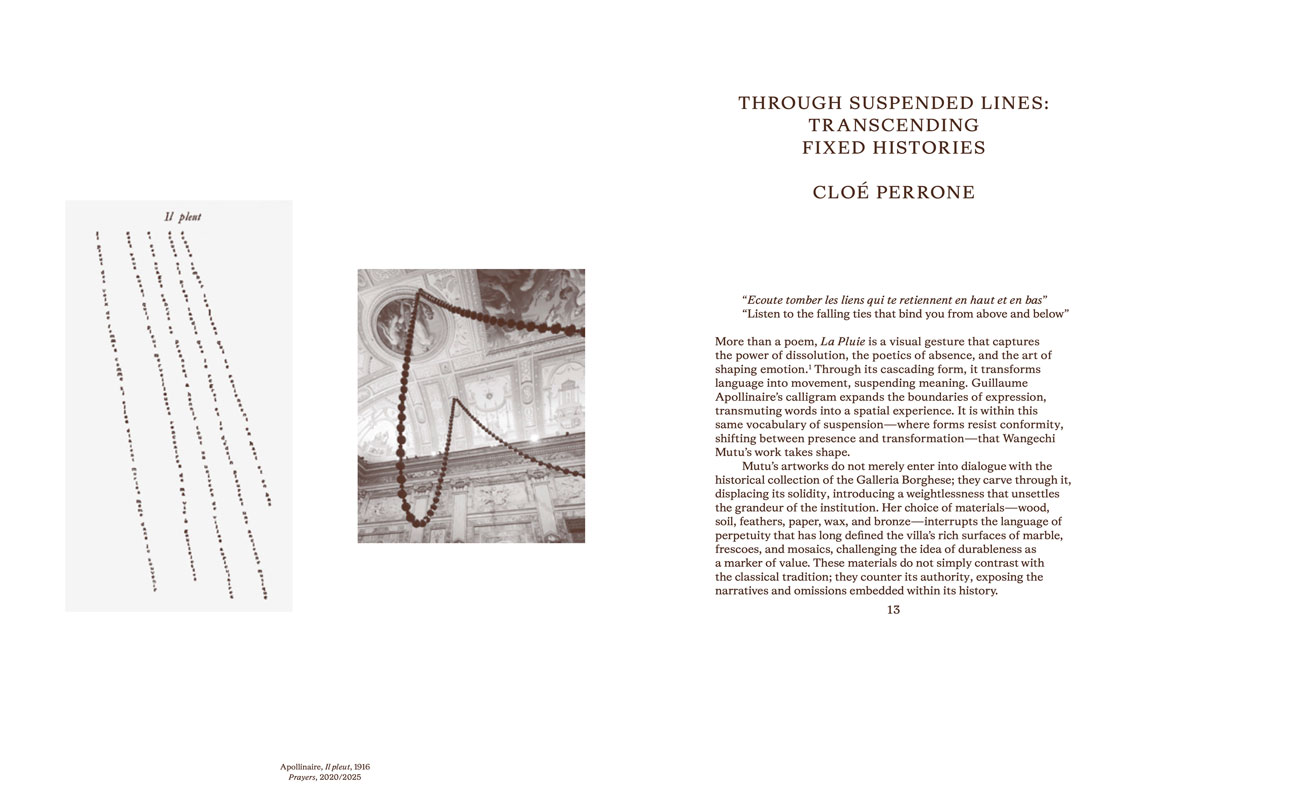
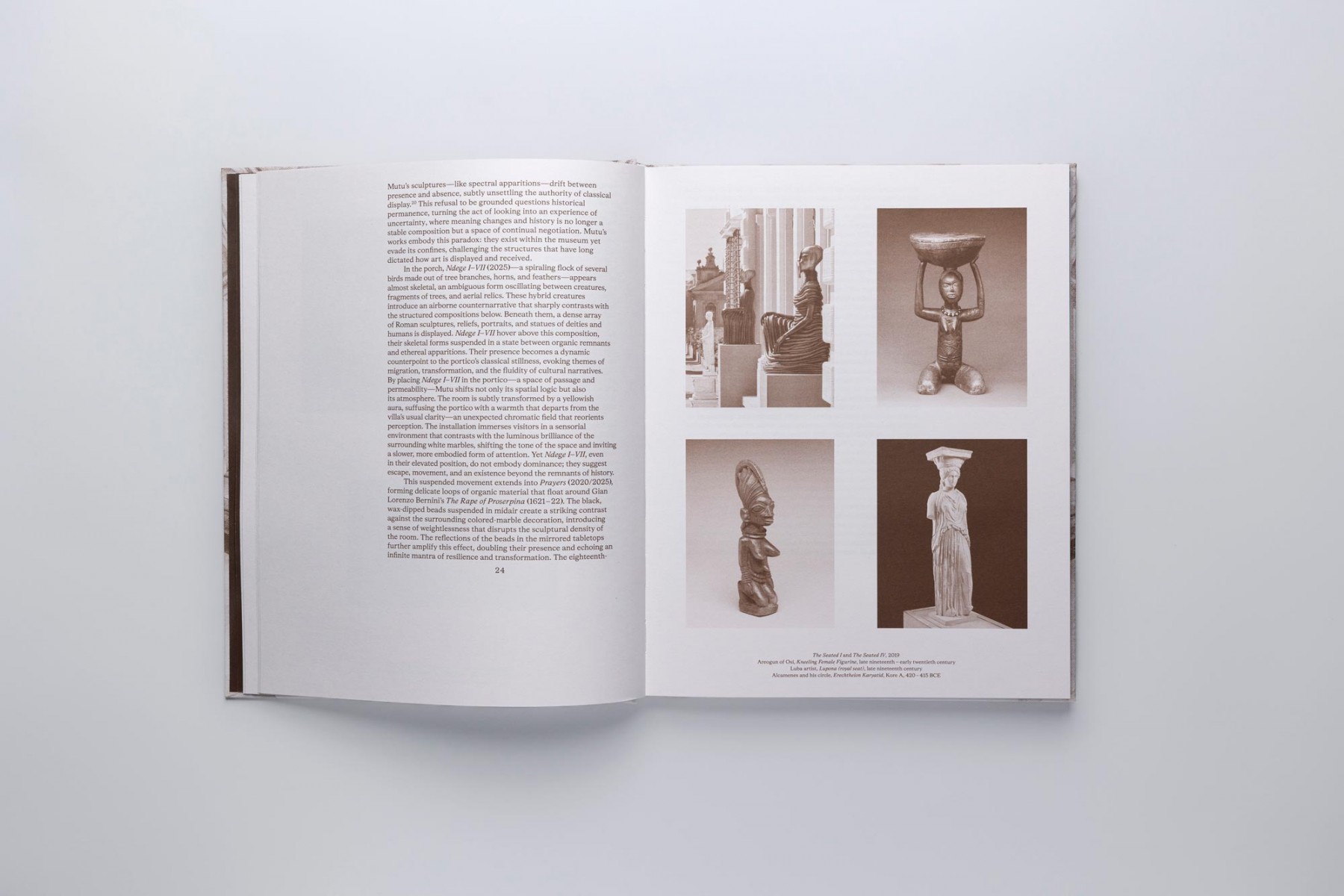
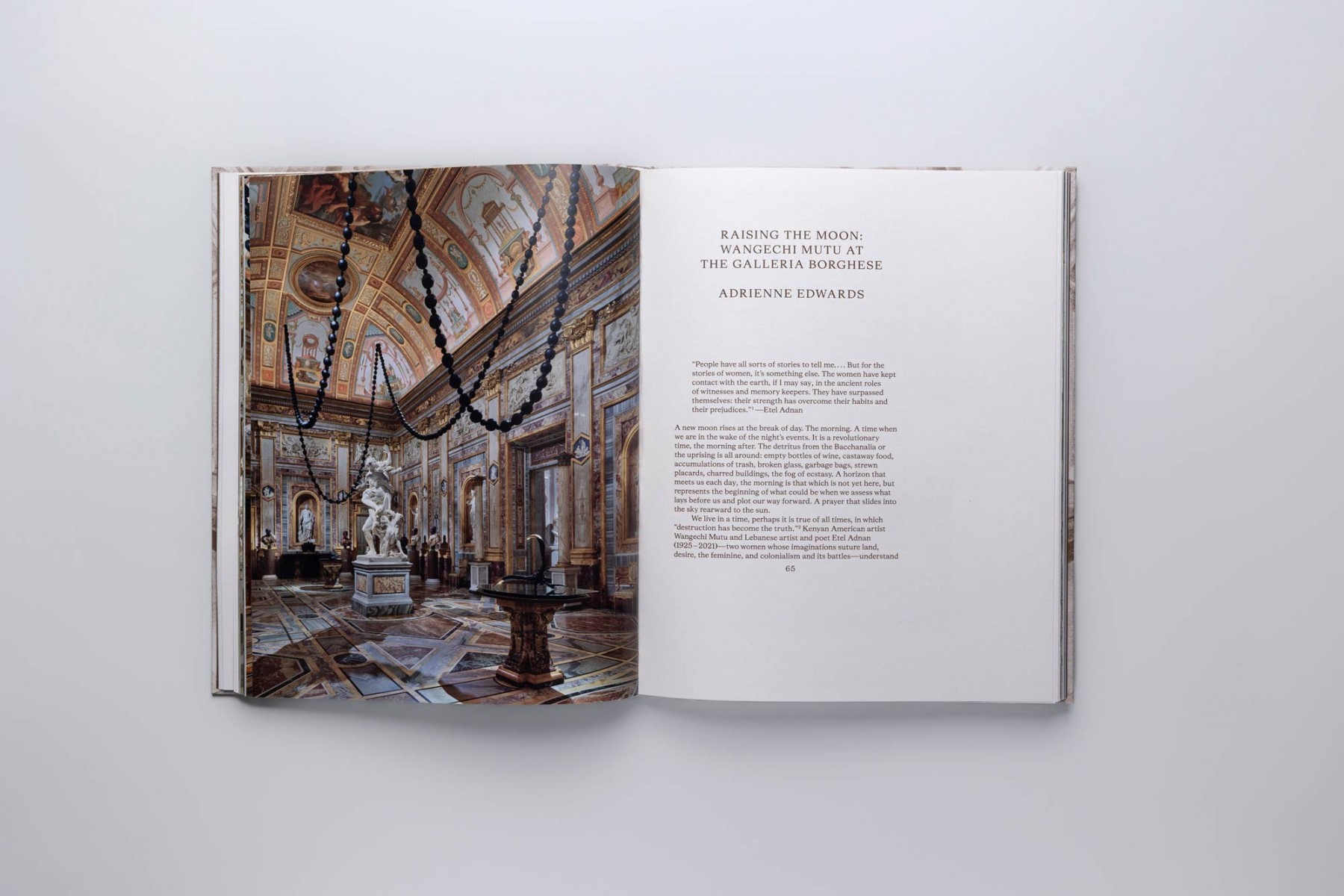
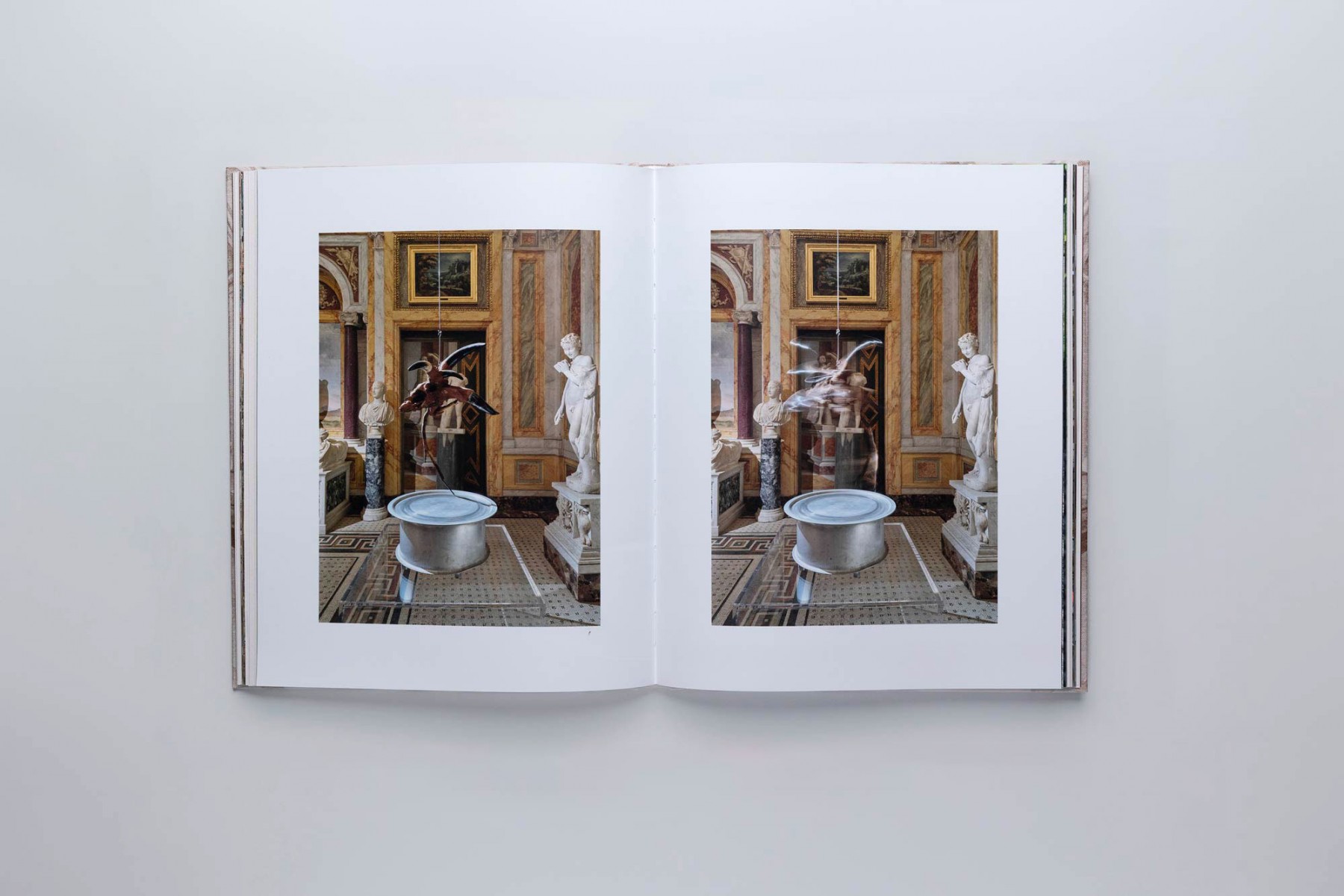
Wangechi Mutu’s intervention introduces a new vocabulary into the historical and symbolic architecture of the Galleria Borghese. Through sculpture, installation, and moving image, the artist proposes an innovative approach to the museum space—one that challenges hierarchy, permanence, and fixed meaning. Her works question the visual weight and authority of the collection through strategies of suspension, fluidity, and fragmentation. In doing so, the museum is no longer presented as a static container of objects, but as a living organism, in continuous transformation, shaped by loss, adaptation, and reconfiguration.
Accompanied by a text by curator Cloé Perrone analyzing the context and themes that informed the exhibition’s conception, the volume is enriched by four additional essays by Adrienne Edwards, Ekow Eshun, Francesco Freddolini, and Ilaria Puri Purini, as well as a conversation between Eshun and the artist. A rich selection of illustrations allows the readers to retrace the exhibition, which unfolded in the Gallery’s sumptuous rooms and gardens, all the way to its extramural presence at the American Academy.