This compelling artist’s book is built around KOOL (“cabbage” in Dutch), an original font designed by Reus, somewhere between a plant alphabet and concrete poetry. The publication draws on the type specimen book tradition to present new typefaces.
Through a rich selection of images, this artist’s book, published in two editions—gold and silver—explores the birth, life and death of Francesco Gennari’s work Vorrei perdermi e non trovarmi più, 2022, exhibited for the first time at the Ciaccia Levi Gallery in Paris.
Through a rich selection of images, this artist’s book, published in two editions—gold and silver—explores the birth, life and death of Francesco Gennari’s work Vorrei perdermi e non trovarmi più, 2022, exhibited for the first time at the Ciaccia Levi Gallery in Paris.
This richly illustrated publication combines artwork, archival and process imagery, and includes an extended interview with the artist, as well as new essays by key thinkers in the fields of anthropology, philosophy, political economy and art history.
In the first monograph on the feminist conceptual artist collective Claire Fontaine, political theorist and somatic practitioner Anita Chari explores the artist’s theoretical and political innovations to illuminate a more haptic, embodied approach to the practice of critical theory.
Shahryar Nashat inserts his art in the pages of this new artist’s book, which takes the form of a catalogue-turned-manual: but instead of explaining its meaning, he strips it of its aura, flaunts its nature as an object and describes step-by-step how to create it.
Edited by Lorenzo Giusti and Valentina Gervasoni
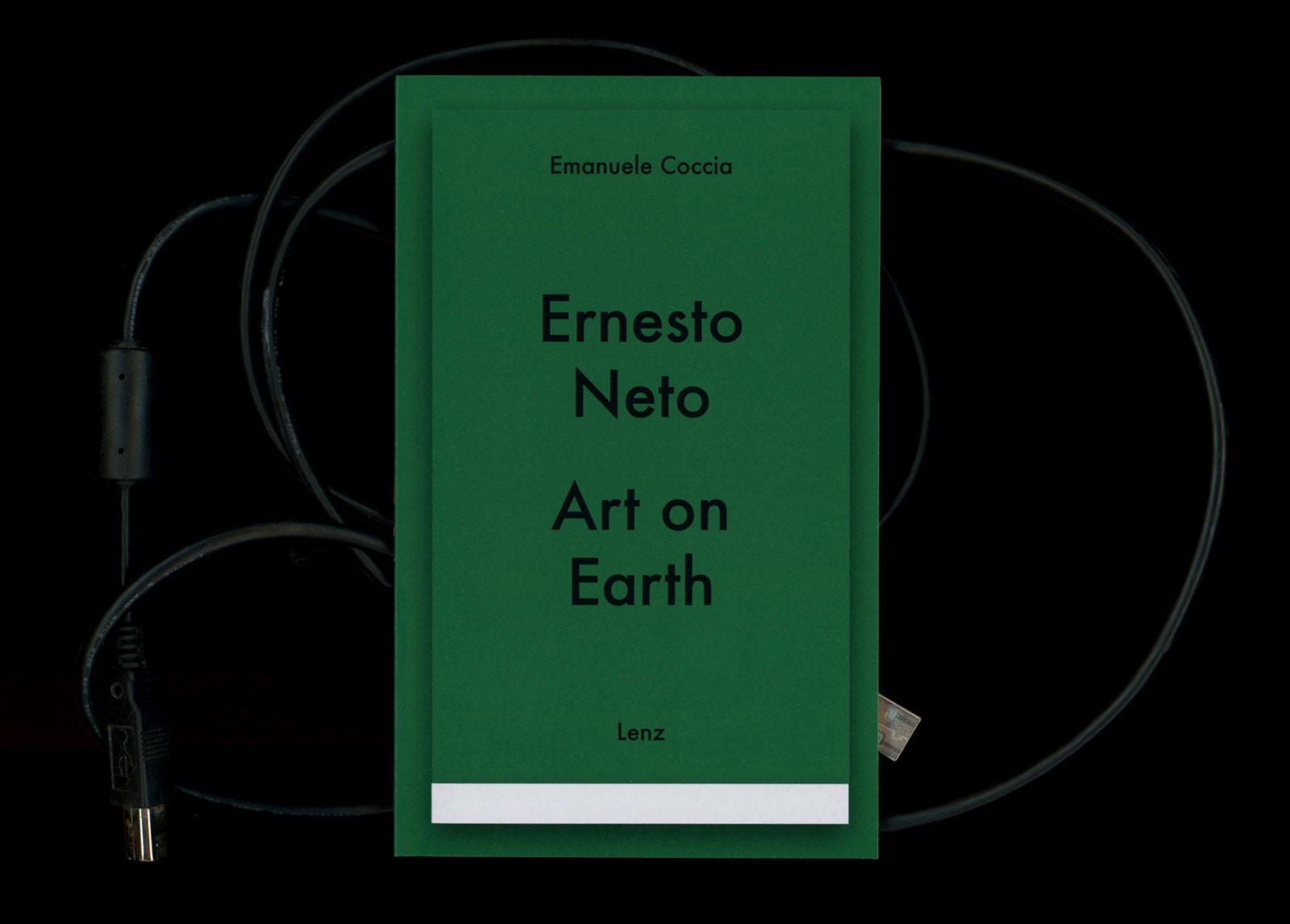
Texts by Emanuele Coccia and Ernesto Neto
Designed by Lorenzo Mason Studio
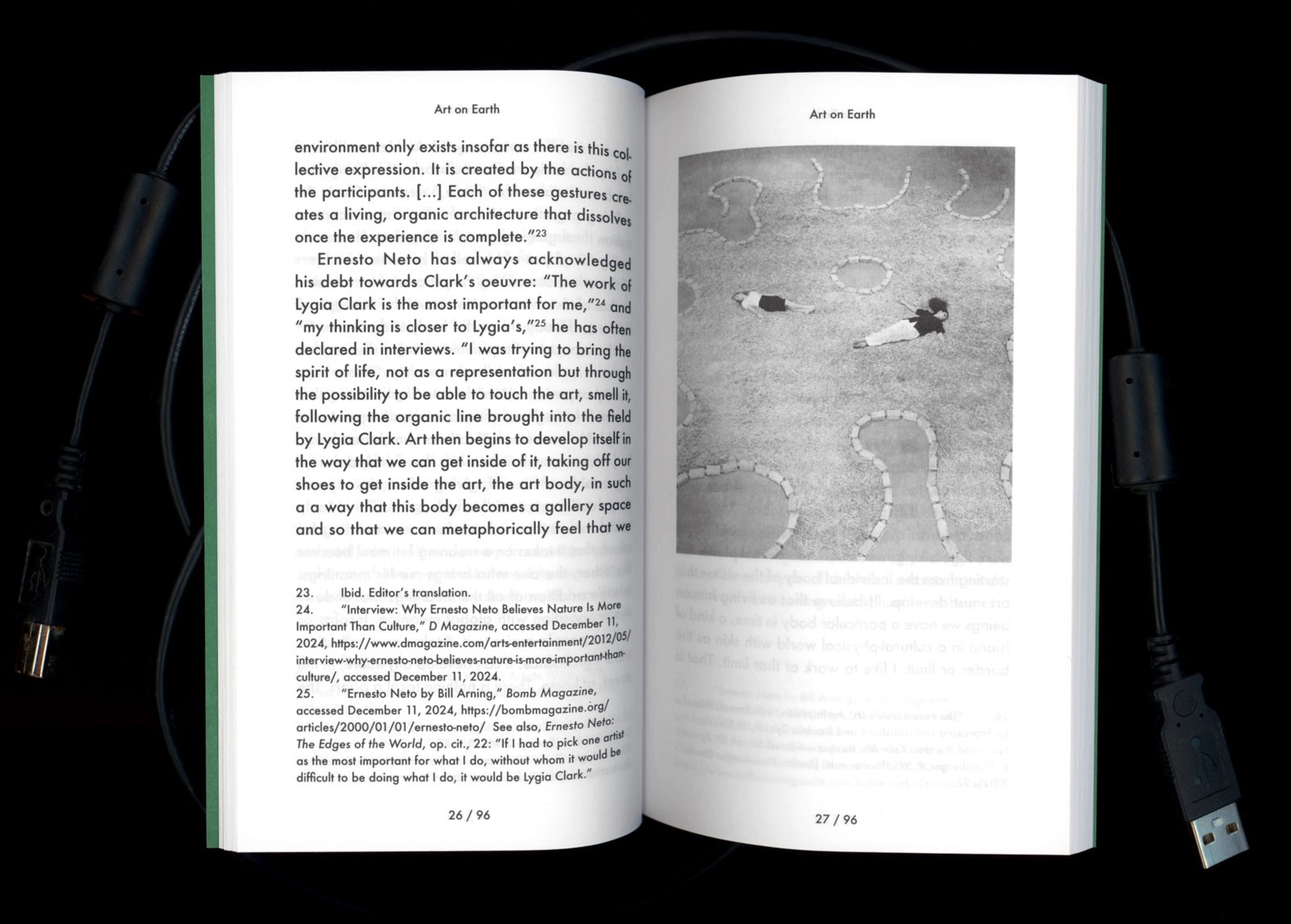
2025, English / Italian, softcover, 11 x 17.7 cm, 96 pages
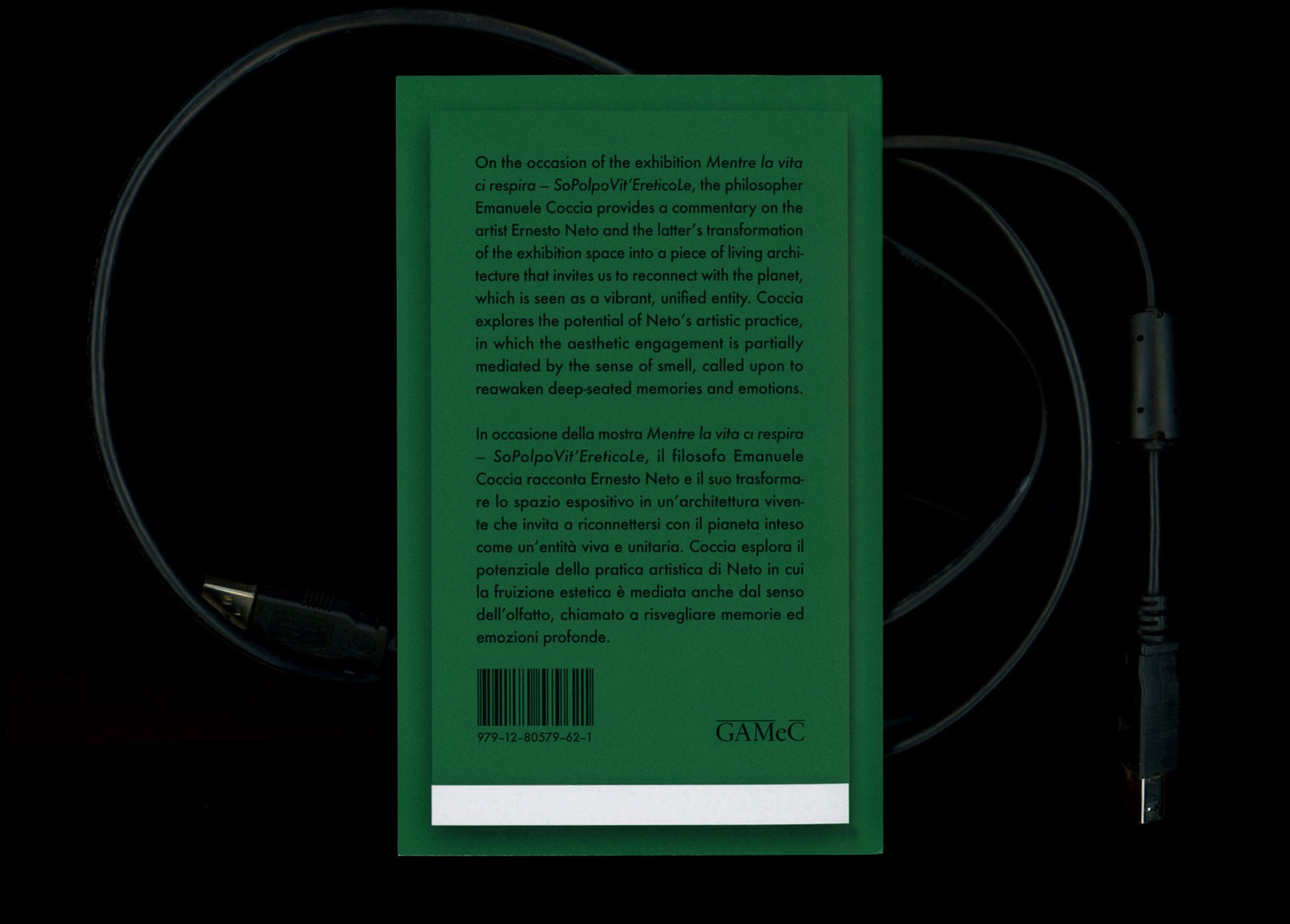
ISBN 979-12-80579-62-1
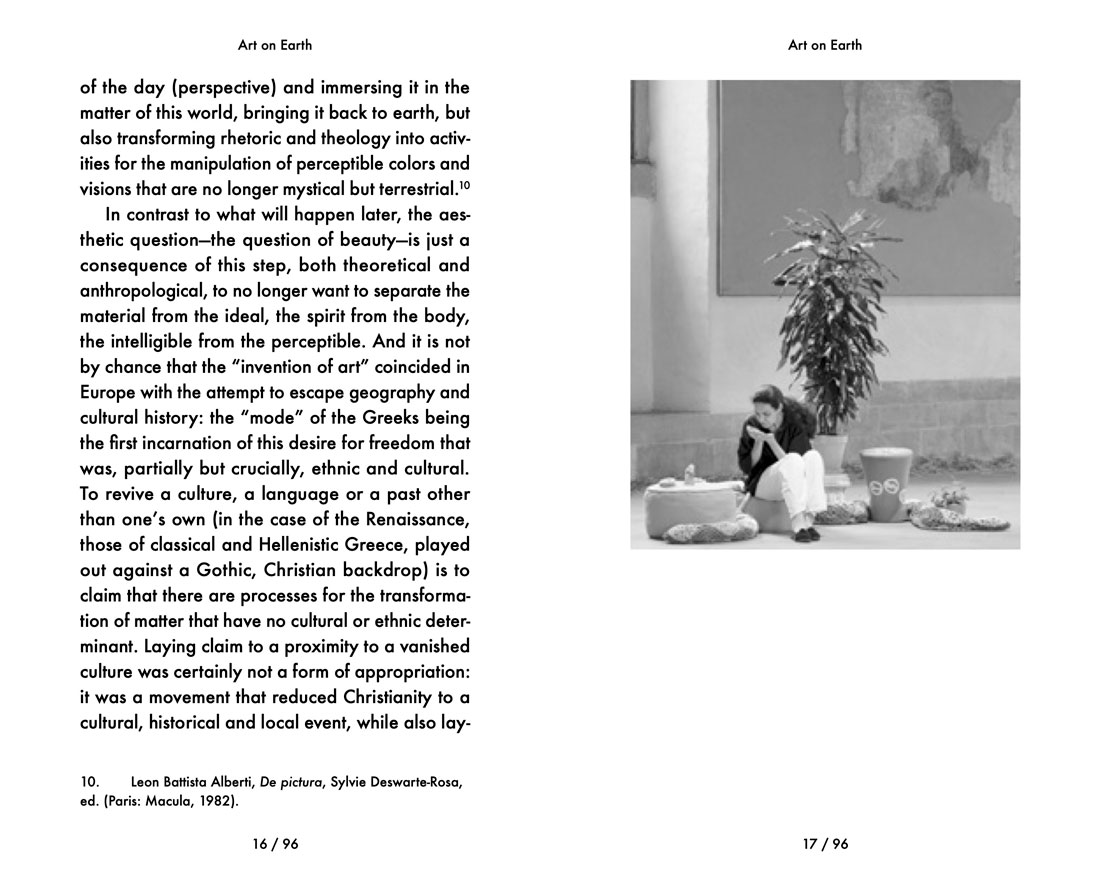
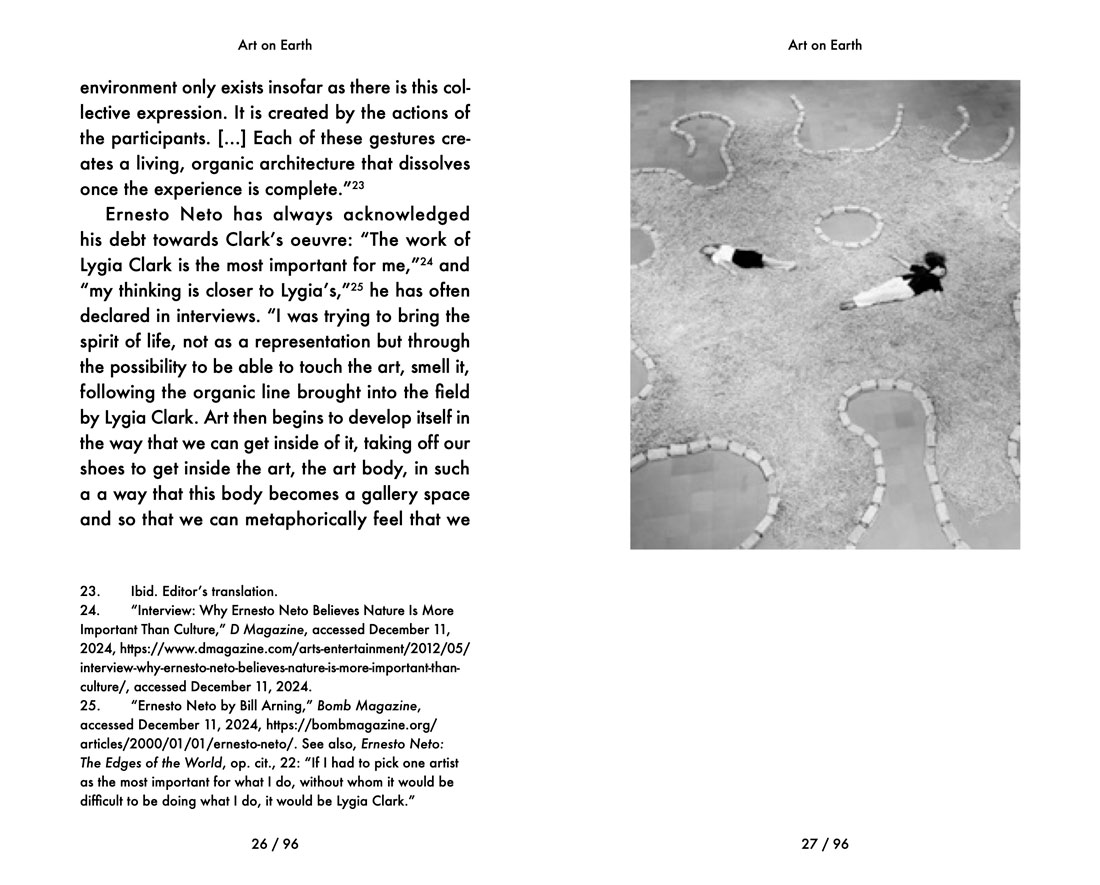
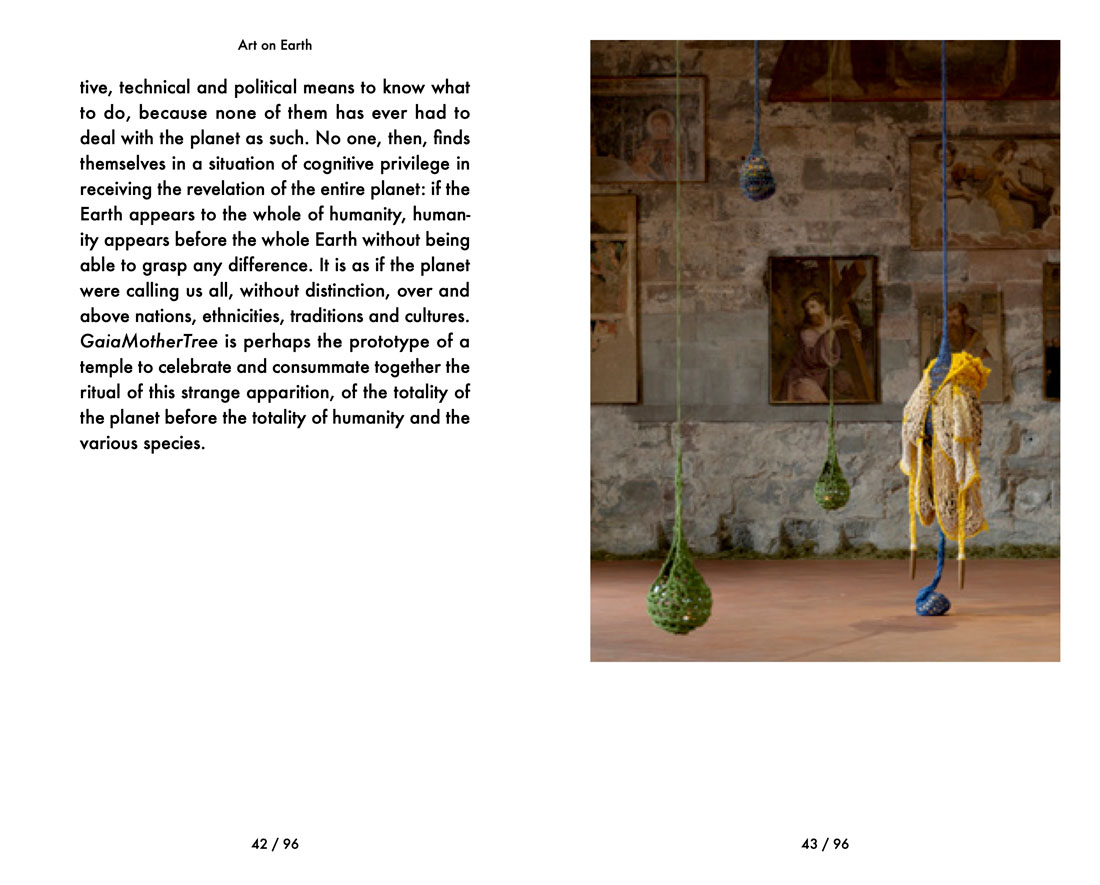
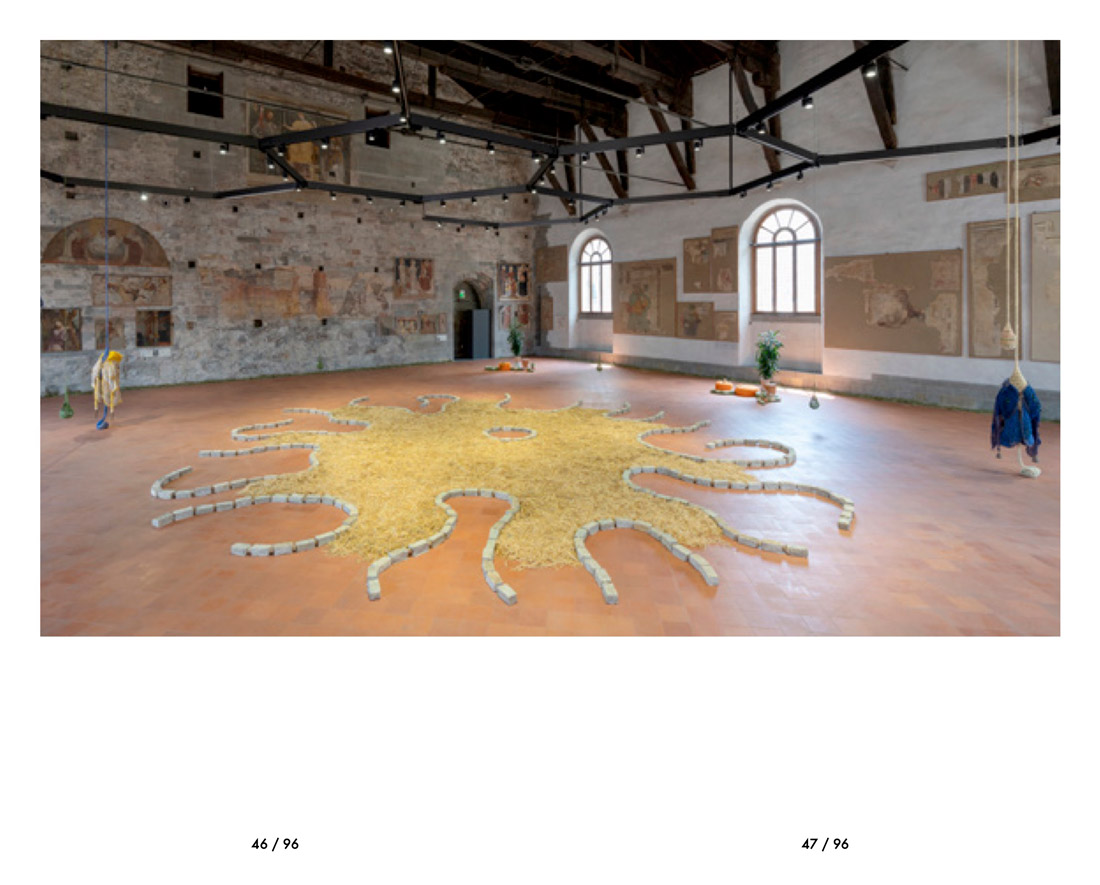
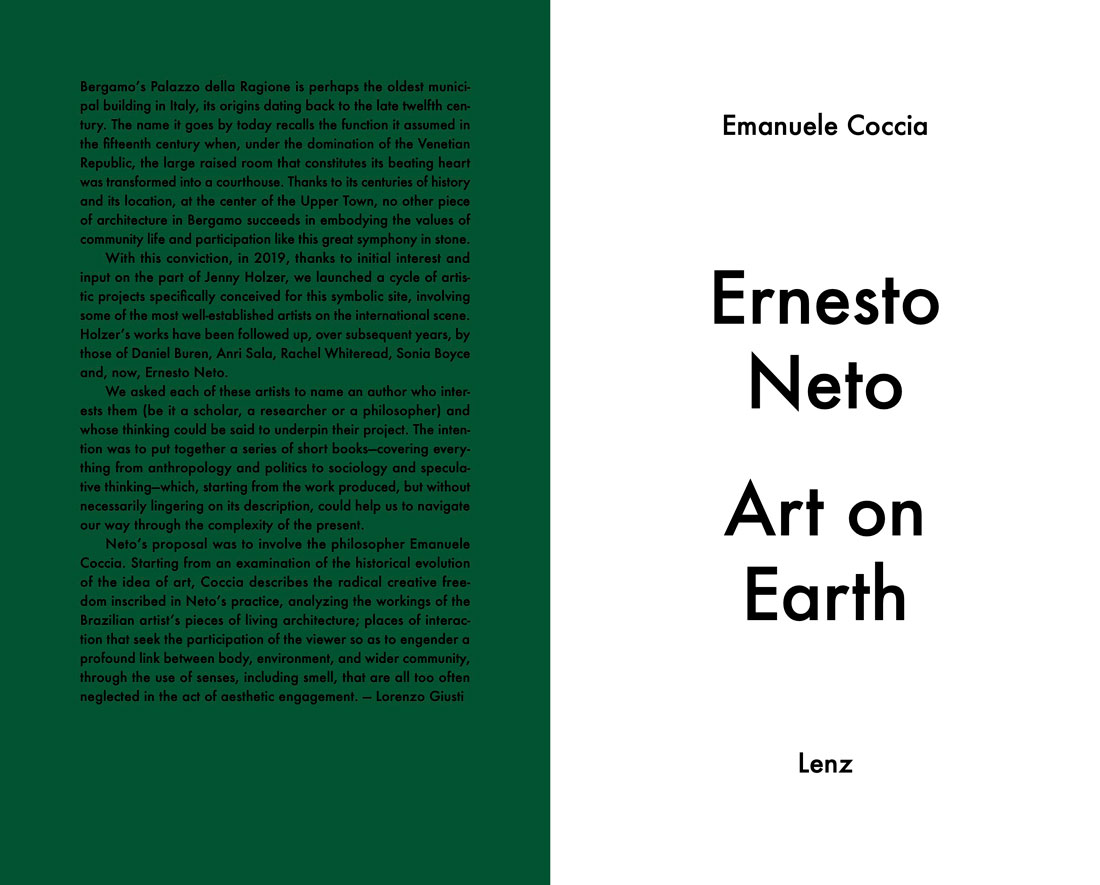
On the occasion of the exhibition Mentre la vita ci respira – SoPolpoVit’EreticoLe, Emanuele Coccia provides a commentary on the practice of the artist Ernesto Neto and the latter’s transformation of the exhibition space into a piece of living architecture, a place of interaction that seeks the participation of the viewer so as to engender a profound link between body, environment, and wider community. Coccia explores the potential of Neto’s artistic practice, in which the aesthetic engagement is partially mediated through the use of senses, including smell, that are all too often neglected in the act of aesthetic engagement and are here called upon to reawaken deep-seated memories and emotions.
Art on Earth is the third book in a series of short essay collections inspired by the site-specific art projects specially conceived for GAMeC at Palazzo della Ragione, a symbolic, time-honored location within the city of Bergamo that embodies the values of community life and participation. The artist was asked to name an author who interests him—be it a researcher, a philosopher, or a scholar—and whose thinking could be said to underpin the project, with a view to finding a path through the complexities of the present day, starting from the work produced but without necessarily lingering on it.