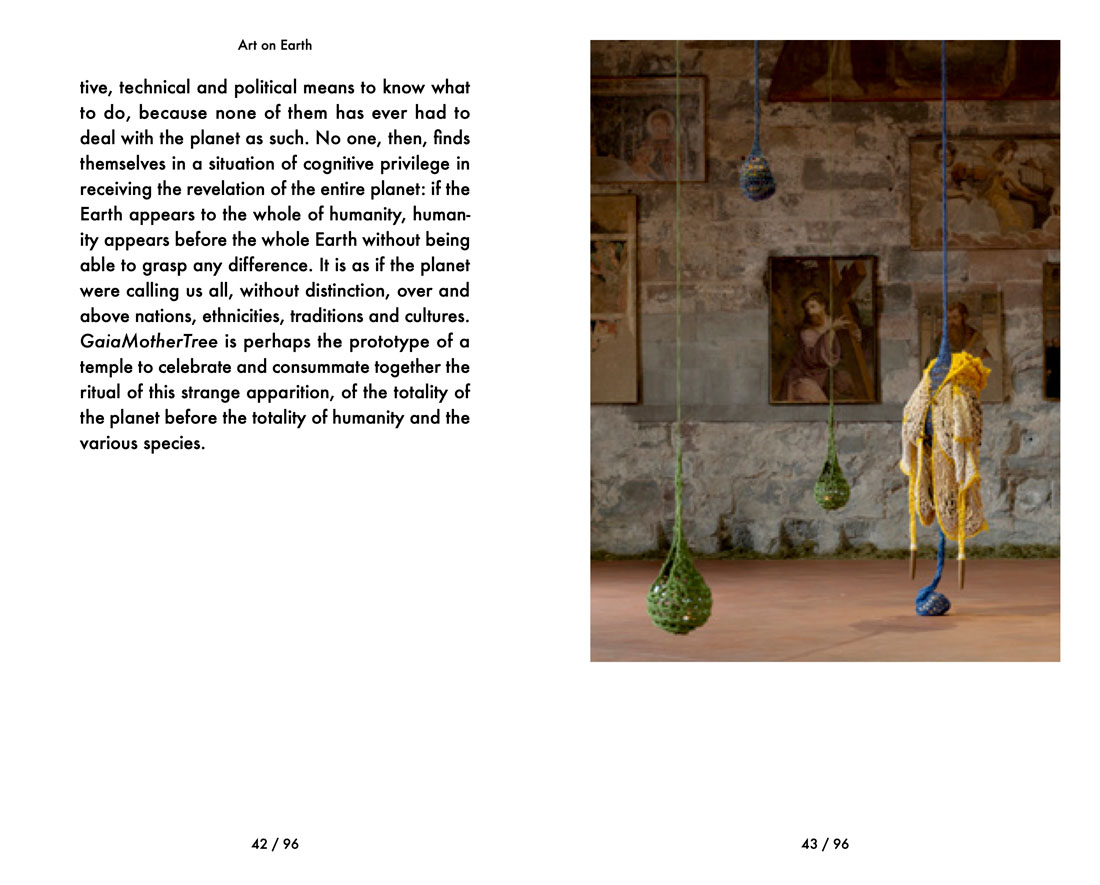
A visual notebook of the screenshots taken by Yngve Holen over the past five years or so, 6G—the anticipated next phase of network technology—is a peculiarly sized artist’s book, a glossy non-linear agglomeration that reflects the intersections of production, life, and digital debris.
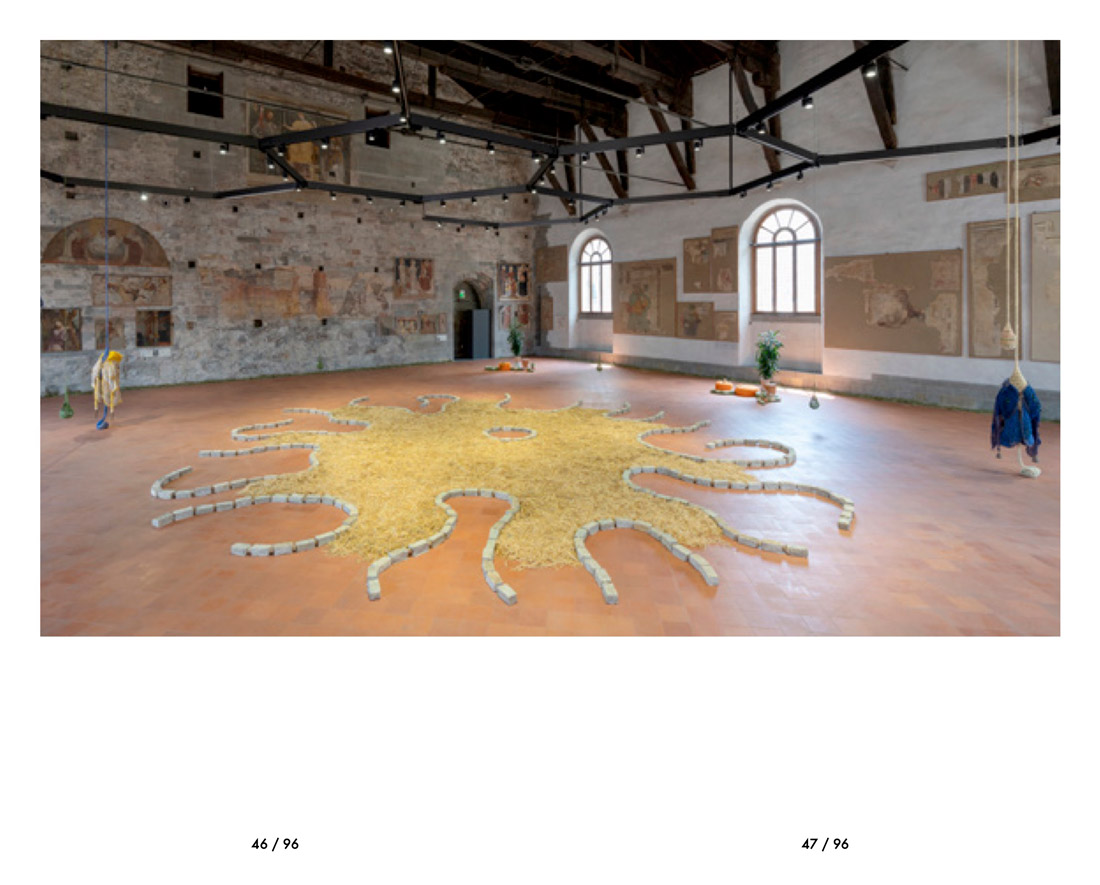
Conceived as a visual résumé, the book provides a comprehensive overview of Posenenske’s solo exhibitions and a record of her numerous group shows. Featuring an essay by curator Erlend Hammer on the role of documentary photographs in the circulation of works of art, it was published in conjunction with the eponymous show at the Haugar Art Museum in Tønsberg.
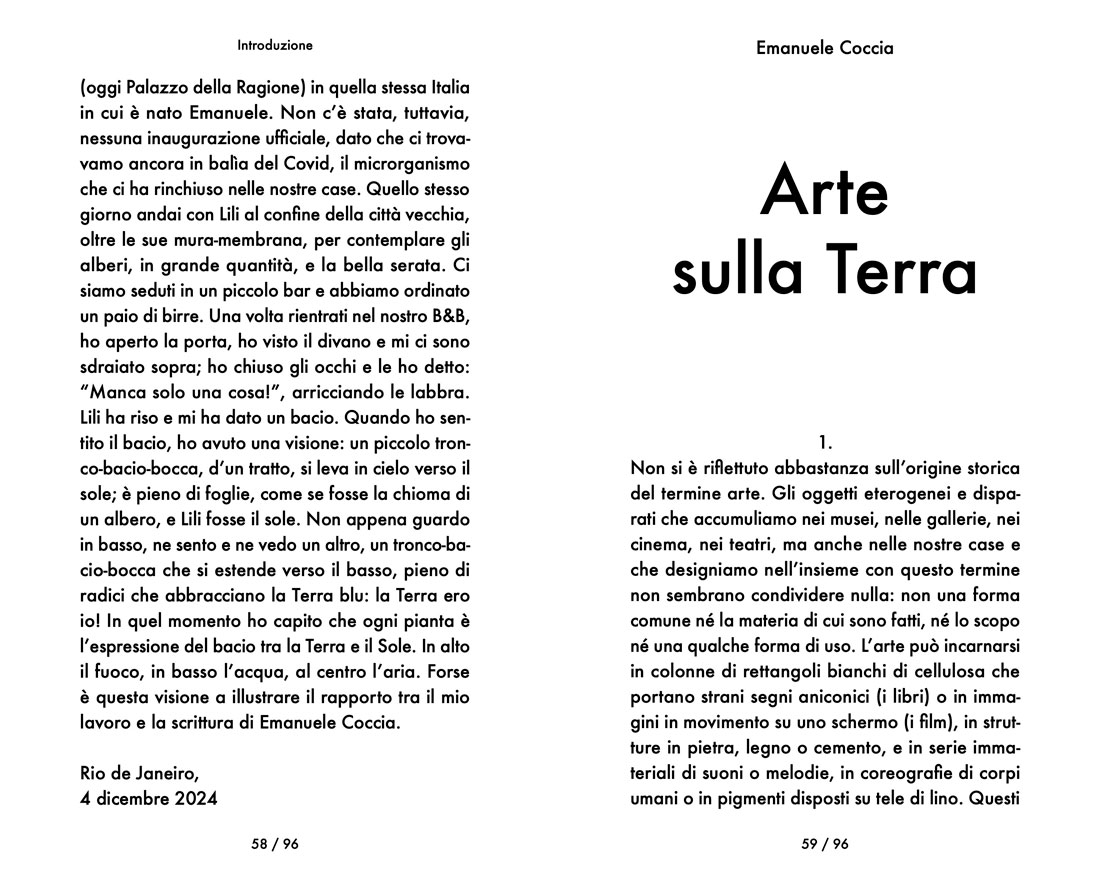
Since the 1980s, Belgian artist Sigefride Bruna Hauman has created a highly original body of work in different media. Her installations, reliefs and videos are the subject of a much-overdue retrospective organized by M Leuven—and of this first monograph.
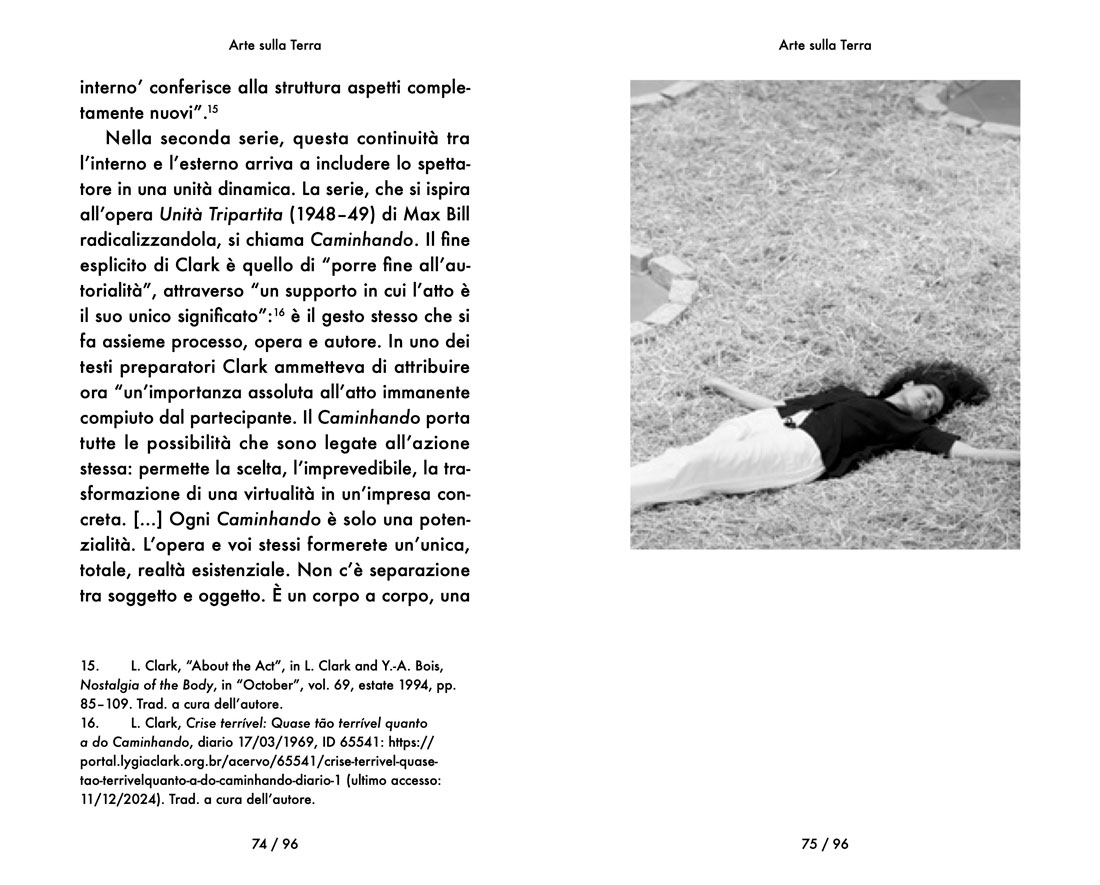
Rituals of Care is an extensive monograph devoted to the work of Antonio Obá, published in conjunction with his eponymous exhibition presented at the Centre d’Art Contemporain Genève, curated by Andrea Bellini. Extensively illustrated, the book immerses the reader in Obá’s multifaceted oeuvre and in the magical iconographic universe of his paintings.
Claiming that the museum is not enough means asking what a museum should be and do, eventually questioning the role of cultural institutions in society. Through conversations, stills of documentaries, responses, and reprints of archival documents that explore ideas of architecture on the ground, this volume reflects on the tools deployed by the institution to redefine its relationship to others.
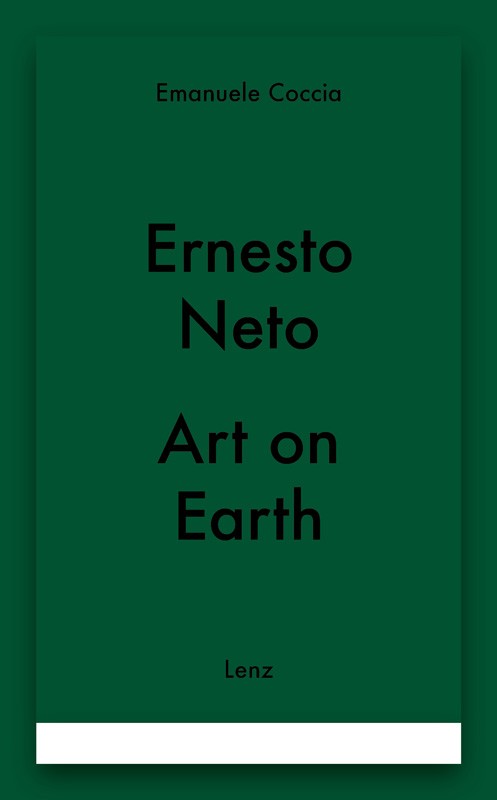
Edited by Lorenzo Giusti and Valentina Gervasoni
Texts by Emanuele Coccia and Ernesto Neto
Designed by Lorenzo Mason Studio
2025, English / Italian, softcover, 11 x 17.7 cm, 96 pages
ISBN 979-12-80579-62-1
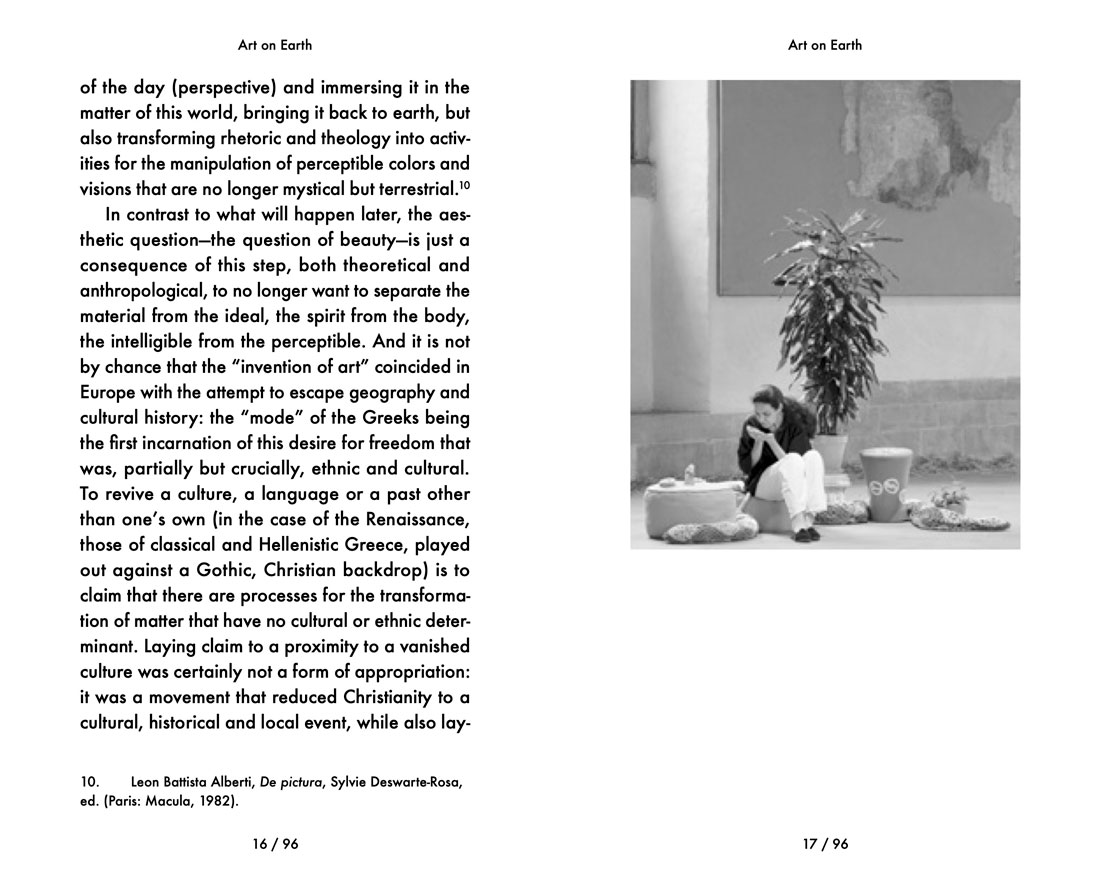
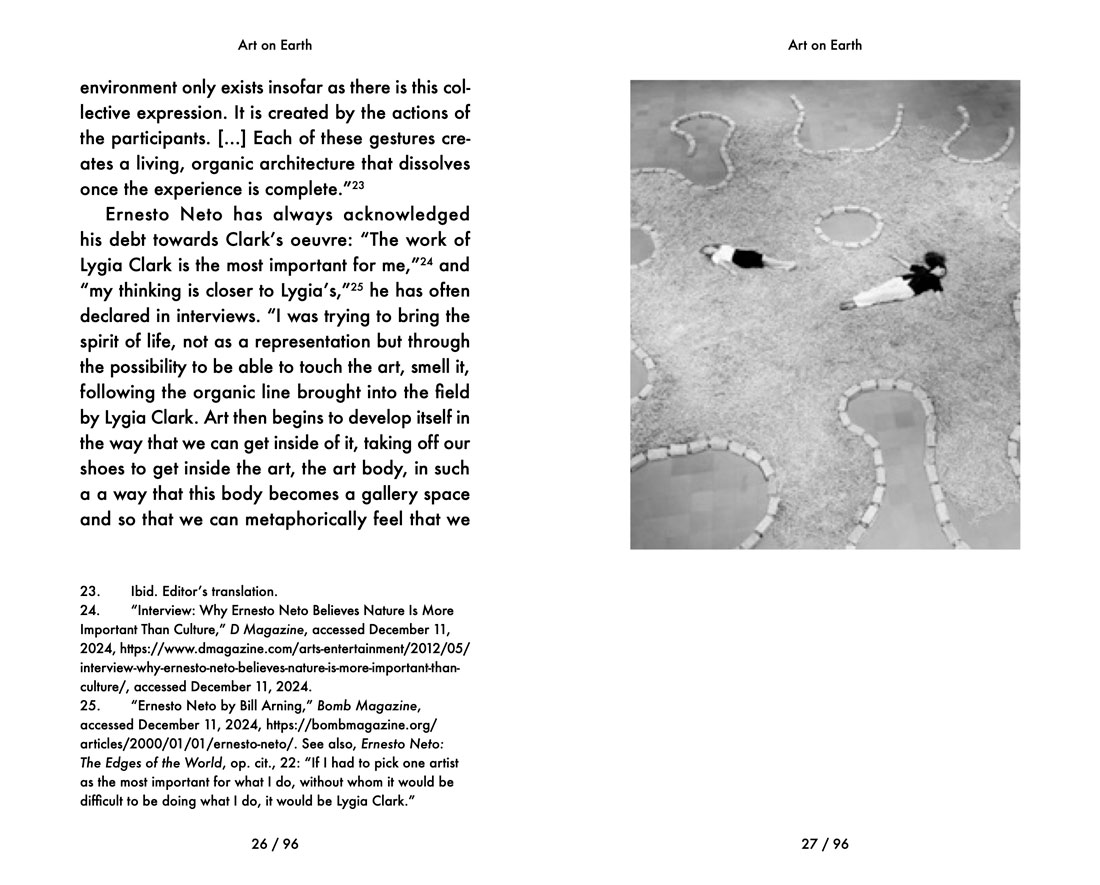
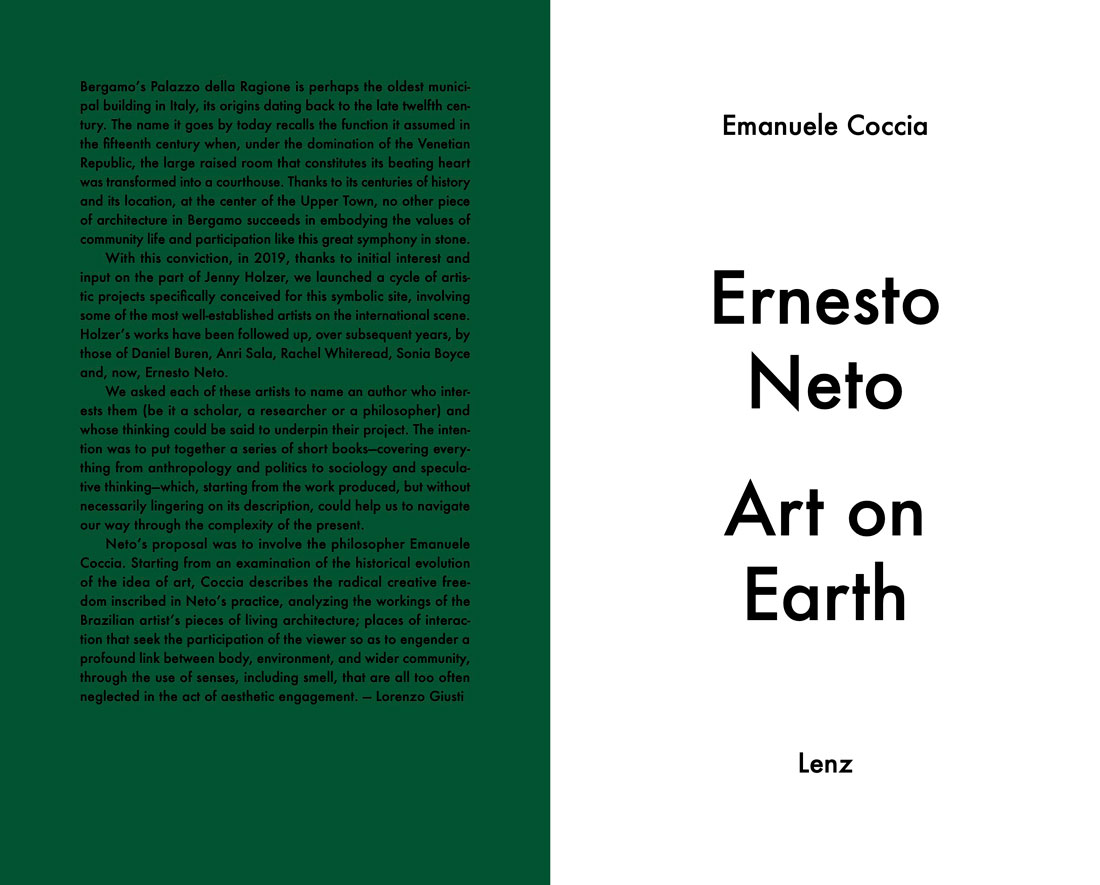
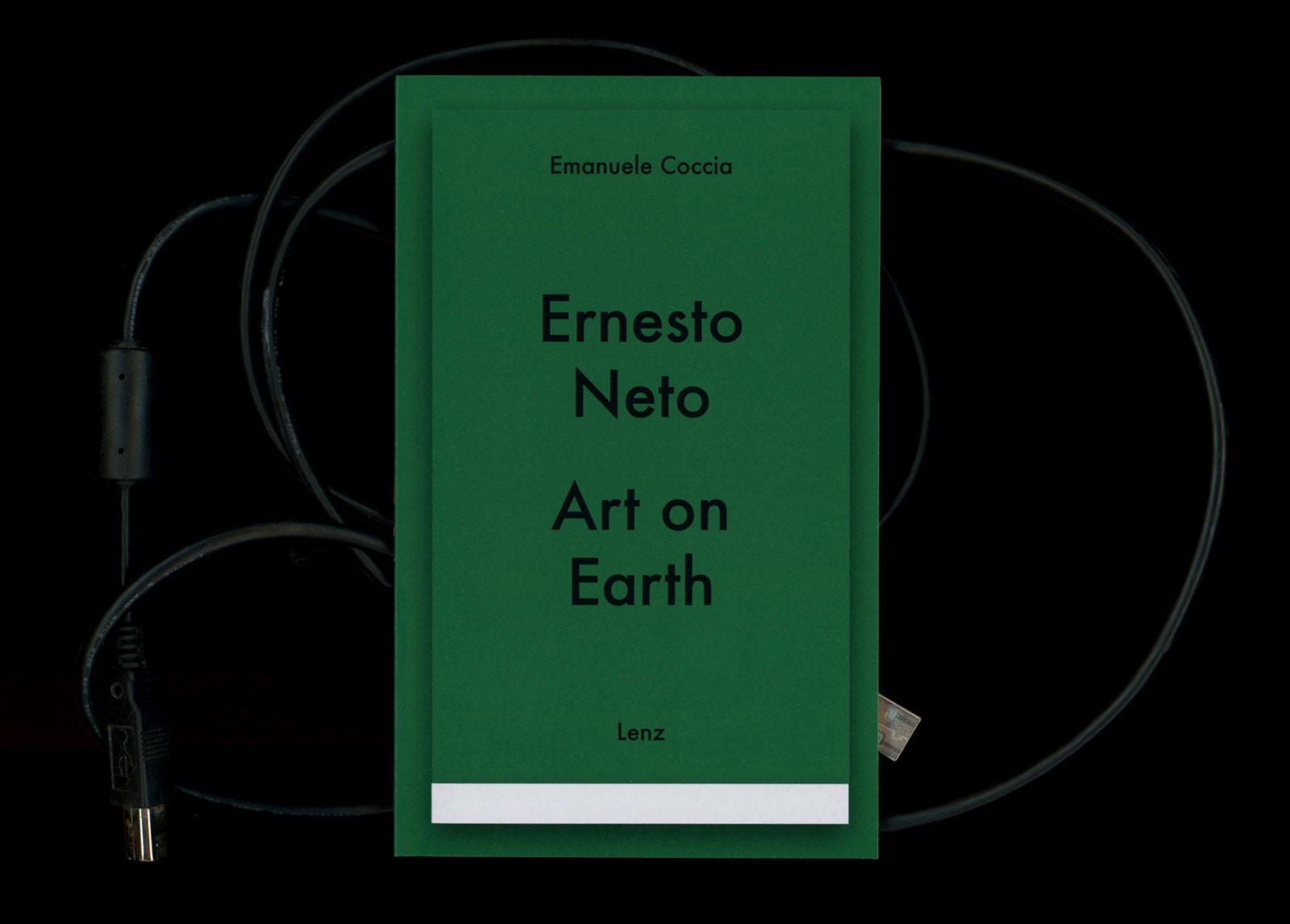
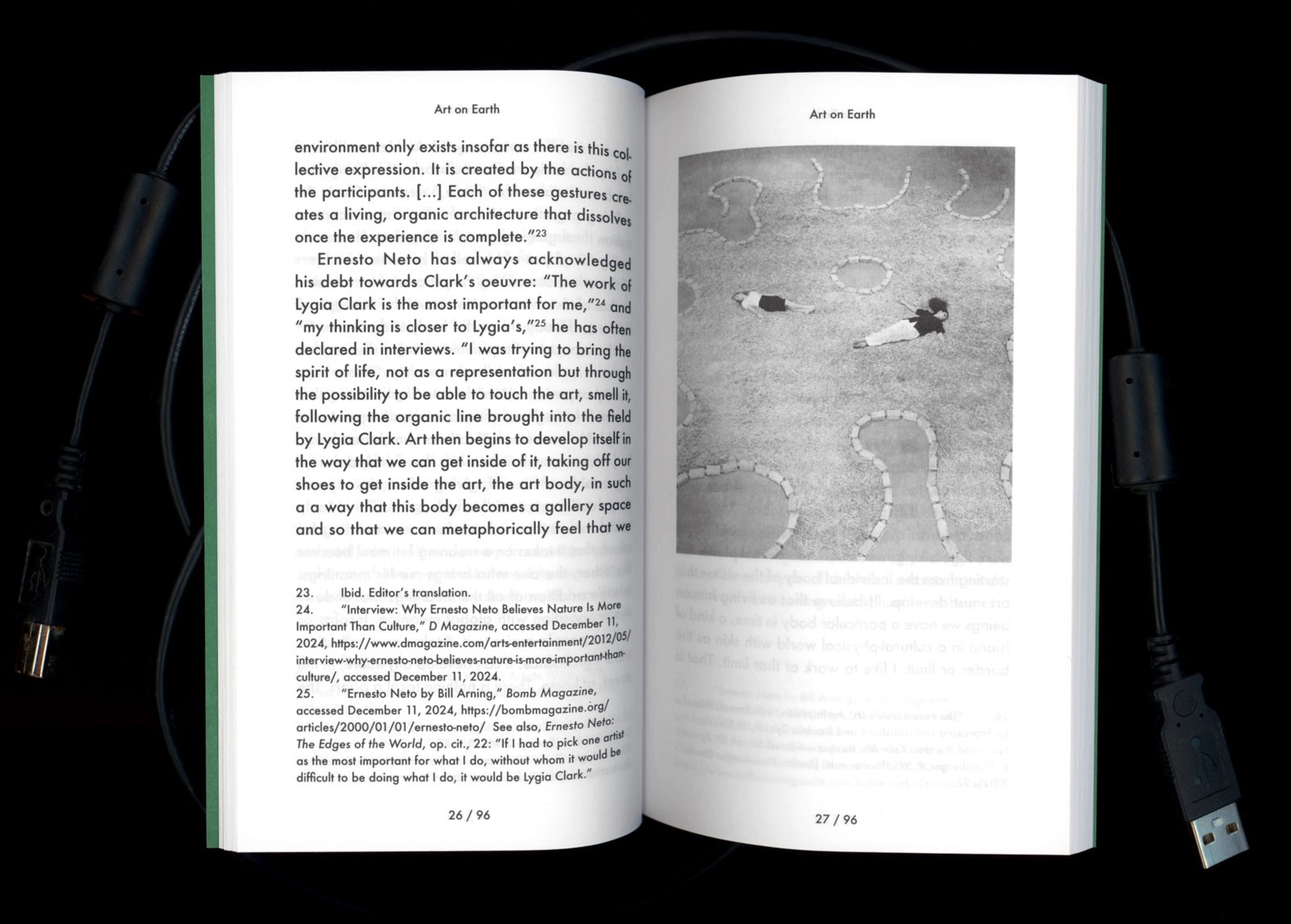
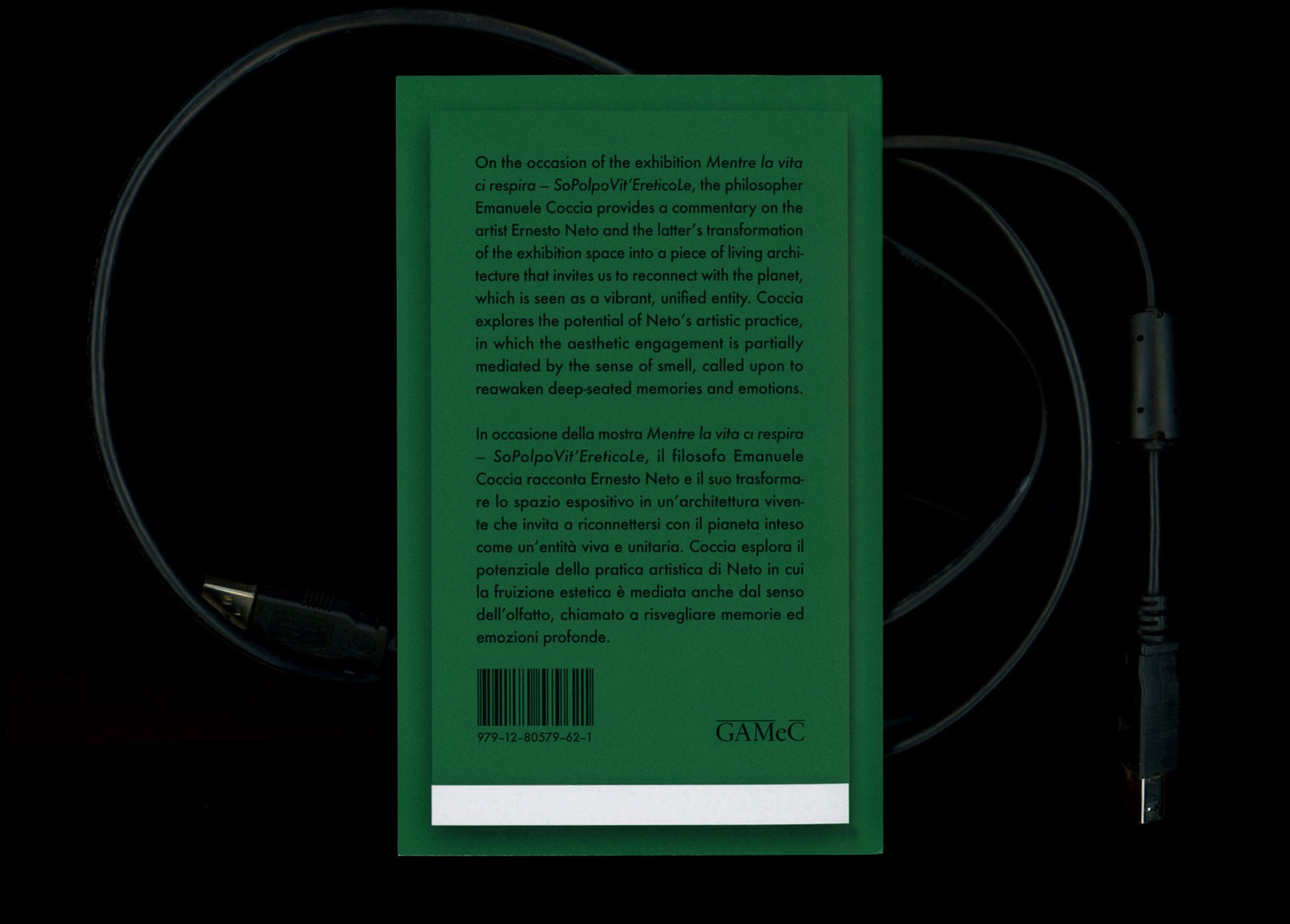
On the occasion of the exhibition Mentre la vita ci respira – SoPolpoVit’EreticoLe, Emanuele Coccia provides a commentary on the practice of the artist Ernesto Neto and the latter’s transformation of the exhibition space into a piece of living architecture, a place of interaction that seeks the participation of the viewer so as to engender a profound link between body, environment, and wider community. Coccia explores the potential of Neto’s artistic practice, in which the aesthetic engagement is partially mediated through the use of senses, including smell, that are all too often neglected in the act of aesthetic engagement and are here called upon to reawaken deep-seated memories and emotions.
Art on Earth is the third book in a series of short essay collections inspired by the site-specific art projects specially conceived for GAMeC at Palazzo della Ragione, a symbolic, time-honored location within the city of Bergamo that embodies the values of community life and participation. The artist was asked to name an author who interests him—be it a researcher, a philosopher, or a scholar—and whose thinking could be said to underpin the project, with a view to finding a path through the complexities of the present day, starting from the work produced but without necessarily lingering on it.