In this multi-voiced book, starting from the Orobie Alpine range, the mountainside becomes an epistemological lens through which to interpret contemporaneity and address issues such as multi-species migrations, our relationship with geological time and intergenerational inheritance, and the rethinking of collective memories and rituals.
For years now, the Die Vier von der Tankstelle (Four from the Gas Station) have been roaming across an area stretching out to the south of the Baltic Sea. They prowl their way through sparsely populated areas, wantonly terrorizing the inhabitants. The 2026 calendar by Jos de Gruyter and Harald Thys bears witness to their presence.
The first monograph dedicated to Lorenza Longhi, published with the Kunst Museum Winterthur, adopts a format associated with prototypes, manuals, or working documents. Its irregularities reflect Longhi’s ongoing examination of value, functionality, and the aesthetics of the everyday.
This publication is an extensive monograph devoted to the work of Carlos Bunga, published in conjunction with his eponymous show at CAM – Gulbenkian. In addition to a number of essays, which offer an in-depth look at his multifaceted practice, the book contains previously unpublished photos that reveal his working process.
The paintings and drawings by Jake Grewal draw the viewer in through stillness and ambiguity: they invite reflection on how we inhabit places—physically and emotionally—and how our inner landscapes mirror the physical world. This is the Grewal’s first book, published to accompany the artist’s exhibition at Studio Voltaire.
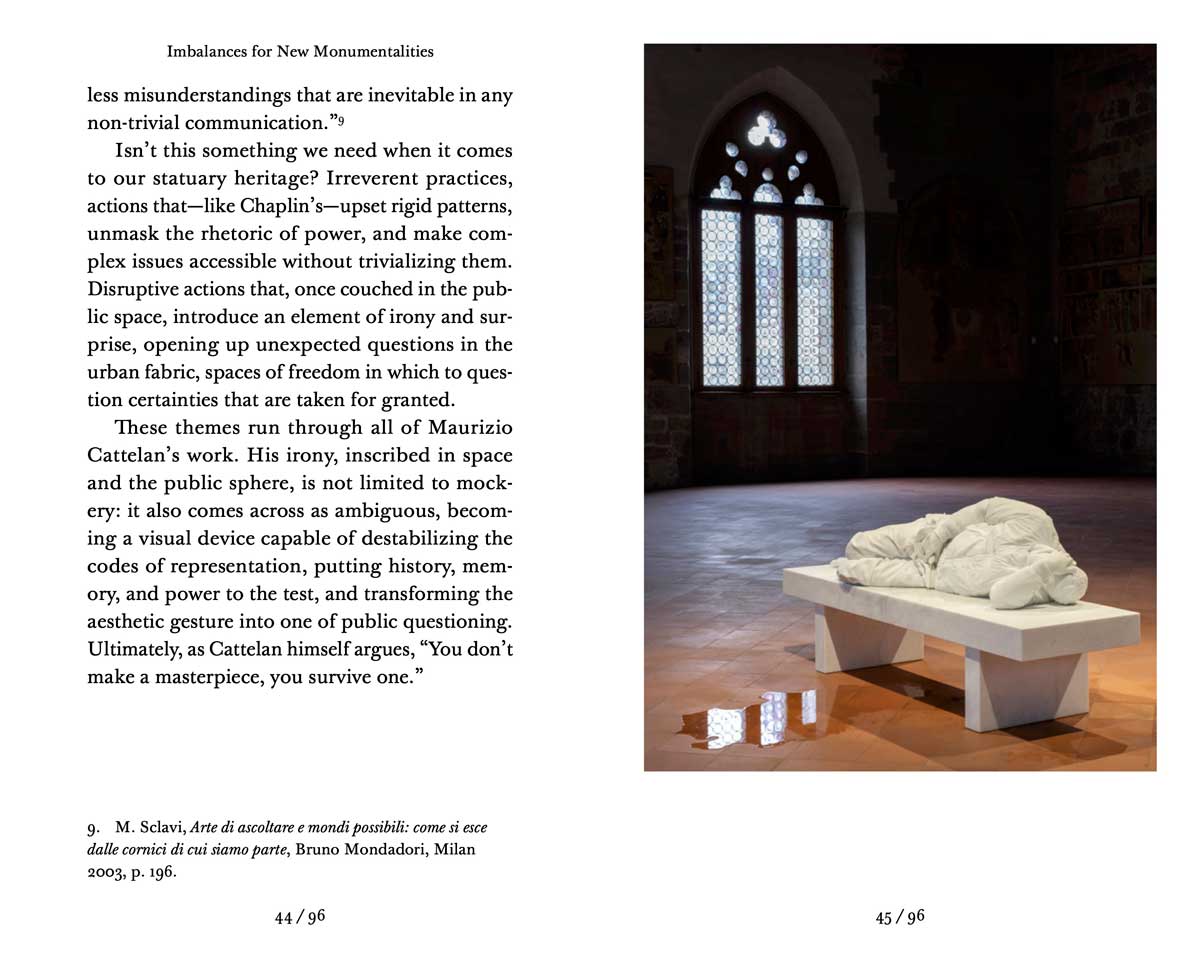
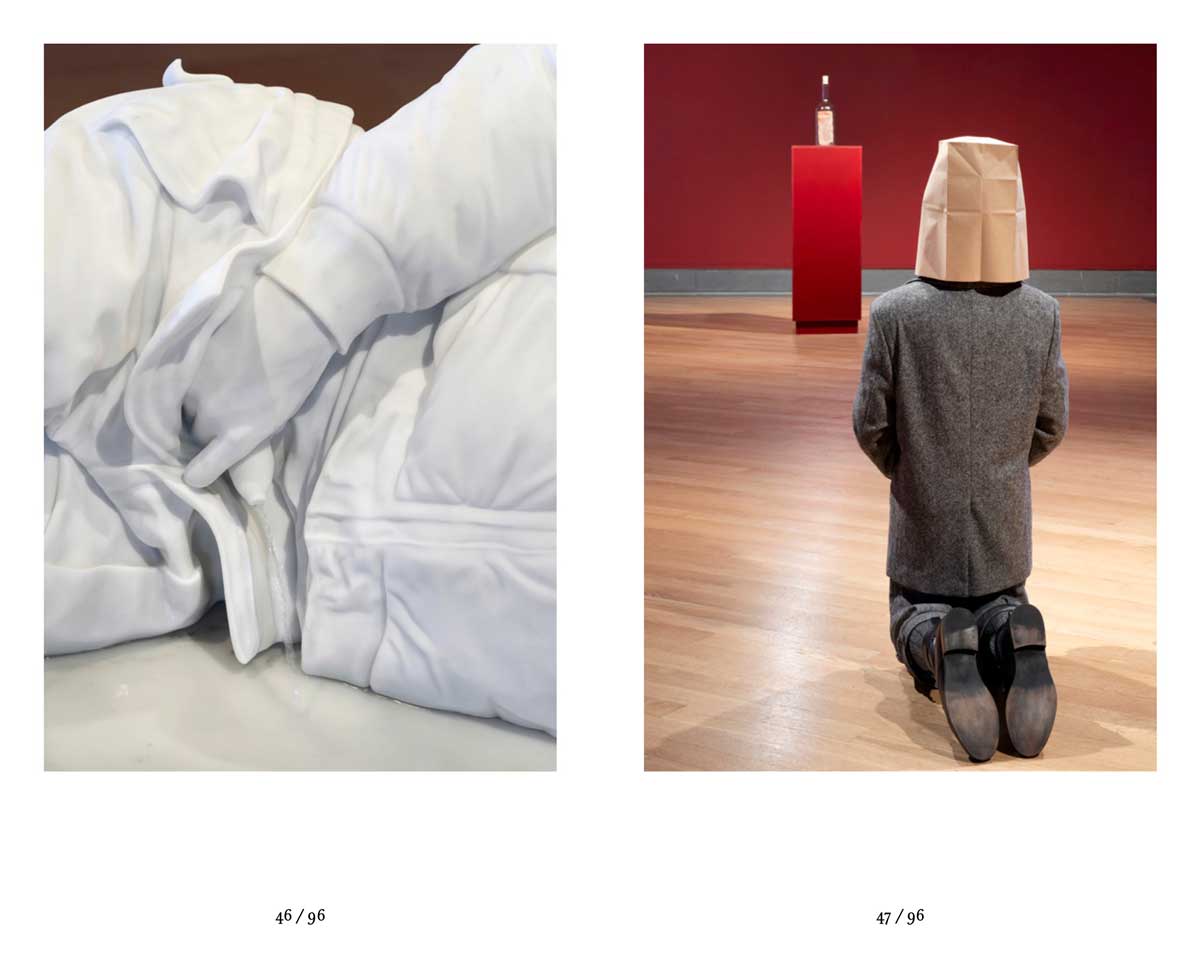
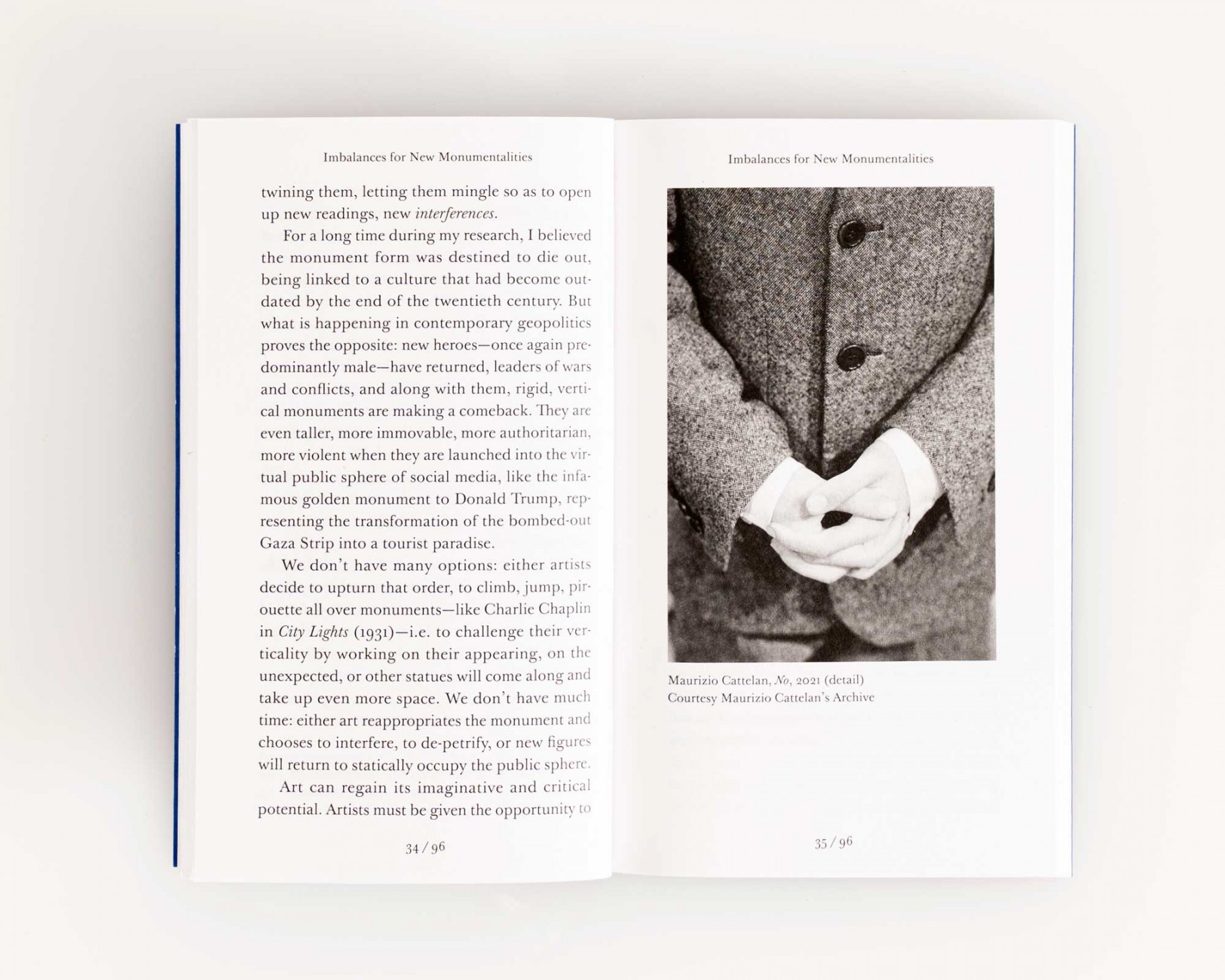
The transformation of the notion of monuments and the way cultural institutions choose to deal with it find in Maurizio Cattelan an interpreter capable of manipulating historical memory and shared symbols, to the point of turning them into a terrain of doubt and play. Lisa Parola and Lorenzo Giusti investigate the potential of contemporary art within the public sphere.
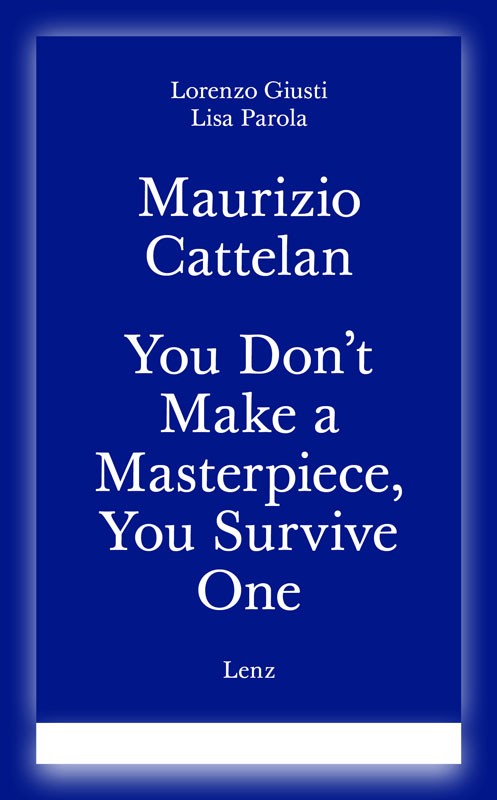
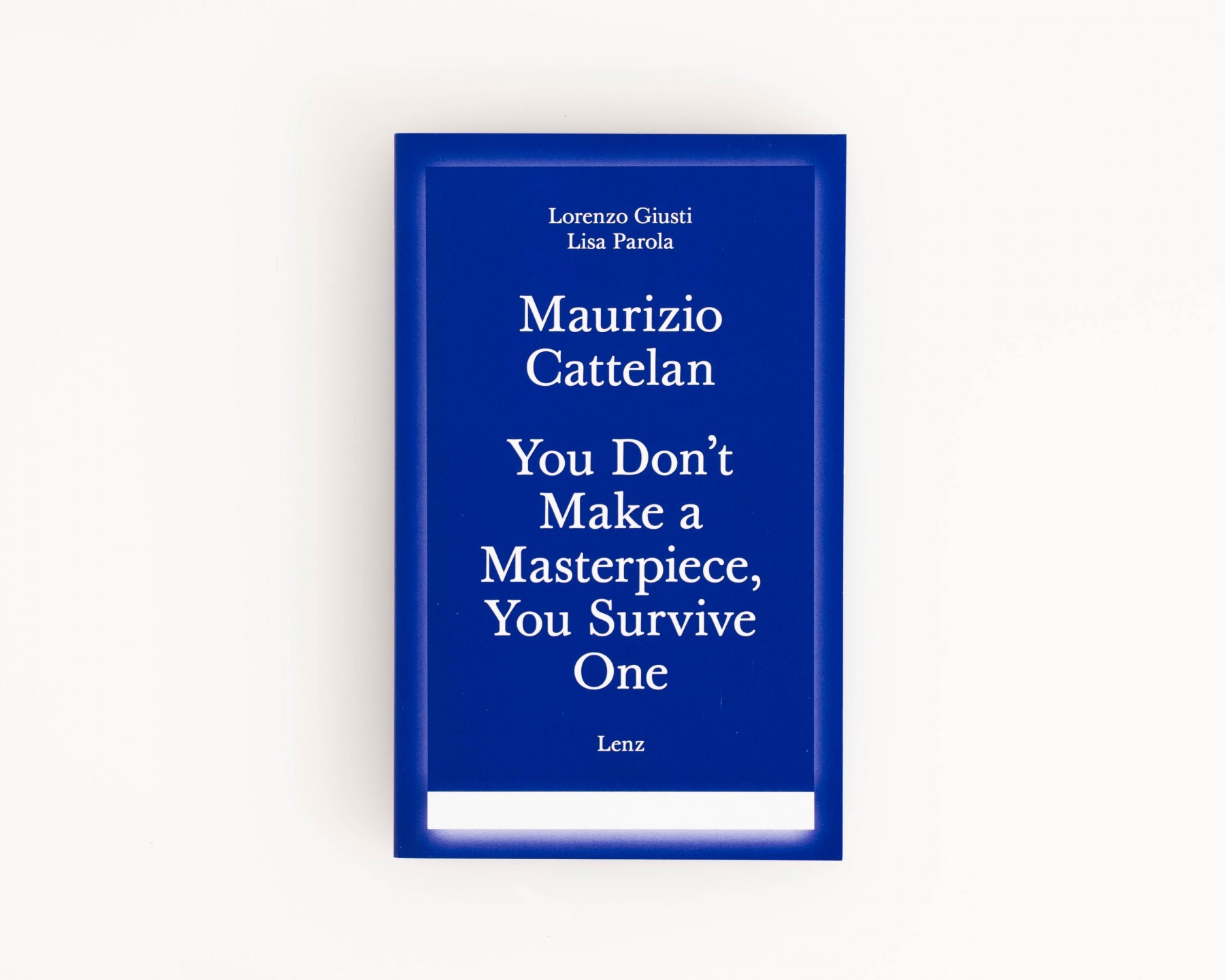
Maurizio CattelanYou Don’t Make a Masterpiece, You Survive One
Edited by Lorenzo Giusti and Valentina Gervasoni
Texts by Lorenzo Giusti and Lisa Parola
Designed by Lorenzo Mason Studio
2025, English / Italian, softcover, 11 x 17.7 cm, 96 pages
ISBN 979-12-80579-96-6
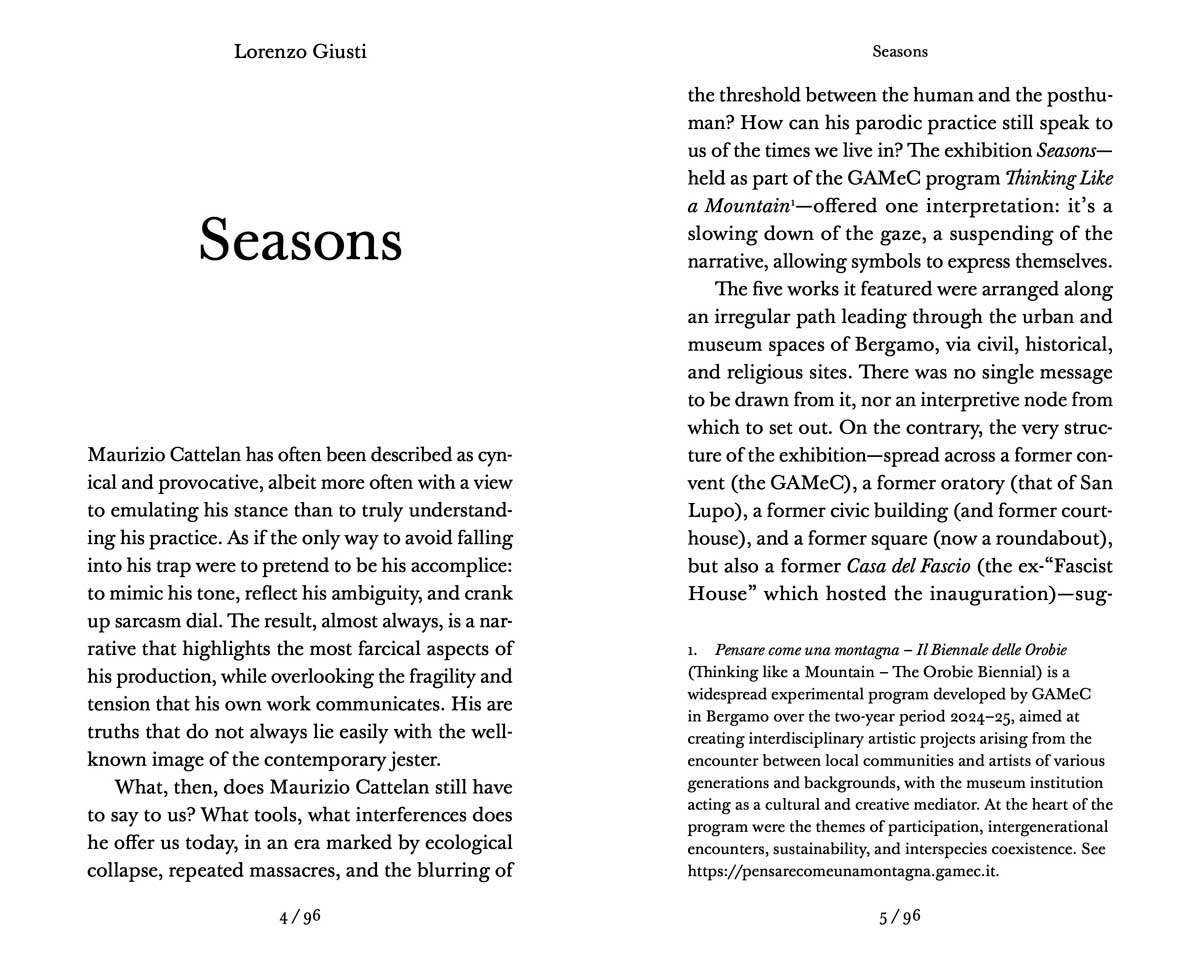
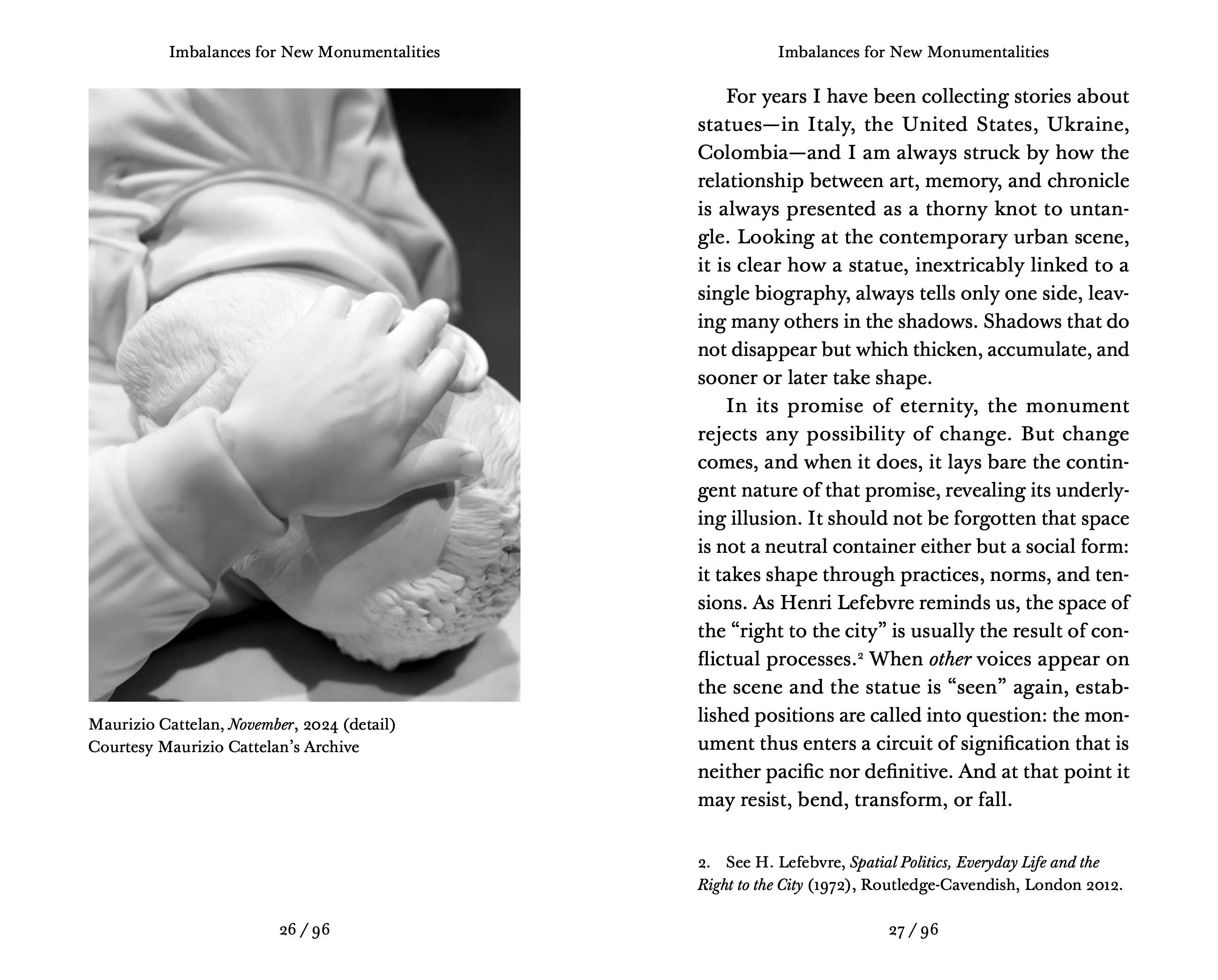
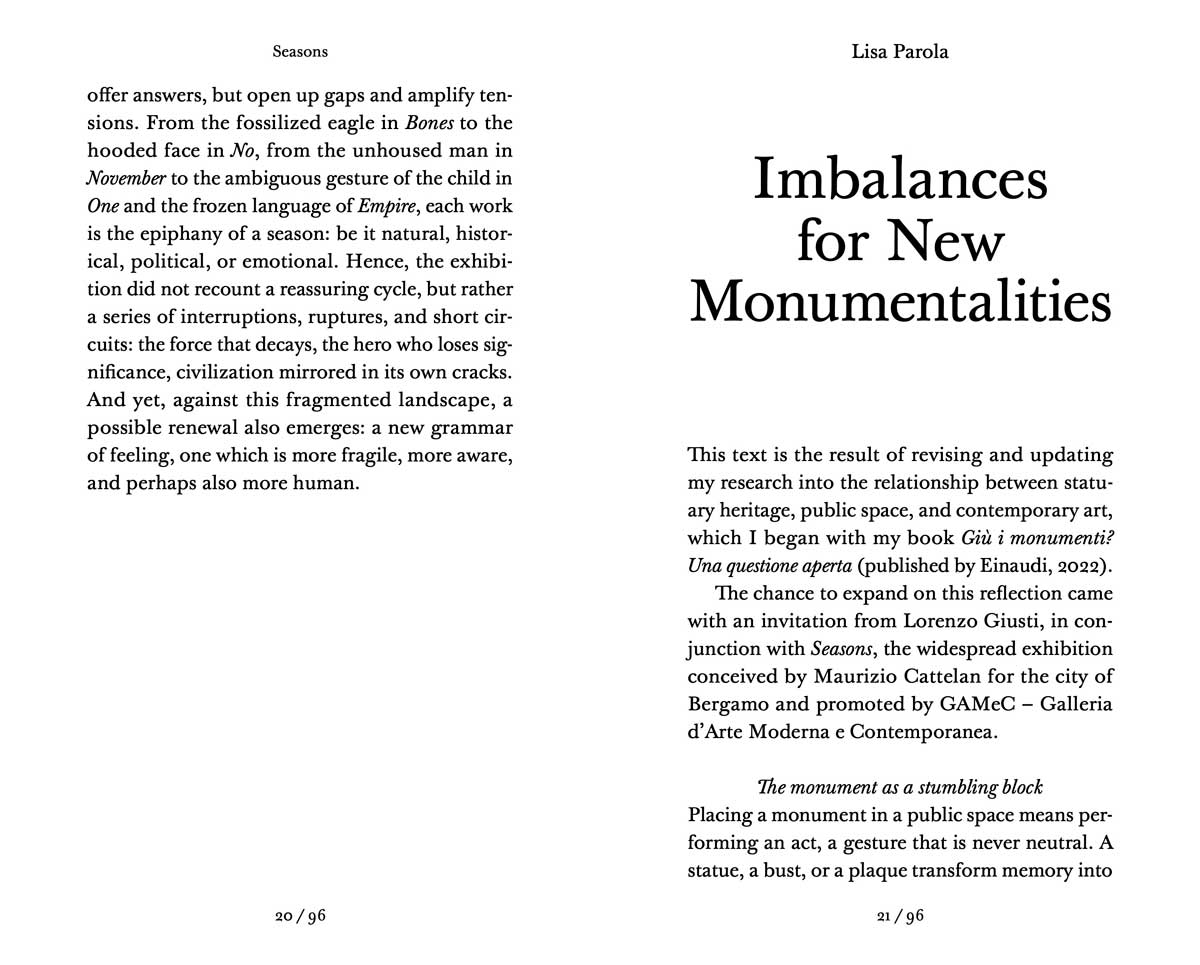
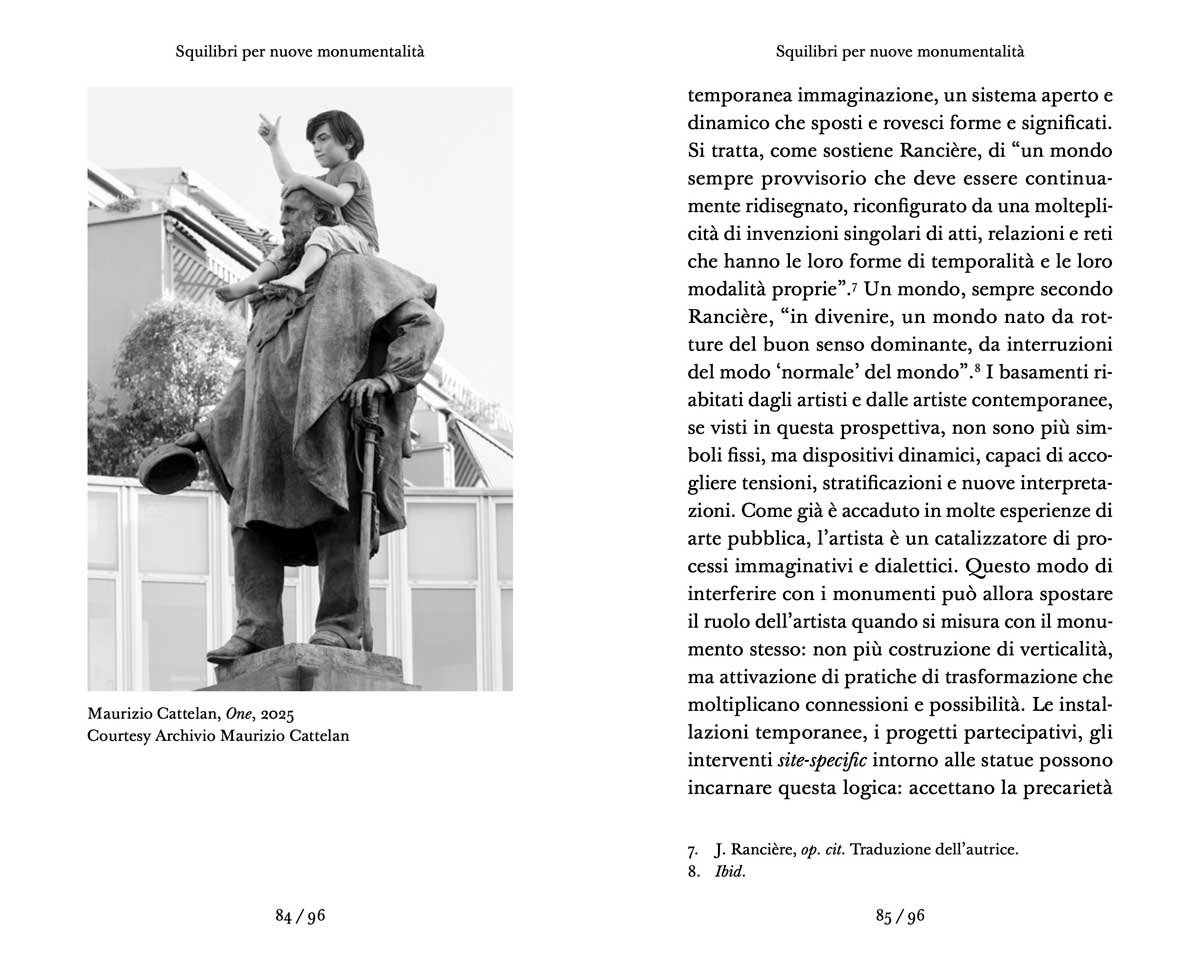
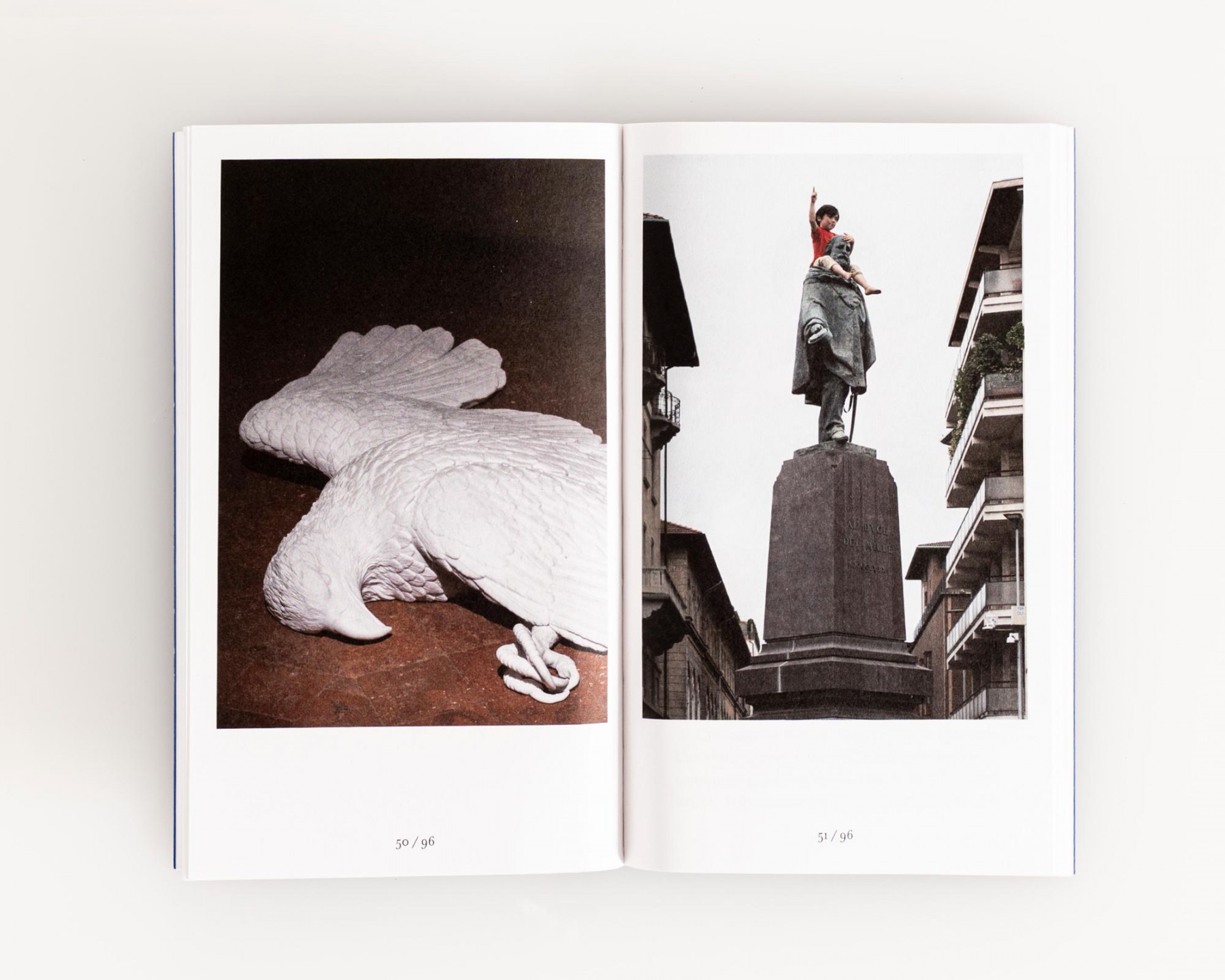
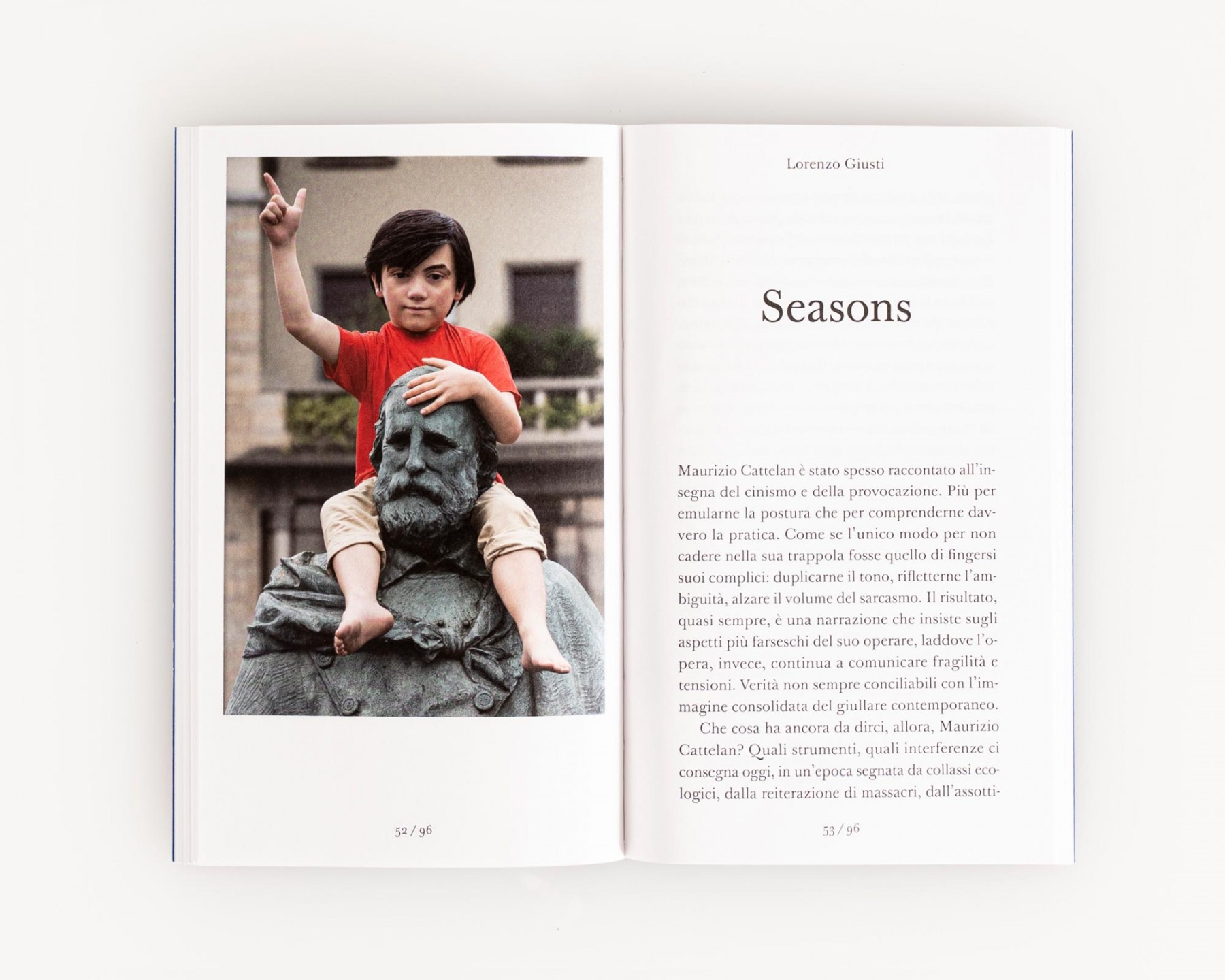
On the occasion of Seasons, Maurizio Cattelan’s exhibition at GAMeC, art historian Lisa Parola, investigates how contemporary art can redefine the idea of the monument: no longer an immobile place of celebration, but a critical space of removal and transformation, promoting new relationships with both history and the present. Parola reflects on the changing concept of the monument and how cultural institutions choose to deal with layered and sometimes contradictory symbols. Lorenzo Giusti, curator of the exhibition, accompanies the essay with an insight on the works presented in order to show how, in Cattelan’s work, symbols stratify, shift, and contradict each other. How the imperial eagle becomes a vulnerable body; how the nineteenth-century statue dedicated to Garibaldi is turned into a pedestal for something else. Who? A grandson on his grandfather’s shoulders? A new Garibaldian? Or a little vandal mocking ancient values? By so doing, he notes how between history and nature, cracks, fractures, and new possibilities may be opened up.
You Don’t Make a Masterpiece, You Survive One is the fourth book in a series of short essay collections inspired by the site-specific art projects specially conceived for GAMeC at Palazzo della Ragione: a symbolic, time-honored location in the city of Bergamo that embodies all the values of community life and participation. The artists were asked to name an author who interests them—be it a researcher, a philosopher or a scholar—and whose thinking could be said to underpin their project, with a view to finding a path through the complexities of the present day, starting from the work produced but without necessarily lingering on it.