Through exquisite craftsmanship, and with reference to romantic nationalism, Ann Böttcher explores how aesthetic and political projections characterize notions of nature, and how such conceptions are taken up by countries, political movements, and other institutions.
Voices (Towards Other Institutions) is the final act of the coral, multiform, articulated, two-year-long experiment carried out by Open, the Russian Federation Pavilion at the 17th International Architecture Exhibition.
The book deals with Diego Marcon’s practice through the analysis of three film and video works. Monelle (2017), Ludwig (2018), and The Parents’ Room (2020) are his most recent and complex projects, and they are all emblematic of central aspects of his production.
Over the last ten years, Raphael Hefti has created an astonishingly body of work consisting of sculptures and installations, performance and “art-in-public-spaces.” The first comprehensive monograph is published on the occasion of his major exhibition at Kunsthalle Basel.
Between 1998 and 1999, the London-based art collective BANK operated the Fax-Bak Service. The group’s members proof-read and copy-edited more than 300 press releases by galleries. The publication is the most comprehensive record of this notorious project.
SOLD OUT
Sold Out
Listen
On how The BANK Fax-Bak Service started and how it came to be a book
In the Villa Santo Sospir, Jean Cocteau conceived his pictorial work through accumulation, inspired by Greek mythology and the Mediterranean landscape. Architecture permeates the subjects of Mauro Restiffe from a viewpoint that amplifies and reverberates the simple historical record.
Edited by Erlend Hammer
Essay by Erlend Hammer
Designed by Lorenzo Mason Studio
2025, English, softcover, 21 x 29.7 cm, 264 pages
ISBN 979-12-80579-79-9
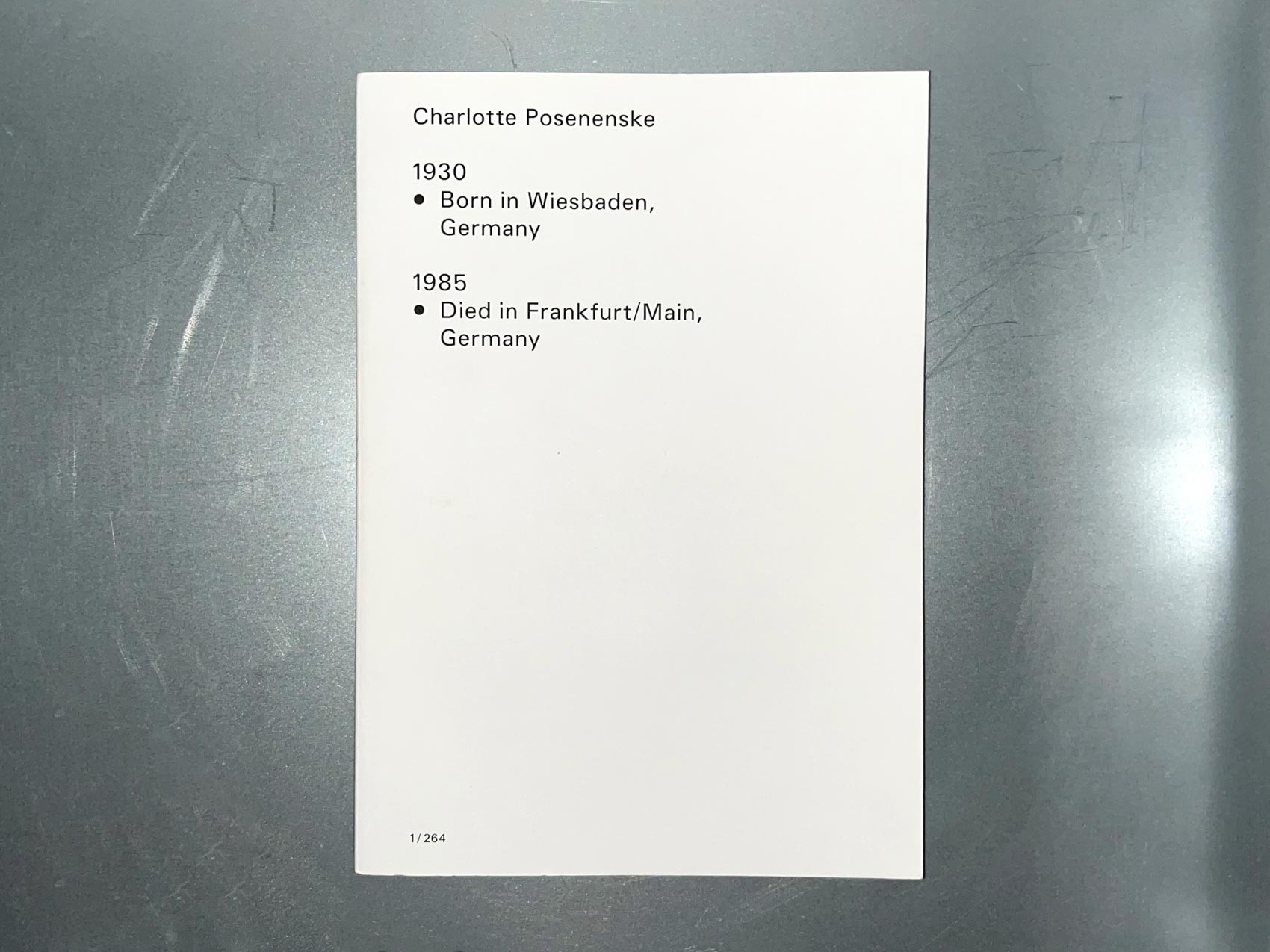
In her Manifesto, Charlotte Posenenske (1930-1985) stated: “I find it difficult to come to terms with the fact that art can contribute nothing to the solution of pressing social problems.”
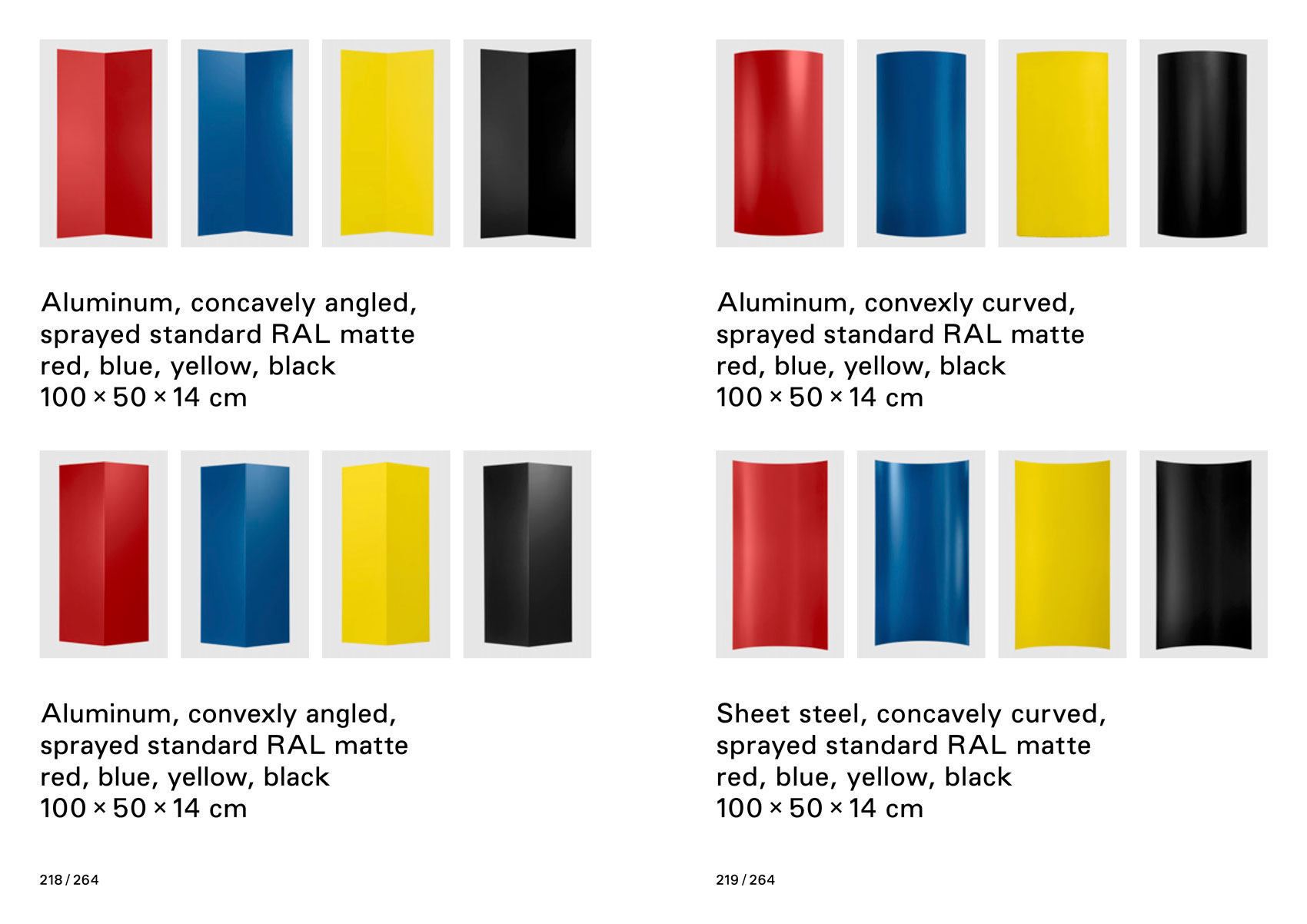
Developing her artistic practice throughout the 1960s, Posenenske produced a body of work that uniquely combined several strands of the art of the period: conceptualism, minimalism, and socially engaged participatory art. Her Manifesto, published in Art International in May 1968, lays out the social demands on art as well as the impossibility of fulfilling those demands. Shortly after its publication, Posenenske left the art world behind to pursue her studies in sociology, undertaking a new career in that field.
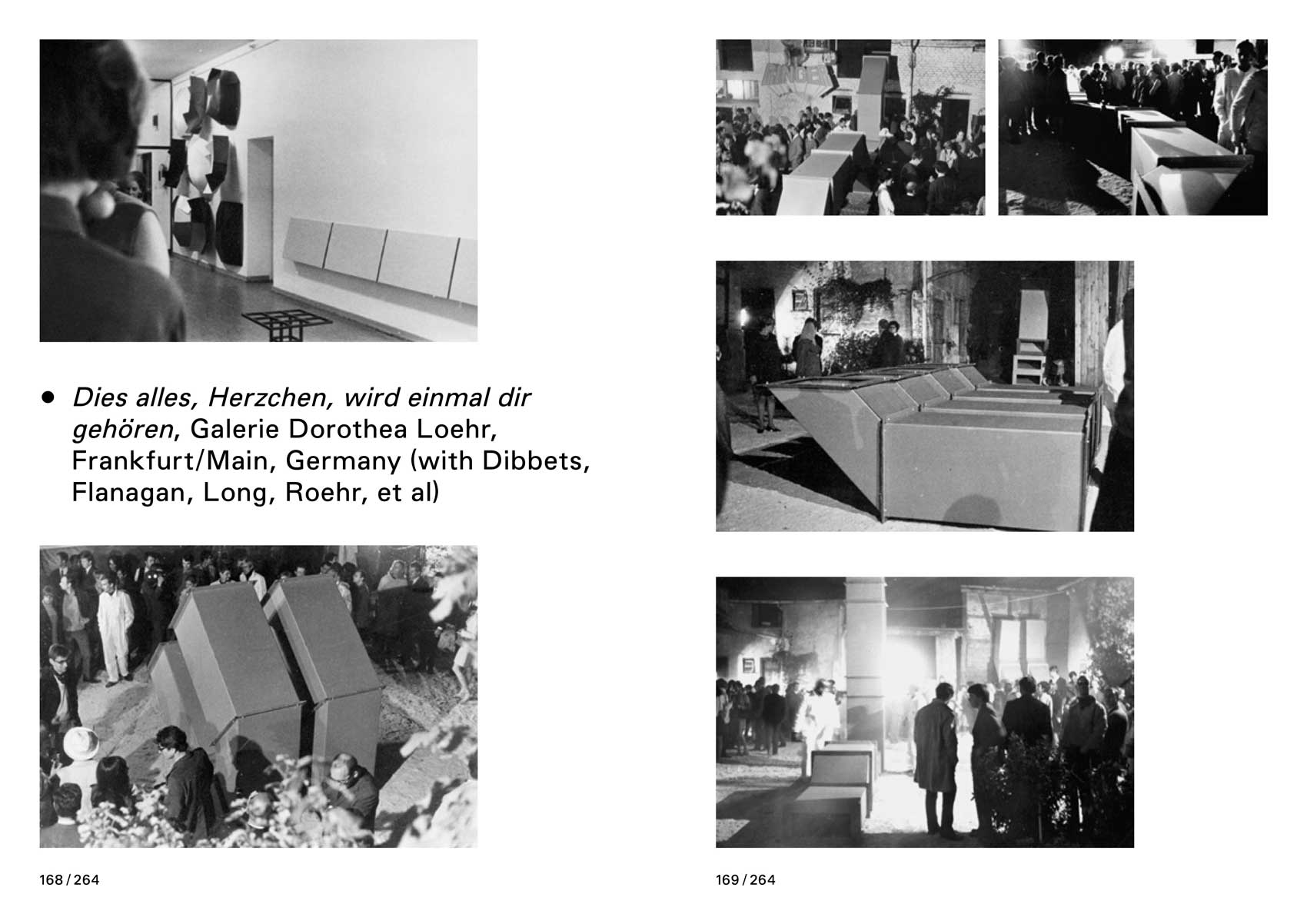
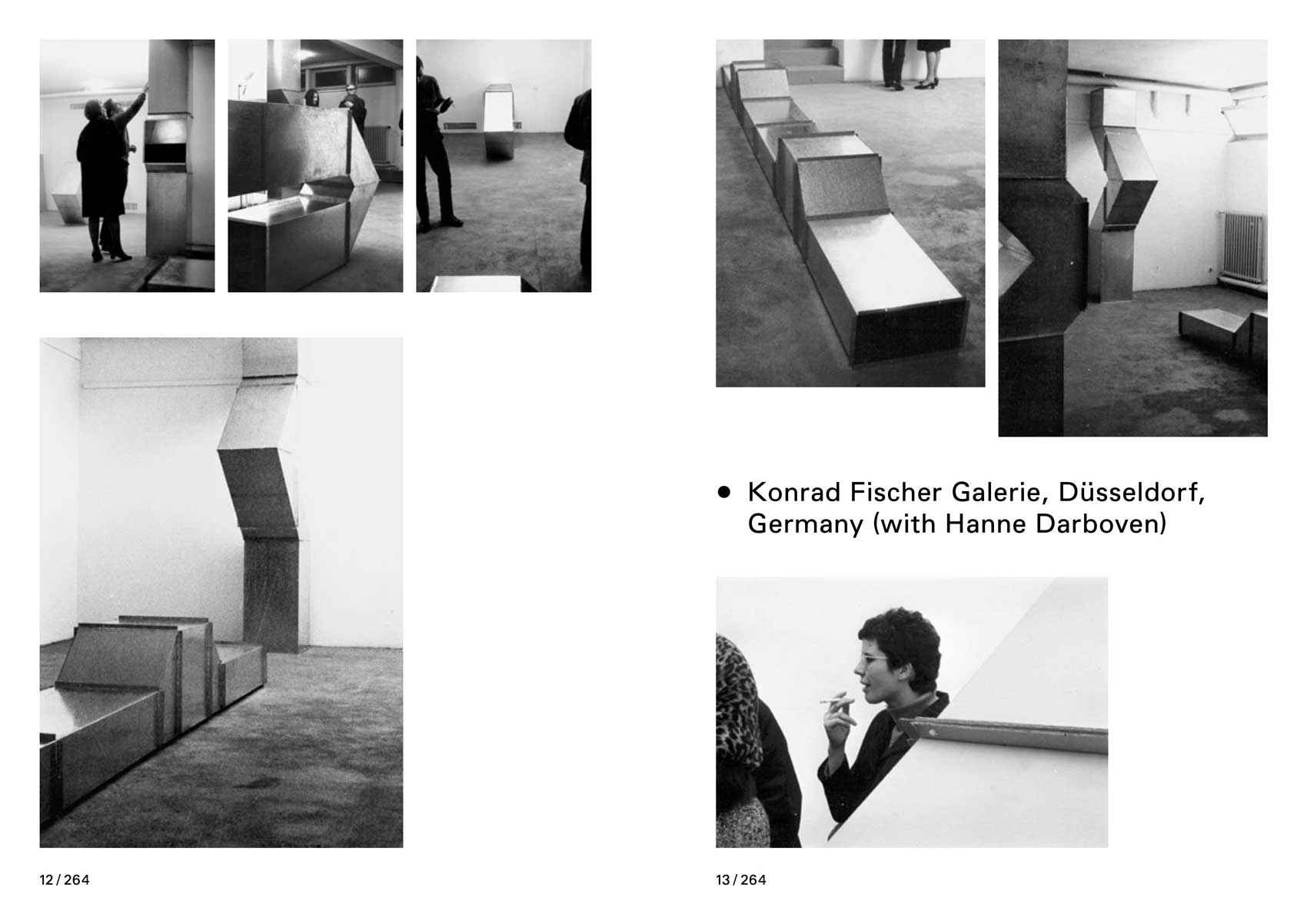
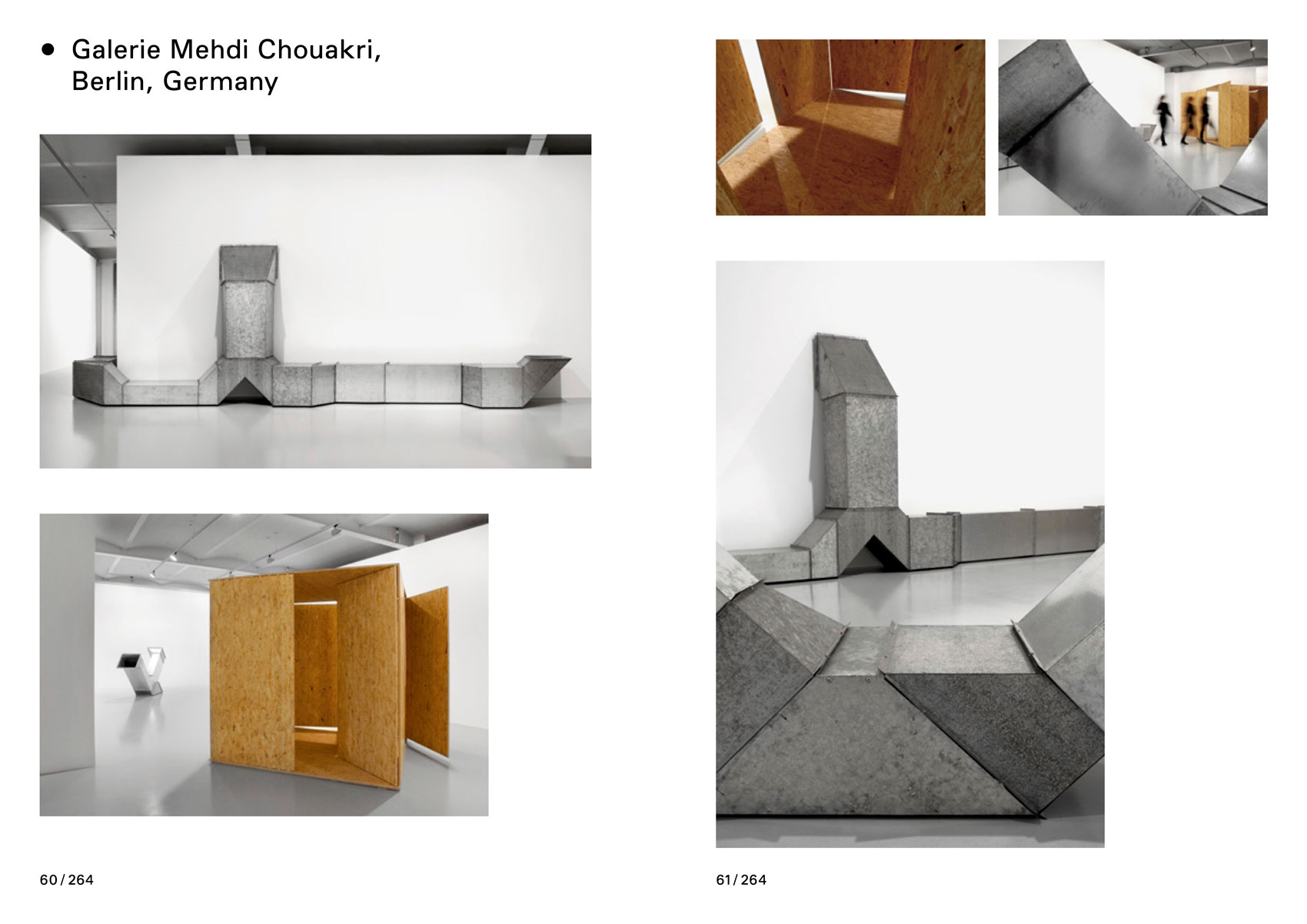
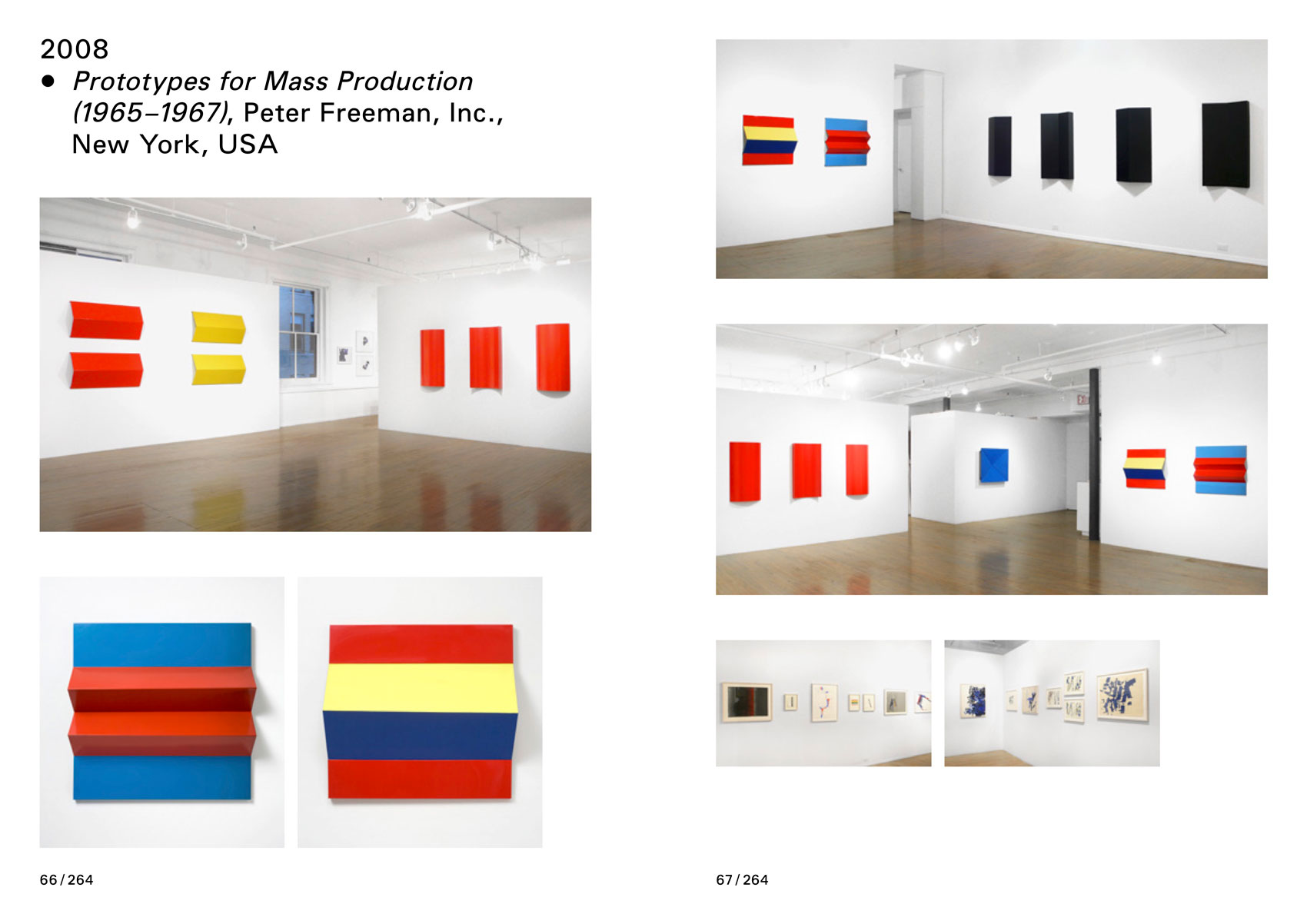
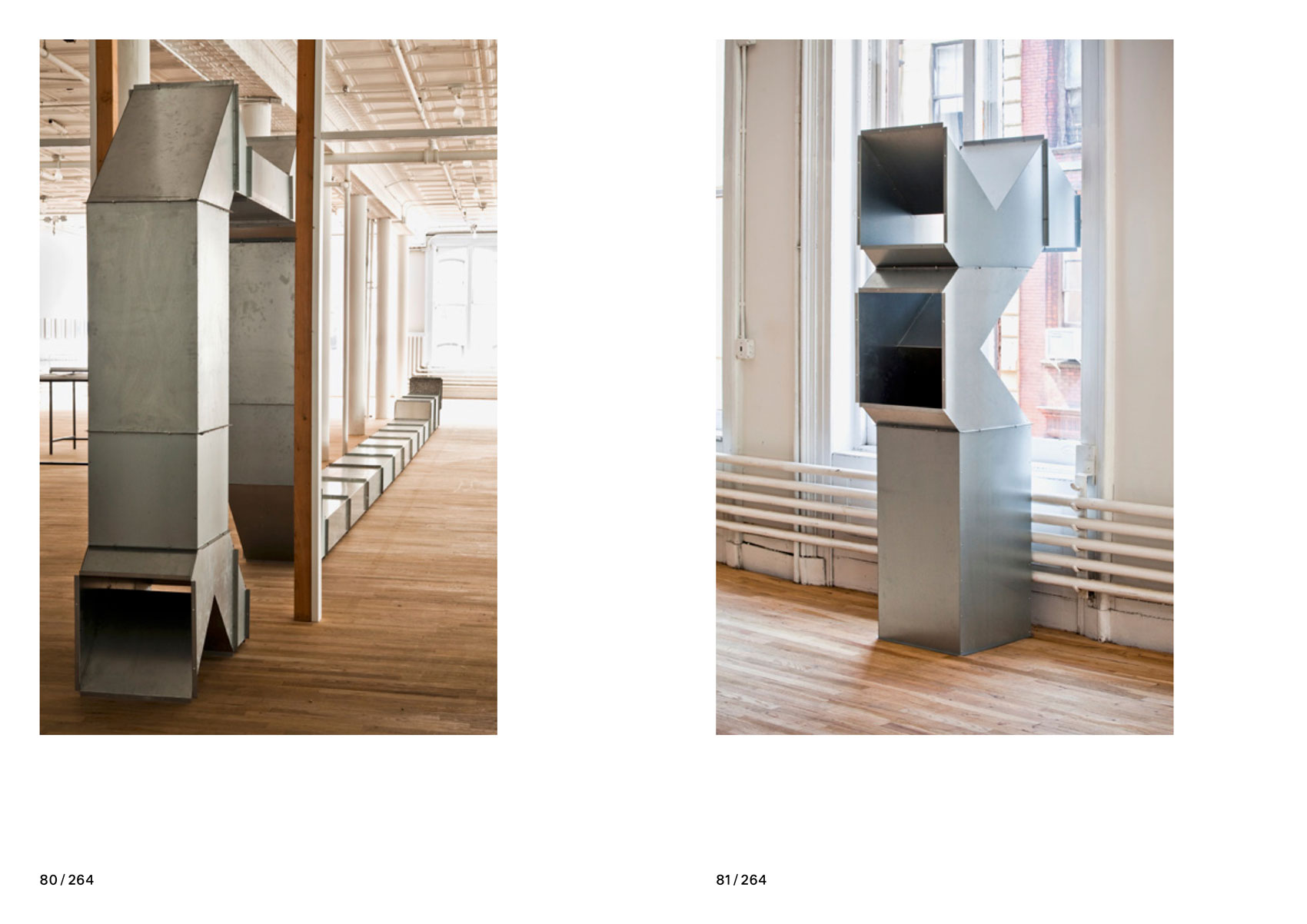
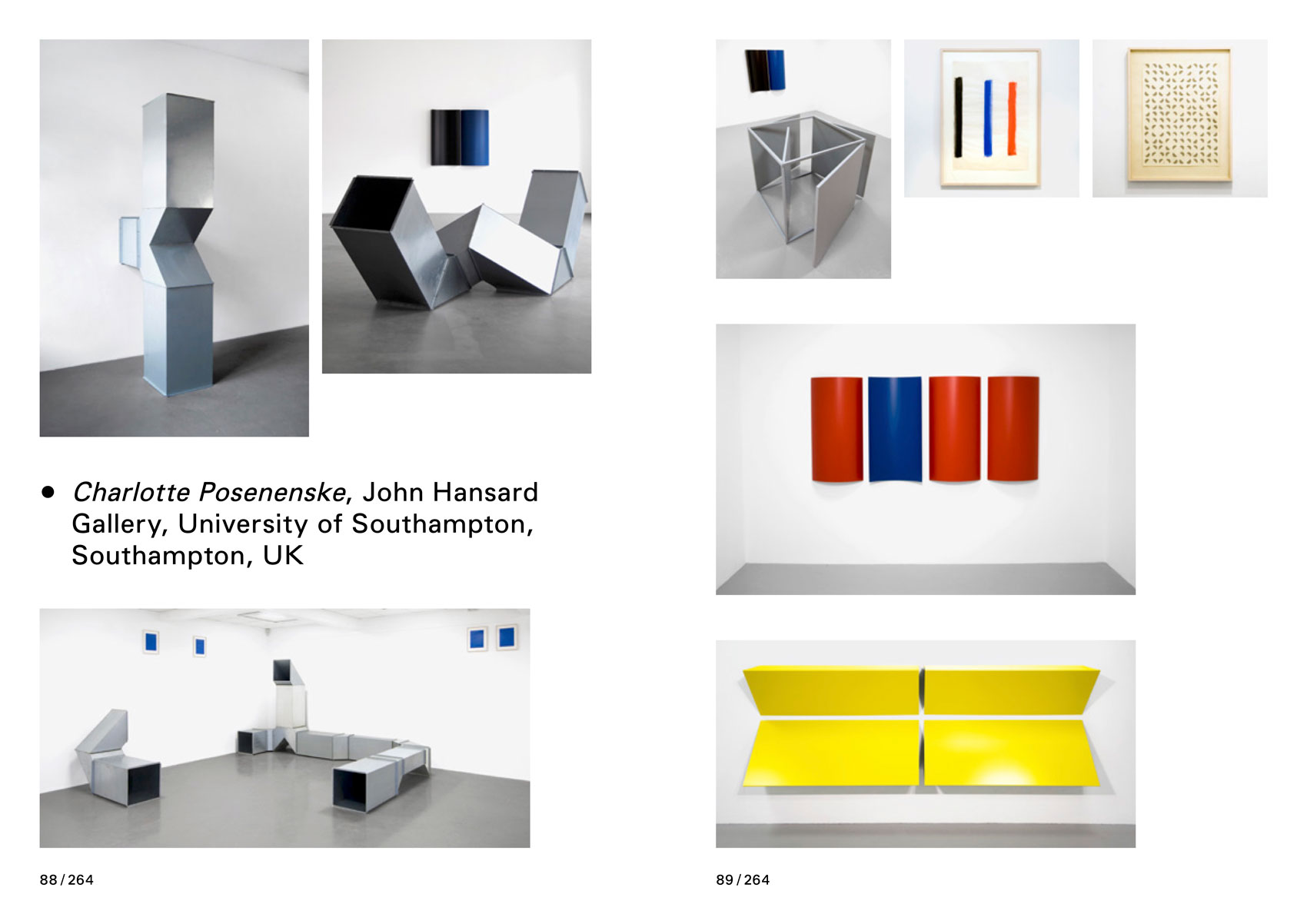
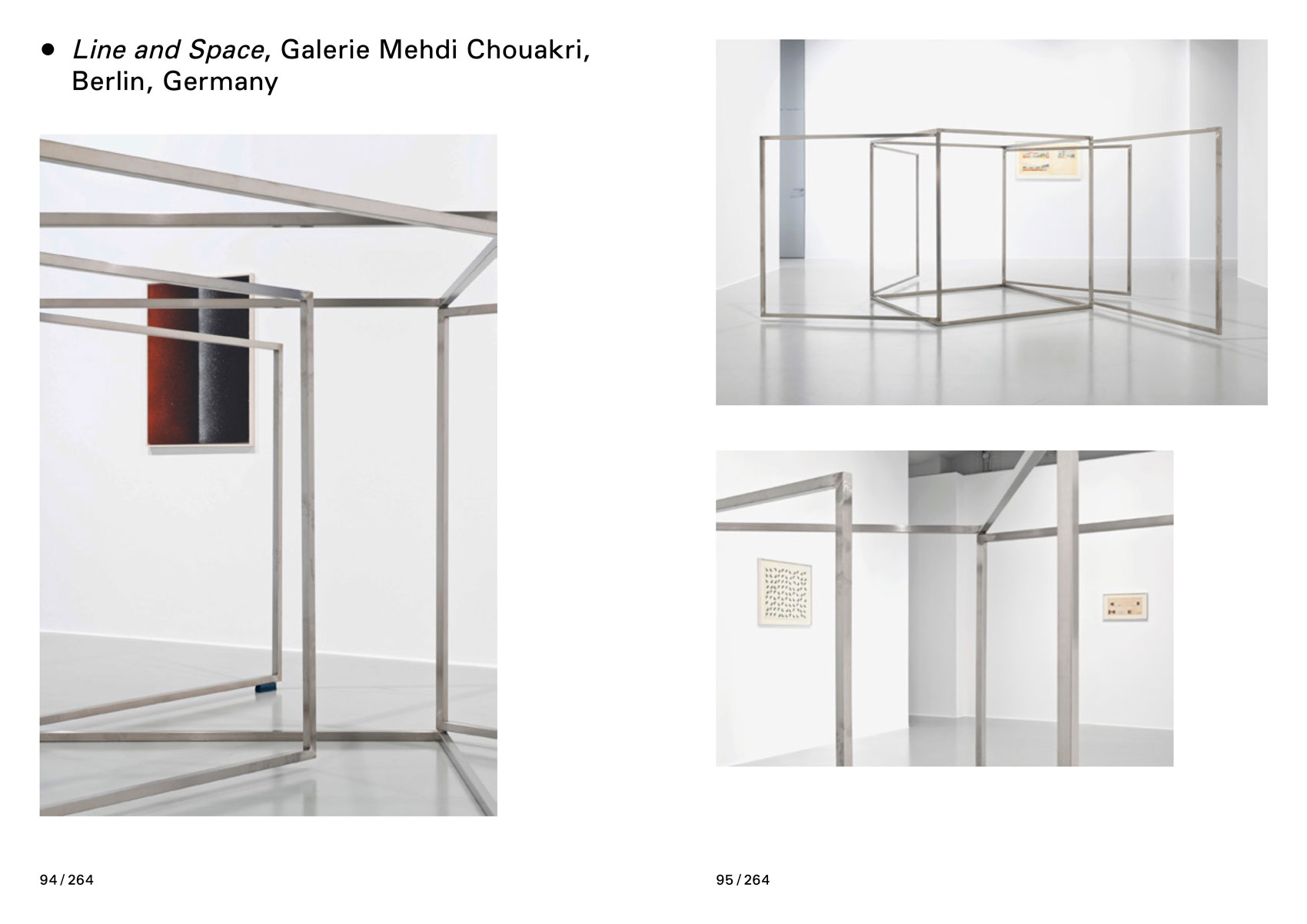
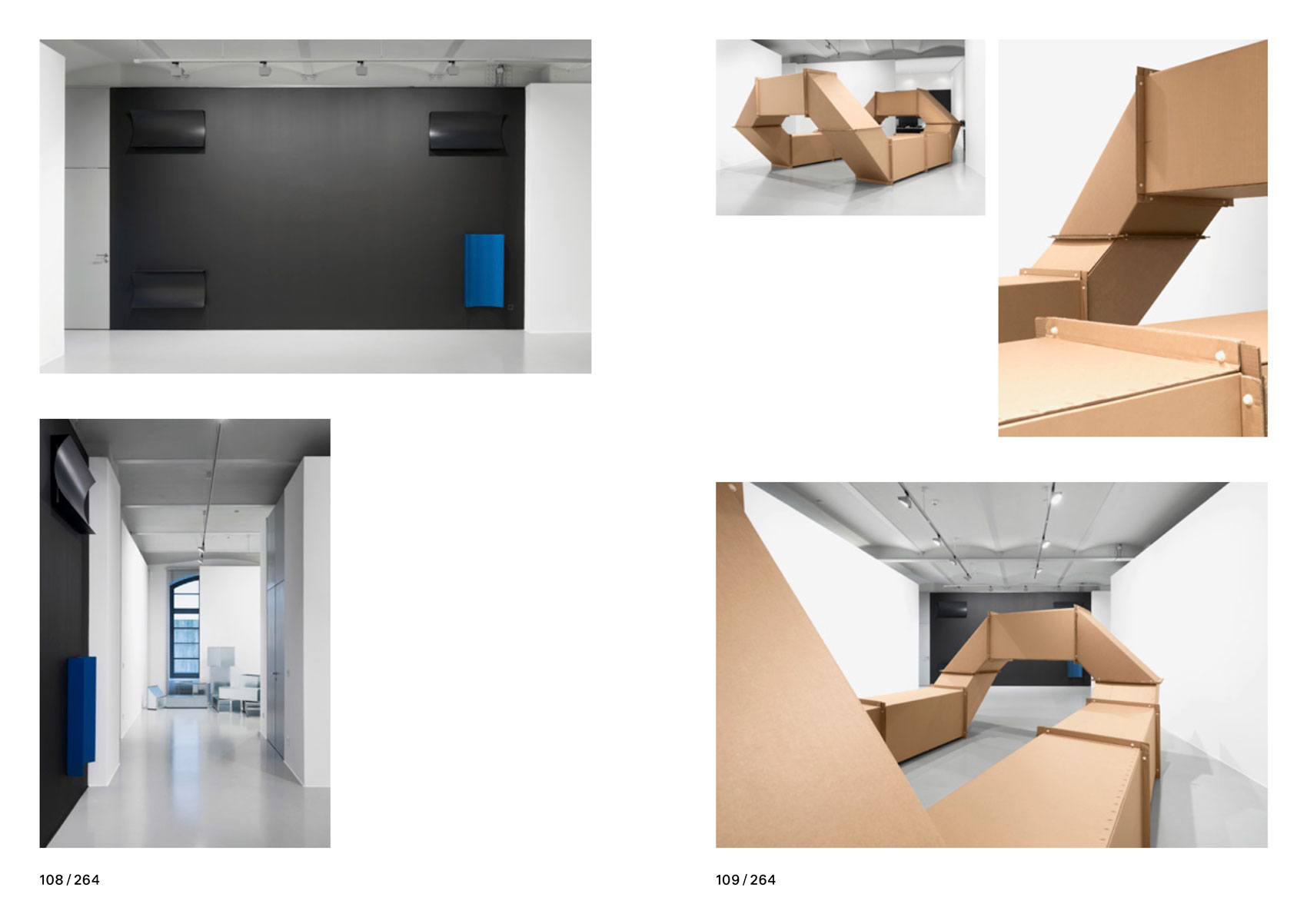
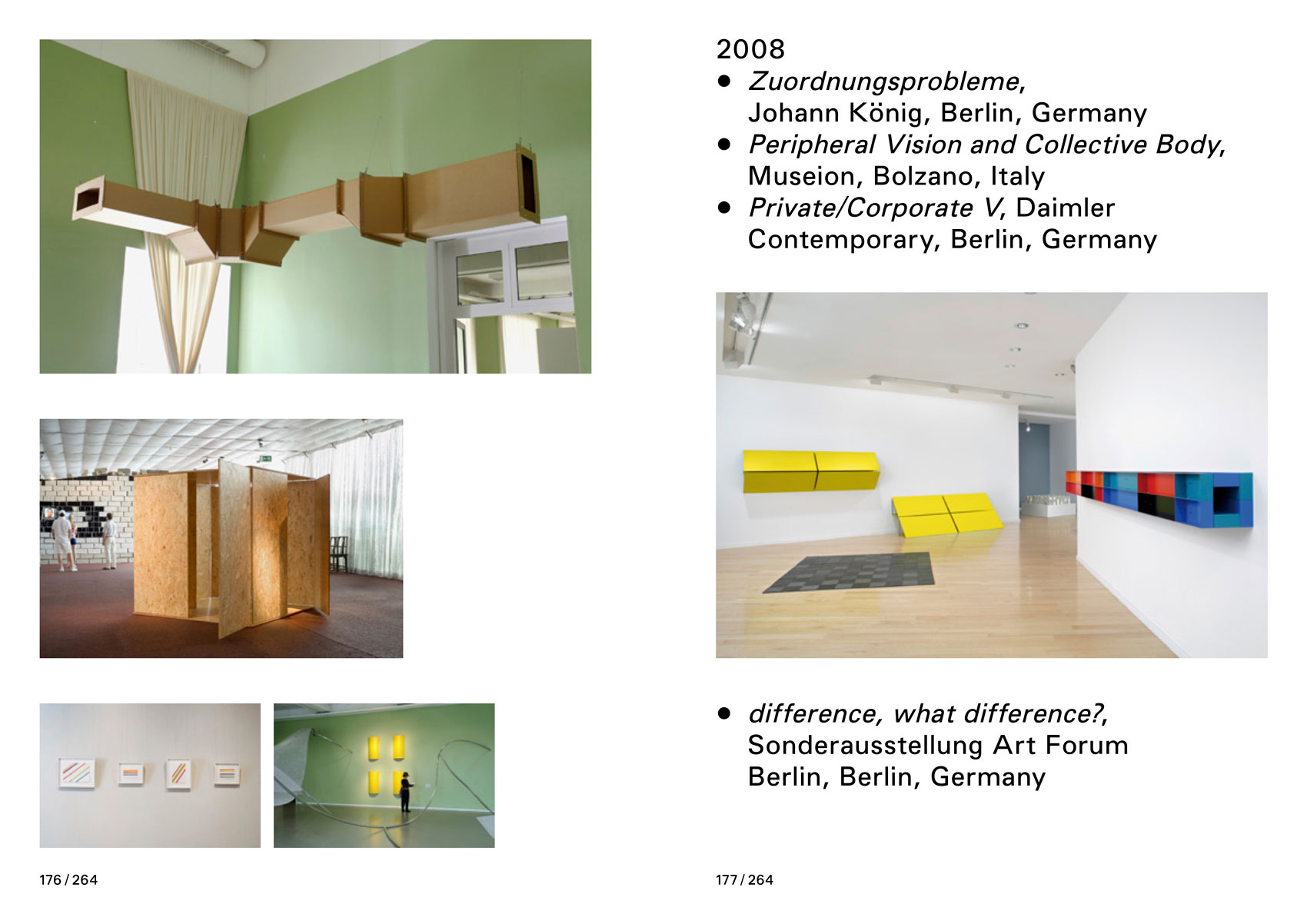
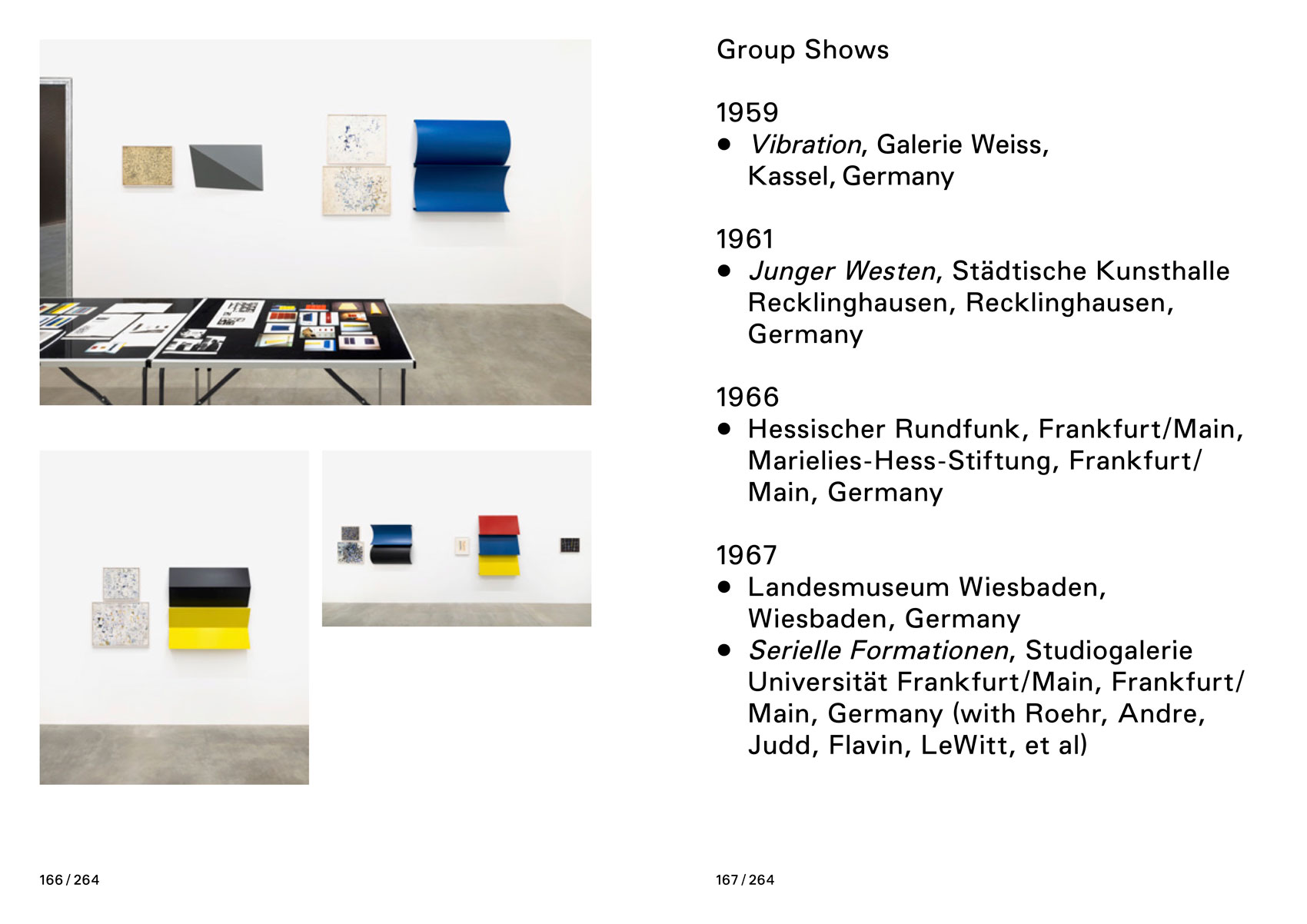
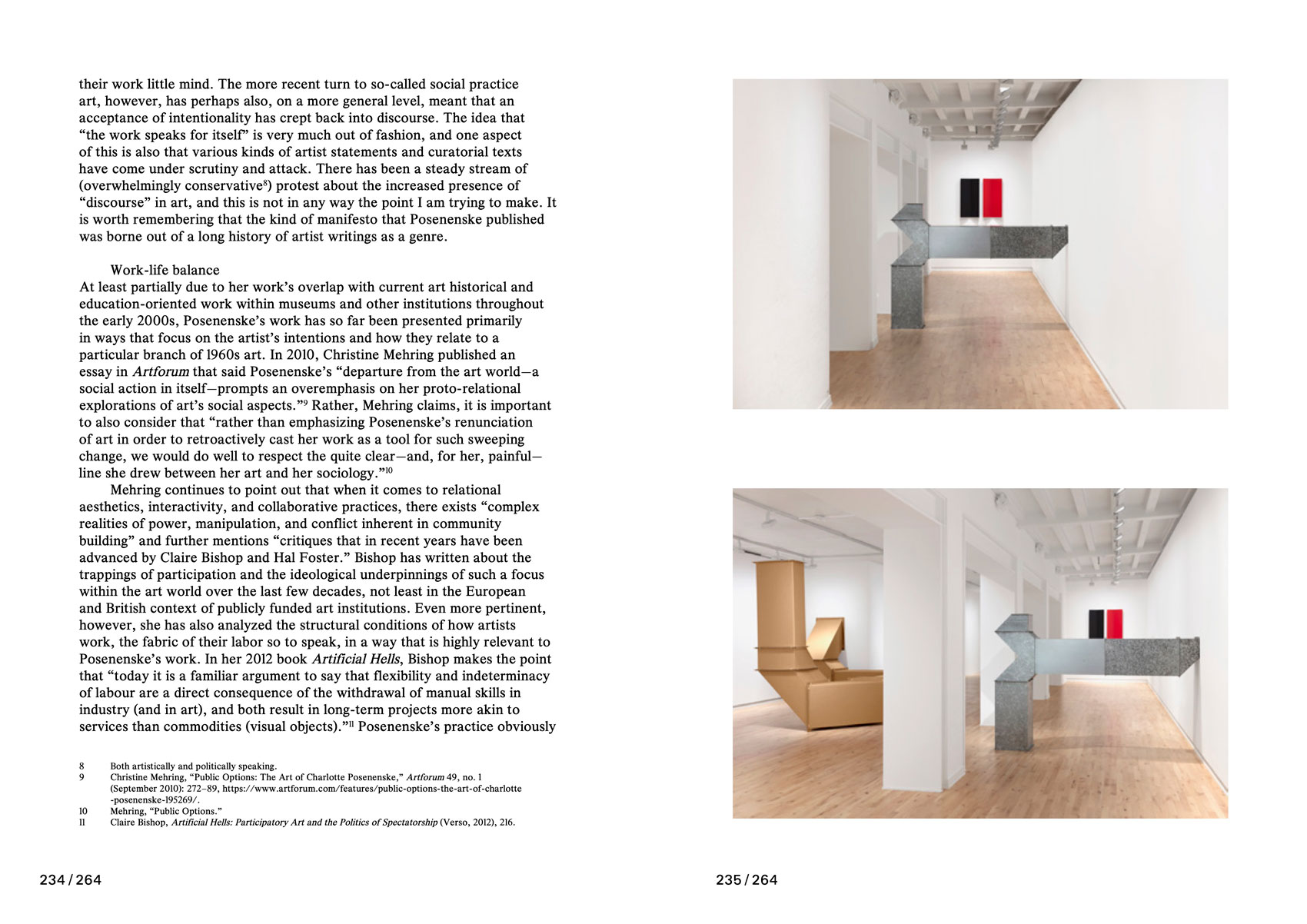
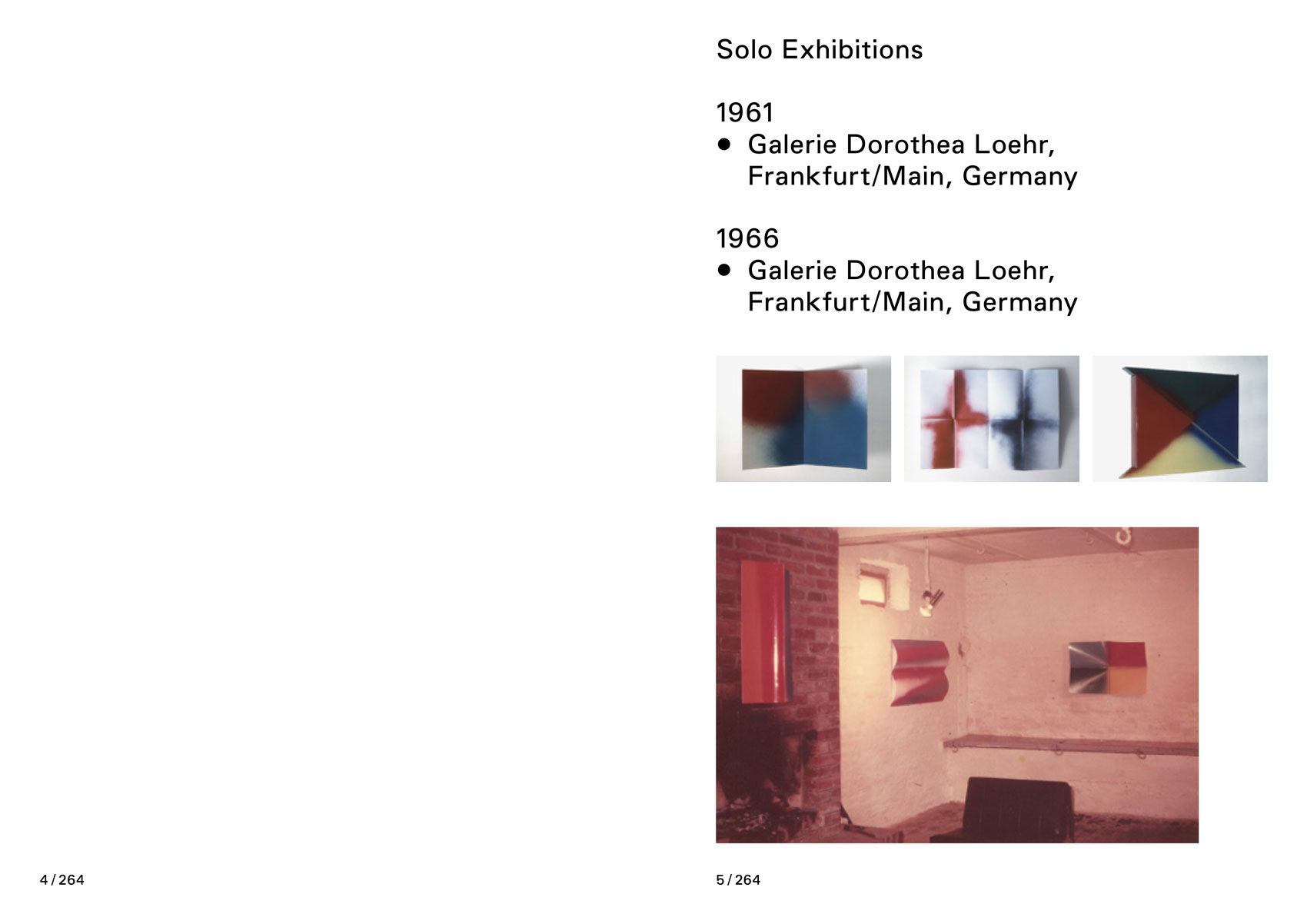
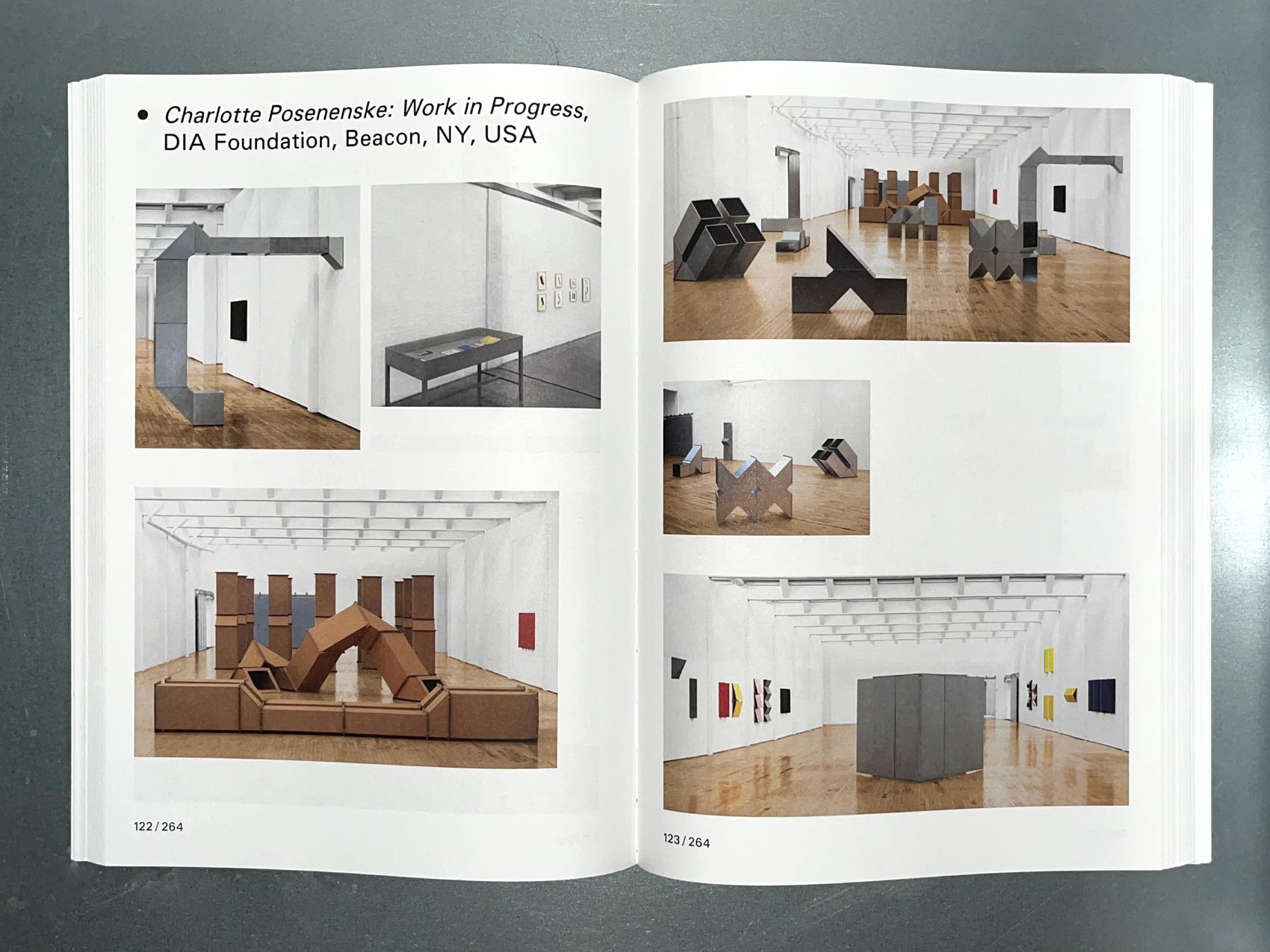
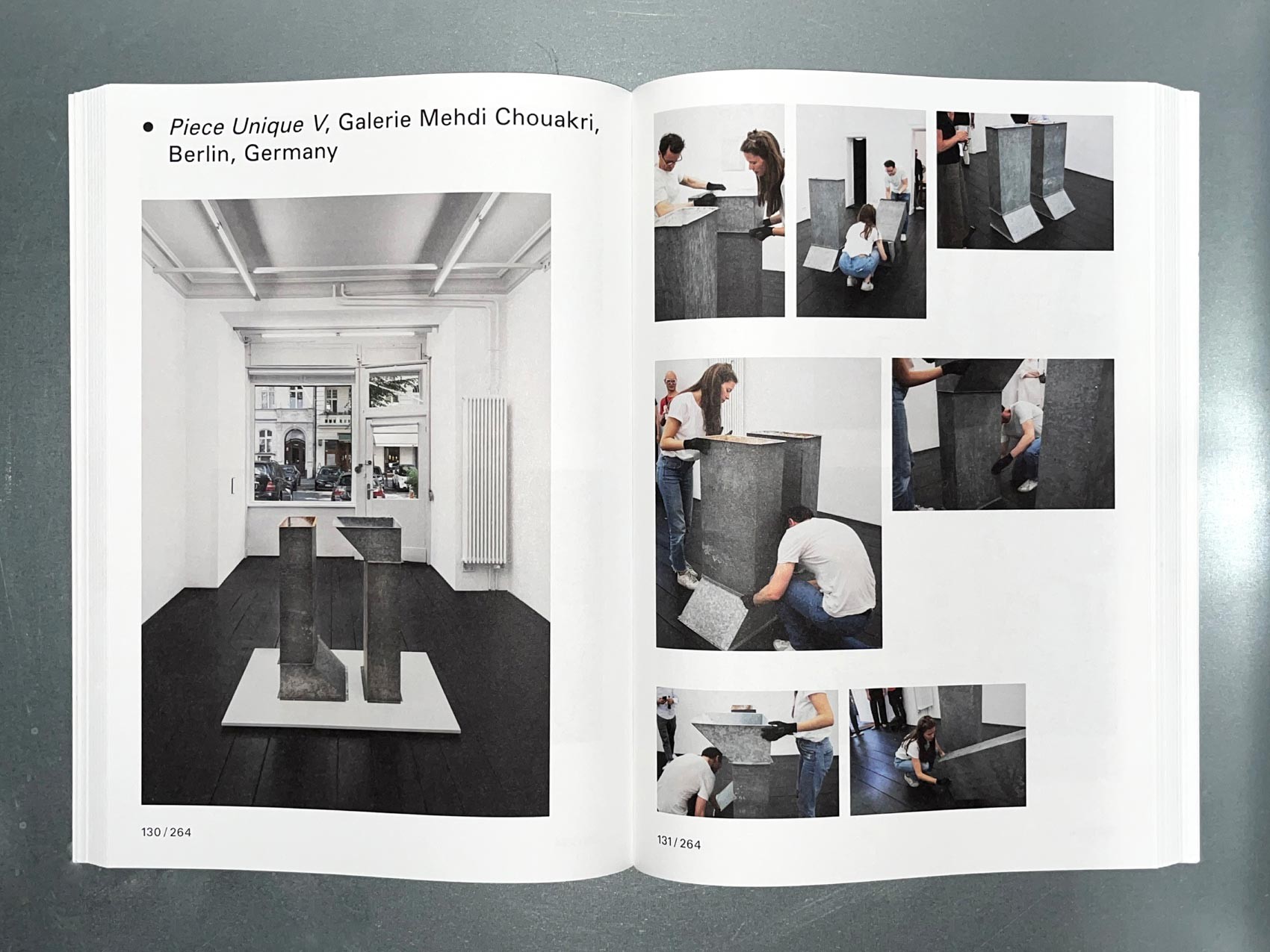
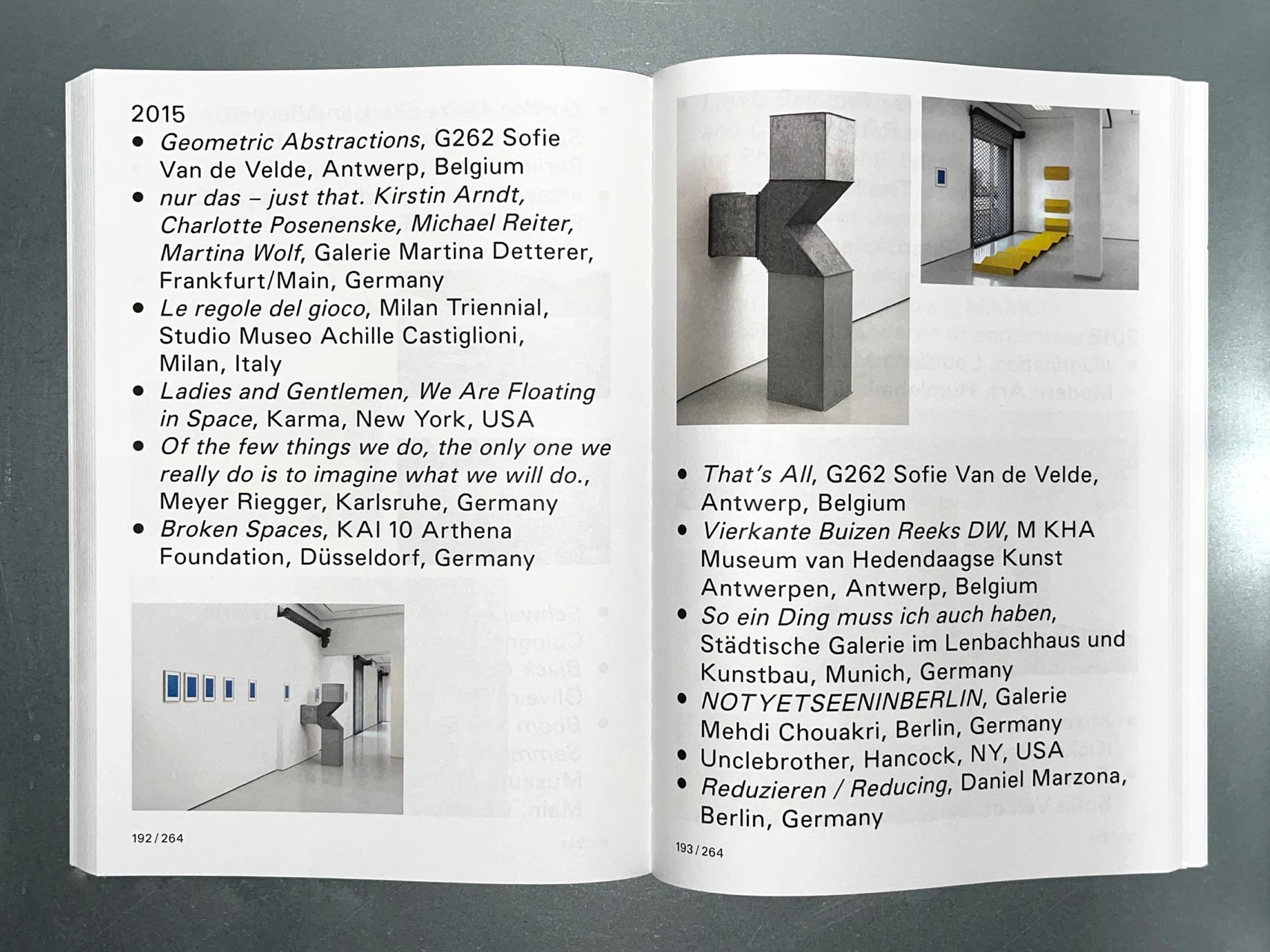
Conceived as a visual résumé, Installation Views provides both a comprehensive overview of Charlotte Posenenske’s solo exhibitions and a record of her numerous group shows. The book features an essay written by curator Erlend Hammer on the role of documentary photographs in the circulation of works of art.
The book was published in conjunction with the eponymous show at the Haugar Art Museum in Tønsberg, Norway—the first full-scale presentation of the artist’s oeuvre in Scandinavia. The exhibition showcased works from all the artist’s major series of modular sculpture. Consisting of works made over the course of less than 12 months, between 1967 and 1968, preceding the abrupt end to Posenenske’s career as an artist, the exhibition had the character of a snapshot. We are left wondering whether her withdrawal from the art world was a logical or necessary consequence of the development of the series. What are we to do with Posenenske’s assertion that art is powerless to effectively change society for the better?