For years now, the Die Vier von der Tankstelle (Four from the Gas Station) have been roaming across an area stretching out to the south of the Baltic Sea. They prowl their way through sparsely populated areas, wantonly terrorizing the inhabitants. The 2026 calendar by Jos de Gruyter and Harald Thys bears witness to their presence.
The first monograph dedicated to Lorenza Longhi, published with the Kunst Museum Winterthur, adopts a format associated with prototypes, manuals, or working documents. Its irregularities reflect Longhi’s ongoing examination of value, functionality, and the aesthetics of the everyday.
This publication is an extensive monograph devoted to the work of Carlos Bunga, published in conjunction with his eponymous show at CAM – Gulbenkian. In addition to a number of essays, which offer an in-depth look at his multifaceted practice, the book contains previously unpublished photos that reveal his working process.
The paintings and drawings by Jake Grewal draw the viewer in through stillness and ambiguity: they invite reflection on how we inhabit places—physically and emotionally—and how our inner landscapes mirror the physical world. This is the Grewal’s first book, published to accompany the artist’s exhibition at Studio Voltaire.
The transformation of the notion of monuments and the way cultural institutions choose to deal with it find in Maurizio Cattelan an interpreter capable of manipulating historical memory and shared symbols, to the point of turning them into a terrain of doubt and play. Lisa Parola and Lorenzo Giusti investigate the potential of contemporary art within the public sphere.
This is a visual archive of 12 years of developing, designing and exhibiting the House of One, a multireligious sacred space in the heart of Berlin. The architecture, conceived by Kuehn Malvezzi, has been displayed at various venues while being developed in close collaboration with three local religious communities in Berlin since 2012.
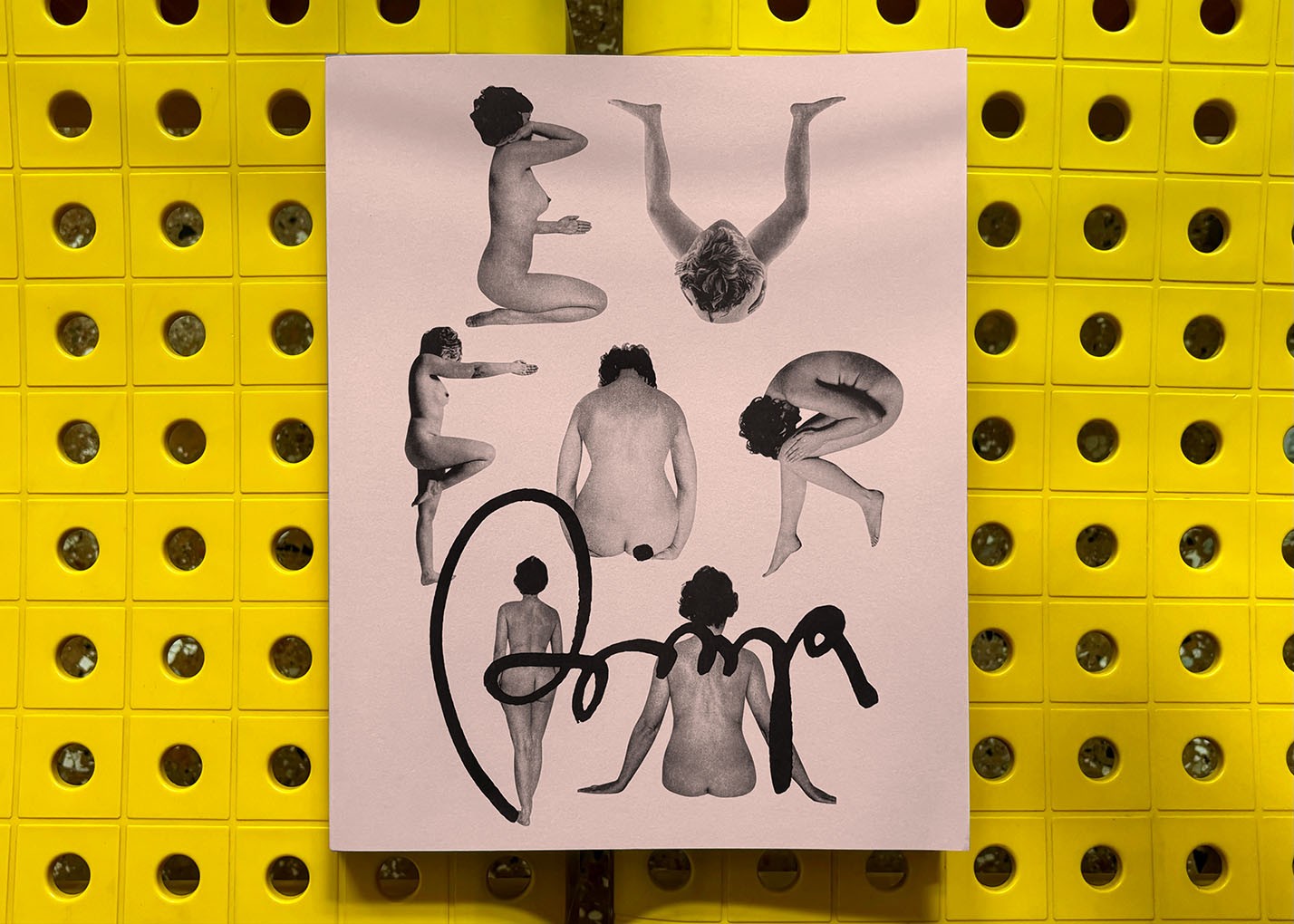
Edited by Eva Fabbris, Lilou Vidal, Stefania Zuliani with Anna Cuomo
Texts by Tomaso Binga, Eva Fabbris, Daria Khan, Quinn Latimer, Luca Lo Pinto, Lilou Vidal, Stefania Zuliani
Designed by Lorenzo Mason Studio
2024, English / Italian, softcover, 24 x 30 cm, 304 pages
ISBN: 979-12-80579-42-3
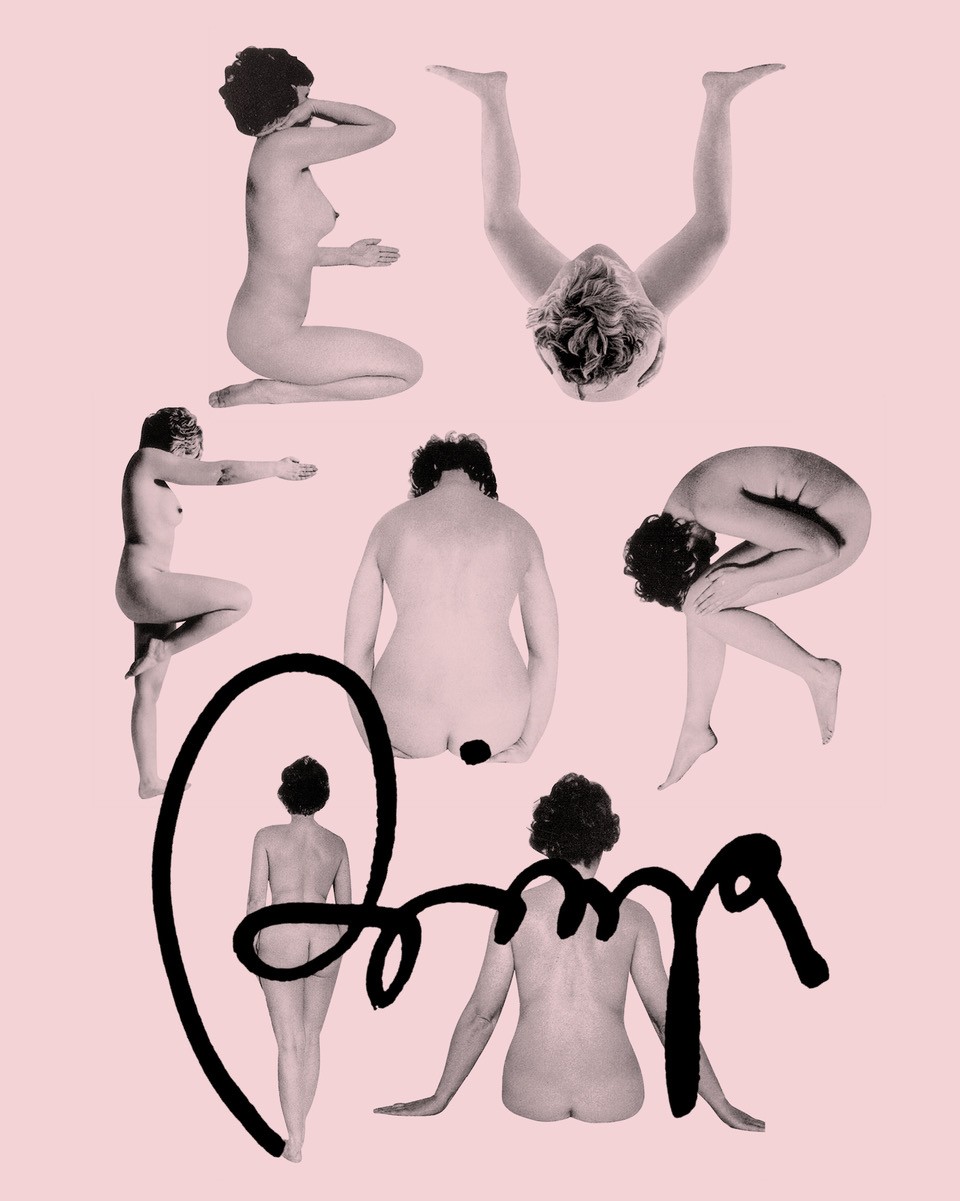
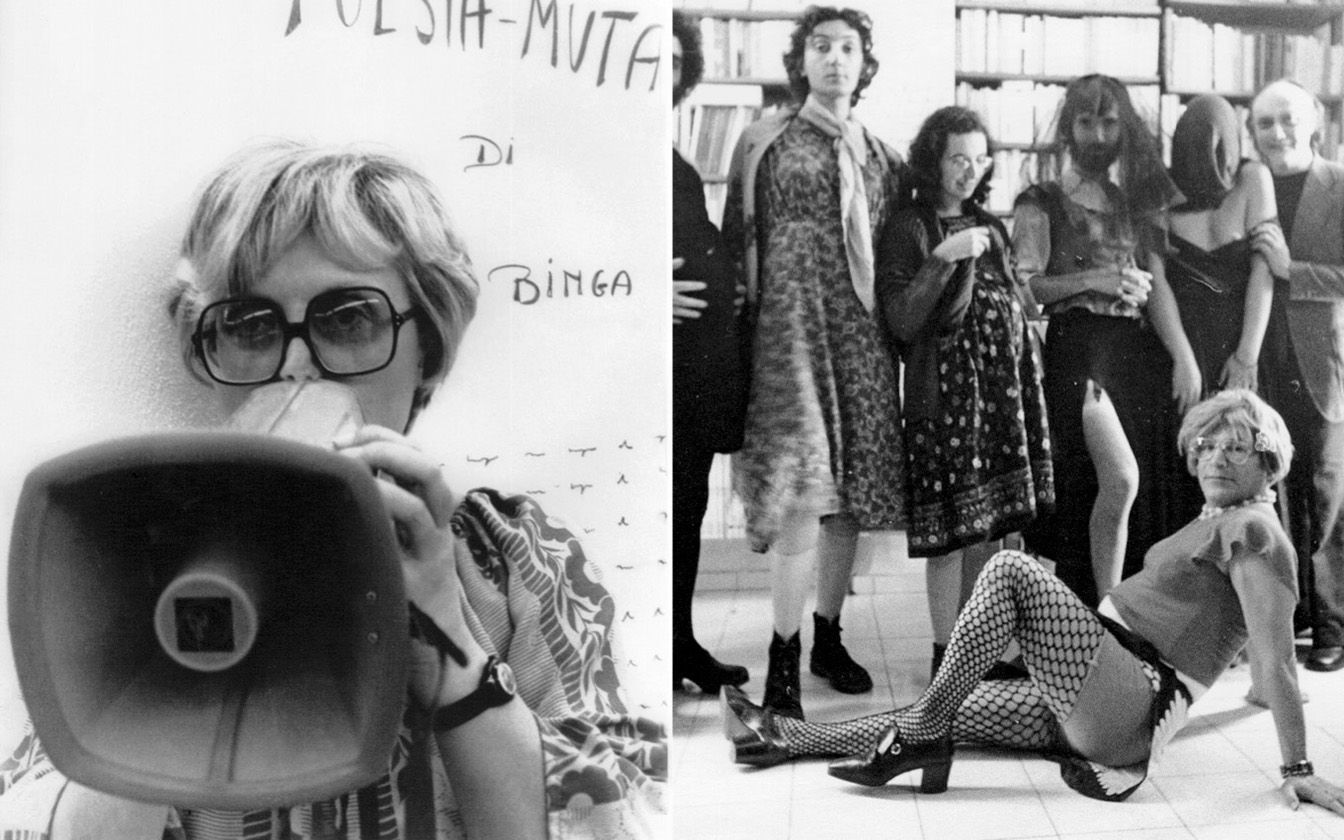
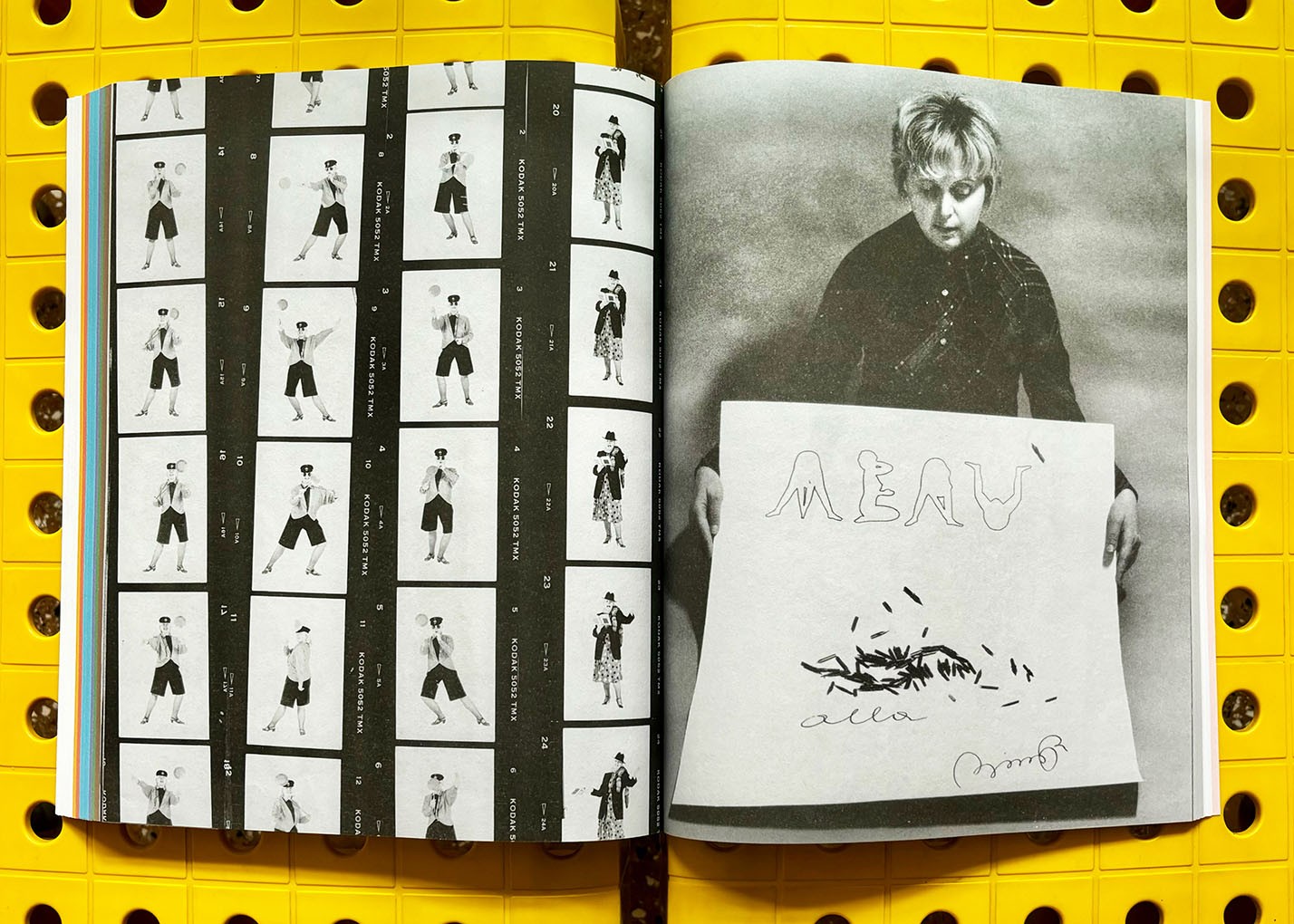
Embedded in the language of visual and sound poetry, the practice of Tomaso Binga (Bianca Pucciarelli Menna, born in Salerno in 1931) is based on an ironic, insightful questioning of the idea of gender. In her work, this theme is not only a generator of identity, but also a way of looking afresh at the social roles, rights and opportunities traditionally available to women. Her decision to work under a male pseudonym from 1971 onwards was intended to parody male privilege and to provoke a barbed reflection on the political dimension of what it is to be a woman. Her attitude has served as a key marker within the gender equality issues at the center of the debate raging amongst the younger generations.
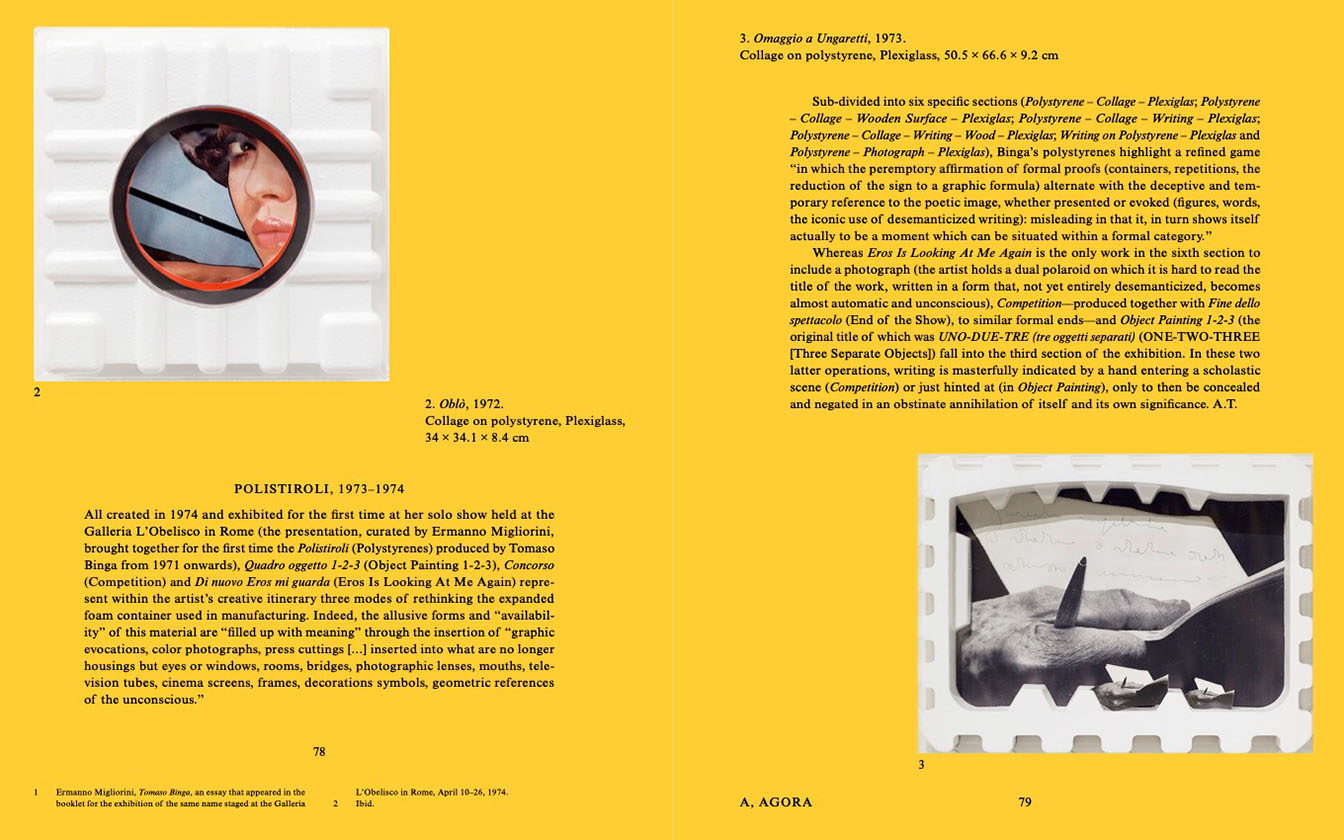
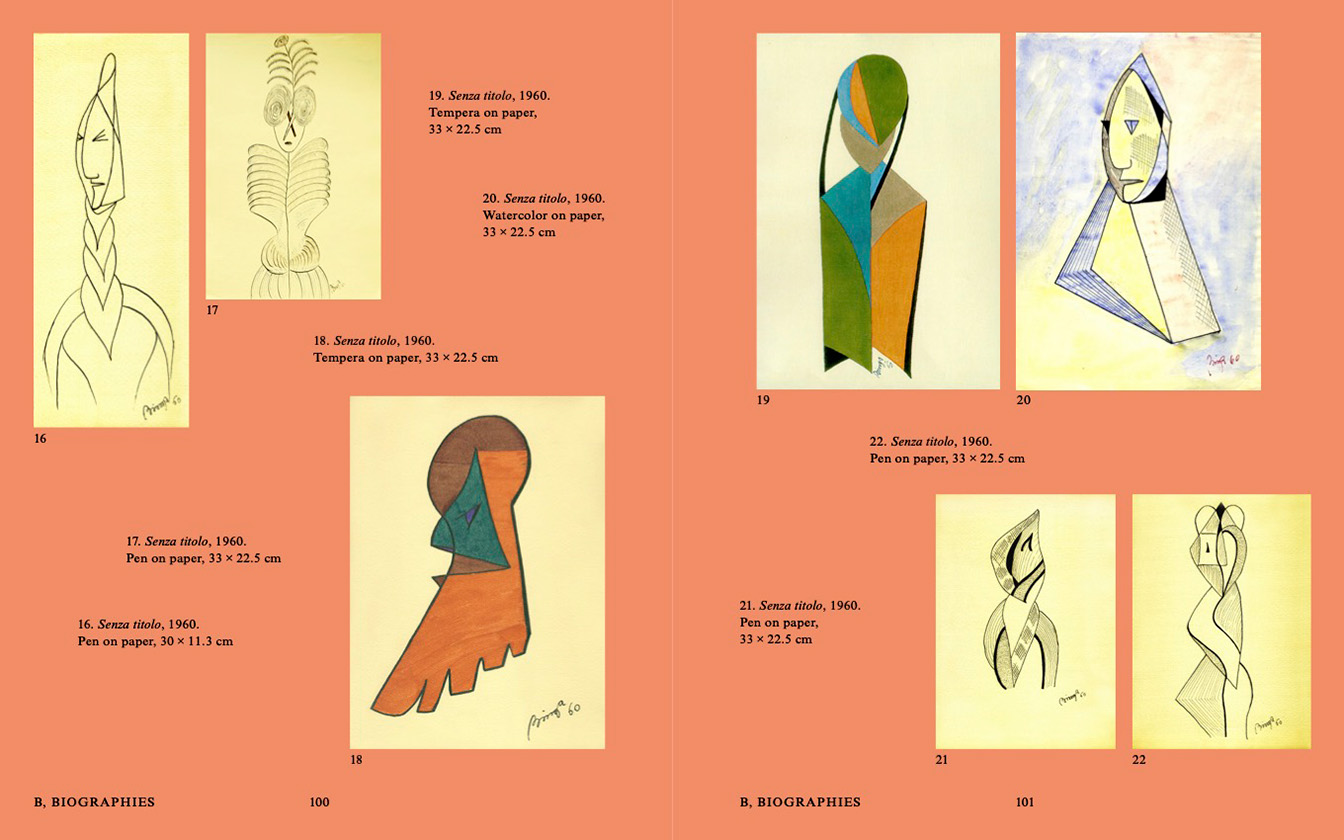
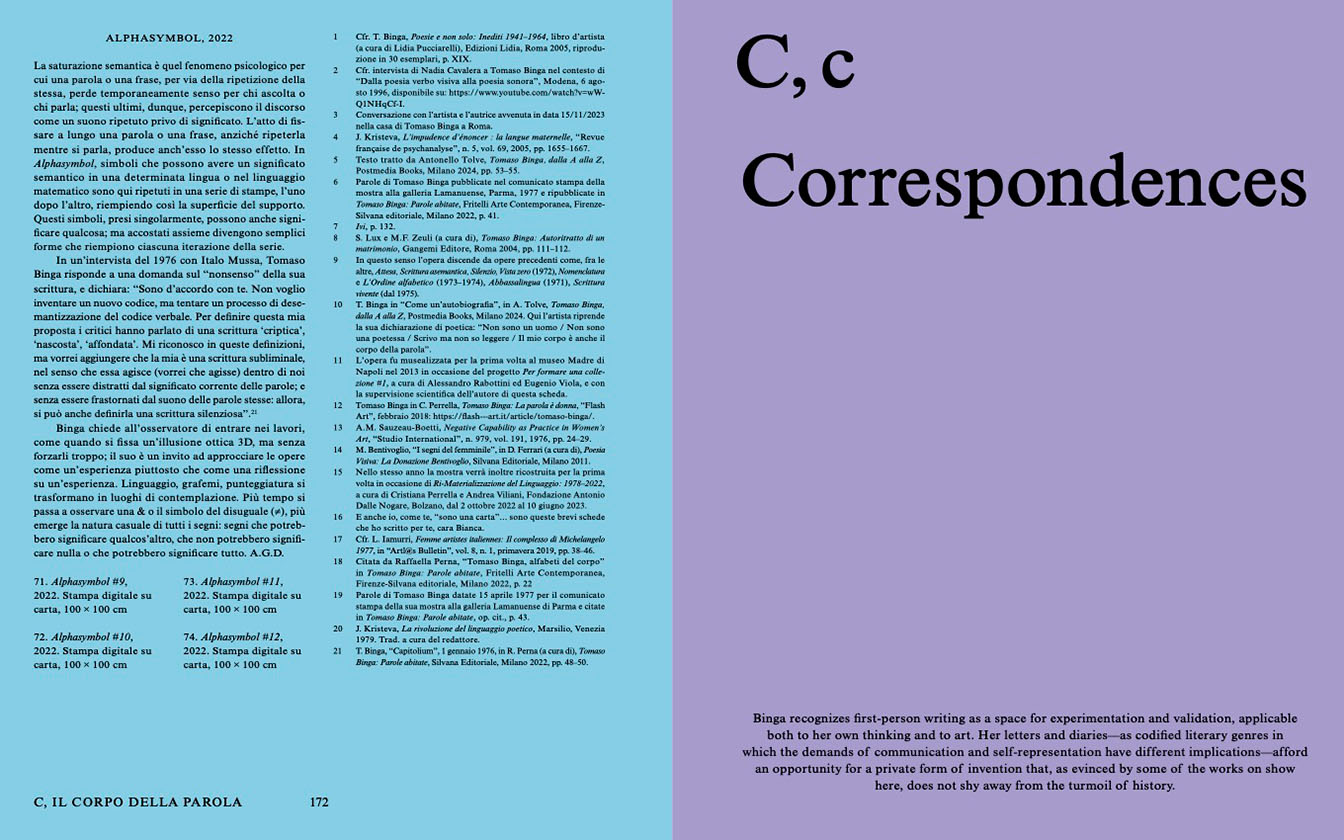
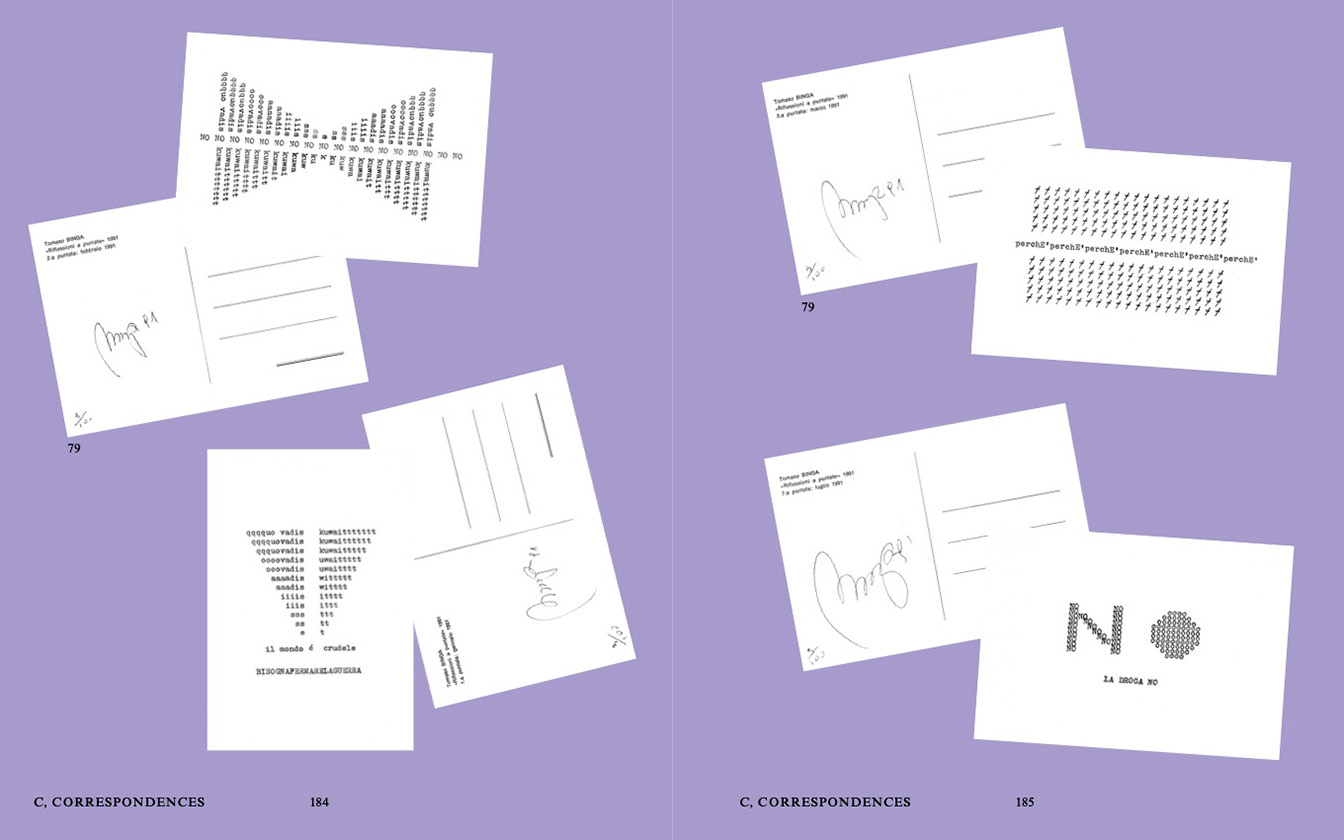
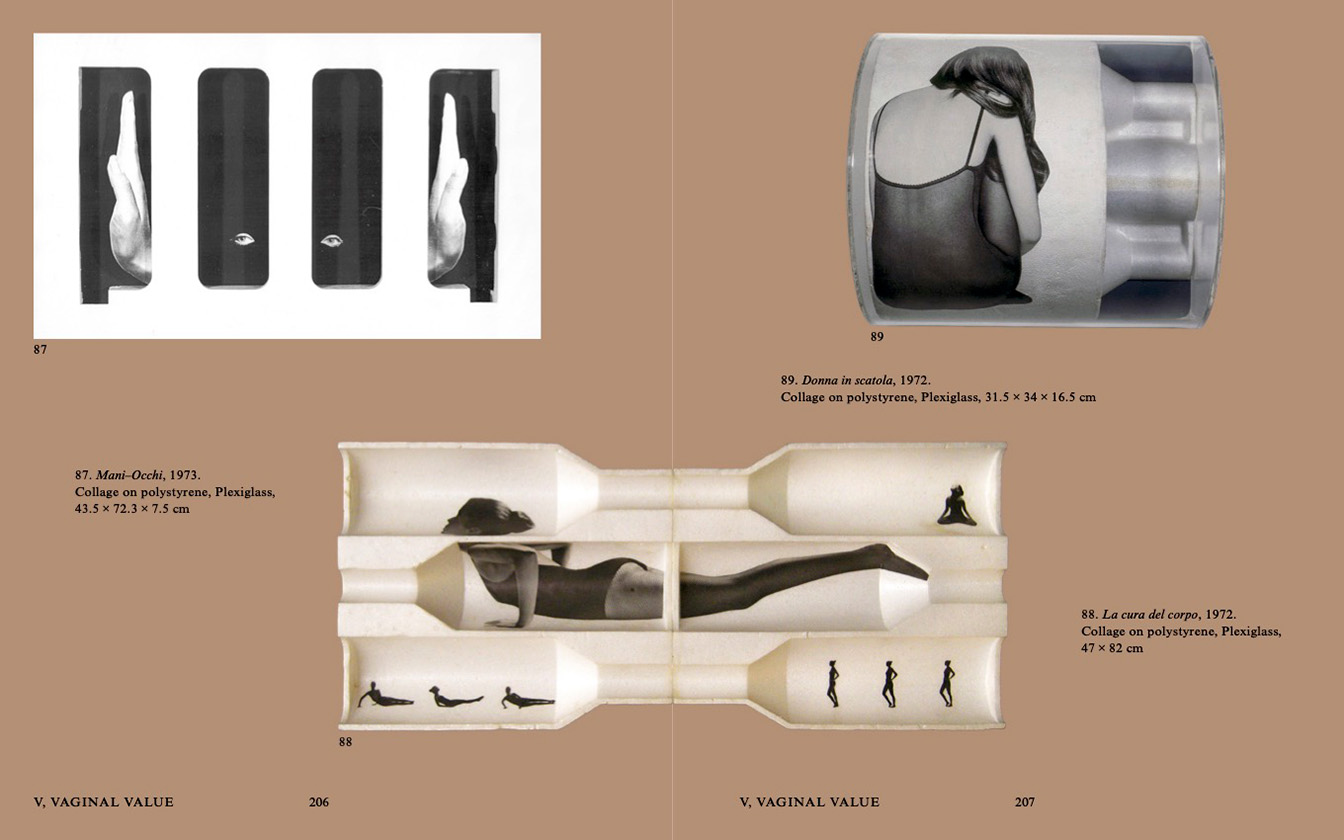
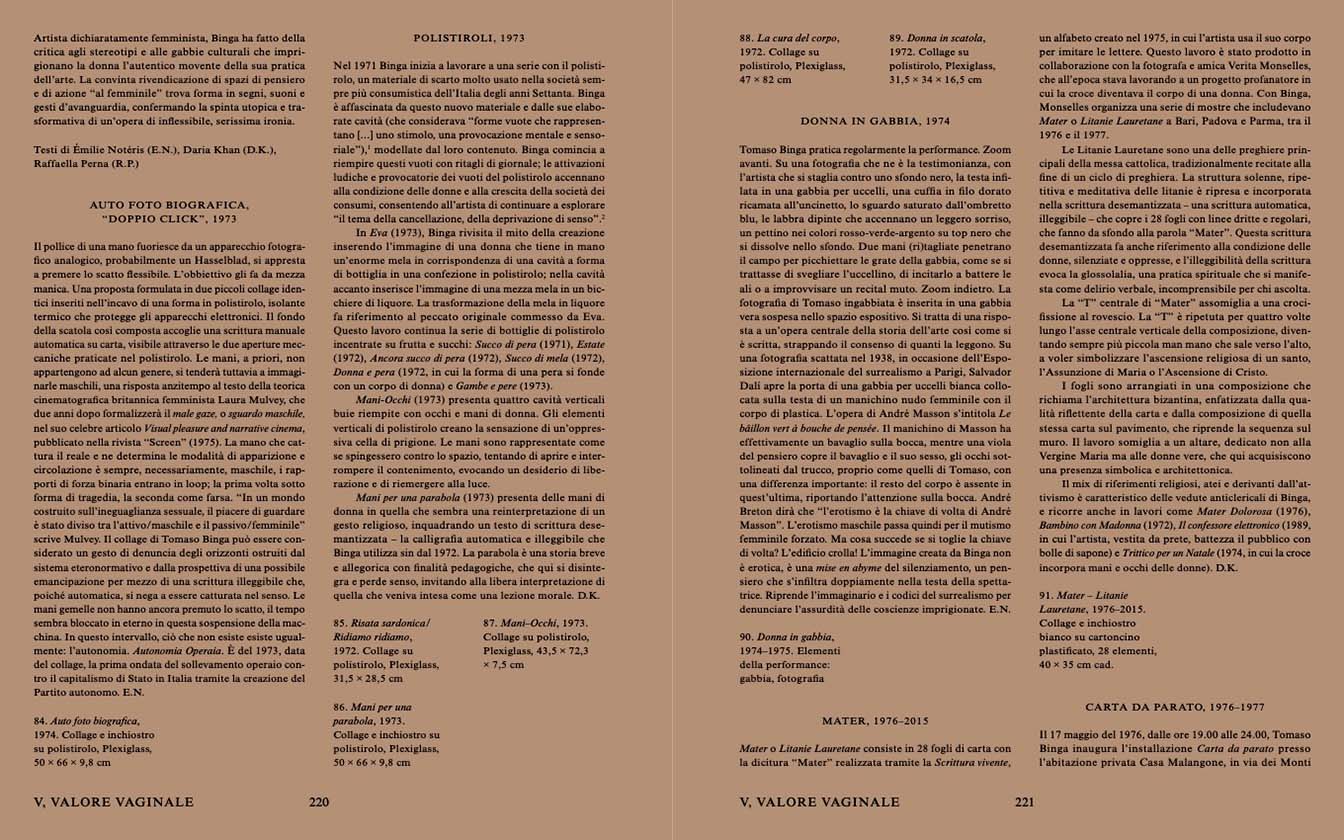
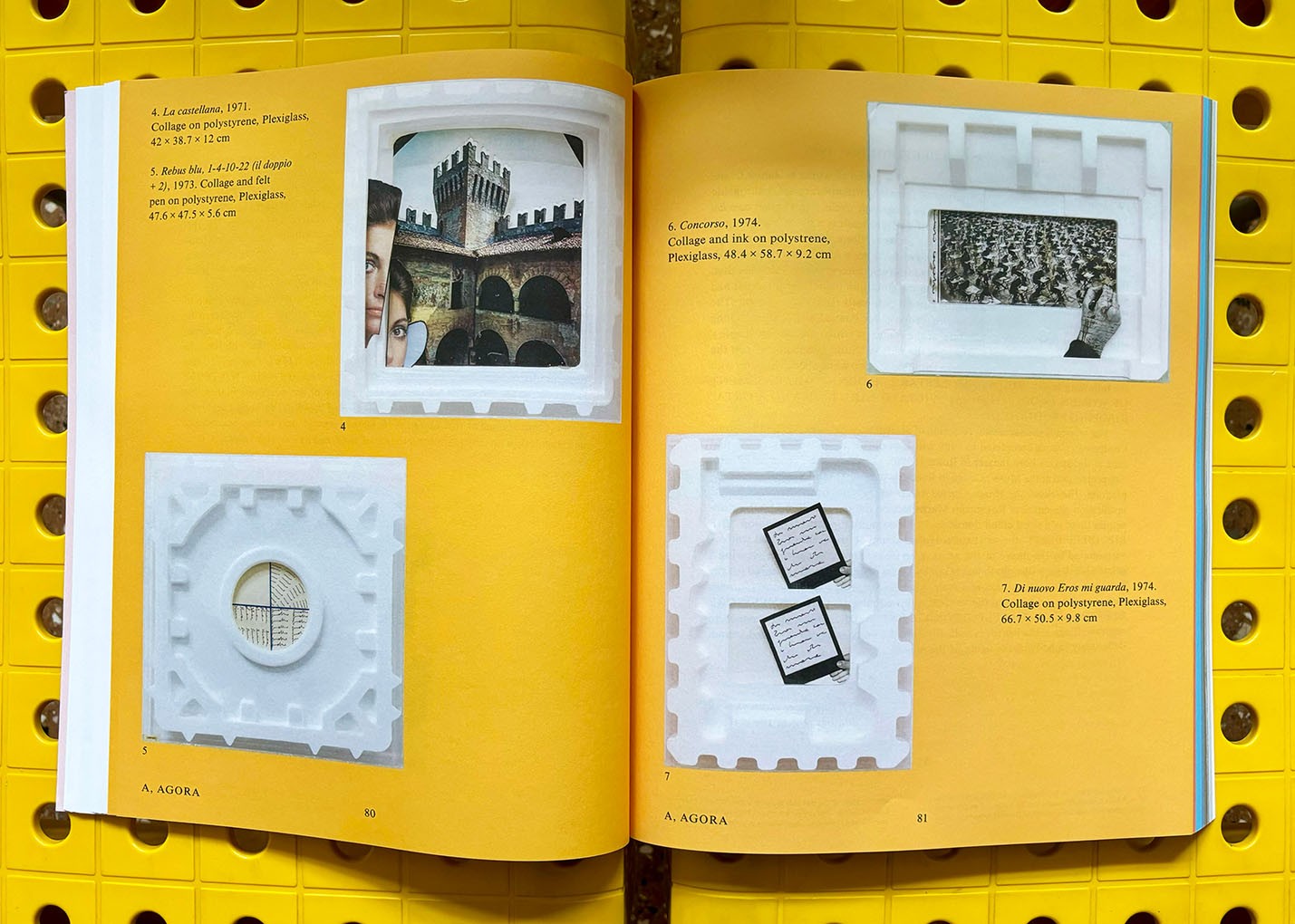
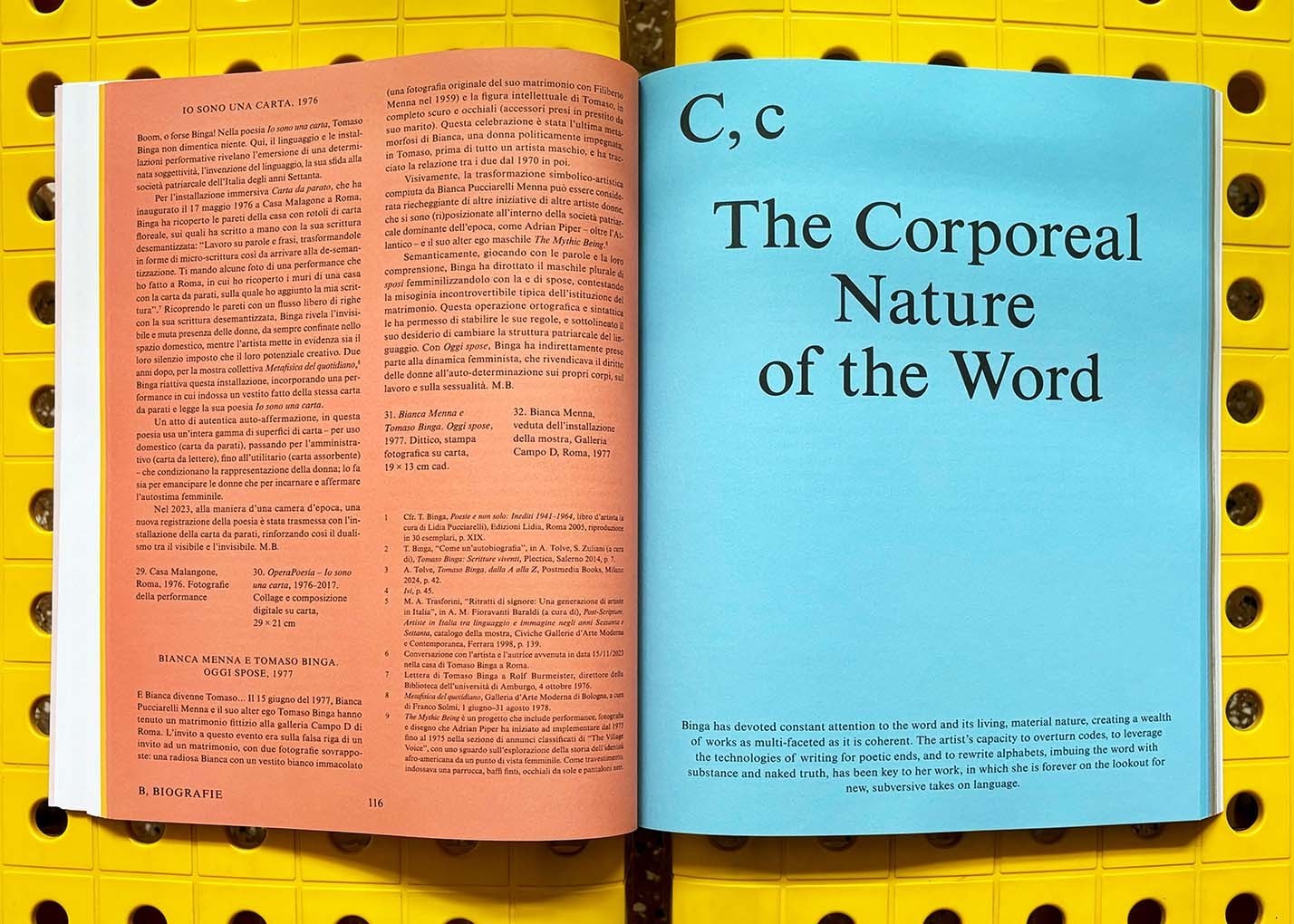
This monograph explores the work and the artistic activities of Tomaso Binga through a specific lexicon (Agora, Biographies, the Corporeal Nature of the Word, Correspondences, Geographies, Vaginal Value), and also features a selection of poems by the artist.
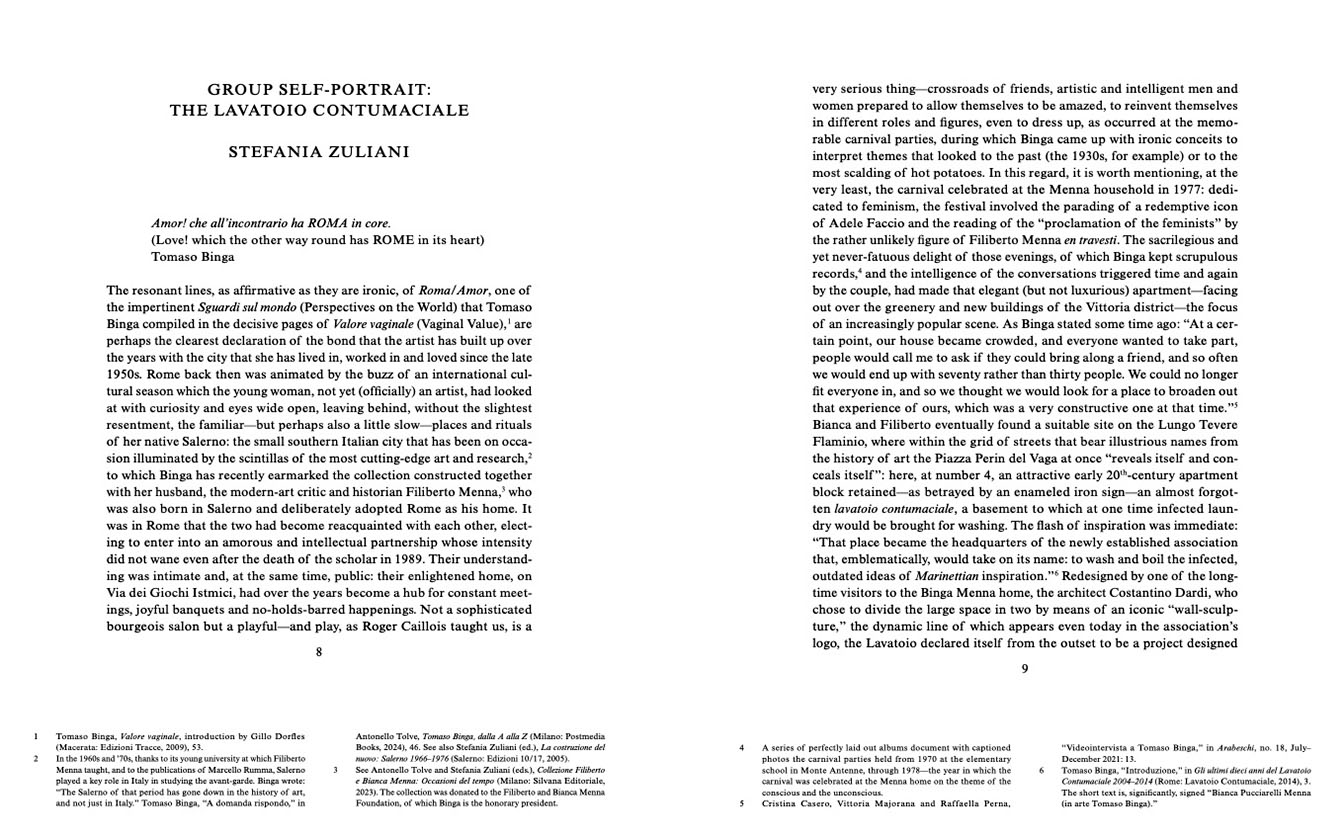
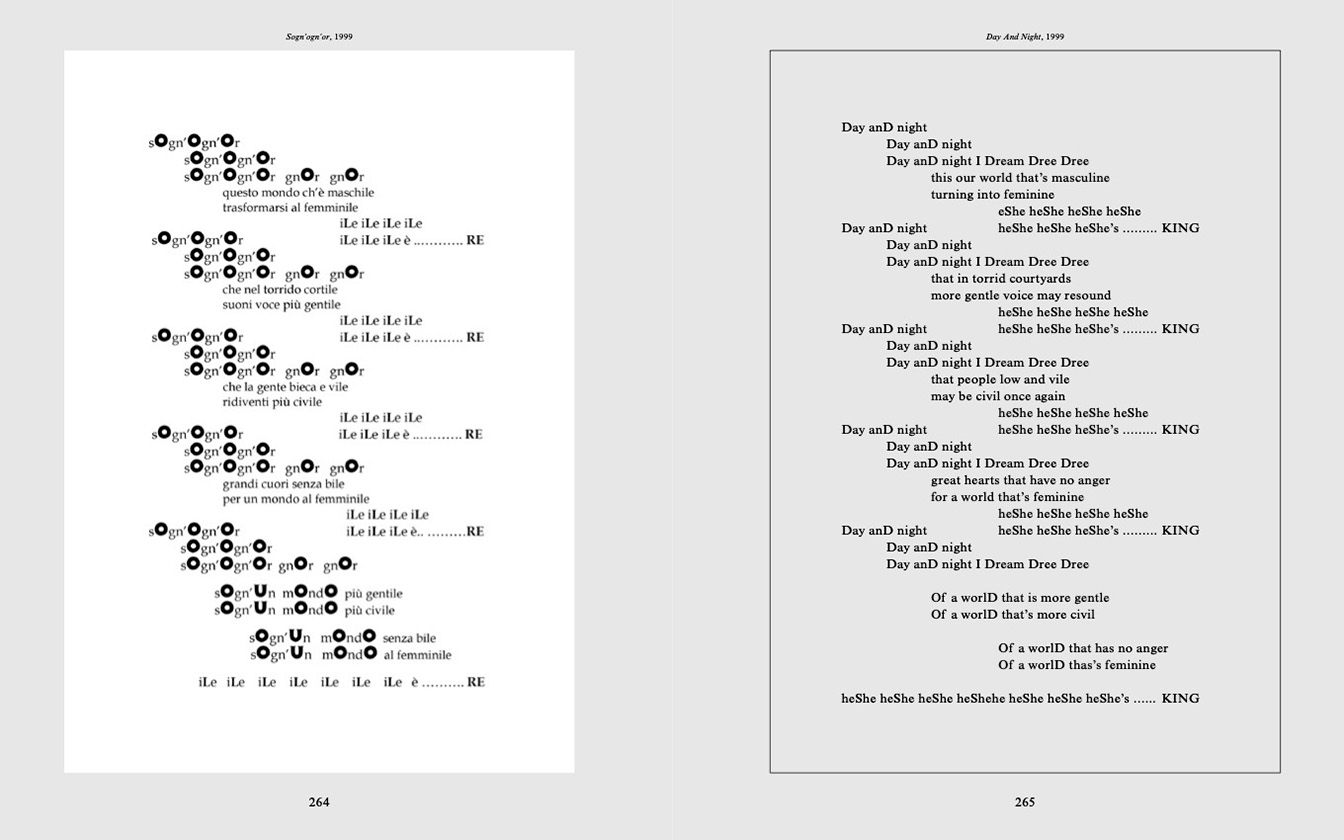
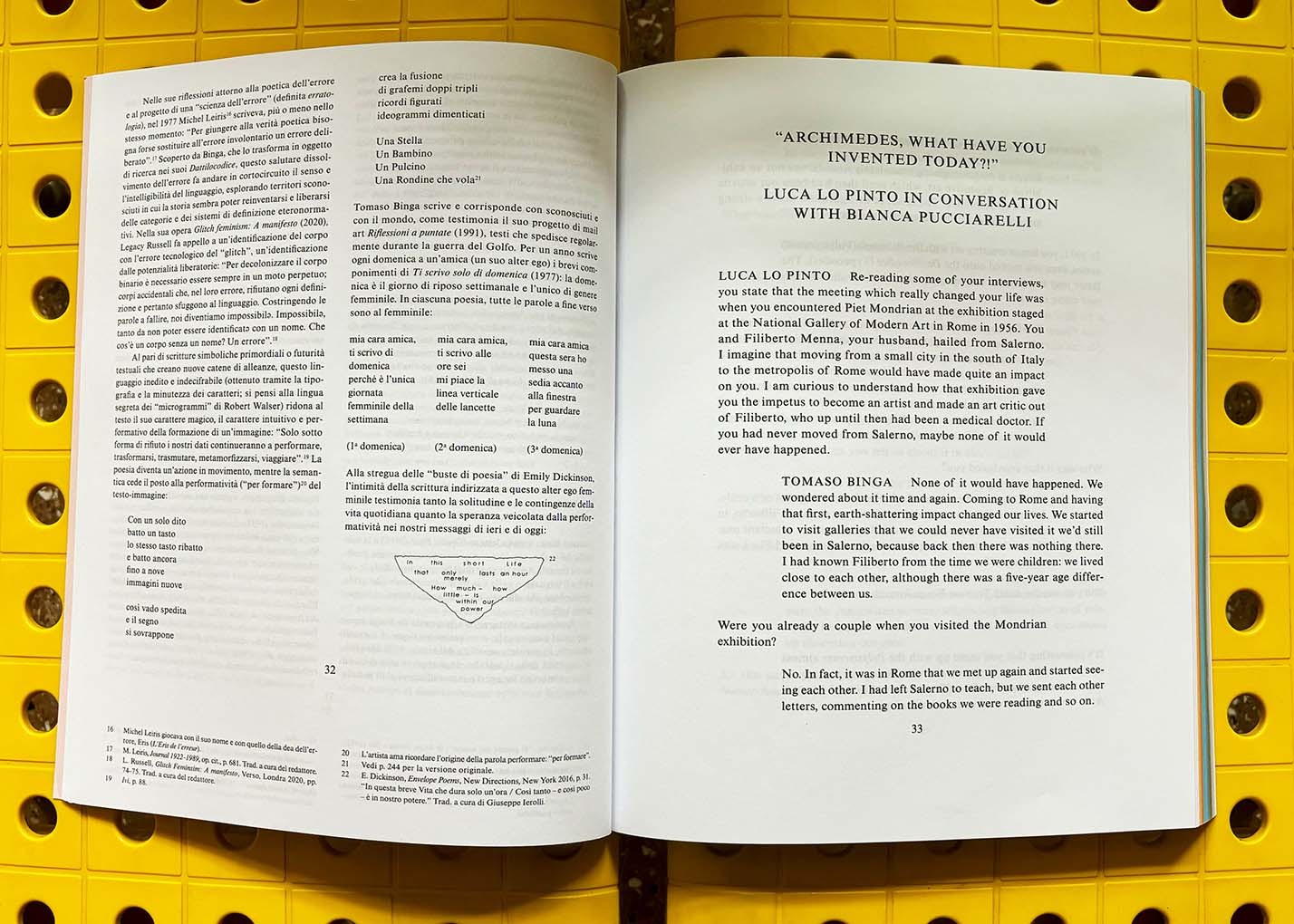
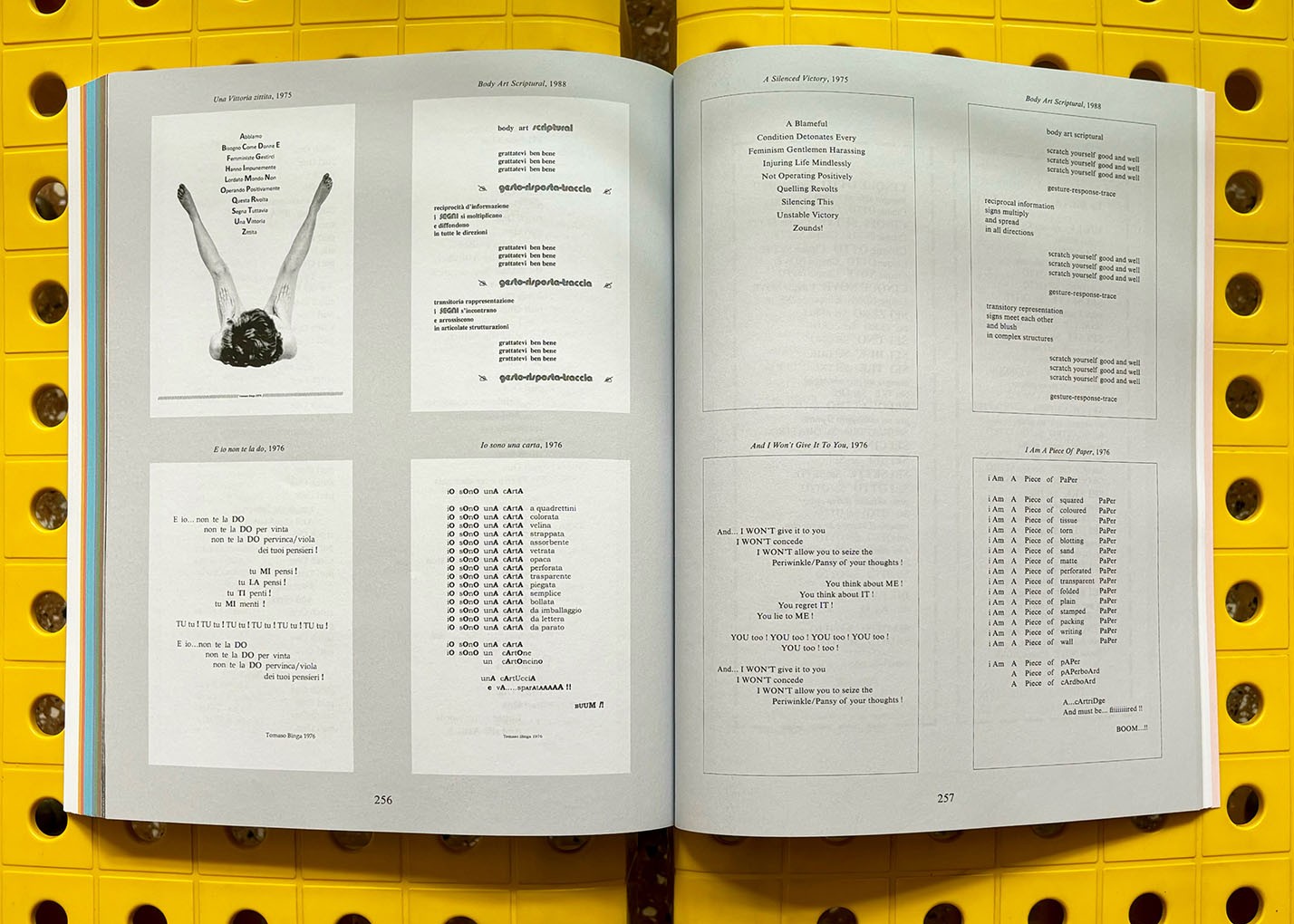
The volume explores the key passages of Tomaso Binga’s artistic practice, and as such is divided into three macro areas. The first, purely textual, following institutional introduction by the President of the Fondazione Donnaregina per le arti contemporanee Angela Tecce, features texts by Eva Fabbris, Daria Khan, Quinn Latimer, Lilou Vidal, and Stefania Zuliani, as well as a conversation between the artist herself and Luca Lo Pinto. The second part brings together a series of short critical texts that offer an in-depth analysis of single works and small bodies of work by Tomaso Binga. These contents are further subdivided into six categories (Agora, Biographies, The Body of the Word, Correspondences, Geographies, Vaginal Value) with the aim of delving into the key areas of interest in Tomaso Binga’s practice in chronological order. Critical contributions are thus provided by Marc Bembekoff, Barbara Casavecchia, Martina Cavalli, Chiara Costa, Anna Cuomo, Valérie Da Costa, Allison Grimaldi Donahue, Daria Khan, Émilie Notéris, Raffaella Perna, Antonello Tolve, and Andrea Viliani. The third and final part is dedicated to the artist’s visual poems. Each poem is accompanied by an English translation, in several cases published here for the first time.
The publishing project was the winner of the twelfth edition of Italian Council, supported by the General Directorate for Contemporary Creativity of the Ministry of Culture, promoted by the Fondazione Donnaregina per le arti contemporanee and made possible with the support of the Associazione Amici del Madre.