This small anthology reviews some of the central themes of Diego Marcon’s research: from the role of the display in exhibitions to his relationship with cinema, from the use of special effects and animatronics to the sense of community established through his work. Glassa accompanies the exhibition of the same name designed by the artist for the spaces of the Centro per l’arte contemporanea Luigi Pecci in Prato.
Strata raccoglie 37 conversazioni con artisti il cui lavoro ha dato un contributo significativo alla scena artistica italiana e internazionale a partire dal 2000. Questo libro è il resoconto personale di una serie di incontri, amicizie e relazioni professionali che Vincenzo de Bellis e Alessandro Rabottini hanno coltivato negli ultimi vent’anni.
Strata compiles 37 conversations with artists whose work has made a significant contribution to the Italian and international art scene since 2000. This book is the personal account of a number of encounters, friendships, and professional relationships that Vincenzo de Bellis and Alessandro Rabottini have nurtured over the past twenty years.
Pardon Façade documents the artistic output of Luca Monterastelli, showcasing almost all of the sculptures and installations that he produced between 2011 and 2022. Across four chapters—corresponding to four solo shows that he staged in Milan, Otegem, Antwerp, and Naples—the publication provides the first overview of the artist’s work.
More than half a century after its premiere, Yvonne Rainer, in collaboration with choreographer and dancer Emily Coates, directed the 2019 revival of her 1965 performance Parts of Some Sextets. This book poses questions about the trajectories of artworks, performers, and audiences, all while tracing the life—and afterlife—of a dance.
How does technology organize life? This book documents and reflects on the exhibition Proof of Stake: Technological Claims at Kunstverein in Hamburg, curated by Simon Denny and Bettina Steinbrügge. It brings together a unique group of artists and scholars who investigate the technological apparatuses and power relations of organized life.
Edited by Rui Mateus Amaral
Texts by Rui Mateus Amaral, Carlos Bunga, Rina Carvajal, Roland Groenenboom, Omar Kholeif, November Paynter, and Catarina Rosendo
Designed by Ilhas Studio
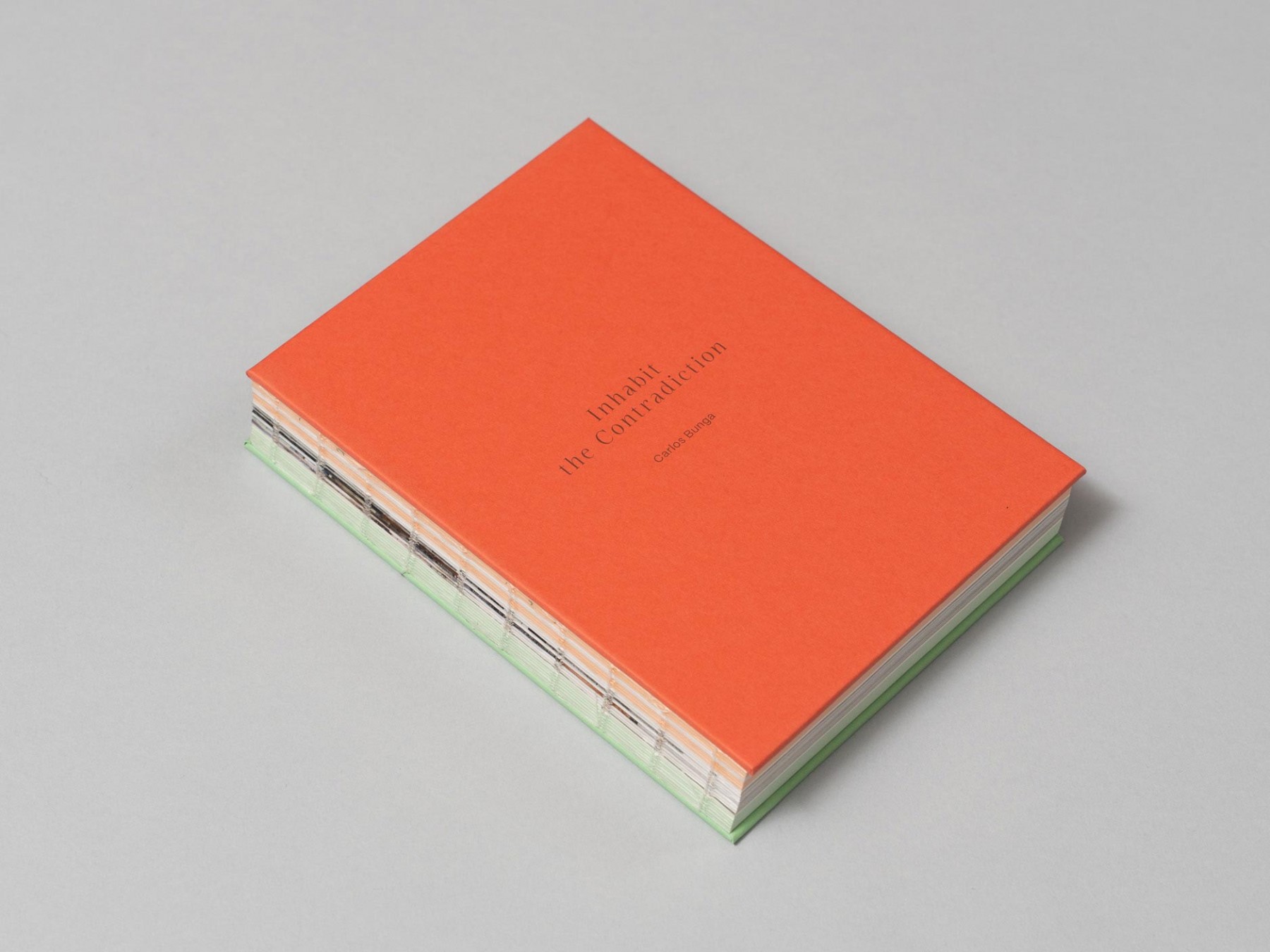
2025, English / Portuguese, hardcover, 14 x 19 cm, 388 pages
ISBN 979-12-80579-92-8
Carlos Bunga: Inhabit the Contradiction is an extensive monograph devoted to the work of Carlos Bunga, published in conjunction with his eponymous exhibition presented at CAM – Gulbenkian.
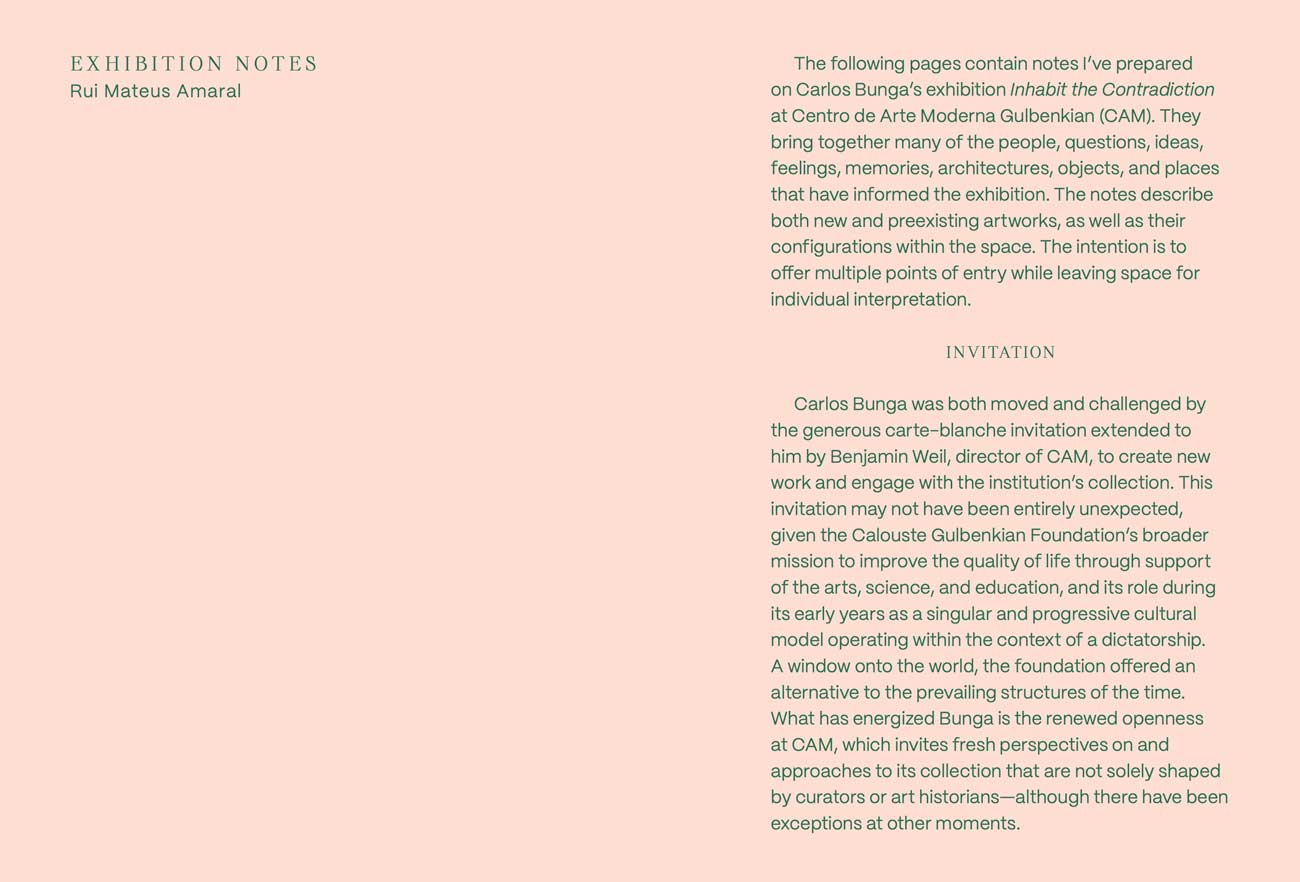
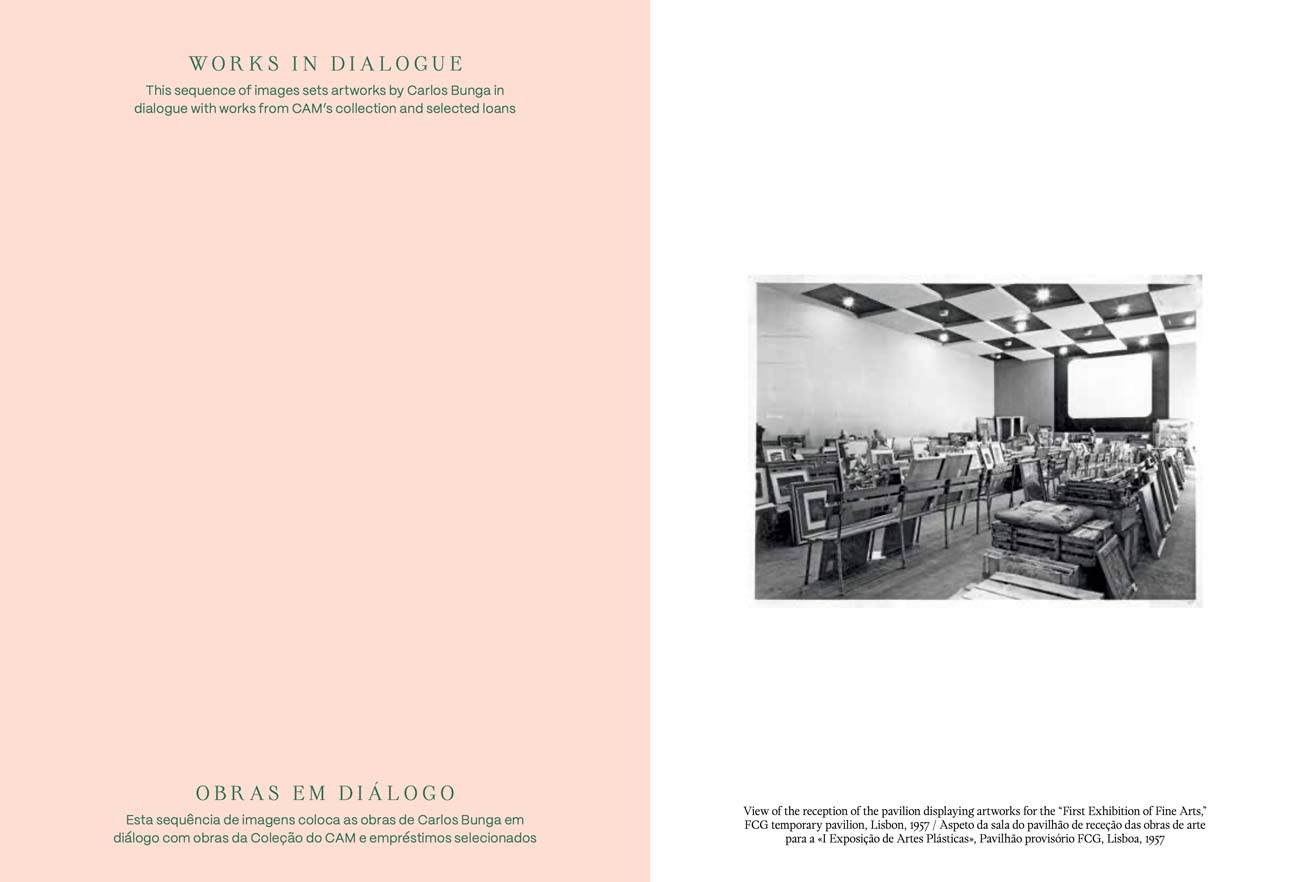
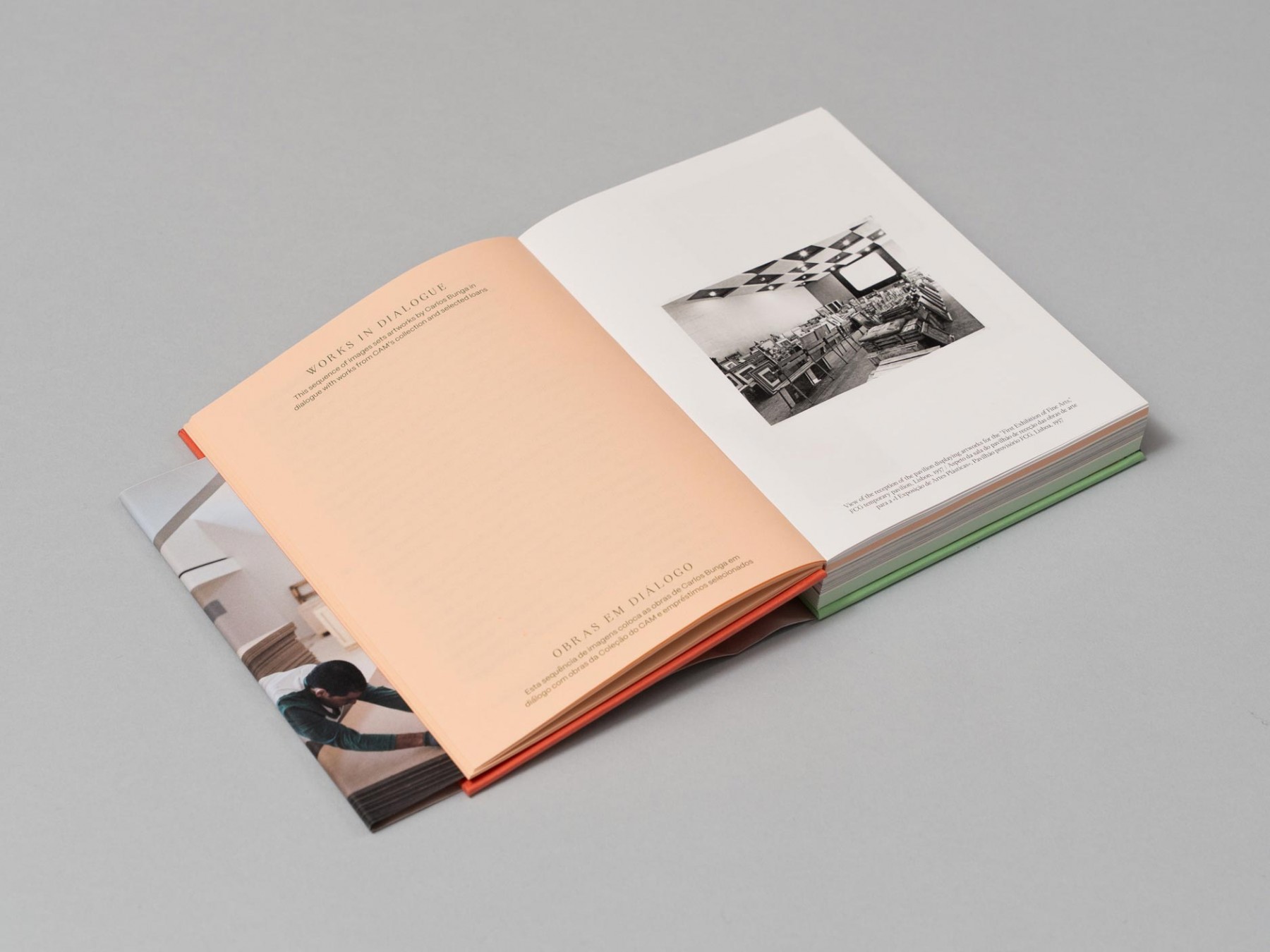
The book contains notes by the exhibition curator and catalogue editor, Rui Mateus Amaral, who introduces readers to the exhibition project, providing an in-depth account of its genesis and development, focusing on the dialogue between Bunga’s work and selected pieces from the CAM collection. The notes describe both Bunga’s new and existing works, as well as their configuration within the space, with the intention of opening up multiple points of access to the exhibition, leaving room for individual interpretation.
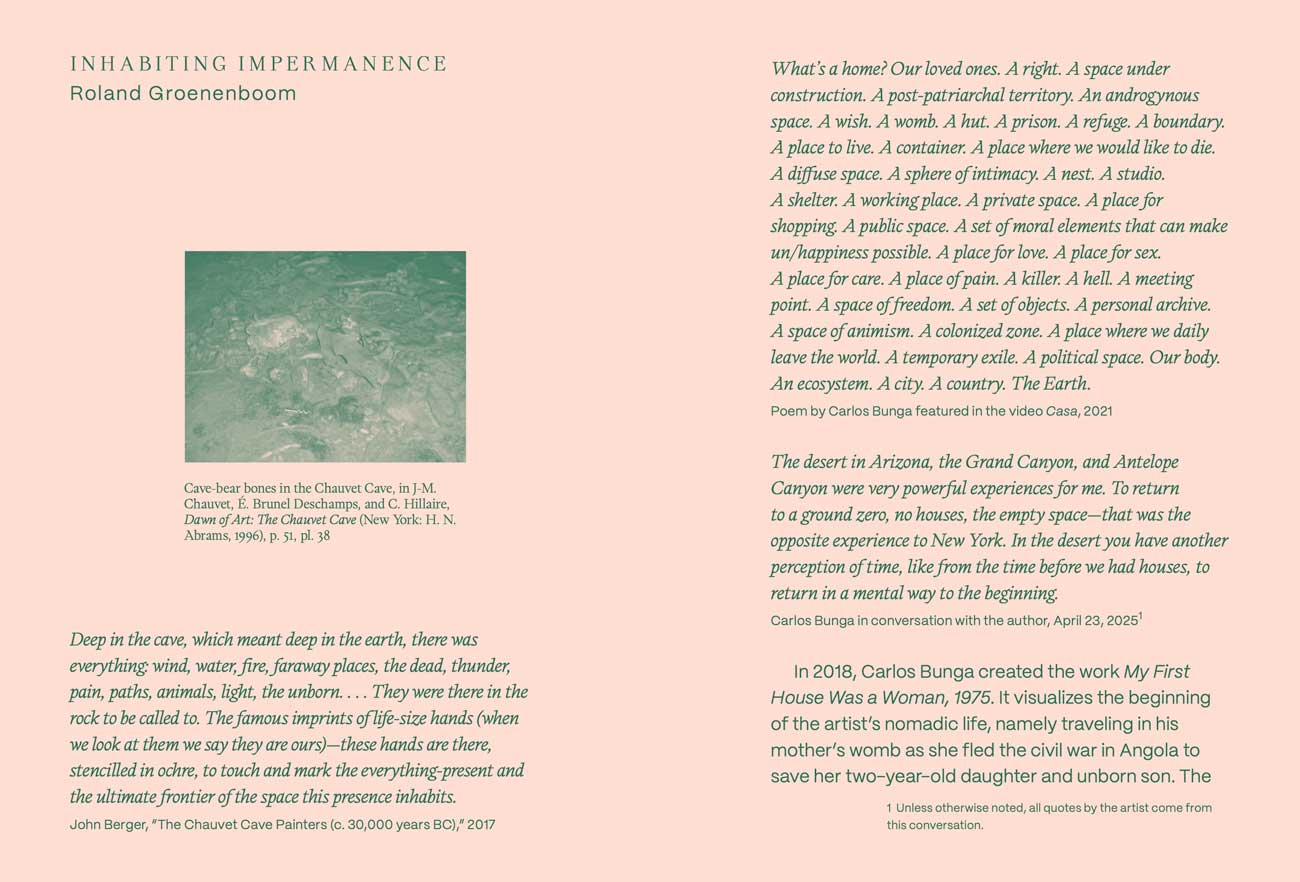
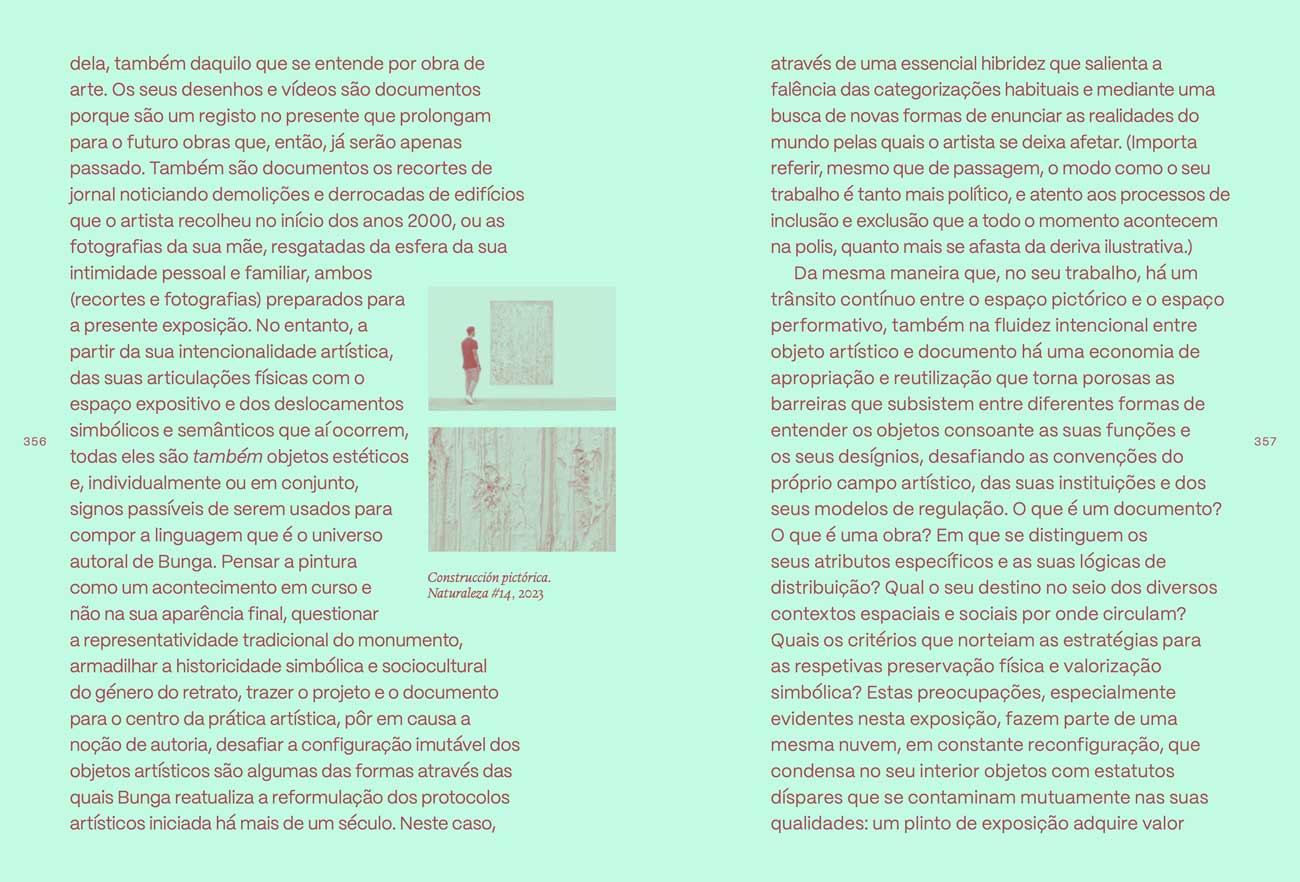
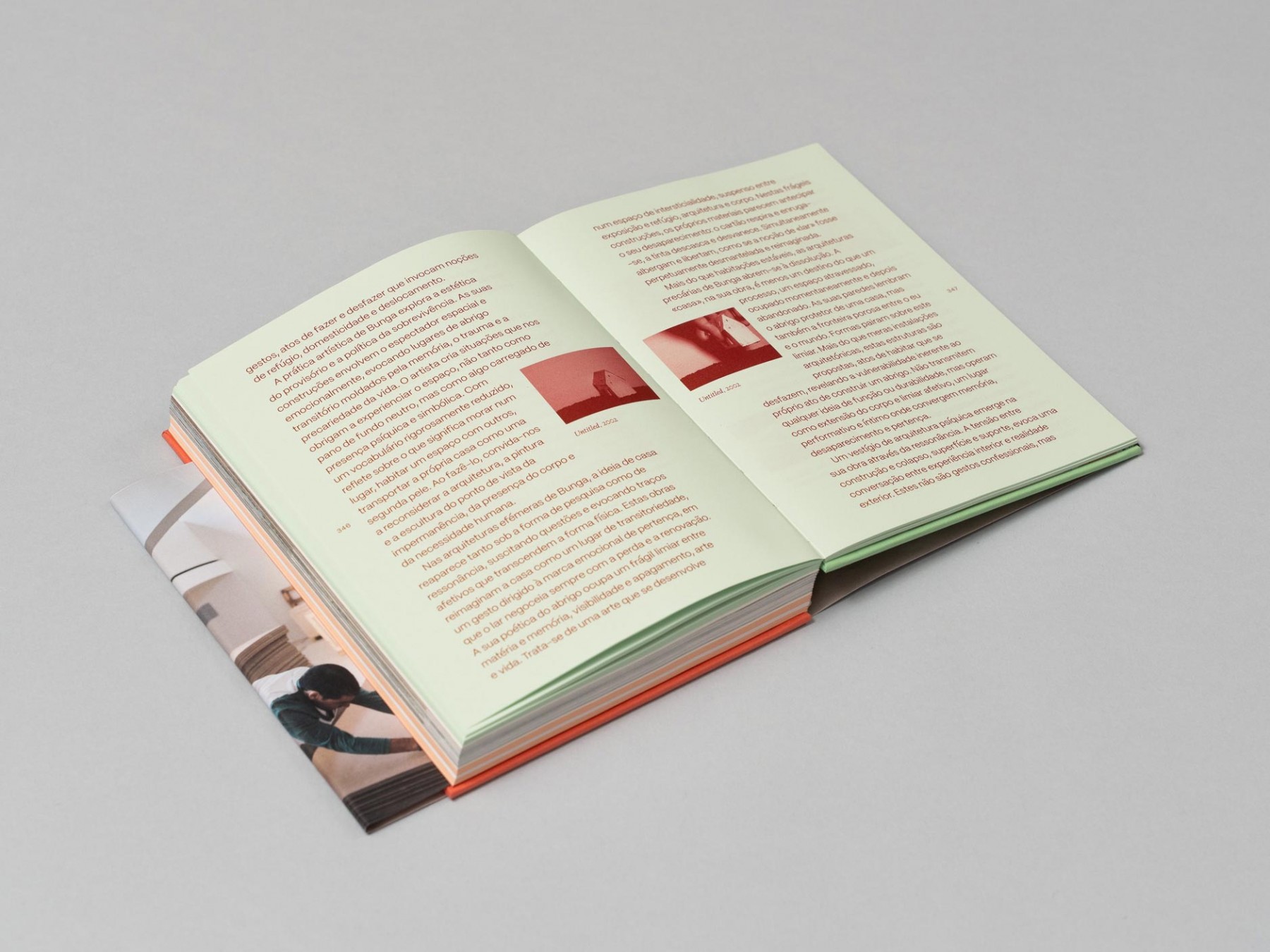
Designed by as ilhas studio, the catalogue also contains new essays by various authors written especially for the occasion—Rina Carvajal, Roland Groenenboom, Omar Kholeif, November Paynter, and Catarina Rosendo—each offering an in-depth look at salient aspects of the artist’s multifaceted practice.
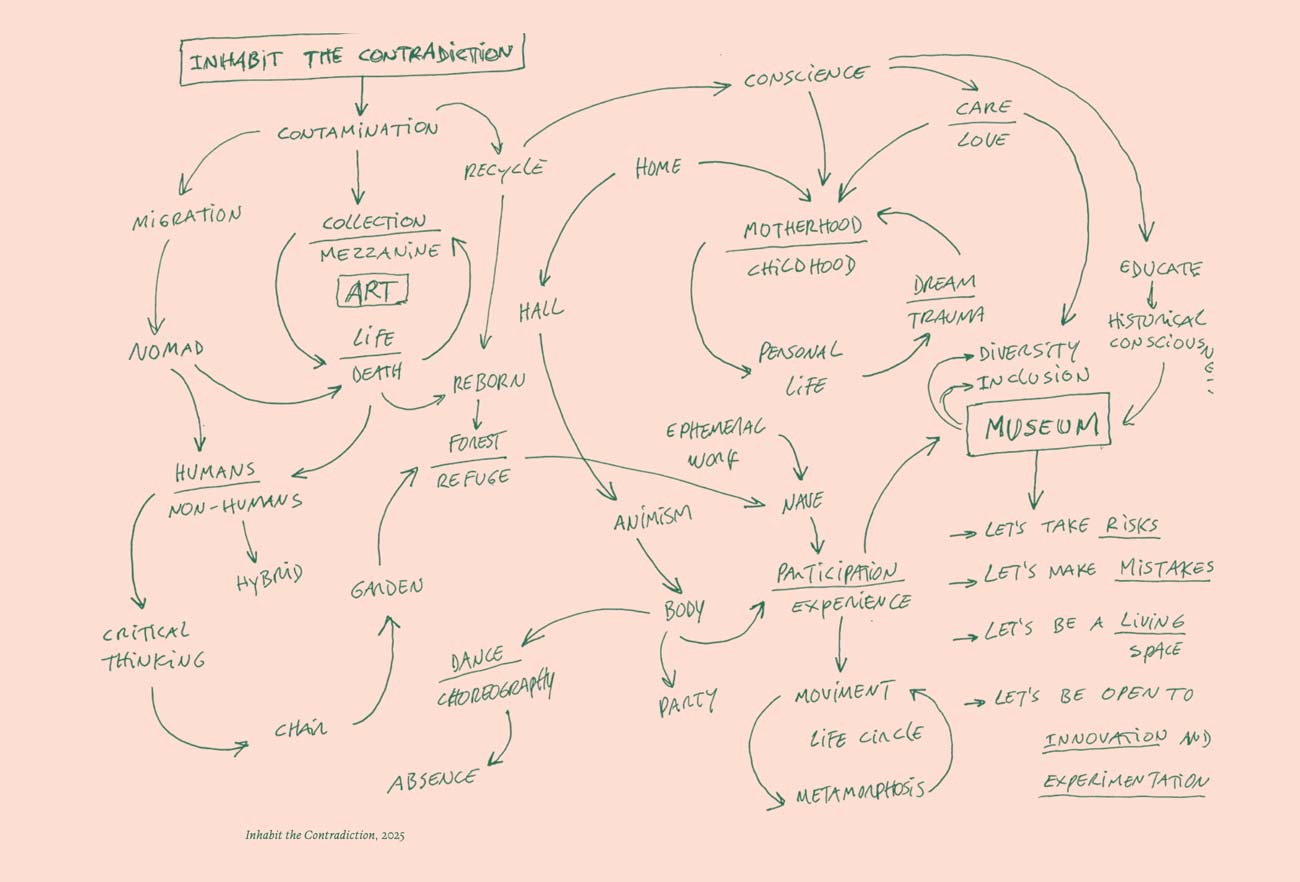
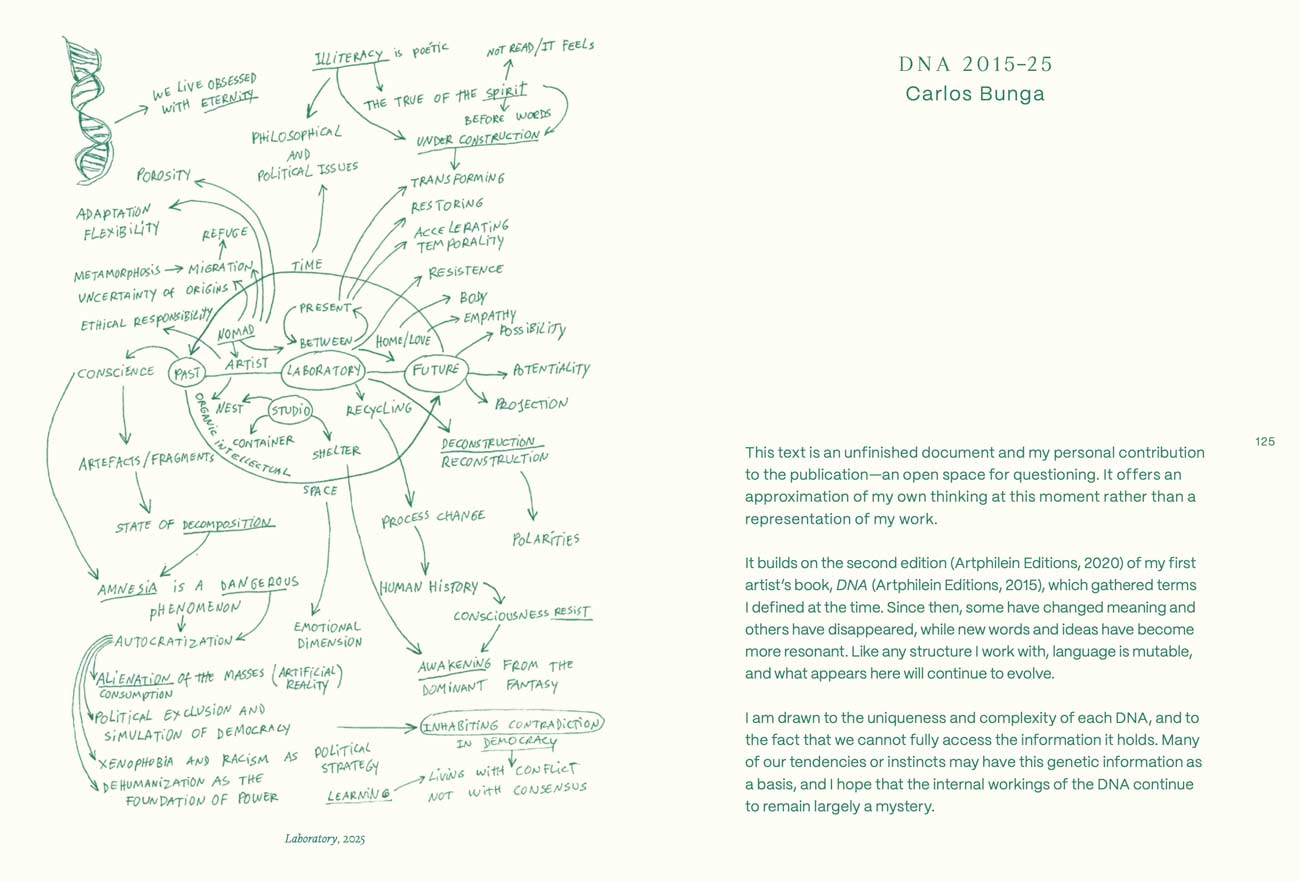
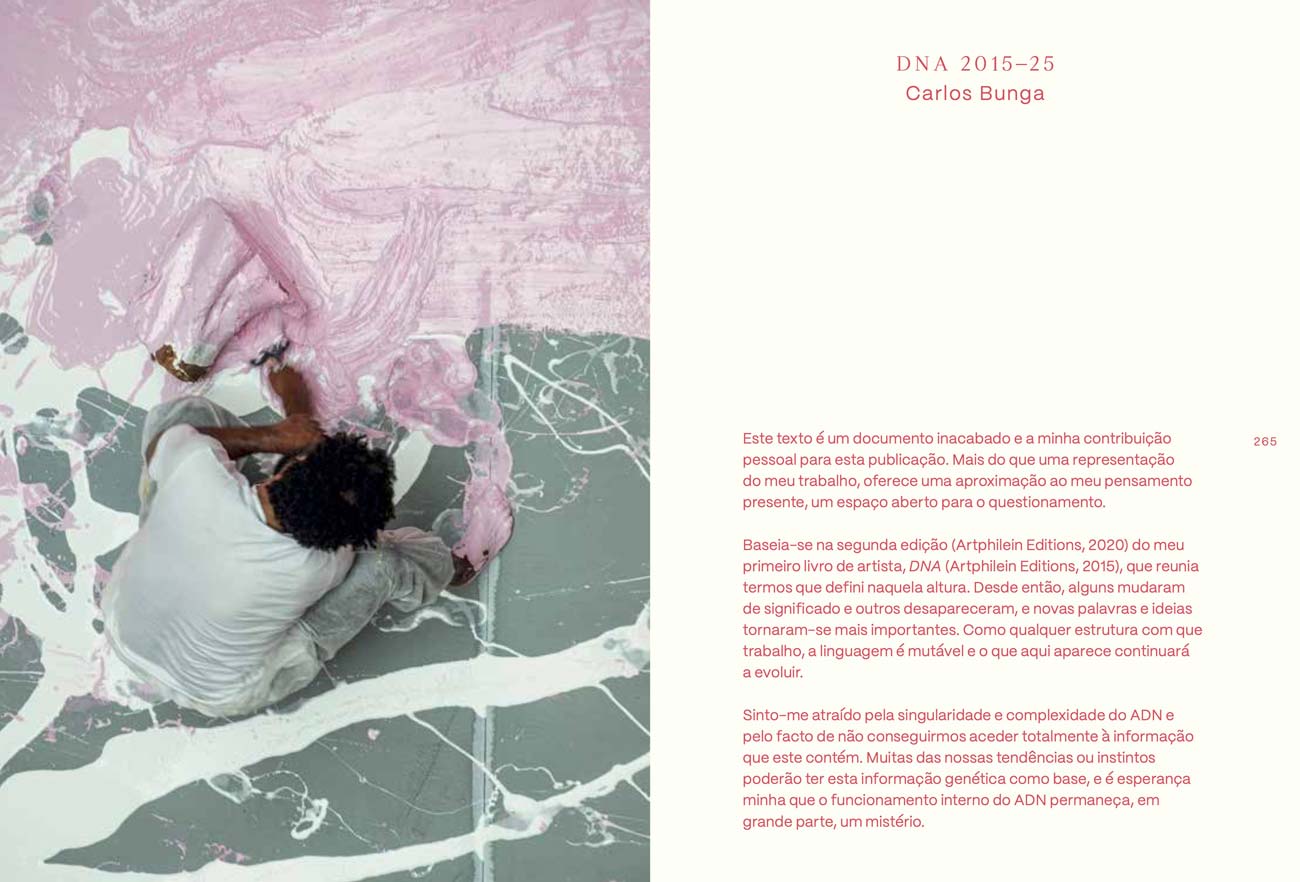
The content is complemented by DNA 2015–25, a dictionary-style text that Bunga began in 2015 and adapted for this publication. The terms, which the artist defines in his own unique way, are keywords that allow the reader to enter into Bunga’s current thought process, and into his particular approach to the world of art.
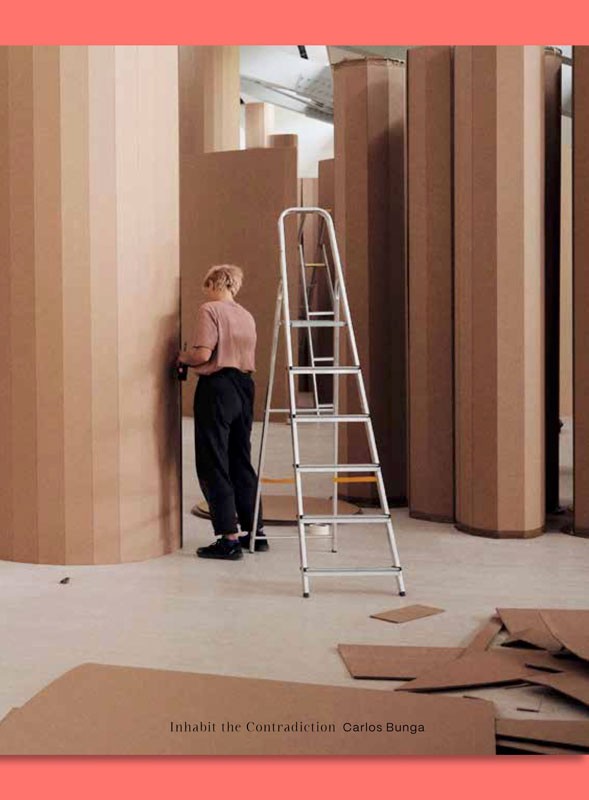
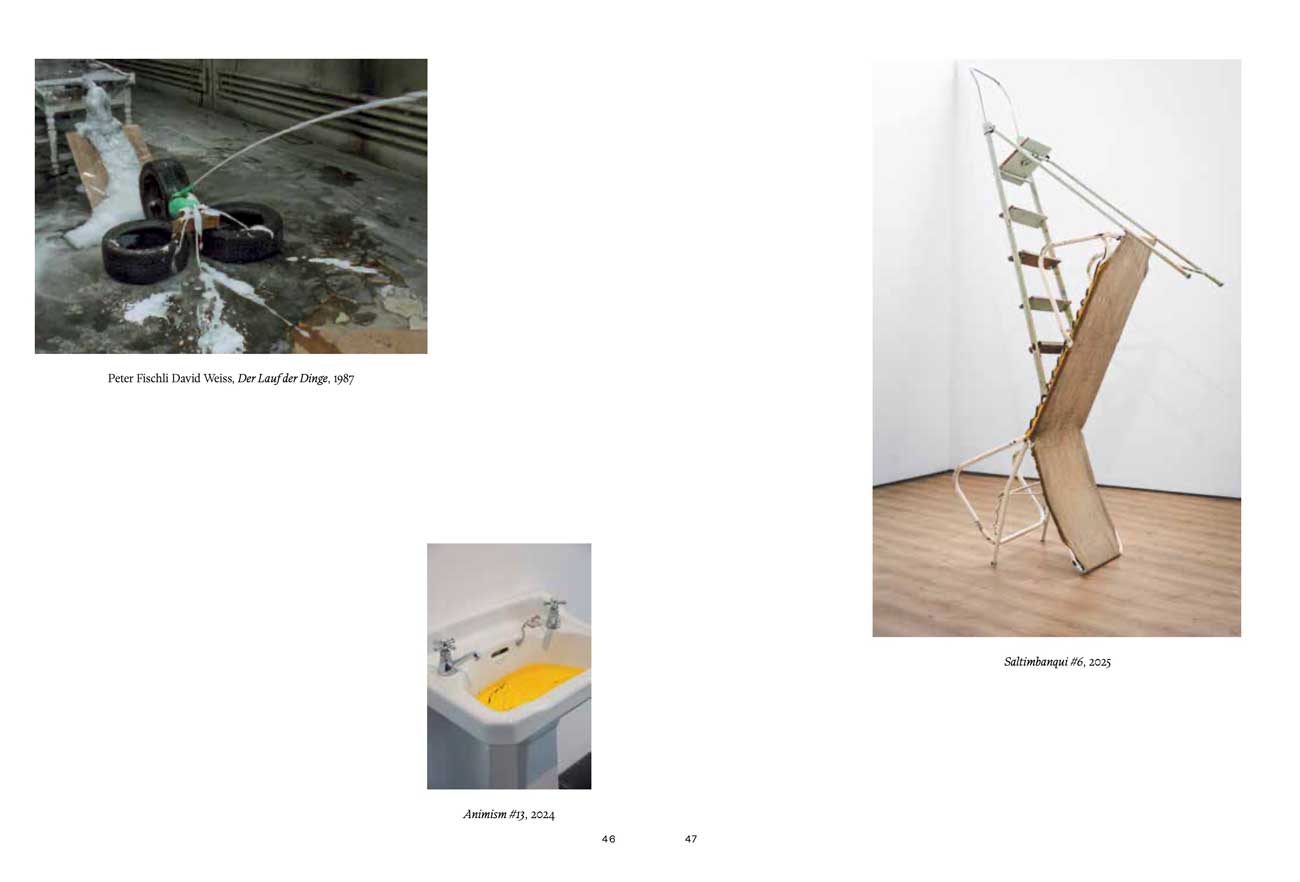
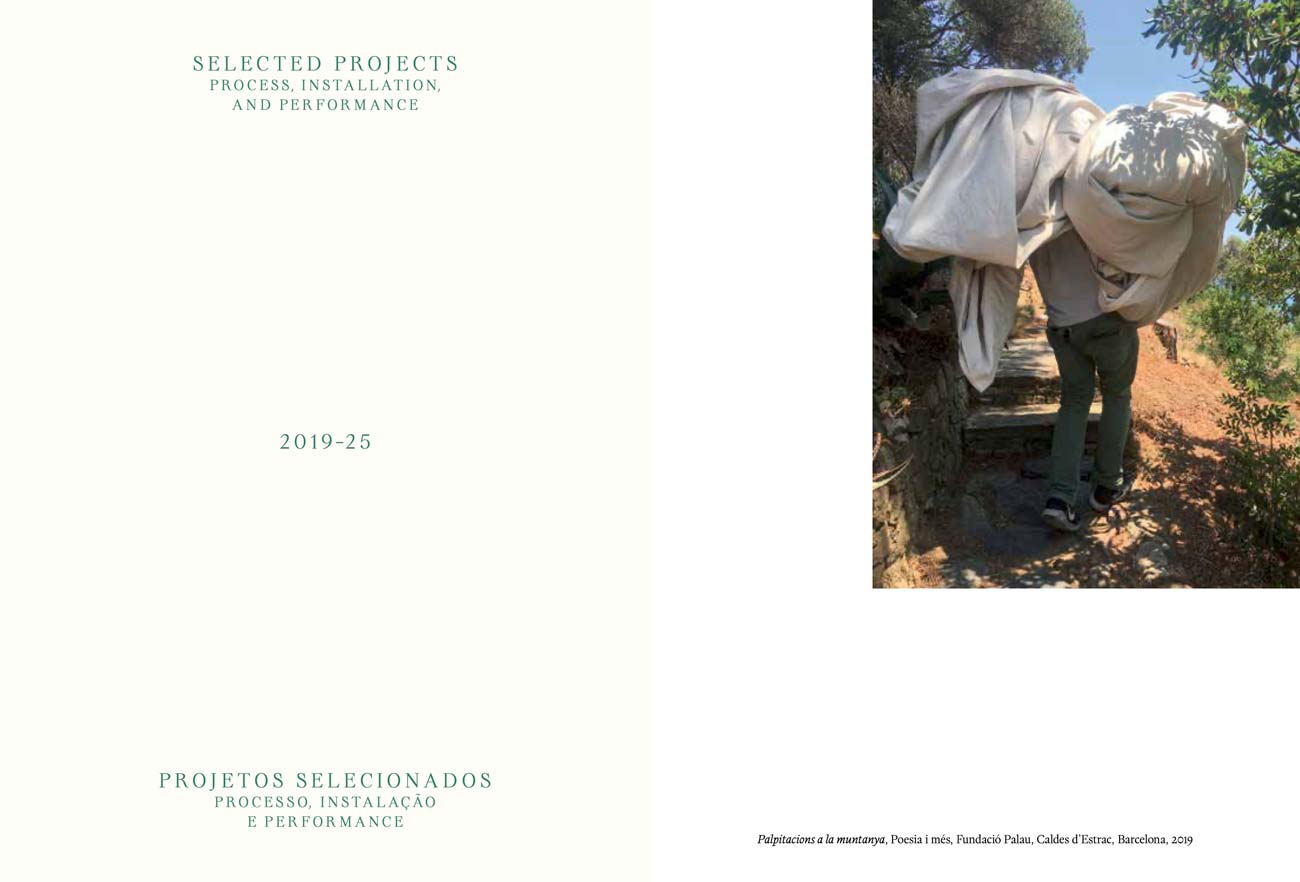
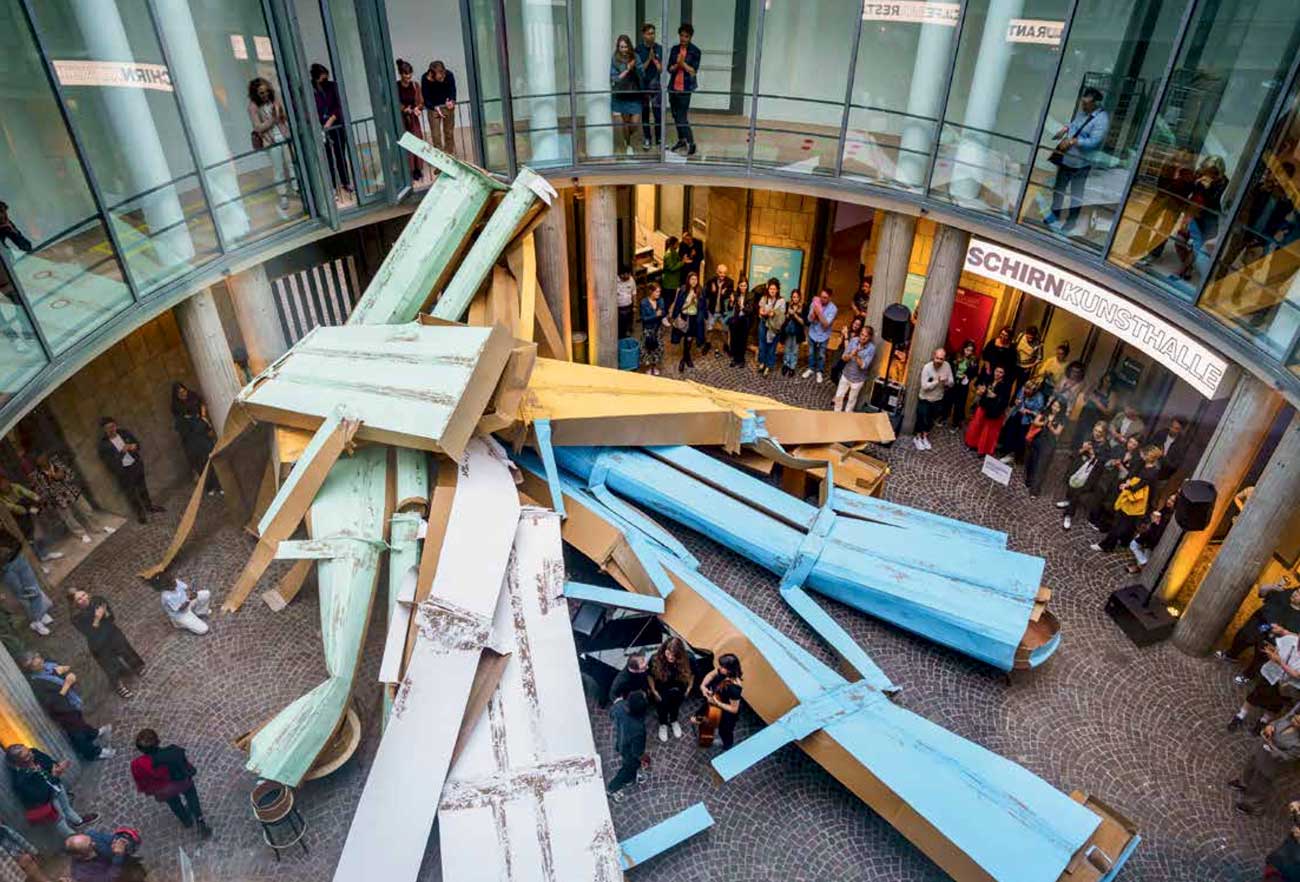
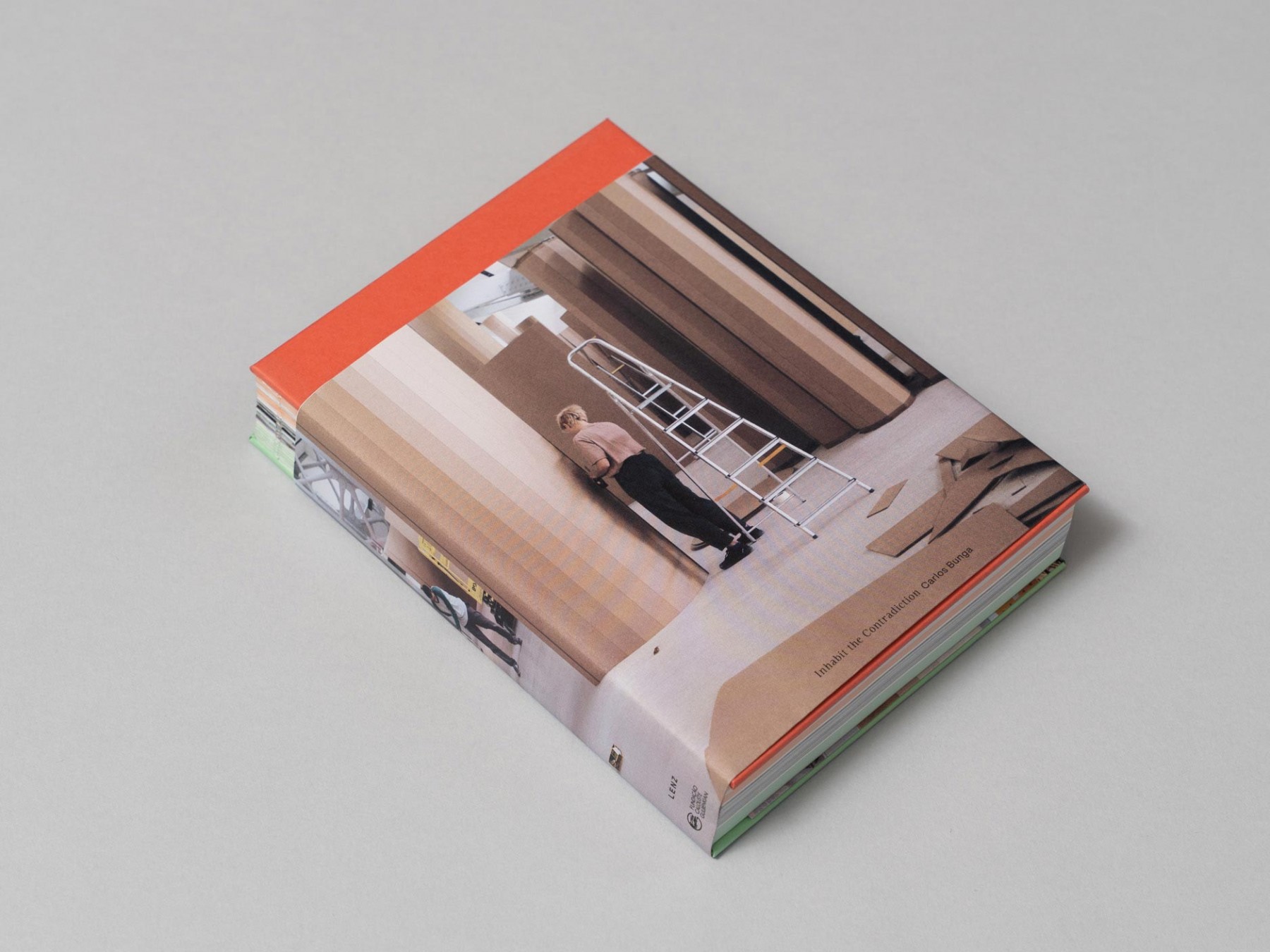
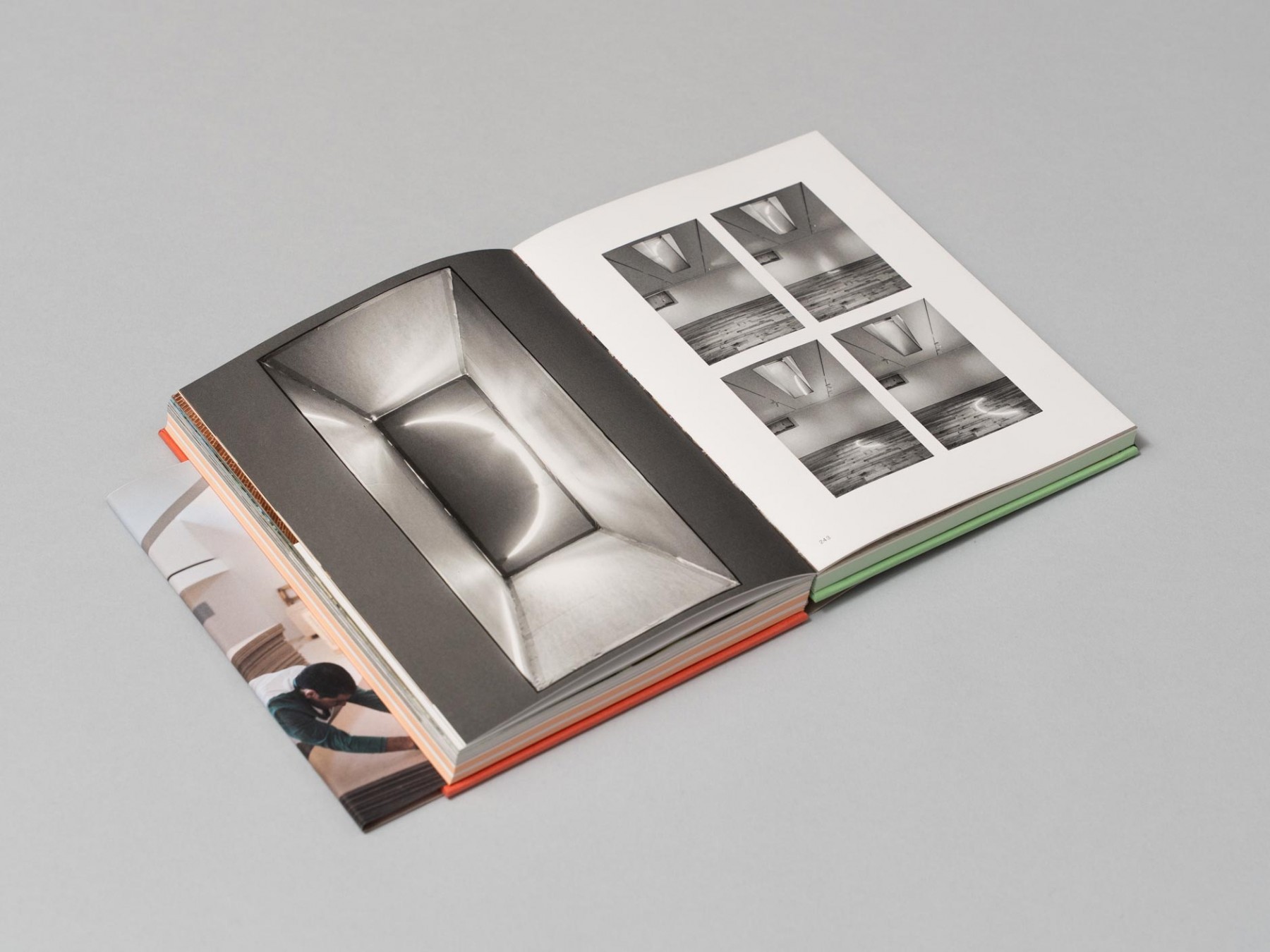
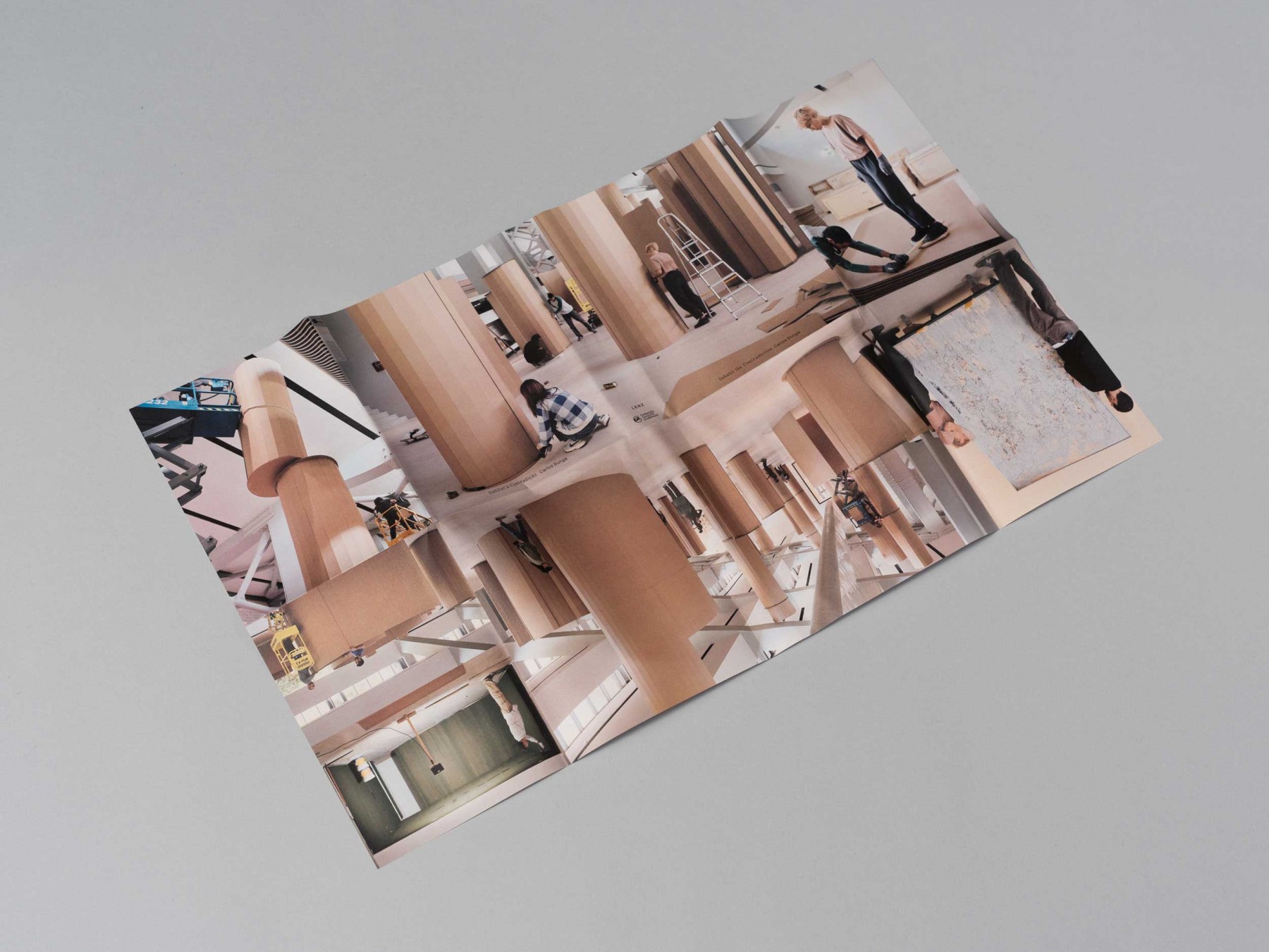
The book also contains a rich picture section, mainly dedicated to site-specific works and performances: a series of installation views, video stills, and performance views alternate with photographs, published for the first time, documenting the installation and assembly process of numerous exhibitions and works. Like a slide show, this image gallery offers a unique and generous insight into Bunga’s working method through the main projects the artist has worked on between 2019 and 2025. The poster enveloping the book completes the documentation, providing a snapshot of the installation of Inhabit the Contradiction at CAM – Gulbenkian, Lisbon.