Through exquisite craftsmanship, and with reference to romantic nationalism, Ann Böttcher explores how aesthetic and political projections characterize notions of nature, and how such conceptions are taken up by countries, political movements, and other institutions.
Voices (Towards Other Institutions) is the final act of the coral, multiform, articulated, two-year-long experiment carried out by Open, the Russian Federation Pavilion at the 17th International Architecture Exhibition.
The book deals with Diego Marcon’s practice through the analysis of three film and video works. Monelle (2017), Ludwig (2018), and The Parents’ Room (2020) are his most recent and complex projects, and they are all emblematic of central aspects of his production.
Over the last ten years, Raphael Hefti has created an astonishingly body of work consisting of sculptures and installations, performance and “art-in-public-spaces.” The first comprehensive monograph is published on the occasion of his major exhibition at Kunsthalle Basel.
Between 1998 and 1999, the London-based art collective BANK operated the Fax-Bak Service. The group’s members proof-read and copy-edited more than 300 press releases by galleries. The publication is the most comprehensive record of this notorious project.
SOLD OUT
Sold Out
Listen
On how The BANK Fax-Bak Service started and how it came to be a book
In the Villa Santo Sospir, Jean Cocteau conceived his pictorial work through accumulation, inspired by Greek mythology and the Mediterranean landscape. Architecture permeates the subjects of Mauro Restiffe from a viewpoint that amplifies and reverberates the simple historical record.
Edited by di Cloé Perrone
Texts by Adrienne Edwards, Ekow Eshun, Francesco Freddolini, Wangechi Mutu, Cloé Perrone, Ilaria Puri Purini
Designed by Lorenzo Mason Studio
2025, English, hardcover, 30 x 24 cm, 202 pages
ISBN 979-12-80579-80-5
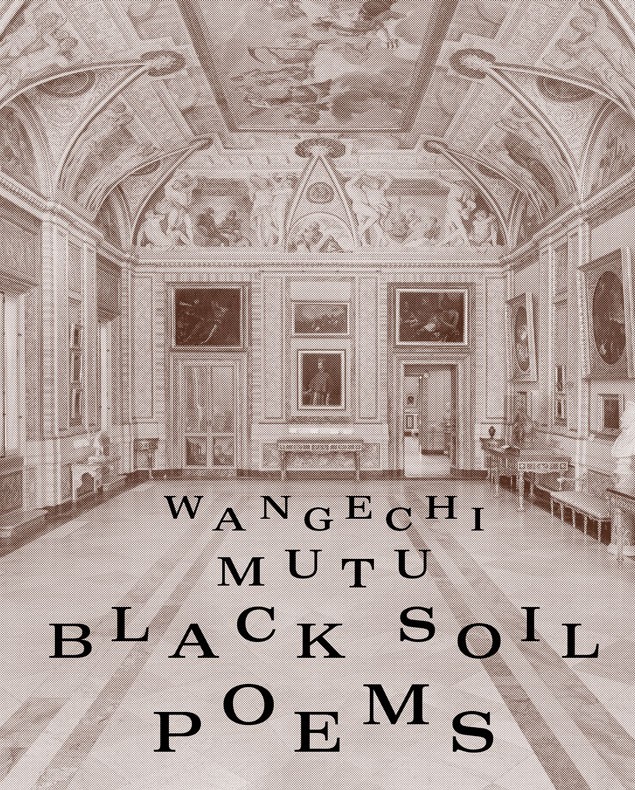
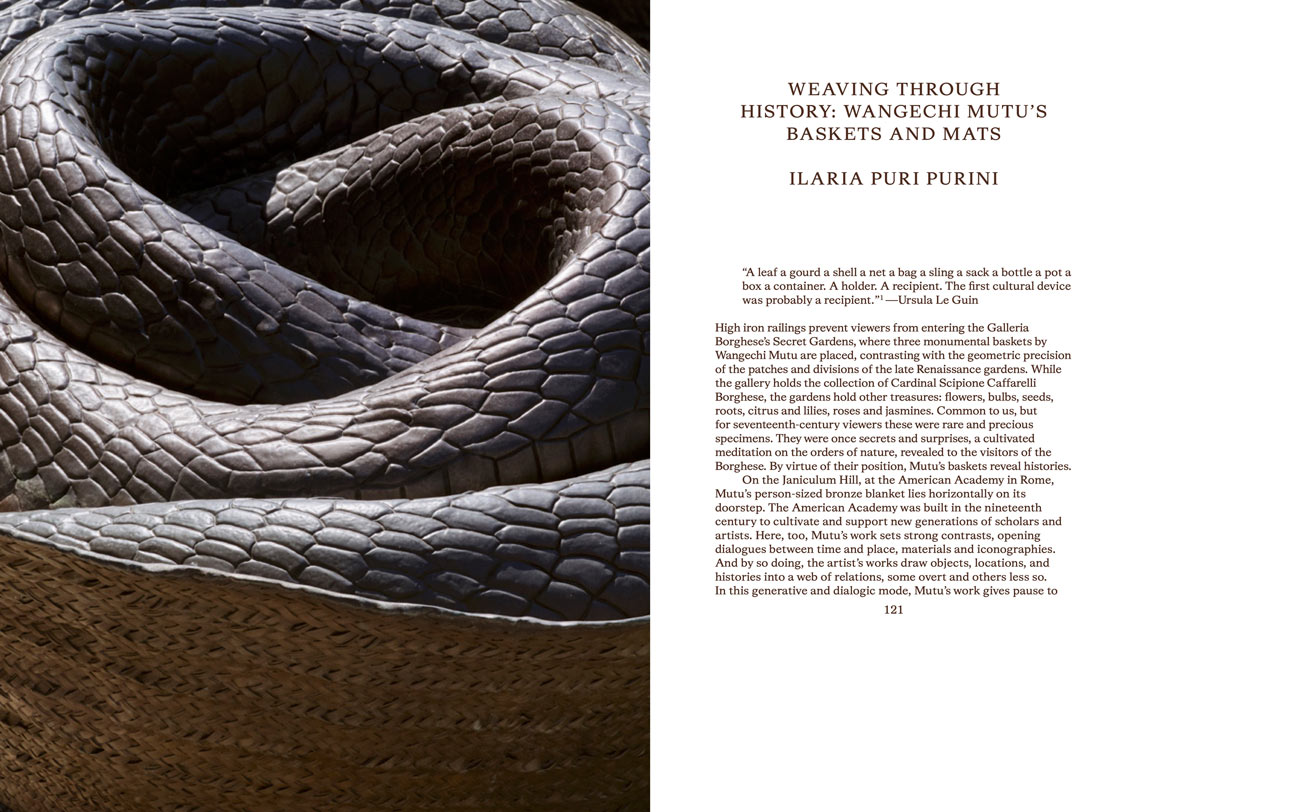
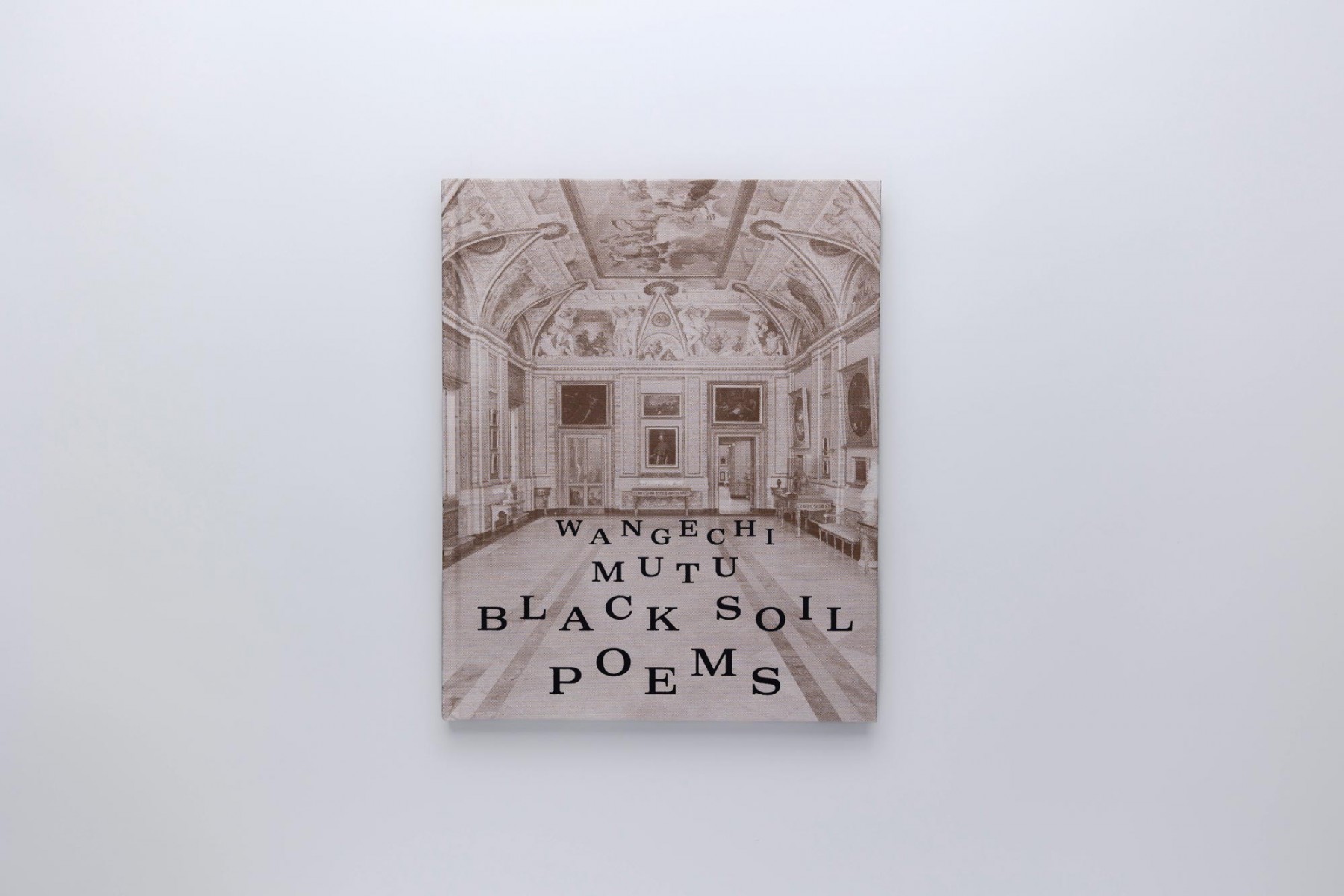
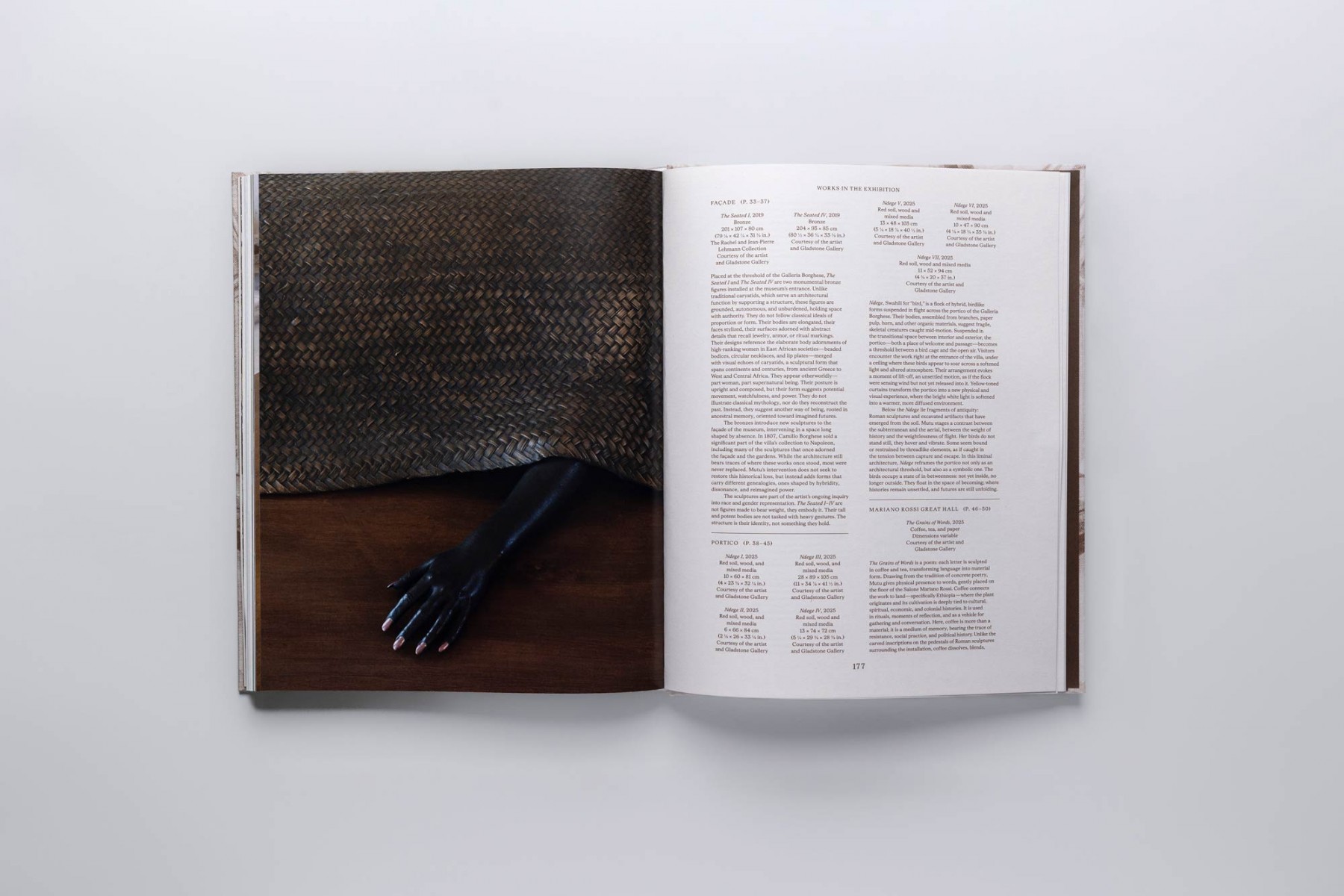
The title of this rich publication, published on the occasion of the solo exhibition of the Kenyan-American artist Wangechi Mutu at the Galleria Borghese—the first time in the century-old history of the Villa for a living female artist—evokes the dual nature of Mutu’s practice: poetic and mythological, yet deeply connected to contemporary social and material contexts. “Black soil”—rich and malleable under the rain, almost like clay—appears across multiple geographies, including the Secret Gardens of the Galleria, which resonate with the artist’s imagination. From this soil, the sculptures seem to emerge, as if molded by a primordial force, giving shape to stories, myths, memories, and poems. The metaphor underscores the generative and transformative power of her work: rooted in materiality, yet open to multiple future interpretations.
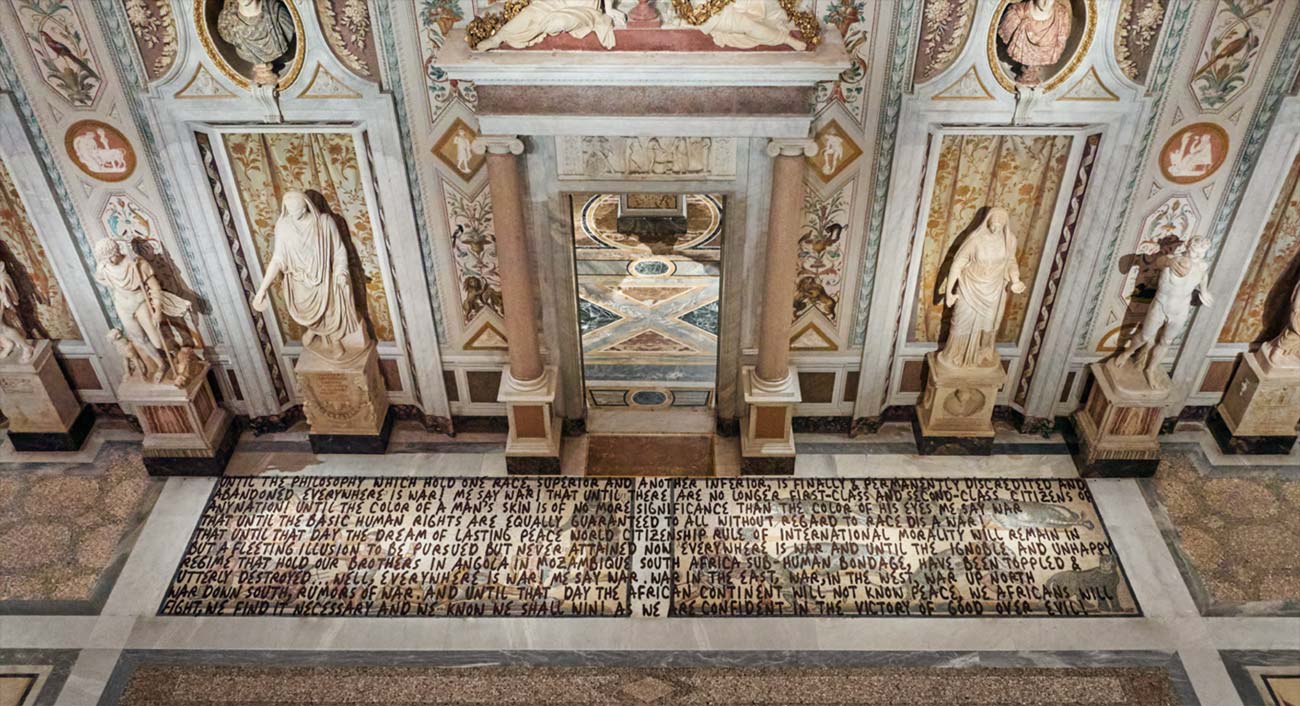
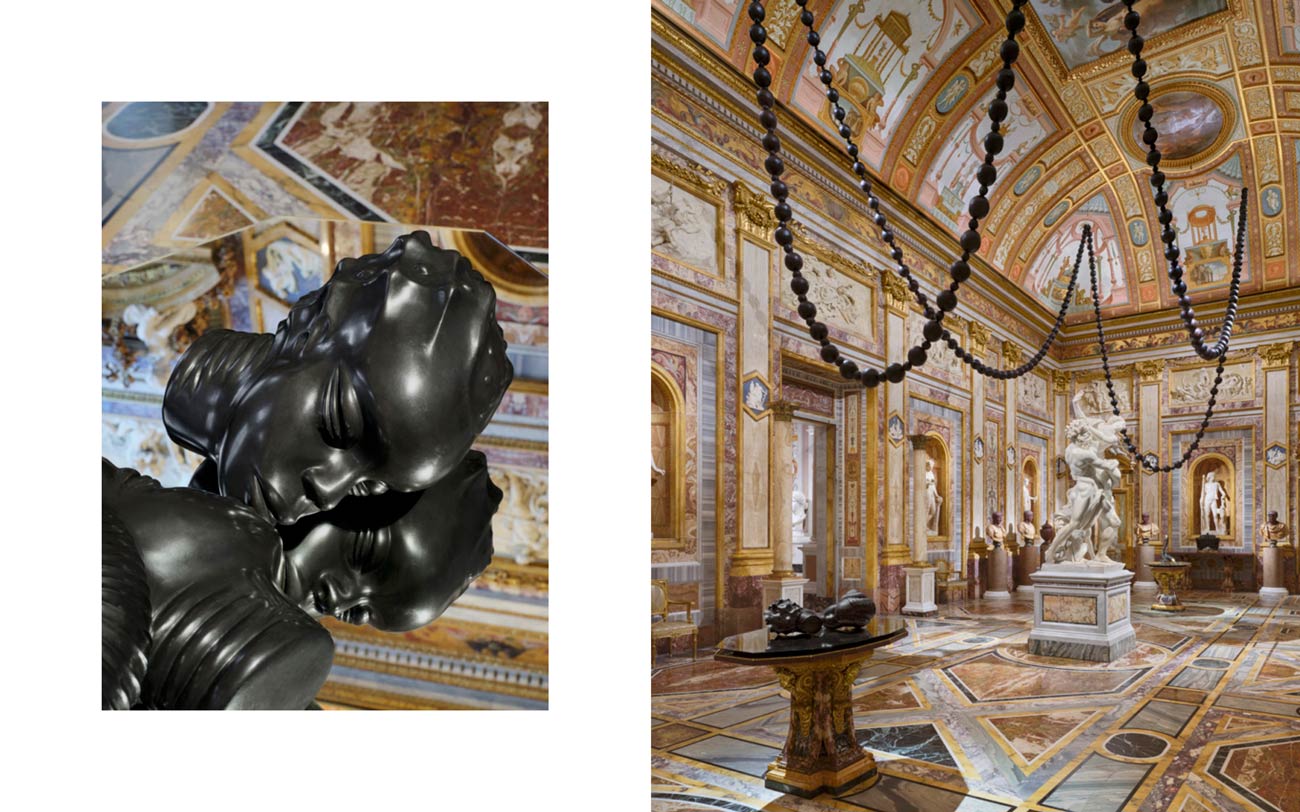
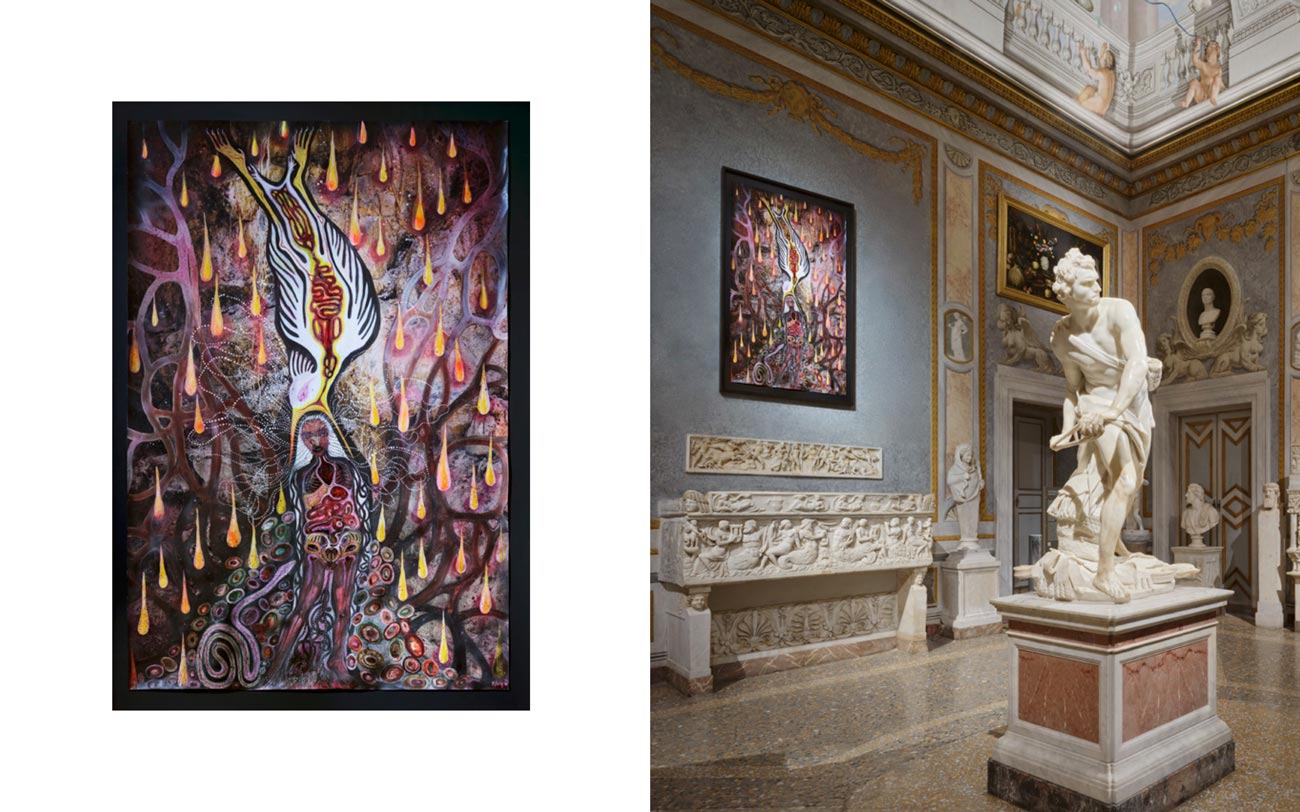
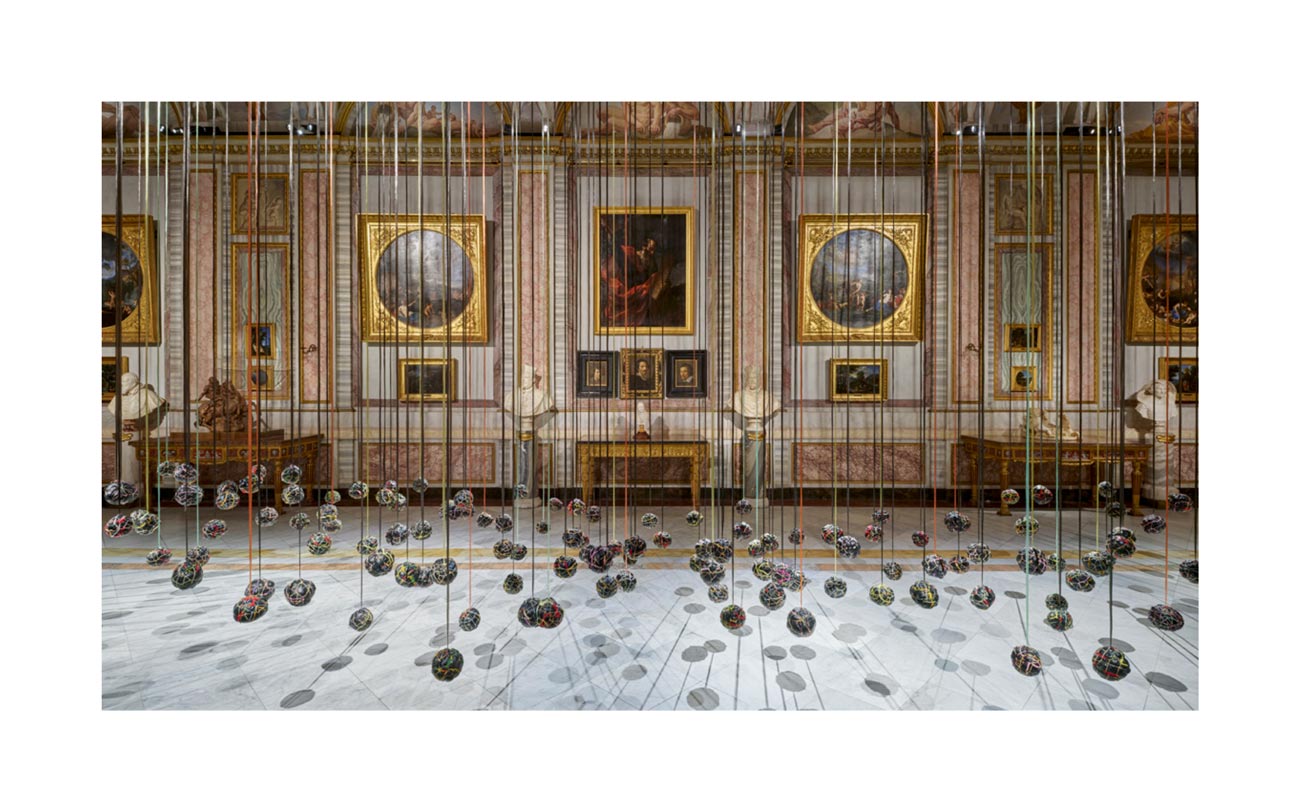
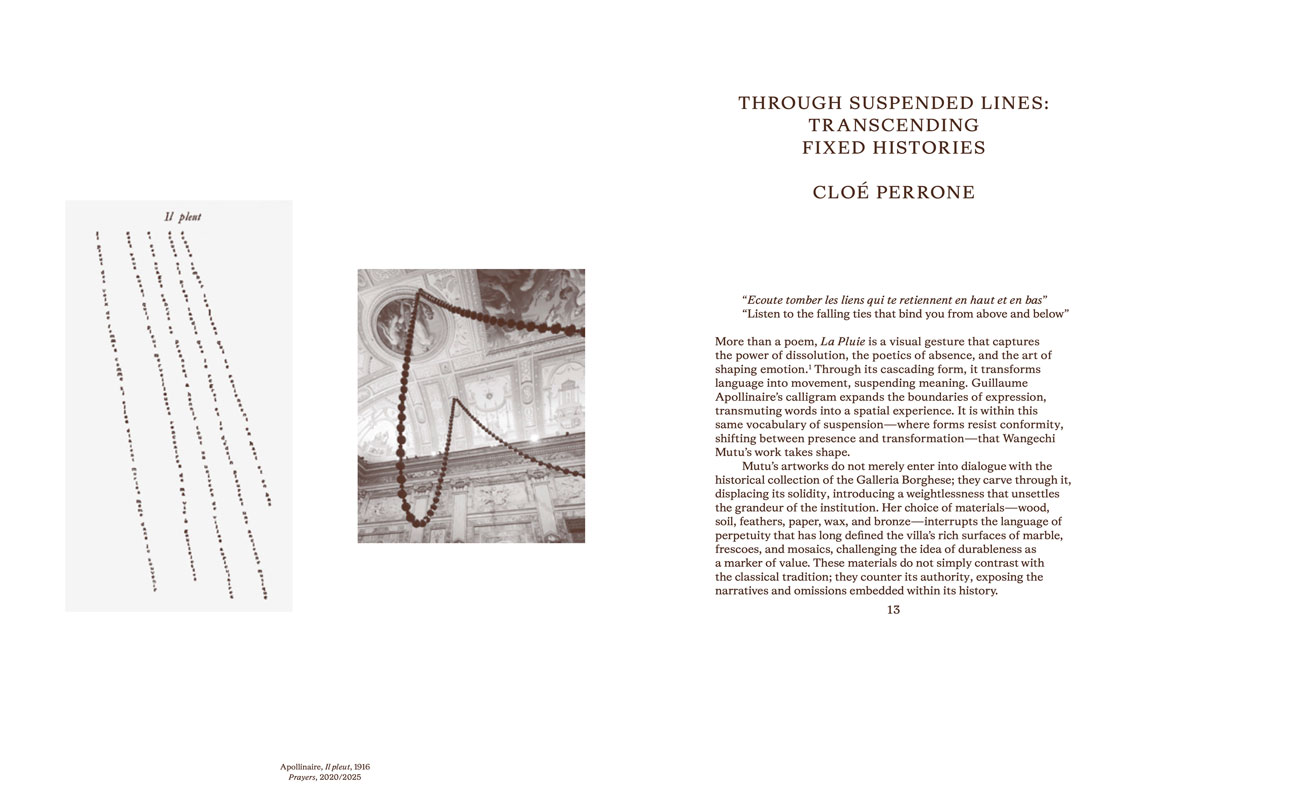
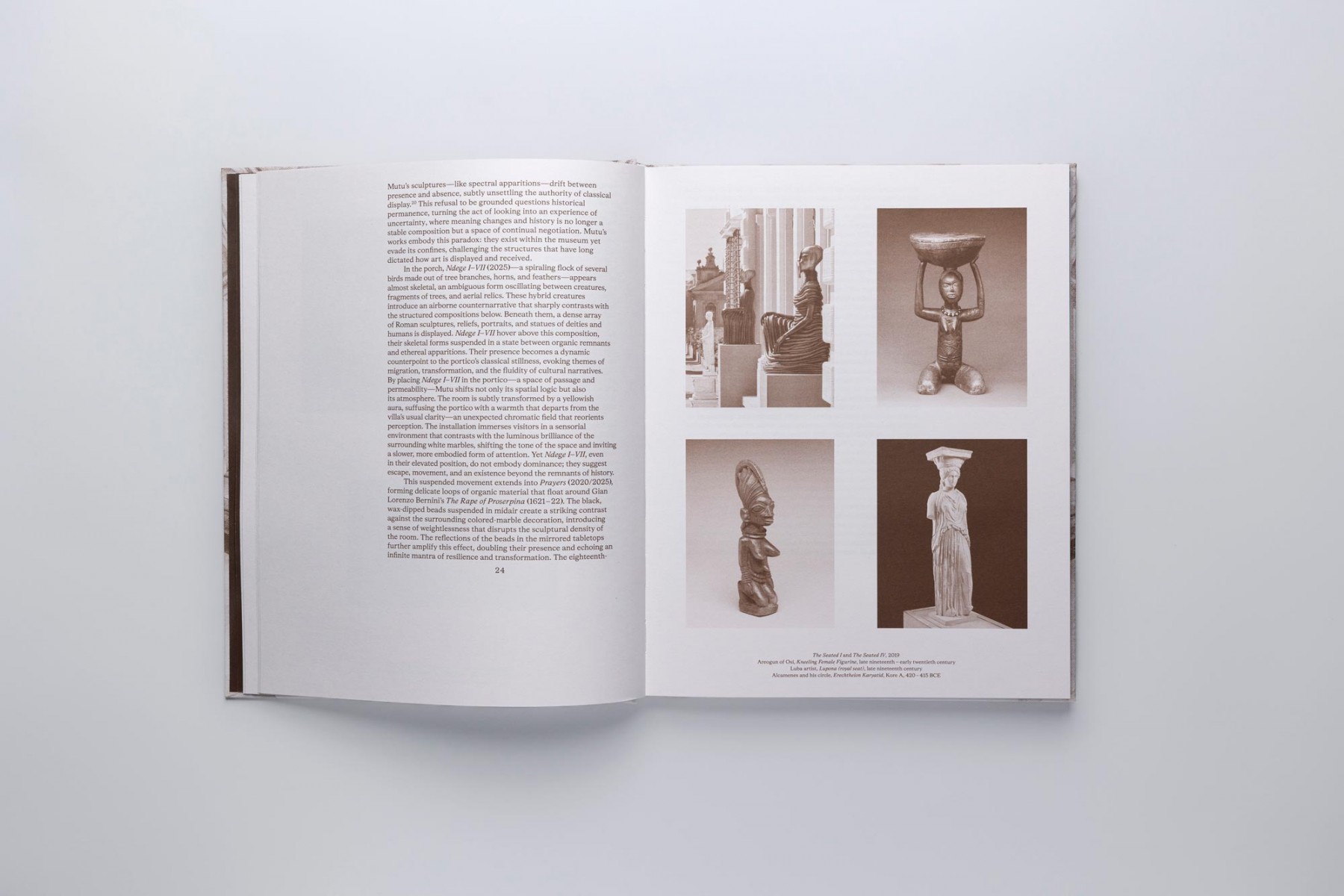
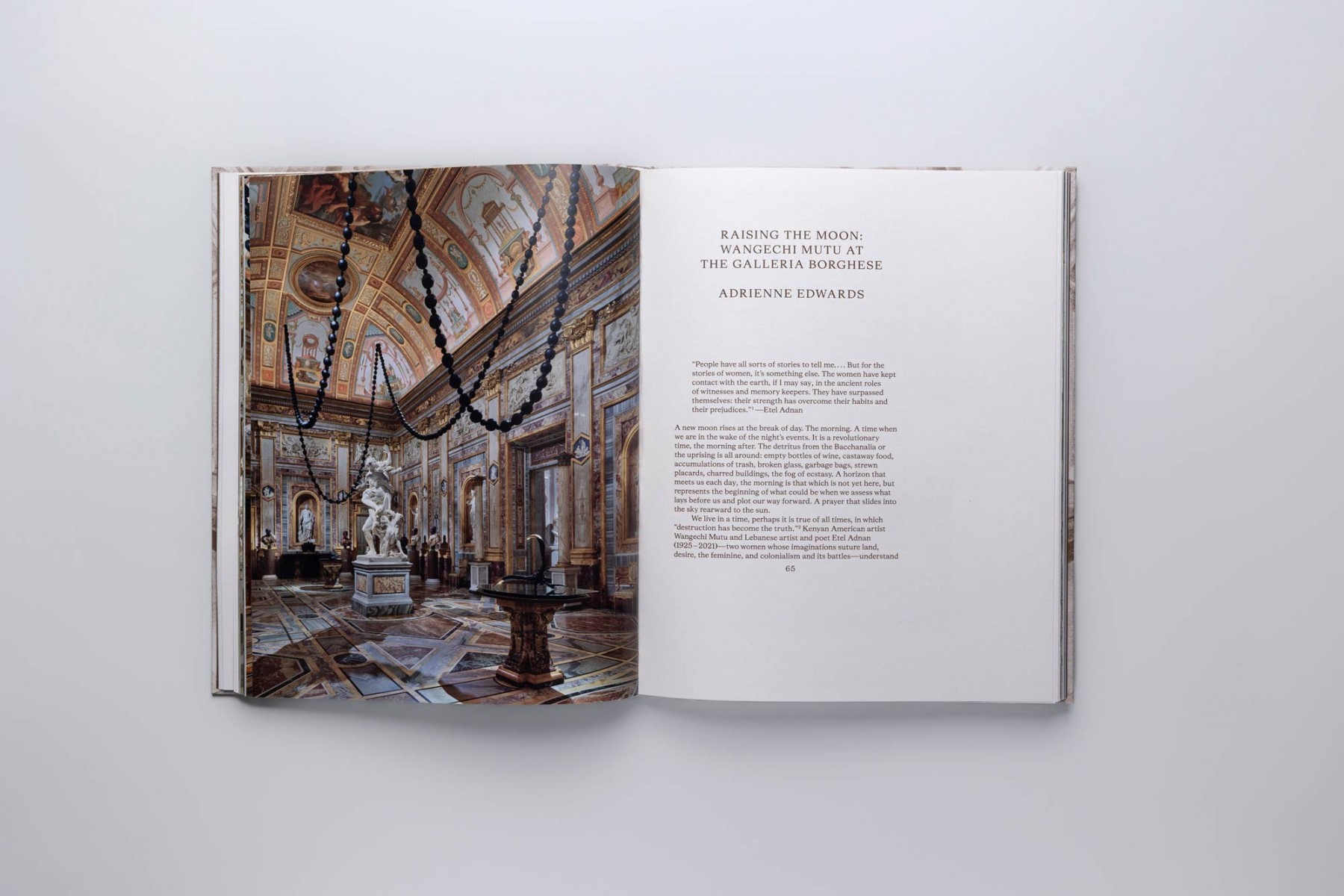
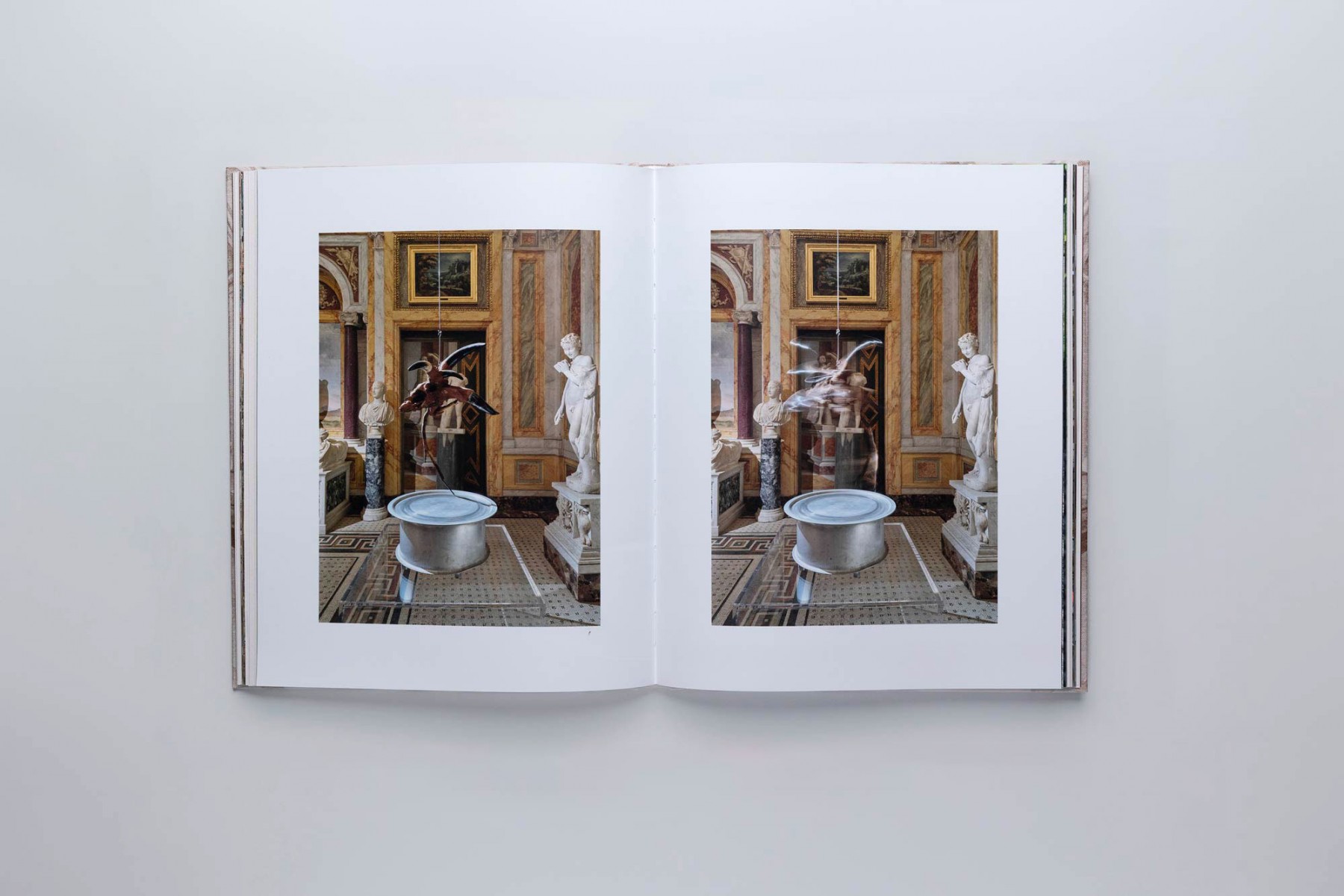
Wangechi Mutu’s intervention introduces a new vocabulary into the historical and symbolic architecture of the Galleria Borghese. Through sculpture, installation, and moving image, the artist proposes an innovative approach to the museum space—one that challenges hierarchy, permanence, and fixed meaning. Her works question the visual weight and authority of the collection through strategies of suspension, fluidity, and fragmentation. In doing so, the museum is no longer presented as a static container of objects, but as a living organism, in continuous transformation, shaped by loss, adaptation, and reconfiguration.
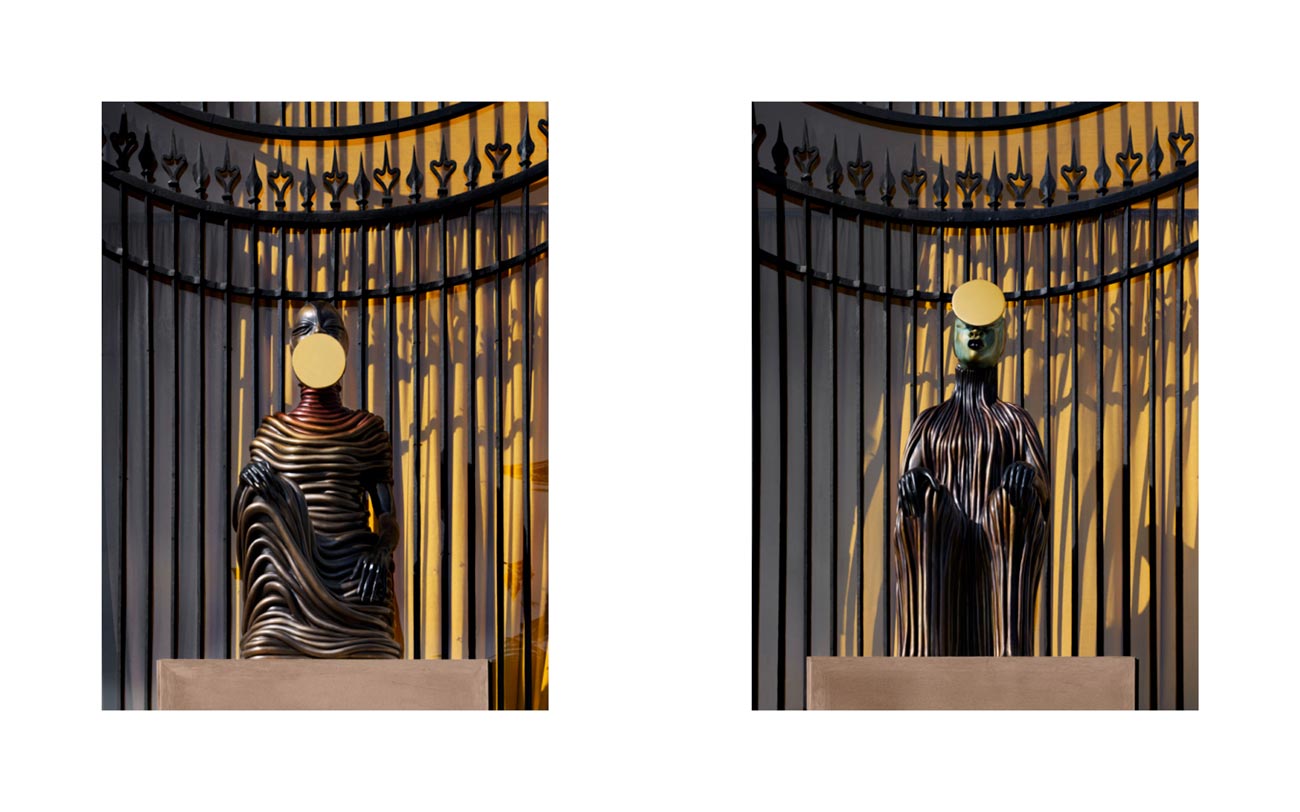
Accompanied by a text by curator Cloé Perrone analyzing the context and themes that informed the exhibition’s conception, the volume is enriched by four additional essays by Adrienne Edwards, Ekow Eshun, Francesco Freddolini, and Ilaria Puri Purini, as well as a conversation between Eshun and the artist. A rich selection of illustrations allows the readers to retrace the exhibition, which unfolded in the Gallery’s sumptuous rooms and gardens, all the way to its extramural presence at the American Academy.