Over the last ten years, Raphael Hefti has created an astonishingly body of work consisting of sculptures and installations, performance and “art-in-public-spaces.” The first comprehensive monograph is published on the occasion of his major exhibition at Kunsthalle Basel.
Between 1998 and 1999, the London-based art collective BANK operated the Fax-Bak Service. The group’s members proof-read and copy-edited more than 300 press releases by galleries. The publication is the most comprehensive record of this notorious project.
SOLD OUT
Sold Out
Listen
On how The BANK Fax-Bak Service started and how it came to be a book
In the Villa Santo Sospir, Jean Cocteau conceived his pictorial work through accumulation, inspired by Greek mythology and the Mediterranean landscape. Architecture permeates the subjects of Mauro Restiffe from a viewpoint that amplifies and reverberates the simple historical record.
Oh mio cagnetto, is the artist’s first book of writings, conceived as an artwork. It is a collection of 81 little poems that revolve around the missed and mourned figure of a puppy. It intentionally plays on the ambiguity of its nature, as both a book distributed in conventional ways and an art object.
When she started writing the Corona Tales, Chus Martínez had been weighing how people and the media were addressing the outbreak of the virus as an unprecedented disaster. One possible contribution, as curator and writer, would be to write a short story a day…
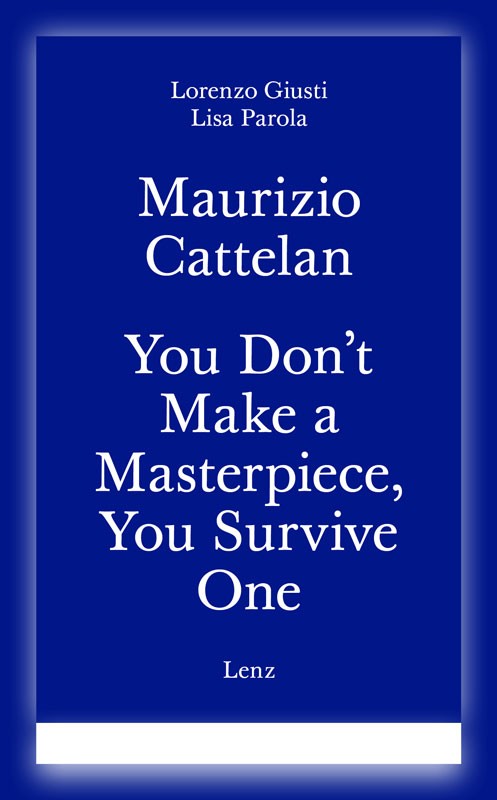
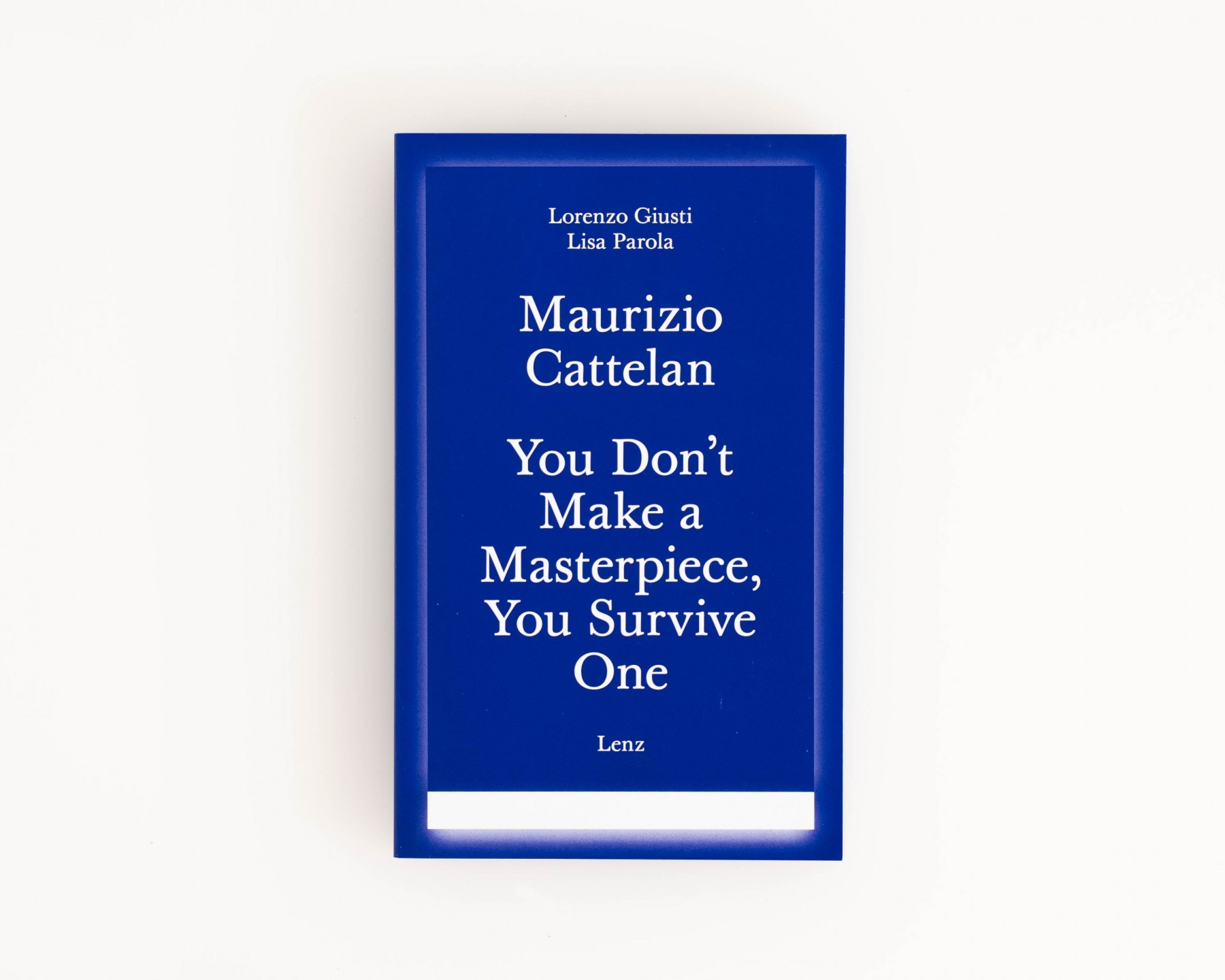
Maurizio CattelanYou Don’t Make a Masterpiece, You Survive One
Edited by Lorenzo Giusti and Valentina Gervasoni
Texts by Lorenzo Giusti and Lisa Parola
Designed by Lorenzo Mason Studio
2025, English / Italian, softcover, 11 x 17.7 cm, 96 pages
ISBN 979-12-80579-96-6
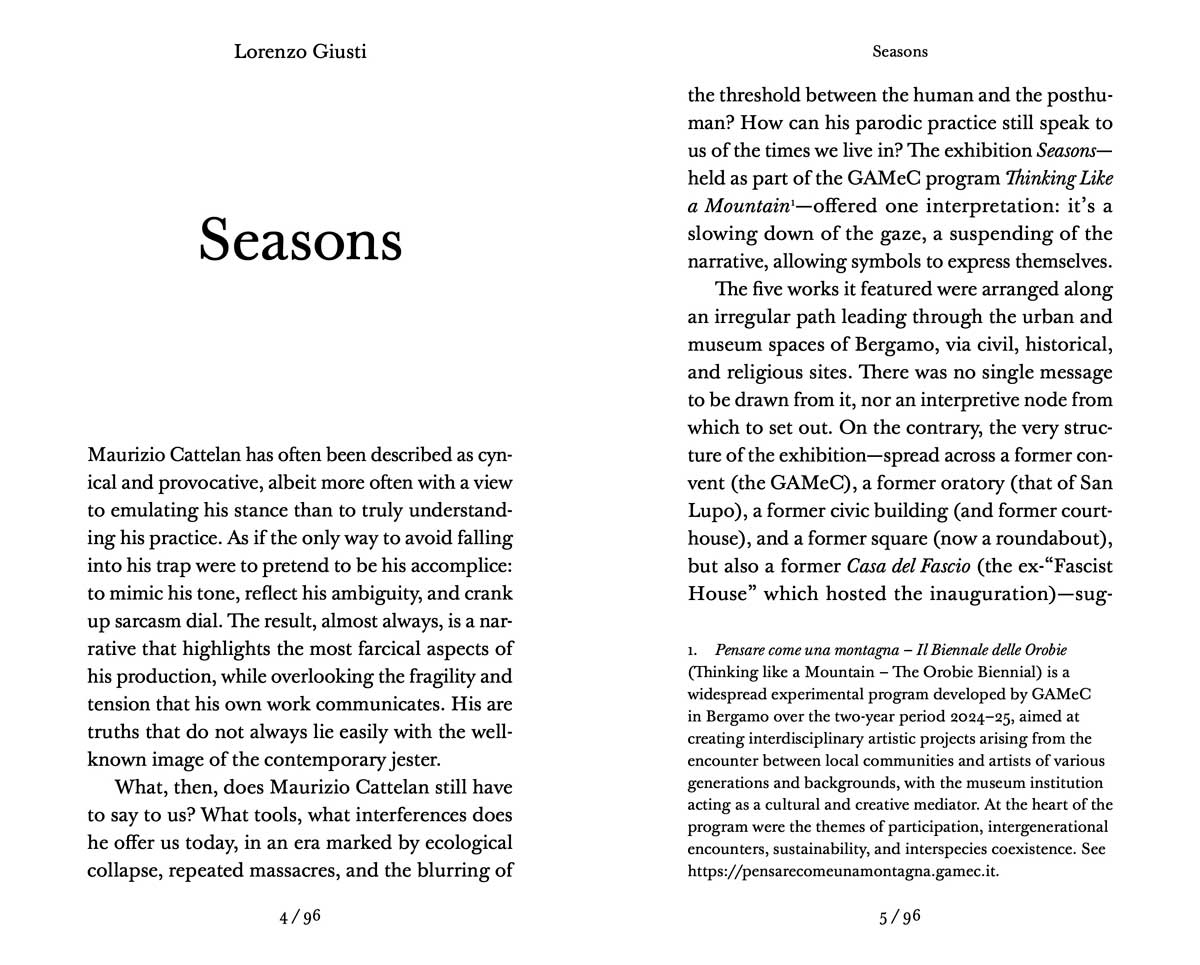
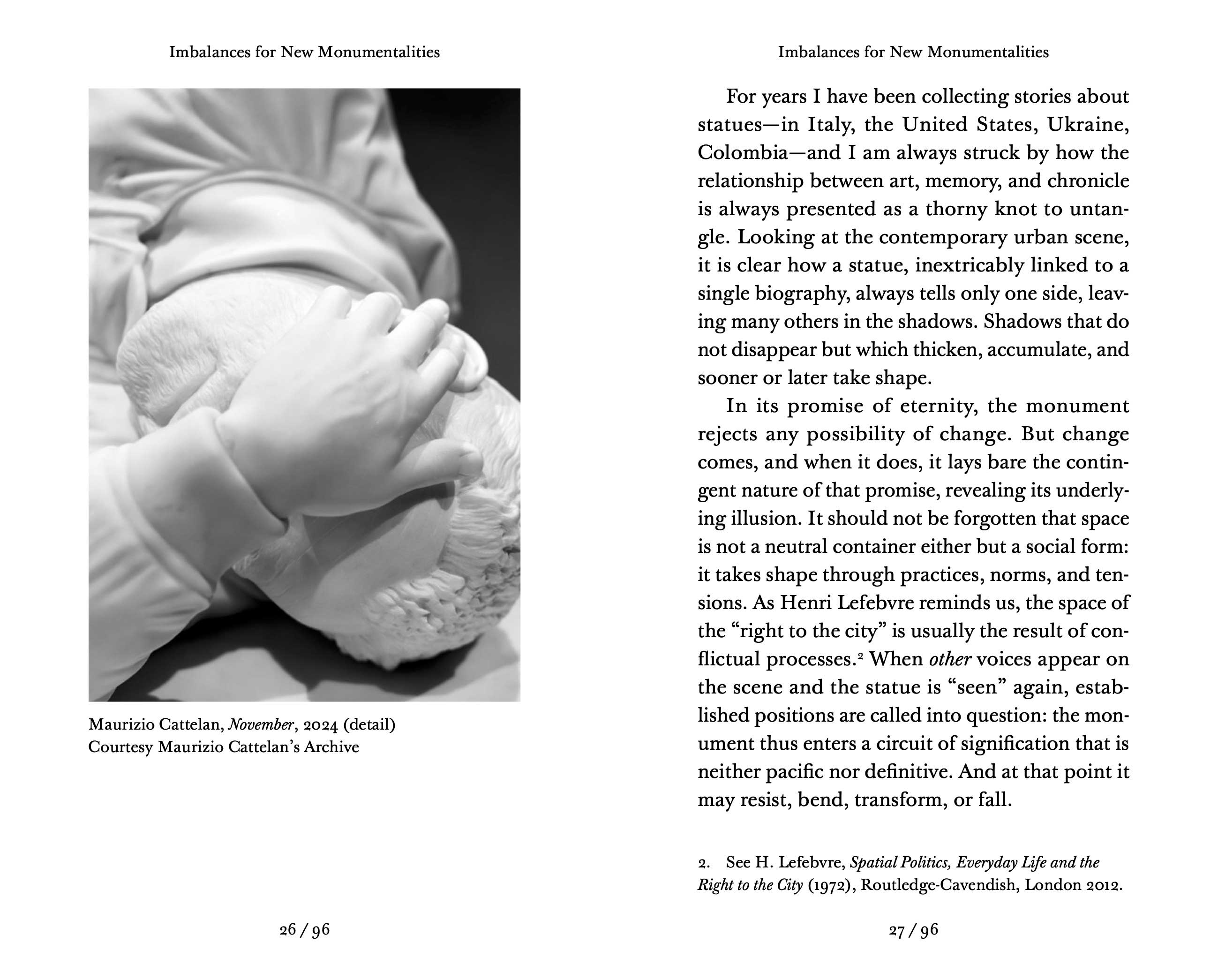
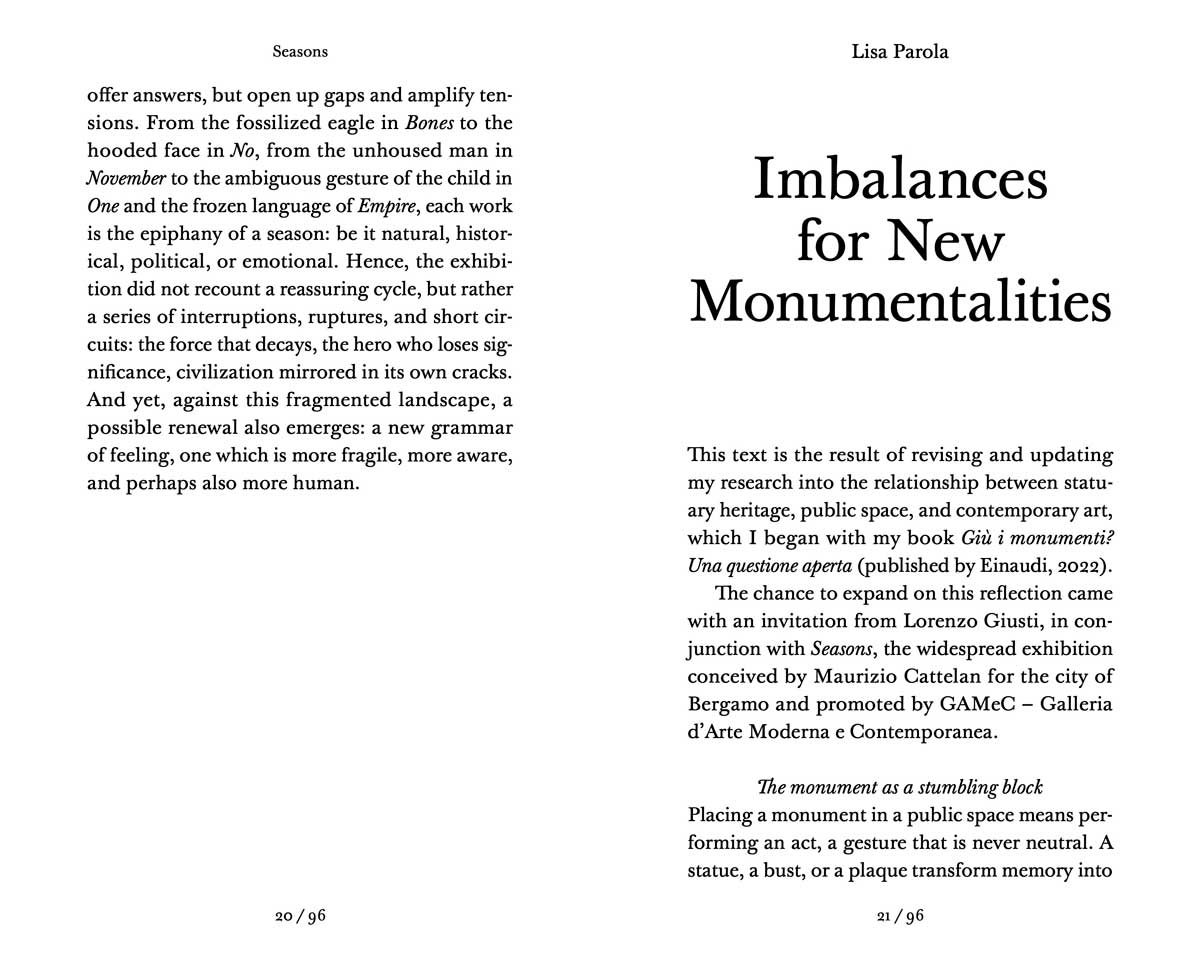
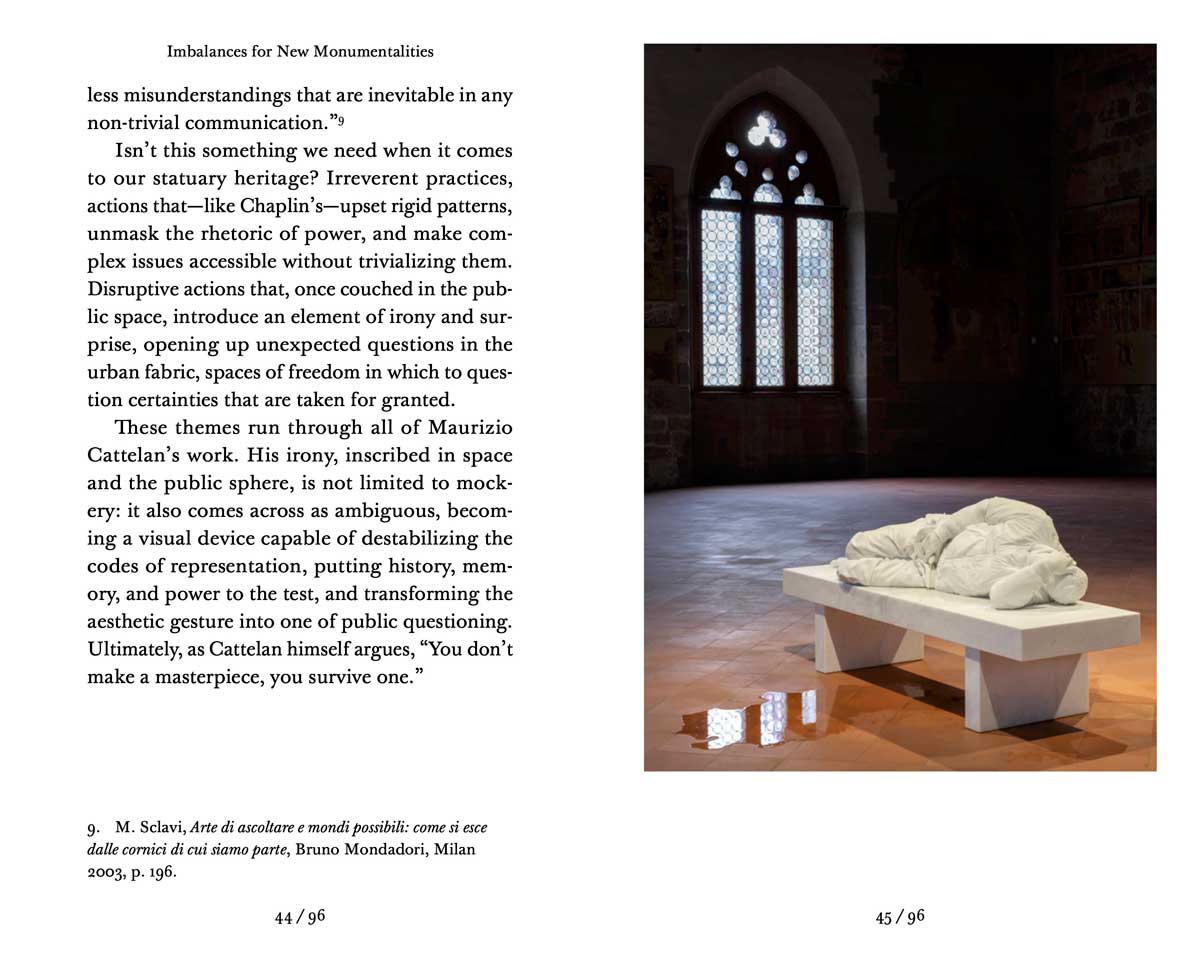
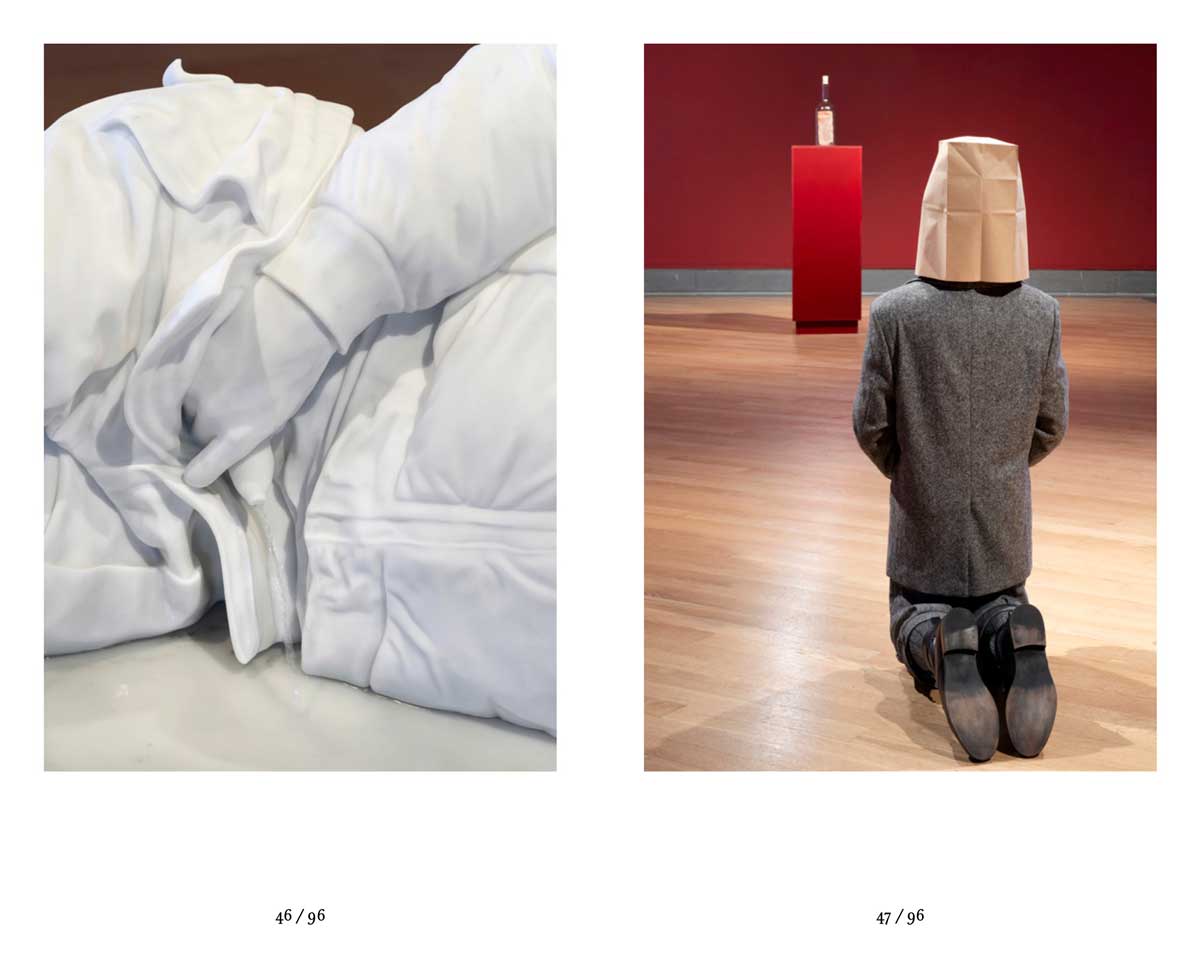
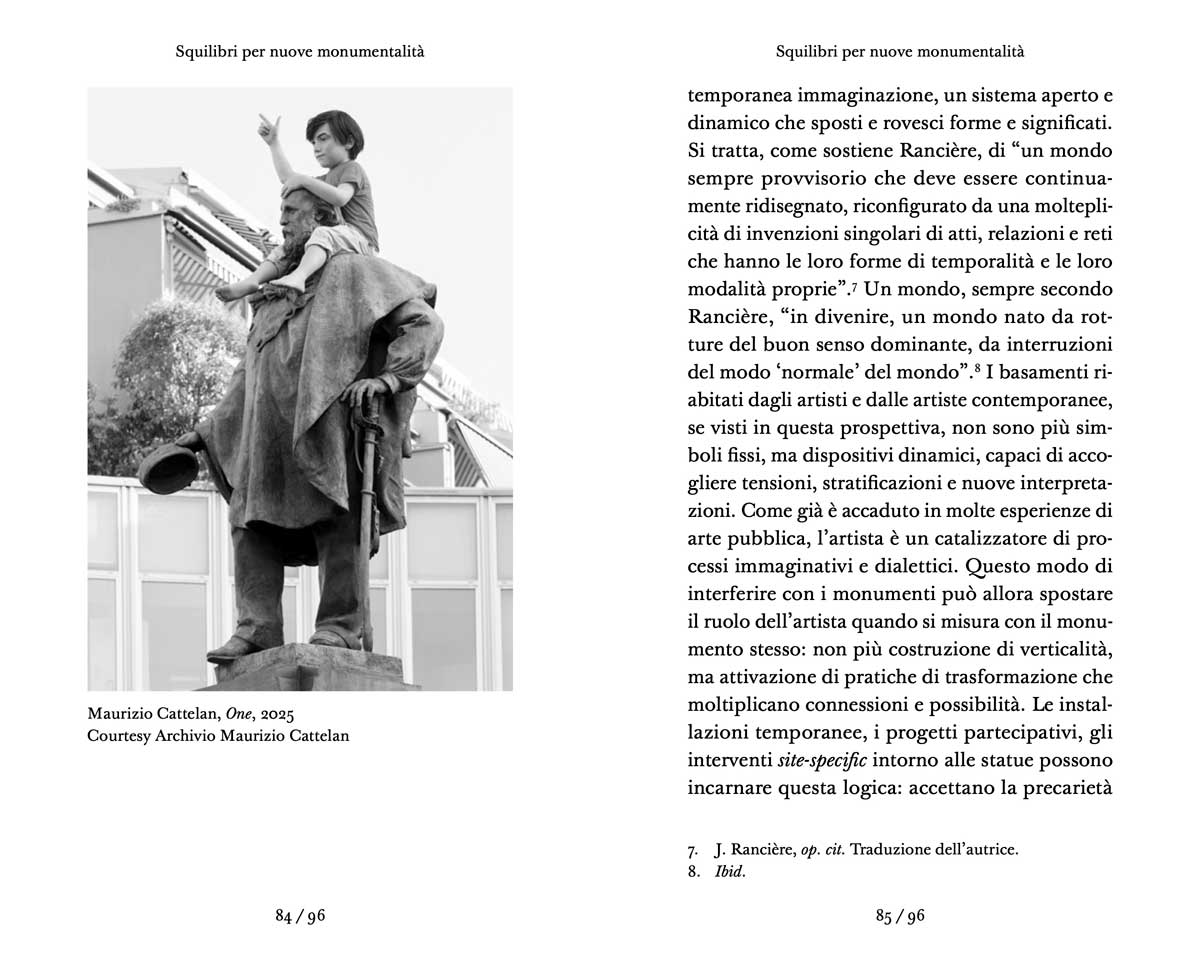
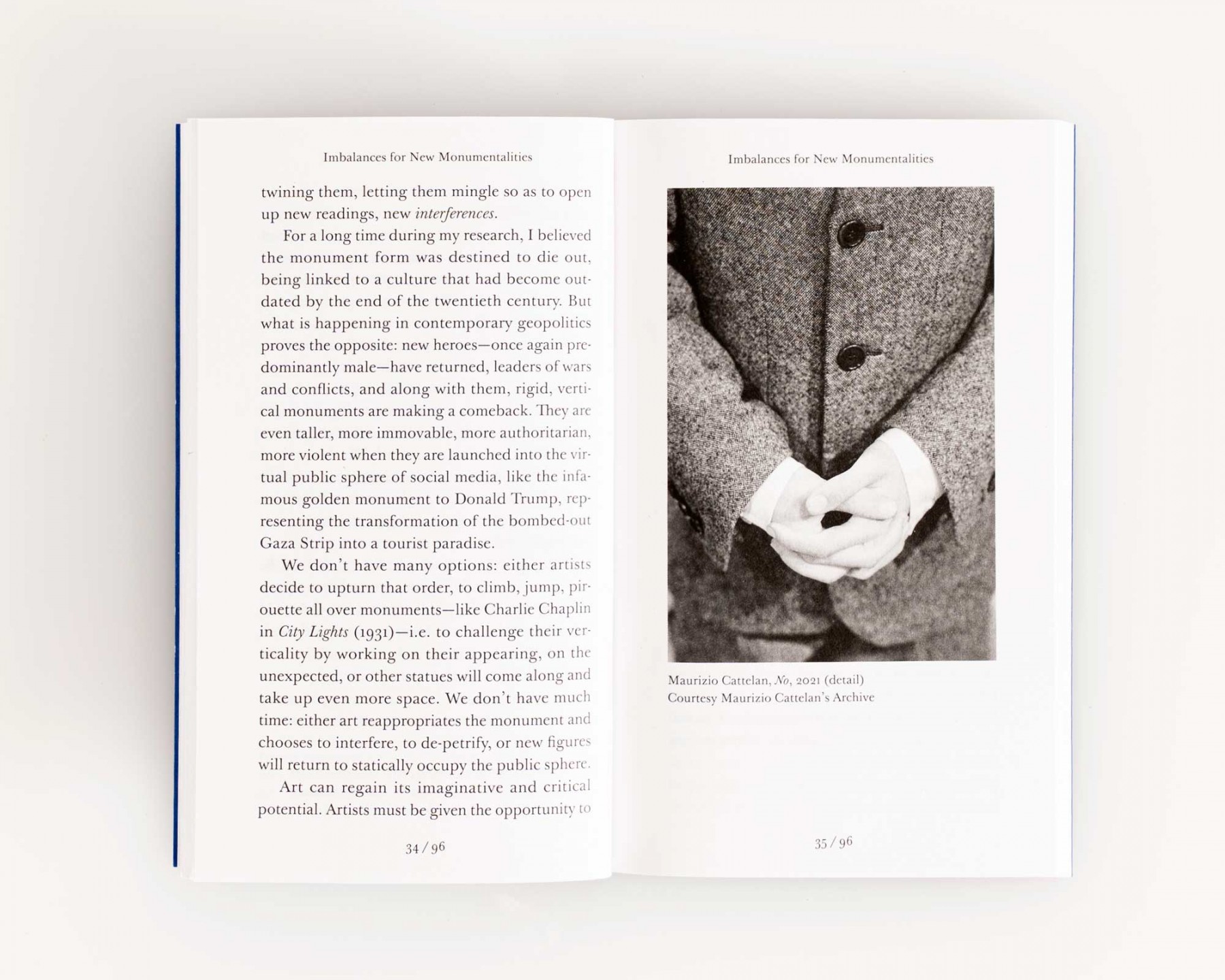
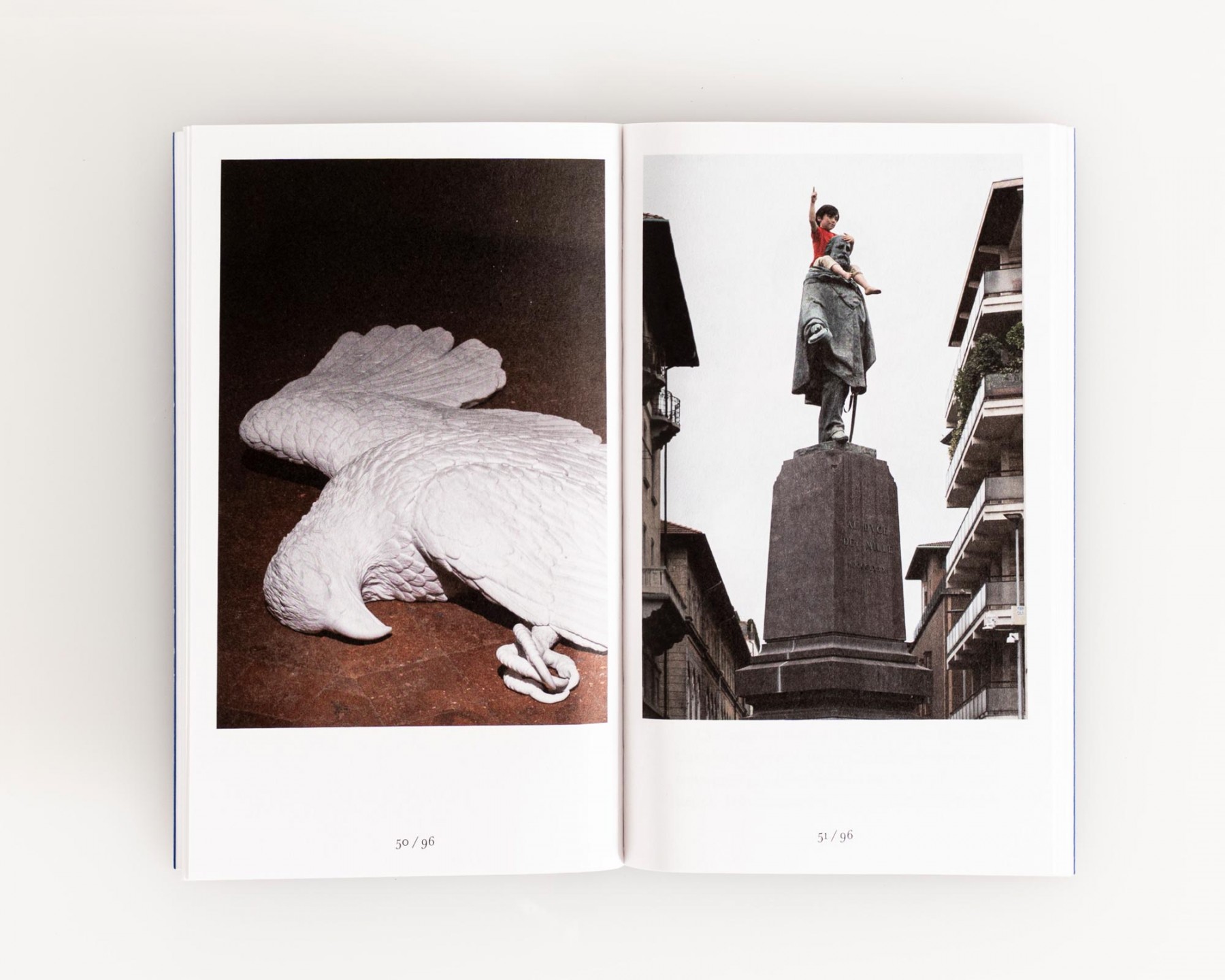
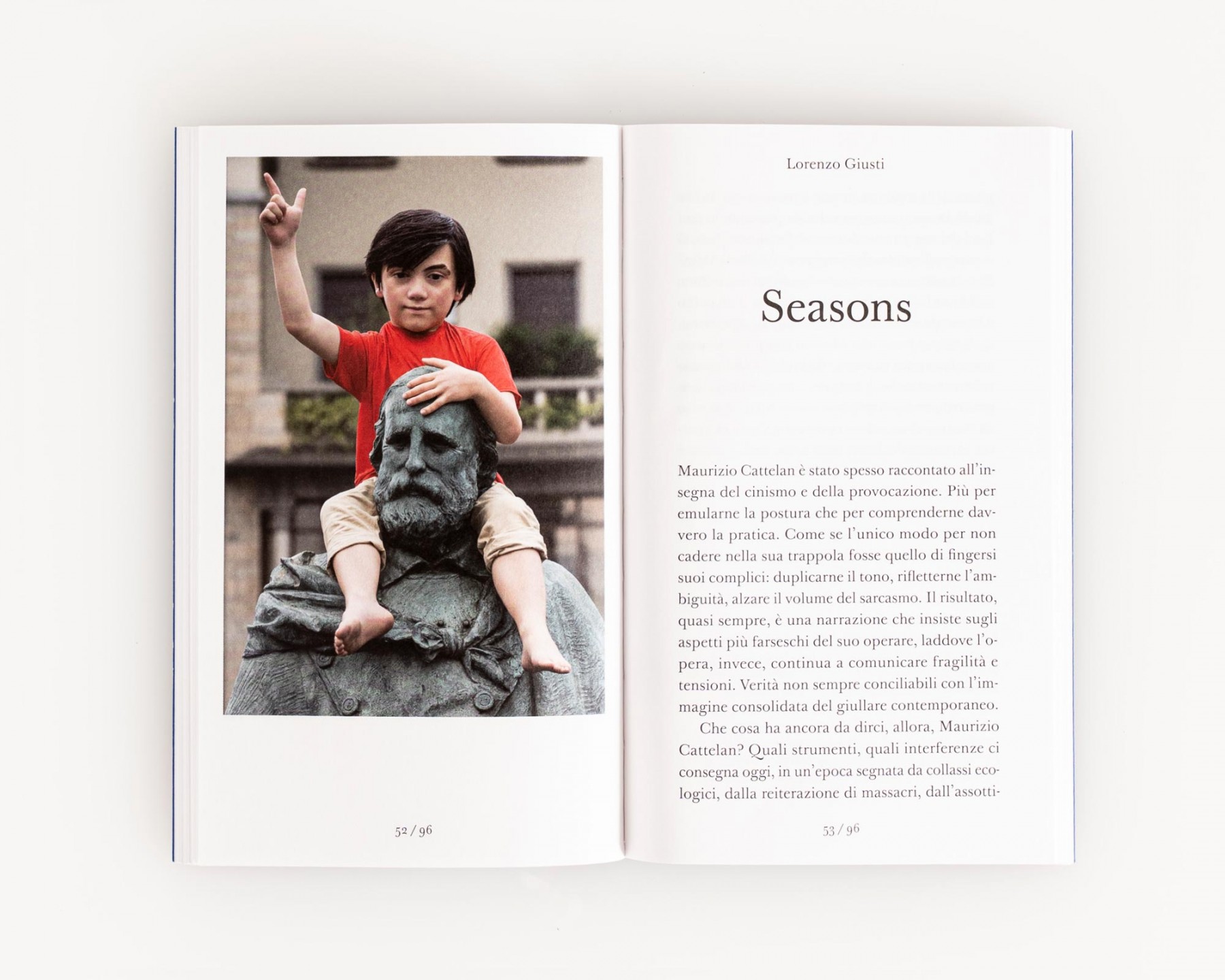
On the occasion of Seasons, Maurizio Cattelan’s exhibition at GAMeC, art historian Lisa Parola, investigates how contemporary art can redefine the idea of the monument: no longer an immobile place of celebration, but a critical space of removal and transformation, promoting new relationships with both history and the present. Parola reflects on the changing concept of the monument and how cultural institutions choose to deal with layered and sometimes contradictory symbols. Lorenzo Giusti, curator of the exhibition, accompanies the essay with an insight on the works presented in order to show how, in Cattelan’s work, symbols stratify, shift, and contradict each other. How the imperial eagle becomes a vulnerable body; how the nineteenth-century statue dedicated to Garibaldi is turned into a pedestal for something else. Who? A grandson on his grandfather’s shoulders? A new Garibaldian? Or a little vandal mocking ancient values? By so doing, he notes how between history and nature, cracks, fractures, and new possibilities may be opened up.
You Don’t Make a Masterpiece, You Survive One is the fourth book in a series of short essay collections inspired by the site-specific art projects specially conceived for GAMeC at Palazzo della Ragione: a symbolic, time-honored location in the city of Bergamo that embodies all the values of community life and participation. The artists were asked to name an author who interests them—be it a researcher, a philosopher or a scholar—and whose thinking could be said to underpin their project, with a view to finding a path through the complexities of the present day, starting from the work produced but without necessarily lingering on it.