Strata compiles 37 conversations with artists whose work has made a significant contribution to the Italian and international art scene since 2000. This book is the personal account of a number of encounters, friendships, and professional relationships that Vincenzo de Bellis and Alessandro Rabottini have nurtured over the past twenty years.
Pardon Façade documents the artistic output of Luca Monterastelli, showcasing almost all of the sculptures and installations that he produced between 2011 and 2022. Across four chapters—corresponding to four solo shows that he staged in Milan, Otegem, Antwerp, and Naples—the publication provides the first overview of the artist’s work.
More than half a century after its premiere, Yvonne Rainer, in collaboration with choreographer and dancer Emily Coates, directed the 2019 revival of her 1965 performance Parts of Some Sextets. This book poses questions about the trajectories of artworks, performers, and audiences, all while tracing the life—and afterlife—of a dance.
How does technology organize life? This book documents and reflects on the exhibition Proof of Stake: Technological Claims at Kunstverein in Hamburg, curated by Simon Denny and Bettina Steinbrügge. It brings together a unique group of artists and scholars who investigate the technological apparatuses and power relations of organized life.
This artist’s first monograph brings together sketches, documentation and installation shots, as well as an in-depth analysis of her practice. It highlights her process of making art, from the conception of an idea to the finished work, and from the deconstruction and re-assembling of her characters’ identities to the relentless creation of new worlds.
Published on the occasion of the first exhibition in Italy by Jenna Gribbon, staged at the Collezione Maramotti, Mirages showcases a wealth of images that highlight the fluid, sensual output of this artist who, in repeatedly portraying her wife, the musician Mackenzie Scott (aka TORRES), explores the implications inherent in seeing and being seen.
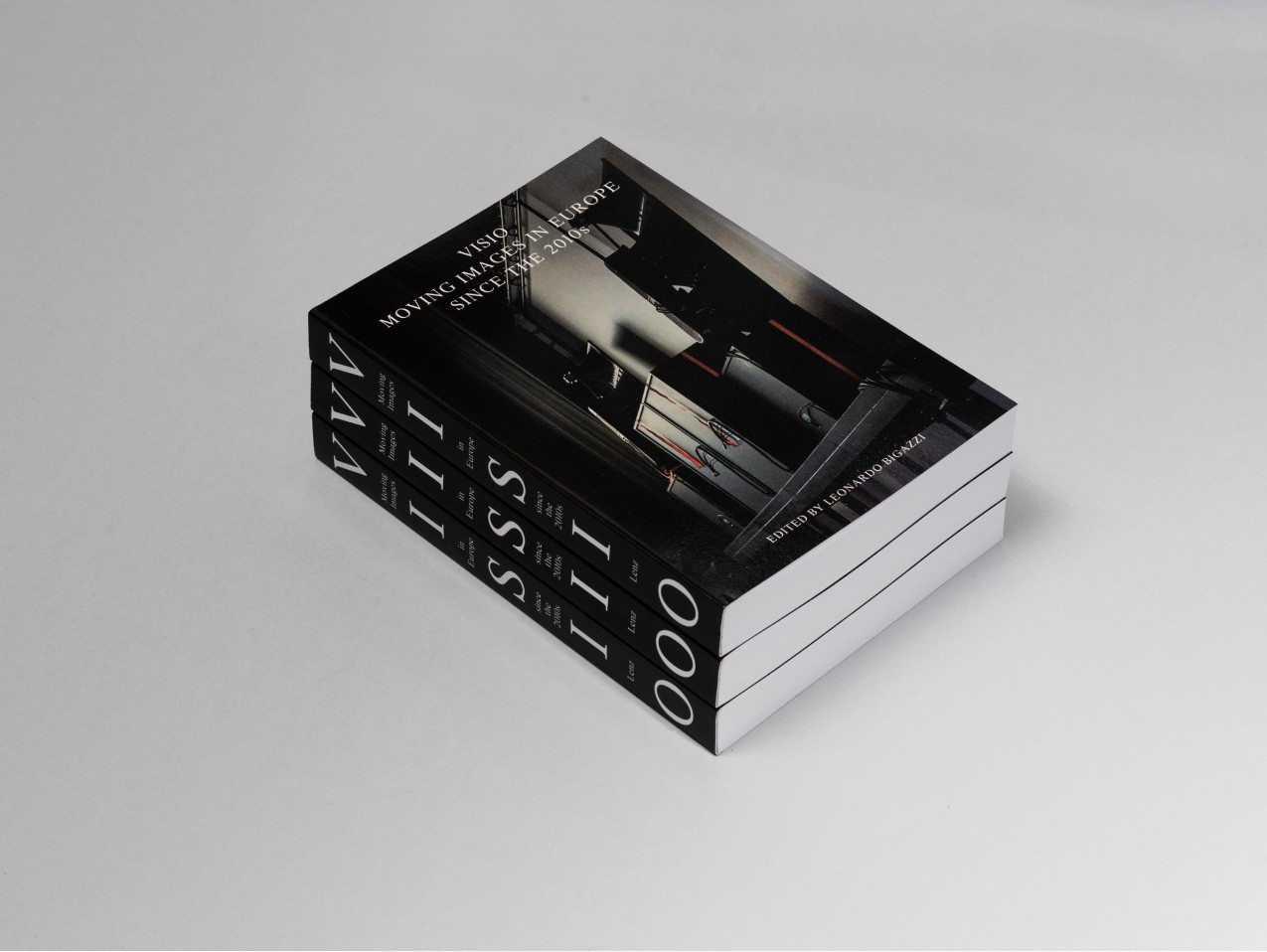
Edited by Leonardo Bigazzi
Texts by Antonia Alampi, Erika Balsom, Andrea Bellini, Leonardo Bigazzi, Federica Bueti, Beatrice Bulgari, Barbara Casavecchia, Sophie Cavoulacos, Manuel Cirauqui, Ilaria Gianni, Hassan Khan, Oliver Laric, Maria Lind, Andrea Lissoni, Philippe-Alain Michaud, Han Nefkens, Emily Pethick, Julian Ross, Aura Satz, Hito Steyerl, Bianca Stoppani, Robert Trafford, Valentine Umansky, Francesco Urbano Ragazzi
Designed by Lorenzo Mason Studio
2024, English, softcover, 17 x 24 cm, 368 pages
ISBN 979-12-80579-57-7
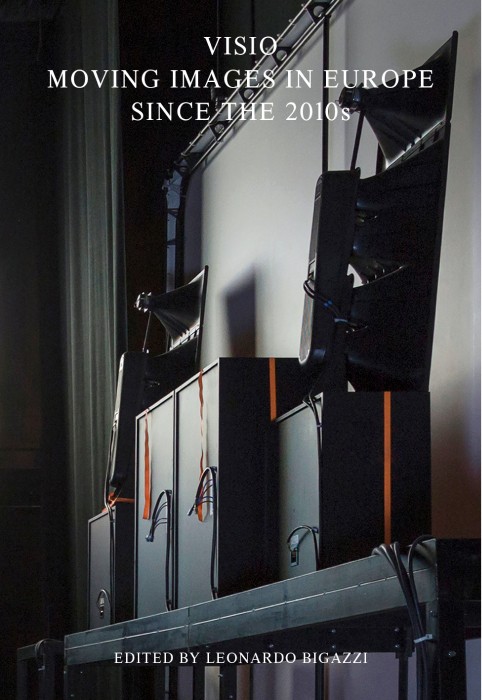
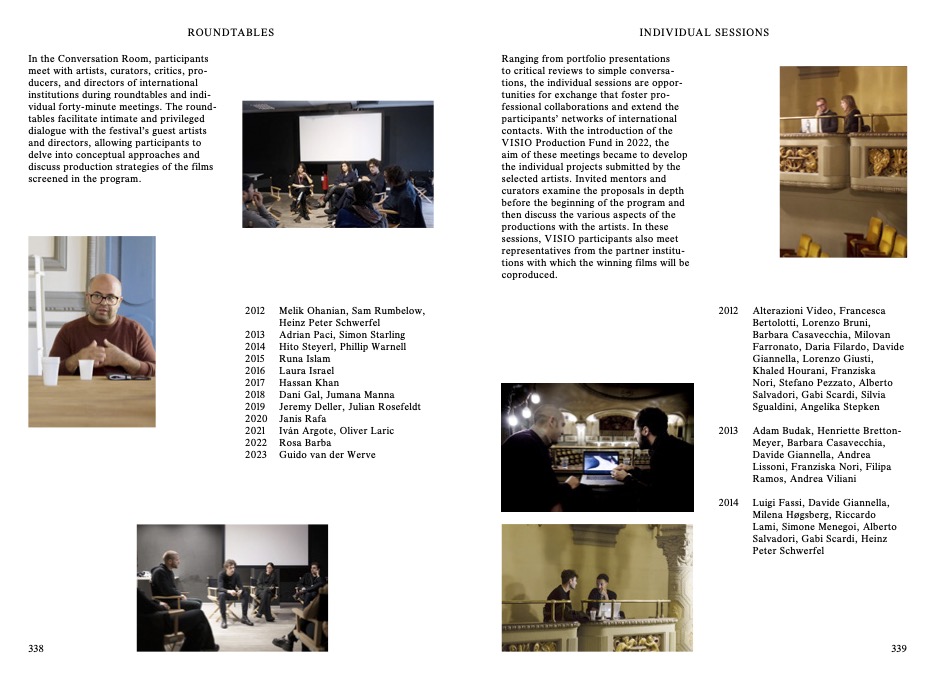
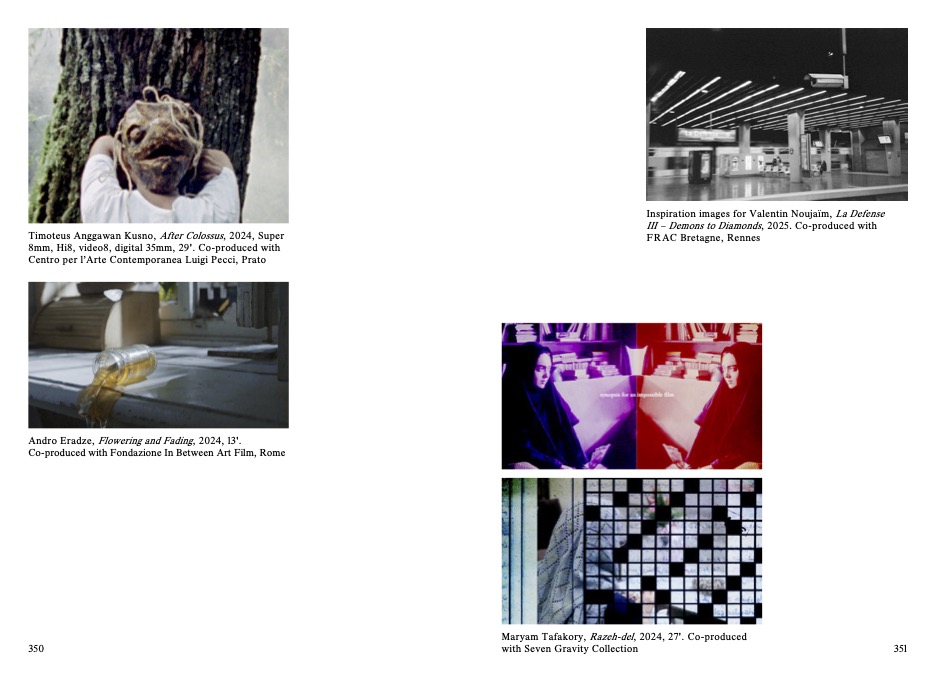
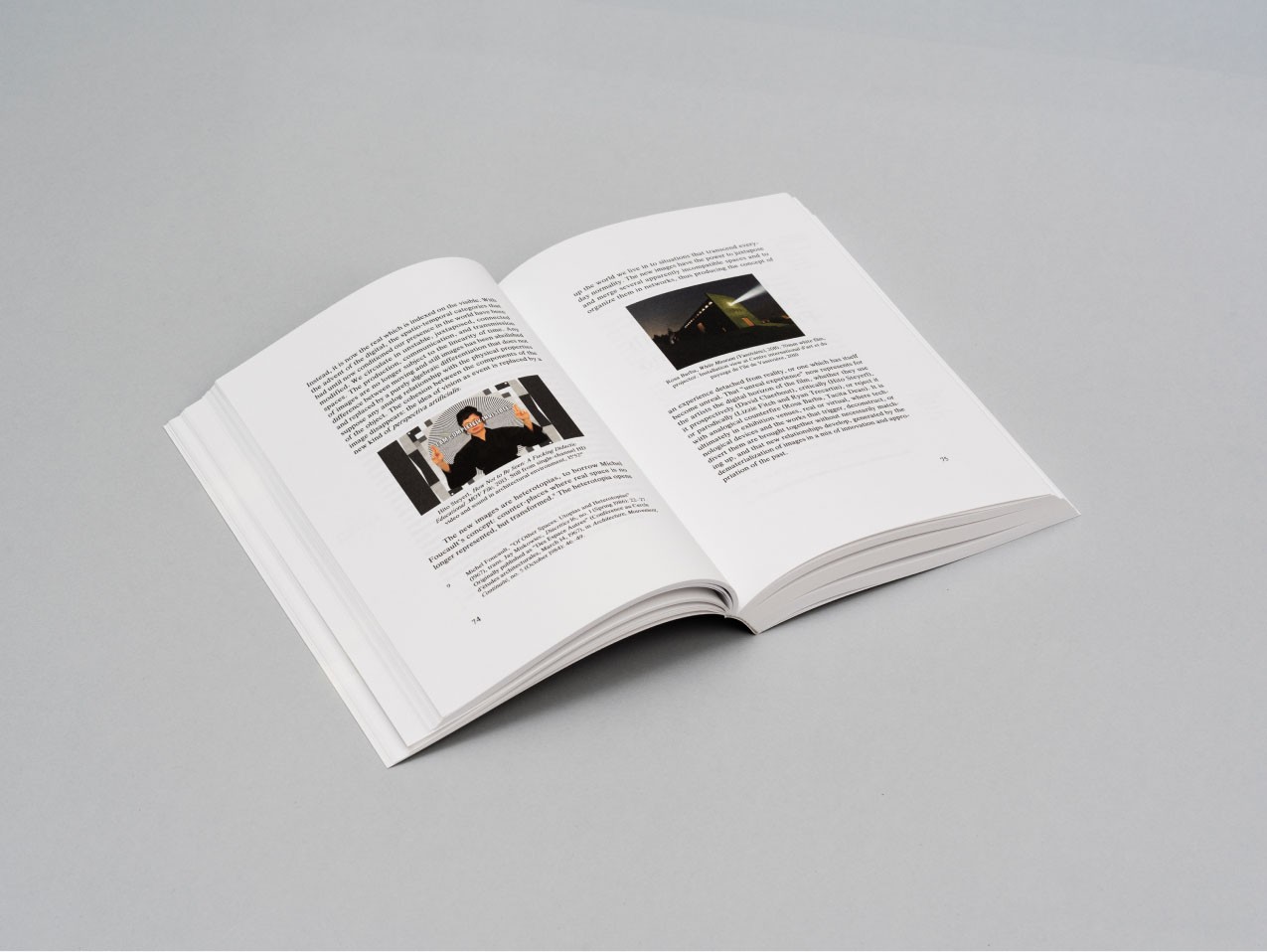
This volume brings together visions, experiences and critical interdisciplinary methodologies that have been instrumental in the development of the language of moving images since 2010. New essays and conversations reflect on radical technological and poetic transformations in the works of the generation of digital native artists, adhering to the shared processes developed during the first twelve editions of VISIO – European Programme on Artists’ Moving Images, a research, production and residency project promoted and organized by Lo schermo dell’arte in Florence.
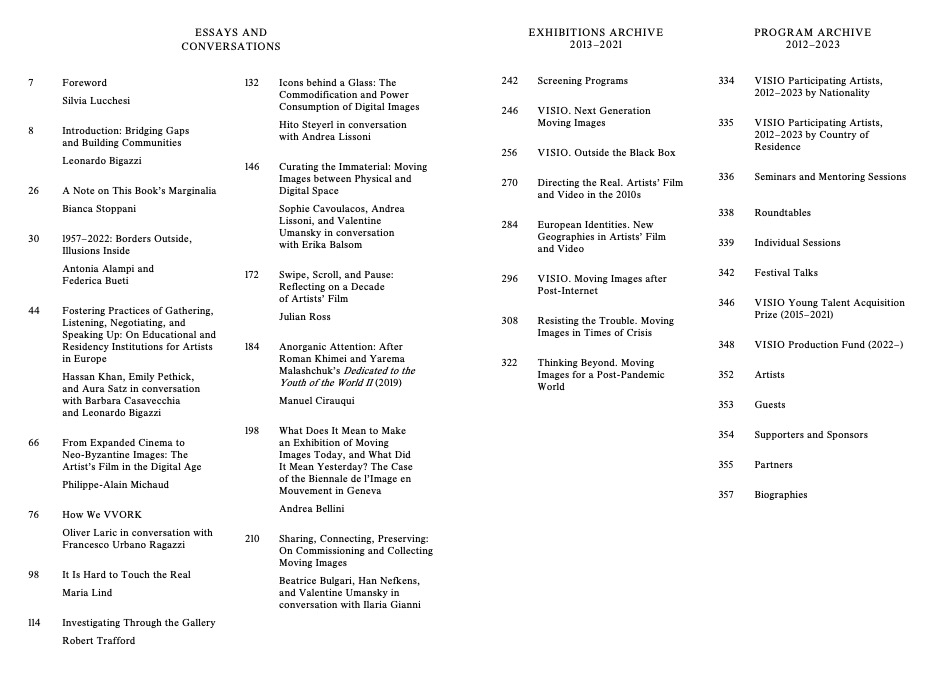
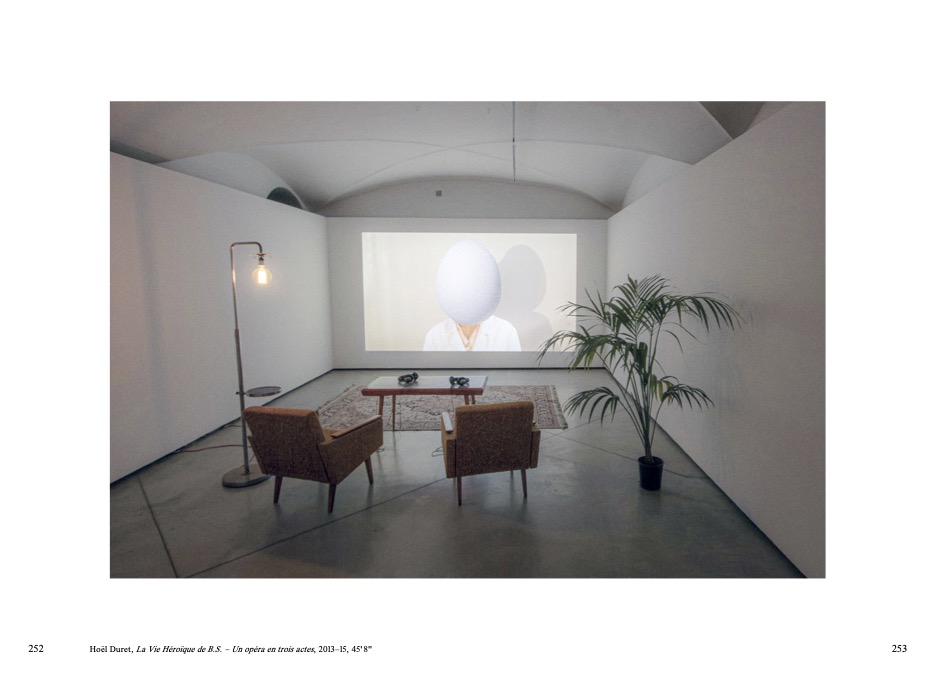
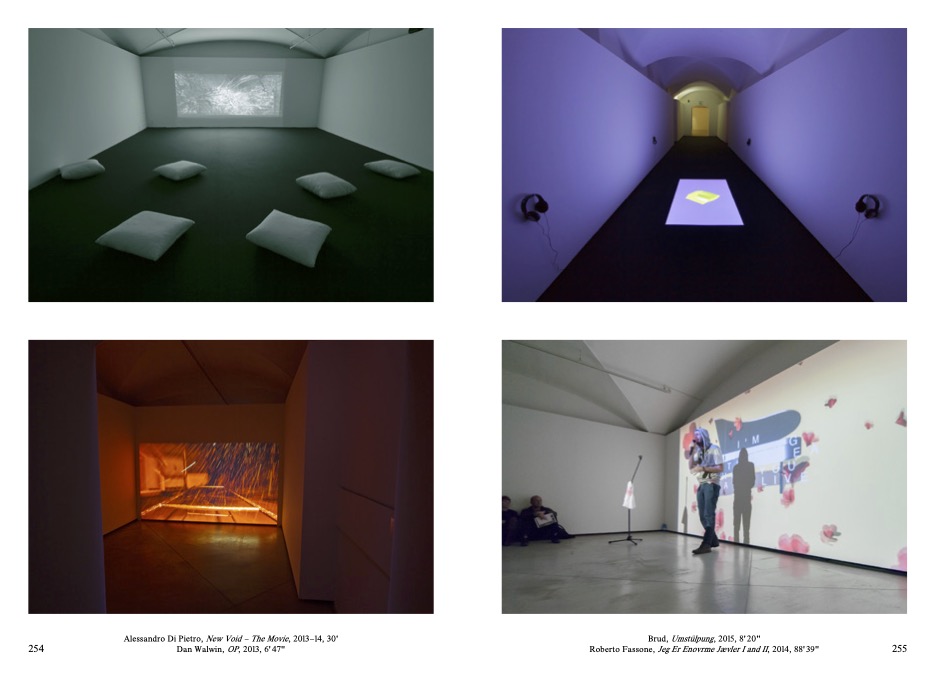
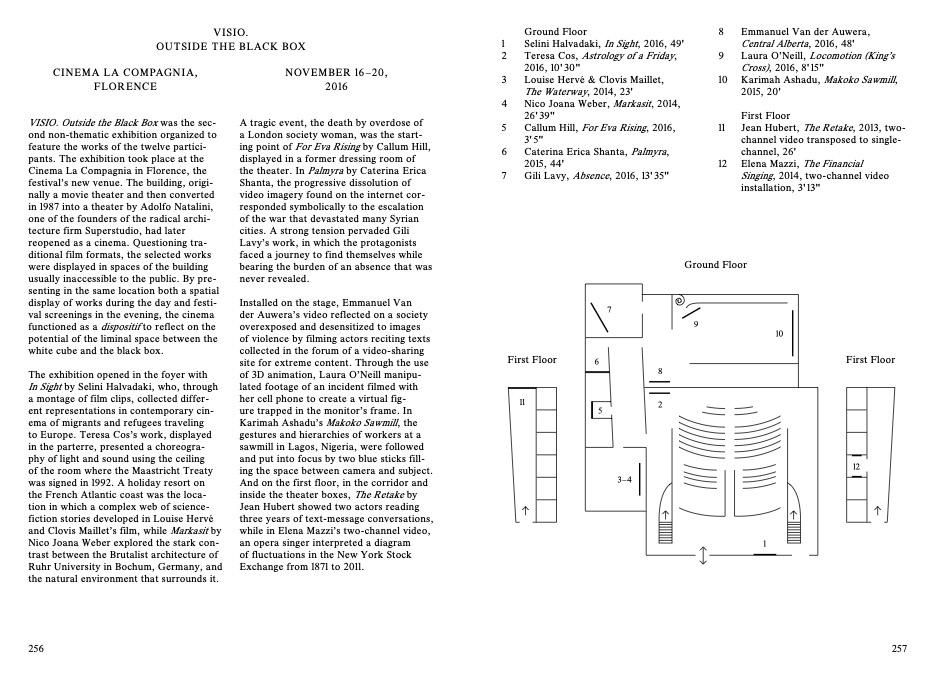
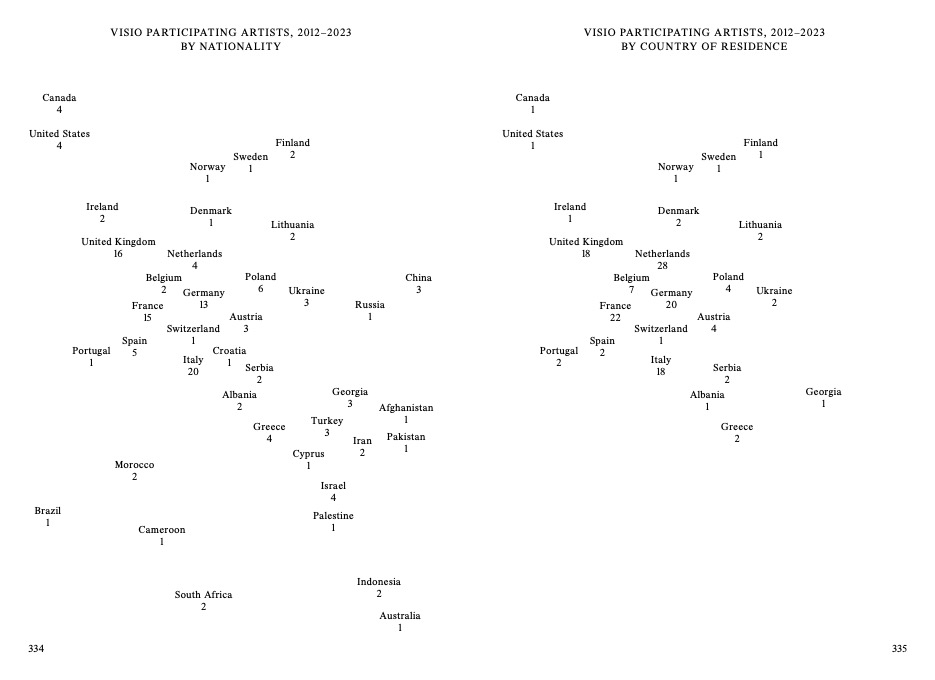
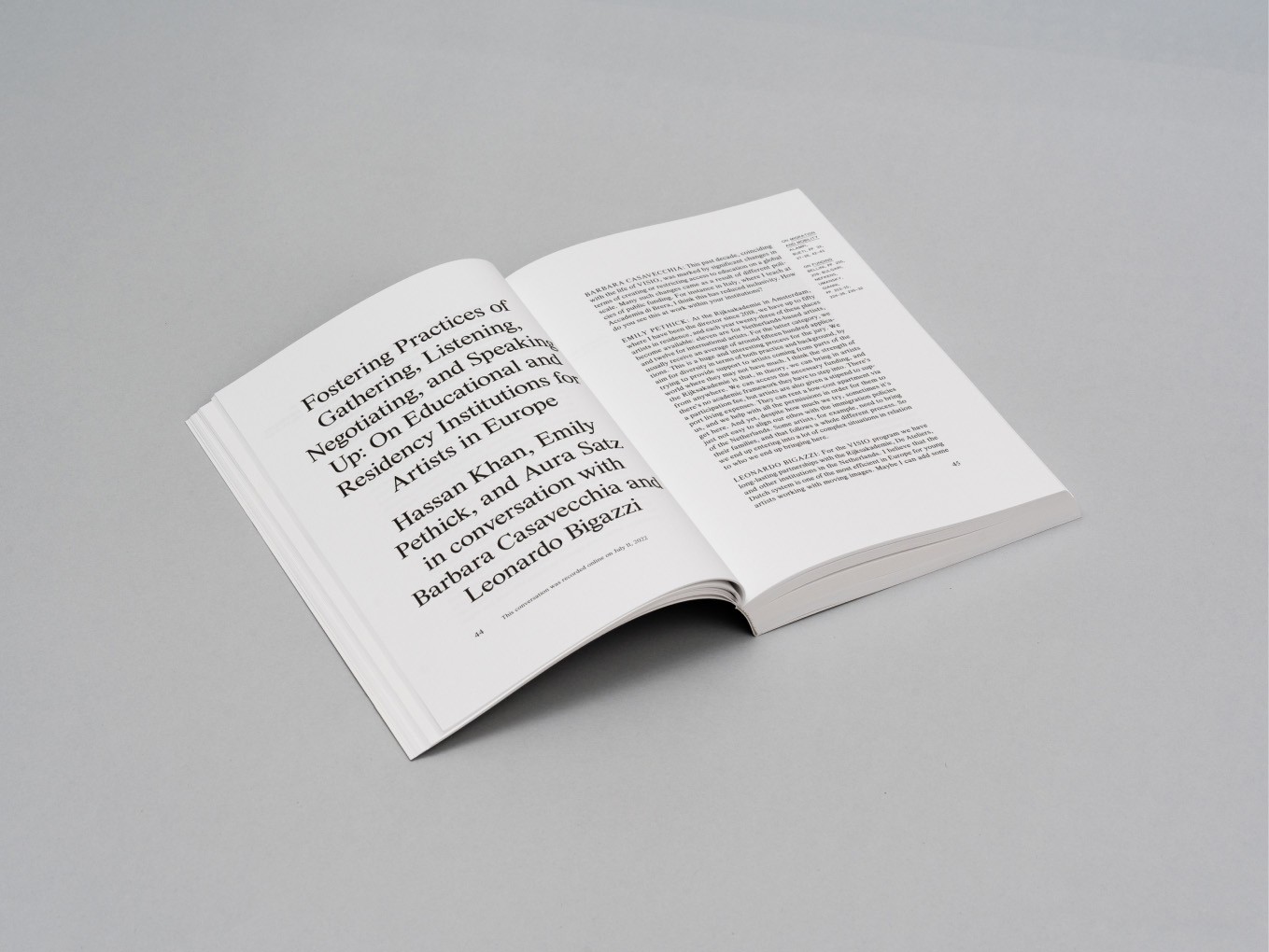
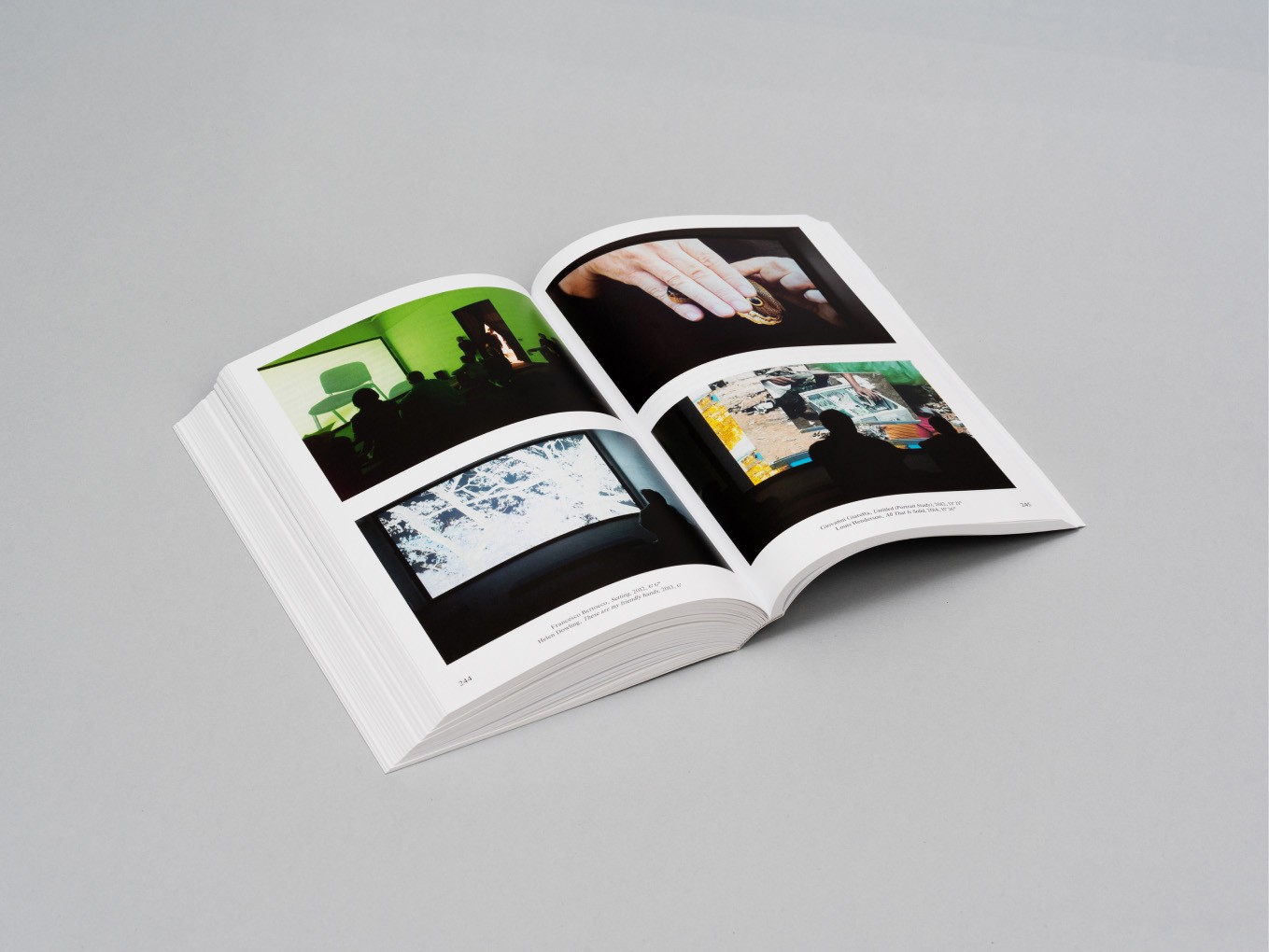
The book features original contributions from twenty-three authors who have participated in the program over the years and is divided into two main sections: the first reflects the theoretical and discursive approach of VISIO by alternating essays and conversations; the second compiles a large archive of the first twelve editions of VISIO.
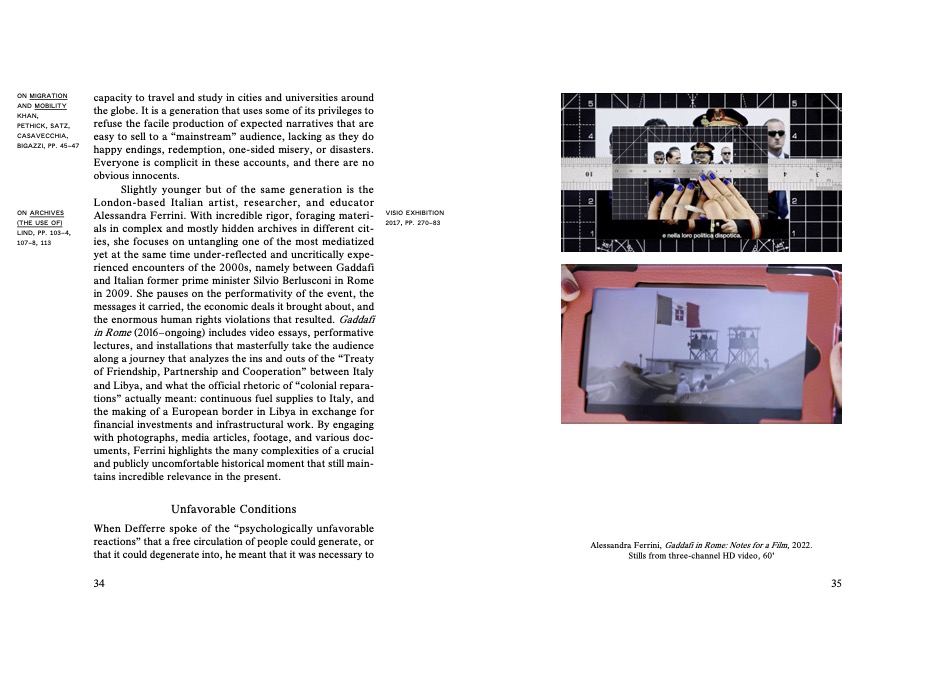
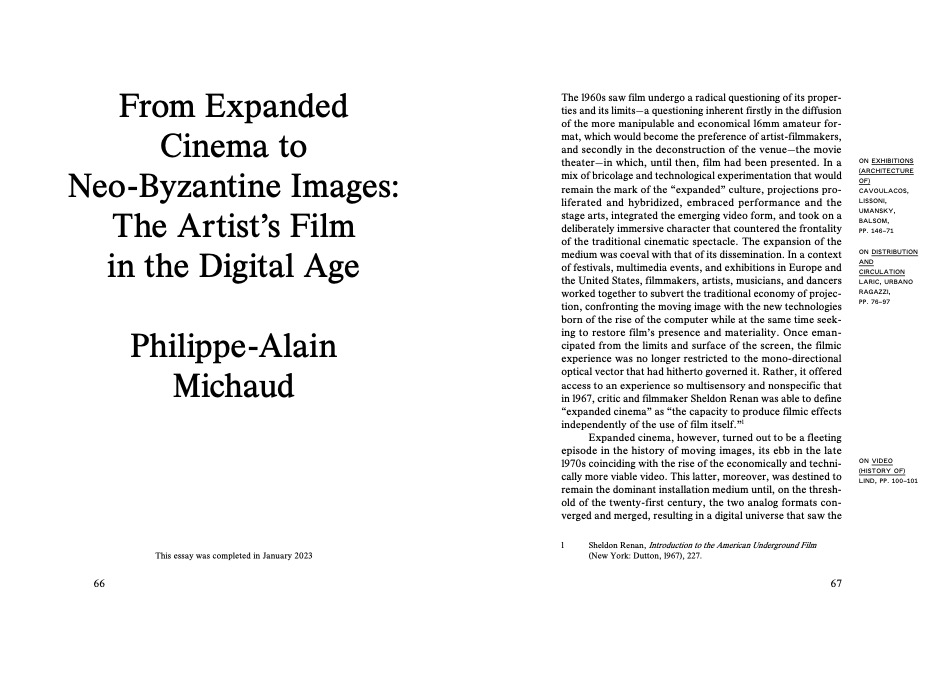
The texts investigate various topics: the questioning of a European identity; the accessibility and role of academic institutions and residences; the evolving significance of images in the digital age; the virtual realm as an exhibition and research space; the impact of documentary practices on contemporary production; the rise of investigative aesthetics and exhibitions as a medium to renegotiate truth; the commodification of digital images and their influence on power consumption; the shifts in curatorial approach to physical and digital spaces; a focus on the practices of VISIO generation artists; and how public and private institutions commission and collect moving image today.