This artist’s book reflects Eva & Franco Mattes’ continued interest in the condition of displacement to be sensed in Fukushima. Borrowing the format of wrapping-paper catalogs, it contains twenty large pre-perforated sheets, each of which features a photographic texture—a seamlessly repeating motif captured by the camera amid the radioactive ruins of the contaminated towns and countryside.
The album brings together the music composed by Federico Chiari for various film and video works by Diego Marcon, including Monelle (2017), Ludwig (2018), The Parents’ Room (2021), and Dolle (2023). The album comes with a booklet containing lyrics and images that provide a deeper insight into this unique, profoundly intertwined collaboration between Chiari and Marcon.
This small anthology reviews some of the central themes of Diego Marcon’s research: from the role of the display in exhibitions to his relationship with cinema, from the use of special effects and animatronics to the sense of community established through his work. Glassa accompanies the exhibition of the same name designed by the artist for the spaces of the Centro per l’arte contemporanea Luigi Pecci in Prato.
Strata raccoglie 37 conversazioni con artisti il cui lavoro ha dato un contributo significativo alla scena artistica italiana e internazionale a partire dal 2000. Questo libro è il resoconto personale di una serie di incontri, amicizie e relazioni professionali che Vincenzo de Bellis e Alessandro Rabottini hanno coltivato negli ultimi vent’anni.
Strata compiles 37 conversations with artists whose work has made a significant contribution to the Italian and international art scene since 2000. This book is the personal account of a number of encounters, friendships, and professional relationships that Vincenzo de Bellis and Alessandro Rabottini have nurtured over the past twenty years.
Pardon Façade documents the artistic output of Luca Monterastelli, showcasing almost all of the sculptures and installations that he produced between 2011 and 2022. Across four chapters—corresponding to four solo shows that he staged in Milan, Otegem, Antwerp, and Naples—the publication provides the first overview of the artist’s work.
Edited by Daniel Baumann
Trajal Harrell in conversation with Daniel Baumann
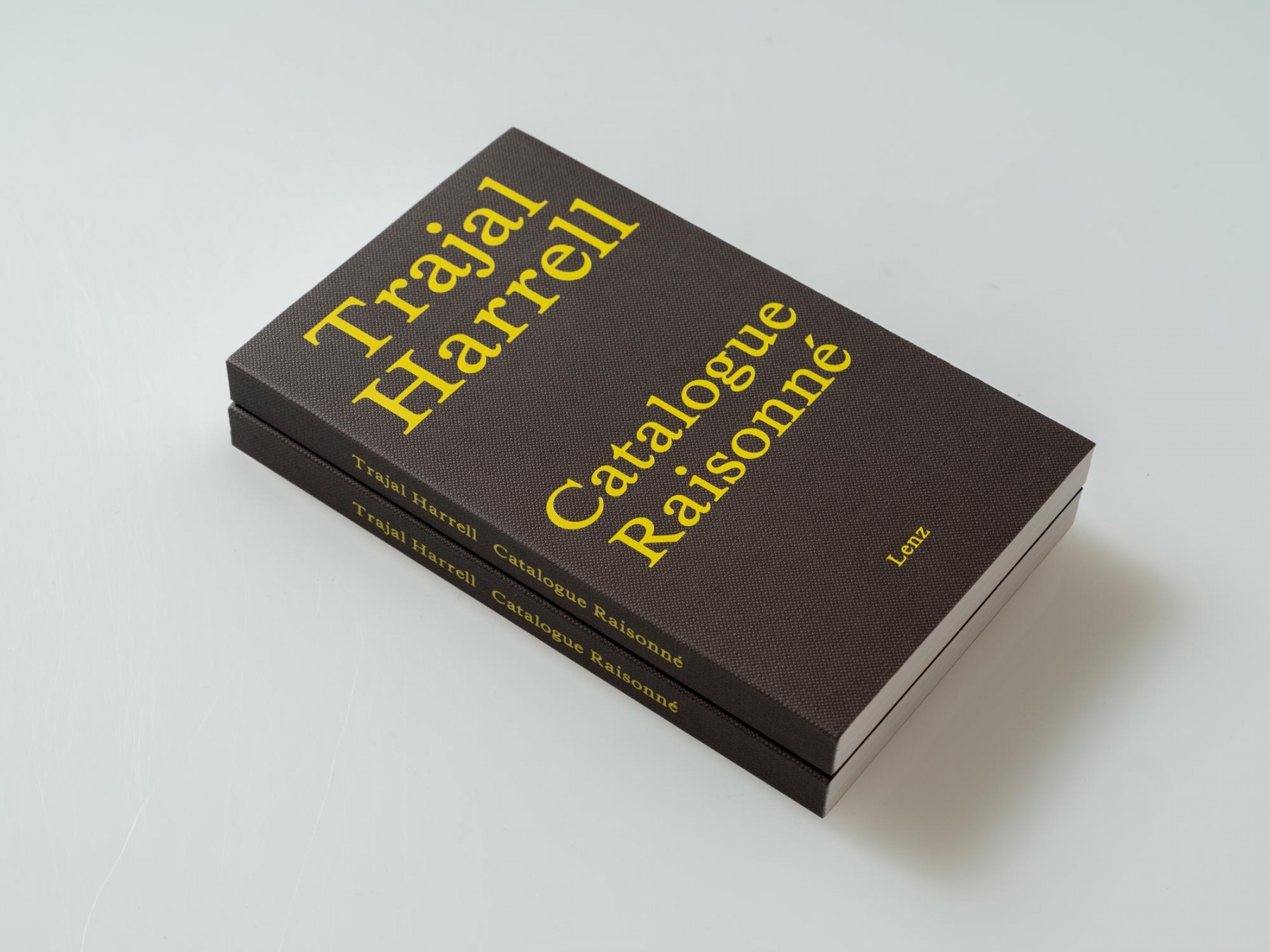
Designed by Lorenzo Mason Studio
Co-published with Kunsthalle Zürich
2026, English, softcover, 11 × 18 cm, 184 pages
ISBN 979-12-82771-00-9
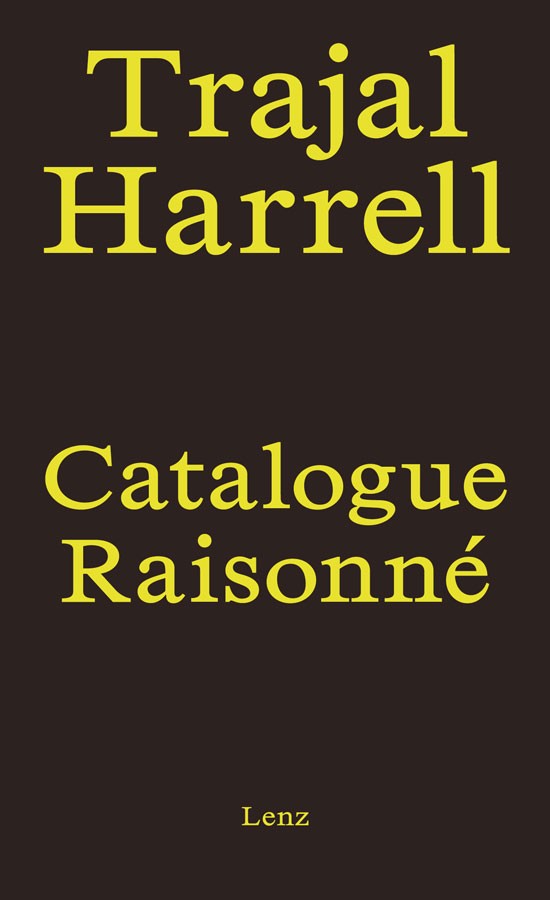
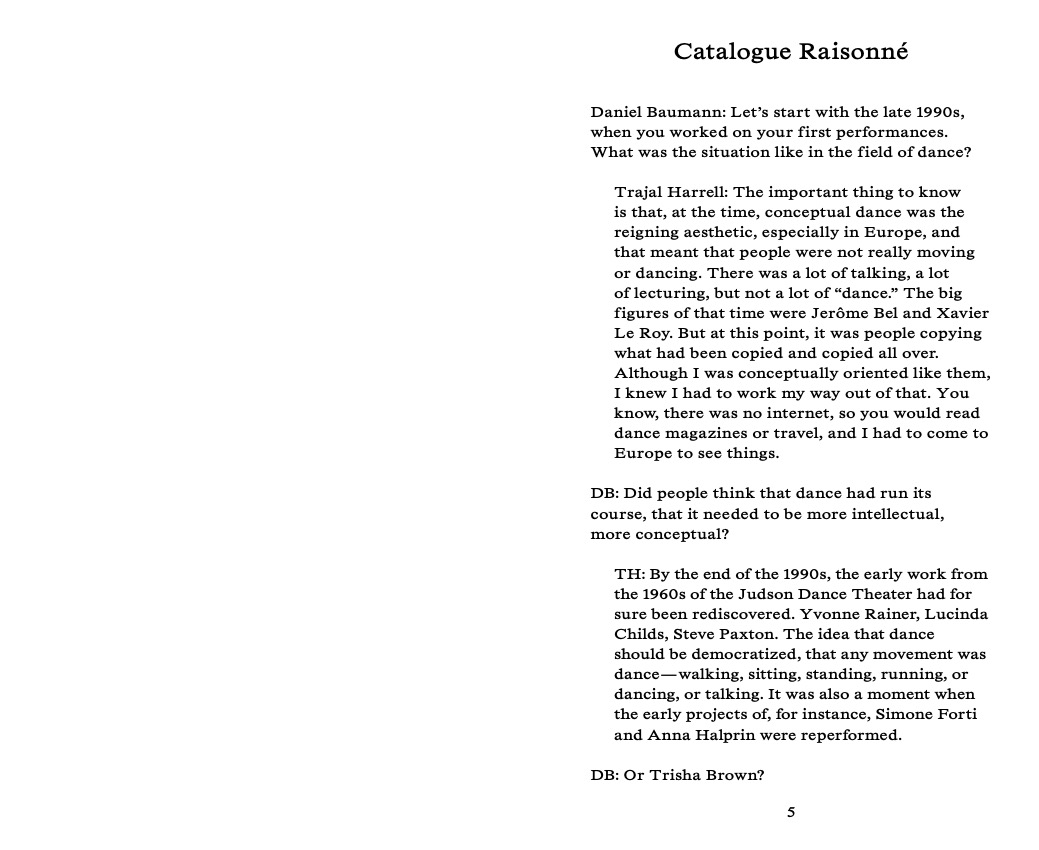
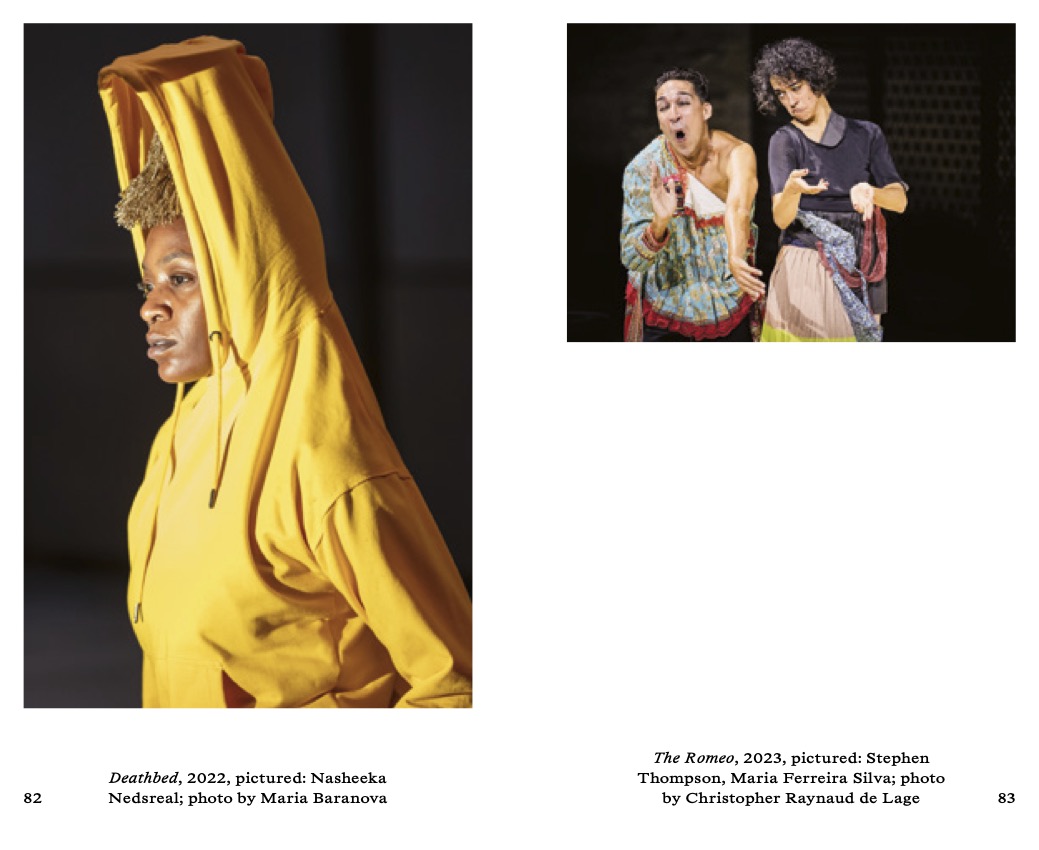
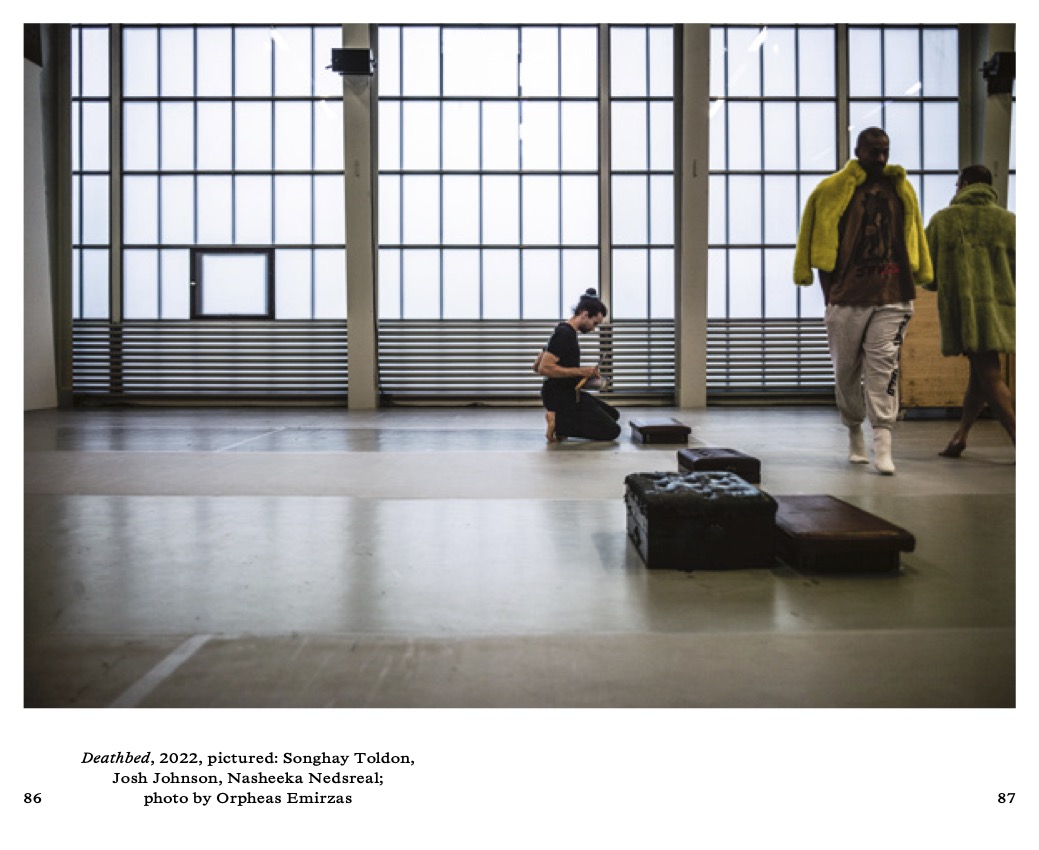
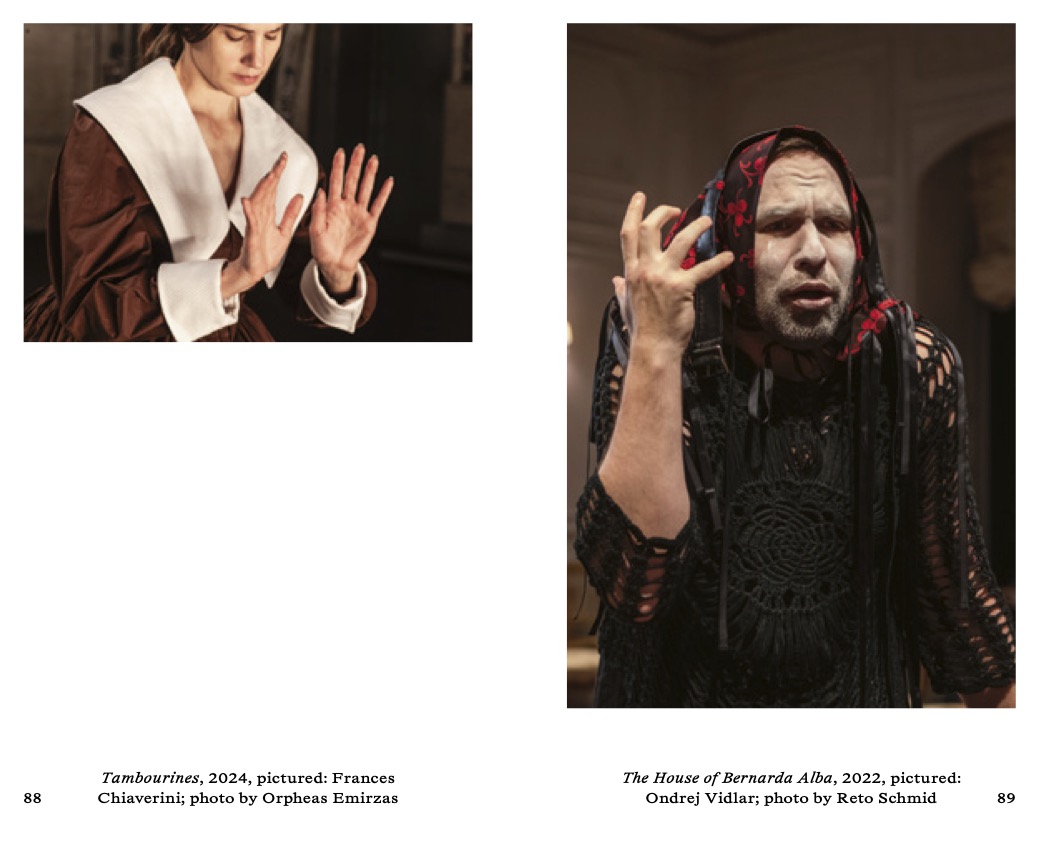
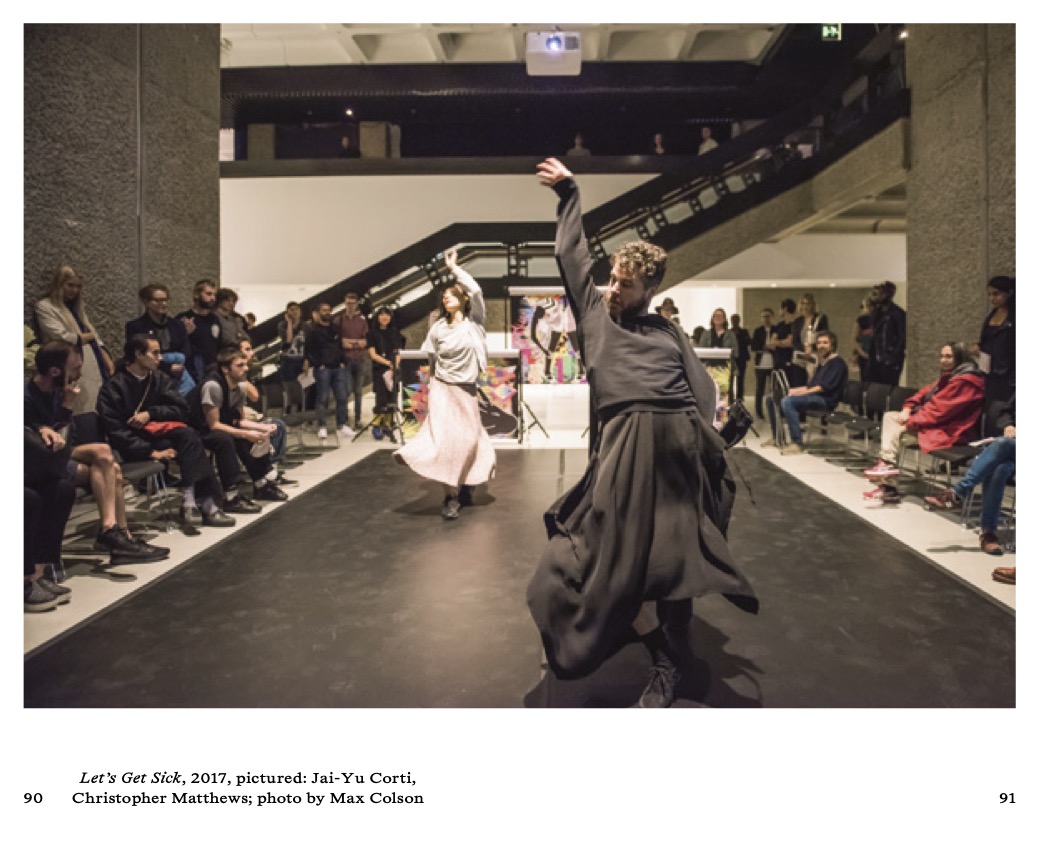
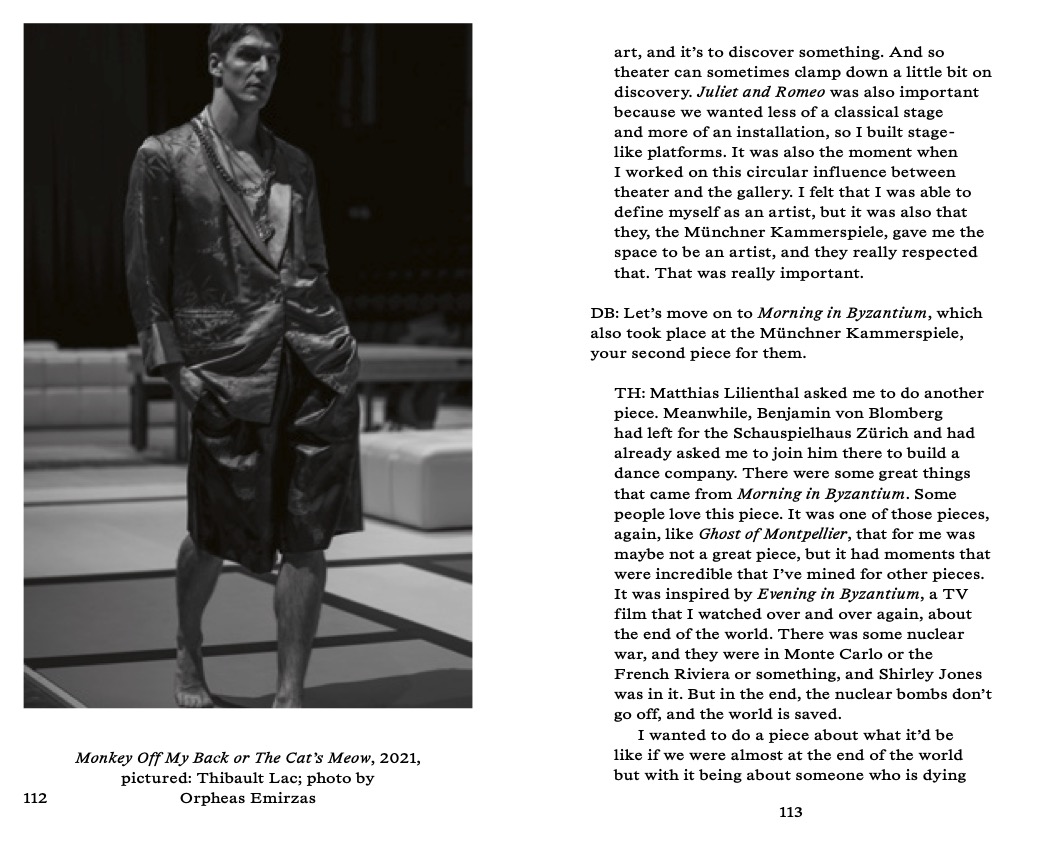
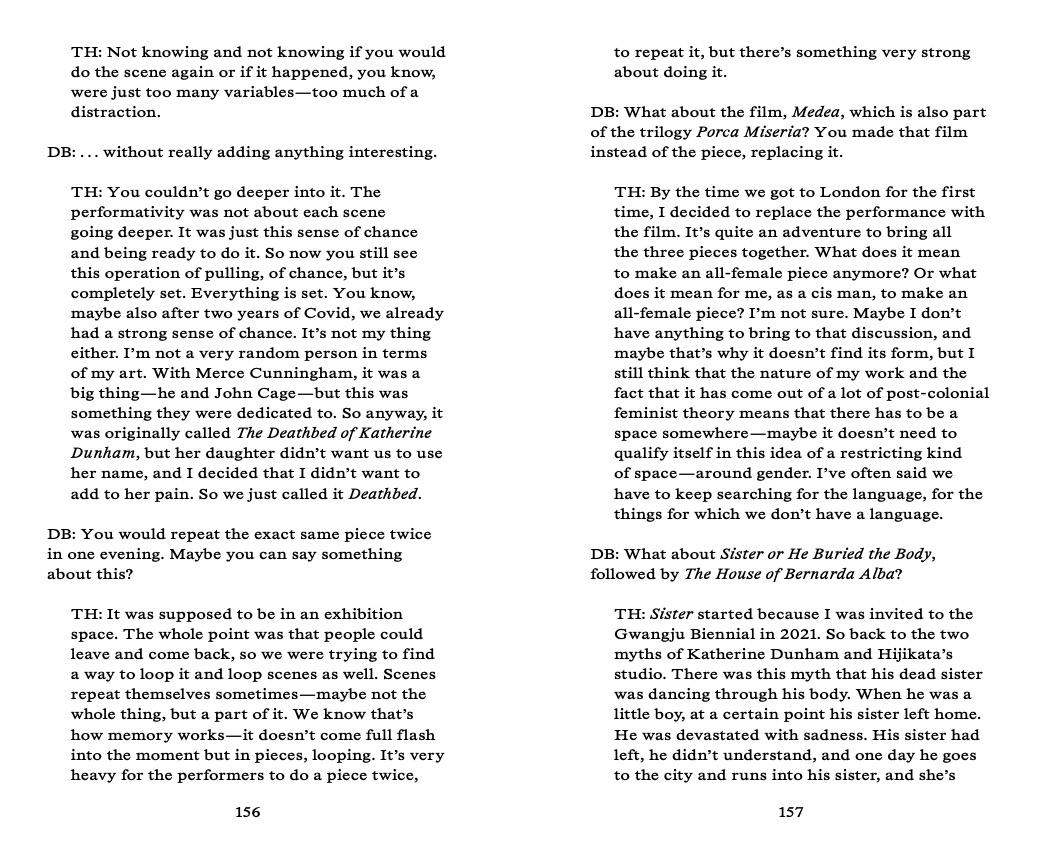
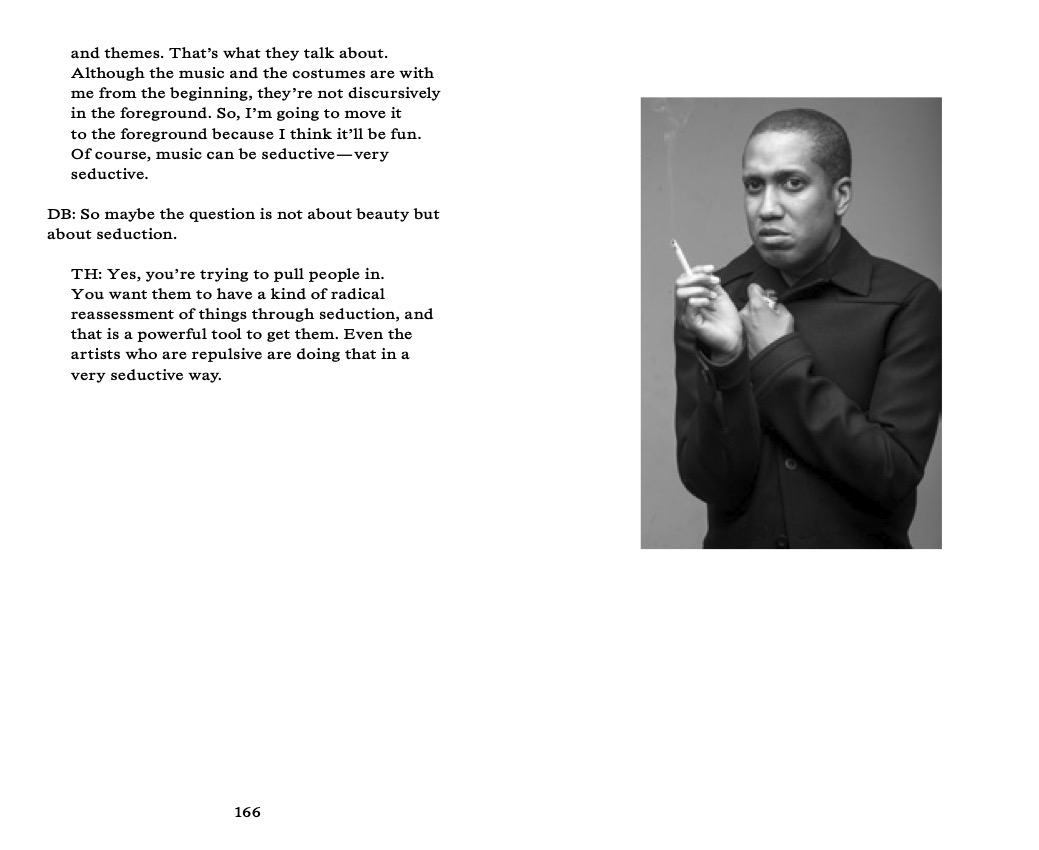
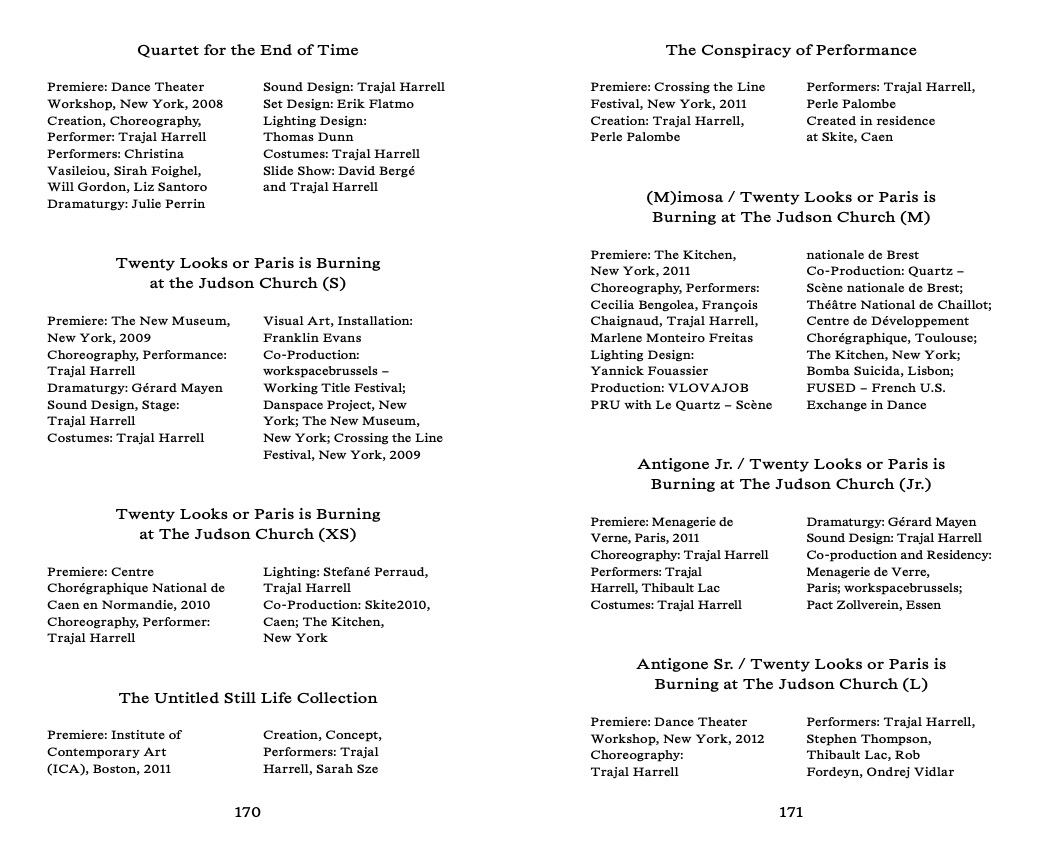
This is the very first book on the influential American choreographer and dancer Trajal Harrell. It takes the form of an entertaining, far-reaching conversation on the entirety of his choreographies and performances—hence its title of “Catalogue Raisonné.”
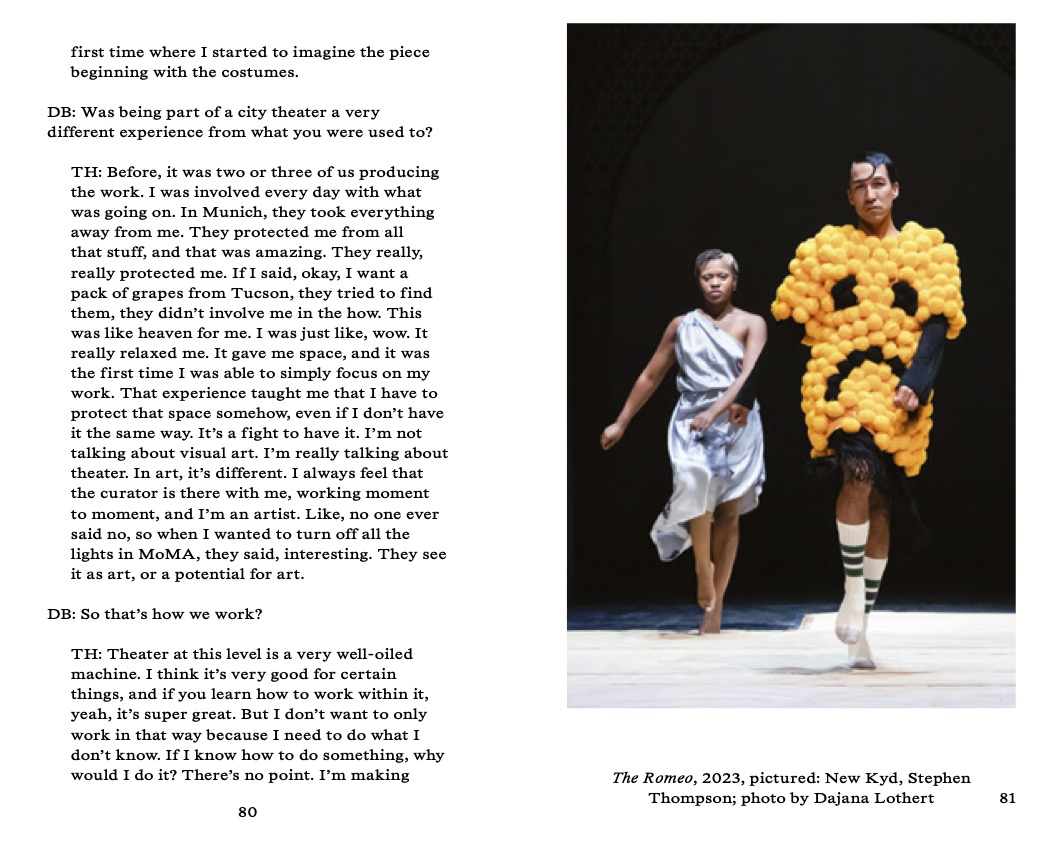
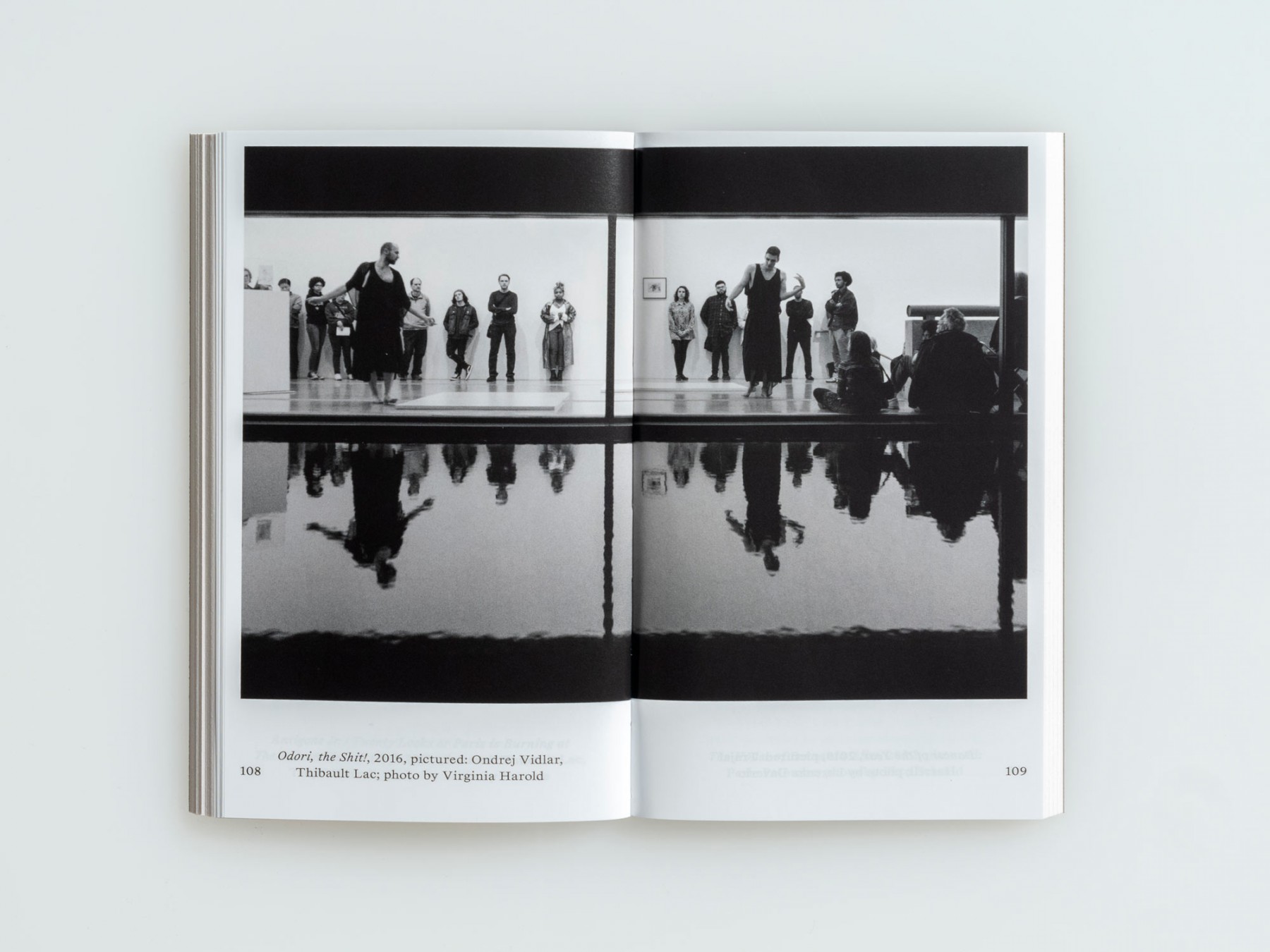
Since starting out on his prolific career in 1999, Harrell has presented his work worldwide and in a variety of contexts, on scales both large and small: from renown theaters to international festivals, libraries to public panels, prestigious little art galleries and museums to Kunsthalles and biennials. The long list includes, among many others, the Museum of Modern Art and the New Museum in New York, the Barbican Centre in London, the Schauspielhaus Zürich, the Kunsthalle Zürich, the Münchner Kammerspiele, the Fondation Cartier Paris, the Festival d’Avignon, and the Manchester International Festival.
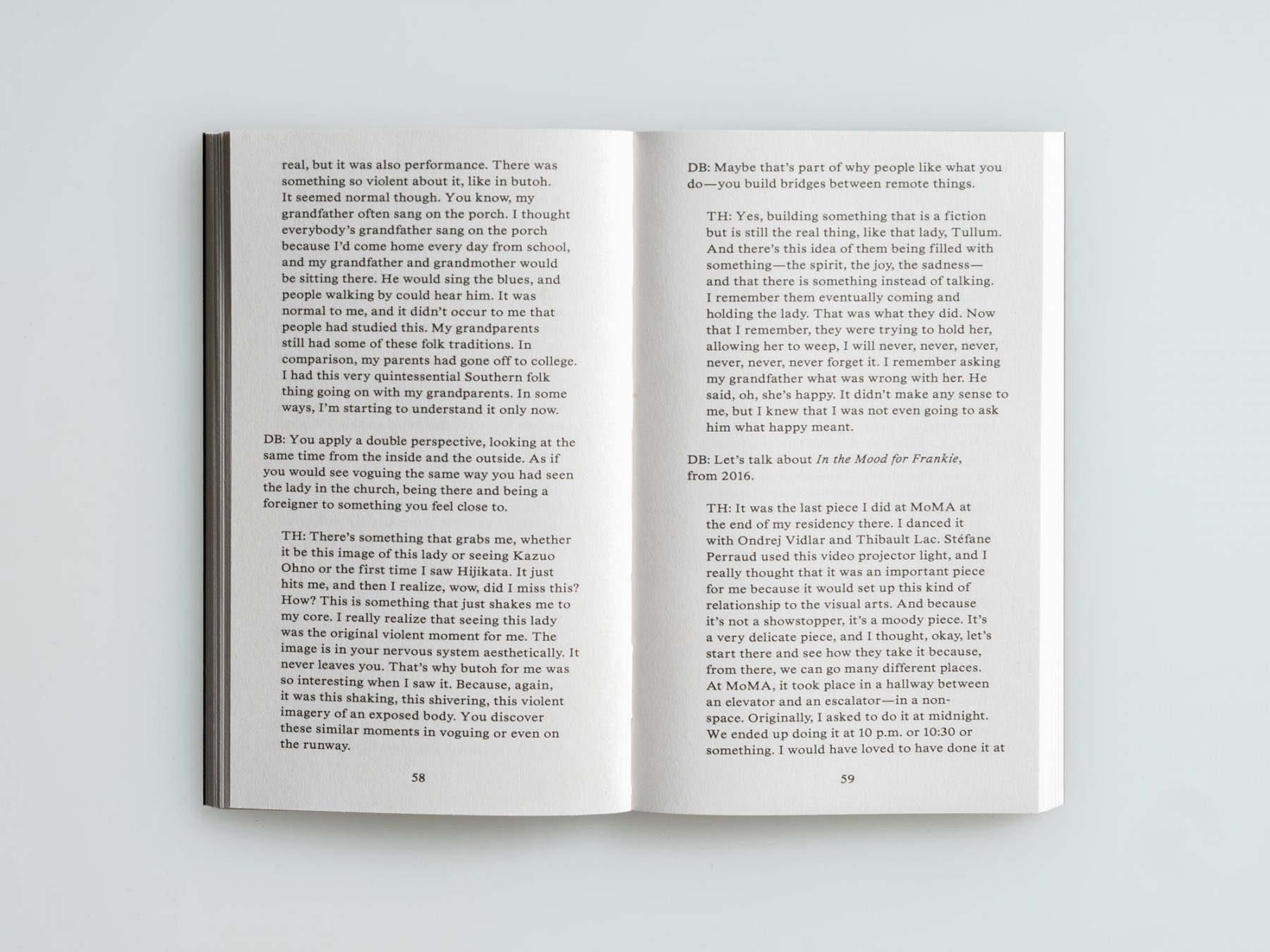
The conversation with Swiss curator Daniel Baumann unfolds along the multiple trails blazed by Harrell’s career. It brings into sharp focus not only the artist’s interests and influences but also his own creative practice, encompassing both successes and failures. With disarming frankness and a tangible sense of vulnerability, Harrell walks the reader through the history of dance: He explains how he fought with it, how it has shaped him (and vice versa), and how he has gradually carved out a space of his own within it.
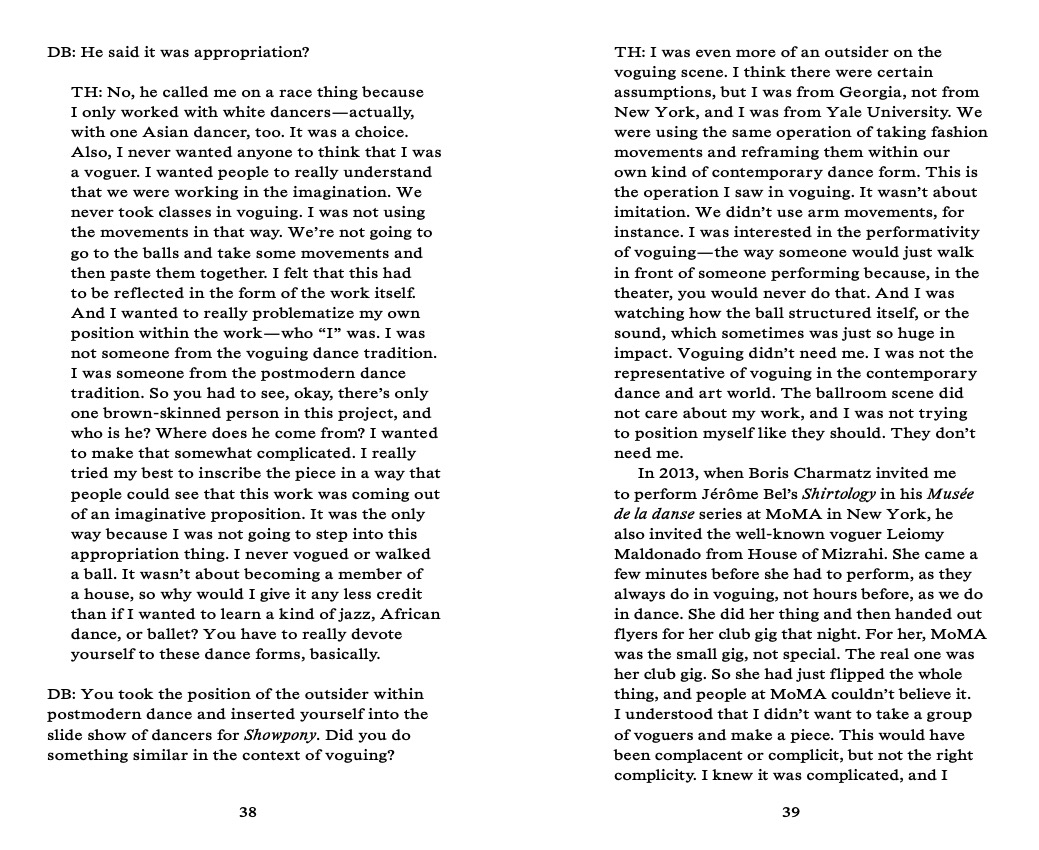
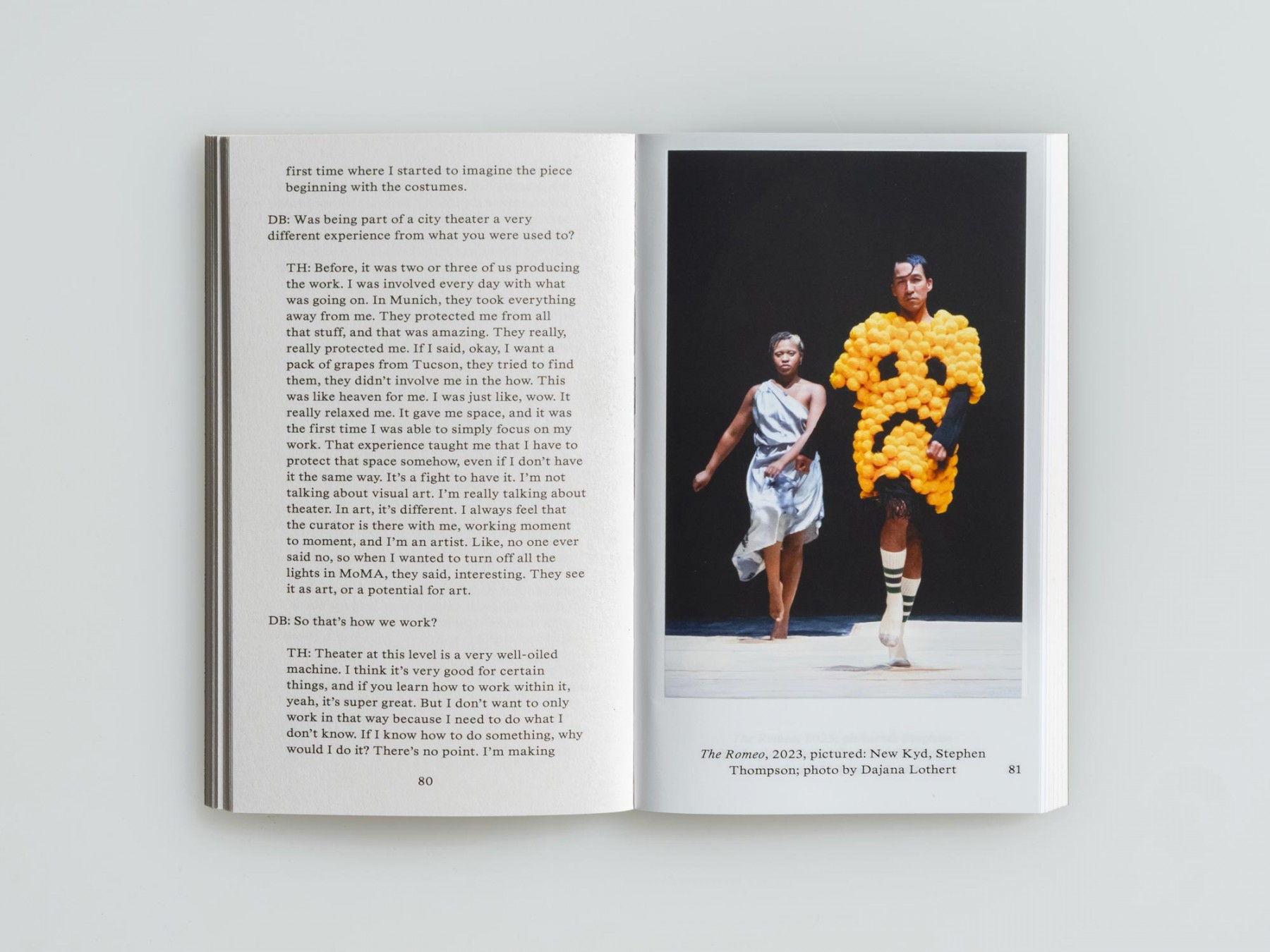
Harrell gained international acclaim for his seven-year project Twenty Looks or Paris is Burning at the Judson Church. Across eight different versions, he imagined an encounter between 1960s Harlem voguing and early downtown postmodern dance. These different choreographies share a sense of historical speculation: What would have happened in 1963 if someone from the voguing ballroom scene had come down to the Judson Church in Greenwich Village to perform alongside the early postmoderns? The voguing dance tradition refers to the competitive balls that were staged in Harlem dance halls, beginning in the 1960s. These were a form of social performance practiced primarily by African American and Latino gays, and trans people. One of the main elements of voguing is the performing of social and gender identities through fashion, movement, and behavior. At the same historical moment, in the 1960s, the pioneers of postmodern dance broke with the traditional representations of classical and modern dance, becoming interested in dance without artifice and concerning themselves instead with “authenticity.”
This is only one of several dance forms that, throughout his career, Harrell has investigated in order to transform and transgress the history of dance. By engaging with Hoochie Coochie, the culture of fashion and runway, butoh, and the dances of Greek Antiquity, Harrell challenges us to re-think dance from a multiplicity of different and sometimes conflicting perspectives.