Pardon Façade documents the artistic output of Luca Monterastelli, showcasing almost all of the sculptures and installations that he produced between 2011 and 2022. Across four chapters—corresponding to four solo shows that he staged in Milan, Otegem, Antwerp, and Naples—the publication provides the first overview of the artist’s work.
More than half a century after its premiere, Yvonne Rainer, in collaboration with choreographer and dancer Emily Coates, directed the 2019 revival of her 1965 performance Parts of Some Sextets. This book poses questions about the trajectories of artworks, performers, and audiences, all while tracing the life—and afterlife—of a dance.
How does technology organize life? This book documents and reflects on the exhibition Proof of Stake: Technological Claims at Kunstverein in Hamburg, curated by Simon Denny and Bettina Steinbrügge. It brings together a unique group of artists and scholars who investigate the technological apparatuses and power relations of organized life.
This artist’s first monograph brings together sketches, documentation and installation shots, as well as an in-depth analysis of her practice. It highlights her process of making art, from the conception of an idea to the finished work, and from the deconstruction and re-assembling of her characters’ identities to the relentless creation of new worlds.
Published on the occasion of the first exhibition in Italy by Jenna Gribbon, staged at the Collezione Maramotti, Mirages showcases a wealth of images that highlight the fluid, sensual output of this artist who, in repeatedly portraying her wife, the musician Mackenzie Scott (aka TORRES), explores the implications inherent in seeing and being seen.
The catalogue of this ambitious project, held at the Centre d’Art Contemporain Genève in 2017, reflects on the centrality of writing in contemporary visual art practices. Documenting its slippages from printed matters to the digital realm, from voice modulations to its sculptural presence, this book celebrates the word in all its forms.
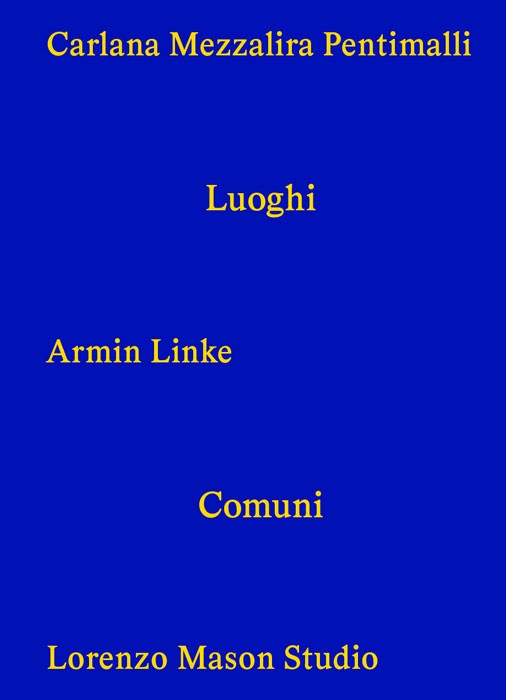
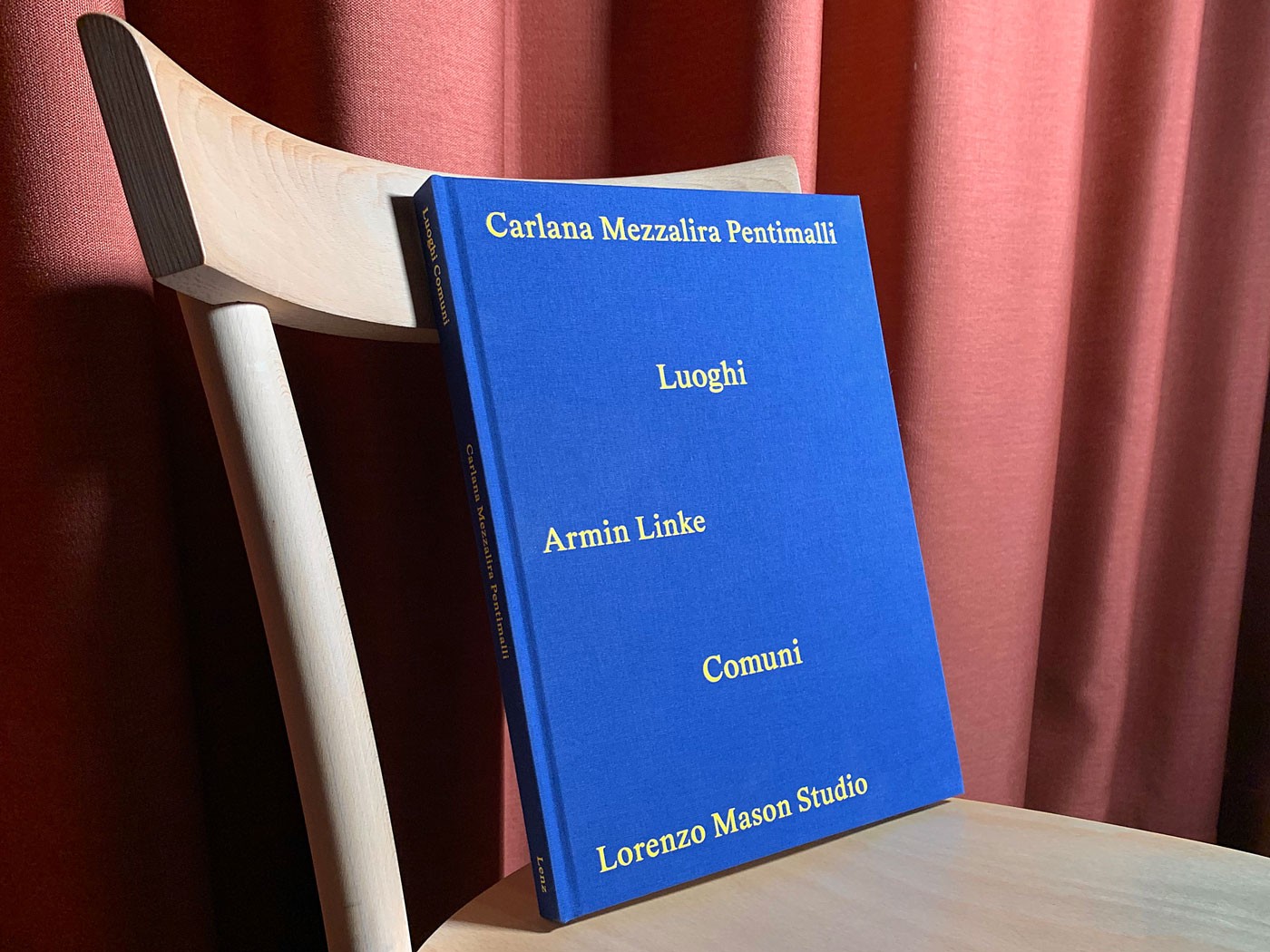
Michel Carlana, Luca Mezzalira, and Curzio Pentimalli
Photographs by Armin Linke
Design by Lorenzo Mason Studio
Hardcover, 176 pages, 24 x 33 cm
ISBN: 979-12-80579-39-3
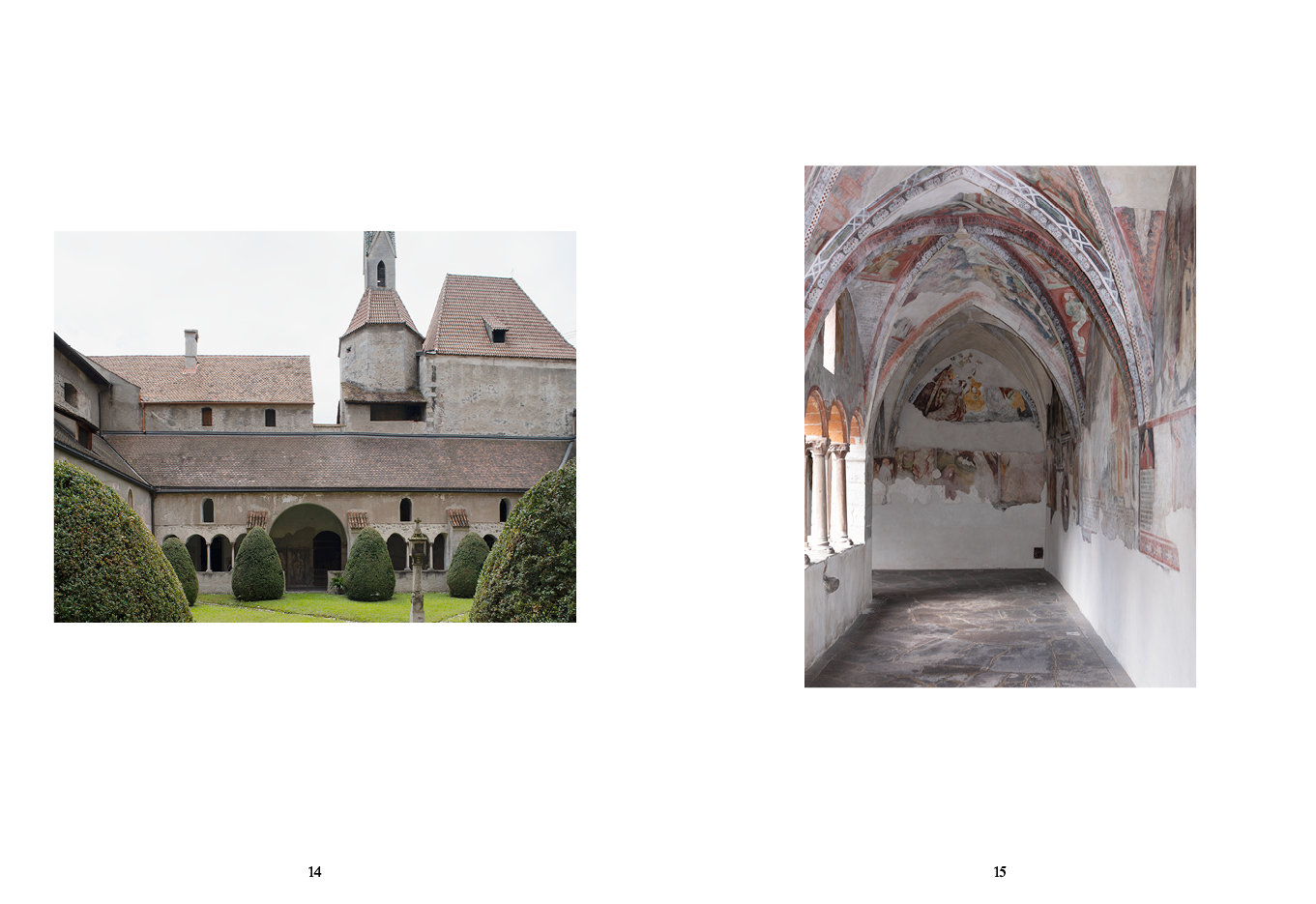
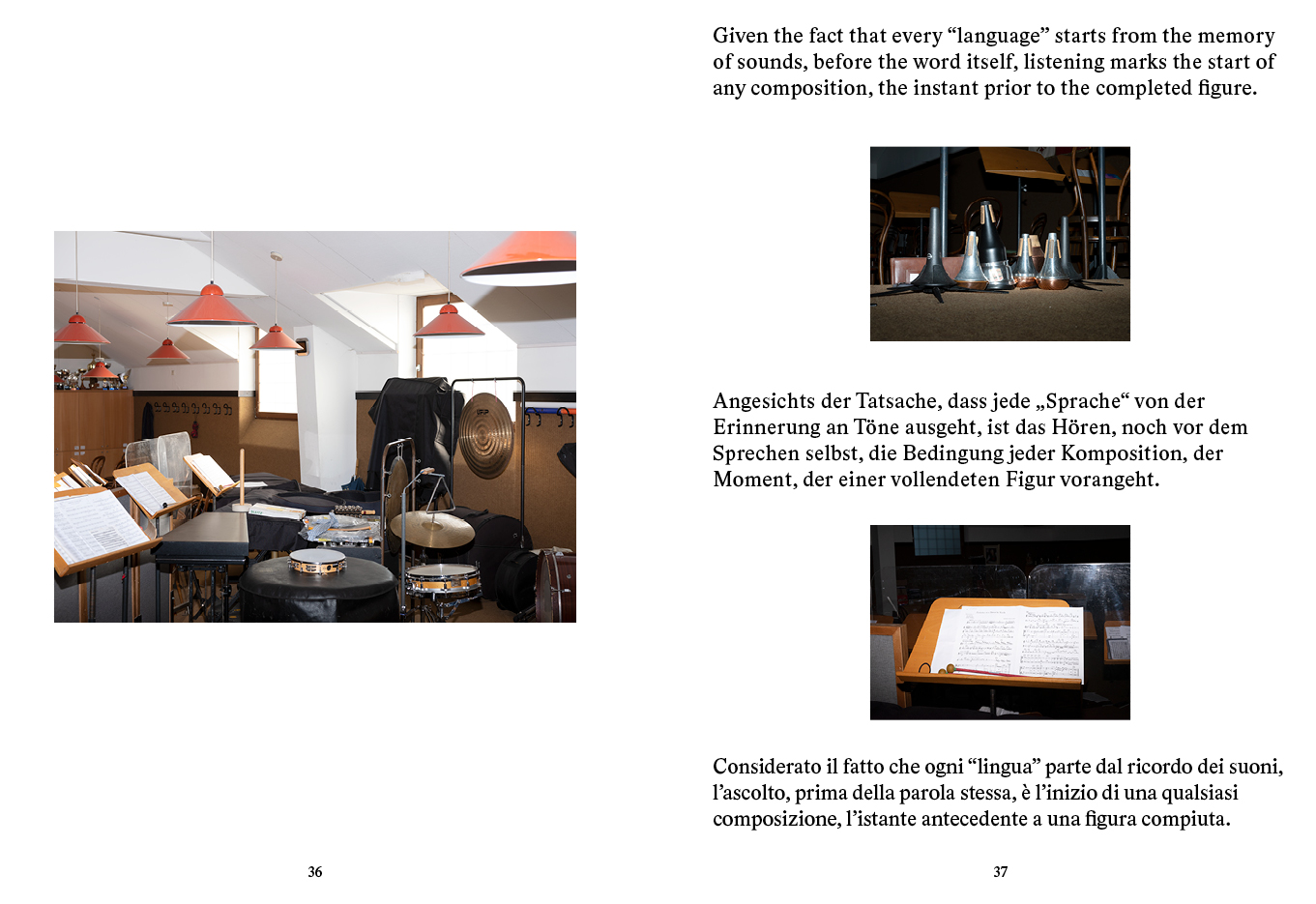
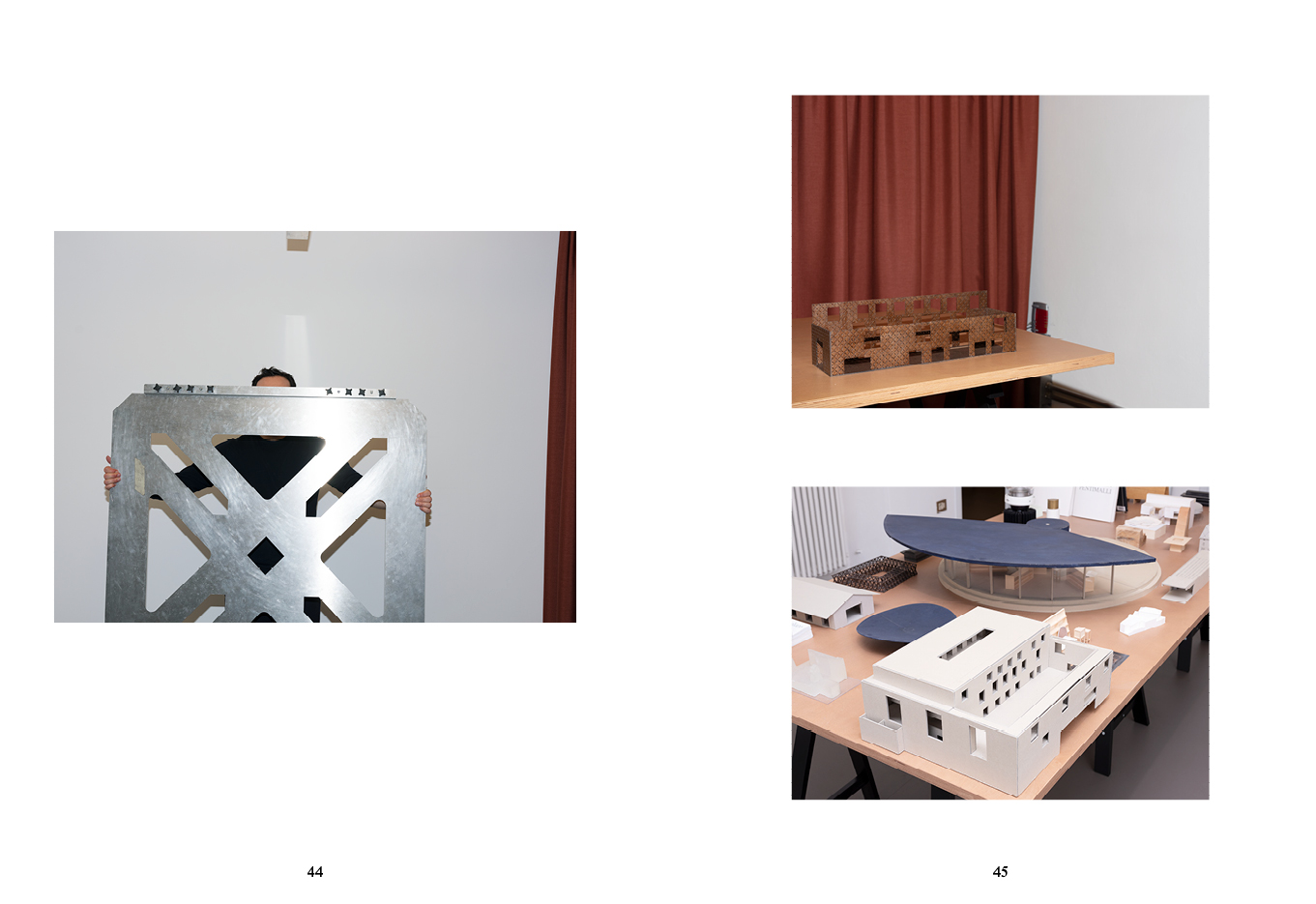
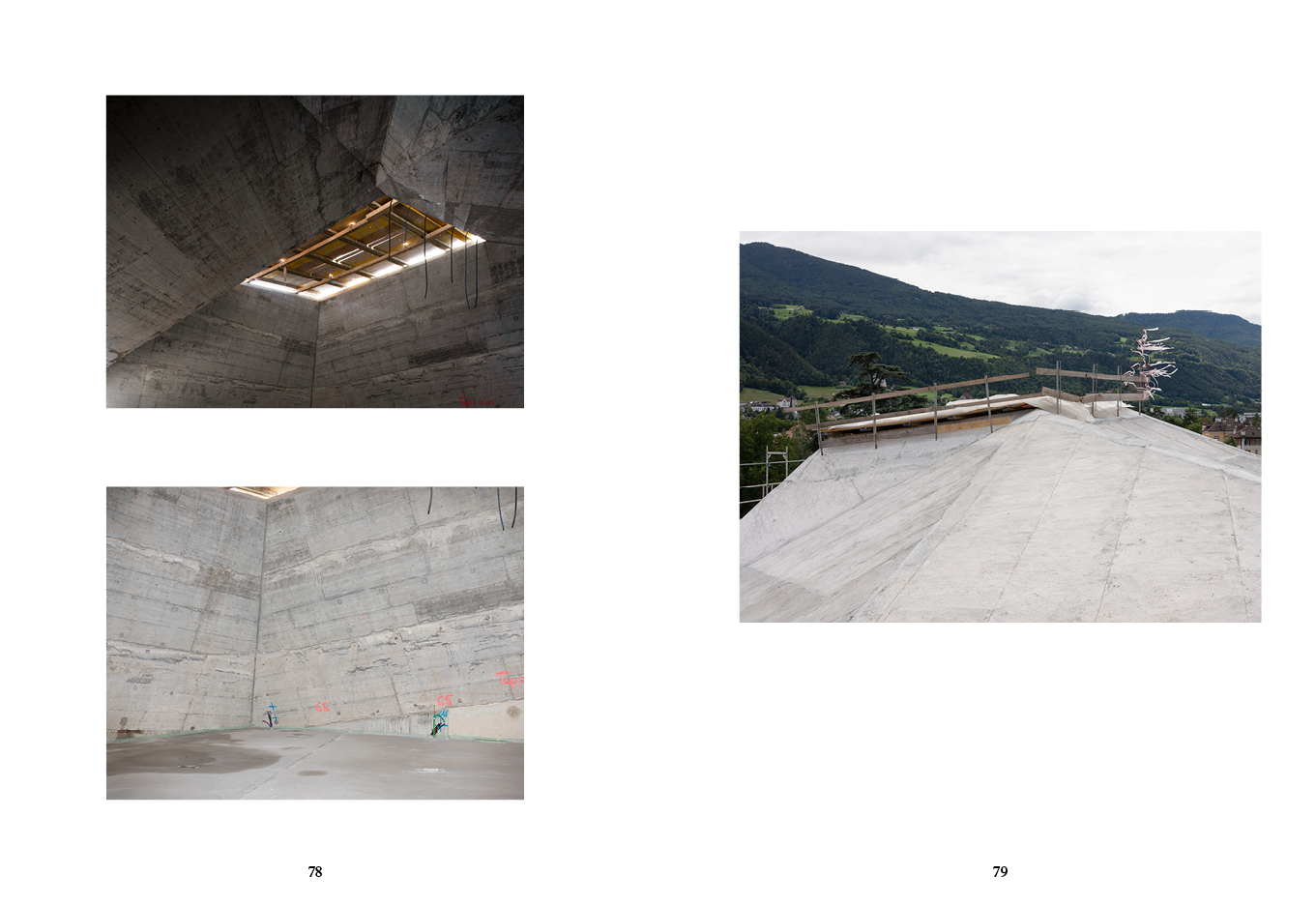
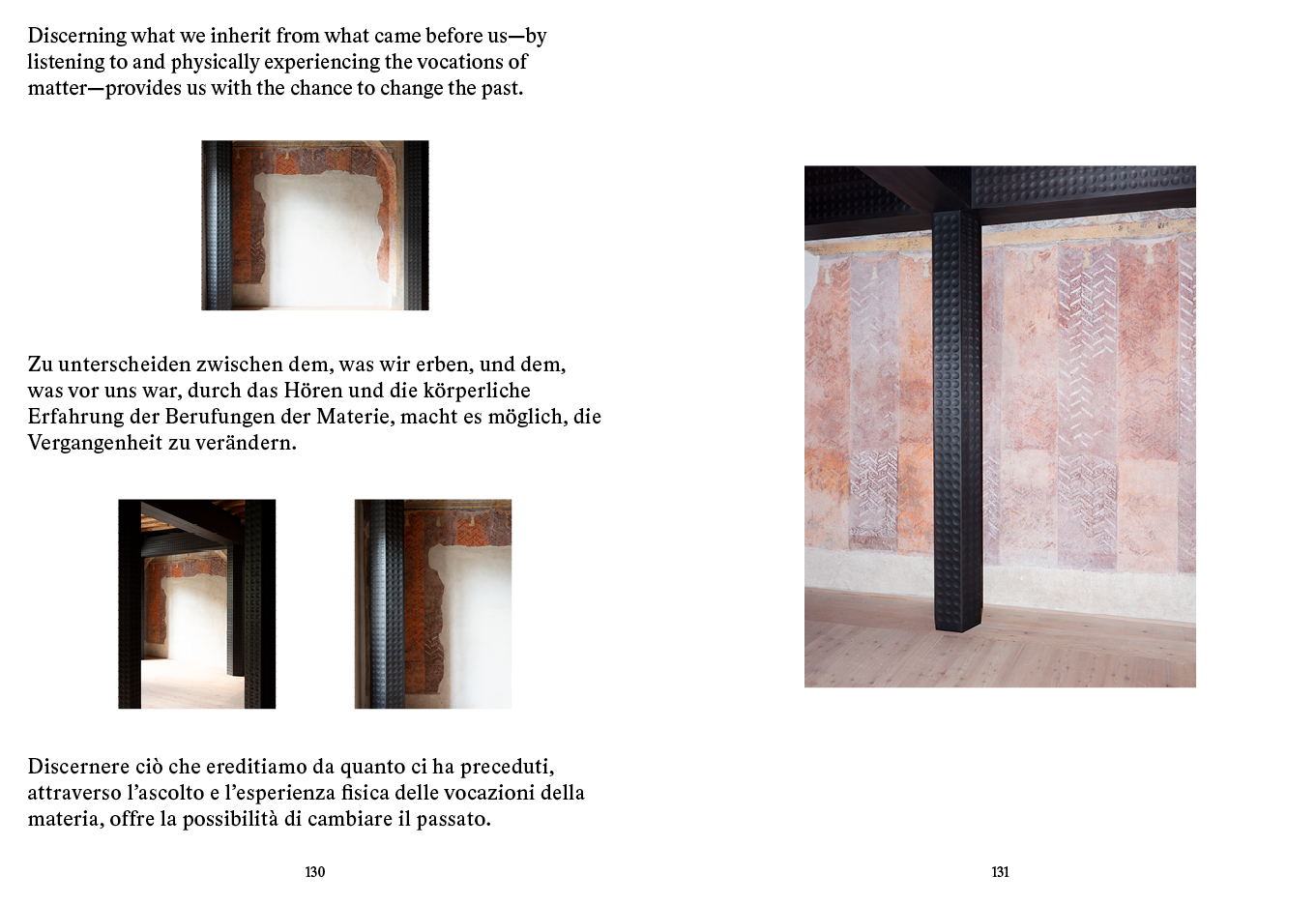
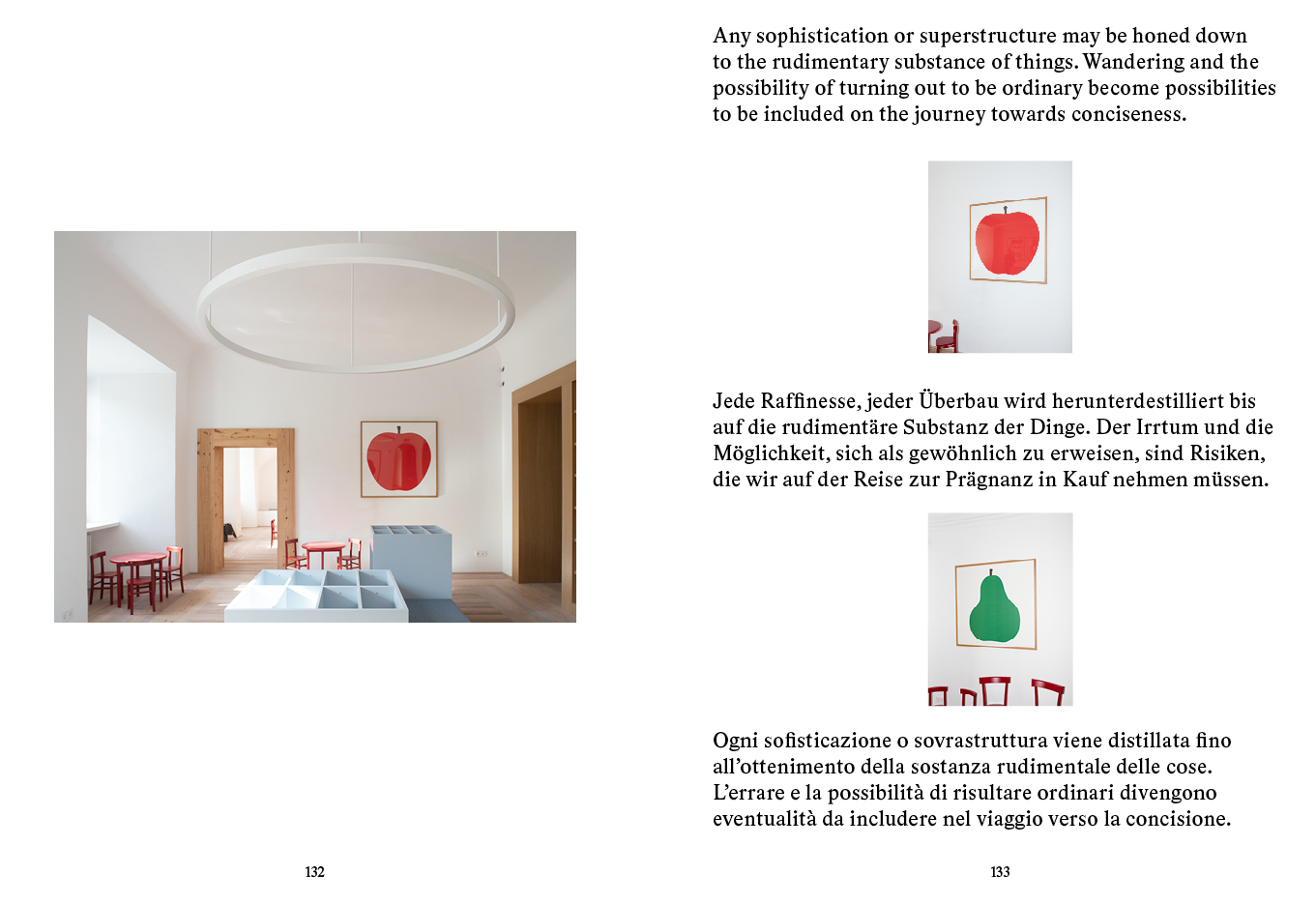
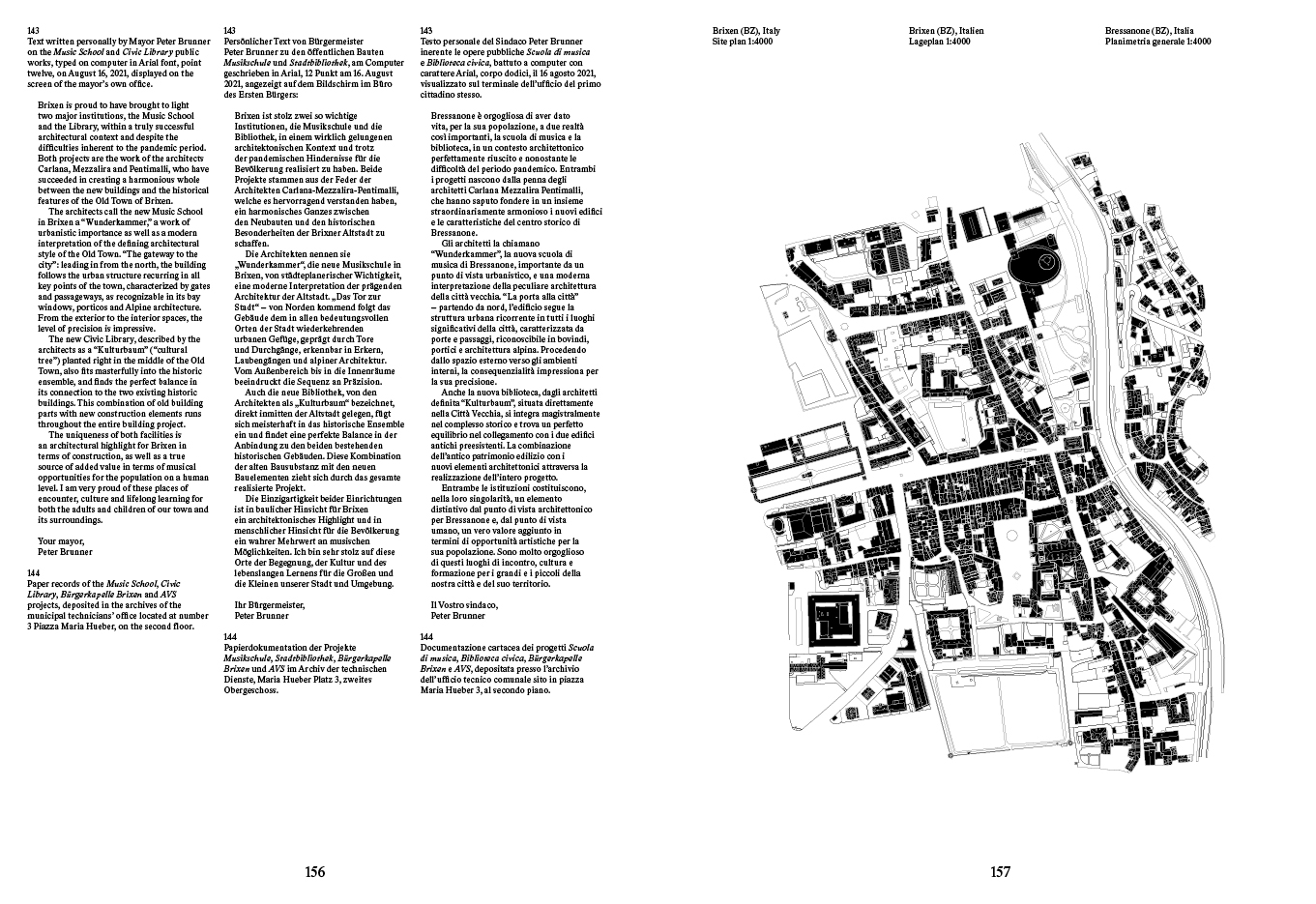
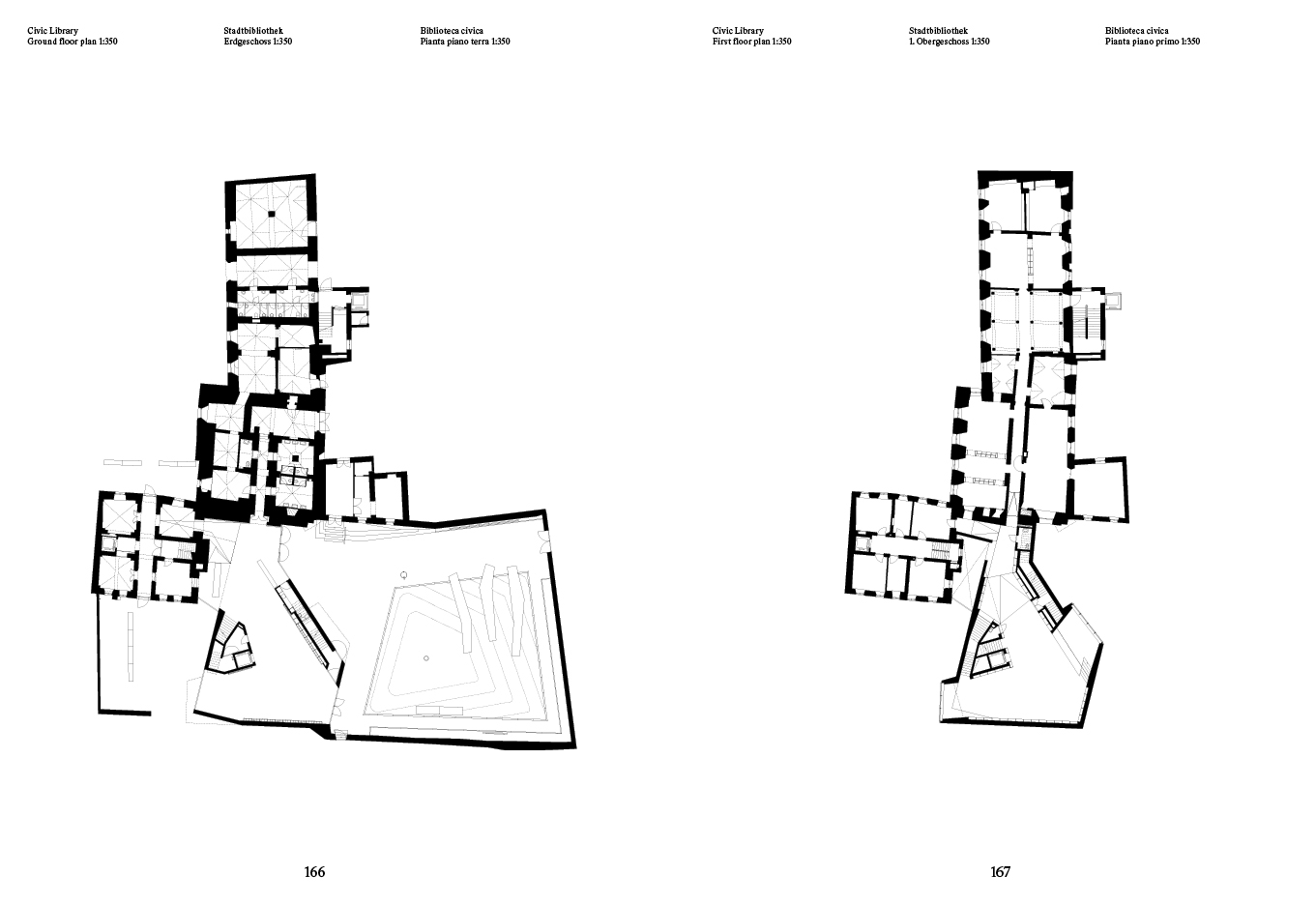
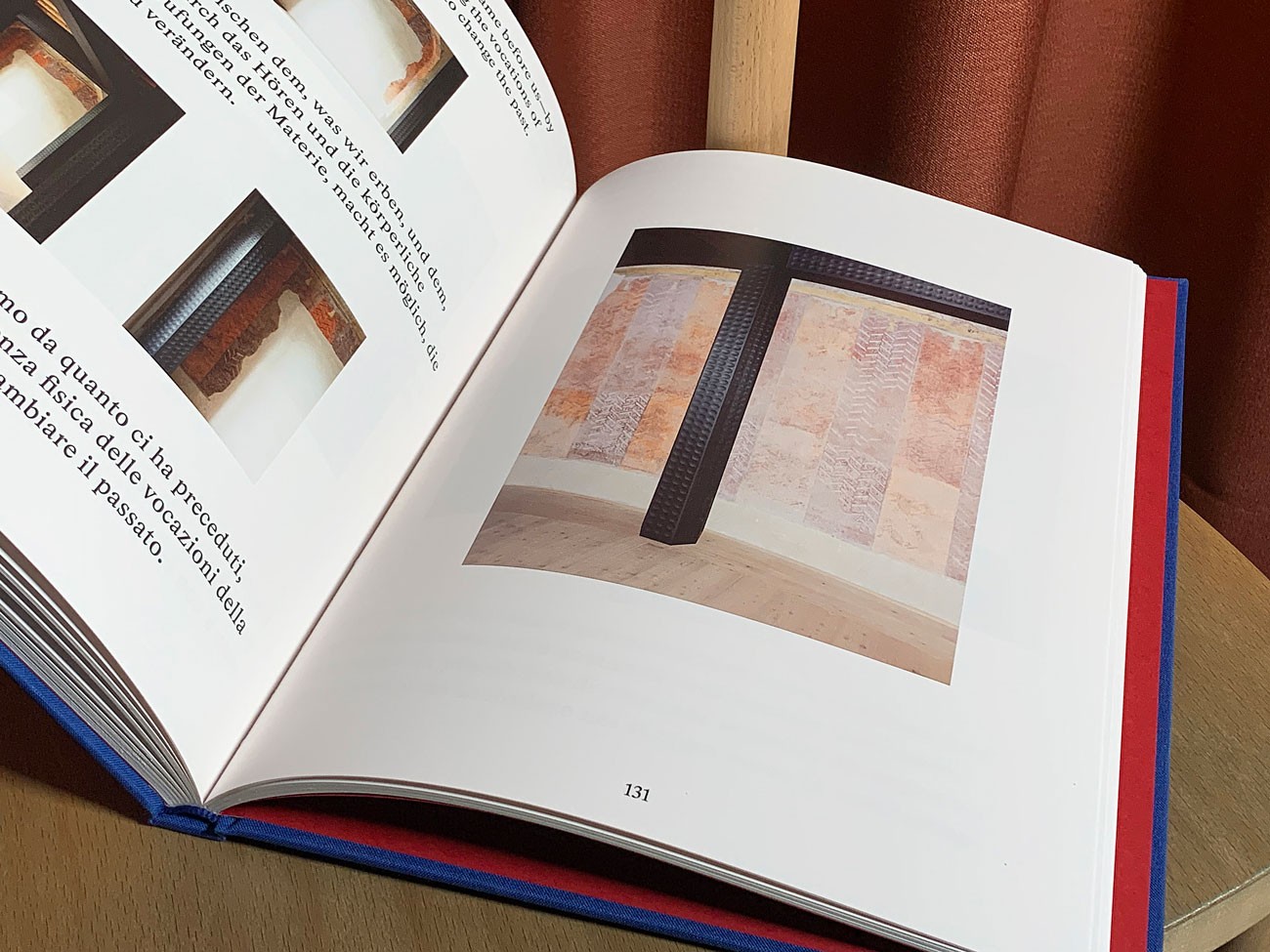
The Italian-based architectural office Carlana Mezzalira Pentimalli designed two important public buildings in the ancient city center of Bressanone, South Tyrol. Just over five hundred meters apart, the two works, the Music School, and the Public Library allowed for reasoning about the city’s architecture, exercising a method made up of ideas that look at the peculiarities of places.
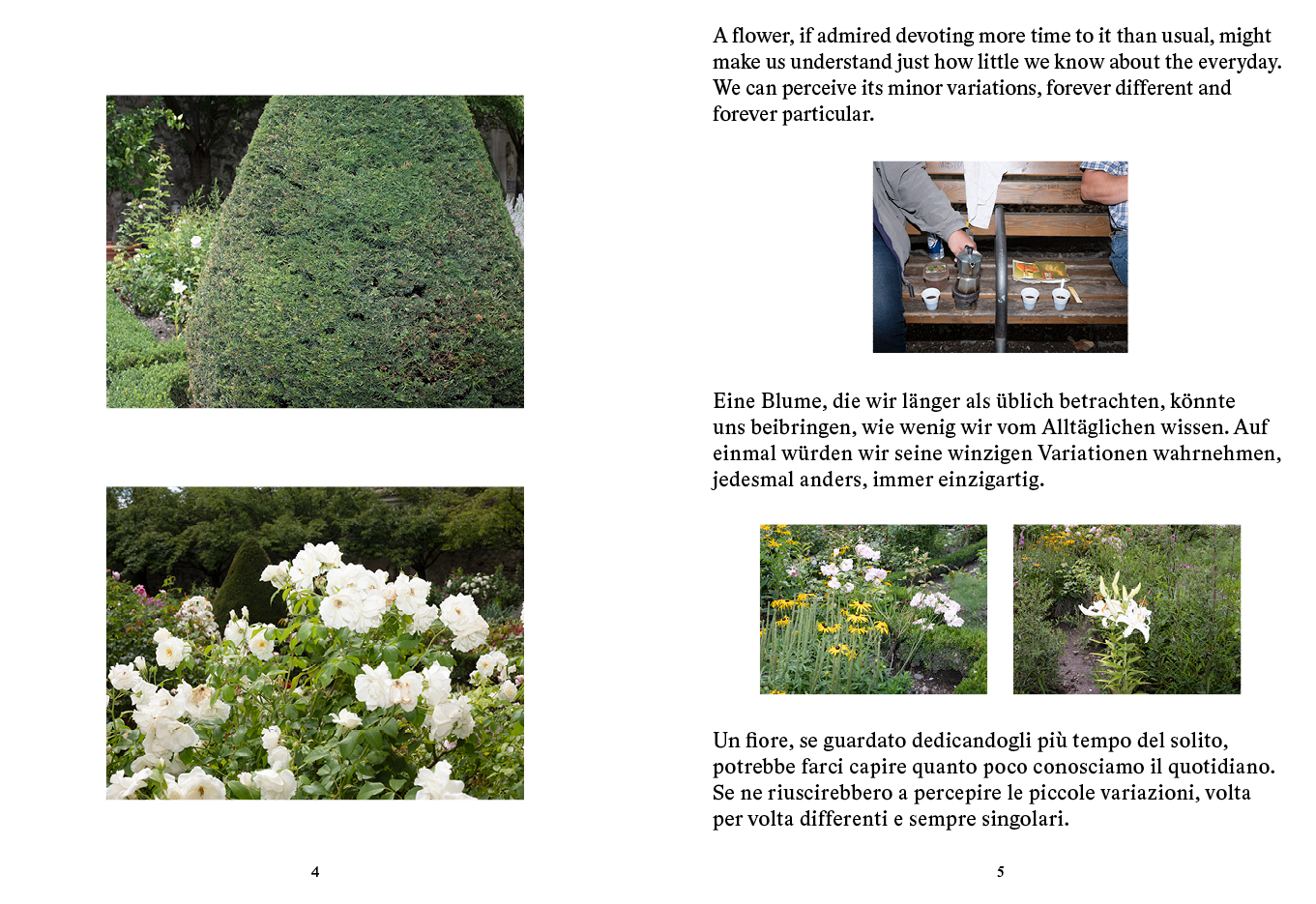
In a historical period in which the image—by virtue of its visual impact even before its meaning—has taken on the role of the main channel of communication, the Luogo Comune (“common place”)—understood both as a meeting space and as the lowest common denominator of an “essential language”—might provide the interval of reflection necessary to start asking some simple, elementary questions about what surrounds us.
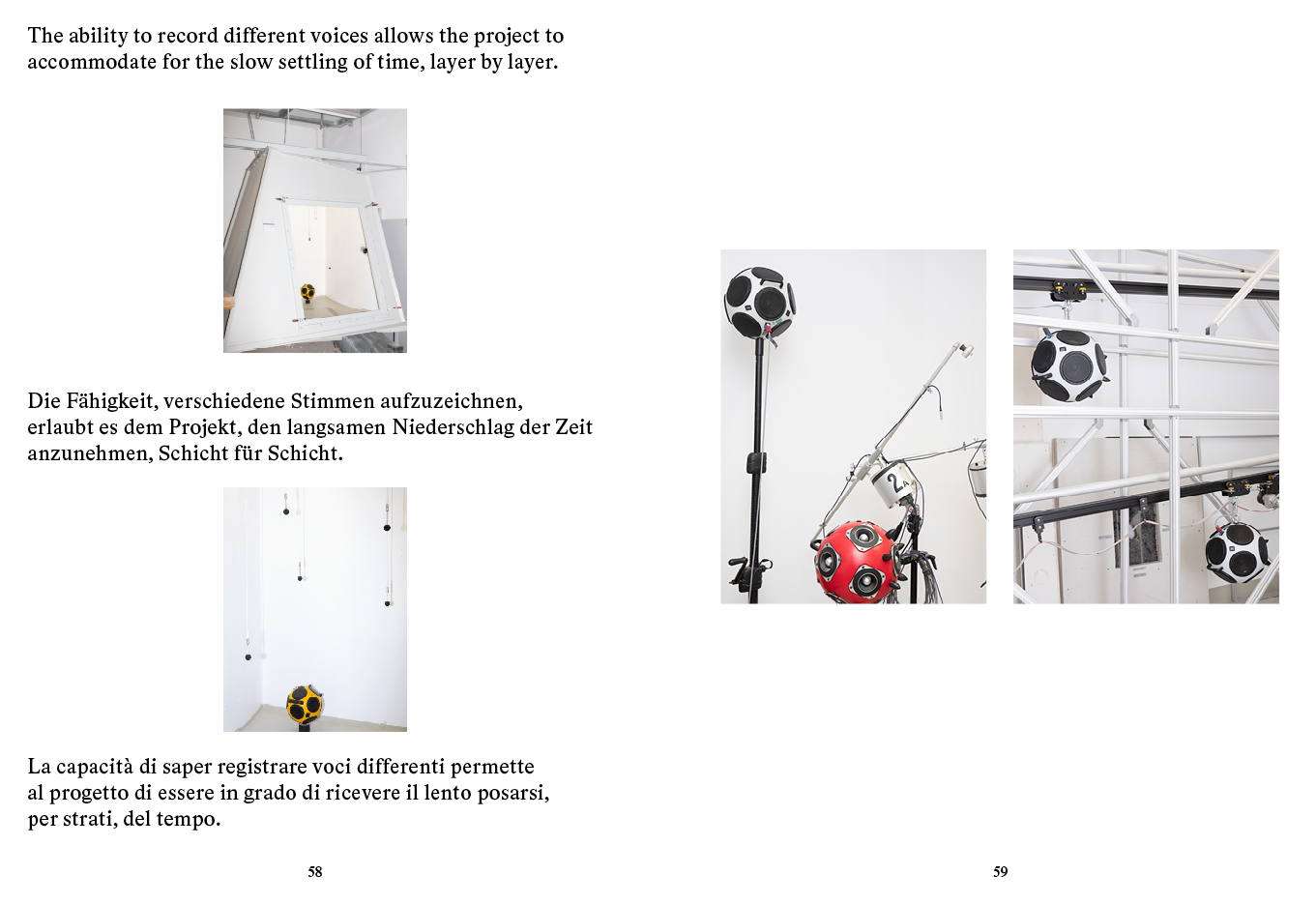
Within this publishing project, the authors talk about the passage of time, the concept of place and method through the anthropological approach underpinning the photographs taken by Armin Linke in several site visits made in the cities of Treviso, Brixen and Munich, between 2020 and 2021.
Lorenzo Mason gave the graphic structure to a text written in short annotations, in which trilingualism helps to bring out the traditions of the community of Brixen: a town capable of welcoming two public buildings designed with the same approach yet specific to the context in which they are rooted.
Biographies
Michel Carlana (1980), Luca Mezzalira (1982), and Curzio Pentimalli (1982) graduated from the Università Iuav di Venezia. Founded in 2010, the office aims to make urban planning and architecture a single practice—simple and enduring, organic, precise, and necessary—that considers the project an idea, an opportunity to reinterpret a place.