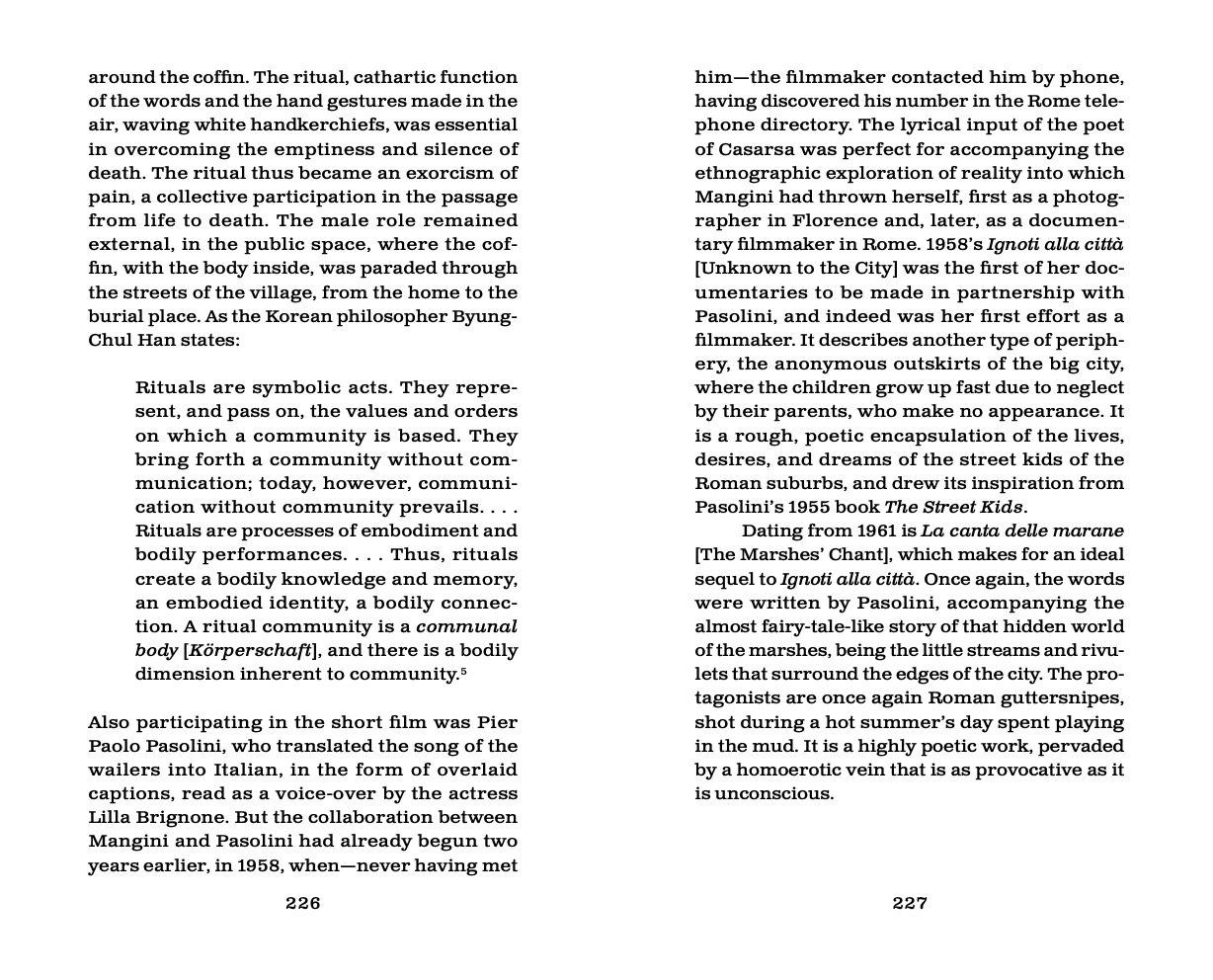
The first major monograph on artist Jill Mulleady, whose paintings thread motifs of decay, memory, history, and private myth, featuring humans and animals enacting their instinctive psychological reactions to ever-present threats of danger.
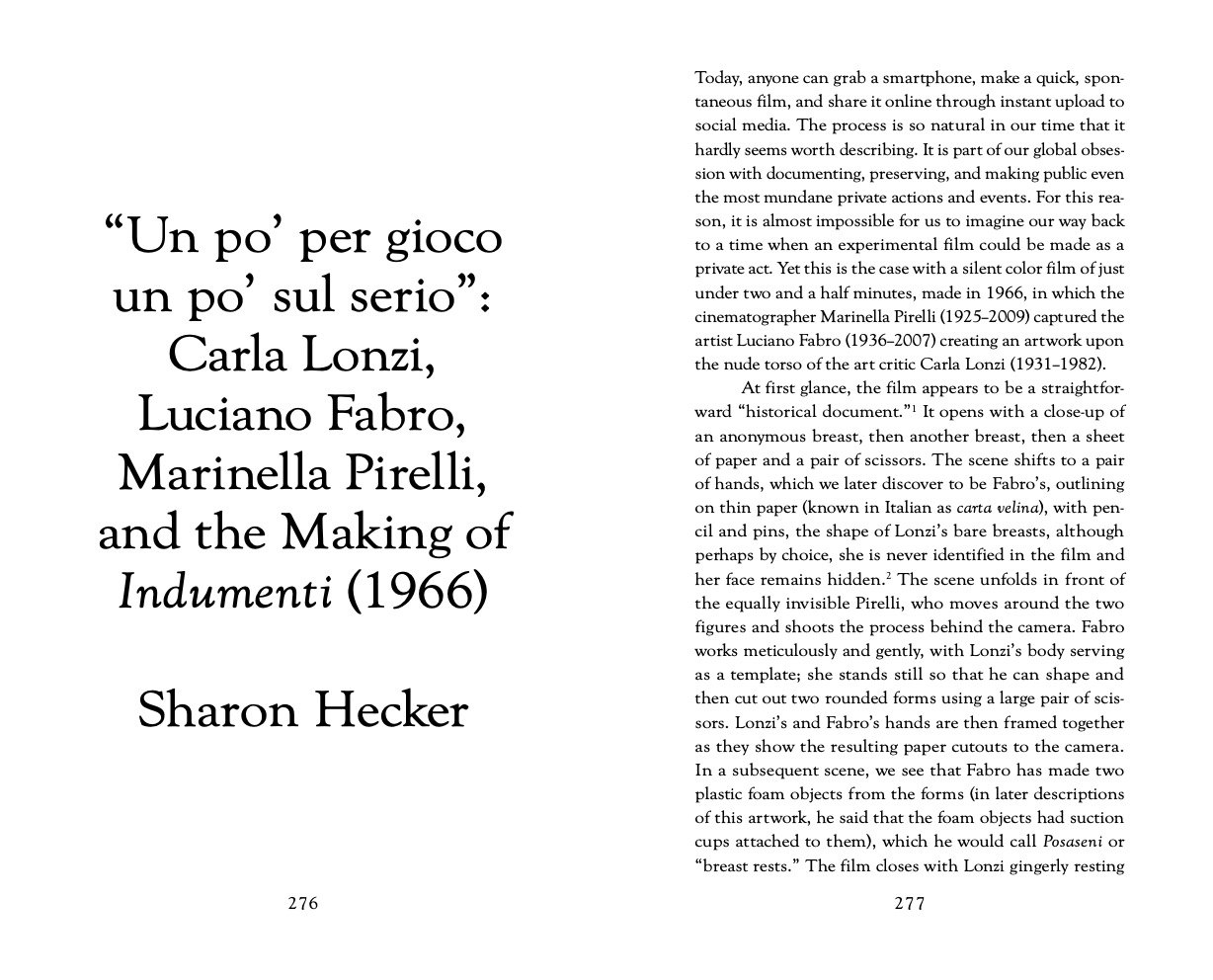
The essays in this first-ever monograph dedicated to Swiss artist Jan Vorisek, alongside image portfolios of the exhibitions they explore and an appendix that features photos and documentation of Vorisek’s performances, recordings and ephemera, grant us unprecedented access to the private fictions that the work reveals.
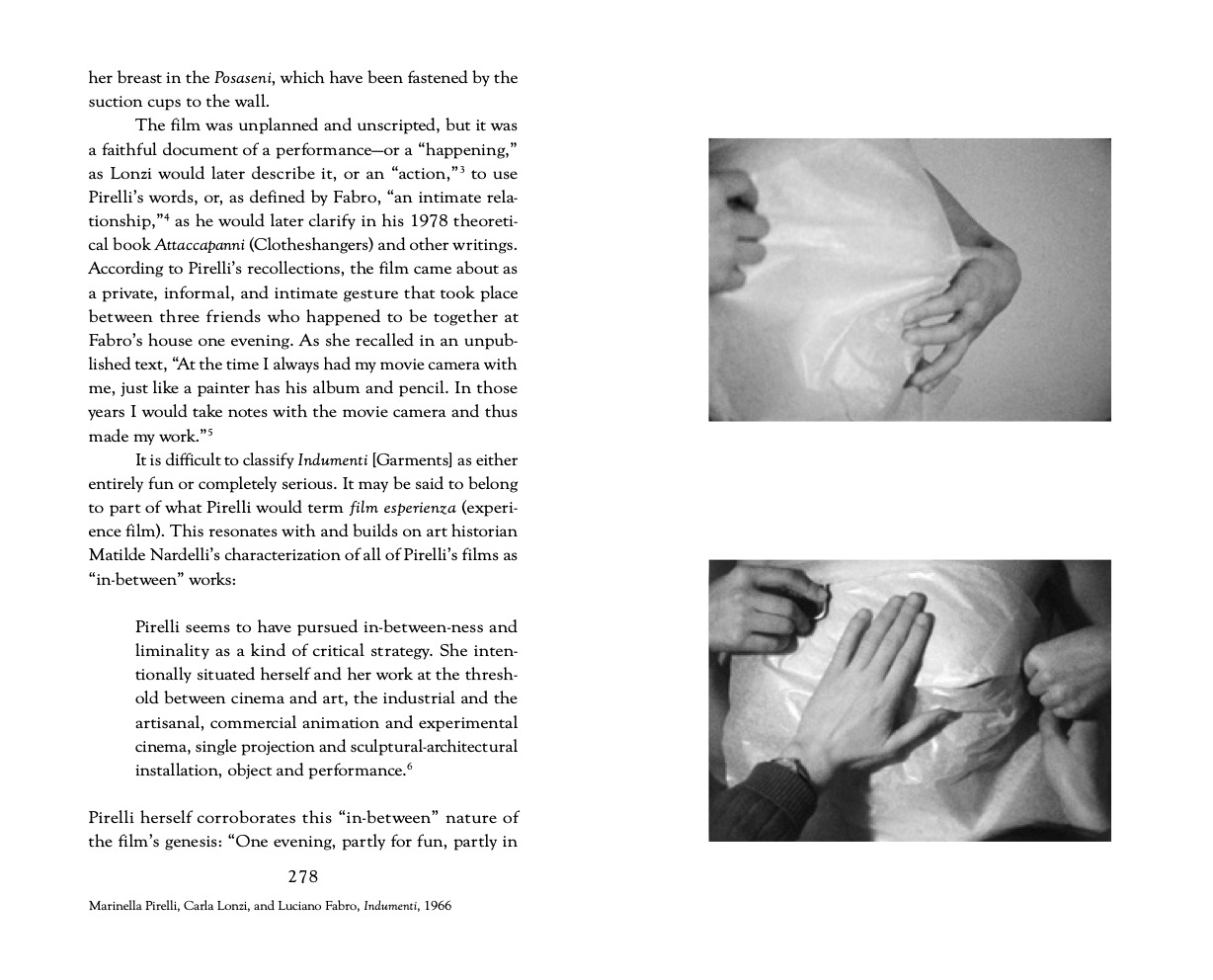
Since the 1990s Costa has been challenging hierarchies of art production and the fetishization of the “finished” artwork, inviting viewers to reconsider what is discarded, both materially and socially. Through over 300 artworks, accompanied by new writing, this catalogue explores Adriano Costa’s work, a meditation on transformation—of objects, meanings, and systems of value.
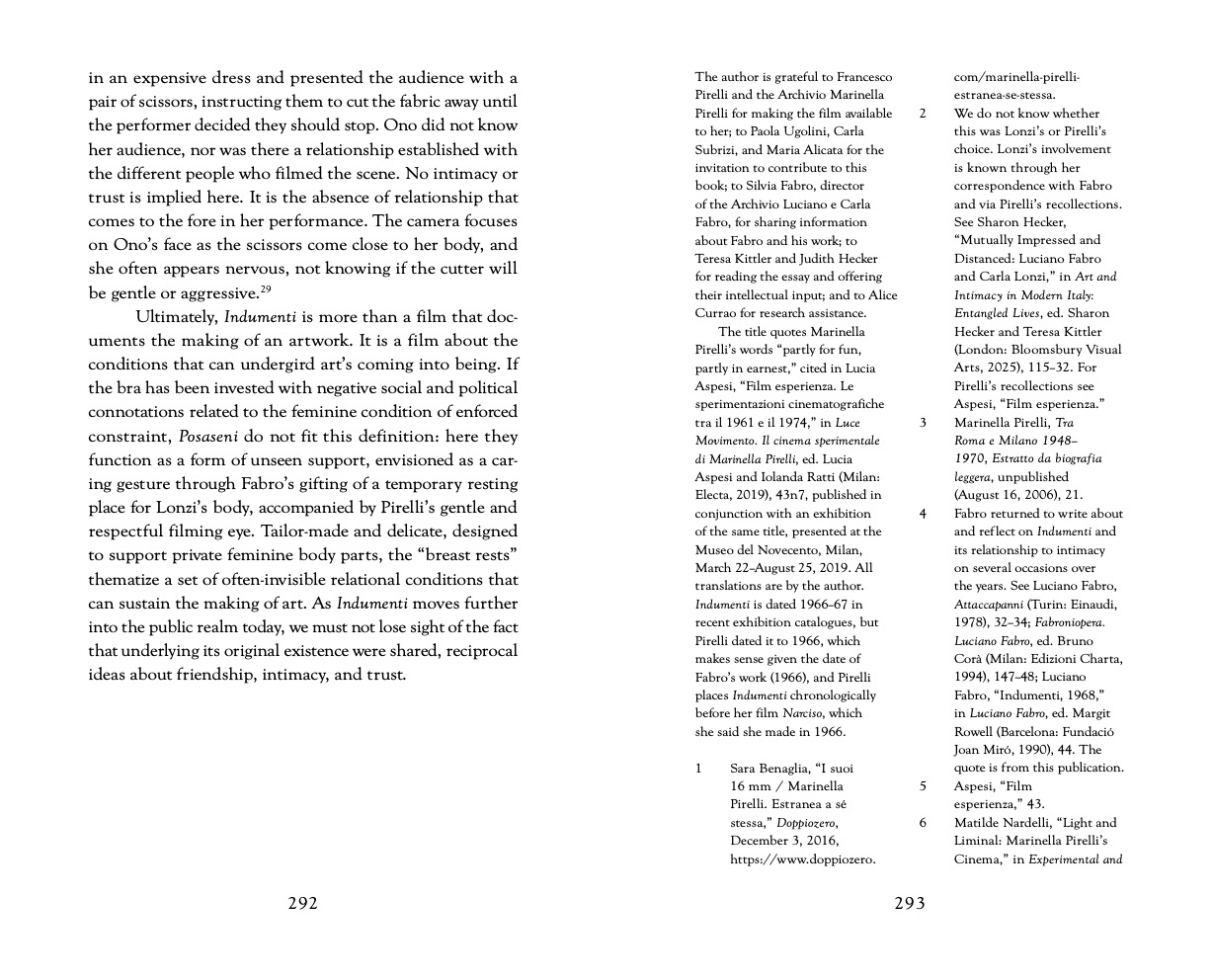
This richly illustrated book considers the dazzling oeuvre of choreographer and dancer Marlene Monteiro Freitas. In line with her creative methodology, Alexandra Balona unfolds an “atlas of affects” through five emblematic dance pieces that reveal the intensity, humor, and humanity of one of today’s most radical choreographic voices.
Invited to present an exhibition at the Galleria Borghese in Rome, Kenyan-American artist Wangechi Mutu has developed an innovative approach to museum space, challenging hierarchy, permanence, and fixed meanings. With in-depth essays and a rich selection of illustrations, this catalog retraces that exhibition and explores the themes and concerns that have long characterized the artist’s practice.
Invitata a concepire una mostra alla Galleria Borghese, l’artista keniota-americana Wangechi Mutu ha sviluppato un approccio innovativo allo spazio museale, confrontandosi con le gerarchie, la permanenze e le sedimentazioni del contesto. Attraverso saggi approfonditi e una ricca selezione di illustrazioni, questo catalogo ripercorre la mostra ed esplora i temi e le preoccupazioni che da tempo caratterizzano la pratica dell’artista.
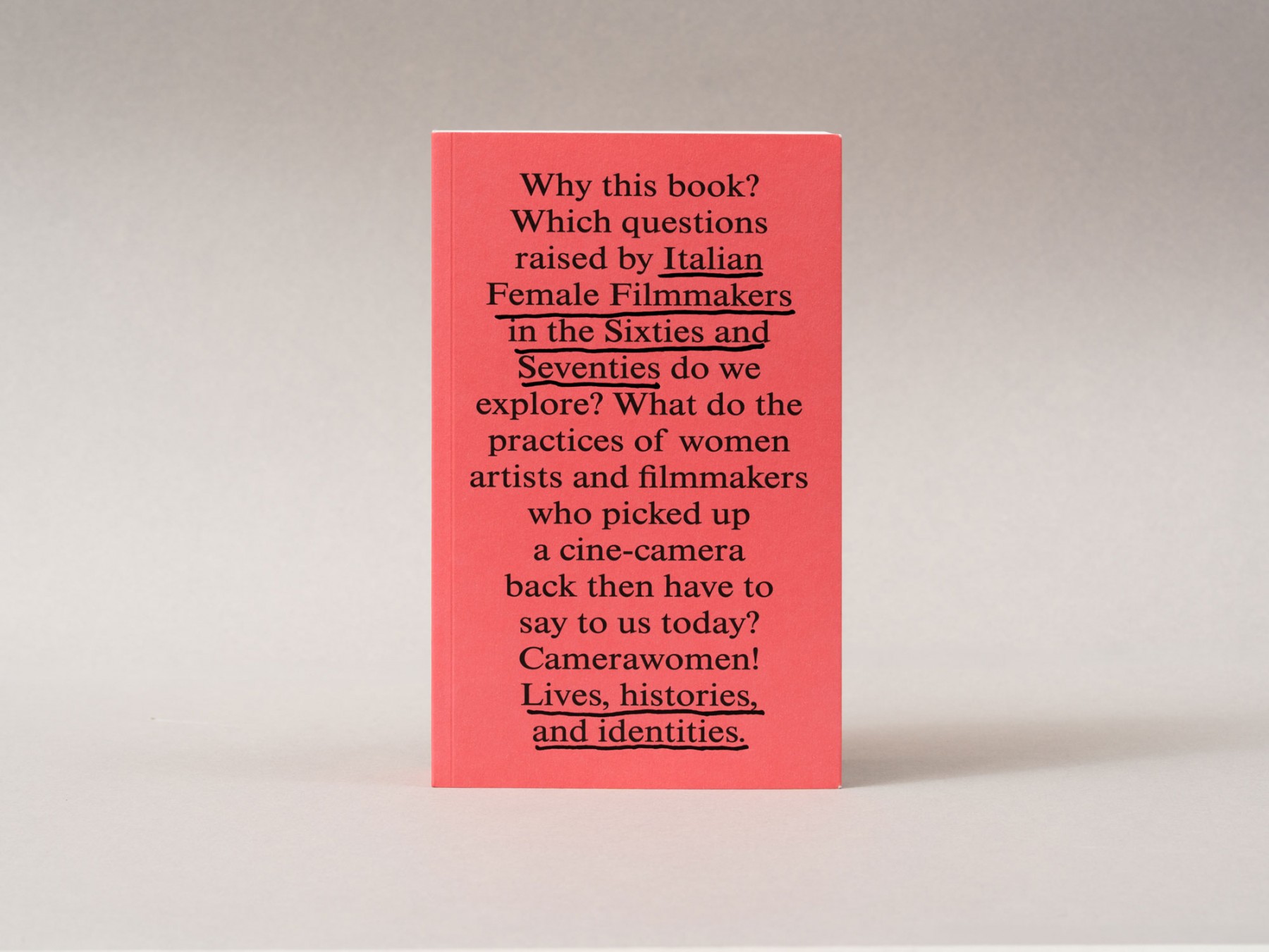
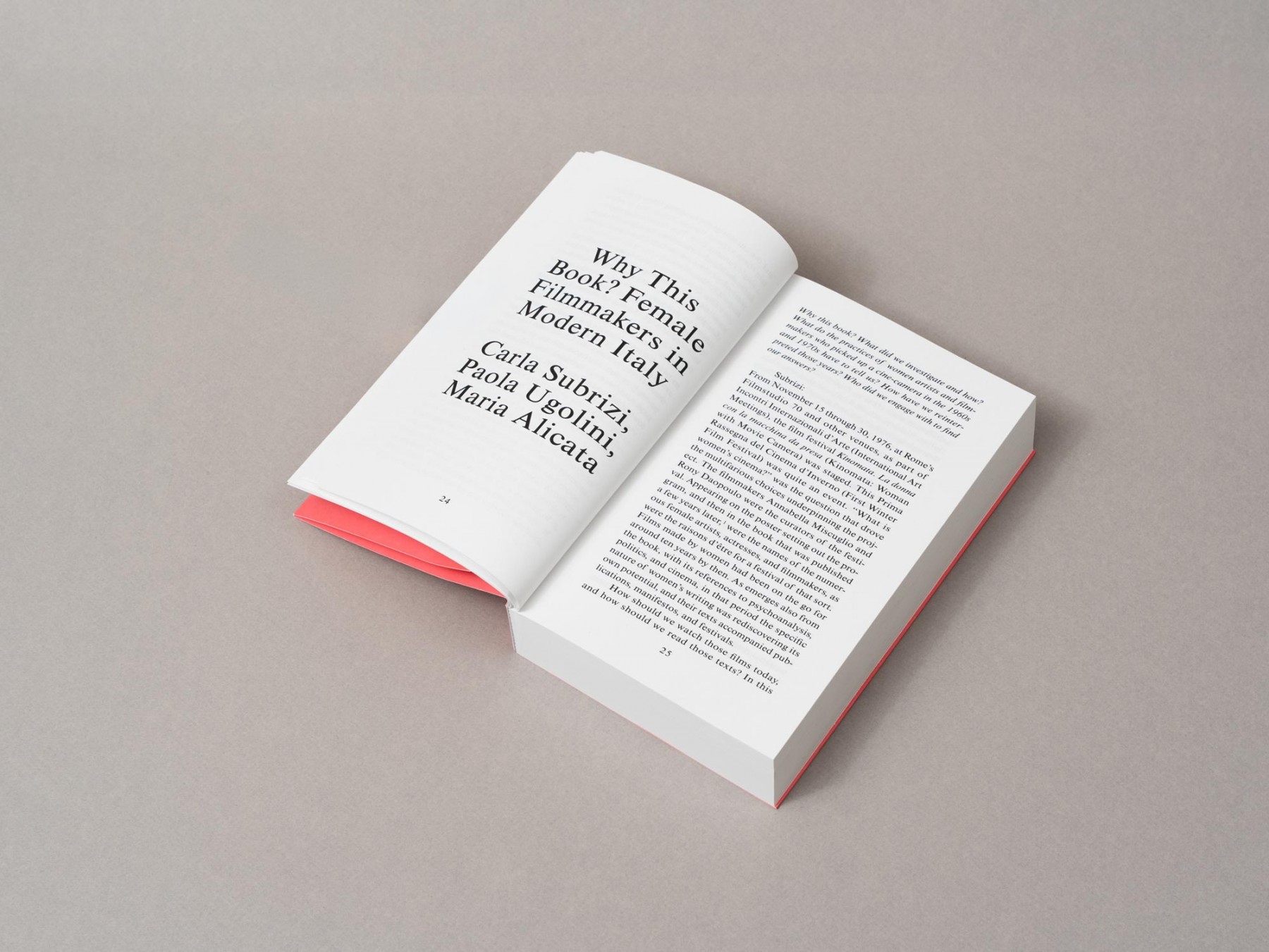
Italian Female Filmmakers in the Sixties and Seventies
Edited by Carla Subrizi, Paola Ugolini, and Maria Alicata
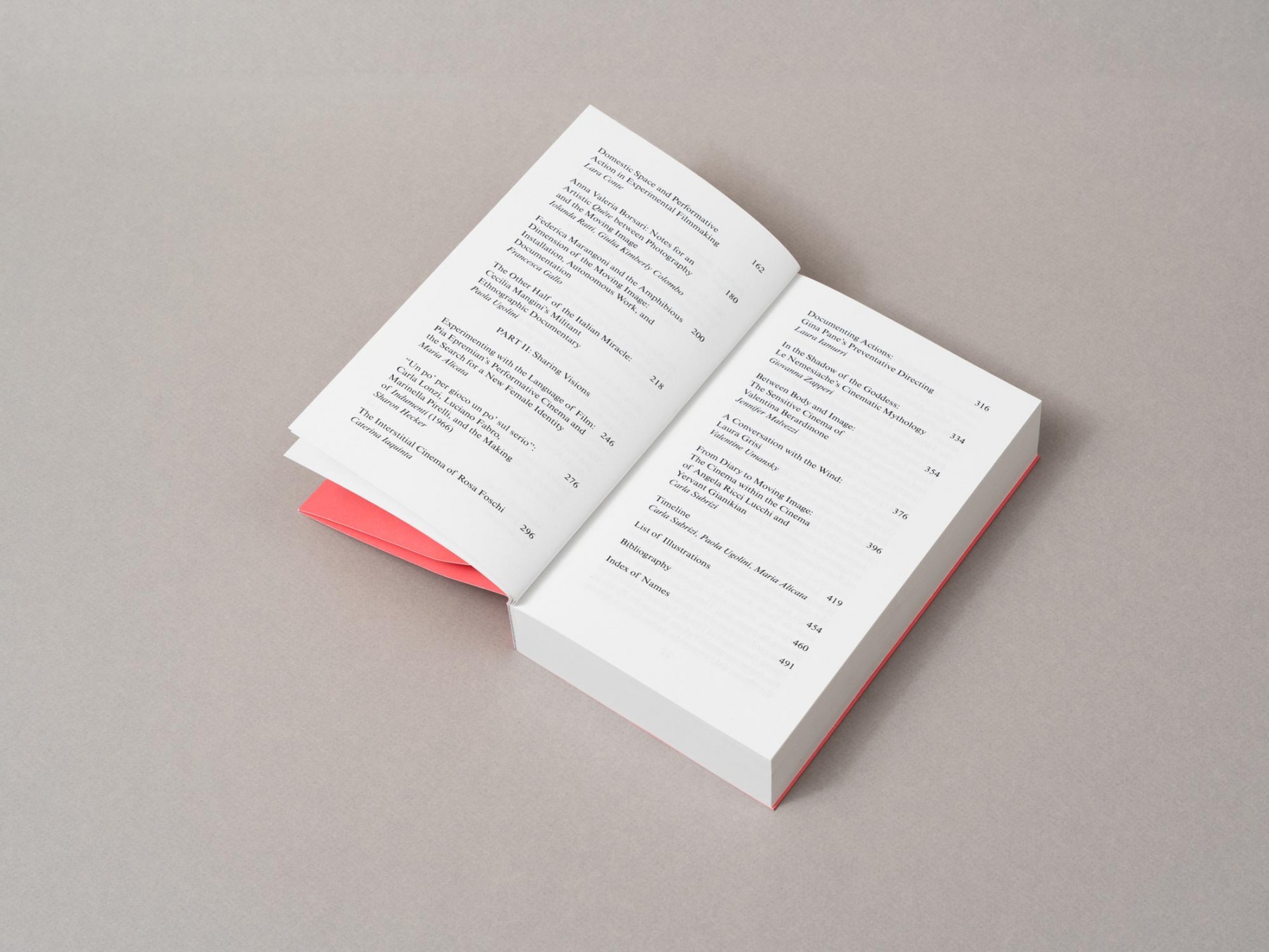
Texts by Maria Alicata, Lucia Aspesi, Silvia Bottinelli, Lara Conte, Flavia Frigeri, Francesca Gallo, Sharon Hecker, Laura Iamurri, Caterina Iaquinta, Teresa Kittler, Jennifer Malvezzi, Iolanda Ratti, Giulia Kimberly Colombo, Carla Subrizi, Paola Ugolini, Valentine Umansky, Giovanna Zapperi
Designed by Lorenzo Mason Studio
2026, English, softcover, 13 x 21 cm, 504 pages
ISBN 979-12-80579-93-5
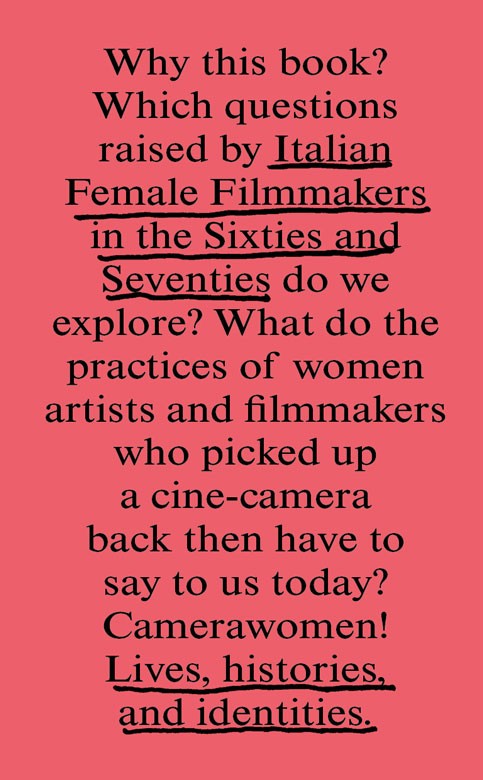
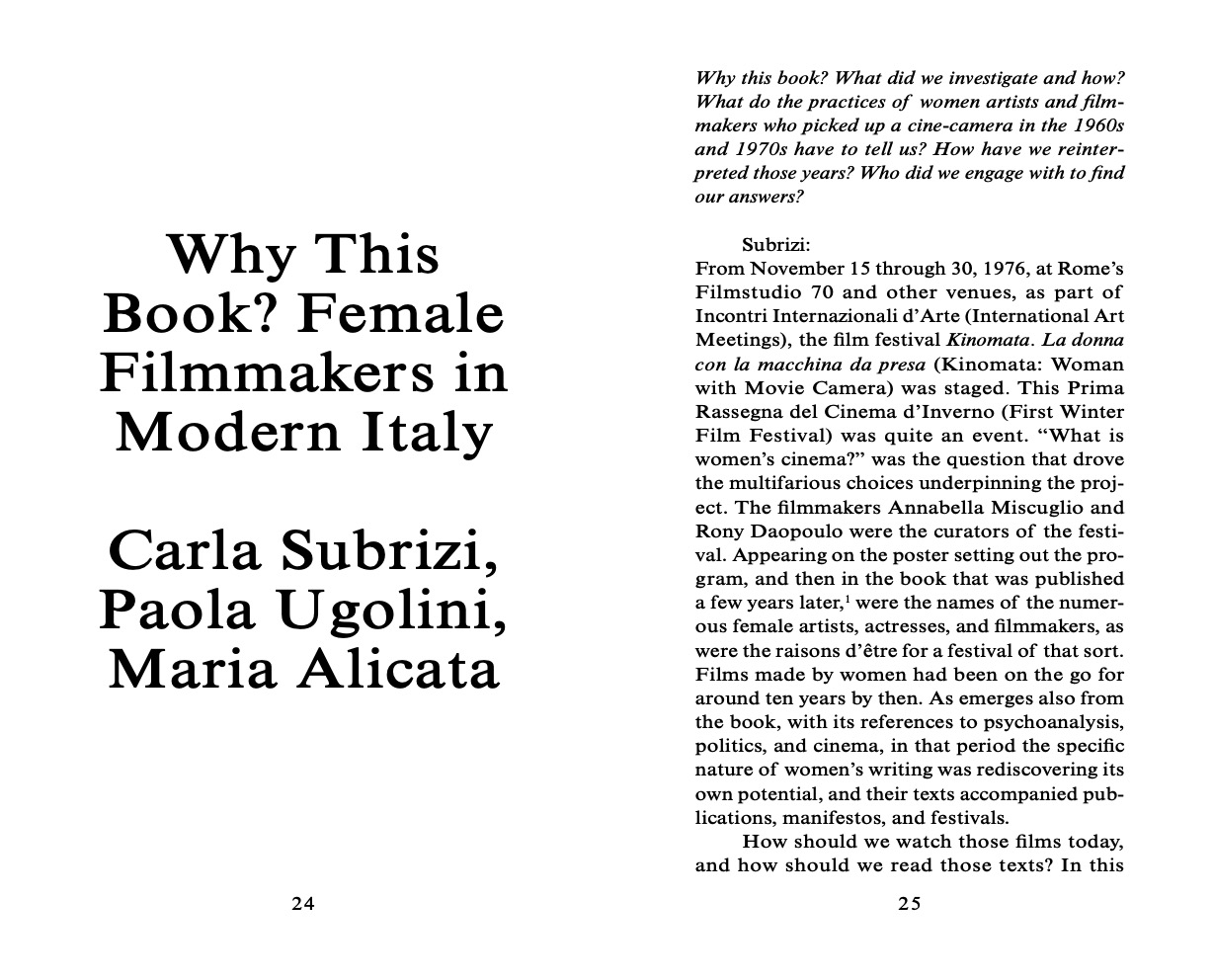
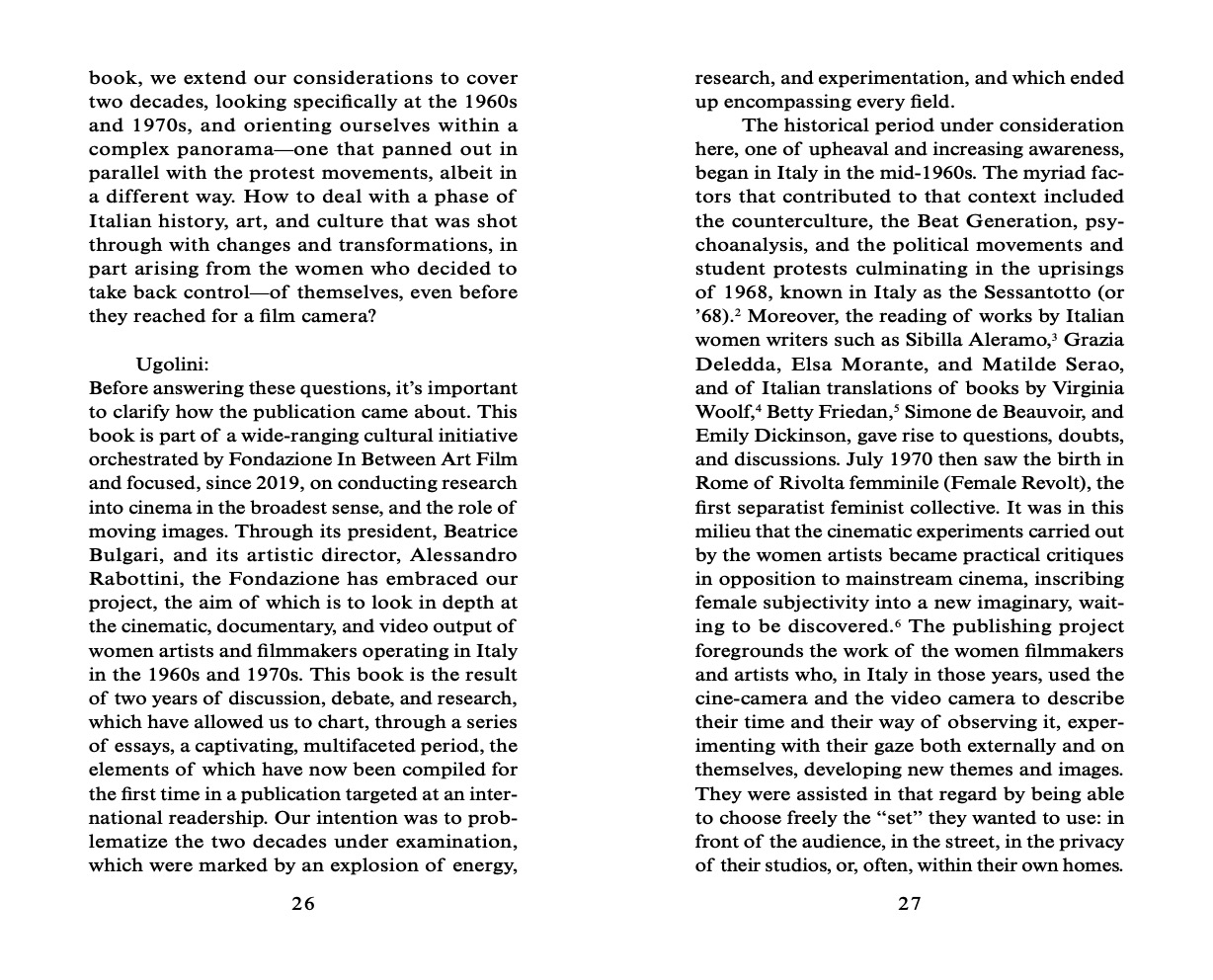
A project by Fondazione In Between Art Film, edited by Carla Subrizi, Paola Ugolini, and Maria Alicata, this illustrated volume investigates the cinematic, documentary, and video output of women artists and filmmakers operating in Italy in the 1960s and 1970s, situating their research at the intersection of artistic experimentation, politics, society, and technology.
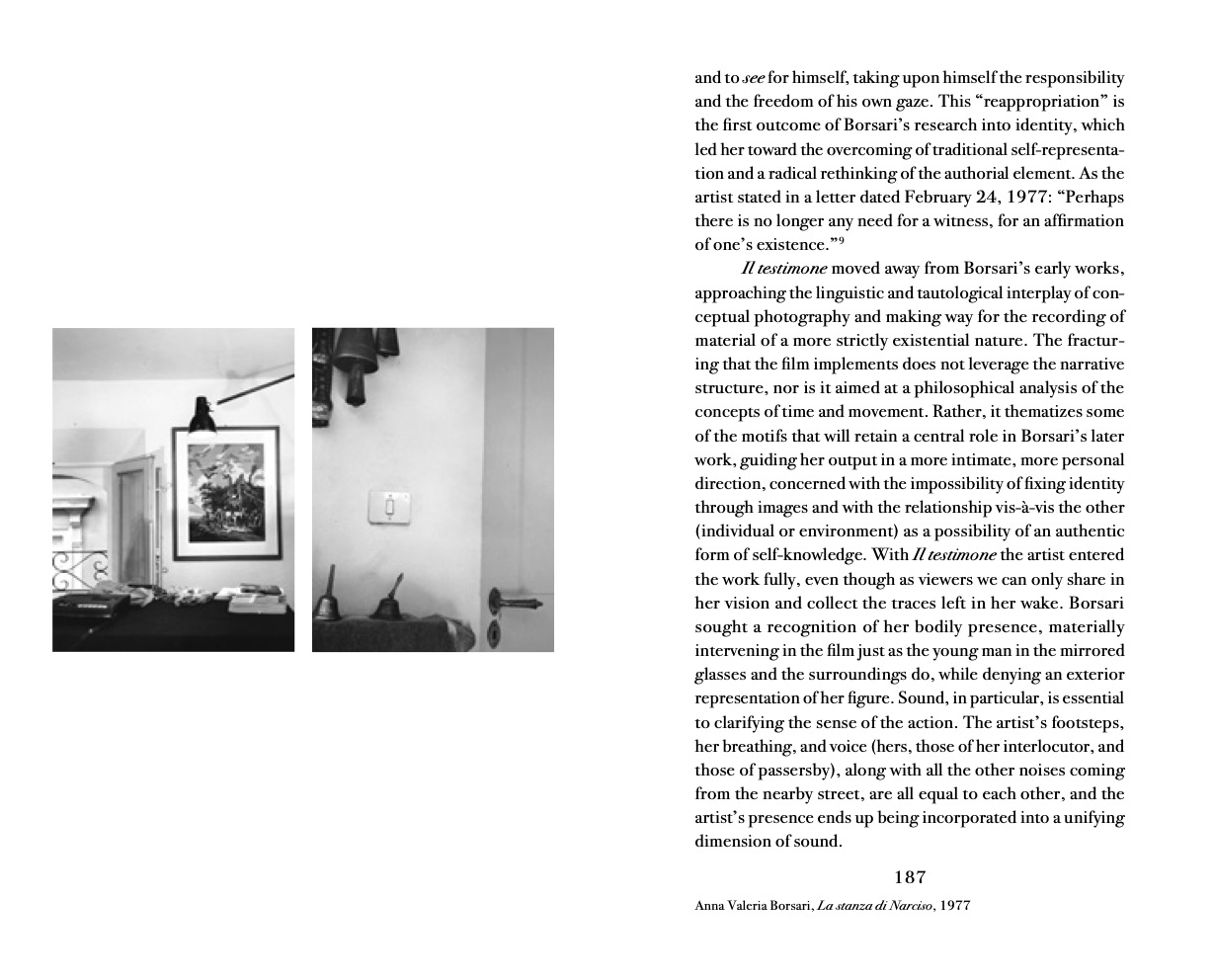
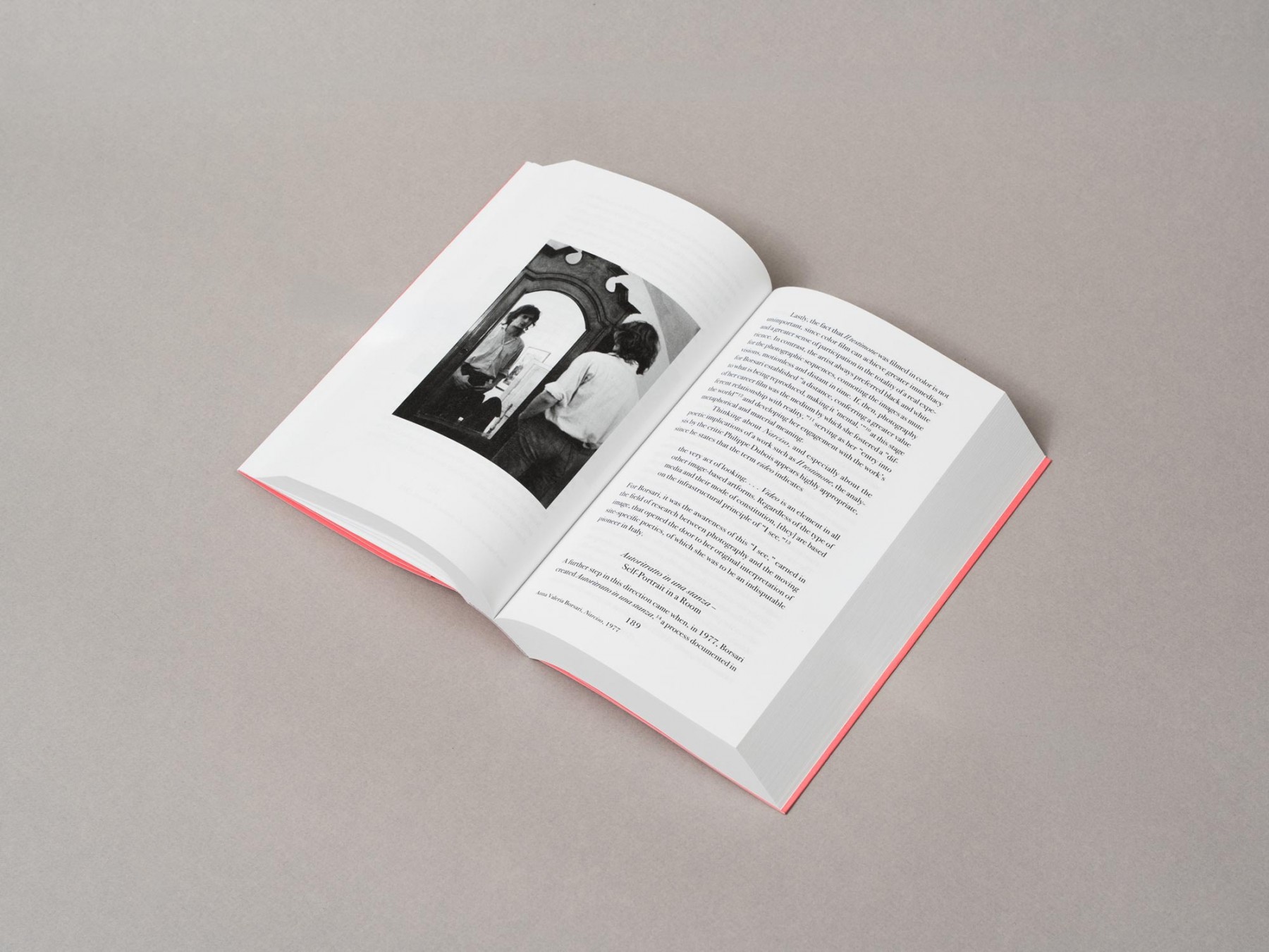
With 18 newly commissioned essays about artists and filmmakers Valentina Berardinone, Anna Valeria Borsari, Pia Epremian, Giosetta Fioroni, Rosa Foschi, Laura Grisi, Ketty La Rocca, Le Nemesiache, Cecilia Mangini, Federica Marangoni, Marisa Merz, Gina Pane, Marinella Pirelli, and Angela Ricci Lucchi, it charts a captivating, multifaceted period, the elements of which have now been compiled for the first time in this publication.
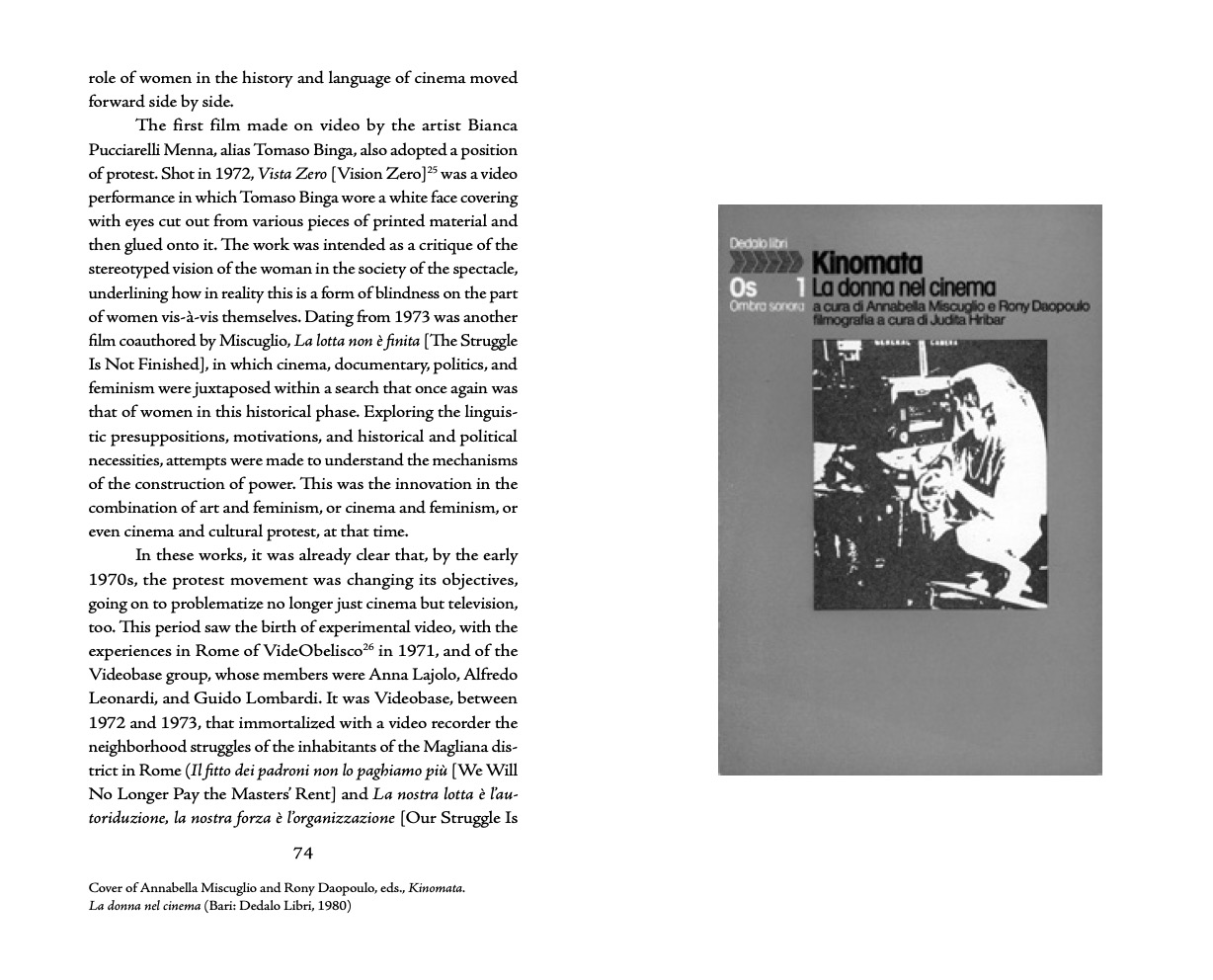
Each chapter, which is accompanied by illustrations and previously unpublished archival documents, analyzes a series of moving-image works as well as the personalities of pioneering (and on occasion non-professional) female directors and artists involved, who embraced the camera as a medium for investigation, documentation, and critique. In their efforts to construct a form of agency for visual imagery, they fostered new narratives, leaving in their wake a plethora of stories and visual strategies that remain vital and worthy of re-examination today.
The contributions of academics, researchers, and art historians such as Maria Alicata, Lucia Aspesi, Silvia Bottinelli, Lara Conte, Flavia Frigeri, Francesca Gallo, Sharon Hecker, Teresa Kittler, Caterina Iaquinta, Laura Iamurri, Jennifer Malvezzi, Iolanda Ratti with Giulia Kimberly Colombo, Carla Subrizi, Paola Ugolini, Valentine Umansky, and Giovanna Zapperi problematize the two decades under examination, which panned out in parallel with the protest movements, and navigate a phase of Italian history, art, and culture that was shot through with changes and transformations, in part arising from the women who decided to take back control—of themselves, even before they reached for a film camera. Therefore, they endeavor to glean an understanding of the transformations of language, subjectivity, identity, ways of seeing, and imaginaries through what women filmmakers described, documented, recorded, and wrote. At the same time, the book constructs an Italian history of this cinematic output in order to then understand how specific, identity-forging visions can be expanded or connected within a broader story, composed of cultural differences and urges that enter into a transnational dialogue. To this end, the book also includes a specially conceived timeline of the main socio-political events that occurred and the most important moving-image works that were produced over the two decades under consideration.