Pardon Façade documents the artistic output of Luca Monterastelli, showcasing almost all of the sculptures and installations that he produced between 2011 and 2022. Across four chapters—corresponding to four solo shows that he staged in Milan, Otegem, Antwerp, and Naples—the publication provides the first overview of the artist’s work.
More than half a century after its premiere, Yvonne Rainer, in collaboration with choreographer and dancer Emily Coates, directed the 2019 revival of her 1965 performance Parts of Some Sextets. This book poses questions about the trajectories of artworks, performers, and audiences, all while tracing the life—and afterlife—of a dance.
How does technology organize life? This book documents and reflects on the exhibition Proof of Stake: Technological Claims at Kunstverein in Hamburg, curated by Simon Denny and Bettina Steinbrügge. It brings together a unique group of artists and scholars who investigate the technological apparatuses and power relations of organized life.
This artist’s first monograph brings together sketches, documentation and installation shots, as well as an in-depth analysis of her practice. It highlights her process of making art, from the conception of an idea to the finished work, and from the deconstruction and re-assembling of her characters’ identities to the relentless creation of new worlds.
Published on the occasion of the first exhibition in Italy by Jenna Gribbon, staged at the Collezione Maramotti, Mirages showcases a wealth of images that highlight the fluid, sensual output of this artist who, in repeatedly portraying her wife, the musician Mackenzie Scott (aka TORRES), explores the implications inherent in seeing and being seen.
The catalogue of this ambitious project, held at the Centre d’Art Contemporain Genève in 2017, reflects on the centrality of writing in contemporary visual art practices. Documenting its slippages from printed matters to the digital realm, from voice modulations to its sculptural presence, this book celebrates the word in all its forms.
Edited by Fatima Hellberg, James Richards, and Leslie Thornton
With work and contributions by Horst Ademeit, Rae Armantrout, Tolia Astakhishvili, Ed Atkins, Kirsty Bell, Adelhyd van Bender, Bruce Conner, Fatima Hellberg, Mason Leaver-Yap, Veit Loers, Terence McCormack, James Richards, Jens Thornton, Leslie Thornton, and Thomas Zummer
Copublished with Bonner Kunstverein, Malmö Konsthall and Künstlerhaus Stuttgart
Designed by Karl Kolbitz and Nicoletta Dalfino Spinelli
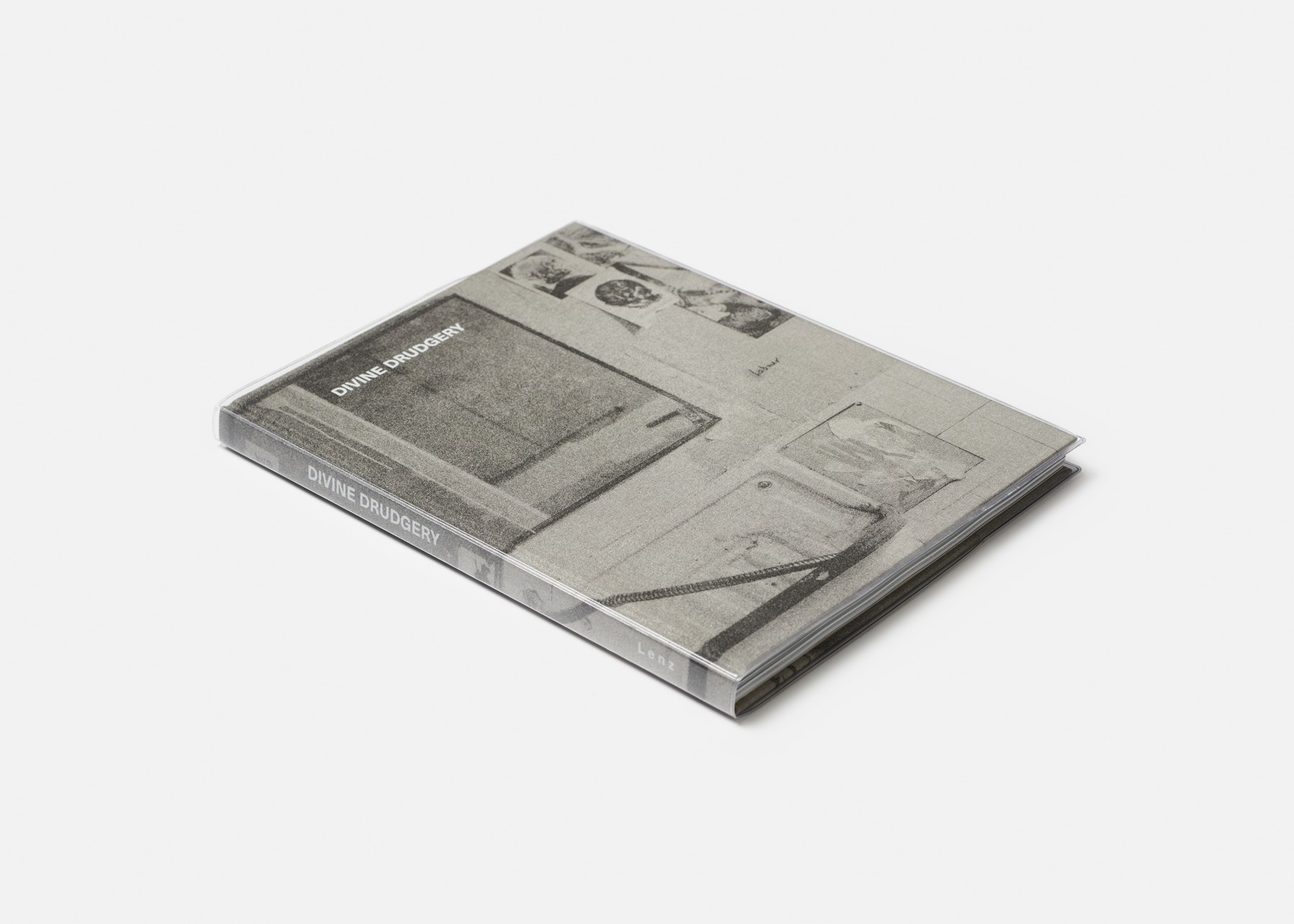
2021, English, hardcover, 21.9 x 28.5 cm, 160 pages
ISBN 978-88-945353-3-4
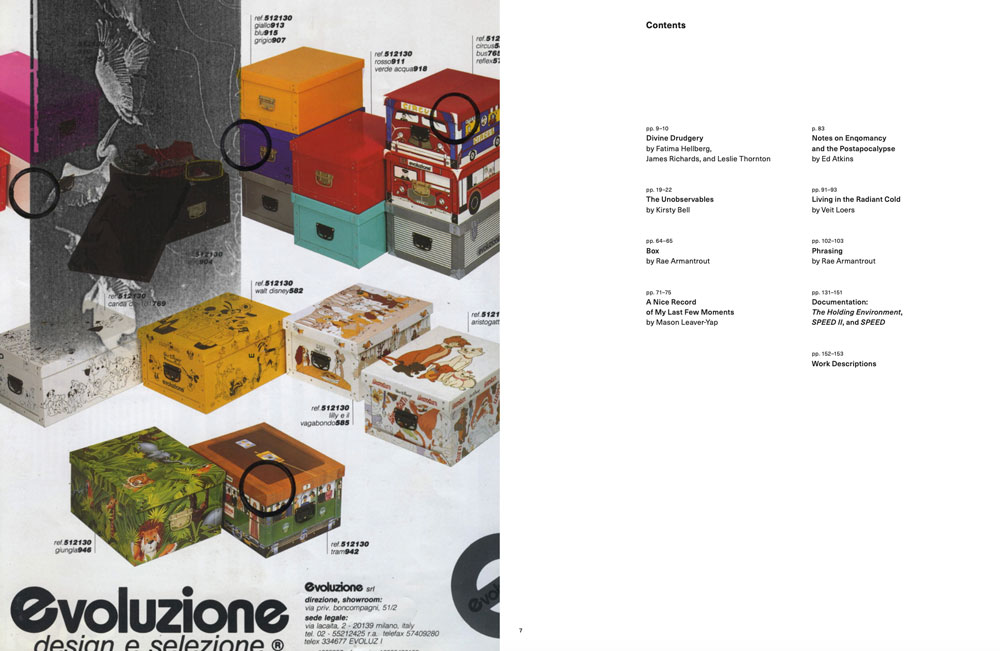
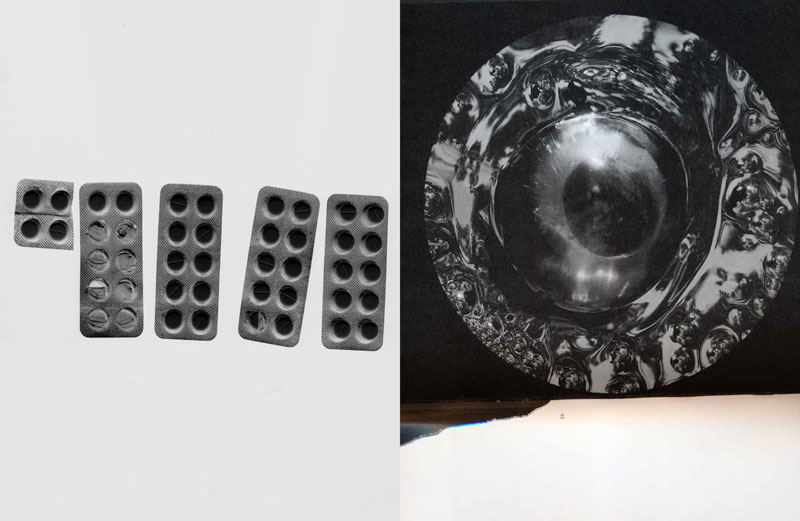
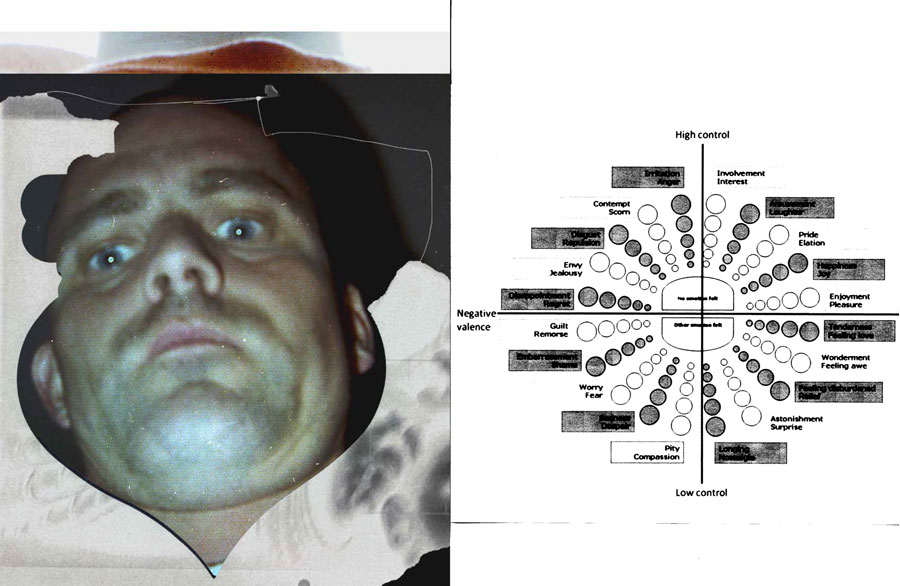
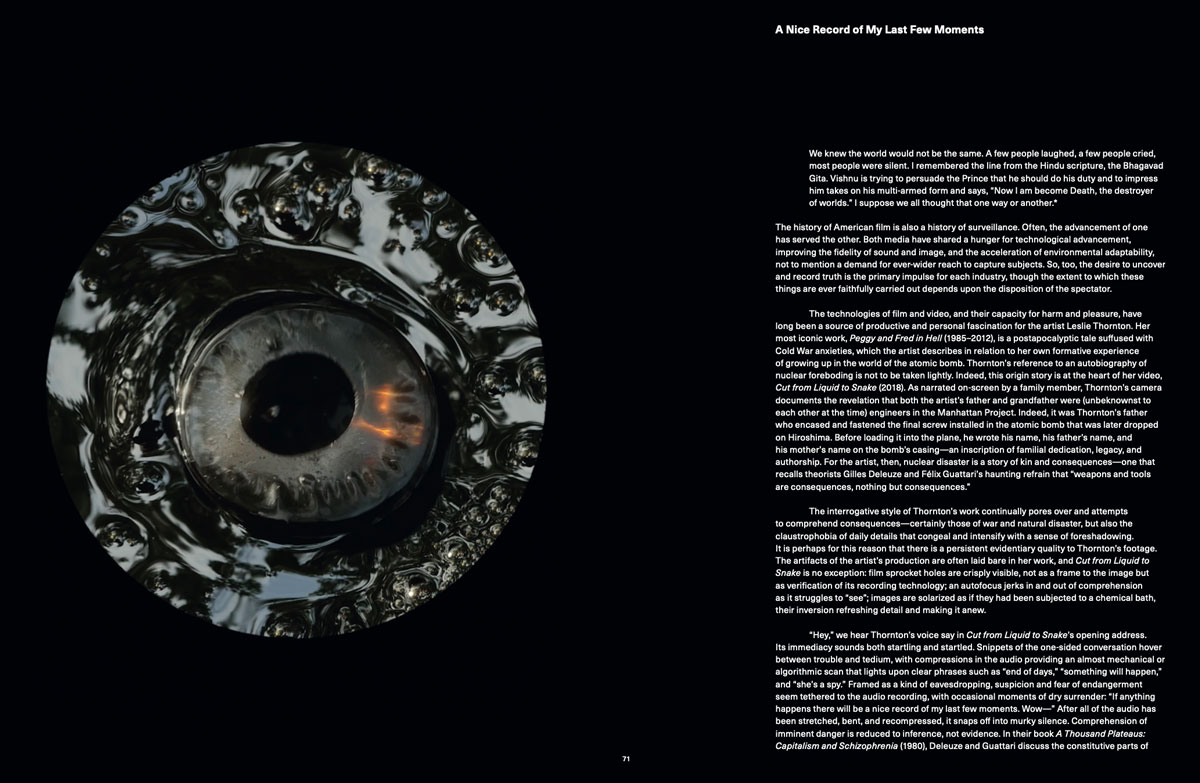
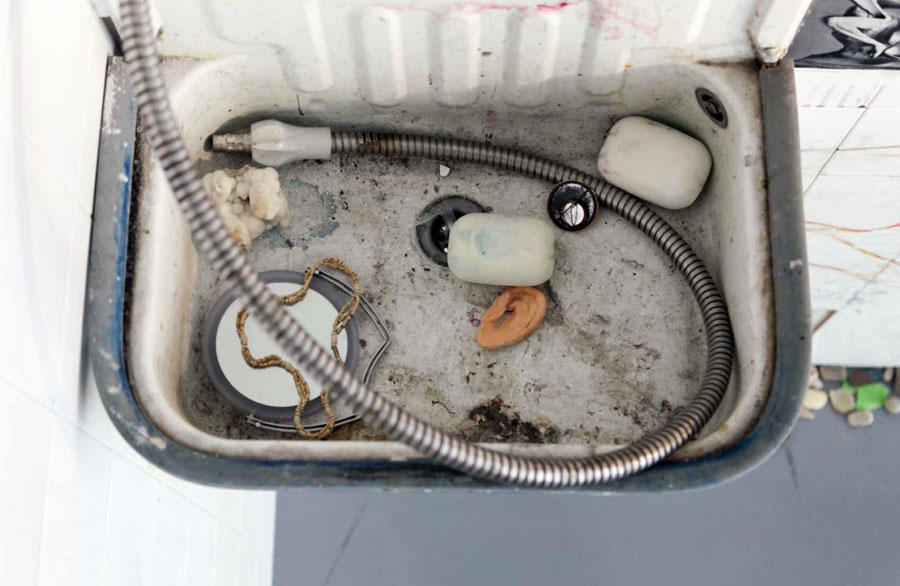
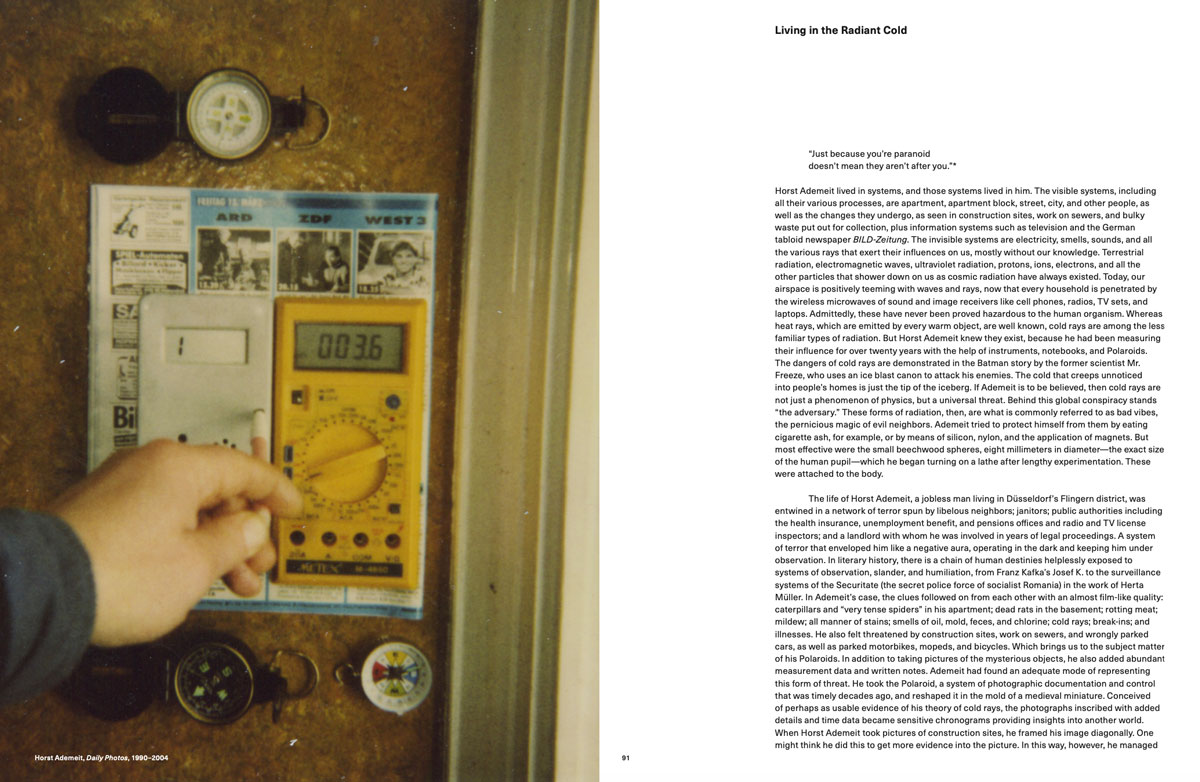
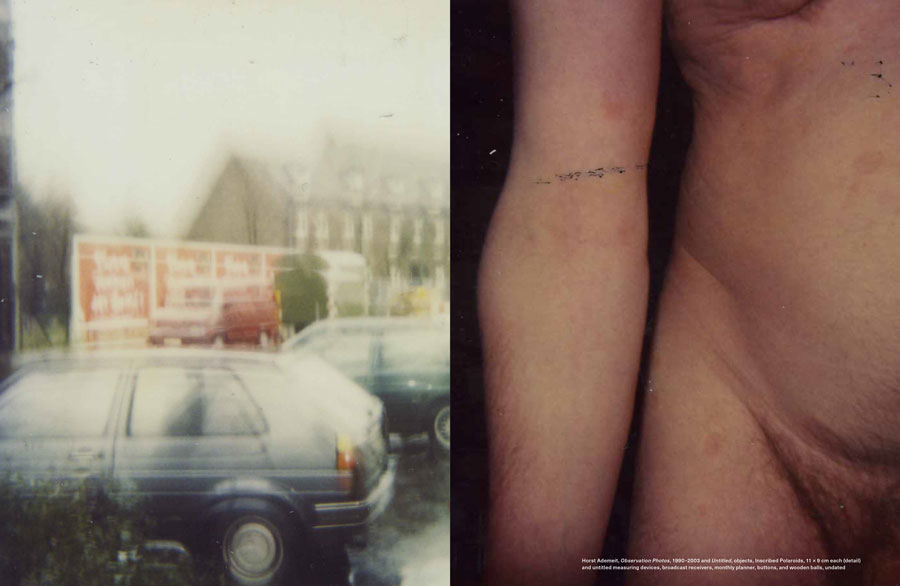
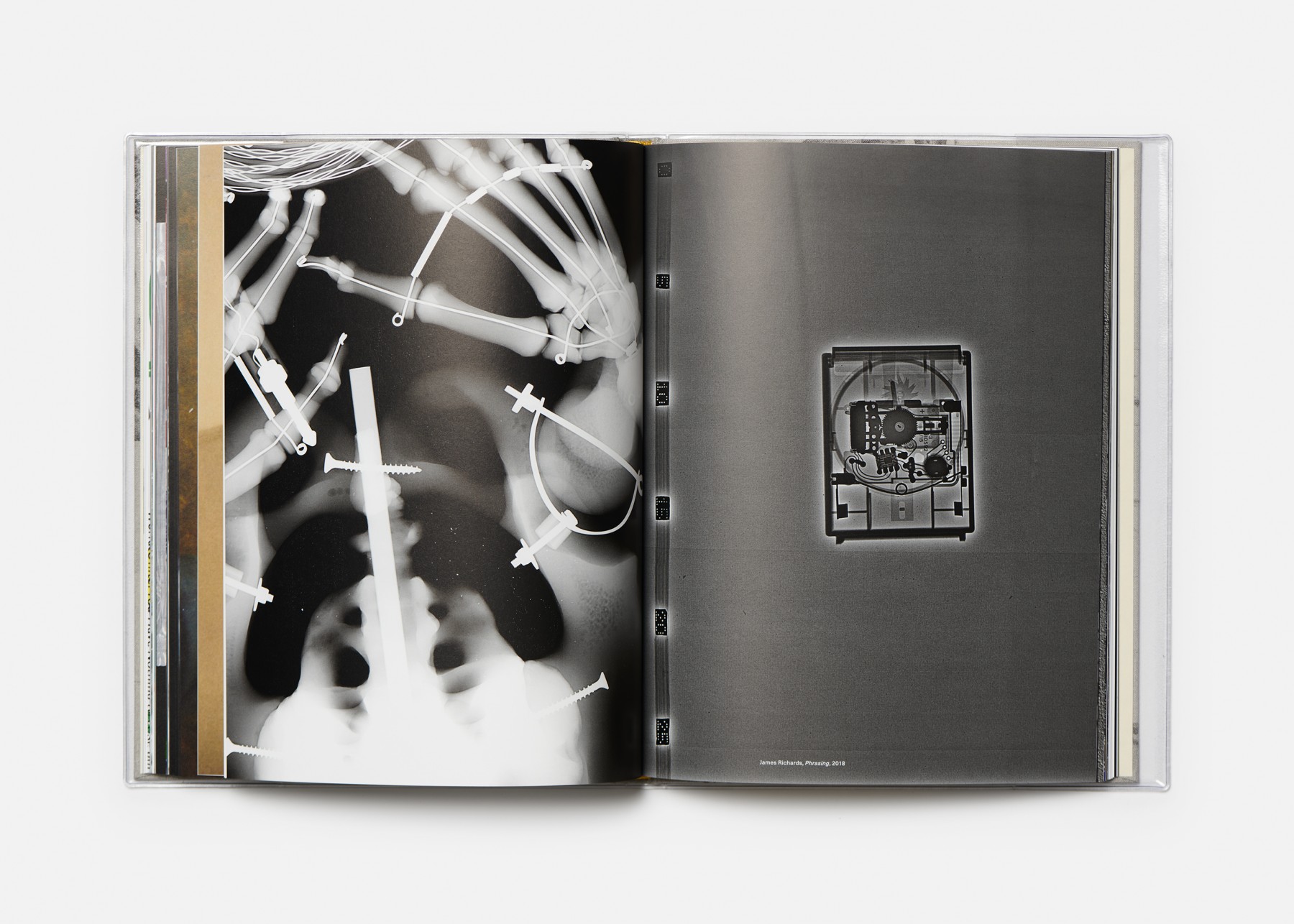
Divine Drudgery is an artist book with collages and artworks by James Richards and Leslie Thornton, and contributions by artists, writers and poets centred around liminality and the aesthetics and politics of the invisible. These dialogues and strands are anchored in and loop back to three exhibitions developed by the editors: Speed (Künstlerhaus Stuttgart), Speed II (Malmö Konsthall), and The Holding Environment (Bonner Kunstverein), and radiate outwards.
In the making of Divine Drudgery, there has been an ongoing concern with specific psychic and temporal states, rushes of systemic and embodied interconnectedness and wonder, as well as a sense of porousness and paranoia. The oscillation between an ordering impulse and the relinquishing of control is a central feature, one that returns in Divine Drudgery’s different modes: in the poetry and writing; collages, visual essays and specifically conceived work. There is an impulse of collaboration that brought about this project, one that renders the monologue of anxious speculation into a dialogic practice. The disparate elements have been generated from the third mind of collaboration, a channelling of and at times conscious unsettling of each other’s sensitivities, a process which in the words of artist and contributor to the publication Adelhyd van Bender could be understood as the “divine drudgery.“
Ph. Mareike Tocha
The editors
Fatima Hellberg is director of Bonner Kunstverein and former artistic director of the Künstlerhaus Stuttgart. Her curatorial practice is developed in close dialogue with artists and is often associated with long-term exchange, with amongst others Gregg Bordowitz, Ellen Cantor, David Medalla, James Richards and Leslie Thornton. She has curated exhibitions in institutions including the ICA, London; Tate Modern; the CCA Wattis Institute for Contemporary Arts, San Francisco; the South London Gallery and Malmö Konsthall.
Known for his provocative and visually seductive moving-image works that collage together a wide range of source material, James Richards’s work carves out a space where personal politics and digital materiality might meet. Recent exhibitions include When We Were Monsters, Haus Mödrath (2021); The Holding Environment, Bonner Kunstverein (2021); Alms for the Birds, Castello Di Rivoli (2020); Speed II, Malmö Konsthall w/ Leslie Thornton (2019); Speed, Künstlerhaus Stuttgart w/ Leslie Thornton (2018).
In a career spanning nearly five decades, Leslie Thornton has produced an influential body of work in film and video. Her early encounters with experimental, structuralist, and cinéma vérité fuelled her iconoclastic take on the moving image and gave shape to her practice of weaving together her own footage and voice with archival film and audio. Thornton’s work has been exhibited at documenta 12, Kassel; The Whitney Museum of American Art, MoMA PS1, and Artists Space in New York; Tate Modern and Raven Row in London; the Walker Art Center, Minneapolis, among many others. Recent solo and two-person exhibitions have taken place at Kunstverein Nürnberg (2020); Malmö Konsthall (2019); Secession, Vienna (2018) and Künstlerhaus Stuttgart (2018).