Lam-See Lam’s storytelling develops through text, animations, and sculptural installations. Her multifaceted stories explore the narrative of the Cantonese diaspora in Sweden and examine questions of cultural identity.
A richly illustrated publication accompanying the experimental noise project as durational solo performance by Marco Fusinato for the Australia Pavilion at the 59th International Art Exhibition La Biennale di Venezia.
This catalogue explores some of the pivotal themes of the artist’s research, from her interest in crossing and redefining the border between interior and exterior to the relationship between the aesthetic object and its institutional context.
Published in conjunction with a solo exhibition at Kunst Museum Winterthur, this book provides the first overview of Altmann’s work to date, characterized by a strongly socio-critical consciousness, and reveals the artist’s influences and inspirations.
The first monograph dedicated to Paloma Bosquê addresses the Brazilian artist’s ways of understanding and giving shape to that matter which can be perceived, but not rationalized.
The first book on London based artist Gili Tal, whose practice identifies how the digital has long become a reality that has subjected our habits of perception to a radical change.
Edited by di Cloé Perrone
Texts by Adrienne Edwards, Ekow Eshun, Francesco Freddolini, Wangechi Mutu, Cloé Perrone, Ilaria Puri Purini
Designed by Lorenzo Mason Studio
2025, English, hardcover, 30 x 24 cm, 202 pages
ISBN 979-12-80579-80-5
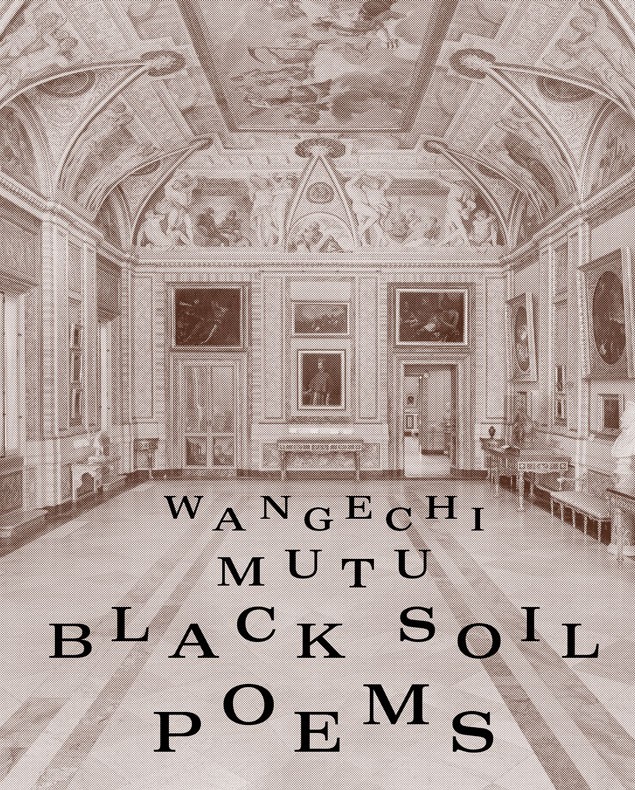
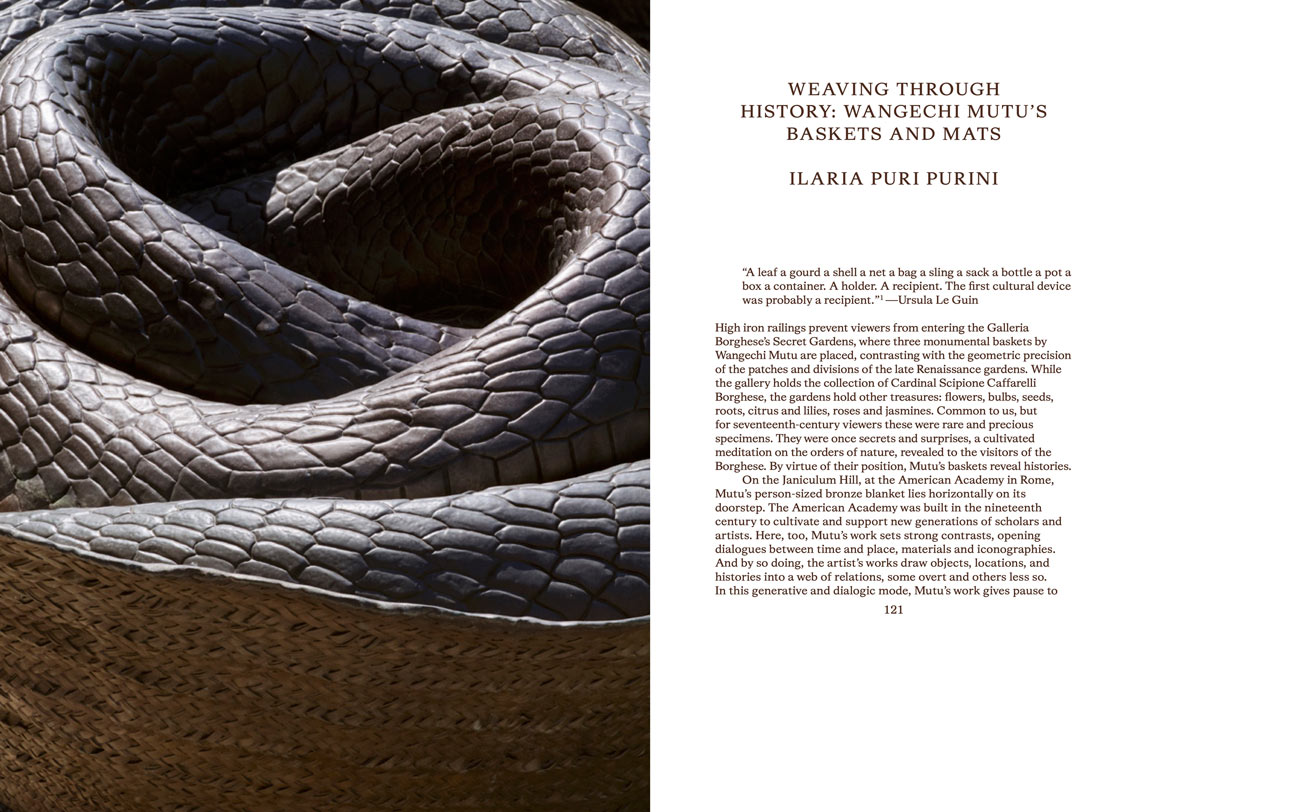
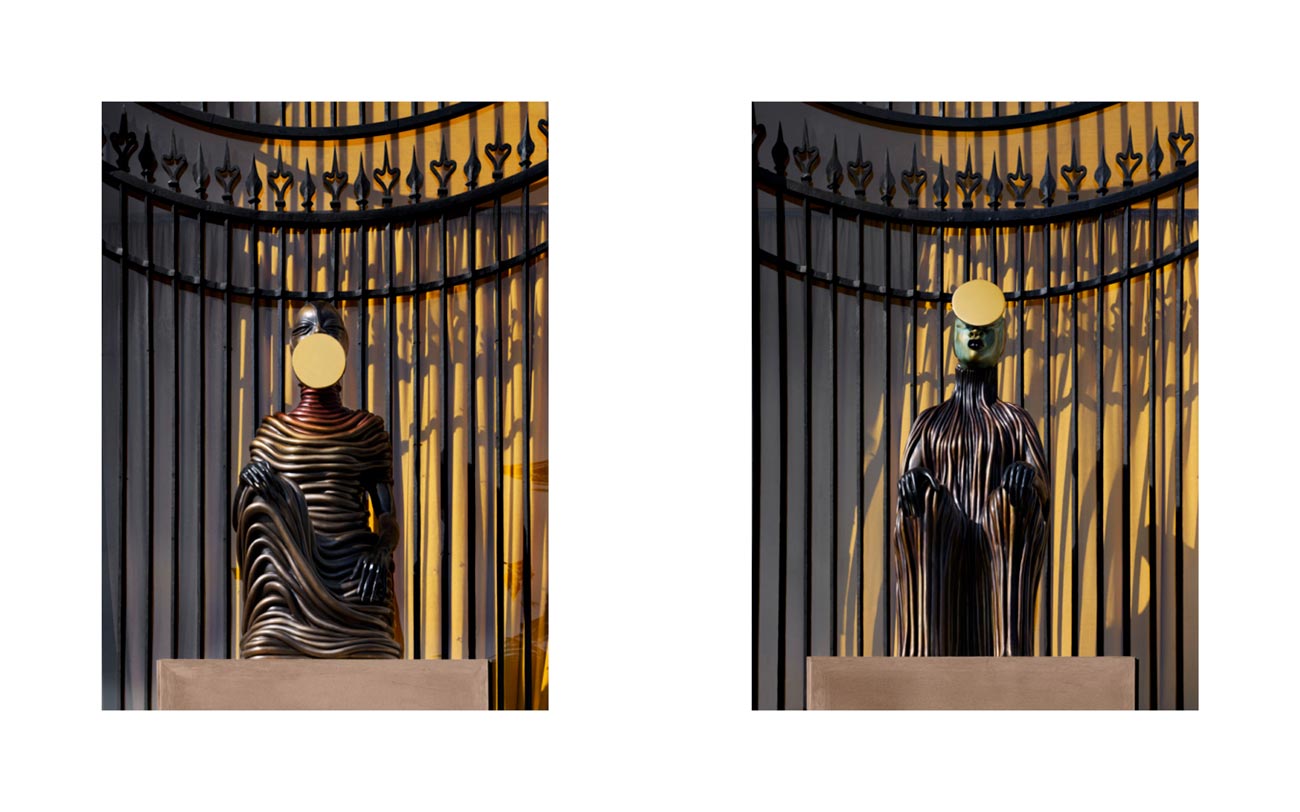
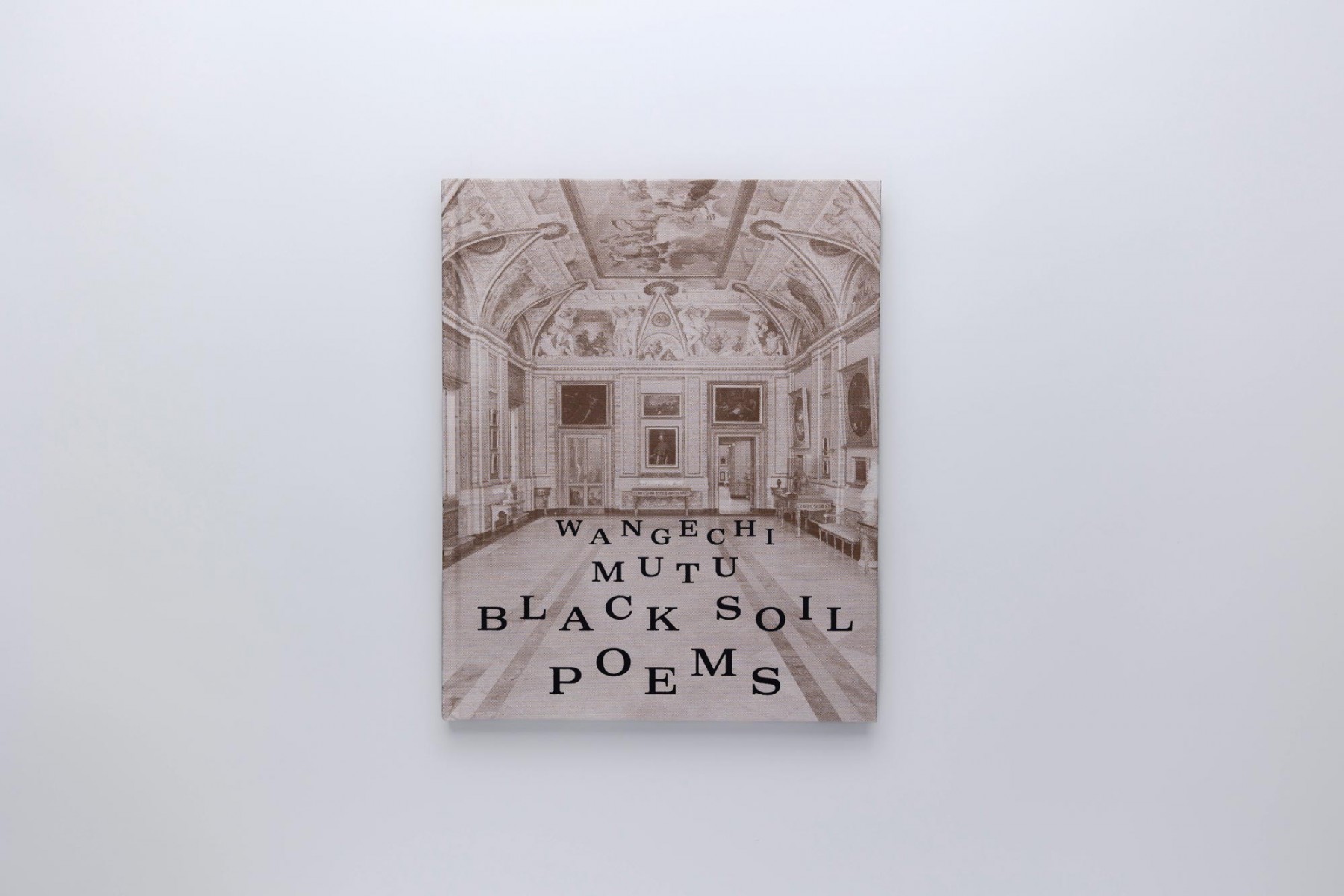
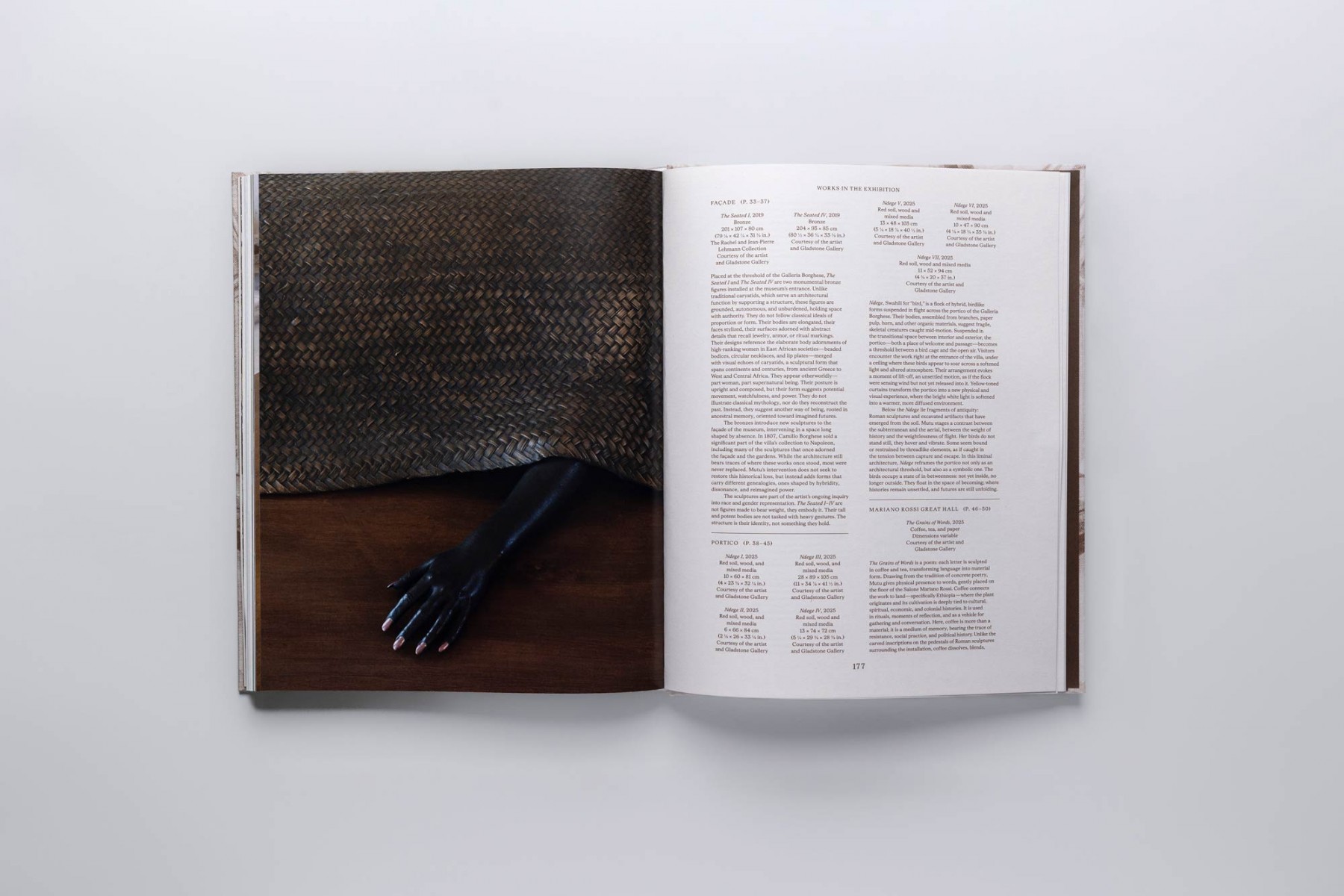
The title of this rich publication, published on the occasion of the solo exhibition of the Kenyan-American artist Wangechi Mutu at the Galleria Borghese—the first time in the century-old history of the Villa for a living female artist—evokes the dual nature of Mutu’s practice: poetic and mythological, yet deeply connected to contemporary social and material contexts. “Black soil”—rich and malleable under the rain, almost like clay—appears across multiple geographies, including the Secret Gardens of the Galleria, which resonate with the artist’s imagination. From this soil, the sculptures seem to emerge, as if molded by a primordial force, giving shape to stories, myths, memories, and poems. The metaphor underscores the generative and transformative power of her work: rooted in materiality, yet open to multiple future interpretations.
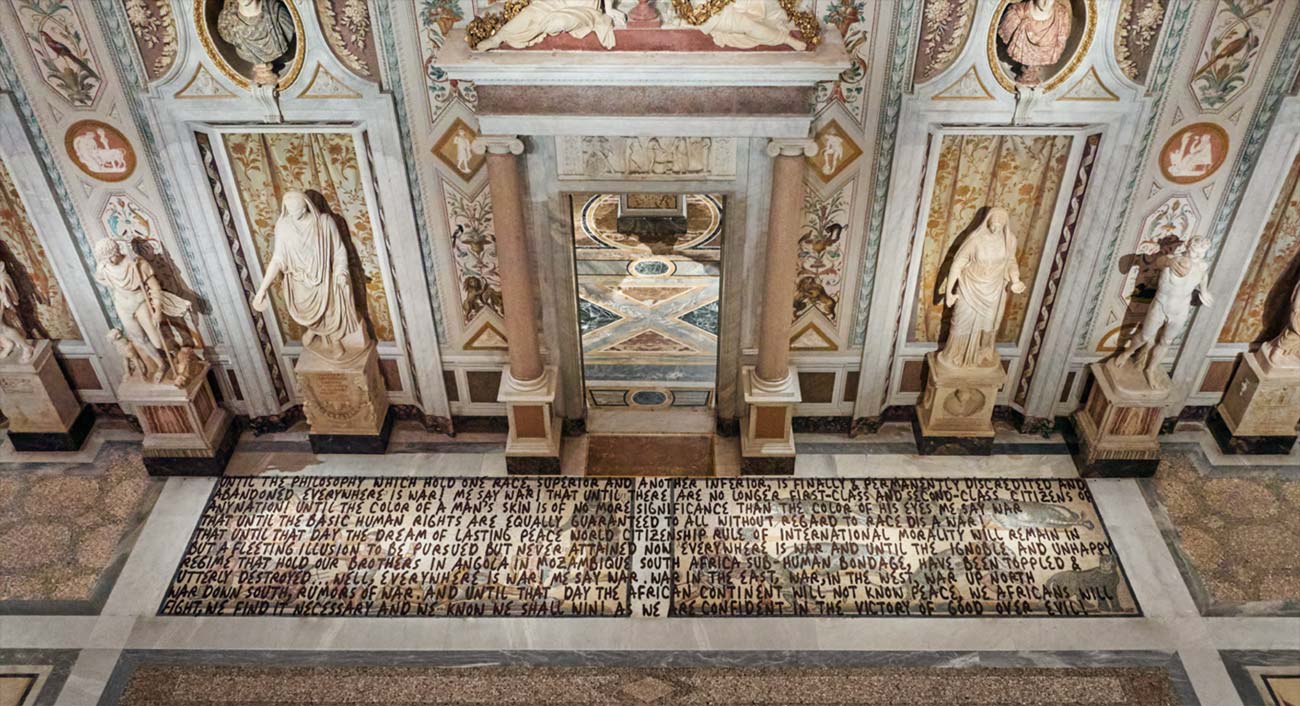
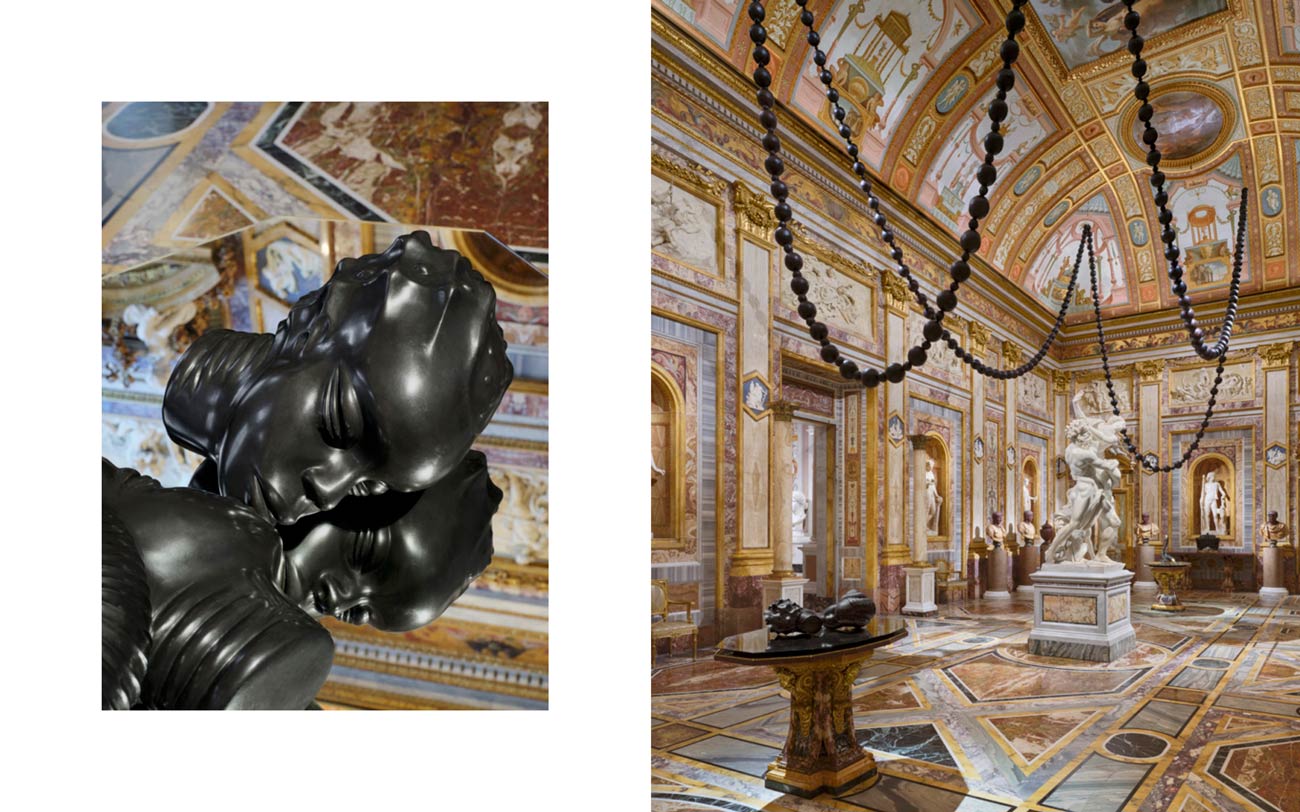
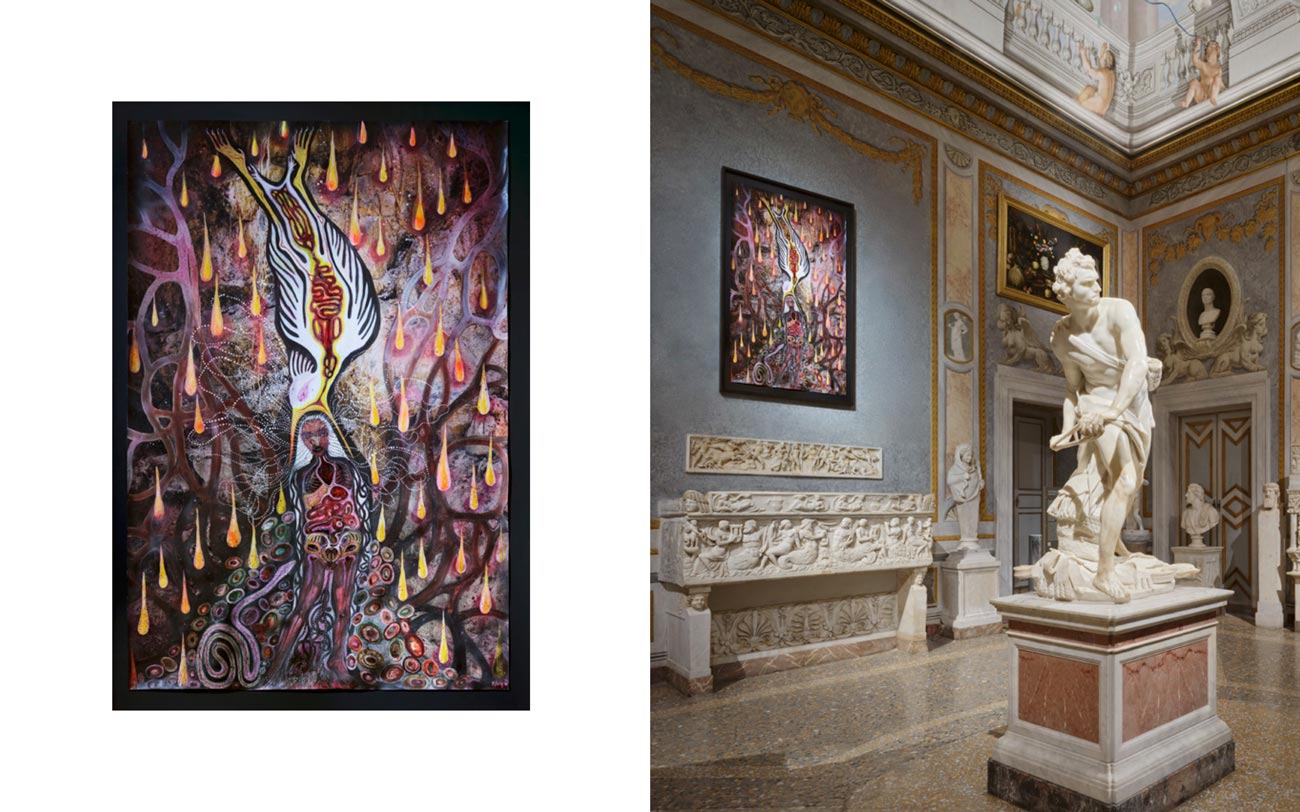
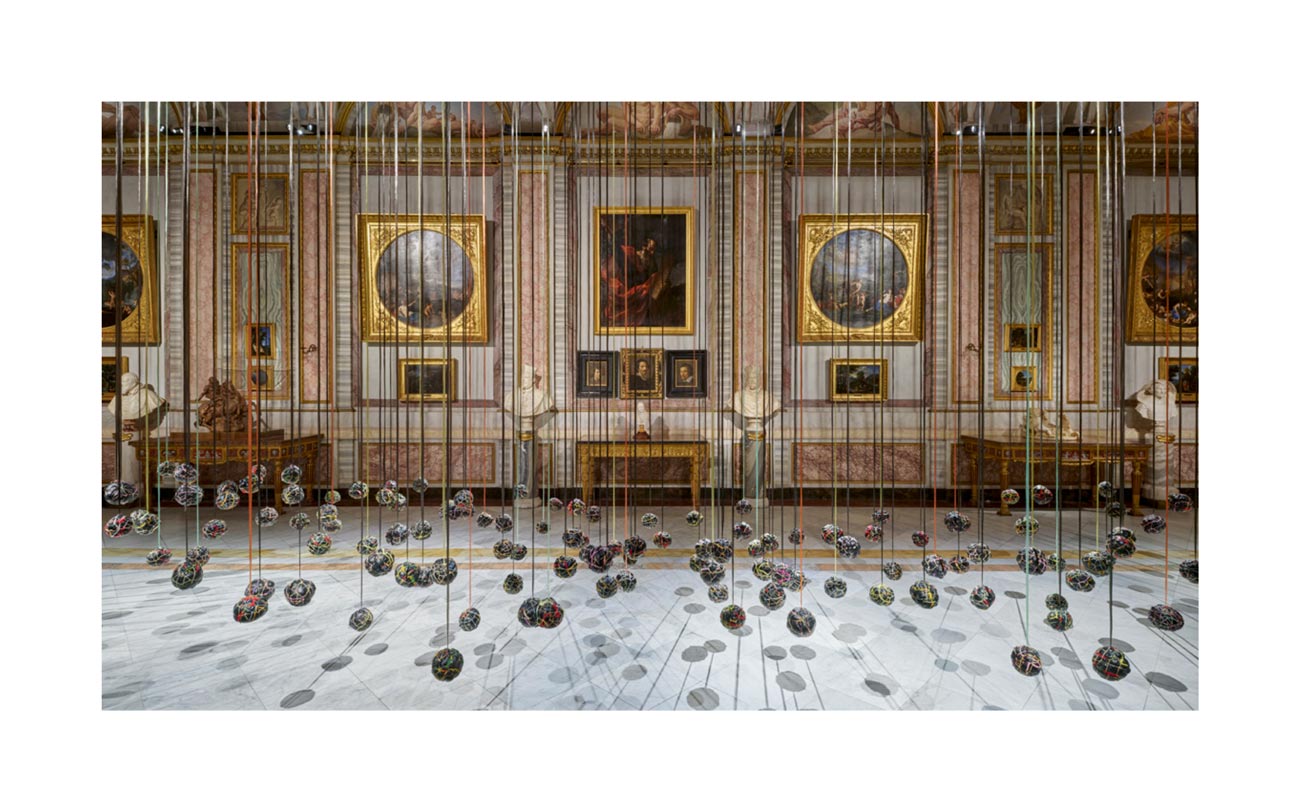
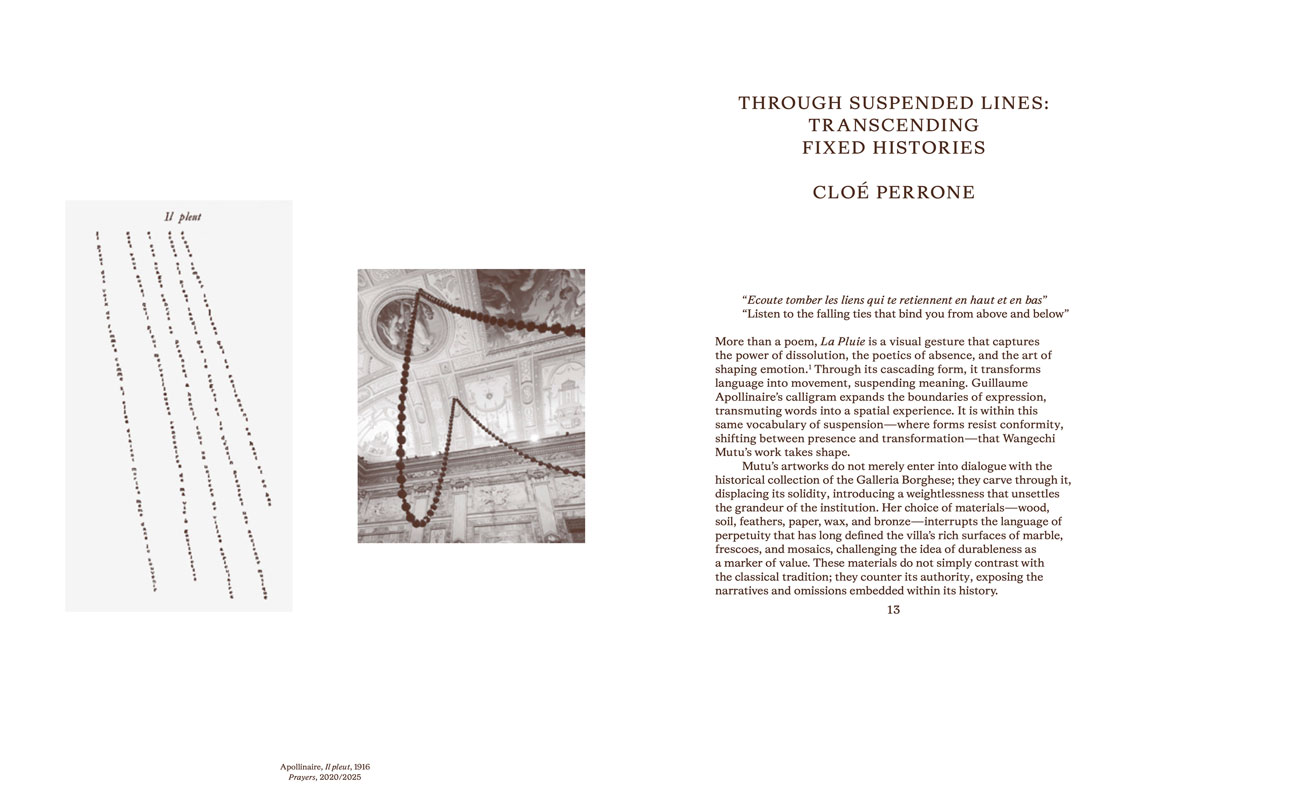
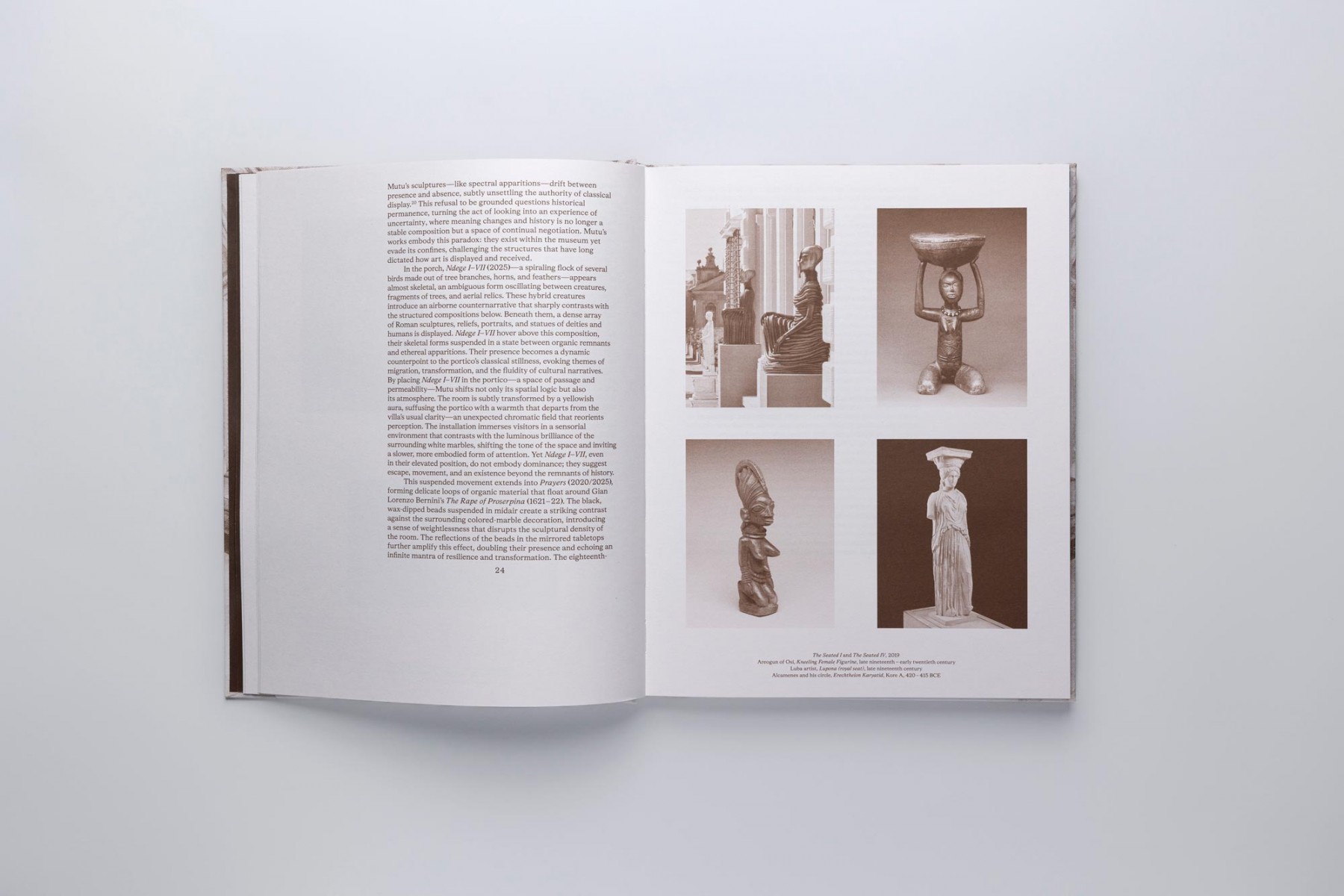
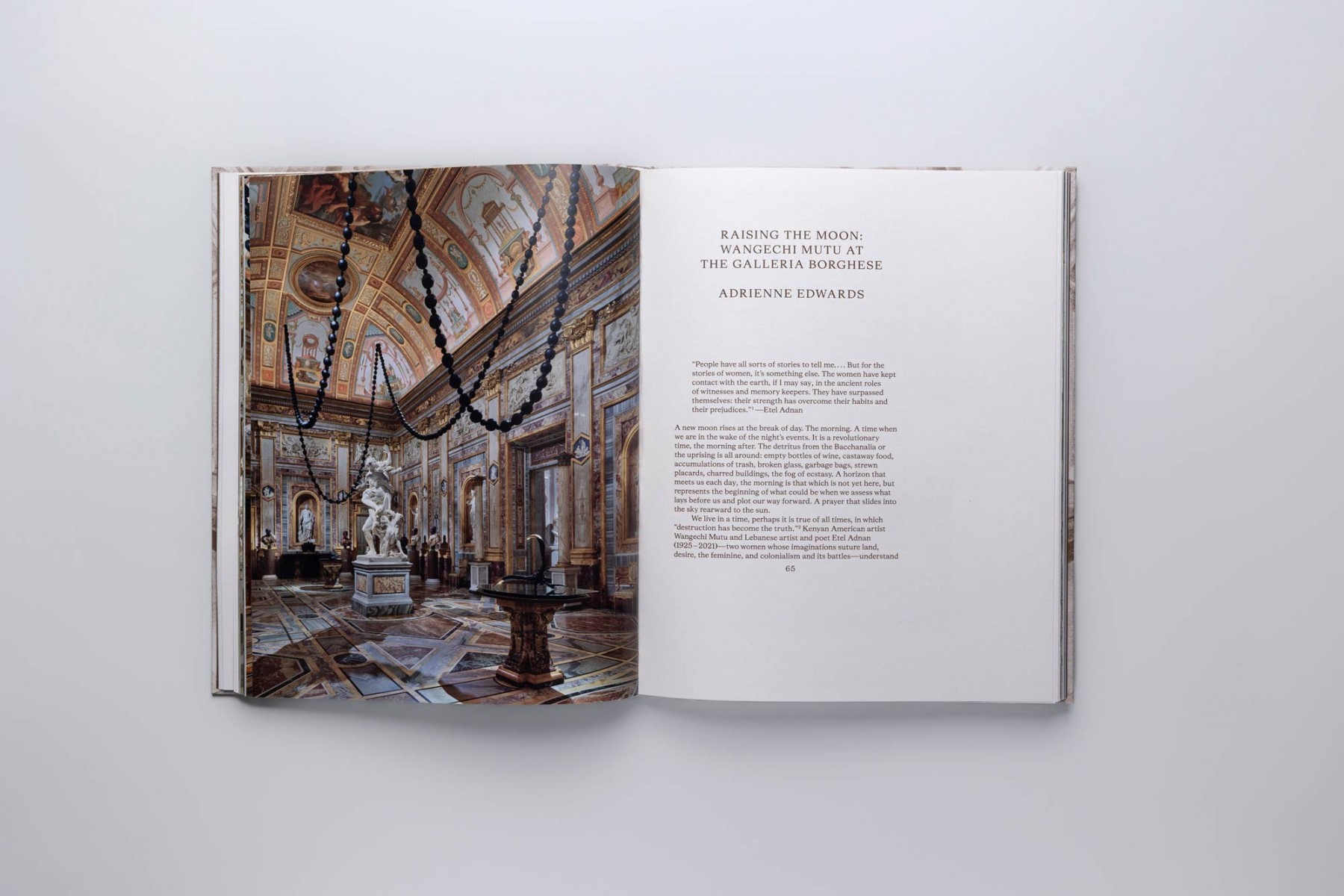
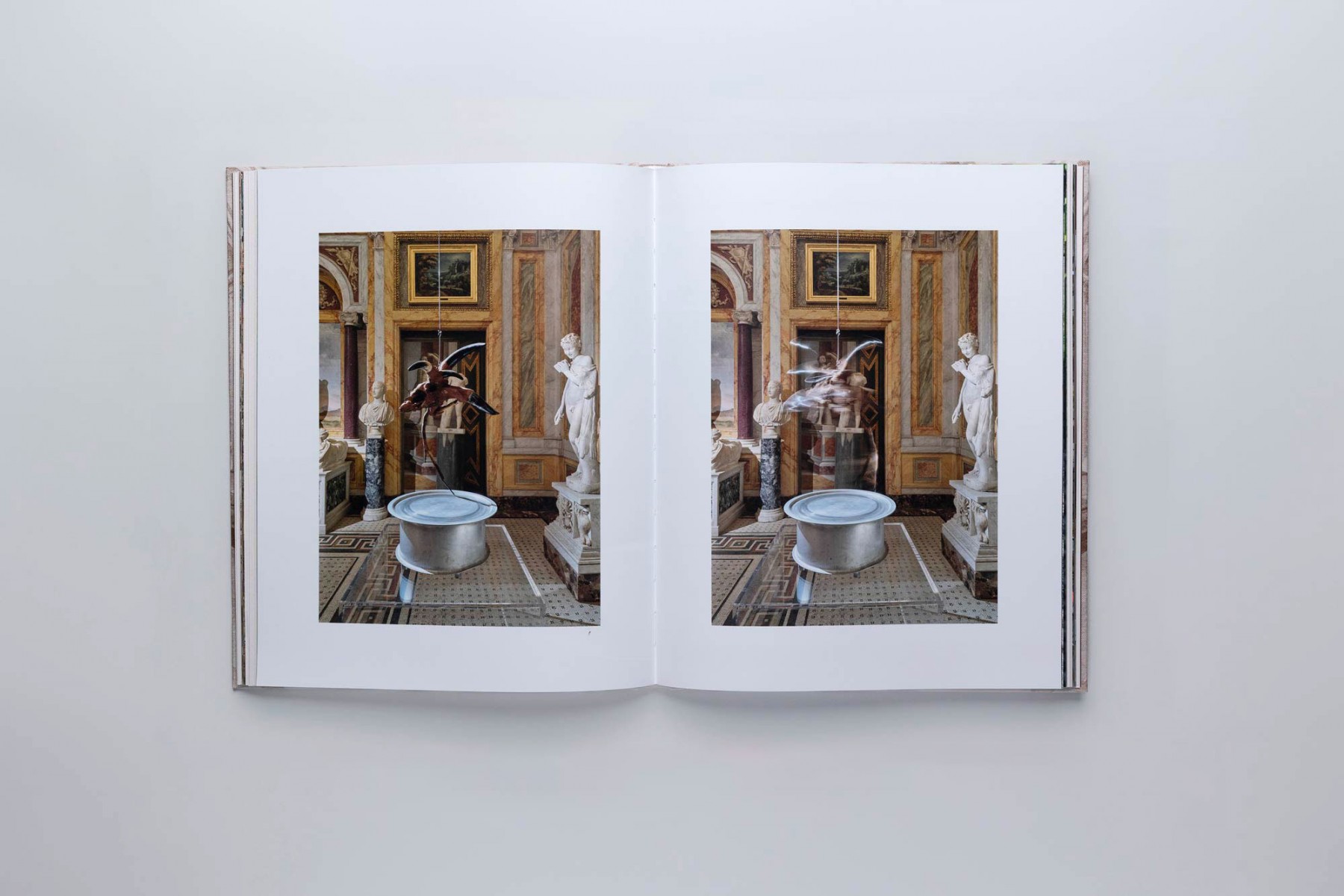
Wangechi Mutu’s intervention introduces a new vocabulary into the historical and symbolic architecture of the Galleria Borghese. Through sculpture, installation, and moving image, the artist proposes an innovative approach to the museum space—one that challenges hierarchy, permanence, and fixed meaning. Her works question the visual weight and authority of the collection through strategies of suspension, fluidity, and fragmentation. In doing so, the museum is no longer presented as a static container of objects, but as a living organism, in continuous transformation, shaped by loss, adaptation, and reconfiguration.
Accompanied by a text by curator Cloé Perrone analyzing the context and themes that informed the exhibition’s conception, the volume is enriched by four additional essays by Adrienne Edwards, Ekow Eshun, Francesco Freddolini, and Ilaria Puri Purini, as well as a conversation between Eshun and the artist. A rich selection of illustrations allows the readers to retrace the exhibition, which unfolded in the Gallery’s sumptuous rooms and gardens, all the way to its extramural presence at the American Academy.