The first major monograph on artist Jill Mulleady, whose paintings thread motifs of decay, memory, history, and private myth, featuring humans and animals enacting their instinctive psychological reactions to ever-present threats of danger.
The essays in this first-ever monograph dedicated to Swiss artist Jan Vorisek, alongside image portfolios of the exhibitions they explore and an appendix that features photos and documentation of Vorisek’s performances, recordings and ephemera, grant us unprecedented access to the private fictions that the work reveals.
Since the 1990s Costa has been challenging hierarchies of art production and the fetishization of the “finished” artwork, inviting viewers to reconsider what is discarded, both materially and socially. Through over 300 artworks, accompanied by new writing, this catalogue explores Adriano Costa’s work, a meditation on transformation—of objects, meanings, and systems of value.
This richly illustrated book considers the dazzling oeuvre of choreographer and dancer Marlene Monteiro Freitas. In line with her creative methodology, Alexandra Balona unfolds an “atlas of affects” through five emblematic dance pieces that reveal the intensity, humor, and humanity of one of today’s most radical choreographic voices.
Invited to present an exhibition at the Galleria Borghese in Rome, Kenyan-American artist Wangechi Mutu has developed an innovative approach to museum space, challenging hierarchy, permanence, and fixed meanings. With in-depth essays and a rich selection of illustrations, this catalog retraces that exhibition and explores the themes and concerns that have long characterized the artist’s practice.
Invitata a concepire una mostra alla Galleria Borghese, l’artista keniota-americana Wangechi Mutu ha sviluppato un approccio innovativo allo spazio museale, confrontandosi con le gerarchie, la permanenze e le sedimentazioni del contesto. Attraverso saggi approfonditi e una ricca selezione di illustrazioni, questo catalogo ripercorre la mostra ed esplora i temi e le preoccupazioni che da tempo caratterizzano la pratica dell’artista.
Edited by Andrea Bellini and Nora N. Khan
Texts by Basel Abbas & Ruanne Abou-Rahme, Andrea Bellini, Danielle Brathwaite-Shirley, Giacomo Castagnola, Sheila Chiamaka Chukwulozie, Cairo Clarke, Tamar Clarke-Brown, Hajra Haider Karrar, Aziz Hazara, Nasrin Himada, Interspecifics, Will Jennings, Nora N. Khan, Michael Kurtz, Lauren Lee McCarthy, Luc Meier, Margarida Mendes, Harlan Levey, Shuang Li, Alessandro Rabottini, Sahej Rahal, Francesca Recchia, Elvia Wilk
Designed by Lorenzo Mason Studio
2026, English, softcover, 24 x 29 cm, 272 pages
ISBN 979-12-80579-87-4
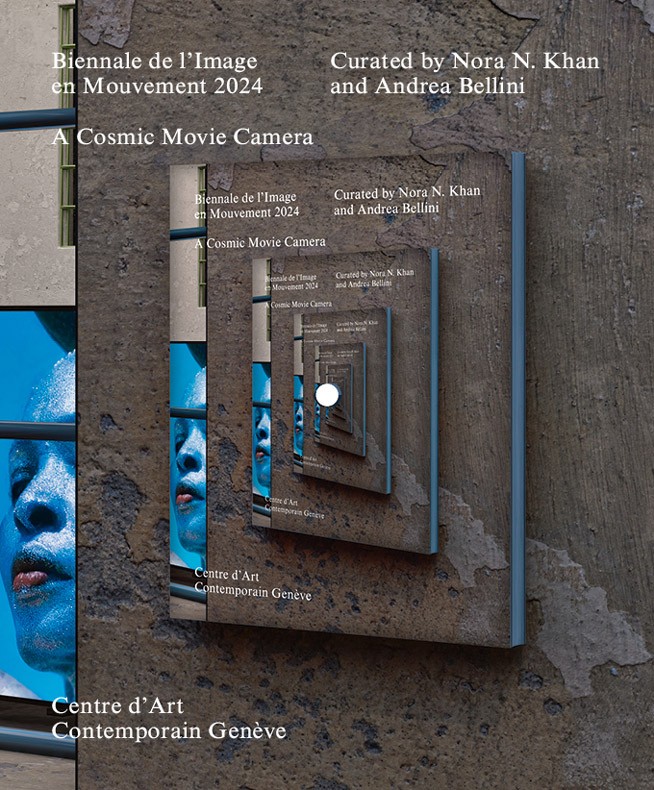
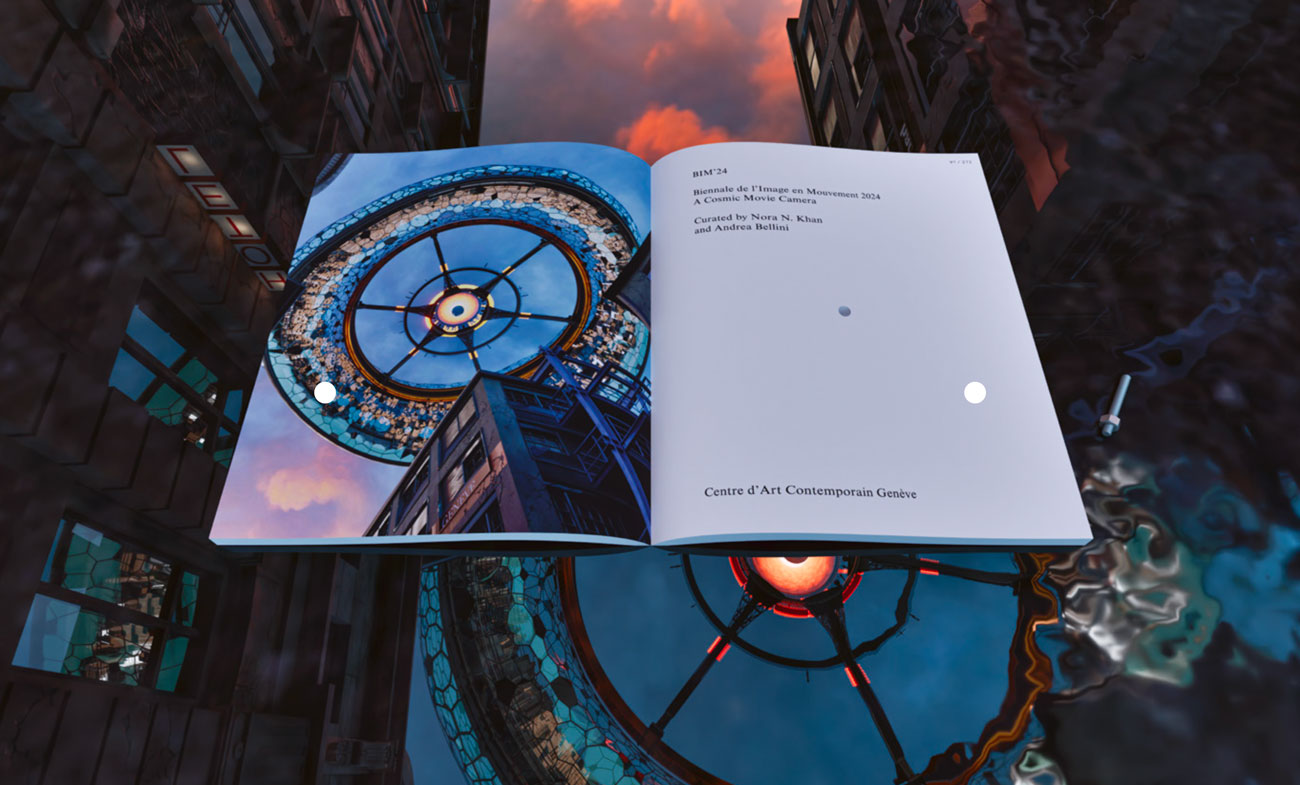
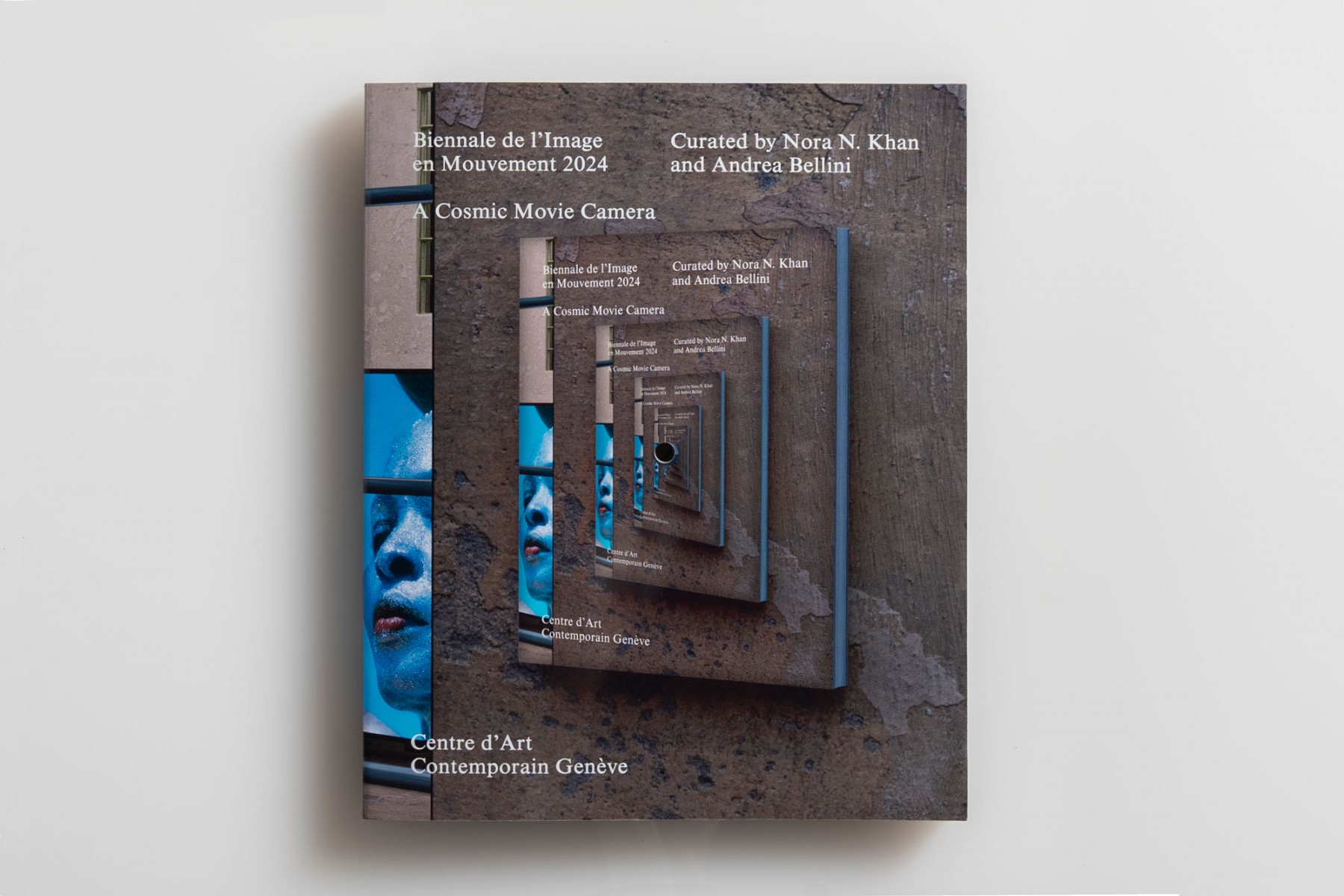
Curated by Nora N. Khan and Andrea Bellini, the 18th edition of the Biennale de l’Image en Mouvement 2024 (BIM’24), produced and hosted by the Centre d’Art Contemporain Genève from January 24 to May 16, 2024, is titled A Cosmic Movie Camera. This title draws inspiration from the discovery by astrophysicists of a ring of photons around a black hole, which potentially represents the visible medium through which humanity could deepen its understanding of the interior of black holes—the epitome of the unknown.
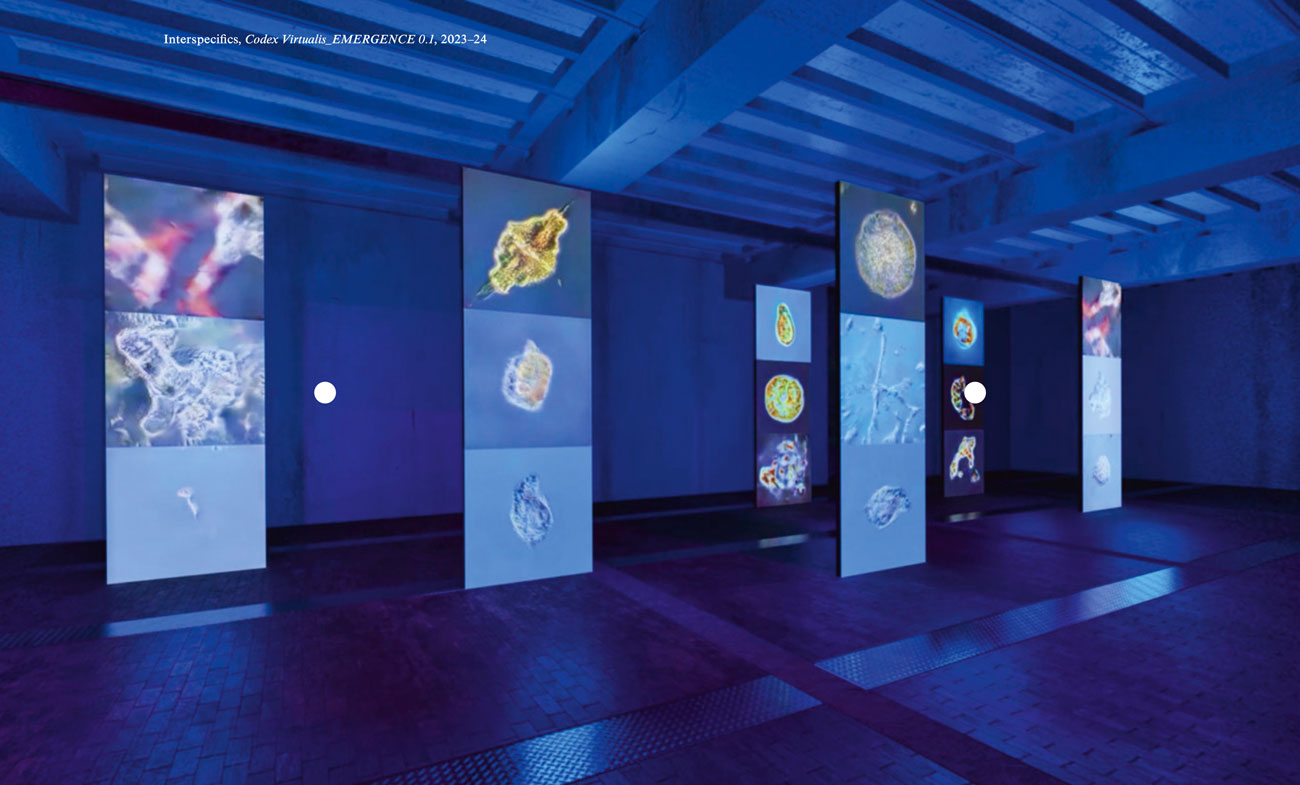
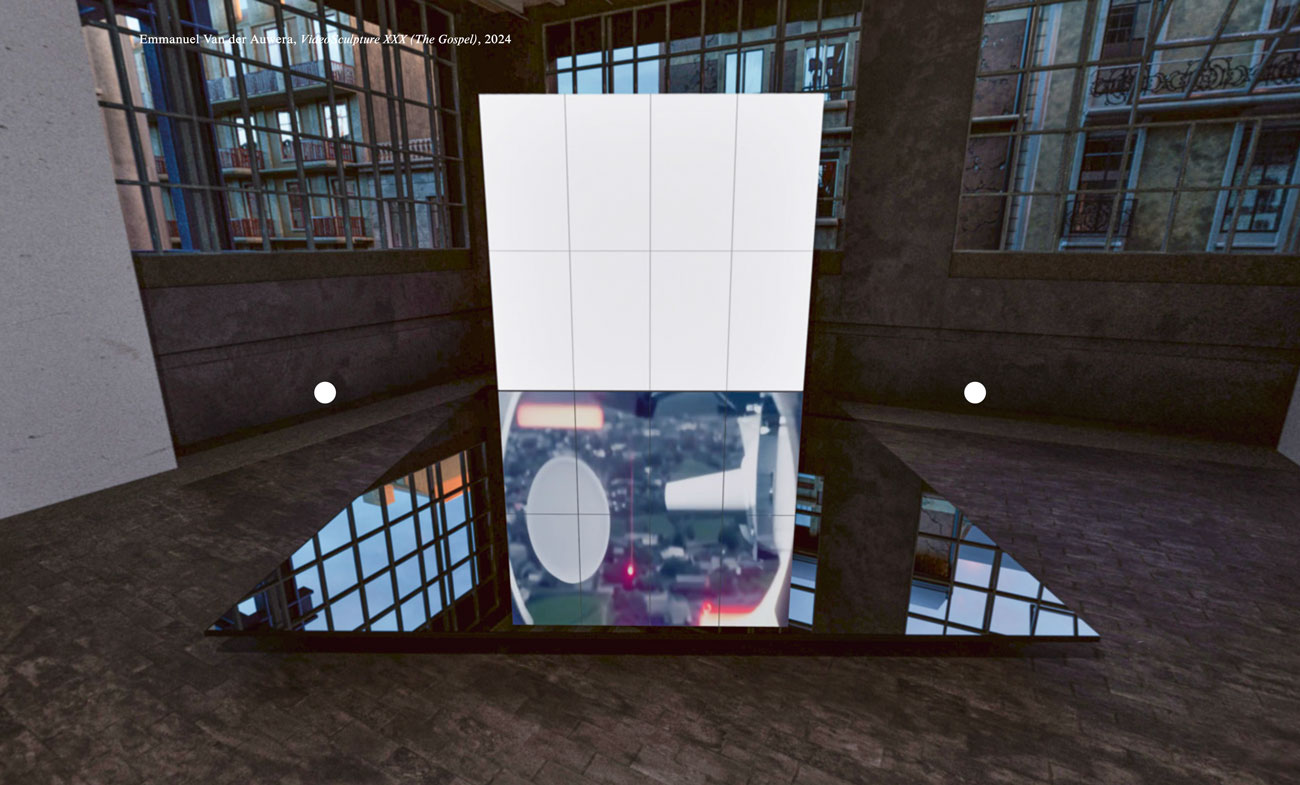
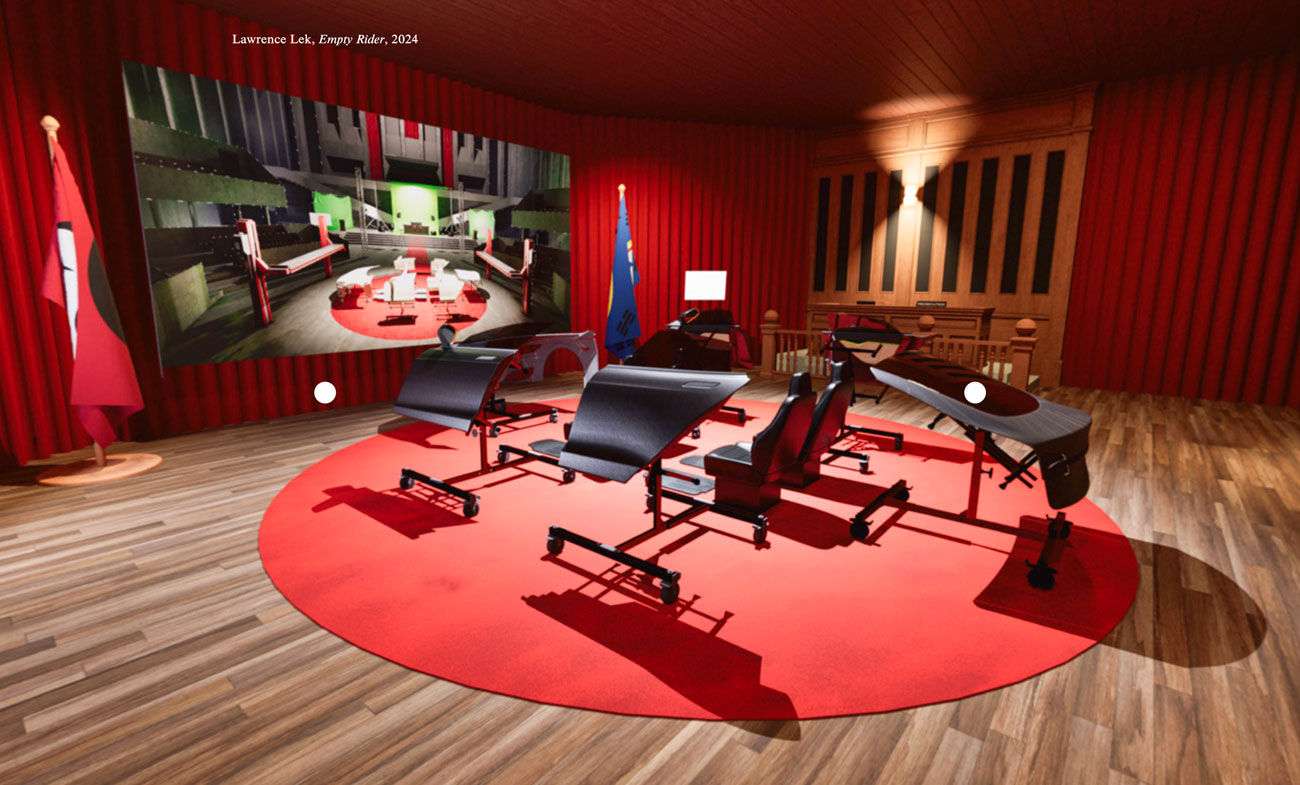
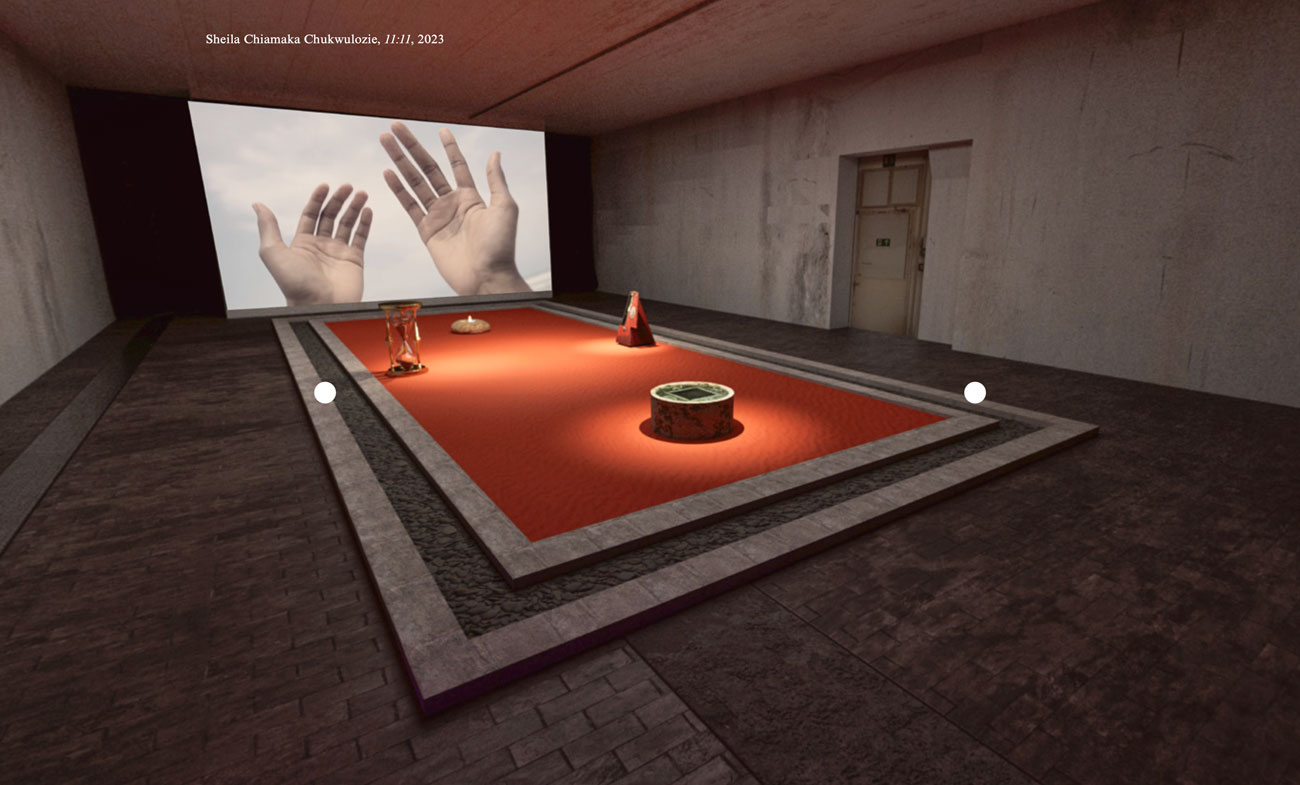
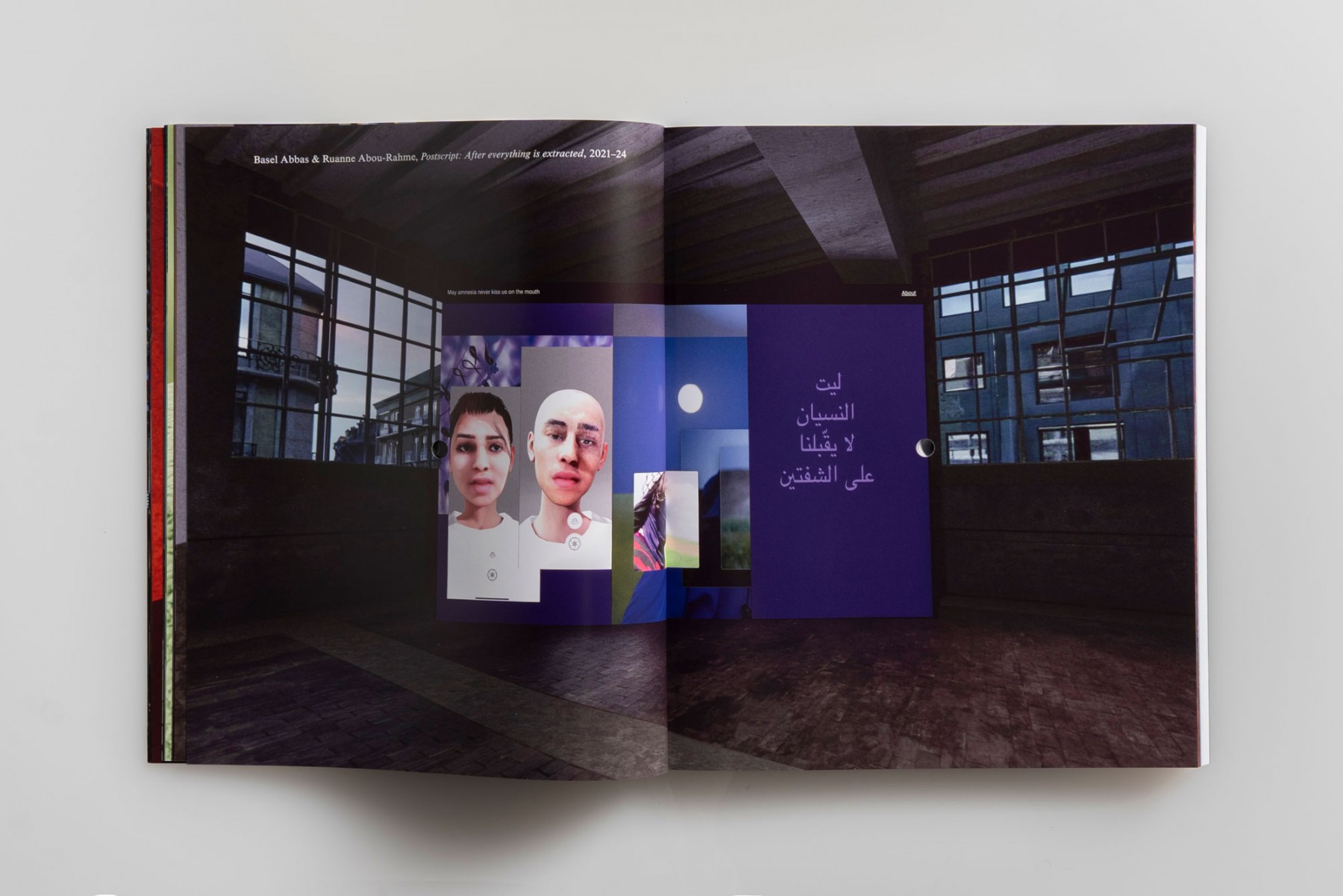
The exhibition presented works, specifically commissioned for the occasion, by Basel Abbas & Ruanne Abou-Rahme, alfatih, American Artist, Danielle Brathwaite-Shirley, Sheila Chiamaka Chukwulozie, Formafantasma, Aziz Hazara, Interspecifics, Lawrence Lek, Shuang Li, Diego Marcon, Lauren Lee McCarthy, Sahej Rahal, Jenna Sutela, Emmanuel Van der Auwera, and an exhibition display conceived by Giacomo Castagnola. The works on show explore the concepts of the invisible and the unknown, as expressed through aesthetics, the use of technology, and a wide variety of sensibilities.
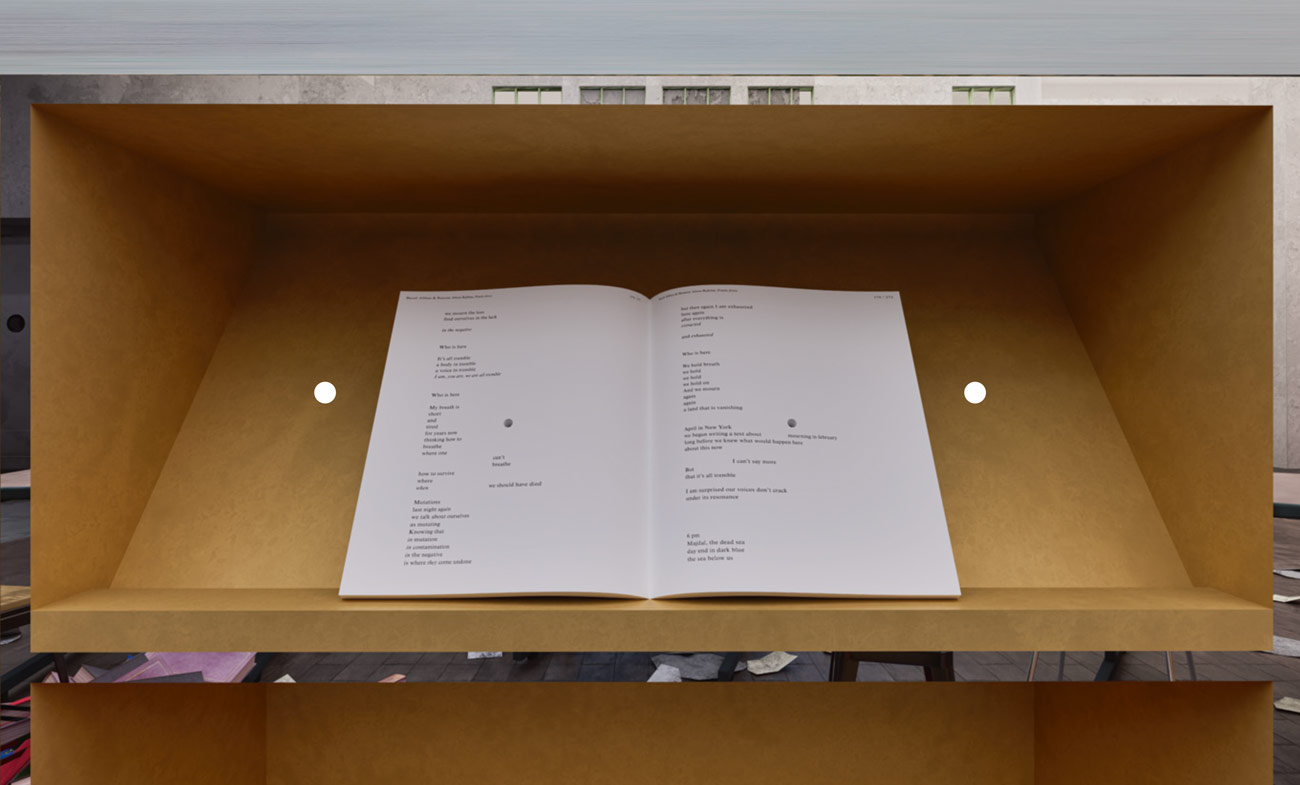
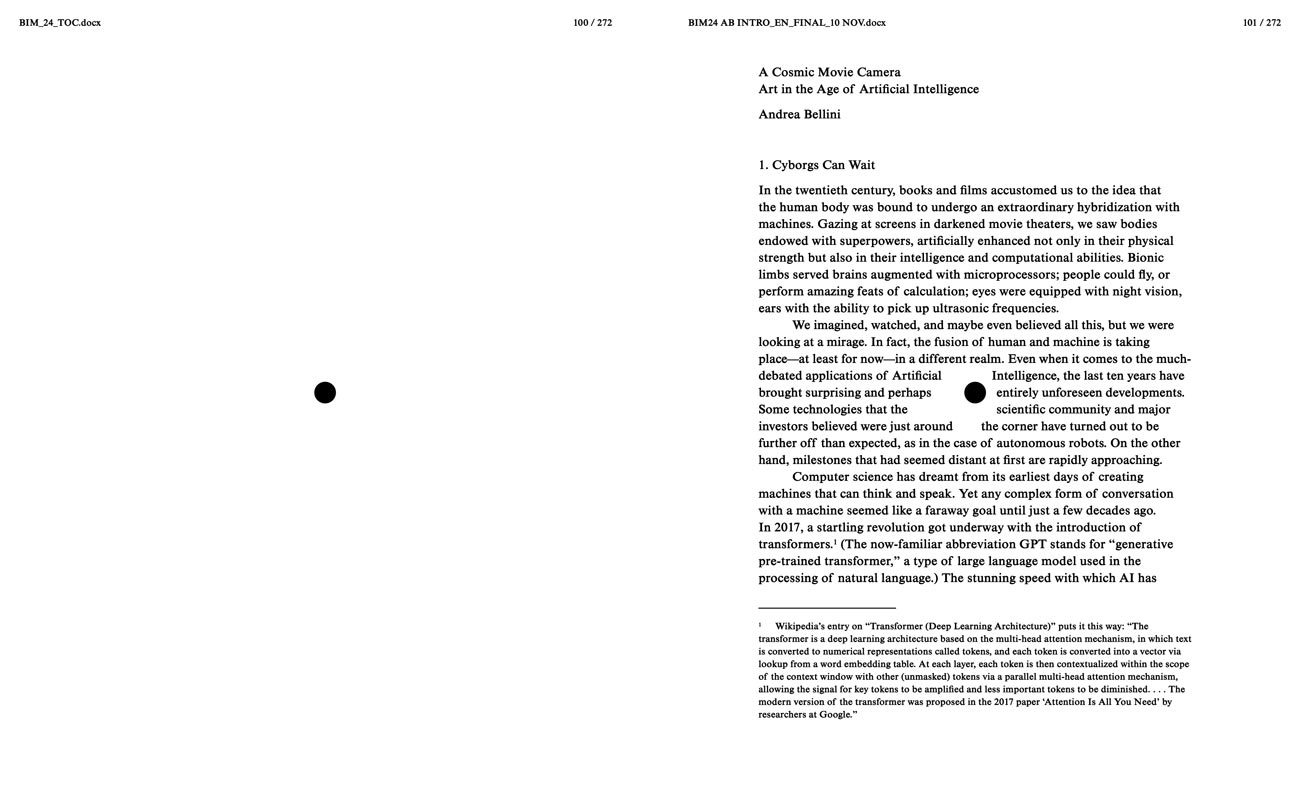
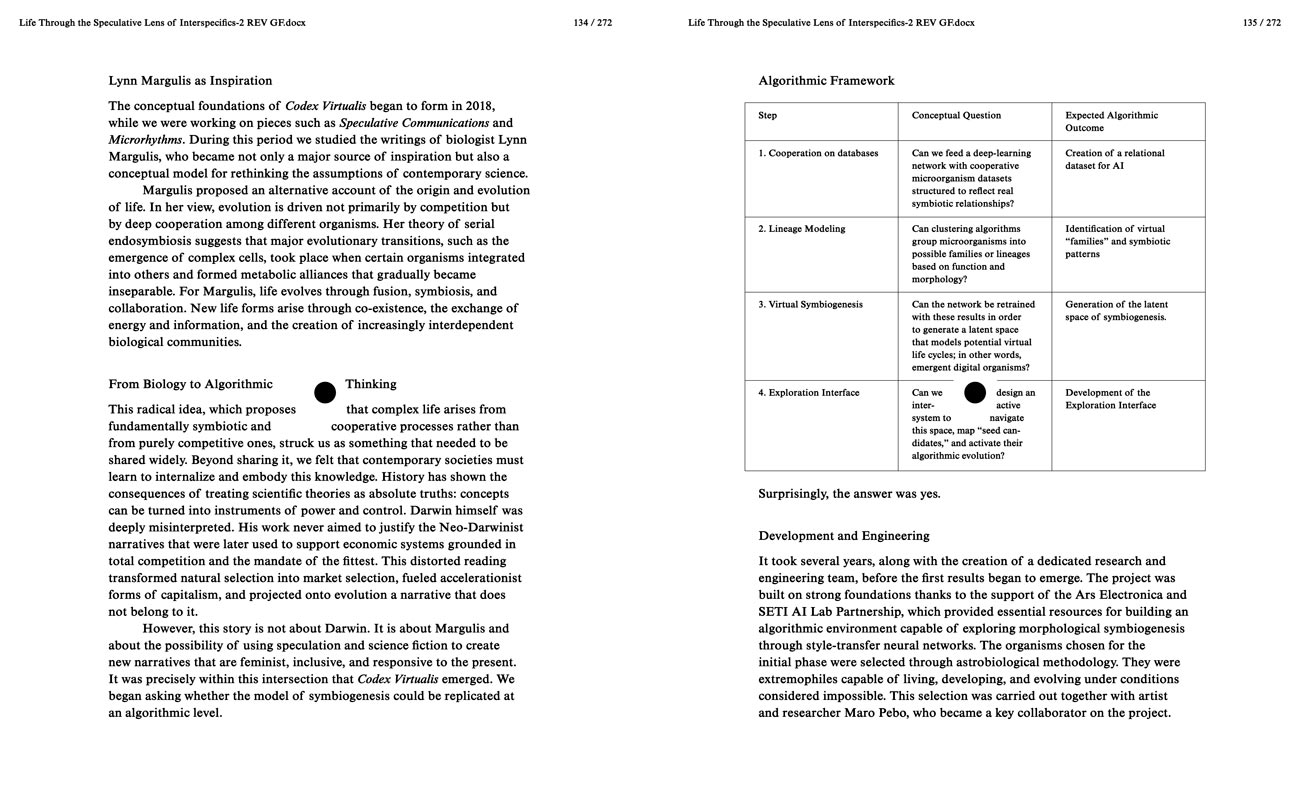
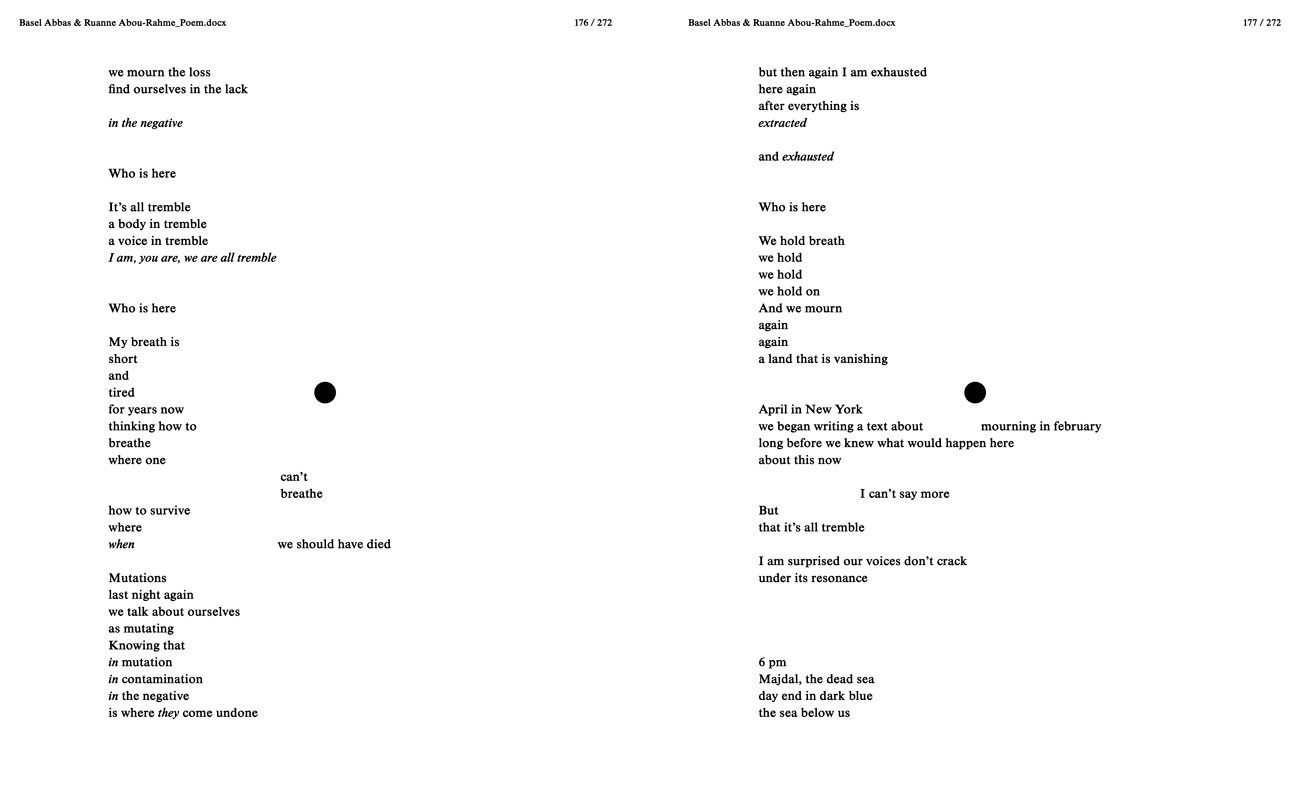
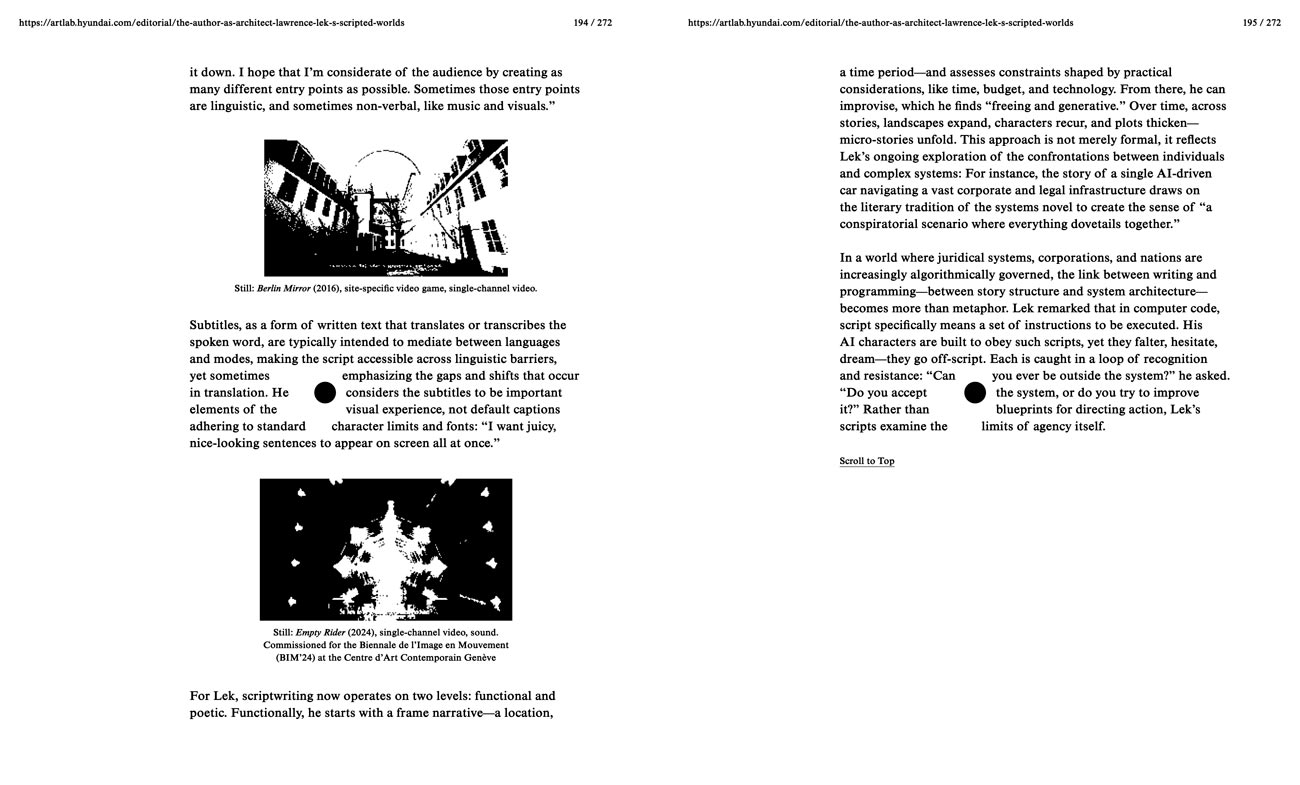
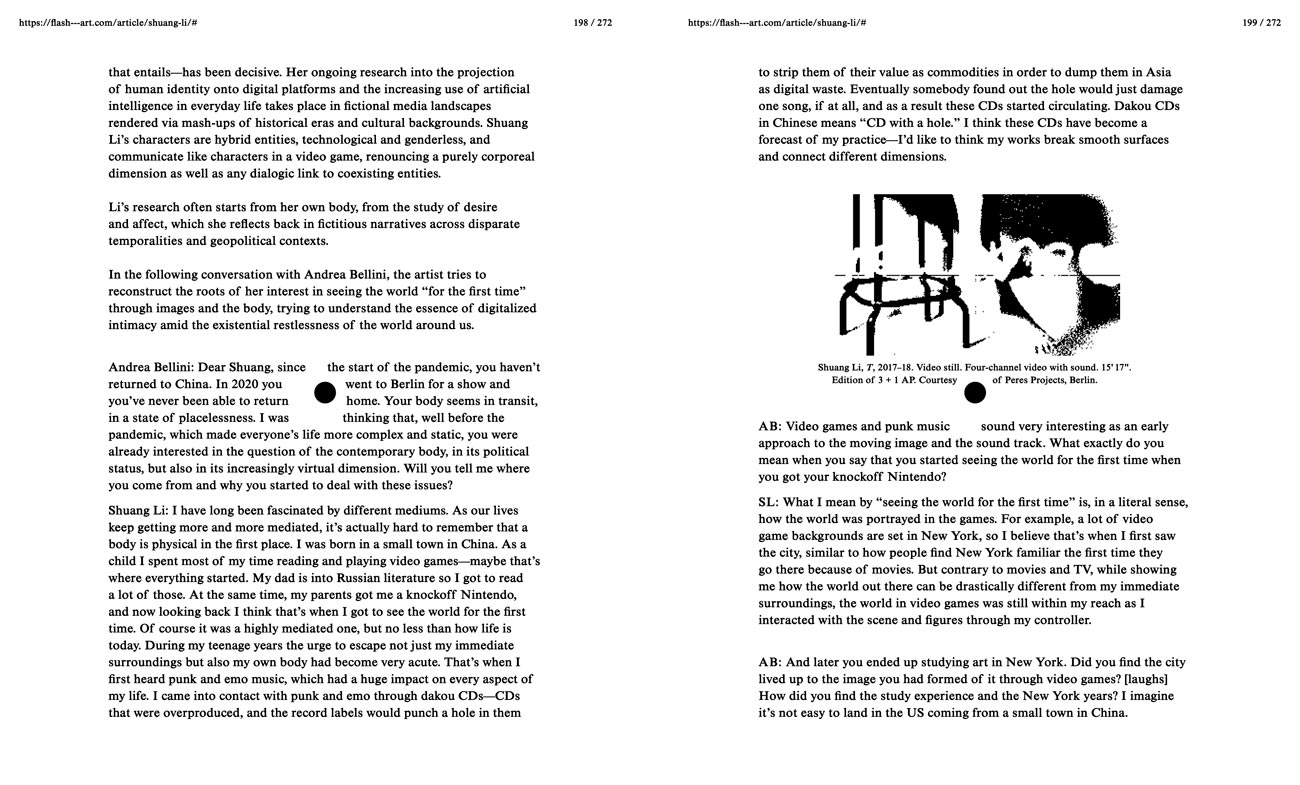
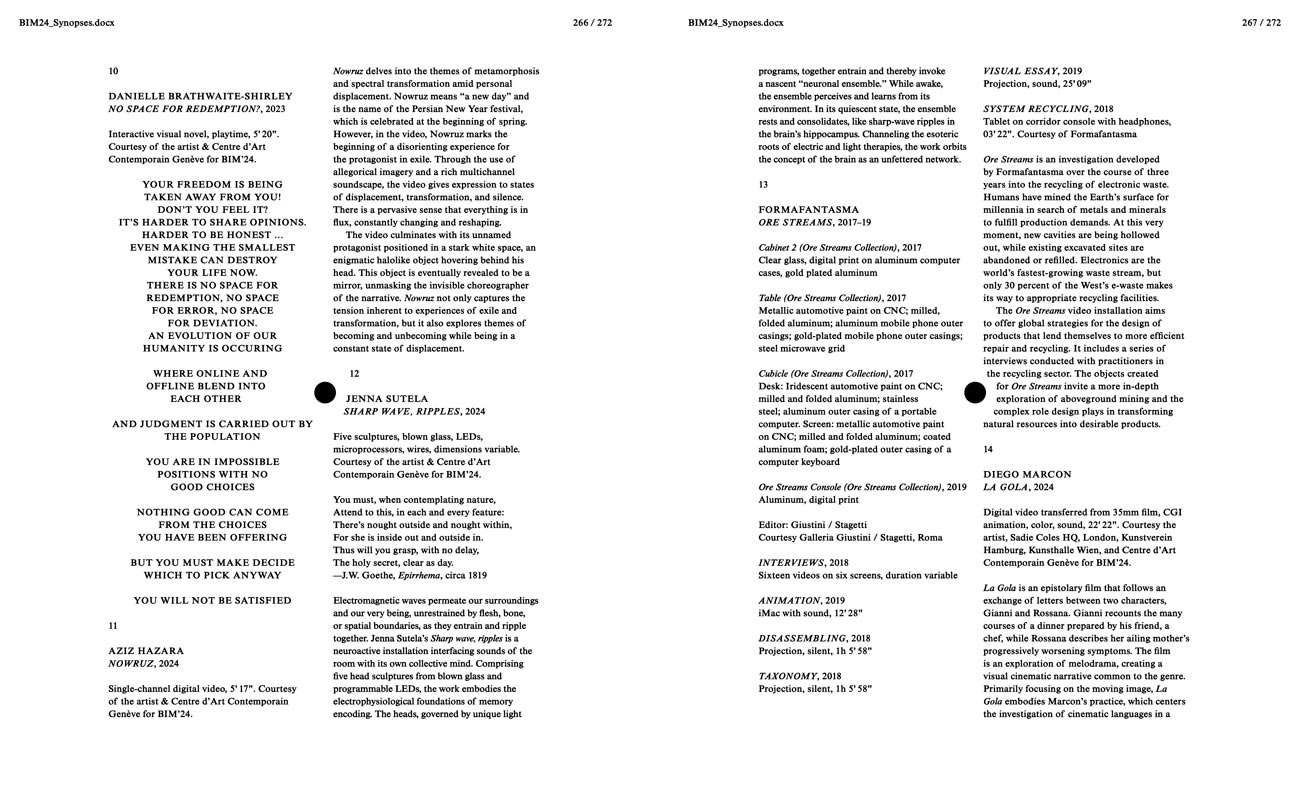
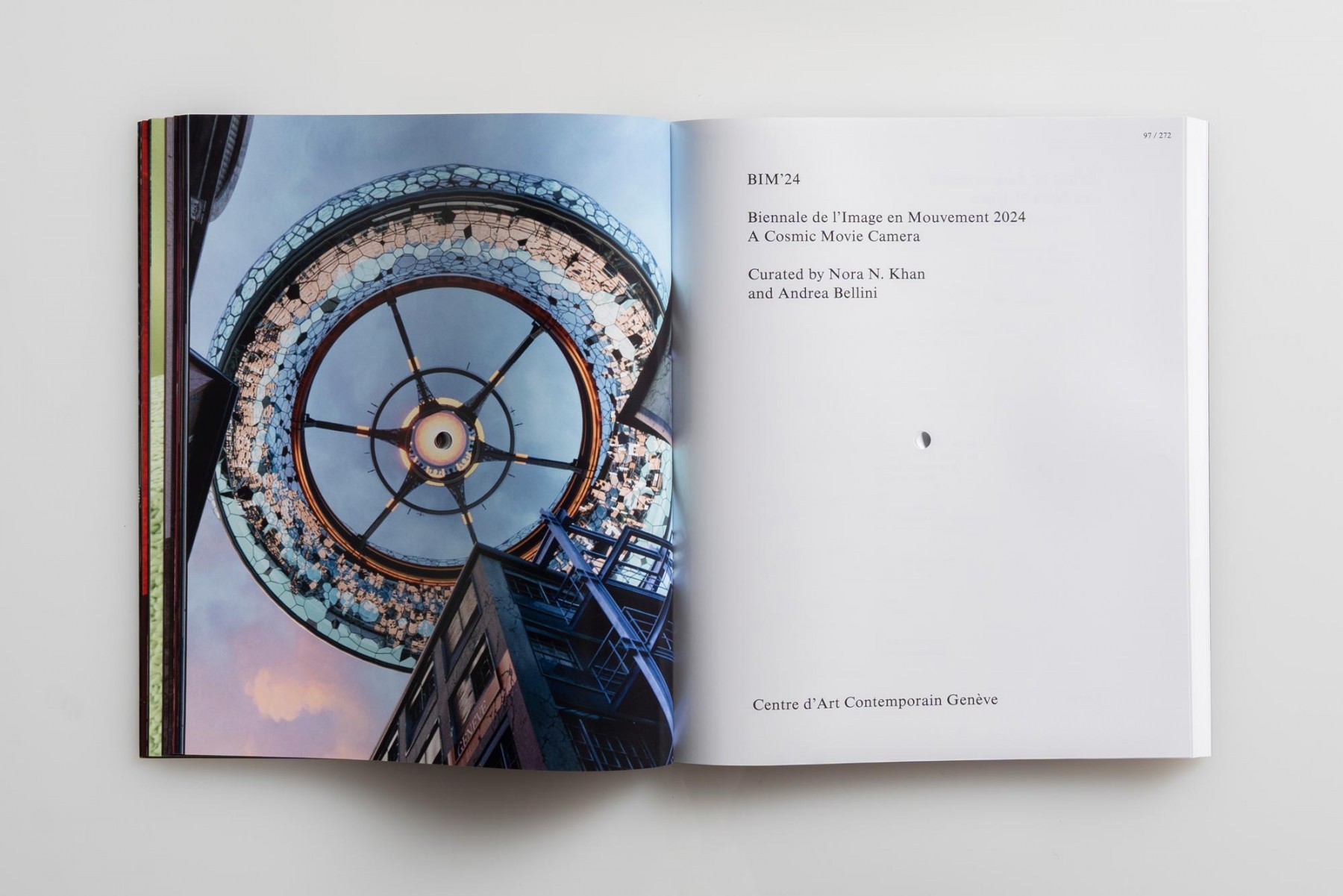
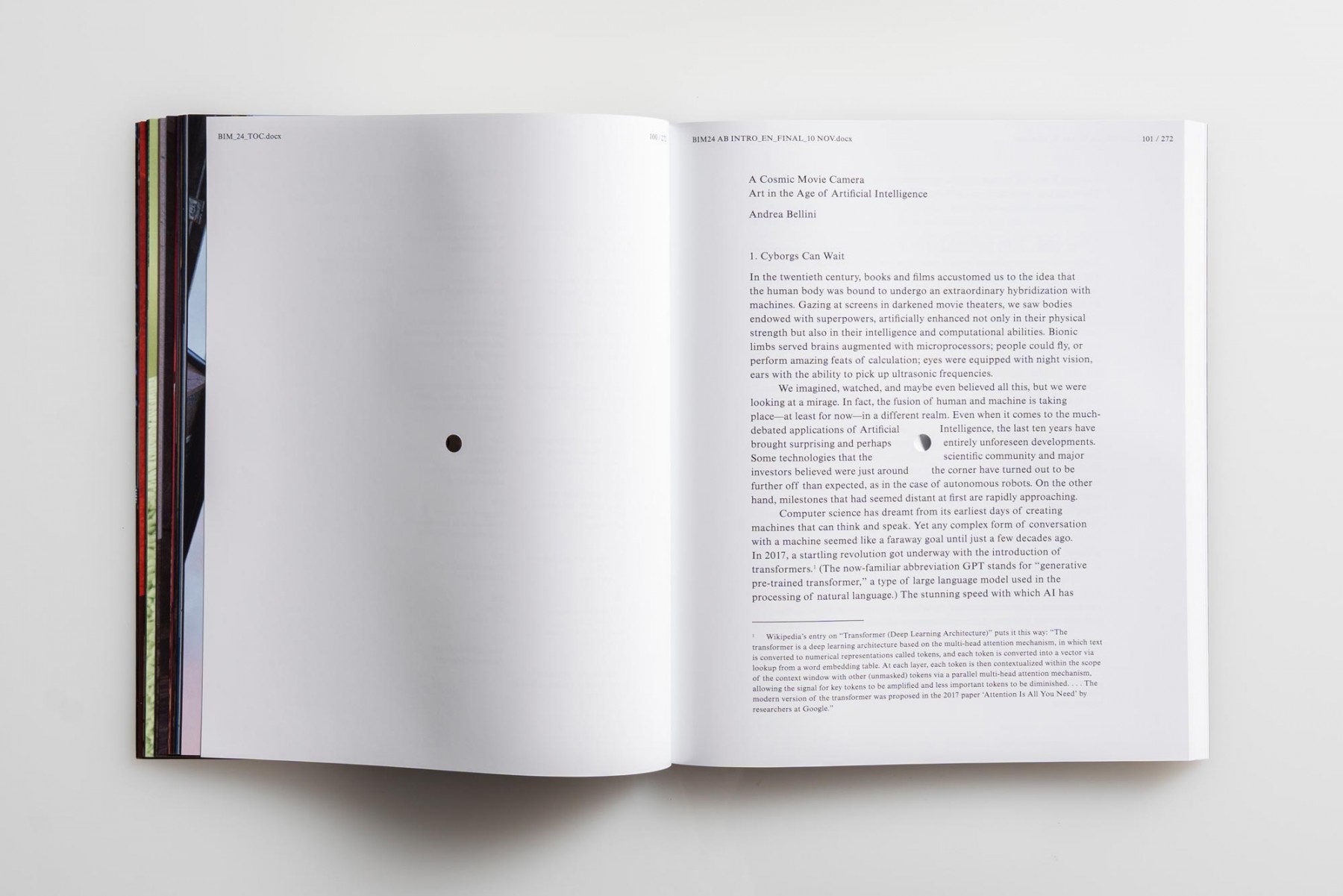
The catalogue documenting the exhibition was conceived as a “binder” of the future, as indicated by the holes that run through the publication, from front to back. The book collects various types of texts relating to the artists participating in the Biennale—reviews, essays, interviews, poems, emails, and texts written for the occasion—with a view to creating a paper archive that may preserve the memory of the project in a dystopian future: inside a spaceship or in the building of the Centre d’Art Contemporain Genève, transformed in the distant future.
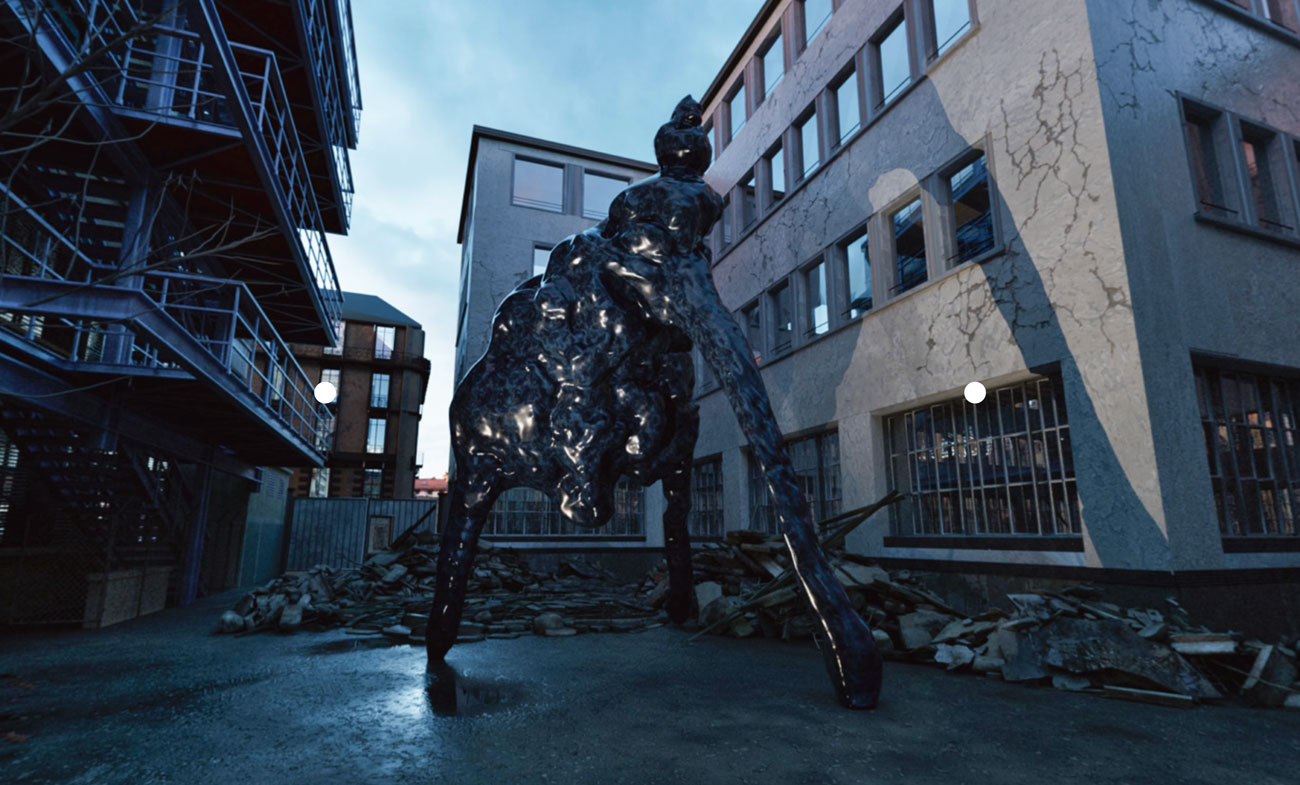
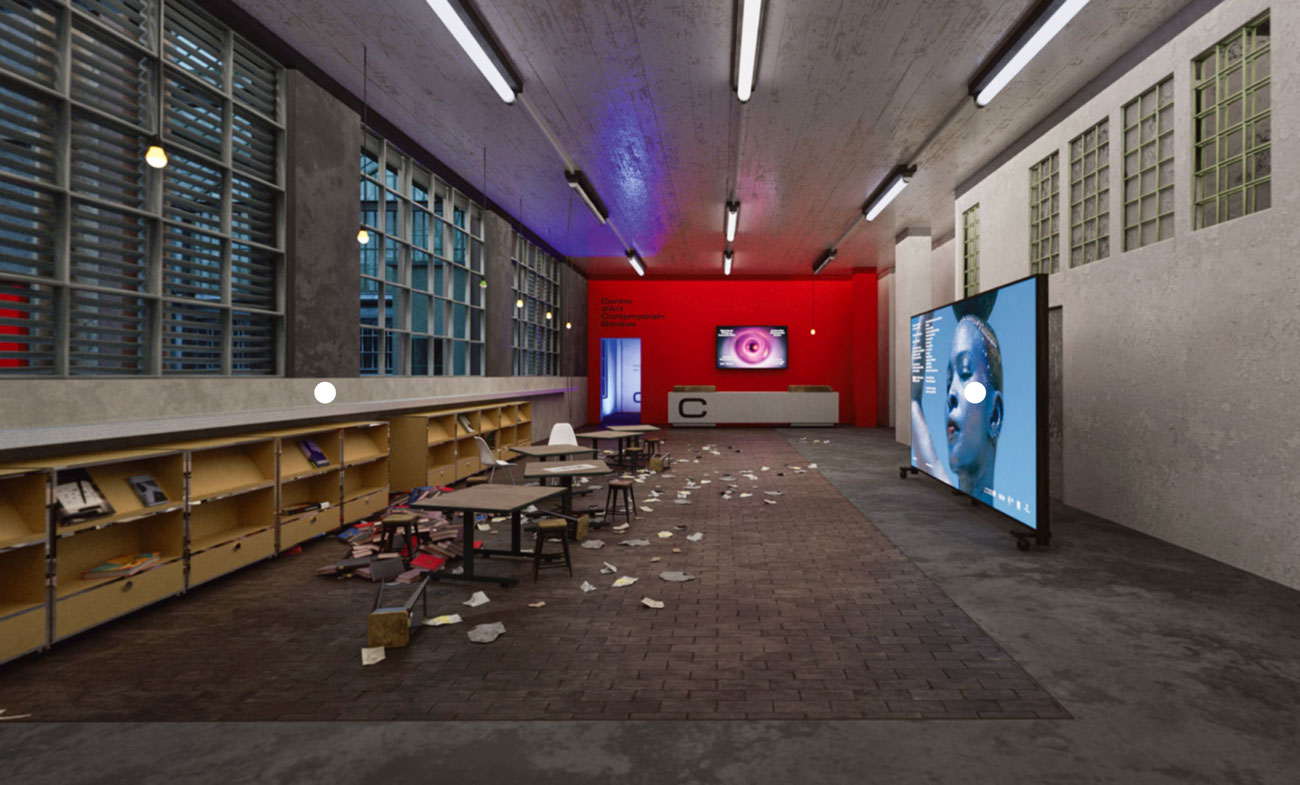
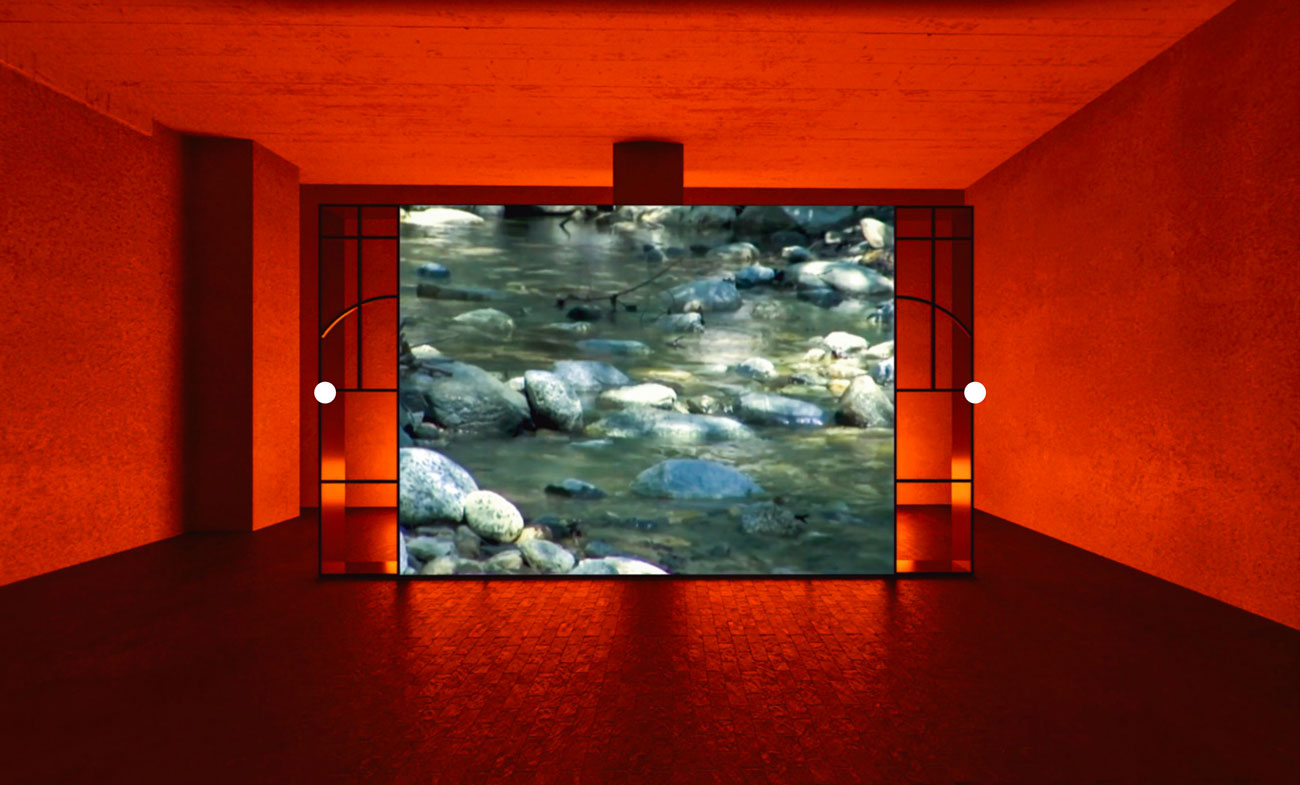
The visual essay that projects the works into a virtual context was designed by EPOCH, who also created the website hosting the ongoing virtual exhibition (bim24.ch). The catalogue’s combination of print and digital formats, the real and the virtual, the past and the future, conveys the conceptual core of the Biennale, which explores the inextricable intertwining of AI, digital culture, and art in the contemporary world.