Between an artist’s book and a catalogue, this publication follows up on Armleder’s multidimensional exhibition at KANAL in 2020–21. Through archival pictures and in depth conversations, the book is designed to recreate the immersive experience of this collective experiment, and proposes a dive into something akin to a large self-portrait, conceived through the works of more than a hundred artists.
This artist’s book reflects Eva & Franco Mattes’ continued interest in the condition of displacement to be sensed in Fukushima. Borrowing the format of wrapping-paper catalogs, it contains twenty large pre-perforated sheets, each of which features a photographic texture—a seamlessly repeating motif captured by the camera amid the radioactive ruins of the contaminated towns and countryside.
The album brings together the music composed by Federico Chiari for various film and video works by Diego Marcon, including Monelle (2017), Ludwig (2018), The Parents’ Room (2021), and Dolle (2023). The album comes with a booklet containing lyrics and images that provide a deeper insight into this unique, profoundly intertwined collaboration between Chiari and Marcon.
This small anthology reviews some of the central themes of Diego Marcon’s research: from the role of the display in exhibitions to his relationship with cinema, from the use of special effects and animatronics to the sense of community established through his work. Glassa accompanies the exhibition of the same name designed by the artist for the spaces of the Centro per l’arte contemporanea Luigi Pecci in Prato.
Strata raccoglie 37 conversazioni con artisti il cui lavoro ha dato un contributo significativo alla scena artistica italiana e internazionale a partire dal 2000. Questo libro è il resoconto personale di una serie di incontri, amicizie e relazioni professionali che Vincenzo de Bellis e Alessandro Rabottini hanno coltivato negli ultimi vent’anni.
Strata compiles 37 conversations with artists whose work has made a significant contribution to the Italian and international art scene since 2000. This book is the personal account of a number of encounters, friendships, and professional relationships that Vincenzo de Bellis and Alessandro Rabottini have nurtured over the past twenty years.
Edited by Andrea Bellini and Nora N. Khan
Texts by Basel Abbas & Ruanne Abou-Rahme, Andrea Bellini, Danielle Brathwaite-Shirley, Giacomo Castagnola, Sheila Chiamaka Chukwulozie, Cairo Clarke, Tamar Clarke-Brown, Hajra Haider Karrar, Aziz Hazara, Nasrin Himada, Interspecifics, Will Jennings, Nora N. Khan, Michael Kurtz, Lauren Lee McCarthy, Luc Meier, Margarida Mendes, Harlan Levey, Shuang Li, Alessandro Rabottini, Sahej Rahal, Francesca Recchia, Elvia Wilk
Designed by Lorenzo Mason Studio
2026, English, softcover, 24 x 29 cm, 272 pages
ISBN 979-12-80579-87-4
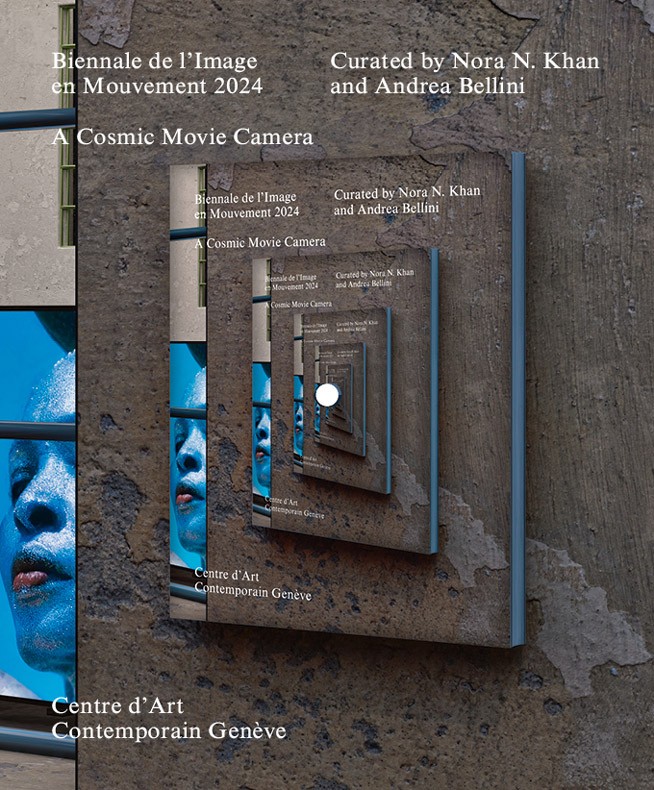
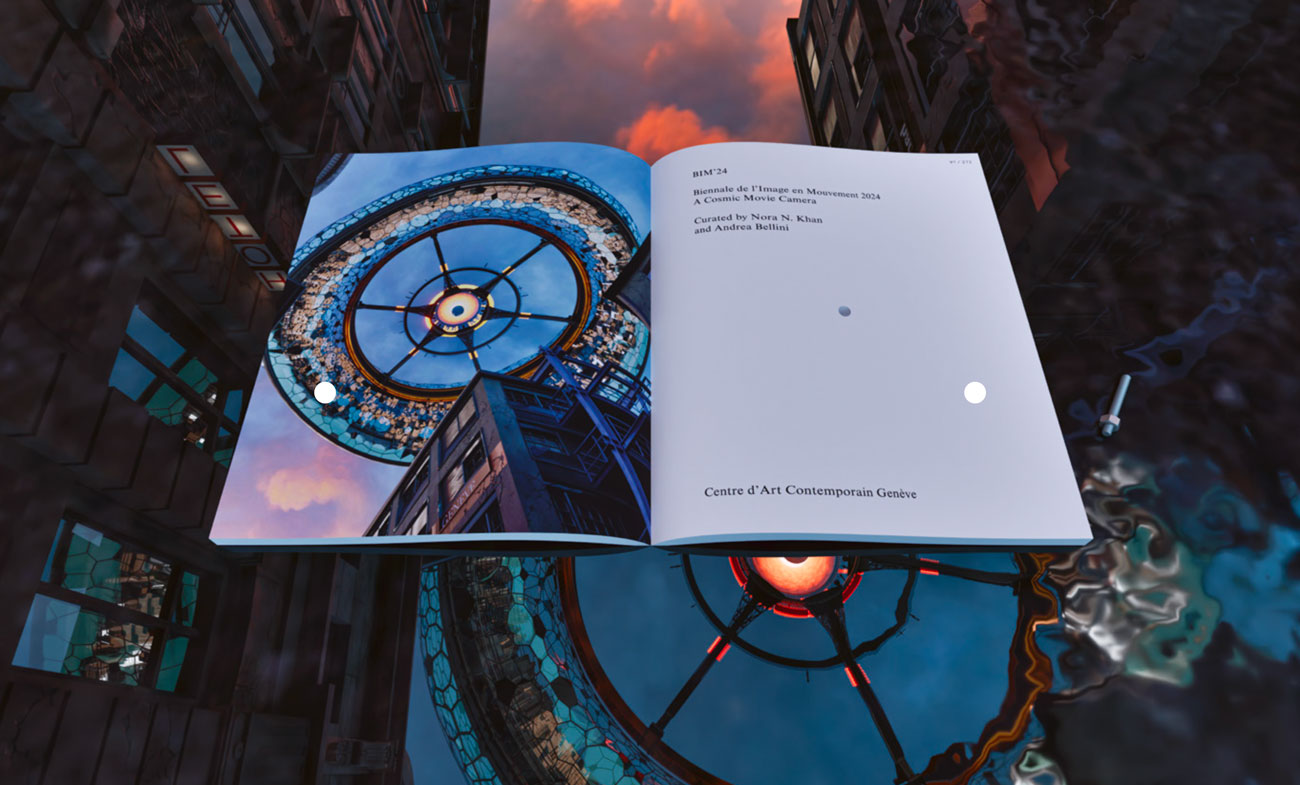
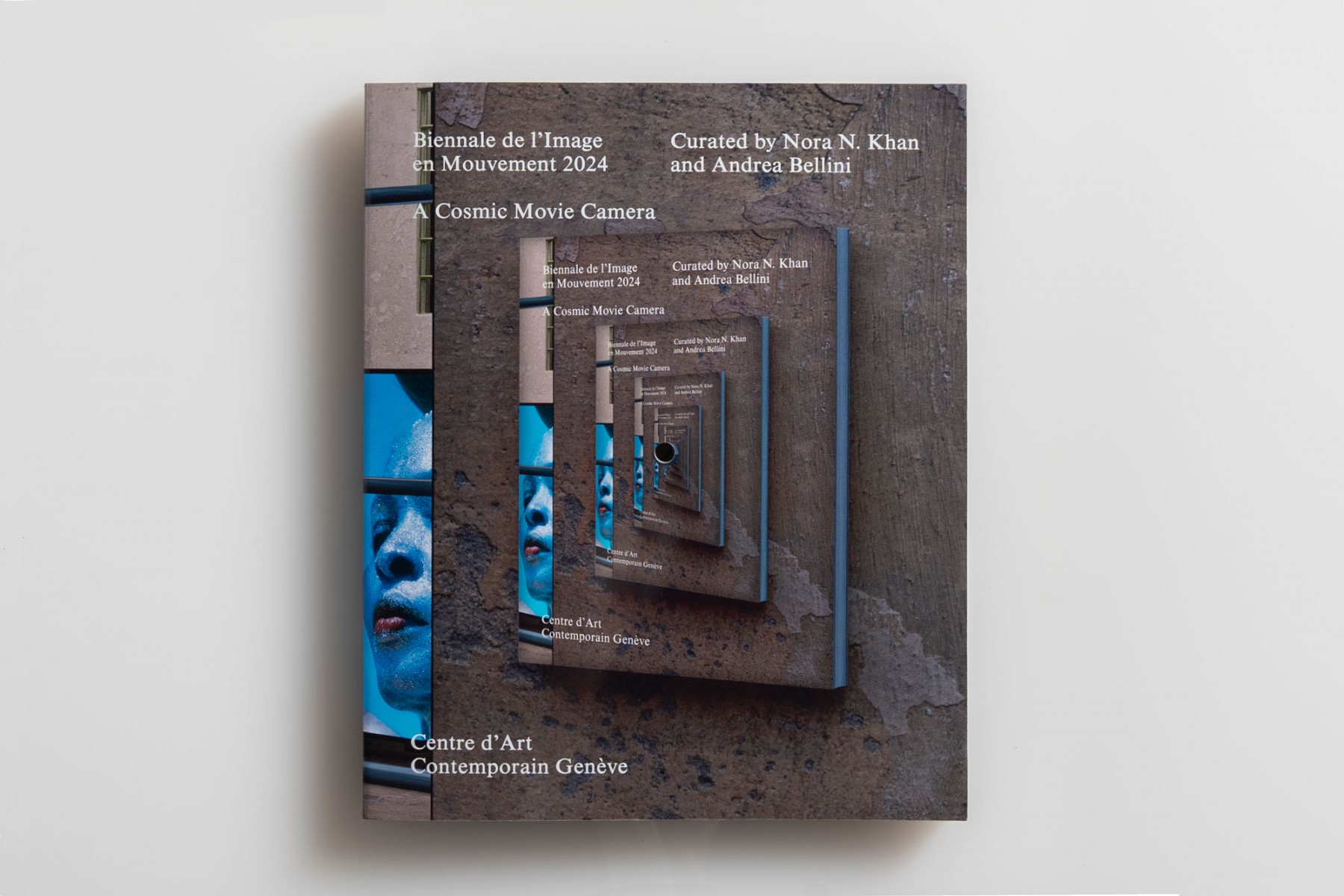
Curated by Nora N. Khan and Andrea Bellini, the 18th edition of the Biennale de l’Image en Mouvement 2024 (BIM’24), produced and hosted by the Centre d’Art Contemporain Genève from January 24 to May 16, 2024, is titled A Cosmic Movie Camera. This title draws inspiration from the discovery by astrophysicists of a ring of photons around a black hole, which potentially represents the visible medium through which humanity could deepen its understanding of the interior of black holes—the epitome of the unknown.
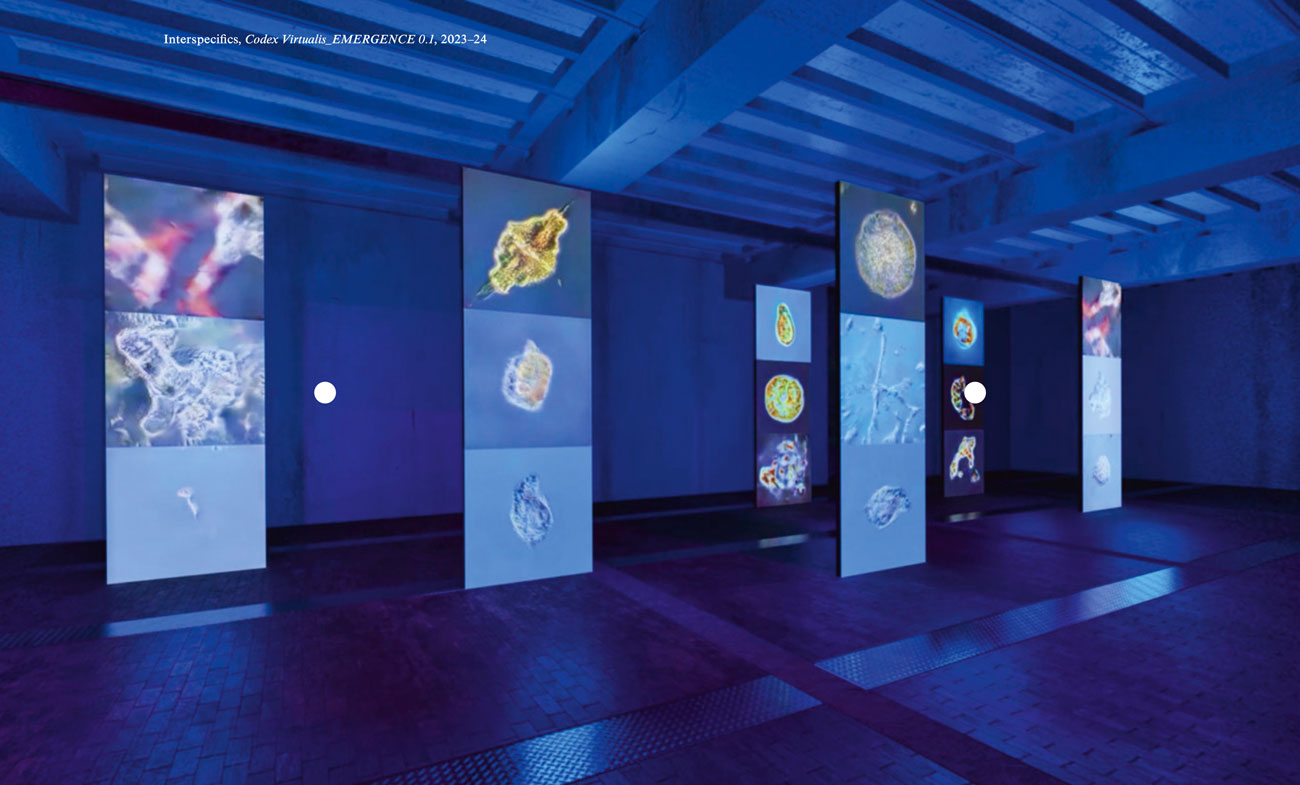
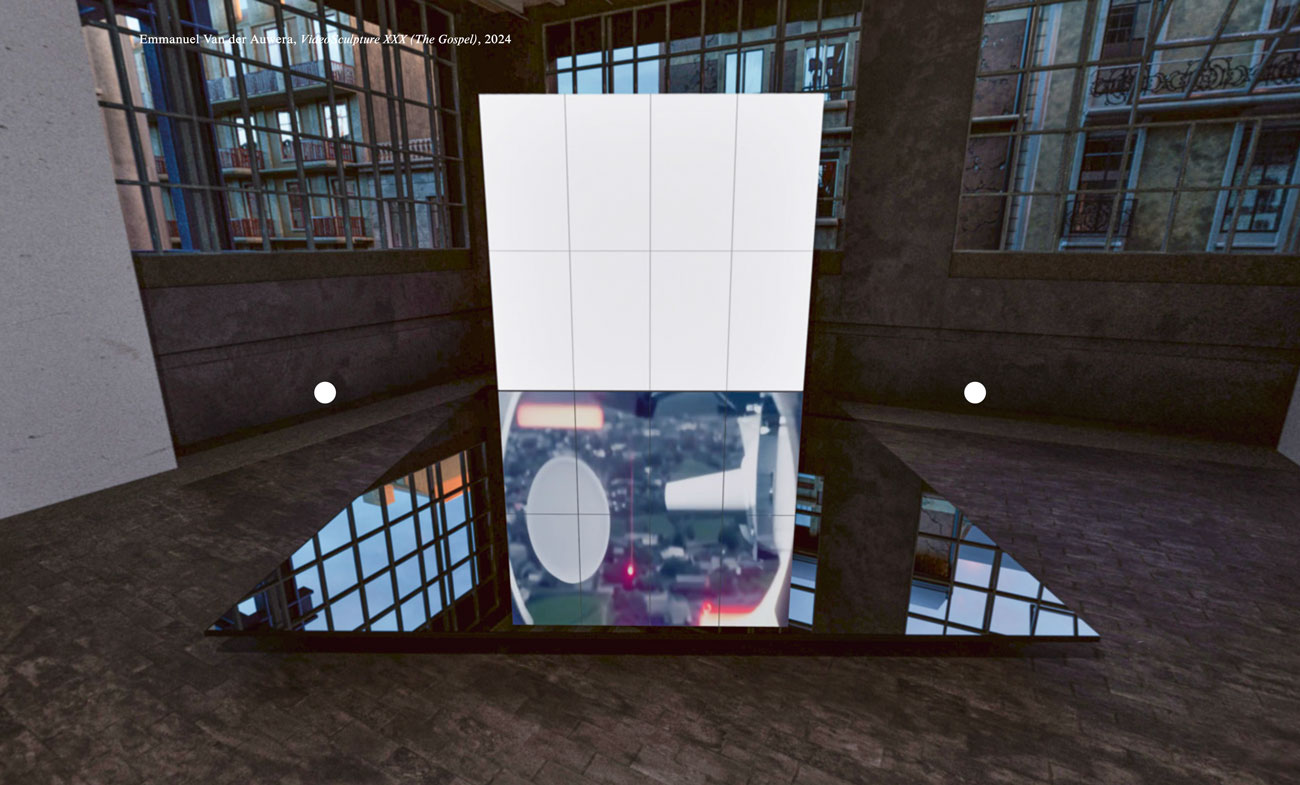
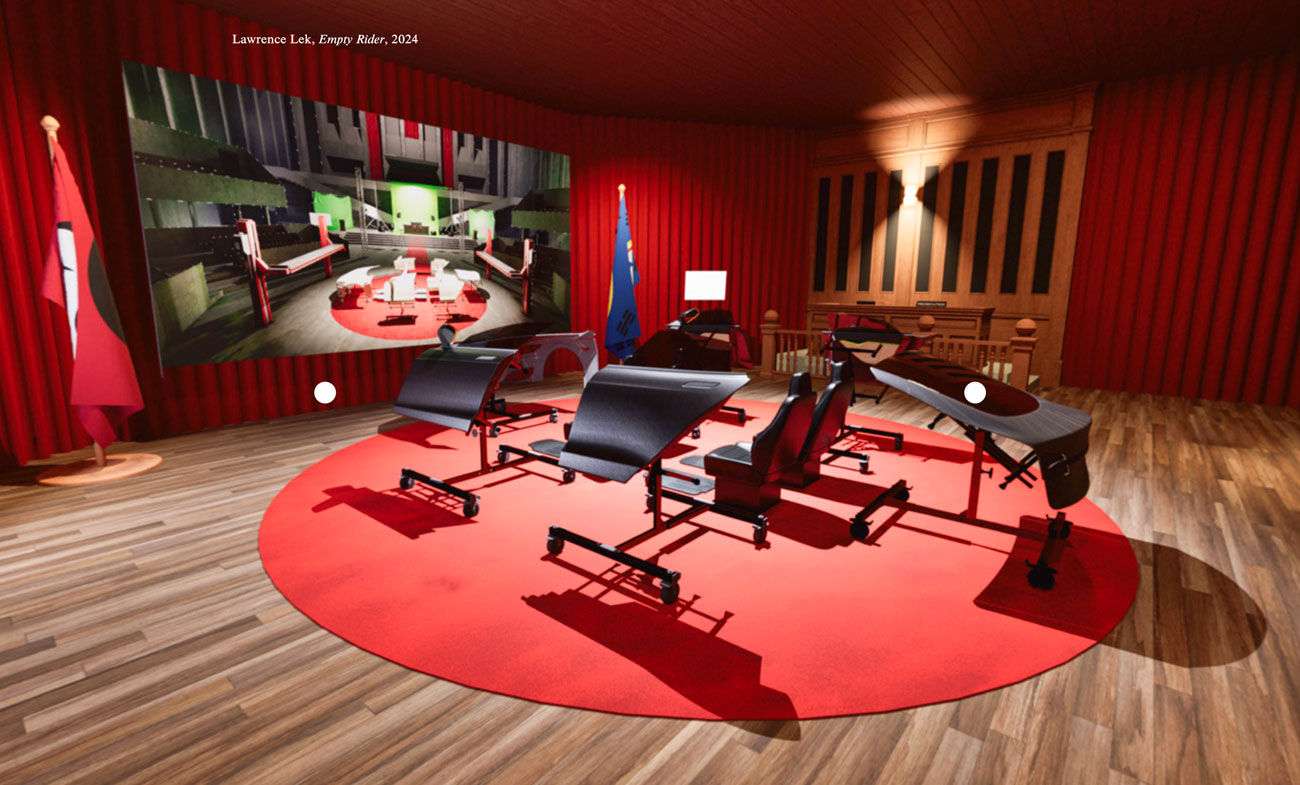
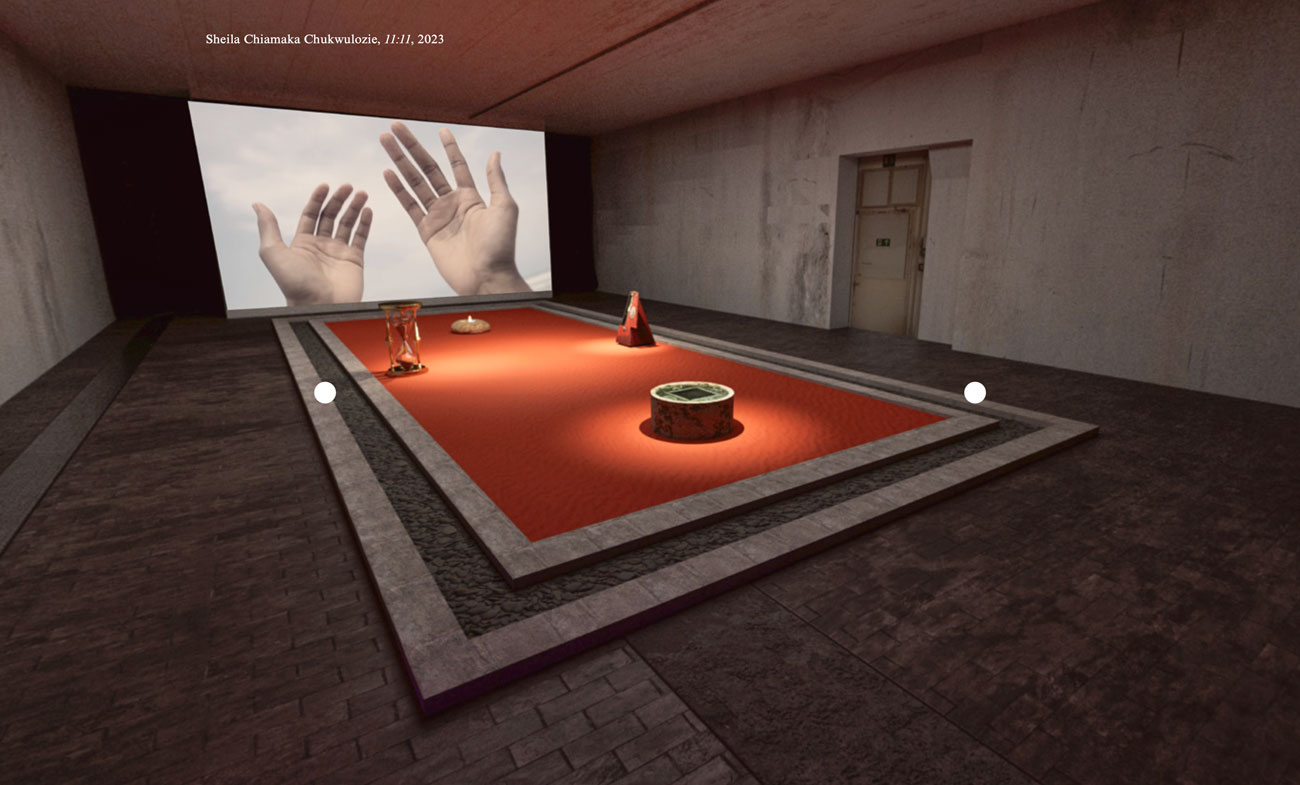
The exhibition presented works, specifically commissioned for the occasion, by Basel Abbas & Ruanne Abou-Rahme, alfatih, American Artist, Danielle Brathwaite-Shirley, Sheila Chiamaka Chukwulozie, Formafantasma, Aziz Hazara, Interspecifics, Lawrence Lek, Shuang Li, Diego Marcon, Lauren Lee McCarthy, Sahej Rahal, Jenna Sutela, Emmanuel Van der Auwera, and an exhibition display conceived by Giacomo Castagnola. The works on show explore the concepts of the invisible and the unknown, as expressed through aesthetics, the use of technology, and a wide variety of sensibilities.
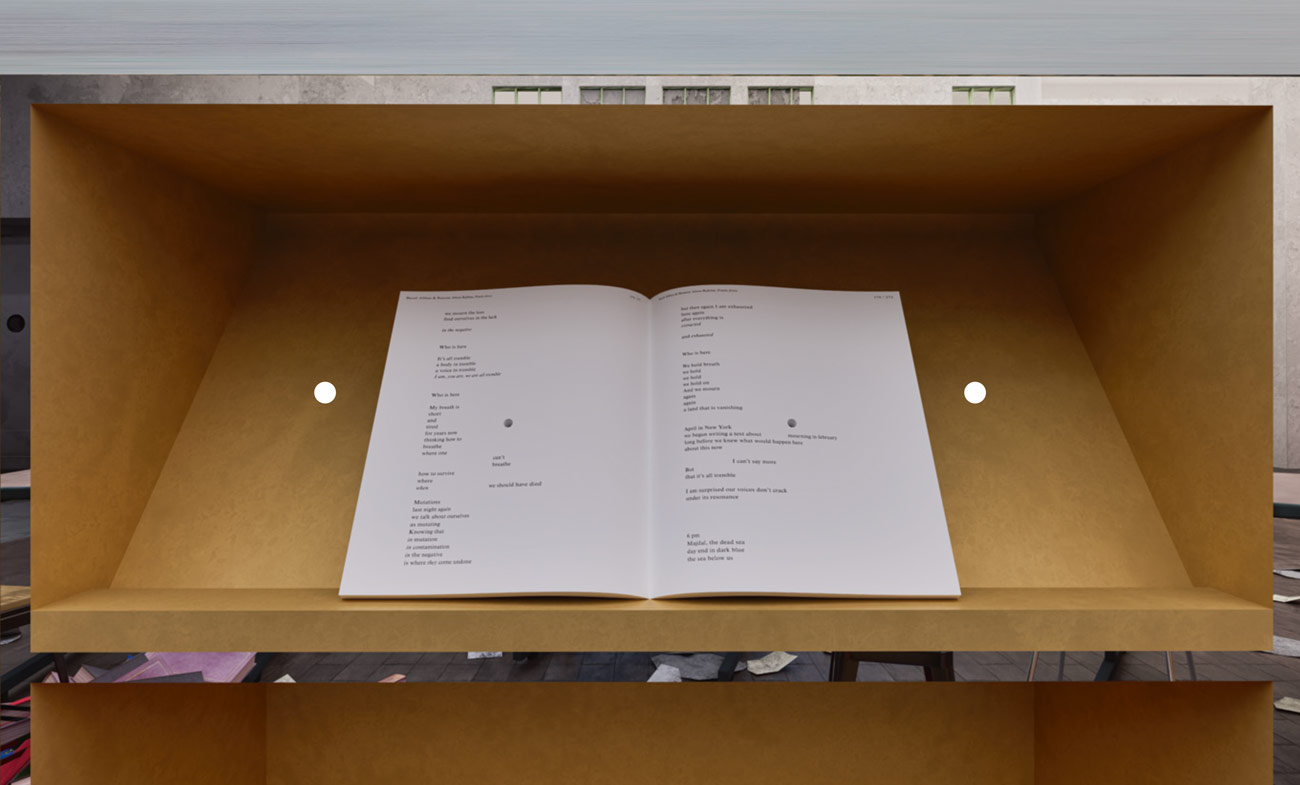
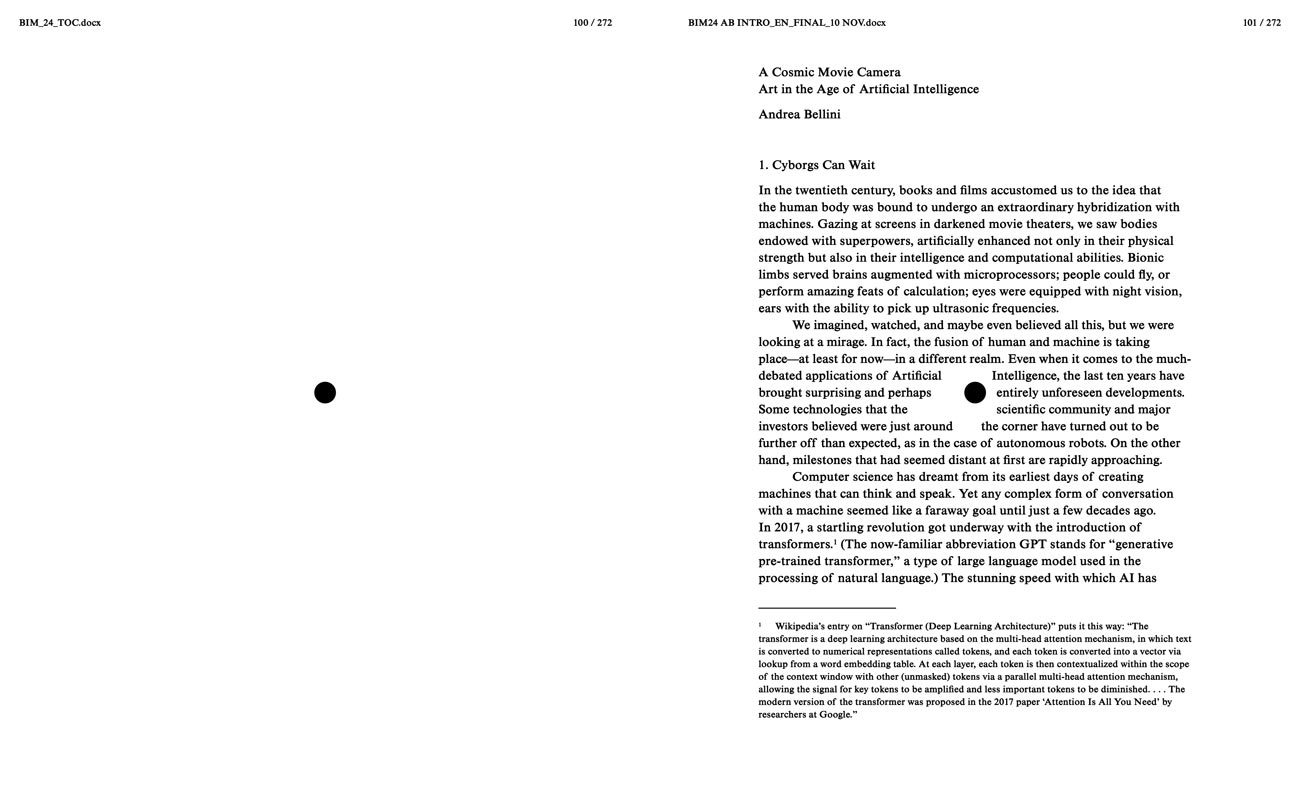
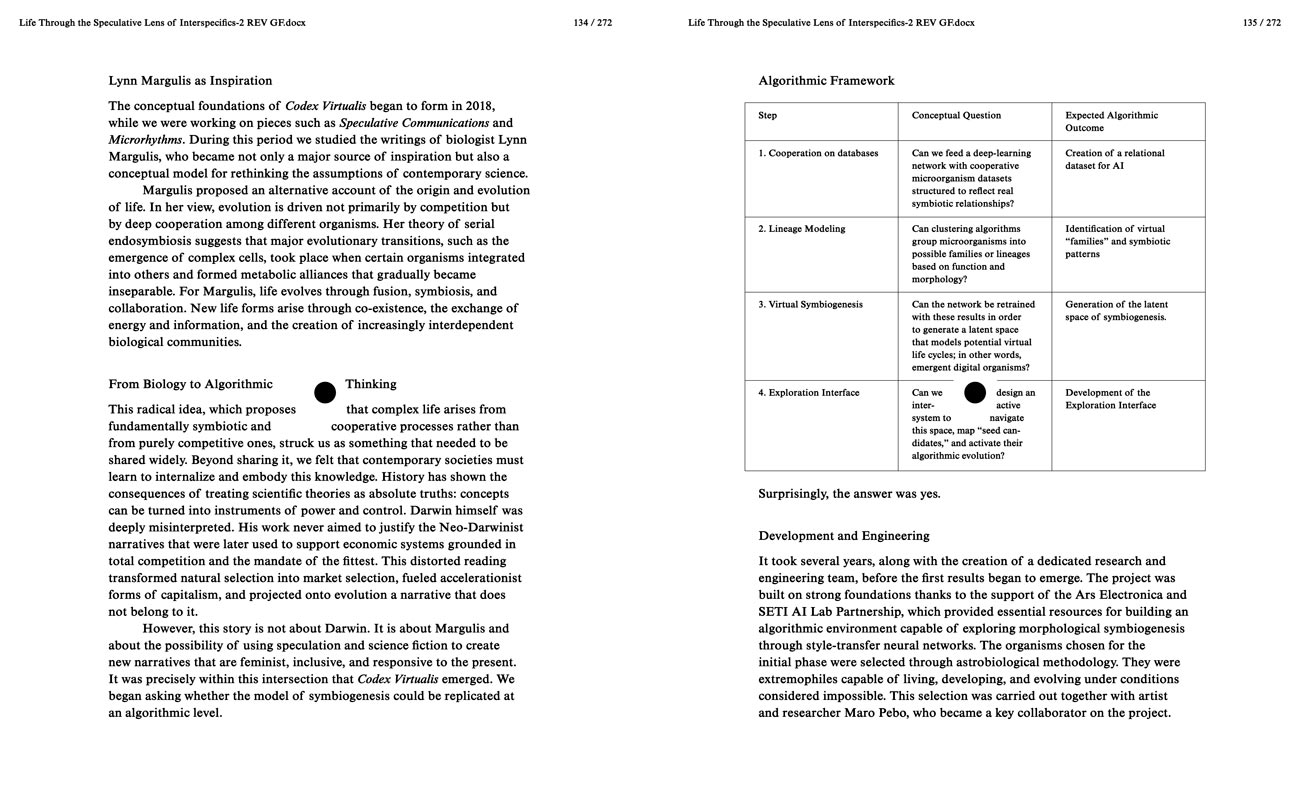
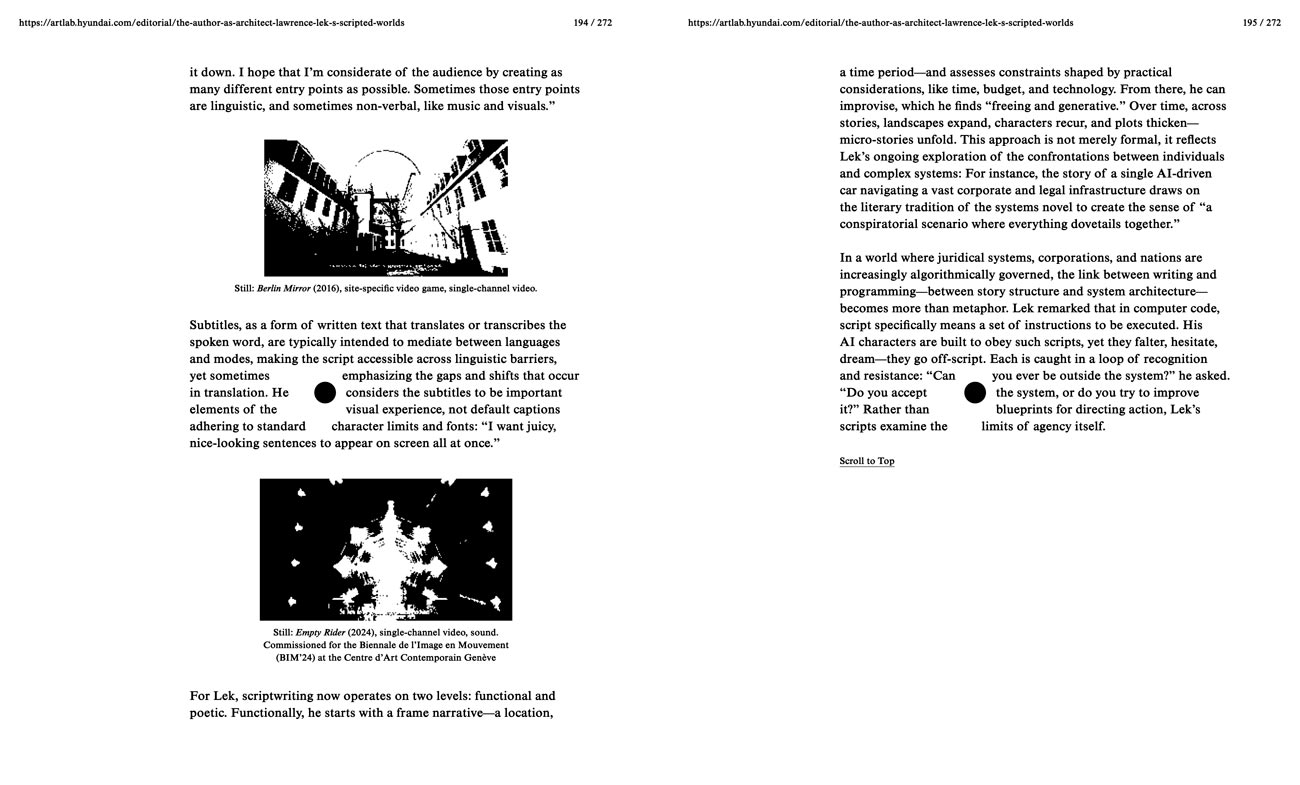
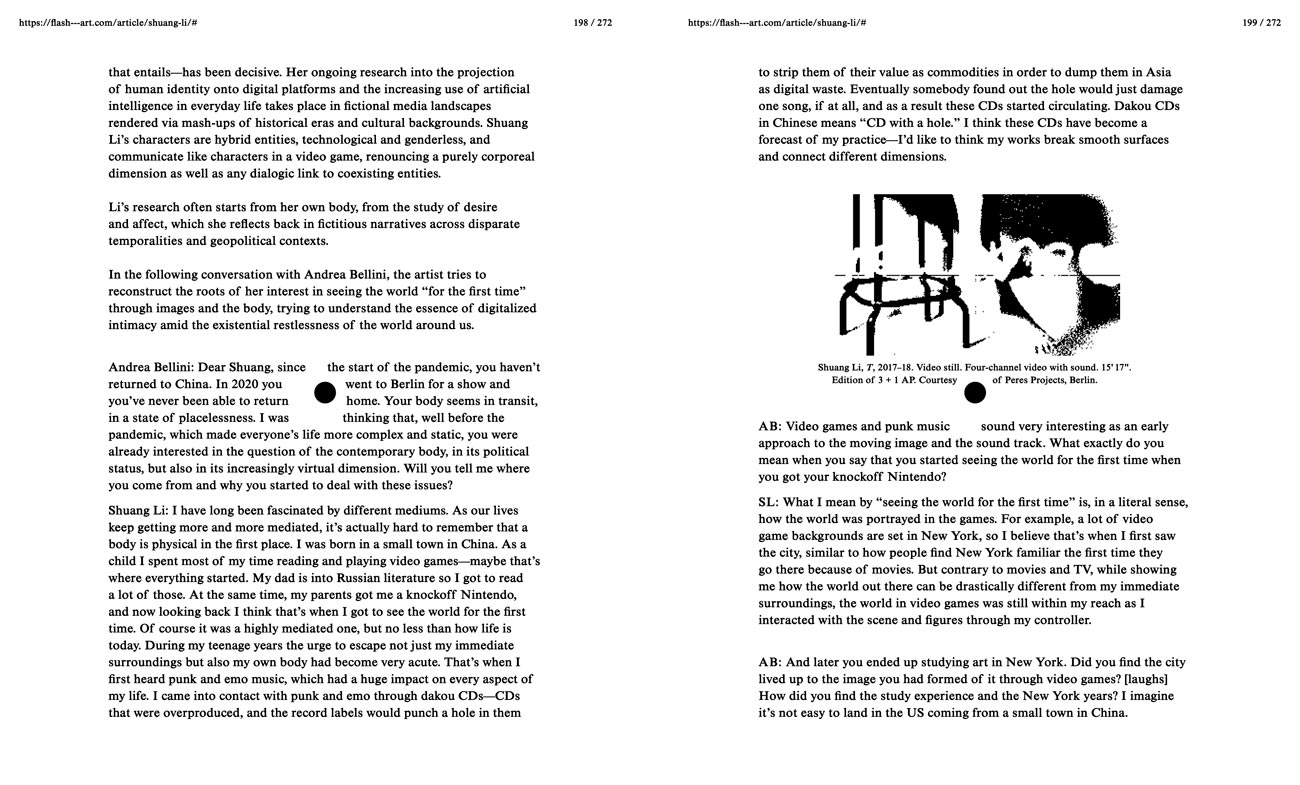
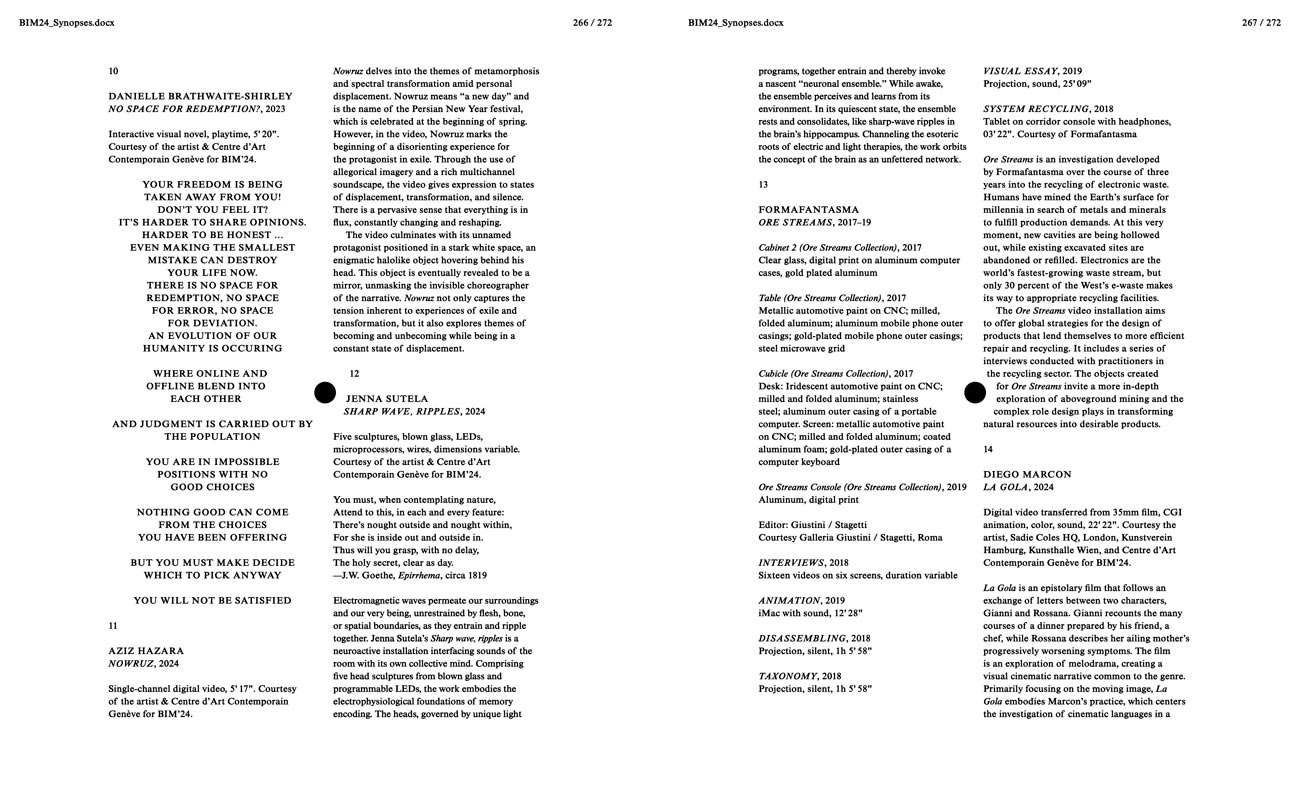
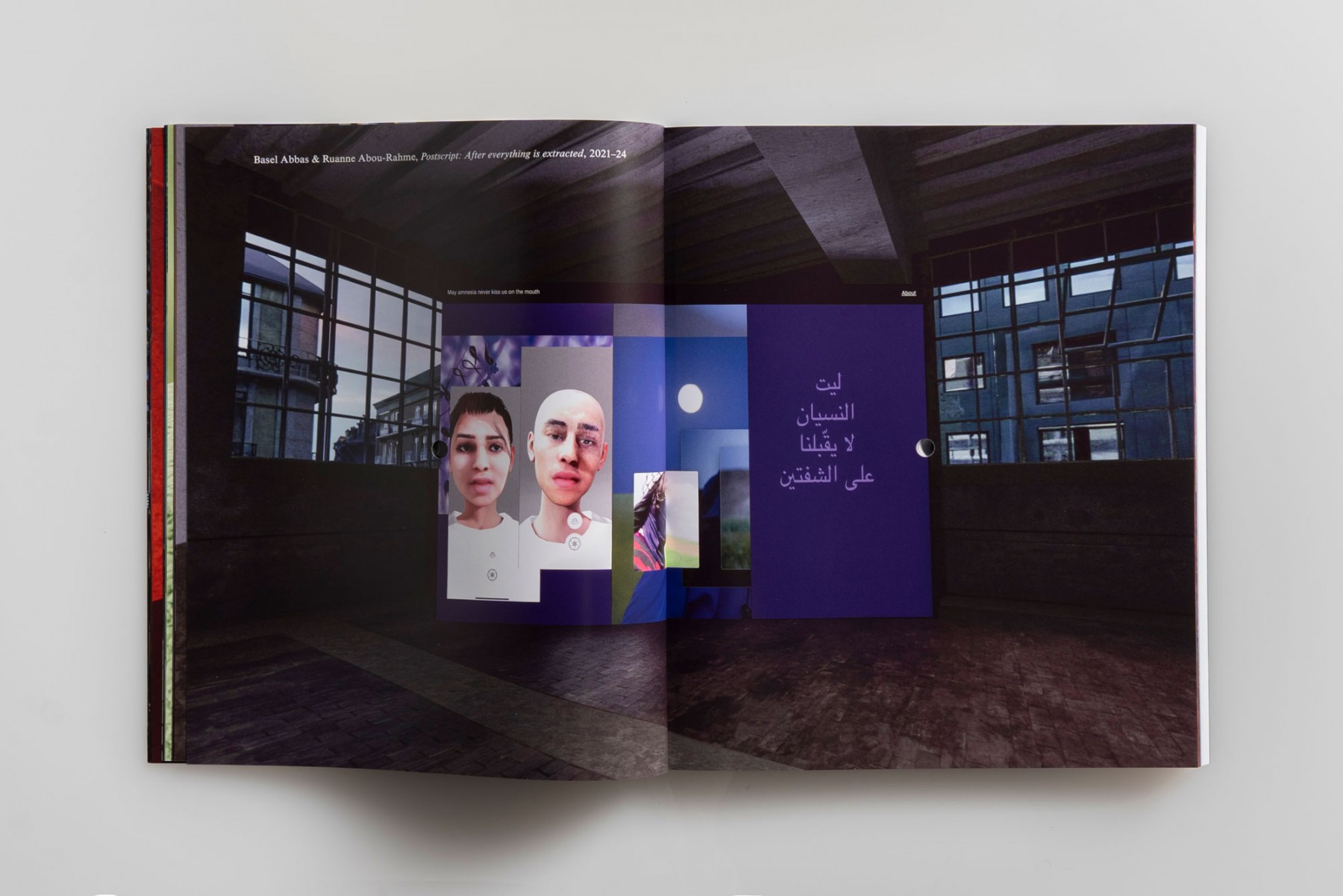
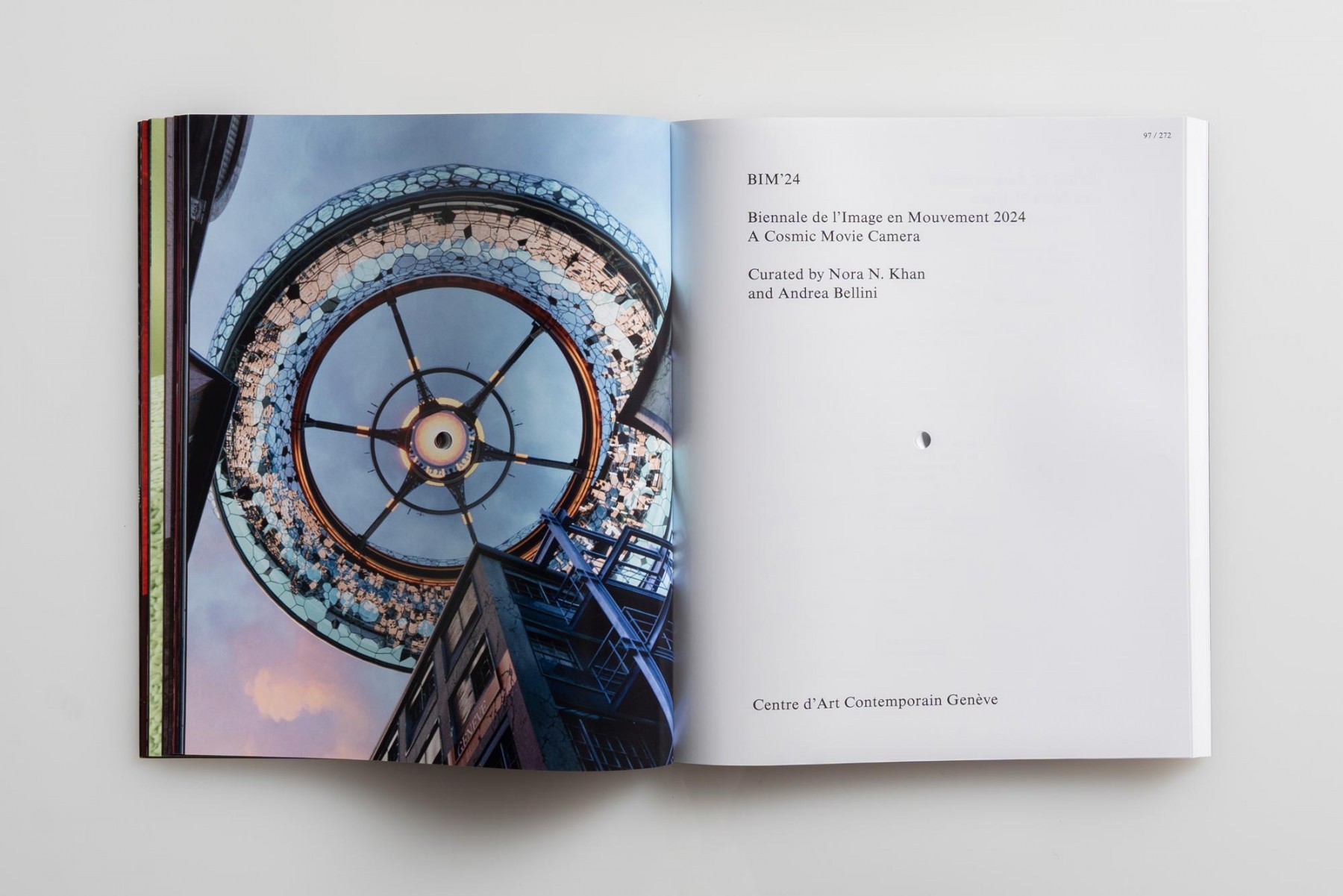
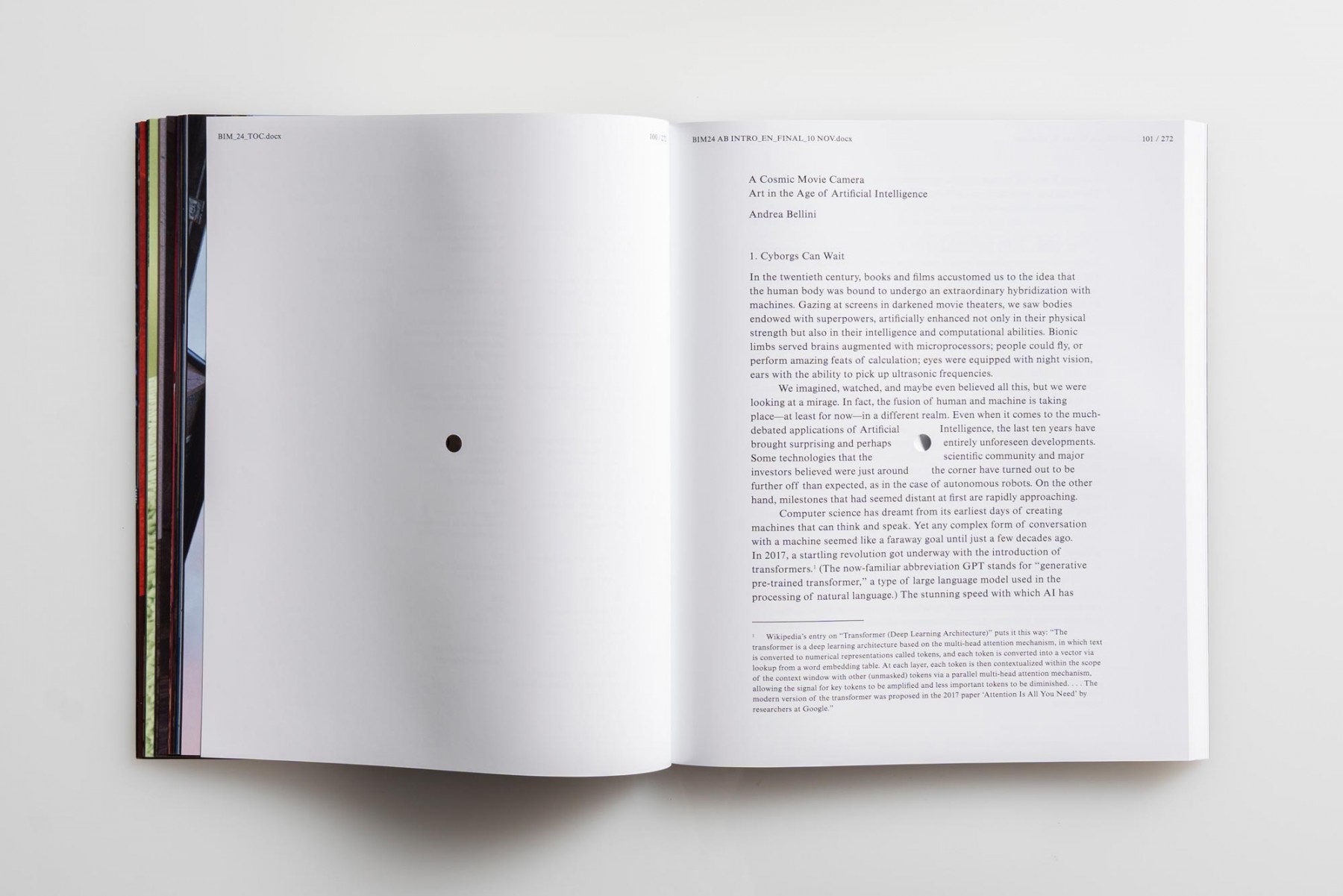
The catalogue documenting the exhibition was conceived as a “binder” of the future, as indicated by the holes that run through the publication, from front to back. The book collects various types of texts relating to the artists participating in the Biennale—reviews, essays, interviews, poems, emails, and texts written for the occasion—with a view to creating a paper archive that may preserve the memory of the project in a dystopian future: inside a spaceship or in the building of the Centre d’Art Contemporain Genève, transformed in the distant future.
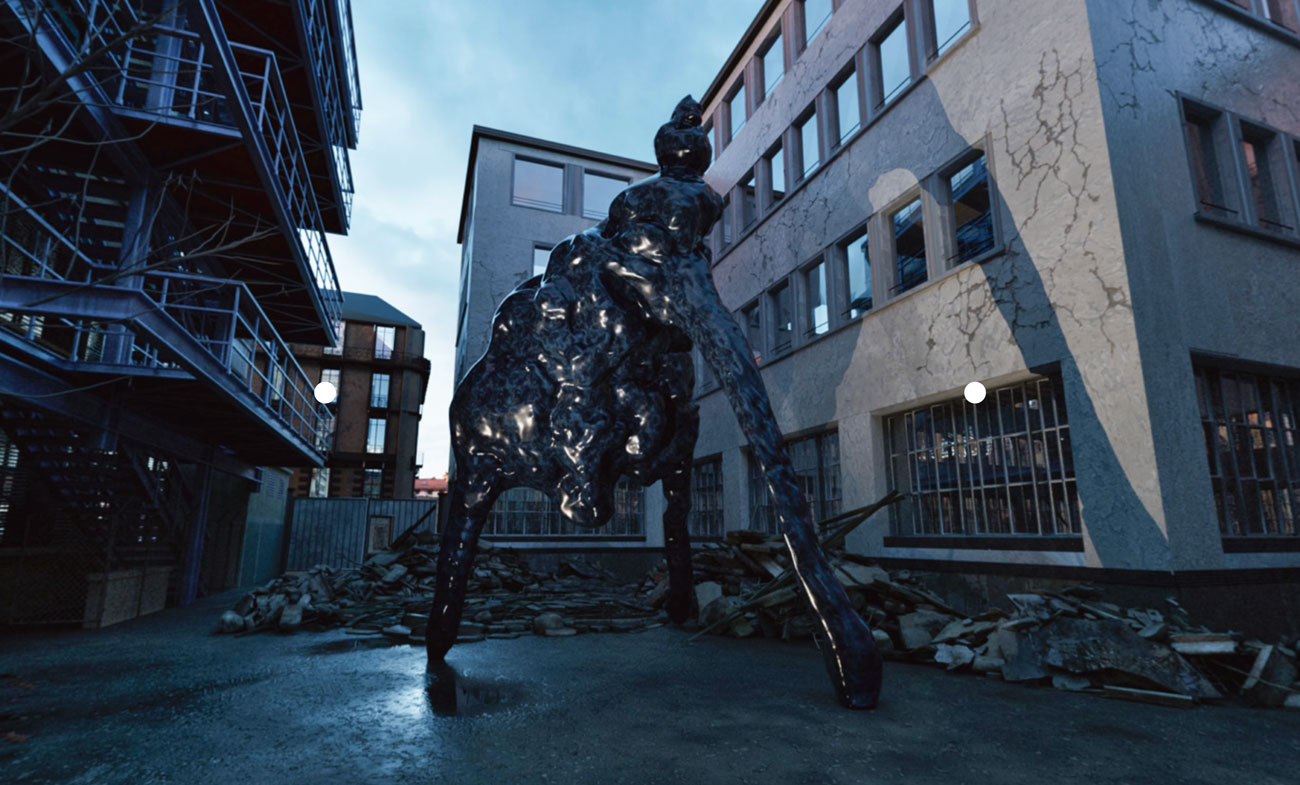
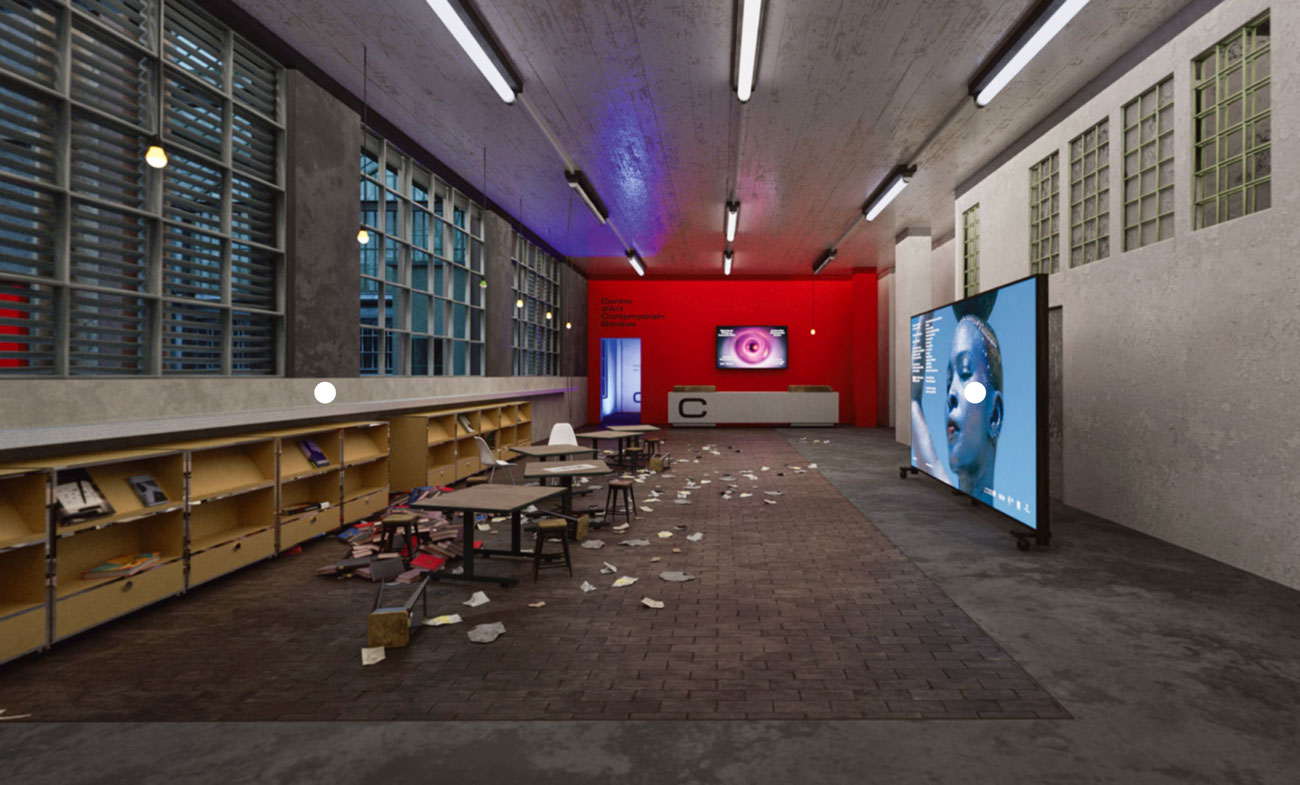
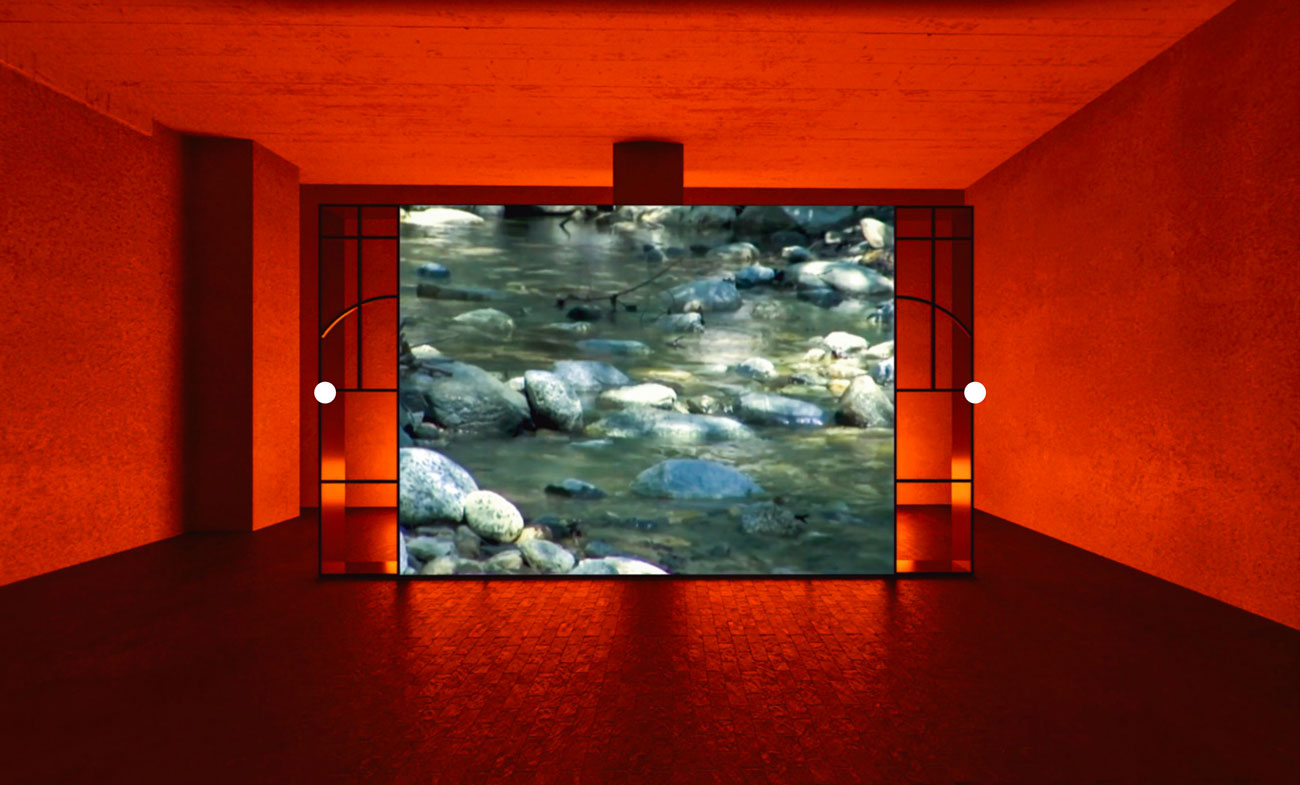
The visual essay that projects the works into a virtual context was designed by EPOCH, who also created the website hosting the ongoing virtual exhibition (bim24.ch). The catalogue’s combination of print and digital formats, the real and the virtual, the past and the future, conveys the conceptual core of the Biennale, which explores the inextricable intertwining of AI, digital culture, and art in the contemporary world.